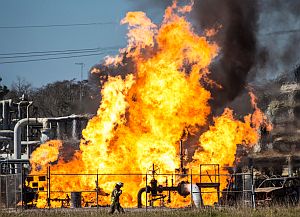
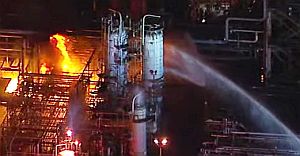
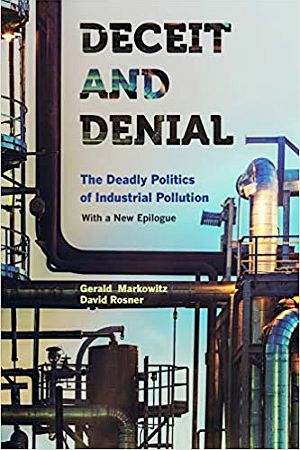
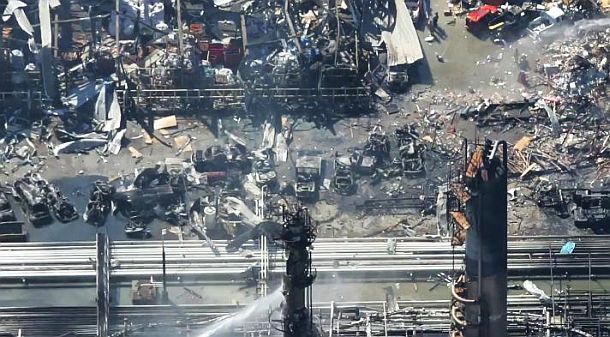
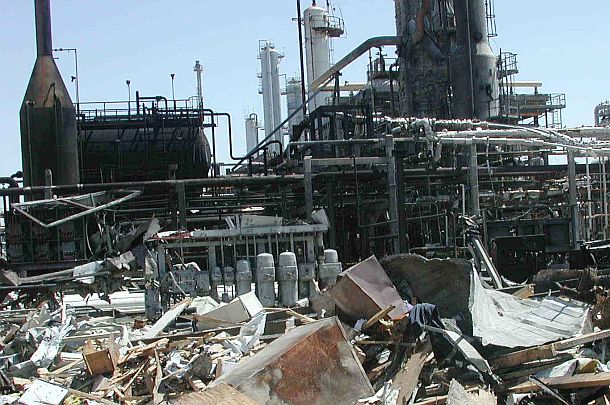
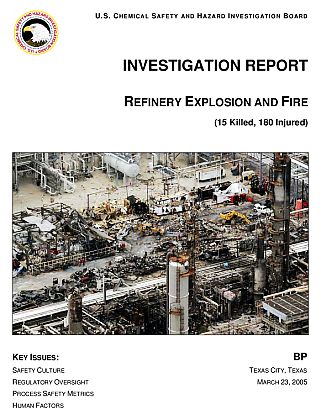
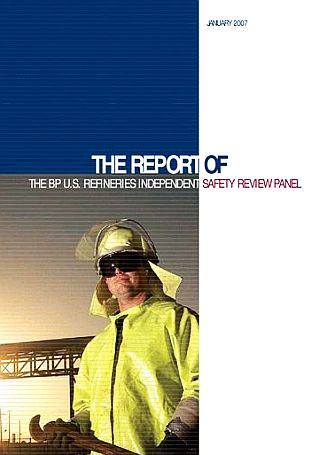
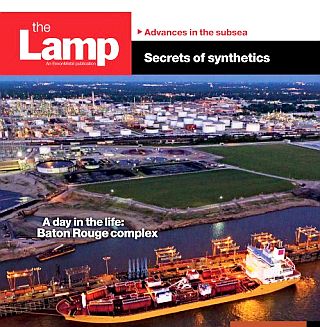
Included in the CSB’s May 2014 report on the Chevron accident, the cover of which is shown at left, was the CSB’s continuing concern about the high frequency of incidents at U.S. oil refineries – i.e., fires, explosions, chemical releases, worker injuries, etc.,. As an example of this concern, the CSB saw fit to call out the industry on the worrisome trend by publicly listing in their 2014 report, the 125 “significant oil refinery incidents” that had occurred during the 2012 calendar year. The incidents were listed by refinery and location in a separate “Appendix A.” Noted the CSB on this listing:
“These incidents were reported to the Department of Energy and/or the National Response Center and examined by the CSB’s Incident Screening Department. The CSB believes that incidents that result in disruptions to the national energy supply, serious injuries, or receive high media attention are all significant.”
What follows below is the same CSB listing of U.S. oil refinery incidents, large and small, that occurred in calendar year 2012. This listing, however, is offered here in a somewhat different format, although including the short CSB notations used for each incident. This listing is offered separately simply to help give the issue of oil and petrochemical dangers broader public exposure, and to help educate the public about the history and frequency of these incidents, their locations, and their continuing occurrence.
The photos, graphics and other illustrations that appear in the right-hand column of the listing below are provided by the PopHistoryDig.com, primarily as visual aides. They are not necessarily those of the listed 2012 incidents, though some are, as their captions will explain. Others are from earlier and/or later incidents that have occurred at or near some of the same refineries cited; and others are simply generic industry photos used for illustration purposes, along with other related books, reports, maps and/or other graphics. The visuals are included here as additional information that may be of value for public education purposes.
_________________________________________
U.S. Refinery Incidents, 2012
CSB List w/CSB Annotations & Additional Information
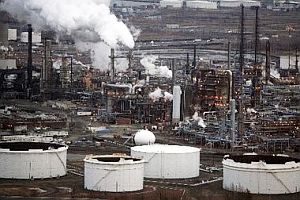
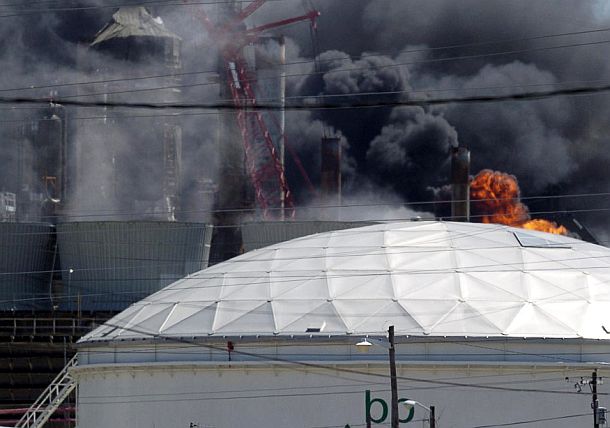
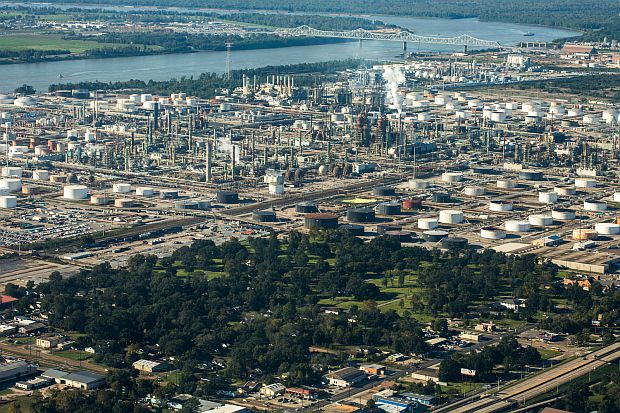
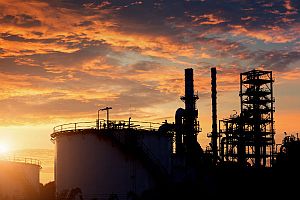 Generic photo of storage tank/oil refinery scene. Generic photo of storage tank/oil refinery scene. |
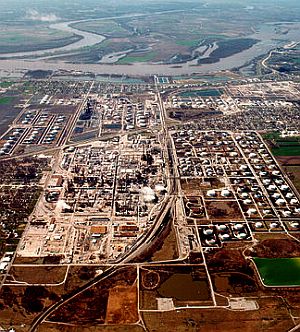
 2005 file photo of oil refinery and tank farms at Wood River/Roxana, Illinois. Photo, St. Louis Post-Dispatch. 2005 file photo of oil refinery and tank farms at Wood River/Roxana, Illinois. Photo, St. Louis Post-Dispatch. |
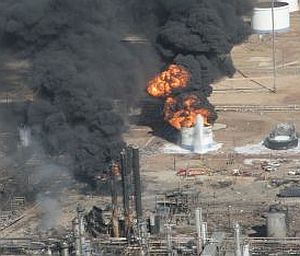 Previous incident - Feb 18, 2008 – explosion & fire at Alon Refinery, Big Spring, TX. EPA photo. Previous incident - Feb 18, 2008 – explosion & fire at Alon Refinery, Big Spring, TX. EPA photo. |
 2013 photo - Tesoro tank farm, Utah. 2013 photo - Tesoro tank farm, Utah. |
 Later incident; April 26, 2018, at Husky Energy refinery, Superior, WI. Bob King | Duluth News Tribune. Later incident; April 26, 2018, at Husky Energy refinery, Superior, WI. Bob King | Duluth News Tribune. |
 Feb 17, 2012. Firefighters battle blaze at BP’s Cherry Point, WA refinery. AP/Bellingham Herald, P. Dwyer. Feb 17, 2012. Firefighters battle blaze at BP’s Cherry Point, WA refinery. AP/Bellingham Herald, P. Dwyer. |
 Feb 23, 2012. Tank failure (center) at PBF Energy refinery, Paulsboro, NJ. Photo, Sky Truth. Feb 23, 2012. Tank failure (center) at PBF Energy refinery, Paulsboro, NJ. Photo, Sky Truth. |
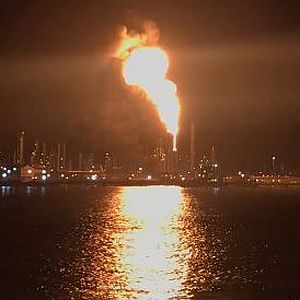 March 2018. Massive flare at ExxonMobil refinery, Chalmette, LA. Flares are used for refinery safety, but also pollute. March 2018. Massive flare at ExxonMobil refinery, Chalmette, LA. Flares are used for refinery safety, but also pollute. |
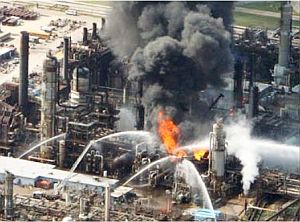 August 2007. Earlier fire at Chevron’s Pascagoula, MS. refinery. Photo, Christy Pritchett, Press-Register. August 2007. Earlier fire at Chevron’s Pascagoula, MS. refinery. Photo, Christy Pritchett, Press-Register. |
 2012. “East Bay Times” map shows ConocoPhillips refinery at Rodeo, CA & 4 others in San Francisco area. 2012. “East Bay Times” map shows ConocoPhillips refinery at Rodeo, CA & 4 others in San Francisco area. |
 Andrew Higgins 2008 book on the earlier 2005 BP Texas City refinery explosion that killed 15 workers and injured another 180. Click for copy at Amazon.com. Andrew Higgins 2008 book on the earlier 2005 BP Texas City refinery explosion that killed 15 workers and injured another 180. Click for copy at Amazon.com. |
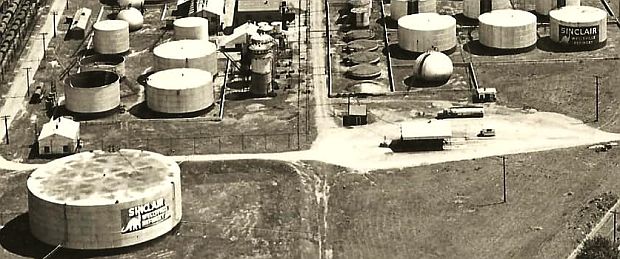
 Portion of the grounds at Sinclair Oil refinery in Sinclair, Wyoming, where workers were burned/injured in successive fires, 4 injured on May 8 and 2 on May 28, 2012. Portion of the grounds at Sinclair Oil refinery in Sinclair, Wyoming, where workers were burned/injured in successive fires, 4 injured on May 8 and 2 on May 28, 2012. |
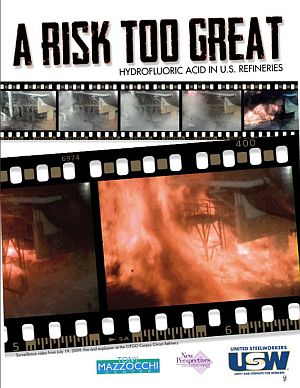 2013 United Steelworkers' report, “A Risk Too Great: Hydro-fluoric Acid in U.S. Refineries,” cover w/ film strips of 2009 incident at Citgo’s Corpus Christi, TX refinery. Click for PDF. 2013 United Steelworkers' report, “A Risk Too Great: Hydro-fluoric Acid in U.S. Refineries,” cover w/ film strips of 2009 incident at Citgo’s Corpus Christi, TX refinery. Click for PDF. |
 February 2019. PBF Energy’s Delaware City, DE refinery during a later fire at the complex. February 2019. PBF Energy’s Delaware City, DE refinery during a later fire at the complex. |
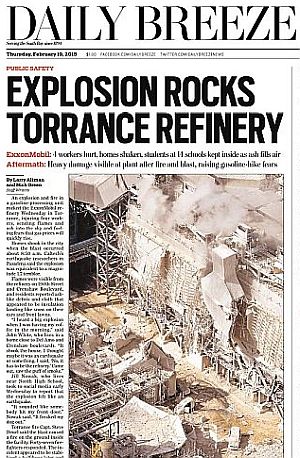 ExxonMobil had a June 2012 fire at its Torrance, CA refinery, plus prior & later incidents, including this 2015 explosion that led to ExxonMobil selling the refinery. ExxonMobil had a June 2012 fire at its Torrance, CA refinery, plus prior & later incidents, including this 2015 explosion that led to ExxonMobil selling the refinery. |
 CSB report on earlier 2007 LPG fire at the Valero Refinery in McKee, TX, injuring 4, causing a refinery evacuation & extended shutdown. Click for copy. CSB report on earlier 2007 LPG fire at the Valero Refinery in McKee, TX, injuring 4, causing a refinery evacuation & extended shutdown. Click for copy. |
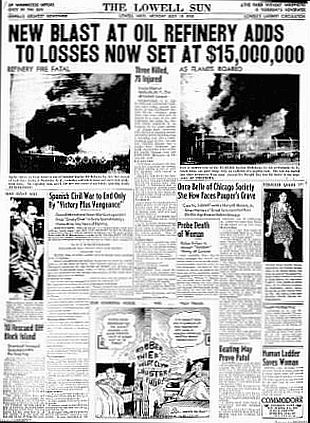
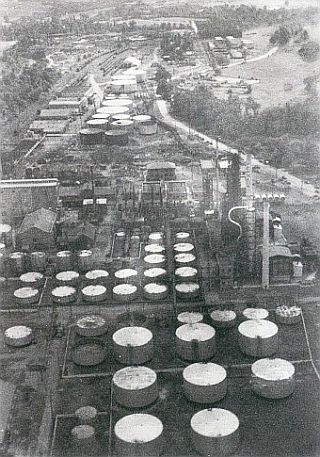
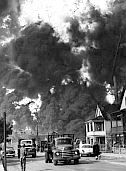
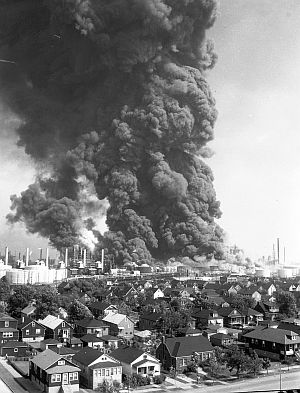 1955. Oil refinery at Whiting, IN, near Chicago, has a long history of incidents, here showing proximity of residential area near refinery during Aug 1955 explosion & fire that burned for 8 days. Click for separate story. 1955. Oil refinery at Whiting, IN, near Chicago, has a long history of incidents, here showing proximity of residential area near refinery during Aug 1955 explosion & fire that burned for 8 days. Click for separate story. |
 August 2012. Map showing Holly Oil Refinery area at Woods Cross, UT (green) and impacted area (red) of oil spray released from storage tank. August 2012. Map showing Holly Oil Refinery area at Woods Cross, UT (green) and impacted area (red) of oil spray released from storage tank. |
 2019. Later WXYZ-TV 6 news report of oil vapor leak from Marathon oil refinery in Detroit, MI. 2019. Later WXYZ-TV 6 news report of oil vapor leak from Marathon oil refinery in Detroit, MI. |
 File photo. Aerial view of the Placid Refinery at Port Allen, LA, on the west bank of the Mississippi River, where a hydrogen fluoride releases occurred, Oct 1, 2012. File photo. Aerial view of the Placid Refinery at Port Allen, LA, on the west bank of the Mississippi River, where a hydrogen fluoride releases occurred, Oct 1, 2012. |
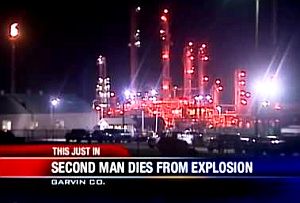 Sept 2012. TV news reporting on second death of worker at CVR Energy refinery at Wynnewood, Oklahoma. Sept 2012. TV news reporting on second death of worker at CVR Energy refinery at Wynnewood, Oklahoma. |
 Chicago Tribune file photo of a portion of ExxonMobil refinery at Joliet, IL – where on Oct 19, 2012, oil and gasoline spewed into the air and neighboring area for a half hour or more, shutting down one highway. Chicago Tribune file photo of a portion of ExxonMobil refinery at Joliet, IL – where on Oct 19, 2012, oil and gasoline spewed into the air and neighboring area for a half hour or more, shutting down one highway. |
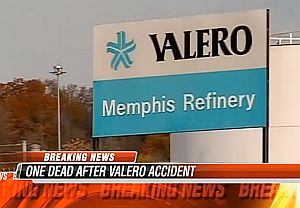 Dec 2012. Local TV news screenshot of early reporting on worker death at Valero Refinery, Memphis, TN. Dec 2012. Local TV news screenshot of early reporting on worker death at Valero Refinery, Memphis, TN. |
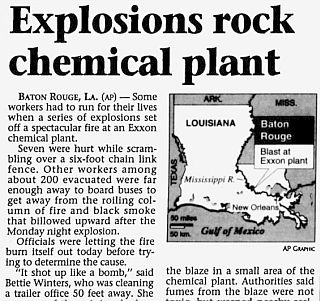
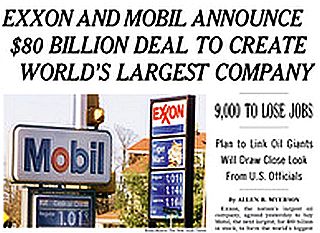
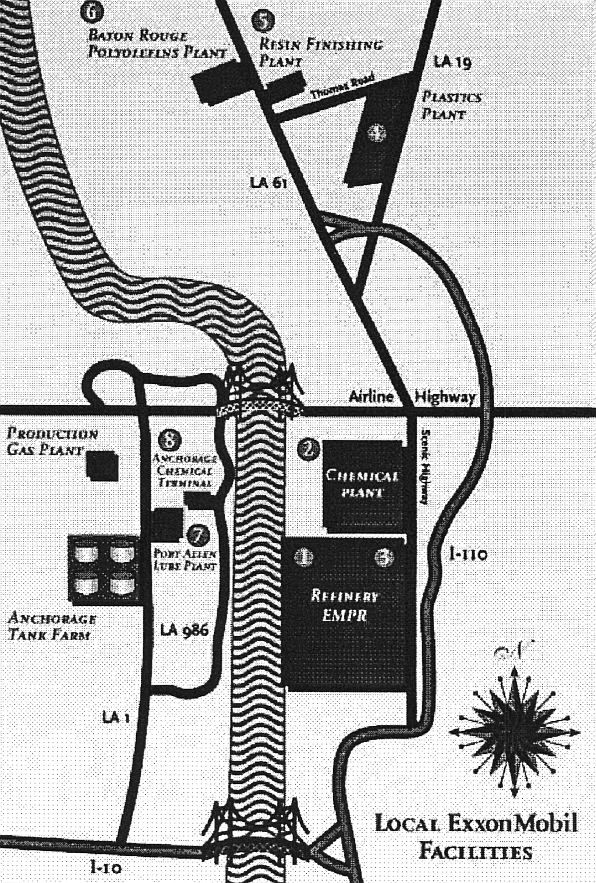
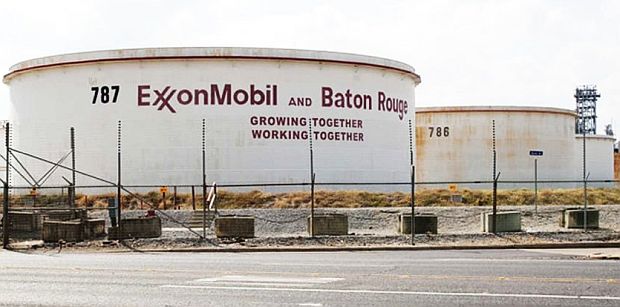
 2014. Large storage tank at ExxonMobil refinery with painted message: “ExxonMobil and Baton Rouge - Growing Together, Working Together.” Click for Exxon-Mobil story. Photo, Monique Verdin, Louisiana Weekly / Louisiana Bucket Brigade. 2014. Large storage tank at ExxonMobil refinery with painted message: “ExxonMobil and Baton Rouge - Growing Together, Working Together.” Click for Exxon-Mobil story. Photo, Monique Verdin, Louisiana Weekly / Louisiana Bucket Brigade. |
 7 Dec 2021. Later flaring at Shell Deer Park, TX plant, near Houston. Flares are used to burn off chemicals to relieve pressure, sometimes caused by power outages. But flares also release hydrocarbon pollution. 7 Dec 2021. Later flaring at Shell Deer Park, TX plant, near Houston. Flares are used to burn off chemicals to relieve pressure, sometimes caused by power outages. But flares also release hydrocarbon pollution. |
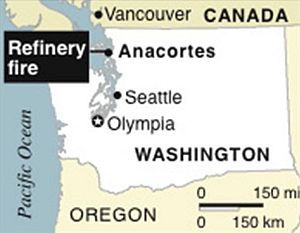 Map showing location of oil refinery at Anacortes, WA where a Shell Oil refinery in 2007 had a storage tank fire that injured three. In 2012, Shell was listed by CSB for hydrocarbon emissions at that location. Map showing location of oil refinery at Anacortes, WA where a Shell Oil refinery in 2007 had a storage tank fire that injured three. In 2012, Shell was listed by CSB for hydrocarbon emissions at that location. |
January 11, 2012
ExxonMobil Refinery
Beaumont, TX / “tank failure”
January 22, 2012
Flint Hills Refinery
St. Paul, MN / “vessel pressure excursion”
January 26, 2012
No. Tier Energy Refinery
St. Paul, MN / “hydrogen sulfide release
from mechanical integrity failure”
January 27, 2012
ConocoPhillips Refinery
Wood River, IL / “sulfuric acid release
from mechanical integrity failure”
January 31, 2012
Marathon Refinery
Garyville, LA / “hydrogen sulfide release
from mechanical integrity failure”
January 31, 2012
Flint Hills Refinery
Corpus Christi, TX / “hydrocarbon & hydrogen
fluoride release…mechanical integrity failure”
February 1, 2012
Alon Refinery
Big Spring, TX / “sulfur dioxide and hydrogen
sulfide release… vessel pressure excursion”
February 1, 2012
ConocoPhillips Refinery
Belle Chasse, LA / “hydrocarbon release
from a vessel pressure excursion.”
February 16, 2012
Husky Energy Refinery
Lima, OH / “benzene release from
a mechanical integrity failure”
February 17, 2012
Tesoro Refinery
Salt Lake City, UT / “refinery fire”
February 17, 2012
BP Refinery
Cherry Point, WA / “refinery fire”
February 22, 2012
Shell Refinery
Deer Park, TX / “tank failure”
February 23, 2012
Paulsboro Refinery (PBF Energy)
Paulsboro, NJ / “tank failure”
February 24, 2012
Citgo Refinery
Corpus Christi, TX / “refinery fire”
February 28, 2012
Flint Hills Refinery
Rosemount, MN / “hydrogen sulfide release
from a mechanical integrity failure”
February 28, 2012
Motiva Refinery
St. Charles, LA / “vessel pressure excursion”
February 28, 2012
Chalmette Refinery (ExxonMobil)
Chalmette, LA / “benzene release from
a mechanical integrity failure”
March 4, 2012
Flint Hills Refinery
North Pole, AK / “crude oil release
from a mechanical integrity failure”
March 6, 2012
Citgo Refinery
Corpus Christi, TX / “hydrogen fluoride
release…mechanical integrity failure”
March 6, 2012
Valero Refinery
Memphis, TN / “worker fatally injured,
and 2 other workers burned”
March 7, 2012
Tesoro Refinery
Martinez, CA /
“fire during a hot work activity”
March 8, 2012
Chevron Refinery
Pascagoula, MS / “benzene release from
a mechanical integrity failure”
March 13, 2012
Chevron Refinery
Pascagoula, MS / “heavy oil release
from a mechanical integrity failure”
March 14, 2012
Marathon Refinery
Texas City, TX / “benzene release from
a mechanical integrity failure”
March 16, 2012
PBF Energy Refinery
Delaware City, DE / “refinery fire”
March 19, 2012
Chevron Refinery
Pascagoula, MS / “hydrocarbon release
from a mechanical integrity failure”
March 23, 2012
Tesoro Refinery
Anacortes, WA / “hydrocarbon release
from a mechanical integrity failure”
March 24, 2012
ExxonMobil Refinery
Baytown, TX / “hydrocarbon release
from a mechanical integrity failure”
March 25, 2012
ExxonMobil Refinery
Billings, MT / “refinery fire”
March 27, 2012
BP Refinery
Texas City, TX “hydrogen fluoride
release…mechanical integrity failure”
April 11, 2012
Total Refinery
Port Arthur, TX / “hydrocarbon release
from a mechanical integrity failure”
April 13, 2012
ConocoPhillips Refinery
Rodeo, CA / “refinery fire”
April 16, 2012
Flint Hills Refinery
Corpus Christi, TX / “hydrocarbon release
from a mechanical integrity failure”
April 17, 2012
Citgo Refinery
Lemont, IL / “crane fell over and
damaged utility piping”
April 19, 2012
Flint Hills Refinery
Corpus Christi, TX / “hydrocarbon release
from a mechanical integrity failure”
April 20, 2012
BP Refinery
Texas City, TX / “refinery fire”
April 24, 2012
ConocoPhillips Refinery
Sweeny, TX / “hydrocarbon release
from a mechanical integrity failure”
May 8, 2012
Sunoco Refinery
Philadelphia, PA / “refinery fire”
May 8, 2012
Sinclair Refinery
Sinclair, WY / “4 workers injured in fire”
May 8, 2012
LyondellBasell Refinery
Houston, TX / “hydrocarbon release
from a mechanical integrity failure”
May 9, 2012
Sunoco Refinery
Philadelphia, PA / “refinery fire”
May 11, 2012
CVR Energy Refinery
Wynnewood, OK / “hydrogen sulfide
release….mechanical integrity failure”
May 12, 2012
Motiva Refinery
Port Arthur, TX / “refinery fire”
May 15, 2012
Citgo Refinery
Corpus Christi, TX / “hydrogen fluoride
release….mechanical integrity failure”
May 17, 2012
Shell Refinery
Deer Park , TX / “hydrogen sulfide
release…mechanical integrity failure”
May 21, 2012
Flint Hills Refinery
Corpus Christi, TX / “benzene & hydrogen
sulfide release…mechanical integrity failure”
May 24, 2012
Montana Refining Co. Refinery
Great Falls, MT / “refinery fire”
May 25, 2012
Valero Refinery
Memphis, TN / “hydrocarbon release from
a mechanical integrity failure”
May 28, 2012
Sinclair Refinery
Sinclair, WY / “2 workers injured from a fire”
May 29, 2012
PBF Energy Refinery
Delaware City, DE / “propylene release from
overpressure event”
May 31, 2012
Valero Refinery
Houston, TX / “hydrocarbon release from
a mechanical integrity failure”
June 7, 2012
Shell Refinery
Deer Park, TX / “hydrogen and hydrocarbon
release due to loss-of-containment event”
June 7, 2012
Motiva Refinery
Norco, LA / ”hydrogen sulfide and
hydrocarbon release due to flare failure”
June 9, 2012
Motiva Refinery
Port Arthur, TX / “refinery fire”
June 9, 2012
BP Refinery
Texas City, TX / “hydrocarbon release due
to a mechanical integrity failure”
June 11, 2012
ExxonMobil Refinery
Torrance, CA / “refinery fire”
June 13, 2012
Total Refinery
Port Arthur, TX / “refinery fire”
June 15, 2012
ConocoPhillips Refinery
Rodeo, CA / “hydrogen sulfide release
from a tank failure”
June 20, 2012
Shell Refinery
Deer Park, Texas / “hydrocarbon release”
June 21, 2012
BP Refinery
Whiting, IN / “refinery fire”
June 23, 2012
Valero Refinery
Corpus Christi, TX / “hydrocarbon release
due to a mechanical integrity failure”
June 25, 2012
ExxonMobil Refinery
Baton Rouge, LA / “benzene release due
to a mechanical integrity failure”
June 28, 2012
ExxonMobil Refinery
Baytown, TX / “benzene release due to
a mechanical integrity failure”
June 28, 2012
Valero Refinery
McKee, TX / “propane release due to
a mechanical integrity failure”
July 2, 2012
Chevron Refinery
El Segundo, CA / “sulfuric acid release
due to a mechanical integrity failure”
July 14, 2012
Phillips 66 Refinery
Westlake, LA / “hydrocarbon release due to
a mechanical integrity failure”
July 16, 2012
Citgo Refinery
Corpus Christi, TX / “refinery fire”
July 22, 2012
Valero Refinery / Meraux, LA
“refinery fire”
July 22, 2012
Sunoco Point Breeze Refinery
Philadelphia, PA / “sulfuric acid release due
to a mechanical integrity failure”
July 23, 2012
BP Refinery
Whiting, IN / “refinery fire”
July 24, 2012
Flint Hills Refinery /Corpus Christi, TX
“hydrocarbon and hydrogen fluoride release
due to mechanical integrity failure”
August 2, 2012
Holly Frontier Refinery
Tulsa, OK / “refinery fire”
August 2, 2012
Chevron Refinery
Richmond, CA / “8,614 lbs of hydrogen sulfide
released…due to a mechanical integrity failure
on a compressor suction line”
August 5, 2012
Valero Refinery
Texas City, TX “hydrogen sulfide release
from an over-pressure event”
August 5, 2012
Sinclair Refinery
Sinclair, WY / “refinery fire”
August 6, 2012
Chevron Refinery
Richmond, CA / “refinery fire”
August 13, 2012
Shell Refinery
Martinez, CA / “refinery fire”
August 14, 2012
Shell Refinery
Martinez, CA / “hydrogen sulfide release
from a mechanical integrity failure”
August 14, 2012
BP Refinery / Whiting, IN
“2 workers injured in refinery fire”
August 22, 2012
Phillips 66 Refinery
Wood River, IL / “hydrogen sulfide release
due to a mechanical integrity failure”
August 24, 2012]
Sinclair Refinery
Sinclair, WY / “refinery fire”
August 25, 2012
LyondellBasell Refinery
Houston, TX / “hydrocarbon release due
to a mechanical integrity failure”
August 26, 2012
Flint Hills Refinery
Corpus Christi, TX / “hydrocarbon release
due to a mechanical integrity failure”
August 29, 2012
ExxonMobil Refinery / Beaumont, TX
“hydrogen sulfide & propylene release
due to a mechanical integrity failure”
August 29, 2012
Phillips 66 Refinery
Rodeo, CA / “refinery fire”
August 30, 2012
Holly Refinery / Woods Cross, UT
“high pressure excursion in a vessel
resulted in a hydrocarbon release with
offsite consequences”
September 5, 2012
Marathon Refinery / Detroit, MI
“worker injured following a fire”
September 8, 2012
Marathon Refinery / Detroit, MI
“chemical release with offsite consequences”
September 10, 2012
Tesoro Refinery / Martinez, CA
“sulfuric acid release due to a
mechanical integrity failure”
September 11, 2012
ExxonMobil Refinery / Baytown, TX
“carbon monoxide and hydrogen sulfide
release due to a mechanical integrity failure”
September 11, 2012
Marathon Refinery / Garyville, LA
“hydrogen sulfide release due to a
mechanical integrity failure”
September 14, 2012
Chevron Refinery / Pascagoula, MS
“hydrocarbon release due to a
mechanical integrity failure “
September 15, 2012
Tesoro Refinery / Martinez, CA
unspecified leak at refinery
September 21, 2012
PBF Energy Refinery / Delaware City, DE
“hydrocarbon release due to a
mechanical integrity failure”
September 24, 2012
Motiva Refinery / Norco, LA
“hydrogen sulfide release due to a
mechanical integrity failure”
September 28, 2012
CVR Energy Refinery / Wynnewood, OK
“1 worker killed and another worker
injured [later died] from explosion”
October 1, 2012
Motiva Refinery / Convent, LA
“refinery fire”
October 1, 2012
Placid Refinery / Port Allen, LA
“hydrogen fluoride release”
October 1, 2012
Valero Refinery / Port Arthur, TX
“hydrogen sulfide release from a
high pressure excursion”
October 3, 2012
ExxonMobil Refinery / Baytown, TX
“refinery fire”
October 3, 2012
Hess Corp. Refinery / Port Reading, NJ
“vapor cloud release ”
October 8, 2012
Phillips 66 Refinery / Rodeo, CA
“hydrocarbon release due to a
mechanical integrity failure”
October 9, 2012
Citgo Refinery / Corpus Christi, TX
“refinery fire”
October 17, 2012
Kern Oil Refinery / Bakersfield, CA
“vapor cloud release with offsite impact”
October 19, 2012
ExxonMobil Refinery / Joliet, IL
“hydrocarbon and hydrogen sulfide release
from a pressure excursion”
October 22, 2012
Citgo Refinery / Sulfur, LA
“hydrocarbon release due to a
mechanical integrity failure”
October 23, 2012
Chalmette Refinery / Chalmette, LA
“hydrogen sulfide release”
October 21, 2012
Tesoro Refinery / Martinez, CA
“refinery fire”
October 30, 2012
BP Refinery / Texas City, TX
“refinery fire”
November 3, 2012
Valero Refinery / Port Arthur, TX
“refinery fire”
November 8, 2012
Shell Refinery / Deer Park, TX
“benzene release due to a mechanical
integrity failure”
November 8, 2012
Tesoro Refinery / Martinez, CA
“vapor release”
November 24, 2012
Shell Refinery / Martinez, CA
“hydrogen sulfide release due to
a mechanical integrity failure or
a high pressure excursion”
November 27, 2012
Northern Tier Energy / St. Paul Park, MN
“hydrogen sulfide and hydrocarbon release”
December 1, 2012
ExxonMobil Refinery / Baton Rouge, LA
“benzene release due to a mechanical
integrity failure”
December 3, 2012
Valero Refinery / Memphis, TN
“hydrogen fluoride release killed
1 worker, injured 2 other workers
and 7 emergency responders”
December 5, 2012
Flint Hills Refinery / Corpus Christi, TX
‘hydrocarbon release due to a
mechanical integrity failure”
December 8, 2012
Motiva Refinery / Port Arthur, TX
“hydrogen sulfide release”
December 11, 2012
Phillips 66 Refinery / Wood River, IL
“refinery fire”
December 11, 2012
Alon Refinery / Big Spring, TX
“benzene release due to a mechanical
integrity failure”
December 11, 2012
Shell Refinery / Deer Park, TX
“hydrocarbon release due to a
mechanical integrity failure”
December 12, 2012
Shell Refinery / Anacortes, WA
“hydrocarbon release”
December 14, 2012
PBF Energy Refinery / Paulsboro, NJ
“hydrogen sulfide release due to a
pressure excursion”
December 15, 2012
Marathon Refinery / Garyville, LA
“hydrocarbon & hydrogen sulfide release
due to a mechanical integrity failure”
December 17, 2012
Motiva Refinery / Port Arthur, TX
“refinery fire”
_________________________________
CSB note: Incidents of hydrocarbon leaks into a cooling tower or releases to a flare system are not included in the above list.
Source: Appendix A: “Significant Petroleum Refinery Incidents in 2012” (pp. 98-102), U.S. Chemical Safety and Hazard Investigation Board (CSB), Chevron Richmond / Refinery Regulatory Report, May 2014.
_________________________________________
Afterword
For more than 100 years now, incidents like those listed above have been occurring throughout the oil refining sector in the U.S. and elsewhere. Beyond refineries, there are also drilling incidents, pipeline fires and spills, tank farm leaks, toxic emissions, offshore spills, river pollution, and/or various oilfield and refinery toxic waste issues. These are all part of the high price paid in environmental damage, worker deaths and injuries, and fenceline community impacts that occur on a near-daily basis from the fossil fuels and petrochemical industries.
While the fossil fuels role in climate change is obviously a central concern, the day-to-day operational impacts of oil, gas and petrochemical facilities – including leaks, spills, explosions, fires, emissions, venting, and flaring at those facilities – should not be overlooked or neglected by state and federal regulators. When added up on an annual and decades-long basis, these “chronic problems” comprise a major source of environmental damage, worker dangers, threats to public health and safety, and often, energy waste and inefficiency as well.
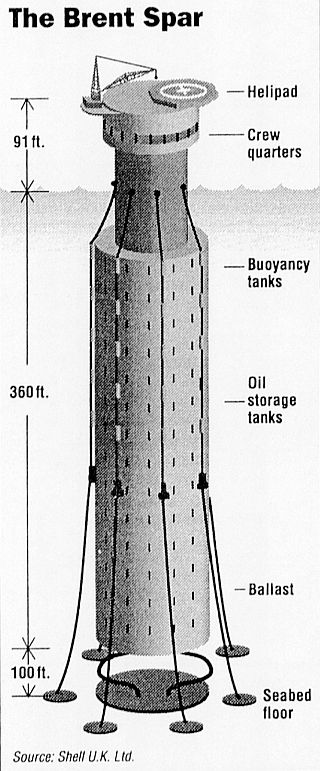
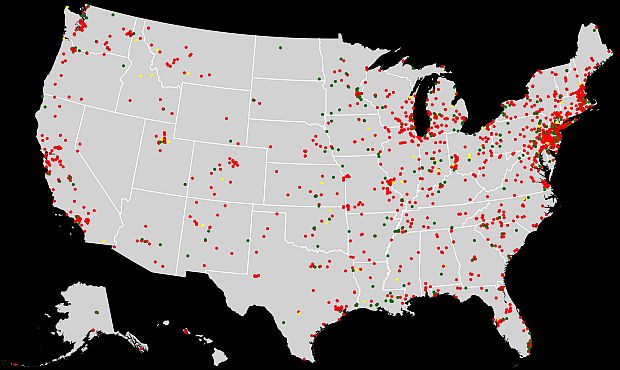
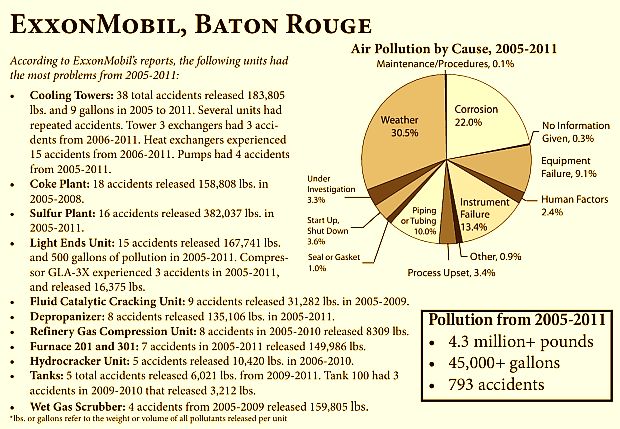
 Graphic from the "Fort Worth Star-Telegram." Sources: EPA, American Petroleum Institute, and U.S. Agency for Toxic Substances and Disease Registry. Circa, 2012.
For the last two decades or more, some industry safety experts, labor unions, environmental activists, and community groups have argued for an “inherently safe” refining industry, meaning a better use of technology, facility design, maintenance, and operating standards that eliminate the possibility of plant incidents and toxic releases. As of this writing, however, only marginal progress in achieving that important and worthwhile goal has occurred. In the meantime, oil refining incidents such as those listed here for 2012, continue to occur in the 2020s.
For additional oil industry history at this website see any of the following:
 “Beyond Texas City” – a 2007 report and survey by the United Steelworkers union, prompted by the 2005 BP Texas City refinery disaster, found continuing dangerous conditions throughout the unionized refineries they surveyed at that time. Click for PDF.
“Burning Philadelphia,” a story about the 1975 Gulf Oil Co. refinery fire in that city;
“Santa Barbara Oil Spill” about the 1969 Union Oil offshore oil well blow-out and pollution of California’s coastline;
“Texas City Disaster,” about BP’s 2005 Texas City, TX oil refinery explosion and fire that killed 15 workers and injured another 180;
“Barge Explodes in NY,” about a Bouchard gasoline transport barge docked at an ExxonMobil depot that exploded into a giant fireball in 2003, polluting waterways, shutting down water traffic, and shaking up Manhattan and beyond;
“Inferno at Whiting: 1955,” about an eight-day catastrophic Standard Oil/Amoco oil refinery explosion and fire near Chicago;
“Pipeline Fireball,” about a tragic 1999 gasoline pipeline explosion and inferno that ripped through an urban park and local creeks in Bellingham, WA, killing 4 boys and terrorizing local residents; and,
“Deepwater Horizon, Film & Spill,” a story about the making of the 2016 Hollywood film on the 2010 BP Gulf of Mexico oil rig disaster, plus a recap of the politics, media coverage, and corporate maneuvering during the actual BP oil spill.
Thanks for visiting — and if you like what you find here, please make a donation to help support the research, writing and continued publication of this website. Thank you. – Jack Doyle
____________________________________
Date Posted: 8 February 2023
Last Update: 8 February 2023
Comments to: jackdoyle47@gmail.com
Twitter: https://twitter.com/PopHistoryDig
Article Citation:
Jack Doyle, “125 Significant Incidents: U.S. Oil
Refineries,” PopHistoryDig.com, February 8, 2023.
____________________________________
Sources, Links & Additional Information
 Steve Early’s 2017 book, “Refinery Town: Big Oil, Big Money, and the Remaking of an American City,” a community organizing/ local politics tale in battle with Chevron in Richmond, CA. Beacon Press, 248pp. Click for copy. Steve Early’s 2017 book, “Refinery Town: Big Oil, Big Money, and the Remaking of an American City,” a community organizing/ local politics tale in battle with Chevron in Richmond, CA. Beacon Press, 248pp. Click for copy. |
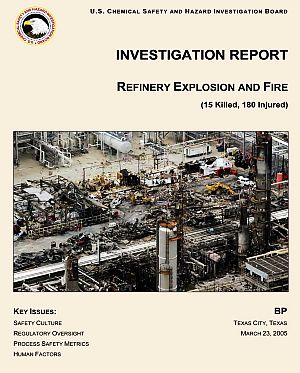 U.S. Chemical Safety Board’s report on the horrific & deadly 2005 BP Texas City, TX refinery explosion that killed 15 & injured 180. Click for copy. U.S. Chemical Safety Board’s report on the horrific & deadly 2005 BP Texas City, TX refinery explosion that killed 15 & injured 180. Click for copy. |
 Ronnie Green’s 2008 book featuring Louisiana resident Margie Richard’s 15 year fight with Shell Oil’s Norco, LA refinery & chemical plant that polluted her community and sickened its residents, by Amistad publishers, 288pp. Click for copy. Ronnie Green’s 2008 book featuring Louisiana resident Margie Richard’s 15 year fight with Shell Oil’s Norco, LA refinery & chemical plant that polluted her community and sickened its residents, by Amistad publishers, 288pp. Click for copy. |
 U.S. Chemical Safety Board’s report on a deadly February 1999 refinery fire at Tosco’s Avon Refinery in Martinez, CA that killed 4 workers and critically injured another. Click for copy. U.S. Chemical Safety Board’s report on a deadly February 1999 refinery fire at Tosco’s Avon Refinery in Martinez, CA that killed 4 workers and critically injured another. Click for copy. |
 2017 book: “One Minute After Sunrise: The Story of the Standard Oil Refinery Fire of 1955,” 246 pp. Click for copy. 2017 book: “One Minute After Sunrise: The Story of the Standard Oil Refinery Fire of 1955,” 246 pp. Click for copy. |
 CSB’s report on the July 2001 storage tank explosion at the Motiva oil refinery in Delaware City, DE where one worker was killed and eight others injured. That explosion also released 67 tons of acid vapors into the air and at least 97,000 gallons of sulfuric acid and petroleum products into waterways & the Delaware River, killing thousands of fish. Click for copy. CSB’s report on the July 2001 storage tank explosion at the Motiva oil refinery in Delaware City, DE where one worker was killed and eight others injured. That explosion also released 67 tons of acid vapors into the air and at least 97,000 gallons of sulfuric acid and petroleum products into waterways & the Delaware River, killing thousands of fish. Click for copy. |
 Related Reading: Scott Cole’s 2018 book, “Fallout,” about a community’s fight with oil industry pollution from a Unocal Oil refinery in California. Click for copy. Related Reading: Scott Cole’s 2018 book, “Fallout,” about a community’s fight with oil industry pollution from a Unocal Oil refinery in California. Click for copy. |
 U.S. Chemical Safety Board’s investigation and report on the April 2010 explosion and fire at the Tesoro Anacortes, WA refinery that killed 7 people. U.S. Chemical Safety Board’s investigation and report on the April 2010 explosion and fire at the Tesoro Anacortes, WA refinery that killed 7 people. |
 Stephen McGinty’s book, “Fire in the Night: The Piper Alpha Disaster,” about the July 1988 Occidental Petroleum disaster in the North Sea that killed 167 people. Click for copy. Stephen McGinty’s book, “Fire in the Night: The Piper Alpha Disaster,” about the July 1988 Occidental Petroleum disaster in the North Sea that killed 167 people. Click for copy. |
 Rachel Maddow’s 2019 book, “Blowout: Corrupted Democracy, Rogue State Russia, and the Richest, Most Destructive Industry on Earth,” 432 pp. Crown Books, 8,014 ratings on Amazon. Click for copy. Rachel Maddow’s 2019 book, “Blowout: Corrupted Democracy, Rogue State Russia, and the Richest, Most Destructive Industry on Earth,” 432 pp. Crown Books, 8,014 ratings on Amazon. Click for copy. |
 Daniel Yergin’s epic book, “The Prize: The Epic Quest for Oil, Money & Power,” winner of the Pulitzer Prize and a book that Business Week called “the best history of oil ever written.” 2009 paperback edition with a new epilogue. Click for copy. Daniel Yergin’s epic book, “The Prize: The Epic Quest for Oil, Money & Power,” winner of the Pulitzer Prize and a book that Business Week called “the best history of oil ever written.” 2009 paperback edition with a new epilogue. Click for copy. |
 Loren C. Steffy’s 2011 book, “Drowning in Oil: BP & the Reckless Pursuit of Profit,” McGraw-Hill. Click for copy. Loren C. Steffy’s 2011 book, “Drowning in Oil: BP & the Reckless Pursuit of Profit,” McGraw-Hill. Click for copy. |
 Steve Coll’s 2012 book, “Private Empire: ExxonMobil and American Power,” Penguin Press, 685 pp. Winner of the Financial Times and Goldman Sachs Business Book of the Year Award 2012. Click for copy. Steve Coll’s 2012 book, “Private Empire: ExxonMobil and American Power,” Penguin Press, 685 pp. Winner of the Financial Times and Goldman Sachs Business Book of the Year Award 2012. Click for copy. |
 Jane Mayer’s 2016 book, “Dark Money: The Hidden History of the Billionaires Behind the Rise of the Radical Right,” Doubleday, 416 pp. Click for copy. Jane Mayer’s 2016 book, “Dark Money: The Hidden History of the Billionaires Behind the Rise of the Radical Right,” Doubleday, 416 pp. Click for copy. |
 Christopher Leonard’s 2019 book, “Kochland: The Secret History of Koch Industries and Corporate Power in America,” Simon & Schuster, 714 pp. Click for copy. Christopher Leonard’s 2019 book, “Kochland: The Secret History of Koch Industries and Corporate Power in America,” Simon & Schuster, 714 pp. Click for copy. |
U.S. Chemical Safety and Hazard Investigation Board (CSB), “Interim Investigation Report, Chevron Richmond Refinery Fire,” CSB.gov, Washington, DC, April 2013.
U.S. Chemical Safety and Hazard Investigation Board (CSB), “Regulatory Report / Chevron Richmond Refinery Pipe Rupture and Fire,” Chevron Richmond Refinery, #4 Crude Unit, Richmond, California, August 6,2012 and Appendix A: Significant Petroleum Refinery Incidents in 2012, pp. 98-102, No.2012-03-I-CA, May 2014,
CSB, “Animation of Fire at Chevron’s Rich-mond Refinery, August 6, 2012,” YouTube .com, posted, April 2013.
Jaxon Van Derbeken, “Chevron Ignored Risk in ’11, Workers Say; Richmond; They Warned of Corrosion After ’11 Fire, Papers Show,” SFGate.com / San Francisco Chronicle, Octo-ber 13, 2012.
“Fire at Exxon’s Beaumont, Texas, Refinery Injures 12 Workers,” Reuters.com, April 17, 2013.
Erwin Seba, “U.S. EPA Cites Chevron for Environmental Violations from 2012 Fire,” Reuters.com, December 17, 2013.
U.S. Chemical Safety and Hazard Investigation Board, “CSB Releases Board Approved Regulatory Report on Chevron Refinery Fire – Proposes a More Rigorous Refinery Industry Regulatory System in California,” CSB.gov, Washington, DC, November 10, 2014.
Terry Hillig, “Roxana Lawsuit Alleges Pollution From Refinery,” St. Louis Post-Dispatch, March 21, 2012.
Steve Mason, EPA Region 6 Emergency Readiness Team, Response & Prevention Branch, Dallas, Texas 75202, “Alon Refinery Fire, Big Spring, Texas, Final Report,” May 1, 2008.
Bill Rigby, Erwin Seba. “Five Dead in Tesoro Anacortes Refinery Fire,” Reuters.com, April 2, 2010.
“Husky Officials Confirm Benzene Leak,” HomeTownStations.comMPRnews.org (Minnesota Public Radio), September 4, 2018.
“Photos: Smoke, Tension and Evacuations Follow Superior Refinery Fire,” MPRnews.org (Minnesota Public Radio), April 26, 2018.
“Odor Coming From Husky Refinery,” Home TownStations.com (Lima, OH), November 23, 2014.
Dave Fehling, “Tons Of Chemicals Leak From Shell Oil Refinery In Deer Park,” Houston PublicMedia.org (Houston Public Media, a service of the University of Houston), August 13, 2015.
Associated Press, “Fire Crews Respond to Blaze at Washington BP Refinery,” CTV news.ca, February 17, 2012.
Phuong Le, Associated Press, “Cherry Point Refinery Shut Down as Fire Investigation Is Launched,” SeattleTimes.com, February 18, 2012.
Teri Biebel, “6.6 Million Gallons of Crude Oil Spilled in Paulsboro, NJ,” SkyTruth.org, February 24, 2012.
Julie Kliegman, “Did the Koch Brothers Run an Alaskan Oil Refinery into the Ground?” [re: Flint Hills refiinery], PolitiFact.com, April 21, 2014.
“CSB Deploys to Investigate Release of Hydrofluoric Acid at CITGO Refinery in Corpus Christi, Texas,” CSB.gov, March 6, 2012.
Randy Kreider, “Feds Investigate Dangerous Acid Leak at Texas Citgo Refinery; Release of Acid at Citgo Refinery Follows 2009 Explosion at Same Site,” ABCnews.go.com, March 9, 2012.
“Refinery Events, March 16, 2012 – March 22, 2012,” assets.USW.org, United Steelworkers.
Barbara Powell, “Gasoline Advances After Sunoco Refinery Fire, Inventory Decline,” Bloomberg.com, May 9, 2012.
“Refinery Events, May 4, 2012 – May 10, 2012,” assets.USW.org, United Steelworkers.
Associated Press, “BP Fined $81,500 for Safety Violations at Washington Refinery,” OregonLive.com, August 30, 2012.
Terrence Henry (KUT, Austin, Texas), “Exxon Refinery in Baytown Releases Massive Amount of Chemicals,” NPR.org (a reporting project of NPR member stations), September 12, 2012.
Lauren McGaughy, “ExxonMobil Baton Rouge Refinery Did Not Disclose Accident, Inspect Corroded Pipes: Uncensored EPA Report,” Nola.com / The Times Picayune, February 21, 2013.
“EPA Reveals Corrosion, Failures Plaguing ExxonMobil Refinery,” PaintSquare.com, Wednesday, March 6, 2013.
Leeann Sinpatanasakul, “Hydrogen Fluoride – A Toxic Chemical in Your Neighborhood?,” ForEffectiveGov.org, November 19, 2013.
Faimon A. Roberts, III and Della Hasselle, “Massive Flare at Chalmette Refinery an ‘Unplanned Event’ That Let Out ‘Awful’ Smell,” TheAdvocate.com (New Orleans, LA), March 12, 2018.
Mark Schleifstein, “ExxonMobil Chalmette Refinery Likely Cause of Odor in City on Wednesday, Coast Guard Says,” NOLA.com | The Times-Picayune, April 4, 2013.
Dow Jones Newswire, “Refinery Status: Benzene Leak Detected At Chevron’s Pasca-goula, Mississippi Refinery,” MarketScreener .com, September 18, 2012.
Antonia Juhasz, “The True Cost of Chevron: An Alternative Annual Report,” TrueCostof Chevron.com, 2009.
Jim Malewitz, Jolie McCullough, Ben Hasson and Lise Olsen, “A Deadly Industry; Assembled Data Shows How and Where U.S. Refinery Workers Continue to Die,” Texas Tribune / Houston Chronicle, March 22, 2015.
Dow Jones News, “Refinery Status: Sunoco Philadelphia Refinery Fire Shuts Girard Point Crude Unit,” May 9, 2012.
United Steelworkers, “Refinery Events, May 4, 2012–May 10, 2012,” Assets.USW.org (obtained from the Department of Energy (DOE) website).
Jane Kay, Cheryl Katz, “Pollution, Poverty and People of Color: Living with Industry. Low-income residents in North Richmond, Calif., Save Money on Shelter, but Pay the Price in Health, “ Scientific American, June 4, 2012.
United Steelworkers, “Refinery Events, June 8, 2012–June 14, 2012,” Assets.USW.org (obtained from the Department of Energy (DOE) website)
Dan Wallach, “Fire at Motiva Shuts Down New Unit,” BeaumontEnterprise.com, June 12, 2012.
“Fire Breaks out at Meraux Refinery; No Injuries Reported in Early Morning Incident,” WDSU.com / WDSU-TV News, New Orleans, LA, Updated, July 22, 2012.
Loretta Park, “Woods Cross Refinery Cleans Up After Oil Sprays Neighborhood,” Standard .net / Standard Examiner (Ogden, UT), August 31, 2012.
Associated Press, “Employee Hurt in Refinery Fire; Authorities Say a Fire at a Marathon Petroleum Co. Refinery in the Detroit Area Has Injured an Employee,” September 5, 2012.
“Port Reading Hess Workers Evacuated after Vapor Cloud Develops from Leaking Propane Truck,” NJ.com, October 3, 2012.
Josh Mogerman, “ExxonMobil Mess: Refinery Spews Oil Into Suburban Skies,” Chicagoist .com, October 20, 2012.
“Chemical Leak at Refinery Prompts Road Closures,” BakersfieldNow.com, October 18, 2012.
“Valero Reports Hydrogen Cyanide Release at Its 142,000 b/d Corpus Christi, Texas Refinery” (reported Nov 27; stack test, Oct 24), Refinery Events, November 30, 2012—December 6, 2012, Assets.USW.org, United Steelworkers (obtained from the Department of Energy website).
Lauren McGaughy, “ExxonMobil Baton Rouge Plant Inspection Report Raises Concerns; Activists Request Full Accounting of June Benzene Spill,” NOLA.com | The Times Pica-yune, December 20, 2012.
“Benzene Leaks from Pipeline at ExxonMobil’s 503,000 b/d Baton Rouge, LA Refinery, December 1,” Refinery Events, November 30, 2012—December 6, 2012, Assets.USW.org, United Steelworkers (obtained from the Department of Energy website).
News Report, “Man Dies from Exposure to Dangerous Chemical at Valero Refinery,” WMC-TV / ActionNews5.com, December 3, 2012.
“Flint Hills Reports Cumene Unit Emissions During Repairs at Its 288,468 b/d Corpus Christi, Texas Refinery December 5,” Refinery Events, November 30, 2012—December 6, 2012, Assets.USW.org, United Steelworkers (obtained from the Department of Energy website).
Erwin Seba, “Troubled Motiva Refinery Crude Unit Shut by Small Fire,” Reuters.com, December 12, 2012.
Kristen Lombardi and Andrea Fuller, “’Upsets’: Chemical Releases Disrupt Lives but Rarely Result in Punishment,” NBCnews.com, May 21, 2013.
U.S. EPA, Washington, DC, “Shell Deer Park Settlement,” EPA.gov, July 10, 2013.
Office of Public Affairs, U.S. Department of Justice, “Shell Oil to Spend Over $115 Million to Reduce Harmful Air Pollution at Houston Area Refinery and Chemical Plant,” Justice .gov, July 10, 2013.
“EPA Records Reveal [ExxonMobil Joliet] Oil Refinery Safety Questions,” ABC7Chicago .com, August 2, 2013.
Susan Buchanan, “ExxonMobil Denies its Baton Rouge Plants Had Safety Violations,” LouisianaWeekly.com, January 21, 2014.
“ExxonMobil Refinery Incidents over Years Include Fires, Explosions,” DailyBreeze.com (Hermosa Beach, CA), March 1, 2015 / updated, September 6, 2017.
Jim Malewitz, “A Deadly Industry: Assembled Data Shows How and Where U.S. Refinery Workers Continue to Die,” EHStoday.com, March 31, 2015.
Dave Fehling, “Tons Of Chemicals Leak From Shell Oil Refinery In Deer Park; More Details Are Surfacing about a Big Leak of a Potentially Cancer-causing Chemical from a Refinery near Houston,” HoustonPublicMedia.org, News, August 13, 2015.
“1 Dead and 1 Injured after Chemical Exposure at Placid in Port Allen,” TheWestSideJournal .com, March 9, 2016.
Jeff Johnson, “Inherently Safer Design at Refineries Proposed in California,” Chemical & Engineering News, July 25, 2016.
CSB, “ExxonMobil Torrance Refinery Investi-gation Report,” CSB.gov, May 2017.
Steve Early, “5 Years After Wake-up Call on Refinery Safety, More Work Needed,” San Francisco Chronicle, August 2, 2017.
U.S. Chemical Safety and Hazard Investigation Board (CSB), Investigation Report, “LPG Fire at Valero – McKee Refinery (Four Injured, Total Refinery Evacuation, and Extended Shutdown), Valero Energy Corporation, Sunray, Texas, February 16, 2007,” CSB.gov, Report Issued: July 2008.
United Steelworkers / Tony Mazzocchi / Center for Health, Safety and Environmental Education, “A Risk Too Great: Hydrofluoric Acid in U.S. Refineries,” April 2013.
Robert Collier, “Part 2: The Most Dangerous Chemical You’ve Never Heard Of,” TheNextGeneration.org, August 15, 2013.
Jim Morris, Executive Editor; Chris Hamby, “Use of Toxic Acid Puts Millions at Risk,” PublicIntegrity.org, February 24, 2011, updated, May 19, 2014.
Environmental Justice and Health Alliance For Chemical Policy Reform, “Who’s in Danger? Race, Poverty, and Chemical Disasters: A Demographic Analysis of Chemical Disaster Vulnerability Zones,” ComingCleanInc.org, May 2014.
Sally Hayati, “Hydrofluoric Acid Incidents In Torrance & Elsewhere: A Partial Chronology,” Torrance Refinery Action Alliance / SafeTorranceRefinery.org, October 7, 2015.
“Powerful Explosion Rocks Oil Refinery, Injuring at Least 11; Smoke Could Be Seen for Miles and Evacuations Were Ordered at Nearby Neighborhoods,” ABCNews.com, April 26, 2018 (TV news report on Husky Oil Refinery explosion, Superior, WI).
Mike Hughlett, “Husky Refinery Explosion in Wis. Prompts Recommendation to Review Use of Hydrogen Fluoride; After Husky Energy Incident Led to Evacuation, Panel Asks EPA to Revisit Guidelines,” StarTribune.com / Minneap-olis Star Tribune, April 26, 2019.
U. S. Environmental Protection Agency (EPA), Hydrogen Fluoride Study: Report to Congress, [Section 112(N)(6), Clean Air Act as Amended], Final Report, December 26, 2019.
Forrest Wilder, “The Fire This Time” [Citgo Refinery], TexasObserver.org, August 19, 2009.
Jasmine Babbs, SFSU, “Exxon Mobil Beaumont Refinery,” PGEproject.WordPress .com, 2017.
Reuters, “Marathon Refinery Fire In Detroit Extinguished With No Injuries, Town Partially Evacuated,” HuffPost.com, April 27, 2013.
Jim Malewitz, Jolie McCullough, Ben Hasson and Lise Olsen, “A Deadly Industry: Assembled Data Shows How and Where Refinery Workers Continue to Die,” TexasTribune.org (Texas Tribune / Houston Chronicle), March 22, 2015.
Nick Green, “33 Accidents Happened at Oil Refineries as EPA Delayed Updating Disaster Rule, Says Environmentalist Group,” DailyBreeze.com (Torrance, CA), April 3, 2018.
Contra Costa Health Services (Contra Costa County, CA), “Major Accidents at Chemical/ Refinery Plants in Contra Costa County, CA” (more than 60 incidents listed, 1992-2018), CChealth.org.
Joe Guillen, “Duggan Threatens Suit over Marathon Refinery Emissions,” Detroit Free Press, January 28, 2016.
Aaron Mondry, “Two Hospitalized After Vapor Leak at Marathon Refinery; Officials Say There’s No Health Risk, But Residents Are Wary,” Detroit.Curbed.com, September 13, 2019.
“Valero Meraux Oil Refinery Restarts Crude Unit After July Fire,” Bloomberg.com, October 8, 2012.
“Update: BP Cuts Refinery Rates by 30 Percent after Coker Fire at Its 413,000 b/d Whiting, Indiana Refinery July 23,” Refinery Events, July 20, 2012—July 26, 2012, United Steelworkers, Assets.USW.org.
Mark Schleifstein, “Louisiana Refinery Accidents Decline, But Accident Emissions Rise, Louisiana Bucket Brigade Reports,” NOLA.com | The Times-Picayune, December 4, 2012.
Ben Lefebvre and Alison Sider, Dow Jones Newswires, “Motiva’s Giant Texas Refinery Battered by Accidents After $10bn Upgrade,” HydrocarbonProcessing.com, August 2013.
U.S. Office of Homeland Security, “Daily Open Source Infrastructure Report: 30 July 2012,” DHS.gov.
“2nd Man Dies After Wynnewood Refinery Explosion,” KOKO5 News, October 16, 2012.
Juliet Linderman, “Shell Chemical Equipment Failure Causes Flame and Flares in St. Charles,” NOLA.com | The Times-Picayune, December 4, 2012.
“Contractor Killed at PBF Oil Refinery [Paulsboro, NJ] in Greenwich Township,” NJ.com, January, 2, 2015.
Mike Phillips, “Blaze at Delaware City Refinery Sends Black Smoke Billowing Into the Air,” WDEL.com, February 3, 2019.
Heather Rogers, “Erasing Mossville: How Pollution Killed A Louisiana Town,” TheIntercept.com, November 4 2015.
Rebecca Sobel, “Oil Refineries Threatening U.S. Communities With Cancer-Causing Air Pollution; New Mexico Refinery Among 10 Others Refineries Releasing Excessive Amounts of Benzene into Local Neighborhoods,” WildEarthGuardians.org, February 6, 2020.
Associated Press, “Refinery Fire Extinguished in South Texas, No Injuries”(third party pipeline at Citgo Refinery, Corps Christi, TX), APNews.com, February 17, 2020.
Clyde Hughes & Danielle Haynes, “Major Oil Refinery Fire Shuts Down Los Angeles Freeway,” UPI.com (w ABCNews video), Feb. 26, 2020 (Marathon Petroleum oil refinery, Carson, CA).
Jeremy P. Jacobs, “Anger over Dirty Air Intensifies in Calif.’S Oil Hub,” EEnews.net, April 29,2020.
News Release, EPA Region 10, “EPA Penalizes Shell for Anacortes Refinery Release; Company Pays $191,000 Penalty for 2015 Event That Sickened Locals,” EPA.gov, February 10, 2021.
Mark Schleifstein, “After Last Year’s Fire at Meraux Refinery, Valero Fined $58K For Safety Violations,” NOLA.com, April 12, 2021.
“Shell Refinery Flaring Burn-Off / Deer Park, TX 12.7.21,” YouTube.com.
Kylee Bond, Kenny Lopez, “Explosion Confirmed at Marathon Garyville Refinery,” WGNO.com (WGNO-TV News), Garyville, LA, February 21, 2022.
Michael Esealuka, “Marathon Refinery Explosion Puts Workers, Community At Risk,” HealthyGulf.org, February 22, 2022.
Associated Press, “Explosion at Marathon Refinery in Garyville Injures 6 Workers; Cause under Investigation; It’s One of the Largest Refineries in the Country,” NOLA.com (news), February 22, 2022.
Aliya Uteuova, “U.S, Oil Refineries Spewing Cancer-Causing Benzene into Communities, Report Finds. Analysis Shows Alarming Level of Benzene at Fence-Line of Facilities in Texas, Louisiana, Pennsylvania, Indiana and US Virgin Islands,” TheGuardian.com, May 14, 2022.
Reuters News, “Six Injured in Fire at Phillips 66 Texas Refinery Tank Farm,” Reuters.com, January 17, 2023.












































![Pulitzer Prize- winning reporter, David Cay Johnston’s book, “The Making of Donald Trump,” Updated edition, 288pp. “[C]]arefully fleshes out the details of Trump’s known biography...with solid documentation.” Click for copy.](https://pophistorydig.com/wp-content/uploads/2026/02/BK-David-Cay-Johnston-300.jpg)



























![A 1958 Du Pont ad: “Lloyd Weill [famous dress manufacturer] requests the pleasure of your company in summer’s ever-fresh sheer...” DACRON and Cotton.](https://pophistorydig.com/wp-content/uploads/2025/11/1958-Dacron-cotton-280.jpg)






















![Jamie Lincoln Kitman, “The Secret History of Lead” [and Du Pont's role], TheNation.com, March 2000. Click for story.](https://pophistorydig.com/wp-content/uploads/2023/06/ART-Nation-Lead.jpg)













































































































































































































































































































































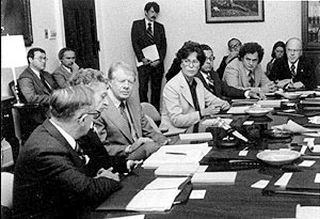
![December 11, 1980. President Carter signing Superfund law at the White House. Among those attending in the first row behind Carter are, L-to-R: Sen. Daniel Patrick Moynihan (D-NY), Sen. Jennings Randolph (D-WV), Sen. Robert Stafford (R-VT), Sen. George Mitchell (D-ME), Rep. James Florio (D-NJ) [Sen. Bill Bradley (D-NJ) behind Florio], Sen. John Chafee (D-RI), and others.](https://pophistorydig.com/wp-content/uploads/2024/05/1980-Carter-signing-620.jpg)













































































































































































































































































































































![Chuck Hutterli of Nipigon, Ontario (shown at left) has been cleaning up recurring tidal deposits of white nurdle pellets off the Lake Superior beach near his home for more than a decade, not far from where a 2008 Canadian Pacific train derailment spilled them into Lake Superior. “Yep, they’re still coming,” said Hutterli in 2021 of the nurdle beach deposits [especially after windstorms]. “It’s aggravating as hell.” (Courtesy photo / MLive.com)](https://pophistorydig.com/wp-content/uploads/2022/10/Great-Lakes-RR-spill-620.jpg)