Tag Archives: 1960s music history

“Era-Defining Music”
1967-1971

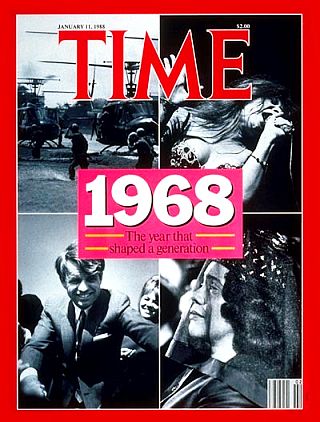
Time magazine cover from January 1988 marking 20th anniversary of 1968, with four photos from that year – of Vietnam War, rock music, Robert F. Kennedy, and Coretta Scott King at the funeral of her assassinated husband and civil rights leader, Rev. Martin Luther King. Click for Time's 1968 special edition hardback.
In the middle of the 20th century, as a swirl of politics and culture seemed to engulf all of life, popular music was helping to define and mark those times – troubled as they were.

The year 1968, for example, was a particularly tremulous time in America, as a series of wrenching socio-political crises seemed to converge all at once – the Vietnam War, political assassinations, civil rights strife, mass protests, urban riots, a contentious presidential election, etc. And music was there providing the soundtrack.


Music Player
“All Along The Watchtower”
Jimi Hendrix Experience, 1968

One song of 1968 that stands out and that helped capture a bit of the angst and turmoil – especially the Vietnam War and its protests – was the Jimi Hendrix version of Bob Dylan’s “All Along The Watchtower.”

Dylan, of course, was known by then for his extensive oeuvre of civil rights and anti-war protest songs, many from the early- and mid-1960s, among them: “Blowin` in Wind,” (1963, also a Peter, Paul & Mary hit), “The Times They Are A-Changin'” (1964), “Master of War” (1963), “Oxford Town” (1962, enrollment of black student, James Meredith at the University of Mississippi), “Only A Pawn in Their Game” (1964, assassination of Medgar Evers), and others. But in 1967, Dylan had written “All Along The Watchtower,” releasing his version that December.
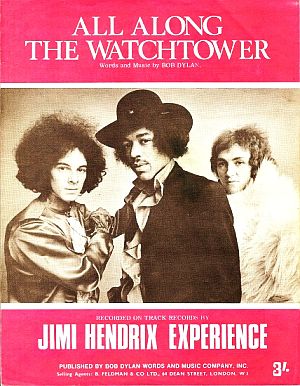
Sheet music for Jimi Hendrix Experience version of “All Along The Watchtower,” Hendrix here with bandmates Noel Redding & Mitch Mitchell. Click for digital.
Hendrix, meanwhile, had received a Dylan tape of the “Watchtower” song earlier in 1968, and began working on it in his studio in January. That work continued for months with numerous takes to craft his version of the song. Hendrix music author Peter Dogget would note: “Hendrix used the sound of the studio to evoke the storms and the sense of dread [in his version of the song], creating an echoed aural landscape.”

Dylan’s lyrics and “story” in “Watchtower” have been subject to a range of interpretations over the years – from doom, exploitation, and even certain bible verses. Dylan’s lyrics do signal a certain dread and foreboding – or at a minimum, wariness of trouble and exploitation, not unlike what was happening in the late 1960s.

Musically, Dylan’s version of the song is what some might call “sonically reserved,” using acoustic guitar and harmonica in a folk-rock offering, while the Hendrix version is more sonically explosive, filling in all available space with power guitar and studio effects. Hendrix essentially amplified the Dylan message by leaps and bounds. He takes the “Watchtower” lyrics, story, and sound all to another level, or as one observer described it, “cataclysm…rendered scarily palpable through the dervish whirls of guitar.”

But however it’s parsed musically, the Hendrix version effectively captured the feelings and angst of that time; it has a gripping “late-1960s” signature and resonance about it that makes it one of the classic “music markers” of that era. It would also be used in soundtracks for Vietnam War and other period documentaries and Hollywood films, among them, Forest Gump

When released, the Hendrix version of “All Along The Watchtower” became more popular than Dylan’s original version of the song – which even Dylan lauded with a glowing review in Melody Maker magazine. In fact, Dylan is said to have remarked: “It’s Jimi’s song, I just wrote it.” The Hendrix version came out as a single in early September 1968, a month prior to also appearing on the Electric Ladyland Hendrix album. It would rise to No. 20 on the U.S. Billboard chart in 1968, receive a Grammy Hall of Fame award in 2001, and would be ranked at No. 40 on Rolling Stone magazine’s 2021 list of the 500 Greatest Songs of All Time.

Hendrix and “All Along The Watchtower,” however, aren’t alone in defining the late 1960s. A number of songs and artists also qualify for their distinctive music from the late 1960s and early 1970s. But before exploring some of those, a little more historic perspective on the wrenching turmoil of those times follows next.


Wash., DC anti-war protest, 1967.
Vietnam War, October 1967.
Riot Control, April 1968.
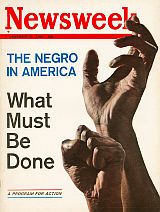
The Negro in America, Nov. 1967.
 
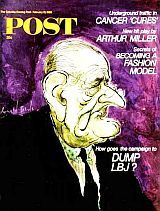
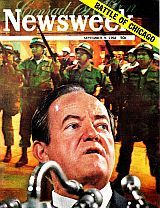
LBJ's woes, February 1968.
McCarthy's rise, March `68.
MLK assassination, April 1968.
Generation Gap, May 1968.
 
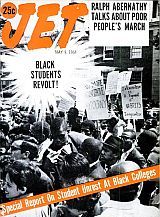
Black Students, May 1968.
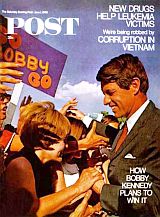
RFK’s campaign, June 1968.
Street battles at Aug 1968 DNC.
Dems Humphrey & Muskie.
 
George Wallace, spoiler, Aug. `68.
Protests at Columbia, Sept `68.
 
Nixon elected, November 1968.
Protests continue, October 1969.
 
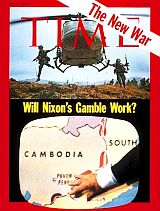
Nixon & Cambodia, May 1970.
Kent State killings, May 1970.
 

Time of Tumult

In the 1960s, the 1967-68 period stands out for the tumult and upheaval that occurred in America and around the world. Popular magazines of the day – some of which are shown in the column at right – featured the nation’s troubled times on its covers.

The Vietnam War and civil rights were the primary national concerns of that time – as campus protests, urban riots, and mass demonstrations flowed from those two overriding issues – and others, including two assassinations – Martin Luther King in April 1968 and Robert F. Kennedy in June 1968.

America’s role in the the Vietnam War was jolted early in 1968 after the North Vietnamese and Viet Cong mounted their surprise Tet Offensive in late January.

In matters of race, the summer of 1967 had seen 159 race riots across the U. S. In June there were riots in Atlanta, Boston, Cincinnati, Buffalo, and Tampa. In July riots occurred in Newark, Detroit, Birmingham, Chicago, New York City, Milwaukee, Minneapolis, Rochester, Toledo and other locations. As a result of these riots, and those of preceding years, President Johnson established the Kerner Commission to investigate the rioting and urban condition and issues of Black Americans. As a result of Johnson’s action, some publications, such as Newsweek, did special reporting.

The full Kerner Commission Report, issued on February 29, 1968, blamed lack of economic opportunity, failed social service programs, police brutality, racism, and the white-oriented media for racial divisions and the unrest that had ensued. The 426-page report became a bestseller.

The 1960s were also a time of youthful rebellion, when a “generation gap” ensued between baby boomers and their parents; a time of challenging authority and experimentation – of “sex, drugs, and rock n roll,” went the expression – which didn’t always turn out well.

1968 was also a presidential election year — one of the most tragic, divisive, and tumultuous on record. Embattled Democrat incumbent, Lyndon Johnson, was expected to seek a second term. Republican contestants from Nelson Rockefeller to George Romney vied from their party’s nomination with former Vice President Richard Nixon and running mate, Maryland Governor, Spiro Agnew, filling out the ticket.

The Democrats, however, had a lot more drama, as Sen. Gene McCarthy — an announced anti-war candidate — did well enough in the New Hampshire primary to become a challenger to President Johnson. Sensing Johnson’s vulnerability, Senator Robert F. Kennedy then jumped into the race, later becoming a favorite.

However, on March 31, 1968, at the end of a nationally-televised address on suspending the bombing of North Vietnam in favor of peace talks, Johnson surprised everybody by bowing out of the race.

In April 1968, civil rights leader, Dr. Martin Luther King was assassinated in Memphis, Tennessee, sparking weeks of riots and racial unrest all across the country. Two months later, in early June 1968, Robert Kennedy was assassinated in the kitchen of the Ambassador Hotel in Los Angeles after giving a victory speech upon winning the California primary that night.

By August 1968, the site of the Democratic National Convention, Chicago, became something of a nationally-televised war zone, as police and protestors battled in the streets over the Vietnam War and Democratic politics. Democratic Senators Hubert Humphrey and Ed Muskie emerged from the maelstrom as the Democratic ticket.

Meanwhile, in mid-October 1968 in Mexico City, at the Summer Olympic Games, African-American athletes Tommie Smith and John Carlos, at the medals ceremony, raised their fists in protest with black power salutes after winning their track events.

In the general election campaign that fall, Alabama governor, George Wallace, an avowed segregationist, had entered the race for President as a third party candidate, complicating the possible electoral outcome. As it was, Wallace and his running mate, General Curtis LeMay of WWII fame, took five southern states — Arkansas, Louisiana, Mississippi, Alabama and Georgia — garnering 46 electoral votes. But in the end that November, the Republican ticket of Richard Nixon-Spiro Agnew prevailed to take the prize.

In his campaign, Nixon had appealed to “the silent majority” and ran as a “law and order” candidate and someone who “had a plan” to end the war in the Vietnam. But for many in the nation that fall, there was an uneasy feeling about Nixon, not sure exactly what he would do as President.

The troubled ‘60s carried over into the 1970s, as Nixon expanded the Vietnam War with an invasion of Cambodia in May 1970, touching off more protests at home, resulting in National Guard shootings of students at Kent State University in Ohio (see “Four Dead in O-hi-o”). Beyond the war and everything else, there was more trouble ahead as something called Watergate — implicating nefarious political activities of the Nixon White House — would roil the nation through the mid-1970s.

In any case, the music of the late 1960s helped capture those turbulent times. And in addition to the Jimi Hendrix contribution of “All Along The Watchtower,” there were other artists and songs “sound-tracking” those times — and not least, a few from the Rolling Stones.
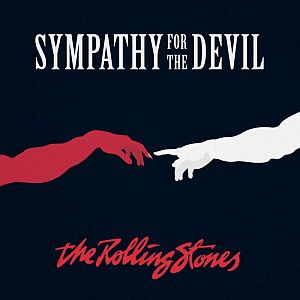

Art work for Rolling Stones' song, "Sympathy for the Devil." Click for digital single.


Rolling Stones

Among Rolling Stones songs that also weigh in as late-1960s musical markers is “Sympathy for The Devil,” recorded in June 1968, and released in December that year with their Beggars Banquet album.


Music Player
“Sympathy for The Devil”
Rolling Stones, 1968

While the lyrics for this song, narrated by “Lucifer” (Mick Jagger), deal with historic events of war, carnage and assassination, the song’s sentiments could easily segue to those of the troubled 1960s. In fact, as the Stones were recording this song in early June of 1968, U.S. Senator Robert F. Kennedy, then running for the Democratic Presidential nomination, was assassinated in California, causing a change in the lyrics then being composed. One line in the lyrics that had referred to the killing of “Kennedy” in the singular (i.e., JFK, 1963), was changed to “Kennedys” plural, in the line: …I shouted out, who killed the Kennedys? When after all, it was you and me.

“Sympathy for the Devil” was certainly channeling 1960s rage – and was so received by its listeners in that time and later: that Lucifer wasn’t only present during the historic acts described, but was also there in the cauldron of the late 1960s. The Stones, in fact, had been presenting their concerns about socio-political milieu since their earlier 1963 hit, “Satisfaction,” which offered plenty of social commentary and “attitude.” Another Stones’ tune from 1965, “Paint It Black,” a funeral dirge for a lost lover, came to be associated with Vietnam, used in film and TV. And another, “Street Fighting Man,” had its inspiration in part from 1960s rioting and protests.
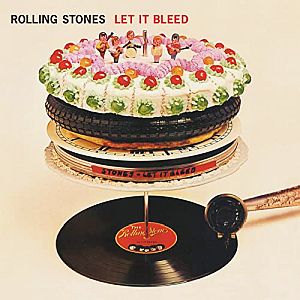
Rolling Stones' 1968 album, "Let It Bleed." Click for album and/or digital singles.
But perhaps “Gimme Shelter,” written by Mick Jagger and Keith Richards, and powered in part by the soaring female vocals of Merry Clayton, takes the prize as the Stones’ “most 1960s-ish turbulent” song.


Music Player
“Gimme Shelter”
Rolling Stones, 1969

Gimme Shelter” was recorded and released in 1969, the first song on their Let It Bleed album, and as Jagger would explain some years later, was inspired, in part, by the Vietnam war and its protests:

…Well, it’s a very rough, very violent era. The Vietnam War. Violence on the screens, pillage and burning. And Vietnam was not war as we knew it in the conventional sense….It was a real nasty war, and people didn’t like it. People objected, and people didn’t want to fight it…[Gimme Shelter is] a kind of end-of-the-world song, really. It’s apocalypse; the whole record’s like that.

In one review some years later in 2019, The Financial Times noted that the song “heralded the arrival of a new brutish era — a winter of discontent to follow the Summer of Love. With the war in Vietnam escalating and the threat of nuclear annihilation from the Soviet Union unremitting, hopes for the future had evaporated by the decade’s close.” And indeed, in the latter case, in late August 1968, a somewhat more democratic Czechoslovak was invaded by the Soviet Union.

The song generally would become a time capsule of late ’60’s anxiety. One comment at a YouTube posting of the song, noted: “Gimme Shelter” is the anthem for the apocalyptic ending of the 60’s, the decade which can never end.” Still, one reviewer of the song, Catheriin Walthall, writing for American Songwriter, asked if there could be a happy ending with this song, answering: “In short, yes. The 1969 song does leave Stones fans and listeners with a little bit of hope. The closing verse, sung by both Jagger and Clayton, promises that love is just as possible as war – I tell you love, sister, It’s just a kiss away.”
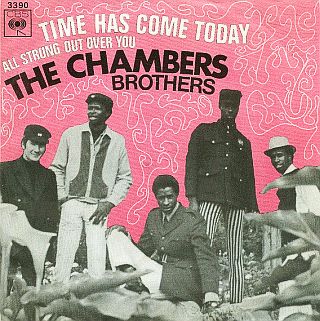
A jacket cover used for late 1967 release of Chambers Brothers’ single, “Time Has Come Today.” Click for digital.


Time Has Come…

Another popular song from 1968 that helped capture a bit of the angst and turmoil of that year and those times is “Time Has Come Today,” by the Chambers Brothers.


Music Player
“Time Has Come Today”
Chambers Brothers, 1968

The song, written by Willie and Joe Chambers, and performed by their group, had gone through a few variations and false starts dating to 1966. The Chambers Brothers were from Mississippi and started out as a gospel act of four African American brothers – George, Joe, Lester and Willie Chambers. By 1965, after ten years performing, but still relatively obscure, they added a drummer – a white musician named Brian Keenan – and began to change their act to a more rock/soul style. As their music evolved, they would soon be described as “black/gospel/funk/ psychedelic innovators,” and part of a wave of new music “that integrated American blues and gospel traditions with modern psychedelic and rock elements.” In 1967, Columbia Records signed them to a contract.

Meanwhile, at their live outings in popular concert venues and clubs of that era, such as the Fillmore (East and West), Hollywood Bowl, Electric Factory, and others, they had developed an extended version of their song – “Time Has Come Today” – that ran 11 minutes or so but had connected with audiences. Columbia’s Clive Davis, reluctant at first, agreed in November 1967 to put out a Chambers Brothers album – titled, The Time Has Come – which included the longer, 11-minute rendition of “Time Has Come Today” as the final track.
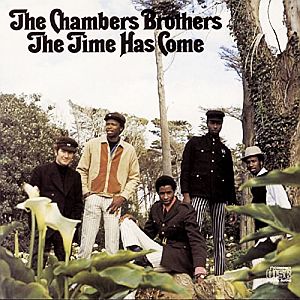
“Time Has Come Today" was featured on The Chambers Brothers’ November 1967 album, titled, “The Time Has Come.” Click for album or digital singles.
But despite its reception at some progressive FM radio stations, the song was far too long for single release and popular radio play. A shorter, radio-friendly version was made and issued as a single in December 1967. Between the single and the album version, “Time Has Come Today” was heard increasingly across the nation by the summer and fall of 1968 and began to move up the charts. In San Francisco it went to No. 1. By August 10th, 1968 it entered Billboard’s Hot 100 chart, and on September 15th it peaked at No.11 on that chart, where it stayed for five weeks. In all, “Time Has Come Today” spent 14 weeks on the Billboard 100. By late December 1968, the album, The Time Has Come, had spent 27 weeks on the Billboard albums chart, peaking at No. 6 (although some accounts say No. 4). On January 12, 1969 the Chambers Brothers also performed an abridged version of “Time Has Come Today” on CBS-TV’s The Ed Sullivan Show, along with a medley of their No. 37 hit “I Can’t Turn You Loose” and “People Get Ready”.

“Time Has Come Today” – with its clock-like “tick-tick-tick” backing, offered a foreboding of unpleasant expectation. The song became part of the late 1960s playlist, helping time-stamp the era’s socio-political turmoil and disaffection. Without specifically referencing Vietnam, civil rights, or other concerns in its lyrics, the song’s musical arrangement and energy served to convey a seminal message: “it’s time for change.” The song’s power, in part, was in what was not said. The musical frame alone was sufficient enough, capturing the times, but allowing space for listeners to provide their own thoughts and feelings.

As George Lipsitz of the University of California at Santa Barbara would later write in the Michigan Sociological Review in 2016: “‘Time Has Come Today,’ marked the moment as a time of transformative change… where the old ways seemed obsolete but unwilling to die, while the new appeared promising but not yet able to be born…”

But the legacy of “Time Has Come Today” would go well beyond 1968 performance and reception, becoming one of the late 1960s’ musical touchstones. “Time Has Come Today” helped define that era in national memory, if only by certain musical riffs from the song that would be used repeatedly in later documentaries, Hollywood films, and TV series, helping to make it a notable late-1960s musical marker.

1978, Coming Home film.
1988, HBO Vietnam series.
1991, The Doors film.
1999, Girl Interrupted film.
 
2011, Vietnam in HD Tv series.
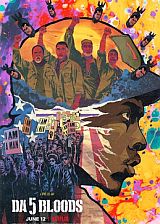
2020, Da 5 Bloods film.


In Film & TV

In a later interview with the Los Angeles Times, Willie Chambers would note about the popularity of the song for use in film and TV: “That song was a monster. It’s been used in over 160 movies, commercials and television shows.”

However, not all of these uses relate to the 1960s or its issues, but a number of them do have 1960s storylines or period imagery (click images for related Amazon.com pages).

Coming Home, a 1978 Academy Award winning Vietnam War-related film, stars Jane Fonda, who plays a married volunteer medical attendant who has an affair with wounded veteran (Jon Voight). The director of that film, Hal Ashby, used all 11 minutes of the long version of “Time Has Come Today” as the backdrop to the climactic scene when Marine Captain Robert Hyde (Bruce Dern) “comes home” to his unfaithful wife (Fonda). Captain Hyde has an “out-of-his-mind” breakdown and rampage scene, during which the “tick-tick-tick” and full version of “Time Has Come Today” runs as the background music.

Another film about Vietnam, Casualties of War, released in 1989, starring Sean Penn and Michael J. Fox, also uses the song, as does the 1991 film, The Doors, an Oliver Stone film about Jim Morrison, frontman for the 1960s rock group, The Doors.

A 1998 documentary film, 1968: The Year That Shaped a Generation, narrated by long-time CBS newsman, Walter Cronkite, had the song in its score. Girl, Interrupted, a 1999 American psychological drama set in 1967-68, starring Winona Ryder, Angelina Jolie, Whoopi Goldberg and others, also uses the song, as did the The Zodiac, a 2006 psychological thriller based on the Zodiac serial killer active in northern California in the 1960s and 1970s. The song is also heard in Da 5 Bloods, a 2020 Spike Lee war drama, follows a group of four African American Vietnam War veterans who return to the country in search of the remains of their fallen squad leader and a stash of gold treasure they buried while serving there.

On television, the song was used in the 1987-88 HBO TV series, Vietnam War Story, and also in the History Channel’s 2011 documentary series, Vietnam in HD. The PBS show, American Experience featured “Time Has Come Today” as its theme song during 2009-2010. In Ken Burns’ PBS Baseball documentary, the song is heard during a 1960s segment. It is also used in video games – featured in Homefront and also used in Call of Duty. Beyond Vietnam documentaries and/or films about the late 1960s, “Time Has Come Today” is also heard in more than a dozen other films and TV shows that have nothing to do with the 1960s, but is used primarily as a play on it’s “time” motif for suspense or other purpose. Still, the repeated use of “Time Has Come Today” for film and documentary soundtracks dealing with Vietnam and the late 1960s has given the song historic bona fides and burnished it deeply in social memory as attached to those troubled times.
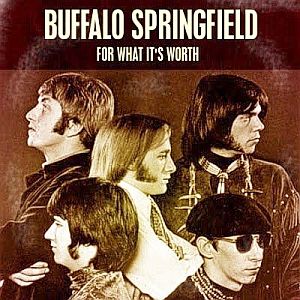
The 1966-67 Buffalo Springfield song, "For What It's Worth," by Stephen Stills, would become a popular period piece & protest song for the 1960s. Click for digital.

Period & Protest Music

Other Songs

There were, of course, numerous artists who contributed vintage period and/or protest music in the 1960s. A Buffalo Springfield song from 1966-67, “For What It’s Worth,” while not written as an anti-war anthem, conjured up those sentiments in later years, and like other songs of that kind, would be heard in later film accounts of the war and ‘60s protests. Released in December 1966, it peaked at No. 7 in the Spring of 1967.

Music Player
“For What It’s Worth”
Buffalo Springfield 1966-67

Pete Seeger, folk singer and songwriter from the 1950s with the Weavers folk group, had a hand in various songs used in 1960s protest music, including, “Where Have All The Flowers Gone,” “Turn, Turn, Turn,” and “If I Had A Hammer” — as well as helping popularize the civil rights anthem, “We Shall Overcome.” Seeger attracted some controversy in 1967 with his song, “Waist Deep in the Big Muddy,” initially banned from a national TV show (though later aired) for hitting too close to incumbent President Lyndon Johnson, then mired in Vietnam. Added to the folk and protest contributions of Seeger and Dylan, are the works of Joan Baez, Phil Ochs, Tom Paxton and others.

Grace Slick and Jefferson Airplane had “White Rabbit” in 1967 and “Somebody to Love” in 1968, which helped define those times – especially the former, which riled the Nixon-Agnew White House and aligned conservatives over “drug-related lyrics.” The Beatles’ released “All You Need Is Love” in July 1967, charged at one point as “selling peace in a time of war,” and for some hard-line leftists at the time, a little too pacifist. “Revolution,” released by the Beatles in August 1968, was sympathetic to the cause but eschewed violence. Creedance Clearwater Revival’s “Fortunate Son,” written by John Fogerty and aimed at protected elites, was released in November 1969, and became part of the anti-war hit parade of its day. And in May 1970, after four students were killed by National Guard troops during anti-war protests at Kent State University, the folk-rock group, Crosby, Stills, Nash & Young released their protest song, “Ohio.” There were also other songs in the period, such as Bobby Darin’s “Simple Song of Freedom,” from 1969, that called for an end to war and exploitation generally, as did John Lennon’s “Give Peace A Chance” of that year, and later more powerfully, his “Imagine” of 1971.

Marvin Gaye's 1971 song and album, "What's Going On". Click for album and/or singles.
Among African American artists with vintage 1960s period music and/or protest songs are: Sam Cooke with “A Change Is Gonna Come” (1965), Otis Redding and Aretha Franklin for “Respect” (1965 and 1967, respectively), and James Brown’s 1968 hit song, “Say It Loud – I’m Black and I’m Proud.”

Music Player
“What’s Going On”
Marvin Gaye, 1971

Marvin Gaye’s “What’s Going On” (1971), was originally inspired by a police attack on anti-war protestors in Berkeley witnessed by “Obie” Benson of the Four Tops, who penned an earlier version of the song, then gave it to Gaye who expanded the subject line to civil rights, urban unrest, and other concerns (Click for lyrics). Gaye’s conversations with his brother Frankie, who served for three years in Vietnam, and his cousin’s death in the war, also figured into the composition. In 2011, the song was ranked No. 4 on Rolling Stone‘s 500 Greatest Songs of All Time.

Mark Kurlansky's 2013 book, "Ready for A Brand New Beat: How 'Dancing in the Street' Became the Anthem for a Changing America". Click for copy.
In addition, Curtis Mayfield & The Impressions’ “People Get Ready” (1965), a gospel song, is said to have been a favorite of Martin Luther KIng Jr., who regarded it the unofficial anthem of the early civil rights movement. Nina Simone’s, “Mississippi Goddam” (1964) and Stevie Wonder’s, “Living For the City” (1973) are also part of the civil rights genre. And earlier Motown songs, such as “Dancing in the Street,” “Nowhere To Run,” and “Quicksand” (1964-65) by Martha and the Vandellas, though not initially intended as such, became more politically-freighted with use in late 1960s civil rights rallies.

The songs mentioned in this story are only a small part of a much larger catalog of protest and period music; they represent some of the songs associated with the 1960s and early 1970s. In 1967 alone, for example, there were over 100 anti-war songs written and composed. So the songs used here represent only some of the more popular versions, offered only as examples, with no slight intended for any number of other important songs and artists with music from that period and/or genre. See references below for additional sources.

Additional stories at this website on music history, artist profiles, song and album histories can be found at the “Annals of Music” category page, or visit the Home page for other story choices. For two stories on the 1968 U.S. presidential race, see: “1968 Presidential Race, Republicans” and “1968 Presi-dential Race, Democrats,” each of which also explores the role of celebrities in those campaigns.

Thanks for visiting – and if you like what you find here, please make a donation to help support the research, writing, and continued publication of this website. Thank you. – Jack Doyle

Please Support
this Website

Donate Now

Thank You

____________________________________

Date Posted: 4 August 2024
Last Update: 15 April 2026
Comments to: jackdoyle47@gmail.com

Article Citation:
Jack Doyle, “Era-Defining Music: 1967-1971,”
PopHistoryDig.com, August 4, 2024.

Twitter: JackDoyle/PopHistoryDig
BlueSky: jackdoyle.bsky.social

____________________________________


Sources, Links & Additional Information

Charles Kaiser’s book, “1968 in America: Music, Politics, Chaos, Counterculture, and the Shaping of a Generation,” 2018 Grove Press paperback edition, 336 pp. Click for copy.
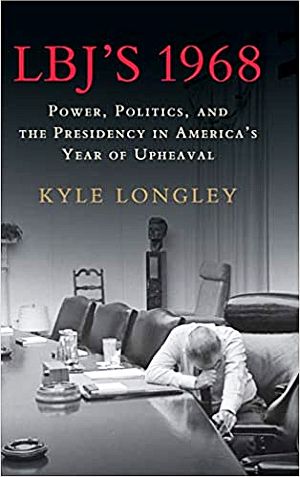
Kyle Longley’s 2018 book, “LBJ's 1968: Power, Politics, and the Presidency in America's Year of Upheaval,” Cambridge University Press, 374 pp.  Click for copy.
Kyle Longley’s 2018 book, “LBJ's 1968: Power, Politics, and the Presidency in America's Year of Upheaval,” Cambridge University Press, 374 pp. Click for copy.
Mark Kurlansky’s national bestseller, “1968: The Year That Rocked the World,” Random House paperback (2005), 480 pp.  Click for copy.
Mark Kurlansky’s national bestseller, “1968: The Year That Rocked the World,” Random House paperback (2005), 480 pp. Click for copy.
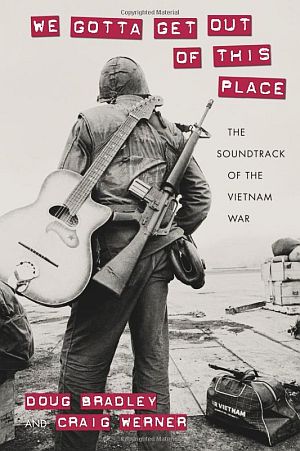
Doug Bradley & Craig Werner’s book, “We Gotta Get Out of This Place: The Soundtrack of the Vietnam War” (2015), University of Massachusetts Press, 272pp. Click for copy.
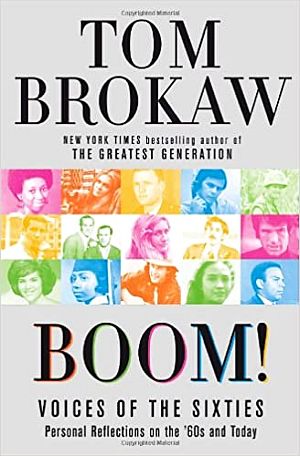
Tom Brokaw’s 2007 book, “Boom!: Voices of the Sixties - Personal Reflections on the '60s and Today,” Random House. Click for Amazon.

Matthew Twombly, Research by Kendrick McDonald, “A Timeline of 1968: The Year That Shattered America. The Nation Is Still Reckoning with the Changes That Came in That Fateful Year,” Smithsonian Magazine, January 2018.

David Axelrod, “My Memories of ‘68: Chaos in Black and White,” CNN.com, May 23, 2018.

“Shock Year: 1968″ (Timeline), PBS.org / American Experience.

“All Along The Watchtower” (Dylan & Hendrix versions), Wikipedia.org.

Herb Bowie, “All Along The Watchtower,” ReasonToRock.com.

Jacob Uitti, “The Meaning of ‘All Along The Watchtower’,” AmericanSongwriter.com, updated, January 18, 2024.

Doug Bradley, “The Top 10 Vietnam War Songs: A Playlist for Veterans,” Thirteen.org, August 5, 2019.

Aaron Sternfield, “The Vietnam Conflict Spawning Heavy Barrage of Disk Tunes,” Billboard, June 4, 1966, p.1.

“Sympathy for the Devil,” Wikipedia.org.

Dan Einav, “Gimme Shelter — The Rolling Stones’ 1969 Song Signaled a Winter of Discontent after the Summer of Love: A Young Session Singer Brought Energy and High Drama to this Foreboding Track,” FT.com / Financial Times, June 10 2019.

Catherine Walthall, “A Deeper Look at the Meaning Behind ‘Gimme Shelter’ By The Rolling Stones,” AmericanSongwriter.com, updated, March 30, 2022.

“The Gun in America,” Time (cover story), June 21, 1968.

Rex Thunderstone, “Meaning of the Song ‘Gimme Shelter’ by ‘The Rolling Stones’,” FreshFlow-Nation.com, February 17, 2024.

Alice George, “The 1968 Kerner Commission Got It Right, But Nobody Listened. Released 50 Years Ago, the Infamous Report Found That Poverty and Institutional Racism Were Driving Inner-city Violence,” Smithsonian Mag.com, March 1, 2018.

“Assassination of Martin Luther King Jr.,” Wikipedia.org.

David E. James, “Rock and Roll in Repre-sentations of the Invasion of Vietnam,” Representations, No. 29 (Winter, 1990), University of California Press, pp. 78-98.

“The Chambers Brothers,” in Holly George-Warren and Patricia Romanowski (eds), The Rolling Stone Encyclopedia of Rock & Roll, Rolling Stone Press, New York, 3rd Edition, 2001, p. 161.

“Time Has Come Today,” Wikipedia.org.

Lyrics, “Time Has Come Today,” The Chambers Brothers, Lyrics, Genius.com (produced by David Rubinson, Album, The Time Has Come).

“Time Has Come Today,” by The Chambers Brothers, SongFacts.com.

Matthew Greenwald, Song Review, “The Chambers Brothers: Time Has Come Today,” AllMusic.com.

Doug Gross, “On Web, ‘Time Has Come’ For ’60s Singer,” CNN.com, December 26, 2012.

George Lipsitz, “‘Time Has Come Today’: Why Sociology Matters Now,” Michigan Socio-logical Review, Vol. 30 (Fall 2016), pp. 1-15.

Abel, “No. 13: ‘Time Has Come Today’,” Psyche-delicSight.com, July 26, 2011.

Steve Jennings-x, “Classic Track: The Chambers Brothers, ‘Time Has Come Today’,” MixOnline.com, March 1, 2013.

Jeff Tamarkin, “When the Chambers Brothers’ ‘Time’ Had Come,” BestClassicBands.com, September 20, 2017.

Willie Chambers website, Willie-Chambers .com.

Jeff Suwak, “Songwriter Interviews: Willie Chambers of The Chambers Brothers,” SongFacts.com, January 3, 2018.

Gordon Skene, “The Chambers Brothers – In Concert – 1968 – Past Daily Soundbooth,” PastDaily.com, March 3, 2020.

“Protest Songs in the United States,” Wikipedia.org.

Alex Browne, “9 of The Best Songs Associated With the Vietnam War,” HistoryHit.com, August 15, 2018.

“List of Anti-War Songs,” Wikipedia.org.

“List of Songs About the Vietnam War,” Wikipedia.org.

James M. Lindsay, “The Twenty Best Vietnam Protest Songs,” CFR.org (Council on Foreign Relations), March 5, 2015.

Ed Masley, “25 Songs of Social Justice, Freedom, Civil Rights and Hope to Honor Black History Month,” Arizona Republic, January 12, 2021.

1968: The Year That Shaped a Generation (TV documentary; 55 minutes ), 1998, Stephen Talbot, Director & Writer.

Summer of Soul (…Or, When the Revolution Could Not Be Televised), Documentary film, 2021 (about the 1969 Harlem Cultural Festival held at Mount Morris Park [now Marcus Garvey Park] in Harlem, which lasted 6 weeks).

Ryan H. Walsh, Astral Weeks: A Secret History of 1968, Penguin Press (2018), 368 pp.

David Farber, The Age of Great Dreams: America in the 1960s (1994), Hill and Wang, 304 pp. Click for copy.

Mark Kurlansky, Ready for a Brand New Beat: How “Dancing in the Street” Became the Anthem for a Changing America (2013), Riverhead Books, 288 pp. Click for copy.

Craig Werner, A Change Is Gonna Come: Music, Race & The Soul of America (2006), University of Michigan Press, 488 pp. Click for copy.

Mark Bowden’s book on the Tet Offensive, Hue 1968: A Turning Point of the American War in Vietnam (2017). Click for copy.


Also at This Website:

“White Rabbit: Grace Slick: 1960s-2010s,” PopHistoryDig.com, December 31, 2015.

“Paint It Black, 1966-2000s”(Rolling Stones song history), PopHistory Dig.com, March 19, 2009.

“Dylan’s Hard Rain, 1962-1963,” PopHistory Dig.com, March 6, 2012.

“Only A Pawn In Their Game, 1962-1964” (Dylan & civil rights), PopHistoryDig.com, October 13, 2008.

LBJ’s Atomic Ad: Daisy Girl, 1964” (political campaign ad), PopHistoryDig.com, April 26, 2008.

Four Dead in O-hi-o, 1970” (Kent State shootings & song), PopHistoryDig.com, July 13, 2009.

“Beatles History: 1960s-2000s” (topics page with 14 story choices), PopHistorydig.com, December 27, 2017.

“The Pentagon Papers: 1967-2018,” PopHis-toryDig.com, February 5, 2018.

“Motown’s Heat Wave, 1963-1966,” PopHis-toryDig.com, November 7, 2009 (includes “Dancing in the Street” analysis).
__________________________________________


“Joplin’s Shooting Star”
1966-1970

Janis Joplin featured in a ‘Newsweek’ cover story, ‘Rebirth of the Blues,’ May 26, 1969.
     In the rock ‘n roll firmament of the 1960s, Janis Joplin was a shooting star who burned white hot for five short years. She died of a heroin overdose at age 27. 

Joplin sang her own brand of the blues in an incendiary style. Yet in her short time — between 1966 and 1970 — she carved out a piece of music history that was distinctly her own.

During these years, she traveled from the conservative community of Port Arthur, Texas to the expansive and unpredictable world that was the drug/hippie/music scene of 1960s San Francisco — and mostly in the glare of national stardom.

Joplin was born in Port Arthur, an oil refinery town, in 1943.  As a teenager in the late 1950s, she had read about Jack Kerouac and the Beatniks, began to dress in her own style, and started listening to blues music with a few high school friends. Black blues singers Bessie Smith and Leadbelly were among her heroes.

An outcast in Port Arthur by the early 1960s, Joplin had made her way to California a time or two, and eventually came to San Francisco’s music and hippie scene.  At the June 1967 Monterey Pop Festival she captured national attention with a stunning blues performance of “Ball and Chain.”  From that point on, she became something of national phenomenon. But not everyone loved Janis Joplin. Her stage antics and whiskey-swilling, devil-may-care style put many people off. Some were convinced she had a death wish and was killing herself slowly with each performance and each day’s excesses, so that when she sang “Piece of My Heart,” the meaning was for real.

The article that follows here covers some of the main events in the last four years of her life, from her rapid rise to stardom to her untimely death.

Janis Joplin performing at the Monterey Pop Festival in June 1967 where she would do a stunning version of ‘Ball and Chain’ that would mark her as an overnight blues sensation. Photo, Ted Streshinsky. Click for studio DVD version.


Music Player
“Piece of My Heart”-’68


Rock Epiphany

Janis Joplin did not initially see herself as a big-time performer or a major talent. But in 1966, when she first teamed up with a real rock band she had met through friends, Joplin had a kind of epiphany. 

Chet Helms, a fellow Texan and one of San Francisco’s music promoters, introduced her to a then little-known band called Big Brother and the Holding Company. Up to that point, Joplin was thinking she had a good enough voice for local gigs, but that was about it.

“… All of a sudden someone threw me into this rock band,” she would later explain, recalling her Big Brother session. “They threw these musicians at me, man, and the sound was coming from behind, the bass was charging me, and I decided then and there that was it, I never wanted to do anything else.  It was better than it had been with any man, you know… Maybe that’s the trouble…”

Joplin joined Big Brother in June 1966. Her first public performance with them was at the Avalon Ballroom in San Francisco where they became the house band. In the following year, they cut their first album, Big Brother and The Holding Company, and gained a following with songs from that album, including, “Bye Bye Baby,” “Blind Man” and “Down On Me.” Then on June 17, 1967 she an Big Brother performed their show-stopping set on the second day of the Monterey International Pop Festival, setting them on a path to national stardom.

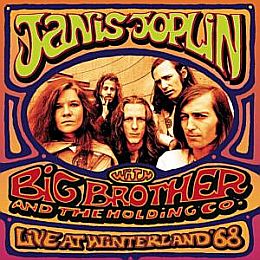
Janis Joplin with members of Big Brother and the Holding Co., on album performance at Winterland in San Francisco. Click for CD or digital.
     After Monterey, and after signing with Bob Dylan’s manager, Albert Grossman in November 1967, Joplin and Big Brother were playing all over the country. Grossman got them a whopping recording contract with CBS/Columbia Records. They were soon making about $10,000 a performance, with Joplin’s annual income rising to about $150,000 — then very big money. 

In February 1968, they began an East Coast tour in Philadelphia, and also played Anderson Hall in in New York where Joplin revealed her raw power over an audience. On the last day of their East Coast swing, April 7, 1968, Joplin and Big Brother performed at the “Wake For Martin Luther King Jr.” concert in New York along with Jimi Hendrix, Buddy Guy, Joni Mitchell, Richie Havens, Paul Butterfield and Elvin Bishop. The next month or so was spent recording the album Cheap Thrills, which would be released later that summer. 

In July 1968 she hit the Newport Jazz Festival in Rhode Island. In August, Cheap Thirlls was released and debuted at No. 1 on the Billboard album charts. It sold one million copies in the first month featuring songs such as “Piece Of My Heart,” among others. Joplin and Big Brother appeared on the West coast TV show, Hollywood Palace on October 26, 1968, performing two songs: “Summertime” and “I Need a Man to Love.”

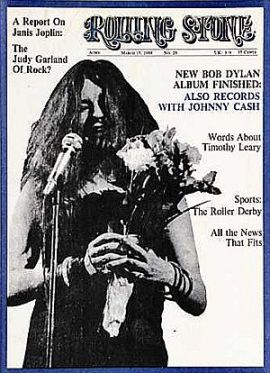
Janis Joplin on the cover of the March 15th, 1969 edition of Rolling Stone, featuring a story that asks if she is “the Judy Garland of Rock?” Click for copy.
     By early December 1968 Joplin decided to leave Big Brother, and by the end of the year she had formed a new band called the Kozmic Blues Band, a soul revue band with a complete horn section.  Their first performance playing soul music was in late December in Memphis, TN. However, the band’s performances at the Fillmore East in February 1969 received mixed reviews. Elsewhere though, Janis and her band were getting more notice.

In March 1969 there was a TV appearance on CBS’s 60 Minutes with Mike Wallace and a Rolling Stone cover story that month posing the question: “Janis: The Judy Garland of Rock?”  Also in March, Joplin and her band appeared on The Ed Sullivan Show.  Then it was back to San Francisco to Winterland and The Fillmore West.

A European tour came in April-May 1969 — Frankfurt, Stockholm, Amsterdam, Copenhagen, and Paris.  Her debut in London at Albert Hall that April produced rave reviews in the papers and trade press — Disc, Melody Maker, and The Telegraph.  Back in the States, studio work for another album, Kozmic Blues, began in Hollywood in June.  Joplin also appeared on The Dick Cavett Show for the first time July 18,1969.  She would appear on Cavett’s show two more times in 1970.  She and her band also played various music festivals that summer–Devonshire Downs in Northridge, CA, and the Atlanta Pop Festival in Georgia in July.  At the Atlantic City, New Jersey Pop Festival in early August, she sang with Little Richard.

Janis Joplin performing at Woodstock, 1969.
     Then in mid-August came Woodstock where she performed on the second day of the festival, singing a ten-song set that included such tunes as: “To Love Somebody,” “Summertime,” “Try (Just a Little Bit Harder),” Piece of My Heart,” and “Ball & Chain.” 


Music Player
“Try (Just a Little Bit Harder)”

Joplin by then had parted ways with Big Brother & the Holding Company.  Still, she had a full compliment of musicians backing her at Woodstock, where she performed in the wee hours, Saturday-to-Sunday, at about 2:00 a.m.  Some reported that without her normal band, Joplin’s performance lacked its usual punch, but others found it a solid performance.

Henry Diltz was an official photographer at Woodstock and had an “all-access pass” that got him to the stage, and more importantly, “a little catwalk built just under the lip of the stage” where he took photographs of Joplin performing. “I was literally feet in front of her while she was singing — the absolutely best seat in the entire house of 400,000 people.”  Diltz said of Joplin’s performance: “Everything I saw her sing, it was nothing held back.”

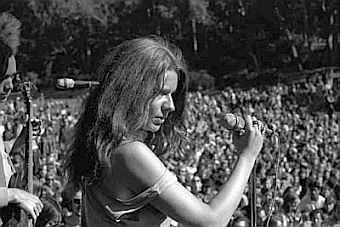
A younger Janis Joplin performing at an unidentified rock-festival venue sometime in the 1960s.

Following Woodstock, and through the remainder of 1969, there were other outings for Joplin and her band.

In September they played the New Orleans Pop Festival at Baton Rouge International Speedway in Louisiana and at the Hollywood Bowl in L.A.

In October there were gigs in Austin and Houston, Texas. In November she appeared at Curtis Hall concert in Tampa, Florida where she was charged with two counts of using vulgar and obscene language on stage. Later that month she appeared at Auditorium Hall in Chicago, and also Madison Square Garden in New York where she sang with Tina Turner at a Rolling Stones concert.

Her first solo effort, I Got Dem Ol’ Kozmic Blues Again Mama!, with the Kozmic Blues Band, had been released in September 1969, and received mixed reviews. It included songs such as “Try (Just a Little Bit Harder)” and “To Love Somebody,” a cover of a Bee Gees’ tune.

At the end of November 1969 Joplin played the West Palm Beach Rock Festival.  In December there was an appearance in Nashville and another at Madison Square Garden — called a “rousing display of blues and rock” by the New York Times — where she was joined on stage by Johnny Winter and Paul Butterfield.  It was about this time that she was “romantically linked” with Joe Namath in the New York papers, which appears to have been exaggerated beyond a meeting and a date or two.  Other appearances in 1969 included ABC-TV’s Tom Jones Show, the Quaker City Rock Festival/Philadelphia, the Civic Center/Baltimore, ABC-TV’s show Music Scene, and the Toronto Pop Festival.  Back home in California, meanwhile, Joplin moved into to a secluded home in a Redwood forest in the Larkspur area of Marin County, California, north of San Francisco, a beautiful spot between Mount Tamalpais and the San Francisco Bay.  But toward the end of 1969, Joplin decided to take some time off.


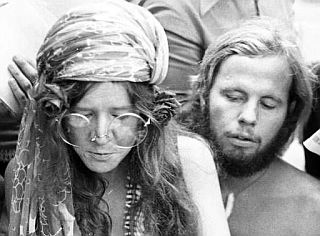
Janis Joplin & David Niehaus on Copacabana Beach in Brazil, 1970, where Janis was surrounded by, and talking with, reporters.

R&R in Brazil

In January of 1970, Janis and her Kozmic Blues band parted ways, and in February, she traveled to Brazil with her friend and costume designer Linda Gravenites.  Gravenites had been with Joplin since 1966 and had lived a clean and sober life and was traveling with Joplin in part to help her kick her drug and alcohol habits.

In Brazil, Joplin met and became involved with David Niehaus, a clean and sober American schoolteacher who was traveling around the world at the time. At their meeting, Niehaus was unaware of her celebrity. The two were later photographed as happy revelers at Carnival in Rio de Janeiro, described as a “carefree” couple having a great time. Niehaus was one of the first men in Janis’s life at the time who saw her as a woman and not a rock star, and Janis was quite taken with him. By April she reported from Rio that she was “going off into the jungle with a big bear of a man.” But when Joplin returned to the U.S. she began using heroin again and her relationship with Niehaus appeared to end, but not for good. Some letter writing would continue (more on this later). Still, some friends would say that Niehuas was, for Janis, the love of her life.

Poster for a Janis Joplin concert on June 12, 1970 in Louisville, KY with her new Full-Tilt Boogie Band.
     Back in San Francisco, meanwhile, Joplin had formed her new band, the Full Tilt Boogie Band — a band composed mostly of young Canadian musicians; a band that Joplin had taken a more active role in forming than she did with her prior group.  She would later describe this band as more fully her own.  Joplin began touring with the Full Tilt Boogie Band in May 1970 and was quite happy with their performances and the feedback from fans and critics.  Still, earlier that year, she had done a few performances with her former bandmates.

On April 4th in San Francisco, she performed a reunion gig with Big Brother & The Holding Co. at the Fillmore West.  Again, on April 12th, she appeared with Big Brother at Winterland where she and group were found in excellent form.  By the time she began touring with Full Tilt Boogie in May 1970, Joplin had told friends she was drug-free.  In fact, the young Canadians in her new band were also drug free and had no association with her old San Francisco crowd.  Still, some noticed that her drinking had increased. 

In late June 1970, she appeared on TV’s The Dick Cavett Show, where she announced she would attend her ten-year high school class reunion later that summer in Port Arthur, Texas.  High school had not been a happy time for Joplin, noting at one point that her classmates, “laughed me out of class, out of town and out of the state.”  More on the high school visit later.

1970 poster advertising Canada’s transconti- nental Festival Express.
Festival Express logo sticker.


The Festival Express

In late June and early July 1970, Joplin and her new band joined the all-star Festival Express tour through Canada.  On this tour, Joplin and her band performed on the same bill with other acts including: the Grateful Dead, Delaney and Bonnie, Rick Danko and The Band, Eric Andersen, Ian and Sylvia, and others.

The Festival Express was unique among rock festivals.  Rather than flying to each city — Toronto, Winnipeg, Calgary and Vancouver were each scheduled — the musicians would travel by chartered Canadian National Railways train.  The idea was to foster an atmosphere of musical creativity and closeness between the performers.  The trips between cities were a mix of jam sessions and partying, with no shortage of drugs and alcohol.  One of these sessions became quite notable — with Rick Danko of The Band, Jerry Garcia and Bob Weir of the Grateful Dead, and Janis Joplin all having a rollicking good time.

During the actual Festival Express series of concerts — which saw the Vancouver concert cancelled due to the mayor’s “anti-hippie” edicts — Janis Joplin gave some memorable performances.  Footage of Joplin singing “Tell Mama” in Calgary would later become an MTV video in the 1980s.  This performance would also be included on later Joplin albums and DVDs. 

The Festival Express Tour ended in early July 1970, but some 30 years later, in 2003, a “rockumentary” was produced featuring the original Festival Express tour, its music, and travels.  That film would reap more than $1.2 million at the U.S. box office, and the DVD would become a hot seller as well.  Shortly after the Festival Express, Joplin and the Full Tilt Boogie Band traveled to Honolulu, Hawaii where they performed in early July 1970 at the International Center Arena.  But then it was back to California.

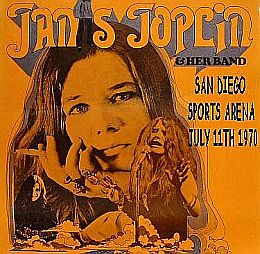
Poster for July 1970 Janis Joplin concert.


San Diego

On July 11th, Joplin and the Full Tilt Boogie Band arrived in San Diego for a concert there at the Sports Arena.  They were joined in San Diego by longtime Doors producer, Paul Rothchild, who was being considered to work with Joplin on her next album.  Janis’s sister, Laura, would later write of Rothchild in her book, Love, Janis:

“In San Diego, Janis gave him a stopwatch, saying ‘Look, I’ve got thirty-five good minutes in me. You stand behind the amps and I’ll look you over, you flash me how much time I have left.’ Paul thought it was a good sign that she was pacing herself like a runner.”

Joplin was fighting her alcohol and drug demons at the time.

Psychedelic-style poster for the July 11, 1970 concert in San Diego with Janis Joplin photo.
     Rothchild later said of watching Joplin’s performance as she was singing:

“. . . I was enraptured because I was listening to one of the most brilliant vocalists I ever heard, in classical, pop, or jazz music. What a voice. . . all of the woman was revealed.  The vessel of Janis vanished. For somebody like me, who was always talking about the inner beauty and all that stuff, it got me big. So I was totally hooked from that moment on, on every single possible level.”

Several weeks later, Rothchild would help Janis work on her final album, Pearl.

On the plane ride back to San Francisco after the San Diego concert, Janis was upbeat, as the presence of old friends at the concert had energized her.  She bought drinks for everyone on the plane.

But some of those with her, like Big Brother guitarist James Gurley, thought she was a bit “too exuberant, trying to be the life of the party.” 

Joplin was still on an emotional roller coaster; high and then low.  She was struggling to maintain her equilibrium.


Shea Stadium

In early August 1970, Joplin again appeared on The Dick Cavett Show, and a few days later, on August 6, 1970, performed as a surprise guest at the Festival for Peace at Shea Stadium in Queens.  Joplin was not on the original roster of performers for the concert, but since she was in New York and her former band, Big Brother, was on the bill, she agreed to do the concert. By some accounts, at least 50,000 fans attended  Joplin’s performance, re- portedly aided by a bottle of Southern Comfort. This concert — also called the Summer Festival for Peace — followed a Winter Festival for Peace that had been staged earlier that year at Madison Square Garden.  These concerts were among the first ever in the U.S. to be used for political fund raising and anti-war purposes.  Such concerts were not generally seen prior to 1970, but became more common thereafter.  The acts at the Peace Festivals generally donated their time and performances.  Among the performers at Shea Stadium that August were Peter Yarrow, Pacific Gas & Electric, Tom Paxton, Dionne Warwick, Poco, Ten Wheel Drive, Al Kooper, Richie Havens, Sha-Na-Na, The Young Rascals, Paul Simon, Creedence Clearwater Revival, Steppenwolf, The James Gang, Miles Davis, Johnny Winter, Herbie Hancock and others.  The show ran from 10:00 a.m. to midnight.  And by some accounts, at least 50,000 fans attended.  Joplin’s performance — reportedly aided by a bottle of Southern Comfort whiskey — included at least four of her songs: “Ball & Chain,” “Summertime,” “Turtle Blues” and “Piece of My Heart.”


Bessie’s Marker

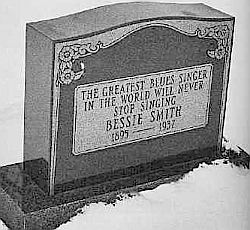
Headstone for Bessie Smith’s grave site that Janis Joplin helped pay for. Inscription:‘The greatest blues singer in the world will never stop singing.’
     One of Joplin’s idols growing up had been Bessie Smith, the famous blues and jazz singer of the 1920 and 1930s.  Smith’s music had been an early influence on Joplin.  But when Joplin learned that Smith’s grave site had no marker, she moved to help provide a major portion of the funds to obtain one.  A few days following her concert at Shea Stadium, on August 8, 1970, Joplin provided at least part of the financing to provide a headstone for Smith’s unmarked grave at Philadelphia’s Mount Lawn Cemetery.  An inscription on the installed headstone reads: ‘The greatest blues singer in the world will never stop singing.’

Joplin’s next scheduled appearance in 1970 was in Boston, at Harvard College, but her band’s equipment was stolen. The group managed to make their performance at Harvard Stadium on August 12 th before 40,000 fans using borrowed equipment. Still, they seemed to have delivered a decent concert, as a front-page story in Harvard Crimson newspaper gave the concert a positive review.  It would be Joplin’s last public appearance with the Full Tilt Boogie Band and her last public performance.  Her next stop was her former home town, Port Arthur, Texas for the tenth year reunion of her high school class.


Janis’ Texas Hurt
1956-1964

Joplin as she appeared in her 1960 high school photo.
     Growing up in the conservative oil refining town of Port Arthur, Texas in the 1950s was not easy for young Janis Joplin.  Although she was loved by her family while growing up there, her high school and local college experiences in Texas appeared to have scarred her deeply.  As a teenager she had read the Beatniks, began to dress in her own style, and started singing folk and blues music locally.  But in high school, she had gained weight and developed bad skin, and was called “pig” by some of the other kids.  After graduating high school in 1960, she attended Lamar State College that summer, at nearby Beaumont Texas, and continued there in the fall.  Ridiculed there as well, and not comfortable in class, she dropped out.  In 1961, after passing a secretarial exam, Joplin’s parents sent her to Los Angeles to live with her aunts, but she soon found a place of her own in Venice Beach where drugs became part of her life. The visit home to Port Arthur for the reunion did not achieve what Joplin had hoped, and once again she left town feeling rejected and unloved. By the end of the year, she returned home to Port Arthur.  In 1962, she enrolled in fine arts at the University of Texas in Austin and was also singing locally, blues mostly, but also with a blue grass band.  Her experiences on the University of Texas campus, however, weren’t much better than in Port Arthur or Beaumont, as she was nominated for the “Ugliest Man on Campus” award at one point, a deep cut.  After hearing about the post-Beat scene in San Francisco, Joplin made her way to North Beach in San Francisco and then Haight-Ashbury, then becoming more heavily involved with alcohol and drugs.  After a near-death experience, and reportedly dropping to a weight of about 88 pounds at one point, she returned to Port Arthur in 1965.  Back home, she tried college again at Lamar, this time enrolling as a sociology major.  She kicked her drug habit, changed her look to a more conservative style, but still, her experiences at Lamar were no better. In Austin, meanwhile, she continued singing blues at a few clubs in late 1965 and early 1966.  By mid-1966 she returned to California for good, pursuing her music career in San Francisco by joining Big Brother and the Holding Company.  By late 1967, following her debut at the Monterey Festival, she was on her way to national stardom.

Janis Joplin on the cover of "Rolling Stone," August 6, 1970. Click for copy.
     In mid-August 1970, when Joplin returned to Port Arthur for her 10th year high school reunion, she was coming back, in part, to make a statement about her success, and specifically for those who had treated her badly as a teenager.  But during the visit, Joplin was drinking hard and she did not attempt to “tone down” her dress or her style.  She had also previously made negative remarks about Port Arthur in the national press — or as one New York Times writer put it — “never missed a chance to dismiss her blue-collar hometown as a bastion of small-town intolerance.”  On August 14th, Joplin attended her high school reunion at Thomas Jefferson High School.  She was accompanied by fellow musician and friend Bob Neuwirth, road manager John Cooke, and her younger sister, Laura.  Dressed in the popular San Francisco hippie fashion of the day with feathers and beads and her trademark purple-tinted glasses, Joplin answered questions at a press conference, during which some of her more painful high school days came up again.  All in all, it wasn’t a pleasant visit for Joplin.  Generally, this visit home to Port Arthur for the reunion did not achieve what she had hoped, and once again she left town feeling rejected and unloved.  She soon returned to California to work on her music.


Final Days 

During late August, Joplin arrived in Los Angeles to begin work on a new album.  Sessions were planned for the Sunset Sound Studio with producer Paul Rothchild.  Joplin checked into the nearby Landmark Motel.  She had been seeing a steady new boyfriend, a younger and wealthy easterner named Seth Morgan, and they were rumored to be engaged.  But Joplin at the time threw herself into her recording sessions and the work on her new album.When he entered her motel room, Cooke found Joplin dead on the floor.  She also had a bit of fun at the session, at one point recording a birthday greeting for John Lennon that would be sent to him later — using the Roy Rogers / Dale Evens tune, “Happy Trails.”

On Saturday, October 3, 1970, Joplin visited the Sunset Studios to listen to the instrumental track for the song “Buried Alive in the Blues” prior to recording her vocal track with it, scheduled for the next day. But on Sunday afternoon, she failed to show up at the studio. Producer Rothchild and road manager John Cooke became concerned. Cooke drove to the Landmark Motel where he found Joplin’s psychedelically painted Porsche still in the parking lot.  When he entered her motel room, Cooke found Joplin dead on the floor. The official cause of death was later determined as an overdose of heroin, possibly combined with the effects of alcohol. Janis Joplin was 27 years old. Her ashes were later scattered into the Pacific Ocean along Stinson Beach north of San Francisco.

At the front desk of the Landmark Motel the morning after Janis’s death, a telegram from David Niehaus – who she had met and traveled with in Brazil and was quite fond of – was found. The telegram reportedly read, “Love you Mama, more than you know.” Apparently, Janis and Niehaus were planning to reunite after she finished recording Pearl, as letters were found expressing her hopes for a future with him, about wanting to slow down and buy a house with him in Northern California. Some of those close to Joplin wondered if she had received the telegram sooner, might it have changed the outcome.

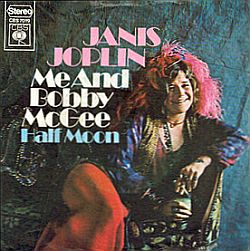
Janis Joplin's "Me & Bobby McGee" single from 'Pearl' album, 1971. Click for digital.
     Joplin’s newly recorded material from her Los Angeles studio sessions, meanwhile, had not gone to market.  Four months after her death, in February 1971, the new material was released under the album name, Pearl, a nickname sometimes used for Joplin.  The album included the songs “Mercedes Benz,” “Get It While You Can,” and “Me and Bobby McGee.”  Pearl topped the album charts for nine weeks, and “Me and Bobby McGee” became a No. 1 single in 1971 and one of her biggest hits. But the one song on that album without Joplin’s lyrics — the performance she never showed up for the weekend of her death — was left as an instrumental, “Buried Alive in The Blues.” Part of the verse in that song goes as follows: “All caught up in a landslide / Bad luck pressing in from all sides / Just got knocked off my easy ride / Buried alive in the blues.”  And as Joplin herself once said: “People, whether they know it or not, like their blues singer’s miserable. They like their blues singers to die afterwards.”


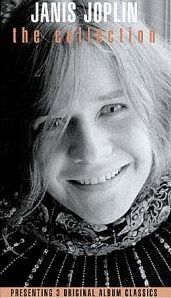
Cover photo for Janis Joplin boxed set of 3 CDs. Click for set.

Joplin as Icon

Joplin’s death was a blow to her fans and the music world, especially since only weeks earlier, Jimi Hendrix had also died.  Joplin was remembered as a musical force and an icon for her own times as well as the ages.  Many thought Joplin was just hitting her stride with Pearl, and might have gone on to much greater things had she overcome her demons. Tom Moon, writing in his book, 1,000 Recordings to Hear Before You Die, calls Pearl, “the precious last testament of a belter.” By her last year, Moon says, Joplin had grown into “a devastatingly original voice, the rare white interpreter of African American music who resisted the ready cliche. She treated old Delta songs and ’50s R&B ballads as theatrical platforms, ripe for large-scale rethinking. Her blues woe was never typical blues woe. …[S]he could turn out a plea that made listeners feel like they were part of a fateful make-or-break moment happening right then.”

Jon Pareles of the New York Times wrote that Joplin was: “overpowering and deeply vulnerable, brassy and shy, stylized and direct, indomitable and masochistic.  She took the tough rasp of old blues shouters and made it her own by bringing out pain and tension to match the bravado.  With magnificent timing Joplin made it seem as if she was pouring out unvarnished emotion.”

The Rock ‘n Roll Hall of Fame, writing her 1995 induction description, adds: “Janis Joplin has passed into the realm of legend: an outwardly brash yet inwardly vulnerable and troubled personality who possessed one of the most passionate voices in rock history.”

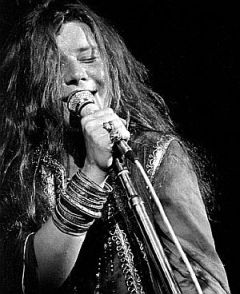
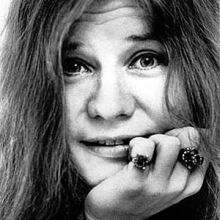
Janis Joplin, undated photo.
     Megan Terry, among other authors writing in the book, Notable American Women, observes: “Joplin brought to her music a distinctive sound and look, passion and an honest interpretive ability.  Her hold over an audience was as great as that of Elvis Presley and her success was an extraordinary and unprecedented feat in the male- dominated rock and music world.”

Music Player
“Me & Bobby McGee”


In fact, along with Grace Slick of The Jefferson Airplane, Joplin is credited with opening doors for women who would follow her in the rock ‘n roll business.  And finally, music journalist Ellen Wills noted that “Joplin belonged to that select group of pop figures who mattered as much for themselves as for their music.  Among American rock performers, she was second only to Bob Dylan in importance as a creator-recorder-embodiment of her generation’s mythology.”  Joplin was inducted into the Rock and Roll Hall of Fame in 1995, and was given a Grammy Lifetime Achievement Award in 2005.  Musicologists and historians continue to revisit her work.  In November 2009, Case Western Reserve University and the Rock and Roll Hall of Fame and Museum celebrated the music of Janis Joplin during the 14th annual American Music Masters series, calling her one of rock ‘n roll’s most passionate and influential artists.

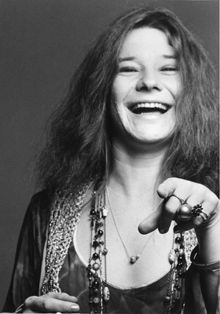
Janis Joplin photograph, undated.
     Back in Port Arthur, Texas, meanwhile, and nearly two decades after her death, some of the love and recognition Janis Joplin had sought from her hometown began coming her way in after-the-fact fashion.  In 1988, Joplin’s life and achievements were showcased and recognized at a January Convention Center gathering — an event, wrote Peter Applebome of the New York Times, “that perhaps had as much to do with economics as with affection.”  Some 5,000 people came out for the ceremony, a major turn out for Port Arthur.  There was a dedication of a Janis Joplin Memorial, which included a multi-image bronze sculpture of Joplin.  The sculpture, along with momentos of Joplin’s career, as well as that of other local musicians including the Big Bopper (Jiles Perry Richardson, Jr.) and Johnny Winter, would eventually become part of the Museum of the Gulf Coast, housing a permanent Joplin exhibit on the second floor.

In January 2008, Port Arthur celebrated Joplin’s 65th birthday by putting a historical marker in front of her childhood home.  The town now proclaims its link to Joplin with billboards, brochures, an annual concert, and local tours of various Joplin landmarks.  “She was a very popular figure in the ’60s, and she had a lot to do with the style of music that evolved at that time,” said Yvonne Sutherlin of Jefferson County Historical Commission in January 2008.  “We just want people to know that she’s from here.”

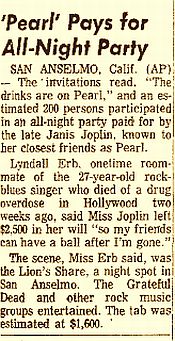
Associated Press, November 7th, 1970.
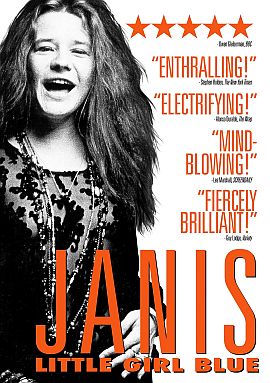
Beyond Port Arthur, the life and career of Janis Joplin has been explored on stage and screen in a number of productions and documentaries. In 1974-75, Janis, a Canadian film about her career using archival footage was produced. In 1979, the Hollywood film, The Rose, starring Bette Midler, was loosely based on Joplin’s life. In 1992, the biography, Love, Janis was published, written by Joplin’s sister, Laura. A musical stage show with the same title, Love, Janis, ran off-Broadway during 2001-2003 for more than 700 performances. In Washington, D.C., the Arena Stage featured a 2013 production – A Night with Janis Joplin – which includes the Janis character telling stories of inspiration from other artists such as Odetta and Aretha Franklin. A star on the Hollywood Walk of Fame came for Joplin in 2013, and a U.S. Postal Service commemorative stamp was issued in her honor in 2014. And in 2015, the documentary film, Janis: Little Girl Blue, directed by Amy J. Berg, was shown at the Toronto film festival, since airing to positive reviews in early 2016 on the American Masters PBS-TV series.

See also at this website: “Selling Janis Joplin, 1995,” about a Mercedes-Benz TV ad using a Joplin song, and “White Rabbit,” a profile of a Jefferson Airplane song, its politics, and the group’s lead singer, Grace Slick. Other stories on notable women can be found at the topics page, “Noteworthy Ladies.” Thanks for visiting – and if you like what you find here, please make a donation to help support the research and writing at this website. Thank you. — Jack Doyle

Please Support
this Website

Donate Now

Thank You

______________________________
Date Posted:  7 December 2009
Last Update:  10 December 2025
Comments to:  jackdoyle47@gmail.com

BlueSky: jackdoyle.bsky.social

Article Citation:
Jack Doyle, “Joplin’s Shooting Star,”
PopHistoryDig.com, December 7, 2009.

______________________________


Sources, Links & Additional Information

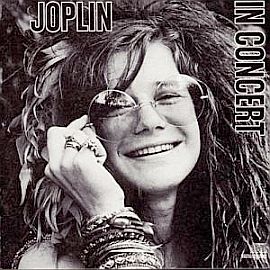
Janis Joplin on cover of 1972 album. Click for CD.
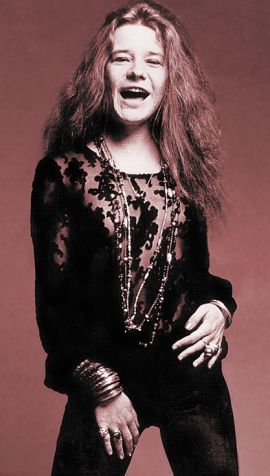
Janis Joplin, 1960s; Michael Ochs Archives.
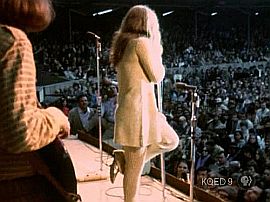
KQED/PBS photo of Janis Joplin performing at the Monterey Folk Festival 1967 with Big Brother & the Holding Co.
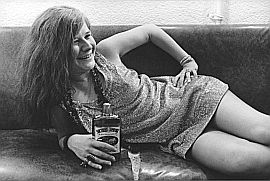
Janis Joplin & ‘Southern Comfort’ photo by Jim Marshall, shot backstage at San Francisco’s Winterland in 1968. “Janis was a great subject to photograph,” observed Marshall, “ because she was not afraid of the camera and came alive on stage... She was very real and still a little girl when she died, a very famous little girl.”
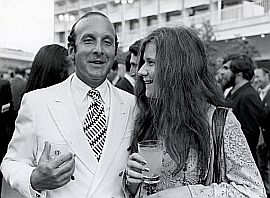
Janis Joplin with Columbia Records president Clive Davis at a 1968 party celebrating Joplin's record deal. Davis had seen Joplin perform at the Monterey Pop Festival with Big Brother, later telling ‘Rolling Stone’ magazine that her performance was “mesmerizing”
Holly George-Warren’s 2019 book, “Janis: Her Life and Music,” Simon & Schuster, 400pp. Click for copy.
“Janis: Little Girl Blue” is a 2015 American documentary film (105 min) directed by Amy J. Berg, and was broadcast by PBS on the “American Masters” series May 2016. Click for DVD, VHS, or Amazon Prime.

Robert Shelton, “Janis Joplin Is Climbing Fast In the Heady Rock Firmament; Singer Makes Her New York Debut With Big Brother and the Holding Company,” New York Times, Monday, February 19, 1968, p.51.

Paul Nelson, “A Report on Janis Joplin: The Judy Garland of Rock?,” Rolling Stone, March 15, 1969.

Peter Barnes, “Rebirth of the Blues,” Newsweek, May 26, 1969.

Mike Jahn, “Janis Joplin Gives A Rousing Display Of Blues and Rock,” New York Times, Saturday, December 20, 1969, p. 36.

Mike Jahn, “Janis Joplin and Her New Group Give Rousing Forest Hills Show,” New York Times, Tuesday, August 4, 1970, p. 22.

“Rock Singer Janis Joplin, 27, Found Dead in Hollywood Motel,” Los Angeles Times, October 5, 1970, p. 3.

Reuters, “Janis Joplin Dies; Rock Star Was 27,” New York Times, Monday, October 5, 1970, p. 1.

George Gent, “Death of Janis Joplin Attributed To Accidental Heroin Overdose,” New York Times, Tuesday, October 6, 1970, p. 50.

Robert Hilburn, “Janis Joplin’s Lifetime: ‘A Rush’,” Los Angeles Times, October 7, 1970, p. E-1.

Don Heckman, “Janis Joplin 1943-1970,” New York Times, Sunday, October 11, 1970, Arts & Leisure, p. 135.

“Music: Blues for Janis,” Time, Monday, October 19, 1970.

“Janis Joplin Estate Left to Parents,” Los Angeles Times, October 21, 1970, p. D-8.

“Janis Joplin: 1943-1970,” Rolling Stone, October 29, 1970.

“Janis Joplin Death Ruled Accidental,” Los Angeles Times, October 29, 1970, p. A-3.

“CBS Wins Ruling on Joplin Concert Disc,” Los Angeles Times, December 22, 1970, p. IV-14.

John Byrne Cooke (ed.), Janis Joplin: A Performance Diary 1966-1970, First Glance Books, 1997.

Mike Jahn, “Pearl, Last Album Janis Joplin Made, May Be Her Finest,” New York Times, Saturday, January 16, 1971, p. 19.

Robert Hilburn, “Janis Joplin’s ‘Pearl’ Album Released,” Los Angeles Times, January 19, 1971, p. H-8.

Don Heckman, “Janis: She Was Reaching for Musical Maturity,” New York Times, Sunday, May 21, 1972, Arts & Leisure, p. D-30.

“Janis: A Look at a Jet Age Red Hot Mama on the Second Anniversary of Her Death,” International Times, October 1, 1972.

Myra Friedman. Buried Alive: The Biography of Janis Joplin, New York: William Morrow, 1973.

Midge Decter, “The Earth Mother Was No More Than The Dearest Daughter Of The Angel of Death,” New York Times Book Review, August 12, 1973.

Megan Terry, “Janis Joplin,” in Barbara Sicherman & Carol Hurd Green (eds.), Notable American Women: A Biographical Dictionary, Boston, Harvard University Press, 6th Edition, 1980, pp. 385-387.

Peter Applebome, “Town Forgives the Past and Honors Janis Joplin,” New York Times, January 21, 1988.

David Dalton, Piece of My Heart: The Life, Times and Legacy of Janis Joplin, Cambridge, MA: Da Capo Press, 1991.

Laura Joplin, Love, Janis, New York: Villard Books, 1992.

Jack Doyle, “Selling Janis Joplin, 1995,” Pop HistoryDig.com, March 10, 2008.

Steve Roser, “Do What You Love: The Continuing Story of Big Brother & the Holding Company,” Goldmine, September 25, 1998.

Alice Echols. Scars of Sweet Paradise: The Life and Times of Janis Joplin, New York: Henry Holt, 2000.

Rosanne Cash, “Janis Joplin, The Immortals: The Greatest Artists of All Time,” Rolling Stone, April 15, 2004.

Lana Berkowitz, “Port Arthur Embraces Janis Joplin on Her 65th Birthday,” Houston Chronicle, January 15, 2008.

Associated Press, “Janis Joplin’s Childhood Home in Port Arthur Gets Historic Marker,” KHOU.com, Sunday, January 20, 2008.

Henry Diltz, “PhotoSynthesis: Janis Joplin,” Spinner.com, November 14, 2007.

JanisJoplin.net (good, comprehensive site).

“Janis Joplin,” Times Topics, New York Times.

“Janis Joplin,” Wikipedia.org.

 “Festival for Peace,” Wikipedia.org.

Anthony Decurtis, Music, “5 Days, 2,100 Miles, Countless Bottles,” New York Times, July 25, 2004.

Dave Kehr, Film Review, “A Legendary Train Ride Through Rock’s Fabled Past,” New York Times, July 30, 2004.

Liane Hansen, “Woodstock on a Rail in ‘Festival Express’ — Rock Documentary Captures 1970 Train Tour Across Canada,” National Public Radio, NPR, August 29, 2004.

Tom Moon, “Pearl – Janis Joplin,” 1,000 Recordings to Hear Before You Die, Workman Publishing: New York, 2008, pp. 410-411.

Jay Allen Sanford, “50 Greatest Concerts in San Diego History 1917-2005,” San Diego Weekly Reader, October 9, 2008.

“Janis Joplin Biography, 1943-1970,” Biography .com, A&E Television Networks, 2009.

Bond, “Tuneage Tutelage — Janis Joplin,” Big LeatherCouch.com, Monday, September 24, 2007.

“Janis Joplin,” Induction, Rock and Roll Hall of Fame and Museum, 1995.

Mick Brown, “How Never-Seen-Before Letters Reveal the Inner World of Janis Joplin,” The Telegraph (London), January 28, 2016.

Janis: Little Girl Blue, American Masters / PBS, Documentary film, 2016. Click for Amazon.

Janis Joplin | “Janis: Little Girl Blue,” Wiki-pedia.org.