
Etta James on the cover of the Chess Records 50 Anniversary Collection, “Etta James: Her Best”. Click for Amazon.
Music Player
“At Last” – Etta James
1966
The song never quite made it to No. 1, hitting No. 2 on the R&B charts, and at the time, also rising to No. 47 on the Billboard pop chart and No. 30 on Cashbox. Still “At Last” was pure gold, and as time would tell, a classic for the ages.
Since 1961 the song has aged like fine wine, and over the years, it is rediscovered by thousands of appreciative new listeners. “At Last” is truly one of the all-time great blues songs that also happens to be a love song – and not a syrupy kind of love song, but one with deep feeling, owing largely to James’ singular rendition. The James version has become a favorite wedding song, and has also been used in a number of films, TV shows, and in advertising. In January 2009 it was famously performed by Beyoncé at one of President Obama’s inaugural balls, as the President and First Lady, Michelle Obama, danced to the song. More on that a bit later.
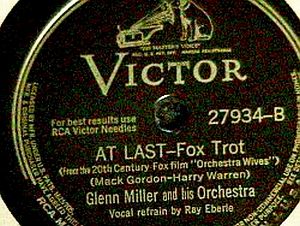
RCA Victor 78 rpm record label for 1941-42 Glenn Miller version of “At Last” with Ray Eberle.
The song was performed both in the film and as a 1942 recording by Glenn Miller and his orchestra, with vocals by Ray Eberle and Pat Friday. The Glenn Miller version became a Top Ten hit that year. Other versions of the song, including an instrumental version, were also recorded and aired in the 1940s and 1950s. But thereafter, it was largely forgotten, until blues singer Etta James recorded the song with Chess Records in Chicago.
Chess Records

1960. Etta James in Chicago studio with the Chess Records founder Phil Chess. Michael Ochs Archives
Among artists who recorded at Chess were: Muddy Waters, Howlin’ Wolf, Chuck Berry, and Bo Diddley. Some critics have called Chess “America’s greatest blues label.” Today, the Chess catalogue is owned by Universal Music Group and managed by Geffen Records and Universal Music Enterprises.
In the Etta James/Chess version of “At Last,” the arrangement was improvised on Harry Warren’s melody. Etta James by then had been singing since the mid-1950s and already had a few R&B hits. But Leonard Chess thought Etta could be a classy ballad singer, and at the time saw possible “crossover” appeal in her sound – i.e., become popular with white audiences. So he had begun trying to give her a bigger sound with orchestral backing.
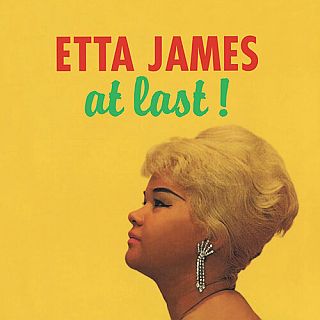
The original cover of the album, “Etta James: At Last!” was released in late 1960 and included two other future classics "I Just Want to Make Love to You" and "A Sunday Kind of Love." The single “At Last” wasn’t released until early 1961. Click for Amazon.
The Chess/Etta James version of “At Last” was released first on her album of that name in 1960, followed by the single in early 1961. Besides the title song, the album also contained other notable Etta James songs, including: “Trust in Me,” “All I Could Do Was Cry,” and, “I Just Want to Make Love to You.” But the title song,” as Time’s Richard Corliss would later write, “was the lifelong keeper.”
In 1999, the Etta James version of “At Last” was inducted into the Grammy Hall of Fame. As for James herself, there’s a lot more to her story, both prior to and after this recording. Before she arrived at Chess Records, and before the success of “At Last” — and for some years thereafter — Etta James had some difficult travels.
Growing Up
She was born Jamesetta Hawkins in the Watts area of Los Angeles in January 1938 to an unmarried 14-year-old African American mother. Her mother reportedly told her that her father was Rudolph “Minnesota Fats” Wanderone, the famous pool player (portrayed in the 1961 Paul Newman / Jackie Gleason film, The Hustler). Reportedly, they received financial support from him on condition they kept his paternity secret, which was never resolved.

Johnny Otis shown on 2012 CD from Ace Records highlighting R&B music he helped introduce during 1957-1974. Click for Amazon.
When Mama Lu died in 1950, Etta went to live with relatives in San Francisco, then 12 years old, but was largely unsupervised. As a young teen, James teamed up with two other girls, briefly forming a singing group called The Creolettes
When the girls were fourteen, bandleader, talent scout and music promoter Johnny Otis had them audition, and later helped Etta and girls sign a recording contract with Modern Records in 1954, renaming them The Peaches. Otis also suggested a simple flip of young Etta’s real name, Jamesetta, rechristening her, “Etta James,” the name that stuck. Otis, meanwhile, guided her early career.
At age 15, she and Otis co-wrote her first hit in the mid-1950s,an answer to singer Hank Ballard & Midnighters’ bawdy song, “Work With Me, Annie.” The James answer was initially titled, “Roll With Me, Henry,” but was retitled with the less suggestive, “The Wallflower (Dance With Me, Henry).” That song, with the Peaches as backing vocals, topped the R&B charts for four weeks in 1955. The Peaches eventually left the label, and James began recording as a solo act. James also toured with Little Richard and Bo Diddley and was a frequent performer on the black theater circuit and scored a second 1955 hit with “Good Rockin’ Daddy,” a Top 10 song. Through the mid-1950s Etta James became a mainstay of Johnny Otis’ revue and continued to record for Modern Records until the end of the decade, but without much further success
|
Eta James Hits “The Wallflower (Dance w/Me, Henry)” |
Chess Hits
By 1960, Etta James had moved to Chess Records recording on its Argo, and later, Cadet label. A string of mostly R&B hits – some also charting on Billboard – followed. Among the more prominent of these were: “All I Could Do Was Cry” (#2 R&B), “My Dearest Darling” (#5 R&B), and a duet as Etta and Harvey (with Harvey Fuqua of Harvey and the Moonglows) entitled “If I Can’t Have You” (#6 R&B, #52 pop). She also sang background vocals on Chuck Berry’s “Almost Grown” and “Back in the U.S.A.”
Her R&B hits continued through the early ’60s – most notably among her biggest, “At Last” (#2 R&B) and “Trust in Me” (#4 R&B, #30 BB) in 1960. “Don’t Cry Baby (#6, #39 BB) came in 1961, and, “Some-thing’s Got a Hold on Me” (#4 R&B) plus “Stop the Wedding” (#6 R&B) in 1962. “Pushover,” a #7 R&B hit came in 1963, also #25 on the pop chart.
In her personal life, however, Etta had continuing trials throughout. She had begun experimenting with drugs as a teenager, and by 21 she was a heroin addict. During the ’60s her drug habit continued, and later, began writing bad checks and forging prescriptions to support her habit. There were also some internal troubles at Chess over royalties, and bad experiences with abusive men in her relationships.
But in 1967, Leonard Chess saw a possible way to help her focus. He recommended she record with producer Rick Hall at the FAME Studios in Muscle Shoals, Alabama, a move designed in part to take her away from her big city vices. The remedy worked, albeit for a time. At Muscle Shoals, with great backing musicians, she adopted a tougher, grittier style, hitting the R&B charts with new releases and a successful album, Tell Mama (#21 R&B). That album has been described as “an earthy fusion of rock and gospel music featuring blistering horn arrangements, funky rhythms and a churchy chorus.”
The album’s title track single, “Tell Mama” — released with her famous blues song, “I’d Rather Go Blind” on the B side — became one of the biggest hits of Etta’s career (#10 R&B), her first Top 10 hit in four years and her highest-peaking single on the Billboard pop chart, reaching #23. Both songs are considered among her all-time classics.
Janis Joplin — the 1960s rocker and a blues belter herself — had admired James and covered “Tell Mama” during her Festival Express concert tour across Canada in 1970. The Tell Mama album also includes Etta’s cover of Otis Redding’s “Security” that became both a Top 20 R&B hit and Top 40 pop hit. In the early 1970s, Etta turned out still more R&B singles with: “Losers Weepers” in 1970 (#26), “I Found a Love” (#31) in 1972, and “All The Way Down” (#29) in 1973.

Etta James and Curley Mays on stage in a nightclub, believed to be from 1963, with James singing at microphone while Mays plays electric guitar beside her.
The Chess Albums. Between 1960 and 1976, Etta turned out 12 studio albums for Chess. Among these were the following:
1960 – At Last
1961 – The Second Time Around
1962 – Etta James 1962
1962 – Etta James Sings for Lovers
1964 – Queen of Soul
1966 — Call My Name
1968 — Tell Mama
1970 — Etta James Sings Funk
1971 — Losers Weepers
1973 — Etta James
1974 — Come a Little Closer
1976 — Etta Is Betta Than Evvah!
_________________________
Of her Chess albums, four charted – At Last, at #68 on the Billboard 200 albums chart; Tell Mama, #21 R&B and #82 Billboard 200; Etta James (1973), #41 R&B, #154 Billboard 200; and, Come A Little Closer, #47 R&B. In 1963, she also did a live album with Chess, titled, Etta James Rocks the House, recorded live in late September 1963 at the New Era Club in Nashville, TN and released in mid-December 1963. Some rate it as among her best live recordings.
 1968's “Tell Mama” hit #21 R&B, with title track hitting #10 R&B and #23 pop. Click for Amazon. |
 “Come a Little Closer,” her 11th studio album w/ Chess, 1974, #47 R&B. Click for Amazon. |
In 1969, James had been devastated by the death of record executive Leonard Chess. But in that year she married Artis Mills, who remained her husband for the rest of her life. By the early ’70s, however, her music was fading as her addiction returned. In 1973, after an arrest for heroin possession, she was ordered to rehab rather than prison, thanks to a helpful judge. She than had a rough 18 months or so in recovery. Still, she remained with Chess Records through most of the ’70s, toured small clubs and played occasional blues festivals. After completing her contract with Chess in 1977, James signed on with Warner Brothers Records.

Etta James performing, possibly in 1970s San Francisco at The Boarding House nightclub.
“While the album didn’t sell well,” according to one source, “it received enthusiastic reviews and reminded serious blues and R&B fans that James was still a force to be reckoned with.” She next did a 1980 album with MCA titled, Changes.
Toward the mid-1980s, something of a renewed public profile for Etta followed her globally-televised singing performance of “When The Saints Come Marching In” at the opening ceremony of the 1984 Summer Olympic Games at the Los Angeles Coliseum.
However, another rough patch of addiction in the 1980s would send Etta James to the Betty Ford Center in Palm Springs, where in 1988 she would finally beat her hard-drug addictions, though in later years she would have some pain-killer dependency.
By the late 1980s, she had also made a musical comeback with the album Seven Year Itch. It was her fifteenth studio album, released in September 1988 with Island Records. It received high critical acclaim. The album’s title refers to her comeback after approximately seven years without a major recording contract. A Chicago Tribune critic described it as “the first in her career to consistently capture the magic of James at her live best.” Seven Year Itch was followed in 1990 with another Island album, Stickin’ to My Guns.

1990. Etta James on late night TV with David Letterman, where she sang “Beware” from her LP, ”Stickin' To My Guns.”
In 1992, another Etta James album, The Right Time on Electra was released, which included, among others, “Give It Up,” a duet with Steve Winwood of Traffic fame.
In 1993, she signed with Private Music Records and recorded a Billie Holiday tribute album, Mystery Lady: Songs of Billie Holiday. That album set something of trend for Etta, as she began incorporating more jazz and blues elements into her music. In 1994, the Billie Holiday album won Etta her first Grammy Award, for Best Jazz Vocal Performance, Female.

Blue Ray DVD for “Etta James, Live at Montreux, 1993”. Click for copy at Amazon .com.
According to Lupe DeLeon, her manager after 1981, the year 1993 was a very good one for Etta and her band, as he explained in an interview with Goldmine magazine:
“….In ’93? We were rollin’! We were doin’ so well! The money was goooood. We put together an outstanding… band that year, all made up of jazz, blues and rock musicians. Etta loved that 1993 band. That band was so good, it could have made it on its own. That was a very exciting time for us. Etta was really, really powerful. We were touring a hell of a lot in ’93, playing good gigs, people starting to take notice again. It was happening…”
Etta was also inducted into the Rock n Roll Hall of Fame that year. Noted the Hall on her induction page: “Her voice delivered nuanced wisdom and raw power in equal measure. Etta James had one of the greatest voices of her century…[T]he matriarch of the blues…” She was inducted by K.D. Lang who said, in part, “she sings truth into every note.”
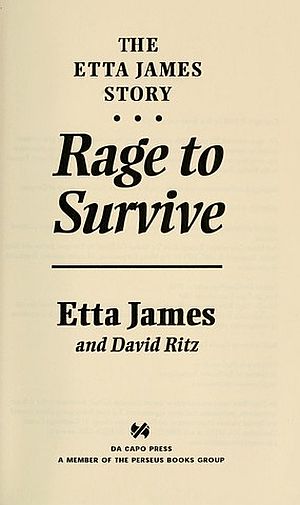
Inner title page from "Rage To Survive". Click for Amazon.
By 1995, she would write her life story with the help of David Ritz in Rage to Survive: The Etta James Story, first published by Villard and later updated in a 2003 DeCapo paperback.
In the book, she not only describes the chaotic world of early R&B – with stories about legends like Sam Cooke and Little Richard – but also details her own troubled times and dependency on drugs and bad men. She also recounts the golden age of soul, when her “Tell Mama” hit climbed the charts.
Rage to Survive, said one review, “is a funky, ribald tale told with unparalleled sass.”
Liz Smith of Newsday would write of the book:
“Candid? Brutally honest? You don’t know about candid and brutal honesty until you’ve read Etta’s life story in her own, rough, unvarnished, and humorously right-on words… [A]ny major movie studio would do itself a huge favor by turning this book into a a sizzling, big-screen saga.”
And indeed, a film would come, but not for another decade or so. Another book about her would appear in 2014 by Charles River editors, American Legends: The Life of Etta James.
Blues & Jazz

“Burnin’ Down The House,” released in May 2002 hit No. 1 on Billboard’s Top Blues Albums chart. Click for Amazon.
Time After Time, 1995, #5 Jazz
Love’s Been Rough on Me, 1997, #6 Blues
Life Love & The Blues 1998, #3 Blues
12 Songs of Christmas, 1998, #5 Blues
Heart of A Woman, 1999, #4 Blues
Matriarch of the Blues, 2000, #2 Blues
Blue Gardenia, 2001, #1 Jazz
Let’s Roll, 2003, #1 Blues
Blues to the Bone, 2004, #4 Blues
In addition to these studio albums, in December 2001, when Etta was was 63, she did her third live album, Burnin’ Down The House, recorded at the House of Blues in West Hollywood, CA. It was her 28th album overall, and was released in May 2002. The album peaked at No. 1 on Billboard’s Top Blues Albums chart, issued in CD and DVD versions. A few of the cover songs on this album were also featured on earlier albums, including, ”Leave Your Hat On,” “Your Good Thing Is About To End,” and “Rock Me Baby.” Her final album for Private Music, Let’s Roll (#1 Blues), won the Grammy Award for Best Contemporary Blues Album.
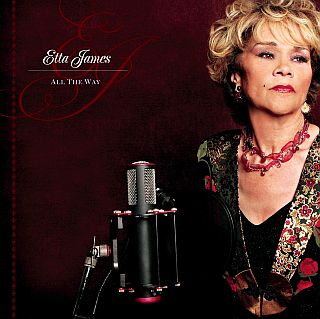
Etta James, appearing on the cover of her 2006 album. “All The Way” a few years after weight-loss surgery. Click for Amazon.
In 2003, she decided to have gastric bypass surgery, which helped her lose 235 pounds. But following surgery she had difficulty adjusting to her smaller stomach. “I had trouble keeping food down,” she would later say, and that she also “went through a depression…. You’re doing well, and then all of a sudden you’re not. I thought I was going to fail.” But she didn’t; she persevered.
In 2004, she signed with RCA Victor and released Blues to The Bone that same year, followed by a pop standards release, All the Way, in March 2006. She appeared on that album cover several years after her weight loss surgery (photo at right). She later told Ebony magazine in 2006 that following her surgery she could sing “lower, louder and longer” than before.
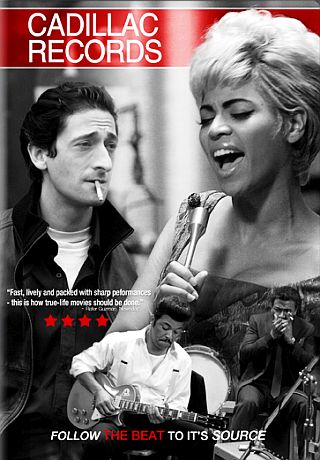
In the 2008 film, “Cadillac Records,” about Chess Records, Beyoncé portrays Etta James. Click for film at Amazon.
Chess & Etta Film
In 2008, Etta James was portrayed by singer Beyoncé Knowles in the film Cadillac Records, a fictionalized account of the rise and fall of Chess Records, and how label founder and producer Leonard Chess helped the careers of James and other jazz, blues, and R&B artists.
In the film, Adrien Brody plays Leonard Chess and Jeffrey Wright plays Muddy Waters, among others also portrayed – including Howlin’ Wolf, Little Walter, and Chuck Berry.
The film covers the 1940s-1960s era when Chess was an important player in advancing and chronicling the blues, jazz and rock music pioneered by black artists.
Among the film’s strong soundtrack of songs is the Etta James version of “At Last” as performed by Beyoncé.
The film was released in North America on December 5th, 2008, by TriStar Pictures. Critics generally gave the film favorable reviews, praising the music, though some believed it fell short on the Chess part of the story.
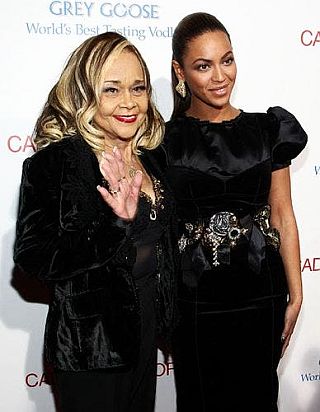
Etta James & Beyoncé at Los Angeles premiere of “Cadillac Records” at Egyptian Theater, November 24, 2008 in Hollywood.
When Cadillac Records was released, James had kind words for Beyoncé’s portrayal of her in the film. In fact, James and Beyoncé appeared together on the red carpet at the Los Angeles Premiere of Cadillac Records at The Egyptian Theater on November 24, 2008 in Hollywood, California.
The soundtrack album for the film Cadillac Records – Cadillac Records: Music from the Motion Picture – was released by Columbia Records on December 2, 2008. It features covers of classic songs from Chess Records’ singers such as Howlin’ Wolf and Muddy Waters as performed by the film actors – including Beyoncé as Etta James.
The album also features original songs from contemporary artists such as Beyoncé’s sister, R&B singer Solange Knowles and rapper Nas.
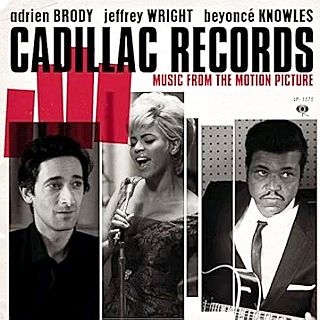
“Cadillac Records” soundtrack - Music From The Motion Picture. Click for Amazon.com.
Additionally, Beyoncé’s “At Last” – released as the only single from the soundtrack – won a Grammy for the Best Traditional R&B Vocal Performance.
Another of the songs from the sound-track, “Once In a Lifetime,“ also by Beyoncé, was nominated for a Grammy for Best Song Written for a Motion Picture, Television or Other Visual Media, but did not win.
Beyoncé’s rendition of “At Last” was also released as a single from the album on November 3rd, 2008 and would break into Billboard Hot 100 that fall, reaching No. 67. It would also reach No. 9 on the U.S. Billboard Jazz Songs chart.
At Last
The Obamas Dance
In late January 2009, as the Cadillac Records film was still playing in some theaters, the Inauguration of President Barack Obama was taking place in Washington D.C. During one of President’s Inaugural Balls in Washington, Beyoncé famously performed the Etta James version of “At Last,” as the President and First Lady, Michelle Obama, danced to the song. Beyoncé had been invited to perform the song at the ball by the White House. Etta James, still very much alive at the time, wasn’t very happy about that – at least as press accounts relayed some of her early reaction.
 Beyoncé performing “At Last” near the dance floor at President Obama’s Inaugural Ball, January 2009. |
 First Lady, Michelle Obama and President Barack Obama during “At Last” dance at January 2009 Inaugural Ball. |
In the days following the “At Last” dance of the Obamas, Etta publicly complained about Beyoncé “singing my song,” The presumed White House snub had hurt Ms. James, and not long after the Inauguration, she shared her feelings. James told a Seattle audience, “You know, your President, the one with the big ears—he ain’t my President—[and] that woman he had singing for him [Beyoncé], singing my song—she’s going to get…whipped!” In other accounts, Etta also reportedly said: “I can’t stand Beyoncé. She had no business up there singing my song that I’ve been singing forever.” …[T]he White House had called Etta, but she had not answered the call. …At that time, she would rarely even check her voice-mail… But in cooler moments and later statements, James softened her anger, and would say that her critical remarks were meant to be taken as a joke and stemmed from her personal hurt over not having been invited to the sing the song herself for the Obama inauguration
According to some later reporting in Goldmine, Etta’s manager of some years in her later career, Lupe DeLeon, noted that the White House had called Etta, but she had not answered the call. “I gave them [the White House] Etta’s phone number,” DeLeon said, “but she never answered the call. At that time, she would rarely ever even check her voicemail…” He also added, “I learned later that the president personally wanted Etta and Beyoncé to sing the song together as a duet at the White House…But Etta never returned the [White House] call. That’s Etta. So Beyoncé did it alone.”
DeLeon also explained, there may have also been other factors contributing to Etta’s reaction:
“…I think, toward the end of her life, Etta’s dementia was starting to kick in. It was around 2007, 2008. She finally had to come off the road in 2009. Plus, she was still on the pills. I think that night, when she famously spoke out from the stage against President Obama and against Beyoncé for singing Etta’s song at The White House, she didn’t really mean it. It was her illness, plus all the pills. She can’t stand Beyoncé? She’s sick of Beyoncé? She wants her song back? Hey, man, Etta would say things off the cuff and later say, ‘Wow, did I say that?’ And, you know, by that time, the damage was done. But, no, she was really proud of the job Beyoncé did. I mean, well, there was a small part of her that felt no one should touch ‘At Last.’ And I think I feel the same way. However, in Beyoncé’s case, she had to, because [she] did the movie.”
As for Beyoncé, her career was soaring. By January 2023, for example, at the private opening of a luxury hotel in Dubai, Beyoncé would sing “At Last” as the opening song in an hour-long show, her first headline performance in four years, reaping a reported $24 million.
Life & Legacy

Young Etta James, 1960s.
All told, throughout her career, James released some 58 singles, more than half of which appeared on the R&B and/or pop charts. Fourteen of those reached the Top Ten R&B and nine were Top Forty pop hits. There were also 30 studio albums, at least six compilation albums, three live albums, plus appearances on other albums.
“Etta James was a pioneer,” said Rock and Roll Hall of Fame President Terry Stewart. “…Her ever-changing sound has influenced rock and roll, rhythm and blues, pop, soul and jazz artists, marking her place as one of the most important female artists of our time. From Janis Joplin to Joss Stone, an incredible number of performers owe their debts to her. There is no mistaking the voice of Etta James, and it will live forever.”

Etta James performing at the New Orleans Jazz & Heritage Festival in 2009. Photo, Rick Diamond.
In advertising, too, Etta James’ songs have also been used. “At Last,” for example, has appeared in ads for Applebee’s, Heinz Ketchup, and Cadillac, among others. In 1996, after an excerpt of “I Just Wanna Make Love to You.” was featured in a U.K. Diet Coke ad campaign, the song again charted there, reaching the top ten. Additionally, “Something’s Got a Hold on Me” has been featured in a Citi App commercial; Google has used “Security” in another spot; while Walmart has used her music in their holiday and manufacturing ads. LG phones and the NFL Network have also used her music.
Bonnie Raitt, writing in Rolling Stone, April 21, 2005, noted Etta James is simply one of the best singers I’ve ever heard. She’s ferocious…and out-there in a way that few performers have the guts to be…There’s a lot going on in Etta James’ voice — a lot of pain, a lot of life but, most of all, a lot of strength…” Music biographer Peter Guralnick told People magazine in 2006: “Etta always comes through with feeling… She coexists with Aretha Franklin and Billie Holiday.”

Etta James 2004 album, “Blues to the Bone” (No. 4 Blues), also won a Grammy for Best Traditional Blues Album. Click for Amazon.
As the Washington Post later put it: “she often made a connection between her music and her anguished life, which included heroin addiction, drastic weight fluctuations and a troubled childhood…. [S]he smoked marijuana, snorted cocaine and shot heroin. She associated with gangsters and pimps. She was arrested for forging prescriptions and writing bad checks. When not in jail, she said, she was involved with abusive men, some of whom nearly beat her to death.”
Indeed, Etta James lived a life of the blues.
Her most famous song, too, “At Last,” is tinged with a bit the blues, but it offers, in part, a kind of haven and resolution of the troubles she had then faced. Helen Brown, writing for the Financial Times, hit upon this in part when she noted:
“…[A]lthough this is a song about finding love, for James it was about finding her emotional core and her place in music after such an unsettled existence [re: her childhood & teen years]. You can feel the ragged relief of homecoming in her tone (passionate but never showy) as her vocal sinks on to and stretches over the lush welcome mat of the string section. There’s such a romantic sense of safe harbour in James’s version that her recording remains popular for first dances at weddings…”
And of course, much beyond that as well.
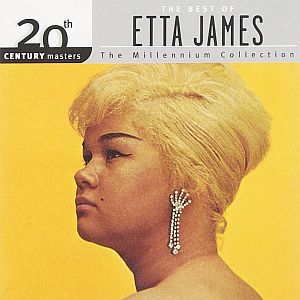
“The Best Of Etta James,” 20th Century Masters, The Millennium Collection. Click for Amazon & choice of format.
By 2010, Etta James had to cancel concert dates because of her gradually failing health, then suffering from dementia and leukemia. In November 2011, she announced her retirement. In late January 2012, she died from complications from leukemia, as her husband, Artis Mills, and her two sons were by her side. She was 73.
At her passing, tributes from fans and fellow musicians were offered as hundreds of mourners attended her public viewing and funeral in late January 2012. Reverend Al Sharpton delivered the eulogy, and U.S. Rep Maxine Waters offered a remembrance. A statement from President Barack Obama (who was then preparing for his State of Union address) was read at the service, noting: “Etta will be remembered for her legendary voice and her contributions to our nation’s musical heritage,” and that “she will be deeply missed by all who knew and loved her.”

Blues Woman Poster, by Atelier Bagatelle, a New Orleans design studio.
Musical tributes at the funeral were made by Stevie Wonder, Christina Aguilera, and Etta’s touring band, The Roots. Aguilera, who performed “At Last” at the service, stated that James was her idol and inspiration, and that in her honor, she performs “At Last” at every concert. Following James’s death, “At Last” again rose in the music charts and into the Top 40. In 2021, it was ranked at No. 115 on Rolling Stone‘s “500 Greatest Songs of All Time”
See also at this website, “Strange Fruit: 1939,” a story about the hard times and troubled career of jazz great Billie Holiday and her haunting song about lynching and racial strife; and, “Joplin’s Shooting Star: 1966-1970,” about the rising stardom and short life of rock/blues singer, Janis Joplin. Also at this website, the “Noteworthy Ladies” topics page offers 40 stories on famous women – from Rachel Carson and Jackie Kennedy to the 1960s Girl Groups and Lady Gaga.
Thanks for visiting – and if you like what you find here, please make a donation to help support the research, writing, and continued publication of this website. Thank you. – Jack Doyle
|
Please Support Thank You |
____________________________________
Date Posted: 14 August 2025
Last Update: 14 August 2025
Comments to: jackdoyle47@gmail.com
Article Citation:
Jack Doyle, “At Last: Etta James, 1938-2012,”
PopHistoryDig.com, August 14, 2025.
Twitter: https://twitter.com/PopHistoryDig
BlueSky: jackdoyle.bsky.social
____________________________________
Music at Amazon.com…
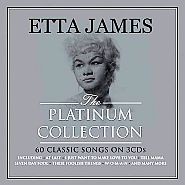 “Etta James: The Platinum Collection, 60 Classic Songs On 3 CDs”. Click for Amazon & choice of format. |
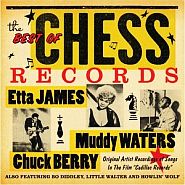 2008 “Best Of Chess Records,” Original Versions Of Songs in Film ‘Cadillac Records’. Click for Amazon. |
 Beyonce’s “Renaissance” album, 2022; vinyl, CD, or streaming. Click for Amazon & choice of format. |
Sources, Links & Additional Information
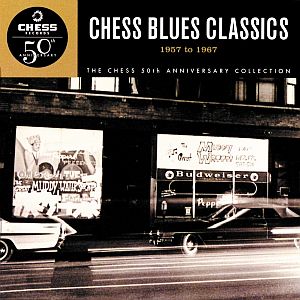 “Chess Blues Classics: 1957-1967,” The 50th Anniversary Collection. Click for Amazon.com. |
 “Muddy Waters Anthology,” 75 blues classics on 3 CDs from the “Father Of Modern Chicago Blues.” Click for Amazon. |
 Chess Records, “Chuck Berry, His Best,” The 50th Anniversary Collection. Click for Amazon.com. |
 “Howlin’ Wolf, The Complete RPM & Chess Singles, 1951-1962,” Click for Amazon.com. |
 |
“Etta James,” in Holly George-Warren and Patricia Romanowski (eds), The Rolling Stone Encyclopedia of Rock & Roll, Rolling Stone Press, New York, 3rd Edition, 2001, pp. 481-482.
“Etta James,” Wikipedia.org.
“Etta James, Biography,” RollingStone.com.
John Morthland, “Etta James’ Long Search for Stardom,” Rolling Stone, August 10, 1978.
“At Last,” Wikipedia.org.
“Etta James,” Rock & Roll Hall of Fame, RockHall.com, Induction Year: 1993.
David Writz, “Hall of Fame Essay: Etta James,” RockHall.com, 1993.
“Etta James Discography,” Wikipedia.org.
“Chess Records,” Wikipedia.org.
Mike Joyce, “Etta James, Pure Emotion At Birchmere,” Washington Post, September 5, 2001
David Ritz with Etta James, Rage To Survive: The Etta James Story, 2003.
Mark Deming, “Etta James, Artist Bio,” Amazon.com.
Vintage Music Collection, “Etta James – Live 2005,” YouTube.com.
Bonnie Raitt, “Etta James,” Rolling Stone, April 21, 2005.
Red Kelly, “Etta James,” The B Side, RedKelly .blogspot.com, April 17, 2006.
Cary O’Dell, “At Last – Etta James (1961),” Essay for Addition to the National Registry, 2008, U.S. Library of Congress, LOC.gov.
“At Last — Etta James (1961),” Added to the National Registry: 2008, Essay by Bob Gulla.
Beyoncé, “Neighborhood Inaugural Ball ‘At Last’ Performance,” YouTube.com, January 21, 2009.
Devayr Deva, “Beyoncé – At Last – Barack & Michelle Obama,” YouTube.com, 3:12 min, November 5, 2014.
Devin, “Etta James on Beyoncé Snub: ‘I Didn’t Really Mean Anything’,” RapUp.com, Febru-ary 6. 2009.
Jon Pareles, “Life’s Ups and Downs Add Something to a Song” [Etta James at the B. B. King Blues Club & Grill], New York Times /NYtimes.com, May 12, 2009.
Mark Jacobsen, “Etta James and Johnny Otis: The End of a Great R&B Song,” New York Magazine/NYmag.com, January 2012.
Richard Corliss, “A Voice of Gold, a Life of Pain: Etta James, 1938-2012,” Time Magazine / Time.com, January. 20, 2012.
TheGoodDoctor720, “Etta James Story” (6 part series), YouTube.com, January/Febru-ary 2012.
Peter Keepnews, “Etta James Dies at 73; Voice Behind ‘At Last’” New York Times, January 20, 2012.
Adam Bernstein, “Etta James, Grammy-Winning Blues Singer with Pop Appeal, Dies,” Washington Post, January 20, 2012.
Jon Blistein, “Beyoncé, Adele Pay Tribute to Etta James; The Timeless Voice of Etta James Has Inspired Countless Listeners for Decades, and Following Her Passing Today, Her Vocal Successors Are Paying Tribute,” Billboard .com, January 20, 2012.
Robert Jablon, Associated Press, “Legendary Blues Singer Etta James Dies in California from Complications of Leukemia,” January 21, 2012.
AP / ABC News 6, “Etta James Remembered as Triumphant Trailblazer,” 6ABC.com, January 28, 2012.
Charles River Editors, American Legends: The Life of Etta James, 2014. Click for Amazon.
Fame Studios, “Artist of the Month: Etta James,” Fame Back Stage / FameStudios .com, June 2021.
Mike Greenblatt, “Look Back at the Highs and Lows of Etta James’ Career; Blessed with a Talent Was as Wide as the Grand Canyon and Cursed with Demons Just as Immense, the Troubled Singer Poured Her Heart and Soul into Her Music,” Goldmine / GoldmineMag .com, February 6, 2013, updated, January 24, 2024.
“Etta James,” Biography.com, updated: May 12, 2021.
Helen Brown, “At Last — Etta James Poured Her Heart into this Classic Tune; the Singer Cemented the 1941 Track as a Standard and Dozens More Covered it — Including Beyoncé,” Financial Times / FT.com, March 13 2023.
_________________________________________
Books at Amazon.com…
 J. Randy Taraborrelli’s “Becoming Beyoncé: The Untold Story,” 2016 paperback, Grand Central Publishing, 512pp. Click for Amazon. |
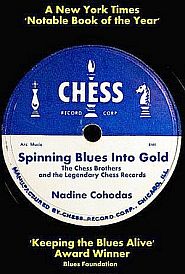 Nadine Cohodas’s “Spinning Blues Into Gold: The Chess Brothers and the Legendary Chess Records,” 2012 paperback, 494pp. Click for Amazon. |
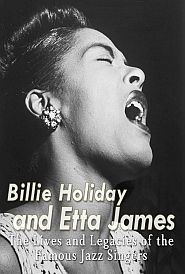 Charles River Editors 2016 book, “Billie Holiday and Etta James: The Lives and Legacies of the Famous Jazz Singers,” 80pp. Click for Amazon. |