Doctor Zhivago is the name of a famous Russian novel and an equally famous Hollywood film based on it — an epic love story cast in a time of war and upheaval during World War I and the Russian Revolution. The novel was completed in 1957 by Noble Prize-winning Russian author and poet, Boris Pasternak. While immensely popular in the West, the politically-sensitive book was banned in the Soviet Union for decades, smuggled out of Russia in 1957 and first published in Italian, followed by English editions in 1958. It became an international best seller and is ranked among the greatest works of fiction of all time.
U.S. edition of “Doctor Zhivago” (Pantheon, 1958), preceded by Italian edition in 1957. Click for copy.
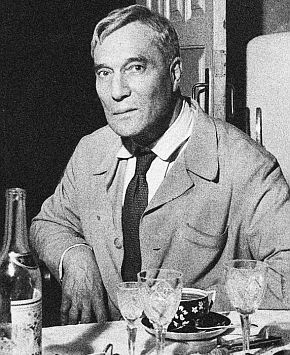
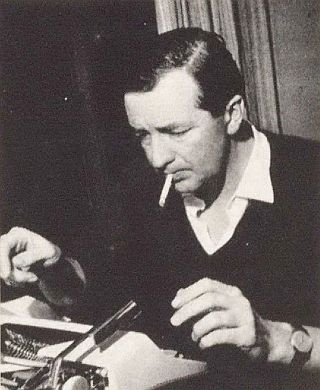
Boris Pasternak (1890-1960), in a 1958 photo at Peredelkino, Russia, where he lived southwest of Moscow.
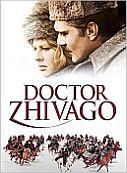
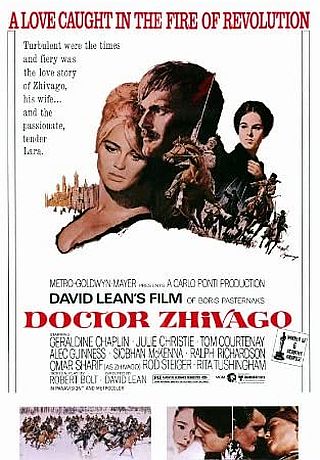
1965 film poster for Doctor Zhivago - “A Love Caught in the Fire of Revolution” – showing Zhivago with lover Lara, and over his shoulder, his wife, Tonya. Click for Amazon poster page.
The 1965 Doctor Zhivago Hollywood film, directed by David Lean, also has a prominent legacy. It was one of the biggest and most successful films of the year and remains a much-loved classic to this day. Its all-star cast included Julie Christie, Omar Sharif, Geraldine Chaplin, Alec Guiness, Rod Steiger and others.
The film was nominated for ten Oscars, wining in five categories: Best Screenplay, Best Original Score, Best Cinematography, Best Art Direction and Best Costume Design. Also nominated for Best Picture and Best Director, Zhivago lost out in those categories that year to The Sound of Music.
At the Golden Globe Awards, however, Zhivago took five awards, including Best Picture and Best Actor for Omar Sharif.
At its release in 1965, Doctor Zhivago became the second highest grossing film that year. And into the 2010s, when adjusted for inflation, Doctor Zhivago remains among the top grossing films of all time in the U.S. and worldwide, accounting respectively, for $1.1 billion and $2.1 billion in ticket sales. It is also ranked among the most popular and /or highest grossing films in Australia, Italy, Germany, Switzerland, and the UK.
What follows here is primarily a recounting of the film story, offered with the aid of screenshots from the film.
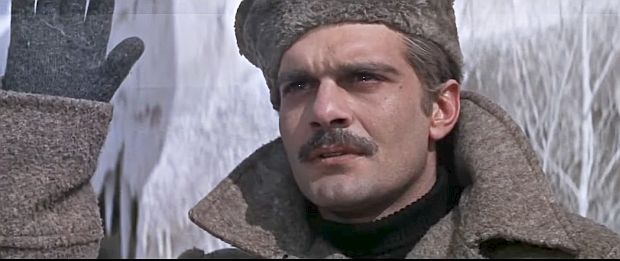
The film and story are set in Russia during 1913–1922, including a turbulent time of upheaval and change, from the period prior to World War I when Czars still ruled, and spanning the Russian Revolution of 1917 and civil war that followed when White and Red Russian partisans clashed for power. But Doctor Zhivago, at its core, is a love story told against this epic background. The politics are secondary and backdrop, though do receive a few pointed barbs here and there. The story centers on the life of surgeon-poet, Yuri Zhivago, played memorably by Omar Sharif.
Orphaned as a young boy, Yuri is raised in Moscow and becomes a doctor, though he also becomes a successful poet, which is his passion. As a young doctor, he marries Tonya (Geraldine Chaplin), an upper class girl he has known since childhood and who he dutifully loves. But as war and political upheaval begin, the life of Zhivago and his adopted family is upended. He is drafted by the Army to attend wounded soldiers at the front. In this service, he is assisted by a beautiful nurse, Lara (Julie Christie), who he has seen briefly a couple of times earlier in Moscow. More on those later.
Album cover for “Doctor Zhivago” soundtrack, showing Zhivago with wife Tonya at left, and lover Lara, at right. Click for copy.
But it is Zhivago’s love for Lara, and she for him – and the struggles that beset their union – that becomes the central thread of the film. Zhivago is torn by all his loves – each of different kind – for Lara, Tonya, and his poetry.
Music Player
Doctor Zhivago Soundtrack
“Main Title” – 1965
Powerfully complimenting the film throughout is the award-winning soundtrack by Maurice Jarre (sample “Main Title” above), and the especially evocative “Lara’s Theme,” a recurring motif of possibility, longing, and reunion that is heard throughout the film, often in fragments, but signals the love and struggles of Zhivago and Lara.
David Lean’s film, meanwhile, captures much of the drama – and the expansive and humbling Russian landscape – often through the eyes of Zhivago. But at the outset, the film uses flashback framing to set the story, via Zhivago’s half-brother, Yevgraf Zhivago (Alec Guinness). Yevgraf becomes a Communist Party regular in the course of the story, but he periodically advises and helps Yuri to stay on the right side of party expectations …Poetry, you see, has fallen out of favor, among other things.
In an early scene setting up the flash back for the Zhivago story, half brother Yevgraf shows suspected daughter of Yuri and Lara a copy of Yuri’s book, “Poems for Lara.”
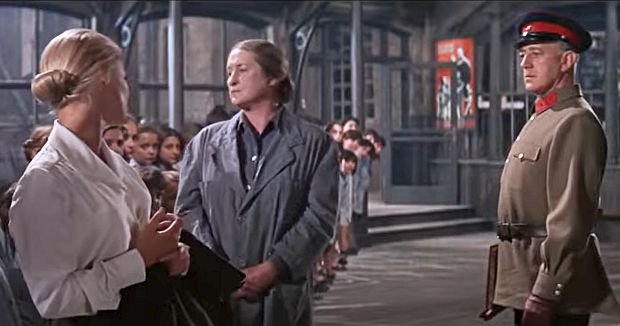
As the film opens with its flashback set up, sometime in a more modern Russia of the early-to-mid 1940s or so under Communist rule, half-brother Yevgraf, now a Lieutenant General, is seeking to learn if a young Russian female worker at a hydroelectric complex, is the love child of Zhivago and Lara.
It is here that the movie’s central story begins as Yevgraf starts to tell the young women the tale of her father, Doctor Zhivago.
That story then opens with an expansive view of the Russian countryside, during a funeral scene, as Yuri Zhivago, then a young boy, has lost his mother. Against a backdrop of looming snow-covered mountains and an expansive plain, a distant, barely-visible crowd of people is seen, until the camera cuts to a close-up revealing a group of mourners in a funeral procession.
With the hulking backdrop of snow-covered mountains, a barely visible funeral procession (tiny black figures, lower left), makes its way across an expansive plain to a cemetery where the mother of young Yuri Zhivago will be buried.
At the cemetery, young Yuri Zhivago is holding a bouquet of blue flowers as his mother’s casket is nailed shut and lowered into the grave. A mournful Russian dirge is backing the scene, as wintry winds howl, and young Yuri Zhivago takes in the scene. It is one of the first such scenes where viewers experience Yuri’s sensitivity to the natural world, with the camera serving as Yuri’s eyes, pans to a nearby tree, its leaves whipped by the wind, suggesting the poet-in-the-boy is stirring even then.
Young Yuri Zhivago, with flowers at left, at the grave site of his mother as services are performed.
The orphaned Yuri will be taken in by friends of his mother, the Gromekos, an upper class family with a home in Moscow and a country estate near the Ural Mountains. The Gromekos have a daughter, Tonya, who is the same age as Yuri, and who he will later marry. They have all attended the funeral and will stay at the Monastery that evening.
Tonya, at left, with her parents, the Gromekos, putting Yuri to bed, still at the funeral site, before heading back to their home in Moscow where Yuri will live with them – here presenting Yuri with his mother’s balalaika.
The night of funeral, as Yuri is put to bed, he is told by Mrs. Gromyko that his mother was a very good player of the balalaika, a three-string, guitar-like Russian instrument with a triangular wooden base used in Russian folk and dance music. Yuri is given his mother’s instrument, as the sound of the balalaika is heard repeatedly throughout the film. Yuri will live with the Gromekos in Moscow.
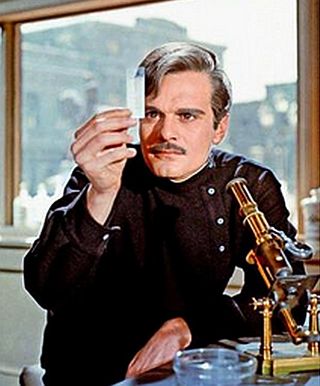
Young medical doctor, Yuri Zhivago in Moscow, examining a slide specimen at a medical bench with microscope.
Tonya Gromeko (Geraldine Chaplin), who has grown up with Zhivago, has become a beautiful woman and will become engaged to him after schooling in Paris.
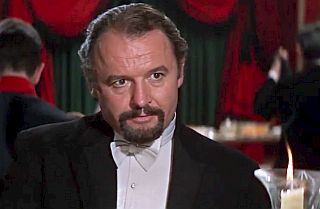
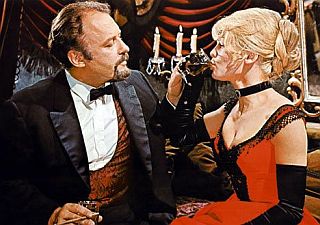
Victor Komarovsky (Rod Steiger), a well-off aristocrat, is something of a lout, and becomes a nemesis to Lara and Zhivago.
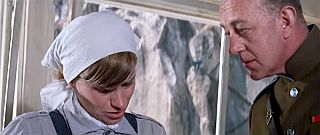
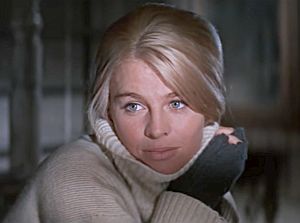
Lara Antipova (Julie Christie), 17, at her mother’s dress shop in Moscow -- before travails that soon beset her.
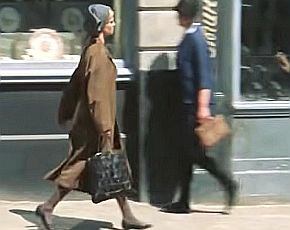
Early in the film, Yuri Zhivago (left), runs from his lab to catch a trolley, taking a seat behind Lara, who he has not yet met – their paths here crossing anonymously, an irony that emerges years later.
Upon leaving the trolley, Lara finds boyfriend Pasha passing out political leaflets, to her dismay.
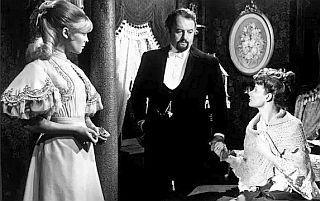
Victor’s lover, Amelia, Lara’s mother, is ill, unable to keep a dinner date with him, urging him to take Lara in her place.
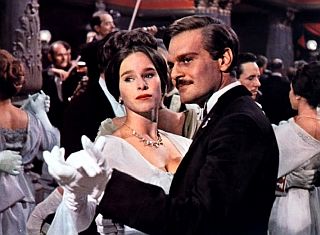
Victor Komarovsky begins his affair with young Lara after taking her out for dinner and dancing.
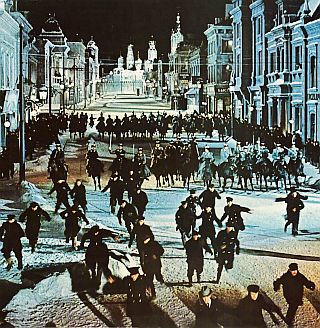
The Czar’s cavalry run down and slaughter street protestors, as Zhivago happens to witness the horror from a balcony.
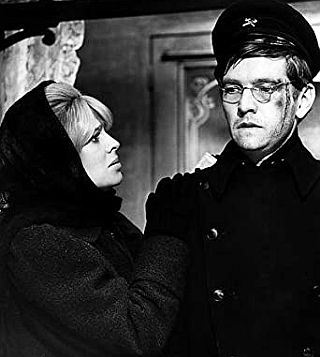
Pasha, with his face sliced, has come to Lara after the protest carnage on the Moscow streets.
Yuri Zhivago, entering the Moscow town home of the Gromekos where he grew up, meeting Anna Gromeko, who has mail for him.
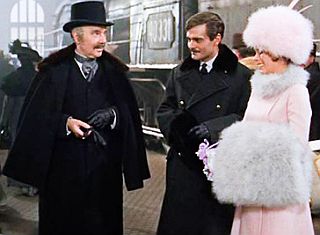
The Gromekos and Zhivago greet Tonya who has arrived in Moscow by train from Paris.
Tonya shares rave reviews of Zhivago's poetry from Paris.
Komarovsky, in his secret affair with Lara, dresses her in clothes of his liking, takes her dancing, and plies her with food and drink.
Zhivago and his medical mentor, help save Lara’s mother, Amelia, after suicide attempt.
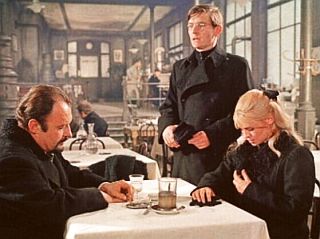
At restaurant meeting with Victor, Pasha asserts himself as capable of marriage to Lara, while Victor does not then confront him.
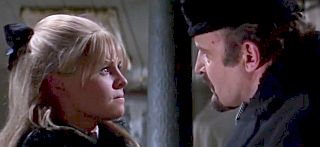
Later, at dress shop, Victor & Lara argue over Pasha, slapping each other, with Victor then forcing himself on Lara.
Tonya and Zhivago at the Christmas party in Moscow where an announcement of their engagement is expected.
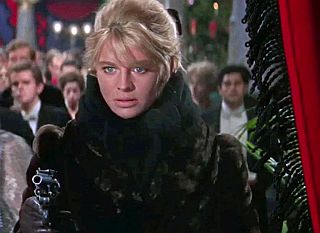
Lara, with gun, shoots at Komarovsky during Christmas party as he is playing cards in the rear of the hall.
Victor, rising from his card game, discovering he has been shot, but only slightly wounded.
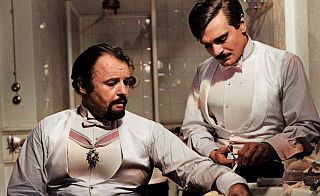
As Zhivago is dressing Komarovsky’s arm wound, the two have a somewhat testy exchange about Lara.
Fast forward some years later, and Yuri is now about to become a young doctor, being urged by his mentor at medical school to pursue research. He is also a nationally recognized and published poet at this time.
In this scene, Zhivago’s medical professor engages Yuri in conversation as he is peering into a microscope, marveling at all the “pretty things” he is seeing:
Professor: “What will you do next year, Zhivago?”
Zhivago: “I thought of General Practice.”
Professor: “Well think of doing pure research. It’s exciting. Important. Can be beautiful.”
Zhivago: “General Practice.”
Professor: “Life… He wants to see life…. Well, you’ll find that pretty creatures [like those Zhivago marvels at under the microscope] do ugly things to people.”
Zhivago’s childhood companion, Tonya, is off in Paris at a private school, and has become a beautiful young woman. She is expected to return to Moscow after her schooling.
Also in Moscow is teenager Lara Antipova, daughter of dressmaker and single mother, Amelia. Lara works as a seamstress at her mother’s dress shop, where she will confront some difficult days ahead.
Her mother’s lover and business advisor is Victor Komarovsky, played by Rod Steiger. Komarovsky, a well-off aristocrat, is something of a lout, who can be ruthless in his dealings. In fact, Komarovsky has some history with the Zhivagos, it seems, having had a hand in cheating Yuri out of an inheritance.
Komarovsky also becomes interested in young Lara. More on that in a moment.
Lara’s boyfriend and future husband is “Pasha,” a young political idealist and revolutionary, played by Tom Courtenay.
Early on in the film, there is a scene that opens with Yuri Zhivago boarding a Moscow trolley and coincidentally taking a seat behind Lara, who is then unknown to him. A few stops later, as Lara moves to exit the trolley, she brushes by Zhivago.
Lara & Pasha
After her exit from the trolley, and walking a few blocks, she discovers her boyfriend, Pasha, passing out political leaflets to passers-by. As police move in to arrest him, Lara intercedes, calling him her brother and taking him away.
As they walk some distance away toward Lara’s destination, Pasha pulls out some more leaflets from his pockets and continues to hand them out to the throng of passers-by coming home from work. She scolds Pasha for his activism, worried for his safety:
Lara: Pasha, please.
Pasha: It’s got to be done.
Lara: Pasha, why has it got to be done?
Pasha: For them. For the Revolution.
Lara: Pasha, they don’t want a revolution.
Pasha: They do. They don’t know it yet,
but that’s what they want.
Passer By: Give me some of those, comrade [re: leaflets].
Lara: Pasha? Are you a Bolshevik?
Pasha: No, the Bolsheviks don’t like me,
and I don’t like them.
Pasha: They don’t know right from wrong.
Lara: Pasha Antipov, you’re an awful prig – a self-righteously moralistic person who behaves as if superior to others.
Lara: People gossip round here.
Pasha: It’s the system, Lara.
Pasha later tells Lara that people will be different after the Revolution. And he asks Lara if she will come to an evening march planned by Pasha and his activists. No, she won’t attend, she explains, saying she must focus on her school work “I’ve got exams to take, Pasha. I’ve got to get my scholarship.”
Victor & Lara
Some nights later, Victor Komarovsky, comes to Amelia’s dress shop expecting to take Amelia out for night of dinner and dancing, However, Amelia is ill, running a fever, and she urges Victor to take young Lara in her place, which he does.
At the restaurant, Victor is recognized by the patrons, as he and young Lara are shown to their table. They order their meal and Victor then takes Lara to the dance floor.
A bit later there, a commotion is caused by some demonstrators in the street, to which Victor scoffs at and exclaims: “No doubt they’ll sing in tune after the revolution” — which brings laughter from those in the restaurant as the evening’s activities resume.
Later that night, traveling by horse-drawn sleigh across the city, Victor takes Lara to his home and seduces her before returning her to her mother’s home.
Street Slaughter
Meanwhile, that same night, the group of socialist demonstrators that Victor had scoffed at in the restaurant, had assembled on the streets to continue their rally. With a band and banners in protest of the Czarist regime, they continued their march trough the streets of Moscow. However, at the opposite end of one street, was the Czar’s cavalry laying in wait.
As the protestors, led by Lara’s boyfriend, Pasha, made their way down the street, the Cossacks on horseback came charging full bore through the crowd, swinging their sabres at will. The protestors are slaughtered by the dozens, leaving pools of blood in the snow as the Cossacks conclude their handiwork.
Zhivago Shaken
Yuri Zhivago, who happened to have come to the street-side balcony of his home when he heard the demonstrators’ music, witnesses the entire event, and is visibly shaken by the killing and mayhem.
He then goes down into the street and begins to care for the wounded. As soldiers are loading bodies into wooden wagons, Zhivago is told by a soldier on horseback he should get off the street and go back to his home. But Yuri is boiling mad with barely-contained anger and is saved from a confrontation by his uncle Gromeko (Ralph Richardson) who takes him off the street, reminding him that Tonya will be arriving the next day from Paris.
Pasha Wounded
Lara’s boyfriend, Pasha has been wounded in the street battle, his face sliced on one side by a Cossack sabre. He has come to Lara after the battle, and she says he should go to the hospital, but Pasha is afraid to go there, fearing arrest. He asks for iodine and treats the wound himself.
“There were women and children,” he explains to Lara, “and they rode them down. Starving women, asking for bread.”
Pasha had also picked up a dropped hand gun off the street during the battle. He asks Lara to hide the gun and keep it for him. Lara is horrified but hides the gun away in a drawer.
Some days later, on the other side of town, Yuri Zhivago is nearing the end of his medical studies.
Russian Comfort
Although the seeds of Russian discontent are stirring as Pasha and the demonstrators make plain, it is still a few years before World War I and the Russian Revolution at this point.
Life for the upper classes in Czarist Russia is quite good and comfortable – as it has been for the Gromekos in Moscow and Yuri Zhivago growing up there.
One scene from the film has Zhivago arriving at the Gromeko’s fashionable town home in Moscow where he has lived, meeting Anna Gromeko. That afternoon, she has a letter for him from Tonya, then in Paris, but soon to be back in Moscow.
When Tonya arrives to return to the Gromeko household from Paris, she is met at the rail station by her parents, Alexander and Anna Gromeko, along with Zhivago. It is 1913.
Tonya and Zhivago are excited to see one another, as they are expected to marry. Tonya tells Yuri that his poetry is famous in Paris, and has brought him a publication with the news on his work.
The affair between Victor Komarovsky and Lara, meanwhile, continues in secret. Victor has Lara coming to private rooms where they meet. He insists she wear clothing he buys for her, and plies her with food and drink. But Lara feels trapped.
Suicide Call
The following winter, as Zhivago and Tonya attend a music recital, Yuri’s medical school mentor and doctor, also at the recital, is summoned on a medical emergency to treat a woman who has attempted suicide. Zhivago goes with him to assist.
Turns out the victim is Lara’s mother, Amelia, who has learned of her daughter’s affair with Komarovsky. The senior doctor is a friend of Komarovsky’s.
Komarovsky, cad that he is, does not want to loose Amelia to suicide over his affair with Lara. The two doctors manage to save her.
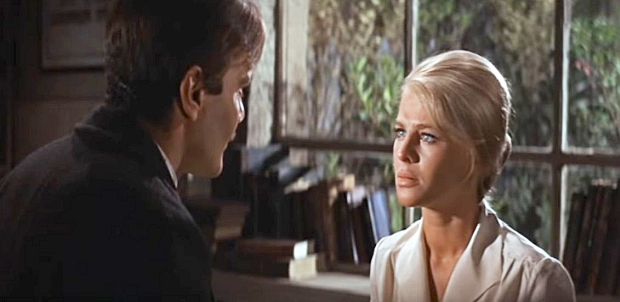
But it is here where Zhivago first sees Lara, as he wanders through the house, and through a window to another room, observes she and Komarovsky having a conversation about her mother’s condition and that she has learned of their affair.
Victor Meets Pasha
Lara, however, is trying to free herself from Komarovsky, and has asked him to meet with she and Pasha at a local restaurant, and hear of their plans to marry.
The meeting is tense with Pasha asserting himself and his experience. He is 26, and believes himself capable of marriage.
Komarovsky does not argue with Pasha at the restaurant, but later, at the dress shop, attempts to dissuade Lara from marrying Pasha:
Komarovsky: Lara, I am determined to save you from a dreadful error. There are two kinds of men, and only two, and that young man is one kind. He is high-minded. He is pure. He is the kind of man that the world pretends to look up to and in fact despises. He is the kind of man who breeds unhappiness; particularly in women. Now, do you understand?
Lara: No.
Komarovsky: I think you do. There’s another kind. Not high-minded. Not pure. But alive. Now that your taste at this time should incline towards the juvenile is understandable. But for you to marry that boy would be a disaster. Because there’s two kinds of women… [Lara covers her ears, but he forces her arms down]
Komarovsky: There are two kinds of women and you – as we well know – are not the first kind. [Lara slaps him, and he slaps her back].
Komarovsky: You, my dear, are a slut.
Lara: I am not!
Komarovsky: We’ll see.
Komarovsky: Who are you to refuse my sugar? Who are you to refuse me anything?
…And Victor then proceeds to rape her.
Revenge Plan
Humiliated, Lara plans to take revenge on Victor. At first, she plans to take the gun Pasha asked her to keep for him and use it to shoot Victor at his home.
One cold winter evening, she sets out to do the deed, heading to Victor’s residence, only to discover Victor has gone to a Christmas party that evening, where she goes next.
Along the way, Pasha sees Lara on the street and insists on knowing where she is going, but Lara tells him he should read the letter she has left for him, which explains the whole story, including her affair with Komarovsky.
But Lara continues to make her way to the Christmas party, despite Pasha’s queries, though Pasha lingers on the street suspecting something.
At the party, there is much frivolity, with Christmas-tree candle-lighting, music, and dancing. The engagement announcement of Zhivago and Tonya is also expected that evening.
Shooting Victor
Having entered the elegant gathering, Lara makes her way through the crowd of party goers, moving toward the back of the hall where a card game is in progress. Komarovsky is there with cigar and drink in hand. Lara moves closer, draws the gun and aims at Komarovsky, and shoots. All the festivity stops instantly with the sound of the gunshot, amid some screams. Lara’s shot, however, has only slightly wounded Victor, hitting his arm.
Zhivago and Tonya witness the incident, as Zhivago is privately quite taken with Lara’s courage. Some in the crowd call for the police, but Komarovsky insists no action be taken against Lara.
At about that time, Pasha, who followed Lara to the party, comes into the hall. As he moves to retrieve Lara from the scene, the crowd makes way for him, then escorting Lara out of the hall.
Komarovsky, meanwhile, is treated for his wound by Zhivago, during which the two have this exchange:
Zhivago: What happens to a girl like that, when a man like you is finished with her?
Komarovsky: You interested?
Zhivago: [abruptly removing the cigar from Victor’s mouth, tossing it into the toilet]. You shouldn’t smoke. You’ve had a shock.
Komarovsky: I give her to you, Yuri Andreevich. Wedding present.
Few Years Later
Flash forward a few years later. Yuri and Tonya are married in Moscow and have a young son. Pasha and Lara have left Moscow for the countryside. Although devastated by Lara’s admission of her affair with Komarovsky, Pasha married Lara, and they have a daughter, Katya. Pasha soon enlists to fight for the Russian Army, but later is said to be missing in action or possibly dead. Lara enlists as a nurse to treat soldiers in an attempt to find Pasha.
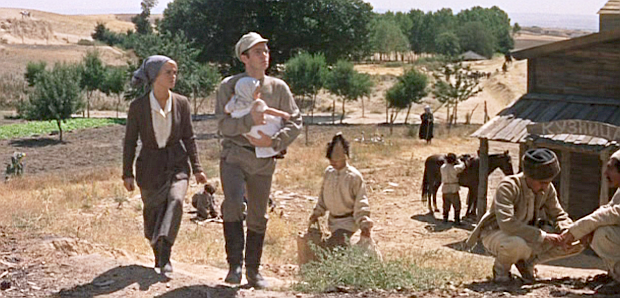
Lara and Pasha, now married, are shown here with their daughter, living in the country. On one visit to town, shown here, Pasha meets with a recruiter and joins the army. However, later, he would go missing in action.
In 1914, World War I erupts and Yuri is posted to a field unit of the Russian Army near Ukraine After one bloody insurrection and roadside battle scene, with dead and wounded strewn about, he happens to find Lara at the scene and recruits her to assist him in treating the wounded. Together, they then help run a field hospital for six months.
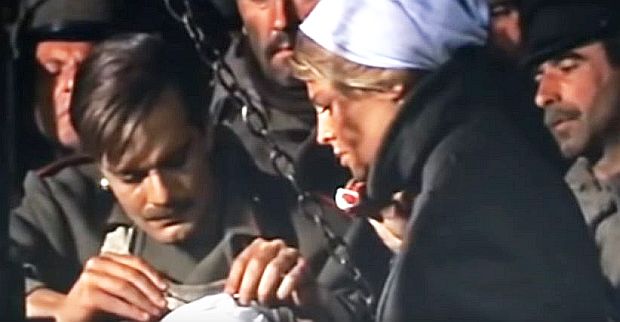
On the back of their hospital wagon, on a makeshift operating surface, Zhivago is at work on a wounded soldier as nurse Lara assists in dabbing the wound with swab.
Dr. Zhivago and nurse Lara on their hospital wagon.
While working together, Lara says to Yuri that he often looks at her as though he knew her. And he admits, yes, he had seen her four years earlier at a Christmas Eve party in Moscow, the night she shot Victor Koma-rovsky. “No wonder you look at me,” she says.
But Yuri also adds that the young man who escorted her out of the hall that night, her future husband, Pasha, now missing in action, had shown “a lot of courage. He made the rest of us look very feeble. As a matter of fact, I thought you both did.”
Of Komarovsky, Yuri says, “good man to shoot at.”
World War I for the Russians had begun to wind down in 1916. But by the summer of 1917, the October Russian Revolution has begun, changing the entire political landscape. Yuri and Lara, meanwhile, continued their medical work by order of the Provisional Government.
One day at the field hospital, news circulars report that Lenin has arrived in Moscow, the Tsar is in prison, and that civil war – the Revolution – has begun. “No more Tsars!...Only workers in a workers state!,” says one soldier.
World War I for the Russians had begun to wind down in 1916. But by the summer of 1917, the October Russian Revolution has begun, changing the entire political landscape. Yuri and Lara, meanwhile, continued their medical work by order of the Provisional Government
Having worked together for six months in an old country estate converted to a hospital, Yuri and Lara are the last to leave the now empty facility. They are clearly in love with each other, but have managed to keep their passions suppressed.
As the fighting winds down, and the field hospital empties of its wounded, Yuri and Lara talk of their respective departures, as Lara resists Yuri pressing her about their, so far, repressed love for each other.
Yuri in one scene, as Lara works on some ironing, presses Lara for what has grown between them, Lara is set to rejoin her young daughter in the town of Gradov, where she and Pasha had initially settled. Yuri worries about who will take care of Lara, but says he would be jealous of any caretaker. Zhivago then moves closer to Lara, but she resists, telling Yuri they have done nothing that would violate his marriage to Tonya, and so should remain that way…
Lara: “…Zhivago, don’t…My dear, don’t – please (as she burns her ironing)….Now, look what you’ve made me do. Yuri, we’ve been together six months on the road, in here, and we haven’t done anything you have to lie about to Tonya. I don’t want you to have to lie about me. You understand that, Yuri? You understand everything…”
Closing of film scene after Lara has left Zhivago and the field hospital.
Soon after, as the field hospital closes, and the last of the patients and soldiers take their leave, Lara says a simple “goodbye, Zhivago,” and boards the troop wagon to join her young daughter in Gradov.
Music Player
“Lara Leaves Yuri”
Doctor Zhivago Soundtrack
In the moment, Yuri’s eyes fill, and “Lara’s Theme” is heard in the film score, as the scene fades into the back rooms of the now empty hospital, passing a vase of wilting sunflowers Lara had set.
Back to Moscow
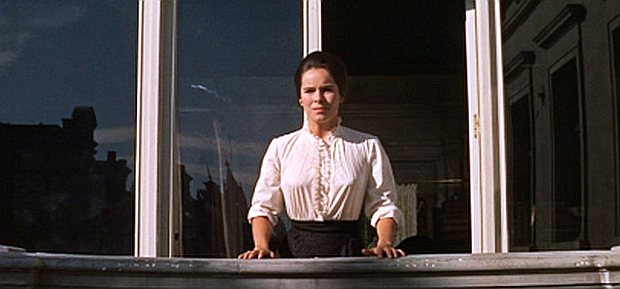
Back in Moscow, Yuri’s wife, Tonya has been living in the family home with their young son and her father, Alexander Gromeko. The letters home from Yuri were not always regular, and she is now looking forward to their reunion, having received word of his return. In the film, she is shown in one scene on the balcony of their home looking out over the Moscow streets, as Yuri approaches from afar. During his time away, however, radical change has occurred throughout Russia — including at the family home in Moscow — as Yuri soon discovers.
Tonya, anticipating Yuri’s homecoming after the war, looks out from the balcony of her home over the streets of Moscow, and she will soon become excited seeing Yuri approaching in the distance.
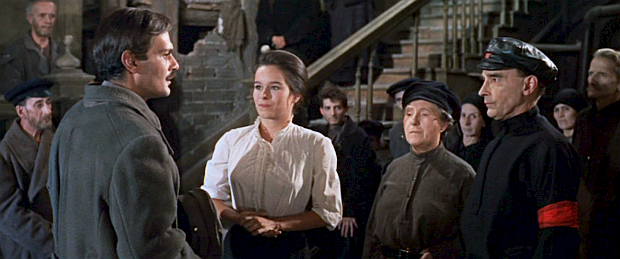
When Yuri arrives at the once-elegant home in Moscow where he was raised, Tonya introduces him to “Comrade Yelkin, our local delegate. He lives here.” In fact, 13 families now live there. Next is “Comrade Kaprugina is the Chairman of the Residents’ Committee,” who asks for Yuri’s discharge papers. He learns his former hospital, Holy Cross, has been renamed, “The Second Reformed Hospital.” Yuri quips: “Good. It needed reforming.” In the course of conversation about his return to medical work, he notes there’s typhus in the city, to which one comrade replies, “You’ve been listening to rumormongers. There is no typhus in our city.”
As Yuri enters the once-elegant Gromeko home in Moscow where he was raised, he is introduced to local party officials and learns from Tonya that the home is now divided into units for 13 families.
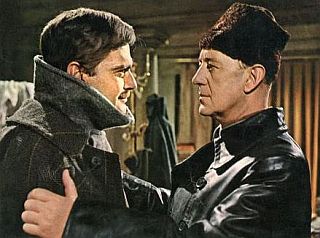
Collectivization has begun, but Moscow is in trouble, with virtually no food supplies or heating fuel, as an unforgiving Russian winter approaches. One night, in fact, Yuri is driven to steal some fence boards for needed fuel at home, but is observed in the theft by Yevgraf, his half brother, who is now a party official. Yevgraf does not arrest Yuri, but follows him home, where the two connect and reunite as family.
Half-brother Yevgraf with Yuri at home after fence-wood pilfering, arranges for Yuri & family to leave Moscow.
But Yevgraf has a warning for Yuri, as the published poet has fallen out of favor. He tells him that the Party leaders are watching, putting his life and his family members in danger.
Yevgraf urges Yuri to leave Moscow, and secures fake papers for the family to leave for the Gromeko country home, Varykino, in the Ural Mountains. A long train ride in a very crowded and dirty box car ensues with a few armed guards and one unhappy prisoner.
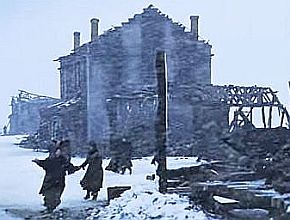
Along the way, as the train slows through a burned-out village, with dead cattle strewn about, a woman with child in her arms runs along side the slowed train and hands her infant to Yuri and others standing at the box car’s door, but the child is dead. Yuri and others manage to pull the woman onto the moving train, and she later explains that the local devastation is the handiwork of one ruthless Bolshevik commander known as Strelnikov, who has unfairly punished the entire village for alleged crimes.
Train w/Yuri & family slows through one village attacked by partisans; villagers seeking help.
One woman runs along side of the slowed train, handing an infant to Yuri, later pulled aboard.
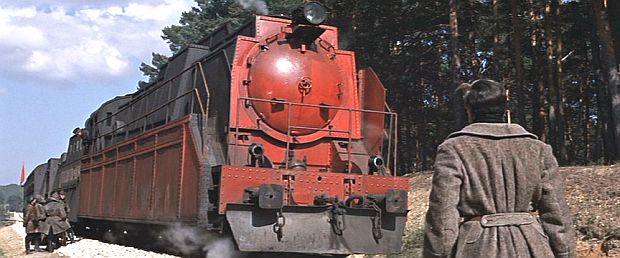
Later in the trip, their train stops due to civil war activity in the area. Yuri hears the sound a waterfall in the distance and wanders off into the woods and away from his train, as strains of “Lara’s Theme” are heard. Then he suddenly comes to a cut in the terrain and there, on another rail siding, is Strelnikov’s hulking armored train. He is apprehended by guards who suspect him an assassin. They take him to Strelnikov’s private car to be interrogated.
As his own train has stopped on another siding, Yuri Zhivago has wandered off through the woods hearing a waterfall, then stumbles upon an opening where Bolshevik commander Strelnikov’s armored train is parked, and is apprehended by guards suspecting him an assassin,
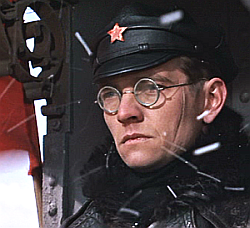
Bolshevik Commander General Strelnikov (a.k.a. Pasha), amid some flying snowflakes.
Surprisingly, the general turns out to be none other than Pasha, the thought-to-be missing-in action or dead soldier-husband of Lara.
In his commander’s car, Strelnikov dismisses his guards, and begins a conversation with Zhivago, having inspected his personal papers. He asks if he is the poet Zhivago, which Yuri acknowledges he is. At first, Strelnikov compliments Yuri on his poetry of old, then lectures him: “I used to admire your poetry…. I shouldn’t admire it now. I should find it absurdly personal. Don’t you agree? Feelings, insights, affections. It’s suddenly trivial, now. …You don’t agree. …You’re wrong. The personal life is dead in Russia. History has killed it.”
They soon discover they have seen each other before, six years earlier at the Christmas Eve party where Komarovsky was shot by Lara and Pasha escorted her from the hall.
Zhivago explains that he and Lara were recently a medical team on the war front. “If she’s with you, I’m sure she’d vouch for me,” Zhivago says. But Strelnikov explains he hasn’t seen his wife since the war. He says she is now in Yuriatin, to Yuri’s surprise, as Strelnikov adds, with seeming indifference to his marriage to Lara: “The private life is dead… for a man with any manhood.” Yuri then quips, “We saw a sample of your manhood on the way, a place called Mink.” [i.e., the burned village].
Yuri Zhivago is questioned by Bolshevik Commander Strelnikov in his private rail car, and he realizes Zhivago has seen him before, and charges that poetry and affections are now trivial and that the “personal life” is dead in Russia.
Strelnikov: They’d been selling horses to the Whites.
Zhivago: No. It seems you burnt the wrong village.
Strelnikov: They always say that, and what does it matter? A village betrays us, a village is burnt. The point made.
Zhivago: Your point, their village.
Suspicions that Yuri was an assassin or spy are dismissed by Strelnikov, and he releases Yuri, who runs back to his own train that has nearly left without him. As their journey proceeds, they soon arrive at Yuriatin, and then by horse-drawn carriage, to the Gromeko summer home at Varyikino
Varykino
When they arrive at the family summer house at Varykino it is late winter/ early spring. The main house, they find, is locked and boarded up; under seal of the local communist authorities. Alexander Gromeko, the owner, is angry and about to break down the door. Occupying it, however, would be a crime and would risk their arrest. But also on the estate is a small gardener’s cottage nearby, and they make their way there to see if it’s open.
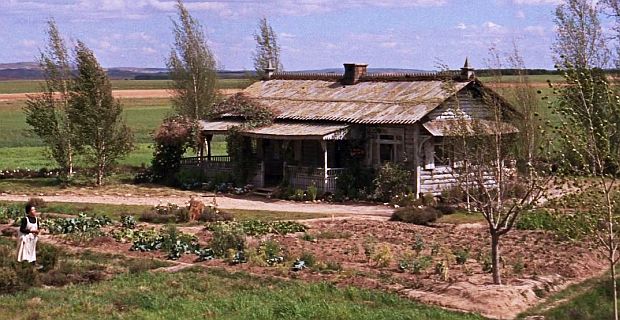
Finding Varykino boarded up and under communist seal, Yuri, Tonya, their son Sasha, and Alexander Gromeko, with porter, make their way to caretakers’ cottage, also on the estate.
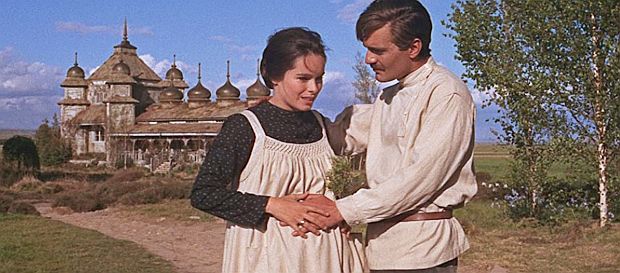
After a quick inspection of the cottage, they find it open and livable and settle in for what is expected to be a multi-year stay, later managing a vegetable garden there for food. Their squatter’s residence at this location is nearly invisible. That summer, however, they learn of news that the Czar and his family have been executed. The family remains in the cottage through that winter and into the spring.
Yuri Zhivago and his extended family, settle in at the gardener’s cottage at Verykino, later shown here with Tonya tending a vegetable garden.
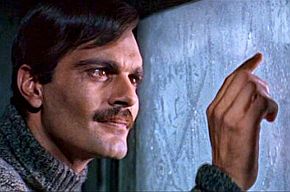
Life in their rural hideaway is simple and calm – perhaps too calm for Yuri, although he is shown time and again discovering meaning and purpose in the everyday world around him, as in one scene where he is taken with the formation of ice crystals on a window pane.
At Varykino, in winter’s doldrums, Yuri finds wonder in a window pane’s ice crystals.
...But soon, the rising biology of spring at Varykino stirs the soul of Yuri Zhivago...
But one day, moved by his restlessness, and the encouragement of Tonya, he rides by horseback into the town of Yuriatin with plans to visit the library there that his step-father, Alexander Gromeko, has recommended. In Yuriatin, Zhivago finds Lara working in the library, who is quite astonished to see him. “Zhivago! What are you doing here?” The two then take a long walk through the war-scarred town as he explains the trip he and family have made from Moscow, that they are living at Varykino, and that he has also met Strelnikov.
On his trip to Yuriatin, Zhivago finds Lara at the local library, where she is surprised to see him, as the two reunite, walk through town, and catch-up on their respective lives.
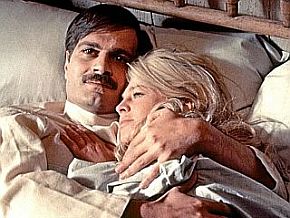
Lara has lived in Yuriatin for about a year, having returned there in search of her husband, Pasha, now known as Strelnikov. As their walk through town continued, they end up at Lara’s apartment where Yuri appreciatively takes in Lara’s living space and her domestic touches. She lives there alone with her young daughter, Katya, who Lara says is currently in school. Whereupon, the two embrace, kiss passionately, and move to Lara’s bedroom to consummate their long-delayed love affair as “Lara’s Theme” permeates the scene.
Zhivago and Lara, arrive at Lara’s apartment in Yuriatin, where they soon embrace...
... and move to Lara’s bedroom where they begin their long-delayed love affair.
Yuri Zhivago then begins something of a double life for some months, trying to be true to both his loves, periodically leaving Tonya and his home life back in Varykino to visit Lara in Yuriatin. But with Tonya pregnant, Yuri struggles with his infidelity.
Back at Varykino, with Tonya pregnant, Zhivago struggles with his infidelity.
Guilt soon gets the better of Zhivago, and he vows to himself that he must end his affair with Lara. On his next visit to Yuriatin, and at Lara’s apartment, there is tortured scene, with Lara crying as Yuri tells her their affair must end, and this will be the last time they will see each other. On the horseback ride back to Tonya and Varykino after leaving Lara, Zhivago slows his horse down to a near stop on a dirt road in the middle of a forest, rethinking what he has just done with Lara, feeling sad and torn between his two loves.
On the road back to Varykino, as he has slowed his horse in thoughts of Lara, Yuri is surrounded by soldiers.
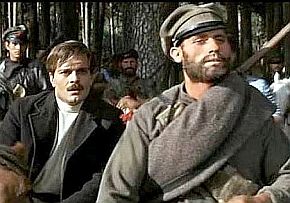
Captured by Red Army partisans, he is told that he is now conscripted to serve as their doctor.
And just then, on a this remote forest road, he is surrounded by local partisans on horseback who take him prisoner, with their commander explaining they have been watching him and know all about his affair in Yuriatin and his residence at Varykino. They are in need of a doctor, he is told, and so, they are conscripting him for involuntary service in their cause. For the next two years, Zhivago rides with these partisans, attends to their wounded, and once again, witnesses the horrors of war close up.
Sometime later, after his capture, on one of the army’s long and weary treks, Yuri slowly but deliberately drifts away from the unit on horseback, and then escapes ( at that point, he is regarded as a deserter by the Red Army). He later loses his horse, but continues his trek on foot over the unforgiving snow-covered landscape, following old roads and telegraph lines trying to get back to Varykino and Yuriatin.
After escaping the Red Partisans, Zhivago loses his horse makes a long journey on foot back to Yuriatin.
Yuri eventually makes his way hundreds of miles back to Yuriatin. Arriving at Lara’s apartment alone after his ordeal, frostbitten and dehydrated, he is horrified at seeing himself ravaged and emaciated in a mirror there.
On his way, through one blizzard, he begins hallucinating and believes he sees his family, Tonya and Sasha, ahead as distant figures. He starts following and calling to them, but upon reaching them, discovers it is another family, whom he has scared. He eventually makes his way back to Lara’s apartment in Yuriatin, remembering where she had hid the key. Inside, he sees himself in a mirror, and is horrified by his ravaged and emaciated appearance. Lara, hearing he was sighted in the area, had gone to Verykino looking for him, returns to her apartment to find him and begins nursing him back to health.
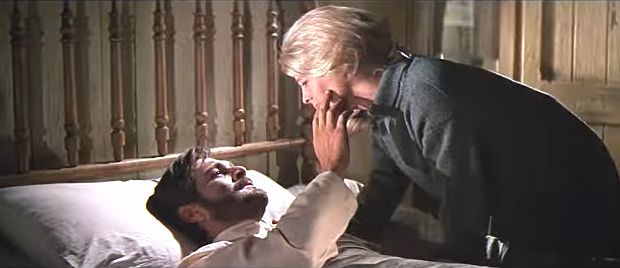
After his ordeal and arrival at Lara's apartment, she helps nurse him back to health.
At Lara’s, with her care and feeding, there is a long period of recovery for Zhivago, having suffered from severe frostbite, as he slowly begins walking again. During his recovery, Lara has explained to him that Tonya had contacted her while searching for him, leaving his belongings with her. Tonya also sent Lara a sealed letter for Yuri, which Lara gives to Yuri during his recovery, then learning that Tonya had given birth to their daughter, and that she, her father, and the two children were now in Paris.
At Lara's apartment during his recovery, Zhivago reads the letter Tonya has sent him via Lara, then learning about his second child and his family now in Paris.
Zhivago and Lara, meanwhile, continue their relationship in Yuriatin until – above all unexpected intrusions – none other than Victor Komarovsky arrives at their door on a cold snowy night.
None other than Victor Komarovsky arrives at Lara's apartment door one cold winter night to tell then they are in danger and to make the couple an offer of safety in the East.
Komarovsky explains that they are in danger, and that he has come to offer them help and a safe haven in the east. Cheka agents have been watching them due to Lara’s marriage to Strelnikov, Yuri’s desertion from his Red Army captors, and his counter-revolutionary poetry.
Komarovsky: Yuri Andreyevich, you spent two years with the Partisan’s 5th Division. You have no discharge, so you are a deserter. Your family in Paris is involved in a dangerous émigré organization. Now, all these are technicalities. But your style of life…everything you say, your published writings, are all flagrantly subversive. Your days are numbered…unless I help you. Do you want my help?
Zhivago: No.
Komarovsky continues to explain that he has been appointed as an official to the Far Eastern Republic, and offers to take them with him. “…You come with me as far as the Pacific Coast. From there you can go where you like. To Paris, or not….” They decline his offer again. But Komarovsky persists, angering Zhivago who proceeds to throw him out of the apartment, down the steps, and into the snow. Komarovsky yells recriminations back at Zhivago in an angry tirade: “I came to you in good faith….Stay here then, and get your desserts! Your desserts, do you hear me? Do you think you’re immaculate? You’re not immaculate!…I know you! Do you hear me?! We’re all made of the same clay, you know! Clay! Clay!…”
Realizing they are in danger now – and as Komarovsky has said, their days are numbered – they know if they attempt to flee by train they will be instantly arrested. So they opt, instead, to hide out at Varykino, together, with young Katya.
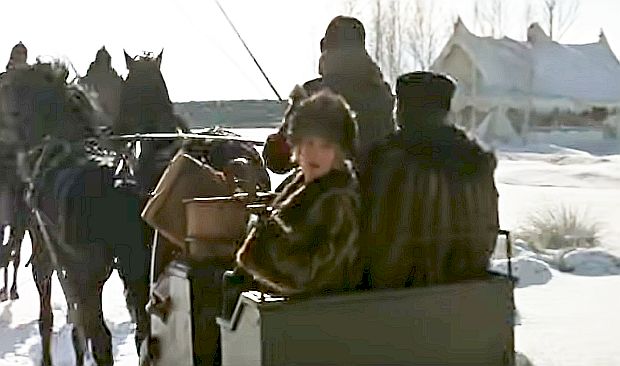
Lara, Zhivago and Katya arriving by horse-drawn sleigh at snow-covered Gromeko house at Varykino to hide out from the Red Army for as long as they can.
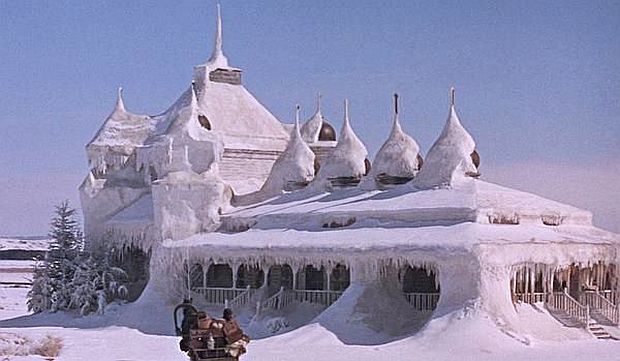
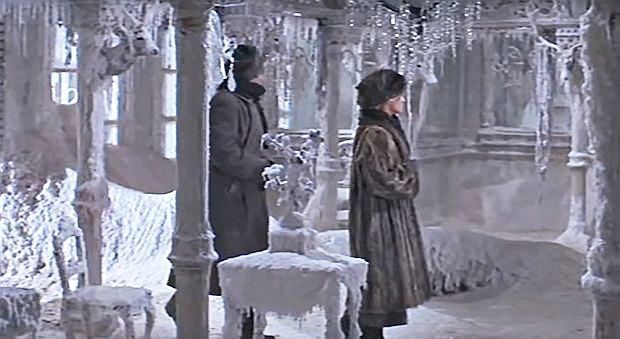
Even if they stay at Varykino for only a short time before they are found, Lara and Zhivago believe the time spent together will be worth it. So they make their way there by horse-drawn sleigh and occupy a small portion of the old great house – which now, in the dead of winter, has the look of a frozen ice palace inside and out. They stay there through most of the remaining winter.
Lara and Zhivago entering the frozen interior of the Gromeko home at Varykino, which has taken on the look of a winter-wonderland ice palace.
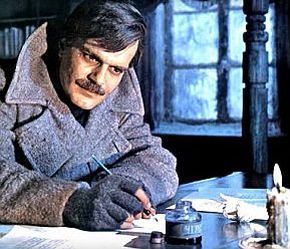
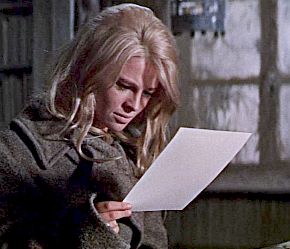
During their stay at Varykino, Zhivago sometimes works on his poetry at night, amid howling wolves, which frighten Lara. But Zhivago does complete one set of poems – these dedicated to and about Lara – which she finds one morning; poems, when published, will become famous for Zhivago, though banned by the party as subversive.
Yuri Zhivago, working on his poetry at night during his and Lara’s hide out at Varykino.
Lara discovering a poem from Zhivago about her one morning at Varykino – of a later-to-be famous collection,
Komarovsky, now the Minister of Justice, soon finds Lara and Zhivago at Varykino, arriving one day by horse-drawn sleigh with armed guards. He once again makes his offer of help – now to leave Russia with him on his special train at Yuriatin heading for Mongolia. But once again, they refuse. Komarovsky then takes Zhivago aside for a private conversation.
Komarovsky finds Lara and Zhivago at Varykino and offers them passage on his train East, but they resist, at which point Komarovsky takes Zhivago aside to detail the dangers that Lara & Katya now face if they stay.
Komarovsky explains that Strelnikov was captured only five miles from there, and during interrogation, “insisted they call him Pavel Antipov (i.e. Pasha)… and refused to answer to the name of ‘Strelnikov’ On his way to execution, he took a pistol from one of the guards and blew his own brains out.” Now, he says, they will be coming for Lara.
Komarovsky: …But don’t you see her position? She’s served her purpose (re: as lure for Strelnikov). These men who came today as an escort will come for her and the child tomorrow as a firing squad….But if you’re not coming with me, she’s not coming with me. So are you coming with me? Do you accept the protection of this ignoble Caliban on any terms he makes? Or is your delicacy so exorbitant…that you would sacrifice a woman and a child to it?
Yuri gives Lara his mother’s balalaika, as she prepares to depart on Komarovsky’s sleigh, suspecting Yuri’s plan.
And with that, Zhivago acquiesces, soon loading their luggage onto the sleigh and helping Lara take a seat there.
Yuri also gives Lara his mother’s balalaika, a sign to Lara that Yuri may not be coming, as they exchange glances.
In the sleigh, there are only enough additional seats for Lara and Katya. Zhivago says he will follow later with their own sleigh, meeting them in Yuriatin where the train is waiting.
However, Zhivago cannot leave his homeland, and will not join them on the train waiting at Yuriatin.
As Komarovsky’s sleigh and armed guards pull away from Vayrykino with Lara & Katya aboard, Zhivago has promised to follow later with their sleigh – but Lara, looking back, already knows that Yuri is not coming.
As Komarovsky’s sleigh, with Lara and Katya aboard, pulls away, Zhivago waves goodbye, then quickly rushes to an upstairs window high atop Varykino, frantically rubbing off the window frost, then breaking out the glass, to get a final glimpse of Lara leaving as their sleigh disappears over the far horizon.
Yuri Zhivago is devastated as Lara pulls away from Varykino on Komarovsky’s sleigh, but knows it is the best option for the safety of Lara and Katya – though for himself, he cannot leave his homeland.
Lara and Komarovsky wait for Yuri on the train at the Yuriatin station, but he does not arrive, as Komarovsky quips to Lara: “Well, I’m afraid that’s it, my dear. Your young man’s not coming,” to which Lara replies: “You fool. Did you really think he would come with you?” The train leaves, and Lara also announces to Komarovsky that she is pregnant with Yuri’s child.
Eight Years Later
Yuri Zhivago, some time later, made his way back to Moscow, where he was found by his half brother Yevgraf in poor condition and without work. Yevgraf helps him get his old job back at the hospital, but he was not in the best of health. Then one day while riding on a streetcar, Yuri believes he sees Lara walking on the street just below his streetcar window.
Yuri Zhivago, 8 years later, riding on a Moscow streetcar, gazing out the window...
...when he believes he sees Lara walking on the street, just outside the streetcar...
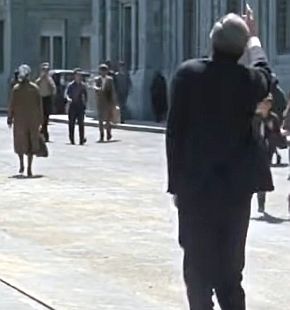
He attempts to get her attention at the streetcar window, but failing that, desperately makes his way through the crowded car to exit, reaching the street not long after she has gone by, maybe 20-to-30 yards ahead of him.
Having exited the streetcar, Zhivago then tries to run after Lara, just ahead, attempting to catch up to her...
But as he attempts to run and call after her, he grabs at his chest, has a heart attack, and falls dead on the street.
But as he tries to call to her and run after her, not far away, he grasps at his chest and collapses on the street. Lara has seen none of this, continuing her walk and disappearing around the corner, as passer-bys on the street rush to help the fallen Zhivago, now dead of a heart attack.
At the cemetery, a steady line of mourners & admirers attend the burial service for Zhivago, surprising half-brother Yevgraf (standing at center red collar), not realizing the popular appeal of his brother’s poetry.
Later, at a graveyard memorial service for Zhivago, large numbers of people are shown filing past his gravesite where his half brother, Yevgraf, stands in silence. The large turn out of admirers surprises Yevgraf, not realizing the wide appeal of his brother’s poetry.
At Zhivago’s burial, Lara meets Zhivago’s half brother, Yevgraf, for the first time, seeking his help to find her missing daughter lost during the Far East civil war.
One of those who come to the graveyard memorial is Lara, who meets with Yevgraf and asks his help in trying to find her missing daughter, Tonya, who was lost somewhere near Mongolia during the far east civil war. Yevgraf and Lara then search Moscow’s orphanages, but Tonya is not found. Yevgraf loses contact with Lara, and assumes she “vanished…in one of the labor camps” or passed away.
Yevgfraf with Lara (far left) visiting one of the orphanages attempting to find her and Zhivago’s missing daughter. But their search is not successful.
Yevgraf concluding his session years later with the believed-to- be missing daughter of Lara and Zhivago.
The story of Dr Zhivago then returns to its beginning flash-back framing at the hydro-electric complex years later where Yevgraf concludes his telling of the Doctor Zhivago story for the suspected and now grown daughter of Lara and Zhivago. On her departure Yevgraf notices that she carries a balalaika over her shoulder, and is told she is a good player, which suggests to him another possible connection to Zhivago and that he may well have found his niece.
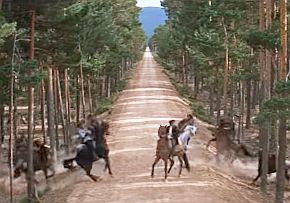
Cover of 32-page MGM press booklet on “Doctor Zhivago” film, 1966. Cover shows scene from film of Russian partisans on horseback assembling in forest, early morning.
Reaction & Legacy
As noted at the beginning of this story, the 1965 MGM film, Doctor Zhivago, became one of the most popular and top grossing films of the 20th century ($2 billion & still counting). And it remains to this day, in the 2020s, a much loved film around the world. But at the time of its initial release, the film did have its critics – some unsparing in their views.
Bosley Crowther, for the New York Times, in a December 23, 1965 review, charged that “Mr. Bolt [screenwriter] reduced the vast upheaval of the Russian Revolution to the banalities of a doomed romance.” Brendan Gill of The New Yorker in January 1966 called the film “a grievous disappointment…” and lamenting what he found as a lack of movement, also cited it as, “one of the stillest motion pictures of all time….” Film critic David Thomson, wrote in The New Biographical Dictionary of Film: “Zhivago is a syrupy romance, without poetry or plausibility.” Pauline Kael also panned the film in April 1966 for McCall’s, writing at one point: “Neither the contemplative Zhivago nor the flux of events is intelligible, and what is worse, they seem unrelated to each other… It’s stately, respectable, and dead.” Another reviewer for The Monthly Film Bulletin noted in June 1966 “the spirit of the novel has been lost.”
But the film also brought solid praise in other early reviews. In December 1965, Time magazine called the film “literate, old- fashioned, soul-filling and thoroughly romantic.” Philip K. Scheuer of the Los Angeles Times described the film “as throat-catchingly magnificent as the screen could be, the apotheosis of the cinema as art…” And Clifford Terry of the Chicago Tribune wrote that David Lean and screenwriter Robert Bolt “have fashioned out of a rambling book, a well controlled film highlighted by excellent acting and brilliant production.”
James Powers, writing for The Hollywood Reporter in December 1965, described the film this way: “Zhivago is a story about the clash between man and the state, the imperishable, resilient individual refusing to be patterned or flattened.” Life magazine’s film critic, Richard Schickel, had a detailed full-page review of the film in January 1966, calling it “a work of serious genuine art” (more on that review below).
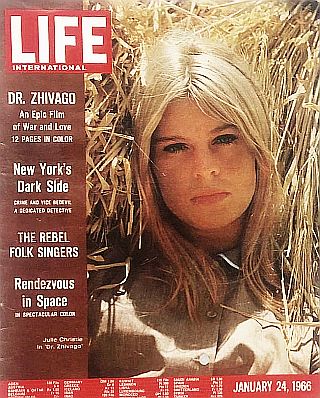
January 1966. “Doctor Zhivago” received a generous 12-page photo spread in Life magazine editions, with Julie Christie featured on the cover of its international edition.
Life magazine, in fact, with both its domestic and international editions of January 1966 gave the film generous promotional coverage, featuring a 12-page spread of photos and commentary in both editions, and putting Julie Christie on the cover of its international edition.
The review of the film by Richard Schickel at Life was also revealing of the film’s powerful cinematography and its messages:
The most important thing one carries away from David Lean’s movie version of Doctor Zhivago is a series of visual impressions – of the vastness of the Russian landscape, of the hugeness and, therefore, the uncontrollability of the forces necessary to effect revolutionary change within such a landscape, of the puniness of man when he measures himself against this scale, and finally, and most important, the nobility and the sadness of the luckless individual who would, contrary to Tolstoy’s advice, set himself in opposition to the gigantic historical pressures generated in this almost immeasurable caldron.
Schickel also addressed criticisms that the film gave short shrift to the Russian Revo-lution:
…It is true that his principal characters do not confront the great historical events of the period directly, but to have done so would have been to falsify Pasternak, who was similarly reticent;… The whole point is that in the revolutionary situation Pasternak’s characters must all remain on the margin, doomed by Marxist historical science – not to mention the raw psychology of revolution – to the junk heap of history. It is artistically essential that they be unable to participate in, shape or even fully understand the events that are transforming their lives. The compassion one comes to feel for them is based on their stubborn humanity. They accept their fate, they try to keep going, they even manage to be perversely cheerful on occasion, though it is becoming increasingly clear to them that what they are undergoing is not just a passing storm but a total and irrevocable change in the climate.
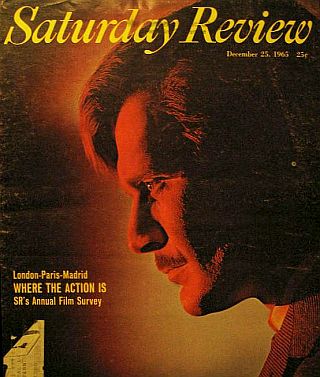
25 December 1965. Omar Sharif on the cover of “Saturday Review,” with story by film critic, Hollis Alpert.
As popular film critic Roger Ebert later put it in a 1995, 30th anniversary review, the film was “an example of superb old-style craftsmanship at the service of a soppy romantic vision,” and that “the story, especially as it has been simplified by Lean and his screenwriter, Robert Bolt, seems political in the same sense Gone with the Wind is political, as spectacle and backdrop, without ideology,” concluding that the political content is treated mostly as a “sideshow.”
And that’s OK – or it least it should be.
To show love and emotion and “the personal life” surviving in spite of repressive politics and the chaos of war and revolution is a good thing, no?
A world with a perfect politics made of a repressive ideological order without emotion and culture is not a world most of us would want to live in.
Again, as Robert Ebert put it: “‘Doctor Zhivago’ believes that history should have a lot of room for personal feelings – that the problems of its little people do amount to more than a hill of beans [paraphrasing Casablanca]- and that’s perhaps why the Russians [i.e, Soviet government] didn’t like Pasternak: He argued for the individual over the state, the heart over the mind.”
David Lean, in fact, had stated at the outset, that his intention in making the film was to craft Zhivago as an epic with a love story at its center. The plan was to minimize the role of the Russian Revolution and maximize the character of Lara. Lean by that time was already an Oscar winning director for other epic films, such as Bridge Over the River Kwai (1957) and Lawrence of Arabia (1962). Those films won 14 Academy Awards between them including Best Picture and Best Director for both. In Zhivago, Lean wanted to tell this story with a love affair at its core, something he hadn’t done in his earlier two epics.
Director David Lean, left, during film production with his leading actor, Omar Sharif, who played Dr. Yuri Zhivago in the 1965 award-winning film, “Doctor Zhivago.” Atlantic Monthly, August 1965.
As Lean explained in an August 1965 interview with The Atlantic Monthly while making the film:
Making movies is a kind of falling in love. It’s almost entirely emotional. For instance, when I read Zhivago my common sense told me that it [making a film about it] was a terribly difficult thing to undertake, but I was so moved by the book that I thought all this must make a marvelous movie. I’ve done two films now with no women in them [Lawrence of Arabia and Bridge on the River Kwai], and I like love stories very much. I found this a superb love story. God knows how I’m going to do it, but if we’re clever enough, it’ll come out.
And indeed, it did. Lean was quick to credit his screenwriter, Robert Bolt, as a key player in crafting the film, as Pasternak’s book provided intriguing but difficult terrain, often with incomplete information on character behavior. Bolt explained some of his work on the screenplay in the Atlantic Monthly of August 1965:
Screenwriter Robert Bolt had no small task, dealing with the lengthy & complicated Boris Pasternak novel from which the film was adapted. Atlantic Monthly, 1965.
…What fascinated me about Yuri [Zhivago] was that his actions are in fact very reprehensible. He has sins of omission and commission, mostly omission, and yet you feel not merely that he could do no other, but that in some way he was right and that the only thing under these circumstances that a man of his supcrcultivated sensibilities could have done was go with the tide wherever it took him. All the characters are peccable, and yet there is the strong feeling not merely that they could have done no other but that they reacted in these very ordinary and unheroic ways with a kind of special intensity. They were ordinary people raised several notches, and this, of course, is difficult to get across dramatically.
The way to make a man have stature dramatically is to make him do things which have great stature. The whole point about this book is that Yuri does nothing that has great stature except write poetry; and how to make the writing of a poem, particularly if the poems are like Pasternak’s, seem to a cinema audience a heroic justification of what looks like a rather useless sort of life was a very considerable problem.
We did it by calculating as carefully as we could the climax of his relationship with Lara. Everything is knotted together in the desperate situation at Varykino, where the revolution is closing in on them, where the natural conditions, the fearful cold, are closing in on them. What they are doing is in practical terms nonsense, if not indeed highly irresponsible. The only justification of it is the intensity of their love for each other. We hope we have shown by this time in the film that they are unusually mature people. We are hoping that the audience will now assume that this is a kind of Tristan and Iseult situation [famous 12th century love affair], a great grand passion. And then we have tried to arrange the actual sequence so that the climax of it shall be the writing of Zhivago’s poetry. And in that way we hope to make the poetry the crown of the film….
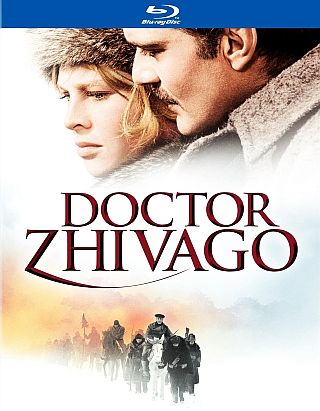
45th Anniversary Blu-ray edition of Doctor Zhivago released, May 2010 ( 3-disc set w/ book). Click for Amazon.
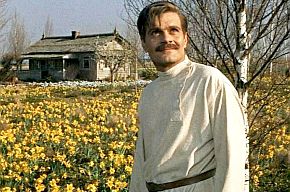
Along the way, Zhivago the romantic and humanist is shown through Lean’s camera and visual touches as a person who finds awe, beauty and promise all around him in his daily life, whether the tiny wonders of biology under a microscope, ice crystals on a window pane, the rising daffodils of Spring, shafts of sunlight in a forest, or the searching blue eyes of his lover, Lara. Those visual moments in the film carry emotional and optimistic heft, suggesting an irrepressible humanity and a joy in living – all surviving despite the political swirl. For these and other reasons, Doctor Zhivago remains a classic film for the ages.
True, some of the Doctor Zhivago’s touches seem overdone by today’s standards – perhaps a little too much of “Lara’s Theme,” for example, as lovely as that tune is. Yet over time, the film has held up quite well, as later reviews seem to validate.
In one “30-years-later” Chicago Tribune review on the then-restored Zhivago film headlined, “`Doctor Zhivago’ Grows Grander With Time,” film critic Michael Wilmington described the film in glowing terms as: “a magnificent prolonged tease,” “lush and tempestuous,” “visually ravishing,” and “inimitable.” And nearly 20 years after that, film director Paul Greengrass (e.g., Jason Bourne film series, Bloody Sunday, Captain Phillips, United 93), then delivering the BAFTA David Lean Lecture in March 2014, called Zhivago “one of the great masterpieces of cinema.”
At Varykino, Lara asks Yuri: “Wouldn’t it have been lovely if we had met before?” -- and they almost did, years earlier on a streetcar. (see earlier photo near top).
Sadly though, epics like Doctor Zhivago are not frequently found in today’s cinema. But surely that genre can rise again. Zhivago-styled epics, cast in modern contexts, are needed in the 2020s and beyond. The subject matter is certainly there, with a variety of backdrops available to frame any number of “love-in-the-throes-of” epics – whether civil rights, environmental battles, political skullduggery, technological oppression, space exploration, entertainer/ sports biographical struggles, etc.,. Hopefully, there will be film-makers out there who will use the lessons of Doctor Zhivago to fashion new epic cinema in the years ahead.
See also at this website, a detailed companion story to this one at: “The Pasternak Saga…and Zhivago Chronicles,” which cover the life and career of Doctor Zhivago author, Boris Pasternak, including his battles with Soviet authorities over his writing, their refusal to publish Doctor Zhivago, his Nobel prize controversy, his love affair that inspired the Lara character in Doctor Zhivago, and the CIA’s involvement with the Zhivago novel as Cold War propaganda.
Additionally, other stories of interest a this website may include the following: “Linda & Jerry, 1971-1983,” on the respective careers of, and relationship between, California Governor Jerry Brown and rock star Linda Ronstadt; “The Love Story Saga, 1970-1977,” on the book and film of that era that became a publishing and box-office hit; and, “Of Bridges & Lovers,” an account of the 1992 book and the Clint Eastwood / Meryl Streep 1995 film, Bridges of Madison County. Other story choices on film-related topics can be found at the “Film & Hollywood” category page.
Thanks for visiting — and if you like what you find here, please make a donation to help support the research, writing and continued publication of this website. Thank you. – Jack Doyle
Article Citation: Jack Doyle, “Doctor Zhivago: 1950s-2010s, PopHistoryDig.com, October 7, 2023.
__________________________________
Other Film Choices at Amazon.com…
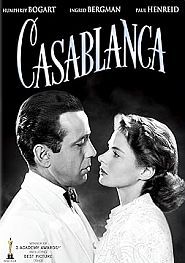
1942 classic love story in a time of war starring Humphrey Bogart & Ingrid Bergman. Click for film.
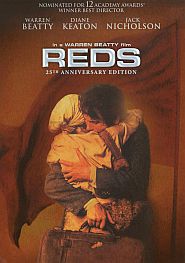
Warren Beatty, Diane Keaton star in 1981 drama about journalist & Russian Revolution. Click for film.
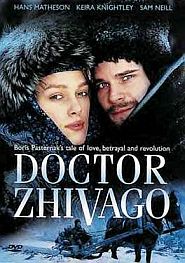
2002 British TV miniseries with Keira Knightley that aired on U.S. PBS. Click for film.
Sources, Links & Additional Information
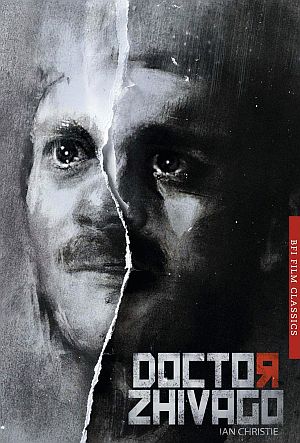
Ian Christie’s 2015 book on the film's production history, reception over fifty years, and enduring influence on film & culture. British Film Institute, 100 pp. Click for copy.
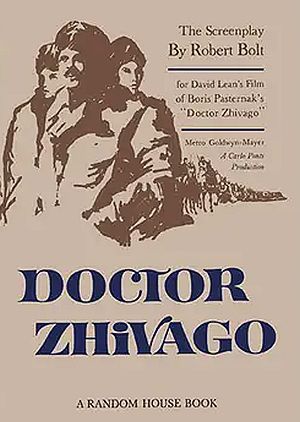
Robert Bolt’s 1965 book, “Doctor Zhivago;: The Screenplay,” Random House. 224 pp. Click for Amazon.
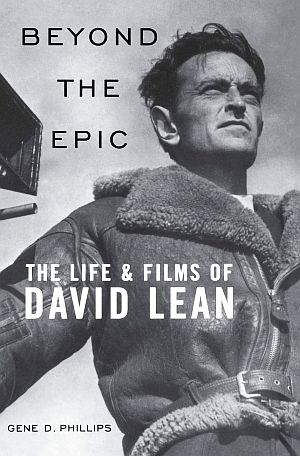
Gene D. Phillips’ 2006 book, “Beyond the Epic: The Life and Films of David Lean,” University of Kentucky Press, 592 pp. Click for Amazon.
Boris Pasternak, “I Remember: Sketches for An Autobiography,” 1959-1960 editions, Click for Amazon.
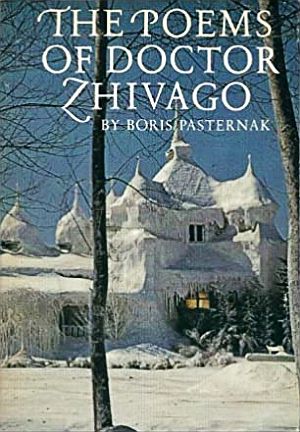
Boris Pasternak: “The Poems of Doctor Zhivago,” University of Michigan. Click for Amazon.
Bosley Crowther “David Lean’s Doctor Zhivago Has Premiere; Adaptation of Pasternak Novel at the Capitol; Omar Sharif and Julie Christie in Leads,” New York Times, December 23, 1965, p. 21.
Hollis Alpert, “Omar Sharif As Dr. Zhivago,” The Saturday Review, December 25, 1965, p. 20.
MGM, David Lean’s Film of Doctor Zhivago, program booklet, 1965, 36 pp.
Robert Bolt, Doctor Zhivago: The Screenplay, 1965, Random House, 224 pp. Click for copy.
“Doctor Zhivago Film Script,” DailyScript .com.
James Powers, “Doctor Zhivago,” Hollywood Reporter, December 23, 1965.
Brendan Gill, “The Current Cinema,” The New Yorker, January 1, 1966. p. 46.
Bosley Crowther, “Gone With the Purga; Re ‘Dr. Zhivago’” [re:‘Zhivago’ vs. ‘Gone With The Wind’], New York Times, January 9, 1966, Section 2, p. 1.
Arthur Knight, “Lean Pickings” (Review, Doctor Zhivago), The Saturday Review, January 15, 1966, p. 43.
Richard Schickel, “Epic Beauty and Terror: David Lean Makes a Long and Magnificent Film of Dr. Zhivago;,” Life, January 21, 1966, p. 48 (12-page spread w/photos).
Richard Schickel, “A Work of Serious, Genuine Art,” Life, January 21, 1966, p. 62-A.
Pauline Kael, “At The Movies with Pauline Kael,” McCall’s, April 1966, p. 36.
“Film Chronicle,” Commentary, May 1966, pp. 73-76.
Francis Russell, “’Zhivago’ Reduced to an Epic” (Review, Doctor Zhivago), National Review, May 31, 1966, pp. 542-543.
Michael Wilmington, “`Doctor Zhivago’ Grows Grander with Time,” Chicago Tribune, April 7, 1995.
Roger Ebert, “Doctor Zhivago,” Chicago Sun-Times, April 17, 1995.
Jaewook Ahn, “Doctor Zhivago: Scene 8/17 Returns Home,” YouTube.com, May 24, 2019.
“Doctor Zhivago (1965): Will There Be Wolves In The Forest?” [film clip], TCM.com.
Lillian KM, “Strelnikov and Zhivago,” YouTube .com, February 26, 2014.
“Dr Zhivago in Varykino [actually, Uriatan library], YouTube.com, January 14, 2012.
Rui Garcês, “Doctor Zhivago (1965) – Yuri and Lara (HD Tribute),” YouTube.com, September 2017.
Tim Dirks, “Greatest Film Scenes and Moments: Doctor Zhivago (1965),” FilmSite .org.
Frank Miller, “The Big Idea Behind Doctor Zhivago,” TCM.com, July 26, 2004.
“Paul Greengrass: David Lean Lecture,” BAFTA.com, March 18, 2014.
BFI, “Doctor Zhivago” (new trailer 2015), YouTube.com.
Peter Bradshaw, “Doctor Zhivago Review – Vehement Storytelling Still Conjures Great Romance; With Real Contemporary Relevance,” The Guardian.com, November 26, 2015.
Paul Batters, “Dr Zhivago (1965): David Lean’s Masterpiece Of Love And Tragedy,” Silver Screen Classics, July 22, 2018.
Roderick Heath. “Doctor Zhivago (1965),” FilmFreedonia.com, September 25, 2018.
“Doctor Zhivago,” American Film Institute (AFI Catalog), AFI.com.
“Doctor Zhivago (1965),” IMDB.com.
“Doctor Zhivago (1965),” Critic Reviews, IMDB.com
“Doctor Zhivago (1965-66),” PeterViney.com
Lily Rothman, “How Hollywood Turned the Epic Book Doctor Zhivago Into a Movie
Doctor Zhivago,” Time.com, December 22, 2015.
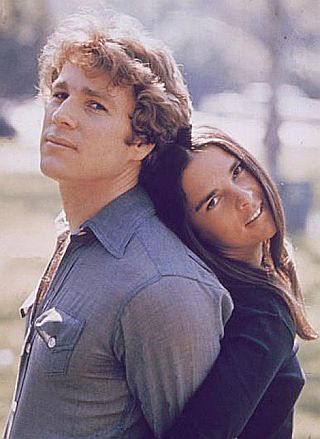
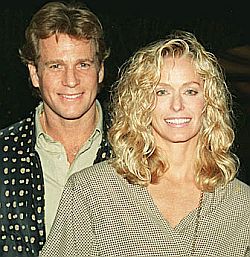
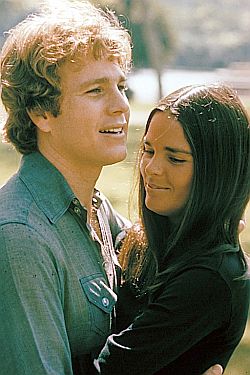
Ryan O’Neal and Ali MacGraw in 1970 studio photo: Harvard ice-hockey star & hot head meets wise-cracking Radcliffe beauty in popular novel & Hollywood film, “Love Story”. Click for film.
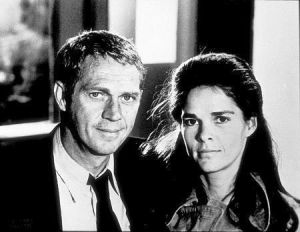
Shown at right is a 1970 photo of actors Ryan O’Neal and Ali MacGraw. At the time, these two were the “easy-on-the-eye” film stars du jour; the star couple in Hollywood’s Love Story, a film that swept the nation off its feet in 1970-71. Ali MacGraw stole the hearts of millions as Ms. Jenny Cavilleri, the bright and sassy working-class Italian kid from Providence, Rhode Island who goes off to Radcliffe and finds her rich Harvard Hunk.
There, in the undergraduate idyll, these two beautiful people, full of promise and intelligence, fall in love and begin their storybook life together – or so it seems. But alas, the fates intercede in this too perfect union, providing a tragic and unhappy ending. Indeed, there are plenty of Kleenex moments in this film as the likeable and quick-witted Jenny is stricken with an unnamed cancer, eventually succumbing to the disease in a heart-wrenching hospital scene one cold winter’s night.
This story, however – rising first as a best-selling novel – became commercial gold. Though some would call it sappy by today’s standards, in the early 1970s both book and film were perfectly timed, and they permeated popular culture through and through. Millions succumbed to the Love Story spell, in print and on screen. Novel and film each made bundles of money. The story’s success marks one of those moments in popular culture when a simple love story sweeps through society as something of a gale force phenomenon, though sometimes, as in this case, to the disdain of more highbrow literary and film critics. What follows here is a recounting of the Love Story tale, novel and film, covering story recap, cultural and business impact, and some biographical follow-up on the principal players.
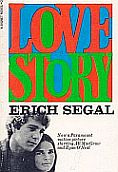
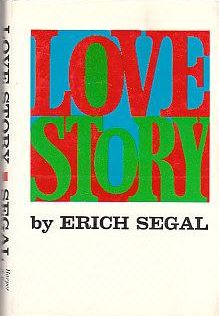
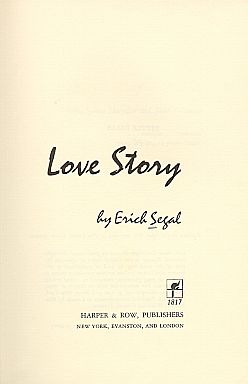
"Love Story," hardback, 1970. Click for copy.
Erich Segal
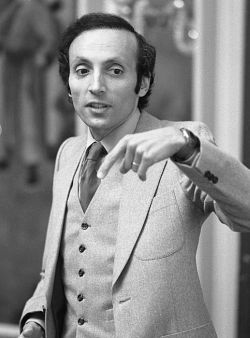
Love Story began its journey with a somewhat unlikely creator – a Yale University classics professor named Erich Segal. Born in Brooklyn, New York, the son of a rabbi, Erich Segal studied Hebrew and other languages at an early age, becoming fluent in German, French, Latin, and Greek. He attended Brooklyn’s Midwood High School where Woody Allen was among his contemporaries.
At Harvard, Segal received a bachelor’s degree in 1958 and was both class poet and Latin salutatorian. Two more Harvard degrees followed: a master’s in classics in 1959 and a Ph.D in comparative literature in 1965.
Erich Segal became a scholar of Greek and Latin literature, publishing books on the Greek writer Euripides and the Roman playwright Plautus before writing Love Story.
Outside of his scholarship, Segal was also something of a long-distance runner. He first ran the Boston Marathon in 1955, and once finished in a respectable time of 2:56:30. By the 1960s, he was still running ten miles a day.
Professor Erich Segal, 1970s.
Segal became a professor of comparative literature at Yale University and throughout his career would also serve as a visiting professor at Princeton, Dartmouth, and other schools. But Segal was not only an academic.
In the 1960s he became involved with screen writing. In fact, by 1967, he wrote the screenplay – adapted from a story by Lee Minoff – for the Beatles’ hit 1968 animated film, Yellow Submarine. He also collaborated on other screenplays through the late 1960s.
One of Segal’s own screenplays was about a romance between a Harvard University student and a Radcliffe College co-ed. Yet this story initially went nowhere. A William Morris literary agent, Lois Wallace, suggested to Segal that he turn the love story script into a novel – the novel that became Love Story.
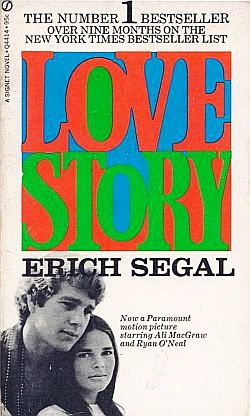
Segal’s story was sold to Harper & Row publishers in New York, and it became a best-selling hardback in early 1970. It was quickly followed by a paperback, which by then was also being used to tout the forthcoming Paramount film which had been in production even before the hardback was issued. The film came out in mid-December 1970. More on Segal and the marketing of both book and film a bit later. First, an overview of the story, aided here by book-and-film storyline, plus screen shots from the film.
The Story
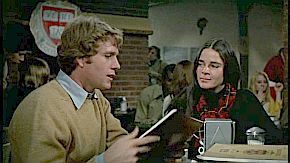
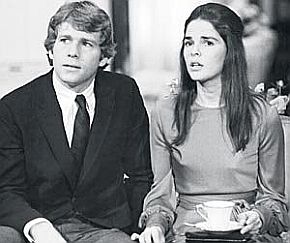
Nerdy librarian aide, Jenny Cavilleri, meets Harvard jock, “Ollie” Barrett IV in the Radcliffe library.
Jenny succeeds in getting Ollie to take her for coffee.
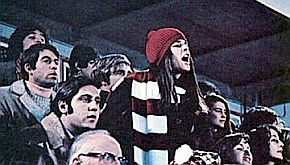
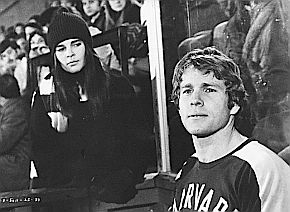
Love Story: Jenny Cavilleri at Harvard ice hockey game, cheering on new found friend, Ollie Barrett.
Jenny, inquiring about Ollie’s stay in the penalty box.
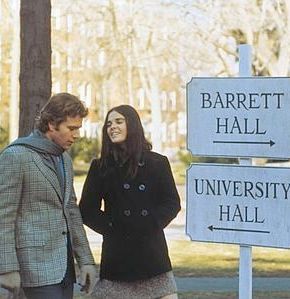
Ollie & Jenny on campus at Barrett Hall sign.
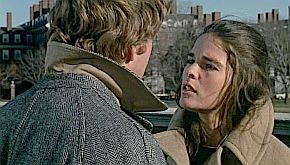
Jenny & Ollie in more intense conversation.
Ollie & Jenny becoming better acquainted.
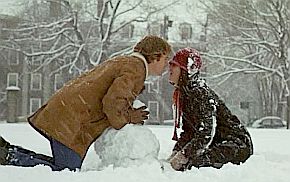
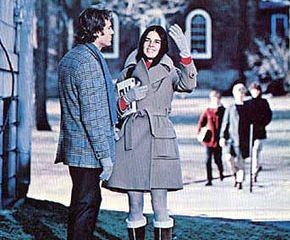
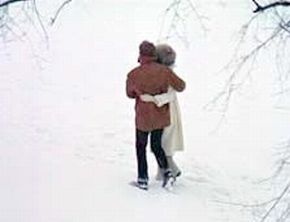
"Love Story" snow scene with Jenny & Ollie.
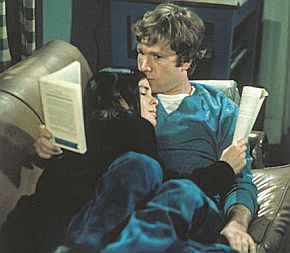
Love Story: Ollie & Jenny studying.
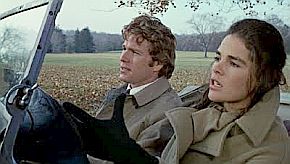
Ollie & Jenny on the road to meet Ollie’s folks.
Jenny Cavilleri meeting Oliver Barrett (Ray Milland).
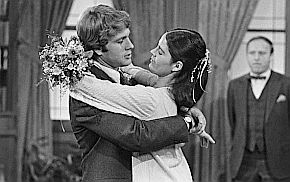
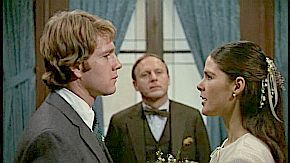
Despite his father’s disapproval, Ollie marries Jenny anyway.
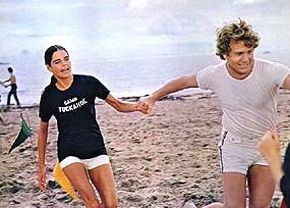
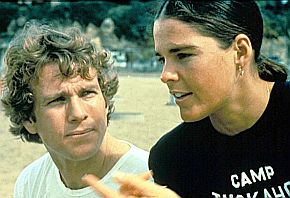
Ollie meets Jenny at her kids beach camp.
Ollie & Jenny talking at Jen's school.
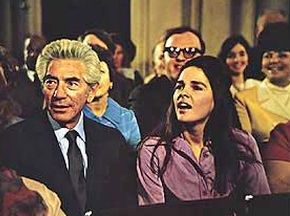
Love Story 1970: Jenny Cavilleri & her dad “Phil,” played by John Marley, attending Ollie’s graduation.
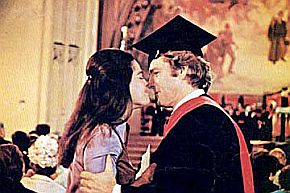
Jenny congratulating her husband on his law degree.
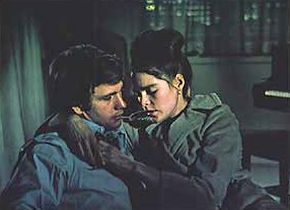
Ollie & Jenny facing Jen's prognosis.
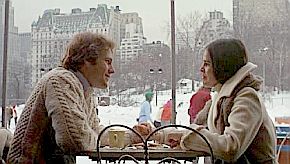
At Central Park skating rink cafe after their outing,
Ollie & Jen crossing snow-covered park to hospital.
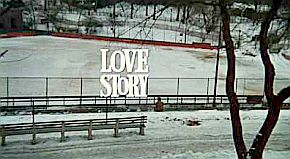
Final screen shot of “Love Story” with a grieving Ollie (tiny figure just below “y”) staring into the deserted ice rink, where the story began with Ollie’s flashback.
The featured romance in Love Story is that between Jenny Cavilleri, music major at Radcliffe College and Harvard ice hockey jock, Oliver “Ollie” Barrett, IV. It all begins in the Radcliffe library. That’s where the two first meet. Jenny works there to help pay her college tuition. Ollie Barrett has come to that library rather than Harvard’s because it’s quieter there and easier to find books. Ollie is a somewhat cocky kid who comes from a wealthy, old line, upper crust New England family – a well-respected family with its own history of Harvard alumni. Jenny is the only child of a widowed baker – a working-class Dad whom she calls “Phil”.
At the outset of the film Jenny appears somewhat nerdy and very much into her music. It’s Bach and Beethoven for her, music which is heard in the film’s score. And as we learn from the narrator’s opening line, Jenny also loves the Beatles.
The story is introduced in flashback mode by Ollie, who is shown in the film’s opening scene seated on a bench staring into a deserted New York city Central Park ice skating rink in a wintry, snow-covered setting. This scene comes full circle as the film’s closing sequence (more on this later).
Back at the Radcliffe library, meanwhile, it’s Jenny who makes the first move, displaying her snappy repartee with Ollie, who she labels “preppie” from the start. Ollie is on the hunt for a book he needs for an upcoming history exam, so he heads over to the reserve desk to inquire about the book. He opts for one of the two girls working there – the “bespectacled mouse type,” as he describes her – “Minnie Four-Eyes.” Here’s their exchange:
Ollie: “Do you have The Waning of the Middle Ages!” Jenny: “Do you have your own library?” she asked. Ollie: “Listen, Harvard is allowed to use the Radcliffe library.” Jenny: “I’m not talking legality, Preppie, I’m talking ethics. You guys have five million books. We have a few lousy thousand.” Ollie: [ to himself. Christ, a superior-being type! The kind who think since the ratio of Radcliffe to Harvard is five to one, the girls must be five times as smart. I normally cut these types to ribbons, but just then I badly needed that goddamn book.] Ollie: “Listen, I need that goddamn book.” Jenny: “Wouldja please watch your profanity, Preppie?” Ollie: “What makes you so sure I went to prep school?” Jenny: “You look stupid and rich,” she said, removing her glasses. Ollie: “You’re wrong,” I protested. “I’m actually smart and poor.” Jenny: “Oh, no, Preppie. I’m smart and poor.” Ollie: [ in narration: She was staring straight at me. Her eyes were brown. Okay, maybe I look rich, but I wouldn’t let some ‘Cliffie—even one with pretty eyes—call me dumb.] Ollie: “What the hell makes you so smart?” Jenny: “I wouldn’t go for coffee with you.” Ollie: “Listen—I wouldn’t ask you.” Jenny: “That is what makes you stupid.”
Ollie does take her for coffee, where the two continue their sharp repartee with Ollie becoming frustrated with her barbs and the fact, that apparently, she does not know that he, Ollie, is “big-man-on-campus” Harvard ice hockey star.
Ollie: “Hey, don’t you know who I am?” Jenny: “Yeah,” she answered with kind of disdain. “You’re the guy that owns Barrett Hall.” Ollie: “I don’t own Barrett Hall. My great-grandfather happened to give it to Harvard.” Jenny: “So his not-so-great grandson would be sure to get in!” Ollie: “Jenny, if you’re so convinced I’m a loser, why did you bulldoze me into buying you coffee?” [ She looked me straight into the eyes and smiled.] Jenny: “I like your body.”
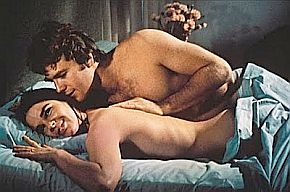
After their initial get together over coffee, they soon begin their romance on the Harvard campus, she attending his hockey games, the two studying together, frolicking in the snow, and later, consummating their love.
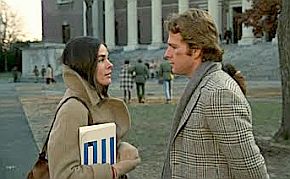
In one scene they are walking across the Harvard campus, by then deep into their emotional tangle, taking measure of each other. They are talking about their relationship. Ollie has been more forthcoming at that point than Jenny, and he unloads on her for her smart-ass style:
Ollie: “Look, Cavilleri, I know your game, and I’m tired of playing it. You are the supreme Radcliffe smart-ass – the best – you can put down anything in pants. But verbal volleyball is not my idea of a relationship. And if that’s what you think it’s all about, why don’t you just go back to your music wonks, and good luck. See, I think you’re scared. You put up a big glass wall to keep from getting hurt. But it also keeps you from getting touched. It’s a risk, isn’t it, Jenny? At least I had the guts to admit what I felt. Someday, you’re gonna have to come up with the courage to admit you care.”
In that scene, they stop walking as she quietly replies, “I care,” leading to a kiss, then cut to Ollie’s dorm room and the couple making love. Shortly later in the film, in a wintry montage, they end up playing in the snow, throwing snowballs and tossing a football at each other, and wrestling in the snow together.
After several months together, Jenny tells Oliver that she has received a scholarship to study music in Paris the next year. Ollie, afraid of losing her, decides to propose marriage. Jenny after some thought, accepts the offer, and soon the couple is off to “meet the parents” — first, his.
Meet The Parents
On the drive to the Barrett family place, Jenny is somewhat taken aback as they approach the estate, with its giant mansion and extensive grounds. It is then she begins to realize just how truly wealthy the Barretts are.
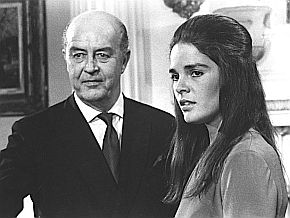
The family gathering to meet the bride-to-be becomes a tense affair, as Ollie’s father does not react well to Jenny’s background. Father and son, already in a testy relationship, come to the brink when Ollie’s father tells him he will be disinherited if he marries Jenny.
The drive back to campus is not a happy one. Ollie later meets his father for dinner to try again, but this also ends badly as Ollie loses his temper. Ties between father and son from that point on are pretty much severed.
Jenny and Ollie continue to plan their wedding, traveling to Providence, Rhode Island to receive the blessing of Jenny’s Dad, “Phil.” Here too, they upset tradition, informing Phil they are not planning a traditional ceremony, with church and God. Phil is not entirely pleased, but he’s on their side in any case.
Upon graduation, Oillie and Jenny marry against the wishes of Ollie’s father. Ollie then plans to enter law school, while Jenny goes to work as a teacher. The couple struggles to pay Ollie’s way through Harvard Law School. They rent the top floor of a house near the law school. Ollie had applied for financial aid, but his Barrett Hall fame and family wealth disqualified him.
“Love Means…”
Along the way and in their marriage, the new couple have a few spats here and there, one coming after Ollie refuses to attend his father’s 60th birthday party. Jenny has been trying to move Ollie to speak to his father, but after Ollie explodes, she leaves their apartment in tears. Guilt getting the best of him, Ollie searches the Harvard campus for Jenny, visiting the all the music rooms and other places she might be. Then, having arrived back home, he finds her sobbing on their outside porch steps in the cold without her keys. As Ollie moves to apologize, Jenny stops him, delivering one of the film’s classic (and now much-parodied) lines: “Love means never having to say you’re sorry.”
Things get patched up, of course, and life goes on. Scenes of beach visits and boating flash by, and another in winter of Ollie selling Christmas trees on a city lot. Jenny and “Phil,” meanwhile, do what they can to bring the Barrett father and son back together, but the Barrett men remain at war. Ollie soon finishes his stint at Harvard Law, graduating third in his class. Phil and Jenny attend the ceremony, and life for the young couple begins to change.
Now a Harvard lawyer, Ollie takes a position at a respectable New York law firm, though one with at least part of its practice in civil liberties. The couple move to New York, and begin to plan for a family. The two twenty-somethings try to have a child, but fail. Jenny then has a series of tests.
Devastating News
One day, Ollie is called in to see Jenny’s doctor, who tells him that Jenny is dying. The tests have revealed that Jenny has a serious and deadly disease, assumed to be some kind of leukemia, though never stated. Jenny does not have long to live. Ollie is devastated, and is shown in the film taking a long and dazed walk through the city on his way home.
Reaching their apartment, he tries to act normal as he is greeted by an upbeat Jenny. Ollie tries to hide the truth from Jenny, attempting a normal life. At one point he buys two airline tickets to Paris to surprise Jenny. But Jenny soon discovers the truth about her disease, and has suspected for some time.
Somber and intimate scenes follow as the couple tries to deal with Jenny’s prognosis. She insists that he will be a “merry widower” and makes him promise that he will carry on in good form. As the disease weakens Jenny, the couple tries to spend some happy time together.
Central Park
At one point they have a brief outing in Central Park and stop at an outdoor public skating rink, where Ollie skates with the crowd as Jenny watches approvingly from the bleachers. After Ollie’s skating they stop briefly at a café near the rink where Jenny makes it known its time to go to the hospital.
From the outdoor café they make their way slowly to the hospital across the park in the snow. A weakened Jenny moves with halting steps in Ollie’s arms as they go. The Love Story piano theme rises in the background as the camera pulls back high above the couple, slowly trekking through the snowy, winter scene — a season once of happier and playful times for the couple on the Harvard quad.
Music Player
“Love Story Theme”-Francis Lai
With Jenny now in the hospital, Ollie makes a trip to Boston to see his father, asking him for $5,000 — money he needs to cover Jenny’s therapies. Ollie lies to his father saying he needs money for an affair which has led to a pregnancy. The father has no idea that Jenny is ill and in the hospital. Father and son still have their differences, but Ollie thanks his Dad for the check and heads back to New York.
Hospital Scenes
In a near-the-end deathbed scene at Mount Sinai Hospital, Jenny tells Ollie her illness “doesn’t hurt,” describing it “like falling off a cliff in slow-motion.” Jenny sees that Ollie is pained and tries to buck him up in her trademark sassy manner – “stop blaming yourself, you god-damn stupid preppie. It’s nobody’s fault. It’s not your fault… That’s the only thing I’m gonna ask you…”
Jenny also assures him that he really didn’t “take away” her trip to Paris or her music career — “and all that stuff you thought you stole from me….” But she does insist that he quit blaming himself or leave her bedside. She then asks him to hold her, beside her in bed, which he does. Jenny then slips away.
Afterwards in the hallway, Ollie speaks with Jenny’s father Phil briefly then leaves the hospital in a daze. On his way out, he meets his own father who has rushed down from Boston, learning the real reason why his son had asked him for money. “Why didn’t you tell me?,” says the father. “…I want to help.” Ollie simply replies: “Jenny’s dead.” His father begins to offer his condolences, saying “I’m sorry…,” at which point Ollie interrupts him, with tears in his eyes, quoting Jenny’s famous line: “Love means never having to say you’re sorry.” It is the last line of dialogue in the film.
As a devastated Ollie walks across the street to a snow-covered Central Park, the camera slowly pans out for a few minutes as the “Love Story” piano theme plays in the background. Ollie is left sitting on a bench staring into the ice rink contemplating life without Jenny as the story comes full circle back to the scene where the film began.
Love Story, however, also has an interesting publishing and box office history, as well as the twists and turns that befell its principle stars and creator, some of which follow below. First, the book.
A paperback version of “Love Story,” with Ryan O’Neal & Ali MacGraw on the cover, was used to promote the film in 1970-71. Click for copy.
The Book
Love Story was first serialized in the Ladies Home Journal magazine in February of 1970. About the same time, Harper & Row published the book in a slim 131-page hardback edition, releasing it for sale on February 14, 1970, Valentine’s Day.
According to Mel Zerman, a former Harper & Row executive who was interviewed in 2006 for The American Legends website, “Harper didn’t realize exactly what they had.” The first printing was going to be in the low-to-normal range of 5,000-to-7,500 copies, which in retrospect, Zerman said, “was laughable.” Harper later bumped up the print run to 57,000 hardbacks. But even that wasn’t enough. Television soon helped create a giant demand for the book. According to Zerman:
“…The book burst on the scene one morning when Barbara Walters, who was a TV hostess, began her program by saying: ‘I was up most of the night reading a book I couldn’t put down, and when I finished it, I was sobbing. I cried and cried.’ That’s all the women of America had to hear. By the time bookstores were opening all over the United States they were getting calls for a book called Love Story by someone you never heard of named Erich Segal. Harper went crazy. We were out of stock within hours….”
By mid-May 1970, Love Story was No. 1 on the New York Times bestsellers list and by early 1971 there were 1 million hardbacks in print. A paperback edition came out in 1970 too, with more than 4.3 million copies printed by mid-November 1970, then the largest print order in publishing history. These copies sold so well that within a week another 600,000 were printed. A month after the paperback was released, the hardbacks were still selling at 2,000 copies a week. One 1971 Gallup poll found that Love Story was read by one out of every five Americans; it would eventually sell more than 21 million copies. Erich Segal would later say that he set out to make people cry with the book, adding that if he could get women to cry, he knew it would be a commercial success. As a New York Times No. 1 best- seller for most of 1970, Love Story became the year’s top-selling work of fiction in the U.S.
Then came the film, released by Paramount on December 16th, 1970, as the book was still being widely read. The film had the effect of selling more books and keeping Love Story on the bestsellers list. According to one 1971 Gallup poll, the book was read by one out of every five Americans. Love Story would eventually sell more than 21 million copies and was translated into more than 20 languages worldwide. But not everyone was smitten by Love Story, especially literary critics. When the book was up for the 1971 National Book Award, some judges threatened to resign from the award process unless Love Story was withdrawn from nomination. “It is a banal book which simply doesn’t qualify as literature,” said novelist William Styron, the head judge of the fiction panel. “Simply by being on the list it would have demeaned the other books.” So, Love Story was rejected.
1970 newspaper ad for the 'Love Story' film features upbeat review quotes from Vincent Canby and Time magazine.
Still, in popular culture Love Story was a big hit, and it rode atop the bestseller list for more than year. In the process, Segal – already a rich man from 1968’s Yellow Submarine – was deluged with offers for movies, plays and more books. Segal told a Time magazine reporter he was no wunderkind, but had worked hard and learned from past failures.
Segal’s new-found success put the 32 year-old squarely in the celebrity firmament and he became a hot property for a time. But at the initial planning for the film – like the book’s uncertain publishing prospects – there were only modest expectations.
The Film
Segal’s screenplay, in fact, had been turned down by every studio in Hollywood. However, his agent, Howard Minsky of the William Morris agency, had faith in the story and really went to bat for Segal, convincing Paramount to take a chance on it. Segal also had another supporter in his corner: Ali MacGraw. She was a friend of Segal’s and was also then the wife of Paramount executive vice president, Robert Evans.
It was MacGraw who had discovered the Love Story screenplay, and even though several studios had turned it down, Evans agreed to produce it for his wife, casting her in the role as leading lady. Evans thought the story might prove to be a small profitable film that might just buck the rough sex-and-violence trend then prominent in film.
Still, there was no expectation the film would be a blockbuster hit. In later interviews, Arthur Hiller, the film’s director, also acknowledged that the film was not originally conceived as a high-profile property. It had a limited budget, and the producers had to use a number of existing locations as sets to save money. One early problem that confronted the film’s producers was finding the male lead to play Ollie. Initially, Ryan O’Neal had turned down the role, as did Robert Redford, Michael York, and Beau Bridges. At its film debut, Love Story received glowing reviews and set movie- house records all over the country. Eventually, O’Neal agreed to take the part. Other actors in the film included Ray Milland, who played O’Neal’s father, and John Marley, Jenny’s father. To prepare for their roles, O’Neal learned to ice skate and MacGraw took harpsichord lessons.
When the film was released on December 16, 1970, it wasn’t known exactly what would follow. The best-selling book had certainly set the stage. And as it turned out, there was little to worry about. The reviews that came in right before Christmas that year were quite flattering and enthusiastic. “Love Story is probably as sophisticated as any commercial American movie ever made!,” wrote Vincent Canby of The New York Times. “Perfection! It is beautiful! And romantic!” Time magazine’s review was a big booster, too:
“Love Story is wrapped in glittering Ali MacGraw and Ryan O’Neal just in time for holiday giving! Ali MacGraw promises to become the closest thing to a movie star of the 40’s! She is genuinely touching! When a Radcliffe girl chooses to die on screen the Academy Awards can be heard softly rustling like ‘Kleenexes in the background!’ Ryan O’Neal gives the character of Oliver Barrett IV warmth and vulnerability! Love Story…glows like gold!”
"Love Story" photo: Ryan O'Neal & Ali MacGraw at kids camp beach scene.
On Christmas Day, when the film publicly opened across the country, it broke movie house records at 159 of 165 locations. In three days it earned $2.5 million – more than it cost to make. Love Story enjoyed the largest opening-week grosses in the history of American cinema at that time. And within a week or two, by mid-January 1971, it continued to set records. Arthur Hiller, the film’s director, later noted, “…The movie caught on like wildfire. I remember driving past one theater where it was playing and seeing a line four blocks long!” Love Story would become the No. 1 box office attraction of 1971. And during its run, it continued to generate press.
One Time magazine writer in January 1971 was quite taken with Ali MacGraw, and when she explained in one interview that she wasn’t quite “hungry enough” to be a star, or even a serious actress, he wrote:
“…She doesn’t have to be hungry or an actress. She just has to stand there, and people buy tickets. The clean-boned, finishing-school face, the large, liquid eyes that cannot express doubt, the barely upholstered model’s body, the metallic purr….In two pictures, she has managed to suggest the incarnate campus heroine, full of itchy, bitchy resolve. … In short, she is the kind of girl a boy would want to take home even if his parents were there, but especially if they were not.”
Ali MacGraw and “the return to romance” Time magazine, January 11, 1971. Click for copy.
Time’s writer also suggested that MacGraw’s performance in Love Story might represent a return to something basic in the U.S. cinema: “To a fresh flowering of the romance and sentimentalism of the ’30s and ’40s. To a time when pictures told a story, when you could go to the movies and take the family, when you could lose yourself in fantasy, when you got chills at the final fadeout….” Movie critic, Roger Ebert, taking on those who felt the film a little too weepy, wrote:
“…I would like to consider, however, the implications of Love Story as a three-, four-or five-handkerchief movie, a movie that wants viewers to cry at the end. Is this an unworthy purpose? Does the movie become unworthy, as Newsweek thought it did, simply because it has been mechanically contrived to tell us a beautiful, tragic tale? I don’t think so. There’s nothing contemptible about being moved to joy by a musical, to terror by a thriller, to excitement by a Western. Why shouldn’t we get a little misty during a story about young lovers separated by death?”
Love Story won an Oscar for best music and was nominated in six other categories. At the Golden Globe ceremony it took five awards, including Best Picture (drama), Best Director, and Best Screenplay for Segal. At the box office, the film grossed more than $48 million (roughly $263 million in today’s dollars)Love Story out-grossed other popular films that year, among them, Patton, MASH, Catch 22 and Woodstock.. Of U.S. film’s released in 1970, Love Story was No. 1 at the box office, out-grossing other films that year including: Airport (No. 2) with Burt Lancaster; MASH (No. 3) with Donald Sutherland and Eliott Gould; Patton (No. 4) with George C. Scott; Little Big Man (No. 7 ) with Dustin Hoffman and Faye Dunaway; Ryan’s Daughter (No. 8 ) with Robert Mitchum; and Catch 22 (No. 10) with Alan Arkin. Love Story’s gross was three times that of Warner Brothers’ Woodstock (No. 6), a popular film on the famous 1969 rock concert. At the Academy Awards that year, Patton won Best Picture and George C. Scott, Best Actor. Glenda Jackson won Best Actress for her role in Women in Love. Paramount studios, meanwhile, then on the brink financially, was “saved” by Love Story’s very profitable box office, enabling the studio to live another day and turn out several other winners that decade, including Chinatown,The Godfather, and others.
Love Story Music
Cover of sheet music for Francis Lai's piano version of the "Theme From Love Story," with photo of Henry Mancini. Click for Lai's soundtrack.
Love Story’s Oscar-winning film score by Francis Lai became one of the most familiar movie love themes of that era. Lai had done other popular film scores around that time, including A Man and a Woman of 1966. However, his “Theme from Love Story” was quite the hit, reaching No.39 on the U.S. music charts.
The Love Story soundtrack album also did well, and spent six weeks at No. 2 on the Billboard album chart. One of the tracks on the album, “Skating in Central Park,” which plays over a sequence of MacGraw and O’Neal romping in the snow and ice skating, was written by John Lewis of the Modern Jazz Quartet. In fact, the Love Story soundtrack orchestra featured several jazz notables, including Milt Jackson (vibraphone), Percy Heath (bass), Connie Kay (drums), Bill Evans (piano) and Jim Hall (guitar).
Erich Segal, shown speaking at a 1980 news conference in West Germany. Photo: AP/ M. Langsdorff.
In addition to its varied music sales, Love Story also had an impact on fashion, featuring MacGraw and O’Neal in their various preppie outfits – especially MacGraw, described as a “fashion plate” by one reviewer. A run on preppie clothes and the preppie look briefly followed.
Success & Loss
Professor Erich Segal, meanwhile, at the height of the Love Story run, continued to be well-received on the celebrity circuit. At one point, he appeared on The Tonight Show with Johnny Carson four times in a single month. He also appeared on the Today Show and the Dick Cavett Show.
In the film world, he became a judge at the Cannes Film Festival. Segal, in fact, was making weekend trips to Paris and London while continuing to teach at Yale. His course there became quite popular, filling a 600-seat auditorium. “I’m kind of a folk hero there,” he told the Washington Post at one point in 1970 “– the closest thing they have to a Beatle.”
Segal also took a job as an ABC-TV commentator for the 1972 Olympic Games, using both his personal experience as a runner and his classical knowledge of ancient Greece in the broadcast booth. Back at Yale, however, his academic peers were not amused (or were jealous), and despite his scholarly publications and his doctorate earned at Harvard, Yale denied him tenure in 1972.
Erich Segal's 1977 novel, "Olivers-Story," also a bestseller. Click for copy.
By about 1973, Segal and Love Story had receded into the cultural background. However, he would continue to receive mention in the press when he published his subsequent work.
Segal had followed up after Love Story with other novels, including Jennifer on My Mind in 1971 and Fairy Tale in 1973. But it wasn’t until Oliver’s Story of 1977 — billed as “the book that begins where Love Story ends”– that another movie was attempted the following year. That film cast Ryan O’Neal as the struggling widower who meets a new lady, Candice Bergen. Although the book, Oliver’s Story made it to the bestsellers list, neither it nor the movie by the same name repeated the success of Love Story. In fact, many regarded the film as a flop.
Segal, meanwhile, continued writing through the 1980s and early 1990s, turning out more titles, among them: Man, Woman and Child (1980), A Change of Seasons (1981), The Class (1985), Doctors (1988), and Acts of Faith (1992).
Around the time of Segal’s publication of The Class in 1985, he was still being asked about Love Story, the harsh views of some critics, and that he lost tenure at Yale over it. “But am I really sorry I wrote ‘Love Story’?, he offered in reply to similar questions at People Weekly, “Bullshit. I’m overjoyed I did.” And many readers found his subsequent books to be quite good – a number of which also became bestsellers.
When the body of his popular works is looked at as a group, Segal is seen, in some ways, as the patriarch of a particular genre, which some call “bereavement fiction,” similar in content to contemporary novelists such as Nicholas Sparks, though Segal’s work is regarded as somewhat weightier.
In the 1980s Segal contracted Parkinson’s disease. He died of a heart attack in January 2010. He was 72 year old.
“Al, Tipper & Tommy Lee” 1997
Al & Tipper Gore, wedding day, May 19, 1970, National Cathedral, Washington, D.C.
Love Story received some renewed publicity in 1997 in the run-up to the 2000 Presidential election campaign. That’s when a Time magazine report surfaced regarding then vice-president Al Gore who had remarked to reporters that he and wife, Tipper, were the inspiration for Segal’s love-struck Ollie and Jenny. Segal later conceded in statements made to the New York Times in December 1997 that he did use Gore as partial inspiration for the character of Oliver Barrett, a character who in Segal’s creation was something of composite it seems, as actor Tommy Lee Jones, who was also Gore’s actual roommate at Harvard, figured into that character as well. Segal knew both Gore and Jones at Harvard, as well as Tipper, when he was on sabbatical there in 1968. Tipper was then attending Boston University, as she and Al Gore were then dating. Segal did say that Gore’s father was used in part to model the domineering Barrett father, as Segal suggested there was family pressure on Al Gore to follow in his father’s political footsteps. But Tipper Gore, according to Segal, was not in any way the model for Jenny Cavilleri.
Tommy Lee Jones made his film debut in "Love Story" in a brief role.
The Gore story took on some “legs” in the press in December 1997 after a Gore spokesperson, trying to clarify Gore’s remarks, told New York Times columnist Maureen Dowd that the book was “loosely based” on the Gores. Segal and Gore eventually spoke about the press reports on the phone, and Gore later acknowledged a “miscommunication” in the matter. The part of the Oliver Barrett character that was inspired by Gore, Segal later explained, was that Gore, like Ollie Barrett, “was always under pressure to follow in his father’s footsteps, and that was the conflict, to keep up the family tradition…” The Tommy Lee Jones contribution to the Ollie Barrett character, according to Segal, “was the tough, macho guy who’s a poet at heart.” Tommy Lee Jones, independent of this contribution, also made his film debut in Love Story as Ollie’s Harvard roommate.
Al & Tipper Gore, circa 1980s.
Al Gore, meanwhile, did catch some flak from the press for exaggerating his and Tipper’s contribution to Segal’s characters. However, there had also been an earlier 1970 Nashville Tennessean newspaper story covering an Erich Segal book tour — a story that had also exaggerated the Gore contribution, independently of Gore. But Karen Tumulty — the Time reporter who was present when Vice President Gore made the 1997 remarks while meeting informally with a group of reporters on board Air Force Two – said that Gore had brought up the story and in no way tried to knock it down, then or later.
In 1970, Segal said that the novel’s basic story came from one of his students, whose wife had died, and that the model for Jenny was a woman Segal had dated in his own student days at Harvard. And in fact, that part of the story surfaced in 1997 as well, when a woman named Janet Sussman told Maureen Dowd of the New York Times that she was the real life model for Jenny, and that Segal had written her love letters for years. Sussman also told her story to Oprah Winfrey in 2010.
Segal’s daughter, Francesca Segal, later noted on an Amazon.com page for a 50th anniversary edition of Love Story, that when Segal first set out to write the story, he had learned that a former student of his from Harvard had lost his wife to cancer at age twenty-five. “My father, a few years older and still grieving the death of his own father, was consumed by the story.”
O’Neal & MacGraw
Ryan O’Neal began dating Farrah Fawcett in the early 1980s. Click for his book on Fawcett.
Given the notices Ryan O’Neal and Ali MacGraw received in the aftermath of Love Story, there were great expectations for their respective careers. And O’Neal and MacGraw both had their successes, to be sure. In 1972, O’Neal starred with Barbra Streisand in the comedy, What’s Up, Doc? and in 1973 alongside his Oscar-winning ten-year old daughter, Tatum, in Paper Moon.
In 1973, Ryan O’Neal was ranked No. 2 in the annual Top Ten Box Office Stars list, behind Clint Eastwood that year. Other subsequent films for O’Neal, included: Nickelodeon (1976, also with Tatum), Barry Lyndon (1975), A Bridge Too Far (1977), Oliver’s Story (1978), The Driver (1978), and Irreconcilable Differences (1984).
Twice previously married and divorced, O’Neal had a long-term on-and-off relationship with actress Farrah Fawcett until her death in June 2009. O’Neal had been diagnosed with chronic myelogenous leukemia in 2001, which as of 2006, was in remission.
Steve McQueen & Ali MacGraw, 1970s. Click for their film.
Ali MacGraw, before Love Story, had gained notice for her role as Radcliffe student Brenda Patimkin in the 1969 film Goodbye, Columbus. That year, she also married Paramount exec Robert Evans in 1969, who was something of a Hollywood wunderkind, having risen to head paramount in 1966 at the age of 34. In 1972, MacGraw co-starred in the action adventure film The Getaway with Steve McQueen, whom she married in 1973. She turned down subsequent film roles after promising McQueen that she would help take care of him during his “semi-retirement.” However, she and McQueen divorced in 1978. She then returned to film, appearing in Convoy (1978), Players (1979), and Just Tell Me What You Want (1980). In 1983 she appeared in television miniseries China Rose and The Winds of War, the latter with Robert Mitchum. Then came her role as Lady Ashley Mitchell in the prime-time ABC-TV soap opera hit Dynasty in 1984-85. In 1991, People magazine chose her as one of the “50 Most Beautiful People” in the World.
MacGraw's 1991 book.
MacGraw’s 1991 autobiography, Moving Pictures, revealed her struggles with alcohol and men. In her fifties, she became a Yoga devotee and in 1994 produced the video – Ali MacGraw Yoga, Mind and Body, which became a bestseller, credited with influencing yoga’s U.S. popularity in the 2000s.
In October 2010, Oprah Winfrey arranged a “Love Story Reunion” on her popular TV show, marking the 40th anniversary of the film, reuniting MacGraw and O’Neal. On the show, the two discussed their roles in the movie and O’Neal admitted he had a crush on MacGraw throughout the film’s production, asking her to go away with him at one point even though both were then married. O’Neal and daughter Tatum also appeared in a 2011 Oprah Winfrey Network TV reality show.
Postscript
Love Story today, both book and film, are often parodied and seen as dated and sappy. Even in 1970-71, critics found weaknesses in the story and its context. There was little mention of politics or the concerns of the day in the storyline, which some found lacking, especially at a place like Harvard. As one blogger put it:
The title page for the 1970 book, "Love Story."
“…There’s no urban grit, no Nixonian paranoia, no disillusionment, no radical politics. No politics at all, actually! There are oblique references to the feminism and “the troops,” but it all happens in a fairly timeless vacuum, where the characters are totally unaffected by the tumult of the 1960s. Harvard was, like many American schools, a hotbed of radicalism and antiwar activity; there was a student strike in 1969 on campus when the movie was being filmed, and yet you’d never know such radicalism was afoot in these snowy, photogenic environs….”
In the late 1960s and early 1970s the U.S. was at war in Vietnam and the country was divided. Social values were being challenged at every turn. The country in late 1970 was less than two years removed from the tumultuous events of 1968, including the assassinations of Martin Luther King and Robert F. Kennedy, and the bloody Democratic national presidential convention in Chicago.
But at the time, there was also a kind of “moral exhaustion” setting in; a bit of retreat from all the chaos and upheaval that had transpired; a lull on campus, if only temporary, and a turning inward, toward the personal. The popularity of heavy, social-awareness type books seemed to have slowed around that time as well. “I think black study books and women’s lib books have shot their wad,” remarked one Simon & Schuster advertising director to a Time magazine reporter in January 1971. “The kids want romance. They’re discovering again that going to college is a wonderful little world….”
Ryan O’Neal & Ali MacGraw in “Love Story” photo, 1970.
In the movie theaters too, there had also been a barrage of harder-edge films with rough language; exploitation films that pushed the boundaries of sex, drugs and violence. Some films, like 1969’s Easy Rider, explored drug use and U.S. social tensions, introducing a genre that heralded a new generation of film makers in Hollywood. Many wondered how a film like Love Story could succeed in such an environment, but succeed it did. Romance, it turns out, never goes out of fashion and is always just below the surface. Hollywood veteran Lou Wasserman observing Love Story’s success in 1971 noted: “The audience that many [film] companies felt was no longer there has been there all the time. I don’t think the romantic interest went away. We went away.”
Love Story, of course, never really promised politics or social context, or actually any depth beyond its central theme. Love Story was just what its title said it was, nothing more. And the public ate it up. “I think people were ready for it,” explained Love Story director Arthur Hiller in a 2001 interview looking back on that time. “Many moviegoers wanted a respite from the [rough] type of films… A change of pace. Love Story was just what the title indicated, just what we promised; Erich [Segal] called it ‘an affirmation of the human spirit.’ He was right, and at that particular moment in time we were all looking for that affirmation.”
In the U.K., “Love Story” made a run as a stage play in 2010.
Sometimes when society is grappling with tough issues, groping for meaning and direction, a respite or retreat from the troubles can be welcomed. Love Story, in this sense, may have served as an oasis of simplicity in its time, which despite its own tragic ending, also offered a kind of optimism, even positivism on “the virtues of love,” as one writer put it.
Still, to this day, Love Story remains a popular film, at least in memory. As of June 2002, it was ranked No. 9 on the American Film Institute’s 100 greatest love stories in American cinema. Love Story also remains one of the most successful films in Hollywood history, among the top 40 in adjusted box office gross.
Roger Ebert, Movie Glossary, “Ali MacGraw’s Disease.” Movie illness in which the only symptom is that the sufferer grows more beautiful as death approaches. (This disease claimed many screen victims, often including Greta Garbo),” RogerEbert. SunTimes.com.
“Arthur Hiller, Artist Interview: Recalls the Inauspicious Beginnings of His Moment-Defining Love Story,” BarnesAndNoble.com, April 17, 2001.
“Behind the Scenes: Mel Zerman on The Marketing of Erich Segal’s Love Story,” American Legends.com.
Meryl Gordon, “A Long-Lost Love: Ali MacGraw Comes out of Hiding to Appear on Broadway for the First Time,” New York Magazine, March 26, 2006.
Ty Burr, “Reel Boston,” Boston Globe, February 27, 2005.
Andy Sturdevant, “Love Story 1970, Grit-Free: 70s Cinema Without The 70s,” Tumblr.com.
Nick Owchar, Jacket Copy, “‘Love Story’ Author Erich Segal Dies at 72,” Los Angles Times, January 19, 2010.
James K. McAuley, ” ‘Love Story’ Author Erich Segal Dies at 72,” The Harvard Crimson, Wednesday, January 20, 2010.
Margalit Fox, “Erich Segal, ‘Love Story’ Author, Dies at 72,” New York Times, January 20, 2010.
Brian McCoy, “Forty Years Later, Recalling the Hidden Jazz of ‘Love Story’,” Examiner.com, December 14th, 2010.
Lou Lumenick, “Still in ‘Love’: 40 Years On, Here’s the True Story Behind ‘Story,” New York Post, December 16, 2010.
“Love Story (1970) – Official Trailer,” You Tube, (2:49 film synopsis along with Francis Lai piano theme).
The Kid Stays in the Picture, 1994 book and 2002 film on the life story of Hollywood producer and studio chief Robert Evans, former husband of Ali MacGraw. See Wikipedia.org.