Tag Archives: Fillmore west history

“White Bird – 1969”
Caged Gem Breaks Free

A somewhat forgotten song born more than 50 years ago in the San Francisco hippie music scene of the late 1960s – “White Bird” — has managed to have some new exposure in recent years. In 2015, for example, it was used in the film Focus, starring Will Smith and Margot Robbie. In 2017, it was also used in the premiere episode of the PBS-TV series, Prime Suspect: Tennison.

But this violin-infused song, along with its prominent vocals by a group known as ‘It’s A Beautiful Day,’ holds up quite well for any era, and has an optimistic if somewhat dreamy quality about it — but also a kind of determination. Some history on this song, sampled below in a YouTube clip, follows after the music (scroll down for lyrics).


David LaFlamme, a classically-trained musician, is the featured violinist on “White Bird,” also the leader and founder of the group, It’s A Beautiful Day. In 1967, the year of the San Francisco Summer of Love, when hippie “flower power” flourished, LaFlamme and his wife-to-be, Linda Rudman, a keyboardist, formed their group. It was a heady time for music then, as a number of singers and groups formed in the Haight-Ashbury section of San Francisco, among them, Janis Joplin, the Grateful Dead, Jefferson Airplane, and others.

David LaFlamme, co-author of “White Bird” and founder of It's a Beautiful Day rock group, shown here in later undated photo.
LaFlamme began his life-long affiliation with the violin at age 5 when he was gifted a cast-off violin by a relative, which he soon used to craft a version of “Twinkle Twinkle Little Star,” impressing his parents enough to invest in a teacher – and away he went into violin music and composition, later rising to perform as a young soloist with the Utah Symphony Orchestra.

Some years later, in 1962, he had come to San Francesco after a hitch in the Army, having spent some military leaves in the city. Then arriving with duffle bag, some Army clothes, and a “few bucks in my pocket,” he then began jamming with guitar and violin in parks and clubs with the likes of Jerry Garcia, Janis Joplin, and Country Joe and the Fish.

In 1963, David had met Linda Rudman and the two were married the following year. Soon thereafter, he became involved in some early bands – the Electric Chamber Orkustra in 1966, and later, part of Dan Hicks & His Hot Licks. But it would be the group ‘It’s A Beautiful Day’ where “White Bird” and other songs would be created.

The original line-up of the LaFlamme-led group included Patti Santos on vocals, David’s wife, Linda Rudman LaFlamme on keyboards, Hal Wagenet on guitar, Mitchell Holman on bass, and Val Fluentes on drums. However, the group had a somewhat circuitous and tortured route to recognition and their “White Bird” song.
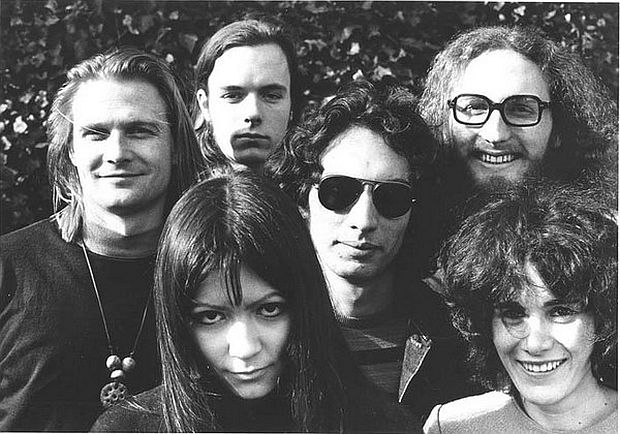
Members of the San Francisco-based  rock group, “It’s A Beautiful Day,” circa, late 1960s, from left: David LaFlamme, Patti Santos, Mitchell Homan, Val Fuentes. Hal Wagenet, and Linda LaFlamme.
Members of the San Francisco-based rock group, “It’s A Beautiful Day,” circa, late 1960s, from left: David LaFlamme, Patti Santos, Mitchell Homan, Val Fuentes. Hal Wagenet, and Linda LaFlamme.

The group’s then manager, Matthew Katz, not always known for his fair dealings with rock groups, persuaded them to temporarily relocate to Seattle, where he argued they could hone their act without San Francisco press attention. Katz believed they weren’t yet ready for the San Francisco scene. Katz had also come up with the name for the group, It’s A Beautiful Day. “I wasn’t in love with the name,” Linda LaFlamme would later say, “because it was during the Vietnam War, and I wasn’t thinking that it was such a beautiful day.” Still, they went with it.

“White Bird”
David & Linda LaFamme
1968

White bird
In a golden cage
On a winter’s day
In the rain

White bird
In a golden cage
Alone

The leaves blow
Across the long, black road
To the darkened skies
In it’s rage

But the white bird
Just sits in her cage
Unknown

White bird must fly
Or she will die

[ brief violin feature ]

White bird
Dreams of the aspen trees
With their dying leaves
Turning gold

But the white bird
Just sits in her cage
Growing old

White bird must fly
Or she will die
White bird must fly
Or she will die

The sunsets come
The sunsets go
The clouds roll by
And the earth turns old
And the young bird’s eyes
Do always glow

She must fly
She must fly
She must fly

[ guitar intro w/
++ violin feature
]

White bird
In a golden cage
On a winter’s day
In the rain

White bird
In a golden cage
Alone

White bird must fly
Or she will die
White bird must fly
Or she will die
White bird must fly
Or she will die

White bird must fly!

And though reluctant to go to Seattle, the group agreed to relocate there, staying at an old five-story Victorian house that Katz owned – a house shared with others. The LaFlammes and group would also have practice sessions and performances at a Katz-owned nightclub/ dancehall in Seattle’s historic Encore Ballroom that he had renamed The San Francisco Sound.

And so it was December 1967 that the band’s Seattle sojourn began with practice sessions and performances at The San Francisco Sound, a venue that yielded little attendance. The group also worked on their music at Katz’s old Victorian house.


Making The Song

As David and Linda LaFlamme (then some months pregnant) first began working on the “White Bird” song, they were holed up in the Seattle house working in the attic. They were using a small Wurlitzer piano near a window looking out on rainy-day winter scenes, with leaves blowing around on the streets below. For the LaFlammes and their band, it was a time of frustration.

“We were like caged birds in that attic,” LaFlamme later recounted. “We had no money, no transportation, the weather was miserable were just barely getting by “We were like caged birds in that attic…”
-David LaFlamme
on a very small food allowance provided to us. It was quite an experience, but it was very creative in a way.”

LaFlamme would later note that the “White Bird” song, with its references to darkened skies and rage – beyond their own difficulties at the time – could also describe struggle between freedom and conformity, or as he would later put it, between the pull of freedom and the compromises of conformity. “The white bird in a golden cage represents someone trying to break out of the constraints of the affluent middle class,” he would also offer.

Linda LaFlamme, for her part, wrote in a later email, that she considered “White Bird” a song of hope, and that the only rage they had felt was about the Seattle weather. Still, others interpreting the song’s chorus, “white bird must fly, or she will die,” also saw it as a reflection of the times, given 1960s disillusionment and social turmoil.

At any rate, in that rainy-day attic, at the point of the song’s initial creation, when the LaFlammes had first collaborated on chords, lyrics and melody, they knew they had something quite good.

Linda LaFlamme believed “White Bird” to be a song of hope…“The song kept evolving,” Linda LaFlamme would say some years later. But even “after two hours,” she said, “David and I looked at each other, and we knew we had a beautiful song.” Still, it would take another year or more to get that song, and others, to market and the broader world.

In 1968 the LaFlammes and band headed back to California. But they were still broke, and increasingly frustrated by their manager, Katz, manipulating their career. They soon began playing at a few clubs without his approval, thereby gaining some recognition and income.

They also gained notice with a performance at the Sky River Rock Festival in Sultan, Washington over the 1968 Labor Day weekend — one of the first major multi-day rock festivals.

But then, in early October that year, they had another break. The rock group Cream was then in the midst of a Farewell Tour, but their opening act, Traffic, could not perform as singer Steve Winwood had fallen ill. Concert promoter Bill Graham then had to scramble for a replacement act and that’s when he contacted LaFlamme’s group to do the opening act.

At the Oakland Coliseum concert on October 4th, 1968, the crowds and critics loved what they heard in the substitute performance by It’s a Beautiful Day. Not long thereafter, they began to play at more clubs in San Francisco.

As their reputation grew in San Francisco with a number of appearances at the Fillmore and Avalon ballrooms, record producers began taking an interest. Among those who had contacted the group was Clive Davis of Columbia Records, who had signed Bob Dylan, Janis Joplin and others. Lou Adler was also interested. Adler was then famous for his Dunhill Records label (Mamas & Papas and others), which about that time he sold to ABC, but continued his success with other labels, such as Ode Records (Carole King & others).
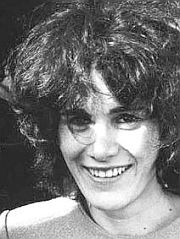
Linda Rudman LaFlamme, 1968.
Linda LaFlamme would later recall the group going to Los Angeles to meet both Adler and Davis, as the group had also scheduled a performance at the Whisky A Go Go club on the same trip. They first met with Adler at this home. Linda was quite taken with the visit.

“We walked into Lou’s house, and I still to this day have not experienced that kind of stopping at the door, gasping for air at the beautifulness of this house. The wood was sent over from Spain. You walked over this little bridge, then around the swimming pool, and then came to this very open-spaced living room. All wood. And sitting there is John Phillips [of the Mamas & Papas]. He left, we talked to Lou Adler, and it was a wonderful experience….”

David LaFlamme later met with Clive Davis after the group had performed at Whisky A Go Go, and he brought Davis’s proposal back to the group, and they agreed to sign with Columbia, basically because they were the bigger company

The first recordings by It’s A Beautiful Day for Columbia Records were produced by David LaFlamme at Columbia’s studios in Los Angeles, California,
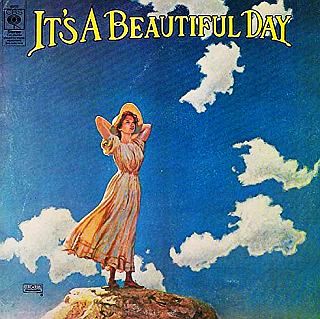
First album by San Francisco group, It’s A Beautiful Day, 1969. Click for digital copies of 'White Bird,' other singles, or album.
The band’s debut album was released in the Summer of 1969 using the band’s name as its title, It’s a Beautiful Day. Its featured songs included: “White Bird,” “Hot Summer Day,” “Wasted Union Blues,” “Girl With No Eyes” and “Time Is.”

The album debuted on the Billboard 200 at No. 139 the week of June 14, 1969. By November of that year it peaked at No. 47 for two weeks, and would stay on that chart for 70 weeks, regarded by one reviewer as “pretty impressive for a one-song LP.” The album also reached No. 58 on the UK albums chart.

The album’s cover was designed by George Hunter and painted by Kent Hollister, based on the 1912 painting, Woman on the Top of a Mountain by Charles Courtney Curran. The cover, in fact, was rated at No. 24 on Rolling Stone‘s list of 100 greatest album covers.

“White Bird,” sung by David LaFlamme and Pattie Santos, did not crack the Billboard Hot 100 singles chart, though it did reach No. 118. Since the song’s six-minute length ran up against the preferred three-minute A.M. radio length of most songs then, it was believed that a shortened version might do batter.

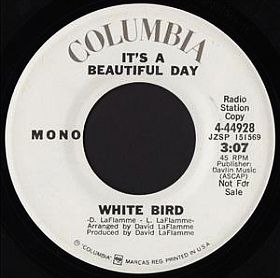
“White Bird” was then issued in a more radio-friendly 3:07 minute length, but was still ignored, though in early October 1969 it did rise to No. 3 on San Francisco’s KYA radio station and No. 5 on KFRC. It would be the song’s original album version – the longer version at 6:01 minutes – that became an FM radio staple, remaining so for several years. To this day, “White Bird” is still the song for which It’s a Beautiful Day are known.

Record sleeve cover for “White Bird” single.
Radio promo version of 3:07 “White Bird”.

The band’s second album, Marrying Maiden, rose to No. 28 on the album charts. But by then the LaFlammes had split up and would later divorce. David, it seems had fallen for someone else, as Linda, then with daughter, left the band and would later join another group. While full of praise for David’s musical abilities, Linda later explained, “I can’t say anything positive about David LaFlamme as a human being,” though adding,..“I can say very positive things about David as a musician. And that’s who he is. Because the rest of it is not good….”

David LaFlamme, co-author of  “White Bird” and founder of It's a Beautiful Day rock group, shown here in a later performance.
David LaFlamme, co-author of “White Bird” and founder of It's a Beautiful Day rock group, shown here in a later performance.
David LaFlamme’s violin play in those times had an impact on other groups and performers. As the Washington Post would later note, “LaFlamme was credited as an influence on violinists including bluesman Papa John Creach and his work with Jefferson Airplane and Hot Tuna; Robby Steinhardt with the rock group Kansas; and Scarlet Rivera with Bob Dylan on songs such as ‘Hurricane,’ released in 1976.” A Rolling Stone reference has noted that LaFlamme played on a specially adapted amplified solid-body five-string violin – the fifth string of which was a low C, so the instrument’s range was as wide as that of a violin and viola combined.

In the early 1970s, It’s Beautiful Day would produce two more albums, Choice Quality Stuff/Anytime (1971) and It’s a Beautiful Day…Today (1973). But the group would not again reach the recognition it had achieved in 1969-70. David LaFlamme, in fact, was booted from his own group in 1973 over differences in royalties and management. Thereafter, he had something of a solo career for a time, producing his own version of “White Bird” that would crack the Billboard Hot 100 at No. 89 in 1976. He also had a long-running legal battle with Matthew Katz over the group’s name and other issues. In later years LaFlamme would also join others in various groups from time to time up until his death in 2023. Pattie Santos, the group’s other singer, had formed a group in 1977 with her then husband, but was later killed in a 1989 car crash in California.

The Coin Flip
…At Woodstock, 1969

David LaFlamme and It’s A Beautiful Day reportedly missed out on a Woodstock performance slot that might have sent their career soaring. Bill Graham had taken on management of the band at that point, and was negotiating with Woodstock organizer, Michael Lang, on which acts would appear (shown below, Lang left, Graham right).

Michael Lang & Bill Graham at Woodstock, 1969.

Lang wanted the Grateful Dead to appear, but Graham pushed for two other acts that he managed – It’s A Beautiful Day and Santana. Lang had listened to tapes of both groups and liked what he heard in each case, but could only pick one group. So he reportedly flipped a coin to decide, and Santana won – that group performing to wide acclaim at Woodstock with endless gigs and fame thereafter. With similar exposure, LaFlamme and It’s a Beautiful Day might have soared to new heights as well. As it turned out, It’s A Beautiful Day would perform at Graham’s Fillmore West in San Francisco on several occasions, and in one case, yielding a double album from a July 1971 performance there.

Over the years, “White Bird” has appeared on nine compilation albums and four more retrospective albums. A nearly 10-minute version of the song appeared on the 1972 live album, It’s a Beautiful Day at Carnegie Hall.

“White Bird” has also appeared in the soundtracks of several other films beyond those mentioned earlier, among them, Wolves At the Door (2016), Adult World (2013), and A Walk on The Moon (1999), the latter starring Diane Lane, Viggo Mortensen, Liev Schreiber, Anna Paquin – and according to one SongFacts.com visitor, used to “great effect” in that film.

The song was also used in the soundtrack of Uncharted Waters, a 2013 documentary about the life of surfer Wayne Lynch.

And in the 1980s, the song was also used in three episodes of the TV series Knight Rider, serving as something of a theme song for the relationship between main character Michael Knight and his one true love.


“White Bird” Kudos

“White Bird,” meanwhile, holds a special place among discerning music fans who have found the song to have lasting value and appeal. YouTube listeners commenting on video clips of the song, as well as some Amazon customer responses to CDs and albums, offer high praise for the song.

“The level of musicality in both the composition and the performance of this song is off the charts,” said one YouTube responder. Steve K., also at a YouTube posting wrote: “…As to this song specifically, what can I say about it: the beautiful power of the vocals & harmonies, the uniqueness of the tune, the wonderful professionalism of the instrumentation, the haunting feelings evoked by the lyrics, the perfection of the production – I could go on…” He said he intended to have the song played at his funeral.

YouTube’s “AquarianRealm,” who posted the full song, noted: “I adore this song…always sends me flying, then sailing…on a cloud of joy!” At that site, there are more than 1,000 visitors who posted comments on the song. among them, “christinespier500,” who noted, “This song has been my heart for 50 years. It is haunting, beautiful and uplifting…” And “cricketbat08″ calls it “an amazing song – timeless and beautiful.” Another adds “I’ve always loved this song. It’s so sad and beautiful at the same time. I think the white bird symbolizes the human spirit.”
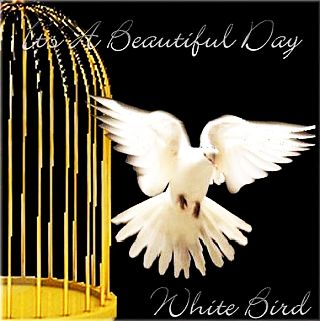
Undated cover art for the song, “White Bird” by the group, ‘It’s A Beautiful Day.’ originally released in 1969.
“CharlieBrown3404,” also responding at a YouTube posting says: “…[T]he instrumental part is smooth & soothing…[T]his song just doesn’t take us back in time, it’s also helps us move forward in the present time…food for our soul.” “GordonColeman2446,” also at a YouTube posting, believed the song was “sadly overlooked and certainly deserved much better recognition.” A number of others with online comment noted the song’s nostalgic pull, recalling youthful days from decades past when hearing the song anew, triggering memories from long-ago moments.

As for the members of It’s A Beautiful Day, despite the hardships, misfortunes, legal difficulties and interpersonal traumas experienced and endured back in the late 1960s, the legacy of their creative enterprise survives in the music they made, and perhaps most beautifully in “White Bird.” The song has achieved “classic” status, and is a worthy survivor of the late 1960s San Francisco music scene, surely to be heard for many years to come.

See also at this website the “Annals of Music” page offering more than two dozen story choices on song histories and artist profiles, ranging from early Taylor Swift to late Frank Sinatra, as well as the Beatles, Rolling Stones, Sting, Stevie Wonder, 1960s Girl Groups, Elton John, Tina Turner, Dion DiMucci, Louis Armstrong, Joni Mitchell, Ray Charles, and others. The “Music in Film” page also offers stories that profile soundtracks and movie themes, including those from: Blackboard Jungle, The Big Chill, Glory, Dr, Zhivago, Goldfinger, Stand By Me, Rocky, Soylent Green, Dirty Dancing, Platoon, Love Story, and The Good, The Bad and The Ugly, among others.

Thanks for visiting — and if you like what you find here, please make a donation to help support the research, writing and continued publication of this website. Thank you. – Jack Doyle.

Please Support
this Website

Donate Now

Thank You

____________________________________

Date Posted: 4 October 2024
Last Update: 1 December 2024

Comments to:+ jackdoyle47@gmail.com
BlueSky: jackdoyle.bsky.social

Article Citation:
Jack Doyle, “White Bird, 1969: Caged Gem Breaks
Free,” PopHistoryDig.com, October 4, 2024.

____________________________________


Books & Film at Amazon.com…


“The Music of 1969" - week-by-week survey, from “Let The Sunshine In” to ”Crimson & Clover.” Click for copy.
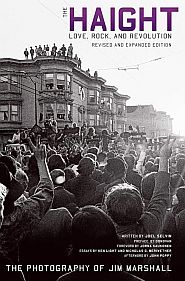
2021 book, “The Haight: Love, Rock, and Revolution,” w/ iconic sixties-era San Francisco photos. Click for copy.
“Last Days at the Fillmore,” 1971 concert film w/ “It’s A Beautiful Day” & other bands. Click for DVD.


Sources, Links & Additional Information
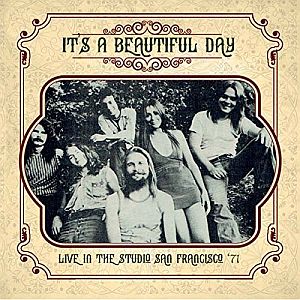
It’s a Beautiful Day on album cover, “Live in The Studio, San Francisco ‘71.” Click for CD.
It’s A Beautiful Day, Live at The Fillmore West, 2 CDs, July 1971. Click for Amazon.
“It's a Beautiful Day at Carnegie Hall,” 1972 concert album. Click for Amazon, CD or vinyl.

“White Bird (song),” Wikipedia.org.

“It’s A Beautiful Day,” in Holly George-Warren and Patricia Romanowski (eds), The Rolling Stone Encyclopedia of Rock & Roll, Rolling Stone Press, New York, 3rd Edition, 2001, pp. 468-469.

“It’s A Beautiful Day – White Bird (1969),” YouTube.com, video posted by Aquarian Realm, May 7, 2012, with comments.

Peter Blecha, “It’s a Beautiful Day’s Seattle-Penned Song, ‘White Bird,’ Hits the Billboard Charts on October 4, 1969,” HistoryLink.org, Essay 8942, April 10, 2009.

“It’s a Beautiful Day,” ProgArchives.com (progressive rock music website).

Dan Taylor, “David LaFlamme Plays San Rafael; Rock Violinist David LaFlamme Turned 70 on Wednesday, But His Fans Still Want to Hear ‘White Bird,’ a Song He Recorded 42 Years Ago. Fans Will Get Their Chance this Weekend in San Rafael,” The Press Democrat (Santa Rosa, CA), May 6, 2011.

“It’s a Beautiful Day (album),” Wikipedia.org.

“White Bird by It’s a Beautiful Day,” Song Facts.com.

Dave Thompson, “It’s a Beautiful Day – Interview with David LaFlamme; There Was Never Another Band Like It’s a Beautiful Day, Even Amidst the Manic Fervor of Mid-Late Sixties San Francisco,” GoldMineMag.com, July 28, 2016.

Richie Unterberger, “It Was a Beautiful Day: The Original Linda Laflamme Remembers,” PleaseKillMe.com, October 21, 2020 (long story with early history about the group from the perspective of Linda Rudman LaFlamme, later known as Neska).

“Matthew Katz,” Wikipedia.org.

Charles Swanson, “David LaFlamme, Sonoma County Musician and ‘White Bird’ Songwriter, Has Died; the Pioneering Rock-Violinist, Whose ‘Immortal’ Song Captured the Spirit of 1960s San Francisco, Died Aug. 6 in Santa Rosa,” The Press Democrat (Santa Rosa, CA), August 23, 2023.

Alex Williams, “David LaFlamme, Whose ‘White Bird’ Captured a 1960s Dream, Dies at 82,” New York Times, August 26, 2023.

Brian Murphy, “David LaFlamme, Violin Innovator of 1960s With ‘White Bird,’ Dies at 82; Mr. Laflamme and His Wife Spent Two Hours on a Dreary Winter’s Day in Seattle Crafting the Classic ‘White Bird’,” WashingtonPost.com, August 10, 2023.

“It’s a Beautiful Day Album Review by Lindsay Planer,” AllMusic.com.

“The Story Behind the Song: White Bird > by It’s A Beautiful Day,” NorseLandsRock.com (Norway), October 3, 2020.

Peter Thelen, “A Beautiful Day in Mill Valley — The David and Linda LaFlamme Interview,” Expose.org, published, 2003-12-01.


Also at this website:

“White Rabbit: Grace Slick, 1960s” – Jefferson Airplane song propelled group; lyrics drew political fire. Click for story.

“Legend of A Mind, 1968” – Moody Blues song about the “Pied Piper” of psychedelia (Timothy Leary), and related cultural & political history. Click for story.

“The Santana Sound: Woodstock, 1969” – An unknown band playing Afro-Latin rock electrifies 400,000. Click for story.

____________________________________


“The Santana Sound”
Woodstock: 1969

1969 Woodstock Festival poster. Click for framed version.
At the famous Woodstock music festival of mid-August 1969, late-arriving fans on Saturday, August 16th were walking in from the distant reaches of the gathering. Traffic had long since clogged local roads. It was the second day of the festival, and the late arrivals were heading to the fields and pastures of Max Yasgur’s 600-acre dairy farm where the performers’ stage and main hillside audience were located. These late-arriving fans could not yet see the stage, but they were hearing a new kind of music in the distance. It wasn’t exactly rock ‘n roll; it was something else. But it was powerful, rhythmic, and beckoning.
 

Music Player
“Jingo”- Santana

The sound came rolling over the hillsides and across the pastures; some of those walking in said they could feel it in the earth. One of the songs they were hearing and feeling – along with 400,000 others at Woodstock that day – was titled “Jingo” (sampled above). That song opens with congas, then builds to big drums, rising organ, piercing electric guitar, and later, some backing vocals. But at its opening, the song has something of a primitive, native sound to it – in a good, earthy way – and in fact, was an African-derived song first done in 1959 by Nigerian percussionist Babatunde Olatunji.

That afternoon at Woodstock, “Jingo” and other songs were being performed by a new west coast group that most in attendance had never heard of; a group called Santana. But this “Santana sound” of hard-driving Afro-Latin instrumentals was perfect for an outdoor festival. And that afternoon, it raised the energy level of the Woodstock multitudes then covering the hillsides, setting thousands to moving, dancing, and feeling the power of that day. Neither they nor Santana would ever be quite the same again.

Aug 1969. Santana at Woodstock, looking out over the huge crowd – at far left front, Michael Carabello, Jose Areas on congas, David Brown on guitar, Carlos Santana, rear left, guitar, and Michael Shrieve, drums. Not shown, far left, Gregg Rolie, organ.

Santana, named after their leader, Mexican-born American guitarist, Carlos Santana, had in fact, scored their slot on the big Woodstock festival almost by accident. They weren’t on the promoters’ original “A-list” of big, “have-to-get” rock stars. In fact, they were pretty much an unknown entity nationally, except for their west coast and San Francisco exposure. Some on the east coast had heard them a few weeks earlier at the Atlantic City Pop Festival of August 1-3, 1969. A mere 100,000 attended that gathering, some of whom were impressed by Santana’s performance there. Still, Santana had not yet cut an album and were unknown by most.

August 16, 1969. Carlos Santana, Jose Areas, and Michael Carabello during performance at Woodstock.

In the 1960s, Santana and his band had more or less broken into the San Francisco music scene by way of promoter Bill Graham, famous for his Fillmore ballroom, a performance venue where a number of rock acts were given exposure that helped launch their careers – notably The Grateful Dead, Jefferson Airplane, and others. Graham also booked acts at a second San Francisco venue, Winterland, as well as the Fillmore East in New York city. Graham’s venues in the 1968-1971 period were places where performers could experiment and improvise, engage in long sets, and where fans felt comfortable and could even dance in the aisles if they chose.

Famous music promoter, Bill Graham, shown here at his Fillmore East venue in New York City, 1971. Photo, John Olson/ Life.

Carlos Santana had played music with his father as a youth, but it was not his style of music. By 1961, the Santana family had moved to San Francisco, and Carlos worked for a time as a dishwasher while pursuing his music. Bill Graham had taken an interest in the young Mexican-American guitarist, a kid he’d first met trying to sneak into the Fillmore. Santana’s band formed in 1966, initially as the Santana Blues Band with the help of guitarist Tom Fraser. Santana’s group made their debut at the Fillmore in 1968 and were soon managed by Graham, who sensed their sound was different and had potential. By 1969 the band consisted of Santana on lead guitar, Gregg Rolie on organ and keyboards, David Brown on bass, Michael Shrieve on drums, and Michael Carabello and Jose Areas, both on congas and percussion.

1969: Bill Graham, right, at Woodstock with promoter Michael Lang, likely discussing some aspect of Woodstock's logistics.
The Woodstock opportunity for Santana came when the Woodstock promoters – then having a bit of trouble with their planned event – came to Bill Graham seeking his help. Graham was then one of the few people in the country who knew how to put on a big music show. Graham agreed to help with Woodstock, but he had one stipulation. “I told them the only way I’d help them is if they put Santana on.” At the time, Graham also managed Jefferson Airplane and the Grateful Dead, who were on the Woodstock A-list, and reportedly, Graham also used these groups in the bargain to get Santana a slot. The Woodstock promoters agreed but replied, “What the hell is Santana?” They would soon find out.

Graham believed that Woodstock could be a big breakout moment for Santana, and told them so one evening when he assembled the group at his home in Mill Valley outside of San Francisco. He told them this was their big chance, and if done well, they would emerge on a par with the biggest names in rock. Yet they were skeptical, as Carlos Santana would recall saying, “Bill, we’re from the Mission. We don’t buy into that rock star thing.” The group had no track record beyond their west coast performances. Although in May 1969, they had gone into the studio to record some of their music for a possible later album release.

At Woodstock, Santana and band arrived on Saturday morning, August 16th, for the festival’s second day of music. They were under the impression they would not go on until much later that night, closer to midnight. But in the early afternoon, at around 2:00 pm, they were suddenly rushed on stage, told it was now or never. They performed a 45-minute set of eight songs, of which “Soul Sacrifice” — near the end of their set and including a famous drum solo by Michael Shrieve — was one of the big hits of the festival.


The Santana performance at Woodstock left a lasting impression on many who experienced it live that August afternoon in 1969. One college student who attended Woodstock with a group of friends, later posted comments noting: “…From a musical standpoint, Santana was unforgettable…. They had the entire crowd on it’s feet and dancing. I believe that this event really launched them to a national level….” Another noted “Santana’s near shamanic outpouring of exuberance on ‘Soul Sacrifice’”. Michael Spendolini, in later comments to the New York Times recalling his visit to Woodstock with a group of guys who piled into a VW bug from Connecticut, noted: “A couple of us were active musicians playing in bands for local high school and college dances…. and were thinking we were ‘aware’ of the music scene until we heard Santana. We, like everyone else there, were totally taken by the sound and ethnic vibe of this unique sound. The crowd reacted immediately and I would say that the energy level of the crowd at that time of day was at its peak.”

Santana's first album, released a few weeks after Woodstock, rose to No. 4 on the Billboard album chart, and would remain on that chart for two years. Includes “Jingo,” “Soul Sacrifice” & “Evil Ways”. Click for CD.
And true to form, as Bill Graham had predicted, within a few weeks of Woodstock, Santana shot to the top of popular music.

Their debut album, Santana, which had been recorded in May 1969, was released two weeks after Woodstock, on August 30, 1969. It quickly peaked at No. 4 on the Billboard 200 albums chart and would stay on that chart for two years. In 2003, Rolling Stone magazine ranked the Santana album at No. 150 on their list of the 500 greatest albums of all time.

Composed mostly of instrumental tracks, the album contains their first two singles, “Jingo” and “Evil Ways”. The latter became a Top Ten hit, rising to No. 9 on the Billboard Hot 100. The album would later reach 2x-Platinum in sales and be reissued in 1998 and 2004.

But in the aftermath of Woodstock, the market momentum for Santana and other festival performers would continue for some time, as both a film and album of its music – the first of many – would follow.

Film & Music

The Woodstock film was first released for theaters in 1970, followed by an expanded director’s cut in 1994, and a second expanded version for a 40th anniversary edition in 2009, shown here. Click for DVD.
By late March 1970, Woodstock, the documentary film was released, a 185-minute production featuring the best parts of more than 25 of the Woodstock acts, including Santana’s “Soul Sacrifice” performance. The film received wide acclaim from newspaper and magazine critics of the day and was an enormous box office hit. Initially, the film played at one or two theaters in many metropolitan areas, but thousands were showing up to see it. The film would soon be shown in many theaters and would gross $50 million in the U.S., against a $600,000 production cost, making it the sixth highest-grossing film of 1970 and one of the most profitable that year.

In May of 1970, a live album of selected performances from the 1969 Woodstock festival was released under the title, Woodstock: Music from the Original Soundtrack and More. It was originally released on Atlantic Records’ Cotillion label as a triple album, and also included Santana’s “Soul Sacrifice” among its selections. All of the Woodstock “media” and music items that followed the festival helped raise the stock and trade of Santana and other acts who had appeared there.

 
Santana Gigs

Santana, meanwhile, through the remainder of 1969 and 1970, became a sought-after act at numerous venues beyond those in California where they had been appearing prior to Woodstock. Over the next year, between August 18, 1969, beginning at the Electric Factory in Philadelphia, Pennsylvania, and ending on June 28, 1970 in England at the Bath Festival of Blues and Progressive Music, Santana appeared at more than 70 locations across the U.S. and Europe. They were performing somewhere almost daily during that time. Included in their 1969-1970 touring were several large festivals, such as the Texas International Pop Festival at the Dallas International Motor Speedway on August 31, 1969 and the Altamont Speedway Free Festival of December 6, 1969 at Tracy, California. They also appeared on the Ed Sullivan Show on October 24, 1969 in New York City. Bill Graham, meanwhile, would feature Santana, among other acts, at his various venues in San Francisco and New York city during this time.

1970. Abraxas album.
1971. Santana III album.
1972. Caravanserai album.
1973. Welcome album.
1974 - Borboletta album.
1976. Amigos album.
1976. Amigos album.
1977. Festival album.
1977. Moonflower album.
1978. Inner Secrets album.
1979. Marathon album.
1981. Zebop! album.
1981. Zebop! album.
1999. Supernatural album.
2016. Santana IV album.
2019. Africa Speaks album.

 
Albums

Carlos Santana and the Santana band would continue to have musical success in the decades following Woodstock. But along the way they would have their ups and downs. There would be personality clashes, differences over musical direction, changing personnel, and new management — and also musical experimentation.

Yet through it all, the 1970s would prove to be a prolific time for the band, as they would turn out some 14 albums (click album images for product links).

In September 1970, Santana’s second album, Abraxas, topped the Billboard charts and went on to earn a five-times Platinum certification.

In September 1971, Santana III followed, also reaching No. 1 and two-times Platinum. Santana released another twelve albums in the 1970s, each earning RIAA certifications in the U.S. of Gold or better.

Following its early `70s albums, Santana experimented with jazz fusion on Caravanserai (Oct 1972, #8 U.S.), Welcome (Nov 1973, #25), and Borboletta (Oct 1974, #20). Among others in the 1970s were: Amigos (March 1976, #10), Festival (Jan 1977, #27), Moonflower (Oct 1977, #10), Inner Secrets (Oct 1978, #27), and Marathon (Sept 1979, #25).

Zebop!, released in April 1981 was a Top Ten finisher at No. 9 and a Platinum performer.

A lull in the band’s output and popularity came in the 1984-1994 period, as fewer Santana albums were released and sales declined.

But after signing with Arista Records, and teaming up with manager Clive Davis, Santana released the very successful Supernatural album in June 1999 — a collaborative effort with younger artists — that rose to No. 1 in several countries. Supernatural earned Diamond status and beyond at 15-times Platinum, and would sell more than 27 million copies worldwide.

In 1998, the original Santana group line-up of Carlos Santana, Jose Chepito Areas, David Brown, Mike Carabello, Gregg Rolie, and Michael Shrieve was inducted into the Rock and Roll Hall of Fame.

In 2000, basically on the merits of the album Supernatural, the band won six Grammy Awards in one night, tying a record set by Michael Jackson, also winning three Latin Grammy Awards.

In 2016, Carlos reunited with the revered early ’70s Santana lineup of musicians, releasing the album Santana IV, which debuted at No. 5 on Billboard 200 chart. In 2019, they released the album, Africa Speaks.

 
Legacy

Santana remains one of the best-selling groups of all time with 43.5 million certified albums sold the U.S., and an estimated 100 million sold worldwide. Their output includes 25 studio albums, 14 of which rose into the U.S. Top Ten. Four Santana albums have held the No. 1 spot on the Billboard charts in their day – Abraxas, Santana III, Supernatural, Shaman – along with two No. 1 singles, “Smooth” and “Maria Maria”.

Beyond their music, Santana and band have also been involved in various social causes during their careers. In October 1969, the band headlined a benefit concert at the Fillmore West on behalf of striking California farmworkers during the Delano grape strike. And Carlos Santana would later become executive producer for the 2017 documentary film, Dolores, about the life and work of Dolores Huerta, a farmworker advocate who, with Cesar Chavez, helped found the United Farm Workers of America.

President Barack Obama congratulates 2013 Kennedy Center Honors recipient Carlos Santana, during White House reception, December 8, 2013. AP photo, Manuel Balce Ceneta

Santana and his family have also established the Milagro Foundation, created in 1998, which has donated millions of dollars to non-profit programs supporting underserved children and youth in the areas of arts, education, and health.

Over the years, Carlos Santana has collected a number of achievement awards and special recognition honors from Rolling Stone magazine, Billboard, BMI, the Latin Recording Academy, the Hollywood Walk of Fame, and others. In 2013, he was a Kennedy Center Honors recipient and attended a White House reception with President Barack Obama for honorees that December.


1969 "special report" from Rolling Stone magazine on Woodstock with cover photo of the Santana performance.

 
Woodstock Moment

Meanwhile, the “Santana moment” back at the Woodstock festival of August 1969, might now feel like ancient history and something that has receded into the musical ether.

Yet at that time and place in 1969 it was a transforming sound and performance; one that was new and exciting, innovative and liberating. It gave its listeners a new and uplifting experience. And it sent an unknown but rising group of musicians on their way, opening the doors to fifty more years of new music and experimentation across a diversity of Latin rock, African, and jazz-fusion genres. As the Rock and Roll Hall of Fame put in 1998: “Santana’s fusion of jazz, rock and Latin influences built them a hugely successful and lasting reign in the world of rock.”

For other artist profiles at this website involved with, or have work related to, Woodstock, see for example: “Crosby, Stills & Nash,” “Joplin’s Shooting Star,” “Joni’s Music” (Woodstock song & history), and “Diamonds & Rust: Joan & Bob.”

Thanks for visiting – and if you like what you find here, please make a donation to help support the research and writing at this website. Thank you. – Jack Doyle

Please Support
this Website

Donate Now

Thank You

____________________________________

Date Posted: 14 August 2019
Last Update: 12 August 2024
Comments to: jackdoyle47@gmail.com

Twitter: https://twitter.com/PopHistoryDig

Article Citation:
Jack Doyle, “The Santana Sound: Woodstock 1969,”
PopHistoryDig.com, August 14, 2019.

____________________________________


Books at Amazon.com…

“The Road to Woodstock” (2010), by Michael Lang, one of the organizers. A New York Times best-seller, 352 pp. Click for copy.
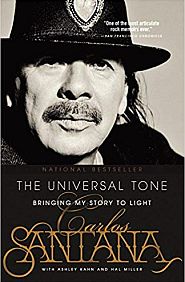
Carlos Santana’s book, “The Universal Tone: Bringing My Story to Light” (2014).  Little, Brown & Co., 544 pp.  Click for copy.
Carlos Santana’s book, “The Universal Tone: Bringing My Story to Light” (2014). Little, Brown & Co., 544 pp. Click for copy.
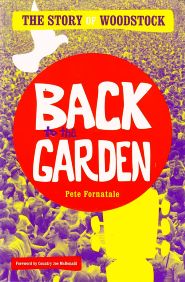
“Back to the Garden: The Story of Woodstock” (2009), by New York city DJ, Pete Fornatale. Touchstone, 336 pp.  Click for copy.
“Back to the Garden: The Story of Woodstock” (2009), by New York city DJ, Pete Fornatale. Touchstone, 336 pp. Click for copy.


Sources, Links & Additional Information

The PBS/American Experience film, “Woodstock: Three Days That Defined a Generation,” was released in 2019. It provides one of the best overviews of the history of the festival and its promoters, the reaction and comments of some of its participants, as well as a sampling of the music and artists who performed there, and also good and rare footage of the event as it occurred. Click for DVD.
“Woodstock: Music from the Original Soundtrack and More” is a live album of selected performances from the 1969 Woodstock festival. Rhino’s 40th anniversary, 2-CD reissue (2009) is remastered from the original analog soundboard tapes. Click for Amazon.

“Santana/Carlos Santana,” in Holly George-Warren and Patricia Romanowski (eds), The Rolling Stone Encyclopedia of Rock & Roll, Rolling Stone Press, New York, 3rd Edition, 2001, pp. 857-859.

Charles Perry, “The Sound of San Francisco,” in Anthony De Curtis and James Henke (eds), The Rolling Stone Illustrated History of Rock & Roll, Random House, New York, 1992, pp. 362-369.

“Carlos Santana Biography,” Santana.com.

“Biography: Santana Induction,” Rock and Roll Hall of Fame, 1998 (Members: Carlos Santana, Jose Chepito Areas, David Brown, Mike Carabello, Gregg Rolie, and Michael Shrieve).

“Santana (band),” Wikipedia.org.

“Carlos Santana,” Wikipedia.org.

James Sullivan, “Presenting Bill Graham / Rock Ringmaster Gets Top Billing in A&E Documentary,” SFgate.com / San Francisco Chronicle, July 13, 2002.

“Latin Music USA – Bridges; The Salsa Revolution,” PBS-TV, KQED, September 2010.

“Woodstock Remembered: Carlos Santana on the Spiritual Vibe of the Fest,” Rolling Stone.com, August 5, 2019.

Rob Tannenbaum, “Woodstock at 50: How Santana Hallucinated Through One of Woodstock’s Best Sets (His Own),” New York Times, August 6. 2019.

“Santana – Soul Sacrifice 1969 ‘Woodstock’, Live Video HQ,” YouTube.com.

“Santana Discography,” Wikipedia.org.

“Remembering Woodstock: Why the 1969 Festival Still Resonates; Woodstock Was More Than a Concert — It Was a Social, Political, Musical Event That Changed Our Culture (with video),” Rolling Stone.com, August 1, 2019.

George Varga, “Carlos Santana on Woodstock, Tijuana and His Vibrant New ‘Africa Speaks’ Album and Tour,” PacificSanDiego.com, June 19, 2019.

“Santana Tour” (first tour, 1969-1970), Wikipedia.org.

“Woodstock: Music from the Original Soundtrack and More,” Wikipedia.org.


______________________________


Books at Amazon.com…

“Bill Graham Presents: My Life Inside Rock And Out,” by Bill Graham & Robert Greenfield, 2004 edition, Da Capo Press, 609 pp. Click for copy.
Daniel Bukszpan & Amalie R. Rothschild (photos), “Woodstock: 50 Years of Peace and Music,” 192 pp, w/photos, 2019. Click for copy.
Marc Shapiro’s book, “Carlos Santana: Back on Top” (2002), St. Martin's Griffin, 270 pp.  Click for Amazon.
Marc Shapiro’s book, “Carlos Santana: Back on Top” (2002), St. Martin's Griffin, 270 pp. Click for Amazon.