“Come Softly to Me”
1959-1963

1959: The Fleetwoods with American Bandstand's Dick Clark, receiving gold records for “Come Softly to Me” and “Mr. Blue.”
     In April of 1959, a singing group from the Pacific Northwest named the Fleetwoods rose briefly to the top of the pop music scene with a No. 1 hit titled, “Come Softly To Me.”  The Fleetwoods were high school kids from Olympia, Washington – Gretchen Christopher, Barbara Ellis, and Gary Troxel.

For a time in 1959-1963, the songs of The Fleetwoods – and in particular, “Come Softly to Me” and another hit, “Mr. Blue” – shot to the top of the music charts and were very popular. 

The sound of The Fleetwoods was sweet and melodic with good harmonies, engaging arrangement, and tender lyrics; a style that flourished briefly amid the more raucous rock ’n roll of Jerry Lee Lewis and other hard rockers of that day. 

But several years later, the pop music landscape would be transformed with the arrival of the Beatles and other British groups – the “British invasion,” as it was sometimes called – which would take popular music in a new direction.  But for a time, The Fleetwoods’ sound became very popular.

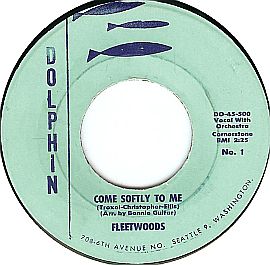
Dolphin record label 45rpm for Fleetwoods No. 1 hit, "Come Softly to Me.". Click for digital.
     As teenagers in Olympia, Washington, Gretchen Christopher, Barbara Ellis, and Gary Troxel attended Olympia High School. One of the songs they had written and performed at school functions – then named “Come Softly” – had struck a cord with their classmates who wanted copies. The group was then known as “Two Girls and A Guy.” 
 

Music Player
“Come Softly to Me” – 1959
The Fleetwoods

Within six months or so they managed to make a recording of their song, and soon met Bob Reisdorff, owner of Dolphin Records.  Reisdorff suggested two changes: adopt a new group name, which they did, choosing “The Fleetwoods,” based on a local telephone exchange, and rename their song to “Come Softly to Me,” which they also did.

The year 1959 had something of an era-ending aura about it. Dwight Eisenhower was still president of the United States, completing his second term. U.S. Senators Jack Kennedy and Hubert Humphrey were then maneuvering to be considered for the Democratic Party’s 1960 Presidential nomination, as incumbent Vice President Richard Nixon was the likely Republican candidate. In film that year, Ben Hur, North By Northwest, and Some Like It Hot were among the top box office attractions. Exodus, Dr. Zhivago and The Ugly American were among the best-selling books.

Early 1959 had seen pop music hits such as “Smoke Gets in Your Eyes” by the Platters and “Stagger Lee” by Lloyd Price. Musically, this was still the era of the crooners, but a few teen idols such as Frankie Avalon had hits, too.  Avalon had the No. 1 “Venus” in March 1959. The Fleetwoods, meanwhile, released their song, “Come Softly to Me,” in the spring of 1959. It rose steadily on the Billboard music chart, reaching No. 1 on April 13, 1959, staying there for four weeks through May 10, 1959. The success of this song for the Fleetwoods, and a few others to follow, marked one of the first big national success stories for a Pacific Northwest pop music group.


Bob Reisdorff and Bonnie Guitar of Dolphin Records with The Fleetwoods in the background, “Cash Box” magazine, March 5, 1960. Click for Cash Box book.

 
Back Story

The rise of the Fleetwoods’ first song came about, in part, after a former singer named Bonnie Guitar – a Northwest pop star who in 1957 had a Top Ten hit called “Dark Moon” – joined Dolphin records as a vice president.  During her Hollywood years before returning to Seattle she had learned the ins and outs of record production, and after hearing “Come Softly” she agreed it had “a hit sound.”  The song was recorded on February 18th, 1959 at the Seattle studio of Joe Boles Custom Recorders, with Bonnie Guitar helping in production.  She trimmed the song’s length to a shorter pop form and contributed her own background guitar work to the song.  A sparse musical arrangement was also used to highlight the innocent sound and harmonies.

The newly-minted Dolphin single (Dolphin label later became Dolton) was then taken around to Seattle’s King radio stations and others, including KOL, KJR, KUTI, and KAYO.  “Come Softly to Me” soon built to a statewide following becoming a hit, and then proceeded to move down the West Coast.  As “Come Softly To Me” rose on U. S. national pop and R&B charts, and also abroad in the U.K., it became the first million-seller ever in the Pacific Northwest. Bob Reisdorff of the Dolphin/Dolton label then cut a distribution deal with a Los Angeles-based label, Liberty Records.  The Seattle Post-Intelligencer wrote that the song had become a surprise-hit, shipping over 100,000 copies.  It was also No. 1 in the Miami and Cleveland markets.  The Fleetwoods, meanwhile, quit their day jobs and college courses in order to begin their first national tour.  Suddenly, they found themselves making TV appearances on American Bandstand, The Dick Clark Show, and The Ed Sullivan Show.  They made their first national appearance on March 14, 1959, on The Dick Clark Show.  They appeared on the Sunday night Ed Sullivan Show on April 5, 1959.  “Come Softly To Me” now started to sell in even larger quantities.  It moved swiftly up the charts, into the Top Twenty in two weeks and to No. 1 by mid-April.  As “Come Softly To Me” rose on U. S. national pop and R& B charts, and also abroad in the U.K., it became the first million-seller ever in the Pacific Northwest.


An album of Fleetwood songs titled “Mr. Blue” was also released by Dolton Records. Click for CD.

 
“Mr. Blue”

The Fleetwoods weren’t able to immediately produce a follow-up single as successful as “Come Softly,” but they soon found another hit in their third single, “Mr. Blue.” Released in August 1959, this song, written by DeWayne Blackwell, also became a million seller. 
 

Music Player
“Mr. Blue” – 1959
The Fleetwoods

“Mr. Blue” became a No. 1 pop hit and No. 5 R&B hit in the U.S., staying near the top of the charts through the end of 1959.  “Mr. Blue’s” ascendancy to No. 1 helped mark the Fleetwoods with a singular distinction at the time, becoming the first vocal group to have multiple No.1 hits on the Billboard Hot 100 in single year.  Other individual singers and groups in the 1950s had accomplished that prior to the onset of the Billborad Hot 100, among them Eddie Fischer and Pat Boone.  The Everly Brothers also had two No. 1 hits in 1958, straddling the Billboard era.  Elvis Presley, of course, also pre-Billboard Hot 100, had multiple No. 1 hits in a single year – five in 1956, four in 1957, and two in 1958.  By 1962, the Four Seasons would also notch two No. 1 hits – “Sherry” and “Big Girls Don’t Cry.”  And in 1964, the Beatles would set a new record, posting six No. 1 hits in a single year.

Back in 1959, however, at the height of the Fleetwoods’ popularity, Gary Troxell was drafted into the Navy.  He was replaced for a time, by Vic Dana, who would later have a string of his own hit singles.  In the spring of 1961, The Fleetwoods had another Top Ten hit with “Tragedy.” Troxel, during his Navy hitch, was stationed alternately at San Diego and Alameda near Oakland, and had been meeting the other Fleetwoods in Hollywood for recording sessions during shore leaves. This arrangement lasted until 1962, as the quality of their recording material faltered, unable to spend the time needed to assure top hits.  The group would disband in 1963 after releasing their final single, a cover of Jesse Belvin’s “Goodnight My Love.” Still, between 1959 and 1963, The Fleetwoods had scored three Top Ten hits and another six songs that charted in the Top 40. The British Invasion of the mid-1960s ended the public’s taste for sweet, melodic music.  An album attempt by the Fleetwoods in 1973 was unsuccessful.

A Capitol Records CD featuring ‘the very best of’ the Fleetwoods, issued in 1993, decades after their big 1959 hit, ‘Come Softly To Me.’ Click for copy.
     By the late 1970s, Gary Troxel was working in a plywood plant, Ellis was managing a trailer park in Canada, and Christopher was a housewife and modern dance teacher.  Ellis later retired from performing.  In the 1980s, Troxel formed a new Fleetwoods group and Christopher also resumed her music career as “Gretchen Christopher of the Fleetwoods.”

Over the next three decades, the Fleetwoods reunited occasionally to perform at concerts and in oldies revues.  In 1990, a reassembled Fleetwoods group featuring Christopher and Troxell, plus new member Cheryl Huggins, played a round of American cities on an oldies tour after Rhino Records released their compact disc collection, The Best of the Fleetwoods.

The Fleetwoods’ two big hits have had periodic revivals through their use in various film soundtracks. “Come Softly To Me” was used in Stand by Me (1986), Clean and Sober (1988), and Crossing Delancey (1988). “Mr. Blue” was used in American Graffiti (1973), Return to Macon County (1975), American Hot Wax (1978, in which The Fleetwoods are portrayed as “Timmy & The Tulips”), and Diner (1982). In more recent years, “Mr. Blue” was featured in the 2018 television series, Watchmen. It was also featured in the 2025 Marvel-related film, Captain America: Brave New World, in which the song “Mr. Blue” is used by Dr. Samuel Sterns to activate a form of mind control on various characters.


Made Their Mark

Studio photo of the Fleetwoods from the 1950s.
     In the pantheon of pop music, the three high school kids from Olympia, Washington had their moment in the sun, and they left their mark on popular music.  “The Fleetwoods had a sound and it was unique,” explains radio dis jockey, Brian Lee, also a historian of that period.  “There were certainly other groups before them that had a soft and sweet sound: The Paris Sisters, Teddy Bears, and several un-credited vocal groups… But it wasn’t the same.  The Fleetwoods had a new sound. …Their own sound.  And, it took the country by storm…”

For more stories on the history of pop music at this website, see the “Annals of Music” category page, or go to the Archive for a broader selection of stories.
Thanks for visiting. – Jack Doyle

Please Support
this Website

Donate Now

Thank You

____________________________________

Date Posted: 6 June 2011
Last Update: 8 April 2022
Comments to: jackdoyle47@gmail.com

Article Citation:
Jack Doyle, “Come Softly to Me, 1959-1963,”
PopHistoryDig.com, June 6, 2011.

____________________________________


Sources, Links & Additional Information

Cover of Fleetwoods’ “Runaround” EP issued under the Dolton record label.
45 rpm of the Fleetwoods' "Come Softly to Me" on the Liberty record label.

Charles Russell, “Teenagers Set To Start 3-Week Tour,” Seattle Post-Intelligencer, February 1959.

Peter Blecha,”Dolton: The Northwest’s First Rock ‘n’ Roll Record Company,”March 14, 2006, at: HistoryLinks.org, Essay #7636, Washington State Department of Archeology and Historic Preservation.

“The Fleetwoods,” in Holly George-Warren and Patricia Romanowski (eds), The Rolling Stone Encyclopedia of Rock & Roll, Rolling Stone Press, New York, 3rd Edition, 2001, pp. 337-338.

“Come Softly to Me,” Wikipedia.org.

“Fleetwoods Record Label Shots,” Color Radio.com, Disc jockey Brian Lee’s “Color Radio” is heard every Saturday evening from 4-6 PM Pacific coast time on community radio KVMR-FM. Nevada City, CA.

Howard A. DeWitt, “Teen Angst and Soft Rock ‘n Roll,” Rock & Blues News, 1999 (good, detailed article on The Fleetwoods’ history).

Steven Thomas Erlewine, “The Fleetwoods,” All Music Guide.

“The Fleetwoods,” HistoryofRock.com.

TheFleetwoods.com, Website (G. Christopher).

The Fleetwoods.us, Website.

“List of Number-One Singles of 1959 (U.S.),” Wikipedia.org.

______________________________ 


“Enemy of the President”
1970s

Portion of a larger Paul Conrad cartoon from the 1970s showing President Richard Nixon caught up in a Watergate spider web.
     Paul Conrad, an American political cartoonist who distinguished himself in the 1970s by being named to President Richard Nixon’s infamous “enemies list,” did his best with his art to get under Nixon’s skin. 

In the 1970s, Conrad was among cartoonists who chronicled Nixon’s troubles during his presidential demise via the Watergate scandal.

Watergate was the office complex in Washington, DC where the attempted electronic bugging of Democratic Party headquarters by a Nixon White House-led team of burglars, would lead to a White House slush fund, an attempted cover up, and ultimately Nixon’s resignation from office.

Conrad’s spider web cartoon at right, for example, reveals a Nixonian web of Watergate co-conspirators, their names cleverly spelled out in the web’s structure — “Ehrlichman”, “Haldeman”, “Magruder”, “Dean”, and others. These were the men involved with Nixon in the Watergate scandal who, by their actions and participation, helped incriminate and ensnare President Nixon in the end.

     Paul Conrad was also probably the first cartoonist to associate the Watergate break-in with Nixon, publishing the cartoon below on June 18, 1972, the day after the Watergate break-in was reported as a minor burglary.  At the time, only a handful of people even suspected there might be a White House connection.  Conrad by then was an established national political cartoonist and known as an “equal opportunity offender,” lampooning all manner of politicians and public figures regardless of affiliation.

In this June 1972 Paul Conrad cartoon, Democrats are peeking out their doorway, looking at a Nixon-caricatured repair man, saying: “He says he’s from the phone company...”
     Political cartoons, of course, have been an important part of the cultural landscape and print media for centuries.  They have often proven to be especially illuminating of current events, educating the public, and becoming historic guideposts to what happened and when it happened.  Paul Conrad’s work did its share of illuminating and educating, and as such his work was part of that time’s cultural tableau.  Some of  Conrad’s work is briefly reviewed here, mostly with examples from the Nixon years. Conrad’s cartoons, however, covered a range of politicians and he also used his pen to bring attention to social injustice, environmental pollution, civil rights, homelessness, corruption, war, and other subjects.

     “Throughout our history…,” Conrad explained to the Des Moines Register’s Tom Longden in 2009, “it’s always come down to the friction between the haves and have-nots, or between the average Joes and the large corporations. So that’s a recurring theme in my work.”

     In his career, Conrad skewered 11 presidents – Truman, Eisenhower, Kennedy, Johnson, Nixon, Ford, Carter, Reagan, Clinton and the two Bushes.  He also won three Pulitzer Prizes for this work of poking fun at politicians during a 50-year career.  He spent 30 years at the Los Angeles Times, where his lampooning helped raise the newspaper’s national profile.

Paul Conrad working on a drawing at his desk, 1970s.
     Paul Conrad was born in 1924, in Cedar Rapids, Iowa, and grew up in Des Moines.  He has often said his first drawings appeared on the bathroom stalls of his Catholic elementary school.  After high school he and his twin brother went to Alaska, where Paul drove a truck and played piano in a brothel.  During World War II, he served in the U.S. Army and fought at Guam and Okinawa, Japan.  After the war he enrolled at Iowa State University to play in a dance band, but later dropped out, then enrolling at the University of Iowa.  There, he began drawing cartoons for the student newspaper.  After graduating in 1950 with an art degree, he moved to Denver and soon became recognized as one of the country’s leading young political cartoonists working at the Denver Post, where he stayed for 14 years.  Conrad won his first Pulitzer there in 1964.  He joined the Los Angeles Times that year after being contacted by it publisher, Otis Chandler, who was then trying to make his paper less conservative.  The liberal Conrad gladly obliged.  He spent the next 30 years there ruffling feathers of politicians and others.  Frank Sinatra once called him “a disgrace to responsible journalism,” and in 1968, Los Angeles mayor Sam Yorty sued him for libel over a cartoon that suggested the mayor he had lost his mind.  That suit was dismissed.  Paul Conrad drew cartoons at the Los Angles Times six days a week, wining two of his Pulitzers there — one in 1971 and another in 1984.  He retired from the Los Angeles Times  (but not drawing) in 1993.  In the 1970s,  especially, Conrad’s favorite target was President Richard Nixon.


Nixon’s Enemies List

Paul Conrad’s caricature of President Richard Nixon sitting amid pages and pages of his infamous “enemies list.”  Caption reads: “His own worst enemy.” Date: 1973.
Paul Conrad’s caricature of President Richard Nixon sitting amid pages and pages of his infamous “enemies list.” Caption reads: “His own worst enemy.” Date: 1973.
     In 1973, it was revealed in Congressional Watergate hearings that Richard Nixon’s White House team had amassed a listing of political enemies. The list of major political opponents was first compiled by presidential assistant Charles Colson special counsel to the White House, in September 1971. The list was part of a campaign officially known as the “Opponents List” or the “Political Enemies Project.” 

The existence of such a list first became public when former White House lawyer and Nixon ally, John Dean, mentioned them during the Senate Watergate hearings. In his testimony, Dean then noted that a list existed containing names of those the president did not like.

On June 27, 1973, the Senate Watergate Committee released the first White House Enemies List in two parts, a top 20 list for special attention and another list of about 200 “Political Opponents.” Together, these names comprise what is also known as “Nixon’s First Enemies List.” 

The official purpose of the list, as described by the White House Counsel’s Office in one 1971 memo, was to “screw” Nixon’s political enemies by means of IRS tax audits and/or other means, such as manipulating grant availability and federal contracts, or through litigation and prosecution. In an August 1971 memorandum from John Dean to Lawrence Higby, Dean explained the purpose of the list:

“This memorandum addresses the matter of how we can maximize the fact of our incumbency in dealing with persons known to be active in their opposition to our Administration; stated a bit more bluntly—how we can use the available federal machinery to screw our political enemies….”

     Later, a much longer list consisting of some 576 names was also revealed – a list which included hundreds of names that had been sent by Nixon’s people to the IRS in 1972 for possible tax audits.  That’s the list on which Paul Conrad’s name appeared. Conrad, however, was in good company, as the full list included many political notables, selected publications, and celebrities, among them: Paul Newman, Gregory Peck, Ted Kennedy, Shirley Chisholm, Joe Namath, Jane Fonda, Bella Abzug, Barbra Streisand, Carol Channing, The New York Times, The Washington Post, and many others.

A Paul Conrad 1970s cartoon depicting President Nixon as a criminal barricaded in the White House with caption, “If you want me, you’re gonna have to come in and get me!” – reminiscent of some Hollywood movie scenes.
     For Paul Conrad, however, being on Nixon’s enemies list was no idle threat. The IRS audited Conrad’s tax returns for tax years 1968 to 1973. Conrad, in fact, had been in Nixon’s sights for some time. In any case, Conrad continued his Nixon drawings, some of which during the Watergate era became so strong that the Los Angeles Times moved them off the editorial page and onto the op-ed page. 

As Nixon faced an almost certain impeachment in House of Representative and likely conviction in the Senate, Conrad did an Easter Sunday cartoon of Richard Nixon nailing himself to a large cross that the Los Angeles Times refused to run, believing it too offensive. 

After the White House tape recording system came into play, helping incriminate Nixon, Conrad drew Nixon in a cartoon pinned down by audiotapes, after a scene from Jonathan Swift’s Gulliver’s Travels, with Gulliver (Nixon) among the Lilliputians. 

Near Nixon’s end in the White House, Conrad had Nixon in very dark cartoon with crown on his head quoting Shakespeare’s King Richard II:  “O that I were as great as my grief, or lesser than my name. Or that I could forget what I have been. Or not remember what I must be now.” Later, at Nixon’s resignation and his famous departure by helicopter, Conrad drew Nixon’s helicopter flying over the White House with the caption: “One flew over the cuckoo’s nest.” Some years later, in 1977-78, Conrad savored some irony when he was chosen that year to hold the Richard M. Nixon lecture chair at Whittier College, the president’s alma mater. 

Conrad would also skewer President Gerald Ford in September 1974 for pardoning Richard Nixon.  That cartoon has Gerald Ford looking out at the reader, holding an official looking, scroll-type piece of paper with seal, etc. that is titled “Pardon” and reads: “I herewith pardon Gerald R. Ford for the presidential pardon granted to former president Richard M. Nixon by President Gerald R. Ford. – (signed), Gerald R. Ford.” Said Ford of Conrad: “Laugh and the world laughs with you. Cry and you’ve been the subject of a Paul Conrad cartoon.”


Democrats, Too

Paul Conrad, “We're Gonna' Make History, Hubert!!,” Los Angeles Times, 1968, Re: Continued Bombing of Vietnam. Syracuse University Library’s Special Collections Research Center.
     Conrad, mostly a liberal Democrat, was not partial to political party. In fact, in the 1950s, he voted for Republican Dwight Eisenhower, but later soured on Ike’s policies. 

Conrad’s cartoons weren’t all critical, and could also be praiseworthy, as one he did in 1958 lauding Eisenhower’s enforcement of the Supreme Court’s school desegregation order.  Ike had sent army troops to enforce the law and help integrate Little Rock Central High School in Arkansas.  Conrad also went after the Democrats. 

In the 1960s, he lampooned Democratic President Lyndon B. Johnson and became quite critical of Johnson. Conrad believed Johnson’s policies during the Vietnam War were despicable, drawing one 1964 cartoon showing Congress supplying the president with a “blank check” to wage war on Vietnam.

“I really detested Lyndon Johnson,” Conrad said. “For the Vietnam thing, that’s the one you could really get your teeth into. That was wrong, man, from the word go.” 

Another of Conrad’s LBJ cartoons from 1968, shown above right, came at the time Johnson was bombing North Vietnam.  The cartoon has Johnson with his vice-president, Hubert Humphrey, riding a bomb similar to a scene from the Dr. Stranglove film in which actor Slim Pickens rides a bomb in similar fashion. The caption reads: “We’re gonna’ make history, Hubert!”

Paul Conrad’s Nancy & Ronald Reagan in send up of “American Gothic” during 1980s farm crisis.
     Conrad also did some notable cartoons on Ronald Reagan. In fact, he first took after Reagan in the 1960s when Reagan was governor of California. Conrad’s cartoons often had Reagan in over his head, and he sometimes cast him as a clown. Los Angeles Times publisher Otis Chandler reportedly received a number of early-morning calls from Reagan or Nancy complaining of Conrad’s portrayals. But after Reagan became President, Conrad continued his lampooning.

He once had the president shown as “Reagan Hood,” stealing from the poor to give to the rich. Another, shown at left, had Ronald and Nancy Reagan in a send up of Grant Wood’s classic American Gothic pose, made during the 1980s farm crisis when thousands of farm families were losing their farms to foreclosures, and as some charged, to Reagan policies. Conrad also skewered Reagan’s foreign policies; one cartoon had the president in a bathtub playing with warships and a rubber duck. In 1993, Conrad accepted a buyout from the Los Angeles Times, but he continued to draw syndicated cartoons for more than 15 years.

In 1994, Paul Conrad cast Bill Clinton as playing the Republican's song.

In the early 1990s, Conrad came after President Bill Clinton with a few hits as well.  “Clinton was a disappointment,” Conrad would later say.  “I mean, he became more of a Republican than most Republicans.  He sold out the Democratic party, as far as I can tell.”  One 1994 cartoon by Conrad, shown at right, has Clinton kow-towing to the Republican agenda, playing his saxophone into the Republican elephant’s trunk, with the caption, “Young man with a horn.”

     In his career, Paul Conrad also did some sculpture, and he designed limited-edition bronze figures depicting Ronald Reagan, Richard Nixon, John F. Kennedy, Robert F. Kennedy, Golda Meir and Martin Luther King Jr.  One of his sculptures, entitled “Chain Reaction,” made of chains depicting the dangers of a nuclear war, was placed in front of the Santa Monica Civic Center in California. His cartoons have also been published in a number of books, including: When in the Course of Human Events (1973, with Malcolm Boyd), The King and Us (1974), Pro and Conrad (1979), Drawn and Quartered (1985), Conartist (1993), Drawing the Line (1999), and I, Con (2006).

Paul Conrad's Sarah Palin, post-election 2008, slaying the Republican elephant.
     Paul Conrad turned out more than 20,000 political cartoons in his career, many of which were syndicated by the Los Angeles Times Syndicate and seen by millions. In 1993, he was the subject of a PBS documentary, Paul Conrad: Drawing Fire. After the 2008 election, he depicted Sarah Palin with a smoking machine gun in one hand as she held up the trunk of a slain Republican Party elephant in the other. Paul Conrad died of natural causes in September 2010. He was 86 years old. He leaves behind an important time capsule of 50 years of political and social observation.

     Other stories at this website on Richard Nixon include: “Nixon’s Checker’s Speech, 1952,” “1968 Presidential Race – Republicans,” and “The Frost-Nixon Biz, 1977-2009.” See also the “Politics & Culture” page for stories in that category, or visit the Home Page for further choices. Thanks for visiting — and if you like what your find here, please make a donation to help support the research and writing at this website. Thank you. – Jack Doyle


Please Support
this Website

Donate Now

Thank You

____________________________________

Date Posted: 19 May 2011
Last Update: 1 April 2019
Comments to: jackdoyle47@gmail.com

BlueSky: jackdoyle.bsky.social

Article Citation:
Jack Doyle, “Enemy of the President, 1970s,”
PopHistoryDig.com, May 19, 2011.

____________________________________


Sources, Links & Additional Information

Paul Conrad’s 1975 book, “The King and Us,” with Nixon on the cover as Shakespeare’s King Richard II, from a 1973  Conrad cartoon. Click for book.
Paul Conrad’s 1975 book, “The King and Us,” with Nixon on the cover as Shakespeare’s King Richard II, from a 1973 Conrad cartoon. Click for book.
Another Paul Conrad “American Gothic” send up, this one charging Ronald Reagan’s policies with driving small farmers out of business & killing their communities.

Matt Schudel, “Paul Conrad, 86: Pulitzer-Winning Political Cartoonist,” Washington Post, September 6, 2010, p. B-4.

James Rainey, “Cartoonist Had A Sharp Pen: His Drawings Bedeviled Nixon, Reagan and Others in Power. He Worked at the Los Angeles Times for Nearly 30 Years” (front-page obituary, at his death), Los Angeles Times, September 5, 2010.

 Tom Longden, “Paul Conrad’s Cartoons Carry Strong Messages,” Des Moines Register, March 25, 2009.

“Master List of Nixon’s Political Opponents,” Wikipedia.org.

William Claiborne, “IRS Ignored Bid to Audit ‘Enemies’ List,” Washington Post, December 21, 1973, p.1.

“The Complete, Annotated Nixon’s Enemies List,” EnemiesList.info.

Yvonne French, “Afflicting the Comfortable:  Cartoonist Paul Conrad Puts Words Behind the Pictures,” Library of Congress.

Paul Conrad, Drawing the Line: The Collected Works of America’s Premier Political Cartoonist, Los Angles: Los Angeles Times, 1999  (this collection of 200 Conrad pieces spans his career from the 1960s to the 1990s).

Paul Conrad, Conartist: Paul Conrad: 30 Years With the Los Angeles Times, Los Angeles: Los Angeles Times, 1993 (a three-decade retrospective of Conrad’s work at the Los Angeles Times).

Paul Conrad: Drawing Fire, Independent Lens/PBS Documentary, PBS.org, Independent Television Service (ITVS), October 2006.

James Preston Allen, Publisher, “Censored in LA: Paul Conrad Speaks on Why His Cartoons Won’t Be Seen by Angelenos,” Random LengthNews.com, July 8, 2005

Michael Dooley, “Conrad, Mauldin and Nast: A Personal Perspective on Editorial Cartoons, Past and Present,” Aiga.org, September 21, 2010

“I Con, The Brilliant Work of Paul Conrad,” Exhibition Photographs, College of the Canyons, Santa Clarita, CA, September 1 – September 30, 2010.

 _____________________________


“Love is Strange”
1956-2007

Mickey Baker and Sylvia Vanderpool Robinson of “Mickey & Sylvia” fame, had 1957 hit, “Love is Strange.”
     In mid-January 1957, a new song with the title “Love is Strange” by two artists known as “Mickey & Sylvia” was being heard on the radio.   This was the era prior to the modern Billboard music charts, as songs were then charted on the Best Seller list, the Jockey list, the Top 100, and/or the Juke Box list.  In any case, Mickey & Sylvia’s “Love is Strange,” in early 1957, rose into the Top 20 on all of these charts, reaching No. 11 on the Best Seller and Jockey charts and No.1 on the rhythm and blues (R&B) chart.  “Love is Strange” also became a million seller and it stayed in the Top 40 for more than three months.

     “Mickey” was Mickey Baker, a well-known “session guitarist” in music circles of that day – playing background music for other artists.  Baker, in fact, was considered the “go to” session guitar player of the 1950s and early 1960s.  He performed on dozens of rock ‘n roll hits and on many recordings.  “Sylvia” was Sylvia Vanderpool, formerly billed in her earlier singing career as “Little Sylvia” Vanderpool, who later in the 1980s became an important promoter in advancing Sugar Hill Records, a major player in the emergence of rap music.

Mickey & Sylvia’s “Love is Strange” hit song of 1957 on Groove recording label. Click for digital.
     Mickey & Sylvia first formed their duo in the mid-1950s. Baker, who then gave guitar lessons to make ends meet, teamed up with Sylvia Vanderpool, one of his students. Sylvia later became Sylvia Robinson after she married Joe Robinson, and they would continue together in later years in the music business.
 

Music Player
“Love is Strange” – 1957 – Mickey & Sylvia

But Mickey and Sylvia first tried their hand as a duo at a Brooklyn-based record label named Rainbow where they cut a few recordings without much success. They later signed with RCA’s Groove records. Their first recording there, titled “No Good Lover,” which according to one report, was “a wild, upbeat, two guitar and washboard rocker.” However, their second recording at Groove was “Love Is Strange,” the one that became a smash hit and brought them into national prominence.

     “Love is Strange” has a distinctive guitar riff to it, and was adapted by Mickey and Sylvia from “Billy’s Blues,” a Bo Diddley and Billy Stewart song.  “Love is Strange,” however, had its own unique sound and guitar licks, and would go on to influence a number of other artists and recordings in the years ahead.  The Mickey & Sylvia single was released in late November 1956.  It hit No. 1 on the rhythm and blues (R&B) singles chart in January 1957 and held that spot for two weeks.  On the other charts of that day, “Love is Strange” rose into the Top 20 and generally remained in the Top 40 for more than three months.  Mickey and Sylvia also made some TV appearances with this song, including on Dick Clark’s American Bandstand prime-time evening show in November 1957.

Cover of “Mickey & Sylvia” EP that included their 1957 charting hit, “There Oughta’ Be A Law”. Click for 24-song CD.
     However, after the success of “Love is Strange,” Mickey & Sylvia never quite got back to the Top 10 again, but they did have two more charting hits – “There Oughta’ Be A Law”of 1957 ( #15 R&B,# 46 Pop) and “Baby You’re So Fine of 1961 (#27 R&B, # 52 Pop).  They also played back up guitar on Ike & Tina Turner’s 1961 hit song, “It’s Gonna Work Out Fine,” which rose to No. 2 on the R&B charts.  However, the duo basically split up in 1961, but they continued to record together off and on until the mid-1960s.  They also put out an extended play disc with four of their songs under the Vik label, titled Mickey & Sylvia.  There were also recordings for other labels including Willow, Cat, Rainbow, King, RCA Victor, and RCA Camden.

     Mickey Baker – who some regard as one of the best guitarists of his day – recorded as a solo artist for a time and went to France where he found some success playing as a session guitarist.  He would also write some best-selling guitar instruction books, among them, Jazz Guitar.  Sylvia married Joe Robinson in 1964, and would co-write some songs in the 1970s.  She had a No. 3 hit with “Pillow Talk” in 1973, and would continue to hit the R& B charts with a few recordings though the late 1970s, when she also became involved in the music business.  About this time she co-founded an early rap music label named Sugar Hill and helped launch the Sugar Hill Gang rap group with its top hit of 1979, “Rappers’ Delight” (#4 R&B, #26 pop).  She would also help produce other rap groups.  But then in the 1980s came the film Dirty Dancing, bringing Mickey & Sylvia’s famous 1950s tune back on the scene.


Dirty Dancing

Patrick Swayze & Jennifer Grey in “lover boy” practice dance scene from 1987 film “Dirty Dancing” using the 1957 Mickey & Sylvia song, “Love is Strange.” Click for film options at Amazon.
     “Love is Strange” had a bit of a revival in 1987 when the Patrick Swayze-Jennifer Grey film Dirty Dancing came out.  The plot line of this film involves an innocent young female nicknamed “Baby” (Jennifer Grey) from the big city who is visiting the Catskill resorts with her family.  Baby sets up the film in an early flashback:  “That was the summer of 1963 – when everybody called me Baby, and it didn’t occur to me to mind.  That was before President Kennedy was shot, before the Beatles came, when I couldn’t wait to join the Peace Corps, and I thought I’d never find a guy as great as my dad.  That was the summer we went to Kellerman’s….”

     Baby has her eyes opened early on when she happens into an “employees only” dirty dancing venue where she first sees, and soon falls for, male dance instructor hunk, “Johnny,” played by Patrick Swayze.  Opportunity soon presents itself for Baby when Swayze’s normal partner (not his girfriend) can’t perform in a major dance routine ( she’s pregnant, but not by Swayze).  The plot thickens when Baby tries to help by borrowing money for an illegal abortion for the partner from her doctor father, to whom she lies.  But it all works out in the end, with even Dad helping to save the day… Swayze and friends, meanwhile, turn to non-dancer Baby to fill the role of his pregnant partner, making Baby into a substitute dancing star.  In the process of Baby’s “up-close-and-personal” make-over and dance instruction, she and Johnny become an item.

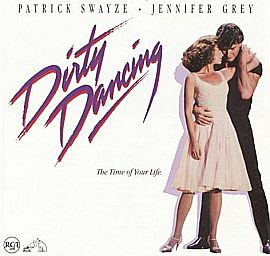
Original 1987 "Dirty Dancing" soundtrack; includes Mickey & Sylvia's "Love is Strange." Click for CD.
     Dirty Dancing also happens to be filled with a great rock ‘n roll background score of 1950s and 1960s music, including songs such as  “Be My Baby,” “Do You Love Me,” “Stay,” “In the Still of the Night,” and others.  In one scene, shown above, the two dancers are practicing their routine in a sun-lit studio one afternoon to the music of Mickey & Sylvia’s “Love is Strange.”  Johnny and “Baby” by this time have become more than just friends.  As they practice, they proceed to play-act using the Mickey & Sylvia “lover boy” banter from the song, each lyp-synching their respective male and female roles to fit the song.  It is one of the film’s more playful and memorable scenes.

     Dirty Dancing became a massive box office hit at the time, and has since surpassed some $215 million in gross box office revenue worldwide as of 2010.  It also collected a variety of film and music accolades.  The film’s soundtrack was credited with starting an oldies music revival in the late 1980s.  The original Dirty Dancing soundtrack album of August 1987 had 12 songs, including “Love is Strange.”  Demand for the album caught RCA Records by surprise.  It became a colossal commercial success in the U.S., as it landed at No. 1 on the Billboard albums chart, spending 18 weeks there.  It went on to sell more than 42 million copies worldwide (later, a subsequent album, More Dirty Dancing, issued in February 1988, also sold millions of copies ).

“Love is Strange” appeared on “B” side of 1987 single, “I’ve Had The Time of My Life,” by Bill Medley & Jennifer Warnes. Click for digital 'Time of My Life'.
     In August 1987, as part of the music frenzy around Dirty Dancing, the song “Love is Strange” was also re-issued on one side of a 45 rpm single. It became the “B” side of the recording with Dirty Dancing’s top hit song, “The Time of My Life,” by Bill Medley and Jennifer Warnes.  This song won a 1988 Grammy Award, an Academy Award, and a Golden Globe Award. Although “Love is Strange” didn’t have these accolades, it did “go along for the ride,” so to speak, being played and heard by millions who purchased the single. 

In the U.S., “The Time of My Life” topped the Billboard Hot 100 chart in November 1987 for one week and also reached No. 1 on the Adult Contemporary chart for four weeks. In the U.K., the song hit the Top Ten twice: once in November 1987 after the film’s initial release, peaking at No. 6, and then again in January 1991 after the film was shown on television, reaching No. 8.  There were also maxi-single editions of “The Time of My Life” that included Mickey & Sylvia’s “Love is Strange.”

Cover art from the 20th anniversary edition of the “Dirty Dancing” soundtrack album, 2007. Click for CD.
     In 1989-90, RCA separately issued a Mickey & Sylvia R&B compilation CD,  Love is Strange and Other Hits.  In any case, “Love is Strange”  and the work of Mickey & Sylvia had increased exposure through the 1980s and beyond as a result of the Dirty Dancing film. 

     In addition to the singles and albums, there was also a “Dirty Dancing Tour” that ran for ten-months which was seen by some two million fans in eight countries.  This tour included, at some locations, 1960s stars such as Ronnie Spector of The Ronettes, Bill Medley of the Righteous Brothers, members of the Contours group, and others.  It’s not clear whether Mickey Baker or Sylvia Robinson did any performing or made any appearances as part of this tour.  There were also subsequent editions of the Dirty Dancing soundtrack album issued.  In October 2007, RCA re-released a 20th anniversary edition of the soundtrack with remastered versions of the original songs, plus a DVD with promotional material.  The remastered disc includes Mickey & Sylvia’s “Love is Strange.”

Cover of Mickey & Sylvia’s “Love is Strange” from Rainbow label. Click for other CD.
     Over the years, “Love is Strange” has also had a long list of famous duos covering the song.  Chubby Checker and Dee Dee Sharp covered it in 1960; Sonny and Cher in 1964; Peaches & Herb had a 1967 Top 20 hit with their cover; Paul McCartney and his former wife Linda covered it in1971; Buck Owens and Susan Raye had a Top 20 country hit with the song in 1975; and Kenny Rogers and Dolly Parton did a cover version that hit No. 21 on the country singles chart in 1990.  In addition to these, Buddy Holly did a cover that surfaced in 1969; the British group Everything but the Girl had a Top 20 hit with the song in 1992; and in 1998, a synthetic-pop band from Germany named Wolfsheim also did a cover version.  But for many, the original Mickey & Sylvia version is still the gold standard.  In 2004 “Love Is Strange” was inducted into the Grammy Hall of Fame for its influence as a rock `n roll single.

     Additional stories on music at this website can be found at the “Annals of Music” category page, or go to the Home Page for other story choices.  Thanks for visiting — and if you like what you find here, please make a donation to help support the research and writing at this website. Thank you. – Jack Doyle

Please Support
this Website

Donate Now

Thank You

____________________________________

Date Posted: 19 May 2011
Last Update: 29 July 2019
Comments to: jackdoyle47@gmail.com

BlueSky: jackdoyle.bsky.social

Article Citation:
Jack Doyle, “Love is Strange, 1956-2007,”
PopHistoryDig.com, May 19, 2011.

____________________________________


1950s-Related Reading at Amazon.com…


J.C. De Ladurantey’s 2016 book, “Rock & Roll and Doo-Wop...” 1950s & Early 1960s. 256 pp. Click for Amazon.
Richard Aquila’s 2016 book, “Let's Rock!: How 1950s America Created Elvis and the Rock and Roll Craze,” 368 pp. Click for Amazon.
David Halberstam’s best seller, “The Fifties,” w/fascinating profiles of Madison Avenue, Ricky Nelson, Elvis Presley, etc. Click for Amazon.


Sources, Links & Additional Information

The “Rev-O-La” label has issued a 31-song retrospective of Mickey Baker songs titled: “Mickey Baker in the 1950s: Hit, Git & Split.” Clilck for CD.
Sylvia Robinson shown on cover of her 1973 hit, “Pillow Talk.”

“Mickey and Sylvia,” in Holly George-Warren and Patricia Romanowski (eds), The Rolling Stone Encyclopedia of Rock & Roll, Rolling Stone Press, New York, 3rd Edition, 2001, pp. 646-647.

Joel Whitburn, “Mickey and Sylvia,” The Billboard Book of Top 40 Hits, 8th Edition, Billboard Books: New York, p. 424.

“Love Is Strange,” Wikipedia.org.

“Mickey ‘Guitar’ Baker,” TheHoundBlog, January 9, 2008.

Richie Unterberger, “Biography, Mickey & Sylvia,” AllMusic.com.

“Mickey & Sylvia,” Biography, iTunes

“Sylvia Robinson,” Wikipedia.org.

Ed Hogan,” ‘Little’ Sylvia Robinson Biography,” The Roots of R&B.

“Mickey & Sylvia Record Label Shots,” ColorRadio.com.

Samuel G. Freedman, “‘Dirty Dancing’ Rocks to an Innocent Beat,” New York Times, August 16, 1987, p. A-19.

“(I’ve Had) The Time of My Life,” Wikipedia,org.

Vincent Canby, “Film: ‘Dirty Dancing,’ A Catskills Romance in 1963,” New York Times, August 21, 1987.

“Sylvia Robinson,” Lounging at the Waldorf .blogspot.com, October 10, 2011.

Bruce Weber, “Mickey Baker, Guitarist, Is Dead at 87,” New York Times, November 29, 2012.

_________________________


“The Green Berets”
1965-1968

Green Beret, Barry Sadler, on  record sleeve for his 1966 No. 1 hit, “The Ballad of the Green Berets.” Click for Amazon page.
Green Beret, Barry Sadler, on record sleeve for his 1966 No. 1 hit, “The Ballad of the Green Berets.” Click for Amazon page.
     In 1966, the most popular song of the year in America wasn’t from the Beatles or the Rolling Stones.  Nor was it from the Beach Boys or any of the hot Motown soul singers or famous girl groups like the Ronettes or the Supremes.  No, in 1966, the most popular song was about a U.S. military Special Forces fighting group called the Green Berets.

     Between March 5th and April 2nd, 1966, “The Ballad of the Green Berets,” an RCA single by Special Forces soldier Barry Sadler, was the No. 1 song on the U.S. Billboard pop music charts. The song, whose record sleeve is shown at right, commemorated the fighting men of the U.S. Special Forces then doing battle in the Vietnam War. 

“The Ballad of the Green Berets” became a monster hit, selling more than two-million copies in its first five weeks of release.  The song spent five weeks at No. 1, and on some lists it was also rated the top single for the entire year of 1966. 

Sadler’s Green Berets tune rose to the top of the music charts at a time when America’s pop music scene was dominated mostly by rock, soul, and various British groups.  Among those with top hits at the time were the Mamas & the Papas, The Association, The Supremes, The Four Tops, The Lovin’ Spoonful, the Beatles, the Rolling Stones, and others.  The arrival of “The Ballad of the Green Berets” on the American music scene also came at time when American involvement in the Vietnam War had popular support – before mainstream opposition to the Vietnam War had taken hold.  More on that later.

     There’s more to this story, however, than just the music.  Some politics are involved, a paperback book, additional music, and a Hollywood film.  Two of the 1960s most famous politicians – John F. Kennedy and Robert F. Kennedy were involved, and so was legendary Hollywood actor, John Wayne.  This story may also hold some parallels for the Navy SEALs who took out Osama bin Laden in 2011, as similar cultural attention will surely follow them in the wake of their success.  What is covered below, however, is primarily about the 1960s’ Green Beret “moment” in popular culture.  First, a little history.


JFK & Green Berets

     The U.S. Army Special Forces was created in 1952, and like today’s elite forces, it was kept in somewhat low profile.  By 1961, however, newly elected President John F. Kennedy became interested in using the Special Forces to help challenge Communist influence, bolster pro-American regimes, and to counter guerrilla fighters in Vietnam.  In May 1961, Kennedy sent 400 American Green Beret “special advisers” to South Vietnam to train South Vietnamese soldiers in “counter-insurgency” to fight Viet Cong guerrillas.  The Green Berets would also help establish remote outposts made up of fierce mountain fighters known as the Montagnards, to help thwart North Vietnamese infiltration.

October 12, 1961. Brigadier General William P. Yarborough speaks with President John F. Kennedy, Fort Bragg, North Carolina.
     Kennedy was also influential in pushing the official adoption and wearing of the green beret by Special Forces units.  Preparing for an October 12, 1961 visit to the Special Warfare Center at Fort Bragg, North Carolina, Kennedy sent word to the center’s commander, Brigadier General William P. Yarborough, that all Special Forces soldiers should wear the beret as part of their uniform.  Kennedy felt that since they had a special mission, the Special Forces units should have something to set them apart.  In 1962, he called the green beret “a symbol of excellence, a badge of courage, a mark of distinction in the fight for freedom.” (In 2012, the JFK-Yarborough meeting was commemorated with a statue of the two men at the U.S. Army John F. Kennedy Special Warfare Center and School at Fort Bragg. The statue was commissioned by Ross Perot).

     In November 1963, after Kennedy was assassinated, Special Forces troopers wearing their green berets formed part of Kennedy’s funeral honor guard.  A Green Beret soldier in the Kennedy funeral detail later placed a green beret on Kennedy’s gravesite, which became a famous photo.  The Green Berets, meanwhile, were soon to receive more prominent mainstream cultural attention following publication of a popular book in 1965, which was then followed by some Green Beret music in 1966-67, and a Hollywood film in 1968.

     But in 1965 and 1966, American public opinion on the Vietnam War had not yet turned against U.S. involvement there – nearly 60 percent of Americans in one March 1966 Gallup poll felt that sending troops to Vietnam was not a mistake.  Anti-war demonstrations and college protests had begun, but had yet to affect broader, mainstream public opinion.  That would change, however, and change most decidedly after the Tet offensive in Vietnam in 1968, when American public opinion began shifting the other way, helping convince President Lyndon Johnson not to run for reelection.  But in 1965-66, most Americans still supported U.S. involvement in Vietnam.  It was in this climate that the American military, and the Green Berets in particular, would enjoy a period of popularity and public support.


The Book

Later paperback edition of Robin Moore’s book, “The Green Berets.” Click for book.
     Robin Moore of Boston, Massachusetts had flown some combat missions over Germany during the closing days of World War II.  After returning to the States and graduating from Harvard in 1949, he helped produce a few television shows in New York.  Then he went to work in Boston for the Sheraton Hotel chain, a company co-founded by his father.  Moore was also writing novels at the time, and had published a few without great notice. 

In 1963, Moore became interested in writing about the U.S. Special Forces, and wanted to get up close and personal with the units in Vietnam.  The Army, however, was not keen on the idea.  But Moore had been a friend in former Harvard classmate Robert F. Kennedy, then U.S. Attorney General. 

Kennedy made it possible for Moore, 38 years old, to join the Special Forces as a civilian.  The Army agreed on condition that Moore go through Airborne and Special Forces training before he could join Special Forces in South Vietnam.  Moore completed the training and went to Vietnam, living with Special Forces units there to get the material he needed for his book. 

In 1965, Moore published The Green Berets as fiction since he had covered some sensitive material about America’s presence in North Vietnam and Cambodia.  The Army, in any case, was still not happy with Moore’s book.

A later paperback edition of Moore’s “Green Berets” used photo of “Ballad” songwriter Barry Sadler on cover. Click for book.
     “The Green Berets has stirred a fuss in Washington,” wrote Hanson W. Baldwin in a New York Times  review of the book.  “The official objection to the book apparently is that it is too close to fact.”  Others praised the book for its true grit. A St. Louis Post Dispatch reviewer wrote: “Almost unbearably real and vivid… An honest book, one that respects the individuals in it, and never loses sight of the larger issues and implications of the struggle.”  The London Sunday Telegraph described it as, “One of the most exciting war books of recent years… gives the first intelligible account of what is going on in Vietnam.”

     Readers of  Moore’s book found it to be fact-based while reading like a fast-paced thriller.  He included stories of Green Berets defending remote outposts against over- whelming odds; one account of a lone Green Beret who “went native” fighting with local Laotian tribesmen; and another of Green Berets recruiting a beautiful Vietnamese woman to help lure and capture a Viet Cong Colonel.

     The hardback edition of The Green Berets appeared in May 1965 and it became a best-seller, followed by an even more successful paperback version in 1966.  Some paper- back versions of the book by Avon used a photo of Green Beret balladeer, Barry Sadler on the cover.  The book would go on to sell millions of copies.  In fact, Moore was quoted in the press in early March 1966 saying  the reason Americans had then bought nearly 3 million copies of his book was because of the need for a “hero image” in the confusing Vietnam War situation.  Moore, who would go on to write other books on the Special Forces and other topics, including The French Connection,  also wrote a 1965 newspaper comic strip under the title, Tales of the Green Beret, which was also published in paperback book form.  Dell Publishing  would also issue a “Green Berets” comic book a few years later.


The Ballad

RCA 45 rpm record label for Barry Sadler’s 1966 hit song, “The Ballad of the Green Berets.” Click for vinyl or digital.
     At about the time Moore’s book began its climb on the best-seller list, something else happened to elevate Green Beret lore and also help give Moore’s book an additional boost. 

A Special Forces Staff Sergeant named Barry Sadler, while leading a patrol in Vietnam in 1965, was injured in a jungle booby trap (punji sticks treated with feces). Sadler’s leg became badly infection and he nearly had it amputated.

During his recuperation, Sadler, who had been aspiring musician prior to the war, sang and wrote songs, sometimes performed for the other wounded soldiers in the hospital.  Sadler also submitted one of his songs – a 12-verse epic military ballad – to music publishers.  This ballad made its way in printed form to The Green Berets book author Robin Moore, who worked with Sadler to cut his original song down to a shorter length suitable for pop radio play (Moore’s name appears with Sadler’s on the recording).

Barry Sadler with TV host, Ed Sullivan.
     Sadler recorded the song himself in late 1965, and it had limited distribution at first, only within the military, where it became quite popular.  Another report includes an account of a TV news crew filming Sadler during his hospital stay singing “The Ballad of the Green Berets” to fellow patients.  When this TV news segment was aired, Sadler gained increased public notice.  RCA, in any case, signed Sadler to a recording contract, re-recorded and released his single, and also recorded a full-length album, Ballads of the Green Berets, which was released in early 1966.  Sadler debuted “The Ballad of the Green Berets” on the nationally-televised Ed Sullivan Show of January 30, 1966, viewed by millions.

“Ballad Of The Green Berets”
SSgt Barry Sadler – 1965

Fighting soldiers from the sky
Fearless men who jump and die
Men who mean just what they say
The brave men of the Green Beret

Silver wings upon their chest
These are men, America’s best
One hundred men we’ll test today
But only three win the Green Beret

Trained to live, off nature’s land
Trained in combat, hand to hand
Men who fight by night and day
Courage deep, from the Green Beret

Silver wings upon their chest
These are men, America’s best
One hundred men we’ll test today
But only three win the Green Beret

Back at home a young wife waits
Her Green Beret has met his fate
He has died for those oppressed
Leaving her this last request

Put silver wings on my son’s chest
Make him one of America’s best
He’ll be a man they’ll test one day
Have him win the Green Beret

     Within two weeks of its major-label release, “The Ballad of the Green Berets” had sold more than a million copies.  Sadler and his song also received favorable coverage in Life, Time, Newsweek, Variety, Billboard and Cash Box magazines.  The song became one of RCA’s fastest-selling ballads ever, with only some of Elvis Presley’s 1950s songs doing better.  The song also became Billboard magazine’s No. 1 single for all of 1966.  Sadler’s album of Green Beret ballads topped the charts as well.

     “The Ballad of the Green Berets” was a top hit  during a time when British rock groups, led by the Beatles and the Rolling Stones, dominated the charts.  At least one chart historian and analyst, Fred Bronson, ranking top 100 hits year-by-year in the book, Billboard’s Hotest 100 Hits, puts “The Ballad of The Green Berets” at No. 2 for 1966, ahead of such well-known songs from that year including: “We Can Work It Out” by the Beatles, “Cherish” by the Association, “Good Vibrations” by the Beach Boys, and “Monday Monday” by the Mamas & the Papas.  Only “I’m A Believer” by the Monkees was ranked higher by Bronson as the year’s top song.  As mentioned above, Billboard magazine ranked “The Ballad of The Green Berets” as the top song for 1966.  On another list, the song was also ranked as the No.21 song, by sales, for the entire decade of the 1960s.  The song is also heard, as a choral version, in the 1968 John Wayne film The Green Berets, which was based on Robin Moore’s book.  More about the film follows below.  There was also a children’s album titled, The Story of the Green Beret, released by Hanna-Barbera Records. This recording was available to members of the G.I. Joe club, as the album was also a “tie-in” for a G.I. Joe Green Beret “action figure” that appeared in 1966.

Sadler’s 1967 album, “The ‘A’ Team”. Click for CD.
     Sadler, meanwhile, had other TV appearances, too – on The Jimmy Dean Show, NBC’s Home Front, and Martha Raye’s ABC-TV Hollywood Palace program.  On Martha Raye’s show, Sadler received two industry gold records – which marked sales of one million copies each for both the single and the album.

     Sadler also had a second minor hit with a follow-up single, “The ‘A’ Team.”  Two more albums were produced as well: Back Home in 1967 and The ‘A’ Team album in 1968.

In addition to his music, Sadler published an autobiography, I’m a Lucky One, which was reportedly dictated to author Tom Mahoney.  Robin Moore wrote an introduction for this book, which was published by MacMillan in 1967.

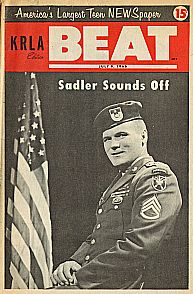
SSgt Barry Sadler appears on the cover of KRLA Radio’s “Beat” magazine, July 1966, Los Angeles, CA.


Sadler, meanwhile, became a symbol of American patriotism in a turbulent era.  His songs, however, didn’t really make political or social statements, only praise for the Green Berets and patriotic sentiments, which proved to have wide appeal.  In one July 1966 interview with Beat magazine, published by Los Angeles radio station KRLA, Sadler did offer some comments on the times and his musical preferences.  He acknowledged that he wasn’t particularly fond of rock ‘n roll music, calling it loud and not his style.  He preferred ballads and country music. 

Sadler told KRLA writer John Michaels that he disapproved of Vietnam War protests and the burning of draft cards.  He said such actions had provided part of the motivation for writing his “Ballad of the Green Berets,” a song that was also popular in communist East Germany, where it was banned. 

Beat magazine also noted that Sadler accepted no fees, or gave such fees to charity, when he traveled around the country performing in uniform with the Army.  However, on private tours in civilian clothes, plus his recording income, Sadler was then making an estimated $500,000 in earned income.  Sadler joined the USO tour for a time, but he would fade from the music scene and move on to other endeavors.

Cover of Barry Sadler’s 1967 autobiography, “I’m A Lucky One.” Click for book.
     And by 1967, the music had changed as well, as more songs were turning toward protesting the war.  In January 1967, a Stephen Stills song by the singing group Buffalo Springfield was released using the title “For What It’s Worth,”  also known from part of its verse as, “Stop, Children, What’s That Sound?”  That song became something of an anti-war anthem, as did any number of others expressing the general angst of the times, some with specific anti-war and/or peace themes. 

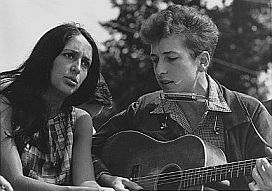
     Protest music had been in the air before and after Sadler’s “Green Berets” tune – including some songs by Joan Baez and Bob Dylan, as well as others such as Barry McGuire’s “Eve of Destruction” dating to July 1965.  There is, in fact, quite a cannon of protest music that came out at that time, as well as songs with patriotic themes and/or pro-military sentiments. 

“The Ballad of the Green Berets,” in any case, was certainly one of the more prominent examples of patriotic music in that era.  It was a song that hit the times and the public sentiment at just the right moment, with lyrics and appeal that made it a top hit and a giant commercial success, and certainly part of that period’s cultural milieu.


The Film

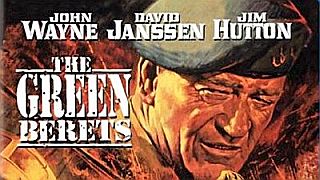
Cover art from recent Blue ray DVD version of John Wayne’s 1968 film, “The Green Berets.” Click for DVD.
     The final part of the Green Beret culture-fest in the 1965-1968 period came with the Hollywood film, The Green Berets, which also used a choral version of the Barry Sadler song.  Interest in making a Holly- wood movie on the Green Berets began when Columbia Pictures purchased the film rights to Robin Moore’s book even before the book was published.  The idea initially was to develop a story around the training of a Special Forces team and their deployment in Southeast Asia.  However, Columbia dropped the project after the U.S. Army put a number of conditions on the making of the film, plus the fact that public disfavor with the Vietnam War was then growing.  Still, another producer, David L. Wolper, purchased the film rights, but he backed out as well, much for the same reasons.  Wolper later did produce The Devil’s Brigade in 1968, a film that also depicted Special Forces soldiers.  Then came John Wayne.

John Wayne as Green Beret.
     Wayne had gone to South Vietnam in 1965, and had thought then about a film to honor the Special Forces men fighting there.  By then, Wayne already had a long history as an anti-communist.  In the 1950s he had joined Clark Gable,Walt Disney, James Stewart and other entertainers to aid the House Un-American Activities Committee in investigating alleged Communists working in the film industry.  He joined political organizations like the Motion Picture Alliance for the Preservation of American Ideals to support causes he deemed worthy.  He also played film roles which fit his political beliefs such as that in the 1952 film Big Jim McLain.

     In the 1960s, Wayne was bothered by the social unrest and rising protest over the war, and by 1966-67, he had purchased the film rights to Moore’s Green Berets book.  In 1967, he then wrote U.S. President Lyndon Johnson requesting military assistance to do the film.  Jack Valenti, an adviser to Johnson, told the President, “Wayne’s politics are wrong, but if he makes this film he will be helping us.”  Wayne would later tell Variety magazine,“I think our picture will help reelect LBJ because it shows that the war in Vietnam is necessary.”
                        – John Wayne
“I think our picture will help reelect LBJ because it shows that the war in Vietnam is necessary.”  Wayne was then still a prominent Hollywood movie star, having recently appeared, for example, in two World War II films — The Longest Day in 1962 and In Harms Way of 1963.  But Wayne still had trouble getting his Green Berets film into production.  The Army would not allow Robin Moore, The Green Berets author, to work on or be associated with the film. (However, in the end, the film was still advertised in ways that referenced the book).  In addition, Universal Pictures and Paramount Pictures would not film the movie, and Wayne’s preferred film composer refused to work on the project as well.  But Wayne, a conservative and strong anti-communist, was determined to make a pro-war film.  He finally used his own money and production company to make the film.  Wayne, also the film’s director, shot much of The Green Berets in the summer of 1967 at Fort Benning, Georgia.  The U.S. Army provided several helicopters and a light transport for use in the film, while the U.S. Air Force also supplied two C-130 transports.  Authentic uniforms and jungle fatigues were also supplied to the actor by the U.S. Army.  Warner Brothers released the film on the 4th of July, 1968, but Wayne had attended an earlier special premier in Atlanta on June 25, 1968.

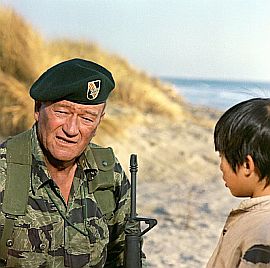
John Wayne with young Vietnamese boy, Hamchunk, in part of final scene from 1968 film, “The Green Berets.”
     The film begins with a choral version of “Ballad of the Green Berets” that plays during the opening title frames.  As the music tails off, the first scene shows a group of Special Forces soldiers putting on a stateside demonstration for journalists, including actor David Janssen, who plays a skeptical journalist, not convinced of the war’s merit.  Colonel Mike Kirby, played by John Wayne, suggests Janssen should go to Vietnam and see for himself.  In Vietnam, Kirby heads up a bunch of young, tough Green Berets who hold their own and then some in battle, and also capture an important enemy general.  Skeptical reporter Janssen meanwhile, becomes a believer and patriot as he witnesses the Green Berets’ combat abilities and humanitarian actions in the field.  He even files glowing news stories, though worried his liberal editors may fire him for his pro-involvement accounts.  There are also some human touches in the film, including an orphaned Vietnamese boy named Hamchunk and his dog, wandering around a Green Beret camp, where a young Sgt. Petersen, played by Jim Hutton, takes the kid under his wing and protects him.  Hamchunk’s dog, however is killed in one scene.  And Petersen doesn’t come back one day in the returning helicopters, as Hamchunk waits for his friend.  Wayne and his forces, however, have the enemy in retreat as the film winds down.  A final scene has Hamchunk with Wayne on the beach at sunset, with the kid asking Wayne “what will happen to me now?”  Wayne gives the kid Petersen’s Green Beret, saying, “You let me worry about that, Green Beret.  You’re what this thing’s all about.”  The two walk off together along the beach, hand-in-hand.

     Although The Green Berets made money for Warner Brothers, John Wayne reportedly lost “a small fortune” on the project.  And that wasn’t all.  Critics savaged the film.  Wayne, who was sometimes known as “America’s soldier” from his many fine WWII film roles, was roundly criticized for an “errant sense of patriotism” and worse in the film. In 1968, evening news TV broadcasts of the war  contrasted sharply with John Wayne’s film version of the Green Berets. Many viewed his film as propaganda and an oversimplification of the Green Berets story and covert military operations in Southeast Asia.  And certainly by mid-1968, evening  news TV broadcasts of the Vietnam War had been exposing Americans to the horrors of that war for months.  These broadcasts contrasted sharply with Wayne’s film version, which many saw as romantic, “gung-ho,” and out of touch with the realities of the Vietnam conflict.  By then, the anti-war movement was also much stronger.  In fact, at the film’s opening in New York, Los Angeles, Paris, and London, demonstrations were held.  Still, the controversy was believed to have helped the film.  Wayne’s film had also arrived right the middle of one of America’s most turbulent and contentious political seasons – the 1968 presidential elections, infused primarily by the Vietnam War.  Sitting Democratic president Lyndon Johnson, wounded badly by the war,  had surprised his party by deciding not to run for re-election in March of that year.  And Democratic candidate Robert F. Kennedy would be assassinated the night of his California primary victory, June 5th, 1968.  In August of that year came the raucous and bloody Democratic National Convention in Chicago.  John Wayne by then was a supporter of Republican candidate Richard M. Nixon and would speak at the Republican National Convention that August in Miami, Florida.  As for The Green Berets film, nearly twenty years later in 1986, Oliver Stone, who had served in Vietnam, would make the film Platoon, which for many viewers presented a more realistic portrayal of the Vietnam War and American involvement there.  John Wayne, meanwhile, returned to acting and starred in another 1968 film that fall, Hellfighters, about oil well fire-fighter Red Adair.  In 1969, Wayne would win the Best Actor oscar for his role in True Grit.


Green Beret comic book, Jan 1967.
In Pop Culture

     The 1965-1968 surge of popular interest in the Green Berets and Special Forces wasn’t the first or the last time such interest would occur in American culture.  It was, however, one of the most intense and wide-ranging such episodes, rising to fad proportions in some cases, including not only the book, music and film already reviewed, but also newspaper comic strips and comic books, action figures and toys, “Men of the Green Berets” trading cards, other Green Beret songs ( Nancy Ames’ “He Wore The Green Beret,”1966), and one or two other movies or TV shows that used or made reference to Green Beret characters.  Prior to Robin Moore’s first book in 1965, which kicked off the 1960s surge, there had been only snippets of Green Beret reference and image in TV shows, toys, and other venues.  And as the public disenchantment over the Vietnam War grew, the Green Berets went out of favor in the late 1960s and 1970s.  However, they would return in popular culture in the 1980s with Sylvester Stallone and the “Rambo” movie franchise.  That film series got its start in 1982 with the film First Blood (based on the 1972 David Morrell novel of that name), which introduced the John Rambo character, a Special Forces soldier who has a hard time adjusting to civilian life after his Vietnam tour of duty.  In the 1982-2008 period, the Rambo series and its tie-in products became highly successful, with four films to date.  And there have been various other TV shows and films that have also referenced or featured Special Forces characters.

Robin Moore’s 2003 book, “The Hunt For Bin Laden.” Click for book.


PostScript

     Robin Moore, author of The Green Berets book in 1965, would return to Special Forces writing with other books in later years on global terrorism and Special Forces operations in Afghanistan and Iraq.  In 2003, he published The Hunt for Bin Laden, an account of how a vastly outnumbered U.S. Army Special Forces unit in Afghanistan in late 2001, working alongside the Northern Alliance, were able to overcome a force of nearly 100,000 entrenched al-Qaida and Taliban. This book also became a New York Times best seller.  It was followed in 2004, by Hunting Down Saddam: The Inside Story of the Search and Capture, which covered some crucial operations in the Iraq war.

At the age of 78, Moore had gone to Iraq and followed a Special Operations task force there working with Kurdish armed forces, as well another task force group that was infiltrating southern Iraq. This book also covered some infantry operations at Tikrit and Saddam Hussein’s capture outside Tikrit.  Critics felt the book contributed knowledgeable portrayals of Special Forces work in Iraq and how Special Ops were being integrated with regular units.

Barry Sadler wrote 22 "Casca" books in the 1980s. Click for book.
     Barry Sadler, meanwhile, who rose to heights of fame and fortune with his Green Berets song in 1966, disappeared from the music scene a few years after his initial success.  However, he went on to publish a series of paperback books – called the Casca series – focused on the life and continuing adventures of Casca Rufio Longinus, a soldier in the Roman legions.  Casca is cursed to immortality by Jesus Christ for driving a spear into him at his crucifixion on Calvary or Golgotha outside the ancient city of Jerusalem.  He is thereafter doomed to wander the Earth aimlessly, always as a soldier.  Sadler ended up writing some 22 of the Casca novels between 1979 and 1989, a series later continued by other authors.  Sadler was also an occasional contributor to Soldier of Fortune magazine.  At one point in the late 1970s, however, Sadler was convicted of voluntary manslaughter for shooting another person in a dispute over a woman, but after appeal, and due to circumstances in the case, his sentence was reduced to time served, which at the time was less than month.  Sadler moved to Guatemala City in the mid-1980s, but was shot in the head in a taxi in 1988 under less than fully explained circumstances and never fully recovered.  Friends from Soldier Of Fortune magazine had him hospitalized in the U.S., where he remained in a coma for several months.  He died at the Alvin C. York Medical Center in Murfreesboro, Tennessee in November 1989.  Barry Sadler was 49 years old.

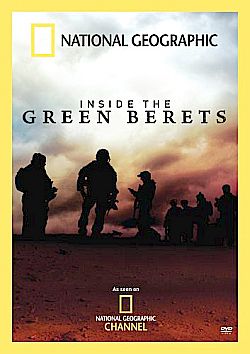
Cover for National Geographic DVD film of 2007, “Inside the Green Berets.” Click for DVD.
     The Green Berets, meanwhile, have remained a subject of more serious media attention in recent years.  In 2007, the Pentagon allowed the National Geographic Channel to chronicle the lives of Green Beret Special Forces in Afghanistan for ten days.  National Geographic filmed a division of the U.S. Army Special Forces charged with protecting local civilians from the Taliban.  Part of the film, entitled Inside The Green Berets, shows Green Berets at work at a remote outpost in south-central Afghanistan known as Firebase Cobra.  The documentary film was released in November 2007 as a DVD and is also available at the National Geographic Channel and website.

     In October 2008, an explanatory and promotional Green Beret film, entitled Why We Fight Now, was released by the U.S. Army, in part, to help explain counterinsurgency and the new kind of war being fought in Afghanistan.  Initially, this film was co-produced by Frank Capra Jr. (who died just as the film was being completed). Capra’s father, famed Hollywood filmmaker Frank Capra, had also done a World War II film series for the U.S. War Department titled, Why We Fight.  The 2008 version features Green Berets talking about their service and responsibilities in the new era of fighting.  The film is directed by Mark Benjamin, a 62-year-old Manhattan filmmaker whose life was altered by the 9/11 terrorist attacks.  “I’ve always been anti-war and never thought I would ever work for the military,” Benjamin has stated about his latest project.  “Because of Sept. 11,” he explained, “I became this liberal hawk.  My own political perspective on global conflicts, democracy, capitalism, human rights — everything changed.  I certainly became more militant.  I think we should go after terror wherever it is, you know.  I support that.”  Why We Fight Now was broadcast on the Armed Forces network on September 11, 2008, and the Army was also then considering a broader release.  Versions of the film can be downloaded online, and clips can also be found through Google query or on You Tube.

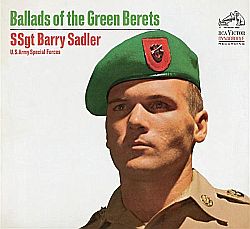
Barry Sadler on album cover for “Ballads of The Green Berets,” which came out about the same time as the single. As of 2011, both single & album have sold more than 9 million copies. Click for CD.

     Also of possible interest at this website are the following stories: “The Saddest Song,” which features, in part, a section on Oliver Stone’s 1986 Vietnam War film, Platoon; “Kennedy History, 1954-2013,” a topics page of additional stories on JFK and other Kennedys; two stories on the 1968 presidential campaign – one each on the Democrats and Republicans that year; and, “Four Dead in O-HI-O,” on the 1970 Kent State protests and shootings of students there during the Vietnam War.

See also “The Pentagon Papers, 1967-2018,” about the top secret Pentagon history of the Vietnam War that was leaked to the New York Times and Washington Post in June 1971, touching off one of the country’s fiercest battles over freedom of the press vs. government secrecy.

Thanks for visiting – and if you like what you find here, please make a donation to help support the research, writing, and continued publication of this website. Thank you. – Jack Doyle


Please Support
this Website

Donate Now

Thank You

____________________________________

Date Posted: 19 May 2011
Last Update: 20 July 2019
Comments to:  jackdoyle47@gmail.com

Article Citation:
Jack Doyle, “The Green Berets, 1965-1968,”
PopHistoryDig.com, May 19, 2011.

Twitter: JackDoyle/PopHistoryDig
BlueSky: jackdoyle.bsky.social

____________________________________


Sources, Links & Additional Information

Marc Leepson’s book on Barry Sadler, “Ballad of The Green Beret,” with subtitle that adds: “From The Vietnam War and Pop Stardom to Murder and An Unsolved, Violent Death”. Click for book.
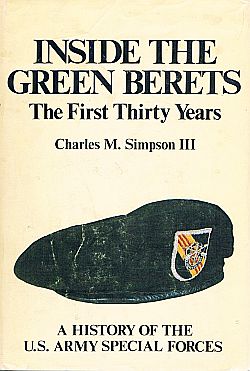
Charles Simpson’s history of the Green Berets, Presido Press, 1983. Click for book.
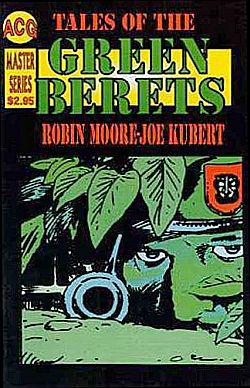
One of a series of paperback books that compiled the 1960s' Green Berets comic strips of Robin Moore and artist Joe Kubert. Click for related book.

Hanson W. Baldwin,  “Book on U.S. Forces in Vietnam Stirs Army Ire,” New York Times, May 29, 1965, p. 4.

Louis Calta, “Wounded Veteran Writes Song on Vietnam War; ‘Ballad of Green Berets’ Best-Selling Record,” New York Times, February 1, 1966, p. 27.

Jack Smith, “Green Berets Offer Vietnam ‘Hero Image’,” Los Angeles Times, March 11, 1966, p. A-1.

Associated Press, “20 at U. of Minnesota Fight Broadcasting of War Song,” New York Times, March 2, 1966.

This Day in History, “March 5, 1966: Staff Sergeant Barry Sadler Hits #1 With ‘Ballad Of The Green Berets’,” History.com.

John Michaels, “Sadler Sounds Off,”Cover Story, The Beat, KRLA-Radio Magazine (Los Angeles, CA),Vol. 2 No. 17, July 9, 1966.

“Ballad of the Green Berets,” Wikipedia.org.

Robert Windeler, “Defiant Wayne Filming ‘Green Berets’,” New York Times, September 27, 1967, p. 41.

Renata Adler, “Screen: ‘Green Berets’ as Viewed by John Wayne,” New York Times, June 20, 1968.

“Far From Viet Nam and Green Berets,” Time, Friday, June 21, 1968.

Roger Ebert, “Film Review: The Green Berets,” Chicago Sun-Times, June 26, 1968

William Rice, “Wayne Leads Green Beret Into Vietnam,” Washington Post/Times Herald, June 27, 1968, p. 53.

UPI, “‘Berets’ Triggers Sydney Protest,” Washington Post/Times Herald, August 3, 1968, p. A-3.

“200 Picket London Opening Of Wayne’s ‘Green Berets’,” New York Times, August 16, 1968.

Gene Roberts, “Green Berets Pleased by Renewed Attention; John Wayne Film and Recent Attacks on Their Camps Seem to Raise Spirits,” New York Times, August 31, 1968, p. 4.

“Theater Is Closed Over ‘Green Berets’,” Washington Post/Times Herald, August 31, 1968, p. A-14.

“Italians Protest ‘Green Berets’,” Washington Post/Times Herald, September 22, 1968, p. A-19.

“‘Green Berets’ Film Banned in Beirut,” Washington Post/Times Herald, September 27, 1968, p. B-4.

David Bowling, BlogCritics.org, “Music Review: S Sgt. Barry Sadler – Ballads Of The Green Berets,” SeattlePI.com, Tuesday, April 26, 2011.

“Barry Sadler,” Wikipedia.org.

James E. Perone, Songs of the Vietnam Conflict (Music Reference Collection), August 30, 2001.

“The Green Berets” (film), Wikipedia.org.

“Biography for John Wayne,” The Internet Movie Data Base.

David C. Barnett, ” ‘Next Stop Is Vietnam’: A War In Song,” NPR.org, November 11, 2010.

Randy Roberts and James Stuart Olson, John Wayne: American, New York: Simon and Schuster,1995.

“United States Army Special Forces in Popular Culture,” Wikipedia.org.

Robin Moore, The Hunt for Bin Laden, New York: Random House Publishing Group, March 2003, 400pp.

Robin Moore, Tales of the Green Berets (Signet, 1966), 144pp. Click for copy.

Jon Kalish, “Film Puts Spotlight On Green Berets,” NPR.org , December 1, 2009 (Review of 2009 Green Beret film, Why We Fight Now; also includes links to six 10-minute clips of Why We Fight Now on YouTube ).

U.S. Army Special Forces Command (Airborne), Press Release, “USASFC(A) Premiers New Documentary – ‘Why We Fight Now: The Global War on Terror’,” October 2, 2008.

“The Casca Books,”Wikipedia.org.

“Why We Fight Now,” Download Site.

_______________________________


“Big Chill”Promo
1983-1998:Video


Note:  This is the film trailer for 1983’s The Big Chill.  It was updated in 1998,
the film’s 15th anniversary year, as part promo for the release of the remas-
tered DVD edition.  The trailer offers a good, quick overview of the story
and its characters, plus a sampling of the excellent 1960s music used throug-
hout the film.

Story:  The Big Chill is a film about eight former 1960s’ college friends who
gather for an unscheduled reunion following a friend’s untimely suicide.  It’s
an introspective film featuring a weekend of soul searching by the group of
former college friends.  The actual and metaphorical “big chill” in the film is
the death of their friend and their own “ten-years-later” reality check on what
each of them have or have not become since their college days.  The cast in-
cludes: Glenn Close, William Hurt, Tom Berenger, Jeff Goldblum, Kevin Kline,
Meg Tilly, Mary Kay Place, and JoBeth Williams.  For many baby boomers
who first saw it in 1983, it was the film’s soundtrack – an evocative collection
of original 1960s rock ‘n roll tunes – that was especially memorable and endur-
ing, becoming a best seller.  And that fact was not lost on Madison Avenue.


“Big Chill Marketing”

See related story at this website on how The Big Chill became something of a
landmark in the history of advertising, especially how the movie’s soundtrack
helped to spur the use of original, pre-existing rock songs in advertising – then
a relatively rare practice.  The story also covers the making of the film, lists
the songs used throughout the film, and explores some of the history of music
use in advertising and marketing – from Coca-Cola’s use of pop music, to music
fans’ dismay over hearing their favorite songs used by product pitchmen.

Please Support
this Website

Donate Now

Thank You


Video Source

The source for this video in found at YouTube.


____________________

First Posting:  22 October 2008
Last Update:  17 November 2018
Comments to:  jdoyle@pophistorydig.com

Article Citation:
Jack Doyle, “Big Chill Promo, 1983-1989: Video,”
PopHistoryDig.com, October 22, 2008.

_____________________________


“Strange Fruit”
1939-2020s

Billie Holiday, jazz singer, circa 1930s.
     In 1939, blues and jazz singer Billie Holiday performed at a New York city night spot called Café Society. The song she sang that evening was unlike any other that had come before it. “Strange Fruit” was its title, and the lyrics, which appear below, described the lynching of black people, a savage practice which had, at the time, continued to occur in several areas of the U.S. “Strange Fruit” was not popular fare, but eventually, with Billie Holiday’s voice and presence, it permeated mainstream culture in an unsettling way, becoming a song of protest and a song that got attention.

     Billie Holiday by 1939 was a known singer in the New York jazz scene who had done brief stints as a big band vocalist with Count Basie in 1937 and Artie Shaw in 1938. 

With Shaw’s band, she became one of the first black women to work with a white orchestra. She also had a number of popular songs by then, dating to 1933 and one of her first recordings, “Riffin the Scotch,” which she recorded with Benny Goodman. 

In fact, between 1934 and 1939, Billie Holiday had more than 30 singles that were later considered to be in the Top 20 of that era. Yet, despite her output and popular songs, she was not then a mainstream star; not a household word. But “Strange Fruit” was about to change that. However, the song was clearly a departure from her earlier work, as it had a very discomforting message. Still, “Strange Fruit” was the song that became something of dividing line in Holiday’s career, making her popular, and some say, changing her style as well. More on Holiday and her career in a moment. First, some background on the song.


Poem-to-Song

     “Strange Fruit” was first written as a poem by a Jewish high-school teacher from the Bronx, New York named Abel Meeropol, who also used the name Lewis Allan.  Meeropol wrote his poem — about the 1930 lynching of two black men in Marion, Indiana – after seeing Lawrence Beitler’s photograph of the lynching.  He first published his poem in the January 1937 edition of The New York Teacher, a union magazine.  He later set the poem “Strange Fruit” to music and his song gained some success as a protest song in the New York area, performed at one point by black vocalist Laura Duncan at Madison Square Garden.

August 7, 1930 photo of Thomas Shipp & Abram Smith, lynched in Marion, Indiana, for allegedly murdering a white factory worker and raping his female companion.
     In Greenwich Village, New York, Barney Josephson was the owner of a recently opened nightclub named Café Society, an integrated club that soon attracted an anti-establishment audience of college students, black intellectuals, and Jewish liberals. Band leader Benny Goodman, and a well-connected music writer/ jazz advocate named John Hammond (of the Vanderbilt family), were among the club’s early investors.

Barney Josephson had either heard of “Strange Fruit” from friends, or was given a copy by Meeropol himself. In any case, he was quite taken with the song’s imagery and gave it to Billie Holiday, who was then performing at his club, hired at the suggestion of John Hammond.

Holiday at first, was somewhat troubled by the song and put off by its theme, and told Josephson she wasn’t sure she wanted to sing it and would think it over. But she soon agreed to perform the song at Café Society; the main room there held about 220 people. She performed the song for the first time in January 1939. She continued using the song in her nightclub routine, although she was somewhat fearful of retaliation given the song’s charged content in those times.

     Josephson, meanwhile, recognized the impact of the song and insisted that Holiday close all her shows with it.  In her performance, just as the song was about to begin, waiters would stop serving, the club lights would go down, and a single spotlight would focus on Holiday as she began.  During the musical introduction, Holiday would stand with her eyes closed – and as some saw it, as if she were evoking a prayer.  With the final note of the song, all lights in the club would go dark, and when they came back on, Holiday would be gone from the stage.  According to reports from band members, after performing the song Holiday would sometimes break down emotionally.  “Strange Fruit,” in any case, became a regular part of Billie Holiday’s live performances, and the song’s reputation, at least initially, grew from her nightclub act.  However, making a vinyl recording of the song for a larger public audience was another matter.

“Strange Fruit”
1939

Southern trees bear a strange fruit
Blood on the leaves and blood at the root
Black bodies swingin’ in the Southern breeze
Strange fruit hangin’ from the poplar trees

Pastoral scene of the gallant South
The bulging eyes and the twisted mouth
Scent of magnolia, sweet and fresh
Then the sudden smell of burning flesh

Here is the fruit for the crows to pluck
For the rain to gather, for the wind to suck
For the sun to rot, for the tree to drop.
Here is a strange and bitter crop.


Music Player
“Strange Fruit” – Billie Holiday

     Holiday had approached her own record label, Columbia, about recording the song. Columbia refused, fearing a backlash from Southern record retailers and negative reaction from affiliates in Columbia’s co-owned CBS radio network.

She then turned to a friend, Milt Gabler, as Gabler’s record label, Commodore, produced alternative jazz. Gabler worked out an arrangement in 1939 with another label, Vocalion Records, to record and distribute “Strange Fruit.” 

Holiday recorded the song in Commodore’s studios at two sessions – one in April 1939 and again later, in 1944. She would also record it at a later date for the Verve record label.  “Strange Fruit” became controversial, and over the years, Holiday’s biggest selling record. But not at first. In fact, the song was banned on many radio stations. (And beyond that, federal drug agents would come after her and order her to quit singing “Strange Fruit.” More on this at “Targeting Billie” sidebar later below.)

     Although the Commodore release of “Strange Fruit” did not get extensive radio play, the record sold well, which Gabler attributed in part to the record’s other song on the flip side, “Fine and Mellow,” which was a jukebox hit. But “Strange Fruit” also rose on the charts, according to one source, peaking at No. 16 on July 22, 1939. The song also helped put Billie Holiday in the national spotlight. “‘Strange Fruit’ was to Billie what ‘Of Human Bondage’ was to Bette Davis or ‘The Petrified Forest’ to Humphrey Bogart,” wrote Michael Brooks in 1991 liner notes to a Billie Holiday collection. “It brought her national recognition, fame and a very modest fortune. It also attracted celebrity hunters of the worst sort, plus the type of men who were interested in nothing but a free ride…”  But some critics, Brooks among them, also believed that “Strange Fruit” changed Holiday’s style, and led her to take on other concerns of the oppressed with her music. “She began to live the part and see herself as the living symbol of injustice and oppression,” wrote Brooks. This change in Holiday’ style, lamented by some, was a gradual process in which she began to interpret her songs rather than just naturally sing them. Yet for many fans and critics, it was her musical interpretation and her singular vocal style in marking those interpretations, that made Holiday’s work so distinctive and impressionable.

Billie Holiday’s “Strange Fruit,” here on the Commodore label, recorded April 1939. Click for digital.
     “Strange Fruit” remained in Holiday’s repertoire for twenty years.  She persisted in using it, in part, she would later say, because it reminded her of what she believed happened to her father in 1937. (Clarence Holiday, a musician himself then on tour in Texas, developed a heavy cold in his travels that turned to pneumonia. However, he died needlessly at the age of 39 after he was denied medical treatment at a Dallas hospital because he was black.) Not everyone got the message in “Strange Fruit,” however. In fact, decades after she had first performed the song, Holiday would express frustration with those not understanding the song’s message. In one 1958 interview, explaining how some folks missed the point, Holiday said: “They’ll ask me to ‘sing that sexy song about the people swinging’.”

     David Margolick, who published a book about Holiday and the song in April 2000, explains that “Strange Fruit” has defied easy musical categorization over the years, and consequently, has not received thoughtful study by social historians and other analysts. “It’s too artsy to be folk music, too explicitly political and polemical to be jazz,” he explains. But his book – Strange Fruit: Billie Holiday, Cafe Society, And An Early Cry For Civil Rights – provides an in-depth look at the song, its artist, and the times. “Surely,” he says, “no song in American history has ever been guaranteed to silence an audience or to generate such discomfort.”  In 2002, the Library of Congress added the song to the National Recording Registry. “Strange Fruit” is also included on the “Songs of the Century” list, an education project of the Recording Industry Association of America, the National Endowment for the Arts, and Scholastic, Inc. — a project that aims to “promote a better understanding of America’s musical and cultural heritage” in American schools.


Billie Holiday shown on an image used for an album collection of her greatest hits. Click for album CD.


Billie Holiday

     Nicknamed “Lady Day” by her friend and musical partner, saxophonist Lester Young, Billie Holiday became an influential force in jazz and popular music from the mid-1930s through the 1950s.  She had a novel way of phrasing and manipulating a song’s lyrics when she performed – a unique vocal style and tempo that was inspired by the jazz music itself.  Holiday became known for that style, and was admired worldwide for her deeply personal, intimate approach to her music.  Critic John Bush wrote that she “changed the art of American pop vocals forever.” 

Holiday co-wrote a share of her songs, and several of them became jazz standards, such as “God Bless the Child”, “Don’t Explain,” “Fine and Mellow,” and “Lady Sings the Blues.”  She also became famous for singing jazz standards including “Easy Living,” “Summertime,” and “Good Morning Heartache.”

Billie Holiday performing. Click for related wall art.
     Billie Holiday was born in April 1915, and her birthplace was believed to be Philadelphia, Pennsylvania, although there is some uncertainty about her records.  She was then named either Eleanora Fagan or Elinore Harris, according to differing sources.  Her early childhood, in any case, was difficult and unsettled, as she was cared for by a succession of relatives and others, mostly in  Baltimore, Maryland.  In 1925, at about age nine, truancy from school landed her in a reform school for troubled African American girls.  Some reports say she was raped at age 10 by a neighbor.  By age 14 she was living in a brothel with her mother who had turned to prostitution in order to survive.  Billie too, was used for prostitution.  Arrested with her mother when the brothel was raided, only more hard times appeared to be in Billie’s future.

     Through her travail, however, music had offered her some refuge, as she had listened to the music of Bessie Smith and Louis Armstrong.  In 1929, with an urge to try it for herself, she teamed up with a neighbor, tenor sax player named Kenneth Hollan, and began performing at clubs in New York city.  In 1931, she began using the name “Billie Holiday,” taken from a combination of the name her favorite actress, Billie Dove, and her father, Clarence Holiday, who had played with Fletcher Henderson’s band as a guitarist.  By the end of 1932, at the age of 17, she began working at a club called Covan’s (also known by some as Monette’s) on West 132nd Street, where she was heard by Benny Goodman, John Hammond, and others.  The first official recognition of her talents seems to have come from Hammond who heard her at Covan’s and wrote in the April 1933 issue of Melody Maker that she was “a real find,” calling her “incredibly beautiful and sings as well as anybody I ever heard.”  Billie Holiday made her recording debut with Benny Goodman in late 1933, producing two songs: “Your Mother’s Son-In-Law” and “Riffin’ the Scotch.” The latter reached No. 6 on the pop charts in late 1933 and early 1934.

Billie Holiday in a Wm. T. Gottlieb photo with her famous and beloved dog, “Mister,” New York, Feb 1947. Click for photos.
     With her expressive and sometimes melancholy voice, Holiday went on to record and perform with a number of jazz greats in the 1930s – pianist Teddy Wilson, saxophonist Lester Young, Count Basie’s orchestra, Artie Shaw and his orchestra, and others.  She also made several singles with Goodman, including “What a Little Moonlight Can Do” and “Miss Brown to You.”

     In 1935 she appeared in Duke Ellington’s film short Symphony in Black, which featured his extended piece ‘A Rhapsody of Negro Life’.  It won an Academy Award as the best musical short subject and also helped introduced Holiday to a broader audience, as she played a woman being abused by her lover and sang “The Saddest Tale.”  In 1933-34, Holiday was signed to Brunswick Records by John Hammond to record current pop tunes with Teddy Wilson, converting them to the new “swing” style for the growing jukebox trade.  It was 1937 when she joined Count Basie’s band, then on tour.  This was also when Lester Young – who played tenor saxophone and became one of Holiday’s closest friends – gave her the nickname “Lady Day.”  In return, she called him “Prez,” which meant he was pretty special in her book, too.  The two produced some near-perfect musical collaborations, according to critics – heard on songs like “This Year’s Kisses” and “Mean To Me.”

Screen shot from 1972 Billie Holiday film (w/Diana Ross) depicting life on the road in the 1930s w/ band, which for a black woman among mostly men, had its share of racial & privacy indignities. Click for DVD.
     In 1938, she worked with Artie Shaw’s band, becoming one of the first female African American vocalists to work with a white orchestra. Still, in traveling with Shaw’s orchestra and others, Holiday suffered many racial indignities on the road from hotels and restaurants that would not admit or serve her. 

Even with Shaw’s orchestra, some backers and promoters objected to Holiday for racial reasons, and others for her unique vocal style. At the time, some listeners were not ready for the interpretive liberties she took with old standards. 

In New York in 1938, Artie Shaw’s band was playing at the upscale Lincoln Hotel, with nationwide broadcasts over the RCA radio network. However, some of the sponsors had complained about Billie “ruining the tune,” and so, she was limited to one or two songs during the hour show. 

In addition to this, the owner of the Lincoln Hotel objected to Billie sitting at the bar or mixing with customers, and was also told she could only use the tradesmens’ entrance and the freight elevator. Although Shaw and his bandmates were outraged over Billie’s treatment, and objected to the owner, Billie had to comply. In any case, she ended up leaving Shaw’s orchestra. By then her music was becoming recognized nationally. 

In September 1938, Holiday’s single “I’m Gonna Lock My Heart” ranked 6th among most-played songs that month. Her record label, Vocalion, listed the single as its fourth best-seller in that same period, with others later ranking it as the No. 2 most popular song of that time. But by the late 1930s, Billie Holiday was out her own, and that’s when she began freelancing and performing at the Café Society nightclub. In addition to debuting “Strange Fruit” there, she also debuted “God Bless the Child” there, a song which she also co-wrote that became a hit and sold more than million copies.

Billie Holiday performing, New York city, Feb 1947. Click for photo.
     Other Holiday songs were about her relationships, such “T’ain’t Nobody’s Business if I Do,” “My Man,” and others. Some were songs of destructive and abusive relationships which had come her way.  By the early 1940s, Holiday was into alcohol and smoking opium. Her recording career, meanwhile, had continued with Decca Records, putting out more popular songs. 

In September 1943, Life magazine offered that Holiday “has the most distinct style of any popular vocalist and is imitated by other vocalists.” As noted by writers, music historians, and biographers such as Bud Kliment and Arnold Shaw, Holiday’s success in the early 1940s was partly due to her becoming a torch singer, as many people identified with her songs about loneliness and lost love, especially given the separations of World War II then affecting millions.

“Billie’s tortured style, the sense of hurt and longing,” observed historian Arnold Shaw, “may have been a perfect expression of what servicemen and their loved ones were feeling.”

     In 1944, Holiday garnered her first jazz critics’ poll victory – Esquire magazine’s “Gold Award” for best female vocalist.  In 1945 she produced, among others, the No.5 R&B hit “Lover Man.”  However, when her mother died in October 1945, Holiday’s use of alcohol and drugs escalated.  Because of her narcotics conviction, Holiday’s New York “cabaret card” – a license to perform in nightclubs – was revoked.Still, she remained a major star in the jazz world, and also appeared in a minor role as a maid, along with her idol, Louis Armstrong, in the 1947 film, New Orleans.  But also that year, Holiday was arrested and convicted for narcotics possession, sentenced to one year in a federal rehabilitation prison.  In 1948, just ten days after serving her term and leaving prison, she performed to a packed house at Carnegie Hall on March 27th.  She sang about 30 songs during that appearance.  But beyond such high profile concerts, Holiday’s life as a working singer was severely restricted.  Because of her narcotics conviction, Holiday’s New York “cabaret card” – a license to perform in nightclubs – was revoked.  One New York club, however, The Ebony Club, allowed her to perform, as the club’s owner, John Levy, would became her boyfriend and manager by the end of the 1940s.  Levy, however, was among those men in Holiday’s life who took advantage of her.  Around this time as well, she was arrested on narcotics charges, but later acquitted.

1956 Billie Holiday autobiography with NY Post writer William Dufty, published by Doubleday. Click for book.
     Still, hard living had taken a toll on Holiday’s voice and health through the 1950s, but she continued to tour and record. In 1952, she began recording for Norman Granz, the owner of several small jazz record labels.  Two years later, in 1954, Holiday had a hugely successful European tour. In 1956, renewed public attention came her way with the release of her life story in print, Lady Sings the Blues, a book written by William Dufty, although parts of it were later questioned for accuracy. On November 10, 1956, in New York city, she gave two concerts at Carnegie Hall before packed audiences. Around this time, Holiday became involved with Louis McKay.  The two were arrested on narcotics charges in 1956, and they married in Mexico the following year. Reportedly, like other men in her life, McKay used Holiday’s name and money to advance himself.

     In 1957, Billie Holiday performed at the Sugar Hill nightclub in Newark, New Jersey and the Newport Jazz Festival in Rhode Island.  And despite trouble she had been experiencing with her voice, she managed to give an impressive performance on the 1957 CBS television broadcast, The Sound of Jazz.  This one-hour TV show, which aired on December 8, 1957, was one of the first major programs featuring jazz on American television.  It brought together an all-star cast of 32 leading jazz musicians including: Count Basie, Lester Young, Ben Webster, Jo Jones and Coleman Hawkins, Henry “Red” Allen, Vic Dickenson, Roy Eldridge, Pee Wee Russell, and younger musicians such as Gerry Mulligan, Thelonious Monk, and Jimmy Giuffre.  But one of the high points of the show was the performance of “Fine and Mellow,” reuniting Billie Holiday and her old friend Lester Young, who played the first solo.  Music critic and writer Nat Hentoff, who was also involved with the telecast, recalled that when Young rose to play his part:

“… he played the purest blues I have ever heard, and [he and Holiday] were looking at each other, their eyes were sort of interlocked, and she was sort of nodding and half–smiling.  It was as if they were both remembering what had been… And in the control room we were all crying…”

The Billie Holiday album “Lady in Satin” was originally recorded in 1958, and reissued in 1997. Click for CD.
     Although Billie Holiday’s recordings and record sales had suffered in later years, in 1958 she recorded Lady in Satin with the Ray Ellis Orchestra for Columbia.  That album showcased Holiday’s by then, rougher-sounding voice which still, nonetheless, could convey emotional intensity.  Ellis himself would later comment on Billie’s performance at the time the album was recorded:

“…I would say that the most emotional moment was her listening to the playback of “I’m a Fool to Want You.”  There were tears in her eyes… After we finished the album I went into the control room and listened to all the takes.  I must admit I was unhappy with her performance, but I was just listening musically instead of emotionally.  It wasn’t until I heard the final mix a few weeks later that I realized how great her performance really was.”

     On March 15, 1959, Billie’s old friend, Lester Young, died in New York at the age of 49.  Young’s passing was taken very hard by Holiday, then believing her own time was limited. She gave her final performance in New York City on May 25, 1959.  Not long after, Holiday was admitted to the hospital for heart and liver problems. She was addicted to heroin at that point was very weak from her illnesses. On July 17, 1959, Holiday died from alcohol- and drug-related complications. She was 44 years old. Her bank account at the time recorded a few dollars at best, though royalties due her at that year’s end totaled some $100,000.


“Targeting Billie”
U.S. Bureau of Narcotics

1930. Harry Anslinger, when he became Commissioner of the U.S. Bureau of Narcotics.
Turns out, the federal government came after Billie Holiday, both as a drug user and for performing her song, “Strange Fruit.” One federal official in particular, Harry Anslinger, beginning in the early 1940s, reportedly targeted Holiday in a years-long drug surveillance and harassment campaign that some believe contributed to her death.

Anslinger served as the first commissioner of the Federal Bureau of Narcotics – a post he filled after first serving as a federal prohibition enforcer. Once prohibition ended he then became the nation’s first drug czar in 1930, remaining in that position for 32 years, from the Hoover Administration through the Kennedy years, until 1962.

A rabid anti-marijuana and anti-drug crusader, and also a racist who sought to convict high profile jazz musicians, Anslinger would develop a particular vendetta against Billie Holiday. Sometime in the 1940s, it appears, Anslinger had warned Holiday she should stop performing her song, “Strange Fruit.” Holiday refused, which moved Anslinger to come after her all the more, assigning undercover agents to befriend her, plant drugs on her person or at her residence, recruit informers to betray her, and finally prosecute her for drug possession.

A 2015 book by Johann Hari, Chasing the Scream: The First and Last Days of the War on Drugs, includes profiles of Anslinger and his campaign against Holiday. Anslinger reportedly made numerous racist observations about African Americans and that black jazz musicians were especially dangerous. He charged that jazz, in particular, was “Satanic” music, created under the influence of marijuana. In his book, Hari would write:

…Jazz was the opposite of everything Harry Anslinger believed in. It is improvised, and relaxed, and free-form. It follows its own rhythm. Worst of all, it is a mongrel music made up of European, Caribbean and African echoes, all mating on American shores. To Anslinger, this was musical anarchy, and evidence of a recurrence of the primitive impulses that lurk in black people, waiting to emerge…

2021 film, “The United States vs. Billie Holiday,” includes story of government surveillance of Billie Holiday. Click for Amazon.
Anslinger’s bureau and agents monitored jazz performers such as Charlie Parker, Louis Armstrong and Thelonious Monk and hoped to put them in jail for drug offenses. At one point he wrote to his agents: “Please prepare all cases in your jurisdiction involving musicians in violation of the marijuana laws. We will have a great national round-up arrest of all such persons on a single day.” Anslinger’s mega busts didn’t materialize as he’d hoped. But he did arrest Billie Holiday on drug charges in 1947. She spent eighteen months in prison. Upon her release in 1948, the federal government refused to renew her cabaret card, which kept her from working in nightclubs where alcohol was served. But that wasn’t the end of Anslinger’s pursuit of Holiday.

In 1959, Holiday checked herself into a New York City hospital, then suffering from heart and lung problems and cirrhosis of the liver due to decades of drug and alcohol abuse. She feared she would never come out of the hospital alive, believing the government was out to get her, as Anslinger was still following her. It is believed Anslinger had his men go to the hospital and arrest her for drug possession. There she was handcuffed to her bed where agents took mugshots, removed flowers and gifts from visitors, and stationed two cops at the door. Although Holiday had been showing signs of recovery in the hospital, as doctors began methadone treatments, Anslinger’s men forbid doctors to give her further treatment. She died within days.

A 2021 Hollywood film, titled “The United States vs. Billie Holiday,” focuses, in part, on Holiday’s dealings with Anslinger’s federal agents – and in particular, her relationship with one black agent sent to track her who becomes involved with her. The film, directed by Lee Daniels and written by Suzan-Lori Parks, is inspired by the Johann Hari’s book mentioned above, Chasing the Scream: The First and Last Days of the War on Drugs, and stars Andra Day as Billie Holiday.


David Margolick’s book, “Strange Fruit: Billie Holiday and the Biography of a Song,” Click for copy.

Kudos & Legacy

Years after her death, Billie Holiday received numerous awards and other cultural recognition. In 1972, Diana Ross, former lead singer of the 1960s’ Motown group The Supremes, played the role of Billie Holiday in the film Lady Sings the Blues, which sparked renewed interest in Holiday’s music. 

A number of Billie Holiday songs have been inducted into the Grammy Hall of Fame, including: “God Bless The Child” (1976), “Strange Fruit” (1978), “Lover Man” (1989), “Lady In Satin” (2000), and “Embraceable You” (2005). She has also received Grammys in the Best Historical Album category: Billie Holiday – Giants of Jazz (1980), Billie Holiday – The Complete Decca Recordings (1992), The Complete Billie Holiday (1994), and Lady Day: The Complete Billie Holiday (2002).

     Billie Holiday has also been honored with a star on the Hollywood Walk of Fame and in September 1994, the U.S. Postal Service issued a stamp in her honor in the “Jazz & Blues Singers” series. Numerous fellow musicians have covered her songs, with some offering special tributes. In 1988, the Irish rock group U2 released a Billie Holiday tribute song titled “Angel of Harlem.”

In 2000, with Diana Ross as her presenter, Billie Holiday was inducted into the Rock and Roll Hall of Fame.

1972 Billie Holiday film poster.
Abel Meeropol, meanwhile, the author of the original poem and song, “Strange Fruit,” sustained his family, in part, on his share of the music publishing fees from that song and another he wrote about racial intolerance, “The House I Live In,” a song that Frank Sinatra and others sang in the 1940s and 1950s. 

But it was Billie Holiday’s interpretation and performances of “Strange Fruit” that helped bring public attention to the racial injustice of that time and earlier, leaving powerful instruction still.

See also at this website, “Civil Rights Topics, 1930s-2010s,” for additional stories in that category, and also, “Noteworthy Ladies,” a topics page with additional story choices on famous women in various fields. More stories on music history may be found at the “Annals of Music” category page.

Thanks for visiting – and if you like what you find here, please make a donation to help support the research, writing and continued publication of this website. Thank you. – Jack Doyle


Please Support
this Website

Donate Now

Thank You

__________________________________

Date Posted: 7 March 2011
Last Update: 11 February 2021
Comments to:  jackdoyle47@gmail.com

Article Citation:
Jack Doyle, “Strange Fruit, 1939-2020s,”
PopHistoryDig.com, March 7, 2011.

Twitter: JackDoyle/PopHistoryDig
BlueSky: jackdoyle.bsky.social

__________________________________


Sources, Links & Additional Information

Billie Holiday loved dogs, shown here and above with her favorite boxer, “Mister,” as photographed in New York, 1946 and 1947, by William. P. Gottlieb, who worked for Down Beat jazz magazine. Click for photo print.
1956 Billie Holiday album, “Lady Sing The Blues,” released at time of autobiography. Click for remastered CD.
Cover of 2009 CD – “Billie Holiday: The Ben Webster/ Harry Edison Sessions,” Lonehill Jazz, Spain. Click for CD.
Billie Holiday, undated.
Billie Holiday, NY city studio, 1957. Click for similar photo.
Music from Hulu film, “The United States vs Billie Holiday.” Click for CD or digital.

“Billie Holiday Hailed in Solo Jazz Concert,” New York Times, February 17, 1946.

“Billie Holiday Revue; Singer Opening at the Mansfield Tonight in Jazz Feature,” New York Times, April 27, 1948.

“Holiday’s Revue Laden With Stars; Singer’s 14 Numbers Highlight of Jazz Program Given at the Mansfield Theater,” New York Times, April 28, 1948, Section, Amusements, p. 33.

“Singer Freed on Opium Charge” (B. Holiday freed on opium charge, San Francisco…), New York Times, June 5, 1949.

“Song Story Told by Billie Holiday; Excerpts of Autobiography Read at Carnegie Hall Give Meaning to Recital…,” New York Times, November 12, 1956.

Bret Primack, “Billie Holiday: Assessing Lady Day’s Art and Impact,” As published by: JazzTimes; includes short, first-person reminiscences on Billie by jazz artists and others.

Billie Holiday and William Dufty, Lady Sings the Blues, New York: Doubleday, 1957.

John S. Wilson, “Billie Holiday — Jazz Singer, Pure and Simple,” New York Times, July 6, 1958.

Chris Albertson, Interview with Billie Holiday, WHAT-FM, Radio, Philadelphia, PA, 1958.

WNET’s American Masters series, “The Long Night of Lady Day,” 1986.

Stephen Holden, “Billie Holiday Documentary on 13,” New York Times, August 4, 1986.

Michael Brooks, Billie Holiday Biogra- phical Notes, Booklet with CD Box Set: Billie Holiday – The Legacy, Columbia Jazz Master-pieces, 1991.

Steven Lasker, Billie Holiday Recording Notes, Booklet with CD Box Set: Billie Holiday – The Complete Original American Decca Recordings, MCA Records, April 1991.

Stuart Nicholson, Billie Holiday, Boston: Northeastern University Press, 1995.

Donald Clarke, Billie Holiday: Wishing on The Moon, New York: Da Capo Press, 2000.

David Margolick, Strange Fruit: Billie Holiday, Cafe Society, And An Early Cry For Civil Rights Philadelphia & New York: Running Press, April 2000, 160 pp.

“Strange Fruit,” Film, PBS, Independent Lens, 2003.

“Thomas Shipp and Abram Smith,” Wiki- pedia.org.

Radio Diaries, “Strange Fruit: Anniversary Of A Lynching,” National Public Radio, August 6, 2010.

“Billie Holiday, April 7, 1915-July 17, 1959,” Biography.com.

“Billie Holiday,” Wikipedia.org.

Jesse Hamlin, “Billie Holiday’s Bio, ‘Lady Sings the Blues,’ May Be Full of Lies, But it Gets at Jazz Great’s Core,” San Francisco Chronicle, September 18, 2006.

“Birthday Spotlight for April 7th: Billie Holiday – A Billie Holiday Tribute…By Confetta for Everyone..,”Crooners & Songbirds, April 6, 2009.

Billie Holiday Discography, The Original LP Discography, BillieHolidaySongs.com.

Hettie Jones, section on Billie Holiday from, Big Star Fallin’ Mama: Five Woman in Black Music, New York: Viking Press,

Geoffrey C. Ward and Ken Burns, Jazz: A History of America’s Music, New York: Alfred A. Knopf, 2000.

“The Sound of Jazz,” Wikipedia.org.

Nat Shapiro, Nat Hentoff (eds), Hear Me Talkin’ to Ya: The Story of Jazz as Told by the Men Who Made It, New York: Dover Publications, Inc., 1966, 429 pp.

John Chilton, Billie’s Blues: The Billie Holiday Story, 1933-1959, New York: Da Capo Press, 1989.

Robert O’Meally, Lady Day: The Many Faces of Billie Holiday, New York: Da Capo Press, 1991.

Julia Blackburn, With Billie: A New Look at the Unforgettable Lady Day, New York: Vintage Books, 2006.

Peter Daniels, “Strange Fruit: The Story of a Song,” WSWS.org, February 8, 2002.

“Harry Anslinger,” Wikipedia.org.

John C. McWilliams, The Protectors: Harry J. Anslinger and the Federal Bureau of Narcotics, 1930-1962, University of Delaware Press, 1990.

Johann Hari, “The Hunting of Billie Holiday: How Lady Day was in the middle of a Federal Bureau of Narcotics fight for survival,” Politico.com, January 17, 2015.

Malak Monir, and Jessica Durando, “100 Facts about Billie Holiday’s Life and Legacy,” USA Today.com, April, 7 2015.

Brandon Weber, “How ‘Strange Fruit’ Killed Billie Holiday,” The Progressive/progres-sive.org, February 20, 2018.

Eudie Pak, “The Tragic Story Behind Billie Holiday’s “Strange Fruit”, Biography.com, April 5, 2019.

“All Things Considered,” National Public Radio / NPR.org, “Looking Back At Jazz Singer Billie Holiday’s Influence On American Music,” August 22, 2019.

“Throughline,” National Public Radio / NPR.org, “Strange Fruit,” August 22, 2019.

__________________


“The Paul-is-Dead Saga”
…And Beatles’ Demise:1969-1970

Paul McCartney, shown with Linda & family in a November 1969 Life magazine cover photo taken in Scotland to dispel popular rumors that Paul was dead.
     In 1969, the Beatles were at the height of their fame, their music still wildly popular.  However, behind the scenes, unbeknownst to most people, the Beatles were falling apart as a group. Their business interests were then in some turmoil as well, with struggles over music publishing rights, some slipping away into non-Beatle ownership.

But amidst all of this came a “pop rumor” that Beatle Paul McCartney was dead; a rumor that ran wild for time all around the world.

As the story went, McCartney was supposedly killed in a 1966 car crash and had been quietly replaced by a look-alike to spare Beatles’ fans the grief and keep the group on track. It all proved to be a giant hoax, of course – a big false story – as the November 7, 1969 Life magazine cover story at right indicates.

     The Life story was one of the more mainstream reactions that emerged during that time to help investigate the rumor, and finally dispel it as a hoax. Yet the tale about Paul’s demise, still to this day, survives in some corners as urban legend. 

But as the story unfolded at the time, the whole affair helped raise the Beatles’ “mystical” appeal and also, no doubt, to sell a lot more of their music – not that they were having a hard time doing that.

What follows below is a recounting of the “Paul-is-dead” story.  But first some Beatles’ context at that time — which is probably the more interesting story – occurring roughly during calender year 1969 and into early 1970, leading up to the “Paul-is-dead” rumor, including some of the group’s final recording sessions, and in 1970, the break-up of the Beatles.


Soundtrack for 1968 film, "Yellow Submarine," released January 1969. Click for CD.
Beatles’ Music

     In January 1969, there was plenty of Beatles’ music in the air, and plenty of Beatles’ recording activity going on in various London studios.  This, despite the fact that the group was having serious internal difficulties.  The strains had begun upon their return from India in 1968 (see “Dear Prudence” story), and continued through their 1968 recording sessions for the “White Album.”  By1969, despite the output of what would prove to be quite incredible music, the band was barely operating as a group.  After arguments and frustrations, there had been walkouts by Ringo at one point in 1968, and George in 1969 — although both returned.  At other times, each member did parts of songs or played instruments separately that were later combined in the studio.  For the adoring public, however, the Beatles’ discord was largely out of sight, and for the most part, unknown.  Beatles’ music, meanwhile, was all over the airwaves then and frequently riding high on the pop charts.

The Beatles at January 1969 London rooftop jam session (Ringo obscured; Billy Preston not shown). Click for book.
     The “White Album,” released in November 1968, was played heavily through early 1969 and was a huge success at the time, selling more than four million copies in the U.S. in one month.  Music from the Beatle’s 1968 animated film, Yellow Submarine had also been released as a separate album in January 1969. It rose to No. 2 on U.S. album charts. 

Also that month, much of the music that would be used for the Let It Be album was being recorded by the Beatles, though the album itself would not appear for another year or so, as it would be shelved and reworked. Other studio recording was also occurring. 

In late January 1969, the Beatles were filmed in a rooftop jam session – in what would prove to be their last public “concert” together – performing several songs on the roof at Apple’s building on 3 Savile Row, London. The 42-minute session of songs was filmed for the Beatles’ movie, Let It Be

Business agent Allen Klein shown with Yoko Ono and Beatle, John Lennon. Klein became a source of some internal Beatles’ discord in 1969 and a later lawsuit. Click for his book.
     During 1969, there had also been some turmoil within the group over their business interests.  In early February 1969, John Lennon, George Harrison and Ringo Starr hired Allen Klein to be the Beatles’ new business manager, against the wishes of Paul McCartney, who would not sign a contract with Klein.  McCartney, meanwhile, had hired the law firm of Eastman & Eastman — owned by the father of his wife-to-be, Linda Eastman — as general legal counsel for Apple. 

     A stock struggle also ensued about this time over the Beatle’s Northern Songs music catalog, as their music publisher, Dick James, had sold his shares of Northern Songs in March 1969 to Associated Television (ATV).  This would  become the much-publicized “Beatles music catalog” that Michael Jackson would later acquire. But that’s another story (see “Michael & McCartney“).

The Beatles at work in London studio in 1969 with keyboard player Billy Preston, lower left. Click for related sessions book.
     In March 1969 both Paul McCartney and John Lennon had married their respective lady friends — Paul married American photographer Linda Eastman in London, and John Lennon married Japanese artist Yoko Ono in Gibraltar.

In April, the Beatles’ single “Get Back” with “Don’t Let Me Down”on the B side, was released and rose to No. 1 in several countries.

Meanwhile, through much of that year, the Beatles continued to work in the recording studio on music and lyrics for their Abbey Road album. This work generally ran between February and August 1969 at three London studios, with keyboardist Billy Preston brought in to help out on electric piano and organ for some of the sessions. 

Also during this time, in the middle of the Abbey Road work, around July 4th, 1969, John Lennon and Yoko Ono, released a solo recording, “Give Peace A Chance” in the U.K and the U.S. This song, credited to the Plastic Ono Band, became the first solo single by a member of the Beatles, and a clear signal of where things were headed.

The back cover of the Beatles’ 1969 album, “Abbey Road,” listing 17 tracks. Click for 3-CD 50th anniversary set.
     Abbey Road, meanwhile, was nearing completion in August 1969.  The track, “I Want You (She’s So Heavy)” was recorded on August 20, 1969.  It was the last time all four Beatles were together in the same studio.  In late August, John, George and Ringo went to Isle of Wight festival. Paul stayed in London as his wife Linda gave birth to their daughter, Mary. A few weeks later, the group’s demise began, as John Lennon told Allen Klein on September 11th, he was planning to quit the Beatles. Lennon would later announce his departure to the group on September 20, 1969, but agreed that no public announcement would be made until a number of legal matters were resolved. Paul and his family meanwhile, went to their farm in Scotland.  The Abbey Road album was released in U.K and U.S. in the late September-early-October 1969 time frame. This was about the time the “Paul-is-dead” rumor began to take hold.

The Rumor

A collage of news stories on the "Paul-is-dead" rumor, 1969.
     On September 17, 1969, just as the Beatles’ Abbey Road album was hitting the airwaves, an article entitled, “Is Paul McCartney Dead?” appeared in Iowa’s Drake University newspaper, The Times-Delphic. The article, written by undergraduate Tim Harper, began the conjecture and the crafting of “clues” suggesting McCartney was dead. He included, for example, imagery from the Beatles’ Sgt. Peppers album. Here’s a sample:

“…This album also started the hints that all was not right with the Beatles, especially Paul.  On the front cover a mysterious hand is raised over his head, a sign many believe is an ancient death symbol of either the Greeks or American Indiana.  Also, a left-handed guitar (Paul was the only lefty of the four) lies on the grave at the group’s feet…
“…On the back of the same album…George is pointing toward a phrase from the song “A Day in the Life” pertaining to a certain Wednesday morning at five a.m. when some famous but unnamed person “blew his mind out in a car.”…

     And on it went, citing other Beatles albums, such as Magical Mystery Tour, clues in its songs, and even a revelation about a phone number when the album cover was held up to a mirror.

Clue hunters in 1969 thought the hand over McCartney’s head on “Sgt. Peppers” was an Eastern symbol of death.
     Then on October 12th, a caller to WKNR-FM radio station in Detroit, Michigan from Eastern Michigan University also announced that Mc- Cartney was dead and that the DJ should play the Beatles’ song “Revolution 9” backwards (a technique also known as “backmasking,” which interestingly, was first used by the Beatles in 1966).

The Detroit radio DJ, Russ Gibb, did the reverse playing, reporting on the airwaves that he thought he heard phrases to the effect of, “turn me on, dead man.” Soon, Gibb was telling his listeners what he had found and was also adding to the list of clues.

     Meanwhile, on October 14, 1969, college students at the University of Michigan in Ann Arbor published  a satirical review of The Beatles’ Abbey Road album in The Michigan Daily. This story stoked the “McCartney-is-dead” claim with “new evidence,” offering various “clues,” some supposedly found in any number of Beatles’ songs and/or album covers. This story, in turn, was picked up by various newspapers across the U.S. and escalated nationally.

On October 21, 1969, helping to spread the rumor nationally, a radio disc jockey at New York radio station WABC, discussed the “Paul-is-dead” rumor at length for over an hour. This occurred during the very early morning hours of WABC’s broadcasting reach, when the station’s signal could be heard in 38 states and beyond. At this point, the “Paul-is-dead” rumor was spreading like wildfire. Fans at Hofstra University even formed a special group named: “Is Paul McCartney Dead Society.”

Beatles’ "Magical Mystery Tour” album (1967) became part of the hunt for clues in ‘Paul-is-dead’ rumor. Black walrus was Paul, a bad omen? Click for CD.
     As the story grew, hundreds of supposed clues to McCartney’s death were being reported by fans – some found while listening to various Beatles songs, and others from interpretations made of cover art on various Beatles songs and albums – song-by-song in some cases, with recordings slowed down, taped backwards, and even scientific sonograms made of Paul’s voice on earlier tunes to compare for possible impostors.

John Lennon, in the final section of the song “Strawberry Fields Forever,” was supposedly heard saying in the background something like, “I buried Paul,” when actually the suspect phrase was either “I’m very bored” or “cranberry sauce,”  according to various reports.

More “Paul-is-dead” imagery from Beatles’ “Abbey Road” album, from left: George as gravedigger, Paul the corpse, Ringo mourner, and John the preacher. Click for wall art.
Abbey Road’s now-iconic album cover, shown at left, was also implicated in the rumor– supposedly depicting a funeral procession with Lennon in all white as preacher; Ringo in black as mourner; George in denim as gravedigger, and barefoot Paul as corpse.  The Beatles’ press office, meanwhile, besieged with calls, issued a press statement on October 21, 1969, denying the rumor and dismissing it as “a load of old rubbish.”  Still, the rumor persisted.  Abbey Road, meanwhile – quite apart from its supposed “Paul-is-dead” clues – is regarded as one of the Beatles’ finest albums musically, also becoming one of their all-time best sellers at more than nine million sold and counting.

Paul McCartney getting a kiss from wife Linda as they sit on bumper of Range Rover with baby Mary and Linda’s daughter Heather at their farm in Scotland. Photo, Life, 1969. Click for Paul & Linda's 'Ram' album.

In 1969, of course, there was no “always-on-media” — no internet, no People magazine, or TV-equivalent Access Hollywood or Entertainment Tonight. Under such media-deprived circumstances,  more traditional journalistic sleuthing techniques were used to investigate the rumor. 

Life magazine, the popular photo-journalist -styled news and culture weekly, dispatched a team from London, including reporter Dorothy Bacon, to track down McCartney in Scotland (see sidebar story below). 

It was this London team, with photographer Robert Graham, that found McCartney at his farm, photographing him with his family for the Life magazine cover story of November 7, 1969 (shown at top of this article).

     When McCartney was contacted by Life’s reporter, he speculated that the rumor might have started because he, McCartney, had been out of contact for a time and hadn’t been in the press much, which he didn’t regret.

“I have done enough press for a lifetime,” he told the Life reporter, “and I don’t have anything to say these days. I am happy to be with my family…” 

He also added that he was essentially chilling out, taking some serious down time: “I was switched on for ten years and I never switched off.  Now I am switching off whenever I can.  I would rather be a little less famous these days.”

NY TV guide listing the F. Lee Bailey TV special on the ‘Paul-is-dead’ hoax story.
     But the Life magazine story did not end the rumor; as the “Paul-is-dead” story persisted even though Paul was very much alive.  In fact, F. Lee Bailey, a famous, high-profile U.S. trial attorney known for defending controversial clients including the Boston strangler,  became involved in the action with an hour-long TV show cross-examining some of the students who first offered the claim. RKO produced the television special, titled: “Paul McCartney: The Complete Story, Told For the First And Last Time.” The show was broadcast on WOR-TV station in New York on November 30, 1969 in which Bailey cross-examined some of the college newspaper authors and other “witnesses” about the rumor. Bailey, who used a court room setting to interrogate his subjects, left it to his TV viewers to draw their own conclusions.

Life Finds McCartney
Fall 1969

     Life magazine sent a team of London correspondents and a photographer to the remote reaches of Scotland on an un- announced visit to Paul McCartney’s farm.  Hoping to avoid detection, the Life team hiked four and a half miles across cold moors and muddy fields until they approached the farmhouse of the missing Beatle.  However, McCartney’s sheepdog, “Martha,” soon began barking at the interlopers.  Paul then ran outside and began yelling at the reporters, charging them with trespassing.  The photo- grapher in the group, Robert Graham, began snapping pictures of an enraged McCartney, and for his efforts, Graham was drenched with a bucket of water.  The Life team then retreat- ed down the road. McCartney meanwhile, back in his kitchen, reviewing what had just happened, realized he had been perhaps a bit too harsh.  He then jumped into his Land Rover, caught up with the group, and invited them back to his house for a cup of tea.  After some discussion, a bargain was struck.  Paul agreed to give the Life correspondents an exclusive interview.  In return, Robert Graham agreed to give Paul the film in his camera.  And Paul, in remarks to journalist Dorothy Bacon, said in part, “…Can you spread it around that I’m just an ordinary person who wants to live in peace?…”

     The “Paul-is-dead” hoax lasted for about two months in its most heated form — from about September through December 1969. If nothing else, the rumor probably helped fuel the sales of Beatles’ albums, including those with supposed “Paul-is-dead” imagery or symbolism. The episode proved a big enough event that it became the subject of several books, articles, lectures and academic papers. Among the books, for example, are American journalist Andru J. Reeve’s 1994 book Turn Me On, Dead Man, and another in 1997 by English author Benjamin Fitzpatrick, Rumours From John, George, Ringo and Me.

     By mid-January 1970, in any case, it was the Beatles’ group that was dead – not Paul McCartney. At that point, each of the four Beatles separately began planning or beginning their solo careers. John and Yoko had already been recording. On April 10, 1970, Paul McCartney released his first solo album, McCartney. A few days later, Paul publicly announced the end of the Beatles.  At about the same time, the Beatles’ previously-produced and recorded Let It Be album was released, followed by Let It Be the movie. That album became the Beatles’ 14th No. 1 album. Two singles from Let It Be — “The Long and Winding Road” and “Let It Be” — also became No. 1 hits.

     Documents filed on December 31, 1970 officially ended the legal entity known as The Beatles. Three years later, John, George and Ringo split with Allen Klein and sued him. Still, during this tumultuous year of 1969 – marking their final disintegration as a group – the Beatles still managed, with help from their producer, George Martin, to turn out some of their most enduring and most loved music.

For a closely related story see, “McCartney: Amazed – The Paul & Linda Story,” which covers roughly the same time period around the Beatles’ break up, as well as Paul & Linda McCartney in Scotland during and after that time, their marriage and family, Paul’s first solo album, the emergence of Wings, and more. Additional stories on the Beatles can be found at the “Beatles History” topics page. Other story choices can be selected at the Home Page, the “Annals of Music” page, or the Archive. 

Thanks for visiting — and if you like what you find here, please make a donation to help support the research, writing and continued publication of this website. Thank you. – Jack Doyle

Please Support
this Website

Donate Now

Thank You

_________________________________

Date Posted:  7 March 2011
Last Update:  6 February 2024
Comments to: jackdoyle47@gmail.com

Article Citation:
Jack Doyle, “The Paul-Is-Dead Saga, …And Beatles’ Demise:
1969-1970,” PopHistoryDig.com, March 7, 2011.

___________________________________________


Beatles Music at Amazon.com…


The Beatles: 1967-1970, “The Blue Album,” 28 songs. Remastered.  Click for Amazon.
The Beatles: 1967-1970, “The Blue Album,” 28 songs. Remastered. Click for Amazon.
“The Beatles 1,” Remastered (2000), 27 songs. Click for Amazon.
The Beatles, “Abbey Road” album, Remastered (2009). 17 songs.  Click for Amazon.
The Beatles, “Abbey Road” album, Remastered (2009). 17 songs. Click for Amazon.


Sources, Links & Additional Information

Kenneth Womack’s 2019 book on Abbey Road and  the end of the Beatles; Cornell University Press, 288pp. Click for book.
Kenneth Womack’s 2019 book on Abbey Road and the end of the Beatles; Cornell University Press, 288pp. Click for book.
Peter Doggett’s 2010 book on the Beatles after their breakup. Harper, 400pp. Click for book.

Tim Harper, “Is Beatle Paul McCartney Dead,” The Drake Times-Delphic (Drake University, Iowa), September 17, 1969.

Fred LaBour, “McCartney Dead; New Evidence Brought to Light” The Michigan Daily (Ann Arbor, MI), October 14, 1969, p. 2.

Brian D. Boyer, “Paul McCartney Dead? Campuses Swept by Beatle Rumor,” Chicago Sun-Times, October 21, 1969, p. 1.

B.J. Phillips, “McCartney ‘Death’ Rumors,” Washington Post, October 22, 1969, p. B-1.

“Beatle Spokesman Calls Rumor of McCartney’s Death ‘Rubbish’,” New York Times, October 22, 1969, p. 8.

John Neary, “The Magical McCartney Mystery,” Life, November 7, 1969, pp. 103-105; and Dorothy Bacon, ” ‘I Want To Live In Peace’,” Life, November 7, 1969, p. 105.

John Burks, “A Pile of Money On Paul’s ‘Death’,” Rolling Stone, November 29, 1969, p. 54.

“The Beatles,” in Holly George-Warren and Patricia Romanowski (eds), The Rolling Stone Encyclopedia of Rock & Roll, Rolling Stone Press, New York, 3rd Edition, 2001, pp. 56-59.

“Paul Is Dead,” Wikipedia.org.

Andru J. Reeve, Turn Me On, Dead Man: The Beatles and the ‘Paul Is Dead’ Hoax, Popular Culture Ink., 1994

Benjamin Fitzpatrick, Rumours From John, George, Ringo and Me, 1997.

Brian Moriarty, “Who Buried Paul?,” Illustrated Transcript of a Lecture at the Game Developers Conference, San Jose Convention Center, March 17, 1999 on St. Patrick’s Day 1999, as a featured lecture, Ludix.com, detailed accounting of “Paul-is-dead” hoax.

Gary R. Patterson, The Walrus Was Paul: The Great Beatle Death Clues, Prentice Hall, 1998.

Mark Lewisohn, The Complete Beatles Chronicle, London: Pyramid Books, 1992.

“The Get Back Rehearsals,” Four Parts: The Twickenham Sessions; The Apple Sessions; The Rooftop Concert; and, The Apple Studio Performance.

Peter Doggett, You Never Give Me Your Money: The Beatles After The Breakup, Harper, 2010.

Kenneth Womack, Solid State: The Story of Abbey Road and the End of The Beatles, Cornell University Press, 2019.

Geoff Emerick with Howard Massey, Here, There and Everywhere: My Life Recording the Music of the Beatles, Gotham, 2006.

____________________________


Books at Amazon.com…


“All the Songs: The Story Behind Every Beatles Release,” every album, every song, 1963-1970. Click for Amazon.
Glenn C. Altschuler’s  “All Shook Up: How Rock 'n' Roll Changed America,” Oxford University Press, 240 pp. Click for Amazon.
Glenn C. Altschuler’s “All Shook Up: How Rock 'n' Roll Changed America,” Oxford University Press, 240 pp. Click for Amazon.
“The Rolling Stones All the Songs: The Story Behind Every Track” (2022 expanded ed.). 340 songs, 760pp. Click for Amazon.


“The Loco-Motion”
1962-1988

‘Little Eva’ Boyd of the 1960s shown on a later 2001 U.K. CD of her songs by Dimension recordings. Click for CD.
     “The Loco-Motion” is the name of a 1962 dance song recorded by a young artist named Eva Boyd, then known as Little Eva.  “The Loco-Motion” topped the music charts of its day, and later went on to future fame with two other artists — Grand Funk Railroad, an American rock band of the 1970s, and Kylie Monogue, the Australian pop star of the 1980s and 1990s.  It turns out that “The Loco-Motion” is one of a very few songs that managed to rise to the top of the popular music charts — to No.1, in fact — in three separate decades.

     In 1962, sixteen year-old Eva Boyd was working as a live-in domestic and babysitter for the famous 1960s songwriting husband-and-wife team of Carole King and Gerry Goffin. King and Goffin were one of the teams that music publisher Don Kirshner had assembled at New York’s famed Brill Building, where a long list of successful pop music hits were hatched in the mid-1950s-through mid-1960s period. In Little Eva’s case, some of her innocent on-the-job dance moves and singing while babysitting led to a Goffin-King song idea that became “The Loco-Motion.”  According to one 1963 story that ran in The Saturday Evening Post, the alleged “inventive moment” was reported to have occurred as follows:

A 45 rpm record of "The Loco-Motion," Little Eva's No. 1 hit of 1962, on the Dimension record label. Click for vinyl.

“…While the lady of the house [Carole King], a girl only two years the baby-sitter’s senior, walked about the apartment bouncing her daughter to the rhythm of new melodies being born in her head, the baby-sitter [Eva Boyd] dusted, polished, cleaned and picked up to the same bounce.  Sometimes she even learned the songs and sang them almost before her employers had finished writing them…. And one day, as Carole sat conjuring up a new tune, Eva went so far as to invent a dance to it.  ‘What you’re doing reminds me of a locomotive!,’ exclaimed Carole’s 22-year-old husband [Gerry Goffin]…watching Eva dance.

“Then, poof!  In a cloud of smoke—because Gerry was chained to cigarettes—he used his magic wand—a pencil—to write words on a pad.  Abracadabra!  And lyrics appeared describing Eva’s dance.  Sorcerers Carole King and Gerry Goffin had just conjured up a song called ‘the Loco-Motion’…”

“The Loco-Motion”
Carole King / Gerry Goffin

Everybody’s doin’ a brand new dance now
(Come on, baby do the Loco-Motion)
I know you’ll get to like it if you give it a chance now
(Come on, baby do the Loco-Motion)
My little baby sister can do it with ease
It’s easier to learn than your ABC’s
So, come on, come on, do the Loco-Motion with me

You gotta swing your hips now
Come on, baby jump up, jump back
Oh well, I think you’ve got the knack
Whoa, whoa

Now that you can do it, let’s make a chain now
(Come on, baby do the Loco-Motion)
A chugga, chugga motion like a railroad train now
(Come on, baby do the Loco-Motion)
Do it nice and easy now, don’t lose control
A little bit of rhythm and a lot of soul
Come on, come on, do the Loco-Motion with me

[Instrumental bridge]
Yeah, yeah, yeah, yeah!

Move around the floor in a Loco-Motion
(Come on, baby do the Loco-Motion)
Do it holding hands if you get the notion
(Come on, baby do the Loco-Motion)
There’s never been a dance that’s so easy to do
It even makes you happy when you’re feeling blue
So, come on, come on do the Loco-Motion with me

You gotta swing your hips now
That’s right
You’re doin’ fine

Come on, do the Loco-Motion
[repeat and fade out; background singers]

_____________________


Making A Hit

     A somewhat similar account of the Little Eva/King/Goffin moment has been relayed by Vanity Fair writer, David Kamp:

Little Eva:  I wanted to be a recording artist—that was my dream.  Carole had one daughter, Lulu, and she was pregnant at the time [with her second daughter, Sherry Goffin, born in 1963].  And she asked me did I want to baby-sit.  So I said, “Well, yeah, because in between sessions I’m gonna need some money.”

Gerry Goffin:  She would always sing along to the songs we were writing in our little apartment.  I came up with the idea [to have her sing on the demo].  Ethnic voices were what was in.  Unsophisticated voices.

Carole King:  Eva sang, and I sang background with her.  And it was the first in a long line—right up to and including my next album—of demos that become masters.

Little Eva:  Gerry already thought that it would be a hit with me singing.  So he took it in to them to listen, Al Nevins and Don Kirshner.  And they listened to it, and you know, it just hit ’em.

Gerry Goffin:  For a while [after the song became a hit], she said, “Don’t worry, I’m still gonna work for you, I’m not gonna think about being a star.”  And then, two weeks later, she’s touring.

     Other accounts say the song, or something like it, was first intended for another singer named Dee Dee Sharp, who already had a big hit with her own dance tune, “Mashed Potato Time.” 

     In any case, Eva Boyd was taken to a New York city recording studio.  Originally it was intended that she serve as the singer only for the demo.  However, the demo worked out so well that it was released with a few overdubs as the single.

Little Eva shown at front of locomotive engine in 1962 studio promo photo with others, from left: Don Kirshner, Al Nevins, Gerry Goffin and Carole King.

     In short order, Eva Boyd became “Little Eva,” and by July 1962, a new dance tune, “The Loco-Motion,” had hit the streets.  By the late August 1962 the song was No. 1 on both the Billboard Hot 100 and the R& B charts.  It was one of the top “girl group” hits of its day. It stayed in the Top 40 for about 12 weeks and went on to sell more than one million copies, becoming one of the top hits of 1962. 


Music Player
“The Loco-Motion” — 1962


Music critic Dave Marsh would later write in his 1989 book, The Heart of Rock and Soul: The 1001 Greatest Singles Ever Made, that “The Loco-Motion” was not so much a song as a sound – “some hand-claps, a baritone sax … there’s a triangle in there, and probably a piano, somebody chanting, ‘come on baby’.”  What matters in the end, he says, “is the wholeness of the thing, the unity of the little sounds that add up to one big sound that won’t let you sit still.”

     Back in 1962, meanwhile, Eva Boyd soon had her own four-room apartment in Brooklyn and took home some $30,000 in royalties from the recording (1960s’ dollars).  Carole King and Gerry Goffin also made about the same amount for their “Loco-Motion”songwriting.

CD cover for a Billboard “Top Hits of 1962” collection, which includes “The Loco-Motion.” Click for CD.

Little Eva, however, did not have another No.1 hit, but she did have a few Top 40 hits including, “Keep Your Hands Off My Baby” in 1962, also by Goffin-King.  This tune hit No.12 on the pop charts and No. 6, R&B.

(The Beatles performed a cover version of this song in January 1963 for the BBC, and decades later, it was issued officially on the Beatles Live at the BBC.) 

In 1963, Little Eva also had another minor hit with “Let’s Turkey Trot” (No. 20 pop,16 R&B) and she also did a remake that year of Bing Crosby’s “Swinging On A Star” in a duet with Big Dee Irwin which hit No. 38.

Through the early 1960s, Eva Boyd continued to tour and record, but her commercial potential declined after 1964 as the Beatles and the “British invasion” took over the pop charts, ending the reign of many “girl group” acts.  Little Eva retired in 1971, but would later return to the oldies circuit.


Grand Funk Railroad, Classic Masters CD, which includes the 1974 version of “The Loco-Motion.”
Grand Funk’s Version

     In 1970, Grand Funk Railroad, an American rock band, was among the top recording acts then on the scene.  In fact, the group sold more record albums in 1970 than any other American band.  A long-playing hit single that year, “I’m Your Captain,” propelled them to fame with an album of the same name — especially with the help of FM radio stations, then playing longer-length songs. 

Grand Funk also became a major concert attraction. In 1971 they broke the attendance record set by The Beatles’ at Shea Stadium, selling out a concert date there in just 72 hours.

After the band hired musician Todd Rundgren to refine their sound, they produced two successful mid-1970s albums and two hit singles from those albums – “We’re An American Band” in 1973 and “The Loco-Motion” in 1974, both of which hit No.1 on the U.S. pop charts.

Cover sleeve issued in Spain by EMI for “The Loco-Motion” single, 1974. Click for digital remaster.
     According to one account, the group recorded “The Loco-Motion” on their Shinin’ On album almost as an afterthought.  Initially, they joked about it, but later considered doing the song as the Beach Boys had done with another older rock song, “Barbara Ann,” intending it to sound like a party recording with lots of hand clapping, etc.,.  Instead, it became one of their most successful singles. 

     Grand Funk’s version of “The Loco-Motion” was released in February 1974, rising to No.1 on the pop charts by March 9th, holding that position for two weeks and then remaining in the Top 40 for another 14 weeks.  Although Grand Funk retired in 1976, they would later re-group with some new personnel,  continuing to record and perform through the 1990s and more recent years.  Videos of the group performing their version of “The Loco-Motion” can be found on You Tube.


Cover from Kylie Minogue’s 12" vinyl recording of “The Loco-Motion” released in Australia, 1987.


Kylie Minogue

     The third artist to have a successful hit recording with “The Loco-Motion” — a song that helped launch her into superstardom as a teenager — was Australian TV star and pop singer Kylie Minogue.  During an Australian football club benefit concert in 1987, Minogue performed the song “The Loco-Motion” and was signed to an Australian recording contract.  In 1987-88 the song was released in Australia in vinyl and CD versions as a synth-pop dance single and spent seven weeks at No. 1 on the Australian music charts.  It also became the highest selling single in Australia for the 1980s.  Its success sent Minogue to London where she produced more hits and an album, rising to European stardom.  In the U.S. and Canada, however, her initial album did not do well.  But her single, “The Loco-Motion,” reached No. 3 on the U.S. Billboard Hot 100 chart in September 1988 and remained on the charts for 13 weeks, selling more than 500,000 copies. It also hit No. 1 on the Canadian Singles chart. 

Cover of 1987 CD of Kylie Minogue’s version of "The Loco-Motion." Click for digital.
     In 2002, however, a Time magazine reporter looking back on the Minogue’s recording of “The Loco-Motion,” called it “a singularly unmemorable cover, the kind that gets resurrected a decade later with a visit from VH-1’s ‘Where Are They Now camera crew’.”  Still, the song appears to have played a key role in launching what became a giant singing career, with Minogue becoming something of an “Australian Madonna” in popularity, sex appeal, and business success.  In 2005, however, she was diagnosed with breast cancer, but overcame her illness and was soon back on stage. According to the UK’s Times online, by her late 30s, Minogue had sold an estimated 60 million albums worldwide.

     With the song’s 1980s revival, “The Loco-Motion” had come full circle.  Original performer, “Little Eva” Boyd, was interviewed after the success of Kylie Minogue’s version.  Boyd stated that she did not like the newer version.  Yet, the song’s then-current popularity allowed Boyd herself to make a bit of comeback.  She returned to live performing with other artists on the oldies circuit, recorded some new songs, and also did some nightclub performing. She came to the UK with Little Richard in 1992 and then undertook extensive UK tours with Bobby Vee and Brian Hyland in 1998 and again in 2000. Little Eva continued performing until she was diagnosed with cervical cancer in October of 2001. She died two years later at age 59.

'Little Eva' Boyd, 1960s.
     “The Loco-Motion,” meanwhile, born first of Boyd’s voice and the King-Goffin pen in the 1960s, had a very good run indeed.  Few songs can claim 30+ years of currency and enough appeal to rise to No. 1 in three separate decades.  And beyond the three artists profiled here, a number of other groups have also done cover versions of the song.  Even Carole King, the song’s co-author, who became a famous singer in her own right, has performed the song during some of her concerts.  “The Loco-Motion,” with multiple decades of play and renewed life on at least three continents, is one of those tunes that generated a good return on its initial creative investment — for publishers, record companies, and performers.

Readers of “The Loco-Motion” story may also find “1960s Girl Groups” of interest, which also includes a section on the 1960s’ Brill Building songwriters. And a more detailed account of the lives of Gerry Goffin and Carole King and their song-writing success is found at “Goffin and King.” Additional stories on song histories, artist profiles, and the pop music business can be found at the “Annals of Music” category page.  

Thanks for visiting — and if you like what you find here, please make a donation to help support the research and writing at this website. Thank you. – Jack Doyle

Please Support
this Website

Donate Now

Thank You

________________________________

Date Posted: 7 March 2011
Last Update: 30 May 2018
Comments to:  jackdoyle47@gmail.com

Article Citation:
Jack Doyle, “The Loco-Motion, 1962-1988,”
PopHistoryDig.com, March 7, 2011.

____________________________________


Sources, Links & Additional Information

CD Cover for "Honey and Wine: Another Gerry Goffin and Carole King Song Collection," 2009, Ace Records, U.K., featuring their 1960s’ hits. Click for CD.
Record cover for "The Loco-Motion." Click for album.

Greg Shaw, “Brill Building Pop,” in Anthony DeCurtis and James Henke, with Holly George-Warren (eds), The Rolling Stone Illustrated History of Rock n Roll, New York: Random House, revised edition, 1992, pp. 143-152.

“Pop Music: The Dumb Sound,” Saturday Evening Post, October 5, 1963.

“The Sound of the Sixties,” Time, Friday, May. 21, 1965.

David Kamp, “The Hit Factory,” Vanity Fair, November 2001, also at David Kamp.com

“The Locomotion,”Wikipedia.org.

“Little Eva,” History-of-Rock.com.

“The Loco-Motion by Grand Funk,” Song Facts.com.

Grand Funk Railroad, Official Web Site.

“Kylie Minogue and Michael Parkinson Lead List With Heroes of Summer Floods,” The Times, December 29, 2007.

Josh Tyrangiel, “Skin Deep and Proud of It,” Time, Monday, April 8, 2002.

YouTube video, Kylie Minogue, “The Loco-Motion.”

Richie Unterberger, Song Review, “The Loco-Motion by Little Eva,” AllMusic.com.

Dave Marsh, “Little Eva – The Loco-Motion, No. 55,” The Heart of Rock and Soul: The 1001 Greatest Singles Ever Made, 1989.

Spencer Leigh, “Little Eva: Singer of ‘The Locomotion’, a No 1 Hit for Her in 1962 When She Was Just 19,” The Independent (London), April 11, 2003.


_______________________________


“Vuitton’s Soccer Stars”
June 2010

Louis Vuitton’s June 2010 magazine ad featuring soccer greats Pelé, Zidane and Maradona, photographed by Annie Leibovitz.
     In 2010, continuing a long line of contemporary advertising using famous celebrities, luxury bag maker Louis Vuitton had photographer Annie Leibovitz do a photo shoot of three of the world’s most famous soccer stars: Pelé of Brazil, Diego Maradona of Argentina, and Zinedine Zidane of France.

The setting for the photo shoot and the ad, shown at right,  was the Café Maravillas, a typical bar in Madrid, Spain, where the three famous footballers are engaged in a spirited game of table-top foosball. 

     In the background of the ad are Louis Vuitton bags, one monogrammed with the initials “Z.Z.” for Zinedine Zidane. The tagline for the ad reads: “Three great journeys, one historic game.” Antoine Arnault, Vuitton’s media person at the time of the ad’s release, explained: “What true football fan has not dreamt of seeing these three living legends – Pelé, Maradona and Zidane – play each other?” 

     A series of the Vuitton ads with the famous soccer greats appeared in magazines and also online in the months leading up to the World Cup matches in June 2010, heading into the championship games in South Africa.

Vuitton’s “soccer legends” ad appear- ed on the back cover of Time’s June 2010 World Cup edition. Click for copy.
     Time magazine featured the World Cup games on the cover of a special June 2010 edition, which also included the above ad on the magazine’s back cover. Earlier copies of Time had run the same ad in the early front pages of the magazine. Other magazines all over the world also gave the Vuitton ad similar play at about the same time. 

     Louis Vuitton, for those who may not know, is a venerable fashion brand that began in 1894. Today it is a $2 billion company with 9,000 plus employees worldwide.  The Vuitton label is well known for its “LV” monogram found on most of its products, which include luxury trunks and leather goods, shoes, watches, jewelry, accessories, sunglasses, and books.  Vuitton is one of the world’s leading international fashion houses — and its ads in recent years have become well known for their celebrity and superstar subjects — Madonna, Jennifer Lopez, Gisele Bundchen, Bono, Sean Connery, and Mikhail Gorbachev among them.  Other athletes, such as tennis stars Andre Agassi and Steffi Graf, have also appeared in Vuitton ads, but with the soccer stars, Vuitton was reaching for a broader and perhaps, more “everyman” audience. 

Horizontal version of the Louis Vuitton “soccer greats” ad, also used for a related Louis Vuitton website campaign.
     Having the three soccer legends appear in the same ad was something of coup, which Vuitton’s Antoine Arnault acknowledged, saying the company was honored to have them participate in its advertising campaign.

In addition to the magazine ads, Vuitton also had a dedicated website — louisvuittonjour- neys.com — where a featured conver- sation between the three players was included, in which they discussed their careers, recalled great matches they had played, and exchanged views on the world of soccer. Part of the story line at the website had Pelé and Zidane challenging each other to a match of table foosball. The ad, in any case, was likely a hit with soccer fans.  What follows below are three brief profiles of each of the famous soccer legends.


French soccer star Zinedine Zidane is regarded as one of the best to have played World Cup soccer.
Zidane

     French soccer star Zinedine Zidane was born in 1972 to Algerian parents.  He grew up in the modest suburbs of Marseilles after his parents left Algeria.  Zidane played his first junior championship soccer at the age 14.  Today, he is widely regarded as one of the greatest players in the history of World Cup soccer and has played for club teams in France, Italy and Spain.  France won the World Cup in 1998 with a team full of immigrant players, with Zidane becoming an icon, especially among the poor.  But French fans and players generally love him, not only for the 1998 World Cup but also the 2000 European Championship.  He retired briefly thereafter, but soon returned to the French national team in 2005.  He was captain of the French team in 2006, leading them in the World Cup Final where he won the Golden Ball as the tournament’s most outstanding player.  Alongside Brazil’s soccer star, Ronaldo, Zidane is the only other three-time FIFA World Player of the Year winner.  Zidane, however, had a bit of controversy toward the end of his career in a famous incident in which he head-butted Italy’s Marco Materazzi in chest during the 2006 World Cup Final in Berlin, and was thrown out of the game.  Zidane maintained he was goaded by Materazzi, who had made a slur on Zidane’s sister, provoking Zidane’s action, which he later said was to defend “the honor of a Muslim woman.”  Zidane, who had retired with that game, performed three days of community service to meet his penalty, while Materazzi later apologized publicly to Zidane for his slur.  Although Zidane retired from professional football after the 2006 World Cup, he continued to play for the Real Madrid veterans team.

Zinedine Zidane.
Zinedine Zidane.
     In 2004, Forbes magazine named Zidane the 42nd-highest paid athlete in the world, with earnings of $15.8 million a year.  He has had endorsement deals with a number of prominent companies, including: Adidas, Lego, France Telecom, Orange, Audi, Volvic mineral water and Christian Dior.  Zidane’s endorsement deals have continued beyond his playing days, remaining a sought-after icon, especially in France, appearing in advertising for Danone, France Telecom, Generali insurance, and Grand Optical eyewear, among others.

     In retirement, Zidane has also participated in charity soccer events in various countries around the world.  In 2010 he was appointed as an ambassador for Qatar’s attempt to host the 2022 World Cup, a bid they won in December 2010.  Zidane was also appointed as a special adviser to Real Madrid’s first team in 2010.


Diego Maradona as a young “juniors” player in 1980.
Maradona

     Diego Maradona, born in 1960, rose from the slums of Buenos Aires to become one of Argentina’s most famous and controversial soccer stars. He is widely regarded as one of the greatest football players of all time.

Over the course of his professional career Maradona set world-record contract fees for his soccer-playing abilities. Playing for Argentina he earned 91 caps and scored 34 goals. He played in four FIFA World Cup tournaments, including the 1986 tournament, in which he captained Argentina’s team and led them to their victory over West Germany in the final. He also won the Golden Ball award as the tournament’s best player.

In that tournament’s quarterfinal round, he scored two remarkable goals in a 2–1 victory over England, one of which has been described as a “spectacular 60-metre weave through six England players.”  In Maradona lore this feat is also known by many as “The Goal of the Century”.

Diego Maradona bringing championship to Argentina.
     Maradona’s stardom in his Argentina homeland has risen at times to the “super-celebrity” level, something beyond mere sports heroism approaching idolatry, with some calling him “God,” the star having a near religious following in some areas.  The Houston Chronicle wrote of him in June 2010:

“To understand the gargantuan shadow Maradona casts over his soccer-mad homeland, one has to conjure up the athleticism of Michael Jordan, the power of Babe Ruth — and the human fallibility of Mike Tyson.  Lump them together in a single barrel-chested man with shaggy black hair and you have El Diego, idol to the millions who call him D10S, a mashup of his playing number and the Spanish word for God.”

Maradona as photographed in recent years.
     Maradona has also had stadiums named for him and he has hosted his own TV talk show.  His playing career, however, had it share of controversies.  He was suspended for 15 months in 1991 after failing a doping test for cocaine in Italy, and was sent home from the 1994 World Cup in the USA for using ephedrine. 

     After retiring at age 37 in 1997, he increasingly suffered ill health, gained weight, and battled cocaine addiction.  A 2005 stomach stapling operation helped control his weight and he overcame his cocaine addiction, becoming a popular TV host in Argentina.  Although he had little previous managerial experience, he became head coach of the Argentina national soccer team in November 2008, remaining there through July 2010.  In late October 2010, Puma, the athletic shoe and sports gear manufacturer, put on a major celebration for Maradona’s 50th birthday, also then introducing a new line of athletic wares in his name.


Pelé

 Pelé shown in action in 1958 World Cup soccer match.
Pelé shown in action in 1958 World Cup soccer match.
     Few athletes in any sport have reached the pinnacle of stardom and global recognition as that of Brazil’s Pelé, the singular name this world soccer star came to be known by during his playing years and for decades thereafter.  Pelé came to represent in soccer what Muhammad Ali was to boxing: an international icon who transcended his sport and his country.  Born in 1940 as Edison “Edson” Arantes do Nascimento, a child of Brazilian Portuguese decent, Pelé grew up in poverty in São Paulo.  He earned extra money by working in tea shops as a servant.  Taught to play by his coach, he could not afford a proper football, playing sometimes with a newspaper-stuffed sock tied with string, a grapefruit, or some other improvised “ball.”  Today, according to polls taken among football experts, fans, and former players, Pelé is consistently ranked as one of the greatest soccer players of all time.

Pelé, Brazil’s soccer legend, shown in some “Pelé Soccer” garb.
     In 1956, Pelé joined Brazil’s Santos Football Club and stayed with the club through his retirement in 1974, helping them to nine championships in 18 years.  Pelé also played on four Brazilian World Cup teams, including the country’s three World Cup Champions in 1958, 1962 and 1970.  The 1958 final was perhaps his most famous match, when Pelé stunned the world scoring six goals, including two in the championship game to help Brazil win its first World Cup 5-2 over Sweden.  He was only 17 years-old at the time.  In his native Brazil, Pelé is hailed as a national hero, known for his soccer accomplishments and also for his vocal support of public policies to improve the social conditions of the poor.  When he scored his 1,000th goal he dedicated it to the poor children of Brazil.

     In his career, Pelé scored 760 official goals, 541 in league championships, making him the top scorer of all time.  In total during his career, he scored 1,281 goals in 1,363 games – 12 in World Cup final tournaments.  During his playing years, he was known variously as “The King of Football,” “The King Pelé” or simply, “The King.”  Pelé retired in 1974.  However, in 1975, he came out of retirement to play in America for the New York Cosmos team of the new North American Soccer League (NASL).  Pelé was paid a $1 million per year when he played for the Cosmos, and some attribute his playing there with helping generate interest in America to make the NASL a going concern.  However, Pelé retired in 1977 after leading the Cosmos to the NASL championship.

     Given his world soccer notoriety, Pelé became one the world’s most formidable marketing forces and something of an international brand. Prime Licensing, a company established by Pele’s friend and businessman, Jose Alves de Araujo, was set up to manage Pele’s various marketing deals. Prime Licensing managed a number of Pelé product endorsements and contracts, including those with Puma AG, Pelestation, QVC, and Fremantle Media, as well as Pelé brands Pelé L’uomo and Pelé Arena coffee houses. In recent years Pelé has earned an estimated $30 million a year from his businesses and endorsements. He has endorsed products from soccer balls, clothing, and equipment, to a Pelé soccer video game.

Pelé at work with famous “bicycle kick” in a September 1968 game between Brazil and Belgium in Rio de Janeiro. Associated Press photo. Click for wall print.

Even though he has been retired for more than three decades, the name Pelé is still synonymous with world-class soccer to millions around the world. And so, his appeal in advertising, especially running up to World Cup games in recent years, has made him one of the world’s top advertising personalities. During the 1994 World Cup, he was featured in a Master Card ad with an orchestra performing the song “America.” During the 2002 World Cup he earned millions doing ads for MasterCard, Pfizer, Petrobas, and Nokia. According to one account, leading up to that event, Pelé appeared in 20 million mailings, 100 World Cup promotions, and at least a dozen TV ads. Among other companies and brands he has represented around the world are: Time Warner, Procter & Gamble, Pizza Hut, Pepsi, and others. But Pelé has also given a part of himself to good causes, including ambassadorial work for various bodies. In the early 1990s, he was appointed a United Nations ambassador for ecology and the environment, and has continued working for good causes since then.


Vuitton’s Message

Pelé and Zidane at the photo shoot in Spain for the Louis Vuitton June 2010 ad.
     Louis Vuitton, meanwhile, was generally praised for its “soccer legends” ad, some suggesting that bringing the three “soccer gods” together in one frame was enough by itself. Others saw it as a statement for the cooperative spirit of World Cup games as much as it was one for hyping World Cup competition and singing the praises of three soccer greats.

Yet Zidane, Maradona, and Pelé have had their differences about the game – all in the spirit of good competition, of course. But in the Vuitton ads at least, it’s only camaraderie and friendly competition that are projected.

A monogrammed Louis Vuitton canvas bag from the ad showing initials “Z.Z.”
     Louis Vuitton, of course, is in the business of promoting its “mongrammed luxury lifestyle,” as one observer described the company’s mission.  And using the World Cup and three big-name soccer celebrities to help do that – each offering an “everyman” appeal, given their respective roots – was certainly one way to help spread the Vuitton style, or at least the thought of it, to the far corners of the globe.  World Cup soccer, in any case, is big business these days.  As to which one of the three soccer greats – Zidane, Maradona, or Pelé – is truly the greatest of all time?  Well, that debate surely goes on, with national partisans in France, Algeria, Argentina, Brazil all having their favorite, no doubt – as do many throughout the world.

     For additional stories at this website on advertising see the “Madison Avenue” category page. More sports stories can be found at the “Annals of Sport” page, or go to the Home page or Archive for additional choices. Thanks for visiting. – Jack Doyle

Please Support
this Website

Donate Now

Thank You


___________________________________

Date Posted: 26 January 2011
Last Update: 29 December 2022
Comments to:  jdoyle@pophistorydig.com

Article Citation:
Jack Doyle, “Vuitton’s Soccer Stars, 2010,”
PopHistoryDig.com, January 26, 2011.

___________________________________


Sources, Links & Additional Information

Pelé embracing boxer Muhammad Ali during ceremony honoring Pelé, then with NY Cosmos, at Giants Stadium, N.J., Oct 1, 1977. In final game, Pelé played a half on each side: Cosmos 2, Brazil Santos 1.
Argentina’s Maradona vs. Belgium, 1982.
In 1977, New York Cosmos players, from left, Chinaglia, Pele & Beckenbauer.
Zidane vs. Renaldinho, undated.
Zidane & Pelé in one of the photos from the Annie Leibovitz / Louis Vuitton shoot, 2010.

Megan Baldwin, “It’s A Trend! Vuitton Taps Aging Soccer Stars For New Ads,” Styleite.com, April 23rd, 2010.

Sarah Deeks, “Vuitton Plays Ball,” Vogue.com (U.K.) April 27, 2010.

“Louis Vuitton,” Wikipedia.org.

Adam Tschorn, All The Rage Blog, “Louis Vuitton Ad Shoots For Goal With Soccer Greats Pele, Maradona and Zidane Facing Off in Foosball,” Los Angles Times, April 30, 2010.

Minor Matters Blog, “Soccer Legends: Pele, Diego Maradona and Zinedine Zidane,” The Times (South Africa), May 10th, 2010

“Zinedine Zidane,” Wikipedia.org.

Rob Hughes, “Algerian Immigrants, Priced Out, Have Hero in Zinedine Zidane : In Shadow of Stade, France’s Hidden Face,” New York Times, July 4, 1998.

Christopher Clarey, World Cup ’98; Zidane Captures a Missing Credential,” New York Times, July 13, 1998.

Rob Hughes, “Real World Record:$64.5 Million for Zidane,” New York Times, July 10, 2001.

John Vinocur, “Star Has Sainthood Thrust Upon Him: Spain Finds Zidane Good as Well as Great,” New York Times, August 2, 2001.

George Vecsey, Sports of The Times; “As Nets Fly, World Waits For Zidane,” New York Times, May 17, 2002.

Rob Hughes, “Soccer: Zidane’s Left Foot Slams Perfect Goal,” New York Times, May 17, 2002

Jere Longman, Doreen Carvajal, Soccer; “Zidane Is Silent; Family Suggests an Insult Provoked Him,” New York Times, July 11, 2006.

Peter Berlin, Soccer; “A Contrite Zidane Apologizes to the World,” New York Times, July 13, 2006.

Richard Owen in Rome, “Materazzi Reveals Reason Why Zidane Head-Butted Him,” The Times (London), August 19, 2007.

“Diego Maradona,” Wikipedia.org.

Nathaniel C. Nash, Soccer; Argentine Angst Grows as Maradona Tragedy Sinks In,” New York Times, April 30, 1991.

Sports People: Soccer; “A $4.5 Million Bid by Seville for Maradona,” New York Times, September 17, 1992.

Soccer; “Maradona Magic Helps Argentina,” New York Times, November 1, 1993.

George Vecsey, Sports of The Times, “Cup Watch: Here Comes Maradona,” New York Times, November 19, 1993.

Rob Hughes, “Diego Armando Maradona: The Sorrow and the Pity,” New York Times, July 1, 1994

Jen Bensinger, “Maradona Puts His Legacy On The Line At The World Cup,” The Houston Chronicle, June 8, 2010.

“Pelé,” Wikipedia.org.

Alex Yannis, “Pele (3 Goals) Is Whole Show as Cosmos Win by 3-0,” New York Times, May 16, 1977.

Alex Yannis, “Record 62,394 See Cosmos Top Rowdies; Pele Scores 3,” New York Times, June 20, 1977.

Alex Yannis, “57,191 See Cosmos Triumph As Pele Knocks In 3 Goals,” New York Times, June 27, 1977.

Alex Yannis, “Pele’s Legacy to His Fans: Nobody Did It Better,” New York Times, October 2, 1977.

Olgilvy & Mather, Paris, France, Press Release, “Pelé Maradona and Zidane: The Holy Trinity of Football for Louis Vuitton,” May 7, 2010.


“To Know, Know…Him”
1958-2010

Shown on the above CD cover are Teddy Bears’ lead singer Annette Kleinbard and a young Phil Spector, right, author of their 1958 hit song, “To Know Him is To Love Him.” Click for Greatest Hits CD.
     In 2010, a song written more than 50 years earlier by rock ‘n roll legend, Phil Spector, for his group The Teddy Bears, began to be used in a sweetly-portrayed Humana Health Care TV ad pitching senior health care.

Spector, the famous rock ‘n roll music producer noted for his lavish “wall-of-sound” studio productions of the 1960s, was also a controversial figure. In 2009, he was convicted of second-degree murder in the shooting death of actress Lana Clarkson.

The Humana ad, which aired in some markets during September-November 2010, depicts a series of loving scenes between grandchildren and their grandparents while the tender ballad plays in the background and Humana makes a pitch for its Medicare program [ see video below ].  The song’s title is, “To Know Him Is to Love Him,” and in the late 1950s, Phil Spector got the idea for the song from his father’s tombstone, which was inscribed with those same words, “to know him is to love him.” 

     The song Spector penned and performed as a member of the singing group, The Teddy Bears, pictured above, became a No. 1 hit and a million-seller in late 1958.  This was a time when a certain kind of soft rock sound was momentarily popular, as a few groups with gentle-sounding ballads, such as The Fleetwoods with “Come Softly To Me” and “Mr. Blue,” had big hits then.  But how and why this Teddy Bears song by Phil Spector was chosen by Humana in 2010 for marketing its services is an interesting question — more on that in a moment.  First, a little history on song and author.


Young Phil Spector with Teddy Bears photo behind him, 1958.
Phil Spector

     Some sources have Phil Spector’s birth date as Christmas Day 1940 (Rolling Stone Encyclopedia of Rock & Roll), others as December 26, 1939. He grew up in a lower middle class Jewish family in the Bronx. His grandfather had emigrated from Russia with the surname “Spekter.” Young Phil’s childhood was rocked by his father’s suicide in 1949. He and his mother moved to Los Angeles, California four years later, in 1953. In L.A., Spector became involved with music, learned the guitar, and by 16 had performed at a talent show at Fairfax High School and joined a loosely knit community of aspiring musicians in the area. With three friends from high school — Marshall Lieb, Harvey Goldstein, and singer Annette Kleinbard — Spector formed a group named The Teddy Bears, a name derived from an Elvis Presley song. Spector, meanwhile, had spent some of his teen years visiting local recording studios and came to know record producer Stan Ross, co-owner of Gold Star Studios in Hollywood/Los Angeles. Ross introduced young Phil to the craft of record production, and tutored him a bit. 

          By early 1958, Phil Spector and his Teddy Bears had scraped enough money together to rent some studio time at Gold Star and recorded a song titled “Don’t You Worry My Little Pet” that helped the new group land a deal with a new record label named Dore Records.  In that first session, in fact, Spector would demonstrate his studio management instincts, as he played all the instruments on the song and acted as his own producer.  The Teddy Bears’ deal with the Dore recording label, a business that had just started, was a four-record deal.  Their next song was “To Know Him Is to Love Him.”

The Teddy Bears’ song, “To Know Him, Is To Love Him,” was a No. 1 hit in December 1958, and also a million-seller. Click for digital version.
     Dore, meanwhile, mailed out 500 copies of the single to radio stations in early August 1958. But with no great initial reaction to the recording, two members of the group, Goldstein and Leib, returned to college.


Music Player
“To Know Him is To Love Him”

However, that September, a disc jockey in Fargo, North Dakota flipped over the record and began playing “To Know Him Is to Love Him.” Soon an order came into the Dore offices from a Minneapolis distributor requesting 18,000 copies. Within a week, the song was on the national music charts and the Teddy Bears were invited to appear on American Bandstand on October 29, 1958.

After the Bandstand appearance, “To Know Him Is to Love Him” went on to become the No. 1 pop song in the nation, topping the Billboard singles chart for three weeks beginning December 1st, 1958. It sold more than a million copies before Christmas that year. The Teddy Bears, meanwhile, rode their momentary fame to other TV appearances, also booking, for example, on The Perry Como Show January 3, 1959.

Phil Spector, shown later, in the control room of a music studio, where he would become a rock ‘n roll maestro.
     The Teddy Bears, it turns out, were something of a short-lived venture for Spector, who became a renowned music producer famous for his 1960s’ “wall-of-sound” rock ‘n roll creations — songs  he powered with lush studio instrumentation for famous acts such as the Ronettes, the Crystals, Ben E. King, Tina Turner, the Righteous Brothers and others. In later life Spector also produced for the Beatles. 

Phil Spector the person, however, is quite another story, whose private life has been widely written about elsewhere. In 2009, after two trials, he was convicted of second-degree murder of Lana Clarkson, a struggling 40-year-old actress, and is presently serving a sentence of 19 years to life, eligible for parole in 2025. 

As for the other members of the Teddy Bears, Marshall Leib became a musician and producer of other artists, including the Everly Brothers. He also supervised music for films. Annette Kleinbard, in a 1960s auto accident, suffered severe facial injuries. However, after recovering, she changed her name to Carol Connors and went on to write and/or co-write a number of hit songs and also film music, including the hit theme song for the first Rocky movie, “Gonna Fly Now” and also the Billy Preston/Syreeta Wright song, “With You I’m Born Again.” Decades later, meanwhile, in 2010, the Teddy Bears’ song “To Know Him is To Love Him” was resurrected in a Humana television commercial.


Humana’s TV Ad

     Humana is a giant U.S. based health insurance company with over $25 billion in annual revenue.  Founded in 1961 in Louisville, Kentucky, Humana is a Fortune 100 company with over 11 million customers and 26,000 employees in the U.S. The company does business in all 50 U.S. states and Puerto Rico and also has business interests in Western Europe. Like any other corporation, Humana uses advertising to sell its services.


Sometime in 2010, it decided to craft an ad aimed at senior citizens and the Medicare program. Those seniors, then reaching Medicare eligibility, were from the Baby Boomer generation. The music used in the ad  — a version of The Teddy Bears’ tune, “To Know Him is To Love Him” performed by Stickboy — is early “Boomer vintage” music, perfect for that first cohort of Boomers then moving into their elder years. In the Humana TV ad, the visual pegs used are grandparents, each placed in various happy settings with cute grandkids saying cute things. Throughout the video, the music plays pleasantly and melodically in the background, hitting those old memory banks from the late 1950s when the song was popular. In between the happy scenes with grandparents and grandkids — with some of the kids repeating the words, “you are my best friend” — Humana crafted its on-screen pitch with a series of short printed messages that appeared on the screen briefly. In sequence, these between-the-scenes messages read as follows:

“Nothing’s more important than human relationships.”

“At Humana, we build relationships through personal attention.”

“Our agents sit down with you personally.  That’s how Humana helps you clearly understand your Medicare options.”

“Humana’s Medicare plans even include nurses you can call 24 hours, seven days a week.”

“We just think you deserve the same kind of personal attention you give them.”

1997-2004 Humana logo with running man figure.

     Near the end of the ad, “Live Happily Ever After” appears over a screen shot of a grandparent and grandchild walking off to “get ice cream.”

The final screen shot includes the word Humana, with phone number (available 8 a.m. to 8 p.m., seven days a week) and the web address, Humana-Medicare.com.

Screen shot from Humana's 2010 "Grandparents" TV ad.
     Humana, in any case, is not likely hearing from viewers upset over the ad because it uses Phil Spector music — many of whom probably have no idea who Phil Spector is, know the origins of this song, or even care, including many Boomers. Rather, in fact, a number of viewers who have seen the ad appear to be touched by it. Online, for example, the ad has prompted positive and flattering commentary from some viewers. Here’s a sample entry from one blogger in late September 2010 who included the video in the post:

“…Humana has a new commercial out on the TV right now. It’s little kids with their grandparents talking about how much they love each other and…..just LOVE each other! It is now my absolute most favorite commercial EVER! It makes me think of my grandmother every time I see it. So, I’m sharing it here. I hope it touches you as much as it has me!”

     Similar comments are posted on YouTube pages where the ad has appeared. A few, however, have also noted the Spector connection, some disapproving. Humana, in any case, was still featuring the ad at the top of its website as of December 2010.


The 1991 Phil Spector “Back To Mono” 3-disc boxed CD set features 60 songs he produced from 1958-to-1969. Click for CD set.
Royalties Still Flow

     The song being used in the Humana ad, however,  is not the Teddy Bears’ version, but is a “cover version” of their song performed by a British artist named StickBoy. Still, Phil Spector is the songwriter and is entitled — according to law and conventional practice — to the songwriters’ share of the royalties every time the song is played, regardless of who performs it.

     Music authorship can be a lucrative business.  Aside from income one might receive from the hit record during its popular phase, songwriter/producers such as Phil Spector also get paid when songs they produced, wrote, and/or arranged appear in movies, TV shows, and TV ads — as well as when such songs are sold as ringtones, are played by cover bands, or even used as background music in public places such restaurants and stores. Phil Spector, for one, has been known to fight long and hard for his music rights, engaging in lengthy legal battles and appeals with the Ronettes and other artists over royalty disputes.  In fact, in 1997 Spector won a legal battle over the U.K. copyright to the music and lyrics for the Teddy Bears’ song that appears in this Humana ad, “To Know Him Is to Love Him.”

Phil Spector in recording studio, circa 1960s, with engineer Larry Levine, seated.
     Recently, at least one journalist, Charlie Moran, writing an October 2008 piece in Advertising Age, posed a question about whether the songs of criminals should be considered off-limits for advertisers.  Moran noted as example that a Joan Jett song written by a songwriter convicted of possessing child pornography in the U.K. and child molestation in Vietnam, was being used in an Hewlett-Packard advertisement — later pulled by H-P and given new music.  Moran’s Ad Age piece raised the off-limits issue even though he personally acknowledged, as a music listener, not generally being concerned about the personal lives of his favorite artists.  Still, he appeared to be asking whether advertisers using such music should be screening its origins:

“…So this is the question: Should H-P (or any marketer) be vetting the personal lives and reputations of musicians whose songs they license? If songwriters are just as relevant as performers, how many rungs down the creative chain are relevant? Are producers relevant too, and would that make all the works of, say, Phil Spector off-limits?”

     In Phil Spector’s case, royalties and author/publisher fees are apparently still flowing to his companies while he is in jail. Reportedly, Spector regularly phones his fourth wife, Rachelle, who he married in 2006 when she was 23 and he 62. They met at a Hollywood nightclub in September 2003. Rachelle lives in Spector’s former mansion and now runs the companies that collect his musical royalties. In May 2010, Spector also released an album featuring his new wife’s music that he had produced earlier. Meanwhile, he continues to claim his innocence in the murder of Clarkson, saying she committed suicide.

Phil Spector, in sunglasses, mid-1960s, with the Rolling Stones, having helped write at least one song on their debut album.
     In 2010, a documentary film on Spector and lengthy 2007 interview with him, titled The Agony and The Ecstasy of Phil Spector, was released by director Vikram Jayanti. 

In late March 2013, an HBO film aired under the title Phil Spector, starring Al Pacino as Spector and Helen Mirren as defense attorney Linda Kenney Baden.

The film, based on Spector’s career, focused primarily on the relationship between Spector and his defense attorney during his murder trials for the 2003 shooting death of Lana Clarkson at Spector’s California mansion. The film received mixed-to-positive reviews.

Phil Spector died of COVID-19 complications on January 16, 2021 at a California prison hospital while serving his sentence.

Other stories at this website involving Phil Spector’s music career, his hit songs, and/or groups he worked with include: “Be My Baby” (his 1960s work with The Ronettes and his relationship with the group’s lead singer, Ronnie Bennett Spector); “Lost That Lovin’ Feelin’”(his work with the Righteous Brothers’ in the mid-1960s); “Rocker Supreme” (his work with Tina Turner on one 1960s song ); and “1960s Girl Groups” (his work with the Crystals, Darlene Love, and Brill Building songwriters in the 1960s). Thanks for visiting – and if you like what you find here, please make a donation to help support the research and writing at this website. Thank you. – Jack Doyle.

Please Support
this Website

Donate Now

Thank You

__________________________________

Date Posted: 19 December 2010
Last Update: 2 July 2023
Comments to:  jackdoyle47@gmail.com
Twitter: https://twitter.com/PopHistoryDig

Article Citation:
Jack Doyle, “To Know, Know…Him, 1958-2010,”
PopHistoryDig.com, December 19, 2010.

___________________________________


Books at Amazon.com…

Mark Ribowsky’s book, “He's a Rebel: Phil Spector.” Click for copy.
Ronnie Spector’s 2022 book, “Be My Baby: A Memoir”. Click for copy.
Mick Brown’s book, “Tearing Down the Wall of Sound”. Click for copy.


Sources, Links & Additional Information

DVD cover of March 2013 HBO film, "Phil Spector," starring Al Pacino and Helen Mirren. Click for DVD.
2011 CD by Legacy Recordings, “Wall Of Sound: The Very Best Of Phil Spector 1961-1966”. Click for CD.

“Phil Spector / The Teddy Bears,” in Holly George-Warren and Patricia Romanowski (eds), The Rolling Stone Encyclopedia of Rock & Roll, Rolling Stone Press, New York, 3rd Edition, 2001, pp. 922-923.

“Phil Spector,” RollingStone.com.

Nick Cohn, “Phi Spector,” in Anthony De Curtis and James Henke (eds), The Rolling Stone Illustrated History of Rock & Roll, Random House, New York, 1992, pp. 177-188.

“To Know Him Is To Love Him,” Wiki-pedia.org.

Charlie Moran, Songs for Soap, “Should We License Songs From Musicians With Questionable Personal Lives? Gary Glitter Song in New HP Ad Touches Off Criticism,” Advertising Age, October 29, 2008.

Video of the Teddy Bears performing the original version of “To Know Him is To Love Him,” on Ed Sullivan’s Toast of the Town TV show, 1958, at: The Oldies TV Video Jukebox.

Guy Adams, “A Wall of Sound From Behind Bars as Spector Releases New Album,” The Independent(London, U.K.), Sunday, 30 May 2010.

Michael O’Sullivan, “Composed Yet Confound -ing,” Washington Post, December 17, 2010. Review of documentary film, The Agony and The Ecstacy of Phil Spector, 2010, Vikram Jayanti, Director.

Roger Ebert, Review of HBO Film, “Phil Spector,” RogerEbert.com, March 20, 2013.


Other stories at this website with Phil Spector history:

Jack Doyle, “Be My Baby, 1960s-2010” (Ron-ettes’ bio & music history), PopHistoryDig .com, January 18, 2010.

Jack Doyle, “Lost That Lovin’ Feelin’,”1964-1965” (Righteous Brothers’ music history), PopHistory Dig.com, August 31, 2008.

Jack Doyle, “Rocker Supreme, 1958-2007” ( Tina Turner bio & music history), PopHistory Dig.com, April 18, 2008.

Jack Doyle, “1960s Girl Groups, 1958-1966,” PopHistoryDig.com, June 25, 2013 (overview of girl group pop music genre with 18 embedded songs featuring groups such as: Shirelles, Ronettes, Crystals and more).


“Remington’s West”
Hancock Ad:1959

A John Hancock Life Insurance Co. ad on the art of Frederic Remington appeared in “Life” magazine Sept. 21, 1959.
     During the 1940s and 1950s, the John Hancock Life Insurance Company of Boston, Massachusetts, ran a series of low-keyed print advertisements that touted historic figures from the nation’s past.  These ads typically ran in full-page spreads in large-size weekly magazines of that era, such as Life magazine and The Saturday Evening Post.  The ads were not primarily focused on touting or promoting the company’s life insurance policies, but simply laid out a short story about some significant person, place, or occurrence of national interest.  Some of the ads did mention the company’s offerings, but often at the end of the ad or in an unobtrusive way.

     The Hancock company ran scores of such ads, sometimes venerating notable scientists, inventors, politicians, business leaders, military men, or historic events.  In other similar ads, the company paid homage to unsung heros, or those who did the daily labors or provided key services, such as the Maine lobster men, an un- known “back bench” Congressman, or the family doctor.  To be sure, the Hancock Co. was basking in a positive light for telling these tales, especially those of the more popular figures.  Still, all in all, these were classy pieces of advertising; often done with a handsome original color illustration using known and unknown artists.  They appeared only once or a few times at most in the magazines of the day.  Consequently, original copies of these ads today are regarded as collector’s items, often showing up at auction houses or on E-bay.

     The John Hancock ad above, for example, tells the story of Frederic Remington, the famous artist of the American West. This ad appeared, for example, in the September 21, 1959 issue of Life magazine, the cover from that issue shown below.  The sidebar that follows next includes the full text of the John Hancock Remington ad. Following that is a little more history on Frederic Remington, a short profile of the John Hancock company, and some reaction to the company’s “historical figures” advertising campaign.


“He gave us the wild Old West for Keeps…”
John Hancock Ad
1959


     “There are plenty of people who’ll tell you the Old West is deader than a wooden Indian.  But they’re forgetting about a red-faced rock of a man named Frederic Remington.

     Fred showed up in the West one day looking for fame and fortune.  And wherever he looked, the West spread riches before his eyes.  Her untamed land.  Her rowdy people.  Her dust and gunsmoke and sweat.  Fred liked what he saw…. …Looked like pretty soon, there wouldn’t be any West. Fred figured he’d better do something quick. So he started right there…

     Then he happened to look over his shoulder.  Thunderation!  There was the railroad coming after him.  And there were men, in mail-order clothes, putting up fences, so they wouldn’t need cowboys anymore.  Looked like pretty soon, there wouldn’t be any West.

Life, Sept 21, 1959.
     Fred figured he’d better do something quick.  So he started right there.  Cowpokes, rustlers, pioneers badmen…anybody Fred could get near enough to, without getting shot full of lead or scalped, he’d paint a picture of.

     He’d spread a pack of Comanches across a canvass, so mean-looking and so real you’d want to turn and run for it.  Then he’d take a horse and transfer him to paper, still bucking and kicking fit to kill.

     Fred didn’t miss an inch.  Through states that hadn’t even been named yet he went, getting it all down, before it was too late.

     The pictures hang in museums now, but the story they tell about the wide open, rip-roaring man’s kind of place belongs to all of us.  That’s the way Fred wanted it.”

John Hancock Mutual Life Insurance
Boston, Massachusetts

[across bottom of the ad page, in lower point italic, ran the Hancock pitch]

Ask Your John Hancock Agent about our Signature Series – the most advanced life insurance contracts for every need.


Frederic Remington

Frederic Remington’s “The Great Beast Came Crashing to The Ground,” shows hunter shooting a buffalo. Click for wall art.
     Frederic Remington (1861-1909) was an American painter, illustrator, sculptor, and writer whose art focused on the old American West, and specifically late 19th century American cowboys, American Indians, and the U.S. Cavalry.  He was born in Canton, New York in October 1861.  Brought up during the time of the Civil War and its aftermath — his father served a Colonel iduring the war — Remington’s boyhood was spent in the great outdoors, horseback riding, boating, fishing, and hunting.  During his school days he could often be found sketching and doodling, a favorite subject being soldiers in military uniform.  Remington attended art school at Yale University, but found football and boxing more interesting there than the formal art training.  His first published illustration — for the Yale Courant — was a “bandaged football player.”  Remington left Yale in 1879 to help with his ailing father who died of tuberculosis a year later.

Frederic Remington’s 1892 watercolor shows buffalo hunter spitting shot balls into a rifle rather than dismounting to use a ramrod. Click for wall art.
     At age nineteen, Remington made his first trip into the old West of the 1880s where he saw the vast prairies, the buffalo herds, unfenced cattle country, and some the last major confrontations between the U.S. Cavalry and native Americans.  In subsequent years, he made many trips to the West and Great Plains. 

During his travels Remington worked as cowboy, ranch hand, lumberjack, hunted grizzly bears in New Mexico, and became a gold miner in Apache country in Arizona. He also tried other ventures, including sheep ranching in Kansas and as part-owner of a Kansas City saloon. Other government and business ventures lasted only a few months in some cases. But along with his travels and experiences, he continued to draw.  He sent illustrations back East to newspapers and magazines, among them, Outing Magazine, Harper’s Weekly and Scribners.  Reming- ton’s work hit the market at a good time, as tales of the West were very popular in Eastern cities.  Publishers used everything he sent.

Frederic Remington’s “The Smoke Signal,” 1905, oil on canvas. Amon Carter Museum, Fort Worth, TX. Click for art print.
     Remington’s first full-page magazine cover under his own name appeared in Harper’s Weekly in January 1886.  He was 25.  With financial backing from an uncle, he was able to pursue his art career and support his wife.  Commissions came as well.  In 1886, he was sent to Arizona by Harper’s Weekly to cover the government’s war against Geronimo.  A trip to Canada in 1887, produced illustrations of the Blackfoot, the Crow Nation, and the Canadian Mounties.  In 1888, two of his paintings were used on U. S. Postal stamps.  He also supplied illustrations for a book by Teddy Roosevelt that was first serialized in Century Magazine.  More than 70 of his illustrations were used in Frances Parkman’s novel, Oregon Trail.  Remington’s first one-man art show came in 1890 with twenty-one paintings and was very well received.  About that time, becoming more of an established artist, he and his wife moved to New Rochelle, New York where he had a large studio. 

Frederic Remington's "The Bronco Buster," 1895, now a famous piece of art. Click for sculpture.
     Through the 1890s, Remington took frequent trips around the U.S., Mexico, and abroad to gather ideas for articles and illustrations, but his military and cowboy subjects always sold the best.

     In 1895, he became enamored of sculpting, and without formal training immersed himself in the process.  Remington had been fascinated by the motion of horses and used one of the early roll-film box cameras to take numerous photos of horses, among other subjects, to study them.  He painted and sculpted the animals often, some at full gallop, usually placing them with human figures.  In his sculpting, he produced a clay piece he called “the broncho buster,” with rider holding on to the wild horse as it reared up on its hind legs — not an easy subject for a beginning sculptor, in any case.  Within several months of this undertaking, he had a plaster cast made, then bronze copies, which were later sold at Tiffany’s, earning him a decent return.  However, some critics disparaged his work, calling it “illustrated sculpture.”  History was kinder, as Remington’s “Bronco Buster” would become a famous piece of Western “cowboy” sculpture.

A Frederic Remington cover for the Saturday Evening Post, 1901.
     During the Spanish American War in 1898, Remington was sent to Cuba as an artist-correspondent to provide illustrations for William Randolph Hearst’s New York Journal. There, he witnessed the assaults on San Juan Hill by American forces, including those led by Teddy Roosevelt.

Remington also made other travels abroad to North Africa, Mexico, Russia, Germany and England.

     By 1901, Collier’s magazine was buying Remington’s illustrations on a steady basis and his work also appeared in other magazines, such as the Saturday Evening Post, a sample of which appears at right.  He also published a couple of novels in the early 1900s and had one made into a stage play.

Around 1904, Remington decided he would quit writing and illustration to focus on sculpture and painting. In 1905, he received a commission for “The Cowboy” sculpture from the Fairmont Park Art Association, in Philadelphia. That work still stands today in East Fairmont Park, as shown below.


Frederic Remington’s “The Cowboy,” a large 1908 statue that stands today in Philadelphia, PA’s Fairmont Park. Click for sculpture.

The financial panic of 1907 caused a slow down in the sales of Remington’s works, and he and his wife later moved to Ridgefield, Connecticut, where he died suddenly in December 1909 from a ruptured appendix.  He was only 48 years-old at the time and still in the prime of his career. 

During Remington’s short lifetime, he produced some 3,000 paintings, not all of which survived, as he burned some when vowing to quit illustration.  He also created about 25 bronze sculptures, the most famous being “The Bronco Buster,” and the largest, “The Cowboy” in Philadelphia.  Today, Remington stands out as one of the most successful Western illustrators from the “Golden Age” of illustration in the late 1880s-early 1900s period.  He is also often cited at the inventor of “cowboy” sculpture.


John Hancock, Inc.

The John Hancock company logo as seen in 2010.
     The John Hancock Insurance Co., the sponsor of the 1959 Frederic Remington ad which began this piece, is itself something of a historic firm, with origins dating to Boston, Massachusetts in the 1860s.  The Hancock name derives from the famous American patriot and first signer of the Declaration of Independence, noted for his large “John Hancock” on that document — a term since used generically to describe anyone’s signature.  The Boston-based John Hancock Co. operated as its own company for many years, though growing and moving through a series of changes.   By 1976, John Hancock was one of the largest corporations in America, occupying that year the gleaming 62-story John Hancock Tower in Boston designed by I.M. Pei.  By the late 1970s, the company was collecting more than $2 billion a year from its policyholders.  In 1978, Hancock was the nation’s fifth largest life insurance company.  However, by 1990 they had slipped to ninth place, about to be passed by Northwestern Mutual.  In 2004, the Hancock company was acquired for $10 billion by Canada’s largest insurance company, Manulife Financial.  Today, John Hancock continues to sell insurance and other services under its logo as a Manulife subsidiary.

     John Hancock’s advertising and image-making, meanwhile, has its own interesting history.  In the 1860s, an early president of the company installed 1,000 tin signs at railroad depots and grocery stores touting the company’s business.  During the Great Depression of the 1930s, John Hancock agents went door-to-door throughout America retailing their policies, collecting premiums and passing out booklets on American history.  And during 1940s-through-1950s period, its advertising “stories” — such as the one on Frederic Remington — could be found in mainstream magazines of those years.


Hancock’s Ad Series

Baseball great Babe Ruth was another of the famous figures featured in the John Hancock ad series.
     By all accounts, the John Hancock advertising series that featured historic figures was a big hit in America.  In the art and advertising worlds, too, the series had its admirers and supporters, praised by many.  Today the series, or parts of it, can sometimes be found in museums and art auction houses.  But even in its day, the John Hancock series brought positive reviews.  Here’s one commentary by Ben Stahl of the McCann-Erickson New York advertising house that appeared in a 1949 McCann-Erickson advertisement on the importance of art in advertising, offered under the title, “Does It Belong.”

“Next time somebody asks you, “Does fine art have a place in advertising?” — show them the John Hancock Life Insurance campaign.  Rarely in the history of advertising has a campaign more consistently held to the fine arts level.  Rarely has one achieved more favorable recognition for the advertiser.  These messages have been hung in schoolrooms, factories, and offices.  Reprint requests have run into hundreds of thousands.  Statesmen have commended them; citizens have been stirred by them.  They have won awards.  And they purchased readership at well below average cost for the insurance field.  We see a moral in all this.  It proves, we think, that everything which has the power to move people has a place in advertising’s kit of tools.  The art of the cartoon belongs; so does the art of the museum; and so does every form of artistic expression in between.  The craft of the art director lies in being able to pick, from his broad workbench of persuasion, the right tool for the job every time.”

     See also at this website, “Christy Mathewson, Hancock Ad: 1958,” another from the John Hancock advertising series. See also the “Print & Publishing” category page for other story choices on the history of magazine publishing, magazine cover art, and politics and publishing. Additional story selections can be found at the Home Page or the Archive. Thanks for visiting — and if you like what you find here, please make a donation to help support the research and writing at this website. Thank you. – Jack Doyle

Please Support
this Website

Donate Now

Thank You

______________________________

Date Posted: 23 November 2010
Last Update: 15 February 2020
Comments to:  jdoyle@pophistorydig.com

Article Citation:
Jack Doyle, “Remington’s West, Hancock Ad:1959,”
PopHistoryDig.com, November 23, 2010.

________________________________


Sources, Links & Additional Information

April 1889 “Harper’s Weekly” cover. “The Frontier Trooper's Thanatopsis,” from painting by Frederic Remington. Cavalry officer next to his horse, contemplating a skull. Click for copy.

John Hancock Mutual Life Insurance Co. Advertisement, “He gave us the wild Old West for Keeps…,” Life magazine, p.15.

“What is ‘Illustration’ and Why Does It Irritate the Intelligentsia So?,” AmArtArchives.com.

Ben Stahl and the art directors of McCann-Erickson, Inc., “Does it Belong?,” 1949 magazine advertisement.

“Biography for Frederic Remington,” Ask Art.com.

“Fredric Remington,” RemingtonArt.com.

“Frederic Remington,” Wikipedia.org.

Frederic Remington Art Samples, at: AskArt.com.

In 1991 the PBS series American Masters filmed a documentary of Remington’s life called Frederic Remington: The Truth of Other Days produced and directed by Tom Neff.

Peggy Samuels & Harold Samuels, Frederic Remington: A Biography, Garden City, NY: Doubleday & Co.,

Frederic Remington, Buffalo Hunter Spitting a Bullet into a Gun, 1892, FredericRemington.org.

Frederic Remington (writer & illustrator), “A Scout with the Buffalo Soldiers,” (slightly abridged version) The Century, Vol. 37, No. 6, April 1889.

Brian Dippie, “Remington’s Kodak Moments,” TrueWestMagazine.com, September 1, 2007.

“John Hancock Insurance,” Wikipedia.org.

John Hancock Financial website.

“Western Images by Frederic Remington,” PhilaPrintShop.com.

______________________


“Dylan: Only A Pawn…”
1963 Video


Note:   Bob Dylan performing his song, “Only A Pawn in Their Game” at the
Newport Folk Festival in June 1963.  Dylan gives a forceful presentation of the 
powers behind the Medgar Evans slaying. Dylan also performed “Only A Pawn”
at the “March on Washington” in August 1963.  At that historic civil rights
gathering, Dylan, accompanied only by his guitar, performed the song from
the steps of the Lincoln Memorial.
  The huge rally of civil rights marchers
that day would later hear Dr. Martin Luther King give his famous “I Have A
Dream Speech,” also from the Lincoln Memorial. Posted on the web, there
is a grainy B&W video of Dylan performing at this rally. That film also pans
the crowd and includes actor Ossie Davis introducing Dylan, with Joan Baez
appearing behind Dylan as he performed.  In a duet that same day with Baez,
Dylan also sang “When The Ship Comes In.”  Another short video on the web
shows Dylan singing a portion of “Only A Pawn” in Greenwood, Mississippi in
July 1963.  See also “Bob Dylan’s Top Ten Protest Songs,” at The Nation.com.


Dylan’s Civil Rights Music
See related story on the genesis of “Only a Pawn in Their Game,”
Dylan’s first appearance singing this song in Mississippi, the song’s
lyrics, and some of Dylan’s other civil rights & protest music at:
“Only A Pawn In Their Game”  See also as this website, “Dylan’s Hard
Rain
,” and “Diamonds & Rust,” on Dylan & Joan Baez.

Please Support
this Website

Donate Now

Thank You

______________________________


Date Posted:  23 November 2010
Last Update:  15 January 2024
Comments to:  jackdoyle47@gmail.com

Article Citation:
Jack Doyle, “Dylan: ‘Only a Pawn…’,” 1963 Video,
PopHistoryDig.com, November 23, 2010.

_______________________________


“Mia’s Metamorphoses”
1966-2010

Mia Farrow, as photographed by Alfred Eisenstaedt for the May 5th, 1967 cover of Life magazine. Click for copy.
     It now seems worlds away from that ancient time of the mid-1960s when a young 18 year-old actress named Mia Farrow was the TV celebrity de jour.  Ms. Farrow then had the attention of most of a nation as she played the lovely and much-loved Allison Mackenzie on “Peyton Place,”  a popular, first-of-a-kind prime time soap opera.  “Peyton Place” was a TV series about life and love in a small New England town.  The series ran in the wake of a popular best-selling novel by the same name by author Grace Metalious.  On the TV show, Farrow played opposite Ryan O’Neal.

     In late 2010 as this is written, Mia Farrow is far removed from that other time; she is now more activist than actress. But for most of her life, while growing up, and for the next 40 years or more, Mia Farrow lived in the celebrity spotlight — Hollywood parents, her own TV and movie fame, marriages to Frank Sinatra and Andre Previn, a relationship with Woody Allen, and most recently, notice as an international activist. A good part of Mia Farrow’s life in recent years has been given to the plight of others less fortunate, beginning with her own assembled family of 14 children, ten of whom are adopted, some with special needs.

Mia Farrow the international activist, meanwhile — quite the hard-charging strategist and political activist when she needs to be — has been working on behalf of various causes, sometimes on her own and also through the United Nations.

     But who is that person with the powerful, mesmerizing eyes looking out at the world from the cover of Life magazine in May 1967?  And how has she come to where she is now?  A portion of her story is offered here; a life, it appears, full of twists, turns and metamorphoses, moving from comfort and privilege to doing for others in both large and small ways.


Movie Sets & Polio

January 1933: Actress Maureen O’ Sullivan, Mia Farrow’s mother.
     Mia Farrow was born into Hollywood in 1945, the daughter of Australian film director John Farrow and Irish actress Maureen O’Sullivan.  She was the third of seven children.  She grew up in Beverly Hills and often traveled with her parents to filming locations.  At the age of 2, she made her film debut a short subject piece with her mother, and in 1951 she also appeared in the ten-minute Cold War era, Civil Defense Agency film, Duck and Cover.  Her sisters, Tisa Farrow and Prudence Farrow, are also actresses.  But life dealt Mia some hard knocks early on.  In 1954 she contracted polio:

“…When I was nine, I got polio.  And I was taken from the security of my family into another world, the Los Angeles General Hospital wing for contagious diseases.  It was in the middle of the polio epidemic.  I was shown sickness, and uncertainty, and pain, even death.  Then I was released from that and dropped back into my life, and I never felt quite the same.  It gave me a sense that I had to find a life that was meaningful, and that very definitely has shaped the family that I have.  I’ve adopted ten children, most of them with special needs, including one son who is paraplegic as a result of polio.  So this is my way of addressing that, sort of over and over…”

Young Mia Farrow with her mother, 1960s.
     After Mia had expressed interest in acting in 1957, her father — seeking to discourage her — sent her to convent school in London.  But two years later, she made her film acting debut in a bit role in John Paul Jones, a film in fact, directed by her father.  At home, meanwhile, tragedy had gripped the family as her brother died in a plane crash in 1958.  “…I was thirteen and my family just disintegrated,” says Farrow of her brother’s death.  “My parents are Irish, and they started drinking, and my father couldn’t work again.  We felt his heart just broke.  He died at fifty-eight, after a series of heart attacks.”  It was 1963.

     Mia Farrow then appeared in a 13-minute film short, The Age of Curiosity, a film profile about the modern teenage girl for Seventeen magazine.  She also had her stage acting debut as Cecily in an off-Broadway production of The Importance of Being Earnest.  In her early acting career during the 1960s, she appeared in supporting roles in several films.  Her first major film role came in 1964’s Guns at Batasi. Farrow also screen-tested for the role of Liesl Von Trapp in The Sound of Music.


TV screen shot of opening “Peyton Place” title card, set against the town’s church steeple; color version used in the show’s later years. Click for DVDs.

Peyton Place

     But it was Peyton Place — the prime-time television drama about life and love in a small New England town — that brought Mia Farrow to instant celebrity.  Peyton Place the television show had been preceded by a good decade of powerful Peyton Place priming by other media. 

Peyton Place the novel, by Grace Metalious, kicked it all off in 1956 — a novel that shocked the nation for its honest portrayal of lives of small town New England. The fictional and picturesque Peyton Place, it turned out, was really a community seething with extramarital affairs, dark secrets, and all manner of difficult human entanglement.  The best-selling novel was quickly followed by Peyton Place the film of 1957, a second novel, and then another film, Return to Peyton Place of 1961.

A17 year-old Mia Farrow holding a “Peyton Place newspaper” as she waits for 20th Century Fox TV contract approval in Santa Monica, CA courthouse.  Photo, Los Angles Times, June 17, 1964.
A17 year-old Mia Farrow holding a “Peyton Place newspaper” as she waits for 20th Century Fox TV contract approval in Santa Monica, CA courthouse. Photo, Los Angles Times, June 17, 1964.
     An hour-long pilot for the TV series was first shot in 1962, but disagreements forced it being dropped as a new version was used for the September 15, 1964 debut of the Peyton Place series.  For the ABC television network — then the third-ranked of the three national TV channels — Peyton Place was something of gamble.  A primary concern of the network was that the TV show would follow the novel’s controversial reputation and become an affront to family values.  Another concern was the show’s novel scheduling.  In the fall of 1964, Peyton Place was offered twice each week, on Tuesday and Thursday nights, a first for American prime-time television.  Neither concern, however, appeared to hold the show back, at least in its early run.

     Fears of a family values backlash faded as the show began running, as more “sex and sin” was implied than actually delivered.  Although the book had some daring plot lines that involved incest, for example, the TV series went with less controversial themes such as teen pregnancy.  The show was criticized for these and other sexual themes, but it still became a top hit.  A month after Peyton Place premiered, ABC rose in the Nielsen ratings to No. 1 for the first time.  Peyton Place was the first prime-time soap opera and it became something of a model for others that followed.  The show developed a very loyal following of fans around the world.  In fact, by June 1965, because of its success, it was increased to three showings a week.  ABC considered developing a spin-off serial, and both CBS and NBC announced they were developing similar prime-time serials.

Some of the actors who appeared in the “Peyton Place” TV series, including at center, Barbra Perkin, Mia Farrow in white, and Ryan O’Neal, lower right.
     Among the key characters in the early years of the series were: Dorothy Malone, who played bookshop owner and mother of Allison, Constance Mackenzie.  Constance has her own dark secret surrounding the birth of daughter Allison. And Allison’s real father, viewers later learn, is in prison.

Allison, meanwhile, becomes romantically involved with rich kid Rodney Harrington, played by Ryan O’Neal, who is pursued by another young woman named Betty Anderson, played by Barbara Perkin.  Betty becomes pregnant, has a miscarriage, but marries Rodney without telling him about the miscarriage. 

And through the series, there are a number of other characters who figure into one or more plot twists — Rodney’s brother, Norman Harringon; Rodney’s father, Leslie Harrington, who runs Peyton Mills; Dr. Michael Rossi, a young physician who has set up shop in Peyton Place; a tavern keeper’s daughter, Rita Jacks; Martin Peyton, the town’s patriarch — and more.  In fact, in the long run of this series, more than 200 actors appeared in various primary and secondary roles. 

A total of 514 Peyton Place episodes were broadcast between September 15, 1964 and June 2, 1969 — the early years in black in white, and later years in color.

Mia Farrow as “Allison Mackenzie” in early episode of “Peyton Place” TV show, 1964.
     Mia Farrow, as the beloved Allison, only appeared in the first two years of the series.  But those were quite enough, as these episodes marked the relationship between she and Ryan O’Neal’s character, and both of their careers were boosted by these roles.  Farrow, especially, became firmly established in the eyes of the viewing public and enjoyed great public notice as Allison Mackenzie.  “I played Allison Mackenzie well because I knew her,” she would tell a Life magazine reporter in 1966.  “I knew every inch of her.  I was Allison Mackenzie.”  But in August 1966, Allison Mackenzie suddenly “disappeared” in the Peyton Place storyline — occasioned by Mia Farrow’s real world departure for her 1966 marriage to Frank Sinatra.  Peyton Place never fully recovered from Farrow’s departure, though news of a distant Allison was worked into the storyline to keep the character alive.  In fact, some two years later into the series, a young woman appeared with a baby she claimed was Allison’s.  Peyton Place, meanwhile, continued to run for several more years.  Ryan O’Neal remained through its entire run.  The series also holds the distinction of being one of the few prime time soaps to have never appeared as re-runs.

     Mia Farrow, meanwhile, received professional plaudits for her work in the1960s — a 1965 Golden Globe award for Most Promising Female Newcomer and a 1966 Golden Globe nomination.  But her life by then had taken a new direction with her marriage to Frank Sinatra.


Frank & Mia

Frank Sinatra and Mia Farrow in the 1960s when her hair was still in the early "Allison Mackenzie" mode.
     Frank Sinatra and Mia Farrow had first met in the fall of 1964 when they were both working on the 20Century Fox film lot in Hollywood — when she was filming for Peyton Place and he was working Ryan’s Express, World War II film.  She was 19 at the time and he was 48.  Their courtship and marriage became a topic of much public interest and some concern among both their friends, given their age difference.  Dean Martin, one of Sinatra’s Rat Pack buddies, is alleged to have quipped that he had a bottle of Scotch older than Farrow.  And when she and Sinatra were courting they were hounded by the press wherever the went, as once on a boat ride off Cape Cod that became more of a national event than private getaway.  In any case, the two were married on July 19, 1966, when she was 21 and he was 50.  Sinatra was enjoying a wave of renewed popularity with his music by then, as the song “Strangers in the Night,” for example, was at the top of the Billboard charts within weeks of their marriage.  But Frank Sinatra was a pretty demanding kind of guy, who had urged Farrow to quit Peyton Place earlier.  In 1967, meanwhile, Farrow played the title role in the ABC-TV remake of Johnny Belinda, based on the play of the same name.  She also appeared in some print ads for Foster Grant Sunglasses.

Frank Sinatra and Mia Farrow cutting their wedding cake, July 1966.
     In 1968, Farrow had agreed to work in a film with Sinatra called The Detective.  But she also began working on the Roman Polanski film, Rosemary’s Baby.  Sinatra asked her to quit that film and come work with him on The Detective.  After she refused, Sinatra had her served with divorce papers on the film set of Rosemary’s Baby, in front of cast and crew.  Farrow broke down after reading the papers, but nonetheless, continued with her film work that day.  In an effort to save her marriage, Farrow asked Paramount Pictures executive Robert Evans to release her from her film contract, but he persuaded her to remain with the project.  A divorce between Farrow and Sinatra was finalized later that year.  The Sinatra-Farrow pairing had become regular fare for the tabloids and there continued to be questions about the marriage for years.  But in a 2006 interview with Esquire, Farrow reflected on her time with Sinatra:
Part of the tabloid fare on the Sinatra-Farrow watch, 1966.

“…When I married Frank Sinatra, my father had recently died, and he [Sinatra] had just turned fifty, and people said, “Oh, you’re looking for a father.”  It’s hard for me to, um, deny or confirm.  But what I will tell you is that he was the coolest, handsomest, sexiest guy.  I don’t think there are many women of any age who could have resisted him.  He was utterly charming.  Absolutely adorable.  So you can talk father all you like — he wasn’t anything like my father….”

“…Frank Sinatra had a very strong moral structure.  He was actually quite staid in certain respects, very much the Italian father.  There was a part of him that would say, ‘break his legs,’ but there was a part of him that wouldn’t actually do it.  And there was a part of him that was an excellent father and an excellent friend, who wouldn’t lie, who would do the right thing for other people and seek no reward….”

     In the aftermath her break up with Sinatra, Farrow traveled to India in early 1968, where she spent time at the ashram of the Maharishi in Rishikesh studying transcendental meditation.  This gathering gained worldwide media attention at the time due to the presence of the Beatles, Donovan, Mike Love of the Beach Boys, and Farrow’s younger sister, Prudence, who inspired John Lennon to write the song “Dear Prudence.”


Film stars Dustin Hoffman & Mia Farrow on cover of Time, 7 Feb 1969. Click for copy.
1960s’ Film Roles

     Mia Farrow’s first leading film role was in Rosemary’s Baby, the June 1968 Roman Polanski horror classic.  The film was a major critical and commercial success at the time and continues to be widely regarded as a classic of the horror genre.  Rosemary’s Baby raised Farrow’s star power to new heights.  For that role, she won a Golden Globe award for new star of the year; a David di Donatello Award for Best Foreign Actress; and a Golden Laurel Award.  She was also nominated for Golden Globe best actress in a motion picture drama and a BAFTA best actress nomination.

     By February 1969, she was on the cover of Time magazine with actor Dustin Hoffman, the two then cast in a new movie together, John and Mary.  They were both fresh from the success of major films: she with Rosemary’s Baby and he, The Graduate.  At the time in 1969, Rosemary’s Baby was ranked among the top 50 all-time movie hits and The Graduate was then the third largest money earner in movie history.  In 1969, however, Farrow turned down the starring role of feisty teenager Mattie Ross in the western True Grit.  In that role she would have played opposite John Wayne.  The movie became a classic, with Wayne winning a Golden Globe and an Oscar, and also a BAFTA film award nomination for Kim Darby, who played Mattie.  Farrow later admitted that not taking the True Grit role of Mattie was a major mistake.


Robert Redford and Mia Farrow on the set of 1974's “The Great Gatsby.” Click for film.
1970s -1990s

     In 1970, Mia Farrow married German-born composer André Previn, nearly 16 years her senior.  During their nine-year marriage, the couple had three biological children and also adopted three orphans. 

During the 1970s, Farrow also made 11 more films, among them: See No Evil (1971); Follow Me! (1972); The Great Gatsby (1974); Full Circle (1977); A Wedding, Avalanche, and Death on the Nile (all in 1978); and Hurricane (1979).

     Through the 1970s, she was very much the Hollywood star in the public eye, landing on the covers of major magazines.  In 1974, for example, she appeared on the covers of the Saturday Evening Post and the premier issue of a new magazine called People, in both cases dressed in period garb touting 1974’s  The Great Gatsby. 

By the end of the decade, the marriage of Mia Farrow and Andre Previn had ended.


Woody Allen & Mia Farrow on a film shoot, undated. Click for Woody Allen film collection.

     In 1982, while filming A Midsummer Night’s Sex Comedy, Farrow fell in love with director Woody Allen. She wound up appearing almost exclusively in Allen’s films over the next ten years. She and Allen made 13 movies together: A Midsummer Night’s Sex Comedy (1982), Zelig (1983), Broadway Danny Rose (1984), The Purple Rose of Cairo (1985), Hannah and Her Sisters (1986), September (1987), Radio Days (1987), Another Woman (1988), Crimes and Misdemeanors (1989), New York Stories (1989), Alice (1990), Shadows and Fog (1991), and Husbands and Wives (1992).  Farrow also played Alura, mother of Kara in Supergirl (1984) and voiced the title role in the animated film The Last Unicorn (1982).


Mia’s Children


1978: Mia Farrow with some of her children: Mathew, 7, Sasha, 7, Soon-yi, 7, Lark Song, 5, Fletcher, 5, and Summer, 3.
     Mia Farrow has been mother to some 15 children, most adopted.  In her marriage With Andre Previn she had three biological children — twin sons Matthew Phineas and Sascha Villiers, born in 1970, and Fletcher, born in 1974.  With Previn, she also adopted three children — Soon-Yi, Lark Song, and Summer Song (aka Daisy Previn).  In her years with Woody Allen, she had one biological child born in 1987: Satchel Ronan O’Sullivan Farrow, known today as Ronan (whose actual paternity, Mia has said in recent years, may be that of Frank Sinatra).  Mia Farrow also adopted two children with Allen: Moses Farrow (aka Misha) and Dylan O’Sullivan Farrow (aka Mallone).  As a single mother, she also adopted six additional children: Tam Farrow, Isaiah Justus Farrow, Quincy Farrow (aka Kaeli-Shea Farrow), Frankie-Minh Farrow, Thaddeus W. Farrow and Gabriel Wilk Farrow.  Tam Farrow died in March of 2000 at age 19 of a heart ailment.  Lark Farrow died in December of 2008 at age 35.

1973: A younger Mia Farrow with adopted baby Lark and then husband Andre Previn.
     In a January 2006 interview with Gaby Wood of The Observer in London, Farrow was asked if she ever feared that she wouldn’t be able to manage it all.  “I’ve often thought how presump- tuous I was — to assume that I could be good enough to be the person that all of them need,” she said.  “I just knew that … it’s a philosophical question: if you walk by a pond and there’s a baby drowning, are you allowed to walk by the pond? Well, people are walking by the pond all the time.”  Still, in recent years, as Farrow became involved in human rights activities around the world and away from home, some have suggested she should be focused more on her own family.  Wrote Sue Reid in the London Daily Mail in May 2009: “Many of Farrow’s friends must have won- dered why the actress — about to be embroiled in a New York courtroom row which promises to revive salacious details of her family life with former lover Woody Allen, and also recovering from the death of her own troubled daughter — does not devote more of her time to her own children and grandchildren.”


Mia Farrow's 1997 book, "What Falls Away."
     Although Farrow spent many years with Woody Allen through the early 1990s, she did not marry him.  They had a biological son together, Ronan, and also adopted two children — Moses and Dylan.  Their break-up in 1996 became major news not just because they were both celebrities, but because Allen was carrying on an affair with one of Farrow’s adopted children, Soon-Yi Previn.  Farrow also charged Allen with child abuse involving  their adopted female child, Dylan, but those charges were eventually dropped.

     Farrow worked less frequently in film during the 1990s, tending to her children, and later, the battle with Allen.  Nonetheless, she appeared in leading roles in several notable films, included the Irish film Widows’ Peak (1994), and Miami Rhapsody and Reckless, both in 1995.  She also appeared in several independent features and made-for-television films throughout the late 1990s and early 2000s.  Farrow would later write the 1997 book, What Falls Away, her memoir of her Hollywood childhood, her two marriages, her TV and  film careers, her children, and her years with Woody Allen.  The book became a best seller and its literary quality was generally regarded as a cut above many other Hollywood memoirs.


Mia Farrow speaking at Oct 2008 Free The Children's ‘National Me to We Day,’ Toronto, Canada.
Activism

     It is not exactly clear when Mia Farrow’s activism began, but she and others in London, including Vanessa Redgrave, participated in anti-war protest marches in 1970.  Farrow’s first adoptions with second husband Andre Previn — two Vietnamese girls — also appear to have been a kind of activism and social statement by Farrow, occurring during the Vietnam War.  “It was absolutely a time when we felt that, if you could [ adopt orphaned Vietnamese children], it would be a great thing..,” she explained in a 2006 interview with The Observer in London.  Farrow has also stood with human rights leaders such as Nelson Mandela and Vaclav Havel.  While in South Africa during 1997 and 1998, she traveled with Nelson Mandela to support the work of The Nelson Mandela Foundation Children’s Fund.

     UNICEF, the United Nations Children’s Fund, ap- pointed her as Special Representative at the first Global Polio Partners Summit in September 2000.  Farrow has worked extensively to draw attention to the fight to eradicate polio, a diseases which she survived as a child and also contracted by her son, Thaddeus.  In recent years, Farrow has expanded her UNICEF and humanitarian work into other activities, mostly on behalf of children and refugees, especially in embattled regions, predominantly in Africa.  She has become a determined and high-profile advocate for children’s rights and refugees.


Farrow & Darfur

Mia Farrow became a UNICEF ambassador in 2000, shown here with her son, Ronan, looking on at right.
     In early April 2004, Farrow read an Op-Ed piece in the New York Times that sent her on a new humanitarian venture.  The piece, by Samantha Power, was about the tenth anniversary of the Rwanda genocide, but its focus was on needed action in the Sudan — a very powerful piece which Farrow later described as making her knees buckle.  “…[I]t was completely beneath the media’s radar,” Farrow would later say of the situation in the Sudan.  “I had to scrounge around the Internet to find anything at all.  I was astounded that this was ongoing and astounded that it was not being reported.”  Farrow also read a longer piece on Darfur that Powers had written for The New Yorker, and with that, she decided she needed to go there and get involved.  Since she was already a UNICEF ambassador, UNICEF helped her get to Darfur.  “I got to Darfur that first year in 2004 and [it] absolutely transformed my life,” she later explained.  She has since traveled to Darfur nearly a dozen more times to advocate for Darfuri refugees, once as part of a documentary film expedition.  Her photographs of Darfur appeared in People magazine in July 2006 and are also found at her website.  Farrow authored articles herself on the crisis in 2006 and 2007 that appeared in the Chicago Tribune and the Los Angeles Times.  In early August 2007, Farrow offered to “trade her freedom” for the freedom of a Sudanese rebel leader then being treated in a UN hospital but afraid to leave.  She offered to be taken captive in exchange for his safe passage out of the country.

Mia Farrow shows a photo to Sudanese children at a refugee camp in eastern Chad. August 5, 2008.
     In 2007, Farrow became involved in a Dream for Darfur campaign aimed at bringing public attention to China as a key enabler of the genocide in Sudan by being the major buyer of Sudanese oil.  In 2008, activists and Farrow began a special focus on the 2008 Summer Olympics held in Beijing, some calling them the “Genocide Olympics.”  In that campaign, Farrow also targeted Steven Spielberg, who had been named an artistic adviser to the 2008 Olympics broadcast.  In a March 2007 Wall Street Journal op-ed, written with her son, Ronan, Farrow aimed her commentary at Speilberg and television sponsors of the Games: “Does Mr. Spielberg really want to go down in history as the Leni Riefenstahl [ a German filmmaker who produced a 1934 propaganda film for the Nazi Party] of the Beijing Games?  Do the various television sponsors around the world want to share in that shame?  Because they will.  Unless, of course, all of them add their singularly well-positioned voices to the growing calls for Chinese action to end the slaughter in Darfur.”  Speilberg stepped down as advisor in February 2008.  During the Olympic Games broadcast, Farrow also ran a televised message via the internet from a Sudanese refugee camp to highlight China’s involvement in the region.

Sample of Darfuri children’s drawings photographed and shown on Mia Farrow’s website.
     Mia Farrow has also been active on the public speaking circuit on behalf of humanitarian causes.  In October 2007, for example, she joined political strategist Donna Brazile and the late Meet the Press moderator, Tim Russert, as a keynote speakers at the Public Relations Society of America’s International Conference in Philadelphia where she gave a General Session keynote.  In 2007, she joined a campaign to urge certain U.S. pension and mutual funds to divest their investment holdings in companies doing business in the Sudan.  Farrow’s activism has sometimes gone beyond speaking, writing, and photo ops.  As the 2008 Summer Olympic Games opened in Beijing, Farrow began web-casting her own “Darfur Olympics” from a refugee camp on the Sudan-Chad border in an effort to shame China into using its influence with Khartoum to end the Darfur conflict.  Farrow has also put her own personal health on the line during her campaigning.  In March 2009, the International Criminal Court issued a warrant for the arrest of Sudanese President Omar al-Bashir, after which Sudan expelled 13 international aid agencies from Darfur.  To raise awareness of this action, Farrow began a water-only fast in late April and early May 2009 before health concerns forced her to stop.  In addition to the Sudan, Farrow has also been involved in humanitarian activities in Chad, the Central African Republic, and projects helping survivors of the Rwandan genocide.  Her website features a guide on how to become involved with Darfur activism along with her own photographs.

Mia Farrow testifying at trial of Charles Taylor, August 2010.
     Farrow’s activism has been honored with various international and humanitarian awards, including in 2008: the Refugees International McCall-Pierpaoli Humanitarian Award, for “extraordinary service to refugees and dis- placed people;” the Tiananmen Square Award; and the French Legion of Arts and Letter award.  In 2008, she was selected by Time magazine as one of the most influential people in the world.  In 2009 she received the Leon Sul- livan International Service award.  In August 2010 Farrow was in the news regarding the trial of former Liberian Presi- dent Charles Taylor.  Farrow testified that model Naomi Campbell told her she received a diamond from Taylor, contradicting Campbell’s testimony.  Farrow’s testimony also contradicted Taylor’s denials of any involvement with the illicit “blood diamonds” trade, gems so called for their funding of African wars.

Mia Farrow with Danny Glover in a scene from 2008 film, "Be Kind Rewind." Click for DVD.
     Although Mia Farrow’s activism has taken her all over the world in recent years, she has continued to work in film and on stage.  Some of her acting work in the last decade, for example, has included the 2004 TV movie Samantha: An American Girl Holiday; the off-Broadway play Fran’s Bed in 2005; and feature films, such as The Omen of 2006 and Be Kind Rewind, a 2008 comedy with Jack Black, Mos Def, and Danny Glover.  Farrow has stated, however, that she regards her acting and film profession as secondary to her humanitarian work.   And while her considerable acting career stands out for the range of her characters and performances, the use of her celebrity in causes that few others would bother with certainly mark her with distinction.

Other stories at this website featuring notable women and their careers, include: writer and ecologist Rachel Carson and her book, Silent Spring; Olympics star and pro golfer, Babe Didrikson; singer and TV celebrity Dinah Shore; rock star Tina Turner; and dancer and movie star, Cyd Charisse. The topics page, “Noteworthy Ladies,” offers additional story choices on women who have made their mark in various fields. Thanks for visiting – and if you like what you find here, please make a donation to help support the research and writing at this website.  Thank you. – Jack Doyle

Please Support
this Website

Donate Now

Thank You

_____________________________

Date Posted: 16 November 2010
Last Update: 30 October 2019
Comments to:  jackdoyle47@gmail.com

Article Citation:
Jack Doyle, “Mia’s Metamorphases, 1966-2010,”
PopHistoryDig.com, November 16, 2010.

_____________________________


Sources, Links & Additional Information

Frank Sinatra & Mia Farrow, 1960s.
Mia Farrow, believed to be from 1967 TV film, “Johnny Belinda.”
Mia Farrow, ABC-TV publicity photo, 1968.
Mia Farrow with Hal Holbrook during 1971 TV film, “Goodbye, Raggedy Ann.”
Mia Farrow on the first cover of “People” magazine, March 1974, then starring in “The Great Gatsby” w/ Robert Redford.
Mia Farrow at the 51st Annual Academy Awards in Los Angeles, CA, 1979.

Humanitarian and Advocacy Information, Mia Farrow.org.

“The Best Books on Changing the World for Good Recommended by Mia Farrow,” FiveBooks.com, September 21, 2010.

Joel Whitney “Powerful Acts,” Mia Farrow Interview, Guernica, A Magazine of Art and Politics (NY, NY), July 2007.

Neil Docherty, “Mia Farrow’s Mission: A Movie Star on the Darfur Front Lines,” CBC News, October 10, 2007.

Paul Rusesabagina, “Mia Farrow,” Time, Friday, April 25, 2008.

Mia Farrow, “Person of the Year Nomination,” Time, December 15, 2008.

Sue Brower, “Peyton Place, U.S. Serial Melodrama,” Museum of Broadcast Communication, as of September 2008.

Tim Brooks and Earle March, “Peyton Place,” The Complete Directory to Prime Time Network and Cable TV Shows, 1946-Present, Eighth Edition, 2003, pp. 933-934..

“Peyton Place” (TV series), Wikipedia.org.

Leo E Litwak,”Visit to a Town of the Mind,” New York Times Magazine, April 4, 1965.

Thomas Thompson, with Bill Eppridge photos, “Mia,” Life, May 5, 1967, pp. 75-81.

“Mia Farrow and Her Director on Their Film Collaboration,” New York Times, January 22, 1984

Eric Lax, “Woody and Mia: A New York Story,” New York Times, February 24 , 1991. Eric Lax Is the author of Woody Allen: a Biography,(Alfred A. Knopf, 1992), from which this Times article Is adapted.

“Woody Allen Tells of Affair as Custody Battle Begins,” New York Times, March 20, 1993

“Farrow Says Daughter Became Distraught Over Allen’s Relentless Attention,” New York Times, March 27, 1993

“Doctor Recounts Threats By Farrow Against Allen,” New York Times, March 30, 1993.

“Allen Loses to Farrow in Bitter Custody Battle,” New York Times, June 8, 1993

Peter Pringle, “Melodrama of Many Acts; Profile – Mia Farrow,” The Independent (London), Sunday, February 9, 1997.

“Mia Farrow,” Wikipedia.org.

Kathryn Harrison, Book Review of Mia Farrow’s What Falls Away, “Intimate Strangers: Mia Farrow’s Memoir of Two Marriages, 14 Children and a Disastrous Affair with Woody Allen,” New York Times, February 23, 1997.

Mia Farrow, What Falls Away: A Memoir, New York: Nan A. Talese / Doubleday, 1997, 370 pp.

Samantha Power, “Remember Rwanda, but Take Action in Sudan,” New York Times, April 6, 2004.

Samantha Power, A Reporter at Large, “Dying in Darfur,” The New Yorker, August 30, 2004.

Gaby Wood, Interview with Mia Farrow, “I’ve Always Had a Sense of the Unworthiness of Myself,” The Observer (London), Sunday, January 29, 2006.

John H. Richardson, “What I’ve Learned: Mia Farrow,” Esquire, June 1, 2006

Gill Pringle, “Mia Farrow: ‘My Faith Helps Me Through Hard Times’,” The Independent (London), Friday, June 2, 2006.

Ronan Farrow and Mia Farrow, “The ‘Genocide Olympics’,” Wall Street Journal, March 28, 2007.

Jill Lawless, Associated Press, “Thousands Protest Darfur Crisis,” Washington Post, Sunday, April 29, 2007.

Sue Reid, “The Folly of Mamma Mia: Wouldn’t Mia Farrow be Better Off Helping Her Own Dysfunctional Family?,” Daily Mail (London, U.K), May 12, 2009.

“Frank Sinatra & Mia Farrow on What’s My Line?” You Tube video of Mia Farrow in the mid-1960s appearing as mystery guest on the TV quiz show What’s My Line? with Frank Sinatra serving as one of the show’s panelists during the time of their marriage.

“Who’s Who: Biographical Notes” (United Nations Goodwill Ambassadors, etc.), United Nations.

“Mia Farrow Testifies: Campbell Said Gift Was ‘Huge Diamond’,” Gallery, Washington Post, August 2010.

Edward Cody, “Naomi Campbell Testimony to War Crimes Tribunal: Not Clear Gift Was Diamonds,” Washington Post, Thursday, August 5, 2010

“The Influence of Writers and other Artists on Human Rights & Public Policy,”Spring 2009 Study Group: Art and Politics, Harvard University Institute of Politics, Harvard.Edu, Study group led by IOP Fellow Rose Styron. Session V: Guest: Mia Farrow: How the celebrity created by our great interest in film can be used to marshal political action, March 17th, 2009.

Sarah El Deeb, “Mia Farrow To Air ‘Darfur Olym- pics’,” HuffingtonPost.com, August 7, 2008.

Sam Rubin and Richard Taylor, Mia Farrow: Flowerchild, Madonna, Muse, New York: St. Martin’s Press, 1989.

Edward Z. Epstein and Joe Morella, Mia: The Life of Mia Farrow, New York: Delacorte Press, 1991.

Martha Duffy, “Books: Mia Farrow Tells Her Side,” Time, Monday, February 17, 1997.

“Farrow to Sign ‘What Falls Away’,” Los Angeles Times, March 5, 1997.

Charles Derry, “Mia Farrow,” Film Reference.com.


“Pepsi’s Madonna Video”
TV Ad: 1989


Note:   This video shows a March 1989 TV ad for Pepsi entitled “Make a Wish,”
featuring pop music star Madonna singing & dancing.  This ad was subsequently
pulled after a related video generated controversy. See more at story link below.

Ad story:  This Pepsi ad uses a flash-back storyline opening with Madonna
seated in a parlor watching an old black-and-white home movie of herself as
a young girl at a birthday party.  The spot cuts back and forth between the
young Madonna and adult versions in sync with the music set to various dance
scenes — to the young girl in school, to more dancing in a street scene, back to
the girl a little older, another with Madonna dancing among joyful gospel singers,
and then finally to Madonna in the opening parlor scene watching the home
movie seated with a can of Pepsi.  There she watches the 8 year-old Madonna
in the black-and-white film at her party, holding a 1950s Pepsi bottle and straw,
about to blow out the candles on her cake.  Across the ages, the two Madonnas
toast each other with their respective Pepsis.  Then Madonna says to the birth-
day girl, “Go ahead, make a wish.”  With that, the little girl blows out the candles
and the film ends.  Cut to Pepsi logo and slogan, “A Generation Ahead.”


Related Story
See related story about the making of this ad, and the controversy that
followed it at: “Madonna’s Pepsi Ad, 1989.”

Please Support
this Website

Donate Now

Thank You


Video Source
The original source for this video is found at YouTube.com.

_____________________________

Date Posted: 16 November 2010
Last Update: 31 January 2024
Comments to:
jackdoyle47@gmail.com

Article Citation:
Jack Doyle, “Pepsi’s Madonna Video, 1989” (TV Ad),
PopHistoryDig.com, November 16, 2010.

_____________________________


Books & Film at Amazon.com…

Mary Gabriel’s 2023 book, “Madonna: A Rebel Life.” Click for copy.
“Truth or Dare, Madonna” (1991). Click to rent or buy 2 hr film.
Madonna music - “Finally Enough Love: 50 Number Ones.” Click for CD or digital.


“Max Headroom”
1984-1988

April 1987 Newsweek cover. "I'm an image whose time has come,” says Max Headroom.
     “Max Headroom” is the name of a 1980’s sci-fi television show that perhaps got a little too close to the truth with its humorous but stinging critique of the TV ratings game and TV advertising.

The British-derived show was quite popular in its limited 1987-1988 American run on ABC-TV, but was pulled off the air before its final two episodes aired. Still today, the show has something of a cult and on-line following and remains one of television history’s more engaging self-critiques.

     Max Headroom was a show about an acci- dentally-created, computer-generated being named “Max Headroom” who lived inside a television network’s computer system.  Max, as he was known, was forever randomly popping up in each of the televised episodes with pearls of wit and wisdom, delivered in his trademark computer-to-blame stutter, often aggravating friends and foes alike.  Still, Max was a generally likeable creation once viewers got to know him.

     Max Headroom the character was “born” when an actual news reporter named Edison Carter — ace investigative, mini-cam-toting reporter for Network 23 — had a near-death encounter in pursuit of a story.  On a motorcycle, Carter was racing into a parking garage on the trail of some hot information when he smashed through, and was knocked out by, an automated entrance gate emblazoned with the warning phrase “maximum headroom.”  That was the last phrase the erstwhile reporter recorded in his brain. 

Ace reporter, Edison Carter, inadvertently becomes the basis for the computer-generated 'Max'.
…And to make a long story short, Carter’s brain is somehow scanned into a computer, because his TV network doesn’t trust him.  The network is after something in Carter’s brain; something he’s discovered.  More on that later.

     In the process of Carter’s brain being scanned into the computer, a digital being is created  —  i.e., “Max” — who in appear- ance and manner resembles the real-world Edison Carter.  The new entity is officially dubbed “Max Headroom” after he stutters through that phrase in his first on-screen appearance.  Max, of course, lives in the computer. 

     Ace reporter Edison Carter, meanwhile, fully recovers from his trauma and returns to video reporting.  Max, however, begins to evolve on his own as a mostly uncontrolled character and independent agent wandering around inside his the television network’s computer world.  With that, more or less, the Max Headroom TV series was introduced to the American audience.  The first episode aired on the ABC network in March 1987.

Edison Carter & Theora Jones at Network 23 with Max Headroom in the background.
     In addition to Edison Carter and Max, who both are played by Canadian actor Matt Frewer, there are several other mostly regular characters who inhabit the U.S. TV version. 

Back in the studio — though plugged into Carter’s ear while he is in the field — is his good-looking controller, Theora Jones, played by Amanda Pays.  These two are sort of a item, and they continue their romantic tension throughout the series. 

Other characters include teenage computer whiz and hacker, Bryce Lynch, played Chris Young, who is also Network 23‘s one-man technology research department.  Bryce often deals with Max as he pops up in the computer network and is also involved in some of the network’s nefarious doings (he scanned Carter’s brain into the computer, for example, and helps design other computer-TV manipulations).  Bryce, however, has sympathies for Edison, Max, and Theora.

Edison Carter, Theora Jones, Murray, Ben Cheviot, and boy-wonder Bryce at top.
     Murray is the studio manager, played by Jeffrey Tambor (red tie in photo).  Ben Cheviot, the top man at Network 23, is played by George Coe in bow tie at right in photo. 

Ned Grossberg, not shown, is the former head of Network 23, forced out after Edison Carter’s near death, and then becoming head of rival Network 66.  Grossberg is played by Charles Rocket.

     A character called Blank Reg is one of the “blanks” — those without computer identities.  He is played by W. Morgan Sheppard.  Blank Reg is the renegade cyberpunk owner of the outlawed and underground BIG Time TV station.  At times, Blank Reg is also a friend to Edison Carter.


Dark, Grimy World

The "Max Headroom" series depicted a dystopia where TV sets were strewn about everywhere, even in the city's slums.
     Max Headroom had a range of influences in its creation — the cyberpunk movement, MTV, early 1980s’ science fiction, and post-apocalyptic films, to name a few.  The 1984 novel, Neuromancer, by William Gibson, a book which brought public attention to the cyberpunk movement, was one influence on the show.  It was Gibson’s book that introduced the term, “cyberspace” into the English language. 

     Films such as The Road Warrior (1981) and Bladerunner (1982) are also believed to have influenced the look and tone of the world of Max Headroom and the show’s setting.  The world in which Edison Carter does his reporting is a tough, grimy-streets type of world where life is not always valued.  Youth punker gangs inhabit this world.  As do “blanks,” citizens that have managed to avoid being recorded in the corporate databanks of the day, and live outside the system as subversive have-nots.  There is also a mafia-organized sport called “raking,” a deadly form of motorized skateboarding.

Newtork 23 corporate executives shown at board meeting where they can also monitor "intant tele-ratings."
     But the “big evil” at the center of this world and throughout the series is corporate domination through television.  The setting is not pretty.  Satellites monitor all activity.  At every street corner “securi-cams” monitor the population.  “Electro-democracy” has arrived, but it is controlled by the networks which rig “instant tele-elections.”  Still, the world has 4,000 TV channels, and that’s what the corporations are fighting about.  Among their battle techniques — and those also used occasionally by the underground — is “zipping,” or computer hi-jacking /inter- rupting of satellite signals.  But mostly the networks are just greedy; primarily interested in controlling viewers for commercial gain and power.  Ratings and advertising are monitored minute-to-minute in real time, and executives are called on the carpet immediately for any slippage.  Television sets, in any case, can’t be turned off  — and they’re everywhere, even built into the sides of trash cans.

The "Network 23" building headquarters in "Max Headroom" TV series.
     Zic-Zac is the name of the corporation that owns Network 23, where Edison, Theora and Bryce work and Max lives.  Zic Zac and other companies do battle for consumer hearts, minds and loyalties, using television and all manner of unseemly technologies to manipulate their behavior for the benefit of television ratings.  Carter discovers, for example, that his own network is using “blipverts,” a form of advertising that compresses thirty seconds of commercial messaging into three seconds.  However, blipverts can cause neural over-stimulation in viewers, leading in some cases to death — this, the big secret that Edison Carter has uncovered.  There is also “neurostim,” cheap give-aways which hypnotize people into irrational acts of consumption by implanting memories directly into their minds; and “Whacketts,” a mindless but addictive TV game show.  And when the networks run out of  new creative exploits to use for programming, they turn to using the audience’s dreams as broadcast material.  But this, too, has unpleasant side effects.

More city slums with ubiquitous TVs.
     Beyond the TV and corporate machinations in this world aimed at controlling and manipulating viewers, there are also a variety of scam artists at work. 

In one episode called “Dieties,” an old flame of Edison’s is running a TV ministry that promises to resurrect people after they die by restoring their personalities from copied profiles stored in a computer.  The old flame tried to use Edison to retrieve the computer-generated version of Max, as her church wanted to learn Max’s secrets so it could offer the technique to preserve its members’ personalities eternally — just like Max.


British Invention

Cover of VHS for original U.K. "Max Headroom" film.
     Max Headroom originally began as a British invention.  The idea came from Peter Wagg of Chrysalis Records, and with the help of others, was further developed.  In 1984, the Channel Four TV network in the U.K. commissioned “The Max Headroom Show”.   However, this was not the dramatic series that most Americans came to know, but rather, a British music video show in which Max, in his computer-generated form, appeared on a large screen as the show’s electronic host.  This “Max” was also played by Matt Frewer, who gave sharp and witty opinions on the pop music videos that he introduced and played as the show’s “host.”  This video show proved to be a giant success in the U.K., and it was decided to give Max more substance and provide him with an origin and storyline.  That project evolved into a feature-length TV movie, Max Headroom: 20 Minutes Into the Future, cast in the cyberpunk genre and set in a society where television has completely taken over, similar to the storyline that would later appear in the U.S. series.  The British-made hour-long movie ran on Channel 4 in the U.K. in early April 1985.  The film was used to introduce Max Headroom, Edison Carter, Theora Jones, Murray the controller, Bryce Lynch, and another character, underground TV station owner, Blank Reg.


Some of the Max Headroom “New Coke” promo items for short-lived ad campaign.
Max & Coke

     Meanwhile, the U.K.’s Max Headroom  TV video show continued running for a few more seasons.  There were also a few related TV specials.  The Max Headroom video show format then migrated to the U.S. in a somewhat different form, where Max, for a time, became a late night talk show host.  From there, Max became more widely known in the U.S., especially after he picked up a commercial advertising gig with Coca-Cola, becoming the “spokeshead” for Coca-Cola’s “New Coke” advertising campaign.  These ads used the slogan “Catch the Wave” — or in Max stutter- speak, “Ca-Ca-Catch the Wave.” 

Max Headroom for Coke. "Catch the Wave."
     Max’s advertising deal with Coke was then reported to be worth $4 million.  Coke’s decision to use Max to pitch New Coke was partly motivated by its desire to reach the younger consumers then being won over by Pepsi — the 12-to-30-year-old market, the key consumer group in the huge $25-billion-a-year soft drink market.  Coke wanted a spokesperson that would appeal to this audience and Max was their “man.”  Using Max was seen as a way make gains against rival Pepsi, which had TV ads featuring pop singer Michael Jackson and also TV star Michael J. Fox, then in TV’s popular “Family Ties” show.  The Max Headroom campaign, said some advertising executives privately, was the most exciting Coca-Cola campaign since their popular “Coke Is It” series that featured actor Bill Cosby.  But Pepsi didn’t seem threatened.  “If you look at the Max Headroom commercials, they look very hip; they look like Pepsi commercials,” said Pepsi’s Stuart Ross in a November 1986 Los Angeles Times story.  “But even his (Max’s) considerable talents are not enough to help Coke.  You have to keep your product and your image fresh, too.”

Max Headroom Coke ad.
     “New Coke” had been announced with great fanfare in late April 1985.  Coke and Max did TV ads, print ads, posters, t-shirts, buttons, and mugs.  For a time, Max was “Coking it up” — as one reviewer put it — practically everywhere, and the campaign and its related merchandise were generally well received.  New Coke the product, however, was another story. 

Despite Max’s best promotional efforts, the product was a flop.  Some reports have Max continuing to appear in Coke ads through 1987-88. 

The consumer outcry against New Coke, however, was loud and immediate. Less than three months after its introduction, in mid-July 1985, Coke announced that the old version, which never went off the market, would return as “Coke Classic.” New Coke, meanwhile, wasn’t immediately halted. It was renamed Coke II in 1990, and continued to be manufactured in the U.S. for another decade or so until it was dropped sometime after 2002. Reportedly, it continued to be sold abroad for a time thereafter.


Cinemax, Talk Show

     Max, meanwhile, went on to further TV fame and popular notice. By the mid-1980s, there were a variety of Max Headroom stories appearing in the media, including those on Entertainment Tonight, CNN Headline News, and NBC News. Max did a two-part interview — via television screen, of course — on the David Letterman Show July 17, 1986. That interview can be found on You Tube and other online video sources. In August 1987, the Cinemax pay-TV cable channel in the U.S. aired the earlier U.K. Max Headroom video series under the title, The Original Max Talking Headroom Show, which included six episodes of his talk show interviews and music.


In 1987, the original U.K.-made Max Headroom TV film was also released on home video. That video package included a sweepstakes promotion (above) featuring Max explaining the rules of the game at the beginning and end of the film. Portions of that video are offered above to give readers unfamiliar with Max Headroom a sampling of his style and mannerisms as he appeared on screen in his various TV roles — of course, woven into the plots of those shows around various story lines. The video above includes only the “sweepstakes” portion of the tape, with Max, in this instance, explaining the game’s rules. Again, this video is only offered here for those who have not seen the TV show, or know little of the character, as the clip does provide a look at his mannerisms and on-screen humor.


Max Headroom, TV star!
American Series

     In the U.S., the Max Headroom TV series began as a mid-season replacement in the spring of 1987, and was renewed for the fall season.  The spring season ran from March to May 1987 on Tuesday evenings in the 10-11 p.m. time slot.  The fall season ran August-October 1987 on Friday evenings in the 9-10 p.m. slot.  The show initially developed a loyal following of fans, but it wasn’t everyone’s cup of tea.  With its cyberpunk characters and its “set-in-the-future” storyline, Middle America didn’t always get it, and at least part of that market was needed for success.  Viewer ratings could not be sustained.  Max also had some stiff competition, as the show ran in the same time slot as CBS’s Top 20 hit, Dallas, and NBC’s Top 30 hit, Miami Vice. 

“Max Headroom”
U.S. Episodes

_____________________

Blipverts
Rakers
Body Banks
Security Systems
War
The Blanks
Academy
Deities
Grossberg’s Return
Dream Thieves
The Addiction Game
NeuroStim
Lessons
Baby Growbags
*
_____________________
*Never aired.

     As as result, Max Headroom was cancelled part-way into its first broadcast season, with leftover episodes aired in the spring of 1988.  But some felt the show’s biting satire — aimed at TV itself, and TV management in particular — was part of the reason for its abrupt demise.  In some quarters it was felt that ABC “suits” were among those being lampooned.  So, after only 14 episodes, two of which were never aired, Max was cancelled.  But the show did leave an impression.

     “Critics admired the series’ self-reflexivity, its willingness to pose questions about television networks and their often unethical and cynical exploitation of the ratings game,” observed Henry Jenkins in one synopsis of the show for the Museum of Broadcast Communications. Max Headrooom also parodied game shows, political advertising, tele-evangelism, news coverage, and TV commercials.  At it’s peak, the Max Headroom show was seen on cable TV in 20 countries. In England, meanwhile, Max had two best-selling books, one of which was titled Max Headroom’s Guide to Life.  There was also a range of Max Headroom merchandise, including T-shirts, which at the time and in some locations reportedly outsold Madonna T-shirts. As Newsweek put in April 1987: Max Headroom had become “the world’s first computer-simulated megastar.”


The Max Message

"Max Headroom" being interviewed by David Letterman, believed to be July 1986.
     But the Max Headroom show may well have been onto something else — offering a warning about the darker side of commercial advertising. One of the show’s segments had been about “blipverts,” the compressed commercial messaging technique — and the secret story Edison Carter had uncovered in Network 23’s files that almost cost him his life. Carter had discovered that “blipverts” could have a very unpleasant adverse effect on viewers.  In fact, “blipverts” could over- stimulate viewers and cause some of them to literally explode — all in the full science-fiction sense of a good show, of course. Still, in real world commercial advertising testing, there have been experiments and broadcasts of compressed commercial messages and subliminal advertising going on for some years. And as well, Max Headroom was also a very direct and perhaps too effective skewer of corporate television power; taking on the “don’t-go-there” storyline that may well have contributed to the show’s untimely ending.

Cover of the August 2010 DVD, "Max Headroom: The Complete Series."
     Some TV analysts, however, dismiss that notion and simply point to the show’s poor numbers: In early October 1987 the Max Headroom show was the lowest-rated prime-time series on the three networks, ranking 67th, with only a 12 percent share of the viewing audience.  So, by October 30, 1988, Max Head- room was summarily replaced with two half-hour sit coms filling out the hour slot — a returning comedy named Mr. Belvedere at 9 p.m., and a new sitcom about a young college professor, The Pursuit of Happiness, at 9:30.  Two left-over Max Headroom shows aired in the spring of 1988.

     Max Headroom, in any case, didn’t die after its 1987-88 short-circuited run at the prime-time American market.  As personality and show, Max Headroom went on to live another day in cable. In 1994-95, the series was re-shown on the Bravo cable TV channel.  In 1995-96, the U.S. series also ran on SyFy cable channel;  in 2002, it appeared on Tech-TV.  And today, the series lives on in various forms at any number of websites, some of which are listed below in “Sources.” 

"Maximum headroom" warning.
     In August 2010, Max Headroom: The Complete Series, was issued on DVD in the U.S. and Canada.  That set also includes a roundtable discussion with many of the cast members and interviews with the writers and producers.

     See also at this website the “TV & Culture” directory page, which includes additional stories on the history of television, TV advertising, TV and politics, and more. Other story choices at this website are available at the Home Page or from the Archive. Thanks for visiting — and if you like what you find here, please make a donation to help support the research and writing at this website. Thank you. — Jack Doyle

Please Support
this Website

Donate Now

Thank You

_____________________

Date Posted: 16 November 2010
Last Update: 16 February 2019
Comments to:  jdoyle@pophistorydig.com

Article Citation:
Jack Doyle, “Max Headroom, 1984-1988,”
PopHistoryDig.com, November 16, 2010.

_____________________


Sources, Links & Additional Information

Some Max Headroom Coca-Cola ad imagery.
Network 23's Edison Carter in the field.
Max Headroom also appeared on the July 1985 cover of Starburst magazine.
Max is simply amazed by all this info!

Henry Jenkins, “Max Headroom,” Museum of Broadcast Communications, Museum.tv.

Max Headroom, a film by Steve Roberts, From an original idea by George Stone, Rocky Morton and Annabel Jankel.  Directed by Rocky Morton and Annabel Jankel, produced by Peter Wagg; Executive Producer Terry Ellis, Chrysalis Visual Programming Ltd., for Channel 4.  This movie ran in the U.K. on Channel 4 — April, 4th 1985 @ 9.30-10.35 pm.  The film was used to introduced Max Headroom, Edison Carter, Theora Jones, Murray, Bryce Lynch and Blank Reg.  The U.K. television film was later rewritten and cut down to become the American TV series season opener, “Blipverts.”

John J. O’Connor, “TV Review; ‘Max Headroom Show’,” New York Times, October 30, 1985.

Kurt Loder, “Max Mania: A ‘Computer Generated’ Talk-Show Host, Max Headroom Has Become TV’s Latest Overnight Sensation.” Rolling Stone, August 28, 1986.

John J. O’Connor, “Cable’s Max Headroom, a True Media Creation,” New York Times, October 2, 1986.

Jube Shiver, Jr., “C-C-C-Catch The Wave. Max Headroom New TV Marketing Star Finds Success Is Going to His Head,” Los Angeles Times, November 17, 1986, Business, p. 1.

John J. O’Connor, ” ‘Max Headroom’ Series Premieres on ABC,” New York Times, Tuesday, March 31, 1987, p. C-18.

Harry F. Waters, Janet Huck & Vern E. Smith, “Mad About Max: The Making of a Video Cult,” Newsweek, Cover Story, April 20, 1987.

Terry Atkinson, “The Mixed-up World of Max Headroom Creators,” Los Angeles Times, May 5, 1987, Calendar/Entertainment, p. 1.

John J. O’Connor, TV Reviews, “Max Headroom as Host Of an Interview Show,” New York Times, August 6, 1987.

Terry Atkinson, “The Mixed-up World of Max Headroom Creators,” Los Angeles Times, May 5, 1987, Calendar/Entertainment, p. 1.

Diane Haithman, “N-N-N-NO M-M-MORE ‘M-M-MAX’,” Los Angeles Times, October 15, 1987, p. C-1.

Joe Struss, “Max Headroom Episode Guide,”  Iowa State.edu.

“20 Questions for Max Headroom,”Playboy, Holiday Anniversary Issue, January 1987.

“Max Headroom”(TV series), Wikipedia.org.

 “Max Headroom”(character), Wikipedia.org.

 Bill Thompson stories at, Weird Science-Fantasy Web Pages.

 MmaxHeadroom webpage (some product sum- maries & episode description)

“Max Headroom Mega Post — TV/DVD Rips,” Rapid.org, October 31, 2009.

“Max on YouTube,” The Max Headroom Chron- icles.

“The Karl Lorimar Max Headroom Sweepstakes,” YouTube.com.

________________________________________


“Levi’s – Be My Baby”
1989 TV Ad


Note: In 1989, Levi’s, the jeans company, used the Ronettes’ classic 1963
song “Be My Baby” as background music for a TV ad. 

Ad story:  A good Samaritan in the middle of nowhere, pulls his pick-up
truck over to the side of the road to help a distressed driver tow his over-
heated car to town for a repair. The flustered driver and his lady friend are
well-dressed, presumably heading out for dinner or a show.

The subplot in this tale, however, is the instant chemistry and eye contact
going on between the Good Samaritan and the distressed driver’s lady com-
panion.  A towing fix is made by the Good Samaritan who sheds his 501 Levi
jeans to make a jerry-rigged towing line with the distressed car.  The lady,
meanwhile, who has observed the shedding of the jeans, is beckoned by the Good
Samaritan to join him in the front seat of his truck on the ride to town.

The jerry-rigged Levi’s towing line, however, “unfortunately” gives out on
the way to town, setting the distressed car and its driver adrift, as the Good
Samaritan and his new lady friend ride off into the sunset….The ad’s fade-
out tagline: “Levis 501: Separates the Men From The Boys.”  Cleverly done.


Ronettes & Be My Baby
See related story at this website on the history of the Ronettes, a 1960s
“girl group,” and their song, “Be My Baby.” Story also covers details about
the success and production of their music, biographical profiles, some of
their performance and personal history, and more — including background
on their producer, Phil Spector, who also married lead Ronettes’ singer,
Ronnie Bennett, in what became a rocky marriage and later, a legal battle.

Please Support
this Website

Donate Now

Thank You


Video Source
The source for this video in found on YouTube.


____________________

Date Posted: 1 November 2010
Last Update: 6 April 2024
Comments to: jackdoyle47@gmail.com

Article Citation:
Jack Doyle, “Levi’s Be My Baby, 1989 TV Ad,”
PopHistoryDig.com, November 1, 2010.

_____________________________


Books at Amazon.com…

Mark Ribowsky’s book, “He's a Rebel: Phil Spector.” Click for copy.
Ronnie Spector’s 2022 book, “Be My Baby: A Memoir”. Click for copy.
Mick Brown’s book, “Tearing Down the Wall of Sound”. Click for copy.


“Dennis Hopper TV Ads”
2006-2008


Note: The Dennis Hopper TV ad sequence above, and one below,
are examples of several he made in 2006-2008 for the Ameriprise
Financial Corp., in which the film star pitches financial planning
to Baby Boomers. Each of these ads use the hard-driving rock ‘n
roll tune, “Gimme Some Lovin” from the 1960s’ Spencer Davis
Group, as background music.


Short Story
See related story on the making of these ads, the music used, and Dennis
Hopper’s career @:
“Dennis Does Ameriprise, 2006-2008.”


Video Source
The original source for these videos are found at YouTube and Vimeo.

Please Support
this Website

Donate Now

Thank You

____________________


Date Posted: 1 November 2010
Last Update: 9 September 2024
Comments to:
jackdoyle47@gmail.com

______________________________


Related Books at Amazon.com…


Peter Winkler’s 2011 book, “Dennis Hopper: The Wild Ride of a Hollywood Rebel,” Robson Press;  304 pp. Click for Amazon.com.
Peter Winkler’s 2011 book, “Dennis Hopper: The Wild Ride of a Hollywood Rebel,” Robson Press; 304 pp. Click for Amazon.com.
Peter Biskind’s book, “Easy Riders, Raging Bulls: How the Sex-Drugs-And Rock 'n' Roll Generation Changed Hollywood,” Click for copy.
Robert Sellers’ book, “Hollywood Hellraisers” (Brando, Hopper, Beatty & Nicholson), 2017 edition, 336 pp. Click for copy.


“Watching The Wheels”
1980-1981

John Lennon, circa 1960s, later recorded the 1980 song, “Watching The Wheels,” about his choice to step back from the “big time” and help raise his son in 1975-1980. Click for digital edition of song.
     During the years 1975-1980, former Beatle John Lennon was living in New York city with his wife Yoko Ono and their child, Sean. In this period, Lennon had chosen to remove himself from the day-to-day hustle of the music business in favor of raising his son. 

One of the songs Lennon wrote and produced near the end of this period is titled, “Watching the Wheels.”  It’s a song Lennon used to reflect on his family time, also written in answer to those who questioned his withdrawal from the music world in favor of being a “house-husband.”

     Lennon had recorded the song in August-September 1980, a few months before his death. 

The song was later released as a single, posthumously, after Lennon was shot and killed in New York city by deranged fan Mark David Chapman in December 1980. 

“Watching The Wheels” originally appeared on Lennon and Yoko Ono’s Double Fantasy album of November 1980 as the first track on side two.  And it later became the third single released from that album.

“Watching The Wheels”
John Lennon-1980

People say I’m crazy doing what I’m doing
Well they give me all kinds
            of warnings to save me from ruin
When I say that I’m o.k.
            they look at me kind of strange
Surely you’re not happy now
            you no longer play the game.

People say I’m lazy, dreaming my life away
Well they give me all kinds
            of advice designed to enlighten me
When I tell them that I’m doing fine
            watching shadows on the wall
Don’t you miss the big time boy
            you’re no longer on the ball?

I’m just sitting here watching the wheels
            go round and round
I really love to watch them roll
No longer riding on the merry-go-round
I just had to let it go.

People asking questions, lost in confusion
Well I tell them there’s no problem,
            only solutions
Well they shake their heads and
            look at me as if I’ve lost my mind
I tell them there’s no hurry…
I’m just sitting here doing time.

I’m just sitting here watching the wheels
            go round and round
I really love to watch them roll
No longer riding on the merry-go-round
I just had to let it go
I just had to let it go.


Laid-Back & Upbeat

     The lyrics for “Watching the Wheels,” which appear at left, depict Lennon as being at ease with his life choices, more or less dismissing the concerns of those confounded by his not being in the “big time.”  The song has a free-and-easy, laid-back feel to it, prominently featuring Lennon’s vocals and a centerpiece piano.  The song is confident, assured, and upbeat, with a measure of between-the-lines wistfulness about it, though easy listening throughout.


Music Player
“Watching The Wheels”-1980


     “Watching the Wheels” was released as a single in early 1981.  The song charted in both the U.S. and the U.K., reaching No. 10 on the U.S. Billboard chart and No. 30 on the U.K. charts in March-April 1981.  Music critics and some fans have noted that Lennon was in a much different place when he wrote the song,  both personally and musically, having grown out of his older and edgier rock and roll inclinations. 

Still, the song struck a chord with a number of fans and listeners, going beyond mere chart position.   Many fans of  “Watching The Wheels”  identified with Lennon’s sentiments in the song — the need to step back from the grind, focusing on the life and family around him, and just living in the moment of those days.  Lennon’s song could also be taken as advice for others tied up on their own “merry go-rounds”of day-to-day business — to which he is saying more or less, “just get off.”  Or as he puts it in the song several times — “I just had to let it go.”

     The back story to this song revolves around Lennon’s personal commitment to his family.  Lennon’s second son, Sean, was born on October 9, 1975 (which also happened to be Lennon’s 35th birthday).  John felt that because of his earlier travels and involvement with the Beatles during their heady “Beatlemania” of the 1960s, he had missed much of the childhood of his first son, Julian, born in Lennon’s first marriage to Cynthia Powell.  In fact, at the time, Julian’s birth and Lennon’s marriage were kept secret because Beatles’ manager Brian Epstein feared public knowledge of either would threaten the Beatles’ commercial success. 

This time, however, in 1975, Lennon wanted to be more involved with his child.  Yoko, too — who reportedly had considered an abortion when she became pregnant — had John promise her that he would become more the primary parent with their new child.  So Lennon became fully involved, and began what would be a five-year break from the music industry, during which time he was devoted to his family and his new son, rising early each day to prepare Sean’s meals and spending lots of time with him.

John Lennon with his son Sean in the 1970s.
     Still, Lennon had some musical obligations during that period which he fulfilled, one being an album for EMI/Capitol that became Shaved Fish (Oct 1975), a greatest hits compilation.  He also wrote a song for a Ringo Starr album in1976 and would record a demo of the song “Free as a Bird,” which was finished some years later by Paul McCartney, Ringo Starr and George Harrison to help promote The Beatles Anthology 1 album (1995).  During his “house-husband” period, Lennon also did some drawings and worked on autobiographical material.  But most of time he was centered on family.  In Tokyo in 1977, Lennon said, “we have basically decided, without any great decision, to be with our baby as much as we can until we feel we can take time off to indulge ourselves in creating things outside of the family.”

Yoko, John & Sean in Japan, 1979. Photo, Nishi F. Saimaru.
     But by the summer of 1980, after he and Yoko had taken a June sailing trip to Bermuda with a few others on a sloop named Megan Jaye, Lennon had become inspired again to make music. 

“I was so centered after the experience at sea,” he said. “All these songs came, after five years of nothing, no inspiration, no thought, no anything, then suddenly voom, voom, voom.”

During his temporary retirement, however, Lennon had been putting numerous song ideas on tape, but was not then able to follow through with them, given his focus on family. And the songs Lennon wrote in Bermuda, by and large, dealt with the life he had been leading as father to Sean — a life, then mostly happy and fulfilled.

     The new musical material, and time off, had reenergized, Lennon — “having found fulfillment in the stable family life that he’d been deprived of in his own youth,” according to one account.

Recording sessions for the new music proceeded back in New York in August and September of 1980, when he and Yoko were working on plans for a couple of albums, one of which would become Double Fantasy, an album that would feature half Lennon songs and half Ono’s songs.

John Lennon & Yoko Ono at the Hit Factory in NY, Aug. 22, 1980. Photo: Steve Sands, AP.
By late September 1980 Lennon and Ono had signed with Geffen Records, then a new label, later becoming part of EMI. Among the songs Lennon had written in Bermuda were “Beautiful Boy,” about his son, and “(Just Like) Starting Over,” an ode to Yoko, with lines that include, “our life together is so precious” and “our love is still special.” And there was much more.

In fact, there was enough additional written and recorded material compiled during the Double Fantasy sessions — recorded at New York city studio known as “the Hit Factory” — that a planned follow-up album, Milk and Honey, would be produced and released in later years.

London “Daily Mirror” runs front page story on John Lennon’s December 1980 murder.
     Not long after the recording sessions, “Starting Over” was released as a single in October 1980, and that song soon hit No.1 in both the U.K. and the U.S., becoming a million-seller. The Double Fantasy album followed in November 1980. And plans were being made for more music ahead.

However, in early December 1980, Mark David Chapman lay waiting for Lennon near his Dakota apartment building residence. Lennon was heading home that evening to make a quick stop to say goodnight to his son before going to out dinner. And that’s when Chapman shot him, as he and Yoko were walking into the entrance archway area at the Dakota.

     In the aftermath of Lennon’s murder, there was extensive mourning and vigils worldwide, and his and the Beatles’ music became highly sought. The Double Fantasy album, which at its earlier release had a sub-Top Ten showing, went to No. 1 in the U.K., U.S., and a number of other countries through February 1981. Two more Lennon singles from that album were also released in 1981. “Woman” came out in January 1981, and hit No.1 in the U.K. and No. 2 in the U.S. Like “Starting Over,” it too was also a million-seller. “Watching the Wheels,” meanwhile, was released in March 1981, rising to No.30 in the U.K. and No.10 in the U.S. Although not a top hit like the other two singles, it nevertheless became a favorite of many Lennon fans. An earlier YouTube video, offered below, set to “Watching The Wheels,” includes Lennon-Ono home movies focused on the childhood years of their son, Sean.


Lennon Lives On

John Lennon photograph, undated.

   Since the 1980s, the Double Fantasy album and other Lennon albums have been released on several occasions with updated CDs, along with other memorabilia.  And in the 70th anniversary year of Lennon’s birth — October 2010 — a new round of revisions and boxed-set material have been released. A number of books on Lennon, a few of which appear below, have also been published.

     John Lennon, the icon and legend, meanwhile, is bigger than ever.  And while Lennon had his missteps in life, made some offending statements on occasion, and with Ono, pulled off some zany stunts, he is nonetheless highly revered by many. For in the end, it is his messages of hope, peace and moving toward a better world that stand out.  As for “Watching The Wheels,” perhaps it aptly captures the sentiment of one of the happiest times in his own life, delivered in typical Lennon style, making a statement as he went.

     See also at this website, “Beatles History,” a topics page with links to additional Beatles stories, or the “Annals of Music” page for other song histories and artist profiles. Thanks for visiting — and if you like what you find here, please make a donation to help support the research and writing at this website.
Thank you. — Jack Doyle

Please Support
this Website

Donate Now

Thank You

______________________________________

Date Posted: 19 October 2010
Last Update: 7 February 2024
Comments to:  jackdoyle47@gmail.com

Article Citation:
Jack Doyle, “Watching The Wheels, 1980-1981,”
PopHistoryDig.com, October 19, 2010.

Twitter: JackDoyle/PopHistoryDig
BlueSky: jackdoyle.bsky.social

_____________________________________


John Lennon Books at Amazon.com…


Philip Norman book, “John Lennon: The Life,” 2009 edition. Click for Amazon.
Cynthia Lennon's book, “John: A Biography,” 2006 edition. Click for copy.
James Patterson , Casey Sherman, et al., “The Last Days of John Lennon.” Click for copy.


Sources, Links & Additional Information

Newsweek’s cover in the wake of John Lennon’s shooting death, December 22, 1980.
John Lennon with his son Sean, undated.
Sean Lennon, 2007.
Sean Lennon, 2007.
John Lennon at work, undated.
The tile mosaic "Imagine" circle at the Strawberry Fields section of Central Park, NY, in memory of John Lennon.

Philip Norman, “Lennon’s Downfall: Had it Not Been for One Last Touching Act of Love, He Might Still Be Alive Today,” The Daily Mail (London), October 8, 2008.

Philip Norman, John Lennon: The Life, New York: HarperCollins, 2008.

“John Lennon: 1973-80: Lost and Found,” Wikipedia.org.

Arnold H. Lubasch, “Deportation of Lennon Barred by Court of Appeals,” New York Times, October 8, 1975, p. 42.

Leslie Maitland, “John Lennon Wins His Residency in U.S.,” New York Times, July 28, 1976, p. 16.

Robert Palmer, “The Pop Life” (re: Lennon & Ono at “Hit Factory” recording studio), New York Times, September 12, 1980, The Weekend, p. C-15.

Robert Hilburn, “Geffen to Release New Lennon Album,” Los Angeles Times September 23, 1980, p. G-2.

Robert Hilburn, “Lennon Exorcises the Beatles’ Ghost,” Los Angeles Times, October 14, 1980, p. G-1.

Robert Hilburn of the Los Angeles Times, ” ‘The Last Five Years Were A Penance’,” Washington Post, October 26, 1980, p. L-1.

Robert Palmer, “John Lennon: Must An Artist Self-Destruct?,” New York Times, November 9, 1980, Arts & Leisure, p. D-1.

Robert Hilburn, “Lennon: He Doesn’t Believe in Magic or the Beatles,” Los Angeles Times, November 16, 1980, p. Q-1.

Richard Harrington, “Pap From John & Yoko,” Washington Post, November 26, 1980, p. B-8.

Les Ledbetter, “John Lennon of Beatles Is Killed; Suspect Held in Shooting at Dakota; Wife Reported Unhurt,” New York Times, December 9, 1980, p. A-1.

Tom Zito The Peaceful Man Behind the Glasses,” Washington Post, December 9, 1980, p. B-1.

Robert Palmer, “Lennon Known Both as Author And Composer; Never Lost Sight of Dream; Influenced by U.S. Rockers…,” New York Times, December 9, 1980, p. B-7.

Jerry Belcher, “The Day the Music Died – Lennon 4 Ever,” Los Angeles Times, December 10, 1980, p. B-1.

“Lennon Gave An Interview On Final Day,” New York Times, December 10, 1980.

Art Harris, “He Rebelled at Being ‘Nowhere Man,’ But Ended Up Floating Through Life,” Washing- ton Post, December 11, 1980, p. A-2.

Robert D. McFadden, “Half-Staff Flags Among Tributes To John Lennon; World Vigil Set Tomorrow –Wife in Seclusion…,” New York Times, December 13, 1980, p. 31.

John Leonard, ‘Lennon Energized High Art With Pop,” New York Times, December 14, 1980, Arts & Leisure, p. D-1.

Pete Hamill, “The Death and Life of John Lennon,” New York Magazine, December 20, 1980.

Meg Greenfield, “Thinking About John Lennon,” Washington Post, December 24, 1980, p. A-11.

“John Lennon — Watching The Wheels,” You Tube.com, Collage of Lennon, Ono & Beatles Photos.

“Watching the Wheels,” Wikipedia.org.

Jerome Adamstein, “Remembering John Lennon,” Los Angeles Times, October 8, 2010.

“The Lennon Library: A Personal Selection of Books About, By, or Relevant to John Lennon, Presented in Order of Publication Date”  (annotated), NTLWorld .com.


Other Beatles/Lennon Stories at this Website

Jack Doyle, “In My Life: The Beatles,” PopHistory Dig.com, July l6, 2016 (Lennon wrote this song).

Jack Doyle, “Tomorrow Never Knows: The Beatles, 1966,” PopHistoryDig.com, February 7, 2015 (history & profile of early psychedelic-era song which also made a cameo in a 2015 MadMen TV episode).

Jack Doyle, “Burn The Beatles: 1966 – Bigger Than Jesus?,” PopHistoryDig.com, November 11, 2017 (longish piece on the U.S. reaction to Lennon’s comment and Beatles’ U.S. tour that year…)

Jack Doyle, “Dear Prudence, 1967-1968” (beautiful Beatles song mostly by Lennon), PopHistory Dig.com, July 27, 2009.

Jack Doyle, “Beatles in America, 1963-64” (pop music history), PopHistoryDig.com, September 20, 2009.

________________________________


“Talkie Terror”
Late 1920s

Silent screen star Norma Talmadge, shown on the December 1929 cover of Photoplay magazine, became something less of a star after the onset of sound & the “talkies.” Click for 'The Talmadge Girls' book.
     Norma Talmadge, a Hollywood star of the silent film era, is shown at right on the December 1929 cover of Photoplay magazine.

Photoplay was founded in Chicago in 1911 and reached its zenith in the 1920s and 1930s, becoming quite influential in the early film industry.  The magazine was renowned for its beautiful cover portraits of film stars by artists such as Rolf Armstrong, Earl Christy, and Charles Sheldon. By 1937, however, with the advancement of color photography, the magazine began using photographs of the stars.

     Talmadge, shown here in an Earl Christy rendering, was one of a number of Hollywood stars whose careers were dramatically altered by the coming of “talking motion pictures.” 

Photoplay’s cover story of December 1929 dealt with the hot topic of the new technology then upsetting the status quo in Hollywood, as one of the taglines explains: “The Microphone — The Terror of The Studios.”

Photoplay’s editors added another tagline on the cover’s lower right hand corner: “You Can’t Get Away With It In Hollywood” — meaning that the days of “image only” appeal for Hollywood’s big stars were over.  And for those involved in film at that time, this change was truly a terror.

Young Myrna Loy, who first worked in silent films. Click for Myrna Loy book.
     “It was a dreadful time, believe me,” explained actress Myrna Loy to New York Times writer Guy Flatley in 1977, then writing a magazine piece at the 50th anniversary of sound in film.  “There was panic everywhere,” said Loy, “and a lot of people said, ‘This is ridiculous!  Who wants to hear people talk?'”  Loy added that many people at the time still “loved the silent film, the great art of pantomime perfected by the comedians and by [director, D.W.] Griffith.”  So much of what happened with the coming of sound “was terribly unfair,” Loy charged.  The studios, she believed, “should have taken the time to train those people whose voices didn’t match their screen images….”

     And indeed, for actors and actresses like Norma Talmadge, shown on Photoplay’s cover, the problem was the sound of their voices.  Often, it seemed, the image and voice didn’t match up to what audiences had already cast in their minds and expected, and that’s what touched off the panic among many actors and actresses, ruining some careers.  But it wasn’t just the movie stars with funny voices, explains Guy Flatley in his 1977 piece:

“Everyone was affected:  actors, directors, studio chiefs, cameramen.  For many the sound of the talkies was the sound of doom:  Lionized stars, suddenly forced to speak, found their careers screeching to a halt.  “Lionized stars, suddenly forced to speak, found their careers screeching to a halt.”        – Guy Flatley Directors accustomed to shouting orders to actors at the peak of a crucial scene heard themselves being shushed by the newly all-powerful sound technicians.  Studio moguls who had reigned with supreme tyrannical confidence crumbled behind doors in solitary panic, frightened by the vast sums gambling on “talkies” required.

…Cameras could no longer move freely, since the cameraman was now cramped into a huge soundproof booth, his camera robbed of almost all action.  Even the scripts were different; tea-cup dramas, literal and static translations of Broadway plays initially dominated sound films…”


“Singin’ in the Rain”

Gene Kelly & Jean Hagen as Lina Lamont in hilarious ‘sound check’ scene from film ‘Singin' in The Rain.’ Click on photo to see YouTube video.
     Some of the early technical difficulties in making film with sound are accurately captured in a hilarious segment from the 1952 movie, Singing In the Rain, a film which is in part, about movie-making in the silent-to-sound era.  During the famous “sound check” scene in that film, Gene Kelley’s character and female star, Lina Lamont, played by Jean Hagen, are trying to complete a key scene that contains  amorous dialogue, but have repeated difficulties with sound, not least of which is the high-pitched voice of Lina, their big star.  The directors and set crew try to record the scene numerous times, with each take confronting one or more of the temperamental variables now present in the new sound regime — all to the director’s great hair- pulling frustration.  Later, in the Singing in the Rain storyline, the resulting film preview is shown to a live audience, but proves to be a bust, revealing the new “talkie” to be an embarrassing disaster.  The big fraud then undertaken in an attempt to salvage the film and the career of the “squeaky-voiced star” Lina, is the dubbing of another voice in place of her’s.  The new voice belongs to Debbie Reynolds (Kathy), but the fraud is later revealed.  Yet in real-life Hollywood, a number of careers, including that of Norma Talmadge, came to a untimely end with the onset of sound.


Norma Talmadge

Silent film star, Norma Talmadge. Click for rare films DVD.
     Norma Talmadge got her start in the movie business as a model for illustrated slides — the still images projected on movie house screens in the early days of film “singalongs.”  Her first silent film role came in 1911 with Vitagraph Studios of Brooklyn, New York when she played a seamstress in A Tale of Two Cities.  With good looks and talent, plus a mother who helped promote her, Norma Talmadge rose to become a leading-lady of the silent screen.  A marriage to influential movie executive Joseph M. Schenck also helped, as Talmadge was set up in her own film company. 

     Talmadge became known for her dramatic roles — the “two-hankie” weepers, as some were called.  A big hit came with Kiki in 1926.  But in 1929, after Norma ventured into her roles in talking pictures, a reversal of fortune set in.  Norma Talmadge had a flat Brooklyn accent, and when this became clear with the talkies, it surprised audiences and was greatly at odds with her glamorous, big screen personality.  “Norma got a coach, but as soon as she tackled sound, she realized she’d come a cropper,” recalled screenwriter Anita Loos, who knew Talmadge and had worked with D.W. Griffith and other directors.  “…But Norma had made over $5 million in silents,” noted Loos, “and was married to Joe Schenck, a multimillionaire.  So it was no tragedy.”

Norma Talmadge on set of “Du Barry, Woman of Passion,” 1930.
     In Time magazine of November 17, 1930, a reviewer of Talmadge’s sound film, Du Barry — Woman of Passion, wrote, in part: “…Norma Talmadge plays less pompously than might be expected, but people who liked her program pictures in the old days may hope that this will be the last attempt to establish her as a great figure in sound pictures,” offered the reviewer.  “However, her diction is improving; in her first dialog effort she talked like an elocution pupil; this time she talks like an elocution teacher.”  Not long thereafter, Norma Talmadge retired from film-making.  And although she divorced Joseph Schenck in 1934, she was still an extraordinarily wealthy woman for the time.  But once she left the world of Hollywood, she no longer felt obliged to her fans.  Approached for her autograph in her post film-making years, she would wave people off, reportedly saying: “Go away, my dears.  I don’t need you anymore.”

     Norma Talmadge wasn’t the only Hollywood star done in by the coming of sound.  Dolores Costello, Corinne Griffith, May McAvoy, Charles Farrell, John Gilbert, and Marie Prevost, were among silent stars whose careers were ruined, shortened, or made difficult by the coming of sound.  Other Hollywood hands — directors, writers, actors, etc., — had experiences, good and bad, with the silent-to-sound transition in film making.  What follows below is a sampling of actors and directors offering their recollections and views on that changing era and difficult time in the film business.


Frank Capra

Screen credits for Frank Capra’s famous film, "It’s A Wonderful Life” of 1946. Click for DVD.
     Famous film director Frank Capra was right on the cusp of the silent-to-sound era.  He worked as a prop man in silent films and also wrote and directed silent film comedies starring Harry Langdon and the Our Gang kids.  Capra worked for Mack Sennett in 1924 and then moved to Columbia Pictures.  He became famous for his own feature films of the 1930s and 1940s, among them: Mr. Deeds Goes to Town (1936), Lost Horizon (1937), Mr. Smith Goes to Washington (1939), Meet John Doe (1941), It Happened One Night (1941), and It’s a Wonderful Life (1946).  In 1977, Capra’s views and recollections of the coming of sound to film were recounted with Guy Flatley in the New York Times.

     “…When film found its larynx,” Capra said, “it astonished, amazed and absolutely threw everyone into a tailspin.”  There was panic all around Hollywood, he explained.  The studios were being asked to spend millions of dollars to revise everything. “…When film found its larynx, it astonished, amazed and absolutely threw everyone into a tailspin.  There was panic all around Hollywood…”
                  – Frank Capra
  “…Men like L. B. Mayer, powerful men who were in the habit of telling everyone in Hollywood what to do, were suddenly sitting in their offices, completely stunned.  They didn’t understand what the hell was going on, and so they lost control of the studio to the engineers.  Soon the soundmen were telling everyone what to do…”

     But the real chaos, said Capra, was among the actors.  “It was easy enough to accommodate those who had experience on stage,” he said, “but no film actor had ever learned lines before.”  Working on a completely silent set was another experience most film makers and actors had never had.  “In the silent days,” said Capra, “the cameraman was yelling, carpenters were hammering and a director was shouting commands on the next set.  Then, all of a sudden, everything had to be as silent as a tomb.  It was scary.  The poor actors sweated, missed their lines, cried and broke down.”

Buddy Rogers in "Wings," 1927.


Buddy Rogers

     Charles Edward “Buddy” Rogers was born in 1904 in Olathe, Kansas. He became an American actor and jazz musician. He found his way into film when he was in college.

“I was studying journalism at the University of Kansas when Paramount came through looking for 10 boys and 10 girls to put together a Paramount School of Acting out at Astoria [Queens],” he later told the New York Times. “They taught us how to roll down a flight of stairs without hurting ourselves, how to wear false beards and how to hold a kiss for three minutes without laughing.”

     In the mid-1920s, Rogers began acting professionally in Hollywood films. A talented trombonist, and skilled on several other musical instruments, Rogers performed with his own jazz band in motion pictures and on radio. 

Buddy Rogers starred in the 1927 silent film “Wings,” which won the first ever Best Picture award. Click for film.
Rogers was nicknamed “Buddy,” and his most remembered film role was opposite Clara Bow in 1927’s Academy Award winning Best Picture, Wings, the first film so honored. Rogers recalled his experiences when sound came in:

“…To find out how the public would react to my voice, the studio put me in a movie called ‘Varsity,’ in which I was the star football player.  It had a 12-minute talking sequence, and I don’t mind telling you those were pretty serious moments for me.  It worked out fine, and, of course, we had our voice coaches with whom we’d meet regularly so they could teach us how to ‘e-nun-ci-ate’.  They also brought out a lot of people from the New York stage, actors who knew how to project their voices — people like Ruth Chatterton and Clive Brook.  They were very cool to us.  All of us were at the mercy of the soundman; the director had lost control…”

     In 1937, Rogers became the third husband of silent film legend Mary Pickford, a woman twelve years his senior. The couple had two children. Rogers continued his work in film for many years. He died of natural causes in Rancho Mirage, California in 1999 at the age of 94.

Wallace Beery, an actor from the silent film era, initially had trouble remembering lines. But he became a Top Ten box office draw, here with young Jackie Cooper in 1931's ‘The Champ,’ for which Beery won Best Actor. Click for film.

Walsh on Beery

     Raoul Walsh, an early stage actor in New York city in 1909, became a director whose numerous films spanned the silent-to-sound era.

In 1914, Walsh went west with D. W. Griffith, and became a director of silent films such as Regeneration (1915), The Thief of Bagdad (1924), What Price Glory, and others.  He also directed early talkies, including The Big Trail (1930), and other films such as They Drive by Night (1940), They Died with Their Boots On (1941), and White Heat (1949).  Walsh worked with a range of actors and actresses over the period, from Gloria Swanson, Anna May Wong, and Douglas Fairbanks, to a young John Wayne, Wallace Beery, Marlene Dietrich, George Raft, Ida Lupina, Edward G. Robinson, James Cagney, Errol Flyn and others.

In 1977, Walsh recalled the transition from silent film to sound in Guy Flately’s New York Times piece. “I knew we’d have problems when the actors had to learn lines,” he explained. “They had drama coaches, of course. I don’t know if they had conducted classes in a subway before they came west, or what, but I do know they were terrible. One of the actors who had a hard time was Wally Beery. He got the dialogue all backwards, so he just started ad-libbing. Some of what he said turned out good, but some had to be cut out…” Beery, however, was one of those actors who successfully weathered the silent-to-sound film era, in fact, becoming one the Top Ten box office draws in the early sound era, and winning an academy award for his performance in the 1931 film, The Champ. Beery was also among the stars in Walsh’s 1933 film, The Bowery.


Allan Dwan

     Allan Dwan, a Canadian film director, directed his first movie, Rattlesnake and Gunpowder, in 1909.  After making a series of westerns and comedies, he directed fellow Canadian Mary Pickford in several very successful movies.  He also worked with actors Douglas Fairbanks and Gloria Swanson during the heyday of silent film, including the acclaimed 1922 version of Robin Hood with Fairbanks in the title role.

Allan Dwan, seated left, on a movie set in the silent film era with Gloria Swanson, center, possibly in the 1910s-1920s. Click for book on Allan Dwan.
     Following the introduction of the talkies, he directed child-star Shirley Temple in Heidi in 1937 and Rebecca of Sunnybrook Farm the following year.  Over a career spanning 50 years, Dwan directed more than 400  films, many highly acclaimed, such as the 1949 box office smash, Sands of Iwo Jima.  He directed his last movie in 1961.

     Dwan recalled the surprises and perils that could come in the early days of sound recording: “…Once, I was making a picture with Doug [Fairbanks ] — a big picture that cost over a million — and I was getting worried.  It was just about the last silent movie made, and all around us sound was drifting in.  I advised Doug that our movie should be made with a speaking prologue and epilogue.  He agreed, but to my horror, Doug — who had a good voice — came up sounding like a tinhorn tenor.  The soundmen hadn’t checked for decibels, so another man, with a deeper voice, read the prologue and epilogue, and the audiences accepted it as Doug.”


Dolores Costello, film studio photo.
Dolores Costello

     Dolores Costello, born in 1903, was an American film actress who achieved her greatest success during the era of silent movies. Sometimes described as “delicately beautiful,” Costello was a blonde-haired actress who became nicknamed “The Goddess of the Silent Screen.” With her sister, she had appeared on Broadway in the 1920s, leading to a contract with Warner Brothers. After several small parts in feature films, she starred opposite John Barrymore in an adaptation of Moby-Dick titled The Sea Beast (1926). Warner Brothers soon began starring her in her own films, alternating her roles in contemporary stories and elaborate costume dramas. In 1927, she and John Barrymore starred in When a Man Loves. She and Barrymore became romantically involved and married in 1928.  She became the mother of John Drew Barrymore and the grandmother of Drew Barrymore.

Dolores Costello, Photoplay cover, Oct 1927. Artist: Charles Sheldon.
     Costello, however, spoke with a lisp, and with the onset of sound in film, she found it difficult to make the transition to talking pictures.  One critic called her “a gorgeous creature who, clearly, was better seen than heard.”  Author Harry Carr, in the 1929 Photoplay feature story on the “terror of the microphone,” wrote of Costello:

“Magnificent thing that she is… she’s got something in her voice that Terrible Mike simply snarls out loud about…  Headed for the heights she was, until she played in ‘Glorious Betsy.’  Poor Dolores — there are two opinions in Hollywood as to what her mike voice sounded like.  One clique says it sounded like the barking of a lonesome puppy; the other claimed it reminded them of the time they sang ‘In the Shade of the Old Apple Tree’ through tissue paper folded over a comb. . .  It’s not Dolores’s fault; it’s just one of the Terrible Mike’s dirty tricks.”

Dolores Costello on the cover of  “Motion Picture,” Aug 1928. Artist Marland Stone.
Dolores Costello on the cover of “Motion Picture,” Aug 1928. Artist Marland Stone.
     Costello, it turns out, had two years of voice coaching to help her though the process, and she soon became comfortable before a microphone.  One of her early sound film appearances was with her sister Helene in Warner Brothers’ all-star extravaganza The Show of Shows in 1929.  That year she also co-starred with George O’Brien in Noah’s Ark, a part-talkie epic.  By 1931, acting became less a priority for Costello following the birth of her first child and she retired from the screen that year to devote time to her family.  Her marriage to Barrymore, however, ended in 1935.  She later resumed her film career for a time, most notably in Little Lord Fauntleroy (1936) and The Magnificent Ambersons (1942).  Her last film was This is the Army (1943).  Costello spent the remaining years of her life in semi-seclusion, managing an avocado farm.  Her film career was largely ruined by the destructive effects of early film makeup, which had a bad effect on her complexion.  Costello passed away in 1979.  She has a star on the Hollywood Walk of Fame on Vine Street.


King Vidor

Late 1920s studio ad touting King Vidor’s ‘Big Parade’ & others. Click for DVD.
     King Vidor was a well known director in Hollywood with a career that began in 1919 and continued to thrive well into the 1950s.  In the silent era, The Big Parade of 1925 was his biggest hit, a romance epic, starring John Gilbert.  The Crowd of 1928 was another of his films, considered one of the greats from the silent era.  He also did La Boheme (1926), Show People (1928) and others.  His first sound film, Hallelujah of 1929, was nominated for an Oscar.  He also did a number of others, including “The Champ” (1931), “Our Daily Bread” (1934), and “The Citadel” (1938).  Vidor also directed some sequences in The Wizard of Oz (1939), including the famous “Somewhere Over the Rainbow” number.  In later years his films included Duel In the Sun (1946), The Fountainhead (1949) and War and Peace (1955).

     Vidor’s long experience with silent and sound film left him with a certain perspective.  He recalled that there was more going on with the “silents” than most realized, and that a certain attentiveness was required of film viewers that made the experience different than what it would later become.  Vidor also argued that the silents summoned a special kind of talent and expression from its actors, and the productions generally became a unique art form. And for a time, the coming of sound was a disruptive force, he found, in the evolution of acting and filming techniques. Here’s Vidor making those comments:

“…We call them silent, but all the films in those days were played with an orchestra or an organ or piano.  They never played silently. …. [I]n silent theaters there was none of this popcorn stuff, this running out to the lobby for food and drink that’s done all the time now.  We had to glue our attention to the screen…

King Vidor in later years. Click for book.
“Naturally, I believe in progress, and it’s hard to say that movies were better in the silent days.  But I can remember a distinct feeling I had in the late 20’s, along with directors like Clarence Brown and Henry King, that we had achieved an art form that was unique.  We felt we were bursting forth with a fresh channel of expression in each new movie.  Silent techniques constituted a universal language; Chaplin, after all, was the best known man in the whole world.  Then, bang, we were hit with this sound thing, and the technicians began to dominate the scene.  ‘You can’t do that, you can’t move there, you can’t speak with your head down.’

“It was a good 10 or 15 years before we got back to where we had been at the peak of the silent film — the mobility and expressionism that the silent camera had achieved.  In the beginning, we figured that sound would be good for singing and dancing, since musicals were kind of unreal anyway.  But we didn’t see the need for it in drama.  The minute dialogue came in, we were conscious of what was going to happen to the universal appeal of movies.  Everything became too specific, and everyone had to speak in a certain manner…”


John Gilbert

Actor John Gilbert, 1920s.
     And finally, there is the case of John “Jack” Gilbert, who was a big star of the silent screen; known as a great lover, even rivaling Rudolph Valentino.  However, Gilbert, in one of his first talking pictures, was “done in” when the studio sound men gave him too much treble and not enough bass, part of the peril in the new sound technology.  However, in Gilbert’s case there was an added twist, owing to studio politics, according to several accounts.  A fight between he and producer Louis B. Mayer had erupted over Gilbert’s pending marriage to Greta Garbo — the ceremony for which she failed to show for — but with Mayer adding a snide remark at the time that provoked Gilbert to punch him in the face.  A humiliated Mayer vowed to get even and is believed to have had a hand in the technical sabotage of Gilbert’s voice on film.

Cover of Colin Shindler’s book, “Garbo & Gilbert in Love.” Click for book.
     Film director Clarence Brown later recalled the “terrible thing” that had befallen Jack Gilbert in his first talkie.  “He came out sounding like a damned fairy,” explained Brown, “his voice was way up there.  The guy in the sound department said to me, ‘Clarence, it wasn’t Jack’s fault; it was our fault’,” as the sound adjusters gave him too much treble.  “They put [Gilbert] in another picture where he was rough and tough,” explained Brown, “but the damage had already been done.”  Others believe that it was not actually the high-pitched voice incident that did Gilbert in, but rather hat he had a refined and cultured manner of speech that was at odds with the visual image audiences had assumed for him.

     Screenwriter Anita Loos had a somewhat different take on the Gilbert affair: “Lillian Gish told me… that Louis B. Mayer did Jack Gilbert in on purpose.  Jack was getting so much money that they were looking for a way to break his contract with MGM.  So Mayer told the sound technicians to manipulate things so that Jack’s voice would come out funny.”  Gilbert was indeed one of the highest paid actors of his day, and one of the screen’s most magnetic personalities, garnering $250,000 per film.  He had appeared in more than 100 films.  But with the onset of sound, and how audiences perceived him thereafter, he was unable to gain his former big star status.  Descending into alcoholism, he later died of a massive heart attack in Los Angeles in early 1936.  He was 36 years old.


Out With the Old

     During the silent-to-sound transition in Hollywood, there was a gradual changing of the guard, with many actors and actresses leaving their careers for a variety of reasons, not all of which were due to voice issues and the new technology.  However, with the popularity of the sound picture, audiences perceived certain silent-era stars as old-fashioned, Some actors were pushed out by the studios, then using voice issues as an excuse to fire or demote them for other reasons.even those who had no voice problems.  Some actors, such as Lillian Gish, went back to the stage, while others left acting entirely.  Among the latter were: Colleen Moore, Gloria Swanson, Douglas Fairbanks and Mary Pickford.  Some were pushed out by the studios, then using voice issues as an excuse to fire or demote them for other reasons.  Louise Brooks was more or less given an ultimatum by one Paramount studio chief who used her voice as a vague threat as to why she might not make the cut, and so, was undeserving of a salary increase.  He told Brooks she could take lower pay or quit.  She chose the latter, even though her contract had specified a salary increase.  Clara Bow left acting too, with her speaking voice sometimes cited as the cause, when actually it was more likely her freewheeling Hollywood lifestyle that grated on some studio executives.

     There was also a shift in Hollywood hiring.  Demand rose for directors who understood the power of the spoken word and had experience in the theater, leading the studios to recruit directors and actors from New York’s Broadway.  Stage actors experienced with dialogue were also hired in large numbers during the 1930s.  Several of the new medium’s biggest attractions came from vaudeville and the musical theater, bringing performers such as Al Jolson, Eddie Cantor, Jeanette MacDonald, and the Marx Brothers.  Edward G. Robinson, Humphrey Bogart, Paul Muni, Melvyn Douglas, Leslie Howard, and Katharine Hepburn were also among those who came to film from the stage.  And the plays themselves were also acquired by the studios to be turned into films.  More than 25 percent of the plays produced during the 1930s were bought by the film studios.  Sound also helped change the structure of the film business leading to consolidation and the growth of the best positioned companies.


The first “all talking” feature film -- “Lights Of New York” – came from Warner Brothers in July 1928. It became one of that era’s most profitable films, then grossing $1.3 million. Click for DVD.
Sound & Big Hollywood

     In January 1928, there were approximately 20,000 theaters across the U.S., but only 157 of them had been renovated for sound.  Studio moguls were not happy with the money needed to equip Hollywood’s production studios for sound, or to put the new equipment into thousands of theaters.  At the studios, silent films that had already been shot, were given inserted segments of quickly-recorded dialogue so they could be billed as “new talkies.”  Enthusiastic public demand for talkies pushed theaters to install new sound equipment.  As 1929 drew to an end, 8,741 movie houses were equipped for sound.  Movie attendance increased to 110 million, almost double the movie attendance in 1927.  Still, for a time, many studios produced both silent and sound versions of their films, as many theaters, especially in rural areas, could not afford the conversion.  The studios, in any case, did quite well.

     In 1928 and 1929, the profits of Warner Brothers, Fox, and Loew’s/MGM, all surged sharply upward.  Warners’ profits surged from $2 million to $14 million; Paramount’s rose by $7 million, Fox’s by $3.5 million, and Loew’s/MGM’s by $3 million.  A new player in the business named RKO —  which hadn’t even existed in September 1928 — became one of America’s leading entertainment companies by the end of 1929.  However, most independent studios couldn’t compete with the four major studios in the production of sound films.  In fact, the combination of sound’s expense and the Great Depression would lead to a wholesale shakeout in the film industry, leaving essentially five big integrated companies — MGM, Paramount, Fox, Warner Brothers, and RKO — and three smaller studios — Columbia, Universal, and United Artists.  These eight studios would dominate the film industry through the 1950s.

MGM's “The Broadway Melody” of Feb 1929 was the first smash-hit talkie from a studio other than Warner Bros. and the first sound film to win a “Best Picture” Oscar. Click for DVD.
     The sound era also ushered in Hollywood’s love affair with a new film genre — the musical.  Over sixty Hollywood musicals were released in 1929, followed by more than eighty in 1930.  The talkies also became a global phenomenon, with U.S. studios taking a 70 percent share of foreign markets by the early 1930s.  However, the Great Depression of the 1930s did take the film industry down, as it had everything else.  At first, it seemed the popularity of the talkies would keep Hollywood immune from disaster, as ticket sales and profits hit new highs in the 1929-30 season.  But rougher times soon hit Hollywood, too.  Still, talking motion pictures had lifted Hollywood to a new position of economic and cultural importance.  By 1931, the box office share of total spending by Americans on recreation had risen from about 16 percent to nearly 22 percent, where it would remain for the next 15 years or so.

     Please visit the “Film & Hollywood” and/or “Celebrities & Icons” category pages at this website to find other stories about Hollywood and film stars, or go to the Home Page or the Archive for additional stories.  Thanks for visiting — and if you like what you see here, please make a donation to help support the research and writing at this website. Thank you. – Jack Doyle 

Please Support
this Website

Donate Now

Thank You

__________________________________

Date Posted: 19 October 2010
Last Update: 14 May 2021
Comments to:  jdoyle@pophistorydig.com

Article Citation:
Jack Doyle, “Talkie Terror, 1928-1930,”
PopHistoryDig.com, October 19, 2010.

__________________________________


Sources, Links & Additional Information

1929 ad for “His Glorious Night,” the early talkie that spelled doom for actor John Gilbert, in part because of poor sound quality that gave him a high-pitched voice, and also some “overly-florid” love scene dialogue that was not well received by audiences. Click for book on Gilbert's career.
October 1930 newspaper ad for "What a Widow," Gloria Swanson’s second talkie. Swanson, a big 1920s silent film star, made only a few talkies in the 1930's, then disappeared until she did "Sunset Boulevard" in 1950. Ad also notes in fine print, “presented by Joseph P. Kennedy,” the famous Kennedy family patriarch who became involved with Swanson. Click for book.
A “film star trading card” for Norma Talmadge by Ghirardelli Chocolate Co.

“Griffith Foresees Sound Movie Supreme; Says Talkie Will Force Drama and Silent Picture Off Stage in Five Years,”New York Times, Friday, February 22, 1929, p. 17.

“Britons Debate Value of Talking Pictures; London Times Criticizes Them, But Theatres Where They Are Being Shown Are Packed,” New York Times, Wednesday, April 3, 1929, p. 22.

“Projection Jottings; Cyril Maude’s Ideas on Dialogue Films– Miss Talmadge’s New Picture,” New York Times, Sunday, May 18, 1930, Section: Arts & Leisure, p. X-5.

Harry Carr, “Mike, the Demon Who Sends the Vocally Unfit Screaming or Lisping from the Lots,” Photoplay, December 1929.

“Mary Garden Sees Opera’s Doom Soon; Technical Resources of the Talkies, She Says, Will Prove Superior to Stage…,”New York Times, Tuesday, October 14, 1930, p. 28.

“Joy v. Monopoly,” Time, Monday, November 17, 1930.

Guy Flatley, “The Sound That Shook Hollywood; On The 50th Anniversary of the Talkies, Survivors of the Silent Film Era Recall The Panic of ’27,” The New York Times Magazine, Sunday, September 25, 1977, p. 213.

David W. Menefee, The First Female Stars: Women of the Silent Era, 2004.

Hal Erickson, “Norma Talmadge,” All Movie Guide.

Donald Crafton, The Talkies: American Cinema’s Transition to Sound, 1926-1931, Berkeley, CA: University of California Press, 1999, 639pp. Click for copy.

Antonia K. Colella and Luke P. Colella, Now We’re Talking: The Story of Theodore W. Case and Sound-On-Film, Bloomington, IN: AuthorHouse, 2003. Click for copy.

Mark E. Vieira, Hollywood Dreams Made Real, Irving Thalberg and the Rise of M-G-M, New York: Abrams Books, 2008, 240 pp. Click for copy.

“1920’s Ghirardelli’s Milk Chocolate Cards,” Things-and-Other-Stuff.com

Old Film Star & Studio Photos, TheStarLight Studio.com.

“Gloria Swanson,” Wikipedia.org.

Anita Loos, The Talmadge Girls, New York: Viking Press, 1978, 204 pp. Click for copy.

Andrew Sarris, “You Ain’t Heard Nothin’ Yet”: The American Talking Film History and Memory, 1927-1949, Oxford University Press, January 2000. Click for copy.

“Vintage: Ads For Artists, Part 3,” All Movie Talk, April 26, 2007.

“Dolores Costello,” Allure, Saturday, April 19, 2008.

“Frank Capra,” Wikipedia.org.

“Silents to Talkies,” FrancescaMiller.com.

“Charles Rogers (actor),” Wikipedia.org.

Robert Benchley, “Enter The Talkies,” From the Archives (1928), The New Yorker, March 21, 1994, p. 100.

“Raoul Walsh,” Wikipedia.org.

Carlo Schindler, Garbo & Gilbert in Love: Hollywood’s First Great Celebrity Couple, London, Orion Publishing Group, 2005, 304 pp.

“Wallace Beery,” All Movie Guide.

Dave Harris, “Original Movie Ads of Lost Films,” MissingFilm.com, 2005.

Donald Stenn, Clara Bow: Runnin’ Wild, New York: Doubleday, 1988, 338 pp.

Jonas Nordin, “The First Talkie,” TalkieKing, Friday, February 27, 2009.

“Sound Film,” Wikipedia.org.


“Murdoch’s NY Deals”
1976-1977

Jan 17, 1977: Rupert Murdoch depicted on Time magazine cover as the invading King Kong of New York publishing world, with Time’s editors offering a Murdoch-esque news banner. Click for copy.
     In was mid-January 1977, and Jimmy Carter was about to be sworn in as President of the United States.  But in the newspaper and magazine business, the big news of the day was an audacious New York media grab by a then little-known Australian newspaper mogul named Rupert Murdoch.

By late January 1977, Murdoch would own two premier New York media companies: the New York Post newspaper and New York Magazine Co., which then published three magazines: New York, The Village Voice, and New West.

     Rupert Murdoch in the 1970s was just getting started on his global media empire, and by today’s standards, his 1976-77 New York acquisitions seem tame. Yet these deals, and the changes Murdoch undertook with them at the time, shook things up in the media print world and hinted at his grander plans ahead.

In later years, Murdoch would create the Fox television network and acquire the Wall Street Journal, among other properties. His 1976-77 deals, though, were the first signs that Murdoch would be a determined player in the U.S. market. 

These New York deals, however, were not the first Murdoch had made in America.

Murdoch and wife Anna in Texas, 1973.
     In 1973 he acquired two newspapers in Texas — The San Antonio Express and The San Antonio News — for $18 million.  The following year, he entered the U.S. supermarket tabloid business launching a brand new paper then called The National Star.  More on these later.

     By 1976, however, Murdoch had set his sights on the bigger eastern cities.  He had looked at the possibility of acquiring some major women’s magazines, such as Redbook and Ladies’ Home Journal.  But he was also considering starting a daily paper in either New York City or Boston, and that’s when the New York Post became available.

     The New York Post had roots that dated to 1801, and one of its founders was Alexander Hamilton. For years it was known as the New York Evening Post, and described itself as the nation’s oldest, continuously-published daily newspaper.


The New York Post

Dorothy Schiff, the publisher of The New York Post, with the presses running overhead in 1963.
At the time Murdoch became interested in the New York Post it was owned by Dorothy Schiff, the granddaughter of Jacob H. Schiff, a New York city financier and social welfare advocate.  Dorothy Schiff had purchased the paper in 1939.  Under her tenure the New York Post was devoted to liberalism, supporting trade unions and social welfare.  It was the only New York City daily to support Adlai Stevenson, the Democratic candidate for president, in 1952 and 1956.  Among some of its popular columnists were: Drew Pearson, Eleanor Roosevelt, Max Lerner, Murray Kempton, Pete Hamill, Earl Wilson and Eric Sevareid.  It also had well a respected theater critic and Broadway columnist.  Under Schiff’s direction, the paper increased its circulation by two thirds.  The Post had undertaken stories critical of New York master builder Robert Moses, “slum clearance,” and J. Edgar Hoover, among others.  It is also known for its 17-part series on communist witch-hunter, U.S. Senator Joseph McCarthy —  headlined, “Smear, Inc.: Joe McCarthy’s One-Man Mob.”  By 1976, The New York Post was the only surviving afternoon daily in New York City, with a circulation of about 500,000.

     When Murdoch remarked to Schiff at one meeting that he was thinking about launching a new paper in Boston or New York, Schiff, then 73, told him she was thinking of selling the Post.  According to one account of the deal that followed, “Murdoch pounced, wrapping up the $30 million sale in three weeks of secret negotiations.”  He acquired the paper by late November 1976.


Dec 20, 1971.
Dec 20, 1971.
Apr 22, 1974.
Apr 22, 1974.
Mar 17, 1975.
Mar 17, 1975.
Aug 23, 1976.
Aug 23, 1976.

New York Magazine Co.

     After Murdoch made the Post deal, he moved next on the New York Magazine Co.  This company was run by Clay Felker, an innovative editor and writer who had worked at various newspapers and magazines including Life, Sports Illustrated, Time, Esquire, and The New York Herald Tribune.

     The flagship publication of the New York Magazine Co. was New York magazine, a weekly focused on culture, politics, and New York City style.  New York magazine was begun in 1964 by Felker as a Sunday supplement enclosed with The New York Herald Tribune.  After the Tribune folded in 1968, Felker and graphic designer Milton Glaser (who later invented the “I Love NY” logo) reintroduced New York as a glossy, stand-alone magazine.

     New York initially was intended to compete with The New Yorker  — and an earlier, scathing piece about the New Yorker’s “mumified” reporting in April 1965 when New York was still a Tribune supplement, had already set off a war between the two.

But New York magazine also became known for its own unique enterprise: helping launch and define what would be called the “new journalism” — a departure from the more objective norm of journalism to a form of narrative and point-of-view journalism relying on characters, dialogue, participant authors, and/or fictional devices.

Clay Felker in 1976 at ‘The Village Voice.’
     Felker was the visionary in the enterprise. The magazine, under his leadership, “set about revising the hierarchies of urban experience,” Sarah Bernard and Aaron Latham would write in a 2008 retrospective on New York magazine, continuing:

“Felker had observed something new happening in the city, and he’d brought his own outsider’s sense of romance and a fascination with power and status. The magazine he made had a new palette of interests, with no brow distinctions. Restaurants were as important as business, or politics. Everything that went on in a city dweller’s mind was something to be curious about.”

 
The magazine, with Milt Glaser’s help, also did clever things with design, text, and illustration, also departing from the norm. New York magazine would become a model for many city and other magazines that would follow it in years to come.

New York’s writers, editors, and contributors were some of the most talented to come out of the late 1960s and 1970s, including: Tom Wolfe, Jimmy Breslin, Nora Ephron, Kurt Andersen, Gloria Steinem, Gail Sheey, John Heilemann, Nick Cohn, Ken Auletta, Richard Reeves, Aaron Latham, Dick Schaap, Michael Kramer, John Simon, Pete Hamill, Gael Greene, Walter Bernard, Bill Flanagan, Anna Wintour, James Brady, Lally Weymouth, Andy Tobias, Judy Daniels, Laurie Jones, Nancy Newhouse, Nick Pileggi, Mark Jacobson, Robert Benton, Byron Dobell, Mimi Sheraton, Gael Greene, Dorothy Seiberling, Amanda Urban, Walter Bernard, and others. 

But Clay Felker was the visionary leader and editorial maestro. As Tom Wolfe would put it, “he created the hottest magazine in America in the second half of the twentieth century: New York.”

Milt Glaser & Walter Bernard at New York magazine offices pondering a cover design,  1974. (Photo: Cosmos Sarchiapone).
Milt Glaser & Walter Bernard at New York magazine offices pondering a cover design, 1974. (Photo: Cosmos Sarchiapone).
     New York in the 1960s and 1970s under Felker and Glaser covered the national topics of the day as well as New York’s cultural scene and its movers and shakers.

Tom Wolfe, wrote one of the magazine’s early features on 1960s’ psychedelic cultural renegade Ken Kesey and his band of pranksters, a story that later became the Wolfe novel, The Electric Kool-Aid Acid Test. 

Gloria Steinem wrote about women’s issues for New York.  She also wrote on the 1968 presidential election.  Felker helped her launch her own publication in 1971, MS magazine, using New York to launch a sample insert issue (see cover above). 

New York also covered New York sports stars, the arts, and national politics. In 1969, it did a story on Joe Namath, flamboyant quarterback of the New York Jets. In the 1970s, Richard Nixon and the Watergate scandal were covered closely. 

In 1976, Nick Cohn wrote a New York story titled, “Tribal Rites of the New Saturday Night,” an account of a young working-class Brooklyn guy who spent his evenings at a local disco club — a story that became a sensation and helped spawn the film Saturday Night Fever.

     The New York Magazine Co. also owned two other publications — The Village Voice and New West.  The Village Voice, originally established by writer Norman Mailer and others in October 1955, was merged with Felker’s company in 1974, continuing as The Village Voice.  The newest member of the New York Magazine group by 1977 was New West, which Felker had launched in Los Angeles, California in 1976, modeled after New York.  The circulation of each of the magazines at the time of Murdoch’s takeover in 1977 was as follows: New York, 375,000; the Village Voice, 162,000; and New West, 290,000.  So, how did Rupert Murdoch come to own this company?


Murdoch vs. Felker

Rupert Murdoch & Clay Felker in East Hampton, NY in the 1970s, when the two newspapermen were “pals.”
     Clay Felker had met Rupert Murdoch in the early 1970s at the home of Washington Post Chairman, Katharine Graham.  Felker, by this time had established his reputation as an innovator, and a gifted though somewhat erratic editor.  He and Murdoch got on well at first, and by some accounts became “great pals.”  In fact, Felker had introduced Murdoch to New York Post publisher Dorothy Schiff in 1974, at Felker’s East Hampton beach house.  The two newspaper men had explored the possibility of undertaking a few business ventures together.  Felker also confided in Murdoch about some difficulties he was having with his board of directors, as there had been some feuding about Felker’s “high living and low profits,” as one report later put it.  Felker wanted to be chairman of the New York Magazine Co., but his board denied him that post — as well as his demand for a salary increase and company purchase of his Manhattan duplex.  Felker had exceeded his budget for the launch of New West, and was reported as having spent lavishly on visiting staff, office space, and cut-rate introductory subscriptions.  Meanwhile, the New York Magazine Co. was a publicly-held company, and its stock in 1976 was not appreciating, as the company had suffered a loss.

Milton Glaser, Lally Weymouth, Clay Felker, and Katharine Graham in 1976. (Photo: Jill Krementz)
     Felker, then looking for some allies on his board, had asked Murdoch if he would be interested in buying a stake in the company. Some of Felker’s board members weren’t always cooperative and a few held sizeable stakes in the company. When Felker acquired the Village Voice in 1974, Carter Burden, the former owner of the Voice, received about 24 percent of the New York Magazine Co. stock.  Murdoch told Felker he would be happy buy into the New York Magazine Co., but he wanted control of the company, which Felker would not agree to.  The strategy of enlisting Murdoch’s help was soon dropped by Felker — but not Murdoch.

     Murdoch saw another publishing asset to add to his New York base and began negotiating directly with the top shareholders at the New York Magazine Co.  He wanted the whole company.  Felker then sought allies in defense of Murdoch’s moves, eventually enlisting Katharine Graham of the Washington Post, who agreed to match Murdoch bid for bid — starting at $7 a share, then $7.50, then $8.25, matching his offers.  But Murdoch by January 1, 1977 made a direct deal with Carter Burden, who then held the largest chunk of the company.  Murdoch also lined up more than a dozen other shareholders in the New York Magazine Co. and soon held over 50 percent of the company.  In the end, Murdock paid something on the order of $7.6 million for the New York Magazine Company.

Clay Felker addressing the troops at the Village Voice amidst Rupert Murdoch takeover in 1977. (Photo: James Hamilton).
     Felker had tried a variety of strategies to stop Murdoch, and at one point did get a temporary injunction from U.S. District Court judge to block some stock sales to Murdoch.  Felker had also lined up potential allies for cash, including British industrialist Sir James Goldsmith, Cincinnati financier Carl Lindner, and some unidentified New York real estate interests.  But the prospect of a protracted court battle with Murdoch soon dissuaded these backers.  In the battle with Murdoch, Felker also had the support of his New York staff, who were not keen on the idea of working for Murdoch.  They held press conferences and walked out at one point, some complaining that Murdoch would bring “trash” journalism to the enterprise.  They also met with Murdoch’s lawyers, arguing if they left, the enterprise would be devalued.  They were told in reply, according to Ken Auletta, that it didn’t matter what they thought or did, as writers they were merely “furniture” in the equation.

“New West” magazine, had a look & tone much like “New York,” but it also helped to put the company in jeopardy.
     On the inside of the New York Magazine Co., however, there was a perspective that Felker had made the company vulnerable with the New West project, enabling Murdoch to make his deal.  Here’s one observation from Alan Patricof, an early board chairman at New York:

“…He [Felker] always wanted to be respected as a businessman.  Then he wanted to start New West.  We didn’t have the money to do it.  Clay was determined to do it.  We reluctantly supported him.  Clay spent freely, and he really wanted to create this footprint on both sides of the country.  I remember going to Clay in ’76 saying, “Clay, we’re going to have to find some way of resolving this” — but he didn’t do much about it.  Then Rupert Murdoch came along and was prepared to pay a premium on the price at the time.  He knew that he was going to be buying something where Clay was not happy about it, and it wasn’t until the very last second, when the board had gone very far with Rupert, very far, at the midnight hour, that Clay produced Katharine Graham, but it was too late by then.  He had plenty of time, but he didn’t want to face up to it.  I have to tell you, it was one of the most reluctant sales I ever made…”

“…It was a time that we all thought the power was really with the writers, with the creative people, and in a way we learned what they learned in Holly-wood:  That’s not the way it is.  The power is with the money…”
                     – Richard Reeves
     In the end, Murdoch won.  Felker was not happy with the loss of his dream enterprise.  At the first directors’ meeting following the deal, Murdoch demanded two seats on the New York Magazine Co. board — and got them.  He also said to Felker at the time that he thought Felker was “an editorial genius” and wanted him to stay and run the magazine.  Felker refused.  In his departure from the company, Felker was paid $1.5 million for his shares plus his $120,000 salary for three years.  The managing editors of New York, the Voice and New West, as well as the ten most senior New York writers, were all given two-year contracts by Murdoch.  Clay Felker, meanwhile, went on to other magazines and editorial projects, briefly tried Hollywood, and later took a faculty position at the University of California at Berkeley.  In 1995 he was honored with the creation of the Felker Magazine Center at Berkeley.  After battling throat cancer for some years, he passed away in July 2008 at age 82 and was eulogized and fondly remembered by many of his former New York staff. 

     Richard Reeves, one of the early writers at New York, offered this observation on Felker, Murdoch, and the magazine changing hands in1977:

“…The story was Clay was a great editor and a bad businessman, and Murdoch sensed that.  He was like a wolf or a shark.  He could sense there was blood in the water, and he made his move.  It was a time that we all thought the power was really with the writers, with the creative people, and in a way we learned what they learned in Hollywood:  That’s not the way it is.  The power is with the money.  While we wrote about that all the time, and while Clay understood that intellectually, as a businessman I don’t think that he did.”


Measuring Murdoch

     Now that Murdoch owned New York, The Village Voice, and the New York Post, the city’s publishing establishment began to size up their new neighbor and the kind of journalism he might be bringing their way.  They looked at his record in Australia and the U.K, and what he had done in San Antonio and with his new national U.S. tabloid, The Star.  What they found was not encouraging.

Rupert Murdoch shown with copies of his London newspapers “The Sun” and “The Times,” the latter of which he would acquire in 1981.
     Rupert Murdoch, born into an Australian newspaper family in 1931, was educated at Oxford in England and began his rise back home with one newspaper, the Adelaide News.  But he soon began acquiring suburban and provincial newspapers throughout Australia.  In 1956 he bought a Sunday paper in Perth for $400,000.  He was also successful launching the Channel Nine TV station begun in Adelaide, a station that became profitable.  In 1960, he spent $4 million for the Sydney Daily Mirror, a tabloid-styled paper.  He also acquired a small, Sydney-based recording company, Festival Records.  In 1964, he ventured to New Zealand acquiring a daily in Wellington called The Dominion.  That same year back home, he established a new newspaper called The Australian, the nation’s first national daily newspaper.  The Australian was intended by Murdoch to be a “quality” newspaper, and one with political influence.

     By 1968 Murdoch’s holdings included newspapers, magazines and broadcasting stations worth an estimated $50 million.  He then turned to the U.K., making a bid in 1969 for the largest-selling British Sunday newspaper, The News of the World. With $20 million he outbid British book publisher Robert Maxwell and won controlling interest of the “Sunday scandal sheet,” as some called it.  News of the World then had a circulation of about 6 million.  A year later, also in London, he acquired The Sun, a daily broadsheet newspaper associated with Labor politics; a paper then in poor condition with a circulation of about 950,000.  The Sun had begun in 1964 with noble aspirations, designed to tap into the lifestyle changes of the 1960s and the rise of the young, upwardly-mobile professionals, including career-oriented women.  Murdock and his editors turned it into a tabloid, shifted the emphasis away from Labor politics, and moved to more titillating topics using a formula of “sex, sport and sensation.”

First edition of The Sun (U.K.) under Rupert Murdoch, Monday, Nov 17, 1969.
     The Sun’s first edition of November 17, 1969 ran with the front-page headline “Horse Dope Sensation,” billed as an “exclusive” — a story about a racing trainer admitting he had doped his horses.  Some of the stories inside that edition featured gossip on the “playboy Prince of Wales” — the 21-year-old Charles “sowing his wild oats” with 20-year-old daughter of the Duke of Westminster.  The Rolling Stones were also given some ink in the center of that edition, focused partly on the clothed and unclothed ladies they encountered in their rock ‘n roll travels.  Other stories in subsequent issues would focus on sex scandals.  At one point, Murdoch’s other London paper, The News of the World, began rehashing the memoirs of a famous call girl named Christine Keeler — a former model and showgirl whose affair with a British government minister in 1963 rocked the Conservative government of Harold Macmillan.  U.K. talk show host David Frost brought Murdoch on TV at one point to grill him about the Keeler material his paper was then running.  Some critics began calling Murdoch the “dirty digger” — digger being a slang term for an Australian.  Murdoch seemed unscathed by the criticism, happy to see his newspapers’ circulation rising.  In fact, the use of titillating material in Murdoch’s papers was just getting started.


“Page Three Girls”

     In November 1970 — about a year after The Sun’s first edition — a nude photo of German model Stephanie Rahn appeared on page three of The Sun.  It was the first nude photo, shot from the side with breast area exposed, that a major circulation U.K. newspaper had run.  Murdoch, out of the country when the photo ran, was reportedly upset over the move at first, but after the circulation numbers rose, accepted it.  Page Three girls boosted circulation — from about 1 million in 1969 to 3.8 million in 1977 by one count — and made The Sun one of the most popular newspapers in the U.K.Thereafter, “the Page Three girl” became a regular feature.  A year earlier, Murdoch’s first edition of The Sun had included a “glamour page” using clothed models, some with unbuttoned shirts or in otherwise provocative poses, but none that were nude or topless.  With the Stephanie Rahn photo of November 1970, however, a new era had begun, as the Page Three girls were gradually shown in more overtly topless and/or suggestive poses.  Over the next four years The Sun published photos of topless Page Three girls intermittently, going daily with the feature in 1975.  Although controversy ensued, the Page Three girls boosted circulation — from about 1 million in 1969 to 3.8 million in 1977 by one count — and made The Sun one of the most popular newspapers in the U.K.  Competing U.K. tabloids the Daily Mirror and Daily Star, instituted similar features in their papers.  Today, “Page Three” and “Page 3” are registered trademarks of News International Ltd, the parent company of The Sun.  In 1999, The Sun also launched a Page Three website, Page3.com, complete with online archive.

Excerpts from this book ran in The Sun. Click for book.
     The Sun newspaper in the 1970s also ran feature stories with headlines such as, “Do Men Still Want To Marry A Virgin?” and “The Way into a Woman’s Bed.”  The Sun would also run serializations of best-selling erotic books.  Portions of The Sensuous Woman by “J” (Joan Garrity), first published in 1969, were run in Murdoch’s Sun at a time when copies of the book were being seized by British customs, causing a stir in London, but providing some free publicity for Murdoch’s newspaper.

     The Sun also ran excerpts from Jacqueline Suzann’s 1969 novel, The Love Machine.  Through the 1970s, The Sun would overtake the Daily Mirror to become the UK’s biggest selling daily.  Back in Australia, meanwhile, Murdoch in 1972 acquired another Sydney newspaper, The Daily Telegraph, a morning tabloid.  But he also began looking elsewhere around the world.


Murdoch in Texas

     By 1973, Murdoch had turned his attention to America, buying up his first two newspapers in San Antonio, Texas — the San Antonio Express and San Antonio Evening News from the Harte-Hanks news group.  Reportedly, Murdoch flew into town and made the deal in a single day, signing the papers at the airport, but leaving instructions on his way out to turn one of the papers “into a screamer.”

Rupert Murdoch with wife Anna and Robert G. Marbut, of Harte-Hanks Newspapers in San Antonio, 1973 (photo: San Antonio Express-News).
     Under Murdoch, the San Antonio News became a tabloid-styled paper, while the San Antonio Express retained its original, conservative format.  Neither the San Antonio Express nor the Evening News showed much interest in politics.  Neither paper’s reporters covered state or national political conventions, but sportswriters would travel wide and far to cover the San Antonio Spurs basketball team.  Murdoch pitted his San Antonio News against Hearst’s San Antonio Light in a circulation battle which brought out the worst in both.  “Murdoch provided a daily diet of rape and mayhem, tortured tots, and killer bees,” reported Time magazine of Murdoch’s 1970s San Antonio paper.  One classic story in the San Antonio News during that time was about a divorced epileptic, who told police she was buried alive in a bathtub full of wet cement and later hanged upside down in the nude, with the News recounting a bizarre horror story of rape, torture, and starvation.

An example of San Antonio News “rack-card” advertising, 1970s.
     In addition, because single-copy sales were a major part of the News‘ circulation, news-stand “rack card” advertising became part of the hype.  Rack cards are poster-size advertisements attached to the paper’s vending machines and newspaper racks.  These cards often feature attention-grabbing headlines touting stories in the paper.  San Antonio News rack-card advertising went the extra mile, shouting out the newspaper’s latest story lines, using bizarre and sordid-type headlines such as: “Midget Robs Undertaker at Midnight”; “Dissolve Old Man in Acid!”; “Gunned-Down Pregnant Cat Fights for Life”; “Vampire Killer Stalks City”; “Sewer Boy Still Missing”; and “Animal Auschwitz.”  And the actual front-page headlines that appeared in the paper were often of a similar vein. In 1976, Texas Monthly magazine ran an article critical of Murdoch’s San Antonio News, titled, “Weirdo Paper Plagues S.A.”  In the piece, the writer took the paper to task for its diet of strange stories:

“…Readers of the News are learning things that five years ago they never dreamed they might be privileged to know: ‘Nude Principal Dead in Motel,’ for example, or ‘Armies of Insects Marching on S.A.’.  The front pages regularly impart disconcerting information:  ‘Handless Body Found.’  Or, ‘Screaming Mom Slain.’  Or, ‘Uncle Tortures Tots with Hot Fork.’ …The columns of the paper are populated by an unforgettable (and recyclable) cast of characters: tots, oldsters, thugs, nudies, grannies, moms.”

     Time magazine, in one January 1977 review of Murdoch’s San Antonio paper, observed that “the front page of the News is virtually devoid of substantial news.”  Only “the diligent reader,” concluded Time, would discover any meaningful reporting on politics or national policy issues.


The Star

An April 1978 edition of “The Star” then featuring Cher and assorted other stories.
     Murdoch in 1974 also started from scratch a new tabloid he named The National Star.  It was designed as a U.S. supermarket paper to compete with the established National Enquirer tabloid.  The Star, as it would become known, was initially an unstapled tabloid printed on newsprint.  In a few years’ time, however, it became hugely successful, although at first it ran well behind the Enquirer.  Murdoch spent millions on a TV ad campaign to promote it and he burned through a series of editors as well.  But by 1977, The Star was making a profit and reaching about 1.6 million readers weekly.  By the early 1980s, it was almost even with the Enquirer, at close to 4 million.  Although based in New York, some portion of The Star’s production was printed on Murdoch’s San Antonio, Texas presses, and a version of The Star was also inserted as a Sunday supplement in the San Antonio papers.  Both The Star and The Enquirer did their commerce in front-page titillation, typically using the most current celebrity news coupled with headlines of the off-beat, outrageous, and/or scandalous.  Murdoch, meanwhile, had begun living in the U.S. by 1974, splitting his time between his New York city office and a more spacious family residence upstate.

     But in 1977, what Murdoch’s New York city neighbors in the publishing biz wanted to know was: would his tabloid publishing style from the U.K., San Antonio, and The Star now carry over into the New York Post, New York magazine, and the Village Voice?


Murdoch in New York

     Some of the fears about what Rupert Murdoch would do with his New York acquisitions were realized, but some weren’t.  The New York Post turned for the worst, according to some, but New York and The Village Voice, by most accounts, did not seem to change substantially.

April 23, 1979.
April 23, 1979.
March 16, 1981.
March 16, 1981.
Jan 31, 1983.
Jan 31, 1983.
June 1985.
June 1985.

     At New York, Murdoch initially had a succession of editors in the 1970s, followed by Edward Kosner, of Newsweek, who Murdoch hired in 1980.  Murdoch also acquired another magazine, Cue, a listings magazine that had covered the city for more than 50 years.  Murdoch folded Cue into New York, which added value to New York with a going-out guide, while eliminating a competitor.  New York’s content, meanwhile, tended toward a mix of news- magazine-style, trendy pieces, articles on shopping and consumer topics, and close coverage of the glitzy 1980s New York scene epitomized by financiers Donald Trump and Saul Steinberg.  Other stories focused on national and New York political figures or the major issues of the day.  The magazine was profitable for most of the 1980s and its stories sometimes permeated popular culture, as in mid-1985 when the term “Brat Pack”was coined by New York — used in a cover story to describe a group of young Hollywood film stars that variously included: Emilio Estevez, Anthony Michael Hall, Rob Lowe, Andrew McCarthy, Demi Moore, Judd Nelson, Molly Ringwald, Ally Sheedy, Tom Cruise, C. Thomas Howell, Matt Dillon, Ralph Macchio, Charlie Sheen, and James Spader.  Meanwhile, given New York’s survival and good standing through the 1980s, the earlier worries of Murdoch trashing the magazine seemed over done.  Even his critics would later concede that he did not fundamentally change New York magazine.

Village Voice, March 1981.
     “In 1977, I was working for New York magazine when Murdoch bought it,” explained Ken Auletta in a 1995 Frontline documentary for PBS.  “We all feared he would tart up our journalism, so more than 40 of us quit.  But he didn’t care.  And as it turned out, we were wrong.  He didn’t change the magazine.  But some thought he did desecrate the Post.  He made it more conservative and he replaced one quarter of the staff with tabloid warriors from his empire.”

     Over at The Village Voice, meanwhile, many employees there also feared for the paper’s quality under Murdoch, at least initially.  And Murdoch did make a number of personnel changes at the Voice, but largely allowed the paper run itself.  Some found in subsequent years that the Voice had actually become closer to its original form, hitting a steady circulation of about150,000, where it remained for several years.  In 1981, The Voice received a Pulitzer Prize for the feature writing of Teresa Carpenter.

     The biggest changes that Murdoch brought to his acquired New York publications, however, were those that came at the New York Post.


Murdoch’s Post

New York Post's "blackout special" edition, July 14, 1977.
     At the Post, Murdoch initially became an active presence in the newsroom, according to some, especially punching up the paper’s headlines and copy.  Celebrities got more play, too.  Early on, Murdoch’s editors created a “Page Six,” gossip column at the Post, and before long there were stories about Woody Allen’s love life, ice skater Dorothy Hamill dating Dean Martin’s son, and a piece noting that Muhammad Ali wanted to star in an all-black remake of Ben-Hur.  In March 1977, The Post ran 21 items on Farrah Fawcett-Majors, then a big star of the popular Charlie’s Angels TV show.  Stories at the Post also became shorter; photos and headlines, larger.  And as it turned out, the summer of 1977 was a ripe time for Murdoch-styled journalism, beyond just celebrities.

     First, it was the summer of the great New York city blackout of July 13-14, 1977 that created near panic in the city for about two days, during which the city suffered heavy looting and civil unrest.  Over 3,000 people were arrested.  “They [The New York Post] handled the blackout stories by exaggeration and by scare headlines over their stories and on their front pages,” recalled Thomas Kiernan on a PBS Frontline TV documentary.  “The impression was created that there was an impending threat of a kind of race war in New York.”  The Post published a “Blackout Special” on the first day following the blackout with the giant front-page headline: “24 Hours of Terror,” also noting in smaller headlines that New York Governor Carey “fears a new blackout” and that Grand Central Station was “crippled.”  Inside the paper was a special pullout section headlined, “A City Ravaged.”  New York City’s deputy mayor, Osborn Elliott, sent a letter to Murdoch during the crisis suggesting his paper had made the situation worse.  Mayor Abe Beame was more direct, calling Murdoch an “Australian carpetbagger” who “came here to line his pockets by peddling fiction in the guise of news.”  Across town, at the rival Daily News, Pete Hamill wrote: “Something vaguely sickening is happening to that newspaper, and it is spreading through the city’s psychic life like a stain.”

NY Post “Son-of-Sam” story, August 10, 1977.
     The second big story for the New York Post and other New York papers that summer was the “Son-of-Sam” murder spree.  “Son of Sam was just a godsend for the Post,” said James Brady ” — you know, a good serial killer.  He was targeting people in lover’s lane, primarily attractive young women of a certain physical description, and he was sending these wacky notes.”  Steve Dunleavy, who covered that story for the Post, added that Son of Sam “really changed the city” during the killer’s rampage.  The sale of locks and guns soared.  “The Son of Sam virtually gave New York City this massive nervous breakdown,” said Dunleavy.  And Murdoch’s Post was in the thick of it, whipping up the fear and fervor.  “It was half truth, half speculation,” said Thomas Kiernan.  “That was Murdoch journalism.”  Among the headlines the Post ran as the killer increased his range in city was one on August 1st that declared: “No One Is Safe from Son of Sam.”  On August 10, 1977, when the police finally caught Son of Sam — whose name was David Berkowitz  — Murdoch’s Post ran the banner headline shown above.  Inside this edition, the Post ran sixteen related stories along with 36 photographs.  There was also the first in a series of installments from a crime novel “that might have inspired” the Son of Sam killer.  The New York Post that day sold more than 1 million copies, nearly twice its average daily circulation.

August 18, 1977 NY Post Elvis Presley story & drug revelations from Steve Dunleavy book.
     After Son of Sam, it was on to other stories.  The August 17th, 1977 issue of the New York Post — like other newspapers that day — ran a front-page story on the death of rock ‘n roll singer, Elvis Presley.  But the Post had a special angle on the Elvis story, thanks to reporter Steve Dunleavy, whose book “Elvis: What Happened?” had just been published.  Excerpts from the controversial book, including allegations of Presley’s extensive drug use, had been slated to run the following week.  However, with Presley’s death, the Post printed the first installment in its paper that day, with a front page box boasting “exclusive ” material along with headline: “New Book Tells of His Decline in Drug Nightmare.”  The story helped push the relatively unknown book into the spotlight.

     In addition to the 1977 front-page stories covering Elvis, the blackout, and Son-of-Sam, Murdoch also put his Post squarely in the middle of the New York city politics — and particularly so in the promotion of Ed Koch for mayor.  Koch, then a U.S. Congressman, later recalled in a PBS Frontline documentary, a phone call he received one day in 1977 from Murdoch:

…When the phone rang, the voice on the other end said something like, “Congressman Koch, please.”  I said, “Speaking.”  He said, “Congressman, this is Rupert,” and I guess I was still a little sleepy maybe.  I said to myself, “Rupert?  Rupert?  Rupert’s not a Jewish name.  Who could be calling me at 7:00 o’clock in the morning named Rupert?”  And then suddenly, because he was speaking, I realized it was Rupert, the Australian.  I mean, the voice came through.  And I said, “Yes, Rupert?”  He said, “Congressman, we’re going to endorse you today on the front page of the New York Post and I hope it helps.”  I said, “Rupert, you’ve elected me.”

Ed Koch: Former U.S. Congressman who Rupert Murdoch’s NY Post helped elect mayor in 1977. Click for book.
     Ken Auletta added, that The Post did not just support Koch, “it anointed him.”  Koch would also reiterate in later interviews that the Post’s endorsement transformed his campaign.  “I wouldn’t have won without it,” he would later tell The New Yorker’s John Cassidy.

     In 1977, Koch ran in the Democratic primary against incumbent mayor Abe Beame.  Also in the primary were candidates Bella Abzug, Mario Cuomo, and others.  Koch ran to the right of the other candidates, on a “law and order” platform, using the blackout and crime as major issues, promising to restore public safety.  Still, Rupert Murdoch’s decision to have the Post endorse Koch in both the primary and the general election was key. 

     According to one poll, only 4% of voters even knew who Koch was before Murdoch’s Post endorsed him. Koch proceeded to win the initial vote in the Democratic primary as well as a runoff between he and Cuomo. In the general election, too, Koch prevailed, not only crushing Roy M. Goodman, the Republican candidate, but also beating Cuomo for a third time, as Cuomo ran on the Liberal Party ticket. Journalist Jonathan Mahler, who would write the 2005 book The Bronx is Burning, later observed: “Murdoch had wagered that Koch represented his best shot at becoming a kingmaker in his new town.”

Jonathan Mahler’s book on 1977 also covers Rupert Murdoch & the NY Post. Click for copy.
     Murdoch’s Post, meanwhile, would continue to collect criticism for its political coverage, both during the 1977 mayoral race as well as subsequent gubernatorial and presidential elections.  During the month before the 1977 mayoral primary, the Post’s early editions ran nothing unfavorable about Ed Koch, but there were unflattering stories about Koch’s opponents, including Mario Cuomo.  One of the latter used the headline, “The Blond Millionairess Whose Big Bucks Back Cuomo.”  Koch also received more favorable front-page headlines and more front-page ink in the Post than all of the other candidates, including the incumbent, Mayor Abraham Beame, who had already lashed out at Murdoch, calling him an “Australian carpetbagger.”

     Ken Auletta, later writing for the New Yorker, would also observe: “When Murdoch endorsed Edward I. Koch for mayor…, his support spilled over onto the news pages of the Post, with the paper regularly publishing glowing stories about Koch and sometimes savage accounts of his four primary opponents.”  But after the election, adds Auletta, “fifty of the sixty reporters on the paper signed a petition of protest to Murdoch.”  Murdoch reportedly invited them to quit, and twelve did.

The New York Post was one of a few newspapers to run Jimmy Carter’s June 1979 quote about Ted Kennedy on its front page.
     As the 1980 presidential race was gearing up, The Post would sometimes jump into the fray with a controversial front page, as it did in the June 1979 example at left when incumbent Democratic president Jimmy Carter and U.S. Senator Edward Kennedy appeared to be the likely contestants for the Democratic nomination.  The Post was one of the few newspapers nationally to run the full quote on its front page.  On television that evening, the CBS’s Evening News substitute anchor, Bob Schieffer, alluded to Carter’s remark without quoting it directly, as a copy of the New York Post’s front-page headline was projected on a screen behind him.

     Later in the 1980 presidential race between Carter and Ronald Reagan, Murdoch’s Post supported Reagan.  And some of the Post‘s news columns during the campaign used headlines that tilted to Reagan such as: “Reagan: I’ll Save the Middle Class” — a headline which ran in red ink on the front page.  Other Post stories featured celebrities for Reagan but not Carter, with headlines such as, “Stars Want Ron to Get the Part.”  The Post also ran a headline the day before the Reagan-Carter election that said, “Kohmeni Pulls Strings,”a slam on Carter’s then difficult going with a hostage situation, then a hot-button election issue.

Rupert Murdoch in the New York Post press room with a copy of a Ronald-Reagan era edition of the paper, 1980s.
     In January 1982, a front-page headline in the Post proposed “Ed Koch for Governor” even though Koch had not entered the race.  In fact, ten days earlier in the Post’s discussion of some11 possible candidates, Koch wasn’t even mentioned.  But the Post charged ahead on behalf of Koch.  It invited readers to fill out Koch-for-Governor coupons on its news pages every weekday for the two weeks.  Simultaneously, the Post ran news headlines such as, “Apple Loves Koch.”  Mayor Koch eventually entered the gubernatorial primary, which he proceeded to lose to Mario Cuomo.  Still, Cuomo was steamed about the ink the Post had given Koch.  When most papers endorse candidates, Cuomo explained, “you get one column on the editorial page.  With Rupert, he turns the whole paper over to you.”

     In any case, within five years of making his New York acquisitions, Rupert Murdoch had become something of a political broker and kingmaker, both locally and nationally, by virtue of his media holdings.  And there was much more to come.  “Murdoch says he loves newspapers because they give him the power to help shape the public mind and, as always, he loves to win,” observed Ken Auletta in the 1995 Frontline documentary.  Robert Spitzler, who had been managing editor at the New York Post, added in that same documentary:

“Rupert is a power junkie, in the sense that he enjoys the company of people with power. He also holds them in a certain degree of contempt…

When Rupert first came to New York, he was an Australian of no particular reputation. He bought the New York Post, suddenly he becomes an intimate, so to speak, with mayors, with governors and the president. You can’t ignore a guy who runs a New York newspaper….”

The New York Post’s “Headless Body In Topless Bar” headline of April 15, 1983. Click for book.
     Meanwhile, out on the newsstands, Murdoch’s New York Post continued to shock with the best of them, using sensational and gritty headlines to sell its papers.  One of the all-time classics in the outrageous headline department is the New York Post’s April 1983 classic, “Headless Body in Topless Bar,” shown at left, which described a robbery at a Brooklyn strip club in which the gunman herded all the customers into one room, shooting and decapitating the tavern owner.

     Other front page headlines at the Post could play to the popular hero of the moment, such as New York city subway rider Bernie Goetz who turned to vigilantism in December 1984 when he shot four would-be muggers on the New York subway.  The incident made headlines for months at the Post and elsewhere.  In 1985, when Goetz turned himself in, the Post ran the front-page headline, “I Am Death Wish Vigilante.”  Other classic front-page headlines in the Post during the first Murdoch era ran the gamut of stories — crime, politics, sex, sports and scandal.  The Post in recent years apparently became quite happy with the notice its front-page headlines received, as it compiled a collection of them in a 2008 book using the title, Headless Body in Topless Bar: The Best Headlines from America’s Favorite Newspaper.


Change & Sell Off

     Rupert Murdoch’s media reach in the 1980s and 1990s was extending more into broadcast and satellite television, although print and publishing would remain important to Murdoch.  Still, his 1976-77 New York publishing acquisitions — the New York Post, New York magazine, The Village Voice — as well as his San Antonio newspapers and supermarket tabloid, The Star, were all sold off during the late 1980s and early 1990s for various reasons.  Among these sell-offs, however, the New York Post would be re-acquired by Murdoch later.  More on that in a moment.

Rupert Murdoch, against a wall of his various publications at his New York Post office, 1985.
     In September 1985, Murdoch became a naturalized U.S. citizen primarily to satisfy legal requirements enabling him to become an owner of American television stations.  In that year, Murdoch acquired 20th Century Fox film studios as well as $1.55 billion worth of TV stations in New York, Los Angeles, Chicago, Dallas, Houston, Boston and Washington, DC.  These stations then reached some 22 percent of all television households in the U.S., and combined with the Fox film studio, they provided the structure and distribution network for studio programs and a fourth U.S. broadcast television network, the Fox Broadcasting Co.  Murdoch would continue buying up newspapers, however, as he acquired several in 1987 and also U.S. book publisher Harper & Row, combining that publisher two years later with another, Collins, to form HarperCollins.  Murdoch’s News Corp. by then was the world’s largest newspaper publisher, controlling, for example, about 60 percent of Australian newspapers and thirty-five percent of U.K. newspapers.  In 1989 he also began Sky television in the U.K., an expensive undertaking in the subscription satellite TV business.  In the course of all the media buying and selling, Murdoch was incurring debt and running up against regulatory restrictions.

     In 1985 he put the Village Voice up for sale when the U.S. Federal Communications Commission (FCC) blocked his purchase of a New York radio station unless he sold off one of his New York papers.  So at that point, he sold the Voice to Leonard Stern, heir to the Hartz Mountain pet food company, for $55 million.  But Murdoch was also confronting cross-ownership media rules in other parts of his burgeoning U.S. empire — and in the process, coming up against some unfriendly politicians. Among the latter was U.S. Senator Ted Kennedy, who Murdoch’s papers and TV stations had covered in some unflattering ways, including dredging up and re-broadcasting some old news about Kennedy’s 1969 Chappaquiddick, Massachusetts automobile accident, in which a Senate aide named Mary Jo Kopechne had been killed.

     Murdoch, however, had enjoyed a “temporary” waiver under FCC rules enabling him to own both a newspaper and a broadcast station in the same city.  Murdoch profited from that waiver in New York, Boston, and other markets where he owned newspapers and broadcast stations.  However, by the late 1980s,One headline in the  Herald read: “Kennedy’s Vendetta,” calling the Sen- ator “fat boy” in a front- page editorial.   Ted Kennedy and Senator Fritz Hollings backed a rider to a budget bill that ordered the FCC to strictly enforce the media ownership rules, eliminating waivers such as that held by Murdoch.  So Murdoch went to war.  He turned his Boston Herald and New York Post headline writers loose on Kennedy.  One headline in the Herald read: “Kennedy’s Vendetta” and included some prose in a front-page editorial calling Kennedy “fat boy.”  The New York Post ran one headline during the controversy that announced, “It’s War on Post Busters.”  In addition, Murdoch went on CNN’s “Crossfire” TV show to publicly plead his case.  “We’re keeping the Boston Herald in spite of Senator Kennedy,” he said.  Murdoch explained he would sell his small Boston TV station if necessary, but keep the newspaper.  However, in the end, Murdoch was forced to sell off the Boston Herald.  In New York, he would also sell off the New York Post for $37.6 million, as he could not give up his New York TV station since it was the flagship for his new Fox television network.  But Murdoch wasn’t finished with the New York Post in 1988; he would return.  In the meantime, however, he went shopping elsewhere, acquiring TV Guide and others at Triangle Publications for $3 billion.

After Rupert Murdoch re-acquired the New York Post in 1993, creative headlines continued to appear, as in the Barry Bonds “hypodermic needle” home run record story.
     By the early 1990s, feeling the bite of mounting debt in some of his other ventures, Murdoch began selling off a few more of his U.S. publishing properties.  Among these was the supermarket tabloid, The Star, which he sold to the GP Group, the National Enquirer’s parent, for $400 million in cash and stocks.  At the time, the Star’s 3.6 million weekly circulation was just below National Enquirer’s 4.1 million.  Murdoch also sold off his San Antonio newspapers in 1992 — by this time, combined into one paper, The San Antonio Express-News.  Murdoch’s News Corp was then struggling from some earlier debt restructuring and needed cash.  So he sold The San Antonio Express-News to the Hearst Corporation for $185 million.

     Through the 1980s and 1990s, Murdoch was buying and selling media properties as the situation and his expansion plans required.  In 1993, the New York Post came on the block again, as it was in poor shape financially and nearly bankrupt.  But in order for Murdoch’s News Corp. to acquire the Post, a waiver from the same FCC rules that required him to shed the paper five years earlier was required.  This time, a number of politicians, including Democratic New York governor Mario Cuomo, came to Murdoch’s support and persuaded the FCC to grant him a permanent waiver from the cross-ownership rules.  Without that ruling, the New York Post would have shut down, but instead, under Murdoch’s renewed direction, the Post more or less picked up where it left off when Murdoch first owned it.  In recent years, criticism of the paper’s style and sensationalism has appeared in selected articles and at various websites, including one list of documented 1997-2009 items at Wikipedia.org.

Rupert Murdoch on the July 2006 cover of Wired magazine: “Rupert Murdoch, Teen Idol! – News Corp & The Future of My Space”(later sold for big loss; “huge mistake,” Murdoch would later say).

     Rupert Murdoch, meanwhile, continued to build his media empire through the 2000s, acquiring most notably in recent years, MySpace.com in 2005 for $580 million, and the Wall Street Journal in July 2007 for $5 billion. The MySpace deal, however, proved to be a bad bet for Murdoch, and by June 2011 that company was sold for a gigantic loss, fetching only a reported $35 million sales price. Some compared it to another bad deal of the new internet age – the Time-Warner purchase of AOL, covered in the Ted Turner story at this website.

For additional stories at this website on newspaper and magazine history, see for example:

“Empire Newhouse, 1920s-2012” (the rise of Sam Newhouse and family as newspaper/ magazine/ publishing powers and “culture makers,” with magazines such as Vanity Fair and The New Yorker, among others);

“Newsweek Sold!, 1961″ (history of the Washington Post’s acquisition of Newsweek, Ben Bradlee/Phil Graham role, and more recent history through Newsweek’s demise and the Jeff Bezos acquisition of the Washington Post);

“FDR & Vanity Fair, 1930s” (politics & publishing during the New Deal era);

“Ted Turner & CNN, 1980s-1990s” (rise of Turner’s all-news cable TV channel, CNN, and his impact on the media industry); and

“Rockwell & Race, 1963-1968,” (Norman Rockwell’s art on this topic at The Saturday Evening Post and Look magazine).

Thanks for visiting – and if you like what you find here, please make a donation to help support the research and writing at this website. Thank you. – Jack Doyle

Please Support
this Website

Donate Now

Thank You

____________________________

Date Posted: 25 September 2010
Last Update: 25 July 2021
Comments to:  jackdoyle47@gmail.com

BlueSky: jackdoyle.bsky.social

Article Citation:
Jack Doyle, “Murdoch’s NY Deals, 1976-1977,”
PopHistoryDig.com, September 25, 2010.

____________________________


Sources, Links & Additional Information

Michael Wolff’s book, “The Man Who Owns The News: Inside the Secret World of Rupert Murdoch,” 2018 paperback, Vintage, 480 pp. Click for copy.
Irwin Stelzer’s 2018 book, “The Murdoch Method: Observations on Rupert Murdoch's Management of a Media Empire,” Pegasus Books,  368 pp.  Click for copy.
Irwin Stelzer’s 2018 book, “The Murdoch Method: Observations on Rupert Murdoch's Management of a Media Empire,” Pegasus Books, 368 pp. Click for copy.
Harold Evans’ book, “Good Times, Bad Times: The Explosive Inside Story of Rupert Murdoch,” 2011 paperback, Open Road Media, 602pp.  Click for copy.
Harold Evans’ book, “Good Times, Bad Times: The Explosive Inside Story of Rupert Murdoch,” 2011 paperback, Open Road Media, 602pp. Click for copy.
Gabriel Sherman’s book, “The Loudest Voice in the Room: How the Brilliant, Bombastic Roger Ailes Built Fox News--and Divided a Country,” 2017 paperback, 576 pp.  Click for copy.
Gabriel Sherman’s book, “The Loudest Voice in the Room: How the Brilliant, Bombastic Roger Ailes Built Fox News--and Divided a Country,” 2017 paperback, 576 pp. Click for copy.
Neil Chenoweth’s 2002 book, “Rupert Murdoch: The Untold Story of the World's Greatest Media Wizard,” Crown Business, 416 pp.  Click for copy.
Neil Chenoweth’s 2002 book, “Rupert Murdoch: The Untold Story of the World's Greatest Media Wizard,” Crown Business, 416 pp. Click for copy.
Brian Stelter’s 2020 book, “Hoax: Donald Trump, Fox News, and the Dangerous Distortion of Truth,” Atria/One Signal, 368 pp.  Click for copy.
Brian Stelter’s 2020 book, “Hoax: Donald Trump, Fox News, and the Dangerous Distortion of Truth,” Atria/One Signal, 368 pp. Click for copy.

“The Battle of New York,” Time, Monday, January 17, 1977.

David Gelman, “Press Lord Captures Gotham,” Newsweek, January 17, 1977.

“The Press: Krusty Kay Tightens Her Grip,” Time, Monday, February 7, 1977.

“The Press: California’s Magazine War” (re: New West magazine), Time, Monday, August 29, 1977.

David Gunzerath, “Rupert K. Murdoch, U.S./ Australian Media Executive,” The Museum of Broadcast Communications.

“New York Post,” Wikipedia.org.

Bill Abrams, “Murdoch Will Sell the Village Voice to Stern of Hartz – Controversial Chief of Firm That Produces Pet Food to Pay $55 Million,” Wall Street Journal, June 21, 1985.

Jennifer Senior, “Tabloid Queen” (Book Review of, The Lady Upstairs: Dorothy Schiff and The New York Post, by Marilyn Nissenson, St. Martin’s Press), New York Times, April 22, 2007

James Brady, “On Media: Feats Of Clay,” Forbes, October 5, 2006.

Kurt Andersen, ‘Clay Felker, 1925-2008,” New York, July 1, 2008.

Joe Garofoli, “Media Maestro Clay Felker Dies At 82,” San Francisco Chronicle, July 2, 2008.

Tom Wolfe, “A City Built of Clay,” New York, July 6, 2008

Sarah Bernard & Aaron Latham, “My God, What Trouble You Could Cause!” (re: Clay Felker), New York,  July 6, 2008.

“A Look Back at Memorable Covers From Felker’s Career,” New York, July 6, 2008.

Robert J. Bliwise, “The Master of New York: Clay Felker,” Duke Magazine, Duke Universtiy, date

Robert Struckman, “Clay Felker, Master of the Magazine,” NewWest.net, July 1, 2008.

“The Power Game”, New York Magazine (cover story), December 23, 1968. Click for related book by Clay Felker (ed).”

Stacy Perman, “The Heart [symbol] and Mind of Milton Glaser,” Business Week, January 4, 2006, and Slide Show.

Michael Wolff, “’35 Years’ The Story of New York,” New York, March 31, 2003.

Editors, New York Magazine, Highbrow, Lowbrow, Brilliant, Despicable: Fifty Years of New York Magazine, 2017 edition, Simon & Schuster; illustrated, 432 pp. Click for copy.

“Who’s Afraid of Rupert Murdoch?,” Frontline, PBS, WGBH Educational Foundation, 1995.

“Village Voice Media, Inc.,” International Directory of Company Histories, Vol. 38. St. James Press, 2001.

James Fallows, “The Age of Murdoch,” Atlantic Monthly, September 2003, pp. 81-98.

Robert Kolarik, “San Antonio Express-News History, Part 3: Wild In The Streets,” San Antonio Express-News, July 10, 2008.

“The Sun (United Kingdom),” Wikipedia.org.

“Page Three,” Wikipedia.org (for more on topless photos used by The Sun)

Deirdre Carmody, “Clay Felker, Magazine Pioneer, Dies at 82,” New York Times, July 1, 2008.

“Founding Father of New Journalism,” Duke University, 2008.

Deirdre Carmody, (1995-04-09). “Conversations / Clay Felker; He Created Magazines by Marrying New Journalism to Consumerism,” New York Times, April 9, 1995.

“Clay Felker,”Duke University (use Search option there).

Dennis Mclellan, “Clay Felker, 82; Editor of New York Magazine Led New Journalism Charge,” Los Angeles Times, July 2, 2008.

Marc Weingarten, The Gang That Wouldn’t Write Straight, 2006.

Laurence Zuckerman, Ted Gup, and Lawrence Malkin, “Fat Boy vs. the Dirty Digger,” Time, Monday, January 18, 1988.

John Cassidy, “Murdoch’s Game,” The New Yorker, October 16, 2006.

Ken Auletta, “Promises, Promises,” The New Yorker, July 2, 2007.

Martin Phillips, “We Are 40 Tomorrow,” The Sun, November 16, 2009.

Mary Braid, “Page Three Girls – The Naked Truth,” BBC News Online, Tuesday, September 14, 2004.

Torin Douglas, “Forty Years of The Sun,” BBC News Online, Tuesday, September 14, 2004.

David Blum, “Hollywood’s Brat Pack,” New York, June 10, 1985, pp. 40-47.

Jonathan Mahler, Ladies and Gentlemen, The Bronx Is Burning: 1977, Baseball, Politics, and the Battle for the Soul of a City, New York: Farrar, Straus and Giroux, March 2005, 368 pp.

Mitchell Stephens, “His News Is Bad News,” Newsday, April 2, 1993.

“A Fun Bookstore Find: Collected NY Post headlines,” VisualEditors.com, Tuesday, January 19, 2010.

Jonathan Mahler, “What Rupert Wrought,” New York, May 21, 2005

“50 Years/50 Covers,” VillageVoice.com.

“Press: Whip His What?,” Time, Monday, Jun. 25, 1979

Steve Stecklow, Aaron O. Patrick, Martin Peers & Andrew Higgins, “Calling the Shots: In Murdoch’s Career, a Hand on The News; His Aggressive Style Can Blur Boundaries; ‘Buck Stops With Me’,” Wall Street Journal, June 5, 2007.

Allan R. Gold, “Kennedy and Paper Battle in Boston,” New York Times, January 7, 1988.

Allan R. Gold, “Kennedy vs. Murdoch: Test of Motives,” New York Times, January 11, 1988.

New York Post Staff, Headless Body in Topless Bar: The Best Headlines from America’s Favorite Newspaper, March 25, 2008, 208 pp.

Steven Cuozzo, It’s Alive! How America’s Oldest Newspaper Cheated Death and Why it Matters, New York: Times Books, 1996, 342 pp. Click for copy.

Paul Farhi, “Murdoch, All Business: The Media Mogul Keeps Making Bets Amid Strains in His Global Empire.” Washington Post, February 12, 1995.

David M. Alpern, “What Makes Rupert Run?” Newsweek, March 12, 1984.

Thomas Kiernan, Citizen Murdoch: The Unexpurgated Story of Rupert Murdoch–The World’s Most Powerful and Controversial Media Lord, 1986, Dodd Mead, 337 pp. Click for copy.

Thomas Moore and Marta F. Dorion, “Citizen Murdoch Presses for More.” Fortune, July 6, 1987.

William H. Meyers, “Murdoch’s Global Power Play,” New York Times, June 12, 1988.

Roger Cohen, “Rupert Murdoch’s Biggest Gamble.” New York Times, October 21, 1990.

Richard Brooks, “Murdoch: A Press Baron Re-Born.” Toronto Star, September 12, 1993.

Elizabeth Jensen and Daniel Pearl, “One Dogged Lawyer Shakes Murdoch Empire.” Wall Street Journal, April 6, 1995.

Nick Davies, Hack Attack: The Inside Story of How the Truth Caught Up with Rupert Murdoch, 2014, Farrar, Straus and Giroux, 448 pp. Click for copy.

Christopher Williams, The Battle for Sky: The Murdochs, Disney, Comcast and the Future of Entertainment, 2019, Bloomsbury Business, 272 pp. Click for copy.

____________________________


“Babe Ruth & Tobacco”
1920s-1940s

This advertisement of Babe Ruth and his wife Claire, singing the praises of White Owl Cigars, appeared in the ‘L.A.Times” newspaper, Dec 1938, and likely other publications as well.
     Shown at right is a 1938 Los Angeles Times newspaper ad for White Owl cigars.  Featured in this ad is the venerable New York Yankee baseball slugger of the 1920s, Babe Ruth, along with his wife, Claire.  This famous pair is making a joint pitch for White Owl cigars.  No, Claire didn’t smoke them, but she’s lending her approval in this ad in another way.  More on that in a moment.

     Babe Ruth by this time was retired from active play, having made his last professional appearance with the Boston Braves in May 1935. His celebrity, however, was still very much intact, and remained so for a number of years beyond his playing days. His image and endorsement were sought by numerous interests, many wanting him to pitch their products directly.

     In this ad, the central message from White Owl cigars is printed in bold just beneath the photo of the happy couple:  “Mr and Mrs. Babe Ruth both agree on this Vintage Cigar.”  The ad also uses the “Happily Married” tagline above the main photo, inferring that White Owl Cigars somehow contribute to marital bliss.

Claire Ruth.
Claire Ruth.
     In the ad, both Ruth and his wife Claire provide their separate endorsements for White Owl cigars, each shown in smaller artist sketches flanking the main photo.  They are set out in respective sidebar boxes, delivering a short message — one targeted to women from Claire, and another from Babe.  First, in the left hand box, “Claire says”:

“…We’ve often been painted out as happily married.  We are, too.  I guess it’s because we get so much fun out of doing things together…discovering so many things… like how much mildness means in a cigar.  Babe says mildness comes first — and I say that from my woman’s point of view it’s both first and last.  I’m all for those cigars of his because they’re kind to kisses.”

Babe Ruth.
Babe Ruth.
Then comes the “Babe” making his endorsement:

“…We’ve had lots of fun together.  Claire knows how much I like a really mild cigar — but I’ve never told her that in addition to being mild, they’re the one cigar I can count on always tasting good too!  It always has the same grand aroma, fine flavor, and Vintage mildness.  No matter when or where I buy them, they’re always a swell smoke!”

     The text from White Owl at the bottom of the ad then continues:

“It’s something when you get a cigar that suits a man’s taste and a woman’s fancy.  But White Owls do that.  Over five billion White Owls have been smoked… a record unequaled by any other cigar in the world.  That’s a smoker’s tribute to White Owl’s mellow mildness…rich aroma.  And the ladies appreciate its scientifically proven ‘easier on the breath.’

“Year after year, White Owls have been improved… No wonder more White Owls have been smoked more than any other cigar…”

Babe Ruth selling his cigars in front of a Boston drug store & tobacco shop, February 1920.
     By all accounts, Ruth was a regular cigar smoker, and he indulged not only in White Owls, but other tobacco products as well.  He smoked pipes and cigarettes occasionally, and also used snuff generously. But cigars seemed to be his favorite tobacco product. 

Ruth reportedly preferred the larger cigars. “Twice he went to Cuba to bring back Havanas,” according to Baseball Hall of Fame researcher Bill Jenkinson. 

There are some accounts of Ruth on his fairly active road nights,  going through four of five cigars an evening.  One teammate, pitcher Waite Hoyt remembers Ruth on the road relaxing in his hotel suite, and lighting up “a long 60-cent cigar.”

     There are any number of photos of Ruth showing him smoking at leisure, smoking in his car, even smoking while hitting a ball. There is also a 1919 vintage photo of him sitting at a work bench rolling cigars. 

In fact, during his early playing years in Boston, Ruth had invested some of his money in a small local cigar business that manufactured a “Babe Ruth” nickel cigar complete with his picture on every wrapper. 

“I smoked them until I was blue in the face,” Ruth reportedly said of those cigars.  But Ruth also spent some time promoting his cigar venture, as the 1920 photo at left shows him standing on a makshift platform pitching cigars in front of a Boston cigar store.  Another photo below shows Ruth at the counter inside the store making a sale. 


Babe Ruth shown making a cigar sale at Boston tobacco shop, February 1920.
Ruth as Pitchman

     Beyond his cigar business venture, however,  and as a result of his baseball fame, Babe Ruth was a sought-after celebrity.  He was regularly sought out to sell all manner of  commercial products — both during his playing career and for some years after, as in the White Owl cigar ad above. 

Ruth also lent his name and/or image to a wide array of advertisers, and he endorsed a number of products in one way or another. 

Among some of the Babe Ruth-endorsed products were: Wheaties breakfast cereal, Quaker puffed wheat cereal, baseball gloves, Spalding baseballs, Sinclair gasoline, Esso gasoline, Tydol Ethyl gasoline, Mrs. Sherlock’s Bread, Babe Ruth All-American Underwear, Ruth’s Home Run Candy, girl scout cookies, Red Rock Cola, Babe Ruth Gum, Louisville Slugger baseball bats, and other products.

Babe Ruth featured in advertisement for Old Gold cigarettes, probably from the 1920s.
     In addition to Ruth’s earlier cigar business and his ads for White Owl cigars, he also became associated with other tobacco products during his career, including Bambino Tobacco. He did a few cigarette ads as well, even though he did not regularly smoke cigarettes. In the undated Old Gold cigarette ad at left, probably from the 1920s, Ruth is shown swinging his bat and giving his endorsement to Old Golds in a “blindfold test.”  In the blindfold test portion of the ad, he is quoted as saying: “Old Gold’s mildness and smoothness marked it ‘right off the bat’ as the best,” signed: “Babe Ruth.” 

     In his prime-time playing years, Ruth also did advertising spots for chewing tobacco, as seen in the ad below for Pinch-Hit Chewing Tobacco. In 1927, he appeared in the  Hollywood film, “Babe Comes Home,” with actress Anna Nilsson, a film in which chewing tobacco is part of the storyline.  Ruth also lent his name and image to advertising spots for Kaywoodie pipe tobacco.

Babe Ruth image and endorsement for Pinch-Hit chewing tobacco, undated.
     As a young boy, by age seven or so, Ruth was already involved in drinking alcohol and chewing tobacco.  Throughout his adult years, Ruth smoked and chewed tobacco, and he had his share of alcohol, too. 

     In 1946, just before retiring from baseball, Ruth was diagnosed with nasopharyngeal carcinoma, a rare form of cancer which tends to infiltrate other organs. 

The location of Ruth’s cancer was in the nasopharynx, or the upper part of the throat behind the nose. 

Doctors did their best to arrest Ruth’s cancer, using surgery and radiation treatments, but they were not successful, and eventually released him from the hospital in 1947.

Babe Ruth in 1945 ad for Raleigh cigarettes.
     Even though Ruth’s cancer was thought to be a result of his use of chewing tobacco, cigars, and alcohol, studies have shown in recent years that other risk factors can also be associated with this particular type of cancer, and these may also have been at work in Ruth’s case.  Among those risk factors are geographic location, genetic inheritance, and certain environmental carcinogens.  Still, when Ruth died of throat cancer in August of 1948, it was believed that tobacco was a contributing if not a major factor in his death. (See tobacco-related books below “Sources”).

     See also at this website: “Babe Ruth Days, 1947-1948;” “Ruth At Oriole Park, 1930s-2009; “The Babe Ruth Story, 1948” (book & film); and “Baseball Stories, 1920s-2000s,” a topics page with additional baseball history. For additional stories on advertising see the “Madison Avenue” category page. Thanks for visiting — and if you like what you find here, please make a donation to help support the research and writing at this website. Thank you. – Jack Doyle


Please Support
this Website

Donate Now

Thank You

___________________________________

Date Posted:  25 September 2010
Last Update:  20 December 2019
Comments to:  jackdoyle47@gmail.com

Article Citation:
Jack Doyle, “Babe Ruth & Tobacco, 1920s-1940s,”
PopHistoryDig.com, September 25, 2010.

Twitter: JackDoyle/PopHistoryDig
BlueSky: jackdoyle.bsky.social

____________________________________


Baseball Books & Film at Amazon.com…


“Baseball: A Film By Ken Burns,” – the definitive history; fully restored  in high definition, 2021, blue-ray or DVD. Click for Amazon.
“Baseball: A Film By Ken Burns,” – the definitive history; fully restored in high definition, 2021, blue-ray or DVD. Click for Amazon.
Ben Lindbergh & Travis Sawchik’s best-selling 2020 book, “The MVP Machine,” building baseball talent. Basic Books, 416 pp. Click for book.
Joe Posnanski’s 2020 best seller, “The Baseball 100,” the 100 greatest players, with foreword by George Will. Simon & Schuster. Click for copy.


Sources, Links & Additional Information

About a month after Ruth’s death in Sept 1948, “The Babe Ruth Story,” a film by Allied Artists starring William Bendix, was released to theaters. Bendix is shown above in a 1948 back-page magazine ad attired in his Babe Ruth outfit, singing the praises of Chesterfield cigarettes. It appears he is also holding a Babe Ruth-monogrammed “Louisville Slugger” baseball bat. Click for film DVD.
“The Babe Ruth Story,” Time, Monday, August 30, 1948.

Larry Schwartz, “Lovable Ruth Was Everyone’s Babe,” Special to ESPN.com.

Leigh Montville, The Big Bam: The Life & Times of Babe Ruth, New York: Doubleday, 2006.

“Famous People Who Have Died from Cigar-Related Disease,” The Wellness Letter, University of California at Berkeley, January 1997, Volume 13, Issue 4.

“Babe Ruth: Famous People Who Have Suffered from Oral, Head, and Neck Cancer,” American Academy of Otolaryngology — Head and Neck Surgery, 2010.

Jack Doyle, “Babe Ruth Days, 1947 & 1948,” Pop HistoryDig.com, April 17, 2008.

Jack Doyle, “Ruth at Oriole Park, 1930s-2009,” Pop HistoryDig.com, March 29, 2009.

The Babe Ruth Birthplace and Museum, Baltimore, Maryland.

Kenneth Shouler, “The King of Swings: Babe Ruth Revolutionized Baseball While Indulging a Passion for Wine, Women and Cigars,” CigarAfici- onado.com.


____________________________________


Tobacco History at Amazon.com…


Richard Kluger's book, “...America's Hundred-Year Cigarette War,” won Pulitzer Prize. Click for Amazon.
Allan Brandt’s 2009 book, “The Cigarette Century,” Pulitzer Prize finalist, Basic Books, Click for Amazon.
Robert Proctor’s 2012 book, “Golden Holocaust,” University of California Press. Click for Amazon.


“Bandstand Performers”
1957

Dick Clark, in the late 1950s, at his podium station for the popular TV dance show, "American Bandstand."
     In August 1957, American Bandstand, a new television show broadcast out of Philadelphia, PA, featured local teenagers dancing to the new rock ‘n roll music. The show had just “gone national” on the ABC television network on August 5th.  With its new young host, Dick Clark, the show aired every day at 3 p.m. for an hour-and-a-half. 

Within six months of its national debut, American Bandstand was picked up by 101 stations.  Soon there were about 20 million viewers tuning in, half of whom were adult. Fan letters poured in by the tens of thousands. Teenagers came to Philadelphia from wide and far for a chance to dance on the show. 

But American Bandstand also became a place where new talent could be seen, as Clark allotted featured spots on each show for new acts to perform their songs. “Perform,” in this case, is a generous term as the guest or guests typically “lip-synced” or mouthed the words to their pre-recorded songs rather than performing them live. They did, however, appear in person and typically sat with Clark in brief conversation, answering his questions about their music, where they were from, what they were doing next, etc.

"Tom & Jerry" (Simon & Garfunkel) appeared on "Bandstand" Nov 22, 1957 performing "Hey Schoolgirl," a song that hit No. 54 & sold 100,000 copies. Click for CD.
     During American Bandstand’s first national season — which ran a short five months from its August opening — about 200 or so guests appeared.  Typically, one or two acts were scheduled for each show. 

Among notable guests appearing that first season, some making their television debuts, were: Paul Anka, Chuck Berry, Sam Cooke, Bobby Darin, The Del-Vikings, The Diamonds, Buddy Holly, Johnny Mathis, Simon & Garfunkel( “Tom & Jerry”), Andy Williams, Jackie Wilson, and others.  Some guests appeared more than once that season, including: Frankie Avalon, The Chordettes, The Everly Brothers, The Four Coins, Bill Haley & the Comets, Jerry Lee Lewis, The Mello Kings, and Gene Vincent. 

A few acts in 1957 launched national and international careers after appearing on Bandstand. Danny & The Juniors, for example, rose quickly to national notice shortly after an early December 1957 Bandstand appearance.  Their song, “At the Hop,” rose to the top of the music charts within weeks of their appearance. 

Dick Clark with Johnny Mathis on American Band-stand in Oct 1957.  Mathis released two singles in 1957: “Wonderful, Wonderful” & “It’s Not For Me To Say.”
Dick Clark with Johnny Mathis on American Band-stand in Oct 1957. Mathis released two singles in 1957: “Wonderful, Wonderful” & “It’s Not For Me To Say.”
     On December 5th, 1957, the Diamonds appeared with their song “the Stroll,” which kicked off a new kind of dance with the kids forming two lines facing each other with several yards of space between them, as dance couples then took turns “strolling” down this middle aisle.  Non-musical guests would also appear occasionally, as in the case of actor Hugh O’Brian from the ABC-TV series “The Life and Legend of Wyatt Earp.”  O’Brian appeared on the October 25, 1957 show.  Some guests appeared only once and never emerged as national stars.  Among those who appeared in 1957, were artists from an older era of popular music that continued in a period of transition to rock ‘n roll music.  A listing of many of those who appeared on American Bandstand during its first national season appears below by show date, and when available, song performed.

Dick Clark interviewing the Everly Brothers at a “Bandstand” performance. They appeared at least twice in 1957 – Sept 13th & Dec 23rd, singing “Wake Up Little Susie” and other songs.
     In addition to the regular American Bandstand weekday afternoon shows that aired in 1957, there were also a series of prime time American Bandstand TV shows broadcast on Monday evenings in the 7:30-8:00 p.m. time slot.  Bill Haley & The Comets, for example, appeared on the prime time show, October 28th, 1957; Mickey & Sylvia appeared there, November 25th, 1957.  The prime time shows, 13 in all that year, were much like the daytime show, with a bit more focus on the guests.  These shows appeared to be experimental and served to broaden the reach of Bandstand to more viewers who could not see the daytime version.  Some of these show dates are also included below.  In any case, in 1957, American Bandstand — with its nationally-broadcast television dance show and a daily spotlight on new musical talent — was helping to build the gigantic national and international business that would emerge around rock ‘n roll music.

     See also at this website, “Bandstand Performers 1963,” as well as a more general background story on the history of American Bandstand, Dick Clark, and related businesses, 1956-2007.


American Bandstand
Guests & Performers
Aug-Dec, 1957


Paul Anka  – shown here on a Dutch record sleeve –  made his TV debut on American Bandstand August 7, 1957 singing his soon-to-be No.1 hit, “Diana.” Click for 'Best of' CD.
Paul Anka – shown here on a Dutch record sleeve – made his TV debut on American Bandstand August 7, 1957 singing his soon-to-be No.1 hit, “Diana.” Click for 'Best of' CD.
Buddy Holly & the Crickets – shown on an album compilation – appeared on ‘Bandstand’ August 26, 1957, singing ‘That’ll Be The Day.’ Click for this CD, on Geffen label.
Jackie Wilson appeared on ‘American Bandstand’ Oct 4, 1957 performing ‘Reet Petite (the Finest Girl You Ever Wanna Meet).’ Click for this CD.
Jerry Lee Lewis, who played a hot piano, appeared 3 times on AB in 1957: Aug 19,  Oct 10, and Nov 4 singing “Great Balls of Fire” and other songs. Click for 'The Very Best of' CD.
Jerry Lee Lewis, who played a hot piano, appeared 3 times on AB in 1957: Aug 19, Oct 10, and Nov 4 singing “Great Balls of Fire” and other songs. Click for 'The Very Best of' CD.
Bobby Darin, who went from teen idol to Las Vegas nightclub act, appeared on Bandstand Dec 17, 1957 to perform “Call My Name.” Click for separate story.
"Mickey & Sylvia," who had a million-seller with "Love is Strange," appeared on Bandstand's evening show, Nov 25th, 1957. Click for separate story.

August 1957

Aug 5: Billy Williams / The Chordettes
Aug 6: D. Hawkins – “Susie Q”/ D. Rondo
Aug 7: Paul Anka – “Diana”
Aug 9: Lee Andrews & the Hearts
Aug 12: Gene Vincent / The Four Coins
Aug 13: Jodie Sands / Sal Mineo
Aug 14: Rusty & Doug Kershaw
Aug 15: Lee Kane
Aug 16: Ted Newman
Aug 19: Jerry Lee Lewis / Jimmy Bowen
Aug 20: David Hill / Terri Stevens
Aug 21: Randy Starr
Aug 22: The Dubs
Aug 23: Steve Karmen
Aug 26: Buddy Holly / Doc Bagby
Aug 27: Johnny Nash
Aug 28: Eileen Barton / Matys Brothers
Aug 29: Malcolm Dodds & Tunedrops
Aug 30: The Frank Virtuoso Quintet

September 1957

Sep 2: Andy Williams / The Bobbettes
Sep 3: Mello-Kings – “Tonight, Tonight”
Sep 4: Libby Dean
Sep 5: Brian Fischer
Sep 6: The Mike Pedicin Quintet
Sep 9: The Diamonds
Sep 10: Jimmie Rodgers
Sep 11: Webb Pierce
Sep 12: Nick Noble / The Tune Weavers
Sep 13: Everly Brothers – “…Little Suzie”
Sep 16: The Crew-Cuts / Ted Newman
Sep 17: Tom Leonetti / Bobby Charles
Sep 18: Frankie Avalon / Rod Willis
Sep 19: Dale Hawkins / Bob Jaxson
Sep 20: Don Rondo / The Poni-Tails
Sep 23: The Playmates
Sep 24: Dick Lindy
Sep 25: Eileen Rodgers
Sep 26: The Rays
Sep 27: Bob Crewe
Sep 30: Sonny James

October 1957

Oct 1: Cathy Carr
Oct 2: Bobby Brooks
Oct 3: Marvin Rainwater
Oct 4: Jackie Wilson – “Reet Petite”
Oct 7: The Shepherd Sisters
Oct 7: The Chordettes*
Oct 8: The Chordettes/Chuck Reed
Oct 9: Johnny Mathis/Andy Williams
Oct 10: J. Lee Lewis/Thurston Harris
Oct 11: Del-Vikings/Teddy Randazzo
Oct 14: The Four Coins
Oct 14: Bandstand evening show*
Oct 15: Carol Jarvis
Oct 16: Mello-Kings/Lou Connettie
Oct 17: Artie Wayne
Oct 18: No guest info
Oct 21: Five Satins / Rover Boys
Oct 21: Billy Williams*
Oct 22: Romaine Brown/Robin Hood
Oct 23: Georgia Gibbs
Oct 24: Cathy Carr/Vernon Taylor
Oct 25: Hugh O’Brian
Oct 26: Gene Vincent
Oct 28: Bill Haley & Comets*
Oct 29: Bonnie Guitar/DeJohn Sisters
Oct 30: Billy Miles / Jill Whitney
Oct 31:  4 Top Hatters / Bob Grabeau

November 1957

Nov 1: The Four Esquires
Nov 4: Jerry Lee Lewis/The Bachelors
Nov 4: The Shepherd Sisters*
Nov 5: J. Bennett / Mitzi Mason
Nov 6: Jerry Reed
Nov 7: Tommy Prisco
Nov 8: Chuck Berry / Lu Ann Simms
Nov 11: Paul Carr & Fran Lori
Nov 11: Joni James*
Nov 12: Joni James
Nov 13: Janice Harper
Nov 14: Jim Lowe / Wilburn Bros.
Nov 15: Dick Duane / Gary Trexler
Nov 18: No guest info
Nov 18: Am Bandstand evening show*
Nov 19: Marty Robbins
Nov 20: Rusty Draper
Nov 21: The Crickets
Nov 22: Tom & Jerry
Nov 25: Guy Pastor
Nov 25: Mickey & Sylvia*
Nov 26: Sunny Gale
Nov 27: Bill Haley and His Comets
Nov 28: Paul Hampton
Nov 29: Ronnie Self

December 1957

Dec 2: Bill Craddock / Sam Cooke
Dec 2: No Guest information*
Dec 3: No Guest information
Dec 4: Jimmie Dee / Danny & Juniors
Dec 5: The Diamonds / Helen Curtis
Dec 6: Terry Noland
Dec 9: The Sprouts
Dec 9: Bill Justis Combo- “Raunchy”*
Dec 10: Kay Armen
Dec 11: Randy Starr
Dec 12: Frankie Avalon
Dec 13: Gene Nash
Dec 16: Gene Vincent & Blue Caps
Dec 16: Sonny James*
Dec 17: Bobby Darin- “Call My Name”
Dec 18: Georgia Gibbs
Dec 19: Jerry Vale
Dec 20: The Twin-Tones
Dec 23: Johnny Crawford /4 Esquires
Dec 23: The Everly Brothers*
Dec 24: Mello Kings- “Tonight, Tonight”
Dec 25: Mike Pedicin Quartet
Dec 26: Patti Page / Four Esquires
Dec 27: Will Glahe / The Techinques
Dec 30: Bob Jaxon / Lee Allen
Dec 30: N. “Thin Man” Watts*
Dec 31: Fontaine Sisters / Tina Robin

______________________________

Note: This is not a complete list of all 1957 American Bandstand guests for the “national” season, as some dates are missing and a few have incomplete or uncertain information.

*American Bandstand evening TV show, 7:30pm.

______________________________


Date Posted: 12 August 2010
Last Update: 6 August 2023
Comments: jackdoyle47@gmail.com

Article Citation:
Jack Doyle, “Bandstand Performers, 1957,”
PopHistoryDig.com, August 12, 2010.

______________________________

 
Books at Amazon.com…


John Jackson’s 1997 book on Bandstand & “making of a rock ‘n roll empire”. Click for copy.
Matt Delmont’s 2012 book on Bandstand & civil rights struggle in 1950s Philadelphia. Click for copy.
Dick Clark's 1976 autobiography & early years of “Bandstand”. Click for copy.


Sources, Links & Additional Information

The Mello-Kings appeared twice on Bandstand in 1957 performing ‘Tonite, Tonite”(later corrected to “Tonight, Tonight”).  Despite rising only to No.77 on the pop charts, the song remains a Doo Wop favorite. Click for 'Greatest Hits' CD.
The Mello-Kings appeared twice on Bandstand in 1957 performing ‘Tonite, Tonite”(later corrected to “Tonight, Tonight”). Despite rising only to No.77 on the pop charts, the song remains a Doo Wop favorite. Click for 'Greatest Hits' CD.
Chuck Berry, shown here in another performance, made his national TV debut on American Bandstand Nov. 8, 1957 singing “Rock and Roll Music.” Click for CD box set.
Danny & The Juniors rose to national fame after they appeared on Bandstand as a substitute act in early December 1957, singing "At The Hop," which soared to No.1. Click for separate story.
Bill Haley and his Comets, one of the more famous rock ‘n roll acts by 1957, appeared on Bandstand’s prime time show Oct 28th and on the regular show, Nov 27th 1957. Click for story.
The Chordettes appeared on the first nationally televised “American Bandstand” show, August 5, 1957. Their No. 2 national hit, “Lollipop,” came in 1958. Click for this CD.

John A. Jackson, American Bandstand: Dick Clark and the Making of a Rock ‘n’ Roll Empire, New York: Oxford University Press, 1997.

Hank Bordowitz, Turning Points in Rock and Roll, Citadel Press, 2004.

“Facing the Music,” Time, Monday, November 30, 1959.

“Teen-Agers’ Dreamboat,” New York Times, March 5, 1960.

“American Bandstand” and “Dick Clark,” The Museum of American Broadcast Communications.

“Dick Clark,” The Radio Hall of Fame.

American Bandstand episodes, TV.com.

Susan Bickelhaupt, TV Week 3, “Growing Up With Bandstand,” Boston Globe, May 10, 1992.

Murray Dubin, “Fifty Years Ago, American Bandstand Was Born in Philadelphia,” Philadelphia Inquirer, May 3, 2002, p. D-1.

Bill Keveney, “American Bandstand: Hopping After 50 Years.” USA Today, May 2, 2002: p. D-3.

William Robbins, “Philadelphians Swing to 50’s Rock.” New York Times, July 1, 1982. p. A-12.

Tom Shales, “Dick Clark! American Bandstand,” Washington Post, February 4, 1977, p. B-1.

“Tall, That’s All,” Time, Monday, April 14, 1958.

“Facing the Music,” Time, Monday, Nov. 30, 1959.

Summary of the National Register of Historic Places Nomination for American Bandstand building, WFIL and WHYY studios, 4548 Market St., Philadelphia., Pennsylvania, July 28, 1986.

“American Bandstand” and “Dick Clark,” The Museum of American Broadcast Communications.

“Dick Clark,” The Radio Hall of Fame.

Richard Corliss, “Philly Fifties: Rock ‘n Radio,” Saturday, July 14, 2001.

Ginia Bellafante, “Ultrasuede Is Funny – VH-1’s Reruns of American Bandstand Prove the Hootie Network Can Outwit MTV,” Time, Monday, April 22, 1996.

Fred Goodman, “Roll Over, Beethoven: How Dick Clark Taught American Parents not to be Afraid of Rock-and-Roll and Made a Fortune in the Process,” Dick Clark and the Making of a Rock ‘n’ Roll Empire, Book Review, New York Times, October 26, 1997

Thomas Heath and Howard Schneider, “Snyder Adds A TV Icon To His Empire, “Washington Post, Wednesday, June 20, 2007, P. D-1.

Dick Clark and Richard Robinson, Rock, Roll & Remember, Thomas Y. Crowell, Publisher, 1976.

Robert Stephen Spitz, Rock, Roll & Remember, Book Review, New York Times, October 24, 1976.

Ken Emerson, “The Spin on Bandstand — Music, TV and Popular Culture Learned to Swing to the Beat of a Different Drummer: Big Bucks,” Los Angeles Times, August 5, 2007.

A documentary film entitled The Wages of Spin, focuses on the history of American Bandstand, the 1950s payola scandal, and Dick Clark. A preview clip from that documentary is available at You Tube and additional information is found at Character Driven Films.

“Dick Clark,” Wikipedia. org.

“American Bandstand,” Wikipedia.org.

___________________________


“At The Hop”
1957-1958

Danny & The Juniors – from left, Danny Rapp, Dave White, Joe Terranova, and Frank Maffei – rose to fame in the late 1950s with “At The Hop.”
     They began singing on Philadelphia street corners in the mid-1950s. They were just young kids at the time — 14 and 15 years old, attending John Bartram High School.  They were a foursome: Danny Rapp, Dave White, Frank Maffei, and Joe Terranova.

     Initially, Dave White helped to form the group. He was the son of a show business couple who did an acrobatic routine. Dave had hung out with some black kids in the area who were then singing a new kind of harmony. “I knew church music, and I knew how to read music,” White would later recount to the Los Angles Times. “They taught me the R&B and rock ‘n’ roll element. I was so excited about it that I went around and found guys in my neighborhood who could sing.”

     The four boys sang at school parties and other local functions. They practiced whenever they found time — in their cars, in the school hallways, wherever.  One night they decided to go to a street corner where a local record producer named John Madara lived.  After telling the boys to “get lost” a few times, Madara finally went downstairs for a listen.  The boys weren’t bad, he thought to himself.  In fact, they were good enough for an introduction to local disc jockey, Larry Brown, and his partner, Artie Singer, who had a record label, Singular Records.  It was 1957.

The young and hopeful Danny & The Juniors in a recording studio, 1957.


     At the time, the boys called themselves the Juvenaires, and they had come up with a couple of songs. One was a ballad titled “Sometimes.” Another was a dance tune titled “Do the Bop,” written by group member Dave White. Artie Singer liked “Do the Bop,” and had the group soon cut a demo for him to test with local DJs. 

Singer took the record to a friend for an opinion — a friend who happened to be Dick Clark of the new Philadelphia TV dance show, American Bandstand. 

     Clark, in addition to hosting Bandstand, was also a radio DJ.  Danny and the Juniors’ member Joe Terranova, who later renamed himself Joe Terry, recalled that the Philadelphia record business at that time was pretty hot. Producers were turning out new recordings by the dozens. And when the local DJs would give selected recordings air time, “they would sell 50,000-60,000 copies,” said Terry. “They really didn’t care if it was a national hit or not. They were making money doing it that way.”(i.e., locally).


First Record

The first recording of “At The Hop” in 1957 was on the Singular Records label of Philadelphia. Click for vinyl.
     Dick Clark liked what he heard in the demo that Artie Singer had brought him, but he offered two suggestions: that the boys shorten the name of their group from the Juvenaires to the Juniors, and that they change the term “bop,” used in “Do The Bop,” to something else. Clark explained that the kids on Bandstand were then doing a dance called the Bop.  “But these dances come and go quickly,” said Clark, suggesting that the group change the word “bop” to “hop.” Record hops, said Clark, “are gonna be around for a long, long time.” In fact, part of Dick Clark’s lucrative career in the 1950s and 1960s involved sponsoring record hops, or “sock hops” as they were sometimes called. 


Music Player
“At The Hop”- Danny & The Juniors

In any case, with Clark’s advice, the Juniors’ song was renamed “At The Hop.”  It was then re-recorded and the group also changed their name to Danny & The Juniors.  Producer Artie Singer put the record out on his Singular Records label.  In a 2007 You Tube clip, from a longer documentary on Dick Clark and the payola scandal, Singer says on camera that Dick Clark asked for 50 percent of publication rights to “At The Hop” as a condition for playing the record.  But when “At the Hop” first came out, it didn’t get much attention. That would soon change, however.

After Danny & the Juniors appeared on ‘Bandstand’ in Dec 1957, ABC’s Paramount record label acquired the rights to “At The Hop,” which became a No.1 hit, selling 2 million copies. Click for digital.


Bandstand Calls

     Dick Clark’s Bandstand TV show, meanwhile, had taken off. Beginning as a locally-broadcast Philadelphia show, Bandstand had become the highest rated local daytime show in the nation. Network TV executives in New York had taken notice. The ABC network decided to take the show national. 

By August 1957, now called American Bandstand, ABC began broadcasting the show nationwide at 3 p.m. for an hour-and-a-half. Within six months of going national, American Bandstand was picked up by 101 stations. Twenty million viewers were now tuning in, and 20,000-to-45,000 fan letters were arriving each week.  Teenagers came from all over the country to dance on the show. But Bandstand was also a place where new talent could be seen; a place where aspiring artists could get their start.  Danny & The Juniors, still laboring in the back bench of struggling Philadelphia singing groups, were about to get a big break.

Danny & the Juniors appearing on “American Bandstand,” with Dick Clark at the podium, 1950s.
     On December 2, 1957, Singer got a somewhat frantic phone call from Dick Clark. A singing group scheduled to appear on Bandstand — said to have been Little Anthony & The Imperials — had cancelled and Clark needed a fill-in act immediately. Singer sent over Danny & the Juniors who did an on-air lip-sync performance of their new song, “At the Hop.” After the performance, the Bandstand switchboard lit up with hundreds of callers wanting to know about the group and the new song. 

ABC’s Paramount record label quickly became aware of the popular new song, bought up the master recordings, and re-issued the single under its ABC-Paramount label.  By December 9th, 1957– a week after Danny & The Juniors had made their “emergency” fill-in appearance on Bandstand — “At The Hop” hit the Billboard pop chart, and within a month it was the No. 1 record in America.


Record sleeve for Danny & the Juniors’ extended play 45 rpm with four songs: "At The Hop," "Rock and Roll Is Here To Stay," "Sometimes" and "School Boy Romance," 1958.
     “Overnight, we went from being unknowns to music stars,” Joe Terry would recall years later.  “At the Hop” topped the U.S. charts for five weeks and sold 2 million copies around the world, reaching the No. 1 spot on the pop, country, and R& B charts. Danny & the Juniors were labeled Best New Group of 1957. Early in 1958, Dick Clark presented Danny & the Juniors with a gold record for “At The Hop” during an American Bandstand TV show — the show where the boys had made their national debut.  

According to one listing at Billboard magazine, “At The Hop” is ranked the 23rd all-time, best-selling record.  

On Bandstand, meanwhile, Danny and the Juniors  became frequent guests on the nationally- telecast show, reportedly making dozens of appearances. They also appeared on other television shows. On January 2, 1958, they appeared on “The Pat Boone Chevy Showroom” singing “At The Hop.” They also made appearances on “The Patti Page Big Record Show” and “Nashville Now,” among others.  And they toured with famous radio DJ, Alan Freed, and his rock ‘n roll revue. In June 1958 they made their Hollywood debut in the Columbia Pictures’ film, Let’s Rock, starring Julius LaRosa, who plays a mainstream singer attempting to fight off the rising new sound of rock ‘n roll music.


Life Changes

Danny & Juniors, late 1950s. Click for 'Complete Releases' CD.
     After “At the Hop” had risen to top the charts, and the group had a national hit, life for the four young Philadelphia teenagers quickly changed.  In a retrospective interview with Joe Terry (Terranova) years later, some of the group’s early experiences were described:

Q: “How did life change for you when ‘At The Hop’ went to number one?”

A: “We had some major decisions to make.  Myself, being that I was still in high school, so I had to decide whether I was gonna’ come out of high school and forego a college education and go into show business.  So, life changed drastically.  My goal was to go to Drexel University and become a draftsman / architect.  That was a big decision that we all had to make.  Dave had a scholarship to one of the universities.  I don’t think Frank had any college plans, nor Danny.  We went into a world where we were working tours almost every night for at least a year and a half.  So, you give up your teen-age youth and become an entertainer.  And that’s what happened…”.

Record sleeve cover for Danny & The Juniors’ 1958 song, “Rock and Roll is Here to Stay.”


Second Hit

     The follow up to “At The Hop” was a song called “Rock ‘n Roll Is Here to Stay,” which also has its own asterisk in rock ‘n roll history.  In 1957-58, rock ‘n roll music wasn’t being well received throughout all corners of America.  On T.V. in 1957, for example, Ed Sullivan’s producers decided that Elvis Presley could only be seen on camera from the waist up, as they considered his hip movements too suggestive.  In Chicago that year, Cardinal Stritch of the Catholic archdiocese, prohibited the playing of all rock ‘n roll music in the church’s schools, fearing that “its rhythms encourage young people to behave in a hedonistic manner.” And in January 1958, St. Louis radio station KWK, had all rock ‘n roll music banned from its play list. The disc jockeys there — during a much-promoted “record-breaking” week — ceremoniously gave every rock ‘n roll record in the station’s library a “farewell spin” before smashing them to pieces. The station manager, Robert Convey, called the action “a simple weeding out of undesirable music.”Danny & the Juniors’ “Rock ‘n Roll Is Here to Stay,” was written in re- sponse to St. Louis KWK radio station’s ban on rock ‘n roll music and its on-air smashing of records.  Danny and Juniors “Rock ‘n’ Roll Is Here to Stay” was reportedly written in response to the radio station’s actions, and for a time, the song became something of a rock ‘n roll anthem. Written by Dave White, the song rose to No.19 on the music charts and became the group’s only other U.S. Top 20 hit. The song would also be used in the 1978 film soundtrack for Grease.

     In 1960, Danny & the Juniors were signed to Dick Clark’s Swan Records label and they released “Twistin’ USA,” which made it into the Top 40, becoming their final hit single.  They went on to release more singles, including  “Pony Express” and nine other songs that would chart on Billboard’s Hot 100 list, but none of these repeated the success of their first two songs. “At The Hop,” however, would live again in future years, and would come into vogue on several occasions as rock ‘n roll nostalgia emerged in the U.S. and U.K.

     In the 1973 movie, American Graffiti, which was set in part the late 1950s rock ‘n roll era, a scene at a senior class dance is featured with a look-alike band playing Danny & the Juniors’ “At the Hop” song.  In 1976, nearly 20 years after its debut, “At the Hop” was re-issued in Britain where a wave of 1950s nostalgia had taken hold, propelling the tune back on the charts, reaching No. 39.


Later Years

CD label for “Back to the Hop,” a collection of 26 various recorded and studio cuts of Danny & The Juniors’ music with Swan Records during the 1960-1962 period, by Roller Coaster Records, U.K., 1995 and as MP3 in 2003. Click for CD.
     In later years, after their prime-time hit-making, the members of Danny & the Juniors went their separate ways, some not far from Philadelphia or the music business.  For a time in the 1970s Danny Rapp and Joe Terranova had an “oldies” show on WCAM radio in Camden, New Jersey.  Frank Maffei went on to become an optometrist.  Dave White continued co-writing music with John Madara in Philadelphia, producing hit songs such as: “The Fly” by Chubby Checker; “One, Two, Three” by Len Barry of The Dovells; and “You Don’t Own Me” by Leslie Gore.  Lead singer Danny Rapp became assistant manager at a toy factory for a time, and would return to performing in the early 1980s up until the time of his April 1983 death (by suicide, see below) in Parker, Arizona. 

     Dave White Tricker (his full name) and Madara split up in the mid-60s, and White hit the skids for a time and couldn’t pay the rent. So he moved to a New Jersey farmhouse and began working with a rock band called Crystal Mansion.  About that time, his old singing buddy, Danny Rapp made him an offer to join a reunited Danny and the Juniors for some Las Vegas work organized by Dick Clark.  “Danny called me up and said, ‘We can get $10,000 a week,’ and I didn’t have two cents,” White said, describing the call in a later interview.  But White decided not to rejoin Danny, and in 1971 released a solo album in the mellow singer genre, but it was not a chart-buster.  Then in 1978, rock ‘n roll nostalgia took off, and “At the Hop” found its way onto the hit soundtrack for Grease, yielding songwriting royalties for White.  His Crystal Mansion group, meanwhile, signed a recording deal with 20th Century Fox records.  White then went to Los Angeles and pumped his royalty money into his new band.  But soon, the money ran out.  “All of a sudden my sixty grand that I got from Grease [was] gone.”  Crystal Mansion, meanwhile, was put on the backburner at Fox and White then took some film courses at UCLA.  In 1982, White again met Danny Rapp, this time at a Lake Tahoe lounge where Danny was then performing with a new lineup of Juniors.  The brief reunion went well, and White even went onstage and sang a couple of numbers with the group, but decided against going back with Danny, although tempting at time.  White had resolved to himself he would only go back on the road if he had to, as a last resort.  His songwriting royalties from what he had written in the ’50s and early ’60s was enough to keep him afloat.

Danny’s Suicide
1983

     In early April 1983, in a motel room in Quartzsite, Arizona near Pheonix, the body of Danny Rapp was found.  He was the victim of an apparent gunshot suicide.  Rapp had been doing some performing in the early 1980s, and was then in Pheonix for a schedule of shows.  But Rapp had not been seen for a few days, and failed to appear for scheduled performances in Pheo- nix.  As the frontman for Danny & the Juniors, Rapp sang lead with the rock n roll group until they broke up in the mid-1960s.  In the 1970s he briefly had a radio show in Camden, New Jersey.  In later years, he became assistant manager in a toy factory.  Rapp was born in Philadelphia in May 1941.  He was 42 years old at the time of his death.

     Joe Terry, meanwhile, had received a phone call from Danny Rapp in Arizona around Christmas of 1982, shortly before his suicide.  “He was just on the road, pounding it out,” Terry said.  “He said, ‘I’m tired, I’m coming off the road.’  There was no hint, other than the fact he was tired, that he was going to do anything like that.”  White and Terry later described Rapp as troubled, given to drinking binges on occasion and other out-of-control behavior.  “He had a lot of personal problems — a divorce he never quite got over,” Terry would say.

     By the late 1980s, Dave White was trying to score with some music video work.  Still, his old music was keeping him afloat.  The songs he had written with Madara in the 1960s would be periodically revived by new artists, helping his songwriter royalties to flow again.  In 1988, “You Don’t Own Me,” originally scored in the mid-1960s, had a lucrative revival in a new version by the British group Blow Monkeys — a song that was also included on the megahit Dirty Dancing sound track album.  That one song produced more than $50,000 in royalties for White, with more in the offing.  At the time, White then moved from a North Hollywood trailer park to a Newport Beach condo.  He acknowledged that the periodic revival of his songs was “like an annuity or something,” helping to pay the bills.  “It’s kept me going for 30 years, and I really appreciate it, ” he explained in 1988.  “But you never know what you’re going to make next year. There was a time in there when I hardly made any money.  Nostalgia wasn’t in…. Now, it’s hot again, but nostalgia could go into a decline.  That’s why I’ve been trying real hard the last few years to come up with new hits.”

     In later years, a reformed Danny & the Juniors featuring Joe Terry (Terranova), Frank Maffei and his brother, Bobby Maffei, began performing on the oldies circuit. This group continued performing into the 2000s. In 2002, for example, they performed in Honolulu, Hawaii at the Blaisdell Arena in a nostalgia-filled show that also featured the reformed oldies groups including the Coasters, Bill Haley’s Comets, and the Drifters. Some years later, however, in 2019, two of the original Danny & The Juniors group passed away — Dave White in March that year, and Joe Terry (Terranova) in April.


Sha-Na-Na

CD cover for “Whole Lotta Sha-Na-Na” album of 2006, first issued, Nov 1997. Click for CD.
     The “At-The-Hop” sound, however, and the Danny & the Juniors legacy would continue in the musical world for some years in various forms, sometimes as part parody. In addition to Dave White’s songwriting and later hits, the group’s saxaphonist, Lennie Baker, helped form a rock ‘n roll nostalgia/parody group named Sha-Na-Na. This group played “At The Hop” at the historic Woodstock concert in 1969. The new group was relatively unknown at the time and were performing covers of ’50s hits and “doo-wop” songs, including Danny & The Junior’s “Rock and Roll is Here to Stay.” At Woodstock, their performance of “At The Hop,” which preceded Jimi Hendrix, helped launch their career. Sha-Na-Na, among other things, would go on to have their own TV show, running from 1977 to 1982. They also appeared in the movie Grease and performed several songs in that film, including “Rock and Roll is Here to Stay.” Sha-Na-Na, in fact, would release 21 albums and remain active, with varying personnel, into the 2000s.

Theater marquee announcing acts in an Alan Freed rock 'n roll show, 1950s. Click for Alan Freed story.
     See also at this website “Dion DiMucci, 1950s-2012,” or the “Annals of Music” category page for additional song histories and artist profiles. The “Home Page” offers additional choices. Thanks for visiting — and if you like what you find here, please make a donation to help support the research and writing at this website. Thank you. — Jack Doyle.

______________________

Date Posted: 12 August 2010
Last Update: 18 April 2019
Comments to:  jdoyle@pophistorydig.com

Article Citation:
Jack Doyle, “At the Hop, 1957-58,”
PopHistoryDig.com, August 12, 2010

____________________________


Sources , Links & Additional Information

CD cover for Billboard’s “Top Rock ‘n’ Roll Hits of 1958”  – Rhino / Wea, October 1990. Click for CD.
CD cover for Billboard’s “Top Rock ‘n’ Roll Hits of 1958” – Rhino / Wea, October 1990. Click for CD.
“Danny and the Juniors,” in Holly George-Warren and Patricia Romanowski (eds), The Rolling Stone Encyclopedia of Rock & Roll, Rolling Stone Press, New York, 3rd Edition, 2001, pp. 236-237.

Gary James, “Interview with Joe Terry of Danny & The Juniors,” ClassicBands.com.

Jay Warner, “Danny & the Juniors,” Vocal Group Hall of Fame, Induction, 2003.

Mick Patrick, “John Madara Interview,” SpectroPop .com

At least one 1958 tape of “At the Hop” by Danny & The Juniors has been captured in a You Tube clip.

Jay Warner, “Danny and The Juniors,” American Singing Groups: A History From 1940s to Today, 2006, New York: Hal Leonard Corp.,. pp. 142-143.

Danny and The Juniors website.

“Danny & The Juniors,”ThatPhillySound.com.

Danny & The Juniors
Dick Clark Show Appearances
1957-1963

American Bandstand
December 2, 1957
June 4, 1958
September 12, 1958
May 10, 1960
May 10, 1961
March 1,1963

The Dick Clark Show
February 22,1958
June 7, 1958
June 21, 1958
October 11, 1958
September 3, 1960

________________________
*Not a complete listing, as the group made numerous appearances on Dick Clark shows.

“Danny & The Juniors,” Wikipedia.org.

“Phila. Singer Danny Rapp, 42,” Philadelphia Inquir- er, April 6, 1983, p. D-11.

Associated Press, “Singer’s Body Identified,” April 7, 1983.

Tim Ryan, “At The Hop,” Honolulu Star-Bulletin, Thursday, September 26, 2002.

Mike Boehm, ‘At the Hop’: A Lesson in Staying Power,” Los Angeles Times, March 6, 1988.

“Flip Side of Rock ‘n’ Roll,” Los Angeles Times, March 12, 1988.

David White (musician),” Wikipedia.org.

A documentary film, The Wages of Spin, chronicles the Philadelphia music scene from 1952 thru 1963.  Dick Clark and American Bandstand are covered in the film, as well as the payola scandal of the late 1950s, including some film clips of the Congressional payola hearings.  A clip from that film is available at You Tube.  See also CharacterDrivenFilms.com.

Please Support
this Website

Donate Now

Thank You


_________________________


“Memory & Cats”
1981-2010

Logo for "Cats" of 1981, one of the longest running stage productions in recent history. Click for original cast recording CD.
     In the stage production of Cats there is the very poignant song, “Memory,” performed by the aging female feline, Grizabella — a cat who has seen better days.  The famous 1981 musical by Andrew Lloyd Webber was originally produced in London.  Since then, Cats has become one of the theater’s all-time box office success stories, with “Memory” remaining as one of its most beloved and signature tunes.  In the original production, Elaine Paige sang “Memory” as Grizabella, and her version of the song became a Top Ten hit in 1981 with the single reaching No. 5 on the U.K. charts in July 1981.  The song has since been recorded by more than 160 artists. 

     The sample MP3 version of “Memory” offered here, later below, is by Barbra Streisand, from her 1981 album, Memories. The Streisand single of “Memory,” released in 1982, reached No. 52 on the Billboard Hot 100 chart, No. 9 on the Billboard adult contemporary chart, and No. 34 in the U.K. Lyrics for the song also appear further down the page in a separate sidebar. Rough videos of Streisand singing “Memory” in the studio circa 1981 had been circulating on the web, and may still be available on You Tube and other sources. More on “Memory” and its lyrics in a moment. First some background on Cats and Grizabella.


Elaine Paige as the original Grizabella.
Grizabella

     Cats is based in part on the works of poet T. S. Eliot, and his Old Possum’s Book of Practical Cats. As a child, Andrew Lloyd Webber had been read Eliot’s poems by his mother. Sometime in the 1970s, he picked up a copy of Eliot’s poems and began ruminating on their use in his music. Over some years, the Cats production would gradually take form in Lloyd Webber’s mind. A number of the named Cats that would appear in Webber’s production have their origins in Eliot’s poetry. Grizabella, however, is not found in Eliot’s Old Possum’s Book of Practical Cats. But she does appear to be partly based on the woman mentioned in one part of Eliot’s poem, “Rhapsody on a Windy Night,” excerpted below. She is also the subject in some unpublished fragments of Eliot’s work titled, “Grizabella the Glamour Cat.”

In the Cats musical, in any case, Grizabella becomes a prominent and poignant character. She is named the “Glamour Cat,” something of misnomer it turns out, since she is typically depicted in the production as a silvery blue-gray queen cat with tattered fur — a cat, quite frankly, who has seen better days.


Grizabella Origins
T.S. Eliot

(1) “Rhapsody on a Windy Night”

…Remark the cat
Who hesitates toward you in the light of the door
Which opens on her like a grin.
You see the border of her coat is torn
Is torn and stained with sand,
And you see the corner of her eye
Twists like a crooked pin.”
_____________________________

(2) “Grizabella, the Glamour Cat”*

She haunted many a low resort
Near the grimy road of Tottenham Court;
She flitted about the No Man’s Land
From The Rising Sun to The Friend at Hand.
And the postman sighed, as he scratched his head:
“You’d really ha’ thought she’d ought to be dead
And who would ever suppose that that
Was Grizabella, the Glamour Cat!”
________________________________
* from an unpublished fragment by T.S. Eliot.

     Grizabella does not have a clearly stated backstory in Cats.  However, at some point in her life, she appears to have become enamored with the glamorous life and left her group, the Jellicle Tribe, to pursue that course. 

Jellicle is a term also taken from T. S. Eliot’s work, introduced in his poem Song of the Jellicles, describing cats that are peaceful and pleasant by day, but who also love an active nightlife. Jellicles are also featured and named in the Cats musical.

     Grizabella appears in the play returning to the Jellicle group. After a time in the glamorous world, she became disillusioned with her new lifestyle and fell upon hard times. 

According to some interpretations, she may have even descended into prostitution, or as one reviewer later put it, “a fallen feline who has roamed the lowest alleys.” 

In any case, Grizabella returns home to find that the majority of her former Jellicle group are disgusted, ashamed, and afraid of her. 

Upon her return later, she sings “Memory,” revisiting the old days when she was young and beautiful — then a real “glamour cat.”  The song is also part appeal to the group, as Grizabella wants to begin a new life.


“Memory”
Barbra Streisand

Midnight,
Not a sound from the pavement.
Has the moon lost her memory,
She is smiling alone.
In the lamplight
The withered leaves collect at my feet,
And the wind begins to moan.

Memory,
All alone in the moonlight;
I can dream of the old days,
Life was beautiful then.
I remember the time I knew what
happiness was;
Let the memory live again.

Every street lamp seems to beat
A fatalistic warning.
Someone mutters and the
street lamp sputters,
And soon it will be morning.

Daylight,
I must wait for the sunrise.
I must think of a new life,
And I mustn’t give in.
When the dawn comes,
Tonight will be a memory, too.
And a new day will begin.

Burnt out ends of smoky days,
The stale cold smell of a morning.
A street lamp dies, another night is over;
Another day is dawning

Touch me,
It is so easy to leave me
All alone with the memory
Of my days in the sun.
If you touch me,
You’ll understand what happiness is.
Look, a new day has begun…


     Unbeknownst to Grizabella, Old Deuteronomy, the leader of the Jellicle group, overhears her and decides that she should be welcomed back and forgiven.  In fact, he decides that Grizabella is the one cat worthy to travel to the Heaviside Layer — the place where Grizabella can be reborn (they all have nine lives, you know).  In the musical, one cat is chosen each year by Old Deuteronomy to go to the Heaviside Layer and begin a new life.  One song in the production is titled, “Journey to the Heaviside Layer.”  In the end, Grizabella is forgiven by all and ascends to the Heaviside Layer.


Music Player
“Memory” – Barbra Streisand


     “Memory,” meanwhile, is a very powerful song, with broad appeal, even to those who have never seen the play.  And for those who have, the song is attached to the imagery of the production and its storyline.  But “Memory,” in any case, has deep emotional reach, appealing to certain universal truths and longings in many of its listeners — to that deep well of nostalgia, the longing backward glance, the wistful remembrance of nimble youth, and the feelings of vulnerability that come with aging.  “Memory,” in short, provides a lot of reminiscent latitude, accounting no doubt for the song’s popular appeal.


Song History

     “Memory,” it turns out, was a last-minute creation for the Cats production.  Lloyd Webber’s usual way of working on a song was to first to create a melody and then add lyrics.  And he very much wanted to compose melodies for Eliot’s poems that he loved.  In the course of the musical’s development, T.S Eliot’s widow, Valerie, gave Trevor Nunn and Cameron Mackintosh — director and producer of the project — additional manuscripts her husband had written. Among these were poems and fragments Eliot had not included in his published work, fearing they might be too unsettling or inappropriate for children. One of these was the poem fragment, “Grizabella the Glamour Cat” shown earlier above, which became an inspiration for Webber and team.

Betty Buckley as Grizabella.
     Still, according to one account, two weeks before the opening of Cats in May 1981, Webber was concerned that his show lacked a big hit song.  So, he went back to work in his normal habit of writing the melody first before a lyric was created.  With the melody done, Trevor Nunn then went to work on the lyrics. Nunn is believed to have used T. S. Eliot’s “Rhapsody on a Windy Night” and “Preludes” in crafting the final lyrics for Grizabella’s song.  In any case, it all came together with “Memory” ready for the opening.

     In the musical, “Memory” is performed briefly in the first act and in its entirety near the end of the show, at the climax, as Grizabella delivers her nostalgic remembrance of her glorious past along with her plea to start life anew.  It is by far the musical’s most popular and well-known song.

     Elaine Paige was the original Grizabella in London in 1981 and also played the Glamour Cat in the 1998 video, which reportedly became one of the best-selling music videos in America and the U.K.  The original version of “Memory,” re-recorded with the video, rose again to No. 36 on the U.K. music charts in October 1998.  Betty Buckley was the first to play Grizabella on Broadway.  Laurie Beechman played Grizabella at New York’s Winter Garden Theater in the latter 1980s and was also first to play the part with a U.S. touring company.  Linda Balgord played the role on Broadway in 2000.


Tricia Tanguy playing Grizabella in a 2008 road production of “Cats.”


Cats’ Success

     Cats, meanwhile, became a wildly successful theater production.  It first opened in London’s West End in 1981 and then on Broadway in 1982.  The London production of Cats ran for 21 years and the Broadway production ran for 18, both setting long-run records.  It played 8,949 performances in London and held the record there as longest running musical until October 2006 when it was surpassed by Les Misérables. 

On Broadway, at the Winter Garden Theater, Cats set the longest-running record in June 1997, playing a total 7,485 performances before its final show in September 2000. Only The Phantom of the Opera, also an Andrew Lloyd Webber production, had more performances.  As of early 2010, Cats remained Broadway’s second longest-running show in history. 

Lloyd Webber, in fact, had quite a run of successful shows in the 1980s and beyond.  At one point in December 1990, two of his musicals, Cats and The Phantom of the Opera — along with Les Misérables by Claude-Michel Schönberg and Alain Boublil — were grossing about $1.5 million a week.  These three were then the longest-running shows on Broadway, each also playing in London at the time.

The cast from a December 2007 production of  "Cats" at the Roma Musical Theater in Warsaw, Poland.
The cast from a December 2007 production of "Cats" at the Roma Musical Theater in Warsaw, Poland.
     By 1997, when Cats eclipsed Chrous Line as the longest running musical on Broadway, it was also pumping a sizeable sum of money into the New York economy.  A study done for Cats by one marketing group at that time found the musical had contributed $3.12 billion to the city’s economy, most of it through foreign tourism, and more than $195 million in state and local taxes.  “Compare that to the economic impact of the World Series last year [1996], which was $34 million,” said George Wachtel, who carried out the Cats study and who has surveyed audiences at the musical over the years.

     In 1998, Lloyd Webber produced a video version of Cats, based upon the stage version, released on VHS and DVD.  Cats has been translated into more than 20 languages and has been performed around the world many times.  The production has also been broadcast on television worldwide. 

Promotional photo for "Cats" production.
     “Over the last 17 years,” wrote New York Times reporter Peter Marks in November 1998, “[Cats‘] productions have been performed in 26 countries to an aggregate audience of 50 million people, who have bought $2 billion worth of tickets.”  Cats and its music have also helped turn some new discoverers of its story to exploring the works of T.S. Elliott. 

     Grizabella and “Memory”, meanwhile, continue to hold a favored place in the hearts of many music fans and theater goers.  In 1998, the Times’ Peter Marks described the song as having joined other “enduring melodies,” such as “Shall We Dance?,” “Maria,” and “Send in the Clowns” in “the pantheon of immortal show tunes.”

     For more stories at this website on the history of music and/or film, please visit those respective category pages, or go to the Archive or Home pages for additional story choices.  Thanks for visiting — and if you like what you find here, please make a donation to help support the research and writing at this website. Thank you – Jack Doyle

________________________________

Date Posted: 19 July 2010
Last Update: 20 July 2019
Comments to:  jdoyle@pophistorydig.com

Article Citation:
Jack Doyle, “Memory & Cats, 1981-2010,”
PopHistoryDig.com, July 19, 2010.

___________________________


Sources, Links & Additional Information

"Cats" production photo.
"Cats" promotional photo.

Mel Gussow, “London to Broadway — From ‘Nickelby’ to ‘Cats’,” New York Times, July 26, 1981.

Carol Lawson, “Broadway; Eliot’s Book of Cats about to Have New Life as a Musical,” New York Times, Friday, December 11, 1981, p. C-2.

“‘Cats,’ a Hit in London, Sets Broadway Dates,” New York Times, April 21, 1982.

Frank Rich, “Stage: London’s ‘Cats,’ a New Webber Musical,” New York Times, June 22, 1982.

“Cats” and “Memory,” Wikipedia.org.

“History of The Creation of ‘Memory’,” estherstilwell.com

“Grizabella,” Catanna.com.

“Grizabella” and “Elaine Page,” Wiki- pedia.org.

Richard Corliss, Elaine Dutka, “Show Business: Making the Cats Meow,” Time, Monday, September 27, 1982.

T.E. Kalem, “Theater: O That Anthro- pomorphical Rag,” Time, Monday, October 18, 1982.

John Rockwell, “Andrew Lloyd Webber Superstar,” New York Times, December 20, 1987.

Mervyn Rothstein, “For ‘Cats,’ Nine Is the One to Celebrate,” New York Times, October 7, 1991.

William Grimes, “With 6,138 Lives, ‘Cats’ Sets Broadway Mark,” New York Times, June 19, 1997.

Please Support
this Website

Donate Now

Thank You

Peter Marks, “Cover Story; Broadway’s ‘Cats’: Restaged for Eternity (And We Thought They Were Kidding!),” New York Times, November 1, 1998.

T. S. Eliot, “Rhapsody on a Windy Night,” originally printed in Blast, July 1915.

Gary Smith, “A Purr-fect Grizabella,” The Hamilton Spectator (Hamilton, New York), February 11, 2008 (photo of Tricia Tanguy as Grizabella).

Mervyn Rothstein, “The Musical Is Money to His Ears,” New York Times, December 9, 1990.

____________________________________________


“Vines For Camels”
1934-1935

Tennis star Ellsworth Vines pitching Camel cigarettes in an October 1934 ‘Popular Science’ magazine ad.
     In 1934, American tennis star Ellsworth Vines did some advertising for R.J Reynolds’ Camel cigarette brand.  He was 23 years old at the time, and was among the world’s best players. 

The magazine ad at right shows Vines in a full-page endorsement for the cigarette in his tennis attire, depicted as smoking a cigarette at the end of a tennis match. However, it is not known whether Vines in fact was a smoker, as endorsing stars often posed with cigarettes to do advertising, but were not actual smokers.

This ad, in any case, appeared in Popular Science magazine October 1934, and perhaps other publications as well.

     As this is written in mid-2010, it appears especially odd and out of place to see a tennis player hawking cigarettes — something about all those tennis “whites” and the game’s clean and healthy image. Plus today’s media offerings of young and vital tennis players, portray them as epitomes of health and model athletes. What’s more, having a cigarette after an exhausting tennis match is probably the last thing you’d expect a tennis player in current times to actually do, or espouse for anyone else to do.

Yet, in the 1930s — and through the 1960s in fact — athletes endorsing tobacco products was not uncommon. Tobacco companies recruited them as they did Hollywood film stars and other celebrities.

Ellsworth Vines, tennis star, featured on the cover of Time magazine, August 1, 1932.
     Sports star association with tobacco products began in the late 19th century, when tobacco companies started enclosing small trading cards of baseball and other sports players in their cigarette and cigar packets (see Honus Wagner story, for example). The cards generally included a photograph or artist rendering of the popular players of the day. Movie stars and other famous people were also used on the trading cards. 

Tobacco companies in the late 1920s and 1930s also began striking deals with actors and film studios, generally trying to associate their product with the famous and well known — those seen as trend setters and having an influence on the general public. By then even some notable medical publications were enlisted for tobacco advertising. 

In November 1933, for example, the Journal of the American Medical Association published its first advertisement for cigarettes — Chesterfield — a practice that continued for 20 years. TAlso in 1933, Chesterfield began running ads in the New York State Journal of Medicine.  So, in the context of that era, seeing a tennis star in the 1930s with cigarette in hand did not seem out of place.

Ellsworth Vines in action at Wimbledon in 1932.
     Ellsworth Vines was at the peak of his tennis career when he did the Camel cigarette ad shown above.  In August 1932, he was featured on the cover of Time magazine and had become a national celebrity.  The text from the October 1934 Camel cigarette ad featuring Vines, beginning with the headline, reads as follows:

You’ll enjoy this pleasing “Energizing Effect”

When you’ve used up your energy – smoke a Camel and notice how you feel your flow of natural energy snap back.

This experience, long known to Camel smokers, has now been confirmed by a famous New York research laboratory.  Camel smokers enjoy a positive “energizing effect” …a healthful and delightful release of natural, vibrant energy.  A typical Camel experience is this, Ellsworth Vines, Jr. speaking —

“Championship tennis is one of the fastest of modern sports.  After four or five sets, you sometimes feel that you just can’t take another step.  That’s when a Camel tastes like a million dollars.  Not only does the rich, mellow fragrance appeal to my taste, but Camels have a refreshing way of bringing my energy up to a higher level.  And I can smoke all the Camels I want, for they don’t interfere with my nerves.”

So, whenever you want a “lift,” just smoke a Camel.  You can smoke them steadily.  For the finer, MORE EXPENSIVE TOBACCOS in Camels never get on your nerves.

CAMEL’S Costlier Tobaccos never get on your Nerves.  “Get a Lift with a Camel!”

Jack Crawford and Ellsworth Vines (right) greeting one another after a match at Wimbledon, 1932.
     Ellsworth Vines was the world’s No. 1 ranked player, or shared that ranking, in 1932, 1935, 1936 and 1937.  He began playing tennis as a young boy of about eight years old.  As a freshman at Huntington Park High School in Pasadena, California began attracting attention, including that of Mercer Beasley, famed coach of Tulane University, who helped him develop his game.  Tall and athletic, Vines had also played freshman basketball at the University of Southern California in Los Angeles.  But tennis was his sport.  By 1930, he was playing in and winning amateur championships.  By the summer of1931, he had won every tournament he entered, including the U. S. championship at Forest Hills.  In 1932, on successive days at Wimbledon he beat Jack Crawford of Australia and Henry Wilfred (“Bunny”) Austin of England setting the tennis world abuzz with his talent.  He turned professional at the age of 22.  In 1934 and 1935 he won almost all the major pro events.  In 1934, he bested Bill Tilden, 47 matches to 26 on a head-to-head tour.  In a 1938 competition with Don Budge, he also prevailed 49 matches to 35, four years later.

Ellsworth Vines in play vs. Henri Cochet of France at Wimbledon, May 7, 1933.
     When Vines was at the height of his tennis powers in the 1930s, he was “nearly invincible,” according to some accounts.  “Hell, when Elly was on, you’d be lucky to get your racket on the ball once you served it,” tennis star Jack Kramer would later write of Ellsworth.  “What galleries at Wimbledon and elsewhere like most about Vines’s game is its blinding speed,” wrote Time magazine about his play in August 1932.  He had a “cannonball serve,” noted Time, “which a good many players frankly say they cannot see…”  Vines won his last big tournament in October 1939, the U.S. Pro Championship at the Beverly Hills Tennis Club.  The following year, in May 1940, at 28 years old, Vines played his last competitive tennis match.  Although he had some physical ailments at the time, and wanted to spend more time with his family, Vines had also developed an increasing passion for golf.  In fact, he became a professional golfer in 1942 and over the years had a number of high finishes in tournaments, including victories in the 1946 Massachusetts Open and 1955 Utah Open.  He also had a semi-final position in the 1951 PGA Championship. Vines was twice in the top ten of golf money winnings, and according to another famous tennis player, Jack Kramer, “he was surely the best athlete ever in the two sports.”

In fact, in 2004, Vines’ son, Ellsworth Vines III, wrote a book about his father titled, The Greatest Athlete of All Time, a story he documented with letters and interviews with other sports figures and sports writers. Among the latter, Jim Murray of the Los Angeles Times, would say of Vines: “They didn’t make a game he couldn’t play. He went to college on a basketball scholarship and he hit a baseball so hard his high school coach used to say it didn’t come down for two innings. For one given game, he was probably the best who ever played the game of tennis, his talents were raw power. Athletes from other sports have invaded the golf field but Elly Vines didn’t just join the pro golfers; he beat them.”

Ellsworth Vines also appeared in this 1935 Camel cigarette ad (upper lefthand corner), which featured a range of athletes all endorsing the cigarette.
     Ellsworth Vines also appeared in at least one other 1935 magazine ad for Camel cigarettes, this one depicting a range of athletes from different sports.  This ad, shown at left, is headlined, “We Asked Sports Champions,” who are then featured in a series of photographs, each offering a short sentence or two about why they like Camels.  Vines, shown in the upper lefthand portion of the ad, is quoted under the segment on “Flavor!” saying: “Camels taste like a million dollars!…That rich, mellow flavor appeals to my taste… And I actually feel a ‘lift’ from a Camel!”  Others in the ad, featured under respective Camel descriptors, are:  Helen Hicks, pro golfer under “Energy!”; Bill Miller, champion sculler, under “Value!”; Frank Copeland, billiard champion under “So Mild!”; and, finally, Harry “Stubby” Kruger, Olympic swimmer and water polo star, under “Healthy Nerves!,” who is photographed in Hollywood poolside where he is quoted saying: “I smoke a great deal and Camels don’t ever ruffle my nerves!”

     For additional stories on tobacco advertising at this website, see for example: “Al Jolson & Luckies, 1928-1940s” (Hollywood & cigarette advertising); “Babe Ruth & Tobacco, 1920s-1940s;” “Wayne For Camels,1950s” (actor John Wayne cigarette ads); “Gifford For Luckies, 1961-1962” (Frank Gifford, football star, in cigarette ad); and, “21 of 23 Giants…Smoke Camels” (promotional ad using 1933 World Series champs).  See also the “Madison Avenue” category page for other ad stories.

Thanks for visiting — and if you like what you find here, please make a donation to help support the research and writing at this website. Thank you.  — Jack Doyle

Please Support
this Website

Donate Now

Thank You


___________________________

Date Posted: 19 July 2010
Last Update: 12 May 2018
Comments to:  jdoyle@pophistorydig.com
Twitter: https://twitter.com/PopHistoryDig

Article Citation:
Jack Doyle, “Vines for Camels, 1934-1935,”
PopHistoryDig.com, July 18, 2010.

___________________________


Sources, Links & Additional Information

Ellsworth Vines depicted on a 1933 “Sport Kings” trading card from Goudey Gum Co.
Ad: “Get a Lift With a Camel!,” Popular Science, October 1934, from, ModernMechanix.com, August 6, 2007.

“Ellsworth Vines,” Wikipedia.org.

“Sport: Davis Cup,” Time, Monday, August 1, 1932.

Henry R. Ilsley, “Vines Tops Allison in Three-Set Final; Wins in Newport Singles for Second Year in Row…,”New York Times, Sunday, August 21, 1932, p. S-1.

Allison Danzig, “12,000 See Vines Vanquish Cochet; French Ace Defeated, 6-4, 4-6, 6-3, 6-3, in His First U.S. Appearance As a Pro,” New York Times, Tuesday, February 20, 1934, Sports, p. 27.

Allison Danzig, “Twenty Service’ Aces Are Scored by Vines in Routing Perry on Garden Court; Vines Wins Match in Straight Sets,” New York Times, Tuesday, May 4, 1937, p. 33.

Jack Kramer with Frank Deford, The Game, My 40 Years in Tennis, 1979.

Scott Olstad, “A Brief History Of Cigarette Advertising,” Time, Monday, June 15, 2009.

“Ellsworth Vines,” French website.

_________________________


“Pitcher Perfect”
1963-1966

Life magazine, August 2, 1963 – “The Mostest Pitcher: Most Wins, Most Shutouts, Most Strike-outs.” Click for Amazon.
     There are only three people in all of baseball history who have done it: win three “triple crowns” in pitching. Sandy Koufax, the guy shown at right, is one of them. He garnered this distinction during his magical years on the pitching mound with the Los Angeles Dodgers in 1963, 1965 and 1966 — a memorable time for baseball.

Those were the years when a number of great players roamed the fields of big league parks.  Mickey Mantle was still playing then, and there were a number of other “names,” some just getting started, others in their prime — Carl Yastrzemski, Harmon Killebrew, Hank Aaron, Willie McCovey, Whitey Ford, Juan Marichal, Orlando Cepeda and others.  On the Dodgers, along with Koufax, were other notables, not the least of whom was Don Drysdale, the other Dodger power pitcher from the mid-1960s.

Koufax’s career spanned a period from 1955 to 1966 — from the end of the Brooklyn Dodgers era in New York, to their early years in Los Angeles. Famous Dodgers who played in that same era included Jackie Robinson, Duke Snider, Roy Campanella, Pee Wee Reese, Jim Gilliam, Gil Hodges, Don Newcombe, Gino Cimoli, John Roseboro, among others. 

But for Sandy Koufax, the mid-1960s were the awesome years. And in the post-WWII period — the more modern era of baseball — Koufax would be the only guy to win three Triple Crowns for pitching (see Triple Crown sidebar below). Yet Koufax almost missed these magical years. For there was a time in his career, at one season’s end in 1960, when he threw his glove and spikes into the trash can, believing he was through with baseball. But to his and baseball’s good fortune, he did not quit, but rather persevered, to become one of baseball’s all-time greats. Here’s a little bit of his story and his contributions to the baseball record books.


A young Sandy Koufax in his Brooklyn Dodgers uniform.
Brooklyn Born

     Sandy Koufax was born Sanford Braun in December 1935 in Brooklyn, New York, the child of Evelyn and Jack Braun, who divorced when Sandy was three.  His mother later remarried when Sandy was nine, to Irving Koufax, who Sandy regarded as his father.  Sandy attended Brooklyn’s Lafayette High School, but sports were not played there for a few years due to a teacher’s dispute.  As a kid, Sandy actually played more basketball than baseball, at least at first, beginning at a local Jewish Community Center and then in his senior year for the Lafayette High School basketball team.  At Lafayette High, he became team captain and ranked second in division scoring.  He also played some local baseball in a youth league, and later as a 17-year old pitcher, in a Coney Island league.

     At the University of Cincinnati he became a walk-on freshman basketball player.  He was a good- size kid, standing at 6-foot-2 and weighing about 200-pounds.  By the spring of 1954 he was also pitching for the college baseball team, and doing quite well.  Koufax attracted the notice of at least one scout for the Brooklyn Dodgers.  However, the scout’s glowing report on the young pitcher was reportedly lost in the Dodger front-office. 

1956 Topps baseball trading card for Sandy Koufax, pitcher, Brooklyn Dodgers.
     Koufax, meanwhile, tried out for the New York Giants and the Pittsburgh Pirates, in the latter case catching the eye of Pirate’s general manager and former Brooklyn GM, Branch Rickey, who told one scout that Koufax “had the greatest arm [he had] ever seen.”

Later, another Dodger scout, Al Campanis heard about Koufax from a local sporting goods store owner, and after seeing the kid pitch locally invited him to Ebbets Field to tryout with the Dodgers. At one point in that visit, Campanis assumed the hitter’s stance in the batter’s box with Koufax on the mound. Campanis later remarked: “There are two times in my life the hair on my arms has stood up: The first time I saw the ceiling of the Sistine Chapel and the first time I saw Sandy Koufax throw a fastball.”

The Dodgers signed Koufax for a total salary and bonus package of $20,000 — or roughly $170,000 in today’s money. Thus began, in June of 1955, the professional baseball career of Sandy Koufax with the Brooklyn Dodgers.

1957 Topps card, Sandy Koufax, Brooklyn Dodgers.
     Although he had a few impressive outings with the Dodgers as a 19 year-old — pitching a shutout and striking out 14 batters in one game against the Cincinnati Reds at Ebbets Field — Koufax struggled to find his grove in the first several years of his career.  He had an impressive fastball, but struggled with control. Some believed he wasn’t being given enough playing time by manager Walter Alston to gain the experience he needed.  Even Jackie Robinson, then nearing retirement, thought Koufax was talented and should be playing more.  In mid-May 1957, Alston gave Koufax a game start against the Chicago Cubs at Wrigley Field.  Koufax struck out 13 while pitching his first complete game in almost two years, gaining him a shot in the starting rotation.  But that lasted only briefly, again seeing long periods in between pitching starts.  Koufax also did some relief pitching. 

     By 1958, meanwhile, the Dodgers’s organization left Brooklyn for the promised land of Los Angeles, breaking the hearts of millions of New Yorkers as they went.

Los Angeles Times opening-day welcome to the new L.A. Dodgers, April 18, 1958. Pitcher Carl Erskine is shown in his Brooklyn uniform.
     In the next three seasons in Los Angeles, 1958-1960, Koufax was in and out of the Dodger starting rotation due to injuries.  In 1958, he finished the year at 11-11, leading the league in wild pitches.  Still, flashes of greatness appeared in Koufax performances, as in June 1959 when he struck out 16 batters, then setting the night-game strikeout record.  A few months later, on August 31, 1959, he surpassed that with 18 strikeouts in a nine-inning game against the San Francisco Giants before a crowd of 82,074 at the L.A. Coliseum.  In that game, Koufax set down 15 of the last 17 Giants he faced.  It was a career high for Koufax and then set the NL record for most strikeouts in a game, also tying Bob Feller’s major league record of 18.

     In 1959, the Dodgers won the National League pennant race and beat the Chicago White Sox in the World Series. Koufax pitched two relief innings in Game 1 of that series and started Game 5 at the Los Angeles Coliseum before more than 92,000 fans. In that game he allowed only one run in seven innings, but the Dodgers lost, 1-0.

In early 1960, Koufax asked the Dodgers to trade him because he wasn’t getting enough playing time.  After going 8-13 that year, Koufax thought about quitting. He had also thought about going into the electronics business. In fact, at that season’s end he threw his glove and spikes into the trash.

1960 baseball trading card, Sandy Koufax, pitcher, Los Angeles Dodgers. Click for card.
     In 1961, however, Koufax decided to give it one more year and see how good he could really be.  He got himself into better shape, worked on his technique, and things began to break in his favor.  One key change for Koufax came during spring training that year when backup catcher Norm Sherry told him ease up on his fast ball a bit, and focus more on throwing the ball over the plate.  Koufax had heard that before, but now he seemed to get it, and it made him a much better pitcher.  “In the past I’d go out there, and every pitch I threw, I’d try to throw harder than the last one,” Koufax would later say.  “From then [1961] on I tried to throw strikes and make them hit the ball.  The whole difference was control.  Not just controlling the ball, but controlling myself, too.”  In 1961, he compiled an 18-13 record with 269 strikeouts, breaking Christy Mathewson’s 58-year-old NL record of 267.  He was also an All-Star selection that year and every year thereafter through 1966.

Sandy Koufax in what appears to be an impromptu locker room press conference following his no-hitter against the New York Mets of June 30, 1962.
     In 1962, he was off to another good season.  In a game against the Chicago Cubs at Wrigley Field on April 24, 1962, Koufax struck out 18.  On June 30th that year, he threw his first no-hitter against a new National League team named the New York Mets.  In that game, Koufax struck out the first three batters he faced on nine pitches.  But not long thereafter, in July 1962, Koufax was hit on his left hand while batting, injuring his index finger — the essential digit in the physics of curve balls and other pitches.  Broken blood vessels were involved (actually, a clot in the deep ulnar arch of his left palm), and his finger split open in one subsequent game.  He was soon knocked out of action for a few weeks in the middle of one of his best seasons.  In fact, in eight starts between June 13 and July 12, Koufax had only allowed four earned runs.  By July 12th — with the season barely half over — he had won 14 games, lost four, and had struck out 209.  But halting performances followed because of the injury and he completed the year at 14-7 with a 2.54 ERA, striking out 216 batters in 184 innings.  Had he been healthy, he was on pace that year to win 30 games and possibly approach 400 strikeouts.  As it was, the next four years — 1963-1966 — would be among his best and most dominant, including his three Triple Crown years.  More on those years follow below, but first some introduction on the significance of the Triple Crown.

“Triple Crowns”
A Short History

Walter Johnson, Washington Senator, won 3 Triple Crowns: 1913, 1918 & 1924.
Johnson, Washington Senators, won 3 Triple Crowns: 1913, 1918 & 1924.
     Triple Crowns in baseball are more commonly associated with distinctive hitting — that is, winning the three titles of most home runs, most runs batted in, and highest batting average in a single season.  Winning the Triple Crown for hitting certainly marks a distinguished performance in anybody’s book.  But there is also a baseball Triple Crown for pitching — most wins in a season, most strikeouts, and lowest earned run average, or ERA.  ERA is a computation of “earned” runs scored against a pitcher.  “Earned runs” are only those that cross home plate by “fair and square” play; that is, mistake-free baseball with clean hitting and scoring; no “errors” are committed in fielding, throwing, or other mis-play to allow such runs, otherwise they become “unearned” runs.

     Of the two varieties of Triple Crowns, the hitting Triple Crown is the rarer event, occurring less frequently than Triple Crowns in pitching.  Still, neither is a regular occurrence, attesting to the difficulty of each.  No one has won a Triple Crown in National League hitting since 1937 when Joe Medwick of the St. Louis Cardinals last did it.  In the American League, Ted Williams of the Boston Red Sox won the hitting Triple Crown twice, in 1942 and 1947; Mickey Mantle of the New York Yankees did it in 1956; …To be the one best player in all three categories in a single season, whether hit- ter or pitcher, is a rare and distinctive honor, marking accomplished play.Frank Robinson of the Baltimore Orioles in 1966; and Carl Yastrzemski of the Boston Red Sox was the last hitter to do so in 1967.  Triple Crowns in pitching have been reached more recently — in 2006 by Johan Santana of the Minnesota Twins in the American League, and in 2007 by Jake Peavy of the San Diego Padres of the National League. Since Koufax won his last of three Triple Crowns in 1966, there have only been four other National League pitchers who have won Triple Crowns — Steve Carlton of the Philadelphia Phillies in 1972; Dwight Gooden of the New York Mets in 1985; Randy Johnson of the Arizona Diamondbacks in 2002; and Jake Peavy in 2007. American League winners of the pitching Crown in more recent years have been Roger Clemens of the Toronto Blue Jays in 1997 and 1998, and Pedro Martinez of he Boston Red Sox in 1999. In 2011, Clayton Kershaw of the Los Angeles Dodgers, and Justin Verlander, then with the Detroit Tigers, won the National and American League Triple Crowns, respectively. It was the first time since 1924 that both leagues had pitching Triple Crown winners in the same season. In any case, to be the one best player in all three categories in a single season, whether for hitting or pitching, is a rare and distinctive honor, marking accomplished play.

Grover Cleveland Alexander had 3 Triple Crowns, 1915, 1916 & 1920.
     In addition to Sandy Koufax, Grover Cleveland Alexander and Walter Johnson are the only other pitchers to win the pitching Triple Crown three times in a career.  Alexander won two with Philadelphia Phillies in 1915 and 1916 and another with the Chicago Cubs in 1920.  Walter Johnson won all three of his with the Washington Senators in 1913, 1918, and 1924.  However, winning the “Major League Triple Crown” in pitching — that is, leading both major leagues in each of the three categories — is even rarer.  Since the birth of the American League in 1901, Walter Johnson, Grover Cleveland Alexander, and Lefty Grove each won the Major League Triple Crown twice, but only Sandy Koufax did it three times.  Koufax is also distinguished for pitching four no hitters, one of them a perfect game, again putting him in rare company since only 20 souls in modern baseball have thrown perfect games.  Koufax’s three Triple Crown seasons with the Los Angeles Dodgers are summarized below.


Koufax in 1963

Sandy Koufax, “Sports Illustrated” cover, March 4, 1963.
     At the start of the 1963 season, Sandy Koufax was 27 years old, beginning his ninth major league season with the Dodgers.  In March of that new season, Sports Illustrated put Sandy Koufax on the cover of its magazine with a tagline that highlighted his previous season’s injury — “Sandy Koufax Tests That Index Finger.” The magazine’s writers need not have worried. Koufax was soon on his way to what would become the best years of his career.

By May 11th, 1963, Koufax was is very good form. On that day he carried a perfect game into the eighth inning against the San Francisco Giants, a team then powered by a bevy of capable hitters including future Hall of Famers Willie Mays, Willie McCovey, and Orlando Cepeda. Koufax only missed a perfect game that day by walking two batters: Ed Bailey in the eighth inning, and an intentional walk to Willie McCovey in the ninth.  But he still no-hit the Giants, as the Dodgers won, 8-0. It was his second no-hitter.

     By early August 1963, as Koufax led the majors in wins, shutouts, and strikeouts, Life magazine did a “close up” cover story on him (photo at top of article), calling him “baseball’s No. 1 hero” and its “most attractive bachelor.” In one photo he was shown in a swimming pool with a girlfriend; in another, signing autographs at a department store. 

Sandy Koufax makes final pitch of ‘63 World Series. Photo, Ben Olender / L.A. Times.
In the Life story, Koufax allowed that the demands of autograph seekers and requests for personal appearances were not his favorite parts of the game, nor was being on the road for away games and living in hotels. But he also called it “too good a life,” wondering “when will it end?,” answering his own question with, “the hitters will let me know.” 

He told Life reporter Tommy Thompson: “I want to enjoy all this while it lasts. The end can come any day or 10 years from now. After that, who knows? Maybe I’ll go back to where I came from and finish college.”

     Koufax compiled a 25-and-5 win-loss record in 1963 as the Dodgers won the NL pennant and he became the first-ever unanimous selection for the Cy Young award for best pitcher. Koufax won the first of his three Triple Crowns that year, leading the league with 25 wins, 306 strikeouts, and a 1.88 ERA. He also threw 11 shutouts, a total that only Bob Gibson would later surpass. He was also named the National League’s Most Valuable Player.

 
`63 World Series

     In the 1963 World Series, the Dodgers (99-63) faced the New York Yankees (104-57), with the Yankees favored to win the best-of-seven fall classic. Sandy Koufax was tapped to pitch Game 1 on October 2, 1963, as Whitey Ford, the Yankee ace, went to the mound for New York. In that game, Koufax struck out the first five Yankees he faced. Mickey Mantle, who was called out on strikes taking a Koufax curveball, walked away muttering expletives, unhappy with his Koufax experience. Mantle wasn’t alone; Koufax struck out 15 Yankees as the Dodgers won, 5-2.

Yogi Berra, the famous Yankee catcher known for his quips and his play, remarked of Koufax after watching his Game 1 performance: “I can see how he won 25 games. What I don’t understand is how he lost five.”

L.A. Dodgers’ Sandy Koufax and John Roseboro celebrate on the field in L.A. after beating the Yankees to clinch the World Series, October 6,1963.

On October 6th, 1963, in Game 4 of the World Series at Dodger Stadium, Koufax faced the Yankees a second time. In this game, Mantle would hit a homer off Koufax in the 7th inning ( Mantle’s 15th in World Series play) which tied the game temporarily at 1-1. But Koufax shut down the Yanks after that as the Dodgers won 2-1, completing a surprising four-game sweep of New York to win the Series. The Yankees batted just .171 and scored only four runs in the Series, with Koufax being a primary factor, receiving the World Series’ MVP award.

Sandy Koufax “Man of the Year” for Sport magazine, February 1964.
     1964.  The following year, Koufax began to have arm problems as early as April 22nd when he felt something “let go” in his arm, later treated with cortisone shots for a sore elbow.  He then missed a few starts.  Still, by June 4, 1964, pitching at Philadelphia’s Connie Mack Stadium against the Phillies, Koufax threw his third no-hitter in three years, becoming only the second pitcher of the modern era, after Bob Feller of the Cleveland Indians, to pitch three no hitters.

     However, more signs of serious arm problems followed that year for Koufax, having jammed his arm in a base-running slide.  In late August 1964, the morning after winning his 19th game — a shutout with 13 strikeouts — he could not straighten his arm.  Dodger team physician Robert Kerlan diagnosed him with traumatic arthritis. 

Koufax finished the year with a 19-5 record.  The Dodgers faltered that season, going 80 and 82 for the year, finishing sixth in the ten-team National League.  The St. Louis Cardinals took the pennant and beat the New York Yankees in the World Series.


Koufax in 1965

Sandy Koufax of the Dodgers making a pitch, 1960s.
     In 1965, Sandy Koufax won his second Triple Crown posting 26 wins for the season, compiling a 2.04 earned run average, and striking out 382 opposing batters. But this was also the year that he started having severe arm pain, beginning early in the season. On March 31, 1965 the morning after he had pitched a complete game in spring training, Koufax awoke to find his entire left arm black and blue from hemorrhaging.

In consultation with the Dodger’s team physician, Dr. Kerlan, he was told he would be lucky to pitch once a week and might eventually lose full use of his arm. Koufax sought to rest more and not throw as much between starts. He also used Empirin with codeine for pain, which he took every night and sometimes during the fifth inning to make it through a game. And he also took Butazolidin for inflammation and applied a capsaicin-based ointment to his arm known to athletes as “atomic balm” before each game.

Sandy Koufax after pitching his 4th career no-hitter, also a perfect game, Sept 9th, 1965. Click for Koufax pg at Amazon.
     Still, despite his arm problems, 1965 would be one of his best years.  It was also the year he would pitch a perfect game.  It came late in the season, on September 9th,1965, when he faced the Chicago Cubs at Dodger Stadium.  Koufax had not won a game in three weeks.  The Dodgers at the time were fighting to hold on to first place, with the San Francisco Giants right on their heels and the Cincinnati Reds and Milwaukee Braves also within striking distance.

     Perfect Game. The game proved to be something of a pitcher’s duel, as both Koufax and the Cubs’ pitcher, Bob Hendley, had no-hitters going until the seventh inning. Hendley finally allowed one-hit — the only hit in the game for either side. But two Dodgers managed to reach base, and one scored. The game still holds the record for fewest base runners. Koufax, meanwhile, was perfect — no runs, no hits, no walks. He retired 27 consecutive batters without allowing any to reach base.  At the time Koufax was only the sixth pitcher of the modern era to throw a perfect game. He also struck out 14 batters, the most ever recorded in a perfect game.

Sandy Koufax at work, Game 7, `65 World Series.
     It was Koufax’s fourth no-hitter in his career, then breaking Bob Feller’s major league record of three. Nolan Ryan, in turn, would later break Koufax’s record in 1981. 

The Koufax perfect game against the Cubs was also noted for the play-by-play call by broadcaster Vin Scully, the venerable voice of the Dodgers for more than 50 years. The game is also featured in Jane Leavy’s 2002 biography of Koufax, Sandy Koufax: A Lefty’s Legacy. 

Of Vin Scully’s historic broadcast of the game, one Salon.com writer, Gary Kaufman, offered this description:

“…I found …a transcript of Scully’s call of the ninth inning of Sandy Koufax’s perfect game… It read like a short story.  It had tension, rising and falling drama, great turns of phrase.  It was, and still is, the best piece of baseball writing I’ve ever seen.  And it came off the top of his head, at a moment when, like the man whose feat he was describing, he knew he had to be at the top of his game.  I’ve since heard a tape of that half inning:  There’s not a single misstep.  He never once fumbles for a word, makes a false start or trips over himself…”


December 20, 1965 “Sports Illustrated” cover honoring Sandy Koufax.
     The Koufax perfect game was also selected in a 1995 poll of members of the Society for American Baseball Research as the greatest game ever pitched.  In the game, Koufax threw 113 pitches, 79 of which were strikes.

     In the 1965 World Series, the Dodgers faced the Minnesota Twins, and Koufax was the likely candidate to pitch Game 1 on October 6th, 1965.  However, that day happened to be Yom Kippur, the holiest day of the year in the Jewish religion.  Koufax, a Jew, refused to pitch.  The incident garnered national attention as an example of conflict between social pressures and personal beliefs.  Koufax, by some accounts, was neither an observant nor an involved Jew, but nonetheless, saw not playing on Yom Kippur as his responsibility.  In any case, he was put under the spotlight for refusing to pitch in such a high profile game, but was regarded proudly by Jews around the world for his decision.  Koufax ended up pitching two complete game shutouts in Games 5 and 7 of that World Series, with the Dodgers taking the Series, four games to three.  Koufax was named “Sportsman of the Year” for 1965 by Sports Illustrated.


“Money Ball”
1966

     In 1966, before the regular baseball season began, the Dodgers’ two key pitchers — Sandy Koufax and Don Drysdale — were each scheduled to negotiate new contracts with Dodgers’ general manager Joseph “Buzzie” Bavasi.  Bavasi began by meeting separately with each man.  Later, however, the two pitchers discovered that each was being used in the sessions with Bavasi against the other, saying one was asking for more than the other.  With that, the two decided to negotiate their contracts as a package, demanding $1 million (about $6.7 million in current dollars) between them over three years.

Don Drysdale & Sandy Koufax, 1962.
     In negotiating with the Dodgers, Koufax and Drysdale hired an entertainment lawyer to represent them at a time when players generally did not use agents and multi-year deals were not the norm either.  Willie Mays was then baseball’s highest paid player at $125,000 (about $838, 000 in current dollars).  Koufax and Drysdale held out for a time and did not report to spring training in February 1966.  In fact, both signed up to appear in the Hollywood movie Warning Shot, starring David Janssen — with Drysdale as a TV commentator and Koufax a detective.  The Dodgers, meanwhile, played hardball with Koufax and Drysdale, mounting a public relations battle against the two.  After four weeks, and some back and forth on both sides, the Dodgers made an offer both Koufax and Drysdale agreed to.  Koufax ended up getting $125,000 and Drysdale $110,000 ($737,000).  The front page of Los Angeles Times sports section on March 31, 1966 ran a photo of Drysdale, Bavasi and Koufax in a playful mood and all smiles as the deal was announced.  “Peace at Last!,” read the headline, “K&D Return to the Fold.” Koufax and Drysdale rejoined the team in the last week of spring training.


1966: Final Year

Sandy Koufax, delivering his magic from the pitching mound during the mid-1960s.
     In his third Triple Crown season of 1966, Sandy Koufax won 27 games, compiled a 1.73 earned run average, and struck out 317 opposing hitters.  His arm, however, paid the price.  As early as April of that year, Dodger physician Kerlan told Koufax it was time to retire, that his arm could not take another season. 

Koufax, however, kept Kerlan’s advice to himself and went out every fourth day to pitch. He ended up pitching 323 innings that year, finishing with a 27-9 record. Since then, no left-hander has had more wins in a season nor a lower ERA (Phillies pitcher Steve Carlton had 27 wins in 1972).

     On September 29, 1966, near the end of the regular season, Koufax threw a four-hitter to beat the St. Louis Cardinals 2-1, achieving a third 300-strikeout season, the first major league pitcher to do so since Amos Rusie did it in 1890-92. But in the final game of the regular season, the Dodgers had to beat the Phillies to win the pennant. In the second game of a doubleheader, Koufax faced off against the Phillies’ ace, Jim Bunning in a first-ever match-up between perfect-game winners. Koufax, on two days rest, pitched a complete game, with the Dodgers winning 6-3 to clinch the NL pennant. 

Koufax started 41 games that year — as he did the previous year.  Only two left-handers in the ensuing years through 2000 started as many games in a season.  Koufax would finish a very close second to Pittsburgh hitter, Roberto Clemente, in the National League voting that year for the regular season Most Valuable Player.

Sandy Koufax, the L.A. Dodgers’ star pitcher,  soaking his arm in a whirlpool after a game in April 1964. - AP photo.
Sandy Koufax, the L.A. Dodgers’ star pitcher, soaking his arm in a whirlpool after a game in April 1964. - AP photo.
     The Dodgers in 1966 went on to face the Baltimore Orioles in the World Series.  Game 2 marked Koufax’s third start in eight days.  Baltimore first baseman Boog Powell told Koufax’s biographer, Jane Leavy, “He might have been hurtin’ but he was bringin’.”  However, three Dodger errors in that game contributed to three unearned runs.  Baltimore’s pitching ace, Jim Palmer, allowed only four Dodger hits as Baltimore won, 6-0.  Koufax was pulled at the end of the sixth inning with the idea of resting him for a potential start in Game 5.  But the Series didn’t last that long, as the Dodgers were swept in four.

     After the World Series, in November, Sandy Koufax announced his retirement from baseball due to his arthritic condition.  It may have been a surprise to many fans when Koufax retired, but in 1965-1966, he was having regular and severe arm pain and had adopted various remedies to keep pitching.  Here’s one account from Sports Illustrated by Tom Verducci in 1999, describing what Koufax was going through:

Daily Mirror/LATimes blog says this 1966 photo by Art Rodgers shows Sandy Koufax wincing in pain, but wining his 4th consecutive game, and seven of his last eight as of May 23, 1966.

“…In the last 26 days of his career… Koufax started seven times, threw five complete-game wins and had a 1.07 ERA.  He clinched the pennant for Los Angeles for the second straight year with a complete game on two days rest.  Everyone knew he was pitching with traumatic arthritis in his left elbow, but how bad could it be when he pitched like that?

“It was this bad: Koufax couldn’t straighten his left arm-it was curved like a parenthesis.  He had to have a tailor shorten the left sleeve on all his coats.  Use of his left arm was severely limited when he wasn’t pitching.  On bad days he’d have to bend his neck to get his face closer to his left hand so that he could shave.  And on the worst days he had to shave with his right hand.  He still held his fork in his left hand, but sometimes he had to bend closer to the plate to get the food into his mouth.

“His elbow was shot full of cortisone several times a season.  His stomach was always queasy from the cocktail of anti-inflammatories he swallowed before and after games, which he once said made him ‘half-high on the mound.’  He soaked his elbow in an ice bath for 30 minutes after each game, his arm encased in an inner tube to protect against frostbite.  And even then his arm would swell an inch.  He couldn’t go on like this, not when his doctors could not rule out the possibility that he was risking permanent damage to his arm…”

Sandy Koufax, spring training, Vero Beach, Florida, February 28, 1963.
     The final two pitching seasons for Sandy Koufax were really quite extraordinary considering the pain he suffered.  In those two years he posted a 53-17 win-loss record with 699 strikeouts and a 1.89 ERA.  Still, he believed retirement was the right move.  “I feel I am doing the right thing,” he said in making his announcement, “and I don’t regret one minute of the past 12 years.  The only regret is leaving baseball.”  Koufax explained that he had been taking more pills and getting more shots, and that this worried him.  He said the problem would only get worse with time, so he would be better off out of baseball.  “I’ve got a lot of years to live after baseball,” he said at the time, “and I would like to live them with complete use of my body.”

     In his major league career, Koufax set some dazzling marks.  He won 25 games three times and captured five straight ERA titles from 1962 through 1966.  Lefty Grove is the only other pitcher to have done the latter, in 1935-1939.  Koufax also set a new standard with 382 strikeouts in 1965. His 2,396 career strikeouts at retirement in 1966 ranked 7th best all-time.  Koufax also won the 1963, 1965, and 1966 Cy Young Award for best pitcher by unanimous votes — during an era when only one pitcher was chosen per season.  He was the first three-time Cy Young winner in baseball.  He was also the first major leaguer to pitch four no-hitters — which were also in consecutive seasons.  Koufax would hold that record until 1981 when Nolan Ryan threw his fifth no-hitter.  Koufax played his entire career with the Dodgers organization, from Brooklyn, New York through Los Angeles, California,1955 to1966.  He was inducted into the Baseball Hall of Fame in 1972.

     Koufax left baseball with the highest regard of his fellow players, as he had been a model professional, not one to seek the spotlight or boast of his abilities, and often thinking and acting on behalf of the team rather than himself.  Paul Richards, who managed ball clubs in both leagues, said of Koufax, ‘This man has a sense of responsibility beyond gain and glory.”  Once in 1966 when a television network offered him $25,000 to allow their cameras to follow him around, Koufax agreed to do it for $35,000, and then only if the money was divided so that every Dodger player, coach, and trainer received $1,000.  Koufax also talked about his “responsibility” to pitch well enough during pennant races to help the Dodgers get into and win the World Series, thereby helping his teammates boost and even double their incomes by adding World Series’ bonus money.


After Baseball

Sandy Koufax about to autograph a baseball for the late TV newsman, Tim Russert, at social gathering.
     When Sandy Koufax retired, he was only 30 years old, with more than half his life still before him.  During his playing years he had been a bachelor, but in 1968 he married Anne Widmark, the daughter of actor Richard Widmark.  In 1971 they moved to an old farmstead in rural Maine, using that as a home base for many years.  Koufax, although a superstar, did not play in an era when superfortunes were made in sport. So in 1966, he signed a ten-year contract with NBC to be a baseball broadcaster.  However, he grew unhappy with the work, and was not always comfortable on camera, leaving broadcasting in 1973.  Even as a player, Koufax had protected his privacy.  Although he did his share of media interviews as a star player, they were not his favorite parts of the game.  In retirement, Koufax would continue to seek a private life for the most part, although appearing at special occasions from time to time.  But he continued to dig into new pursuits with the same single-mindedness he had exhibited as a dedicated ballplayer, whether it was entering amateur golf tournaments, fly fishing in Montana and Idaho, cooking, or some other venture.  His marriage to Anne Widmark ended in divorce in the early ’80s.  He remarried a few years later, but that marriage also ended in divorce in the late 1990s.

Sandy Koufax at White House reception with the President & First Lady, 2010.
     In later years he became a pitching coach, tutoring a number of  veteren and up-and-coming pitchers — Dwight Gooden, Al Leiter, Chan Ho Park, Oral Hershiser, Mike Hampton, Kevin Brown among them.  He served as a guest pitching coach in various training camps, including those of the Dodgers and New York Mets, and from 1979-1990, he was a roving minor league pitching instructor in the Dodgers’ system. In 2007, he signed an exclusive autograph and memorabilia agreement with the sports trading card company, Upper Deck.

As of mid-year 2010, Sandy Koufax was still active, appearing for example, at the May 27, 2010 White House reception in honor of Jewish American Heritage Month where he greeted President Obama who later joked with the audience that he and Sandy had something in common: “We are both lefties,” said the President. “He can’t pitch on Yom Kippur [and] I can’t pitch.”


Hitters’ Lament

Sandy Koufax in the 1960s – no doubt, thinking about a strikeout.
     The highest compliments paid to Koufax’s talents and career over the years have come from the competition; from the hitters who faced him in the batter’s box.  Ernie Banks, a Hall of Fame shortstop and great hitter from the Chicago Cubs, offered nothing but praise for Koufax:  “He’s the greatest pitcher I ever saw…I can still see that big curveball.  It had a great arc on it, and he never bounced it in the dirt.  Sandy’s curve had a lot more spin than anybody else’s — it spun like a fastball coming out of his hand — and he had the fastball of a pure strikeout pitcher.  It jumped up at the end.  The batter would swing half a foot under it….”  Willie Stargell, the great slugger for the Pittsburgh Pirates, once said that “trying to hit Koufax is like trying to drink coffee with a fork.”

     “Sandy would strike me out two or three times a game,” said Willie Mays of the San Francisco Giants.  “And I knew every pitch he was going to throw — fastball, breaking ball or whatever.  Actually, he would let you look at it.  And you still couldn’t hit it.”  Pete Rose, baseball’s all-time hit leader, also had trouble hitting Koufax, batting an anemic .175 against him.  Hank Aaron, it seemed, was among the few hitters that had Koufax’s number.  In 114 career at-bats against him, Aaron hit .368, with an on-base percentage of .433.  And Koufax admitted in one interview to having a good bit of trouble with Roberto Clemente of the Pittsburgh Pirates, especially in 1963.  Others also saw a few weaknesses in Koufax.  According to base-stealing threat Lou Brock of the St. Louis Cardinals, “Koufax couldn’t field bunts well or hold runners on base too well. ” Trouble was, said Brock, with Koufax on the mound, “nobody got on base too often.”

     To find more sports stories at this website, please visit the “Annals of Sport” category page, or “Baseball Stories,” a topics page with thumbnail sketches and links to 14 other baseball stories. Thanks for visiting – and if you like what you find here, please make a donation to help support the research and writing at this website. Thank you. — Jack Doyle

Please Support
this Website

Donate Now

Thank You

________________________________

Date Posted: 10 July 2010
Last Update: 31 December 2020
Comments to: jackdoyle47@gmail.com

Twitter: JackDoyle/PopHistoryDig
BlueSky: jackdoyle.bsky.social

Article Citation:
Jack Doyle, “Pitcher Perfect, 1963-1966,”
PopHistoryDig.com, July 10, 2010.

___________________________________


Baseball Books & Film at Amazon.com…


“Baseball: A Film By Ken Burns,” – the definitive history; fully restored  in high definition, 2021, blue-ray or DVD. Click for Amazon.
“Baseball: A Film By Ken Burns,” – the definitive history; fully restored in high definition, 2021, blue-ray or DVD. Click for Amazon.
Ben Lindbergh & Travis Sawchik’s best-selling 2020 book, “The MVP Machine,” building baseball talent. Basic Books, 416 pp. Click for book.
Joe Posnanski’s 2020 best seller, “The Baseball 100,” the 100 greatest players, with foreword by George Will. Simon & Schuster. Click for copy.


Sources, Links & Additional Information

Jane Leavy’s 2002 book, “Sandy Koufax: A Lefty’s Legacy,” Harper-Collins. Click for copy.
1966 book “Koufax” by Sandy Koufax with Ed Linn. Viking; 1st edition; 299 pp. Click for copy.
 
Edward Gruver’s April 2000 book, “Koufax,” 288pp. Click for copy.
Artist's sketch of Sandy Koufax on the April 1964 cover of Sports Illustrated’s baseball issue.
A 1955 Sandy Koufax “rookie year” card by the Topps card company, said to be a desirable card among collectors.
Portion of a Topps baseball card from the 1960s featuring ERA leaders of the day.
Sandy Koufax, May 1965 "Sport" magazine story about his "toughest batters.".

Jack Olsen interview, “Koufax On Koufax,” Sports Illustrated, December 20, 1965.

Larry Schwartz, “Koufax’s Dominance Was Short But Sweet,” ESPN.com

Larry Schwartz, “Total Domination,” ESPN.com.

“Sandy Koufax,” Wikipedia.org.

Roscoe McGowen, “Dodgers Win; Koufax Is Victor Dodger Allows 2 Hits, Fans 14 in Beating Redlegs, 7 to 0,” New York Times, August 28, 1955.

Roscoe McGowen, “Brooklyn-Bred ‘Bonus Baby’ Is Coming of Age; Koufax’ 2-Hitter in 2d Start Is Sign of Maturity; Dodgers Are Getting Return on Money Paid to Hurler,” New York Times, August 29, 1955.

Roscoe McGowen, “Dodgers Top Pirates, 4-0; Koufax Blanks Pittsburgh; Brooks Need 7 for Pennant,” New York Times, September 4, 1955.

Paul Zimmerman, “Koufax Best in Baseball,” Los Angeles Times, June 27, 1962, p. B-2.

Frank Finch, “Sandy Koufax Hurls No-Hit, 5-0 Win,” Los Angeles Times, July 1, 1962, p E-1.

Frank Finch, “Koufax’s Sore Finger Cause of Concern, Says Dodgers’ Bavasi,”Los Angeles Times, July 10, 1962, p. B-1.

Frank Finch; “Koufax Wins, Shelved by Injury,”Los Angeles Times, Jul 13, 1962, p. C-1.

Dan Hafner, “Koufax Lost to Dodgers for Two Weeks,” Los Angeles Times, July 19, 1962, p. B-1.

“Sandy Koufax Out Longer Than Expected—Four to Six Weeks,” Los Angeles Times, July 20, 1962, p. B-1.

Robert Creamer, “An Urgent Matter Of One Index Finger,” Sports Illustrated, March 4, 1963.

Frank Finch, “Sandy’s Finger, Arm Ok—and How!!,”Los Angeles Times, May 12, 1963, p. I-1.

Frank Finch, “Koufax Shuts Out Milwaukee, 7-0,” Los Angeles Times, May 29, 1963, p. C-1.

Frank Finch, “Spencer’s Hit Ruins Koufax Sparkler, 1-0 ,” Los Angeles Times, June 2, 1963, p. J-1.

Frank Finch, “Koufax Blanks Giants on 4 Hits, 2-0,” Los Angeles Times, June 18, 1963, p. C-1.

Frank Finch, “Koufax Victor, Misses Shutout in Ninth,” Los Angeles Times, June 22, 1963, p. A-1.

Frank Finch, “Koufax Notches 12th Win as Dodgers Top Reds, 4-1,” Los Angeles Times, June 26, 1963, p. C-1.

Tommy Thompson, “Good Life of Baseball’s No. 1 Hero,” Life, August 2, 1963, pp. 54-56.

“Sandy Koufax, 1st Cy Young,” Detroit Free Press, October 25, 1963.

“Sandy Koufax’s Perfect Game,” Wikipedia.org.

“Los Angeles Dodgers,” Baseball Season Forecast, Sports Illustrated, April 13, 1964.

Joe Jares, “Sandy Makes A Pitch For Posterity,” Sports Illustrated, August 2, 1965.

Frank Finch, “Koufax, Drysdale Eye $1 Million Pact,” Los Angeles Times, February 23, 1966, p. B-1.

Frank Finch, “Big D, Sandy Give Bavasi News Today,” Los Angeles Times, February 24, 1966, p. B-1.

Frank Finch, “Koufax, Drysdale Spurn Record Offer by Dodgers,” Los Angeles Times, February 25, 1966, p. B-1.

“Koufax-Drysdale ‘Spokesman’ Says Next Move Up to Dodgers,” Los Angeles Times, March 3, 1966, p. B-6.

“Koufax and Drysdale Sign Pacts—as Movie Actors,” Los Angeles Times, March 18, 1966, p. B-1.

“Koufax Peddles His Biography for Tidy Advance of $110,000,” Los Angeles Times, March 19, 1966, p. A-1.

“Big D, Koufax Losing Support,” Los Angeles Times, March 22, 1966, p. B-2.

Charles Maher, Frank Finch, “Bavasi Doubts Koufax and Drysdale Will Sign,” Los Angeles Times, March 23, 1966, p. B-1.

Charles Maher, “L’Affaire Drysdale-Koufax: Villains or Heroes?,” Los Angeles Times, March 27, 1966, p. G-1.

Charles Maher, Frank Finch, “Koufax, Drysdale Reject $210,000,” Los Angeles Times, March 30, 1966, p. B-1.

“Don’t Let ‘Em Fool You; Koufax Wanted to Pitch, Los Angeles Times, March 31, 1966, p. B-1.

“Mays or Koufax?,” Los Angeles Times, April 3, 1966, p. C-3.

Frank Finch, “It’s a ‘No-Hitter’ for Sandy – And 9 Whiffs, Too!,” Los Angeles Times, April 10, 1966, p. G-1.

Associated Press, “Finally, Brilliance Succumbs to Pain,” New York Times, November 18, 1966.

Associated Press, “Koufax, Dodger Pitching Star, Retires Because of Ailing Arm; Fearing a Permanent Injury to Elbow, Hurler, 30, Stops at Peak of His Career,”New York Times, Saturday, November 19, 1966, p. 1.

Tom Verducci,”The Left Arm Of God,” Sports Illustrated, July 12, 1999.

James Lincoln Ray, “Important Facts About Sandy Koufax: Dodgers Ace May Have Been Baseball’s Best Lefthanded Pitcher,” Suite 101.com., June 12, 2008.

Gary Kaufman, “Vin Scully,” Salon.com, Tuesday, October 12, 1999.

Vin Scully, “29,000 People And A Million Butter-flies,” Vin Scully’s radio call of the ninth inning of Sandy Koufax’s 1965 perfect game, Salon.com., Tuesday, October 12, 1999.

Keith Thursby, “Sandy Koufax on Pitching and Pain, April 10, 1969,” LATimes.com, (Daily Mirror Blog), April 10, 2009.

“Koufax Cites Pressures on Pro Athletes,” Los Angeles Times, April 10, 1969, p. E-12.

“Sandy Koufax,” TheBaseballPage.com.

Sandy Koufax with Ed Linn, Sandy Koufax, New York: Viking Press, August 30, 1966, 299 pp.

Edward Gruver, Koufax, Taylor Trade Publishing, 2000.

Jane Leavy, Sandy Koufax: A Lefty’s Legacy, New York: Harper-Collins, 2002.

“Don Drysdale and Sandy Koufax” (cover story), Sporting News, July 17, 1965.

Brian M. Endsley, Finding the Left Arm of God: Sandy Koufax and the Los Angeles Dodgers, 1960-1963 (2015), McFarland, 296pp. Click for Amazon.

Jon Weisman, Brothers in Arms: Koufax, Kershaw, and the Dodgers’ Extraordinary Pitching Tradition (2018), Triumph Books, 384pp. Click for Amazon.

Michael Leahy, The Last Innocents: The Collision of the Turbulent Sixties and the Los Angeles Dodgers (2016), Harper, 496pp.

Brian M. Endsley, Koufax Throws a Curve: The Los Angeles Dodgers at the End of an Era, 1964-1966 (2018), McFarland, 215pp.

___________________________


“Harlem Nocturne”
1939-1980s

“Harlem Nocturne” sheet music cover from Shapiro Bernstein Music Publishers, Hal Leonard Corporation. Click for digital single.
     “Harlem Nocturne” is a saxophone-saturated song born in 1939 that has had a long shelf life –a song that found pop fame 20 years, and again nearly 50 years, after its first release.

Perhaps most notably the song came to wide popular notice in the early- and mid-1960s with a 1959 rendition, offered below, by a group called The Viscounts. But “Harlem Nocturne” would rise again in the 1980s, used for the TV series Mike Hammer and a related Hollywood film. 


Music Player
“Harlem Nocturne” -1959-1966


In its musical sojourn, “Harlem Nocturne” became one of those classic and timeless instrumentals that filled the airways and nightclubs over the decades in many cover versions, even to this day. But the original “Harlem Nocturne” has its roots in late 1930s’ jazz and the big band era.  Here’s some of that lineage.

     Earle Hagen wrote and composed the song, along with Dick Richards. Hagen played trombone with Benny Goodman, Tommy Dorsey and the Ray Noble Orchestra, where he became an arranger in the late 1930s. On the road with the Noble Orchestra, Hagen composed “Harlem Nocturne,” and the song became a jazz standard.

Initially, Hagen wrote the song as a tribute to saxophonist Johnny Hodges, known for his solo work with Duke Ellington’s band.  In writing the tune, Hagen had been inspired by Duke Ellington’s band. Johnny Hodges (1907-1970), meanwhile, became a legendary saxophonist

     Hagen also intended the piece to be used by Jack Dumont, a saxophonist then with the Ray Noble Orchestra where Hagen worked.  By 1941, “Harlem Nocturne” was also used as a theme song for the Randy Brooks Orchestra.  In 1945, Johnny Otis recorded it as an early single on the Savoy label.  In the early 1950s, saxophonist Herbie Fields released “Harlem Nocturne” as a single, then becoming one of the first popular jazz versions.  And not long after that came a raft of cover versions by virtually every sax player in the R & B business.  According to one source, there may be as many as 500 versions, making it one of the most covered songs in history.  Among the many artists who have covered the song are: Duke Ellington, Harry James, the Glenn Miller Orchestra, the Lounge Lizards, Earl Bostic, Quncy Jones, Boots Randolph, guitarist Danny Gatton, the Ventures, and others.

Cover art for 1965 LP version of “Harlem Nocturne” by The Viscounts, issued on the Amy record label. Click for album CD.


The Viscounts’ Hit

     But it was the Viscounts, a New Jersey band, that put the song on the musical map in a new way in the late 1950s and early 1960s. The Viscounts were an instrumental quintet consisting of Harry Haller on tenor sax; Bobby Spievak, guitar; Joe Spievak, bass; Larry Vecchio on organ; and Clark Smith on drums. 

In addition to Harry Haller’s excellent work on the sax, The Viscounts’ 1958 recording of the song added a new twist — an eerie guitar echo effect that’s been retained in many subsequent versions.

     The Viscounts’ version was first released in 1959 on the Madison record label — a New York city label started in 1958. In January 1959, “Harlem Nocturne” began climbing the pop charts and would peak at No.52. 

Although the Viscounts’ 1959 version of “Harlem Nocturne” did not crack the Top 40, it remained one of the most recognizable instrumentals of that era. The group then followed up with two other instrumentals on the Madison label — “Night Train” and “Wabash Blues.” Then six or so years passed. In 1965-66, the Viscounts’ version of “Harlem Nocturne” got a second chance; it was reissued on another record label, Amy. This time, in January of 1966, the song rose to No. 39, cracking the Top 40 for a brief one week stay. Music critic Dave Marsh includes the Viscounts’ version of “Harlem Nocturne” in his 1999 book, The Heart of Rock & Soul: the 1001 Greatest Singles Ever Made.

Screen shot from the 1980s’ TV show “Mike Hammer” with Stacy Keach in the lead role. Click for DVD.


T.V. Music

    Earle Hagen, meanwhile, who had written “Harlem Nocturne” in the late 1930s, became quite successful in songwriting for television. He began writing music for TV shows in 1952 with partner Herbert W. Spencer. In 1953 while Hagen was writing the music for the Danny Thomas show Make Room for Daddy, he met TV producer Sheldon Leonard.

     Leonard liked the idea of using original soundtracks for his shows rather than canned studio music, and soon made use of Hagen’s talents to produce music for a number of 1960s’ TV shows including: The Andy Griffith Show (1960-68), The Dick Van Dyke Show (1961-66), I Spy (1965-68), and The Mod Squad (1968-1973).  But in the 1980s, Hagen returned to his 1930s tune, “Harlem Nocturne,” using it as the signature theme for the television series Mickey Spillane’s Mike Hammer in 1984, and also for the 1986 film, The Return of Mike Hammer.  The version of “Harlem Nocturne” used for the Mike Hammer shows, however, was not the Viscounts’ version. 

One of the few photographs of The Viscounts, on a 1960s compilation album. Click for album CD.
     Hagen would later write books on music scoring, including, Scoring for Films: A Complete Text. His autobiography, Memoirs of a Famous Composer Nobody Ever Heard Of, was published in 2000. Hagen died of natural causes in May 2008. He was 89.

     As for the Viscounts’s history after “Nocturne,” in addition to their other songs already mentioned, they also recorded and released other work, including: jazzy versions of “Summertime,” “September Song,” and “Sophisticated Lady.” More hard rocking versions of their tunes include: “Rock,” “Dig,” “Night Train,” and others. One CD of their music, containing 30 of their songs, is reviewed song-by-song at Reverb Central.com. The review of the “Harlem Nocturne” track notes, for example: “It features the very intense and sultry sax of Harry Haller, which drives this track with the danger of a back alley. The throbbing vibrato guitar adds to the ominous sound. This is one magnificent track.”

Other music stories at this website can be found at the “Annals of Music” category page, or the “1950s Pop Music” page. Thanks for visiting — and if you like what you find here, please make a donation to help support the research and writing at this website. Thank you. — Jack Doyle

Please Support
this Website

Donate Now

Thank You

_________________________________

Date Posted:  27 June 2010
Last Update:  4 June 2023
Comments to:  jackdoyle47@gmail.com

Twitter: https://twitter.com/PopHistoryDig
BlueSky: jackdoyle.bsky.social

Article Citation:
Jack Doyle, “Harlem Nocturne, 1939-1980s,”
PopHistoryDig.com, June 27, 2010.

_________________________________


1950s-Related Reading at Amazon.com…


J.C. De Ladurantey’s 2016 book, “Rock & Roll and Doo-Wop...” 1950s & Early 1960s. 256 pp. Click for Amazon.
Richard Aquila’s 2016 book, “Let's Rock!: How 1950s America Created Elvis and the Rock and Roll Craze,” 368 pp. Click for Amazon.
David Halberstam’s best seller, “The Fifties,” w/fascinating profiles of Madison Avenue, Ricky Nelson, Elvis Presley, etc. Click for Amazon.


Sources, Links & Additional Information

The Viscounts’ first version of “Harlem Nocturne” on the Madison record label, 1959-1960.
Dennis McLellan, Obituaries, “Earle H. Hagen, 1919-2008: Composer of TV Music Won Emmy,” Los Angeles Times, May 28, 2008.

“Earle Hagen,” Wikipedia.org.

Clinton McClung, “42 Versions of Harlem Nocturne,” Blog.WFMU.org, May 29, 2008.  Site includes various cover versions of “Harlem Nocturne” with built-in music players.

“The Man Behind The Theme,” AM, Then FM, May 28, 2008.

Joel Whitburn, The Billboard Book of Top 40 Hits, 8th edition, New York: Billboard Books, 2004, p. 662.

Dave Marsh, The Heart of Rock & Soul: The 1001 Greatest Singles Ever Made, New York: Da Capo Press, 1999, p. 610.

“Harlem Nocturne,” Wikipedia.org.

_______________________


Photo of The Viscounts, circa 1950-1960s, from reverse side of one of their albums.  Members include (not necessarily in order as shown): Larry Vecchio on organ; Bobby Spievak, guitar; Joe Spievak, bass; Harry Haller on tenor sax; and Clark Smith on drums.
Photo of The Viscounts, circa 1950-1960s, from reverse side of one of their albums. Members include (not necessarily in order as shown): Larry Vecchio on organ; Bobby Spievak, guitar; Joe Spievak, bass; Harry Haller on tenor sax; and Clark Smith on drums.


“Early Beach Boys”
1962-1966

The Beach Boys’ first album, “Surfin’ Safari” of October 1962, had a modest showing on the charts at No. 32. Click for CD.
     In the early- and mid-1960s, a new kind of music from the West coast was being heard across the U.S.  It featured the California surfing and beach scene.  The music was happy, fun-loving, and filled with beautiful harmonies.  It appealed to millions.  And the one group that popularized that sound and rode it to enduring fame was the Beach Boys, a California group of three brothers — Brian, Dennis, and Carl Wilson — plus cousin Mike Love and friend Al Jardine.

     In America, the Beach Boys would become one of the hottest and most successful groups of the 1960s, credited with inventing “California rock” and “sunshine pop” — and along with the Beatles in the mid-1960s — pushing the envelope on a new and imaginative front of pop music composition.  What follows here is a brief history of the Beach Boys’ early career, and in a companion Part 2 story, a more focused look at six of their 1963-1967 songs, with MP3 versions.

Beach Boys from top left, clockwise: Mike Love, Brian Wilson, Carl Wilson, Dennis Wilson & Al Jardine.

     The Beach Boys first started playing together as teenagers while attending Hawthorne High School in Hawthorne, California, a Los Angeles County town not far from Manhattan Beach and the Pacific Ocean.  The Wilson boys had been encouraged by their parents to try music and sports during their school years.  Brian Wilson, for one, had played varsity baseball at Hawthorne High. 

In 1959, after Brian had graduated, he and cousin Mike Love started some singing together, with their group later expanding to include the two other Wilson brothers and friend Al Jardine.  At first, they sang at family gatherings and also played locally under various names, Kenny and The Cadets, Carl and Passions, and The Pendletones. But that soon changed as good fortune came their way.

The Beach Boys
Selected 1960s Hit Songs
(click titles for Amazon)

“Surfin’ Safari”
Sept 1962, #14
“Surfin’ U.S.A.”
Apr 1963 – #3
“Surfer Girl”
July 1963 – #7
“Little Deuce Coupe”
Sept 1963 – #15
“True To Your School”
Oct 1963 – #6
“In My Room”
Nov 1963 – #23
“Little Saint Nick”
Dec 1963 – #3
“Fun, Fun, Fun”
Feb 1964 – # 5
“I Get Around”
May 1964 – #1
“Don’t Worry Baby”
May 1964 – #24
“When I Grow Up”
Aug 1964 – # 9
“Wendy”
Sept 1964 – #44
“Dance, Dance, Dance”
Oct 1964 – #8
“Warmth of the Sun”
Oct 1964 – #8 (B-side)
“Do You Wanna Dance”
Feb 1965 – #12
“Help Me, Rhonda”
Apr 1965 -#1
“California Girls”
July 1965 – #3
“Barbara Ann”
Dec 1965 – #2
“Sloop John B”
Mar 1966 – # 3
“Wouldn’t It Be Nice”
July 1966 – #8
“God Only Knows”
July 1966 – #39
“Good Vibrations”
Oct 1966 – #1
_______________
Date: Release or Top 40 debut

     In December 1961, the first record they made, titled “Surfin,” had success locally, charting on Los Angeles radio station KFWB and later rising to No. 75 on the Billboard national chart.  By then they were using “The Beach Boys” as their group name — a name chosen by their first record distributor, Candix.

On December 31, 1961 the Beach Boys appeared on the bill at the Ritchie Valens Memorial Concert in Long Beach, California, one of their earliest public appearances. By June 1962 they had made a demo tape of songs including “Surfin Safari,” Surfer Girl,” and “409” that later convinced Capitol Records’ Nick Venet to sign them to a recording contract. Other musicians and instrumentalists had picked up on the surf scene in the early 1960s before the Beach Boys had. But with the imaginative composing and songwriting of Brian Wilson, coupled with very smooth vocal harmonies and upbeat tempo, the Beach Boys soon became set apart from the rest.


Beach Boy Troubles

     The Beach Boys’ rise to fame in the 1960s, however, wasn’t without its difficulties, including trouble on the homefront with their father, Murry, who was also their first manager. Murry, it would be later learned, was physically and verbally abusive toward his sons. 

Brian, who became the gifted musician and songwriter for the group, would have his own emotional and behavioral problems, and would descend into alcohol, drugs, and depression just as the group peaked. Other Beach Boys would have their ups and downs as well, and along the way there would be some strife within the group over musical style and direction. 

Yet, despite these troubles, the group managed to become one of America’s most popular, successful, and well-liked of the 1960s and beyond, as they would continue performing, in various forms, through the 2000s.  But during their peak years of the early- and mid-1960s, they, along with the Beatles, became a dominant group on the pop charts and, also like the Beatles, an influential force in music making and popular culture.

     According to Billboard, in terms of single and album sales, the Beach Boys are among the top-selling American bands of all time.  Worldwide they have sold an estimated 100 million records (an estimate likely on the low side).  Between 1961 and 1988, they turned out thirty-six Top 40 hits, more than any other U.S. rock band.  They also produced 56 songs that charted in the Top 100.  Four of their songs were No. 1 hit singles.  Rolling Stone placed the Beach Boys at No.12 on the magazine’s 2004 listing of “The 100 Greatest Artists of All Time.”  New compilations of Beach Boys’ music have appeared as recently as 2009.  Currently on Amazon.com there are more than 100 offerings of various Beach Boys’ recordings.


Surf, Cars & Girls

     In the early 1960s, the Beach Boys hit upon a kind of magical if basic formula: turning out songs in three sure-fire, teen-appealing areas – cars, girls and surfing.  The graphic below illustrates these three thematic areas, showing where particular Beach Boys’ songs landed in the 3-topic schema, some falling in two or more areas.

As this illustration shows, the Beach Boys hit upon a productive formula of 1960s’ song-making that fell into three basic teen-appealing areas: cars, girls, and surf.

The Beach Boys were teenagers themselves when they first started, and they fashioned their material from their own experiences with high school, cars, and teenage romance.  And these were also the experiences of tens of millions of Baby Boomers — 78 million strong; all coming of age at the time.  The Boomers would “grow up” with the Beach Boys’ music, become their primary audience and market in the 1960s and for decades thereafter.  The Boomers, in fact, would prove to be reliable “repeat buyers” of Beach Boys’ music over the next 40 years as it was repackaged into tape, CD, and MP3 forms and also numerous compilation albums.

     Although the only surfer among the Beach Boys was Dennis Wilson, who had first suggested they try some songs about surfing,  they managed to successfully use that motif as part of their early group image.  But what really distinguished the Beach Boys’ music was their distinctive sound, their gorgeous harmonies, and quite often, the creative vocal arrangements and instrumentation in their songs.

Brian Wilson, in particular, would become the creative force behind much of the group’s music, serving as songwriter, arranger, and producer.  Brian also co-wrote songs with Mike Love and others and initially shared lead singing duties during the first few years.

 “Surfin’ USA” album, with its title track, was the big Beach Boys breakout in 1963, selling more than a million copies, hitting No. 2 on the ‘Billboard’ albums chart. Click for CD.
“Surfin’ USA” album, with its title track, was the big Beach Boys breakout in 1963, selling more than a million copies, hitting No. 2 on the ‘Billboard’ albums chart. Click for CD.
     Following their first local hit with “Surfin” in 1961-62, came broader national exposure with songs such as “Surfin’ Safari” in 1962, followed by “Surfin’ U.S.A.” and “Surfer Girl,” both in 1963.  Other hits that year included songs with car, high school, and adolescent themes such as “Little Deuce Coupe,” “In My Room,” and “Be True To Your School.”
 
Along with these early singles were several albums.  Surfin’ Safari came in October 1962 and had a modest showing at No. 32.  Surfin’ USA came next in March 1963, and along with the single of that name, was something of a breakout for the group, with both single and album rising to No. 2 on the U. S. Billboard charts.  Surfin USA even outsold a number of the group’s singles at the time, which were then typically the more popular product.  Surfin USA remained on the Billboard album chart for 78 weeks.
 
Brian Wilson’s songwriting and vocal arrangements were found throughout this album, helped along with double tracking technology in the studio.  The song credits for the title track, “Surfin USA,” are shared by Brian Wilson and Chuck Berry since the basic tune, though not the lyrics, was based on Berry’s 1958 hit, “Sweet Little Sixteen.”  This album also includes five Beach Boys instrumentals.

Beach Boys shown in early 1960s photo with famous Capitol Records building in Hollywood behind them. They were the first rock group to sign with Capitol in 1962.
     The Beach Boys’ third album, Surfer Girl was released in September 1963, featuring the title track by the same name, which was the first song that Brian Wilson ever wrote, originally penned in 1961 when he was 19.  The Surfer Girl album was a million seller, and along with its title track “Surfer Girl,” both hit No. 7 on their respective charts.  The album had a run of 56 weeks on Billboard.  However, years later, music critics such as Richie Unterberger of the All Music Guide, would note that Capitol Records pushed the Beach Boys for too much material in too short a time, with the result that some of their albums, like Surfer Girl, did not have the quality songs they might have had.  “Consequently,” says Unterberger, “most of their pre-1965 albums contain a high degree of filler, and thus stack up poorly next to those of such contemporaries as the Beatles, who were able to maintain high standards on almost all of their tracks.”  That would change in some later albums, however.

Beach Boys’ Oct 1963 album “Little Deuce Coupe” focused on one of their themes, hot rod cars & car culture – rising to No. 4 on the ‘Billboard’ charts. Click for CD.
     Quickly on the heels of Surfer Girl came an album of mostly car songs titled Little Deuce Coupe, released in October 1963.  This album was motivated in part by Capitol Records putting out a compilation album of car songs from a variety of artists that had included one Beach Boys song. 

To protect their turf in this arena, Brian Wilson then hurried production of the Little Deuce Coupe album as their “hot rod” collection, with a mix of old and new Beach Boys songs.  One of their car songs, “409” — which refers to a an especially “hot” engine size of that day — was an earlier modest hit, released on the B-side of “Surfin Safari,” landing at No. 72 on the Billboard 100.

The album Little Deuce Coupe became a No. 4 hit on the Billboard charts and would eventually also sell one million copies.  By the end of 1963, three of the Beach Boys’ LPs had risen into the Top Ten and the group was touring regularly.

Beach Boys performing at the October 1964 TAMI concert, from left: Al Jardine, Mike Love, Carl Wilson, and Brian Wilson. Not shown Dennis Wilson on drums.


1964-65

     In 1964 came more Beach Boys hits, such as: “Fun, Fun, Fun,” “Don’t Worry, Baby,” When I Grow Up,” and “Dance, Dance, Dance.”  The group’s first No. 1 hit, “I Get Around,” came in June 1964.  By the end of 1964, two years into their career, the Beach Boys had placed twelve hit songs in the Top 40.  They also continued turning out albums.  Shut Down Volume 2 came out in March 1964, followed by All Summer Long in July, which rose to No. 4 on the albums chart.  On April 18th, 1964, the Beach Boys made their first appearance on the nationally-televised American Bandstand show with Dick Clark.  They also began touring outside the U.S. in 1964, traveling to Australia in January and later, Europe and U.K. in September.  The “British invasion” of the American pop music charts, led by the Beatles, was well underway by this time.  But the Beach Boys abroad on their first tours in 1964 were well received, and their music would soon appear on record charts in those countries and the world over.

“Sunshine Pop Mythology”
Early 1960s

     “…California — in 1963, it was the one place west of the Mississippi where everyone wanted to be.  Rich and fast, cars, women, one suburban plot for everyone, a sea of happy humanity sandwiched between frosty mountains and toasty beaches, all an easy drive from the freeway.  But was it that simple and bright?  Behind the pursuit of fun, you might hear a hint of tedium, or a realization that each passing day blemished the pristine Youth this culture coveted.  Brian Wilson understood this perfectly and, characteristically, made it attractive and not a little heroic, as in ‘I Get Around,’ in which he expresses sheer frustration: ‘I’m gettin’ bugged drivin’ up and down the same old strip.’  His business was the revitalization of myths he wished were true and knew were false.  The hollowness, properly dressed up as adolescent yearning, could itself be marketed in ‘teen feel’ pop songs.”
_________________________

– Jim Miller, “The Beach Boys,” The Rolling Stone Illustrated History of Rock n Roll, 1992, p 194.

Shows & Albums

     Back in the States by late September 1964, the Beach Boys made their first appearance on The Ed Sullivan Show, performing on September 27th, live versions of “I Get Around” and “Wendy.” In late October 1964, they were one of the featured acts at “The TAMI Show” concert in Santa Monica, California (Teenage Awards Music International). The TAMI Show was a filmed concert event and it included other notable acts such as James Brown, Chuck Berry, the Rolling Stones, and the Supremes. 

In November 1964, The Beach Boys Concert album was released, comprised of 13 live music tracks from earlier performances they had given in 1963 and 1964 at the Civic Memorial Auditorium in Sacramento.  This album — billed as their first “live” album  — rose to No. 1 in the first week of December 1964 and remained there for the rest of the month.  It was their first No. 1 album. 

Also released by then was The Beach Boys’ Christmas Album with a dozen Christmas songs. The Beach Boys had a previous Top Ten Christmas hit in 1963 with “The Little Saint Nick,” which also appeared on this album. The Beach Boys’ Christmas music would continue to do well in subsequent years. 

In any case, by the end of 1964, they had five albums on the pop charts simultaneously.

Brian Wilson in studio.

Brian Quits Tour

     Brian Wilson, meanwhile, exhausted from his studio work and touring, suffered a nervous breakdown on a trip to Texas in late December.  At this point, he decided to quit touring with the band, except for TV appearances, and focus more on the Beach Boys’ studio productions. On the road, meanwhile, there were stand-ins for Brian, including for a time, Glen Campbell and later, Bruce Johnston. 

But Brian’s studio work helped yield more Beach Boys hits in 1965.  “Do You Wanna Dance” came out in February 1965; “Help Me, Rhonda” was a Beach Boys’ No. 1 hit in April; “California Girls,” which Brian Wilson and Mike Love wrote together, hit No. 3 in July; and “Barbara Ann” rose to No. 2 in December.  The Beach Boys by this time had put 16 singles in the Top 40.

One of 3 albums the Beach Boys put out in 1965 – “Summer Days (and Summer Nights)”. Click for CD.
     Three new albums were produced that year as well: The Beach Boys Today! in March; Summer Days (and Summer Nights!) in June; and Beach Boys’ Party! in November. 

Of these three, The Beach Boys Today! marked a progression in the group’s music, using more complicated arrangements on some tracks — including strings, horns, piano, keyboards, and more percussion. This album rose to No. 4 and sold more than a million copies.

Summer Days (and Summer Nights!) was also a success, becoming their ninth consecutive gold-certified album, rising to No. 2 on the Billboard albums chart. 

Brian Wilson, however, was just warming up, musically. His next venture would be an album that would influence and challenge the Beatles; an album named Pet Sounds.  More on this in a moment.  First, a little closer look at Brian Wilson.


“Brian’s Song”
1960s

A very young Brian Wilson, foreground, with equally young David Marks behind him, in the studio, early ‘60s.
     Brian Wilson found his musical muse very early in childhood.  Murry, his father, who had tried his own hand at song writing with little success, noticed that Brian could hum entire tunes from memory even before he could walk.  Brian reportedly wrote his first song at age five.  Although born deaf in his right ear, Brian taught himself to play the piano by watching his father play, observing the patterns and chord progressions.  As a child, he could also play songs from memory after hearing them only once, this discovered by a music teacher who had given young Brian accordion lessons. 

     Home life for Brian and his brothers was difficult, especially with their father, as the boys suffered physical and emotional abuse.  Brian, in adolescence, used his music as an escape, playing the piano at times to drown out the bickering and fighting at home.  Although he played some sports in high school, he withdrew into music, also used it to avoid social situations.  But with music, Brian’s brain was wired for sound, “thinking in three part harmony,” as he once put it.  As a boy, he was inspired the first time he heard the Four Freshmen singing on the radio.  Their harmony “struck a chord” with Brian which he sought to emulate.

Young Brian Wilson at mic, early 1960s, with Mike Love, in recording studio.
     Brian Wilson’s songwriting and studio production for the Beach Boys soon became phenomenal.  During the six years from 1962-68, he produced 14 albums and wrote over 120 songs.  In so doing he kept the Beach Boys in keen competition with the recording giants of that day, such as Phil Spector and the Beatles.  In all, Wilson produced about half of the Beach Boys’ single hits, three of which were No. 1 best sellers.  He also wrote music with Jan Berry of “Jan & Dean” fame, and also sang background and sometimes lead vocals on Jan & Dean’s songs.  In fact, the big No. 1 Jan & Dean hit of late July 1963 — “Surf City” — was originally Brian’s idea, and he co-wrote the song with Jan Berry.  And at Jan’s invitation, Brian also sang lead vocals with him on the song — a development which did not please Brian’s father or Capitol records at the time, as Jan & Dean were viewed as the competition, and Brian, working for another label.  But Brian and Jan were just friends in music and they worked well together.

Brian Wilson, 2nd from right, performing with the Beach Boys at unidentified venue, likely in the 1963-65 period.
     Wilson was a genius at studio production. Explained Time magazine writer Richard Corliss: “Brian was a triple whiz: at pop composition, vocal arrangement and record production.  He elevated harmony to sophisticated choral work. …[H]e made his magic on a primitive eight-track recorder. …[He] devoted just one track to the band and the other seven to vocals; …he doubled each vocal part to thicken the stew of sound. Brian, the self-taught studio maven, was his own George Martin [famous Beatles producer] — a wizard at weaving eccentric instruments and his pal’s voices into a majestic aural tapestry.”

     Brian Wilson, however, had his demons, which emerged at a most untimely juncture, precisely during the Beach Boys’ best years.  By the mid-1960s he struggled with alcohol and drugs alongside the pressure of turning out the Beach Boys’ music.  Early in 1965, he became involved with drugs and also had associated bouts of depression.  Still he turned out the hits, some of which were written during, or in the aftermath of, drug experiences. In 1988, the Rock ‘n Roll Hall of Fame called Wilson “one of the few undis- puted geniuses” in pop music.  By 1968 he became addicted to cocaine.  Years went by with Wilson’s condition undiagnosed, as even friends passed it off as merely “Brian’s odd behavior.”  Wilson subsequently went through a period of about 20 years of ups and down with his drug problems, rehabilitations, and periodic lapses.  In 1988, after the Beach Boys were inducted into the Rock ‘n Roll Hall of Fame, he began a fuller recovery and also a solo recording career which he has continued though the 2000s.  At the Beach Boys’ induction into the Rock ‘n Roll Hall of Fame in 1988, Brian was singled out in the induction notice as “one of the few undisputed geniuses in popular music.”  Wilson, added the Hall of Fame notice, “possessed an uncanny gift for harmonic invention and complex vocal and instrumental arrangements.”  An offering of some of his creations with the Beach Boys can be heard in the six musical samples that appear in Part II of this article. See also at this website, a review (with trailer) of the 2015 film, Love & Mercy, about Brian Wilson.


Pet Sounds

Despite the San Diego Zoo’s animals, “Pet Sounds” refers to Brian Wilson’s favorite or “pet” sounds in the album and also the initials of his studio idol, Phil Spector. Click for CD.
     “Sooner or later Brian Wilson had to grow up,” writes Tom Moon in his book, 1,000 Recording to Hear Before You Die. “Summer might last forever, but at some point slinging surf music was gonna get old.” Moon is here referring to Wilson’s crafting of the 1966 Beach Boys album, Pet Sounds.

Calling the album a “carefully sculpted and lavishly arranged set of songs,” Moon also lauded Pet Sounds as “a high-water mark of pop craft in general.” He also called it Brian Wilson’s most mature music making. And although the album has the California sunshine of the early Beach Boys, it is now seen “through darker lenses,” as Moon puts it – by people old enough to remember the carefree days, but are now tempered by adult knowledge, real life experience, lost love, and the call of responsibility. Pet Sounds, in a sense, was a Beach Boys graduation of sorts, to a new level of musicality.

     Released in May 1966, Pet Sounds included notable singles such as, “Wouldn’t It Be Nice,” “God Only Knows,” and “The Sloop John B,” among others. However, U.S. audiences turned up their noses to this album at first, in part because it was not the old sunshine pop that many knew and loved, and in part because many just didn’t get it.  In fact, even among the Beach Boys themselves, there were some pretty fierce differences over the making of this album and moving away from their previous formula.  Capitol executives, in fact, wanted to shelve the album and only reluctantly agreed to its release, providing little promotion.  When it then rose only to No. 10 on the U.S. album charts, Capitol — despite the success of some of its songs like “Wouldn’t It Be Nice” — produced and released a compilation album in July 1966, Best of the Beach Boys.  Brian Wilson viewed Capitol’s act as sabotage.  Pet Sounds, in fact, had actually done better in the U.K. when it was released there six weeks after the U.S. release, rising to No. 2 and getting rave reviews.

Brian Wilson on the cover of Charles Granata’s 2003 book on the making of “Pet Sounds.” Click for book.
     In any case, there later proved to be lots of good and lasting music in Pet Sounds, regarded by critics in later years as a pop masterpiece and perhaps Brian Wilson’s finest work.  Still, initially — compared to previous Beach Boy’s successes — Pet Sounds was something of flop commercially.  It wouldn’t be until the year 2000 that the album would sell one million copies.  Yet in 1966 there was a lot going on with the music that was Pet Sounds.  It was also one of the first “concept albums”  — where all the songs more or less hung together musically and/or thematically — and so, was leading the transition in the business, along with the Beatles, away from singles as the primary pop format.  Pet Sounds tells a story of romance in part, beginning idealistically in its first track with ”Wouldn’t It Be Nice” and ending with some disillusionment in its last track,”Caroline, No”.

     “Certainly Pet Sounds is a melancholy work,” observes Peter Ames Carlin, a music critic who has written on the Beach Boys.  “But the beauty of the songs, coupled with the sheer invention of [Brian Wilson’s] production, is rapturous.  The album echoes with that distinctly utopian feeling that anything is possible…”

     Pet Sounds would be lauded in later years by the critics for its innovative use of folk, blues and jazz blended with those perfect Beach Boy harmonies.  But beyond that, Pet Sounds showcased Brian Wilson as studio wizard who, like his idol Phil Spector, became a pioneer of using the studio “as an instrument” (see also at this website, for example, “Be My Baby“).  With various studio techniques such as multiple tracking, Wilson made layers of vocal and instrumental music, doubling them in some cases, and also in other instances, combining them with echo and reverberation.  On one level of listening the resulting music may have seemed simple and straightforward.  Yet on closer inspection, Brian Wilson’s arrangements were revealed to be some of most musically adventurous and complex then in pop music. Paul McCartney and Beatles’ producer George Martin both acknowledged that Pet Sounds was the inspiration for Sgt. Pep- per’s Lonely Hearts Club Band. Wilson had lots of help in making this album — from lyricists such as Tom Asher, expert studio musicians such as the famed “Wrecking Crew,” and engineers like Larry Levine.  Still, Pet Sounds came to be seen as Brian Wilson’s masterwork, regarded by insiders as a significant piece studio experimentation.  And not least, Pet Sounds was also a competitive prod to the Beatles.

     In fact, Brian Wilson had been inspired to do Pet Sounds because of the Beatles’ Rubber Soul album, which had been released in December 1965.  Said Wilson of hearing that album: “Rubber Soul was a collection of songs…that somehow went together like no album ever made before, and I was very impressed…[and] challenged to do a great album.”  The Beatles, in turn, were goaded by Pet Sounds to produce Sgt. Pepper’s Lonely Hearts Club Band.  Paul McCartney and Beatles’ producer George Martin both acknowledged that Pet Sounds was the inspiration for Sgt. Pepper’s.  In 2003, Pet Sounds was ranked No. 2 by Rolling Stone magazine in its list of “The 500 Greatest Albums of All Time,”second only to Sgt. Pepper’s.  The album has also be given similar lofty praise by several other surveys and music magazines, including MoJo, The Times newspaper of London, New Musical Express (NME -UK), some calling it “the greatest album in history.”  Although the album cover shows animals at the San Diego Zoo, the title, “Pet Sounds” is said to derive from other factors, among them, Brian’s wish to pay tribute to Phil Spector by naming the album using his initials, and also for “Pet Sounds” meaning those sounds on the album that were Brian’s favorite or “pet” sounds.


Cameron Crowe on Pet Sounds
2003

Cameron Crowe.
Cameron Crowe.
     “I was thirteen, and I wanted to buy a Jackson 5 cassette.  The knowing geek behind the counter shook his head and advised me to get Pet Sounds instead.  Desperate for his cool-guy validation, I bought it.  It sounded weird, introverted, not that melodic.  And what about that cover?  Odd-looking guys dressed like Elizabethan-period accountants feeding animals at the zoo?  I thought the album sucked and I stashed it in a drawer.  Within a year, Linda Alvarado (not her real name) savagely broke my heart.  For some fateful reason, I gave Pet Sounds another chance.  Suddenly, music was more than just confection.  Those strange guys feeding animals at the zoo understood; even the music sounded like I felt. …Suddenly, music was more than just confec- tion.  Those strange guys feeding animals at the zoo understood… [T]he music  sounded like I felt…  When you find songs so personal that they feel like someone’s been reading your diary, you tend to study the album credits to find out who the hell wrote this stuff.  And that leads you to the heartbreaking genius of Brian Wilson.  Pet Sounds is the high-water mark of songwriting and production so meticulously rendered that you ache hearing these songs; they’re filled with secret cries for help disguised in baroque and candy-coated harmonies, the sound of Brian Wilson’s universe coming together and falling apart.  The album was a flop in its day, unappreciated in a world addicted to Wilson’s Beach Boys hits.  Just three years ago [2000], it finally went platinum.  For me, Pet Sounds is a souvenir, a masterwork, an underdog story and a record that takes you gently by the lapels and says, “Here’s what it feels like to be alive.”
_________________________________

Cameron Crowe, Writer/Director, “My Number One: Pet Sounds,” in Rolling Stone, “500 Greatest Albums of All Time,” December 2003, p. 104. 


Good Vibrations

Cover sleeve for the Beach Boys’ single, “Good Vibrations,” a million-seller that hit No.1, December 1966. Click for EP-CD.
     But there was even more to Pet Sounds that did not meet the eye when it was first released.  For Brian Wilson had another song he was preparing for Pet Sounds that he held back from the album — a song entitled “Good Vibrations;” a song he felt wasn’t quite good enough at the time.  But once Wilson saw that Pet Sounds was not getting such a good reception on the U.S. Billboard album charts, he went back to work on “Good Vibrations.”  In fact, he spent several months working on it, at a cost of some $50,000, which then was a huge amount of money for a single — then Wilson’s goal for the song.  He used over 90 hours of tape and dozens of musicians in four different recording studios to create the 3:35 minute song.  “Good Vibrations” was part early venture into psychedelia and part very complicated music, using instruments from cellos to the high-pitched electro-theremin, an instrument whose whirling sound can be heard in the background of the song throughout its recording.  Richard Corliss, Time magazine music writer observes of the song:

“…[T]he patchwork fabric of modes, moods and melodies in “Good Vibrations” is immediately disconcerting, but that’s part of the listening thrill: not knowing, for once in a pop song, where the heck it’s headed.  The flower-power verse bleeds into the doo-wop excitations before modulating into the giddy chorus of countertenor voices (“Good, good, GOOD”) that escalate almost to infinity, as if a seraph were having an orgasm.  Now the scheme is repeated; but just as we think we’re on to Wilson’s plan, he steals our compass by introducing another rapturous fragment with harpsichord backing (“I don’t know where but she sends me there”) and yet another, in a slower tempo (“Gotta keep those lovin’ good vibrations a-happenin’ with her”), that appears to fade out.  Then the jolt of a harmonic “Ahhh” and, one last time, we’re back in the chorus…”

Beach Boys at Capitol Records with president Alan Livingston showing off two gold records, 1964-65.
     Although this “good vibrations’ sound was not quite old Beach Boys, and it wasn’t exactly danceable or singable, it nevertheless rose on the music charts.  Released in October 1966, it quickly became a hit, selling over 400,000 copies in four days.  By December 1966, it was the No.1 hit in America and also reached that mark in the U.K. and Australia.  It also sold over one million copies.

     Musically, Pet Sounds and “Good Vibrations” marked a peak for the Beach Boys sound.  These recordings also marked an ending of the more traditional Beach Boys era.  By December 1966, Brian Wilson was exhausted and depressed.  But in late 1966 and early 1967, he had set out on a next project; a next step in expanding his musical exploration in the mold of “Good Vibrations.” Musically, Pet Sounds and ‘Good Vibrations’ marked  an ending of the more traditional Beach Boys era.   This was a project for an album he called “Smile.”  But here Brian came up against some pretty stiff resistance from Mike Love, in particular, and he seemed to back off and then retreat into drugs and depression.  Missing album deadlines, Brian went into seclusion and then in and out of mental difficulty for years.  From then on, although there would be flashes of the old Beach Boys’ success in the 1970s and 1980s — a few hits songs, more compilation albums from Capitol, and halting emergences of Brian Wilson’s participation and talents — the Beach Boys were never quite the same again.  Infighting and lawsuits in later years would also mar their legacy.  Still, for much of the public, the Beach Boys lived in memory, encased in their 1960s golden sound.  In actual form too, the group would continue, though reconstituted from time to time, with Mike Love as leader, touring successfully well into the 2000s.


Later Years

Capitol’s 1981 “Beach Boys Medley” single, side A, with a four-minute mix of their greatest 1960s hit. German label shown.
     In the 1970s, although the Beach Boys attracted new listeners and fans on tour, their biggest success still seemed to come from their 1960s music. Capitol Records went to the Beach Boys vault in mid-decade and issued a repackaged hits collection titled Endless Summer in June 1974. That album rode a wave of oldies nostalgia at the time, helped along by the 1973 film and soundtrack American Graffiti and the TV show Happy Days.  The Beach Boys’ Endless Summer album in this setting did very well, rising to No. 1 on the music charts in 1974, and remaining on the charts for three years, selling more than 500,000 copies.  There were also two “Brian’s back” albums in the 1970s, including 15 Big Ones of 1976.  But Brian by then had really retreated from the dominant role he once had in the group and also had continuing personal problems to manage.  By the late 1970s and early 1980s, some of the original Beach Boys were also experimenting with solo recording.  In 1981, Capitol Records turned out another 1960s compilation as a single, “The Beach Boys Medley,”comprised of a 4:08 minute medley of eight of their songs on the A side and the full version of “God Only Knows” on the B side.  “Beach Boys Medley” rose to No.12.  There would also be an occasional Beach Boys’ hit song or a cover version.  Late 1981 saw “Come Go With Me,” a 1956-57 Del-Vikings song, become a Beach Boys’ Top 20 hit. Interior Secretary James Watt inadvertently gave the Beach Boys a touring and career boost by calling them “the wrong element.” But tragedy came to the group in December 1983, and hit hard, as Dennis Wilson drowned in a diving accident off Marina Del Ray, California.  He was 39.

     On subsequent summer tours in the mid-1980s, the remaining Beach Boys, with some additional new members, could still play to huge audiences, many fans still enjoying the Beach Boys sound regardless of group composition.  At Fourth of July concerts in 1984 and 1985, the Beach Boys played to huge crowds in Washington and Philadelphia — 750,000 in Washington in 1984 and one million in Philadelphia in 1985, and back to DC again that same evening in 1985 to perform for another 750,000 on the National Mall.  ( The Beach Boys’ stock had been raised considerably in the mid-1980s after a political faux pax by U.S. Secretary of the Interior James Watt called them “the wrong element”and banned them from playing on the Mall — which by the next year had been reversed by none other than fans Nancy and Ronald Reagan).  By 1988, the reconstituted Beach Boys had their first No.1 hit in 22 years with the song “Kokomo” which was written for the movie Cocktail starring Tom Cruise — a song written by John Phillips, Scott McKenzie, Mike Love, and Terry Melcher.

Capitol’s Gold Mine
Beach Boys Compilation Albums

1975    Spirit of America
1976    20 Golden Greats
1982    Sunshine Dream
1983    Rarities
1983    Very Best of The Beach Boys
1986    Made in U.S.A.
1989    Still Cruisin
1990    Summer Dreams
1993    Good Vibrations: 30 Years
1995    The Best of The Beach Boys
1997    The Pet Sounds Sessions
1998    Endless Harmony Soundtrack
1998    Ultimate Christmas
1999    Greatest Hits Vol 1
1999    Greatest Hits Vol 2
2001    Hawthorne, CA: Birthplace
2002    Classics – by Brian Wilson
2003    Sounds of Summer: Very Best
2004    Sights & Sounds: CD/DVD
2006    Pet Sounds – 40th Deluxe
2007    The Warmth of the Sun
2008    U.S. Singles Box, 1962-1965
2009    Summer Love Songs
___________________________
Most of these are compilation albums with 1960s music; U.S./U,K.; partial list.

     Through the 1990s, the Beach Boys continued to tour in America as a nostalgia act.  Brian Wilson, meanwhile, appeared in a 1995 TV documentary that ran on the Disney Channel, I Just Wasn’t Made for These Times, in which he performed with his then adult daughters, Wendy and Carnie.  But just as the band appeared to be pulling together for a new studio album in February 1998, Carl Wilson, a life-long smoker, died of lung cancer after a long battle with the disease.  He was 51 years old. By then, Brian Wilson and Al Jardine, though still legally members of the Beach Boys organization, each pursued solo careers with new bands.  Through the late 1990s, in fact, there were three different Beach Boys-connected tours — Brian Wilson had a solo tour; Mike Love lead the more or less “official” Beach Boys group, and Al Jardine had the “Beach Boys Family”group, later re-named the Endless Summer Band.  ABC television in February 2000, aired a docudrama miniseries, The Beach Boys: An American Family, which gave many a view of the Beach Boys’s family life they hadn’t known before.  Capitol Records was still mining the old Beach Boys music vault, and in 2000, began a reissue campaign focused on the group’s out-of-print 1970s’ LPs. In early 2004, Brian Wilson, to rave reviews in London, released the long-delayed SMiLE album — the aborted follow up to Pet Sounds which he had started but abandoned in the late 1960s.  Brian continued recording, writing, and performing into the 2000s.

     Yet it remained that the old days and the old Beach Boys’ sound was what emerged periodically in the post-1960s period for renewed recognition.  In mid-June 2006, the surviving Beach Boys members — Brian Wilson, Mike Love, Al Jardine, Bruce Johnston, and David Marks — set aside their differences and reunited at the Capitol Records building in Hollywood.  The special occasion was a celebration of the 40th anniversary of the Pet Sounds album.

Capitol Records mined the Beach Boys’ 1960s vault endlessly. Still, this “Very Best of...” offering in 2003 sold 2 million copies by June 2006. Click for CD.
     Also celebrated at the Capitol gathering was the “two-million-copies-sold” certification of another Capitol greatest hits compilation, Sounds of Summer: The Very Best of the Beach Boys. That album, which had been released in June 2003, shot up to No. 16 on Billboard, staying on that chart for 104 weeks. At the Capitol Records ceremony, Brian Wilson accepted the awards for his late brothers Carl and Dennis. And separately, Brian was also feted in Washington, D.C. in 2007 for his achievements, receiving Kennedy Center honors.

     The Beach Boys story though, on one level, is a sad tale. For it replays one of those human dramas in which brilliance and talent rise to an accomplished even joyous level for a short, intense period of time, then for reasons of human frailty and the whims of gods and markets, can never quite be repeated again. The Beach Boys certainly had their shining moment, with an incredible run of creative output in the 1962-1966 period. They made beautiful music then that filled the world with a brighter sound; a brightness and optimism that can still be heard today. 

Beach Boys in more formal attire, 1964.
For a sampling of Beach Boys music at this website — featuring some of their exceptional harmonies — see “part 2” of this story at “Early Beach Boys, Pt. 2: Six Songs,” which includes six full songs in MP3 format and more detail about each song’s history and popular reception.

Additionally, the 2015 film about Brian Wilson, Love & Mercy, is also covered in a separate story with film trailer.

For other stories at this website on the history of popular music please visit the “Annals of Music” category page. For a listing and brief description of additional stories in the 1960s decade, visit the “1961-1970 Period Archive”. Thanks for visiting – and if you like what you find here, please make a donation to help support the research and writing at this website. Thank you. – Jack Doyle

Please Support
this Website

Donate Now

Thank You

________________________________

Date Posted:  14 June 2010
Last Update:  4 July 2024
Comments to:  jackdoyle47@gmail.com

Article Citation:
Jack Doyle, “Early Beach Boys,1962-1966,”
PopHistoryDig.com, June 14, 2010.

________________________________


Beach Boys Music & New Book at Amazon.com…


“Sounds Of Summer: The Very Best Of The Beach Boys” (remastered). 30 songs, Capitol, 2022. Click for Amazon.
New book – 2024 – on Beach Boys history w/ text & photos by the Beach Boys. Genesis, 408 pp. Click for copy.
Beach Boys’ famous Brian Wilson-produced album, “Pet Sounds,” available in various formats. Click for album.


Sources, Links & Additional Information

Album cover showing young Beach Boys on California beach. Click for album CD.
Beach Boys performing at the TAMI show, 1964.
Sample single sleeve from 1965's “California Girls,” with Beach Boys shown at sidewalk cafe. Click for digital.
Beach Boys’ first “live” album (Nov 1964) was actually a collection of previous 1963-64 performances. Click for CD.
Cover sleeve for one of the Beach Boys’ early 1965 singles, “Do You Wanna Dance?” Click for digital.
Book cover photo of Brian Wilson featured in Peter Ames Carlin’s 2006 book, “Catch A Wave.” Click for book.
Sept 1964 EP single with four Beach Boys’ songs featuring “Little Honda” and “Wendy.” Click for 'Wendy'.
Al Jardine & Carl Wilson at 1964 TAMI show.
Beach Boys 1966 single, “Sloop John B.” Click for digital.

“The Beach Boys,” in Holly George-Warren and Patricia Romanowski (eds), The Rolling Stone Encyclopedia of Rock & Roll, New York: Rolling Stone Press, 3rd Edition, 2001, pp.51-54.

Joel Whitburn, The Billboard Book of Top 40 Hits, Billboard Books, New York: Watson-Guptill Publications, 8th Edition, 2004, pp. 50-51.

“The Beach Boys,” The Rock and Roll Hall of Fame, Induction year, 1988.

G. Cooksey and Ronnie Lankford, “Brian Wilson,” Contemporary Musicians, Encyclo- pedia.com.

“The Beach Boys,” Wikipedia.org

Robert Fontenot, “Profile: The Beach Boys,” About.com.

John Bush, “The Beach Boys: Biography,” All Music.com.

Jim Miller, “The Beach Boys”in, Anthony DeCurtis and James Henke (eds), The Rolling Stone Illustrated History of Rock n Roll, New York: Random House, 1992, p 194.

Billy Altman, “For the Beach Boys, It Wasn’t All Platinum,” New York Times, July 25, 1993.

ABC Television, Mini-series Docu-Drama, The Beach Boys: An American Family, aired, February 2000.

Richard Corliss,”That Old Feeling: Brian’s Songs,” Time, Saturday, June 30, 2001.

Kevin M. Cherry, “Still America’s Band(s): The Beach Boys Today,” National Review, July 8, 2002.

J. Freedom du Lac, “It Wasn’t All Fun, Fun, Fun: The Beach Boy’s Hymns to the Dream State of California Belied The Nightmare He Was Living,” Washington Post, Sunday, December 2, 2007, p. M-1.

Tom Moon, “Good Vibrations, The Beach Boys,” and “Pet Sounds, The Beach Boys,” 1,000 Recordings to Hear Before You Die, Workman Publishing: New York, 2008, pp. 54-55.

Matthew Greenwald, Song Review: “When I Grow Up (To Be a Man), The Beach Boys,” AllMusic.com.

Donald A. Guarisco, “Song Review: Beach Boys, All Summer Long,” AllMusic.com

“The True Story Behind the Beach Boys’ Classic Song ‘The Warmth of the Sun’,” Forgotten Hits.com.

Laura Barton, “Hail, Hail, Rock ‘n’ Roll: With God Only Knows, Brian Wilson Wrote the Ultimate Love Song,” The Guardian, Friday, April 3, 2009.

“God Only Knows How Big Love Got Away with It. Oh Yeah: Money,” GlassShallot, August 22, 2007

“The Beach Boys Top 25 Best Most-Overlooked Singles,” Talk AboutPopMusic, Friday, October 30, 2009.

“Early Beach Boys Hit Song Topics,” #5 In A Series Of Pop-Cultural Charts, Danmeth. com, May 6, 2009.

“Surf, Rods, ‘n Honeys — Jan ‘n Dean, Part 2 of 5,” JanAndDean-JanBerry.com, viewed, May 2010.

Mark A. Moore, “A Righteous Trip: In the Studio with Jan Berry”, Dumb Angel Magazine, 2005.

“Beach Boys Will Appear July 3,” Los Angeles Times, June 22, 1965, p. C-8.

John L Scott, “Beach Boys Ride Crest of Teen Craze,” Los Angeles Times, June 28, 1965, p. C-15.

Art Seidenbaum, “The Beach Boys—Jivey in the Halls of Ivy,” Los Angeles Times, March 15, 1966, p. C-1.

Art Seidenbaum, “Beach Boys Riding the Crest of Pop-Rock Wave,” Los Angeles Times, March 20, 1966, p. B-17.

“Beach Boys” (re: March of Dimes benefit concert w/others at Merriweather Post Pavilion, Columbia, MD), Washington Post, Times Herald, July 27, 1969, p. F-7.

Tom Zito, “The Beach Boys Still Sound Good,”Washington Post, Times Herald, April 25, 1971.

Don Heckman, “Beach Boys Fans Here Demand The Old Hits, Not the New Ones,” New York Times, Sunday, September 26, 1971, p.78.

Henry Allen, “Beach Boys: Good Junk,” Washington Post, Times Herald, August 31, 1972, p. B-15.

Alex Ward, “The Beach Boys: A Rock ‘n ‘Roll Institution,” Washington Post, August 29, 1976.

Larry Rohter, “15 Years of Beach Boys,” Washington Post, January 21, 1977, p. B-8.

John Rockwell, “Beach Boys Turn Central Park Into California Dreamin,” New York Times, Friday, September 2, 1977, p. 19.

ABC-TV, Docu-drama miniseries, The Beach Boys: An American Family, February 2000.

Robbie Woliver, “Music; Finally Getting the Good Vibrations Back Again,” New York Times, September 3, 2000.

Peter Ames Carlin, “Music; A Rock Utopian Still Chasing An American Dream,” New York Times, March 25, 2001.

David Leaf, The Beach Boys and the California Myth, Grosset & Dunlap, 1978, paperback, 192 pp.

Brad Elliott, Surf’s Up! The Beach Boys on Record, 1961-1981, Pierian Press, 1992, hardcover,493 pp.

David Leaf, The Beach Boys, Courage Books, 1985, hardcover, 208 pp.

Steven Gaines, Heroes and Villains: The True Story of the Beach Boys, Dutton, 1986, hardcover, pp. 374

Brian Wilson with Todd Gold, Wouldn’t It Be Nice: My Own Story, Harper Collins, 1991.

Kingsley Abbott (ed.) Back to the Beach: A Brian Wilson and the Beach Boys Reader, Helter Skelter Publishing, October 2002, 256 pp .

Charles L Granata, Wouldn’t It Be Nice: Brian Wilson and the Making of the Beach Boys’ Pet Sounds, Chicago: Chicago Review Press, 2003.

Andrew G. Doe, John Tobler, Brian Wilson and the Beach Boys: The Complete Guide to Their Music, Omnibus Press, 2004, 176 pp.

Peter Ames Carlin, Catch a Wave: The Rise, Fall, and Redemption of the Beach Boys’ Brian Wilson, Rodale Press, 2006, 336pp.

Philip Lambert, Inside the Music of Brian Wilson: The Songs, Sounds and Influences of the Beach Boys’ Founding Genius, Paperback, Continuum Press, Illustrated edition, March 2007, 404 pp.

The Beach Boys and Wolf Marshall, The Beach Boys Definitive Collection: A Step-By-Step Breakdown of Their Guitar Styles and Techniques, Hal Leonard Corp., 2002, 64 pp.

Phil Gallo, “Hall of Fame Flashback: The Beach Boys,” Fender.com.

Beach Boys album covers & single sleeves, Sergent.com.

Beach Boys Website.

Film, Brian Wilson: A Beach Boys Story, A&E Biography Series,1999, running time: 100 minutes.

Tom Smucker, 2018, Why The Beach Boys Matter, University of Texas Press, 192 pp. Click for copy.

_______________________


Beach Boys Books at Amazon.com…


Steven Gaines’ book, “Heroes And Villains: The True Story of the Beach Boys,” 1995 paperback edition,  Da Capo Press, 416 pp. Click for copy.
Steven Gaines’ book, “Heroes And Villains: The True Story of the Beach Boys,” 1995 paperback edition, Da Capo Press, 416 pp. Click for copy.
Brian Wilson & Ben Greenman book, “I Am Brian Wilson: A Memoir,” 2016, Da Capo Press; 336 pp.  Click for copy.
Brian Wilson & Ben Greenman book, “I Am Brian Wilson: A Memoir,” 2016, Da Capo Press; 336 pp. Click for copy.
David Leaf’s 2022 book, “God Only Knows,” The Story of Brian Wilson & The Beach Boys, Omnibus Press, 448 pp. Click for copy.


“Early Beach Boys”
Part 2: Six Songs

1960s photo of Beach Boys on 2005 “best of” compilation album, featuring “Ten Best” songs. Click for CD.
     The Beach Boys rock ‘n roll group of the 1960s became famous for their songs about the California beach scene, surfing, and hot rod cars. Later, however, the Beach Boys became leaders in making quite advanced forms of studio recordings with both a distinctive sound and quite elegant harmonies.

Initially, the group was comprised of three brothers — Brian, Dennis, and Carl Wilson — plus cousin Mike Love and friend Al Jardine. They became one of the hottest and most successful groups of the 1960s, credited with inventing “California rock” and “sunshine pop” — and along with the Beatles — pushing the envelope on a new and imaginative front of songwriting and musical arrangement.

What follows here is Part 2 of a longer companion article that explores the Beach Boys’ early music and their history.  This piece focuses on six of their songs from the 1963-1966 period. The full versions of all six songs are offered below in self-contained music players. They provide good examples of the Beach Boys’ early sound, featuring exceptional harmonies and good production values. The songs also serve as historical windows into the Beach Boys’ talents and biography during the 1963-1966 period. Subjectively selected, these six songs are meant as a Beach Boys’ sampler, and readers are encouraged to visit Part 1 of this article for further background and introduction, and also to explore Beach Boys’ music beyond these six offerings.

The Beach Boys mid-1960s, from top left clockwise: Carl Wilson, Mike Love, Dennis Wilson, Al Jardine & Bruce Johnston.
     According to Billboard, in terms of single and album sales, the Beach Boys are among the top-selling American bands of all time. Worldwide they have sold an estimated 70 million records (an estimate that is likely on the low side). 

Between 1961 and 1988, they turned out thirty-six Top 40 hits, more than any other U.S. rock band. They also produced 56 songs that charted in the Top 100. Four of their songs were No. 1 hit singles.

     Rolling Stone placed the Beach Boys at No.12 on the magazine’s 2004 listing of “The 100 Greatest Artists of All Time.”  New compilations of Beach Boys’ music have appeared as recently as 2009.  Currently on Amazon.com there are more than 100 offerings of various Beach Boys’ recordings.

Here below, are six of their songs from the 1963-1966 period: “In My Room” (1963), “Don’t Worry Baby” (1964), “All Summer Long” (1964), “When I Grow Up” (1964), “The Warmth of The Sun” (1964), and “God Only Knows” (1966).


Cover sleeve for Beach Boys singles “Be True To Your School" & "In My Room". Click for digital 'Be True...'.

Sept-Oct 1963

“In My Room”

In September 1963, with the Beach Boys’ third album Surfer Girl, one of the songs included was the Brian Wilson tune, “In My Room,” co-written with Gary Usher.

Music Player
“In My Room”-1963

“In My Room” is a song that brought out Brian’s talents for melody and arrangement — a song which some at the time regarded as a stunning advance in production and harmony, especially for a group that had only been recording for two years.  “In My Room” was released in mid-October 1963 as a single.

In the 1950s and 1960s, high school kids of that day, if they were fortunate enough to have a bedroom of their own, regarded it as their sanctuary and private place. Brian Wilson knew that experience vividly for himself and his brothers, and was able to communicate the “special place” sentiment of that private quarter for millions of other kids at the time. 

“In My Room” 45rpm single, shown on a later-edition “green swirl” label, 1965-67. Click for digital 'In My Room'.
“I had a room, and I thought of it as my kingdom,” Brian would later say.  “And I wrote that song, very definitely [with the feeling] that you’re not afraid when you’re in your room.  It’s absolutely true.”  Later in 1990, Brian told another story related to this song and how the Beach Boys’ Wilson brothers learned their craft, in part, in their bedroom:  “…When Dennis, Carl and I lived in Hawthorne as kids, we all slept in the same room.  One night I sang the song ‘Ivory Tower’ to them and they liked it.  Then a couple of weeks later, I proceeded to teach them both how to sing the harmony parts to it.  It took them a little while, but they finally learned it.  We then sang this song night after night.  It brought peace to us.  When we recorded ‘In My Room’, there was just Dennis, Carl and me on the first verse…and we sounded just like we did in our bedroom all those nights…”

     “In My Room” was released as a single in October 1963 and remained on the Billboard Top 100 chart for eleven weeks, peaking at No. 23, although some charts and city surveys placed it higher.  United Press International (UPI) had a weekly music survey in those days, which ranked it a No.17.  In Boston and Seattle “In My Room” went to No. 1; in San Francisco, No. 2.  It also reached the Top Ten in several other cities, including Washington, DC, Houston, Texas, Minneapolis, Minnesota; and Columbus, Ohio.

Singer David Crosby — no slouch when it comes to good harmony himself,  and who performed memorably with The Byrds and Crosby, Stills, Nash and Young — is an admirer of this Beach Boys song.  “‘In My Room’ was the defining point for me,” Crosby explained to one reporter.  “When I heard it, I thought: ‘I give up; I can’t do that, I’ll never be able to do that’.”  Rolling Stone magazine named the song No. 209 on its November 2004 list of “The 500 Greatest Rock n Roll Songs of All-Time.”


Cover sleeve for Beach Boys’ single “Don’t Worry Baby” w/ “I Get Around”. Click for digital 'I Get Around'.

March-May 1964

“Don’t Worry Baby”

In early 1964, the Beach Boys were having a pretty good year. This was an exceptional time for rock music generally.  A prolific period of terrific “girl group” songs had just gone by — a genre that was still going strong with Martha and Vandellas and the Supremes.

Music Player
“Don’t Worry Baby”-1964

It was also a peak time for the Beatles’ rise in America — the British group that would dominate the charts in 1964.  But the Beach Boys held their own in this period and then some as they turned out several songs that had exceptional harmonies, novel arrange- ment, and excellent production.  Among these was “Don’t Worry Baby.”

“Don’t Worry Baby” 45rpm on a later, 1970s issue “orange-gold" Capitol record label. Click for remastered digital version.
    Brian Wilson co-wrote this song with Roger Christian, an Los Angeles radio disc jockey of the 1960s who did some song writing for the Beach Boys and other groups.  “Don’t Worry Baby” is a tender ballad showcasing Brian singing lead in his falsetto voice.  The song was first released on the Beach Boys’ March 1964 album, Shut Down Volume 2, and then as a single in May 1964.  Unfortunately, it was released on the B-side of the Beach Boys’ first U.S. No. 1 hit, “I Get Around,” in June 1964, somewhat over- shadowing it.  Still, “Don’t Worry Baby” managed to reach No. 24 on the Billboard charts on its own merits.  The same single was released about a month later in the U.K. “Don’t Worry Baby,” however, almost did not become a Beach Boys’ song.

Brian Wilson had always been quite taken with the “wall-of-sound” production techniques of early 1960s studio whiz Phil Spector.  Wilson was especially enamored of the sound Spector was getting on some of his “girl group” songs, such as “Be My Baby” by the Ronettes, which Wilson played incessantly when it first came out in 1963.  According to some accounts, Wilson had written “Don’t Worry Baby” partly in answer to that song, and had in fact gone to Spector’s production studio in L.A. offering the song as a response to “Be My Baby.”  Spector did not accept the song, to the good fortune of history and the Beach Boys.

Among other credits, “Don’t Worry Baby” is said to have influenced John Lennon’s 1980 hit, “(Just Like) Starting Over,” and is also used prominently in the 2006 film thriller, Déjà Vu.  “Don’t Worry Baby” is listed among the Rock and Roll Hall of Fame’s “500 Songs That Shaped Rock and Roll.”  It was also ranked 176th by Rolling Stone magazine in its November 2004 list of “The 500 Greatest Songs of All Time.”


July 1964

“All Summer Long”

Beach Boys’ July 1964 album "All Summer Long,&quot. Click for album CD.
     Another 1964 song by the Beach Boys that has outstanding sound and production values is “All Summer Long” written by Brian Wilson and Mike Love.  However, this song was not released as a single in 1964.  It was first heard on the Beach Boys’ July 1964 album by that same name, All Summer Long, their sixth studio album. The song “All Summer Long” was the second track on the album.

Music Player
“All Summer Long”-1964

In the U.K., the song was later released as a single in February 1965, but did not become a top hit there.  Even in the U.S., apart from being on the album, the song did not become that well known, making it perhaps one of the more neglected Beach Boys’ songs of that era, yet still among their best work.  One noteworthy fan of the song is film-maker George Lucas, who gave it some notice when he used it as background music over the end credits of his 1973 film, American Graffiti, his ode to the happy days of early 1960s’ rock ‘n roll.

Beach Boys in a mid-to-late 1960s photo, source unknown. Click for digital 'All Summer Long'.
     In a review of this song for AllMusic.com, Donald A. Guarisco found it to be one of the classic examples of “sunshine pop” and of Brian Wilson helping to create the California Myth — “an idyllic dream world of sun, surf, and fun that created a potent mental escape hatch for many listeners.”

The lyrics of “All Summer Long” tell a story of a happy summer of sharing between a guy and his girl.  Yet the lyrics seem almost secondary to the song’s smooth musical power, its upbeat tone, and a kind of “take-you-away” easy listening. The harmonies are outstanding, and the buoyant instrumentation includes piano and some perfectly positioned xylophone. The All Summer Long album hit No. 4 on the Billboard charts and had a 49-week stay there. This also occurred during the peak of the 1960s “British invasion” of the U.S. music scene.


Aug-Sept 1964

“When I Grow Up”

One of the record sleeve versions for the 1964 Beach Boy’s single, “When I Grow Up (To Be a Man)” with “She Knows Me Too Well” on B-side. Click for remastered 'When I Grow Up'.
     “When I Grow Up (to Be a Man)” is a song written by Brian Wilson and Mike Love. The song was recorded over two sessions in early August 1964 at Western Recorders studio in Los Angeles. An instrumental track was recorded first with the vocals overdubbed several days later.

Music Player
“When I Grow Up”-1964

The instrumental track, arranged by Brian Wilson, features Carl Wilson on lead and rhythm guitars; Al Jardine on electric bass guitars; Brian Wilson on acoustic piano and harpsichord; Carrol Lewis on harmonica; and Dennis Wilson on drums. Mike Love and Brian Wilson share the lead vocals with backing by all five members of the group.

“When I Grow Up” was released as a single on August 24th, 1964 with “She Knows Me Too Well” on the B side.  It rose to No. 9 on the Billboard Hot 100 chart and No. 7 on the Cash Box list. It also spent two weeks at No 1. on Canada’s national RPM chart (i.e., RPM Magazine, “Records, Promotion, Music”). The song was also released on the group’s 1965 album, The Beach Boys Today!

This song was rarely performed live by the Beach Boys. However, on their first British tour in 1964 they did perform it, as well as “I Get Around,” on the U.K. TV show, Ready Steady Go.

“When I Grow Up” is one of those Beach Boys songs in which Brian Wilson takes on some of his own and his teen audience’s psychological concerns — namely facing adulthood and growing up. It is a simple song about a young teen thinking about what he’ll be like in the years ahead as he grows older, with a background refrain of the boys in chorus counting off the ascending years — credited as an “effective hook” by All Music reviewer Matthew Greenwald. Greenwald adds that the song is: “Buttressed by a fine series of harpsichord runs — clearly thought of during the songwriting and not the arranging process — an early example of Brian Wilson thinking about arrangements during the song’s construction.” This song was a precursor of things to come in Wilson’s later arranging of more complex Beach Boys’ music. In recent years, “When I Grow Up” has also been used in the opening credits of the cable TV show, Men of Certain Age, a U.S. comedy-drama about three best friends in their late forties dealing with the realities of middle age. The show premiered on TNT in early December 2009 starring Ray Romano, Andre Braugher and Scott Bakula.


Mar-Nov 1964

“Warmth of the Sun”

A 2007 Capitol Records’ compilation album of Beach Boys’ songs. Click for album CD.
     “The Warmth of the Sun” is a song written by Brian Wilson and Mike Love. It was first heard on the Beach Boys’ March 2nd, 1964 album, Shut Down Volume 2.  Later released as the B-side of the “Dance, Dance, Dance” single on October 26th, 1964, “The Warmth of Sun” charted at No. 8 in the U. S. and No. 24 in the U.K. Brian Wilson produced both the song and the Shut Down Volume 2 album. He also sang lead vocals on the song.

Music Player
“The Warmth of the Sun”-1964

Although it is commonly reported that “The Warmth of The Sun” was written on the evening of President John F. Kennedy’s assassination, and was inspired, at least partly by that tragic event, it appears there is somewhat more context to the song’s origins and writing. Mike Love and Brian Wilson had begun working on the song before November 22, 1963, and both had been involved in love relationships that had soured — personal experiences which appear to have figured into the song’s phrasing and its central message.

Single sleeve for "Dance, Dance Dance" with "The Warmth of The Sun." Click for 'Dance, Dance, Dance'.
“The Warmth of The Sun” 45rpm on a later, 1970s issue “orange-gold" Capitol record label. Click for digital.

Brian Wilson at that time had just broken up with his first serious girlfriend.  And Mike Love had also noted in one account of writing the lyrics from the perspective of a changed relationship: “Yes, things have changed and love is no longer there, but the memory of it is like the warmth of the sun…”

In November 2013, fifty years after he an Brian worked on the song, Mike Love wrote a piece at the HuffingtonPost.com recounting how the two put the song together, describing a session at Brian’s house on the evening of November 21st, 1963: that the focus of the song was about lost love and its lingering effect, and that a hurtful love experience, though painful, was still worth it. During this session – which ended at 2 a.m. by Mike’s account (i.e., on November 22nd) – there was deep sadness that permeated the session, or, as Mike has noted in other accounts, “a very mystical, eerie feeling associated with writing the song before we went to sleep.” Later that morning, according to Mike, after they had slept following their session, they learned about JFK’s assassination.

“… In the weeks that followed,” Mike writes, “that song written in the wee hours of November 22nd was recorded in a studio charged with emotion. I’ll never be able to hear or perform that song without recalling the loss of President Kennedy fifty years ago….” And again, in a 2016 YouTube.com podcast with former Los Angeles disc jockey, Wink Martindale, Mike Love, answering a question about the JFK connection, states: “…[W]hen we did record the song a couple of weeks after we [wrote it ] it was charged with that extra emotion that that event [i.e., the assassination ]…embodied in us. But we didn’t change the lyrics to conform to that horrible event. But definitely the emotion of that time and that incident were with us when we recorded….”

Brian Wilson had stated in earlier liner notes of writing the song, along with Mike, “in honor of President John F. Kennedy.” In his 2016 biography written with Ben Greenman – I Am Brian Wilson: A Memoir (DeCapo Press) – Brian also stated that the song was written on the day of the assassination and in response to it. Yet, one article at Forgotten Hits.com explores the writing of this song in some detail, with somewhat differing accounts as to when and where, since the Beach Boys were performing at the time in Marysville, California. In any case, the song may well have been dedicated to JFK, or offered in his honor, but its content appears to be about being at peace after losing, and learning from, a love relationship. “The Warmth of the Sun” was recorded in January 1964.

The Beach Boys’ “The Warmth of the Sun” is also featured on the film soundtrack for Good Morning, Vietnam (1987), starring Robin Williams, a soundtrack which also includes two other Beach Boys songs, “I Get Around” and “Don’t Worry, Baby”.


May-Sept 1966

“God Only Knows”

Record sleeve cover for 7" vinyl version of “God Only Knows” with “Good Vibrations” issued in 1977, The Netherlands. Click for digital 'God Only Knows'.
     “God Only Knows” is a song from the Beach Boys’  May 1966 album, Pet Sounds.  It is one of the group’s most widely recognized songs and was composed and produced by Brian Wilson, with lyrics by Tony Asher.  Carl Wilson sings the lead on the song.  It is a popular love song — about a guy pledging his love to his lady; also known by the full line, “God only knows what I’d be without you.”

Music Player
“God Only Knows”-1966

Musically, the song — coming from the Pet Sounds oeuvre — is more technically sophisticated than much of the earlier Beach Boys’ work, or that of other pop groups in the mid-1960s.  The song has a complicated melodic structure and layered vocal harmonies which some have described as “brilliantly arranged.”  In producing the song, Brian Wilson also used instruments not typically used in rock compositions, including the harpsichord and French horns, heard in the introduction.

Wilson also took other risks with this song, as it was one of the first to use the word “God” in its title.  There were fears at the time — 1966 — that  using such a title would hurt the song’s radio airplay and that it would also bring religious group protest, some of which did occur.  On the other hand, there were also concerns that given the song’s religious-sounding title, the hipper kids of that day might reject “God Only Knows” as “too square.”

"God Only Knows" is one of 20 Beach Boys' love songs on this 2009 compilation album. Click for CD.
     Laura Barton, writing about the song years later for The Guardian newspaper of London in 2009, observed that the use of “God” was perfectly appropriate, given “the jump into the unknown required to fall in love” in the first place.   It echoes “the leap of faith necessary to believe in God,” she wrote.  And other lyrics in the song, she added, also cite “godly creations: the stars above,” “the world that turns,” and that “life that goes on” — all affirmations of faith and belief at some level.

The song’s biggest fans, in turns out, are other musicians.  Former Beatle Paul McCartney has called it one of the greatest songs ever.  Jimmy Webb, an American pop music composer known for songs such as: “Up, Up and Away”, “By the Time I Get to Phoenix”, “Wichita Lineman”, “Galveston” and “MacArthur Park,” is also a fan of this song, calling it “a bow to the baroque that goes all the way back to 1740 and J.S. Bach.”  Webb adds that the song represents “the whole tradition of liturgical music that I feel is a spiritual part of Brian’s music.  And Carl’s singing is pretty much at its pinnacle — as good as it ever got.”  One TV use of “God Only Knows” as background music riled up at least one fan who charged “manipu- lation” and “rape” of the song’s brilliance.Bono, the frontman for the Irish rock band U2, spoke in praise of the song’s string arrangement during Brian Wilson’s October 2006 induction into the U.K. Music Hall of Fame, calling that part of the song “fact and proof of angels.”

“God Only Knows” — a popular selection for weddings — has also found its way into contemporary film and television.  It is heard, for example, near the end of the 2003 British romantic comedy Love Actually, a film about the different aspects of love as shown through ten separate stories starring Hugh Grant, Emma Thompson, Laura Linney, Liam Neeson and others.  The song has also been used in films with Christian themes, such the 2004 TV drama Saved.  During 2006-2009, the song was used as the primary theme song for Big Love, the American TV drama on HBO (Tom Hanks, executive producer) — a series about a fictional fundamentalist Mormon family in Utah who practice polygamy, starring Bill Paxton and others.  “God Only Knows” ran as Big Love‘s musical theme for the first three seasons, or more than 30 episodes.  Some fans of “God Only Knows,” however, were not happy with the song’s use in this series.  One writer, Adam Baer, at the Glass Shallot blog, observed, for example:

A promotional poster for "Big Love," the cable TV show that used "God Only Knows" as a theme song for a time. Click for complete series DVD.

“…[B]y attaching a song like this to a manipulative soap opera like “Big Love”… the producers of the show have attached fictional scenes and pictures and characters and themes to this song.  When we hear “God Only Knows” now, it’s hard for watchers of the show to separate it from “Big Love.”  It’s just too famous and so-called “absolute” a song for it to be victimized by such semantic manipulation….”

“Look: We (fans) don’t own the song any more than “Big Love” does–in fact, we own it less because “Big Love” likely paid Brian Wilson and the Beach Boys a princely sum to use the music.  I know that. But we also don’t broadcast to the world images of our lives–or worse, our lame narratives–with “God Only Knows” in the background.  We don’t rape the song of its absolute brilliance–of its ability to mean something different to different people–and render it a semiotic aid for one particular narrative that needs a lot of help…”

     In London, on the other hand, Laura Barton of The Guardian, praising “God Only Knows” in a 2009 review, found at least one TV use acceptable. Calling the song “one of those shimmeringly perfect love songs,” she pointed to its use in a lost adolescent love scene in the American TV show Wonder Years (1988-1993) as being perfectly apropos, where the song was simpatico with the on-screen drama of the principal character losing the long-loved girl next door. Beyond this, Barton also observes of the song generally:

“God Only Knows” is not just about the “billing and cooing” of love, as one critic put it, but also its highs and lows; the trepi- dations of love; its terrors and rewards…

“…Considering the fact that this is a song about devotion, its opening line has always been unsettling: ‘I may not always love you,’ Wilson sings, a sudden cloud of uncertainty in the music’s clear blue sky.  Yet it is of course this very line that makes ‘God Only Knows’ truly extraordinary.  This isn’t just a love song.  It isn’t just about the billing and cooing, the early doveish days of courtship; it’s a song that recognizes the fact that falling in love is somehow terrifying, that you go into that love blindly, as Wilson put it, but that in that blindness you can see that you are who you are because of someone else.”

     “God Only Knows” has also been rated highly in several “greatest song surveys” by music magazines such as Mojo.   Some have also named it the best song of the 1960s.  Rolling Stone placed the song at No. 25 on its list of “The 500 Greatest Songs of All Time.”

More background on the Beach Boys and their music is found in Part 1 of this article, “Early Beach Boys.” See also the film trailer and story at “Love & Mercy,” the 2015 film about Brian Wilson, his musical genius and his troubled soul. For more music stories at this website visit the “Annals of Music” category page.  Thanks for visiting — and if you like what you see here, please make a donation to help support the research and writing at this website. Thank you. — Jack Doyle

Please Support
this Website

Donate Now

Thank You

________________________________

Date Posted: 14 June 2010
Last Update: 4 July 2024
Comments to: jackdoyle47@gmail.com

Article Citation:
Jack Doyle, “Early Beach Boys, Pt. 2: Six Songs,”
PopHistoryDig.com, June 14, 2010.

________________________________


Beach Boys Music & New Book at Amazon.com…


“Sounds Of Summer: The Very Best Of The Beach Boys” (remastered). 30 songs, Capitol, 2022. Click for Amazon.
New book – 2024 – on Beach Boys history w/ text & photos by the Beach Boys. Genesis, 408 pp. Click for copy.
Beach Boys’ famous Brian Wilson-produced album, “Pet Sounds,” available in various formats. Click for album.


Sources, Links & Additional Information

Album cover showing young Beach Boys on a California beach. Click for CD.
Beach Boys performing at the TAMI show, 1964.
Sample single sleeve from 1965's “California Girls,” with Beach Boys shown at sidewalk cafe. Click for digital.
Beach Boys’ first “live” album was actually a collection of previous 1963-64 live performances. Released in Nov 1964, it became their first No. 1 album. Click for CD.
Cover sleeve for one of the Beach Boys’ early 1965 singles, “Do You Wanna Dance?” Click for digital.
Beach Boys in more formal attire, 1964.
Book cover photo of Brian Wilson featured in Peter Ames Carlin’s 2006 book, “Catch A Wave.” Click for book.
Cover of EP single with four Beach Boys’ songs featuring “Little Honda” and “Wendy.” Click for digital 'Wendy'.
Al Jardine & Carl Wilson at TAMI show, 1964.
“Sloop John B” single; click for digital.

“The Beach Boys,” in Holly George-Warren and Patricia Romanowski (eds), The Rolling Stone Encyclopedia of Rock & Roll, New York: Rolling Stone Press, 3rd Edition, 2001, pp.51-54.

Joel Whitburn, The Billboard Book of Top 40 Hits, Billboard Books, New York: Watson-Guptill Publications, 8th Edition, 2004, pp. 50-51.

“The Beach Boys,” The Rock and Roll Hall of Fame, Induction year, 1988.

Greg Panfile, “The Mind of Brian,” a series of detailed musical reviews of selected Beach Boys’ songs.

G. Cooksey and Ronnie Lankford, “Brian Wilson,” Contemporary Musicians, Encyclo- pedia.com.

“The Beach Boys,” Wikipedia.org

Robert Fontenot, “Profile: The Beach Boys,” About.com.

John Bush, “The Beach Boys: Biography,” All Music.com.

Jim Miller, “The Beach Boys” in, Anthony DeCurtis and James Henke (eds), The Rolling Stone Illustrated History of Rock n Roll, New York: Random House, 1992, p 194.

Billy Altman, “For the Beach Boys, It Wasn’t All Platinum,” New York Times, July 25, 1993.

ABC Television, Mini-series Docu-Drama, The Beach Boys: An American Family, aired, February 2000.

Richard Corliss, “That Old Feeling: Brian’s Songs,” Time, Saturday, June 30, 2001.

Kevin M. Cherry, “Still America’s Band(s): The Beach Boys Today,” National Review, July 8, 2002.

G. A, De Forest, Beach Boys vs Beatlemania: Rediscovering Sixties Music, 2007, Booklocker .com, Inc., 448 pp.

J. Freedom du Lac, “It Wasn’t All Fun, Fun, Fun: The Beach Boy’s Hymns to the Dream State of California Belied The Nightmare He Was Living,” Washington Post, Sunday, December 2, 2007, p. M-1.

Tom Moon, “Good Vibrations, The Beach Boys,” and “Pet Sounds, The Beach Boys,” 1,000 Recordings to Hear Before You Die, Workman Publishing: New York, 2008, pp. 54-55.

Matthew Greenwald, Song Review: “When I Grow Up (To Be a Man), The Beach Boys,” AllMusic.com.

Donald A. Guarisco, “Song Review: Beach Boys, All Summer Long,” AllMusic.com

“The True Story Behind the Beach Boys’ Classic Song ‘The Warmth of the Sun’,” Forgotten Hits.com.

Mike Love, “JFK and the Story Behind ‘The Warmth of the Sun’,” HuffingtonPost.com, November 21, 2013, updated January 25, 2014.

“Mike Love on ‘Warmth of the Sun,’ Brian Wilson, JFK Assassination,” YouTube.com,
posted by Professor Hamamoto, July 26, 2016.

“The Warmth of the Sun,” Wikipedia.org.

“16 Inspiring Songs That Honor JFK: The Beach Boys, ‘Warmth of the Sun’,” Rolling Stone, November 19, 2013.

Laura Barton, “Hail, Hail, Rock ‘n’ Roll: With God Only Knows, Brian Wilson Wrote the Ultimate Love Song,” The Guardian, Friday, April 3, 2009.

“God Only Knows How Big Love Got Away with It. Oh Yeah: Money,” GlassShallot, August 22, 2007

“The Beach Boys Top 25 Best Most-Overlooked Singles,” Talk AboutPop Music, Friday, October 30, 2009.

“Early Beach Boys Hit Song Topics,” #5 In A Series Of Pop-Cultural Charts, Danmeth. com, May 6, 2009.

“Surf, Rods, ‘n Honeys — Jan ‘n Dean, Part 2 of 5,” JanAndDean-JanBerry.com, viewed, May 2010.

Mark A. Moore, “A Righteous Trip: In the Studio with Jan Berry”, Dumb Angel Magazine, 2005.

“Beach Boys Will Appear July 3,” Los Angeles Times, June 22, 1965, p. C-8.

John L Scott, “Beach Boys Ride Crest of Teen Craze,” Los Angeles Times, June 28, 1965, p. C-15.

Art Seidenbaum, “The Beach Boys—Jivey in the Halls of Ivy,” Los Angeles Times, March 15, 1966, p. C-1.

Art Seidenbaum, “Beach Boys Riding the Crest of Pop-Rock Wave,” Los Angeles Times, March 20, 1966, p. B-17.

“Beach Boys” (re: March of Dimes benefit concert w/others at Merriweather Post Pavilion, Columbia, MD), Washington Post, Times Herald, July 27, 1969, p. F-7.

Tom Zito, “The Beach Boys Still Sound Good,”Washington Post, Times Herald, April 25, 1971.

Don Heckman, “Beach Boys Fans Here Demand The Old Hits, Not the New Ones,” New York Times, Sunday, September 26, 1971, p.78.

Henry Allen, “Beach Boys: Good Junk,” Washington Post, Times Herald, August 31, 1972, p. B-15.

Alex Ward, “The Beach Boys: A Rock ‘n ‘Roll Institution,” Washington Post, August 29, 1976.

Larry Rohter, “15 Years of Beach Boys,” Washington Post, January 21, 1977, p. B-8.

John Rockwell, “Beach Boys Turn Central Park Into California Dreamin,” New York Times, Friday, September 2, 1977, p. 19.

ABC-TV, Docu-drama miniseries, The Beach Boys: An American Family, February 2000.

Robbie Woliver, “Music; Finally Getting the Good Vibrations Back Again,” New York Times, September 3, 2000.

Peter Ames Carlin, “Music; A Rock Utopian Still Chasing An American Dream,” New York Times, March 25, 2001.

David Leaf, The Beach Boys and the California Myth, Grosset & Dunlap, 1978, paperback, 192 pp.

Brad Elliott, Surf’s Up! The Beach Boys on Record, 1961-1981, Pierian Press, 1992, hardcover,493 pp.

David Leaf, The Beach Boys, Courage Books, 1985, hardcover, 208 pp.

Steven Gaines, Heroes and Villains: The True Story of the Beach Boys, Dutton, 1986, hardcover, pp. 374

Brian Wilson with Todd Gold, Wouldn’t It Be Nice: My Own Story, Harper Collins, 1991.

Kingsley Abbott (ed.) Back to the Beach: A Brian Wilson and the Beach Boys Reader, Helter Skelter Publishing, October 2002, 256pp.

Charles L Granata, Wouldn’t It Be Nice: Brian Wilson and the Making of the Beach Boys’ Pet Sounds, Chicago: Chicago Review Press, 2003.

Andrew G. Doe, John Tobler, Brian Wilson and the Beach Boys: The Complete Guide to Their Music, Omnibus Press, 2004, 176 pp.

Peter Ames Carlin, Catch a Wave: The Rise, Fall, and Redemption of the Beach Boys’ Brian Wilson, Rodale Press, 2006, 336pp.

Philip Lambert, Inside the Music of Brian Wilson: The Songs, Sounds and Influences of the Beach Boys’ Founding Genius, Paperback, Continum Press, Illustrated edition, March 2007, 404 pp.

The Beach Boys and Wolf Marshall, The Beach Boys Definitive Collection: A Step-By-Step Breakdown of Their Guitar Styles and Techniques, Hal Leonard Corp., 2002, 64 pp.

Phil Gallo, “Hall of Fame Flashback: The Beach Boys,” Fender.com.

Beach Boys album covers & single sleeves, Sergent.com.

Film, Brian Wilson: A Beach Boys Story, A&E Biography Series,1999, running time: 100 minutes.

_______________________


Beach Boys Books at Amazon.com…


Steven Gaines’ book, “Heroes And Villains: The True Story of the Beach Boys,” 1995 paperback edition,  Da Capo Press, 416 pp. Click for copy.
Steven Gaines’ book, “Heroes And Villains: The True Story of the Beach Boys,” 1995 paperback edition, Da Capo Press, 416 pp. Click for copy.
Brian Wilson & Ben Greenman book, “I Am Brian Wilson: A Memoir,” 2016, Da Capo Press; 336 pp.  Click for copy.
Brian Wilson & Ben Greenman book, “I Am Brian Wilson: A Memoir,” 2016, Da Capo Press; 336 pp. Click for copy.
David Leaf’s 2022 book, “God Only Knows,” The Story of Brian Wilson & The Beach Boys, Omnibus Press, 448 pp. Click for copy.


“Apple, Rising”
1976-1985

The second Apple Computer logo, as created in 1976-77 with the rainbow color theme, used by Apple until 1998.
     Back in 1976 there were no iPods, iPhones, iPads, or internet. In fact, there were no PCs.  True, there were computers — the giant room- size variety then found at universities, big companies, and the Pentagon. Back then, it was still pretty much the punch-card era. For the most part, desk-top calculators did the math, and typewriters the word processing. 

But about that time two young guys from California named Steve Wozniak and Steve Jobs were about to change that.

Within five years of attaching an assembly of microprocessing chips to a piece of plywood and calling it a personal computer, these two guys would be sitting atop a major new company named Apple worth hundreds of millions of dollars. Their inventive moment and entrepreneurial follow-through set off a process that would dramatically change the world.

     They weren’t the only computer inventors at the time, certainly, but Jobs and Wozniak helped set off a technological transformation that would reach into all kinds of industries, setting the tone and tenor for much economic growth and popular culture to come. Business, education, entertainment — and a lot more — would never be quite the same again. 

Their story, and that of early Apple, Inc., is one worth revisiting, especially as the personal technology revolution continues to spawn new developments almost daily. The “early Apple” story marks one of those pivot points in history that reminds us how far our modern world has come in recent years — and how fast things have changed and continue to change.


Steve Wozniak and Steve Jobs in their garage working with what appears to be an Apple II computer, likely in 1977.
“Homebrew” Days

     Steve Wozniak was born in 1950; Steve Jobs in 1955.  They both attended Homestead High School of Los Altos, California, though at different times, and would later become fast friends.  Wozniak had gone off to University of California at Berkeley but later dropped out and took a job at Hewlett-Packard as an engineer.

     Jobs and Wozniak first met at Hewlett-Packard in 1971 through a mutual friend when Jobs was 16 and Wozniak 21.  While in high school, Jobs had also attended lectures at Hewlett-Packard and had a summer job there once as well.  He and “Woz,” as Wozniak was called, built and sold a device called a “blue box” that could hack AT&T’s long-distance network so that phone calls could be made for free.  After high school, Jobs went off to Oregon’s Reed College in 1972, but when his family faced financial difficulty in 1974, he quit college and took a job designing video games at Atari.  He took the job at Atari primarily to save money for a trip to India where he went for spiritual enlightenment.

An Apple I computer with a custom-built wood housing with keyboard.
     In the fall of 1974, after Jobs returned from India, Wozniak invited him to join the ‘Homebrew Computer Club’ in Palo Alto, a group of electronics-enthusiasts who met at the Stanford Linear Accelerator Center.  This group shared knowledge and helped each other with their ongoing projects.  Jobs had also returned to his previous job at Atari, where he was given the task of creating a circuit board for a new game — and challenged to do so with the least number of chips possible.  Jobs was no whiz with circuit board design and decided to enlist the help of Wozniak in the task, who demonstrated his genius by reducing the number of needed chips by 50, a significant accomplishment — and a talent not lost on Jobs.  It was about that time that Jobs and Wozniak agreed to begin working on a personal computer together. Jobs was no whiz with circuit board design and decided to enlist the help of Wozniak, who soon demonstrated his genius…  In 1975, they began work on what would become Apple I computer — essentially a circuit board — in Jobs’ bedroom.  Along the way, they made little bits of technological history.  In June of that year, for example, Wozniak typed a character on a keyboard and it appeared on a TV screen — believed to be the first time this happened.  They also continued to present their work and designs at the Homebrew Computer Club.  During the design process Jobs made suggestions that helped shape the final product, such as the use of the newer dynamic random access memory (RAM) chips instead of older, more expensive and static versions.  By 1976, chiefly by Wozniak’s hand, they had a small, easy-to-use computer — smaller than a portable typewriter.  In technical terms, this was the first single-board, microprocessor-based microcomputer.  It included a central processing unit (CPU), RAM, and basic textual-video chips.  Wozniak’s compact little circuit board could do the feats of much larger computers and it was first shown at the Homebrew Computer Club.  Jobs and Wozniak then took their new computer to the companies they were familiar with — Hewlett-Packard and Atari — but neither saw much demand for a “personal” computer.  Sitting in Jobs’ bedroom in Los Altos, California, Jobs proposed that he and Wozniak start their own company to sell the devices.  They agreed to go for it and set up shop in the Jobs’ family garage.

Early print advertisement for an ‘Apple 1' computer – essentially a circuit board with ability to connect to keyboard and “tape interface” or TV monitor.
     By April 1976, Jobs and Wozniak had their first order for the “Apple I” computer — a fully assembled circuit board containing about 30 chips.  This computer lacked certain basic finished features such as a keyboard, monitor, and case, but they could all be added.  The core technology, however, was the important part.  A local computer store, the ‘Byte Shop,’ ordered 50 of the new Apple-I creations.  By then, Apple had a third partner, named Ronald Wayne.  Facing a cash flow problem to pay for enough parts to build the units to meet their first order — each costing about $100 to build — Jobs arranged a 30-day credit deal with a local supplier and the three Apple partners then assembled the 50 units at night in Jobs’ garage.  They filled their first order in ten days.  Two weeks later, their new partner Ronald Wayne, wasn’t so sure about what he’d gotten himself into, and decided to pull out of the venture.  He was given $800 for his 10 percent stake in the company.  Now it was just the “two Steves” at Apple.

     The Apple I, meanwhile, continued to be sold through several small retailers.  It included the main circuit board with a tape-interface sold separately.  It could use a TV as the display system, then showing only text.  Many machines at that time had no display at all.  With the Apple I, text appeared on screen then a fairly slow rate  — 60 characters per second — but still faster than the teletypes of that era.  The Apple I could also start up faster than other machines at that time, and had a cassette interface for loading and saving programs.  Although simple, the machine was a masterpiece of design, using fewer parts than anything around, earning Wozniak high praise as a designer.  An early print advertisement for the Apple I sings its praises in great detail with the punch line, “Byte into an Apple…” for $666.66.

Steve Wozniak and Steve Jobs in 1970s with the mother board of their Apple II computer.
Steve Jobs and Mike Markkula with a check for Apple financing in 1977.
Steve Wozniak of Apple Computer, Inc. in the late 1970s with an Apple II model personal computer.


Apple II

     In the fall of 1976, Steve Wozniak was working on a newer version of their computer, which would become the Apple II.  Jobs and Woz believed they were onto something that could become a major success, but they lacked the funds to produce it in quantity.  They offered it to Commodore Computer Co., a leading tech company at the time, and one which had just bought the chip technology that Jobs and Woz were using in their Apples.  But Commodore turned them down.

     By November 1976, the two young entrepreneurs received some help from a chip industry veteran and ex-Intel manager named Mike Markkula, who helped Jobs write a business plan.  Markkula’s plan predicted sales of $500 million for the new company in ten years. 

In 1977, Apple was incorporated and hired its first ad agency with Rob Janov then designing a new Apple logo (as shown above). A venture capitalist named Arthur Rock was also brought in, and Mike Markkula invested $92,000 in Apple for about a third ownership in the company.  A bank loan of $250,000 was also obtained. About that time, Michael Scott was hired to become Apple’s first president, bringing professional management to the new company.  With the help of Mike Markkula, Apple had secured $600,000 in venture funding.

    Meanwhile, the Apple II computer was unveiled in April 1977 and began selling to the general public in June for $1,295.  The Apple II was the first pre-assembled personal computer designed for the general market.  It offered an attractive plastic case and came complete with standard keyboard, power supply, and color graphics capability.  The Apple II allowed a wider range of people to begin using computers, focusing more on software applications and less on development of the processor hardware. 

The Apple II would become the first mass-marketed personal computer, and it took Apple to a new level of success.  Programmers began creating applications for the Apple II at Jobs’ urging; soon there were more than 15,000 applications available for the machine.  In 1977, Apple sales surged to $2.7 million.

The Apple II with monitor and floppy drive mounted on computer box.
     The Apple II was mostly the product of Wozniak’s technical skills.  But it was Jobs who made it a marketing success.  He decided to create a fully-assembled PC board and encase it in an attractive plastic housing.  They also wrote clear, concise instruction manuals that made the machine easy for consumers to use.  Jobs also sought public relations help, and spent money on advertising to pitch the “personal computer.”  Apple, in fact, was the first computer company to advertise in consumer magazines.  The company’s early ads were rich with information and instruction on how to use the new technology.  Apple, in many ways, served as one the first public “computer educators,” using its ads, brochures, and manuals to demystify computers and teach people how to use them.

Two-page magazine ad for the Apple II computer that ran in “Scientific American,” September 1977.
     The 1977 magazine ad at left, for example, first explained that the Apple II was not a “kit,” as many early computers then were, aimed at tech-savvy hobbyists.  The Apple II was “ready to use,” and could be linked to existing television sets or cassette players.  It also had built-in features and  the BASIC computer language to make life easier for the new user.  The Apple II also had built-in memory and array of video graphics.  But as Apple put it: “you don’t even need to know a RAM from a ROM to use and enjoy Apple II.”  The ad also explained that users of the Apple II could store and retrieve their own data, could use it as a educational device to help tutor their children, or use it to play a video game called PONG, and with time, even invent their own games.  “As you experiment you’ll acquire new programming skills which will open up new ways to use your Apple II,” said the ad.  “You’ll learn to ‘paint’ dazzling color displays using the unique color graphics commands in Apple BASIC, and write programs to create beautiful kaleidoscopic designs.  As you master Apple BASIC, you’ll be able to organize, index, and store data on household finance, income tax, recipes, and record collections….”  And for technical-minded, the ad also included a sidebar with all the Apple II’s specifications.

     The Apple II — or more accurately, the Apple II series of computers — would prove to be a huge success for the young company, selling nearly six million units over the next 15 years.  From the late 1970s through the mid-1980s, Apple II computers, with various new improvements and peripheral devices, were released nearly every year or two.  But the Apple story, technically and commercially, had a couple of key developments in the late 1970s that figured prominently in the company’s success and its future.  One of these came in 1979 when a company named Software Arts, Inc., released VisiCalc, the first commercial spreadsheet program for personal computers.  VisiCalc made desktop calculators and manual retabulation obsolete.  Whole rows and columns of data could now be recalculated with the touch of a button.  VisiCalc first ran exclusively on the Apple II, helping to send Apple computer sales through the roof.  Also that year came the first commercially successful word-processing program for personal computers, called Word Star.  But perhaps the biggest development for Apple in the late 1970s — though not bearing commercial fruit until the mid-1980s — was the deal it struck with Xerox.


Visit to Xerox

The Xerox “Alto” computer, using the first graphical user interface GUI system, which also became known as a “point & click,” using a “mouse” to send commands to on-screen images.

     In the early 1970s, Xerox engineers at the Palo Alto Research Center in California — also known as Xerox PARC — had developed a computer they called the “Alto.”  This computer used a pointing device called a “mouse” and also employed icons on a screen to represent documents — a combination that became known as “graphical user interface,” or GUI.  This system would dramatically change personal computing, but not immediately.  In fact, at Xerox in the 1970s it had gone nowhere as a commercial product.  But that would soon change thanks to Apple.  Steve Jobs and software engineer Bill Atkinson visited the Xerox PARC lab in November 1979, and about that time Apple made a deal with Xerox.  In return for a “look see” at Xerox’s GUI system, Apple agreed to give Xerox a $1 million slice of its company.  As part of the deal, Apple engineers then spent three days at the Xerox research center in December 1979 learning about GUI — which Apple would later refine in R&D and commercialize with great success in the 1980s in its Macintosh computers.  But Apple wasn’t there yet, as this was still in the late 1970s.  In fact, after Apple made its deal with Xerox, there would be years of research and development ahead.  Apple had already begun two major computer research projects — the Lisa and the Macintosh — projects that would exploit the GUI approach to computing and revolutionize the PC business.  But this would not happen for several years — and not fully until the mid-1980s.

     Meanwhile, out in the business world of the late 1970s, Apple was now approaching a $200-million-a-year company.  Its Apple II computers were going great guns, supplying the backbone of the new company’s success.  But for Apple, there was also new competition on the horizon.  Office machine giant IBM had hired a young company named Microsoft, and was hatching a plan to enter the personal computer business.  In May 1980, Apple launched another new computer for sale, the Apple III.  This model offered twice the memory of Apple IIs and could run more powerful version of VisiCalc.  Apple had begun to court the office market by this time; the company had noticed back in 1977 and 1978 that a large number of Apple IIs were going into offices.  With the office market, profit margins were fatter and “word-of-mouth” spread about the technology was also better.  As Jobs would later say: “I figured that we could sell five or ten times as many computers in the office if they were easy to use.”  But generally, despite what had already transpired at Apple and other computer companies, the personal computer for most Americans was still pretty much a foreign concept.  In fact, one magazine advertisement in 1980 ran the bold headline, “What’s a Personal Computer?”


Advert “Education”

Apple computer ad in ‘Scientific American,’ May 1980, suggests that smart, inventive, curious folks like Benjamin Franklin would want their own computers.
     Apple, for its part, continued to use its marketing and advertising to educate the public and the business community about personal computers.  The full-page magazine ad at right, for example, ran in May 1980.  It was pitched in part to the business office market.  It featured an inquisitive Benjamin Franklin staring into a computer screen and asked: “What kind of man owns his own computer?”  Apple, answering its own question in the body of the ad, explained:

“Rather revolutionary, the whole idea of owning a personal computer?  Not if you’re a diplomat, printer, scientist, inventor….or a kite designer.  Today, there’s Apple Computer.  It’s designed to be a personal computer.  To uncomplicate your life and make you more effective.

It’s a Wise Man Who Owns an Apple

“If your time means money, Apple can help you make more of it.  In an age of specialists, the most successful specialist stay away from uncreative drudgery.  That’s where Apple comes in.

“Apple is a real computer, right to the core.  So just like big computers, it managers data, crunches numbers, keep records, processes your information and prints reports.  You concentrate on what you do best.  And let Apple do the rest….

Apple, the Computer Worth Not Waiting For.

“Time waiting for access to your company’s big mainframe is time wastes.  What you need in your own department — on your own desk — is a computer that answers only to you… Apple Computer.  It’s less expensive that timesharing.  More dependable than distributed processing.  Far more flexible that centralized EDP.  And at less that $2,500 (as shown), downright affordable….”


Steve Jobs, early 1980s.
Steve & Lisa    

     Back at Apple, meanwhile, inside the company, Steve Jobs tried to take control of the Lisa research project, but was turned down by Apple president, Michael Scott, who knew that Jobs didn’t have the technical expertise to do the job.  The Apple III computer — Jobs’ last project  — had fared poorly and had some major technical flaws.  A number of the Apple IIIs had to be recalled and retooled.  Still, inside the company at about this time there was also a forward-looking optimism about the future of the PC business, and some Apple executives insisted their company lead the way.  Apple president, Michael Scott, issued a kind of “practice-what-we-preach” memo to Apple’s staff — an ultimatum of sorts to demonstrate the utility of Apple computers and the future:

“Effective Immediately!!  No more typewriters are to be purchased, leased, etc., etc….Apple is an innovative company.  We must believe and lead in all areas.  If word processing is so neat, then let’s all use it!  Goal: by 1-1-81, NO typewriters at Apple!…We believe the typewriter is obsolete.  Let’s prove it inside before we try to convince our customers.”

      Apple the corporate entity, meanwhile, was about to begin a new chapter in its business history.


Apple Goes Public

     By late 1980, Apple Computer had been a private company for three years.  Apple’s partners decided to take their company to Wall Street and put Apple on the stock market, making it a publicly-held company.  At the company’s Initial Public Offering (IPO) on December 12, 1980, Apple shares were offered to the general public at a price of $14 each.  At the opening bell, the stock was priced $22 and sold all 4.6 million shares within minutes. Apple’s stock offering had generated more capital than Ford Motor’s had in 1956 and instantly created about 300 millionaires — more than any company in history up to that point. In its first day of trading Apple closed at $29, giving the company a market valuation of $1.778 billion.  Apple’s stock offering had generated more capital than any IPO since Ford Motor Co. in 1956 and instantly created about 300 millionaires at Apple — more than any company in history at the time.  Several venture capitalists who had backed Apple early on, cashed out as well, reaping tens of millions.  Of Apple’s 1,000 employees then, more than 40 became millionaires because of their stock options.  Steve Jobs, holding 7.5 million shares, was worth about $217 million dollars.  Steve Wozniak was assigned four million shares making his worth about $116 million dollars.  Mike Markkula’s seven million shares of Apple were then valued at about $203 million.  And those values would continue to rise with the company’s rising stock price, at least on paper.  Within a year of the public offering, Apple’s value would rise by 1,700 percent !  Jobs would later summarize his early wealth in and interview for the PBS program, Triumph of the Nerds (1996) as follows: “I was worth over a million dollars when I was twenty-three, and over ten million dollars when I was twenty-four, and over a hundred million dollars when I was twenty-five… And it wasn’t that important because I never did it for the money.”

Bill Atkinson, right, a key member of the Macintosh research program, begun in 1979, for which Steve Jobs, left, assumed leadership in 1981. Photo, Jan 1984.
     Inside Apple, meanwhile, things were changing.  At the company’s first shareholder’s meeting in January 1981, there was some rough going for Jobs who had been interrupted in his speech, and according to some accounts, delivered a long, emotionally charged talk about betrayal and lack of respect.  In February 1981, Steve Wozniak crashed a small plane he owned while taking off in Santa Cruz, California, suffered amnesia, and did not return to Apple for a time during his recovery.  Wozniak also married during this period and finished his undergraduate degree at UC Berkeley.  Back inside the company, Steve Jobs took over the Macintosh project, while the rest of company focused on the Lisa computer.  By July 1981 a staff shakeup had occurred with 40 employees let go.  Mike Markkula then became president and Steve Jobs, chairman.  Apple’s marketing and advertising, meanwhile, began reaching into new territory.


Dick Cavett Hired

Apple ad of 1981 pitching computers as the way to Thomas Edison-like inventiveness.
     Apple continued its print advertising in 1981 along the lines of ads similar to the Ben Franklin piece shown above.  The Apple ads enlisted other historic figures to tell the Apple story and highlight features of its Apple II and III computer models.  Some used themes around Henry Ford and the Model T, the inventiveness of Thomas Edison (ad at right), statesman and thinker Thomas Jefferson, and first-in-flight pioneer Orville Wright.  Other Apple print ads used more contem- porary themes, many quite creative. (See “Apple Advertising and Brochure Gallery” at MacMother- ship.com in “sources” below for a full selection of Apple ads).  But by the early 1980s, the first wave of TV commercials for computers had also begun, and Apple was among the first to hire a famous celebrity to pitch its wares.  Dick Cavett was then a hip and popular talk show host who Apple hired in July 1981 to become the company’s on-screen spokesman.  Apple struck a three-year contract with Cavett whose main role was largely one of allaying public fears about computers, simply by serving as a familiar and safe spokesperson.  Some of the Cavett pieces featured his distinct brand of humor as well.  A few critics, however, scored Cavett as associated with elite, intellectual, upper-middle-class America who did not have mass-market appeal.  Some techies viewed Apple’s choice of Cavett as a shift away from hobbyists to business professionals.

Dick Cavett in Apple II TV ad, 1981. Click on photo to view ad on YouTube.
     One of the Cavett ads in 1981 showed the talk show host seated at a desk with an Apple II computer and a “typical” housewife.  In the ad, Cavett and his guest exchange some banter back and forth as he attempts to cast her as the “average American homemaker” who might use a computer to do household budgeting or storing recipes.  But Cavett’s guest surprises him by saying she’s actually “working in gold futures” and uses her computer to generate trend analyses and bar graphs.  She also tells Cavett, by the way, that she “also owns a small steel mill.”  Cavett, in comic form, appears somewhat chagrined by all of this, but has also pitched the Apple computer as “the appliance for the 80s.”

     Apple and Cavett, however, were not alone in TV computer advertising.  Celebrity pitchmen for other PC makers were also involved — Bill Cosby for Texas Instruments, Alan Alda for Atari, William Shatner for Commodore, and others.  Apple’s main competitor then was Commodore, an established computer maker whose models were then outselling Apple’s.  However, the entire PC business was soon headed for major change, as the long-established maker of business mainframe computers, IBM, began its bid to enter the PC market.

August 1981 full-page newspaper ad run by Apple in the Wall Street Journal welcoming IBM to the personal computer marketplace.


IBM Weighs In

     In August 1981, IBM introduced its first personal computer to the marketplace priced at $1,565.  IBM had a formidable product launch, including a sophisticated TV ad campaign that used a Charlie Chaplin-esque figure who became the mascot for IBM PCs.  Apple, for its part, publicly welcomed IBM into the fray, running a full-page ad in the Wall Street Journal with a headline that read, “Welcome IBM. Seriously.” The ad was a classic Apple move, tongue-in-cheek as if to say, “Well where have you been, IBM?”  Still, all of the computer world was then abuzz over IBM’s big debut.  Lost in the blitz, however, was the fact that Apple had a more impressive technical product.  The IBM-PC was slower than the Apple II and, in effect, outdated at its introduction. But IBM’s machine would sell briskly and eventually catch and surpass Apple. 

Still, at year end 1981 Apple had garnered 23 percent of the $2.2 billion worldwide market in personal computers.  It was then neck and neck with Tandy Corp.’s Radio Shack, a company that had the advantage of 8,400 retail outlets.  Xerox also had a new PC entry that year as well.  But by late 1981, Steve Jobs and Apple were getting a share of favorable national notice.

By October 1981, “Inc.” magazine was pointing to Steve Jobs as the man who “has changed business forever.”

Rising Notice

     In October 1981, it was Steve Jobs who made the cover of Inc. magazine, then a two-year old business publication for those who ran growing companies.  Jobs was shown on the cover standing over an Apple II computer with a feature story tag line that read: “This Man Has Changed Business Forever,” meaning Apple’s move to bring personal computers to the business world. 

     Inside the magazine, a story by Steve Ditlea was titled, “An Apple on Every Desk” — the goal Jobs had set out for his company in the office market.  The 26 year-old Jobs — who then held 7.5 million shares of Apple worth about $163 million — was still the educator, explaining how personal computers in the office would increase productivity. 

Jobs pointed out that in the last 15 years, there had only been a few major changes in office productivity — the IBM Selectric typewriter, the Xerox copier, and more advanced phone systems.  The personal computer, by comparison he explained, offered the individual office worker a new kid of synergy and productivity — combining typing and calculating, offering data storage, phone-line date transmission, and other capabilities.

Steve Jobs featured on Time magazine’s cover in mid-February 1982.
     By February 1982 Apple’s growing pains were easing and sales of the retooled Apple III computers were improving, along with a less expensive Apple II-Plus.  The two machines were selling at a rate of about 15,000 a month.  In mid-February 1982, Steve Jobs appeared on the cover of Time magazine in a story about “America’s Risk Takers.”  It marked the first time the mainstream national media had told the “two-guys-in-a-garage” story about Apple — and how the company’s sales had surged from $2.7 million in 1977 to $200 million in 1980, with an expected $600 million by the end of 1982.  The Time story provided a big lift to Apple, but it also offered some cautions.  “Apple will have to prove that it has the management talents needed in a firm that this year will join the ranks of the Fortune 500,” wrote Time.  “…Jobs, who had the vision to build one of America’s foremost companies from a hobbyist’s toy, must show that he has the foresight and ability to guide a major corporation.”

     By early September 1982, the development of the Lisa computer was officially completed.  A launch date was set for January 1983.  Jobs had been working on the Lisa project since the late 1970s, but in 1982 he was pushed off that project due to some corporate infighting.  He then moved over to the Macintosh project.  Inside the company there was something of battle going on — described in one account as a fight between Lisa’s “corporate shirts” and Jobs’ “pirates” — to determine which product would be first to market and establish Apple’s reputation.  A company named Microsoft, meanwhile, was also developing mouse-based software applications — some for Apple’s Mac project, but also working on its own GUI system for the IBM PC, later known as Windows.

     By year’s end 1982, Apple Computers were still going out the door at a fairly brisk pace.  For the month of December 1982, Apple IIs were moving at 45,000 a month and Apple IIIs at about 5,000 a month.  However, at this point Steve Jobs and Apple needed a more orthodox chief executive to run the company — “adult supervision,” some called it.  A more mainstream and respected business executive could help sell Apple to the investment community and corporate America.  And Jobs had someone in mind to run Apple: John Sculley, then head of Pepsi-Cola.  In December 1982, Jobs and Mike Markkula met with Sculley, discussing the possibility of him heading up Apple.  Sculley said he wasn’t interested.  But that would not be the end of it.

Steve Jobs on the cover of Fortune magazine, February 7, 1983, near the launch of the LISA computer.
     In January 1983, Apple unveiled its Lisa computer, with shipments scheduled for that spring.  Lisa was the first computer to use the GUI “point-and-click” system, with mouse and on-screen icons — a major stride in simplifying computers for everyday users.  In early February 1983, Fortune magazine, picking up on the launch of the Lisa and the challenges ahead for Steve Jobs and his company, did a cover story headlined, “Apple’s Bid To Stay in the Big Time.”  The Fortune piece explored the years of research behind the Lisa, from the days when Jobs and others saw the possibilities of graphical user interface at Xerox PARC, to the labors involved in coming up with graphical representations for items such a “trash,” “folders” and other functions — items today taken for granted, but then were totally new concepts in computing, taking numerous months of work to fashion, code, and have work smoothly.  The Lisa, in fact, was the first step at internalizing a lot of computer difficulty into the computer’s memory so average users wouldn’t have to deal with it.  “The Lisa is not as simple to use as a toaster or a telephone,” wrote Fortune reporter George M. Taber who tested the computer.  “But for anyone who has gone through the sometimes painful process of learning how to work a personal computer, Lisa is a dream.”  On word processing, however, Lisa was noted as somewhat “slow and clumsy.”  But overall, Fortune gave it good grades.

Steve Jobs and the Lisa computer, circa 1983.
     Apple had a key business goal for Lisa, which was aimed squarely at the business office market, and especially larger companies.  A lot was riding on the new computer.  Apple had lost ground to IBM in the PC wars when the Apple III ran into troubles, giving IBM the running room it needed to take market share away from Apple.  In the fourth quarter of 1982, Apple still led IBM in PC sales, but IBM was rapidly closing the gap selling PCs at a rate of about 20,000 per month.  In the end, the Lisa did not become the world beater that Apple hoped it would.  Lisa’s steep price and a limited number of software titles contributed to a mediocre showing.  While Lisa received much praise for its more simplified use and its graphics abilities, the computer was richly priced at nearly $10,000 each, which was then more than twice that of a normally equipped IBM PC.

     Back at company headquarters, Steve Jobs had succeeded in wooing former Pepsi president John Sculley to come to Apple.  Jobs at one point had goaded Sculley, saying to him: “Do you want to sell sugar water for the rest of your life, or do you want to come with me and change the world?”  In April 1983, Sculley became CEO of Apple.  Steve Wozniak also returned to Apple in June 1983, but resumed work there in a somewhat lower profile.


“Apple’s E-Mail Ad”
1983

Double-page magazine ad for the Apple III touting something called “electronic mail” as one of the reasons folks might was to buy a new personal computer.
     As one measure of how much things have changed in recent years, consider the magazine ad at right.  In a two-page magazine spread in late 1983, Apple used the headline, “How to send mail at 670,000,000 mph.” Here’s some of the text from that ad — with Apple continuing to play its role as “computer educator”:

…[O]ne of the things that can make an Apple Personal Computer meaningful to you, personally …is called “electron- ic mail.”

Which, simply stated, is a quick and easy way to send any information, anywhere, anytime…

…This new technology enables your Apple to send or receive any correspondence to any compatible computer over standard phone lines.  The same ones your voice has been using for years.

So there’s no costly hook up expense.  All you need is an Apple and a device called a modem, that translates the computer’s electronic codes into fleet phone signals.

Which in turn, can actually move messages at about the speed of light.  Versus the speed of the U.S. Mail.

And not just letters.  But memos, charts and graphs, stock reports, Visicalc reports, weather reports or whatever.

To one address.  Or, just as easily, to a hundred….

     The ad offered three sample computer screens to show the kind of information that could be sent as electronic mail, and also explored other things the Apple Computers could do with this power to access electronic data — obtain stock quotes, make travel arrangements, scan the New York Times, or tap into an electronic encyclopedia….”. In signing off, the ad said: “But electronic mail is just one of the marvelous things you can do on an Apple.  One of thousands.  So let your Apple dealer tell you all about it…”


     Elsewhere in the computer world of 1983, Microsoft introduced its word processing software, Word.  Another maker of a rival word processing program called Word Perfect, introduced Word Perfect 3.  Also at that time, Radio Shack offered one of the first popular laptop computers, the TRS-80 Model 100, while the Lotus 1-2-3 spreadsheet program provided a boost to IBM PC sales.  By late 1983, Apple and IBM had emerged as the personal computer industry’s strongest competitors, each selling approximately one billion dollars worth of computers that year.  Apple was also continuing to accommodate new software and other options to its computers.  In early December 1983, for example, Electronic Arts introduced the Julius Erving & Larry Bird Go One-On-One basketball game for the Apple II computer.  Another Apple computer — the Apple III+ model at $2,995 — was released for sale in December as well.  IBM, for its part, would sell one million of its PCs by the end of 1983.  Apple, however, had something big in the works; a major step in its future — the launch of the Macintosh computer.

Apple’s “Mac runner” about to slay Big Brother with her powerful hammer throw.
“1984” & The Mac

     In late January 1984, Apple launched its Macintosh computer with a somewhat unusual television ad that was aired on Sunday, January 22, 1984 during the third quarter of the 1984 Superbowl XVIII championship football game.  The ad, known as “1984,” was cast in a Orwellian future — George Orwell being the author of 1984, the famous novel of a dystopian /totalitarian future.  Apple’s “1984” TV ad — running 60 seconds at a cost of $1.5 million — had been produced by film director Ridley Scott.  It featured a female athlete clad in track running clothes, carrying a heavy sledge hammer.  She runs into room filled with seated throng of drone-like workers watching a huge television screen.  On the screen is a giant face of a “Big Brother” figure who is dispensing propaganda to the workers.  His words are heard in the ad, but not clearly enough to be made out by most viewers.  Big Brother is actually giving a spiel from Orwell’s book:

Big Brother on screen.  To view Apple’s “1984" TV ad, click on the photo.
Big Brother on screen. To view Apple’s “1984" TV ad, click on the photo.

“…My friends, each of you is a single cell in the great body of the State.  And today, that great body has purged itself of parasites.  We have triumphed over the unprincipled dissemination of facts.  The thugs and wreckers have been cast out.  And the poisonous weeds of disinformation have been consigned to the dustbin of history.  Let each and every cell rejoice!  For today we celebrate the first, glorious anniversary of the Information Purification Directive!  We have created, for the first time in all history, a garden of pure ideology.  Where each worker may bloom secure from the pests purveying contradictory truths.  Our Unification of Thoughts is more powerful a weapon than any fleet or army on earth.  We are one people, with one will, one resolve, one cause.  Our enemies shall talk themselves to death and we will bury them with their own confusion.  We shall prevail!

Big Brother’s drones “enlightened” after “Mac Runner” has thrown her liberating  hammer.
Big Brother’s drones “enlightened” after “Mac Runner” has thrown her liberating hammer.
     The running female track figure, now pursued by storm-trooper security, begins a wind-up with her hammer, and in good spinning form, lets the sledge fly, sending it dead-center TV screen.  A bright, white light from the resulting explosion then washes over the audience, “symbolically freeing and enlightening them,” according to one interpretation.  The commercial concludes with text which reads: “On January 24th, Apple Computer will introduce Macintosh.  And you’ll see why 1984 won’t be like 1984.”

     Apple’s aim with the ad, according to various interpretations, was to free and empower people, combat conformity, and allow originality in the computer market.  Big Brother in the ad symbolized rival computer manufacturer, IBM, also known by a nickname, Big Blue.  The Macintosh Computer, of course, is cast as the liberator; the first computer to make personal computing accessible to average users.

“The Times,
They are A Changin”
Bob Dylan

…Come writers and critics
Who prophesize with your pen
And keep your eyes wide,
The chance won’t come again
And don’t speak too soon
For the wheel’s still in spin
And there’s no tellin’ who
That it’s namin’.
For the loser now
Will be later to win
For the times they are a-changin’.
__________________________
2nd verse, quoted by Steve Jobs at Apple
Annual Meeting, January 24, 1984.

     Two days after the 1984 ad aired, the Macintosh computer went on sale.  At Apple’s annual shareholders meeting that same day, an emotional Steve Jobs introduced the Macintosh.  In his introduction of the Mac, with some 2,500 people in the audience, Jobs first quoted the 2nd verse of Bob Dylan’s “The Times They Are a Changin’.”  Jobs then moved into his main set up on IBM and George Orwell prior to showing the TV ad to the audience.  It was an effective and emotional mini history lesson that Jobs had used a few times earlier to good effect.  One of Jobs’ Apple colleagues, Andy Herztfeld, recounts below how Jobs made effective use of the speech at the annual meeting, using both hype and purposeful pauses, to get his audience in the right frame of mind:

….Steve reappeared on the left side of the stage as the lights dimmed again.  “It is 1958,” he began, speaking slowly and dramatically.  “IBM passes up a chance to buy a young fledgling company that has invented a new technology called xerography.  Two years later, Xerox was born, and IBM has been kicking themselves ever since.”   The crowd laughs, as Steve pauses.

… “It is ten years later, the late sixties…. Digital Equipment Corporation and others invent the mini-computer.  IBM dismisses the mini-computer as too small to do serious computing, and therefore unimportant to their business.  DEC grows to be a multi-hundred million dollar company before IBM enters the mini-computer market.”  Steve pauses again.

“It is now ten years later, the late seventies.  In 1977, Apple Computer, a young fledgling company, on the West Coast, introduces the Apple II, the first personal computer as we know it today.  IBM dismisses the personal computer as too small to do serious computing, and therefore unimportant to their business,” Steve intoned sarcastically, as the crowd applauds.

“The early 1980s.  1981.  Apple II has become the world’s most popular computer, and Apple has grown to a 300 million dollar corporation, becoming the fastest growing company in American business history.  With over fifty companies vying for a share, IBM enters the personal computer market in November of 1981, with the IBM PC.”  Steve is speaking very quickly now, picking up momentum.“…IBM wants it all, and is aiming its guns at its last obstacle to industry con- trol, Apple.  Will Big Blue dominate the entire indus- try?  …Was George Orwell right?” 
                    – Steve Jobs, Jan. 1984
                       Apple Annual Meeting

“1983.   Apple and IBM emerge as the industry’s strongest competitors, with each selling approximately one billion dollars worth of personal computers in 1983.  The shakeout is in full swing.  The first major personal computer firm goes bankrupt, with others teetering on the brink.  Total industry losses for 1983 overshadow even the combined profits of Apple and IBM.”  He slows down, speaking emphatically.

“It is now 1984.  It appears that IBM wants it all.  Apple is perceived to be the only hope to offer IBM a run for its money.  Dealers, after initially welcoming IBM with open arms, now fear an IBM dominated and controlled future and are turning back to Apple as the only force who can ensure their future freedom.”

Steve pauses even longer, as the crowd’s cheering swells.  He has them on the edge of their seats.  “IBM wants it all, and is aiming its guns at its last obstacle to industry control, Apple.  Will Big Blue dominate the entire computer industry?  The entire information age?  Was George Orwell right?”

The crowd is in a frenzy now, as the already famous 1984 commercial…fills the screen…. By the time the commercial is finished, everyone in the auditorium is standing and cheering.

Premier issue of Apple’s “MacWorld” magazine, featuring Steve Jobs with computers, inaugurated at the Mac launch, January 1984
     Jobs then did an on-stage demonstration of the Mac featuring some of the computer’s features, even having the computer “speak for itself” at one point. The reception for Jobs and the Mac in the hall was wildly enthusiastic, bordering on “pandemonium,” according to some of those attending.

After the initial hype for the Mac died down a bit, there came the reviews for the computer by technology writers for the mainstream press and computer publications.  Larry Magid, of the Los Angeles Times, writing in a January 29, 1984 piece, said: “I rarely get excited over a new computer. But Apple’s Macintosh, officially introduced last Tuesday, has started a fever in Silicon Valley that’s hard not to catch….By the time I got my hands on the little computer and its omni-present mouse, I was hooked.  Apple has a winner….” 

The January 30, 1984 issue of Newsweek ran a four-page story about the Macintosh, which included photos of Macintosh team members Burrell Smith and Andy Hertzfeld, and was also generally favorable toward the new computer.  Byte magazine, then influential in the personal computer industry, put the Macintosh on its February 1984 cover.

Byte magazine put the Mac on its February 1984 cover.
     Billed as “the computer for the rest of us,” the Macintosh would become the first commercially successful small computer with “point-and-click” usability.  The Mac’s system of on-screen icons responsive to the hand-guided “mouse” made it a breakthrough in personal computing, especially for non-techies.  More than 100,000 Macs were sold in about six months.  The first units shipped with 128K of memory and a price tag of $2,495.  The Mac was regarded by many as a technological milestone; not unlike the telephone’s arrival in the era of the telegraph, or the onset of easy-to-use cameras that brought photography to the masses.  For many users, the Mac would make computing truly personal, and for some, become the object of a near cult following.

     By the fall of 1984 Apple published an extensive advertising insert on the Macintosh in Newsweek magazine, with foldout, accounting for about 20 pages.  For many consumers, this was the first “up-close” experience with a Macintosh — detailing all the various features of the new computer.  But the Macintosh was not without its shortcomings, some of which would later begin to slow sales.  Still, at the outset of its offering, the Mac was a genuinely new thing that would change personal computing.


“Almost Cancelled”
‘1984’ TV Ad

     The famous Apple “1984” TV ad almost did not become famous at all — and was almost cancelled prior to the Super Bowl. The ad, in fact, had traveled a pretty rocky road to its debut.  The idea was first hatched for a print ad in late 1982, when advertising agency Chiat-Day began working on it, trying to sell a Wall Street Journal type ad around the idea “why 1984 won’t be like 1984.”  They had pitched the idea initially to other computer companies as well as Apple for its Apple II computers, but had no takers.  So the idea was shelved.

1984's "Mac runner" in her hammer-throw wind up, sending a message to Big Brother.
     However, by the spring of 1983, the ad was reconsidered at Apple for the Macintosh, which was then being scheduled for its January 1984 launch.  Steve Jobs wanted something inspiring to help launch the Mac; something that was as revolutionary as the product itself.  When the 1984 Orwellian storyline was presented at Apple, he loved it, and encouraged Chiat-Day to go for it. Chiat-Day then developed a story board, building a mini science fiction story set in a totalitarian, Big Brother-type world.  CEO John Sculley was a bit apprehensive about the ad, noting that the Macintosh itself was hardly mentioned.  Still, Sculley approved the $750,000 needed to produce the one-minute commercial.

Worker-drones listening to Big Brother.
     Film director Ridley Scott, fresh off the success of Blade Runner (1982), was hired to film the ad, which was shot in London. Steve Jobs joined a Chiat-Day team attending the week of filming in London.  A cast of almost 200 extras was used to film the ad, a number of whom were $125/day British skinheads who appeared in the baldheaded workers scene.  An accomplished discus thrower named Anya Major was retained to do the key hammer-throw scene.

     A rough cut of the ad was shown to Apple staff a few weeks later, and in October 1983 it was shown at Apple’s annual sales conference in Honolulu, Hawaii.  At this showing, Steve Jobs used the IBM historical set up described earlier, positioning Apple as the industry’s best alternative (see “Sources” below for a You Tube clip of this).  The crowd loved it.  Based partly on the response in Honolulu, Apple then booked two ad slots for the Super Bowl XVIII at cost of over a million dollars — one for sixty seconds and another for thirty seconds.  But then came the cold water.

The final on-screen message of "1984," post "white light" enlightenment.
     In December 1983, the finished verison of the ad was shown to Apple’s board of directors.  However, unlike the younger crowd in Honolulu, Apple’s board members — especially its outside members — were not enraptured by it, and in fact, were quite negative.  “Everyone thought it was the worst commercial they had ever seen,” John Sculley later recalled.  Sculley then asked Chiat-Day to sell back both Super Bowl time slots.  Chiat-Day, however, sold off only the thirty-second slot, telling Apple they could not renege on the longer spot at so late a date.  Apple considered using a more conventional commercial in that slot, but in the end decided to take a chance on “1984.”

     The ad was shown in the third quarter of the Super Bowl game, which featured the Los Angeles Raiders vs. the Washington Redskins.  The ad had a potential viewing audience of nearly 100 million that day.  But during the broadcast it was hard to tell how the ad was received. After the successful Mac launch and rave reviews for the ‘1984’ TV ad, the Apple board gave the Mac team a standing ovation. After the game, however — which the Raiders won 38 to 9 — many TV stations covered the ad as “news,” some offering repeat showings of ad in its entirety.  Spill-over coverage of the ad continued in the media the following day, all of which created a “bonus effect” of free media coverage for the ad worth millions.

     After the ad aired, Apple, Jobs, and Chiat-Day went on to receive much praise.  In fact, when the Apple Board held its January meeting following the Mac launch, the entire Macintosh executive staff was invited to attend.  When this group entered the room, according to Andy Hertzfeld, “everyone on the board rose and gave them a standing ovation, acknowledging that they were wrong about the commercial and congratulating the team for pulling off a fantastic launch.”


In November 1984, Business Week featured Steve Jobs and John Sculley in a cover story about taking on IBM.
     Apple’s Macintosh computer initially did quite well in the market, but sales dropped off pretty sharply in later 1984, especially due to some of the computer’s shortcomings. Part of the Mac’s problems were the result of a limited 128K memory, which served to hamstring software developers. This would be remedied shortly by another version of the Mac, nicknamed “Fat Mac,” which had a bigger memory at 512 kilobytes. Fat Mac was released in September 1984 at a price of $3,195.

Apple II computers, meanwhile, were selling quite well. In late fall 1984, Apple sought to give the company and its computers more visibility with a $2.5 million advertising push. But amid and an industry-wide sales slump, reviving Apple’s fortunes, and the Mac’s future, would take more than that. 

Eventually, two other corollary technologies would help revive Macintosh sales and Apple’s fortunes — a reasonably-priced printer and PageMaker, an early desktop publishing package. In fact, all three parts together — the Mac, the printer, and Pagemaker (and particularly the Mac with its advanced graphics) — would become the powerful combination that drove the desktop publishing revolution that began in the mid-1980s. With time, the Macintosh became the favored computer by those in the arts and arts industries — film, music, photography, journalism, and other fields. But in 1984-85, Apple and the Mac would have their difficulties.

     In November 1984, a cover story appeared in Business Week with a happy photo of Steve Jobs and John Sculley and the headline, “Apple’s Dynamic Duo.” The story covered Apple’s “bold plan to take on IBM in the office.” But back at Apple, behind the scenes, things weren’t so happy. Macs were not selling as well as they had.  Christmas sales were poor and the computers were piling up in storage.  Apple had to publish its first quarterly loss in history. On top of that, about 20 percent of the staff was let go.  But part of the problems at Apple had to do with its changing from a small company with decentralized divisions to more of a mainstream corporation — and Steve Jobs, John Sculley, and the Apple board of directors all became involved in that transformation. The result was not a pretty picture, as a power struggle ensued between Jobs and Sculley with the Board siding with Sculley.  At first, it appeared Jobs would remain as chairman of the company, though in more of an ambassadorial role. On May 31, 1985, Jobs was stripped of his divisional and operational responsibilities when he became chairman.

Fortune magazine’s August 5, 1985 issue with feature story, “The Fall of Steve Jobs.”


Steve Jobs Out

     In early August 1985, Jobs appeared the cover of Fortune magazine in a story titled: “The Fall of Steve Jobs: Behind the Scenes at Apple Computer,”which offered a detailed blow-by-blow account of his rift with Sculley and his demise at Apple. That story appeared before the final departure of Jobs, which came somewhat later, in September 1985. Jobs was not happy at his departure.

“I feel like somebody just punched me in the stomach and knocked all my wind out,” he wrote Apple board member and long-time business colleague, Mike Markkula. “I’m only 30 years old and I want to have a chance to continue creating things. I know I’ve got at least one more great computer in me. And Apple is not going to give me a chance to do that.” 

Jobs left the company, along with a few other Apple employees who would later help him found another company, NEXT Computer (which would later prove crucial to Jobs’ successful return to, and resurrection of, a moribund Apple in 1997-1998, building upon NEXT’s operating software).

     In the aftermath of Job’s demise at Apple, there were a number of stories in the mainstream and business press, such as the Newsweek cover story shown below that appeared on September 30, 1985 — “A Whiz Kid’s Fall: How Apple Computer Dumped It’s Chairman.”  But this was not the end of Steve Jobs — or Steve Jobs at Apple — by any means.  This was but one part — and an important part — of the Steve Jobs / Apple story. But there was much more to come  — NEXT, Pixar, Jobs’ return to Apple with NEXT software, the iMac, the iPod, iTunes, the iPhone, the iPad, all still ahead. Steve Jobs and Apple were just getting started.


1976-1985

Steve Jobs on the cover of Newsweek, in a story about his demise at Apple, Sept 30, 1985.
     In less than a decade, Apple had risen from the “two-guys in a garage” stage to become a Fortune 500 company and the world’s leading personal computer manufacturer.  Apple had changed business and culture in dramatic ways, and had set the stage for more change to come.  Steve Jobs had been at the center of that change — helped initially and significantly by Steve Wozniak’s considerable genius.  And while Jobs may have lacked all the needed skills of a successful corporate manager as Apple grew to Fortune 500 stature, he was the visionary soul and power force at Apple who pushed personal computer technology into common and uncommon usage by making it easier and more attractive for masses of people to use.

     See also at this website: “The iPod Silhouettes,” about Apple’s very successful iPod and iTunes advertising campaign; “Google & Gaga,” about Google advertising and the entertainment industry; “Start Me Up,” about Microsoft and Windows 95; and “Ted Turner and CNN,” about the founder and creation of the Cable News Network.

Thanks for visiting — and if you like what you find here, please make a donation to help support the research and writing at this website. Thank you. — Jack Doyle

____________________

Please Support
this Website

Donate Now

Thank You

Date Posted:  10 May 2010
Last Update:  8 December 2019
Comments to:  jackdoyle47@gmail.com

Twitter: JackDoyle/PopHistoryDig
BlueSky: jackdoyle.bsky.social

Article Citation:
Jack Doyle, “Apple, Rising:1976-1985,”
PopHistoryDig.com, May 10, 2010.
__________________________________


Books at Amazon.com…


Walter Isaacson’s 2011 biography of Steve Jobs.  Simon & Schuster 656 pp. Click for copy.
Walter Isaacson’s 2011 biography of Steve Jobs. Simon & Schuster 656 pp. Click for copy.
Scott Galloway;’s 2017 book, “The Four...Amazon, Apple, Facebook & Google. Click for copy.
Leander Kahney’s, “Jony Ive: The Genius Behind Apple's Greatest Products,” 336 pp. Click for copy.


Sources, Links & Additional Information

John Markoff’s book, “What The Dormouse Said: How the Sixties Counterculture Shaped the Personal Computer Industry,” 352 pp., Penguin, 2006. Click for book.
“Fortune: The Legacy of Steve Jobs 1955-2011: A Tribute from the Pages of Fortune Magazine,”  112pp, November 2011.
“Fortune: The Legacy of Steve Jobs 1955-2011: A Tribute from the Pages of Fortune Magazine,” 112pp, November 2011.
Ken Kocienda’s 2018 book, “Creative Selection: Inside Apple's Design Process During the Golden Age of Steve Jobs,” 304pp, St. Martin's Press. Click for book.
Scott Galloway’s 2017 book, “The Four: The Hidden DNA of Amazon, Apple, Facebook, and Google,” 320pp. Click for book.

“Apple History,” Apple2History.org.

Ken Polsson, “Chronology of Apple Computer Personal Computers,” IslandNet.com, July 2009.

Scott Granneman, “Computing History, 1968-Present,” Granneman.com.

“Apple, Inc.,” Wikipedia.org.

Lee Dembart, “Computer Show’s Message: ‘Be the First on Your Block’,” New York Times, Friday, August 26, 1977, p. 10.

Kay Mills, “The Third Wave: Whiz-Kids Make a Revolution in Computers, Los Angeles Times, July 5, 1981, p. E-3.

“Software Store Source of Programs for Apple,” Los Angeles Times, May 22, 1981, p. G-10.

Steve Ditlea, ” An Apple on Every Desk,” Inc., October 1981, pp. 50-51.

Paul Richter, “IBM Moves to Dominate the Personal Computer Market,”Los Angeles Times, January 31, 1982, p. E-1.

“Striking it Rich: America’s Risk Takers,” and “The Seeds of Success,” Time, Monday, February 15, 1982.

Peter Nulty, “Apple’s Bid to Stay in the Big Time,” cover story, Fortune, February 7, 1983, pp. 36-41.

George M. Taber, “IBM Comes on Strong,”Fortune, February 7, 1983, pp. 40.

George M. Taber, “The Mouse That Roars – a Day with Lisa,”Fortune, February 7, 1983

Larry Magid, “Macintosh Shapes Up a Winner,”Los Angeles Times, January 29, 1984.

“The Magician and the Manager: Apple’s Steve Jobs and John Sculley,” Financial Enterprise (magazine of the General Electric Credit Corporation), Fall 1983.

Steve Jobs, Annual Sales Conference, Honolulu, Hawaii, October 1983, “1983 Apple Keynote- The 1984 Ad,” YouTube.

Michael Moritz, The Little Kingdom: The Private Story of Apple Computer, New York: William Morrow, 1984.  Steve Jobs, the early years.

Deborah Wise and Catherine Harris, “Apple’s New Crusade,” Business Week, November 26, 1984, p. 146.

Paul Freiberger and Michael Swaine, Fire in the Valley, Osborne/McGraw Hill, 1984. Some history on the personal computer era in Silicon Valley.

“A Whiz Kid’s Fall: How Apple Computer Dumped It’s Chairman,” Cover Story, Newsweek, September 30, 1985.

Christoph Dernbach, “Showdown at Apple: John Sculley vs. Steve Jobs,” Mac-History.net.

Jeffrey S. Young, Steve Jobs: The Journey Is the Reward, Scott Foresman Trade, 1987.

“Apple’s Garage,” Fortune, 1996.

Ted Friedman, “Apple’s 1984: The Introduction of the Macintosh in the Cultural History of Personal Computers,” Revised version of a paper presented at the Society for the History of Technology Convention, Pasadena, California, October 1997.

Linda M. Scott, “For the Rest of Us: A Reader-Oriented Interpretation of Apple’s ‘1984’ Commercial,” Journal of Popular Culture, Volume 1, No. 25 pp. 67-81.

“Apple: The First 30 Years- The Critical Events That Helped Shape the Computer Maker,” MacWorld.com, March 2006.

Owen W. Linzmayer, “30 Pivotal Moments in Apple’s History: Highlights-and Lowlights-From the Company’s History,” MacWorld.com

Elizabeth D. Hoover, “The Birth of Apple,”American Heritage.com, Saturday April 1, 2006.

Matt Barton and Bill Loguidice, “A History of Gaming Platforms: The Apple II,” Gama-sutra.com.

Steve Jobs on Magazine Covers,” Kuo Design.com.

Kevin Maney, Technology, “Apple’s ‘1984’ Super Bowl Commercial Still Stands as Watershed Event,” USA Today, January 28, 2004.

Andy Hertzfeld, “The Famous 1984 Commercial Almost Got Canceled,” Folk-lore.org.

Andy Hertzfeld, “The Times They Are A-Changin’,” (Mac unveiling, Apple Annual Meeting, January 1984, Folklore.org.

“Apple Computer — Corporate Timeline, January 1976 – May 1995,” MacMothership .com.

“The Evolution of Apple Ads,” WebDesigner Depot.com.

“Apple Advertising and Brochure Gallery,” MacMothership.com.

 Apple II TV Ad With Dick Cavett, “Apple II Commercial — Homemaker,” 1981, YouTube.

Apple 1980 -1989 Timeline.

Tim Wu, “The Apple Two; The iPad is Steve Jobs’ Final Victory Over the Company’s Co-founder, Steve Wozniak,” Slate.com, Tuesday, April 6, 2010.

Jack Doyle, “The iPod Silhouettes, 2000-2011,” PopHistoryDig.com, December 9, 2011.

Welcome To Macintosh, An interesting 2008 documentary film on Apple and the Macintosh that has aired on CNBC.  See one sample trailer on You Tube; also Welcome to Macintosh website.

_______________________________


“Rumble” Riles Censors
1958-1959

Album and download art for "Link Wray, Rumble," used by Amazon, Apple and others. Click for Link Wray Collection.
     A novel guitar tune created and written in 1957-1958 has the distinction of being the only instrumental song ever banned for radio play in the U.S. The song’s name is “Rumble,” performed by a guitarist named Link Wray and his band, the Wraymen.

The song’s offensive nature, apparently, had to do with the fear that it might incite gang violence. More on that in a moment. First, some context.

     In the late 1950s, there were live dance nights held in Fredericksburg, Virginia hosted by the popular Washington, D.C. television disc jockey named Milt Grant — of Milt Grant’s House Party, a teen dance show similar to Dick Clark’s American Bandstand in Philadelphia. At one of these live dance events sometime in 1957, Link Wray and his band, a local group, were being urged to come up with a song like “The Stroll,” then a popular hit by The Diamonds. What Wray and his group came up with instead was an instrumental; a power-guitar driven, blues type song that would later become known as “Rumble.”

Old poster of Fredericksburg, VA arena, where Link Wray & band first performed an early version of the song “Rumble.”
     At the dance that night in Fredericksburg, the song was quite popular, as Wray and his band did four requested encores. The dance crowd’s reaction to the song made Wray and his band think — along with disc jockey Milt Grant, their de facto manager — that they were on to something. So they set about trying to get the song on tape for a demo to shop it around to record labels.

However, when they tried to record it, they could not quite duplicate the sound they had on the dance night, especially frustrating Wray. That’s when he started moving speakers and mics around to get feedback, and then took a pencil and began punching holes through the speakers to get the sound he wanted. In a 1997 interview, Wray explained: 

“…Onstage [at Fredricksburg], I’d been playing it real loud through these small, 60-watt Sears and Roebuck amplifiers, and the kids were hollering and screaming for it. But in the studio, the sound was too clean, too country. So I started experimenting, and I punched holes in the speakers with a pencil, trying to re-create that dirty, fuzzy sound I was getting onstage. And on the third take, there it was, just like magic.”

What Wray had done in his frustration was “invent” a new sound, a sound that would later become known as “fuzztone guitar.” There was also some novel use of reverberation on the track as well. Meanwhile, the song they had recorded on their demo was then using the name “Oddball.” And they began shopping it around to record labels, but there were no takers. Capitol and Decca Records both turned down “Oddball.”

Milt Grant then took the demo to Archie Bleyer of Cadence Records in New York.  When Bleyer first heard the song, he hated it and the novel sound that Link Wray had created. Still, he recorded some demos, not sure what would happen next. Bleyer’s stepdaughter and some of her teenage friends, however, loved the song. One story has it that she was the one who suggested naming it “Rumble” because it reminded her of West Side Story, a popular stage play about rival New York street gangs. West Side Story had debuted on Broadway in 1957 and “rumble” was then the popular slang term for “gang fight.” Another account credits one of the Everly Brothers with coming up with the same name for the song. In any event, the tune became “Rumble” and Bleyer decided to release the song despite his dislike for it. Quoted in a promotional article in Billboard magazine at the time, Bleyer reportedly said something to the effect: “Rumble, schmumble, who cares, as long as it’s a hit?” “Rumble” was released on March 31, 1958 and began ascending the charts that summer — despite a bad rap. More on that in a moment.

Link Wray’s 1958 hit “Rumble” on the Cadence record label – a short lived venture for Wray, who would later move on to other record labels. Click for updated vinyl by Sundazed, NY.


Music Player
“Rumble”-1958

     “Rumble” wasn’t exactly the lightest, easy listening fare of the day, true enough.  Still, rock ‘n roll by then was finding its voice and raucuous edge.  Although the term “rock and roll” dates to song lyrics from the 1920s and 1930s, a Cleveland disc jockey named Alan Freed in 1951 is credited with introducing the term to a much larger audience, especially through his play and promotion of African American rhythm & blues (R&B) music in the 1950s. New white artists, picking up on the R&B sound in some of their recordings, were also finding an audience. Bill Haley had “Rock Around the Clock” by mid-1955, and Elvis Presley had “Don’t Be Cruel” and “Hound Dog” by the fall of 1956. Both Haley and Presley had riled convention with their own rock ‘n roll styles.  Still, rock ‘n roll music was by no means the dominant sound of the day. There was still plenty of more sedate, “easy listening” music to be found on the Billboard top twenty in the mid- and late-1950s — music from artists such as Andy Williams, Perry Como, Pat Boone, Tab Hunter, and others. “Rumble,” by comparison, was all instrumental, but a tune that had a distinct “attitude” about it. The guitar riffs in “Rumble” stood out, and went well beyond the moment. The musical sound created by Wray, and his distinctive playing, would soon have a direct effect on the future of rock and guitar music. “With one mean D-to-E chord change,” observes writer Angie Carlson in a 2007 Gibson.com article, “Link Wray changed the electric guitar forever.”


“Rumble” Not Played

     But in the late 1950s, radio disc jockeys had the power of determining what music was played and what wasn’t.  And in some cities and towns, including radio stations in Boston and New York City, “Rumble” just wasn’t played for fear it could incite gang violence or be an influence on juvenile delinquency. Even Dick Clark of American Bandstand was careful to avoid mention- ing the song’s title when introducing Wray on his Saturday show. The song’s title — “Rumble” — was a stumbling block for some DJs; they just couldn’t get past it. However, the song itself, an instrumental, had no lyrics of course, so there was no language per se to incite kids; no fiery rhetoric. Still, those aware of the controversy took precautions. Even Dick Clark of American Bandstand, the popular TV dance show, was careful to avoid mentioning the song’s title when he introduced Wray and his band as guests in May 1958.

     Rock ‘n roll music was not always welcomed back then, and in fact, there were some efforts nationally to block the more objectionable sounds, suggestive lyrics, and loud or raucous music. Band leader Mitch Miller was one of those who helped put a damper on the more raucous forms of rock ‘n roll. Miller was then head of A&R — “artists and repertoire” — for Columbia Records, and as such, had the power to determine which musicians and songs would be recorded and promoted at Columbia and beyond.  Miller had some of his own hit tunes on the Billboard charts of the 1950s. But he also had broad influence at the time, and was publicly critical of rock ‘n roll and Top 40 radio stations that played rock ‘n roll. Miller, however, did allow for some lighter forms rock ‘n roll, such as the 1957 million-selling hit by Marty Robbins, “A White Sport Coat and a Pink Carnation,” which he helped produce.

“Rumble” scene, 1957 stage production of “West Side Story” -- Jets leader vs. Sharks leader in knife fight. Click for film.

     In addition, West Side Story’s gang scenes had permeated popular culture by 1957-58.  In fact, a dance scene in Act 1 of the play is titled “The Rumble,” and other scenes also showed the activities of the play’s two featured gangs, the Jets and Sharks. “Juvenile delinquency” was a national topic of discussion by then as well, even attracting the attention of the U.S. Congress. There was also proposed legislation in Congress in 1957 that song lyrics be screened and altered by a review committee before being broadcast or offered for sale. That legislation, treading on free speech, never became law, but it was a sign of the times and part of the broader cultural concern then revolving around gangs and juvenile delinquency. In 1958 the Mutual Broadcasting System dropped all rock ‘n roll from its network music programs, calling it “distorted, monotonous, noisy music.” Link Wray’s instrumental was part of the music that became entangled in those fears and prohibitions.


Cover of 1993 CD, “Rumble! The Best of Link Wray,” Rhino compilation. Click for CD.


Huge Hit

     Nevertheless, despite all the tiptoeing around “Rumble” as a musical instigator of teen trouble, the song became a huge hit, rising to No. 16 in May 1958 and remaining in the Top 40 for 10 weeks.  Despite Dick Clark’s care not to mention the song’s title at Wray’s earlier 1958 appearance, Bandstand did give the song enough air time to help it along, and Clark would freely use the song’s title in subsequent appearances by Wray in 1959 and 1963.

In fact, the attempted suppression of “Rumble” by some radio stations likely contributed to its success, as Wray himself would later surmise of the radio bans. “Rumble” went on to sell more than one million copies in its prime, with some estimates as high as four million, though it’s not clear what time frame is involved and whether sales of albums with the song are also included.

     Link Wray, however, would not get a giant share of the royalties or music publishing fees from “Rumble.”  Milt Grant, the DJ, was one co-author of the song, appearing on the Cadence label with “L. Wray.” But Link’s share, according to one account, appears to have been assigned to his father. Link would later say that he did receive enough money to buy his mother a house, but that he was generally spared the details of the “paperwork,” which appears to have kept his share lower than it might otherwise have been.  He may have fared better with subsequent songs.

Photograph of Link Wray in his younger years, growing up.
Link Wray, undated photograph.

     Meanwhile, back in the late 1950s, Archie Bleyer of Cadence Records — the guy who had first produced “Rumble” — was getting some external criticism for releasing the song.  Bleyer was charged by some critics with “promoting teenage gang warfare.” Bleyer, nevertheless, thought he could “clean up” Link Wray and his group.  Bleyer’s plan was to have the group record in Nashville, Tennessee under the guidance of the Everly Brothers’ production team. 

But the Wrays didn’t like that idea, and decided to part company with Bleyer and Cadence Records. They soon joined Epic Records, recording a 1959 follow-up to “Rumble” called “Rawhide,” also an instrumental, which rose to No. 23 on the pop charts. In subsequent years, the group also had other notable songs, including “Jack the Ripper” (1961), “Black Widow” (1963), “Big City After Dark” “Run Chicken Run” (1963), “Ace of Spades” (1965), “Switchblade,” and “Red Hot (1977). Thereafter, Link Wray would not hit the pop charts in quite the same way again, but would have influence in other ways.


Part Shawnee

     Fred Lincoln Wray was born in Dunn, North Carolina in 1929. According to some accounts his parents were semi-literate and engaged in street preaching from time to time. Wray was also reported to be part Shawnee Indian. He is quoted in one Associated Press story of 2002 saying:

“I’m half Shawnee Indian, born to a Shawnee mother. I had a Shawnee dad, and he was in the First World War…and he was shell-shocked…. I had to go to work when I was 10 years old to help feed the family. This was Dunn, North Carolina, in a different era, you know, during the Ku Klux Klan days, you know…really bad in the South.”

1960 album, "Link Wray & The Wraymen," by Epic Records. ("Wraymen" and "Raymen" both used). Click for CD.
Link Wray performing later in his career.

Wray explained that he shook with fear at the KKK raids. In Dunn, they lived in a black neighborhood.  “I seen the sheets come,” Wray would recount in another interview, referring to the KKK, “pull out the black people, tie ’em to a tree, and beat…’em.  We’d hide underneath the bed, hopin’ they wouldn’t come for us.” 

For a time, Wray’s family slept on the floors of barns under the protection of Cherokees and ate whatever they could find. “Elvis, he grew up — I don’t want to sound racist when I say this — he grew up white-man poor,” said Wray, comparing his experience to that of Elvis Presley. “I was growing up Shawnee poor.” An early bout with the German measels had also left Wray with weak eyesight and hearing.

     When Wray was about age 8, a traveling black guitarist and sometime circus performer named Hambone introduced him to the blues, giving him guitar lessons on his front porch, and showing the young boy a few chords and how to play slide guitar. Wray’s father later worked in the dockyards of Portsmouth, Virginia, and the family moved there from North Carlina, which for young Link was a welcomed development.

“It was like moving from one world to a whole ‘nother,” he would tell one reporter years later. “I couldn’t believe it — all of the sudden I could turn on a stove and it was gas fire, I could turn on a switch and it was electricity.”

In 1951, Wray was drafted into the U.S. Army, sent to Germany and Korea, where he contracted tuberculosis, which later led to the removal of his left lung. But when he first returned to the U.S. in 1953 after his Army hitch, he ordered a Gibson Les Paul guitar. It was then he developed his own style, playing louder, in part, because of his bad hearing.

     By 1955 Wray started playing as a member of Lucky Wray & the Palomino Ranch Hands, a country music band formed in North Carolina with his brothers Vernon and Doug, and later one other member.  The Wray brothers soon moved to just outside of Washington, D.C., and recorded some songs on a local label named Kay and also for Starday Records in Texas.  By 1958, Link Wray’s brother was doing the vocals in the band, while Link focused on the guitar.  Cast a bit in the “Elvis look” of that era, the band dressed in black leather and began playing the local record hops.“…[A]ll of a sudden” in the 1950s, this guy in a black leather jacket “plays this loud chord that practically tears your eyebrows off your face…”
                     – Michael Molenda
                       Guitar Player magazine
 Wray became inventive in a hunt for his “own sound,” such as poking holes in an amplifier to get the sound he wanted in “Rumble.”  He was also one of the first guitarists to take a major chord and run it up and down the fret board, creating the sound known as the power chord.

     Music historians of the late-1950s-early1960s era would observe some years later that there probably was a bit of “juvenile attitude” in Wray’s “Rumble.”  Dan Del Fiorentino, historian for the Museum of Making Music in Carlsbad, California told the Los Angeles Times in a 2005 interview that “Rumble” added “more of a zing, more of a delinquency, if you will, to rock ‘n’ roll.”  Michael Molenda, editor-in-chief of Guitar Player magazine, also noted in the same article: “Fifties rock was pretty clean, and you’ve got this guy — he’s got a leather jacket, he looks scary — and all of a sudden he plays this loud chord that practically tears your eyebrows off your face…It was extremely sexy and aggressive, and it kind of paved the way for the next level of rock and roll.”  Without the power chord that Wray more or less invented with “Rumble,” explains Dan Del Fiorentino, “punk rock and heavy metal would not exist.”  And Wray is revered by a number of the most famous guitar-wielding rockers.  Jimmy Page of Led Zeppelin, Bruce Springsteen, and Jeff Beck all count Link Wray as an influence in their own careers.  Bob Dylan is reported to have called “Rumble” one of the best instrumentals ever.

U.K. cover for "Link Wray: Swan Demos, 1964." Click for similar CD.
In June 2009, the Library of Congress announced that “Rumble” would be among selections added to the National Recording Registry for 2008 – an honor for recordings “that are culturally, historically or aesthetically significant.”

An accompanying essay on Wray and “Rumble’s” selection noted: “…He has been called the ‘missing link’ in rock guitar, the connecting force between the early blues guitarists and the later guitar gods of the 1960s (Hendrix, Clapton, Page). He’s the father of distortion and fuzz, the originator of the power chord and the godfather of metal…” In January 2019, Wray’s ‘Rumble” was also inducted into the Grammy Hall of Fame.

In April 2018 at the Rock and Roll Hall of Fame, Link Wray’s “Rumble” was among six songs honored in a new category of recognition: singles by artists not yet inducted into the Hall, but have helped shape rock `n roll in some way. “Rumble” is distinguished for Wray’s founding of the power chord and his use of guitar distortion. Hall of Famer Stevie Van Zandt of the E-Street Band, who introduced the new category of honored songs, has stated elsewhere about Wray and “Rumble”:

…That “Rumble” riff by Link Wray, who is really the founder of the hard rock riff… He introduced the seven chord, which I don’t want to get too technical, but it’s the chord that “You Really Got Me” [Kinks song] is based on; The Who’s “My Generation” is based on. That chord change – what we call the one-seven chord change – it’s in the riff. That’s what gives it that attitude; that attitude is immediately there in the first five seconds of the song. That attitude comes from that particular melody on that chord change. It’s the sexiest, toughest chord change in all of rock `n roll.


Link Wray’s “Rumble” and “Ace of Spades” were used in the 1994 film, “Pulp Fiction.” Click for DVD.
Film & TV Music

     By the early 1970s, a few of Link Wray’s songs were finding their way into other venues. Wray’s “The Swag” was used in the 1972 film, Pink Flamingos. “Jack the Ripper,” another of his instrumentals, was used as the music behind a high-speed car chase in the 1983 film, Breathless, with Richard Gere and Valérie Kaprisky. 

In Quentin Tarantino’s 1994 film, Pulp Fiction, both “Rumble” and “Ace of Spades” were used. In the 1995 film, Desperado with Salma Hayek and Antonio Banderas, “Jack The Ripper” was used. In 1996, Independence Day, the highest grossing film that year, Wray’s “Rumble” made another appearance.

“Rumble” was also used in the January 1999 pilot episode of HBO’s The Sopranos.  A first use of Wray’s music in TV advertising also came in 1999 with excerpts of “Jack the Ripper” used in a Taco Bell commercial. 

In 2001, “Rumble” was used in the film Blow, starring Johnny Depp and Penélope Cruz. “Rumble” was also used in 2009’s It Might Get Loud, a documentary on the history of the electric guitar by film-maker Davis Guggenheim. These film uses of Wray’s music brought the Link Wray sound to a new audience, gave it another shot in the market and renewed appreciation by fans and other artists.

     Over the years, there have also been various cover versions of Wray’s songs in new music, such as the song “Killer in the Home” (based on “Rumble”) by New Wave group, Adam and the Ants, included on their Kings of the Wild Frontier album of 1980.  The guitarist for this group, Marco Pirroni, has cited Link Wray as a major influence.

     Wray’s legacy is found not only in the U.S., but also in Great Britain, where his music has been cited as an influence on The Kinks and The Who, among others. Pete Townshend of The Who has stated that “if it hadn’t been for Link Wray and ‘Rumble,’ I would have never picked up a guitar.”  Townshend also said of his first impression on hearing the song: “…Link Wray never toned the music down. He was always ready to Rumble…”
                         – Richard Harrington
                           Washington Post
“I remember being made very uneasy the first time I heard it, and yet excited by the savage guitar sounds.” Ray Davies of The Kinks also cites Wray as an influence. In 2003, Rolling Stone’s entry for Wray in their “100 Most Important Guitarists in History,” called him the man behind “the most important D chord in history.” Wray was ranked at No. 67 on that list. The Rolling Stone entry also credits Wray with creating “the overdriven rock-guitar sound taken up by Townshend, Hendrix, and others.”

1996. Link Wray and his wife Olive, in Copenhagen, Denmark.
     In 1980, Wray married his fourth wife, Olive Julie Povlsen, a Danish student who had been studying Native American culture. He then moved to Denmark and began some recording for the foreign market. By the 1990s, Wray’s older music had caught the attention of grunge musicians, as some of this work was also reissued under various labels.  Wray himself continued to perform and record, turning out two albums — Shadowman in 1997 and Barbed Wire in 2000. 

Link Wray continued performing his music into his 70s. “He just loved playing,” said Michael Molenda, editor-in-chief of Guitar Player magazine, who had seen Wray perform in 2005 in San Francisco. “He wasn’t like a guy who was 76 years old,” Molenda told the Los Angeles Times. “He was like a 19-year-old in a 76-year-old body.” 

Wray lived his last years with his wife Olive on a Danish island. He died of heart failure in Copenhagen in early November 2005. “Link Wray never toned the music down,” wrote Richard Harrington of the Washington Post at Wray’s death. “He was always ready to Rumble.”

     See also at this website, “Pop Music, 1950s,” a topics page offering links to more than a dozen stories on music and artists from the 1950s. For additional stories on music history, artist biographies, and song profiles see the “Annals of Music” category page. Thanks for visiting – and if you like what you find here, please make a donation to help support the research and writing at this website. Thank you. – Jack Doyle

Please Support
this Website

Donate Now

Thank You

_____________________________

Date Posted:  10 May 2010
Last Update:  10 August 2019
Comments to:  jackdoyle47@gmail.com

Twitter: JackDoyle/PopHistoryDig
BlueSky: jackdoyle.bsky.social

Article Citation:
Jack Doyle, “Rumble Riles Censors, 1958-59,”
PopHistoryDig.com, May 10, 2010.

________________________________


Sources, Links & Additional Information

Link Wray photo, by San Francisco photographer, Bruce Steinberg.
In the 1970s, frustrated with the music business, Wray turned a family chicken coop into a crude, three-track studio, where he & friends experimented with sounds & styles. This 2005 two disc album by Acadia Records captures some of that. Click for CD.
Link Wray’s “Mr. Guitar” album, a two-CD set of 63 songs, his Swan recordings, released by Norton in 1995. Click for CD.

Spencer Leigh, “Link Wray Obit,” RockabillyHall .com.

Cain Burdeau, Associated Press, “The Original Man in Black: Link Wray Still Rumbles,” August, 2002, RockabillyHall .com.

Lawrence Laurent, “10- Count ‘Em- 10 Top- notchers Has Milt,” The Washington Post-Times Herald, April 10, 1958, p. C-14.

“Milt Grant Plugs A Hit – His Own,” The Evening Star (Washington, D.C.), June 1, 1958.

Frank Simpson, “Link Wray Opened Up The Guitar to Distortion…And Pete Townshend Listened,” Hit Parader (music magazine), 1971.

Angie Carlson, “How a One-Lunged Shawnee Indian Invented Punk: Link Wray, ‘Rumble’ and the Meanest D Chord Ever,” Gibson.com, December 14, 2007.

Richard Harrington, “Prophet of the Rock Guitar: With Pick and Pencil, Link Wray Pointed the Way,” Washington Post, Tuesday, November 22, 2005.

Dennis McLellan, Obituaries, “Link Wray, 76; Rebel Guitarist’s Power Chord in ‘Rumble’ Started Rock Music on Its Journey to Punk and Heavy Metal,” Los Angeles Times, November 22, 2005, p. B-8.

“Link Wray,” and “Rumble,” Wikipedia.org.

“1958-1959, USA, Link Wray,” History of Music Censorship,” FreeMuse.org.

Link Wray R.I.P.

Source for West Side Story “Rumble” photo, 1957 stage production.

Fred Bronson, “A Selected Chronology of Musical Controversy,” Billboard, March 26, 1994, p. N-36.

Detailed Link Wray website, WraysShack3 Tracks.com. 

Jimmy McDonough tribute story, “Be Wild, Not Evil: The Link Wray Story,” Perfect Sound Forever, Online Music Magazine, 2006.

Link Wray Appearance on The Jack Spector Show, Channel 12 WPRO-TV, Providence, RI, performing, “Trail Of The Lonesome Pine,” March 1960.

Link Wray Album/CD list, Aykw.com.

Museum of Making Music, Carlsbad, California.

“Link Wray In By A Song; Rock Hall Honors ‘Rumble’,” ElmoreMagazine.com, April 16th, 2018.

“Rumble Web Exclusive: Stevie Van Zandt on Link Wray’s Hard Rock Riff,” YouTube.com, August 3, 2017.

“RUMBLE: The Indians Who Rocked the World” (Official Trailer), YouTube.com, April 28, 2017.

U.S. Library of Congress, Press Release, “The Sounds of American Life and Legend Are Tapped for the Seventh Annual National Recording Registry” (Link Wray and “Rumble” included for 2008), LOC.gov, June 9, 2009.

Cary O’Dell essay at, “Rumble—Link Wray (1958),” National Registry: 2008, LOC.gov.

Jack Doyle, Email correspondence with Elizabeth Wray Webb, August 2019.

Richard Harrington, “Wray’s ‘Rumble’ Still Reverberating,” Washington Post, January 13, 2006.

___________________________________


“G.E.’s Coal Miners”
TV Ad-2005


Note: This video presents a 2005 General Electric television ad, one
of a series from its “Ecomagination” advertising campaign.


Short Stories

See related story on the controversy behind this ad at “G.E.’s Hot
Coal Ad,”
and another on the history of the song used as background
music in the ad, at “Sixteen Tons,” famous Tennessee Ernie Ford song.

Additional coal stories at this website include, for example: “Paradise”
(about a John Prine song, strip mining in Muhlenberg County, KY and
the demise of a small town); “Mountain Warrior” (profile of Kentucky
author and coal-field activist, Harry Caudill, noted for his famous book,
Night Comes to The Cumberlands and his life-long critique of Appala-
chian strip mining); and, “Giant Shovel on I-70” (about coal mining in
southeastern Ohio and the battle over giant shovels strip mining there
in the 1960s and 1970s).


Video Source
The original source for this video is found at You Tube.

Please Support
this Website

Donate Now

Thank You

____________________

Date Posted: 5 October 2008
Last Update: 7 June 2017
Comments to: jdoyle@pophistorydig.com

_____________________________________


“Gifford For Luckies”
1961-1962

Frank Gifford, football star for the New York Giants, appeared in Lucky Strike cigarette ads in the early 1960s, including this one, which appeared on the back cover of ‘The Saturday Evening Post’ magazine, November 10, 1962.
     Frank Gifford first rose to fame in the 1950s and 1960s as a professional football player with the New York Giants.  Later, in a second career, he became famous again as a sports broadcaster.  He is shown at right in a 1962 magazine advertisement for Lucky Strike cigarettes.

     Born in Santa Monica, California in 1930, Gifford graduated from Bakersfield High School, became a Junior College All- American football player at Bakersfield College, then proceeded to the University of Southern California where he also became an All-American.  He entered the profes- sional ranks in 1952, joining the New York Giants, where he played his entire career.

     Gifford began his career with the Giants playing both offense and defense, a rarity at a time when platoon football had begun following World War II.  He made eight Pro Bowl appearances and had five trips to the NFL Championship Game.  Gifford’s biggest season may have been 1956, when he won the Most Valuable Player award of the NFL, and led the Giants to the NFL title over the Chicago Bears.  Gifford also played in the famous December 1958 championship game between the New York Giants and the Baltimore Colts, a game that many believe ushered in the modern era of big time, television-hyped, pro football.   Gifford, in fact, has co-written a recent book on that game, titled The Glory Game.

     In the early 1960s, however, Frank Gifford was a hot commodity, and his endorsement was sought for an array of products, cigarettes among them.  In the magazine ad above, Gifford is shown in a photo from his playing days and another at leisure off the field, lending his endorsement to American Tobacco Company’s Lucky Strike brand.  The caption beneath the football photograph of Gifford reads: “Frank Gifford in action in 1957.  The young New York Giants halfback was already a top star  — and a Lucky Strike smoker.”  The other photograph, with Gifford holding a cigarette while looking trough an opened book, says: “Frank Gifford today.  Now one of pro football’s all-time greats, Frank’s still a satisfied Lucky smoker.”  The wording at the bottom of the ad says:

“The taste of Luckies spoils you for other cigarettes.  ‘Taste is the reason I started smoking Luckies,’ says Frank, ‘and taste is the reason I’m still a Lucky man. ‘ How about you?  Get the taste you’ll stay with.  Get the fine tobacco-taste of Lucky Strike.”

Frank Gifford, former New York Giants football star, appears in early 1960s magazine ad for Lucky Strike cigarettes.


“Taste Great”

         In another early 1960s ad for Lucky Strike, Gifford is shown relaxing in a home den type setting with his football trophies behind him, cigarette in hand, as he lends his name to the Lucky Strike brand.  The caption beneath his photo- graph reads:

     “Frank Gifford, former All-Pro halfback for the New York Football Giants, remembers more than fifteen yeas of great football.  A Lucky Strike smoker, Frank remembers how great his first Lucky tasted: ‘And Luckies still taste great,’ he says. ‘This one still delivers that full, rich tobacco taste.’  How about you?  Change to Luckies and get some taste for a change.”

     In addition to advertising for Lucky Strike cigarettes, Gifford, a popular sports figure in New York in the early 1960s, also did ads for other products including: Vitalis hair tonic, Jantzen swim wear, Dry Sack sherry, and Palmolive Rapid Shave.

In a 2013 interview by Mark Weinstein, Gifford was asked about his Lucky Strike cigarette ads. Here’s some of that exchange:

MW: “…And I’m wondering if, knowing what we now know about the adverse health effects of tobacco, you have any regrets about your association with Lucky Strike?”

FG: “I do, but only in the sense that when the Surgeon General’s report came out [January 1964], I very openly quit smoking. I quit the day the report came out. And that was the end of the advertising, too. I was making more doing that—potentially, anyway—than I was playing football. But that was the end of it. I said, ‘I’m not going to do it anymore.’ It’s been kind of lost in the pages of history, I guess, but that’s exactly what happened.”


Injury & Comeback

Frank Gifford (No. 16), New York Giants, running with ball against the Washington Redskins, Yankee Stadium, November 29, 1959.  Photo, Neil Leifer.
Frank Gifford (No. 16), New York Giants, running with ball against the Washington Redskins, Yankee Stadium, November 29, 1959. Photo, Neil Leifer.
     In a 1960 game against the Philadelphia Eagles, Gifford was hit very hard on a passing play by Eagles’ linebacker Chuck Bednarik, and was knocked out of the game.  Gifford suffered a severe neck injury, forcing him out of active play for 18 months — occurring in the prime of his career.  The injury led him to retire from football temporarily.  In 1962 Gifford returned to pro football and resumed playing for the Giants, this time as a flanking, wide receiver.  Gifford made an impressive comeback, learning and excelling at the new position, becoming a star once again.  In fact, he was selected to the Pro Bowl as wide receiver in 1964.  At the end of that season, however, Gifford retired for good.

     In 12 seasons with the New York Giants, Gifford proved a versatile and valuable player.  As a running back, he had 3,609 rushing yards and 34 touchdowns in 840 carries.  As a receiver he had 367 receptions for 5,434 yards and 43 touchdowns.  Gifford was also a halfback who could throw, and completed 29 of the 63 passes he attempted for 823 yards and 14 touchdowns.  Gifford was also one of those rare players in the early modern era who played both offense and defense.  In fact, during his career, he had Pro Bowl selections at three different positions — defensive back, running back, and wide receiver.  Gifford was inducted into the Pro Football Hall of Fame on July 30, 1977, and in the year 2000, his New York Giants’ No. 16 playing numeral was formally retired.


L-to-R, Don Meredith, Howard Cosell and Frank Gifford, the broadcast team for ABC-TV’s “Monday Night Football,” 1972.
Broadcast Booth

     After his playing days ended, Frank Gifford became a full-time sports broadcaster for NFL games on CBS radio and TV.  By 1971 he became a play-by-play announcer on ABC’s Monday Night Football with Howard Cosell and Don Meredith — Meredith a former Dallas Cowboy football star.  In 1995, Gifford was given the Pete Rozelle Award by the Pro Football Hall of Fame for his NFL television work.  Gifford remained at Monday Night Football until 1998, when he left the show.  He also appeared on other ABC sports programs, including Olympic Games coverage, ABC’s Wide World of Sports, various sports personality profiles.  He also appeared as a guest on non-sports TV shows from time to time, including ABC-TV’s Good Morning America, where he met his third wife, Kathie Lee, a popular TV host.  The two were married in 1986 and would have two children together.  Throughout the late 1980s and the 1990s, millions of morning-TV viewers who watched ABC’s Live with Regis and Kathie Lee would often hear Kathie Lee Gifford’s descriptions of life at home with her sportscaster husband and their two children.  Frank and Kathie Lee Gifford have also used their celebrity to raise money for charitable causes.

     See also at this website, “Celebrity Gifford,” a longer story on the football, broadcasting, and celebrity history of Frank Gifford. Other stories on celebrity advertising at this website include, for example: Dennis Hopper pitching retirement planning for Ameriprise Financial, Madonna in a 1989 Pepsi ad, and John Wayne in 1950s’ Camel cigarette ads. Thanks for visiting — and if you like what you find here, please make a donation to help support the research and writing at this website. — Jack Doyle

Please Support
this Website

Donate Now

Thank You

_______________________________

Date Posted:  29 March 2010
Last Update:  15 February 2019
Comments to:  jdoyle@pophistorydig.com

Article Citation:
Jack Doyle, “Gifford For Luckies, 1961-1962,”
PopHistoryDig.com, March 29, 2010.

_______________________________________


Sources, Links & Additional Information

Frank Gifford football trading card from 1955 in protective case. Issued originally by Bowman Football Cards as #7 in a series, this card is graded and registered by PSA, Professional Sports Authenticator. “EX-MT” means the card is in “excellent-to-mint” condition, followed by a numerical grade. Click for 'very-good-to-excellent' card.

“Frank Gifford in TV Series,” New York Times, Thursday, January 21, 1960, p. 63.

William R. Conklin, “Star Back Signed by Radio Station; Gifford Retires as Player but Giants Hope to Keep Him in Advisory Post,” New York Times, Friday, February 10, 1961.

Robert M. Lipsytet, “Gifford Returns as a Player; Giants’ Halfback, 31, Gives Up Duties as Broadcaster; Back Holds 3 Club Records,” New York Times, Tuesday, April 3, 1962, Sports, p. 48.

“Pro Football May Seem Tame to Giant’s Gifford After Thrill of Making TV Ads,” Advertising Age 1963; 34(25): 64

Mike Puma, “Gifford Was Star in Backfield, Booth,” Sport Century Biography, ESPN Classics, ESPN.com.

Mike Puma, “Versatile Gifford Led the Giants,” ESPN.com, Wednesday, November 19, 2003.

Richard W. Pollay, “Promises, Promises : Self-Regulation of U.S. Cigarette Broadcast Advertising in The 1960s,” Tobacco Control 1994; 3: 134-144.

“Frank Gifford,” Wikipedia.org

Paul Wilkes, “Frank Gifford Talks a Good Game These Days,” New York Times, Sunday, December 14, 1969, p. D-27.

M. Jocelyn Elders, Preventing Tobacco Use Among Young People: A Report of the Surgeon General, 1994, Washington, D.C., U.S. Government Printing Office, 314pp.

“Kathie Lee Gifford,” Wikipedia.org.

Mark Weinstein, “Frank Gifford: Icon” (Interview with Gifford ), BlueNatic, Tuesday, August 20, 2013.

“History of the Surgeon General’s Reports on Smoking and Health,” CDC.gov.


____________________________


“Wheaties & Sport”
1930s

Lou Gehrig of the New York Yankees, first to appear on a "Wheaties" cereal package, back of box, 1934.
     Wheaties, the famous breakfast cereal, was actually created by accident in 1921. A mixture of wheat bran was unintentionally spilled onto a hot stove, and voila! — crispy flakes resulted. 

The fortuitous event occurred at a Minnesota company named Washburn Crosby, later known as General Mills. A wheat-flake cereal was soon fashioned and sold as “Washburn’s Gold Medal Whole Wheat Flakes.”

After a time, the cereal was more simply named Wheaties. Early on in Wheaties’ marketing, the cereal began an association with sports, and baseball in particular.

In 1927, Wheaties advertising appeared on a billboard at Nicollet Park, then home the Minneapolis Millers minor league baseball team.  The first slogan for the cereal, credited to Minneapolis ad man, Knox Reeves, became: “Wheaties — The Breakfast of Champions.”

     Wheaties’ marketing was soon bolstered by hiring professional sports stars to lend their names and likenesses for advertising campaigns. By 1934, the General Mills Company began including pictures of athletes on its Wheaties cereal boxes to help sell the cereal and establish Wheaties as a brand name. In 1934, the first sports figures to appear on the Wheaties cereal box were baseball stars — Lou Gehrig of the New York Yankees, as shown above, and Jimmie Fox of the Philadelphia Athletics, shown later below. They were followed that year by female aviator Elinor Smith and tennis star Ellsworth Vines.  Initially, and for nearly the next twenty years, the athletes were depicted on the back of the Wheaties box or on its side panels.  Athletes appearing on the front of the Wheaties box would not begin until the 1950s.

Aviatrix, Elinor Smith, 1934, first female on Wheaties box. Click for separate story.
     In the 1930s, the Wheaties athletes also pitched the product in radio “testimonials,” as product endorsements were then called, and also in magazine and other print ads.  Radio in the 1930s was the primary media outlet and became the central focus of General Mills’ and Wheaties’ advertising — especially in connection with baseball.  Wheaties-sponsored baseball broadcasts began from one radio station in Minneapolis, Minnesota, initially covering the minor league Minneapolis Millers on station WCCO.  Wheaties radio sponsorship of baseball games soon expanded to 95 other radio stations and professional teams throughout the country.

     Wheaties found that its sales climbed through the 1930s, helped by its cereal-box endorsements as well as its radio and magazine ads.  Wheaties had a range of sports stars appear in its endorsements, including: Jack Dempsey and Max Baer in boxing; Johnny Weismuller, the famous Olympic swimmer; Babe Didrikson, the female Olympic track and field star and later golf pro; football players Red Grange and Bronko Nagurski; and also pro golfers Sam Snead and Ben Hogan. Wheaties came to have such a strong presence in baseball that 46 of the 51 players selected for the 1939 All-Star Game had endorsed the cereal.  But baseball became a mainstay of Wheaties in the 1930s and a key part of the “Breakfast of Champions” broadcast package.  Among the endorsing stars through the 1930s were: Joe Cronin, Joe DiMaggio, Bob Feller, Lefty Grove, Carl Hubbell, Jimmie Foxx, Mel Ott, and Babe Ruth. Wheaties came to have such a strong presence in baseball that 46 of the 51 players selected for the 1939 Major League All-Star Game had endorsed Wheaties.  On the breakfast table, Wheaties cereal boxes began including brief profiles of the athletes, showing them in action shots, or with short stories about them. Some offered cut out “cards” from the back of the package (see below).  Others featured a famous player showing his pitching or batting technique.  Mel Ott (1909 – 1958), for example, was shown offering bunting tips in one 1937 package illustration.

Mel Ott in 1937 offering a tutorial on the art of bunting on a Wheaties cereal back-of-box.
1937 Wheaties' magazine ad with Carl Hubbell’s endorsement.
Jimmie Foxx of the Philadelphia Athletics on a 1934 Wheaties box. He won the American League Triple Crown batting title in 1933.

     Ott was an outfielder who played his entire career with the New York Giants.  At 5′ 9″and 170 lbs, Ott was a surprisingly powerful hitter who would accumulate some 511 home runs in his career.  By 1937 when he appeared in Wheaties ads, he had been the National League home run leader in 1932, 1934, and 1936.  In each of 1934, 1935 and 1936 he had more 100 runs batted in, compiling a batting average greater than .320 each year as well. 

Mel Ott would become a twelve-time All Star in his career and play in three World Series. He is shown at right on the 1937 Wheaties package back panel offering tips on bunting.

     In the Carl Hubbell Wheaties endorsement below that appeared in a 1937 Wheaties magazine ad, Hubbell, a pitcher for the New York Giants, is introduced as the National League’s Most Valuable Player in 1936.  He is quoted as saying “Breakfast of Champions is the tops.”  To the right of Hubbell’s head is a short paragraph in small print encouraging kids to collect the photos of the players shown in the advertisement.  It reads: “Boys! Girls! Action Photos of Your Favorite Champions Now On Backs of Wheaties Packages.  Start Your Set Now!”  Below Hubbell is a paragraph encouraging the reader to try a bowl of Wheaties:

Have You Tried Wheaties?

“Wherever you are: at home, restaurant or dining car — ask for Wheaties.  Big gold-brown toasted flakes of whole wheat!  So delicious they have become America’s fastest growing cereal.  Remember — Wheaties are whole wheat.  Note statement on the package.  ‘Wheat has always been the basic cereal food of most Americans.  It furnishes over 50% more body building protein and a greater percentage of minerals and such grains as corn and rice.”

“Try Wheaties.  Order by name W-h-e-a-t-i-e-s today.  Tomorrow join Carl Hubbell and other Champions in a ‘Breakfast of Champions’– Wheaties with plenty of milk or cream and sugar — and some kind of fruit.  With berries or peaches — Delicious!”

“Wheaties and the advertising claims made for them are accepted by the Council on Foods of the American Medical Association.”

     At the bottom of the Carl Hubbell advertisement, along the margin, are small photos of nine other athletes, outlined in different colored stars, who by then had also endorsed “the breakfast of Champions.”  These include: Lefty Grove, a pitcher for the Philadelphia Athletics and the Boston Red Sox; Jimmie Foxx, the famous hitter who also played with the Philadelphia Athletics and Boston Red Sox; Mel Ott of the New York Giants; Lefty Gomez, a pitcher with the New York Yankees, and others. 

Jimmie Foxx had already appeared on the Wheaties package in 1934, as shown at right. In 1932, Foxx hit 58 homers and might well have broken Babe Ruth’s record that year but fell off a ladder at home and missed the last few games that season.  In 1933, he took the American League Triple Crown with 48 homers, 163 RBI and .356 batting average.


“Lou Gehrig Says…”
1935

     Lou Gehrig already had the distinction of being the first athlete to appear on a Wheaties box in 1934, as shown in the first photo at the beginning of this article.  Gehrig won the Triple Crown batting title in 1934 with a .363 batting average, 49 home runs, and 165 RBIs. The next year, General Mills continued to use Gehrig in advertising.  A full-page Wheaties magazine ad in 1935  has “The Iron Man of Baseball” extolling the virtues of the cereal along with his photograph and testimonial. In the ad, Gehrig is quoted as follows:

Portion of a larger 1935 "Wheaties" magazine ad featuring a testimonial from baseball great Lou Gehrig.

     “I believe any man who wants to go places in any sport has to keep in good physical shape.  I always watch my eating pretty closely and make it a point to put away a good breakfast in the morning.  But I want my food to taste good, too.  And there’s nothing better than a big bowl of Wheaties with plenty of milk or cream and sugar.  That’s a ‘Breakfast of Cham- pions’ you want to try.  You’ll be glad you did.  Because Wheaties sure taste great!”

     During his career, Lou Gehrig complied a number of impressive hitting feats, including, for example: 23 career grand slams; 73 three-run homers; and 166 two-run homers.  Gehrig’s productive “men-on-base” home-run hitting gives him one of the highest average RBIs per homer among all-time leading home run hitters. 


Joe Medwick, batting champ, 1937.
Batting Champ

     In 1937, Joe Medwick was shown on a Wheaties box, then billed as “Baseball’s Leading Batter.”  Medwick (1911-1975) was an outfielder for the St. Louis Cardinals during the “Gashouse Gang” era of the 1930s.  In 1937, he won the National League Triple Crown with 31 home runs, 154 RBIs, and a .374 batting average.  He was also the National League’s Most Valuable Player that year.  A ten-time All-Star, Medwick played for 17 years, finishing with a lifetime .324 batting average. 

Like the Carl Hubbell Wheaties ad shown above earlier, the Medwick back-of-package ad on the Wheaties box at right includes his personal testimonial and also smaller photos of other endorsing players at the bottom of the ad. This group includes six other baseball stars: Joe DiMaggio of the New York Yankees, Mel Ott of the New York Giants, Bob Feller of the Cleveland Indians, Lefty Grove, by then with the Boston Red Sox, Hank Greenberg of the Detroit Tigers, and Carl Hubbell of the New York Giants.


Baseball great Joe DiMaggio is featured in this 1938 Wheaties magazine ad, along with three other notable American athletes.
Joe DiMaggio

     In 1938, Joe DiMaggio, then a hitting and fielding sensation with the New York Yankees, was also a Wheaties endorser.  DiMaggio appeared on the backs of Wheaties boxes and also in at least two magazine advertisements, one by himself, and a second, shown at left, where three other Wheaties celebrity athletes shared the spotlight.  This ad features “Joltin’ Joe” taking a full swing with his bat while extolling the virtues of a Wheaties breakfast.

     DiMaggio made his major league debut with the New York Yankees on May 3, 1936, batting ahead of Lou Gehrig.  The Yankees at the time had not been to the World Series since 1932.  DiMaggio helped lead the Yankees to four consecutive World Series titles, 1936 through 1939.  In the 1937 season, for example, DiMaggio hit 46 home runs, had 167 runs batted in, and had a batting average of .346.  In all DiMaggio led the Yankees to nine titles in 13 years.

     The Wheaties advertisement with DiMaggio at left also includes four smaller photos and one inset photo of Joe crossing home plate after hitting a home run.  Also shown in this ad are tennis player Ellsworth Vines (1911-1994), and Olympic swimmer Lenore Kight Wingard (1911-2000).  Wingard who won a silver medal in the 400 meter freestyle event at the 1932 Olympics and a bronze medal in the 400 meter freestyle event at the 1936 Olympics.  The third athlete shown is Joanna de Tuscan (1908-2003), of fencing fame, also in the 1936 Olympics.


“Dutch” Reagan & Wheaties
1930s

"Dutch" Reagan, radio man.
     In the 1930s, Wheaties-sponsored radio broadcasts of baseball games began spreading throughout the Midwest, expanding from Minneapolis to some 95 other radio stations and teams.  Des Moines, Iowa was one of towns where Wheaties became a sponsor.  At Des Moines radio station WHO, a sports broadcaster known as “Dutch” Reagan gave the play-by-play.  Between 1933 and 1937 Reagan broadcast a wide variety of sporting events from that station, including Iowa football games, swimming meets, and the Drake University Relays.  But it was Reagan’s delayed and recreated play-by-play broadcasts of major league baseball games, especially those of the Chicago Cubs, for which he became best known.

"Dutch" Reagan in action.
     In a round about way, Reagan owed at least some of his subsequent film and political careers to Wheaties.  In 1937, Reagan was voted the most popular Wheaties announcer in the country and was awarded a trip to the Cubs’ spring training camp in California.  While Reagan was in California, he took a Warner Brothers screen test and subsequently became a film star and later, a TV host.  He than parlayed his film and TV career into politics, becoming governor of California in 1966 and President in 1980 and 1984.


Wheaties “baseball card” cut-out on package back, late 1930s.
Baseball “Cards”

     In the 1930s, Wheaties also issued a back-of-package design for cut-out baseball “cards.”  Or more exactly, the backs of the Wheaties cereal boxes were the “cards.” The Wheaties box back panels often displayed a photo or artist’s rendering of the player, along with statistics and/or a short story about his play. These panels were intended to be hand cut from the boxes by youngsters. Some of the “cards” were issued as sets or in a series, the earliest dating to 1934-1935. 

In 1938, Wheaties issued a sixteen-card “set” that is known to some collectors today as the “Biggest Thrill of Baseball” series — or the “Series 10” set. These cards are scarce today, and only a very few are found uncut from their original boxes. Shown at right is the Joe DiMaggio card, No. 11 in the series, and in this case, still un-cut from its box. This copy of the DiMaggio Wheaties “card,” according to Robert Edwards Auctions, sold for $580.00 sometime in 2005.

"100 Years of Baseball."
     In 1939, another baseball-related promotion that General Mills used with its Wheaties packages were back-of-the-box short stories from its “100 Years of Baseball:1839-1939” series. The back of box shown here at left is from a small reprint and includes a story about the introduction of the first baseball gloves to the game, as players used their bare hands prior to that. This particular story uses the headline “1869: Crowd Boos First Baseball Glove,” indicating popular objection to the “new technology.” The back panel of the Wheaties box also encouraged its readers to collect the entire series of the “100 Years of Baseball” stories: “Get 8 of these Historical Souvenirs,” said part of the message.

“Wheaties Champions”
1930s

1934
Lou Gehrig, Baseball
Jimmie Foxx, Baseball
Elinor Smith, Aviator
Ellsworth Vines, Tennis
1935
Dizzy Dean, Baseball
Babe Didrikson, Olympic Athlete
1936
Kit Klein, Speedskating
Wilbur Shaw, Auto Racing
1937
Earl Averill, Baseball
Lefty Gomez, Baseball
Bronko Nagurski, Football
Mel Ott, Baseball
Cecil Travis, Baseball
Harold Trosky, Baseball
1938
Bob Feller, Baseball
Charles Gehringer, Baseball
Lefty Grove, Baseball
Billy Herman, Baseball
Carl Hubbell, Baseball
1939
Leo Durocher, Baseball
Johnny Mize, Baseball

     Wheaties also issued at least ten series of its baseball cards in the 1930s.  And Wheaties not only featured baseball players in its 1930s marketing, but also other athletes, some of whom have already been mentioned — Elinor Smith, Ellsworth Vines, and Babe Didrikson.  In addition to these, “Wheaties Champions” from other sports in the 1930s also included, for example, Kit Klein in speedskating, Bronko Nagurski in football, and Wilbur Chaw from auto racing.

     The 1930s, of course, were only the beginning of General Mills marketing its Wheaties cereal brand with the help of sports celebrities. The practice would become much more sophisticated in the years ahead, as General Mills would continue to woo the world’s top athletes across all sports to help sell and burnish the Wheaties brand worldwide.

     See also at this website “Athletes Advertising,” a topics page with descriptions and links to 14 stories of athletes endorsing or promoting various products, from Frank Gifford and Yogi Berra, to Pelé and Maradona. In addition, “Baseball Stories, 1900s-2000s,” another topics page at this website, includes links to 12 baseball-related stories. Other sports and/or marketing-related stories at this website include: “Baseball 1929 & Jimmie Foxx,” “Ruth at Oriole Park,” “Mickey Mantle’s 534th,” and “Keeps on Ticking,” the latter covering sports stars advertising Timex watches. Thanks for visiting — and if you like what you find here, please make a donation to help support the research and writing at this website. Thank you. — Jack Doyle

_______________________________

Date Posted:  29 March 2010
Last Update:  4 July 2019
Comments to:  jackdoyle47@gmail.com

Article Citation:
Jack Doyle, “Wheaties & Sport, 1930s,”
PopHistoryDig.com, March 29, 20010.

_______________________________


Sources, Links & Additional Information

Time magazine cover of October 5, 1936 features Carl Hubbell, pitcher of the New York Giants, and Lou Gehrig of the New York Yankees. The two faced each other that year in the World Series. Gehrig had appeared on a Wheaties box in 1934, Hubbell in 1937.
General Mills, Inc., “Wheaties, the Breakfast of Champions: An American Sports Icon for 80 Years,” Updated / September 2004 (earlier paper posted online, since removed ).

“Wheaties: A Rather Humble Beginning,” Wheaties. com, 2010.

“General Mills History of Innovation: Wheaties — The Breakfast of Champions,” GeneralMills.com, 2010.

General Mills, Inc., Website, Wheaties.com, 2010.

“Wheaties,” Wikipedia.org.

Jim Rednour, “500HRC Members’ Long Tradition With the ‘Breakfast of Champions’,” 500HRC.com, Monday, 30 April 2007.

Sports Artifacts.com

“Mel Ott” and others (statistics), Baseball-Reference .com.

“Mel Ott” and others, Wikipedia.org.

Robert Edwards Auctions, Watchung, New Jersey.

“General Mills History of Innovation: Radio and TV,” GeneralMills.com.


“Celebrity Buffett”
1960s-2010s

Warren Buffett was one of 20 Annie Leibovitz-photographed celebrities featured on a series of covers for a special issue of ‘Vanity Fair’ for July 2007 focused on Africa. Here Chris Rock is asking, ‘Got any good tips?’ Click for copy.
Warren Buffett, the famous investor and American businessman who is known in some circles as “The Oracle of Omaha” for his stock market picks and investment strategies, is one of the wealthiest persons on the planet. In 2019 Forbes magazine estimated that Buffett was then worth about $80 billion.

     Although Buffett was a well-known figure and even famous in the business community dating to the 1960s, he was not generally known elsewhere outside of that commu-nity. Even through the 1970s and 1980s, Buffett was not the economic “rock star” he would later become. 

In recent years, however, Warren Buffett has “crossed over” from purely business stardom to more full-blown, mainstream celebrity. It’s not clear precisely when this arrival occurred, but the process began in the 1980s, especially as his name rose into the upper reaches of the Forbes 400 “richest Americans” list.

Then, in the mid-1990s, a popular book on Buffett’s investing method — The Warren Buffett Way, by Robert Hagstrom — became a national bestseller, raising Buffett’s visibil-ity among millions of existing and would-be investors.

By 2003, prime-time “Buffet celebrity” grew to a much higher level, reaching a crescendo of sorts in mid-summer 2006 after he announced plans to give away most of his wealth through a series of donations — the biggest share of which would go to the Bill and Melinda Gates Foundation. More on that later.

Warren Buffett on the September 7, 2008 cover of "Parade" magazine, then the wide-circulation Sunday newspaper magazine that went to millions of American homes.
     By 2008 there were other signs of Buffett’s growing celebrity.  He appeared, for example, on the September 7th, 2008 cover of the widely circulated Parade magazine, the Sunday supplement magazine that typically features a Hollywood celebrity of some kind on its cover.  Parade is found in tens of millions of American homes every Sunday morning.  The cover story promised to reveal Buffett’s secrets “that can work for you.” 

Mr. Buffett’s rising celebrity, however, has not yet made him a Saturday Night Live host, but he has made cameos in a TV soap opera, and in 2008 he began making a cartoon series for kids to help teach them about money.  Buffett has also appeared on countless business magazine covers, as well as avant garde publications such as Vanity Fair’s special-edition Africa issue of June 2007 (above and below) which featured various combinations of Annie Leibovitz-photographed celebrities on some 20 different covers.

Another of Vanity Fair's July 2007 covers, this one with Buffett, Bill and Melinda Gates. Click for Amazon's Buffett page.
     Warren Buffet, however, for much of his career, was anything but a celebrity. He stuck to his knitting, so to speak, laboring in the “back office” of business investment and market analysis, quietly making his stock picks, amassing wealth and knowledge.

Nor has Warren Buffett lived most of his life in prime-time media country, or for that matter, prime-time Wall Street. Buffet chose to live much of his life in mid-America: Omaha, Nebraska.  This was largely by self design; wanting to live a quiet, average, if-not-frugal life style in Omaha where he could devote his attention to investing — at least a first.

But as more attention came to his investment savvy and his growing wealth, so did more popular notice. In fact, the world, or at least a portion of its investors, was soon beating a path to Omaha to hear the master’s voice. 

Still, Buffett’s celebrity came slowly at first, rising with his “oracle” and “wealthiest American” stature. By the late 1990s he had begun to permeate the mainstream press and media — first on the covers of business magazines and business-related cable television, and later, more widely throughout the mainstream press and network television.  Certainly by the 2000s, Warren Buffett was famous simply because he was “Warren Buffett.”

Sample of business & financial press that became commonplace for Warren Buffett in the 2000s --the Nov 2006 cover of the Wall Street Journal's "Smart Money" magazine. Click for his Amazon page.
     Buffett’s story provides a look at how business celebrities — when they reach a certain level of wealth, power and circulation — can “cross over” into mainstream celebrity. 

True, Buffett’s popular notice is, on one level, no different than that of other wealthy business barons from other eras — Andrew Carnegie, Henry Ford, John D. Rockefeller, and others who rose to fame and infamy in their day. Yet Buffett’s career has its unique aspects — rising to wealth as an investor rather than industrial mogul, for one.  And his popular notice has been aided certainly by today’s “always-on-everywhere” mainstream and digital media.

     But Buffett’s story also shows that once he arrived in the media glare, he moved to use his fame — and the media machine that comes with it — to reach a broader audience on a few selected social and economic issues of concern to him, pushing his message and lobbying for changes as he saw fit. And certainly with his recent philanthropy, Warren Buffett has spoken in a way few people ever can.


Business Boy

     Warren Buffett was born in Omaha in 1930.  He began selling things as a young boy — Juicy Fruit gum, Coca-Cola, Liberty magazine, the Saturday Evening Post, and even used golf balls.  In the mid-1930’s, at about age 6, he started buying six-packs of Coke for 25 cents and reselling single bottles at a nickel each.  He also worked at his grandfather’s grocery store. At age 11 he had made his first stock investments and also announced that he would be a millionaire by the time he was 35. At around age 10 or so he concluded that money could give a person independence, and thereby, the means to do whatever he wanted with his life.  So, at age 11 he announced he would be a millionaire by 35.

     Buffet’s father was a stockbroker, and young Warren often visited his office, sometimes chalking in stock prices on the brokerage’s blackboard.  At age 11 he made his first stock investment — three shares of Cities Service oil company at $38 per share.  The stock dropped to $27, but the young Buffett held his marks, selling only when they reached $40 a share.  Later, Cities Services’ shares rose to nearly $200 a share, leaving Buffett with an early lesson in patient investing that he never forgot.  By age 13, Buffett was running his own businesses as a paperboy and also selling his own horse-racing tip sheet.  On his first tax return that year, he claimed his bike as a tax deduction.

     In 1942, Buffett’s father was elected to the U.S. House of Representatives, the family moved to Fredricksburg, Virginia near Washington.  Buffett attended high school in Washington but also worked at side businesses. When Buffett received his college degree at age 20, his side businesses had earned nearly $10,000.  With a friend he purchased a used pinball machine for $25, installed it in a barbershop and within a few months they had made enough money to buy and install two more machines at other locations, then selling their little business for $1,200.  At age 16, Buffett reluctantly enrolled at the University of Pennsylvania to study business, but after two years, moved to the University of Nebraska.  It was at Nebraska where he discovered a book by Benjamin Graham titled the The Intelligent Investor, which taught the importance of “value investing” — going after undervalued stocks with good names and holding them for long periods, as opposed to running after the “hot stock ” of the day.  By the time Buffett finished his degree at age 20, his side businesses had earned him nearly $10,000.  Buffet next went to Columbia University for an advanced degree after being turned down at Harvard Business School.  At Columbia he studied under his idol Benjamin Graham, and would later work with him in New York for a couple of years and also at his father’s brokerage back in Omaha.

“The Investable Float”
A Money Lesson

     One of Buffett’s early epiphanies about how to use other people’s money to make millions for himself and his investors, came with his introduction to the insurance indus- try.  Sometime in the 1950s he noticed that his mentor, Benjamin Graham held lots of stock in an insurance company named GEICO — where Graham would also serve as chairman.  Buffett decided to visit GEICO’s offices one weekend, and by chance happened upon a rising officer of the company who pro- ceeded to give him a crash course on insurance. 

     Buffet learned about GEICO’s nice little corner of the insurance world, where it sold insurance to a group of statistically safe drivers — govern- ment employees — and sold to them direct by mail.  By doing so, it cut out agent commissions and made low-priced policies possible, while the pool of generally safe drivers it selected kept claims and pay outs low.  But the big thing that Buffett learned about the insurance industry that day, and GEICO in particular, was the horde of ready cash that insurance companies could gener- ate.  Lots of liquid cash coming in from premiums that was not needed to cover a low outlay of costs for claims.  This was big-time money — “the float,” the difference between money in and demand on money out; money that could be used for other things, like investing.  The benefits of the insurance company “float” were real and could translate into buying leverage and big profits for a studious investor.  Buffett, then still in graduate school, invested a portion of his savings in GEICO.  And throughout his investing career thereafter, insurance companies would become a key part of his investment strategy, making minimal profits on insurance underwriting, but using the “insurance company float” to leverage hundreds of millions for other investments and continuing profits elsewhere.


First Partnership

     In 1956, with the money of a few investors and some of his own, he formed the Buffett Partnership in his hometown of Omaha.  He began purchasing stocks with the goal of beating the Dow Jones Industrial Average by 10 percent a year — and he proceeded to do just that.  His investment success was fueled in part buying undervalued companies whose stocks steadily rose.  By 1962, the Buffett Partnership, which began with $105,000, rose in worth to $7.2 million, about $1 million of which was owned by Buffett and his wife, Susie.  But their assets continued to grow. 

     Buffett would typically buy when others were running for the exits.  In 1964 when American Express shares fell to $35 due to a fraud scandal and everybody was selling, Buffett began buying the shares en masse.  A year later AmEx shares were selling for double the price he paid for them.  In 1965, after a personal meeting with Walt Disney, Buffett bought $4 million worth of the Disney Co., then equal to about five percent of the company.  Buffett by this time was being noticed in the financial and investment communities.  In March 1966, Buffett explained his firm’s strategy to the New York Times, saying: “We have no formal program of acquisitions, but as a private investment partnership, we like to put our money into things with good value and good management.”  The Buffett Partnership ended in 1969.  It had been wildly successful making about 30 percent gains year-over-year between 1956 to 1969.  This in a market in which 7- to-11 percent gains were the norm.  With his first venture a success, Buffett began forming a new investment vehicle.

     In 1962, he began acquiring shares of Berkshire Hathaway, a textile mill in New Bedford, MA.  As the U.S. textile industry withered in the face of foreign competition, Buffett began redeploying Berkshire’s capital into an array of other businesses, including insurance.  He bought his first insurance companies in 1967, learning how to use their up-front cash flow and “float” (see sidebar at right) to make other, longer-term growth investments.  Insurance companies would become a key part of Buffett’s businesses and investment strategy throughout his career.  He would eventually sell off the textile portion of Berkshire Hathaway, but use the company structure as his investment vehicle.  By 1970 at age 40, Warren Buffett was chairman of Berkshire Hathaway.

     Through the 1970s he continued pursuing the same investment strategy that had made him a millionaire in the 1960s.  When stock prices began to drop in 1973, Buffett became a buyer for the long term.  In 1973, one of the stocks Berkshire began acquiring was The Washington Post Co.  Throughout the 1970s, Buffett’s name would surface on the business pages of regional and sometimes national newspapers.  “Buffett Is Said to Take Stake of 10-15% in GEICO,” read the New York Times headline on August 13, 1976.  That short story — about Buffet’s investment in the insurance business — ran in the back pages of the newspaper, but noted that Buffett had “a reputation as one of the country’s most astute investors.” 

     In 1977, Berkshire indirectly purchased the Buffalo Evening News for $32.5 million.  About this time, he and his wife / business partner, Susie, began living apart, though remaining married.  Susie, in fact, introduced him to Astrid Menks, a woman who worked in Omaha and who, at Susie’s urging, would take care of Buffett and would eventually move in with Buffett and later, after Susie’s passing, become his second wife. By 1979, Berkshire continued buying up stocks it regarded as values, then beginning to buy shares of the ABC television network, among others. Berkshire shares about this time were trading at $290 each. Buffett’s personal wealth was then about $140 million, although he was only taking an annual, modest salary of $50,000.

Susie Buffett at 1997 Berkshire Hathaway shareholders meeting. (Mark Peterson).
Susie’s Influence. Susie Buffett, meanwhile, would become Warren Buffett’s most influential partner, especially regarding his social outlook and philanthropy. They had married in 1952, and Susie – Susan Thompson Buffett of Omaha – became the mother of their three children. But Susie also became, by her and later Warren’s account, the key influence in his social outlook – on civil rights, on becoming a Democrat, and taking a more expansive view of his family’s philanthropy. Throughout their time together, Susie encouraged him to increase his charitable giving and use their wealth for societal benefit. She was also a director at Berkshire Hathaway (a 2.2 percent owner), and an influence at the Buffett Foundation, which donated millions to various causes including education, medical research, and family planning. The Susan Thompson Buffett Foundation, named in her honor after her passing in 2004, reflects her passion for causes such as reproductive health care and access to contraception and abortion. Although they separated in 1977 when Susie went to San Francisco to pursue a music career, they never divorced, and continued to see and support one another up until her passing in 2004.


The Washington Post
1970s & Beyond

     In addition to buying up shares of the Washington Post in the 1970s, Warren Buffett also became, by 1974, a board member at the company.  In fact, Katharine “Kay” Graham, who then ran the Post, would come to regard Buffett as a friend and trusted business counsel.  But in 1973, Graham did not know Buffett when he first bought up some 230,000 shares of the company.  There had been one prior encounter in 1971 when Buffett and partner Charlie Munger had approached Graham and the Post about possibly doing a deal together to acquire The New Yorker magazine.  But nothing came of that venture.  Once Graham had established that Buffett’s investment intentions with the Post were honorable, the two became fast friends.  She would later credit Buffett with providing her key business advice and a broader vision.  Graham, for her part, would introduce Buffett to a broader social world of Washington culture and beyond.

Katharine Graham, in her 1997 autobiography, explains how Warren Buffett became a close friend and business confidant at the Washington Post. Click for copy.
     Others at the Post, however didn’t always trust Buffett, some feeling threatened by his influence on Graham.  One internal fight at the Post flared in 1977 over whether the Post should buy the New York Magazine Co., then the publisher of three magazines — New York, The Village Voice, and New West.  In that contest, the Post was bidding against Rupert Murdoch, who eventually took the prize, but some inside the Post were opposed to Graham’s bidding for those properties, feeling it would hurt profits and weaken their own operation.  In the process, Graham had sought Buffett’s counsel and others, but not that of Larry Israel, then the Post’s president, who was forced out.  Buffett remained a close Graham advisor and friend thereafter, continued on the board and also continued to buy Post stock.

     In 1986, however, Buffet had to leave the Washington Post board following the merger of ABC with Capital Cities Communications Co.  Buffett had helped Cap Cities acquire ABC and would then have a seat on the Cap Cities / ABC board.  Government rules then prohibited dual media company board seats.  The Washington Post Co., meanwhile, in separate action, would acquire some Cap Cities properties, spending $350 million in January 1986 to buy 53 cable TV systems from Cap Cities which the Post added to its own cable business; an expansion which helped the Washington Post Co. move up in its Fortune 500 ranking — to No. 263 on the 1986 and 1987.

     Warren Buffett, meanwhile, would return to the Washington Post board a decade later, in 1996, after Disney acquired Cap Cities.  By 2003, Buffett’s long-held stake in the Washington Post Co. of more than 30 years had grown considerably — from an $11 million investment to $1.2 billion.  As of year’s end 2009, The Washington Post Co. was still among Berkshire Hathaway’s top 15 holdings of publicly-traded companies.  Berkshire then held about 1.7 million Washington Post shares, or roughly 18 percent of the company.

In 1982, Forbes magazine published its first “rich list,” the 400 wealthiest Americans, listing their names on the magazine’s cover, including that of Warren Buffett. Click for related book.


First Forbes List

     In 1982, Forbes magazine began publishing its annual “Forbes 400” — the 400 richest people in America.  Daniel Ludwig, a shipping magnate, was then the richest person on the list at $2 billion.   Warren Buffett also made that first list, at an estimated $250 million in wealth.  Although not then in the top reaches of the list in 1982, Buffett was just beginning his rise into the upper tiers of the super rich.

     In fact, in 1983, Berkshire Hathaway shares had begun the year at $775 per share, but by year’s end they were worth at $1,310 per share.  Buffett’s personal net worth at this point is $620 million.  Berkshire now had some $1.3 billion in its corporate stock portfolio. It was making money buying up lesser known but solid companies such as Blue Chip Stamps and Nebraska Furniture Mart, the latter for $60 million in 1983. But by 1985, Buffett became a key player in some more well known businesses, helping to bring about a merger between ABC and Cap Cities, a major media play. 

Then in 1987, Buffett got Wall Street’s attention when Berkshire Hathaway purchased 12 percent stake in Salomon Brothers investment bank, making Berkshire the largest single shareholder and Buffett a director. Berkshire’s $700 million stake in Salomon helped rescue it from corporate raider Ronald Perelman. Buffet’s name by this time also was appearing regularly in the business press. In October 1987, when the stock market crashed, Buffett and Berkshire took big hits, but both would recover. However, another crisis confronted Buffett and Berkshire a few years later with their recently acquired holding in Solomon Brothers.


Saving Solomon

In 1991, a scandal at Solomon Brothers surfaced involving a rogue trader who violated U.S. Treasury rules, compounded later by subsequent inaction by the firm’s CEO. Solomon was soon under investigation, not only by Treasury, but also the Federal Reserve, the Securities & Exchange Commission, and the Justice Department. Back in 1987, when Buffett and Berkshire made their substantial investment in Solomon, those who knew Buffett and his partner Charlie Munger, were surprised, as both Buffett and Munger were critics of the high-flying investment banking scene. And Solomon, along with some of its more colorful players, had been featured in books such as Thomas Wolfe’s 1987 novel, The Bonfire of the Vanities and Michael Lewis’s 1989 book, Liar’s Poker.

First page of an October 1997 Fortune magazine story by Carol Loomis on Warren Buffett and the  Salomon troubles during 1991.
First page of an October 1997 Fortune magazine story by Carol Loomis on Warren Buffett and the Salomon troubles during 1991.
But by August 1991, given Berkshire’s stake in Solomon, and Buffett’s rising stature in the business community, Buffett was made interim chairman and CEO at Salomon in a bid to right the ship. And at that point he soon faced a doomsday situation, as Treasury had also banned Solomon from trading, which Buffett believed would mean certain bankruptcy for Solomon.

The Solomon troubles put Buffett in a perilous situation. Allowing a Solomon collapse would bring a big financial loss to Berkshire, for sure. But more worrisome to Buffett was the reputational damage a collapse could bring to him personally as a business leader. Still, going “all in” to help the damaged firm would be no walk in the park. But Buffett chose to fight, seeking first to reverse the Treasury ban on Solomon trading

High drama ensued with a series of telephone conversations between Buffett and Treasury Secretary Nick Brady and other Treasury officials. Buffet marshaled his best arguments to help reverse the Treasury ban. As he would later say, “I had to convince the Treasury that what was done in the past was awful and stupid and they had every right to be furious at us. But this firm employed 8,000 people and it was going to go out of business unless they let us continue…” Buffet also noted that Solomon’s collapse, could, in his view, set off a larger global financial mess. This was “too-big-to-fail” logic before that term had surfaced. Buffett was also putting his personal record and credibility on the line with Secretary Brady, pleading at one point, “this is the most important day of my life.”

In any event, Buffett’s appeal and personal pleading managed to convince Brady to reverse the trading ban, thereby enabling Solomon to begin gradually digging itself out of its troubles. Later appearing before a Congressional committee, Buffett apologized for Solomon’s misdeeds, also noting his warnings to Solomon employees of their professional responsibilities. Film clip below, from HBO’s 2017 documentary, Becoming Warren Buffett, recounts the Solomon episode.


In the end, Solomon settled its Federal charges for $290 million, the rouge trader had a brief prison sentence, the CEO was banned from being a CEO again, and Buffett picked a replacement to run Solomon. By May 1992, Warren Buffett was back in Omaha, his reputation enhanced. Solomon, meanwhile, resumed its business, and by 1997 was acquired by Travelers Group with Berkshire managing a profit on the Solomon stock it then held. The Solomon troubles were also documented in the 1993 book, Nightmare on Wall Street.


“Warren’s Woodstock”
The Annual Meeting

The Berkshire Hathaway annual meetings in Omaha, NE, once a “drop-by-for-dinner” affair of a few dozen, are now attended by 30,000 or more.
     During the 1970s, Buffett and his partner Charlie Munger began holding annual meetings for their Berkshire Hathaway shareholders in Omaha, Nebraska.  At first, these were low-keyed “drop-by-if you’re-in town” affairs with very few attendees.  If any of Buffett’s investors happened to be in the neighborhood, they were invited to join Buffet and Munger for dinner at a local restaurant and hear the company report.  Maybe a dozen or so attended in those early days.  By 1981, twenty-two people attended the Berkshire Hathaway conference.  By 1985 attendance was up to 250.  But soon, the Berkshire Hathaway annual meeting and conference would draw thousands to Omaha, becoming something of a national business and finance event.

Book by hedge fund manager attending a Berkshire Hathaway annual meeting. Click for copy.
     Today, for some investors, the Berkshire Hathaway annual meeting in Omaha is an annual pilgrimage — with the “Oracle,” Warren Buffett, being the main attraction.  At least one book has been written about the meetings.  Buffett, in fact, would later call these bigger, media-worthy gatherings with thousands of attendees, a “Woodstock for capitalists.”  In May 1998, Business Week also used the Woodstock description, calling the annual gathering, “Warren Buffett’s Woodstock Weekend Love-In.”  At the 2008 Berkshire Hatahaway annual meeting there were 31,000 attendees. 

     For some years now, Buffett has also drawn national press attention for his unique writing in the annual Berkshire Hathaway “letter” he sends to his stockholders, noted for its uncorporate style.  Buffett’s annual Berkshire letter, in fact, has become something of a business literary event, praised for its colorful and pithy style, while also revealing something of Buffett’s “aw shucks, dumb-as-a-fox” media savvy.


“…Better With Coke”

Warren Buffett made some of his first profits with Coke as a kid and later in life as one of the company’s biggest investors. Click for Coke history.
     In 1988, Buffett began buying shares of Coca-Cola, and soon had a sizeable position with millions of shares.  This surprised some on Wall Street, especially since Coca-Cola stock had gained almost 20 percent a year for eight years, with many analysts thinking it was over-valued.  But Buffett was not among them, and in fact took the opposite view.  Wall Street thought “he was crazy.”  Yet Buffett had his own metrics.  He saw Coca-Cola as a “cash cow” in 1988, a company with steady shareholder equity growth and an incredibly well-known brand, globally.  Buffett believed he was buying Coke at a discount price, compared to a reasonable valuation of the company and its future prospects.  Buffett began buying stock in Coca-Cola Company, eventually spending about $1 billion for seven percent of the company.  By March 1989, Buffett’s Berkshire held close to 22.35 million shares of Coca-Cola.

     “We like businesses we understand,” Buffett told the New York Times.  “Coke is like Mom and apple pie.”  And with companies like Coke, he explained, “our favorite holding period is forever.”  Buffett also explained that Berkshire didn’t buy companies they didn’t understand.  “We buy very few things but we buy very big positions,” he said.  In addition to Coke, Berkshire also then held about 12 percent of Salomon Inc., the Wall Street investment firm; 42 percent of GEICO insurance, 18 percent of Capital Cities/ABC Inc., the broadcasting and publishing company; and 13 percent of the Washington Post Company.  Buffett said at the time these were among Berkshire’s ”permanent” common stock holdings — those the company would hold for a long time. “We like businesses we understand,” Buffett told the New York Times.  “Coke is like Mom and apple pie.”  And with com- panies like Coke, he said, “our favorite holding period is forever.”   By the end of 1989, Coca Cola represented 35 percent of Berkshire common stock portfolio.  It was a bold move.  But with time, Coke would prove to be one of Berkshire’s most lucrative investments, turning a $1 billion purchase into a $10 billion holding that would also generate more than $250,000 a year in dividends.

     Another standard mainstream company Buffett would invest in during the late 1980s was the razor blade maker Gillette.  “It’s pleasant to go to bed every night knowing there are 2.5 billion males in the world who have to shave in the morning,” Buffett would later tell a Forbes reporter.  “A lot of the world is using the same blade King Gillette invented almost 100 years ago.  These nations are upscaling the blade.  So the dollars spent on Gillette products will go up.”  Buffet also noted in answer to a question about why he did not invest in foreign stocks: “I get $150 million earnings pass-through from the international operations of Gillette and Coca Cola.  That’s my international portfolio.”


Warren Buffett on the cover of the October 16, 1993 issue of ‘Forbes’ magazine, which then ranked him No.1 on the ‘Forbes 400 Richest Americans’ list.

1990s: Rising Notice

     In the 1990s, Warren Buffett began to become more visible in the mainstream business press and other media.  In October 1993, for example, he was now featured on the cover of the annual “Forbes 400” issue. 

“Warren Buffett — $8 Billion and Counting,” said the cover’s tag line.  Buffett was then No.1 on the Forbes list worth an estimated $8.3 billion, besting other financial superstars such as fellow billionaires Bill Gates of Microsoft ($6.1 billion), John Kluge of Metromeida ($5.9 billion), Sumner Redstone of Viacom ($5.6 billion), and five Walton family members of Wal-Mart wealth ($23 billion together).

     Buffett reported to Forbes at the time that he was very happy with his life, coming across to writer Robert Lenzner as a guy who didn’t need to rub shoulders with celebrities — or be one himself.  Buffett had then received an invitation from his Washington Post friend Kay Graham to dine with her and President Bill Clinton on Martha’s Vineyard in the summer of 1993, but Buffet turned it down.  “I have in life all I want right here,” he told Lenzner who came to Omaha for the interview.  “I love every day.  I mean, I tap dance in here and work with nothing but people I like.  I don’t have to work with people I don’t like.”

“When Warren Met Bill”
July 1991

     Warren Buffett and Bill Gates met for the first time during the July 4th holiday of 1991. Bill Gates, the 35 year-old founder and CEO of Microsoft, the world’s largest computer software company, was then ranked at No. 38 on the 1990 Forbes list of the world’s billionaires, with Gates’ estimated worth then placed at $2.5 billion. Warren Buffett then ranked higher on that list at No. 32 with a net worth at $3.8 billion.

Warren Buffett.
Warren Buffett.
     Buffet was then visiting with Katharine Graham, chairman of the Washington Post, and her editorial page editor and friend, Meg Greenfield, at Greenfield’s house on Bainbridge Island, a short ferry ride away from Seattle. Also on the agenda that weekend was a planned visit to the nearby four-house compound of the Bill Gates family. A dinner was planned with all of them plus Bill Gates’ parents, Bill senior and Mary Gates, and several other friends. Neither Buffet nor Bill Gates was excited by the prospect, as both were known to be bored with small talk and looked for the exits when they were with folks they didn’t care for. In fact, on the drive to the Gates compound, Buffett reportedly said: ‘What the hell are we going to spend all day doing with these people? How long do we have to stay to be polite?'” Gates too, had complained to his mother about having to make the visit, claiming he was too busy and had to work. But Gates did want to meet Kay Graham of the Washington Post. So he reluctantly agreed, arriving by helicopter so he could depart quickly later that evening. As for Buffett, Gates remarked to his mother, “I don’t know about a guy who just invests money and picks stocks. I don’t have many good questions for him; that’s not my thing…” So, for the two principals, it looked like it might not be the best gathering.

Bill Gates.
Bill Gates.
     When Buffett and Gates were introduced, Buffett skipped the small talk and immediately asked Gates about the computer business. Was IBM going to do well in the future was it a competitor of Microsoft?  Computer companies seemed to come and go, he offered, and why was that so? Gates began his explanation and along the way advised Buffett to buy two stocks, Intel and Microsoft. Then Gates asked Buffett about the economics of newspapers, and Buffett gave him the scoop there, telling him the prospects were not good given the rise of other media. Within minutes the two men were intently engaged in extended conversation with each other — to the exclusion of others attending the gathering and the chagrin of their hosts.

     “We talked and talked and talked and talked and paid no attention to anybody else,” recalled Gates.  “I started asking him a whole bunch of questions about his business, not expecting to understand any of it.  He’s a great teacher, and we couldn’t stop talking.”  Buffett recalled that Gates tried to convince him to get a computer. and even agreed to send someone to teach him how to use it.  Buffet declined, not sure how he would make good use of it saying he wasn’t the kind who incessantly had to check his stocks, and that he did his income taxes in his head.  In any case, a fast friendship was in the making.  By the time they reached the dinner table, Bill Gates, Sr. put a questioned to his guests: What factor did people feel was the most important in getting to where they were in life?  Both Buffett and Bill Gates said “focus.”  Later, as the helicopter departed, Gates was not on it.


Warren’s Way

Robert Hagstrom's best-selling 1994 book on Warren Buffett's investing methods also helped to raise the public visibility of Buffett. Click for book.
     By the mid-1990s, Buffett was soon thrust into the limelight from another direction.  In November 1994, the publication of the book, The Warren Buffett Way by author Robert G. Hagstrom, helped make Warren Buffett a much more widely known person.  The book sold over a million copies and spent 21 weeks on the New York Times hardcover nonfiction bestseller list.  Hagstrom, a Philadelphia money manager, revealed no great secrets, but rather, described how Buffett went about picking companies and what he looked for.  Hagstrom writes: “When Buffett invests, he sees a business.  Most investors see only a stock price.”  Hagstrom found that Buffett gave high grades to managers who increase value for shareholders with their decisions.  For example, companies that bought their own stock back — reducing the shares outstanding and raising their value — were high on Buffett’s list.  Capital Cities/ABC, in which Berkshire had a $1.7 billion stake, bought back nearly 2 million of its 18 million outstanding shares between 1988 and 1992.  Other Berkshire holdings that did stock buybacks included the Washington Post Co., GEICO, and PNC Bank.  Hagstrom’s book also noted that Buffett liked big businesses that had sizeable shares of their markets or were shielded from competition so they could earn higher profits — companies like Coca-Cola and Gillette  — as well as others that had simple but good business plans, like GEICO.  These and other Buffett methods were covered in Hagstrom’s book, which not only stayed on best-seller lists for several months, selling over 1 million copies, but also helped fuel a price surge in Berkshire Hathaway’s stock.  Priced at $16,000 a share in mid-1994, Berkshire’s stock rose to a then-record $25,000 a share in early 1995.  Readers of the book who wanted to own, and subsequently purchased, a share or two of Buffett’s company were believed responsible for the price increase.  After the book’s popular rise, the mainstream press began covering Buffett somewhat more intently as well.  Hagstrom, meanwhile set up a mutual fund based on Buffett’s investment strategies, a fund that was later acquired by Legg Mason.  Hagstrom would also write two additional Buffett books — “The Warren Buffett Portfolio” in 1999, and “The Essential Buffett” in 2001.


“Disney, Buffett & ABC”
The Sun Valley Deal

     In 1995, Warren Buffett was attending the annual gathering of business and media moguls in Sun Valley, Idaho — a gathering of the rich and powerful for schmoozing, seminars, and sharing ideas in a relaxed setting.  Michael Eisner, then chairman of the Walt Disney Company, was there, as well as a number of other Hollywood and media notables.  In one talk about his company, Eisner used a letter he had received from Warren Buffett two years earlier to drive home a point about Disney’s rising value.  In 1993 Buffett had written Eisner explaining: “In 1965, I bought 5 percent of Disney for approximately 4 million dollars.  That’s the good news.  The bad news is that I sold it two years later [1967] at about a $2 million profit.”

Michael Eisner in later photo. Click for his book, “Work in Progress”.
     Eisner then explained that he couldn’t resist replying to Buffett — rubbing salt in the wound, more or less — that if Buffett had held his position in Disney through 1993, it would have been worth $552 million.  “Since Warren is here today,” continued Eisner in his Sun Valley talk, “I just thought I’d bring him up to date.  If he had held on to that original investment over all these years, today his $4 million would be worth $869 million.”  But Eisner was quick to tell his audience they shouldn’t feel too badly for Buffett, adding: “If Disney had purchased $4 million worth of Warren’s Berkshire Hathaway stock in 1965…it would be worth in excess of $6 billion today.”

     Warren Buffett, meanwhile, would get another shot at Disney — though this time from a different direction — with the deal-making occurring right there in Sun Valley shortly after Eisner had given his talk.  More on that in a moment; first a little background.

     In 1979, Warren Buffett’s Berkshire Hathaway began to acquire stock in the ABC television network, adding to and holding those shares for the next several years.  In March 1985, a company named Capital Cities Communications made a surprising $3.5 billion acquisition of ABC, a stunning media buy as ABC was then some four times bigger than Capital Cities. Warren Buffett and Berkshire Hathaway, it turned out, helped finance the deal.  In return, Buffett and Berkshire got a 25 percent stake in the new Cap Cities/ABC colossus, then one of the biggest media concerns on the scene. Buffett, it would turn out, would be right in the middle of some of the biggest media deals of the 1980s and 1990s — and making a few bucks in the process.  In 1995, by the time Warren Buffett and Michael Eisner and others were convening at the Sun Valley media fest, Warren Buffett owned 13 percent of Capital Cities/ABC.

     After Eisner finished his Sun Valley talk, he happened to run into Warren Buffett in the parking lot.  The conversation between the two turned to some current media mergers then in play, as Disney was then considering a move to acquire the CBS television network, also being sought by the Westinghouse Corporation.  But then Eisner, of Disney, said to Buffett — “…Unless, of course, you want to sell us Cap Cities [and ABC] for cash.”  To Eisner’s surprise, Buffett responded, “sounds good to me,” who then suggested they both go talk to Tom Murphy about it.  Murphy was head of Cap Cities and Buffett at that moment happened to be on his way to meet him and Bill Gates of Microsoft.  “I’m just going to meet him,” Buffet told Eisner.  “We have a date to play golf with Bill Gates.  Why don’t you walk over with me.”

     Eisner walked along with Buffett and upon meeting Murphy, Buffett made introduction: “Michael wants to pay cash for Cap Cities,” said Buffett to Murphy.  “I think he’s right.  Any time we ever bought anything at Berkshire that worked out, it was in cash.  What do you think, Tom?”  Eisner recalled that Murphy then seemed taken aback by Buffett’s direct manner on such a major deal. “…Here we were, standing together in a parking lot in the middle of Idaho, talking about a $20 billion transaction.”
      – Michael Eisner, Disney CEO  
In fact, Disney and Cap Cities three months earlier had held unsuccessful negotiations about such a deal.  But Eisner and Murphy then proceeded to talk about a new deal while still in the parking lot.  Eisner, only a few minutes earlier, had a chance encounter with Larry Tisch, chairman of CBS, who had also passed by.  In that conversation, Eisner mentioned to Tisch that Disney was still interested in CBS.  So when Eisner next spoke to Murphy, he made sure to casually mention that he had just talked to Tisch, wanting Murphy to know that Disney was looking elsewhere too, i.e., at CBS.  Murphy told Eisner he would give the Cap Cities “sale-for-cash” idea more thought, and the two men agreed to talk the next week by phone when they returned to their offices.  Eisner later marveled at the serendipity of the whole improbable series of chance meetings that day in Idaho — with all the requisite players coming together within minutes by happenstance to talk about a potential major media deal: “Here we were, standing together in a parking lot in the middle of Idaho, talking about a $20 billion transaction.”

     After Eisner and Murphy later returned to their offices, they began a series of telephone calls and negotiations, essentially agreeing to a deal after some days of back and forth — and without lots of middle men and lawyers involved. The deal made eminent sense to Buffett–merging the No.1 content company, Disney, with the No.1 distribution company, Cap Cities / ABC. Although at first, Eisner and Disney were still nominally in the running to acquire CBS — and Eisner used that as a point of leverage in his talks with Murphy — CBS would be bought by Westinghouse.  Disney then made the deal with Cap Cities/ABC — at $19 billion; then the second largest acquisition in corporate history.

     Warren Buffett, as a Cap Cities director, was a major influence on Cap Cities’ decision to accept Disney’s bid.  And Buffett was a very happy camper by the time the deal closed in New York.  Berkshire’s 20 million shares of Cap Cites fetched a pre-tax return in the neighborhood of $2.1 billion.  Buffett took his payment in all Disney stock rather than cash, showing his and Berkshire’s confidence in Disney.  Buffett had also been buying up additional Disney shares.  At the news conference in New York announcing the deal, Buffett, then 64, sat on the dais with Disney Chairman Michael Eisner and Cap Cities/ABC Chairman Thomas Murphy.  Eisner repeatedly referred to how much Warren Buffett approved of the deal.  Buffett, for his part, added: “This deal makes more sense than any other deal I have seen except for the [1986] Cap Cities and ABC deal.  It is a merger of the No. 1 content company [Disney] with the No. 1 distribution company [ABC].”


The Buffett Millionaires

     Further enhancing the “pop persona” bona fides of Warren Buffett, were the national press stories that began appearing in the mid-and late-1990s of average people who became fabulously rich courtesy of “Warren’s Way.”  In May 1997, for example, the story of Rabbi Myer Kripke and his wife Dorothy appeared.  The Kripke’s, who had become friends to Buffett in the 1960s, gave him a $65,000 inheritance at that time to invest.  By 1996, Buffet had turned that $65,000 into $25 million.  And the Kripkes were not alone.  In July 1998 another Buffet-made-millionaire story emerged featuring Polytechnic University professor Donald Othmer and his wife, Mildred, who some decades ago invested most of their savings with Buffett, an old family friend.  After the couple passed away — he in 1995 and she in April 1998 — it was learned that they left most of their money to their favorite charities.  However, their level of giving was astounding, and clearly distinguished from the typical academic couple, leaving a combined estate of $750 million.

Warren Buffett on the cover of a July 1999 edition of "Business Week," part of the business press coverage of Buffett in the late 1990s.
     By the late 1990s as well, Buffett’s annual gatherings in Omaha were drawing a lot more attention.  Berkshire Hathaway’s stock value was up a walloping 50 percent, so everybody at those meetings was very happy.  By the end of 1998, Berkshire Hathaway had amassed shareholder equity worth $57 billion.  This was a staggering sum of money and an awesome accomplishment for Buffett that placed Berkshire ahead of General Electric, Microsoft, and every other U.S. corporation.  In fact, worldwide, Berkshire ranked second behind only Royal Dutch/Shell Group.  But Buffett and Berkshire showed no signs of slowing down.  That year, Berkshire completed the purchase of General Reinsurance for $22 billion, Buffett’s largest such deal then to date.  By 1999, with insurance giants such as GEICO and General Re at his disposal, Buffett’s steady flow of low-cost investment dollars courtesy of the “float” was bigger than ever — then placed at about $21 billion.  Meanwhile, those who had invested $10,000 with Berkshire in 1965 would by 1999 have $51 million.  By comparison, that same amount invested in the Standard & Poor’s 500 stock index over the same time period would have fetched just under $500,000

     In late November 1999, Buffett, now 69 years old, was named “investor of the century” in a survey by the Carson Group, placing him ahead of other well-known investors such as Peter Lynch and John Templeton.  But not everyone agreed that Buffett was the most astute investor, especially as the high-tech craze overtook Wall Street.


“Warren’s Lost It”

     In 1999, after Berkshire reported a very small net increase per share for its investors, several newspapers ran stories about the demise of Warren Buffett.  As the high-tech stock run up continued into 2000, Warren Buffett was considered by some of the more “go-go” investors of that day as something of a “has been” — an investor who had peaked who was even called “extinct” for staying out of high tech stocks.  He was seen as a “your-father’s-Oldsmobile” investor at a time when all the kids were buying up those hot, high-tech Lamborghini type stocks.  Buffett was skeptical of high-tech stocks and how they made money. Buffett’s remarks, though politely received, were seen as out of touch with the “new paradigm” of high technology and ever-rising internet stock valuations.  He warned of an overvalued market that was heading for trouble. In fact, at that famous summer gathering of media, technology and financial moguls at Sun Valley, Idaho, Warrren Buffett was asked to give the concluding talk in July 1999.  His remarks, though politely received, supported the view among the smart set that Buffett was out of touch with the “new paradigm”of high technology and ever-rising internet stock valuations.

     Buffett’s talk  — complete with stock market history, slides and charts, careful Warren Buffett reasoning, and a share of corny examples — delivered a message that most of his high-tech listeners and their financial sidekicks were not keen to hear.  There was no “new paradigm,” Buffett said.  The market could only yield what the economy produced, and this market was way out of sync in that respect.  The next seventeen years, he explained, might not look much better than the dismal 1964-to-1981 period when the Dow had gone exactly nowhere.  “If I had to pick the most probable return over that period,” he said, “it would probably be six percent.”  But many investors — including those listening to Buffett’s words — expected much higher returns, more in the neighborhood of thirteen to twenty-two percent. Buffett’s message that day was largely ignored — until March 2000, when the “dot com” bubble began to implode. Much of Buffett’s message that day was ignored and dismissed — until March 2000, when the “dot com”bubble began to implode.  Yet for a time, Buffett was considered by the smart money as “out of it” and “losing his edge;” a guy who had missed the high-tech moment and was now rationalizing his mistake.

     But Warren Buffett was still a businessman the nation would turn to in time of crisis.  After the terrorist attacks of September 11, 2001, Buffett appeared on the Sunday CBS television news magazine, 60 Minutes, as one of three then prominent business figures — along with former General Electric CEO Jack Welch, Jr. and Robert E. Rubin, former U.S. Secretary of Commerce — to help calm the public and assure the nation that the economy could weather the terrorists’ attack on New York’s financial center.


Social Issues

     Warren Buffett has been guided throughout life by a certain set of business values that shaped his investment strategy — tough-minded capitalist tendencies for the most part, the kind that can often be insensitive to worker, community, and other social values.  On occasion, Buffett made statements that cast him as uncaring capitalist, focused primarily on financial gain. But he also had experiences that moved him to address the side effects of his investments as well as the general excesses of market capitalism. And as mentioned earlier, his first wife, Susie Buffett, became a key influence in his social outlook in later years – on civil rights, becoming a Democrat, and taking a more expansive view of his family’s philanthropy.

Buffett Politics
1950s-2010

     Warren Buffett’s father, Howard, was a Republican, and a three-term member of U.S. Congress from 1943 to 1949.  Like his father, Warren Buffett was a Republican, too — for a time.  By the early 1960s, however, he switched parties. “I became a Democrat basically because I felt the Democrats were closer by a considerable margin to what I felt in the early 60s about civil rights,” explained Buffett in 1993 comments to a Forbes reporter.  “I don’t vote the party line.  But, I probably vote for more Democrats than Republicans.”  He has, however, been bipartisan in his political campaign giving.

U.S. Senator Hillary Clinton and Warren Buffett.

     In 1987, he made donations to the presidential campaign of Senator Bob Dole, Republican of Kansas.  He has also supported fellow Nebraskans in their political endeavors, including the 1992 presidential campaign of Democratic Senator Bob Kerrey, and the campaign of Rep. Tom Osborne, Republican and former football coach at the University of Nebraska.  In 2000, he gave money to the presidential campaign of former Senator Bill Bradley, Democrat of New Jersey and supported the U.S. Senate campaign of Hillary Clinton, Democrat of New York.  In 2003, Buffett donated to the presidential campaign of Senator Bob Graham, Democrat of Florida.  He has also supported Senator Russell D. Feingold, Democrat of Wisconsin, and Representative Christopher Shays, Republican of Connecticut, leaders in the fight for campaign finance changes.

California Gov. Arnold Schwarzenegger & Warren Buffett.

     In August 2003, Buffett was named an adviser to Republican Arnold Schwarzenegger who became California’s governor that October in a special recall election to replace then-Governor Gray Davis.  In the 2008 national election, Buffett endorsed Barack Obama for president, stating that he was at odds with Republican candidate Senator John McCain’s views on social justice issues.

     But early on, in the late 1950s, Buffett had an experience in which he received a dose of bad press as a result of some of his investments. The bad notice came in 1958, after he bought a small windmill-maker in Beatrice, Nebraska called Dempster Mill Manufacturing. In this deal, he proceeded to milk this company’s assets and put up the remains for sale.  Local papers called it like it was: heartless, big-city financier does a number on local business.  Buffett discovered then that he had little stomach for that kind of social critique; he did not like being attacked or painted the ogre. The incident proved a turning point, or at least one that made him more sensitive to the possible repercussions of his money making. Buffett wanted to be a good guy, loved and admired, but he also wanted to become one of the world’s richest businessmen. How to do that was the real trick, and he didn’t always succeed.

     In the mid-1960s, he established the Buffett Foundation, which began disbursing a small portion of money for various causes, mostly to family-planning clinics. In the late 1960s, he worked to integrate Omaha’s segregated country clubs, and in the 1970s, through Nebraska newspapers he owned, became involved in bringing the spotlight on Nebraska famous Boy’s Town and some questionable uses and expenditures of its endowment. The papers, in fact, won a Pulitzer for the stories.

In 1982, Berkshire instituted a corporate philanthropy program that allowed shareholders to direct a portion of the company’s charitable contributions. With this policy, Buffett said he hoped to foster an “owner mentality” among shareholders, who responded enthusiastically, with more than 95 percent participating each year since the program’s inception.

     In 1986, when he could have made his business a private equity fund, and closed to public scrutiny for the purpose of avoiding certain tax consequences, Buffett chose instead to keep Berkshire Hathaway a public company, paying a tax cost of some $185 million.  Some observe that this was part of Buffett’s wanting favorable public notice, and that he had “exchanged cash for an audience,” as Michael Lewis put it in a 2009 New Republic review of the Buffett biography, Snowball.

     Still, at times Buffett would act as an old-fashioned capitalist– exploiting weakness, being insensitive to workers, driving hard bargains, or otherwise not worried about consequences.  In 1987, for example, he said of investing in tobacco: “I’ll tell you why I like the cigarette business.  It costs a penny to make.  Sell it for a dollar.  It’s addictive.  And there’s fantastic brand loyalty.”  Buffett would later soften his views on tobacco, noting at his annual shareholder meeting in 1994 that investments in tobacco were “fraught with questions that relate to societal attitudes….” and that he would “not like to have a significant percentage of my net worth invested in tobacco businesses.”  He added that although the economy of the tobacco business may be fine, “that doesn’t mean it has a bright future.”  Buffett would also use his annual letter to shareholders to speak out on issues of the day, or to criticize certain practices, as he did in March 1999 when he accused fellow CEOs of manipulating earnings figures with accounting tricks, praising efforts by then SEC chairman Arthur Levitt to end such practices.

     In October 2002, Buffett announced he would give the Nuclear Threat Initiative $2.5 million over five years and become adviser to its board.  The group, founded by Ted Turner and former Sen Sam Nunn, aims to reduce the threat of nuclear, biological and chemical weapons.


More Love, Less Money

Alice Schroeder's 2008 book on Buffett, "The Snowball." Click for book.
     In 2003, life changed for Warren Buffett.  His wife and long time partner, Susie Buffett, was diagnosed with cancer at the age of 72 and would pass away a year later.  Buffett began thinking differently then, and according to some observers, he became much more public.  Alice Schroeder, writes in her book on Buffett, The Snowball:

“…Before 2003 Buffett’s need for attention had been satisfied by a few interviews a year and the shareholder meeting.  He had always been careful and strategic in his cooperation with the media (if not always forthcoming about just how cooperative he had been).  But starting around the time of Susie’s illness, for whatever reason, he had begun to need the mirror of media attention, television cameras especially, almost like a drug.  The intervals he could tolerate without publicity were growing shorter.  He cooperated with documentaries, spent hours talking to Charlie Rose [moderator of the late night PBS Charlie Rose Show], and became such a regular on CNBC that it started to prompt puzzled queries from his friends.”

     “Basically, when you get to my age,” Buffett would say to a group of business school students around 2003, “you’ll really measure your success in life by how many of the people you want to have love you actually do love you.”  Buffett added that he knew people who had a lot of money, and who got testimonial dinners and hospital wings named after them.  “But the truth is that nobody in the world loves them.”  Warren Buffett wanted people to love him.

Warren Buffett on the cover of ‘Fortune” magazine, July 2006, one of many such stories in the wake of his June 2006 announcement to give away most of his wealth.


The Big Give

     In June 2006, Buffett announced that he gradually would give away 85 percent of his Berkshire holdings to five foundations in annual gifts of stock, starting in July 2006.  The largest contribution would go to the Bill and Melinda Gates Foundation.  Buffett pledged to give the foundation approximately 10 million Berkshire Hathaway Class B shares spread over multiple years through annual contributions – a total 2006 value of approximately $30 billion.  The Gates foundation is focused on world health, improving U.S. libraries, and high school education.  Bill and Melinda Gates, in fact, credit Buffet with helping to inspire their thinking about giving money back to society.  With the dramatic announcement of Buffett’s gift, there came a round of news stories and media appearances, some made jointly with Bill and Melinda Gates, and a number by Buffett alone.

     In addition to his own philanthropy, Buffett has also occasionally prodded America’s wealthiest to do more.  In October 2007, he issued a challenge to members of the Forbes 400 richest Americans list, saying he would donate $1 million to charity if the collective group (or a significant number of them) would admit they pay less taxes, as a percentage of income, than their secretaries.  Days after issuing the challenge, Buffett appeared before Congress to encourage it to keep the estate tax.  Armed with a few Forbes 400 issues at the ready, he told the hearing that “dynastic wealth, the enemy of a meritocracy, is on the rise.”  He has also spoken out on the market system and wealth distribution: “The market system is not perfect in any kind of distribution of wealth, and taxation is a way you get to the excesses of what the market system produces and where you take care of the people that get the short straws. In a country as prosperous as we are, nobody should get a really short straw.”

Warren Buffett's investing suc- cess being touted by "U.S. News & World Report," 2007.
     Buffett, of course, isn’t alone among wealthy Americans who have given back to society.  Nor is Buffett the first to challenge America’s richest to do more.  Ted Tuner in 1996, for example, suggested that there be a “400” list for those who gave away the most money, which New York Times columnist Maureen Dowd promptly wrote about in a piece titled “Ted’s Excellent Idea.”


Other Issues

     In 2007, Buffett and Berkshire demonstrated some sensitivity to environmental concerns when PacifiCorp, a subsidiary of his MidAmerican Energy Company, cancelled six proposed coal-fired power plants.  The cancellations came in the wake of pressure from regulators and citizen groups, including a petition drive organized by Salt Lake City real estate broker Alexander Lofft and directed at Buffett personally.  Some 1,600 petitioners  — citizens, business owners, public servants, and others — appealed to Buffett in a letter explaining that further coal generation in Utah would compromise health, obscure viewsheds, contaminate watersheds, thin the snowpack, and compromise local economic gains and property values.

Protest over the Klamath River.
     Other protests have also targeted one or more Buffett or Berkshire investment from time to time, as in the case of human rights activists in 2007 targeting Buffett’s investment in Petro China and that company’s role in Darfur; or Native Americans from the Pacific Northwest at odds with MidAmerican Energy dams on the Klamath River;  or a Buffett-Berkshire held Fruit of the Loom subsidiary implicated in National Basketball Association products made in Chinese sweatshops. 

Money’s tendrils, it seems, can lead to some unpleasant places, even as Buffett tries to do the right thing.


“A-Rod & LeBron”
Buffett & Sports Stars

NY Yankee, Alex Rodriguez.
     Warren Buffett has also befriended a few sports superstars in recent years, among them, New York Yankee slugger Alex Rodriguez and Cleveland Cavaleirs’ LeBron James.  Buffett has known Rodriguez on a personal basis for some years now and is a big fan of A-Rod, believing he will eventually set the all-time home run record.  “A couple years ago, he got in touch with me and wanted to come in and talk,” Buffett explained to a New York Times reporter in 2007.  “We hit it off very well.”  Rodriguez, for his part, says he contacted Buffett because, “I just always admired him as an American icon more than anything… I have so much respect for everything he’s accomplished and how humble he’s stayed despite all of his success.”  Before A-Rod and Buffett had become acquainted on a personal level, and earlier in A-Rod’s career, in 2000 when Rodriguez had singed his monster 10-year, $252 million contract with the Texas Rangers, one or more of Buffett’s insurance companies bought disability insurance on him.  “It was a big policy,” Buffett later explained, “so big that no one else would write it.  I think it was a $260 million permanent disability policy.”  In November 2007, when Rodriguez was having difficulty in his negotiations with the Yankees over a new contract, he took the advice of Buffett when he bypassed his agent and directly contacted the Yankees for talks.  Buffett has an autographed jersey from Rodriguez hanging in his office.

LeBron James and Warren Buffett on a July 2009 golf outing at Sun Valley, Idaho.
     Buffett has also befriended and advised Cleveland Cavaliers superstar basketball player LeBron James.  They first met in September 2006 when James traveled to Omaha to have lunch with Buffett and his daughter.  James, who has stated he has “great respect for Mr. Buffett,” has sought Buffett’s advice on business maters.  LeBron James was drafted by the NBA right out of high school, and has since landed a number of high-powered endorsement deals with Nike and others.  But beyond endorsements, James is also interested in putting his money to work in an investment sense, and Buffett can certainly offer guidance and advice on that score.  James has expressed an interest in becoming the first billionaire athlete — that is, in terms of the total value his related businesses might generate.  James also has endorsement deals with Coca-Cola, a company in which Berkshire Hathaway holds a sizeable stake.  Buffett has credited James with the right outlook on his business future. In March 2007, Buffett came to Cleveland to sit courtside as a guest of James at a Cavaliers-Denver Nuggets game.  More recently, in July 2009, James attended the Allen & Co. media-mogul fest at Sun Valley, Idaho where he played golf with Buffett, Bill Gates and Charlie Rose.


April 2008 Fortune features story on “What Warren Thinks...,” with cover quote: “You don’t want a capital market that functions perfectly if you’re in my business.”
     In 2008, Buffett was then 77, and he had become richest man in the world that year, worth $62 billion according to Forbes, then beating out his old friend Bill Gates who had been No. 1 on the Forbes list for 13 consecutive years.  Buffett was now more in the public eye than ever.  As Adam Shell of USA Today reported in June 2008:

     “…The billionaire investor is out talking to cable TV anchors. To magazines.  To share- holders.  To Congress.  To foreign investors.  To a former Wall Street analyst who is writing a book about him.
     He’s generating newsy sound bites at press conferences.  On airplanes.  In impromptu TV interviews outside his home.  Even in faraway places such as China, South Korea and major cities in the euro zone, where he just got back from a “European Tour.”
     He’s even popped up in a CNBC documentary, The Billionaire Next Door: All Access, which delves into all things Buffett.  Not to mention a recent guest appearance on the daytime soap opera All My Children….

     But then came the economic crisis of September 2008.  In some ways, the crisis helped put Buffett on even more of a celebrity track — now using his reputation to help explain the crisis, provide some perspective, and again help to reassure the nation.  Buffett’s “dance card” for interviews, counsel, and economic assistance filled up with ever more appointments.  Not the least of these were CEO callers from Fortune 500 companies in some distress, such as General Electric, a one-time Buffett darling.

In the financial crisis of 2008 Warren Buffett’s “Wall Street cred” and business celebrity were called upon to help companies in distress, here in a pitch for G.E.


A Word for G.E.

     During the 2008 economic meltdown on Wall Street, the venerable General Electric corporation became part of the carnage, and Warren Buffet’s “business celebrity,” as well as his deep pockets, were tapped to help ease G.E.’s pain.  On September 30, 2008, in an early morning phone call with G.E. CEO Jeffery Immelt, Buffet agreed to help G.E. to the tune of $3 billion — in return for which Buffett received a new issue of preferred stock and warrants which would allow Berkshire to buy an equal amount of common stock over the next five years.  As Fortune magazine writers Geoff Colvin and Katie Benner explained in an October 2008 article “GE Under Siege,” the special preferred shares issued to Buffett carried a 10 percent coupon, which is paid out by GE from after-tax profits, making it some of the most expensive capital GE could then acquire.  But G.E.’s Jeffrey Immelt — who had gone to Omaha for meetings with Buffett and had consulted with him often, according to Fortune’s Colvin and Benner — “was willing to pay a steep price for the reassurance the famed investor’s endorsement would bring.”  Buffett soon appeared in advertisements for the company, lending his name, image and a personal endorsement over his signature for GE and its future.  In one ad, shown above, the copy that ran with Warren Buffett’s photo offered the following: “Warren Buffett says… ‘GE is the symbol of American business in the world… I am confident that GE will continue to be successful in the years to come’.”  Buffett and Berkshire also invested $5 billion in Goldman Sachs a week earlier, with Buffett praising Goldman in a press release and TV interviews.  He also appeared on a variety of business and talk shows during the economic crisis, including CNBC a number of times, The Charlie Rose Show, and others.

April 2009 Fortune magazine features Warren Buffett’s investment in electric car technology. Click for copy.
     Throughout 2009 and early 2010, Warren Buffett continued to appear in the media, or otherwise make news with a Berkshire Hathaway move of one sort or another. In April 2009, he appeared on the cover of Fortune magazine as a champion of electric car technology. 

In November 2009, CNBC featured Buffett and Bill Gates in a two man cable TV special aired with an audience of business students at Warren’s alma mater, Columbia Business School in New York City.  Buffett and Gates answered questions from students in an hour-long show hosted by Becky Quick on the state of the economy, America’s status as a financial superpower, the American Dream, corporate social responsibility and more. 

Buffett and Berkshire would continue to surface in the business and mainstream press throughout 2009 and 2010 whenever a major deal was announced, as in Berkshire’s acquisition of the Burlington Northern / Sante Fe railroad, a huge acquisition and “bet on the future” as Buffett called it — at $44 billion in total stake, the largest acquisition in Berkshire Hathaway history.  Berkshire and Buffett also made news in January 2010 when the company was added to the Standard & Poors’ flagship S&P 500 stock  index.

Warren Buffett with actress Glenn Close at the White House Correspondents Dinner in Wash., D.C., May 9, 2009.  Photo, Reuters/Jim Bourg
Warren Buffett with actress Glenn Close at the White House Correspondents Dinner in Wash., D.C., May 9, 2009. Photo, Reuters/Jim Bourg
     As of early 2010, Warren Buffett was still a man on a mission, still in the public eye, and still trying to make a difference with his money.  Time was short, of course, but he was determined to get things done.  History will likely judge him kindly; as a man who generated wealth from a certain kind of knowledge, putting the proceeds, for the most part, to good and beneficial purposes, making the world a better place.

     Since this story was first written in early 2010, Warren Buffett and Bill Gates have launched “The Giving Pledge,” a campaign to encourage America’s wealthiest families to commit to giving away most of their money to philanthropic causes.  The campaign targets billionaires and was made public by Buffett and Gates in June 2010.  As of December 2010, more than 50 billionaires — including Paul Allen, Michael Bloomberg, George Lucas, T. Boone Pickens, Ted Turner, and Mark Zuckerberg — have signed on.

For additional stories at this website on business history and related topics, see for example: “Empire Newhouse, 1920s-2012” (the rise of Sam Newhouse and family as “culture makers” with magazines such as Vanity Fair and The New Yorker, among others); “Murdoch’s NY Deals, 1976-1977″ (Rupert Murdoch’s newspaper & magazine growth, including his takeover of Clay Felker’s New York Magazine); “Ted Turner & CNN, 1980s-1990s” (Ted Turner biz bio & rise of cable TV industry, mergers with Time-Warner and AOL, Jane Fonda, etc.); and, “Wall Street’s Gekko, 1980s-2010” (the 1987 Hollywood film, ethics lessons learned?, and subsequent use of Gekko character in business press). Thanks for visiting – and if you like what you find here, please make a donation to help support the research and writing at this website. Thank you. – Jack Doyle

Please Support
this Website

Donate Now

Thank You

_________________________________

Date Posted:  26 February 2010
Last Update:  5 July 2025
Comments to:  jackdoyle47@gmail.com

BlueSky: jackdoyle.bsky.social
Twitter: Jack Doyle/Pop History Dig

Article Citation:
Jack Doyle, “Celebrity Buffett, 1960s-2010s,”
PopHistoryDig.com, February 26, 2010.

_________________________________


Books & Film on Warren Buffett at Amazon.com…


Roger Lowenstein’s 2008 book, “Buffett: The Making of an American Capitalist,” Random House, 512 pp. Click for Amazon.
2017 Documentary film, HBO, “Becoming Warren Buffett,” Peter Kunhardt (Director). 1 hour 30 minutes. Click for Amazon.
L. A. Cunningham & Warren Buffett, “The Essays of Warren Buffett: Lessons for Corporate America,”  2023, 8th Ed., 350 pp. Click for copy.
L. A. Cunningham & Warren Buffett, “The Essays of Warren Buffett: Lessons for Corporate America,” 2023, 8th Ed., 350 pp. Click for copy.


Sources, Links & Additional Information

Carol Loomis / Fortune, “Tap Dancing to Work: Warren Buffett on Practically Everything, 1966-2013.” Click for copy.
Warren Buffett, Class of 1951, makes an educational pitch for the University of Nebraska in a billboard ad.
Warren Buffett on “The Charlie Rose Show.” Rose lists some 20 Buffett appearances & interviews between 2006-2022. Click for that page.
2008 political cartoon featuring candidate Barrack Obama highlighting Warren Buffett’s views on taxes.
Warren Buffett at 2007 annual meeting in Omaha flanked by son Peter and daughter Susie. Photo, Nati Harnik / AP.
Forbes, March 2009, with Warren Buffett as one of the “clobbered” billionaires due to the 2008 economic downturn.
From left, California Governor Arnold Schwarzenegger, MSNBC-TV host, Chris Matthews, and Warren Buffett at The Women's Conference  in Long Beach, CA, Oct 22, 2008.
From left, California Governor Arnold Schwarzenegger, MSNBC-TV host, Chris Matthews, and Warren Buffett at The Women's Conference in Long Beach, CA, Oct 22, 2008.
You know you’ve made your mark on popular culture when they start quoting you on T-shirts.
Screen shot from a 2008 CNBC television story featuring Warren Buffett, one of many such appearances there.
Warren E. Buffett, left, with Chicago Cubs baseball great and Hall-of-Famer, Ernie Banks, at minor league game in Omaha,  August 10, 2007.  Photo, Matt Miller/Omaha World-Herald.
Warren E. Buffett, left, with Chicago Cubs baseball great and Hall-of-Famer, Ernie Banks, at minor league game in Omaha, August 10, 2007. Photo, Matt Miller/Omaha World-Herald.
A Net Jets, Inc, magazine ad featuring Bill Gates and Warren Buffett riding in a Boeing buisness jet provided by the Net Jets company. Warren Buffett bought the company in 1995 and Bill Gates is also a stockholder in Net Jets.
Warren Buffett greeting Jeffrey Immelt, CEO, General Electric, before panel discussion at Georgetown University, March 13, 2007 in Wash., DC, hosted by U.S. Treasury Secretary Hank Paulson. Photo, Chip Somodevilla.

“Buffett Explains Investment Goals,” New York Times, Friday, March 4, 1966, Business & Finance, p. 49.

“Buffett Is Said to Take Stake of 10-15% in Geico,” New York Times, Friday, August 13, 1976, Business & Finance, p. 71.

“The Press: Krusty Kay Tightens Her Grip,” Time, Monday, February 7, 1977.

Katharine Graham, Personal History, New York: Alfred A Knopf, 1997.

Carol Felsentha, Power, Privilege, and The Post: The Katharine Graham Story, Seven Stories Press: New York, 1993.

“Buffett’s Firm Buys Buffalo Evening News,”Washington Post, February 18, 1977, p. D-9.

Robert Metz, “Market Place; Annual Report With Candor,” New York Times, Tuesday, April 15, 1980, Business & Finance, p. D-8.

Warren Buffett, “When Cable TV Comes to Town,” Washington Post, Sunday Outlook Section, September 7, 1980, p. D-7. (1,363 words)

Bryan Burrough and John Helyar, Barbarians at the Gate, 1987.

Robert J. Cole, “Coke Says Buffett Has 6.3% Stake,” New York Times, Thursday, March 16, 1989.

Bart Ziegler, AP, “The World’s Wealthiest — Japanese Developer 1st; Bill Gates 38th,” Seattle Times, Monday, July 9, 1990.

Michael Abramowitz, “Venerating Finance’s High Priest; Eager Investors Flock To Hear Warren Buffett,” Washington Post, April 30, 1991, p. D-1.

“Annual Reports: The Best of Buffett,” Time, Monday, April 15, 1991.

Andrew Kilpatrick, Warren Buffett, The Good Guy of Wall Street, Andy Kilpatrick Publishing, Birmingham, Alabama, September 1992 (hardcover) and January 1995 (paperback), 304pp.

Robert Lenzner, “Warren Buffett’s Idea of Heaven: ‘I Don’t Have to Work With People I Don’t Like’,” Forbes, October 18, 1993, pp. 40-45.

Andrew Kilpatrick, Of Permanent Value: The Story of Warren Buffett, (2 Vol.), Andy Kilpatrick Publishing, Birmingham, Alabama, 1994 (revised almost yearly since; 2009 “Woodstock edition” is 1,972 pp.).

Floyd Norris, “Literary Factors May Be Driving Berkshire Hathaway’s Surge,” New York Times, Friday, February 10, 1995.

Francis Flaherty, “For Mr. Buffett’s Stocks, The Business Is the Key,” New York Times, Saturday, February 18, 1995.

John Rothchild, “How Smart Is Warren Buffett?,”Time, Monday, April 3, 1995.

David Einstein, Jeff Pelline, “Disney’s Stunning Deal to Buy ABC; Biggest Media Firm in World Would Emerge,” San Francisco Chronicle, Tuesday, August 1, 1995, p. A-1.

James F. Peltz, “Company Town: Disney’s Mega-Merger; The ABCs of a Deal – a Big Winner For ‘Oracle of Omaha’ Buffett, a $2.1-Billion Vision of Profit,” Los Angeles Times, August 1, 1995

Roger Lowenstein, Buffett: The Making of An American Capitalist, Orion Publishing Co.,1995, reprinted in 1997 and 2008, 512pp.

Michael A. Hiltzik and Claudia Eller, “Chemistry Made Talks Quick, Quiet,” Los Angles Times, August 1, 1995.

Associated Press, “Buffett to Take Shares in Merged Disney-Capital Cities,” New York Times, March 8, 1996.

Warren E. Buffett, Chairman of the Board, “Chairman’s Letter” (for the year 1996), Berkshire Hathaway Inc., February 28, 1997.

N. R. Kleinfield, “Enriched by His Friendship With an Agnostic, a Rabbi Finances a Storied Legacy,” New York Times, May 9, 1997.

Douglas Harbrecht, “Warren Buffett’s ‘Woodstock Weekend’ Love-In,” Business Week, May 4, 1998.

Karen W. Arenson, “Staggering Bequests by Unassuming Couple,” New York Times, July 13, 1998.

Michael Eisner with Tony Schwartz, Work in Progress, New York: Random House, 1998, Chapter 14, “Landing ABC.”

Robert P. Miles, 101 Reasons to Own the World’s Greatest Investment: Warren Buffett’s Berkshire Hathaway, Wiley & Sons, Inc., 1998, revised edition 2001, 240pp.

Richard A. Oppel, Jr., “Buffett Deplores Trend of Manipulated Earnings,” New York Times, March 15, 1999.

“Warren Buffett: Portrait of an Artist as a Young Man…,” Fool.com, August 25, 1999.

Larry Kanter, “Brilliant Careers: Warren Buffett,” Salon.com, August 31, 1999.

Dunstan Pria, “100 Years and Many Millions; Buffett Named Investor of The Century,” Washington Post, November 25, 1999, p. E -1.

“Buffetts Give $134 Million to Charities,” New York Times, December 28, 1999

Jay Steele, Warren Buffett: Master of the Market, New York: Avon Books, 1999, 224 pp.

Janet Lowe, Damn Right!: Behind the Scenes with Berkshire Hathaway Billionaire Charlie Munger, John Wiley & Sons, 2000.

“After the Attacks; On the Economy,” New York Times, September 15, 2001.

Judith Miller, “Warren Buffett Moves to Help Group Trying to Reduce Nuclear and Biological Threats,” New York Times, October 4, 2002.

“Greenspan, Unlike Buffett, Sees Derivatives as Positive Influence,” New York Times, March 8, 2003.

Daniel Kadlec and Julie Rawe, “Comeback Crusader,” Time, Monday, March 10, 2003.

James O’Loughlin, The Real Warren Buffett: Managing Capital, Leading People, (paperback), April 2004.

David Henry, “Learn To Think Like Warren Buffett,” Business Week, February 14, 2005.

Carol J. Loomis, “Warren Buffett Gives Away His Fortune,” Fortune, June 25, 2006.

“An Hour With Warren Buffett, Bill Gates & Melinda Gates,” The Charlie Rose Show, June 26, 2006.

Elizabeth Olson, “Suits; Buffettball,” New York Times, April 1, 2007.

“A Conversation With Warren Buffett,” The Charlie Rose Show, May 10, 2007.

Alex Crippen, “History Lesson: Warren Buffett’s ‘Crazy’ Coca-Cola Bargain Buy,” CNBC.com, Thursday, July 19, 2007,

Murray Chass, “On Baseball — Buffett Is Invested in Rodriguez,” New York Times, August 10, 2007.

Brad Hamilton and James Fanelli, “Warren Buffett Pushed A-Rod to Yankees,” New York Post, November 17, 2007.

Kate Kelly and Dana Cimilluca, “Alex Rodriguez Gets a Surprise Assist from Fan in Omaha;

“As Yankee Slugger Whiffed on Contract, He Turned to Buffett and Goldman,” Wall Street Journal.com, November 17, 2007.

Danielle Sessa, “Buffett Told Rodriguez to Call Yankees on Contract, Person Says,” Bloomberg.com, November 18, 2007.

Matthew Miller, “Gates No Longer World’s Richest Man,” Forbes, March 5, 2008.

Adam Shell, “Warren Buffett Hones Rock-Star Status,” USA Today, June 4, 2008.

“A Conversation With Warren Buffett,” The Charlie Rose Show, October 1, 2008, during which Buffett discusses topics including: the cause of the economic crisis, the government’s rescue plan, ways to boost the economy, the investment climate, and other issues.

Walter Hamilton, “Buffett Girds GE With $3-Billion Investment,” Los Angeles Times, October 2, 2008.

Geoffrey Colvin and Katie Benner, “GE Under Siege,” Fortune, October 27, 2008, pp. 84-94.

Alex Crippen, “Warren Buffett’s Celebrity-Style Endorsements of GE & Goldman Aren’t Helping the Stocks …Yet,” CNBC.com, October 7, 2008.

Alice Schroeder, The Snowball: Warren Buffett and the Business of Life, New York: Bantam, September 2008, 976pp.

Michael Lewis, “The Master of Money,” (Book Review of The Snowball: Warren Buffett and the Business of Life, by Alice Schroeder), The New Republic, Wednesday, June 3, 2009.

Peter Dreier, “Human Rights Activists Protest NBA-Linked Sweatshops,” Huff- ingtonPost.com, June 14, 2009.

“Warren E. Buffett,” Times Topics, NewYorkTimes.com, July 2009.

Warren Buffett Timeline, 1957-1974, About.com.

“Warren Buffett Biography,” Biogra- phy.com, A&E Television Networks, 2009.

Michael Corkery, “Deal Journal: Warren Buffett Takes Bankers to the Woodshed,” Wall Street Journal, November 13, 2009,

Associated Press, “Oregon’s Klamath Basin Deal Helps Farmers and Fish,” New York Times, February 18, 2010.

“The Giving Pledge,” Wikipedia.org.

“The Giving Pledge,” Official Website.
___________________________


“Mantle’s Griffith Shot”
April 1953

Mickey Mantle shown on the back 'front page' of the New York "Daily News” newspaper, April 18, 1953.  Mantle is holding the home run ball he hit out of Washington, D.C.’s Griffith Stadium, estimated to have gone a distance of some 562 feet. Click for his Amazon page.
Mickey Mantle shown on the back 'front page' of the New York "Daily News” newspaper, April 18, 1953. Mantle is holding the home run ball he hit out of Washington, D.C.’s Griffith Stadium, estimated to have gone a distance of some 562 feet. Click for his Amazon page.
     It was mid-April 1953.  Dwight Eisen- hower was president, the Korean War was in its third year, and a young baseball player named Mickey Mantle was hitting some monster home run shots for the New York Yankees.  One of these came in a game with the Washington Senators at the Senators’ home field at Griffith Stadium, Washington, D.C.

     Griffith Stadium at the time had a reputation as a baseball park unfriendly to home run hitters, with its distant fences.  The stadium’s dimensions, though varying over the years with changes to its structure, were roughly 400 feet down the left field line, 420 to center, and just under 330 to right.  Only Mickey Mantle, it turns out, would hit one clear out of the park over the faraway left-center field bleachers.  Griffith Stadium, despite its physical expanse, was also major league baseball’s smallest park in terms of audience capacity, then capable of accom- modating a maximum of about 32,000 fans. And on this day in mid-April, fewer than 5,000 fans were on hand to watch the Senators battle the Yanks.  But Mickey Mantle would soon give them something to remember.

     Pitching for the Senators that day was Chuck Stobbs, a southpaw.  Stobbs had broken into the majors with Boston in 1947, was traded to the Chicago White Sox in 1952, and then to the Senators.  In the fifth inning of the game that day, with the Yanks up 2-1, Yankee Billy Martin had led off, but popped out to second.  Then Phil Rizzuto came to bat and grounded out to short.  Yogi Berra was next, and Dobbs walked him.  There were two outs.  Then Mantle came to the plate.  Mantle, a switch-hitter, batted right against Stobbs. 

The path of the alleged 565-foot home run that Mickey Mantle was reported to have hit in a game against the Washington Senators on April 17,1953 in Washington, D.C.’s former Griffith Stadium. (Associated Press).
        As the young center fielder dug in at the plate, there  was some discussion on the Yankee bench about whether this “kid,”  Mantle,  then 21 and in his second full season, might be able to hit the ball as far as the big scoreboard in the left field bleachers.  Jim Brideweser reportedly remarked to Yankee coach Jim Turner, “I bet this kid could hit that big scoreboard.” 

     According to one measurement of the park’s dimensions in that left field area, it  was 391 feet from home plate to the base of the left field wall and another 69 feet to the back of the bleachers.  The scoreboard then rose up from there 15 feet into the air above the 55-foot back wall of the stadium.  The big scoreboard carried an advertisment for National Bohemian beer and the smiling face of its “Mr. Boh” logo.  Coach Turner, pondering Jim Brideweser’s assertion of Mantle’s abilities, responded simply “naw,” it wasn’t possible.  The kid couldn’t do that.  “Nobody could do that,” said Turner.  And as of that moment, nobody ever had.

Young Mickey Mantle at spring training, 1954. AP photo.
     Mantle passed on the first pitch thrown by Stobbs.  Ball one.  “Stobbs had a nice, easy overhand motion,” Mantle would later say of the Senator’s pitcher.  “I had gotten him once the year before for a homer.  He threw hard but not too hard.  He also had good control.  He was always around the plate.”  On the next pitch Stobbs came back at Mantle with either a fastball or a slider; he couldn’t recall when later asked about it.  Which ever it was, the ball came in over the plate about waist high and Mantle unloaded on it with his full power.  Mantle would always tell reporters in later years that he gave everything he had in his batting swings, always trying to hit the ball as hard as he possibly could — “swinging for the fences” as they say.  “Some American League pitchers swore Mantle swung so hard he made the air dance,” observed former Washington Post writer Jane Leavy, who is also doing a biography on Mantle.  But on this day in Griffith Park, Mickey Mantle connected solidly with that second Chuck Stobbs pitch, hitting the ball with explosive force.  The ball was hit so high into the air that Senator’s infielder Wayne Terwilliger said “Mantle was at second base by the time it came down.”

     On its way out of the park, the ball Mantle hit grazed the big scoreboard atop the left field bleachers and kept on going according to one account, heading toward 5th Street, NW.  Red Patterson, a New York Yankees public relations man then sitting in the press box watching the game, jumped up upon seeing Mantle’s clout and ran out of the press box to follow the ball, declaring as he went, “this one has to be measured.” 

     Patterson returned some time later with a scuffed-up ball claiming it had traveled 565 feet, a distance that would make it the longest home run ever measured.  Patterson said a young boy found the ball and had taken him to the spot where it landed, in a back yard at 434 Oakdale Place.  Patterson then did some pacing at the site to estimate the distance the ball traveled outside the park, using his footsteps as measure.  Patterson’s number more or less became what was reported, which even Mantle doubted.

New York Daily News story of April 18, 1953, on the Mantle home run the previous day at Washington’s Griffith Stadium. Story appeared on page 25.
     The next day, the Washington Post headline said, “Mantle’s 565-Foot Homer Clears Leftfield Stands.”  An Associated Press photograph that ran with the story had an arrow superimposed over the Griffith Stadium setting that traced the trajectory of Mantle’s blast.  In the New York newspapers as well, there was much banter about Mantle’s prodigious shot.  The New York Daily News put Mantle’s homer at 562 feet and also included a diagram of its trajectory leaving the park.  In fact, the term “tape measure home run” is said to have come about as a result of the Mantle Griffith Stadium home run, though no tape measure was actually used.  However, there would be some dispute and downplaying of Mantle’s home run by critics, some saying that a strong wind was blowing out to left field that day which aided Mantle’s efforts.  Jane Leavy has reported that the Weather Bureau found that wind gusts in Griffith Stadium up to 41 mph blew toward the bleachers between 3 and 4 p.m.

     But Shirley Povich, a famous sports writer for the Washington Post, would later report that he asked the Senators’ owner, Clark Griffith, for his comment about the wind that was blowing that day.  Griffith’s answer: “I don’t care about that,” he said.  “That consarned wind has been blowing for 100 years and nobody else ever hit one out of this ballpark like that.”  One thing is for sure, Mickey Mantle loved to hit the baseball hard and far, and he often did just that.Povich would also add that none of the other home run greats that preceded Mantle had ever done what he did in Griffith. “Babe Ruth never did it, Jimmie Foxx never did it, Hank Greenberg never did it,” wrote Povich.  Only Mantle.

     Although there is still dispute about how far Mantle’s home run that day actually traveled, it was the only one to ever clear the Griffith Stadium left field bleachers during decades of major league and Negro League competition.  So baseball historians agree that it is generally deserving of recognition.  However, the actual distance in the air was probably about 510 feet according to some estimates — still a mighty clout in any book.  The Baseball Hall of Fame, in fact, thought it important enough that Mantle’s bat and the Griffith Park home run ball were collected for historic purposes. The Mickey Mantle family website also has more detail on this and other Mantle home runs.

     Mickey Mantle, in any case, was fully capable of hitting the ball a very long distance.  Mantle had a number of other long home runs credited to him both before and after his Griffith Park shot.  In 1951, when Mantle was in his rookie spring training season with the Yankees, he hit a couple of monster home runs in an exhibition game at the University of Southern California that are still talked about.  Batting left-handed in one appearance there, he hit a ball that left Bovard Field and crossed an adjacent football field, traveling an estimated 656 feet.  Some cite it as the longest home run in baseball history.  A second home run in that game, with Mantle batting right-handed, cleared the left-field wall and landed on top of a three-story house well over 500 feet away.

Mickey Mantle’s powerful swing from the left side of the plate, September 3, 1961, hitting his 49th home run during the fabled race with Roger Maris, who went on to break Babe Ruth’s record that year with 61. Click for Mickey Mantle page at Amazon.

     Throughout his career, Mantle would hit other memorable shots — including one alleged 600-foot-plus home run at Detroit’s Briggs Stadium (later Tiger Stadium) on September 10th, 1960. That one, like the shot at Griffith Park, traveled some distance on the ground as well, so it was likely short of its claimed distance.“Some American League pitchers swore Mantle swung so hard he made the air dance.”   — Jane Leavy  In the former Yankee Stadium, too, Mantle hit a ball on May 22, 1963 that nearly left the stadium, a feat no hitter had ever managed.  The ball struck the facade on the right-field roof approximately 370 feet from home plate and 115 feet above field level.  Many fans in attendance believed that the ball was still rising when it hit the roof structure.  Some estimated it might have gone 600 feet plus had its flight been unimpeded.  But experts say the flight of the ball observed by fans that day was an optical illusion and that the ball Mantle hit was already on its way down when it hit the roof, though still a singular accomplishment and memorable home run.

     Mickey Mantle was a much loved baseball player, typically humble about his hitting abilities and not the boastful type when it came to claiming records or distance.  But one thing is for sure, Mickey Mantle loved to hit the baseball hard and far, and he often did just that.

     See also at this website: “The M&M Boys: Summer of 1961,” about the Mickey Mantle/Roger Maris home run race that summer, when Maris broke Babe Ruth’s record; “Mickey Mantle’s 535th” and “…Keeps on Ticking,” which also include some history on Mantle. Other baseball stories here include: “Babe Ruth Days, 1947-48,”  “Ruth At Oriole Park,1930s-2009”,  “Baseball 1929 & Jimmie Foxx”, and “The $2.8 Milliion Baseball Card”.  Thanks for visiting — and if you like what you find here, please make a donation to help support the research and writing at this website. Thank you. — Jack Doyle

Please Support
this Website

Donate Now

Thank You

_________________________________

Date Posted:  12 February 2010
Last Update:  2 December 2020
Comments to:  jackdoyle47@gmail.com

BlueSky: jackdoyle.bsky.social

Article Citation:
Jack Doyle, “Mantle’s Griffith Shot, April 1953,”
PopHistoryDig.com, February 12, 2010.

_________________________________


Mickey Mantle Books at Amazon.com…


R. Roberts & J. Smith, “A Season in The Sun: The Rise of Mickey Mantle,” 2018, Basic Books,  304 pp. Click for Amazon.
R. Roberts & J. Smith, “A Season in The Sun: The Rise of Mickey Mantle,” 2018, Basic Books, 304 pp. Click for Amazon.
Tony Castro’s 2019 book, “Mantle: The Best There Ever Was,” Rowman & Littlefield, 280 pp.Click for copy.
Jane Leavy’s best-selling, “The Last Boy: Mickey Mantle and the End of America's Childhood,” 2010, Harper, 480pp. Click for copy.


Sources, Links & Additional Information

Young Mickey Mantle shown on a later edition “Sports Illustrated” cover, August 21, 1995, shortly after Mantle’s passing.
Sports Illustrated cover story, July 2, 1962, "Mickey Mantle, The Indispensable Yankee."
Mickey Mantle holding the ball he hit out of Griffith Park, April 17, 1953.

Maury Allen, Memories of the Mick, Taylor Pub- lishing: Dallas, Texas, 1997, pp. 54-57.

Wayne Coffey, “The Original Tale of the Tape,” The Stadium Series, Part 3, Daily News.com, 2007, p. 1.

“Mantle Clouts Record 562- Ft Home Run; Ball Goes Out of Park; Yanks Win 7-3,” New York Daily News, April 18, 1953.

“Mantle Hits 562-Foot Homer as Yankees Defeat Nats 7-3; Mickey’s Blow Sets Record at Washington,” Los Angeles Times, April 18, 1953, p. B-1.

Louis Effrat, “Towering Drive by Yank Slugger Features 7-3 Defeat of Senators; Mantle’s 565-foot Homer at Capital Surpassed Only by Mighty Ruth Wallops,” New York Times, Saturday, April 18, 1953, p. 12.

Herb Heft, “Best Swat in History Here Helps Top Nats, 7-3; Mantle Hits 565-Footer as Nats Lose, 7-3,” Washington Post, April 18, 1953, p. 13.

Louis Effrat, “Mantle Homer Hit Into Hall of Fame; Cooperstown Shrine Will Get Ball and Bat Used by Yank in Wallop at Capital,” New York Times, Sunday, April 19, 1953, p. S-1.

“Joe Dimaggio Hails Mantle,” Los Angeles Times, April 20, 1953, p. C-1.

“No Wind, Declares Judge, Helped Mantle Homer,” New York Times, Tuesday, April 21, 1953, Sports, p. 34.

Shirley Povich, “To Whom It May Concern,” Washington Post, April 26, 1953, p. C-1.

Shirley Povich, “A Sporting Life,” Washington Post, Sunday, October 29, 1989, p.W-22.

Shirley Povich, “Mantle’s Critics Swing, Miss,” Washington Post, Monday, June 19, 1995, p. C-1.

Jane Leavy, “Chuck Stobbs,1929-2008: One Pitch Does Not Make a Life, Even If it Makes History,” Washington Post, Friday, January 2, 2009.

David Halberstam, October 1964, Villard Books, New York, 1994, 380pp.

“Longest Home Run Ever Hit,” Baseball Almanac  .com.

Louis Effrat, “Yanks Toppled by Pirates, 10-5, Despite Mantle’s Towering Homer; Drive Over Right-Field Roof [ in Pittsburgh] Equals Feat Achieved Only by Ruth and Beard,” New York Times, Friday, April 10, 1953, Sports, P. 27.

Joseph M. Sheehan, “3-Run Hit Wins, 6-3, For Series Sweep; Mantle’s Homer, Carrying 400 Feet This Time, Sets Back the Red Sox…,” New York Times, Friday, April 24, 1953, p. 31, 982 words

“Mickey Mantle Blasts 480 Foot Homer in St. Louis,” Washington Post, April 30, 1953, Sports, p. 25.

“Mickey Mantle & Sports Illustrated covers,” SportsIllustrated.CNN.com.

“Mickey’s Historic Homer On Trial!,” Mickey Mantle.com.

Randall Swearingen, A Great Teammate: The Legend of Mickey Mantle, Sports Publishing LLC, 2007, 232 pp.
____________________________________


Baseball Books & Film at Amazon.com…


“Baseball: A Film By Ken Burns,” – the definitive history; fully restored  in high definition, 2021, blue-ray or DVD. Click for Amazon.
“Baseball: A Film By Ken Burns,” – the definitive history; fully restored in high definition, 2021, blue-ray or DVD. Click for Amazon.
Ben Lindbergh & Travis Sawchik’s best-selling 2020 book, “The MVP Machine,” building baseball talent. Basic Books, 416 pp. Click for book.
Joe Posnanski’s 2020 best seller, “The Baseball 100,” the 100 greatest players, with foreword by George Will. Simon & Schuster. Click for copy.


“The Story in Your Eyes”
Moody Blues: 1971

Portion of the French single sleeve for Moody Blues’ 1971 hit song, 'The Story in Your Eyes.' Click for Amazon digital single.
     “The Story in Your Eyes” is the name of a 1971 hit single by the English rock band The Moody Blues.  It was written by the band’s guitarist and vocalist Justin Hayward and was first released as a single with “My Song” on the B-side.

Music Player
“The Story in Your Eyes”-1971

     The Moody Blues by 1971 were already a well known rock band with several hit songs and at least a half dozen albums to their credit.  In addition to Hayward, as of 1971 the group also included John Lodge, Ray Thomas, Mike Pinder, and Graeme Edge.

Since their founding in the mid-1960s, the Moodies have sold at least 60 million albums worldwide, a number that is likely to rise once accounting discrepancies from earlier years are cleared up. “The Story In Your Eyes” is one example of their music at about mid-career, as they still had another three decades of recording and performing ahead of them. “The Story in Your Eyes” also appeared simultaneously on the Moodies’ August 1971 album, Every Good Boy Deserves Favour, and is regarded as the album’s best song by many critics.

The Moody Blues, a popular British band with a worldwide following, have sold millions of albums globally.

     At its release in 1971, “The Story in Your Eyes” rose on the Billboard pop chart to No. 23 in September, remaining in the Top 40 for about seven weeks. In the U.K, the album, Every Good Boy Deserves Favour, rose to No. 1. In the U.S., the album rose to No. 2 on the Billboard album chart, staying there for about four weeks.

Justin Hayward, in addition to writing the lyrics for “The Story in Your Eyes,” also sings its lead vocals. The song uses electric guitar primarily and also the mellotron, a favorite Moody Blues instrument of the 1960s, which gives the song a slightly orchestral sound. The mellotron is a keyboard instrument capable of duplicating the sound of violins, flutes, choirs, and it became something of a trademark sound on Moody Blues music of the 1960s and 1970s.

The Moodies’ music of this era, in fact, is sometimes described as “orchestral rock.” By their next album, Seventh Sojourn of 1972, the mellotron would be augmented by a similar instrument, the chamberlin, and in later years, both would be replaced by modern synthesizers.

“Story In Your Eyes”
The Moody Blues
1971

I’ve been thinking about our fortune
And I’ve decided that we’re really not to blame
For the love that’s deep inside us now
Is still the same

And the sounds we make together
Is the music to the story in your eyes
It’s been shining down upon me now
I realize

Listen to the tide slowly turning
Wash all our heartaches away
We’re part of the fire that is burning
And from the ashes we can build another day

But I’m frightened for your children
That the life that we are living is in vain
And the sunshine we’ve been waiting for
Will turn to rain

Listen to the tide slowly turning
Wash all our heartaches away
We’re part of the fire that is burning
And from the ashes we can build another day

But I’m frightened for the children
That the life that we are living is in vain
And the sunshine we’ve been waiting for
Will turn to rain

When the final line is over
It’s certain that the curtain’s gonna fall
I can hide inside your sweet sweet love
For ever more


The Song  

     “The Story in Your Eyes” is probably one of the more well-known songs by the Moody Blues, after their more famous earlier hits of 1967-68, “Nights In White Satin” and “Tuesday Afternoon.” But some Moodies fans look beyond these popularly-known works and point to other later hits as well, including “The Voice” (1981) and “Your Wildest Dreams” (1986) as equally good examples of the Moody Blues’ talents. Still, “Story” has its fans, on several levels. 

     One internet writer to SongFacts.com, for example — David of Syracuse, NY — voiced agreement with earlier Song Facts writers who liked the song, but noted it held special meaning and memories for him, as he described: 

“…This song is so great, and timeless… I had this album when I was 17 in Syracuse… And then proceeded to buy every album that they created. These Moody Blues were one great band. I saw them in concert in March 1972.  Syracuse War Memorial. The first concert I ever saw. And I remember it so well. The crowd was so cool, and well behaved….”

Another writer to SongFacts — Lisa, from Toronto, Ontario — explained that “Story” was one of her “top 10 songs of all time.” She suggested the song was about “a love that can withstand the tests of time — you have been through it all and nothing and no one can come between a love like that.”

     Another interpretation of the song came from “abcbraveheart,” who offered comments at You Tube after viewing a Moody Blues video of the song:

“This is a song about End of Times,” he wrote.   “[The singer] says there’s a chance that we can overcome the dark forces underpinning this life, but he seems certain that ‘The curtain is going to fall.’  We’ll see how it plays out?  Great song.”


Planet’s Fate

     The Moody Blues, in previous albums, had offered as part of their ongoing “message-in-the-music” style, concern for the fate of the planet. And some of that appears to be present in these lyrics as well — but not with an optimistic outcome.  Here, they appear to be concluding, more or less, that things look pretty bleak, as in the lines: “the sunshine we’ve been waiting for will turn to rain” and, “I’m frightened for the children.”  Perhaps all we have — the Moodies seem to be suggesting — is each other, and if we’re lucky, the safe harbor of a love relationship, as in the final line: “I can hide inside your sweet, sweet love for ever more.”

"The Story in Your Eyes" 45 rpm on the London / Threshold label, Mexican pressing, 1971.
     “In keeping with the metaphysical and inquisitive motif that Hayward had incorporated into tracks such as ‘Dawning Is The Day’ and ‘Voices In The Sky’,” wrote AllMusic.com reviewer Lindsay Planer, “‘Story In Your Eyes’ offers decidedly probing observational lyrics.”

     All Music’s Planer, also noting that “The Story in Your Eyes” became one of the Moodies’ signature concert tunes, recommends the version recorded in 1993 on  A Night at Red Rocks with the Colorado Symphony Orchestra, calling that version better than the original “in terms of sheer sonic force.”

     The Moody Blues, of course, were quite successful well before the release of “The Story In Your Eyes” in 1971.  The group was founded in Birmingham, England in May of 1964. Among their more famous hits prior to 1971, for example, are the following: “Go Now” of 1964; “Nights In White Satin” of 1967; “Tuesday Afternoon,” “Voices in the Sky” and “Ride My See-Saw,” all in 1968; “Never Comes the Day” in 1969; and “Question” in 1970.

Other hits would follow in the late 1970s, 1980s and beyond.  The group also had a series of successful albums prior to 1971, including: Days of Future Passed (1967), In Search of the Lost Chord (1968), To Our Children’s Children’s Children (1969) On the Threshold of a Dream (1969) and A Question of Balance (1970) — all of which went gold, selling 1 million copies or more.

In the summer & fall of 1971, the Moody Blues album, “Every Good Boy Deserves Favour,” rose to No. 1 and No. 2 respectively in the U.K. and the U.S.  It was also a million-seller. Click for Amazon.
In the summer & fall of 1971, the Moody Blues album, “Every Good Boy Deserves Favour,” rose to No. 1 and No. 2 respectively in the U.K. and the U.S. It was also a million-seller. Click for Amazon.
     Following “The Story in Your Eyes” and the Every Good Boy Deserves Favour of 1971, the Moody Blues continued recording and performing until the mid-1970s, when they took some time off, each member doing some solo venturing.

By the late 1970s, they regrouped and returned to their music, enjoying a bit of a resurgence in the mid- and late-1980s with more popular hits and albums (see sources below for more details on these).  The Moodies are definitely one of those bands that have gone through several phases in their musical career, though generally weathering the changes for the better with continued good music.

In recent years, they have toured the U.S., Canada and the UK, including tours in the years 2006 thru 2009.  They have also issued remastered versions of most of their earlier albums plus prior never-released material.

     For over four decades, the Moody Blues music has enjoyed a loyal following, making them one of the top-grossing bands in album sales and concert touring.

For more on the Moody Blues at this website, see, for example: “The Moody Blues: Breakout Music, 1967-1972,” covering their trend-setting “orchestral rock” album, Days of Futures Passed (1967) and other hits through the 1970s; and, “Legend of a Mind: Timothy Leary & LSD,” which uses the 1968 Moody Blues song as story title and intro to explore the song’s history and Leary’s role in the 1960s as an LSD/counter-culture proponent. Other stories on music history are found at the “Annals of Music” category page. Thanks for visiting – and if you like what you find here, please make a donation to help support the research and writing at this website. Thank you. – Jack Doyle

Please Support
this Website

Donate Now

Thank You

_________________________________

Date Posted:  8 February 2010
Last Update:  8 August 2023
Comments to:  jackdoyle47@gmail.com

Article Citation:
Jack Doyle, “Story in Your Eyes, 1971,”
PopHistoryDig.com, February 8, 2010.

_________________________________


The Moody Blues at Amazon.com…

“The Very Best Of The Moody Blues” album. Click for Amazon.
All-the-songs book, “...Every Album, Every Song.” Click for Amazon.
“The Moody Blues: 5 Classic Albums.” Click for Amazon.


Sources, Links & Additional Information

Members of the Moody Blues shown on the CD cover of a “Best of Moody Blues” collection in the 20th Century Masters series, issued by Polydor, March 2000. Click for Amazon.
“Moody Blues,” in Holly George-Warren and Patricia Romanowski (eds), The Rolling Stone Encyclopedia of Rock & Roll, Rolling Stone Press, New York, 3rd Edition, 2001, pp. 665-667.

Bruce Eder, “Biography, Moody Blues,” AllMusic .com, 2009.

“Moody Blues,” Wikipedia.org.

“Story in Your Eyes,” Wikipedia.org

Nancy Erlich, “Moody Blues Review,” New York Times, Arts & Leisure, Sunday, October 3, 1971, p.D-30.

Daniel Marks.” Dualities,” New York Times, Arts & Leisure, ( Letter re: Nancy Erlich’s review of The Moody Blues’ “Every Good Boy Deserves Favour”), Sunday, November 14, 1971, p. D-16.

“The Story In Your Eyes, The Moody Blues,” SongFacts.com.

Lindsay Planer, Song Review, “The Story In Your Eyes, Moody Blues,” AllMusic.com, viewed, January 21, 2010.

Moody Blues website with extensive collection of material.

Moody Blues website.

_______________________


“Wall Street’s Gekko”
1980s-2010

Fortune magazine used a Michael Douglas image to invoke Gordon Gekko, the ruthless fictional trader of 1987's film “Wall Street” for a June 2005 cover story.
     Hollywood imagery sometimes survives long after its initial introduction, moving its characters and message into mainstream culture, occasionally serving in useful instruction. That may be the case, at least in part, with a Hollywood character named Gordon Gekko, from the 1987 film Wall Street. 

Gekko is cast as the fictional archetypal hustler; the big-time trader/speculator/corpo- rate raider who made “greed is good” the signature catch phrase of the go-go 1980s. 

In the Oliver Stone film, Gekko is played to a tee by actor Michael Douglas. Douglas, in fact, won the Best Actor Oscar for his portrayal of Gekko, the unscrupulous corporate raider who stops at nothing to get what he wants.

     Nearly twenty years later, the fictional Gekko played by Douglas had left enough of an impression that he was used on the cover of the June 2005 Fortune magazine at right to spotlight a story on the new greed of Wall Street.  And more recently, by 2008-2009, during the latest financial crisis, with greed still doing its thing big time, references to Gekko and his quips were once again being heard. And by May 2010, a sequel to the 1987 film, Wall Street 2: Money Never Sleeps, was released, featuring a somewhat reformed Gordon Gekko, having served his prison term, though angling for revenge. In the piece that follows, while both films are covered, the first film is more the focus, exploring its history and audience reaction, and why in some cases its characters and rapacious behavior were admired and emulated and its central message unheeded.


The 1980s

     Producer Oliver Stone set his Wall Street film in the mid-1980s, around the time several insider trading scandals and prosecutions were in the news.  The film also portrayed the high-flying life styles of New York traders rolling in their Wall Street largesse during that era.  In addition to capturing the essence of the Gordon Gekko character and his “take-no-prisoners” school of capitalism, the film also featured the “wanna-be-like Gordon” strivings of young trader, Bud Fox, played by Charlie Sheen.  Fox soon becomes Gekko’s protégé and partner in crime, living in the fast lane for a time, with an Upper East Side condo, beautiful live-in companion Darien (Daryl Hannah), while making bundles of money — all courtesy of Gordon Gekko.  But young Bud eventually sees through his hot-shot mentor and the damages his wheeling and dealing can cause — including one plan to buy, eviscerate, and sell off as parts, the airplane company his working-class father, Carl Fox, is employed by ( Sheen’s fictional dad in this case is also his real one, Martin Sheen, playing a union leader who tries to warn his son that Gekko is using him).  Bud gets caught by the Feds while doing some insider handiwork for Gekko, but later turns government informant, wearing a wire, to help send his former boss to jail.  The film ends with Bud heading to court, presumably to seal the case against Gekko.

Cover of the original DVD for the 1987 film “Wall Street.” Click for film poster.
     One of the more memorable and much quoted moments of the film comes when Gekko gives a speech at a shareholders’ meeting of Teldar Paper, a company he is planning to take over.  This is the famous “greed is good” speech as Gekko defends his planned takeover, pointing to the bloated and wasteful ways of post-War corporate America, using Teldar’s management as Exhibit A, and claiming himself the company’s saviour — a “liberator” of value (see sidebar below).

Parts of this fictional speech are reported to have come from actual speeches that real-world Wall Streeters had given — namely by corporate raider Carl Icahn and financial wheeler-dealer Ivan Boesky.  Ichan had railed against corporate management who owned little of their own companies, had too many high-level executives, and were otherwise inefficient.  And Ivan Boesky is credited with inspiring the “greed is good” line, paraphrased from a May 18, 1986 commencement address he gave at the University of California, Berkeley, School of Business Administration.  Boesky said then: “Greed is all right, by the way.  I want you to know that.  I think greed is healthy.  You can be greedy and still feel good about yourself.”  Boesky was later one of those convicted of insider-trading.

“Greed is Good”
Wall Street
1987

     In the film, Gordon Gekko is given the opportunity to address the Teldar Company’s shareholders assembled in a large meeting hall.  This is the speech that ends with his famous “greed is good” remarks. During the meeting, Gekko takes to the floor, microphone in hand, thanking the company chairman, Mr. Cromwell, for the opportunity to speak — adding, “after all, I am Teldar’s single largest shareholder.” Gekko then proceeds to walk down the center aisle of the meeting, with shareholders all around him, offering his views:

Gordon Gekko adressing Teldar board from floor of shareholders meeting, "Wall Street," the movie, 1987.
GEKKO: Well, ladies and gentlemen, we’re not here to indulge in fantasy, but in political and economic reality.  America has become a second-rate power.  Its trade deficit and its fiscal deficit are at nightmare proportions.  Now, in the days of the free market, when our country was a top industrial power, there was accountability to the stockholder. The Carnegies, the Mellons, the men that built this great industrial empire, made sure of it because it was their money at stake.  Today, manage- ment has no stake in the company!

GEKKO: All together, these men sitting up here [pointing to Teldar management] own less than 3 percent of the company.  And where does Mr. Cromwell put his million-dollar salary?  Not in Teldar stock; he owns less than 1 percent.

GEKKO: You own the company.  That’s right — you, the stockholder.  And you are all being royally screwed over by these, these bureaucrats, with their steak lunches, their hunting and fishing trips, their corporate jets and golden parachutes.

CROMWELL: This is an outrage! You’re out of line, Gekko!

Gordon Gekko, at Teldar, giving his "greed-is-good" speech.
GEKKO: Teldar Paper, Mr. Cromwell, Teldar Paper has 33 different vice presidents, each earning over 200 thousand dollars a year.  Now, I have spent the last two months analyzing what all these guys do, and I still can’t figure it out.  One thing I do know is that our paper company lost $110 million dollars last year, and I’ll bet that half of that was spent in all the paperwork going back and forth between all these vice presidents.

GEKKO: The new law of evolution in corporate America seems to be survival of the unfittest.  Well, in my book you either do it right or you get eliminated.  In the last seven deals that I’ve been involved with, there were 2.5 million stockholders who have made a pretax profit of 12 billion dollars.  Thank you.  I am not a destroyer of companies.  I am a liberator of them!

GEKKO: The point is, ladies and gentleman, that greed — for lack of a better word — is good.

GEKKO: Greed is right.  Greed  works.  Greed clarifies, cuts through, and captures the essence of the evolutionary spirit.  Greed, in all of its forms — greed for life, for money, for love, knowledge — has marked the upward surge of mankind.  And greed — you mark my words — will not only save Teldar Paper, but that other malfunctioning corporation called the USA.

GEKKO: Thank you very much.


Not A Blockbuster

Gordon Gekko and Bud Fox in Gekko’s office looking out on a New York city skyline.
     Oliver Stone’s Wall Street in 1987 was not a blockbuster at the box office.  It grossed about $43 million, finishing at No. 26 for the domestic box office.  But 1987, it should be remembered, was a year when the real world stock market had a bit of crash in October.  The movie came out in December, and despite what some might have seen as good timing, the audience for business stories then was not exactly torrid.  In addition, some reviewers had their criticisms, while others were not especially inclined toward the film.  Still, Wall Street had its fans, leaving lasting impressions on some young viewers.   Recalling in later years his initial reaction to the film, one reviewer at IGN.com wrote: “…I love Wall Street.  When it came out, I read Ken Lipper’s novelization to fully immerse myself in it.  In my mid-teens I bought the script at a convention and learned it cover to cover….”  And at least one Wall Street player who viewed the film at a special Wall Street screening in December 1987 offered his impression to a New York Times reporter: “It laid bare the real motivations,” he said, requesting anonymity at the time.  “People pretend that they are doing something noble, raising capital to support America’s businesses, but Wall Street is just about making money.”

Bud Fox at his trading desk where he sets out to make some quick bucks doing deals for Gordon Gekko.
     In the film, the character played by Hal Holbrook, a wizened and more thoughtful stockbroker, attempts to mentor young Bud Fox at the trading firm where both work.

Holbrook represents, in Oliver Stone’s words, “the positive forces in the market.” He is also part Oliver Stone’s father, who was in real life a stockbroker for 40 years and believed Wall Street “could do a lot of good,” according to Stone. In the film, Holbrook, represents the old patient school of investing, and he tries to teach Bud Fox the ethics of the business. But Fox, at first, is more enamored of the deal, deal maker Gekko, and the quick, big money.

Gordon Gekko: "Lunch is for wimps."
     “It’s easy to see why Gekko’s elegant evil is more enticing than Holbrook’s broadly played naysayer or even Martin Sheen’s appealing father figure,” wrote the Washington Post’s Rita Kempley in her December 1987 review of the film.  “He’s cocky as a test pilot, amoral as a vampire and fanatic as the ayatollah.”  Kempley continues: “Douglas plays Gekko with a terrible intensity.  He raves and rants, but he has a rascal’s humor.  ‘The thing you’ve got to remember about WASPs: They love animals and can’t stand people,’ he confides to his protégé, explaining his support of the Bronx Zoo.”

     Gekko, in fact, is quick with the quips that sum up the tough-guy trader ethos: “Lunch is for wimps,” he says at one point.  And he has a bunch of others as well — “Money never sleeps”;  “What’s worth doing is worth doing for money”;  “If you need a friend, get a dog.”  “If you’re not inside your outside.”  Here’s Gekko boasting to Bud about how he made some of his early money: “You see that building?  I bought that building ten years ago.  My first real estate deal.  Sold it two years later, made an $800,000 profit.  It was better than sex.  At the time I thought that was all the money in the world.  Now it’s a day’s pay.”  Gekko also tells Fox during the film:

Bud Fox getting a big account check from Gordon Gekko.

“…We make the rules, pal. The news, war, peace, famine, upheaval, the price per paper clip. We pick that rabbit out of the hat while everybody sits out there wondering how the hell we did it. Now you’re not naive enough to think we’re living in a democracy, are you Buddy? It’s the free market. And you’re a part of it. You’ve got that killer instinct. Stick around pal, I’ve still got a lot to teach you.”

     But perhaps one of the best lines in the film goes to Carl Fox, Martin Sheen’s character, trying to counsel his son on the better course: “…Money’s only something you need in case you don’t die tomorrow…”  And here’s another from Bud Fox’s stock-trading co-worker, Marv: “We’re all just one trade away from humility.”

     “What’s intriguing about Wall Street…,” wrote film critic Robert Ebert in his 1987 review, “is that the movie’s real target isn’t Wall Street criminals who break the law.  Stone’s target is the value system that places profits and wealth and the Deal above any other consideration.  His film is an attack on an atmosphere of financial competitiveness so ferocious that ethics are simply irrelevant, and the laws are sort of like the referee in pro wrestling — part of the show.”

At a dinner party gathering with Gekko, Darien (Daryl Hannah) and Bud’s father, Carl Fox (Martin Sheen, far right), discussing the Bluestar Airlines deal.
     Although Wall Street was not a box office smash when it first came out, the film enjoyed a bit of a renaissance in 1989 and 1990 as the prosecutions of Ivan Boesky and Michael Milken unfolded for their insider trading.  Milken, best known as the “Junk Bond King” in the 1980s, was indicted on 98 counts of racketeering and fraud and was sentenced to 10 years in prison, though he served less than two.  By 1990 Newsweek had a cover story that asked “Is Greed Dead?”  Michael Douglas, in any case, left behind a memorable character in Gordon Gekko; a character who has stayed with the culture for some years now, and is periodically mentioned whenever Wall Street excesses flow.  Through the 2000s, the film or Gekko received occasional mention, as in the 2005 Fortune magazine story.  At the film’s 20th anniversary in 2007, a special edition DVD was released that included an introduction by Oliver Stone, extensive deleted scenes, “greed is good” featurettes, and interviews with Michael Douglas and Martin Sheen.


Lessons Learned?

Gordon Gekko, from "Wall Street" film, 1987.
     Oliver Stone’s intention with his film in 1987 was to show Wall Street’s excesses and its callousness, and with Gekko, a repulsive character, whose quips and creed were put on display as bad example.  Yet if the film’s message was meant to discourage Gekko’s brand of behavior, it may have fallen short.  Some critics, in fact, felt the film was a little too good at glorifying the values it set out to deplore.  The film’s screenwriter, Stanley Weiser, actors Charlie Sheen and Michael Douglas, and Oliver Stone would all acknowledge this to some degree, noting that people would tell them they admired the Gekko and Fox characters in their hard-charging Wall Street styles and money-making schemes.  Some even said they went into business or became stockbrokers because of what they saw in the film.  Douglas told a reporter that the continued resonance of Gekko in this popular vein was “probably been the biggest surprise of my career; that people say that this seductive villain has motivated [them] to go into this business.”  Oliver Stone has said much the same thing.  “I can’t tell you how many young people who have come up to me and said ‘I went to Wall Street because of that movie’,” he said in a 2009 conversation with New York Times reporter Tim Arango.  “…So I think the movie was misunderstood by some,” Stone explains, “because it was about a horrible thing going on; about how people would worship money at all costs.”  Stone, who today also teaches college students in a film course, has told them, “Wall Street can be the engine of capitalism,” to create opportunity, but he adds that Wall Street has increasingly not done that “because there’s more money in speculation.”

     In more recent years, closer to the 2007-2009 economic crisis, references to Gordon Gekko have come around a bit more as Stone intended.  Now Gekko’s name appears to be finding some new instructional currency.  “Today we are still clean- ing up the mess of the 21st-century children of Gor- don Gekko.”
           – Kevin Rudd, Australian P.M.
In an October 8th, 2008 speech by Australian Prime Minister Kevin Rudd, titled “The Children of Gordon Gekko,” for example, Rudd takes aim at the financial crisis of 2007-2008.  “It is perhaps time now to admit that we did not learn the full lessons of the greed-is-good ideology,” he said.  “And today we are still cleaning up the mess of the 21st-century children of Gordon Gekko.”  Similarly, in Italy, Cardinal Tarcisio Bertone, a Vatican official, cited Gekko’s greed is good slogan in remarks he made in July 2009 to Italian Senators in Rome.  Cardinal Bertone said the free market had been replaced by a greed market, blaming such a mentality for the 2007-2008 financial crisis.  And in September 2009, former Harvard Business School graduate, Philip Delves Broughton, now a writer for the London Evening Standard, observed:

Gordon Gekko telling the Teldar board and shareholders in “Wall Street” 1987 how his version of “greed-is-good” efficiency will work.

…Gekko’s Greed is Good speech is still shown to MBA students at business schools.  It is intended as a morality lesson, but ends up feeling more like a pep talk.  At my old business school, Harvard, Gekko’s speech electrified a snoozy morning class on leadership.  By the time Gekko was done berating the board of Teldar Paper, the entire class was grinning and alert.

For most MBA students that speech is less a parody than a guiding phil- osophy.  Over the past year, as Wall Street froze hiring and many MBA students struggled to find work, a wave of ethical re-evaluation swept business school campuses.  A group of Harvard Business School students even came up with an MBA oath, vowing to be responsible, law-abiding, civic-minded business people.

It was not the kind of thing anyone bothered with when the economy was roaring along and students could still fantasize about gliding from business school into a world of Gekko-ish riches.

     Still, among bankers in the late 2000s, there was some one-upping of the Gekko creed with a new twist.  In November 2009, Barclays CEO John Varley stood at a church lectern in London telling his audience that “profit is not satanic.”  The 53-year-old head of Britain’s second-biggest bank was there in part to defend high pay to bankers. “Profit is not satanic.”
          -John Varley, Barclays Bank
 Rewarding high-performing bankers with more pay, he explained, didn’t conflict with Christian values.  Bankers in Britain had taken to the churches in response to critics who charged them with creating great disparities in wealth and inequality.  A few weeks earlier, Goldman Sachs International adviser, Brian Griffiths, giving a talk at London’s St. Paul’s Cathedral had stated: “The injunction of Jesus to love others as ourselves is an endorsement of self-interest…. We have to tolerate the inequality as a way to achieving greater prosperity and opportunity for all.”  Gordon Gekko, no doubt, would be smiling over that one, but others might find it downright un-Christian.

     Meanwhile, 20 years after the making of 1987’s Wall Street, Gordon Gekko was set to make a renewed appearance with a sequel of the film – this one set in the financial world of the late 2000s.

20th anniversary, 2007 DVD edition of 1987's “Wall Street” film, featuring Gordon Gekko. Click for DVD.


The Sequel

     The new Wall Street film had been rumored for years, and in October 2008, it was reported that 20th Century Fox began fast-tracking a follow-up production. The sequel, Wall Street: Money Never Sleeps, was released in September 2010.

In this film, Gordon Gekko has been released from prison, having served a 20-year sentence for his earlier nefarious deeds. Now, however, he faces a much different Wall Street than the one he left.

“Gekko would no longer exist in this new Wall Street,” said Oliver Stone in one early interview for the new film. “The big players now are major banks and hedge funds … the money’s too big.” In the new film, explained Stone, “greed is now legal.”

The sequel would draw inspiration from the 2008-2010 credit crunch and money-making schemes of hedge fund swindlers. There would also be more emphasis on the role of investment banks and less on traditional stock trading. The field of play would be more global as well, ranging from Wall Street to Abu Dabai, the Far East, and other locations, but also including New York’s Federal Reserve Bank.

     New York Times business columnist, Gretchen Morgenson, learning of the forthcoming sequel in September 2009, and musing on the prospects for a new storyline for the fresh-from-prison Gordon Gekko, offered the following possibilities:

…Gordon Gekko is delighted to see that his views on greed have spawned a growth industry.  No longer must he endure criticism when he preaches that greed is good; his concept has in fact gained acceptance at the highest reaches of commerce.  Even better, the United States government has taken the view that on the rare occasions when greed goes bad, the taxpayer will be there to pick up the tab.

Gordon Gekko at his command post in “Wall Street,” 1987.

To be sure, Mr. Gekko is sorry to have missed out on the billions he could have made during the subprime mortgage boom.  But he recognizes that his exit from prison is perfectly timed in another way.  In the aftermath of the credit bubble, 17,000-square-foot mansions in Greenwich, Conn., go begging, Gulfstream jets can be bought on the cheap and prestigious golf clubs no longer have years-long waiting lists.

Because he went to jail for securities fraud and probably agreed to sanctions in the case, Mr. Gekko is barred from working for a financial firm or becoming a registered investment adviser.  Still there are other possibilities: starting a hedge fund that accepts only a handful of wealthy and sophisticated clients, for example.  Based in the Cayman Islands, the Gekko Insider Insights Fund will almost certainly specialize in high-frequency trading, the investment strategy du jour.  Just as certain: investors, eager to hire a manager of such notoriety and business acumen, will throw billions Mr. Gekko’s way.

Gordon Gekko and Bud Fox making plans for the trading day in "Wall Street," 1987.
     Morgenson’s scenario for the film wasn’t exactly what Oliver Stone came up with, but it wasn’t too far off the mark on some counts, as Gekko in the sequel is only slightly reformed after his prison stay. And when the right opportunities present themselves for revenge and “good greed” some 23 years later, Mr. Gekko avails himself to what he does so well. Still, at the outset, after his prison term and beginning his life again, Gekko appears on a somewhat new path – author of a new book, Is Greed Good?, and as a lecturer of business students.

However, in the sequel, Gordon Gekko is estranged from his daughter, Winnie (played by Carey Mulligan), although he hopes to repair this relationship. And in time, circumstances would present themselves for Gekko to forge an alliance with his daughter’s fiancé, Jacob “Jake” Moore (played by Shia LaBeouf), an idealistic stock broker who has already done well for himself. Although Jake comes to view Gordon as a father figure, he soon learns that Gekko is a master manipulator who will stop at nothing to achieve his goals. Gekko works his future son-in-law to help take down a Wall Street enemy (one who had played a role in sending Gekko to prison) and begin rebuilding his former empire. Along the way in this film, there is ample financial intrigue and manipulative wrongdoing, as Jake’s firm and his mentor there get burned. There are also revelations of Wall Street’s shaky underpinnings, personal tragedy, and more. Gekko, meanwhile, finds the means to get back “in the game” again, big time.

Poster for 'Wall Street: Money Never Sleeps'. Click for DVD.
By correctly predicting the coming financial collapse, Gekko — now set up in London, England — sells the market short and turns $100 million that he has “borrowed”/stolen from his daughter’s Swiss account trust fund (which he had squirreled away for her) into an incredible sum of $1 billion or more. Now a billionaire again, and having paid back the $100 million to his daughter and also invested in his son-in-law’s alternative energy venture, the timeline flashes forward a year or two, as a happy family scene closes the film, with Gekko now reconciled with his daughter, visiting her, Jake, and their young child.

At the box office, Money Never Sleeps did well ($134 million in ticket sales and $15 million on DVD), but critics offered mixed reviews, though with praise for the Douglas portrayal of Gekko. However, some reviewers felt that Money Never Sleeps lacked the punch of the first Wall Street film. Roger Ebert, of the Chicago Sun-Times, found the film to be “an entertaining story about ambition, romance and predatory trading practices, but it seems more fascinated than angry.” It had good production values, Ebert observed, but it lacked a certain quality of viewer outrage in message. “I wish it had been angrier,” he wrote. “I wish it had been outraged.”

Peter Bradshaw of The Guardian noted that “no one is ever shown enduring the actual misery of losing money” in the film. And a Slate.com reviewer added, “we never see a homeowner evicted from an overleveraged house,” but said the film “feels urgent and strangely necessary.”

One YouTube writer, Randal Graves, offering a comment in 2014 on the movie’s trailer, noted: “This film was good… but not as good as it would’ve been if Bud Fox and Gordon Gekko teamed up again and bankrupted some hedge fund tycoons.” (Bud Fox only makes a brief appearance in the film).

Steven Pearlstein's book. Click for copy.
Stephen Lambrechts of IGN Australia concluded the film is not “quite the incendiary attack that it could have been, but it still has plenty to say…” And Boxoffice Magazine’s Pete Hammond called it a “…powerhouse of a movie that shines a light on the financial machinations.” As for lessons learned and ethical messages, those were mostly left to whatever film-goers might take away on their own accounts.

Still, the real world events of the financial melt down of 2007-2008 and its aftermath — ably reported in a number of probing book-length accounts to date — offer standing lessons that provide the scarier truths.

See also at this website, for example: “Gekko Nixes Greed” (Michael Douglas doing an FBI public service announcement video ad in 2012 to help fight securities fraud and insider trading); “Flash Boy Lewis” (covering Wall Street’s “flash trading” and Michael Lewis’s publishing history); “Celebrity Buffett” (Warren Buffett investing history and rise to mainstream notice); “Empire Newhouse”(history of the Newhouse publishing empire through 2012); and “Murdoch’s NY Deals” (the rise and 1970s American expansion of Rupert Murdoch’s media empire).

Thanks for visiting – and if you like what you find here, please make a donation to help support the research, writing, and continued publication of this website. Thank you. – Jack Doyle

Please Support
this Website

Donate Now

Thank You

_______________________________________

Date Posted:  4 February 2010
Last Update:  23 August 2022
Comments to: jackdoyle47@gmail.com

Article Citation:
Jack Doyle, “Wall Street’s Gekko, 1980s-2010,”
PopHistoryDig.com, February 4, 2010.

Twitter: JackDoyle/PopHistoryDig
BlueSky: jackdoyle.bsky.social

_______________________________________


Books at Amazon.com…


Andrew Ross Sorokin’s book on the 2008 economic crisis, “Too Big to Fail,” noted as “definitive account,” Viking-Penguin, 640pp.  Click for Amazon.
Andrew Ross Sorokin’s book on the 2008 economic crisis, “Too Big to Fail,” noted as “definitive account,” Viking-Penguin, 640pp. Click for Amazon.
Anthony Scaramucci’s 2010 book, “Goodbye Gordon Gekko: How to Find Your Fortune Without Losing Your Soul,” 224pp. Click for copy.
Michael Lewis’ 2010 book, “The Big Short: Inside the Doomsday Machine,” 291pp. NYtimes Bestseller, W.W. Norton. Click for Amazon.


Sources, Links & Additional Information

This fake issue of Fortune magazine featuring Gekko appeared as a prop  in the film, as shown by Bud Fox below.
This fake issue of Fortune magazine featuring Gekko appeared as a prop in the film, as shown by Bud Fox below.
Bud Fox shows off boss Gordon Gekko on the cover of Fortune magazine.
Bud Fox at trading desk with colleague Marv.
Bud Fox meeting Darien, the interior designer.
Martin Sheen, union man, with high-flying son wearing Gekko-esque braces.
Ivan Boesky flying high on the real-life Wall Street in December 1986 before his legal problems began. Click for copy.
Cover of “Wall Street” the novel, a 241-page book based on the screenplay published in December 1987 and released with the film. Kenneth Lipper, a lawyer, investment banker and former New York City deputy mayor for finance & economic development, wrote the book, served as a technical advisor on the film and had a brief cameo role as well. The “Wall Street” novelization sold several hundred thousand copies globally. In another matter, Lipper, in a 2003 court action, was required to hand over millions to wronged investors in the aftermath of a hedge fund scam. Click for book.

Geraldine Fabrikant, “Wall Street Reviews  ‘Wall Street’,” New York Times, December 10, 1987, p. D-1.

Sheila Benson, Movie Reviews, “‘Wall Street’ Lays an Egg,” Los Angeles Times, December 11, 1987.

Rita Kempley, Movie Review, “Preachy, Punchy ‘Wall Street’,” Washington Post, December 11, 1987, p. C-1.

Roger Ebert, “Wall Street: Film Review,” Chicago Sun Times, December 11, 1987.

Vincent Canby, Movie Review, “Wall Street,” New York Times, December 11, 1987.

“Wall Street Movie Speech (1987),” American Rhetoric.com.

“Wall Street” (1987 film), Wikipedia. org.

Michael Cieply, Connie Benesch, “‘Wall Street’ Makers Look for Upturn; Financial Melodrama Doing Well in Big Cities, but Not Elsewhere,” Los Angeles Times, December 19, 1987.

John Gross, “The New Greed Takes Center Stage,” New York Times, January 3, 1988, p. 21.

Bettijane Levine, “Fashion 88: Men Are Bullish on Power Styles Seen in ‘Wall Street’,” Los Angeles Times, January 8, 1988.

James K. Glassman, “The Monster That’s Eating Wall Street; Voodoo Credit, Buy-Out Mania Are Killing Value and Values,” Washington Post, January 10, 1988, p.C-1.

Otto Friedrich, Richard Behar, Richard Hornik & William McWhirter, “Freed From Greed?,” Time, Monday, January 1, 1990.

Steven Pearlstein, “Icon of an Era; Drexel Came to Epitomize Wall Street’s 1980s Excess,” Washington Post, February 14, 1990, p.1.

“Predator’s Fall: Drexel Burnham Lambert,” Time (cover story), Monday, February 26, 1990.

David A. Kaplan, “Wall Street: A Greed Apart; The Final Word (So Far) On ’80s Insider Trading,” Newsweek, October 14, 1991.

Sylvia Nasar, Ideas & Trends, “Adam Smith Was No Gordon Gekko,”New York Times, January 23, 1994, p. 46.

IGN Staff, “Wall Street: Greed is Good. This Movie is Better,” IGN.com, November 10, 2000.

Daniel Akst, On the Contrary; “Was Gordon Gekko Right About Greed?,” New York Times, August 4, 2002, p.34.

Michael Noer and Dan Ackman, “Gordon Gekko #14: The Forbes Fictional Fifteen,” Forbes.com, September13, 2002.

Stefan Stern, “Gordon Gekko May Be Back In Fashion, “Book Review of Hardball,” Financial Times, Thursday, October 7, 2004.

Andrew Ross Sorkin, Dealbook, “How to Show That You’re No Gordon Gekko,” New York Times, March 25, 2007.

Simon Goodley, “Brace Yourself, Gekko is Back,” The Telegraph (U.K.), August 28, 2007

Telis Demos, “Oliver Stone: Life after ‘Wall Street’,” Fortune, September 21, 2007.

Telis Demos, “Where’s Gekko? ‘Wall Street’ Turns 20,” Fortune, September 21, 2007:

Alex Cohen, “When Greed Became Good On ‘Wall Street’,” National Public Radio, NPR.Org, October 16, 2008.

Frank Ahrens, “The Return of Gordon Gekko?,” WashingtonPost.com, October 14, 2008.

Tatiana Siege, “Fox, Loeb up for ‘Wall Street’ Sequel; Michael Douglas Could Reprise Gekko Role,” Variety.com, October 13, 2008.

“Gordon Gekko,” Wikipedia.org.

Stanley Weiser, “Repeat After Me: Greed Is Not Good,”  Co-writer of ‘Wall Street’ Worries That the Movie’s Message Is Misunderstood, Especially Now, Los Angeles Times, October 5, 2008.

Kevin Rudd, “The Children of Gordon Gekko,” The Australian, October 6, 2008 (edited extract from speech by Australian Prime Minister Kevin Rudd).

Alastair Jamieson, “Gordon Gekko to Return in Sequel as Film-Makers Trade on Credit Crunch,” The Telegraph (U.K.), January 19, 2009.

Owen Gleiberman, “Wall Street: What it Still Has to Tell Us,” Entertainment Weekly, March 28, 2009.

Flavia Krause-Jackson, “Vatican Slams ‘Greed Is Good’ Wall Street Mantra,” Bloomberg.com, July 28, 2009.

Tim Arango, “Greed Is Bad, Gekko. So Is a Meltdown,” New York Times, September 7, 2009.

Zach Wise & Timothy Arango, Video, “A Conversation With Oliver Stone,” New York Times, September 8, 2009.

Gretchen Morgenson, Considered, “Fast-Forwarding Gordon Gekko,” New York Times, September 13, 2009.

Philip Delves Broughton, “Wall Street 2: Gordon Gekko is Back,” London Evening Standard, September 14, 2009.

Bryan Burrough, “The Return of Gordon Gekko,” Vanity Fair, February 2010.

“Yearly Box Office – 1987 Domestic Grosses,” BoxOfficeMojo.com.

“Wall Street: Money Never Sleeps,” Wiki-pedia.org.

“Wall Street 2: Money Never Sleeps Trailer,” YouTube.com, posted by Jumpoff, Sep-tember 25, 2010.

Dana Stevens, “Gekko Never Sleeps: Michael Douglas Returns in Wall Street 2,” Slate.com, September 23, 2010.

Roger Ebert, “Wall Street: Money Never Sleeps,” Chicago Sun-Times (Sun-Times Media Group), September 23, 2010.

Stephen Lambrechts, “Wall Street: Money Never Sleeps AU Review,” IGN News Corporation, September 7, 2010.

____________________


Films to Buy or Stream at Amazon.com…


“The Big Short,” 2016 film on 2008 economic crisis when financial industry insiders bet against stability of banks. Click for film at Amazon.
“Margin Call” is a 2011 film about key players at investment firm during earliest hours of 2008 financial crisis. Click for Amazon.
“Inside Job,” a 2011 documentary narrated by Matt Damon, exposes truths behind economic crisis of 2008 and its global impacts.


Return to Home Page


“Al Jolson & Luckies”
1928-1940s

Famous 1920s’ singer & film star, Al Jolson, in Lucky Strike cigarette ad.  Literary Digest, December 22, 1928.
Famous 1920s’ singer & film star, Al Jolson, in Lucky Strike cigarette ad. Literary Digest, December 22, 1928.
     In 1927, Al Jolson became famous as one of the first actors and singers to star in a talking motion picture — The Jazz Singer.  But Jolson was already a big star by this time.  In fact, by 1920, he was America’s highest paid entertainer, well known for his singing.  Between 1911 and 1928, Jolson had more than 80 hit records and had performed on more than a dozen national and international tours singing jazz, blues, and ragtime. He often performed in blackface makeup — a theatrical style of that era, which later became unacceptable for its racist images.  While performing, Jolson liked to have stage runways extend out into the audience, where he would roam at will, sometimes teasing and cajoling his fans, or stopping to sing to one person in particular.  Audiences loved his performances.

     But Jolson’s appearance in the first feature-length motion picture with synchro- nized sound and dialogue sent him to another level of stardom.  In The Jazz Singer, Jolson performed six songs produced by Warner Brothers with its Vitaphone sound-on-disc system.  The film’s release  — quite the event in its day — heralded the rise of the “talkies” and the end of the silent film era. 

Being the first popular performer to sing in a film with sound, Jolson became the equivalent of a today’s “rock star.”  In fact, some would later dub him the equal of Elvis Presley when it came to the popular jazz and blues styles of that era.  In any case, The Jazz Singer boosted Jolson’s career, sending him into more prosperous roles, and he would star in a series of successful musical films throughout the 1930s. 

With his celebrity at its peak, the economic powers of that day soon came knocking on Jolson’s door, beseeching him to endorse their products.  And none who came calling was a bigger power than the American Tobacco Co., then one of the world’s largest companies and maker of numerous tobacco products, including Lucky Strike cigarettes.

The premiere of “The Jazz Singer” in New York at the Warners Theater, Oct 6, 1927, the first talking motion picture and quite the event in its day. Click for Al Jolson films at Amazon.
     The American Tobacco Co. knew full well what it was doing with celebrity endorsers such as Al Jolson in the rising film industry.  The company, in fact, would become famous, in part, for its role in using all manner of the persuasive arts and beyond — including the hiring of advertising psychologists — in crafting its advertising and promotional strategies.  American Tobacco in the 1920s was run by George Washington Hill, the man who would lead the tobacco industry into the era of mass advertising.  Hill hired some of the leading lights of his day in advertising and public relations to help advance his plans — among them, A.D. Lasker, Edward Bernays, and Ivy Lee.  American Tobacco’s advertising and PR campaigns, for example, were among the first to target women as potential smokers.  “Together, Hill and Lasker are credited with starting more people on the smoking habit than anyone in history,” writes Milt Moskowitz in his 1980 book, Everybody’s Business.  “They also helped break the taboo against women smoking in public.”  But the film-star and Hollywood connection would become especially important to American Tobacco in all of its campaigns, and later, for other tobacco companies as well.  “The links between Hollywood and tobacco go back to the beginning of talking pictures,” says Stanton Glantz, co-author of the 2008 study, Signed, Sealed and Delivered: Big Tobacco in Hollywood, 1927-1951.  “It was a way to thoroughly embed tobacco use in the social fabric.”


“Precious Voice”

“The Tobacco Celebrities”

     This is one in a series of occasional articles that will focus on the history of popular celebrities from film, televi- sion, sports and other fields who have lent their names or voice, offered endorsing statements, or made personal appearances in various forms of tobacco advertising and promotion.  Famous actors, sports stars and other notable personalities have been endorsing tobacco products since the late 1800s.  One recent report published in the journal Tobacco Control, for example, notes that nearly 200 Hollywood stars from the 1930s and 1940s were contracted to tobacco companies for advertising.  And while the stigma associated with smoking and using other tobacco products has increased in recent years as medical research evidence linking disease to tobacco has become more widely understood, the promotion of tobacco products, while not as blatant and pervasive as it once was, continues to this day in a number of countries.  Not all celebrities, of course, have been involved in such endorsements, and some have worked for, or lent their names to, programs and organizations that help to prevent cigarette smoking or other tobacco-related public health problems.

     Beginning in the late ’20s, American Tobacco began a campaign to link smoking with sophistication, slimness, and “sonorous voices.”  Part of this campaign in 1927 was dubbed the “Precious Voice” campaign, which dovetailed nicely with the arrival of the both the talking motion picture and the rise of radio and its commercialization.  American Tobacco, in fact, spent tens of millions of dollars on radio programs that ran between 1928 and the mid-1950s; shows which also used the company’s celebrity tobacco ads.  But in the late 1920s, following the release of The Jazz Singer, as “talking pictures” became all the rage, American Tobacco sought actor endorsements for its cigarettes.  It also began actor and singer cigarette advertising that claimed Lucky Strike spared their throats and protected their voices.  And American Tobacco ads also used another tack in 1928 — this time featuring Lucky Strike cigarettes as an alternative to fattening sweets.  “Reach for a Lucky Instead of a Sweet” was the slogan that ran with this campaign in 1928-1929.  Al Jolson appeared in at least one of these ads  — as shown in the December 1928 ad at the top of this story.  That ad ran in popular magazines of the day.  Jolson is quoted in the ad’s headline saying: “I light up a Lucky and go light on the sweets.  That’s how I keep in good shape and always feel peppy.”  Part of the arrangement in such ads was also to have a tie-in with the film studio — in this case, for Jolson’s latest new film.  Near the Lucky Strike pack in the above ad, the text reads: “Al Jolson, as he appears in Warner Bros Vitaphone success, The Singing Fool.”


Feds Take Note

     In 1929, however, the federal government’s Federal Trade Commission (FTC) began to scrutinize cigarette ads and their testimonials by the famous personalities.  One of the campaigns the FTC went after was American Tobacco’s “Reach for a Lucky Instead of a Sweet” campaign, and the use of that slogan.  Not surprisingly, the U.S. candy industry had lobbied federal regulators to restrict American Tobacco’s use of this phrase and would also bring legal action against American Tobacco to change its ads.  But the FTC also looked at the testimonials used by celebrities in the American Tobacco ads, calling them misleading.  The FTC would specifically cite Jolson’s words in one endorsement where he is making several claims about the supposed benefits of smoking Luckies — similar to those used in first ad above.  In the advertising, Jolson is quoted as saying, in part:

“Talking pictures demand a very clear voice… Toasting kills off all the irritants, so my voice is as clear as a bell in every scene.  Folks, let me tell you, the good old flavor of Luckies is as sweet and soothing as the best “Mammy” song ever written… There’s one great thing about the toasted flavor…it surely satisfies the craving for sweets.  That’s how I always keep in good shape and always feel peppy.”

     The FTC also found that Jolson did not write the attributed lines himself or review it before its use, specifically citing a 1928 Lucky Strike Radio Hour broadcast of the message.  Instead, Warner Brothers’ advertising manager A. P. Waxman, signed a release on Warner Brothers letterhead for text similar to what was used on air, stating that he acted on Jolson’s behalf.  In November 1929, the FTC issued a cease and desist order against American Tobacco, prohibiting the use of testimonials unless written by the endorser, whose opinions were “genuine, authorized and unbiased”.  In addition, American Tobacco did not acknowledge publicly in its print ads or radio broadcasts that its advertising testimonials were bought or that an advertising agency drafted them.


By the late 1930s, American Tobacco was regularly using movie-star celebrities in its ads, such as Claudette Colbert, shown here, also noting her co-staring role in the upcoming film, “Bluebeard’s Eighth Wife,” by Paramount.
Celebrity Ads

     American Tobacco revised the contractual language for its 1931 endorsement campaign to ensure control over the language and messaging of the testimonials, while still conforming to the FTC’s 1929 stipulations that endorsers supply the testimonial.  While actors offered their opinions and declared the number of years they smoked Lucky cigarettes, they permitted Lord & Thomas, the ad agency, to write the actual testimonial  — “phrased in such form as to make an effective message from the standpoint of truthfulness and advertising value.”  Actors also signed revised release statements that read: “No monetary or other consideration of any kind or character has been paid me or promised me for the above statement, by [American Tobacco’s agent], or by the manufacturers of Lucky Strike Cigarettes or otherwise.”  But the money was flowing to the studios, not the actors directly, a practice that would only grow in the decades ahead, as other tobacco companies began their campaigns.  The studios would soon see big gains from the cross promotion in these ads, as their stars and latest movies were being touted, so they were generally happy to deal with the tobacco companies.  According to the study, Signed, Sealed and Delivered: Big Tobacco in Hollywood, 1927-1951, the studios also negotiated the content of testimonials, insisted that the timing of the ads and radio appearances be coordinated with movie releases, and sometimes denied permission for deals that did not serve their interest.  But all in all, it was a good deal for the studios and the tobacco companies.

     The FTC, meanwhile, in its earlier investigation of the film-star tobacco ads, had also ordered American Tobacco to disclose payments made for actor testimonials used in its advertising.  However, by 1934, American Tobacco successfully removed this disclosure requirement, presumably through its lobbying of the agency. From the late 1930s through the 1940s, two thirds of the top 50 box office stars in Hollywood would endorse tobacco products in advertising.  Soon, the FTC’s attempt to clamp down on the relationship between big tobacco and its Hollywood helpers was largely circumvented.  Some internal film industry prohibitions on actor endorsements — briefly in effect in 1931 — would be bypassed as well.  By 1937 and 1938, American Tobacco was paying to have a long list of Hollywood stars to appear in its ads, including: Gary Cooper, Claudette Colbert, Joan Crawford, Henry Fonda, Bob Hope, Carole Lombard, Ray Milland, Robert Montgomery, Richard Powell, George Raft, Edward G. Robinson, Barbara Stanwyck, Gloria Swanson, Robert Taylor, Spencer Tracy, and Jane Wyatt.  The payments to stars ranged in value, in 2008 dollars, generally from $40,000 to $140,000 for each endorsement.  In all, American Tobacco payed out the 2008 equivalent of some $3.2 million for actor endorsements of Lucky Strike cigarettes in print ads and radio spots in 1937-38.  In fact, from the late 1930s through the 1940s, two thirds of the top 50 box office stars in Hollywood would endorse tobacco products in advertising.

By the late 1940s, Chesterfield cigarettes were the dominant brand being pitched by Hollywood celebs, here by Gary Cooper in 1948, also plugging his film, “Unconquered” by Paramount. Click for Gary Cooper films at Amazon.
     Nearly a decade later, in the early- and mid-1940s, the FTC once again turned its attention to investigating the advertising methods of American Tobacco and R. J. Reynolds for their Lucky and Camel film-star testimonials. As it did, another cigarette maker, Liggett & Myers, maker of the Chesterfield brand, took advantage of the FTC’s focus on those companies to launch its own Hollywood-celebrity ad campaign.  Liggett & Myers began a multi-year Hollywood campaign in print and on radio, spending the 2008 equivalent of $50.9 million in 1946 alone.  As a result, the Chesterfield cigarette brand gained endorsements from Hollywood stars who had formerly endorsed Lucky Strikes.  Among these new “Chesterfield celebrities” were: Barbara Stanwyck, Claudette Colbert, Gary Cooper, Bob Hope and Ray Milland from Paramount; Clark Gable at MGM; Fred MacMurray from Universal; and Joan Crawford at Warner Bros.  On the radio too, with its Chesterfield Supper Club, Liggett & Myers had testimonials from stars such as Barbara Stanwyck, Susan Hayward, Fred MacMurray, and Rosalind Russell.  And of course, the practice of celebrities endorsing tobacco products — celebrities from Hollywood, the sports world, and other fields — did not end in the 1940s, and in fact would expand in the decades ahead with the rise of the new medium, television.

For additional stories at this website on advertising history see the “Madison Avenue” category page, and for celebrities, the “Celebrity & Icons” page. Thanks for visiting — and if you like what you find here, please make a donation to help support the research, writing and continued publication of this website. Thank you. — Jack Doyle

Please Support
this Website

Donate Now

Thank You

_______________________________

Date Posted:  31 January 2010
Last Update:  6 December 2024
Comments to:  jackdoyle47@gmail.com

Article Citation:
Jack Doyle, “Al Jolson & Luckies, 1928-1940s,”
PopHistoryDig.com, January 31, 2010.

______________________________


Tobacco History at Amazon.com…


Richard Kluger's book, “...America's Hundred-Year Cigarette War,” won Pulitzer Prize. Click for Amazon.
Allan Brandt’s 2009 book, “The Cigarette Century,” Pulitzer Prize finalist, Basic Books, Click for Amazon.
Robert Proctor’s 2012 book, “Golden Holocaust,” University of California Press. Click for Amazon.


Sources, Links & Additional Information

Lucky Strike Radio
1928-1950s

     Between the late 1920s and mid-1950s, the American Tobacco Co. spent tens of millions of dollars on radio programs that ran between 1928 and the mid-1950s; shows which also used the company’s celebrity tobacco ads.  Among these programs were: The Lucky Strike Dance Orchestra, also known as the Lucky Strike Dance Hour, which aired on NBC radio from 1928 to 1931; Your Hit Parade, which ran on NBC and CBS from 1935 to 1955; Your Hollywood Parade, an hour long weekly program broadcast from the Warner Brothers studio Hollywood lot; and The Jack Benny Program, which ran from the mid-1940s to the mid-1950s. Of the program Your Holly- wood Parade, broadcast from the Warner Brothers studio lot, the authors of Signed, Sealed and Delivered: Big Tobacco in Hollywood, 1927-1951, would write: “The radio show reinforced the impression, also encouraged by the print campaign, that everyone in Hollywood smoked Lucky Strike…”  In fact, on that radio program in the early 1940s, Lucky Strike “impressions” — phrases, jingles or brand name mentions of one kind or another — were being heard by listeners nearly every 30 seconds.

K.L Lum, J.R Polansky, R.K. Jackler, and S.A. Glantz, “Signed, Sealed and Delivered: ‘Big Tobacco’ in Hollywood, 1927-1951,” Tobacco Control Journal, September 25, 2008.

Moirafinnie, “Smoke Gets In Your Eyes,” MovieMor- locks.com, May 13, 2009.

“Al Jolson,” Wikipedia.org.

Milton Moskowitz, Michael Katz and Robert Levering, “Cigarette Makers,” Everybody’s Business: The Irreverent Guide to Corporate America, Harper & Row, 1980, pp. 765-769.

John Stauber & Sheldon Rampton, “The Art of the Hustle…,” and “Smokers’ Hacks,” in Toxic Sludge is Good For You: Lies, Damn Lies and The Public Relations Industry, Common Courage Press, Monroe, Maine, 1995, pp. 17-32.

AFP- Paris, “Tobacco Giants Paid Millions to Stars in Hollywood’s ‘Golden Age’,” September 24, 2008.

Ewen Callaway, “Hollywood Cut Secret Deals to Promote Smoking,” NewScientist.com, September 25, 2008.

“Tobacco Companies Paid Movie Stars Millions in Celebrity Endorsement Deals,” EScienceNews.com, Thursday, September 25, 2008

Tracie White, “Tobacco-Movie Industry Financial Ties Traced to Hollywood’s Early Years in Stanford/UCSF Study,” Stanford.edu, September 24, 2008.

“Not a Cough in a Carload,” Extensive On-Line Exhibit of Tobacco Ads, Lane Medical Library & Knowledge Management Center, Stanford.edu.

A. M. Brandt, The Cigarette Century: The Rise, Fall, and Deadly Persistence of the Product That Defined America., Basic Books, 2007.

R. Kluger, Ashes to Ashes: America’s Hundred-Year War, the Public Health, and the Unabashed Triumph of Philip Morris, New York: Alfred A. Knopf, 1996.

_____________________________

Return To Home Page


“Wayne For Camels”
1950s

John Wayne, a highly-popular Hollywood film star, appears in a 1950 magazine ad for Camel cigarettes.
     John Wayne, the famous Hollywood actor of the 1950s, is shown at right in a 1950 magazine ad for Camel cigarettes.

The Camel cigarette brand, introduced by the R. J. Reynolds Tobacco Co. in 1913, had become the top selling cigarette in the U.S. by the 1950s, thanks in part to the company’s heavy advertising.

John Wayne had been a chain-smoker since young adulthood, so it was not out of character for him, or surprising for those times, to see him in a cigarette ad. Numerous other celebrities — and athletes as well — also did such ads in those days.

Edward R. Murrow, for example, a popular TV news broadcaster, smoked up to four packs of Camels per day.  Cigarettes with Murrow almost seemed to serve as stage prop, becoming part of his TV image, as he was often photographed with a cigarette or seen smoking during his TV shows, such as Person to Person.

     John Wayne, by the time he appeared in the 1950 print ad at right, was at the peak of his movie career.  Wayne had already achieved stardom in motion pictures by the early 1940s, and by the end of the decade was one of Hollywood’s top ten box office attractions.

During the latter half of the 1940s Wayne had starred in notable westerns and other films including: Fort Apache (1948), Red River (1948), 3 Godfathers (1948), She Wore a Yellow Ribbon (1949), and Rio Grande (1950). 

Wayne by then had also begun producing some of his own films. He also did a number of war movies, including: The Flying Tigers (1942), Back To Battan (1944), The Fighting Seabees(1944), Sands of Iow Jima (1949), Flying Leathernecks (1951), Operation Pacific (1951). And there would also come other notable films in the early 1950s, such as and The Quiet Man (1952) and Hondo (1953). Wayne was the biggest box-office attraction in 1950, 1951, and the third most popular star of 1952. On television by this time as well, his earlier movies, especially westerns, were regular fare — though he was not a star on a specific TV show; he didn’t need one.

The Tobacco Celebrities

     This is one in a series of occasional articles that will focus on the history of popular celebrities from film, tele- vision, sports and other fields who have lent their names or voice, offered endorsing statements, or made person- al appearances in various forms of tobacco advertising and promotion.  Famous actors, sports stars and other notable personalities have been endors- ing tobacco products since the late 1800s.  One recent report published in the journal Tobacco Control, for example, notes that nearly 200 Hollywood stars from the 1930s and 1940s were contracted to tobacco companies for advertising.  And while the stigma associated with smoking and using other tobacco products has increased in recent years as medical research evidence linking disease to tobacco has become more widely understood, the promotion of tobacco products, while not as blatant and pervasive as it once was, continues to this day in a number of countries.  Not all celebrities, of course, have been involved in such endorsements, and some have worked for, or lent their names to, programs and organizations that help to prevent cigarette smoking or other tobacco-related public health problems.

     In the Camel cigarette ad above, pushing the “Camels-are-mild” line, Wayne is quoted as saying: “The roles I play in movies are far from easy on my voice — I can’t risk throat irritation. So I smoke Camels — they are mild.”

Wayne continues his endorsement below the highlighted passage with the following: “I’ve been around movie sets enough to know how important mildness is to an actor. So when it came to deciding what cigarette was right from my throat — I was particular I made a sensible test — my own 30-Day Camels Mildness Test. I gave Camels a real tryout for 30 days. The most pleasure I ever had from smoking. My own T-Zone told me just how mild a cigarette can be.”

R. J. Reynolds in the 1940s had already started touting Camels for their smoothness and taste. The company also invented the “T-Zone” description for use in advertising, with some ads showing a white-lined area of the mouth and throat as the “T-Zone” (as in the woman’s photograph, lower left-hand corner in this ad). And parenthetically at one point the ad also explains, “T for taste, T for throat.” Wording of this sort would also appear in other Camel ad copy of the early 1950s, as well as in the quotes of celebrity endorsers.

     The Stanford University School of Medicine has noted that “throat cancer was well-recognized by the middle of the nineteenth century,” known then as “smoker’s cancer.” And the tobacco industry, in advertising dating from the 1930s through the 1950s, used a strategy of “throat reassurance” to allay such fears, casting its celebrity voices in ways that stressed how their particular cigarette brands were mild on the throat.

     As the Wayne ad above continues, readers are encouraged to make their own “30 Day Mildness test.” Then the ad signs off with the bold headline in the lower right: “Not One Single Case of Throat Irritation …Due to Smoking Camels!” Justifying this claim comes some additional copy in smaller print as follows: “Yes, those were the findings of noted throat specialists after a total of 2,470 weekly examinations of the throats of hundreds of men and women who smoked Camels — and only Camels —  for 30 Days.”

The ad also includes some description of Wayne the movie star meant to appeal to men and women, as a small box to the right of his photo explains: “Man’s Idea of a Movie Hero. And the women agree. 6 feet 4 inches, John Wayne has smashed his way to fame in dozens of motion pictures!”

An R. J. Reynolds magazine ad for Camel cigarettes features Hollywood star John Wayne, appearing to offer a personal note in his endorsement of Camels. Life magazine, July 1954.
     In another 1950 Camel print ad touting a “30-Day Camel Mildness Test,” the headline says: “With Stars who must think of their throats, it’s Cool, Mild Camels!” Wayne appears in this ad as well, with the ad copy billing him as “John Wayne, Movie Hero,” and quoting him as follows: “The roles I play are far from easy on my voice! Camels suit my throat to a ‘T’!”

     By mid-1954, Wayne was featured in more full-page R. J. Reynolds ads for Camels.  One, shown at right, has Wayne leaning back in a cane chair in a country cabin setting with cigarette in hand.  The headline reads: “John Wayne…a Camel fan goin’ on 24 years!”  Just below the headline is a hand-written note, with envelope behind it, as Wayne explains his many years of Camel loyalty:

“…in all that time, a man learns how to enjoy smoking – for mildness, for flavor, for pure pleasure. It’s kind of gratifying to see that my cigarette is America’s choice, too. John Wayne.”

     The ad’s copy then continues: “Talk to Camel smokers like John Wayne, popular Hollywood star, and you’ll quickly see why Camels keep increasing their lead over the next brand!  Clearly, nothing matches Camels’ blend of costly tobaccos for genuine mildness and specially-rich flavor!  If you smoke for the pure pleasure of smoking, try Camels for 30 days. See what you’ve been missing!”

Then in somewhat smaller italic print immediately below, comes a further appeal: “Make your own 30 day Camel Mildness Test…see why more people find more pleasure in Camels year after year!”

     Continuing near the bottom of the ad comes some information about Camels in the market: “Camels First in Sales! Lead second brand by record 50.8 %.” The ad’s closing pitch comes as follows: “For Mildness… for Flavor. Camels agree with more people than any other cigarette!”  This ad appeared on the back cover of Life magazine’s July 12, 1954 issue. It also appeared in Popular Mechanics and possibly other magazines of that time as well.

John Wayne in 1961, from the film “The Challenge of Ideas.”
     Wayne also appeared in some TV ads for cigarettes. In one 1952 Camel TV ad, for example, Wayne spoke for the product, saying: “Mild and good tasting pack after pack. And I know, I’ve been smokin’ em for twenty years.” 

This commercial was filmed in conjunction with Wayne’s then forthcoming movie, Big Jim McLain, as the tobacco industry and Hollywood commonly engaged in cross-promotion deals in some of their advertising. By the mid-1950s, Wayne reportedly was a five-to-six pack-a-day smoker of unfiltered Camels. 

Wayne, of course, continued his stellar Hollywood career through the mid-1950s and early 1960s, making films such as: The High and the Mighty (1954), The Sea Chase (1955), The Searchers (1956), The Barbarian and the Geisha(1958), Rio Bravo(1959), The Alamo (1960), The Comancheros (1961), The Challenge of Ideas (1961), and The Man Who Shot Liberty Valance (1962).


John Wayne print ad.

Lung Cancer

In 1964, at age 57, John Wayne was diagnosed with lung cancer and underwent successful surgery. By one account, a lung tumor “the size of a baseball” was removed, along with his entire left lung and four ribs. “I was lucky,” he would later say of the discovery and outcome. “I’d never been sick before in my life but I always took an annual checkup at the Scripps Clinic at La Jolla [Calif.]. The X-rays showed a spot on my lung….” The surgery followed at Good Samaritan Hospital in Los Angeles.

Initially, after his surgery in 1964, Wayne withheld news of his cancer since his advisers “all thought it would destroy my image” and impact his ability to get work in Hollywood. Yet, according to the suggestion of some of Wayne’s doctors, there would also be a positive message in “John Wayne beating cancer.” So Wayne reversed the decision to keep his cancer surgery private, explaining: “I thought to myself: ‘I was saved by early detection. Movie image or not, I think I should tell my story so that other people can be saved by getting annual checkups.’” And later he would make a series of short public service TV ads for the American Cancer Society urging medical check-ups.

Similar print ads with his image appeared as well, also urging medical checkups. The ad at right, for example, appeared in some magazines, bearing the headline: “My Biggest Fight Wasn’t in Pictures,” with additional text as follows:

It happened in real life. I was just finishing my 99th ridin`, jumpin`, fightin` picture. Never felt better in my life.

But my family nagged me into getting a medical checkup. And it turned out I had lung cancer. If I’d waited a few more weeks, I’d be kicking up daisies now.

So, friend, I know what I’, talking about when I tell you get a checkup. Talk someone you like into getting a checkup. Nag someone you love into getting a checkup.

And when the lady from the American Cancer Society rings your doorbell, dig deep in your pocket. They’re working to rid this world of cancer once and for all.

American Cancer Society. “We want to wipe out cancer in your lifetime”.

     Five years following his surgery, Wayne was declared cancer-free. However, despite the fact that Wayne’s diminished lung capacity left him incapable of prolonged exertion and frequently in need of supplemental oxygen, he returned to using some tobacco products. Within a few years of his operation Wayne chewed tobacco and also began smoking cigars. 

Wayne was interviewed about his health & smoking in 1978.
Meanwhile, Wayne continued his film career through the late 1960s and early 1970s. He starred in True Grit in 1969, which led to Rooster Cogburn, a film he made with Katharine Hepburn in 1975.  His last film came a year later with The Shootist, whose main character, J. B. Books, was dying of cancer.

     In January 1979 Wayne returned to the hospital for lower abdomen surgery, when a low-grade cancerous tumor was found and part of his lower intestine was removed. In June 1979, Wayne died at the at UCLA Medical Center. The cause of death was reported as complications from cancer. Wayne was 72 years old.  

In 1956, Wayne had been part of the 220 or so cast and crew who made the film, The Conqueror, near St. George, Utah, downwind from where the U.S. Government had tested nuclear weapons in southeastern Nevada.  An astounding ninety-one people from that group, or 41 percent — including stars such as Susan Hayward and Agnes Moorehead in addition to Wayne — had come down with cancer. Many who were at that filming location contend that radioactive fallout from the government’s tests contaminated the location and poisoned the film crew. 

Logo, John Wayne Cancer Institute.
Some suggested Wayne’s 1964 lung cancer and his 1979 stomach cancer resulted from this nuclear contamination. But Wayne himself believed his lung cancer at least was the result of his six-pack-a-day cigarette habit, which he reportedly told US Magazine writer James Bacon in 1978. 

In the 1980s, Wayne’s family created the John Wayne Cancer Foundation and later, the John Wayne Cancer Institute, to help fight cancer with awareness and education programs and cancer research.

     John Wayne remains an iconic figure in American culture, having appeared in more than 250 films during his career, more than half of which he had the lead role.  He was formally recognized by the United States Congress on May 26, 1979, when he was awarded the Congressional Gold Medal, presented to his family at a formal ceremony in March 1980 at the U.S. Capitol.  In early June 1980, Wayne also received posthumously the Presidential Medal of Freedom from President Jimmy Carter.

John Wayne on “Hollywood Legends” U.S. postage stamp of the mid-1990s. Click for first-day issue.
Some years later, in March 2019, an earlier Playboy magazine interview with Wayne from May 1971 surfaced in the social media, provoking criticisms of Wayne for his then-stated opinions about African Americans, Native Americans (e.g., “I believe in white supremacy”), and other issues, with some charging his comments were racist and homophobic, in the latter case for his remarks on the film, Midnight Cowboy.

Wayne’s son, Ethan, defended his father, suggesting that judgements based on the 1971 Playboy interview were being made out of context.

Wayne, in any case, had a long history of conservative politics, supporting and campaigning for, among others, presidents Richard Nixon and Ronald Reagan.

In his personal life, John Wayne had been married three times and divorced twice. His three wives, one of Spanish American descent and two of Hispanic descent, were Josephine Alicia Saenz, Esperanza Baur, and Pilar Pallete.

Readers of “Wayne for Camels” may also find the following stories of interest: “Al Jolson & Luckies, 1928-1940s” (Jolson as pitchman; Hollywood studios & tobacco companies);“Babe Ruth & Tobacco, 1920s-1940s” (baseball legend & tobacco products); “Gifford For Luckies, 1961-1962” (Frank Gifford, football star, promoting Lucky brand cigarettes); “Vines for Camels, 1934-1935” (Ellsworth Vines, tennis star in Camels ad); and, “21 of 23 Giants…Smoke Camels” (entire World Series team of 1933 used in ad to pitch cigarettes).

Thanks for visiting – and if you like what you find here, please make a donation to help support the research and writing at this website. Thank you. – Jack Doyle

Please Support
this Website

Donate Now

Thank You

_____________________________

Date Posted:  29 January 2010
Last Update:  19 March 2019
Comments to:  jackdoyle47@gmail.com

Article Citation:
Jack Doyle, “Wayne For Camels, 1950s,”
PopHistoryDig.com, January 29, 2010.

______________________________


Tobacco History at Amazon.com…


Richard Kluger's book, “...America's Hundred-Year Cigarette War,” won Pulitzer Prize. Click for Amazon.
Allan Brandt’s 2009 book, “The Cigarette Century,” Pulitzer Prize finalist, Basic Books, Click for Amazon.
Robert Proctor’s 2012 book, “Golden Holocaust,” University of California Press. Click for Amazon.


Sources, Links & Additional Information

John Wayne in scene from "The Green Berets" film of 1968. Click for related story including some of Wayne's Vietnam politics.
1998 book, "The People vs. Big Tobacco," Bloomberg Press, 368pp -- 'How the States Took on the Cigarette Giants'.

Moirafinnie, “Smoke Gets In Your Eyes,” Movie  Morlocks.com, May 13, 2009.

“Camel Cigarettes: Advertising Methodologies Through The 20th Century,” IndyMotor Speedway.com.

Listing of R.J. Reynolds Tobacco Co. Advertise- ments, 1933-1969, TJS-Labs.com.

K.L Lum, J.R Polansky, R.K. Jackler, and S.A. Glantz, “Signed, Sealed and Delivered: ‘Big Tobacco’ in Hollywood, 1927-1951,” Tobacco Control Journal, September 25, 2008.

Ewen Callaway, “Hollywood Cut Secret Deals to Promote Smoking,” NewScientist.com, September 25, 2008.

James Bacon, “‘I’ve Licked It’; John Wayne Says He Had Cancer; Movie Star Reveals Operation Removed Malignancy in Lung,” Los Angeles Times, December 30, 1964.

Associated Press, “John Wayne Tells of Cancer Surgery,” New York Times, Tuesday, December 31, 1964, p. 13.

Grace Lichtenstein, “Hey, Mister! Wayne Marks First 50 Years,” New York Times, Tuesday, January 27, 1976, p. 48.

James Bacon, “John Wayne: The Last Cowboy,” US Magazine, June 27,1978, @ JWayne.com.

Around the Nation, “More Cancer Is Found In Surgery on John Wayne..,” New York Times, Saturday, May 5, 1979, p. 8.

AP, “John Wayne Dead of Cancer on Coast at 72,” New York Times, Tuesday, June 12, 1979, p. A-1.

Richard F. Shepard, “‘Duke,’ An American Hero,” New York Times, June 12, 1979

Editorial, “The Part John Wayne Played,” New York Times, Wednesday, June 13, 1979, p. A-24.

“John Wayne,” Wikipedia.org.

Garry Wills, John Wayne’s America: The Politics of Celebrity, Simon & Schuster, 1997.

Randy Roberts and James S. Olson, John Wayne: American, The Free Press, 1995.

Joseph McBride, Searching for John Ford, St. Martin’s Press, 2001.

Scott Eyman, Print the Legend: The Life and Times of John Ford, Simon & Schuster, 2000.

John Wayne Cancer Foundation and John Wayne Cancer Institute.

Alan Greenblatt, “An Actor, A University And A Famous Name Lead To A Lawsuit,” NPR.org, July 9, 2014.

________________________


“Be My Baby”
Ronettes’ History: 1960s

The Ronettes at the top of their game, circa 1964-65, from left: Nedra Talley and sisters, Estelle & Ronnie Bennett.
     One of the defining rock ‘n roll songs of the 1960s — a song notable for its role in advancing a new sound that changed pop music — is the Ronettes’ 1963 blockbuster, “Be My Baby.” It was sung by three young girls from New York’s Spanish Harlem who came to be known as the Ronettes — sisters Estelle and Ronnie Bennett, and their cousin, Nedra Talley. More on the ladies in a moment.

In 2006, the U.S. Library of Congress chose the Ronettes’ “Be My Baby” to be added to the National Recording Registry.  The song is also ranked at No. 22 on Rolling Stone’s list of “The 500 Greatest Songs of All Time” published in 2004.

Brian Wilson of the Beach Boys — no slouch when it came to composing ground-breaking 1960s’ music of his own — has called “Be My Baby” one of the greatest pop records ever made and is his “all-time favorite song.” Wilson was in his car when he first heard the tune on the radio, and being the composer and arranger that he was, stopped the car to give the song a closer listen. “I had to pull off the road,” he said. “I couldn’t believe it. The choruses blew me away…” Wilson, in fact, so taken with the song’s instrumentation and arrangement, played it hundreds of times to “deconstruct” its elements so he might become a better studio producer himself. It is also said that he wrote a famous Beach Boys song, “Don’t Worry Baby,” initially as a follow-up intended for the Ronettes, but it was turned down for that purpose.

“Be My Baby,” in any case, was a musical production tour de force circa 1963, and it became part of a game-changing new sound then sweeping through pop music.  The song, in addition to the Ronettes’ vocals, had some storied talent in its making. It was co-written by one of those well-regarded 1960s’ writing teams who worked at New York city’s famed Brill Building music center — Ellie Greenwich and Jeff Barry. Another co-author of the song was studio wunderkind Phil Spector, who most notably produced the song’s lush instrumentation.  Spector had also signed the Ronettes to his Philles record label earlier that year. More on Spector in a moment.

"Be My Baby", 45 rpm version, on Philles record label, 1963. Click for CD album or MP3 singles.
     Released as a single in August 1963, the song gradually rose on the U.S. music charts, hitting No.2 on the Billboard pop chart by October, and also No. 4 on the U.S. R & B chart, and No. 4 in the U.K.
 

Music Player
“Be My Baby” – 1963

“Be My Baby” sold millions of copies, both in the 1960s and since then, having been used in the opening segments of films such as Martin Scorsese’s Mean Streets of 1973 and Dirty Dancing of 1987.

“Be My Baby” is also part of the American soundtrack that marks a time in U.S. history when the nation was both optimistic and a bit more innocent than it is today; a time right before the murder of a young and promising president, John F. Kennedy, who was shot dead in Dallas, Texas, November 22, 1963.

But “Be My Baby” is also a story about the people who made the music; a story about the lives and careers of those involved with the Ronettes during the 1963-66 period and beyond.  A few intense and difficult relationships followed, along with the demise of the Ronettes’ group, ill health for one member, a prominent divorce for another, and a protracted legal battle over royalties and licensing rights.  What follows here is some of that history and group biography.  First, the good times.


The Ronettes as young Bronx school girls, from left – Nedra Talley, Ronnie & Estelle Bennett, circa 1961-62.

 
Ronettes’ Origins

Ronnie Bennett and her sister Estelle, along with cousin Nedra Talley, began singing together as teenagers in Washington Heights, New York.  They were all influenced at an early age by family members, many of whom were involved with or aspired to music and/or show business.

Ronnie, who would become the group’s lead singer, remembers getting the music bug at a very early age:

“My mom had seven brothers, and six sisters, and they all had, you know, show business…  And they were playing Sam Cooke, and I’m like four years old [and saying], ‘I wanna do that’. So my uncles made me a spotlight from the Maxwell House coffee [can]. The first audience was my family: my girl cousins, boy cousins and my mom’s brothers and sisters. When I heard that applause, I got chills and I knew that was what I wanted to do…”


Early Ronettes shown here in a promotion with New York disc jockey, Murray the K, 1960s.
Ronnie, Estelle and Nedra began singing together as they listened to all kinds of music at home — from Frankie Lymon and Little Anthony and the Imperials, to Rosemary Clooney. Their grandmother would put the three of them in a room and encourage them to harmonize. In 1959, their mother, Beatrice, entered them in talent show at the Apollo Theater which they won as “The Darling Sisters.” Ronnie was then 16, Estelle 17, and Nedra 13. Not long thereafter they started appearing at local hops and charity shows. By 1961 they were being featured in a dancing and singing act a New York’s Peppermint Lounge during the “twist” dance-craze. They also performed with Clay Cole’s “Twist-A-Rama” shows and  toured with Joey Dee and the Starlighters, whose song “Peppermint Twist” was then popular. New York city’s famous disc jockey of that era, “Murray the K,” had also discovered them, and had them appear in his “rock ‘n roll revues” held at the Brooklyn Fox Theater.

The Ronettes, early 1960s, from left: Ronnie Bennett, Nedra Talley, and Estelle Bennett.
     The girls soon developed their own style and their own distinctive look.  To begin with, all three were of mixed-race decent; all young beauties.  Ronnie and Estelle were the children of a white father and a mother of African-American and Cherokee descent.  Nedra Talley was black, Indian and Puerto Rican. They also developed their own dress style, part for their dance and performing lounge act, and part personal statement.

They each had “big hair” as it was called — tall, black beehive hairdos — and they used a Cleopatra-style dark eye makeup. Their dresses and skirts were tight with slits up the sides, a near Oriental look. 

They projected, in part, a “bad girl” look, fashioned from the girls they saw on the street, though they themselves were kept off the street. But at school sometimes, they were bullied for their mixed-race looks.

By 1961-62, they had cut a few unsuccessful records with the Colpix record label, then known as “Ronnie and the Relatives” before  changing to “The Ronettes.” Around this time, a hot popular song titled, “He’s a Rebel,” by another girl group named The Crystals, was at the top of the charts.  That song was produced by a 19 year-old recording studio whiz named Phil Spector who also owned a new record label named Philles.

 
Phil Spector

Phil Spector in L.A.’s Gold Star studio control room; Larry Levine at controls of 12-channel mixer, early 1960s. Ray Avery/Redferns.
     Phil Spector, who once sang and played guitar with a late-1950s’ group called the Teddy Bears (had the No. 1 hit in 1958, “To Know Him is To Love Him”), found his true calling as a record producer, a talent that would make him a millionaire by the time he was 21.  Spector had caught the Ronettes’ singing act when they appeared at one of the Brooklyn Fox Theater shows. He liked what he saw and heard in that show and filed it away. He had noticed that even though these girls had no songs on the radio or popular records for sale in the stores, they still generated enthusiastic applause. Later, Estelle Bennett got the idea of calling Spector, thinking that maybe the guy who fashioned a No. 1 hit for the Crystals could do the same for the Ronettes. Calling from home after she and Ronnie had been talking in their bedroom, Estelle got through to Spector himself and he agreed to meet with them. Spector had remembered their act from the Brooklyn Fox. He became especially taken with Ronnie Bennett’s voice, and she later recalled that he had been searching for a certain kind of sound:

“When he first heard my voice, I remember he came to one audition to see if I sounded as great as he thought I did, and he saw us at this little club… [W]hen he came to a rehearsal, and I sang one of Frankie Lymon’s songs, he knocked the bench over from the piano and said, ‘That’s the voice I’ve been looking for.’… I’ll never forget that. And that’s just before they went in and wrote ‘Be My Baby.'”

The Ronettes at work in the studio, early 1960s, from left: Ronnie, Estelle and Nedra.

 
At first, Phil Spector wanted to sign only Ronnie Bennett.  Beatrice Bennett, however, insisted it was a package deal — all three or none at all.  So in early 1963, the Ronettes became part of Phil Spector’s Philles Records, signing their contract in March that year.

When they started to work with Spector, the girls first served as background singers for others acts, including: Darlene Love with Bob B. Soxx & the Blue Jeans, Little Eva, Del Shannon, Bobby Rydell, Joey Dee, and others.  But soon the Ronettes got some of Phil Spector’s undivided attention.

 
Wall of Sound

The Ronettes with Phil Spector in L.A. recording studio, 1963.
     In the summer of 1963, Spector and the Ronettes would begin work on “Be My Baby” and other songs. Spector’s Philles label had already been recording on the West Coast at the Gold Star studios in Los Angeles by this time.

Spector was then in the process of crafting a distinctive sound which had already been used on some earlier recordings. This sound would become notable in all of his work — both in his “girl-group” songs and later work he did with artists such as the Righteous Brothers and Tina Turner.

The sound — sometimes described as the “Spector sound” — was unmistakable. It was big and full with lots of brass and drums; a sound that would seem to surge from the speakers. It became known as “the wall of sound;” a sound that had not been heard in popular recording to that point.

The Ronettes -- Estelle, Ronnie & Nedra -- with Phil Spector in L.A. recording studio, 1963.
     Spector combined multiple pianos, guitars, saxophones, and horns with studio mixing and over-dubbing. The typical line-up of musicians and instruments in an early 1960s’ Spector session, according to one account, included “a drummer, two bass players, three or four keyboard players, four guitarists, three or four reeds, two trumpets, two trombones and any number of people who could help out on percussion.”

Spector’s instrumentation filled all the space in a song without killing the vocals, while incorporating a good driving beat. The result of this orchestration and studio wizardry often had a clear demarcation in the song, producing an almost “wall-of-music”-like effect. Spector described his productions as “Wagnerian.” He also called them “little symphonies for the kids.”

New York Times writer Glenn Collins, years later, would acknowledge Spector’s successful technique, describing it as “overdubbing squadrons of guitars, pianos and percussion instruments in a wave of hormone-thrilling noise.” And indeed it was. Ask any aging baby boomer who grew up in that period.

Phil Spector and Ronnie Bennett working on Ronettes music in L.A. recording studio, 1963.
Rock music, in any case, would never be the same after Spector; it would no longer be the thin-sounding guitar and drum-based music of the 1950s.  Spector changed things, and his technique lifted the quality of rock and roll, making it more complex and more musical. 

Spector had a talented group of musicians working with him in the studio — though they were not necessarily well known by the public at the time. Among these musicians — all highly regarded, some known as “The Wrecking Crew” — were: Louis Blackburn, trombone; Hal Blaine, drums; Glen Campbell, guitar; Frank Capp, percussion; Al De Lory, keyboards; Steve Douglas, saxophone; Carol Kaye, bass, Jay Migliori, saxophone; Bill Pitman, guitar; Ray Pohlman, bass guitar; Don Randi, piano; Leon Russell, keyboards; and Tommy Tedesco, guitar.

Many of these musicians, and others, also worked with Spector on other hits songs. On some productions, Spector would also use any number of background singers, including Salvatore Bono and Cherilyn Sarkisian, before they became famous as the “Sonny & Cher” duo. Spector’s first work with the Ronettes resulted in a song titled, “Why Don’t They Let Us Fall in Love.” But this song was put on the shelf for a time while they tried to come up with something Spector felt was more marketable.

The Ronettes with Phil Spector in L.A. studio, 1963.

By July 1963 the studio work began on “Be My Baby.” Spector wanted to make the recording a showcase for Ronnie Bennett’s voice, but he also developed a stunning musical production using a variety of instruments. The song’s opening drum beat, for one — by Hal Blaine — is particularly prominent and key throughout, becoming a signature feature of “Be My Baby”. But there are also castanets and maracas mixed in, giving the song an exotic and calypso effect. Strings are included near the end, and in fact, “Be My Baby” was one of the first times Phil Spector used a full orchestra string treatment at the Gold Star studio. And of course, also notable on “Be My Baby” are Ronnie Bennett’s vocals, and her “woh-oh-ohs,” becoming trademark for this song, and in variation, for other songs that followed. One later listener of Phil Spector’s productions, and an awe-struck discoverer of Ronnie Bennet’s voice, was Michael Enright, who later became a Time magazine correspondent, offering this description of Ronnie Bennett’s voice:

“…Ronnie had a weird natural vibrato — almost a tremolo, really — that modulated her little-girl timbre into something that penetrated the Wall of Sound like a nail gun.  It is an uncanny instrument.  Sitting on a ragged couch in my railroad flat, I could hear her through all the arguments on the street, the car alarms, the sirens.  She floated above the sound of New York while also being a part of it — …stomping her foot on the sidewalk and insisting on being heard.”


Spector Smitten

Ronnie Bennett, 1967 photo.
     Not least among the influences in the making of “Be My Baby,” however, was the chemistry then going on between Spector and Ronnie Bennett.  Spector, then already married,  had fallen for Ronnie Bennett’s voice from the start, but he soon fell for the whole person as well.  “Their courtship provided the raw material and the emotional spark behind many of the Ronettes’ recordings,” according to music writer David Hinckley.  Ronnie herself would later say the same thing; that their personal relationship inspired Phil in his writing and arrangement of the Ronettes’ early songs, and especially “Be My Baby.”

In the studio, however, Phil Spector was a hard-charging, no-nonsense producer, putting his singers and musicians through the wringer at times.  One report has it that he made the musicians on “Be My Baby” do many dozens of takes before he was satisfied with the result.  “According to legend,” says one account, “42 run-throughs took place over the course of four hours before Spector gave [studio engineer Larry] Levine the go-ahead to roll tape on ‘Be My Baby’…,” adding however, that  this was “fairly conventional for a man who used the studio as an instrument in itself.”  Ronnie Bennett and Spector had spent several weeks in New York rehearsing the song prior to Ronnie’s flying out to L.A.’s Gold Star studio.  She was the solo Ronette in the “Be My Baby” vocals session.“Be My Baby” became a worldwide hit… It would sell more than two million copies in 1963 alone. It then took about three days to record her performance to Spector’s satisfaction.  “We didn’t have to work hard to get Ronnie’s performance,” explained studio engineer Larry Levine to writer Richard Buskin in a 2007 Sound on Sound magazine article, “but we had to work hard to satisfy Phil.  He’d spend an inordinate amount of time working on each section and playing it back before moving on to the next one, and that was very hard for the singers.”  Levine would also add: “I always commiserated [with the singers] because Phil didn’t pay too much attention to them.  He treated them as if they were another instrument.  I mean, they weren’t ill-treated, they were just ignored.”  However, the hard studio work on “Be My Baby” paid off.  The July 1963 edition of Billboard music magazine reviewing the song called the Ronettes a top singing group “who handle this dramatic material with flair,” adding that the song’s backing “has a stunning, rolling rock sound that’s bound to make the disc score with the kids.”  Indeed it did.  “Be My Baby” became a worldwide hit, reaching No. 2 on the U.S. pop chart and No.4 on the R&B chart by mid-October 1963, and No. 4 on the U.K. charts the following month.  It would sell over two million copies in 1963 alone.  The Ronettes were on their way and were soon being sought out in hot demand to sing and make personal appearances.

 
Caravan of Stars

Program booklet, Dick Clark’s "Caravan of Stars," 1963. Click for Bandstand story.
     That November the Ronettes briefly joined Dick Clark of American Bandstand and his “Caravan of Stars” traveling show.  Clark was well known as the host of the nationally televised American Bandstand dance show by then, which he had begun hosting regionally from Philadelphia in 1956.  But he also began in 1959, a traveling road show of early rock ‘n roll that went to various regions of the country.  The music stars of the day piled into a bus with Clark as they moved from one venue to the next.  This was in the days before the big rock concerts and stadium productions, and the performers did make much money — maybe $500-$600 a week, or $1,200 to a headliner.  Ronnie Bennett would later recall the Ronettes’ travels with Clark on the bus:

“…What people don’t know is that when Dick Clark wasn’t doing American Bandstand, he was on a little dinky bus along with all the other acts, whether it was Little Eva or Frankie Avalon or Bobby Rydell, and it was so much fun.  I love Dick Clark — when we went on our first tour with Dick Clark’s Caravan of Stars, he only had a little bunk in the front to lay down in, and he would give me or the other two Ronettes the bunk, and he would let us lay down and he would stand next to the bus driver or with his wife.  He didn’t demand anything just because he was the great Dick Clark.  You could tell that he wanted everybody to make it.  He was a man, and he was rich and he had his own TV show every Saturday — but to actually see this man on a bus, with all the groups, and not letting any of the groups go into hotels when they would give the black groups a hard time.  I remember going inside diners and getting hamburgers for a lot of the black guys — I never thought about black or white until I traveled on the Dick Clark tours, and I saw people afraid to go into a restaurant because of the color of their skin and what might happen to them if they did.”

Phil Spector’s 1963 Christmas album, featuring songs that have become seasonal favorites. Click for CD or digital singles.

 
Christmas Album

In November 1963, the Ronettes recorded an album of Christmas music in New York with Phil Spector — A Christmas Gift for You.  This album featured songs by the Ronettes, Darlene Love, the Crystals, and Bobby Sox & the Blue Jeans — each group shown on the album cover emerging from Christmas gift boxes.  In one of those classic moments of bad timing, the album happened to be released at the time of the assassination of President John F. Kennedy, which dampened its reception given the grieving national mood.  However, in subsequent years, and to this day, several of the Spector-produced and Ronettes-styled rock-n-roll Christmas songs from this album —  including, “Sleigh Ride”, “I Saw Mommy Kissing Santa Claus,” and “Frosty the Snowman” — have become Christmas classics and popular seasonal favorites.


"Baby, I Love You," 1964. Click for digital.

“Baby, I Love You”

By 1964, Phil Spector was now managing the Ronettes as well as producing their songs and selling their records. “Baby, I Love You” — the Ronettes’ second single and the follow-up to “Be My Baby” — had been recorded in late 1963. 

Music Player
“Baby, I Love You”-1964

Written by Jeff Barry, Ellie Greenwich, and Phil Spector, “Baby, I Love You” featured Ronnie and a contingent of musicians, including, Leon Russell on piano with backing vocals from Darlene Love, Cher, and others.

Some music critics categorize this song as “industrial strength” wall-of-sound, though still masterful, with Ronnie’s voice floating above the thick instrumentation.  Spector used extensive over-dubbing on this recording until he had the equivalent of 20-25 voices to compliment and balance out the dense instrumental tracks.  “Baby, I Love You” first charted in late December 1963, peaking at No. 24 on the Billboard chart in January 1964 and No. 11 on the U.K. charts in February.

U.K. tour bill, Ronettes & Rolling Stones, January 1964.


U.K. Tour

By December 1963 and early 1964, with their two singles in the U.K. Top 20, the Ronettes had become quite popular in the U.K. and they began a tour there.  On the tour, the Ronettes were the top of the bill, with the Rolling Stones providing their opening act. They were among the first girl groups to produce anything close to hysteria in British audiences.

The U.K. press ran headlines like, “Girls Scream at Stones, Boys for Ronettes.” While in the U.K., they also made a much-noticed appearance on the I-TV pop show, Ready, Steady, Go!  

On the tour, the Ronettes traveled with Rolling Stones in a van as they went to various performances in the U.K.  “I remember times when the fog was so thick, we’d have to pull over,” Ronnie would later report.  “Keith [Richards] and I would walk up to some stranger’s house to ask for a cup of tea!”  Ronnie, in later interviews, would further elaborate on some of their travels:

U.K. poster bill for Ronettes, Rolling Stones & others, January 1964.

“…We were headliners over in London, and … the Rolling Stones, they were our opening act… So that’s how we met them actually.  And we all traveled together.  They were great guys.  And I loved Keith.  He loved me.  My sister was usually with Mick … and Nedra was with Brian, you know.  But we all were together… Like, having dinner together and eating.  There was not a lot of sex and all that kind of stuff going on with us.  I think that came later on with the [Stones’] groupies and all that.  But with us, there was none of that… unfortunately (laughs).  My mother toured with us everywhere, so I didn’t get really a chance to do anything, but I didn’t want to then…”

     Back in the States, as well, the Ronettes always traveled with at least one family member.  According to one report, when they were playing a two-week date in Wildwood, New Jersey, they were asked to stay over an additional week.  And when that suggestion became a more forcible proposition, one of the Ronettes’ aunts, along as chaperone, called back home to a contingent of several burly uncles to come to the rescue and get the girls home.

1960s photo of Ronettes & Beatles who appear to be, from left: John Lennon, Estelle Bennett, George Harrison & Nedra Talley.
     But during their trip to the U.K, the Ronettes were also introduced to the Beatles, and spent personal time with them during the tour. There was at least one night of dancing with John, George and Ringo, as Ronnie later recalled, noting that Paul McCartney was then involved with Jane Asher. Estelle and George Harrison had paired off in the dancing that evening, as Ronnie remembered, while she spent some time with John Lennon. The Ronettes, in fact, having befriended the Beatles on their first tour of Britain, were on hand February 8, 1964 to welcome the Beatles as they arrived in New York for their first U.S. visit and Ed Sullivan Show appearance. Two years later, in August 1966, the Ronettes (minus Ronnie) would join the Beatles on their 14-city U.S./Canada tour as one of the opening acts. As for the Rolling Stones, on a subsequent visit they made to New York in the 1960s, Ronnie’s mother would end up cooking for them at her home.

 
More Hit Songs 

1964 Ronettes’ singles, “Be My Baby” and “Do I Love You” on the Phil Spector Int’l label, 7" Belgium issue.
     In April 1964, the Ronettes and Phil Spector, released another single — “The Best Part of Breaking Up.” It rose to No. 39 on the U.S. charts and to No. 43 in the U.K. However, with the next recording, Spector returned to the more high-powered sound he had fashioned in the first two Ronettes’ hits.


Music Player
“Do I Love You”-1964

In the summer of 1964, “Do I Love You,” a joint composition by Spector and writers Vinnie Poncia and Pete Androli, was recorded by the Ronettes.  The song’s production is especially noted for its powerful introduction.  And despite reaching only No. 34 and No. 35, respectively in the U.S. and U.K., “Do I Love You” is regarded by many critics as one of Spector and the Ronettes’ best recordings.  The song opens with finger snapping and hand clapping, with Ronnie singing her “oh-oh’s,” backed by a lush chorus and full instrumentation.

Radio-DJ copy of a Ronnie Bennett song on Phil Spector’s label, 1964. Click for digital.
     During 1964, Spector was also doing some test-marketing of Ronnie Bennett as a solo act — using the name “Veronica” and issuing two singles of her music on the “Phil Spector” record label. One of the songs was a cover of an earlier ballad, “I’m So Young,” and the other, a Jeff Barry / Ellie Greenwich / Phil Spector song titled, “Why Don’t They Let Us Fall in Love.” Each of these was also backed by the other two Ronettes.

A sample DJ-only copy of the latter song appears at left.  However, these songs were only on the market very briefly, pulled back almost immediately after release.

Spector, meanwhile, was also getting some attention in the media, as one article by writer Tom Wolfe in 1964 described him as “the first tycoon of teen.”  Spector by this time was already a millionaire.


A London-label EP with four Ronettes’ songs, including “Walking in the Rain.” Click for digital.

“…In The Rain”

In November 1964, Spector and the Ronettes released their fifth single, a dramatic ballad titled, “Walking in the Rain.” This song was written by Barry Mann, Cynthia Weil, and Phil Spector, with Ronnie’s vocals done in one studio take.


Music Player
“Walking in the Rain”-1964

The song opens with the sound of a recorded thunder storm and continues with the sound of rain throughout, an effect that was unique for its time.

“Walking in the Rain” rose to No. 23 on the Billboard pop charts and later won a Grammy for its innovative use of  the ‘rain’ sound effects.  Ronnie would also mark this song as a personal favorite.  “It was my favorite,” she said in a 2009 interview, “because it was the first song that I sang in a slow [way] … so people could really hear my voice.”  In another interview, she also stated “it was a more mature emotional recording than my previous records.  I really felt I was developing as an artist after recording it, plus I did the vocal in just one take.”

Ronettes' album of 1964 featuring mostly their hit singles. Click for CD or vinyl.
     In 1964, an album of the Ronettes songs, mostly incorporating their singles to date, was released under the title, Presenting the Fabulous Ronettes Featuring Veronica.

This was still the era when the 45 rpm single was the dominant form of pop music marketing rather than the album. This Ronettes album, however, charted at No. 96 on the Billboard album chart, not an exceptional showing.

The album, in some ways, marked the end of what some have called the “golden period” for Spector and the Ronettes — running for about 16 months between September 1963 through December 1964 — when the Ronettes placed five singles in the Top 40.

By this time as well, the British invasion was coming into full force — in fact, through most of 1964 — as the Beatles and other U.K. artists began capturing the pop charts with a new sound.

 
Phil’s Other Artists

The young Ronettes -- minus the beehive hairdos -- performing sometime in the 1960s.
     In 1965, the Ronettes continued to record and tour, also making some appearances on television, including a CBS special and also on the NBC pop music show, Hullabaloo, April 27, 1965.  However by this time, Phil Spector was also working with other artists.  The 1965 song “You’ve Lost That Lovin’ Feelin’,” produced and co-written by Spector for The Righteous Brothers, became a big No. 1 hit. And by early 1966, he was also working with Tina Turner. That year Spector produced the Ike & Tina Turner song “River Deep-Mountain High,” which he regarded as one of his best productions. The Ronettes by this time were being moved more or less to the back burner by Spector, with some of their productions, such as “I Wish I Never Saw the Sunshine,” held back from release.

Ronnie Bennett and Phil Spector, meanwhile, were pretty much a couple by this time. Spector was also still the manager of the Ronettes. However, in 1966, he began to control the career of his wife-to-be by limiting her outings and performances. During the summer of 1966, on the Beatles’s last U.S. tour during the month of August, the Beatles had specifically requested the Ronettes as their opening act. But Spector would not allow Ronnie to go on the tour, and replaced her with one of her cousins.

“I Can Hear Music,” by the Ronettes, September 1966, their last single on the Philles label, which was then shut down. Click for digital.
     Back in the studio, Jeff Barry produced the last Ronettes single for the Philles label, “I Can Hear Music,” released in September 1966. There were also reports that Spector had vacillated about how much to promote the Ronettes, having released some earlier Ronettes-recorded songs such as “Chapel of Love” to other groups (Dixie Cups, No. 1), and not putting as much marketing muscle behind the Ronettes’ songs “Walking in the Rain,” “Is This What I Get For Loving You?”(1965, No. 75) and “I Can Hear  Music”(No. 100), each of which charted higher as cover versions for other 1960s’ artists.

In 1966, Spector also recorded two Ronettes songs co-written by Harry Nilsson, “Paradise” and “Here I Sit,” but he held back the tapes for decades. And by September 1966, Spector had suffered a major disappointment with Tina Turner’s “River Deep-Mountain High” — a production he regarded as one of his best. However, at the time, it fared poorly on the U.S. music charts at No. 88, though rising to No. 3 in the U.K. 

That’s about when the Philles label was formally shut down and the Ronettes would disband. Also in the mid-60s, Nedra Talley married New York radio station programming director Scott Ross, while Estelle Bennett married road manager Joe Dong.

 
Ronnie & Phil

Ronnie Spector as she appeared on the covers of some 1971 Apple label recordings. Click for vinyl.
     In 1968, Phil Spector left his wife to marry Ronnie Bennett.  The two lived together in Spector’s 23-room Los Angeles mansion.  During the marriage, Ronnie would complain that Phil was neglecting her career, as she had ambitions for a solo act.  She noted in a later interview: “…I was naïve and vulnerable.  I was a girl from Spanish Harlem — he thought he could take advantage, and he did.  And I was vulnerable, ’cause I loved to sing…”  She would say to him, “you know I love singing, so why aren’t I doing shows?”  And he would respond, ‘Don’t worry, you’ll have another hit.”  This kind of thing went on for years, according to Ronnie.

During their marriage years, however, there would be two singles produced featuring Ronnie. In 1969, “You Came, You Saw, You Conquered” was released as a Ronettes song, “featuring the voice of Veronica.” In 1971, “Try Some, Buy Some,” another single by Ronnie Spector, was released on the Apple record label. Phil Spector by then had begun working with the Beatles in London in 1969, helping produce their Let It Be album. And it appears at least some of the Beatles played a role in helping Ronnie record “Try Some Buy Some.” In 1971, Beatle George Harrison wrote and co-produced this song with Phil Spector for Ronnie on the Apple label. The song also has the distinction of having all four Beatles playing on the track.

Back in the States, meanwhile, Phil Spector’s behavior toward Ronnie in their marriage grew increasingly erratic and controlling.  Ronnie wanted to continue her singing, but Spector refused to book recording sessions for her.  Beyond that, he wouldn’t allow her to leave the house without his permission.  He became psychologically abusive, allegedly threatening to kill her, monitoring her phone calls, and forbidding her to read books or see friends. In the marriage, Phil Spector’s behavior toward Ronnie grew increasingly erratic and controlling.  Spector reportedly carried a gun on occasion during this time as well.  The couple separated in 1973 and divorced in 1974.  However, Ronnie had developed a serious drinking problem that interfered with her attempts to relaunch her career.  Still, through the 1970s — using Ronnie Spector as her recording name — she did some occasional solo recording, tried reforming a Ronettes group with two new singers for a time, and did some backup-singing for Bruce Springsteen.  In 1977 she recorded a cover version of a Billy Joel song, “Say Goodbye To Hollywood.”  In 1980, a solo album Siren was produced and she also cut some tracks with the E-Street Band, including “Say Goodbye to Hollywood” (see image, later below).  In 1986 she had a No. 4 hit duet with Eddie Money, “Take Me Home Tonight,” in which she incorporated the chorus line from 1963’s “Be My Baby.”  She and Money also had an MTV music video for the song, and they performed it on American Bandstand and at the American Music Awards.  In 1987, another solo album, Unfinished Business, was issued.  But neither it nor her earlier album, Siren, had charted.

“Dirty Dancing’s” soundtrack album, with “Be My Baby,” spent 18 weeks at No. 1 on the Billboard charts; sold 42 million copies. Click for CD.
     In 1986 a very popular film named Dirty Dancing starring Patrick Swayze and Jennifer Grey had come out using 1960s’ music in its soundtrack. The Ronettes’ “Be My Baby” was featured in the film’s opening and the song enjoyed some renewed market life as a result.

In fact, the Dirty Dancing album spent 18 weeks at No.1 on the Billboard album chart, sold 42 million copies worldwide, and became one of the best-selling albums of all time. 

But none of the money from these sales came to the Ronettes. This and other developments — including use of Ronettes’ songs on numerous 1960s compilation albums, videocassettes, films, TV shows, and advertising — raised issues about the  Ronettes’ song rights,  licensing fees, and past royalties never paid. In 1987, the Ronettes filed a lawsuit against Phil Spector over these issues, but the case bogged down in red tape and legal maneuvering for nearly a decade before coming to trial.  More on this case in a moment.

 
Ronnie’s Book

Hardback edition of Ronnie Spector’s 1990 book, “Be My Baby,” Harmony Books. Click for book.
     In September 1990, Ronnie Spector published a book about her life as a Ronette and her marriage with Phil Spector.  It was written with Vince Waldron and titled, Be My Baby: How I Survived Mascara, Miniskirts, and Madness. Cher wrote a forward to the book and Billy Joel did the introduction. The book drew praise from a number of reviewers and it became a modest best-seller.  “An insider’s look at the madness and glamour of an explosive period in rock…,” wrote Publisher’s Weekly.  Jon Wilde of London’s Blitz Magazine called it “One of the three greatest rock ‘n roll memoirs…”  Some critics compared it to Mary Wilson’s Dreamgirl: My Life As A Supreme and Tina Turner’s I, Tina — books that also told stories of singers overcoming adversity.

Alan Light for Rolling Stone described Ronnie Spector’s book as “an entertaining, often disturbing autobiography…”  And the San Francisco Chronicle described it as “an unflinching look at a dream that turned into a nightmare.”  A subsequent paperback edition followed, and more than a decade later, Onyx Books republished the book in a revised and updated version released in 2004.

Vanity Fair writer Dominick Dunne, who had occasion to read the book some years later in 2007 wrote: “…I couldn’t put the book down…. Ronnie was an absolute prisoner in her own mansion, surrounded by staff.  She had nothing to do all day but drink, and drink she did.  Phil had lost interest in her career.  He told her not to talk to the servants…. Ronnie and Phil’s marriage was one of day-to-day madness, from which she ultimately escaped in bare feet.  She ran down the hill to Sunset Boulevard and caught a taxi out of his life forever.”  Ronnie, years after her flight from Phil, eventually remarried and had two sons with new husband, Jonathan Greenfield, living with their family in Connecticut.  But the old battles with Phil Spector continued to wend their way through the courts.

Ronnie & The Clintons
1997

     In June 1997, Ronnie Spector was one on several artists — including Chuck Berry, Lyle Lovett, Michael Bolton, and Eartha Kitt — who performed at the G-8 Summit, the gathering of leaders from the world’s eight most powerful nations then being held in Denver, Colorado.  “And after the show was over,” Ronnie later explained to Chuck Miller at GoldMine magazine, “the Secret Service came up to me, and I hear the guy on the speaker phone saying, ‘The President would like to see Ronnie Spector, please.’  And so you hear my name all over the place, saying, ‘The President would like to see Ronnie Spector.'”  Shortly thereafter, Ronnie was escorted to the President’s chambers, where Bill and Hillary Clinton greeted her, a visit which she imparted as follows:

In 1997, Ronnie Spector autographed a copy of an early Ronettes’ 1960s Colpix album for President Clinton at his request. (Actual signed album may vary from the version shown). Click for CD.

So when I walked in there, he just opened his arms and gave me the biggest grin and he started singing ‘Be My Baby’ to me.  And it was so amazing… I don’t care what anybody says, I love President Clinton so much, he was the nicest guy I ever met.  That’s why I hated that thing with Monica Lewinsky….”

“But with me, he was so nice, he hugged me and he was so happy.  And he was a little flirtatious, but in a nice way.  Nothing at all dirty or sexual, he was so nice.  Later on, I did a show in front of the Washington Monument, and he sent his security guards over to give me a copy of one of my albums, for me to sign for the President.  It was the most amazing thing.  And after I signed it, when I got home, I had a letter from him.  And I have it framed in my living room, saying ‘Thanks Ronnie, I love your voice, I love your records, thanks, Bill Clinton.’  With the President’s seal and stuff.  And the album I autographed for him was the Colpix album — the one before I did before ‘Be My Baby.’  Which was so weird to me — I thought I was the only one that bought that album.”

 
Legal Battle

By 1998, the Ronettes’ now decade-old lawsuit against Phil Spector — legally titled, Greenfield v. Philles Records, Inc. — had made its way to trial in New York.  The Ronettes’ had sued Spector for unpaid royalties since 1964, and for unpaid income made from his licensing of Ronettes’ music in movies, television, advertising, compilation albums, reissues, and other uses.  The Ronettes were seeking $10 million in damages for breach of contract as well as former and future earnings from their original recordings.

Cover of 1991 “Phil Spector: Back to Mono” CD boxed set of four discs from ABKCO, which included seven of the Ronettes’ songs. Click for box set.
     The Ronettes charged that they had received only one royalty payment from Spector in 1964, for $14,482.30.  And beginning in the 1970s, portions of the Ronettes’ songs began showing up in movies, TV shows, and TV advertising.  Among these uses, for example, were films such as Mean Streets (October 1973) and Dirty Dancing (August 1987); episodes of the 1980s TV show Moonlighting; and TV ads for American Express, Levis, and other companies.  Phil Spector, as holder of the legal rights to Ronettes’ songs under his original 1963 contract with them, could arrange for and license such uses at will.  And he did so regularly, in all of the cases mentioned above and more, making millions in the process.  By the late 1980s and into the 1990s, Spector was reportedly taking in more than $1 million a year in licensing fees from his Ronettes’ and other songs.  The Ronettes, in their lawsuit, claimed Spector wasn’t authorized by the 1963 contract to use their music in these various venues.

As the trial proceeded in June of 1998, each side presented its arguments.  “Phil Spector was a boy genius in music, producing, assembling, marketing girl groups,” said the Ronettes’ attorney, Alexander Peltz, “but he was also a genius in greed, vengeance and spite.” “He’s totally cheated us for 35 years.”
– Nedra Talley Ross, 1998
  Peltz said the Ronettes’ efforts to recoup earnings from Spector had been fruitless.  Spector, for his part, said the Ronettes owed him money for production costs.  Taking the stand at the trial, Spector said that the cost of recording the 28 songs made by the Ronettes far exceeded his income, and the group actually owed him money.  “Philles Records is still owed a considerable amount of money by the Ronettes,” he contended.  The Ronettes, of course, saw this quite differently.  ”He’s totally cheated us for 35 years,” said former Ronette, Nedra Talley Ross at the time of the trial, then 52 years old and owner of restaurant and an importing business in Virginia.

In court, Spector’s attorney, Andrew Bart, also stated that Ronnie Spector had signed away her portion of the group’s earnings in her 1974 divorce settlement.  Ronnie Spector had indeed signed the 1974 divorce settlement that included a clause forfeiting all future record profits.  However, in her court appearance she said the settlement with Spector was made under duress.  Phil Spector, she explained, held her as a virtual prisoner when they lived together at his estate. Ronnie stated in court that she feared for her life, explaining that Phil had threatened her with guns and hit men. He would confiscate her shoes to keep her from leaving the estate.  In fact, she had fled Spector’s estate barefoot around the time of her divorce “so as not to arouse Phil’s suspicions.”  She also stated in court that she was “fearful for my life,” explaining that Phil Spector had threatened her with guns and hit men.  He once threatened to have her killed unless she gave up custody of their children.  “‘I’m going to kill you,'” Ronnie said, quoting her ex-husband on a telephone call he made to her.  “‘I’m going to have a hit man kill you if you don’t drop all these charges.'”  When the two were married, they had adopted three boys — an infant son and two six-year-old twins.  But in the divorce, Ronnie gave up the children.  Phil Spector, for his part, denied that he kept his wife as an involuntary prisoner and he rejected the hit man allegations, saying ”I’ve heard them over the last 20 years.”  And as for back royalties due the Ronettes, Spector said he would concede to owing, at most, $350,000 in unpaid royalties.

In June 2000, the court’s ruling came down from Justice Paula Omansky of State Supreme Court in Manhattan.  Omansky, while noting that Spector’s contributions to the Ronettes’ success could not be underestimated, for he was the composer of their songs and creator of the sound that made their recordings famous. The Ronettes’ lawsuit also sought ownership of the 28 master recordings of the songs they made with Spector in the 1960s. Still, she found that Spector had underpaid the Ronettes based on his 1963 contract with them.  She also found that Spector, as the rights holder of all Ronettes recordings, had made millions of dollars from them in ways not authorized by the 1963 contract.  She said the contract covered only royalties on sales of phonograph records, but that Spector had sold the recordings for use as background music in movies and advertising, and had licensed without authority the group’s master recordings to third parties — for “oldies” compilations, video- cassette recordings, and the like.  The Ronettes’ lawsuit also sought ownership of the master recordings of the 28 songs they made with Spector from 1963 to 1967.  But Judge Omansky denied this request, writing in her decision that “rescinding the 1963 recording contract and taking ownership of the masters away from Spector is not warranted.”  She did rule that the Ronettes were entitled to $2.6 million in royalties plus interest.

Although Ronnie Spector recorded songs in her solo career, she noted during the 1998 royalties trial that Phil Spector’s restrictions on her performing Ronettes’ songs hurt her career. Click for album.
     After the ruling, Ronnie Spector commented she was generally pleased.  “I worked very, very hard making those records in the ’60s,” she said. “I just didn’t know I’d have to wait 37 years to get paid for my efforts.” Still, she felt the damage done to her career by Phil Spector’s control over the song rights and restrictions on her had been substantial, including not being able to perform her songs on TV. Phil Spector, meanwhile, appealed the court’s ruling.

The case by this time had attracted outside interest — with the Recording Industry Association of America, a trade group, joining Spector’s side and urging the court to uphold his ownership claim in the 1963 contract as absolute.  Joining the Ronettes in a friend of the court brief was the Recording Artists Coalition, a nonprofit group formed to help artists gain their legal rights.  In November 2001, Spector’s appeal was denied, as the court upheld the lower court’s verdict and the $2.6 million award.  Spector then appealed that ruling as well, taking the case to the New York State Supreme Court.  This time, Phil Spector won.

In October 2002, a five-judge panel of the state Court of Appeals said it found the Ronettes’ plight sympathetic — i.e., earning less than $15,000 from their 1960s’ songs that topped the charts and made them famous.  Still, these judges found the 1963 contract with Spector to be the governing authority giving him unconditional rights to the recordings, including future uses of those rights for whatever purpose. In the end, Phil Spector won. The 1963 contract he made with three young teenage girls prevailed, giving him full control over all rights and future uses of the Ronettes’ songs. “[T]he unconditional transfer of ownership rights to a work of art includes the right to use the work in any manner…,” said the ruling, “unless those rights are specifically limited by the terms of the contract.”  This is what the Ronettes had given Phil Spector and Philles Inc. when they were teenagers back in 1963.  It didn’t matter, for example, that the subsequent and various uses of music in film, advertising, video, etc. weren’t common in the 1960s, or even known about or invented in some cases.  Since nothing was said in the contract about such “future rights and uses,” and lacking some stipulation that the Ronettes should receive a specified share of those rights, the Ronettes received, and will continue to receive, nothing from those uses.  Phil Spector got those as well.  On top of this, the judges in this final appeal also reversed the lower court’s ruling that the Ronettes were entitled to the music industry’s standard 50 percent royalty rate on sales of records, tapes, and compact discs.  Again, the court reverted to the 1963 contract and the specified royalty rate of an average of 3 to 4 percent.  Thus, the $3 million award first given the Ronettes from the lower court was substantially reduced.  After lawyers’ fees, each of the Ronettes took home something around $100,000, and perhaps a bit more.


Hall of Fame

     Another outgrowth of the split between Phil and Ronnie Spector, in addition to the battle over royalties and song rights, was Phil Spector’s alleged blocking of the Ronettes from entering the Rock and Roll Hall of Fame.  First established in the mid-1980s, the Rock and Roll Hall of Fame inducts a small number of artists and other influential music industry players into the Hall each year. The first group was inducted in January 1986 and included Little Richard, Elvis Presley, Fats Domino, Ray Charles, Chuck Berry, Sam Cooke, The Everly Brothers, Buddy Holly, and Jerry Lee Lewis.

The Ronettes performing in the mid-1960s, from left: Estelle, Ronnie, and Nedra.

Groups or individuals are qualified for Hall of Fame induction 25 years after the release of their first record. Phil Spector, for his music production talents, was inducted in 1989, and he also became a member of the Board of Governors. However, Spector was reported to have deliberately prevented The Ronettes and Darlene Love from being nominated for induction into the Rock and Roll Hall of Fame. Both Love and the Ronettes had been eligible for nomination for a considerable period. And both Love and the Ronettes had sued Spector for back pay and royalties.

In any case, Phil Spector soon had much bigger problems. In 2003 he was arrested for the shooting death of actress Lana Clarkson at his California estate, leading to a second degree murder charge. After a 2007 mistrial, he was convicted in 2009, and was given a prison sentence of 19 years to life, which he continued serving until his death in January 2021 at age 81.

The Ronettes, meanwhile, were inducted into the Rock and Roll Hall of Fame on March 12, 2007 at the 22nd annual induction dinner. Keith Richards of the Rolling Stones was their presenter. Among those present at the ceremony, including all of the Ronettes, was Nedra Talley Ross’ mother, Susan, who was one of those family members who had worked hard for the Ronettes in their early days, banging on doors to help get the group noticed.

Estelle Bennett, 1960s.

 
Estelle’s Pain

In February 2009, Estelle Bennett was found dead in her apartment. She reportedly died from colon cancer. She was 67 years old. Bennett was found by Kevin Dilworth, a friend and former Newark, New Jersey Star-Ledger newspaper reporter. “I think she really just died of a broken heart,” said Dilworth in one interview following her death. “After [the Ronettes] disbanded in 1966, I don’t think she was ever right again…” Dillworth added that the only time he really saw her come to life was at the Rock and Roll Hall of Fame of March 2007:  “When they came out of the main ceremony… when she walked down the hallway, and the paparazzi … all the flashing cameras, and the people asking for autographs … her eyes just lit up. She was so excited, and she was back on top of the world again.  But she went right back to anonymity.” Former Ronette and cousin Nedra Talley Ross, reported that Estelle had led a hard life, struggling with schizophrenia and anorexia.

Estelle Bennett in happier times, 1963 L.A. studio.
     Estelle was the quieter of the two Bennett sisters, Ronnie being more the extrovert. When they were in school, Estelle did her homework and kept up with her grades. Ronnie chose to focus on her singing. Estelle was also quite into fashion in her younger days, always reading Glamour, Vogue, or some other fashion magazines. Estelle was valedictorian at her George Washington High School graduation in Manhattan. She eventually studied at Manhattan’s Fashion Institute of Technology. But Estelle also loved her role in The Ronettes and the success the group enjoyed in the 1960s. During those years, Estelle also had her share of male suitors. As cousin Nedra Talley Ross recalled: “She was not pretentious at all, but she carried herself with a sophistication that a lot of guys thought was really sexy. And she had a very, very good heart.” Among those Estelle had dated were Mick Jagger, George Harrison, Johnny Mathis, and George Hamilton.

But when the success of the Ronettes came to an end, Estelle took it hard. Her cousin, Nedra said that “Estelle did not want the Ronettes to end.” After the group broke up in 1966, and after Ronnie married Phil Spector 1968, Estelle seemed to lose her moorings. In the mid-1960s, Estelle had married as well, to road manager Joe Dong. And she tried a bit of a solo career for a time, but it never took off. Thereafter she left music and her life began sliding into another world. At one point, Estelle Bennett was hospitalized with anorexia.  Not long thereafter her grip on reality began to loosen. In recent years, according to her 37 year-old daughter, Toyin Hunter, Estelle sometimes wandered the streets of New York, telling people she would be performing with the Ronettes at a particular nightclub. Hunter explained she had never really known who her mother was. “From the time I was born she suffered with mental illness,” Hunter said, “I never really got to know Estelle in a good mental state.”

The young Ronettes in the 1960s – from left, Ronnie, Estelle & Nedra.
     During the legal fight with Spector, fellow 1960s singer Darlene Love was called as a witness, and one day at court she saw Estelle.  “She didn’t remember me,” Love said. Estelle Bennett had been homeless for a time as well. Love also recalled seeing Estelle at the Ronettes’ Hall of Fame induction ceremony in 2007.

“They cleaned her up and made her look as well as possible…She looked the best she could for somebody who lived on the street. It broke my heart.” 

But all agreed that in her prime and growing up, Estelle had been a force in creating the Ronettes’ style and act — and that she had a heart of gold. “Not a bad bone in her body,” said Ronnie in a press statement. “Just kindness.”

“Estelle had such an extraordinary life,” said her cousin, Nedra.  “To have the fame, and all that she had at an early age, and for it all to come to an end abruptly.  Not everybody can let that go and then go on with life.”


The Ronettes’ Legacy

“Best of the Ronettes” CD issued on the ABKCO label, September 1992. Click for CD.
     The Ronettes’ music lives on to this day as part of the special sound that came out of the early 1960s’ music scene.  It was a productive time for new music of all kinds then, and the Spector-Ronettes sound still resonates today, being discovered by new generations of listeners and revered as well by any number of musicians and producers who acknowledge its influence. “I was a big Phil Spector fan when I was in high school,” said singer Bob Seger in a 2007 interview. “I was a junior in high school in 1962, so it was ‘Be My Baby’ by the Ronettes,” he said. “All those Spector [songs] with the big drums and the big productions. I love the way Ronnie sang too.” Billy Joel and Bruce Springsteen have both cited the Ronettes and Ronnie Bennett as an influence.

Over the years, the accolades for “Be My Baby” alone have been considerable. In 2004, the song was ranked No. 22 by Rolling Stone in its list of “The 500 Greatest Songs of All Time.” Also called a “Rosetta stone” for those aspiring to studio work, “Be My Baby” has been noted as one of the best songs of the 1960s by NME, Time, and Pitchfork magazines. Billboard named it the No. 1 song on their list of the “100 Greatest Girl Group Songs of All Time.” In 1999, it was inducted in the Grammy Hall of Fame, and in 2006, the U.S. Library of Congress added the Ronettes’ “Be My Baby” to the National Recording Registry, a special recognition for works regarded as culturally or historically important. In terms of radio play and media use, “Be My Baby” in 2013, after more than 50 years, was still holding its own. BMI officials estimated at that time the song had been played in 3.9 million feature presentations on radio and television since 1963.

Ronettes album: “Be My Baby: The Very Best of The Ronettes.” Click for CD or digital singles.
Co-stars of the famous 1989 Levis’ jeans TV ad, featuring “Be My Baby” as soundtrack. Click for that video & commentary.

Ronettes’ songs have also been covered by numerous groups. “Be My Baby” alone has been covered by at least a dozen or more artists, including Andy Kim, who had a 1970 chart hit with it. The song has also been covered by: John Lennon, The Lightning Seeds, the Bay City Rollers, Blue Öyster Cult, We Are Scientists, Psyched Up Janis, Maroon 5, Glasvegas, Ivy, Linda Ronstadt, Whigfield, Ultima Thule, Jason Donovan, Travis and Remi Nicole. The song’s opening drum beat has also been appropriated by a number of artists.

“Baby, I Love You” has been covered by Cher, The Ramones, Linda Ronstadt, Nicky Onidis and Bad Boys Blue, among others. In 1969, an Andy Kim cover of this song became a Top Ten Billboard hit and earned gold record status. In 1973 in the U.K., Dave Edmunds released a version that rose to No. 8 on the U.K. singles chart. And Phil Spector produced a 1980 Ramones’ version which also rose to No. 8 on the U.K. charts. “Baby I Love You” is also on the soundtrack of the 1995 Hugh Grant-Julianne Moore film Nine Months.

Of the three Ronettes, only Ronnie continued to perform after the group broke up in the 1960s. And there is more detail on Ronnie’s career at her website and elsewhere on the web, as well as her biography, mentioned below, available at Amazon.com.

Other stories at this website include the video clip and commentary at, “Levis “Be My Baby’ TV Ad” and also “1960s Girl Groups,” covering the prominent groups in that genre during the 1958-1966 period with more than a dozen songs. See also the “Annals of Music” page for additional story choices.

Thanks for visiting – and if you like what you find here, please make a donation to help support the research and writing at this website. Thank you. – Jack Doyle

Please Support
this Website

Donate Now

Thank You

_________________________________

Date Posted: 18 January 2010
Last Update: 6 April 2024
Comments to:  jackdoyle47@gmail.com

Article Citation:
Jack Doyle, “Be My Baby, 1960s-2010,”
PopHistoryDig.com, January 18, 2010.

_________________________________


Books at Amazon.com…

Mark Ribowsky’s book, “He's a Rebel: Phil Spector.” Click for copy.
Ronnie Spector’s 2022 book, “Be My Baby: A Memoir”. Click for copy.
Mick Brown’s book, “Tearing Down the Wall of Sound”. Click for copy.


Sources, Links & Additional Information

Nov 1966: Ronettes on the cover of Ebony magazine, w/lower right tagline: “The Ronettes- Singing Trio Tells of Tours With Beatles.” Click for copy on Amazon.
Album cover for, “Wall of Sound. The Very Best of Phil Spector,” by Sony Legacy, 2011. Includes his girl group hits, as well as tracks by the Righteous Brothers and Tina Turner. Click for CD or digital singles.
Ronettes’ Estelle Bennett & Paul McCartney, 1960s.
In 1966, the Ronettes were an opening act on the Beatles' last U.S. tour. Poster is for date at San Francisco's Candlestick Park, Aug 29th. Click for 1966 Beatles U.S. tour story.
“The Ronettes Featuring Veronica” - 2006 UK /EMI reissue of Ronettes’ songs (pre-Phil Spector), recorded initially on the Colpix and May labels. CD includes 11 songs. Click for CD.
September 22, 1966: Ronettes on cover of Jet magazine in feature story, "Rocking Ronettes Rocket Toward Fame".

“The Ronettes/Ronnie Spector,” in Holly George-Warren and Patricia Romanowski (eds), The Rolling Stone Encyclopedia of Rock & Roll, Rolling Stone Press, New York, 3rd Edition, 2001, pp. 836-837.

“The Ronettes,” Rock & Roll Hall of Fame & Museum, Induction Year: 2007.

SteveHuey, “The Ronettes, Biography,” All Music.com, 2009.

Nick Cohn, “Phil Spector,” in Anthony De Curtis and James Henke (eds), The Rolling Stone Illustrated History of Rock & Roll, Random House, New York, 1992, pp.177-188.

Bernard Weinraub, “Hey Man! It’s Murray the K and the Big Beat,” New York Times, Sunday, June 27, 1965, p. X-17.

“A Giant Stands 5 Ft. 7 In.,” Time, February 19, 1965.

Kurt Loder, “Ronnie Spector’s Rock Odyssey,” Rolling Stone, October 16, 1980, p. 26.

“The Ronettes,” HistoryofRock.com.

“The Ronettes,” Wikipedia.org.

“The Ronettes,” ClayColeShow.com, April 28, 2009.

Ronnie Spector and Vince Waldron, Be My Baby: How I Survived Mascara, Miniskirts and Madness, or My Life As a Fabulous Ronette, New York: Harmony Books, 1990.

Chuck Miller, “Ronnie Spector: For Every Kiss You Give Me, I’ll Give You Three,” Goldmine December 17, 1999, p.15-20.

Michael Enright, “The Obsessionist,” Time, Friday, October 13, 2000.

Glenn Collins, “A 90’s Refrain For a 60’s Girl Group; Ronettes’ Suit Says Phil Spector Owes Them $10 Million,” New York Times, June 26, 1998.

Sharon Krum, The Guardian, “Courting Royalties: Sixties Girl Group the Ronettes Sue to Win Back Song Rights,” Pittsburgh Post-Gazette, Tuesday, August 11, 1998, p. E-7.

“Ronettes Entitled to Back Pay From Phil Spector, Judge Rules,” Los Angeles Times, June 17, 2000, p. A-14.

Lew Serviss, “Decades Later, Ronettes May Get Gold for Oldies,”New York Times, June 18, 2000.

Robert F. Worth, “A Sad Song for the Ronettes: Court Reverses Royalty Rights,” New York Times, October 18, 2002, p. B-3.

“Ronettes Denied Song Royalties,” Los Angeles Times, October 19, 2002, p. E-2.

John Caher, “Ronettes’ Profits Limited by 1963 Contract,” New York Law Journal, October 21,2002.

Stephen Young, Holland & Knight, “Dispute Over Famous Rock ‘N Roll Rights Reminds Copyright Owners to Reserve Their Rights or Lose Them,” FreeLibrary.com, 2003.

“Phil Spector, Biography,” RollingStone .com, from The Rolling Stone Encyclopedia of Rock & Roll, New York: Simon & Schuster, 2001.

Larry London, “Bob Seger Returns After 11-year Absence,” VOA Standard/51 VOA.com, Washington, April 2, 2007.

“Ronnie Spector,” Wikipedia.org.

Dominick Dunne, “The Verdict Is Missing,” Vanity Fair, December 2007.

Ben Sisario, “Estelle Bennett, a Singer for the Ronettes, Is Dead at 67,” New York Times, February 13, 2009.

Ben Sisario, “A Life of Troubles Followed a Singer’s Burst of Fame,” New York Times, February 16, 2009.

Matt Dowling, “Ronettes Singer Estelle Bennett Dies at Age 67,” The Star-Ledger, February 12, 2009.

Richard Williams, “Estelle Bennett, Singer With the Influential 1960s Girl Group The Ronettes,” The Guardian (London), Monday, February 16, 2009.

Ronnie Spector website.

Peter Lindblad, “Ronnie Spector: The Bad Girl Tells Her Story,” GoldMineMag.com, December 18, 2009.

Shannon Woodland & Andrew Knox, “Nedra Ross: ‘The Right Ronette’,” The 700 Club, CBN.com, March 15, 2007.

Richard Buskin, “Classic Tracks: The Ronettes ‘Be My Baby’,” SoundOnSound .com, April 2007.

Jay Warner, American Singing Groups: A History From 1940s to Today, Hal Leonard Corp., 2006. Click for copy.

Harriet Ryan, “Spector’s Long Legal Battles May Be Sapping His Fortune,” Los Angeles Times, April 8, 2009.

“The Ronettes,” NME.com.

Mark Ribowsky, He’s a Rebel: The Truth About Phil Spector – Rock and Roll’s Legendary Madman, New York: E. P. Dutton, 1989.

Mark Ribowsky, He’s a Rebel: Phil Spector, Rock and Roll’s Legendary Producer, New York: Perseus, 2007.

Mick Brown, “Phil Spector: From Jukebox to Jury,” The Independent, Monday, March 26, 2007.

Hal Blaine and David Goggin, Hal Blaine and The Wrecking Crew: The Story of the World’s Most Recorded Musician, Emery-ville, CA: Mix Books, 1990. Click for copy.

“Phil Spector,” Wikipedia.org.

“Phil Spector Found Guilty of Second-Degree Murder;  A Look Back at the Music Legend’s Career, in Pictures,” Macleans. Ca, Monday, April 13, 2009.

Nancy Dunham, “Her Star Still Shines Bright,” Washington Post, (review of Ronnie Spector CD, Last of the Rock Stars), Friday, December 11, 2009.

Jason Ankeny, “Be My Baby,” Song Review, AllMusic.com.

Melinda Newman, “Ronettes Win A Round In Legal Bout,” Billboard, April 8, 1995, p. 16.

“Phil Spector / The Teddy Bears,” in Holly George-Warren and Patricia Romanowski (eds), The Rolling Stone Encyclopedia of Rock & Roll, Rolling Stone Press, New York, 3rd Edition, 2001, pp. 922-923.


“I Guarantee It”
1969: Joe Namath

New York "Daily News" headline with Joe Namath photo, January 13, 1969, following the New York Jets’ upset victory over the Baltimore Colts in Super Bowl III.
     In January 1969, Joe Namath, the brash young quarterback of the New York Jets professional football team, made an audacious prediction.  He “guaranteed”  that his team would defeat the venerable Baltimore Colts in the world championship game that year.  Namath’s prediction was especially  provocative since the Baltimore Colts were heavily favored to win what became the first named superbowl game — Super Bowl III.  What’s more, Namath delivered on his promise with a “Most-Valuable-Player” performance on game day, making it one of the more memorable and colorful acts in professional sport.  But the full story — of the man, the boast, and the times  — is even more interesting, especially given all the controversy and media attention that swirled around Namath in the years leading up to Super Bowl III.

     In 1969, Joe Namath and the Jets were the outsiders in professional football — coming from that “upstart” football league; the American Football League or AFL; a league many regarded as lightweight and in no way the equal of NFL, the National Football League.  Only two years earlier, the AFL had begun playing the more established NFL in an annual championship game.  The first two of those games– then called championship games, not Super Bowls — were won by the NFL team, the Green Bay Packers.  So, by 1969 most fans expected that the champion NFL team, the Baltimore Colts, would likewise dispense with Namath and the AFL’s New York Jets.  The odds makers in fact, were betting against the Jets — at first, 7-to-1 against them beating the Colts.  By game day the Colts were favored to win by 18-19 points.  So the popular banter leading up to the game was that the Jets would be hammered by the Colts.  That’s what everybody believed  — everybody that is, except Joe Namath.  What follows is some back story on Namath and the Jets in the years leading up to 1969, a description of the Jets-vs.-Colts battle in Super Bowl III, and then some accounting of how Namath and this game helped change the tenor of professional football, making it a more valuable business and a more center-stage part of popular culture.


Young Joe Namath, around his rookie year, 1965.
Broadway Joe

     Joe Namath’s grandfather, a Hungarian immigrant, worked in the mines and steel mills around Pittsburgh, Pennsylvania.  Joe grew up as the youngest of five children with 3 brothers and 1 sister in a working class Hungarian Catholic family in Beaver Falls, Pennsylvania.  Namath’s parents divorced when he was 12 years old, not a happy development for young Joe.  Among other things, he was known to frequent local pool halls in his younger years.  But Joe Namath also became a standout scholastic athlete, excelling in high school football, basketball and baseball.  In basketball, he could dunk the ball in competition, then uncommon in high school (a few high school photos appear below in Sources).  He was also a good enough baseball player to receive offers from a number of major league teams, including the Yankees, Mets, Indians, Reds, Pirates, and Phillies.  He admired Roberto Clemente of Pirates and at one point thought he might play for Pittsburgh.  The Chicago Cubs offered him a bonus of $50,000, but he decided to play football, partly at his mother’s urging him to get a college education.  Major colleges sought to recruit him, including Notre Dame, Penn State and others.  But in the end he decided to play for Paul “Bear” Bryant at the University of Alabama.  Namath led Alabama to a 29-4 record over three seasons, including a National Championship in 1964.  However, he would not complete his college degree requirements until years later, in 2007.

Joe Namath, 'Sports Illustrated,' July 19,1965. Click for Joe Namath page at Amazon.com.
     In late November 1964, Namath was selected in both the NFL and AFL drafts for college players — 12th by the St. Louis Cardinals of the NFL and No.1 overall in the AFL draft by the New York Jets.  Namath signed with the Jets in January 1965 for a then record $427,000.  Part of the deal included a retirement plan that guaranteed Namath $5,000 a year for life after his playing career ended.  At signing, for good measure, a brand new Lincoln Continental automobile was given to him.

     Namath arrived in the pro ranks with something a reputation.  At Alabama he had been suspended as a junior when coach Bear Bryant kicked him off the team for drinking and carousing before the last two games of the season.  With his good looks and no shortage of female admirers, Namath came off as something of a playboy.  And there was a certain star quality about him recognized by others.  When Jets owner and former Hollywood executive Sonny Werblin signed the 22 year-old University of Albama star he said: “When Joe Namath walks into a room, you know he’s there.  When any other high-priced rookie walks in, he’s just a nice-looking young man.”  Werblin also reportedly said to Namath at his signing, “I don’t know whether you’ll play on our team or make a picture for Universal.”

Sonny Werblin knew the value of “star power” in signing Namath.
     Sonny Werblin, in fact, knew something about star power.  For 30 years he had represented Hollywood and music stars for the Music Corporation of America (MCA), the biggest talent agency in show business. Among those he represented were: Jack Benny, Alfred Hitchcock, Frank Sinatra, Elizabeth Taylor, Johnny Carson, Ronald Reagan, Jack Paar and others.  He also helped put together TV productions such as The Ed Sullivan Show and The Jackie Gleason Show.  When he retired in 1965 as a vice-president of MCA and president of MCA-TV, he was known as “the world’s greatest agent.”

     Werblin came to the Jets knowing well the business value of stars and talent.  He would later tell Sports Illustrated: “I believe in the star system.  It’s the only way to sell tickets.  It’s what you put on stage or the playing field that draws people.”  Werblin and partners had purchased the faltering New York franchise in 1963.  In the 1965 college draft, Werblin spent $1.1 million to assemble 28 rookies — the most money then ever committed for new athletic talent in one year by any pro football team.  Among those acquired was Joe Namath, of course, but also two other quarterbacks, including John Hurate from Notre Dame, the Heisman Trophy winner in 1964, who Werblin also singed for $200,000.  Still, it was Namath who got the notice.

Barbra Streisand, 23, and Joe Namath, 22, backstage at Broadway's Winter Garden, where Streisand was starring in ‘Funny Girl,’ Sept 1965.
     Namath, in fact, was billed by the press as a star at the outset  — a star in that most glittery of galleries that is New York city.  Sports Illustrated put him on its July 1965 cover with Broadway in the background.  In fact, Namath would later get the nickname, “Broadway Joe.”  The Jets, meanwhile, were then a franchise being rebuilt and reborn.  Founded in 1960 as the AFL’s New York Titans, by 1963, they had gone through a change in ownership.  The team also adopted the New York Jets as their new name and hired a new coach, Weeb Ewbank, who had produced back-to-back championships with the Baltimore Colts in 1958-59.  By 1965, as the Jets began their new season with new players such as Namath, there were great expectations.  The AFL by then as well had a brand-new $36 million, 5-year deal with NBC-TV network to televise the league’s games nationally.  And the Jets in the big New York market, and then one of the city’s hottest sports teams, were sure to be a good draw.  They would also prove to be popular nationwide.  Namath, stepping onto this stage, did not disappoint, either as a player or a high-profile personality.  Off the field, Namath’s reputation as a ladies man became part of his “man about town” image, appearing in public with actresses, models, and other stars.  But on the football field he also stood out, and in the fall of 1965, after a brief battle with other contending Jet quarterbacks, he began appearing in sports-page headlines for leading the Jets to wins over their opponents.  In his first season, Namath appeared in 13 games, nine as the starting QB.  He threw for 2,220 yards and 18 touchdowns.  However, the Jets finished their season with 5 wins, 8 losses and 1 tie, good enough for a 2nd place finish in their division.  Namath, meanwhile, took AFL rookie-of-the year honors.

 
1966: 6-6-2

Joe Namath, leaping about 2 feet off the ground, throws a pass over the defensive line of the Houston Oilers at Shea Stadium, Sept. 18,1966. NYTimes/Barton Silverman.
     As the 1966 season began, Namath did not start the opening game on September 9th against the Dolphins in Miami.  However, on September 18th, not only did Namath start, but threw five touchdown passes, missing a sixth by a yard or so, as the Jets crushed the Houston Oilers, 52 to 13 with 54,681 fans on hand, setting a record for the league.  However, in the following week, the Jets fought for their lives, hanging on with a second-half rally to beat the Denver Broncos, 16-7.  They then fought the Boston Patriots to tie, and won their next game beating San Diego.  They were 4-0-1 and leading the Eastern Division.  By October 16th, the Jets suffered their first loss in a second game with the Oilers, with Namath tossing four interceptions.  About this time, Namath was featured on a Sports Ilustrated cover story with the title “Jet Propelled Joe Namath,” focusing on his earlier games that season.  By mid-November 1966, the Jets had lost four straight.

‘Sports Illustrated’ cover story of mid-October 1966 featuring ‘Jet-Propelled Joe Namath.’ Click for copy.
     In early December 1966, with a few games remaining and Namath leading the AFL in passing yards and completions, the Jets faced the Oakland Raiders in California.  In that game, on soggy turf, the Jets tied Oakland, 28-28, on a rare two-point pass play from Namath to Emerson Boozer in the final minute.  In the Jets’ final game that season, a showdown with the Boston Patriots, Namath threw three touchdown passes in a 38-28 upset victory.  The Jets finished the year with 6 wins, 6 losses, and 2 ties, ending in third place in the Eastern Division.  However, that December in the off-season, New York sports fans held their breath as Namath went into surgery to repair a gimpy knee.  The 23 year-old quarterback survived the surgery, and by early January 1967 he reported to the press that his knee felt great, then heading to Miami, Florida to recuperate.  By July of that year, in the Jet’s first scrimmages, Namath was moving smoothly on the field at his quarterback post and no apparent problems with the surgically-repaired right knee.  He was soon back to his old form again.

     However, as the August 1967 exhibition season got underway, Namath appeared to have a little  Alabama undergraduate still in his soul, as he violated the team curfew one night, staying out late.  Coach Weeb Ewbank later dealt with his quarterback in private, levying a stiff fine on Namath. 


1967: 8-5-1

Joe Namath, getting some attention on the cover of ‘Sport’ magazine, November 1967. Click for copy.
      As the regular season began in 1967, the Jets dropped their opening game on the road to the Buffalo Bills and had a week off until their next game.  On September 23rd against the Denver Broncos, Namath was in good form as he passed for 399 yards to help the Jets win, 38-24.  The following week, on October 1st, as the Jets’ first home game that season was played at Shea Stadium, a record crowd of 61,240 watched Namath lead his team to win over the Miami Dolphins, 29-7.  Namath had a total 415 passing yards that game. Running back Emerson Boozer also scored three touchdowns.  The Jets then beat the Oakland Raiders at Shea the following week, and then tied the Houston Oilers the week after that in a game in which Namath made a game-saving tackle on the four yard-line during the closing minutes of play, preventing the Oilers from winning.  On October 22nd, the Jets beat the Miami Dolphins, 33-14, after Namath had built a 24-0 first half lead.  The following week, a Namath passing touchdown in the fourth quarter gave the Jets a 30-23 win over Boston Patriots.  On November 11th, the Jets lost to Kansas City on the road, 42-18.  Then back home at Shea Stadium they beat the Buffalo Bills, 20-10 on November 12th.  They next traveled to Boston’s Fenway Park where they beat the Patriots 29-24.  At the end of November they had a week off, but returned to lose three straight games — to the Denver Broncos, 33-24; the Kansas City Chiefs, 21-7; and Oakland Raiders, 38-29.  In their final game of the 1967 season, the Jets beat the San Diego Chargers in San Diego, 42-31.
Suzie Storm & Joe Namath, circa 1969.


First At 4,000

     The Jets finished that year with an 8-5-1 record.  It was their best showing since Namath had joined the team.  For his part, Namath had put together a spectacular year.  He complied 4,007 passing yards, which made him the first-ever pro quarterback in a 14-game season to pass for 4,000 yards in a season.  At the time, passing for 3,000 yards in a single season was considered quite good.  By the end of the year, Namath was still making the style pages occasionally, noted for his expensive suits and generally natty dress,  sometimes described as the “swinging quarterback of the New York Jets.”  One December story in the New York Times featured his bachelor pad — a penthouse apartment with white Llama rug and suede couch.  He also continued to get attention as a ladies man.  One notable girlfriend he dated in late 1960s was Suzie Storm, a singer and friend since college days and who he was sometimes photographed with during the 1960s.


Super Bowl Season: 11-3

Mustachioed Joe Namath shown at practice in 1968 with Jet’s coach Weeb Ewbank.
     In 1968, the Jets were poised to have an even better year than they did in 1967, raising the visibility of the AFL’s play as they went.  A major test for Namath and his team in 1968 came in their first game facing the Kansas City Chiefs on the road.  The Chiefs were a perennial AFL power and had played in the first AFL-NFL Championship contest of January 1967  (later dubbed Super Bowl I).  Added to the hype in opening day Jets-Chiefs contest that week was a comment that Chiefs’ coach Hank Stram had made about 1968 not being Namath’s year. But in the game, the Jets prevailed, 20-19, with Namath later claiming it as an especially sweet victory.  The Jets then won their next game, then see-sawed a bit in the next few weeks, losing one, winning one, then losing another.  But from that point on, from late October 1968, they would win every game they played with the exception of one loss to the Oakland Raiders in mid-November.

Joe Namath (12), about to take a hit from an oncoming Denver Bronco (87), October 13, 1968, a game in which Namath threw five interceptions.

     The game with Oakland, played on November 17, 1968, was also the infamous “Heidi game,” when NBC, believing the game was over with 50 seconds remaining as the Jets then led 32-29, switched from its national broadcast of the game to begin airing the children’s movie, Heidi. 

However, in the remaining seconds of the game, Oakland would proceed to score two touchdowns to win the game 43-32, as the Heidi film rolled.  Telephone calls from legions of irate viewers overwhelmed NBC switchboard in Manhattan, with much public scorn and ridicule heaped on the network for its televised faux pax.  In any case, the Jets would later get another shot at the Oakland Raiders in the championship game.  But in the regular season they went on to win their last four games and finished with a record of 11-3.


Joe Namath, with mustache, appears on Sports Illustrated cover, Dec. 9, 1968, prior to Super Bowl III.
     Namath, meanwhile, had grown a much- celebrated FuManchu mustache toward the end of the 1968 regular season, and as part of a promotion for some Schick razor advertising, he agreed to be filmed shaving it off.  In mid-December 1968, Namath walked into a Manhattan television studio, was set up with a Schick electric razor as the cameras rolled, and within three minutes or so, it was done, the FuManchu was history.  The 25 year-old Namath had just made a TV commercial for a cool wad of cash — a reported $10,000, which in 1968 was pretty good money for a few minutes’ work.  Upon departing the studio, Namath commented  that he was feeling “a little bit lighter” having lost his facial hair.  “I can scramble better now,” he said.  And in week or so, he might just have to do that, as the Oakland Raiders were coming to town.

     In the AFL’s championship game, played on December 29, 1968, the Jets faced the Oakland Raiders at Shea Stadium.  In what proved to be a very exciting game, Namath led his team to a 27-23 victory, throwing three touchdown passes.  With a crowd of 62,627 fans looking on, the Jets took a quick 10-0 lead in the first quarter.  By the fourth quarter, they still led 20-13.  The Raiders, however, fought back and took a 23-20 lead about midway through the fourth quarter.  But the Jets weren’t finished either, as Namath marched them down the field to score with a final short pass to end Don Maynard to re-take the lead, 27-23.  The Jets defense then held, and with that, the New York Jets had won the AFL championship.  Then it was on to Super Bowl III in January to meet the Baltimore Colts.


Colts on A Roll: 13-1

     Over in the NFL, meanwhile, coach Don Shula’s Baltimore Colts had also completed a superior season in 1968 — in fact, pro football’s best that year — finishing the regular season by winning 10 games in a row, four by shutouts.  The Colts posted a 13-1 record.  In their last ten games, they had allowed only seven touchdowns.  Their quarterback, Earl Morrall, who had replaced the legendary Johnny Unitas after an injury, was having a great season, with a league-leading passing performance.  On their way to meeting the Jets in the Superbowl, the Colts had decisively beaten the Cleveland Browns 34-0 in the NFL championship game.  Given this performance, many regarded the Colts as one of the best teams of all time, even comparable to Vince Lombardi’s championship Green Bay Packer teams  — teams that had won Super Bowls I and II.  So it was no surprise that the Colts were favored to beat the Jets in the big game.

Earl Morrall, quarterback of the Baltimore Colts, had a very good year in 1968. Photo, Sports Illustrated.

     Super Bowl III was scheduled to be played in the Orange Bowl at Miami, Florida on Sunday, January 12th, 1969.  Both teams had come to Florida a week or so before the game to practice there and become acclimated to the warmer climate and prepare their respective game plans.  Joe Namath had been talking to the press about the upcoming game even before his arrival in Florida.  In late December, on the 30th, he told the press that Daryle Lamonica of the Oakland Raiders was a better passing quarterback than the Colt’s Earl Morrall.  And once in Florida, Namath would appear in public a few more times, also speaking with the press about the game.

     On the evening of January 9th, several days before the big game, Namath attended a dinner in the Playhouse Room at the Miami Villas.  The Miami Touchdown Club was honoring him as pro football’s most outstanding player for 1968.  During the course of events that night, when Namath spoke at one point, someone in the back of the room shouted out “the Colts are going to kick your ass.”  Namath then responded: “Hey, I got news for you.  We’re going to win Sunday, I’ll guarantee you…”  The “guarantee,” as Namath himself would later explain, was not planned or premeditated, it just came naturally in the context of his remarks, prompted in part by the heckler — but also by Namath’s personal belief that the Jets would win.  Namath had been studying Colt game films by this time, and he was seeing opportunity in the Colts’ defense.  At the dinner, Namath reiterated his views about Colt quarterback Morrall, saying he was entitled to his opinion.  He also took issue with press accounts that the Jets defense could not compare to the Colts, giving his own guys very high praise.

Joe Namath, poolside, January 10, 1969, talking with reporters about his prediction that the Jets would beat the Colts in the January 12th Super Bowl. Photo, Walter Iooss Jr./Sports Illustrated.
     The next morning The Miami Herald ran a banner headline on its front sports page that read “Namath Guarantees Jet Victory.”  Jet’s coach, Weeb Ewbank, was furious when he learned about the story and Namath’s remarks, and he quizzed his quarterback at break- fast to see if he really, in fact, had said it.  Namath readily admitted he had.  “Ah Joe, Joe, Joe,” said Ewbank, with some exasperation, “you know what they’re going to do?,” referring to the Colts. “They’re going to put that [story] up on the locker room wall.  Those Colts are gonna’s want to kill us.”  Ewbank had preferred the Jets take a more low-keyed approach.  But Namath and other Jets were growing angry over the predictions being made in the other direction — especially the bookie’s growing point spread on the game, how the Jets defense wasn’t any good, and the general talk about the inferior AFL.  Namath’s “guarantee” also managed to convince some doubting Thomases on his own team — and get them rethinking and looking at Colt game films again.  The effect was a positive psychology in the Jets’ locker room.  In fact, on the day before the game, Bill Rademacher, a member of the Jets’ special teams squad, told the Newark, New Jersey Star-Ledger columnist, Jerry Izenberg, that Namath’s remarks had psyched up the Jets:  “Joe has been trying to shake us up.  That’s why he started all the talking.  Well, now we’re properly shook and I’ll tell you something else.  It’s more than just his pregame behavior.  He’s telling the truth.  We are going to win.”

     Namath, meanwhile, persisted with his prediction, defending it poolside with reporters at the Galt Ocean Mile Hotel in Ft.Lauderdale where the Jets were staying.  The Colts, he said, were not only beatable, but their quarterback, Earl Morrall, the NFL’s most valuable player, would have a tough time making the Jets’ third string.  Engaging with reporters, Namath said: “We’re a better team than Baltimore.”  And adding to his critique of Morrall, Namath said, “There are maybe five or six better quarterbacks than Morrall in the AFL.”  Sports Illustrated reporter Tex Maule observed that Namath “reminds you a bit of Dean Martin (an actor from the 1950s) in his relaxed confidence and in the droop of his heavy-lidded eyes.”  But some in the football world weren’t so taken with Namath.

     Namath had already had a personal run-in with Baltimore Colt defensive end and field goal kicker Lou Michaels at a Miami nightclub the previous Monday evening.  Michaels and Namath were there seperately having dinner with some teammates.  Michaels later sought out Namath at the club telling him what he thought of his off-base remarks about Morrall and the Colts.  There was something of a heated exchange between the two, each predicting their side would prevail on Sunday,but no fisticuffs.  Namath, in fact, reportedly bought a round of drinks.

Joe Namath on game day, Super Bowl III, January 12, 1969. Click for Namath/Super Bowl III plaque w/stats.
     Former NFL star and then Atlanta coach Norm Van Brocklin also ridiculed Namath and the AFL before the game, saying, “This will be Namath’s first professional football game.”  Writers from NFL cities insisted it would take the AFL several more years to be truly competitive with the NFL.  Much of the hype surrounding the game had to do with the worth of each league’s level of play — AFL vs. NFL.  A merger of the two leagues was then in the air, and many doubted that AFL teams were truly worthy of merging with the NFL.  Still, Namath’s message was the same whenever he was asked about the game: “We’re going to win.  I guarantee it.”  Still, it would all come down to game-day execution and which team was most effective on the playing field, man for man.

     Most football fans, meanwhile, were unaware of Namath’s prediction that the Jets would win.  This was the era before “all news all the time”  — i.e., 1969 B.C., or “before cable.”  This was a world without the internet, the iPhone, Twitter, etc.,.  Newspapers and three-channel broadcast TV were the primary media.  There were no TV cameras present at the banquet when Namath had made his remarks.  The only news coverage of Namath’s “guarantee” was that first carried by Miami Herald newspaper on Friday, January 10th.  On the Saturday before the game, January 11th, one New York paper, Newsday, had picked up the story.  But most papers in Manhattan didn’t have it until game day, and even then it didn’t get much notice.  At the outset of the game’s TV broadcast on game day, NBC’s announcer Curt Gowdy did say something about Namath’s prediction.  Still, around the country, old-school fans who had heard about Namath’s prediction thought it little more than big-mouth braggadocio, and that Namath would get his comeuppance in the game.  And so, it really wasn’t until after the game had ended that Namath’s famous prediction would begin to enter the realm of legend.


The Game

Official Super Bowl III program with NFL and AFL logos. Click for program.
     As the game began, it looked like the Baltimore Colts were going to validate the bookies’ odds-making prediction of a Colts blow-out over the Jets.  The Jets had won the opening kickoff, but had five plays before turning the ball over to Baltimore. 

Then the Colts’ Earl Morrall went to work. He first passed to tight end John Mackey who ran over two Jet tacklers for 19 yards. Then fullback Tom Matte swept right end for 10 yards. Running back Jerry Hill then swept left for seven more yards.  The first downs were racking up. Then Morrall passed to tight end Tom Mitchell for 19 more yards, another first down. 

The Jet defense then began to find itself and tightened up, forcing two incomplete passes.  Morrall then sought to pass again on third down, but found no open receivers so he ran for no gain. The Colts kicker, Lou Michaels, then tried a field goal from the 27-yard line, but missed. On the Jets’ second possession in the first quarter, Namath threw deep to end Don Maynard, who was open by a step, but the ball was overthrown. After one quarter of play the Jets had held the powerful Colts to a stale mate. The score was 0-0.


Jan 1969, Super Bowl III, Joe Namath hands off to fullback Matt Snell as Jet lineman clear the way.
     In the second quarter, Baltimore recovered a Jet fumble on the New York 12 yard line.  They could practically smell the endzone.  On a third down play, from just six yards out, Morrall fired a hard pass to Colt tight end Tom Mitchell in the end zone, but the ball bounced off his shoulder pads into the air, as the Jet’s defensive back Randy Beverly made a diving, off-balance interception for a touchback.  The Jets then had the ball on their own 20 yard line.  Namath brought his offensive unit in and proceeded to engineer a 12-play drive for over 80 yards, taking the Jets deep into Colts territory, with fullback Matt Snell taking it in for the score from four yards out.  In this drive, Namath mixed his play calling with a series of runs and short passes, but Snell’s running was key.  A 219-pound fullback in his fifth year with the Jets, Snell had one of the best games of his career.  Earlier that week Snell had to have fluid drained from a damaged knee, but on game day, he ran without flaw. The Jets were now up, 7-0.

Baltimore Colts’ defensive lineman, Buba Smith (78), makes a charge at Joe Namath in Super Bowl III. Click for copy.
     At one point in the second quarter, Baltimore nearly broke it open.  From their own 20-yard line, they advanced to a near score when fullback Tom Matte broke for 58-yard run.  But with 2 minutes left in the half, Morrall was intercepted at the Jets’ 2-yard line, taking the air out of the Colts considerably.  The Jets, however, lost the ball on downs, punted, and the Colts once again moved to New York’s 41-yard line.  Then came another play that could have turned the game in Baltimore’s favor.  Colt quarterback Morrall handed off to running back Tom Matte, who started on an end sweep, but stopped in a “flea- flicker” type play flipping the ball back to Morrall then setting to pass.  The Jets were fooled, and so was the NBC camera crew, but Morrall’s pass to running back Jerry Hill went bad and was intercepted by Jets safety, Jim Hudson.  However, Morrall hadn’t seen a wide-open Jimmy Orr, standing just yards from the end zone, all alone.  Time then expired in the half, with the Jets still up, 7-0.

     Superbowl III marked the first time that celebrities appeared in various game related ceremonies.  Bob Hope led a pregame ceremony honoring Apollo 8 astronauts for the first manned flight around the Moon.  Singer Anita Bryant sang the national anthem at the game.  Big-time rock stars at halftime, however, had not yet arrived.  The Florida A&M University band did the halftime show. On the first play of the second half, the Jets recovered a Tom Matte fumble which led to the Jets’ Jim Turner kicking a 32-yard field goal to make the score 10-0, Jets.  Baltimore on its next possession lost the ball on downs.  Namath then took his team back down the field with a series of passes, setting up another Turner field goal, this time from 30 yards out.  It was now 13-0, Jets.

The Colts turned to Johnny Unitas late in Super Bowl III. Sports Illustrated photo. Click for his book.
     With about three minutes left in the third quarter, Baltimore coach Don Shula turned to Johnny Unitas, the veteran quarterback and Joe Namath boyhood hero who had been sidelined most of the year with a bad elbow.  But Unitas could not get the Colts offense moving on their next series of downs and had to punt.  In the fourth quarter, Namath then made a 39-yard pass his split end, George Sauer, with the Jets later reaching the Colts 2-yard line.  But Baltimore’s defense held tough at that point, keeping the Jets out of the end zone.  Jim Turner was then called on once again, and he kicked his third field goal of the afternoon from 9 yards out.  It was now 16-0, Jets.  When the Colts next got the ball, Unitas showed a bit of his old skills moving the team 80 yards down the field for a touchdown, completing four passes on the drive.  It was now 16-7, Jets.

     The Colts were then successful with an onside kick, recovering the ball on the Jet 44 yard line.  With 3:14 to go, Unitas hit three passes in a row, but then he missed three and lost the ball on downs.  Taking over with 2:21 remaining in the final quarter, Namath used his running back Matt Snell on six running plays to eat up the clock.  In fact, the Jets would not run a single pass play the entire fourth quarter.  But in this final series, the Jets could not get another first down.  Namath then took two penalties for delaying the game to wind down the clock down further.  Jets punter Curley Johnson then kicked the ball to the Colts with only 15 seconds remaining.  Unitas came back in to try to do the impossible, and he managed to complete one of two passes, but time ran out.

NYJets coach Weeb Ewbank congratulates Joe Namath in the closing seconds of the Jets’ 16-7 Super Bowl III victory in Miami, Jan. 12, 1969. AP photo.
     The Jets had done it; they had won the Super Bowl!  Professional football was instantly changed; the AFL had come into their own, or at least opened the door in a major way.  The Jets had beaten one of the most widely touted NFL power teams.

     Joe Namath, meanwhile, won the Super Bowl MVP award, more for his masterful game management than passing skills.  Namath, in fact, did not throw a scoring touchdown all day, though he did use his passing talents strategically, completing 17 out of 28 passes for 206 yards and no interceptions. And it wasn’t just Joe Namath, of course.

First and foremost was the hard running display of fullback Matt Snell, amassing 121 yards in 30 carries. Split end George Sauer had snagged eight completions from Namath for 133 yards.

NY Daily News cover featuring Matt Snell, whose running was key to Jets' Super Bowl III victory.
Part of the L.A. Times’ coverage lauding Namath & Jets for their Super Bowl III win, 13 Jan 1969.

Defensively, the Jets’s secondary had a good day, picking off four Baltimore passes. Randy Beverly had two of those. The Jets offensive line had cleared the way for Snell and kept Namath well protected. Jet lineman Dave Herman had a tough assignment in the Colt’s hard-charging Buba Smith, but he kept Smith at bay. 

On the other side, Baltimore had a pretty bad day, with fumbles, interceptions and missed field goals proving costly. Morrall was 6 of 17 for 71 yards and was intercepted three times. Lou Michaels had missed two field goals. The Jets, for their part, had also missed scoring opportunities.

For the Colts, however, there were a few bright spots. Unitas in his brief appearance had 11 completions for 110 yards, but was also intercepted once. Tom Matte had 116 yards on 11 carries and also caught 2 passes for 30 yards. Actually, with the exception of the turnovers, the game statistics for the two teams overall were very close in just about every category.

     Overall, though, it was Namath’s day, as he was praised for running an intelligent game; one that included changing plays at the line of scrimmage, reading defenses incisively, and dealing with Baltimore’s famed defensive blitz. “Namath’s quickness took away our blitz,” said Colt coach Don Shula after the game. “He beat our blitz more than we beat him.” 

Namath’s teammates also had high praise for their quarterback, especially for his positivism before and during the game. “He never let up all game,” said Jet rookie John Dockery, a Harvard grad. “Every time he’d come to the sidelines after a series he’d pat everybody and keep telling us, ‘c’mon, c’mon — today is our day'”

     Around the country the next day, the headlines in major newspapers reported surprise at the upset, with a few vindicating Namath’s predictions about game and the worth of the AFL. “Jets Shock Colts in Super Bowl,” reported the Washington Post. “Namath Stands Behind Guarantee in 16-7 Jet Victory,” ran one headline with an Associated Press story. 

“Broadway Joe Puts AFL in Lights,” said the Los Angeles Times, headlining one of its stories that suggested the AFL had now arrived. “Broadway Joe Rings Down the Curtain on the NFL,” was the headline used on the continuation page of that same story.

Some L.A.Times columnists weighed in on the AFL vs. NFL argument. A Jim Murray story was headlined: “Don’t Look Now…But that Funny Little League is No.1.” A Bob Oates story was more circumspect: “Namath No.1, But NFL Teams Still Tougher.” Another headline spread across two pages in one paper read: “Famed Colt Defense Was Picked to Pieces…By Broadway Joe, Ruler of the Jet Set.” And so it went, all around the country. Many big city papers in NFL towns that had predicted a Colts victory, or that Namath would be crushed, were now eating crow.

Joe Namath caricature on Time cover, October 1972 in story about growing interest in pro football. Click for copy.


New Era

Pop Sports Biz

     But Joe Namath and Super Bowl III also marked a change in the history of sports in mainstream culture. Football in particular became more of a “pop sports businesses.” Following this game, sport as big-business entertainment, sports news, and sports broadcasting were all ratcheted up another notch. Sports hype, sports promotion, and sports coverage all increased. 

Pro football, in particular — the sport and its stars — all got a little bigger and moved more center stage in popular culture. Monday Night Football first aired on ABC-TV on September 21, 1970 featuring a game between the New York Jets and the Cleveland Browns (at Cleveland’s Municipal Stadium where a record 85,700 fans came out). Advertisers were charged $65,000 per minute for that game by ABC, but its telecast collected a 33 percent share of the viewing audience. Pro football became a lot more important in terms of bottom-line business value — for owners, the media, and advertising. By mid-October 1972, with Joe Namath on its cover, Time magazine noted the following about Namath and the game:

…Win or lose, Namath generates more high-voltage excitement than any other player in the game. Indeed he is the sort of thrill producer that the N.F.L. badly needs these days. On the surface…the game still appears to be prospering at the brisk pace it set in the 1960s. Baseball may be the national pastime, but pro football has become the national obsession. It is now, according to N.F.L. Commissioner Alvin (“Pete”) Rozelle, a $130 million-a-year business. There are 26 teams in the league’s two conferences, and Rozelle talks of expanding… Last year the N.F.L.’s regular-season attendance surpassed ten million for the first time. Psychologists and sociologists by the score are peering into homes to determine the familial side effects on the 30 million-plus Americans who sit glazed before the tube on Sunday afternoons and Monday nights.

Joe Namath and actress Ann Margaret on movie set of 'C.C. and Company', Sports Illustrated, Aug 17, 1970. During off season and after he left football, Namath ventured into film & TV.
     The AFL of the 1960s and its legions were in one sense, the “entrepreneurs,” pushing on the NFL establishment, expanding the pie, bringing in new opportunities.  And the Joe Namaths in these enterprises were the center-stage enablers of bigger economics.  Namath biographer Mark Kriegel writes in his 2004 book, that Namath “aroused a kind of interest [pro football] had never before seen.  He raised attendance, viewership, and wages.”  But it wasn’t just Namath, as noted earlier.  There were other movers and shakers behind the scenes who were prominently involved in the football-to-entertainment expansion, such as Jets former owner Sonny Werblin.  Still, celebrities like Namath became the vessels of change and the media darlings.  “Before Namath, football was a team sport played by mainly anonymous men..,” wrote Wall Street Journal reporter Stephen Barbara in 2004.  “But after Namath, football was a show, a kind of unscripted drama that viewers could see in prime-time…”

     And Namath’s stardom and stature were such that he began to cross over into the regular entertainment world.  In fact, he is sometimes cited as one of the first “multi-platform” big time athletes — starring in advertisements, film, books, and television.  Following Super Bowl III, for example, in 1969 alone, he: published a book, I Can’t Wait Until Tomorrow (co-written with sports writer, Dick Schaap); launched The Joe Namath TV Show of sports talk and related guests, co-hosted with Dick Schapp; appeared in TV and print advertising; and also began taking film roles in Hollywood and for television.  But in the end, for Joe Namath, it has been the sports moment of January 12, 1969 that has lived in time.


The Iconic Moment

Joe Namath leaving the field of victory following Super Bowl III, January 12, 1969, index finger aloft signifying, "We're No. 1".
    At the conclusion of Super Bowl III, Joe Namath ran off the field and into the locker room holding up his index finger saying “We’re No. 1.”  Captured by photographers, that scene has become one of professional football’s classic iconic images — and to a degree, a validation of one man’s belief in his team, his own abilities, and of willing an outcome.  And to this day, Namath’s famous “guarantee” remains memorable.  

Or as Mike Lupica of the New York Daily News put it in a 40-years-later piece: “Nobody ever proved that [Babe] Ruth actually called his [home run] shot in that World Series against the Cubs.  Namath called his.”  In Joe Namath’s athletic career, and much of his public life as well, there was perhaps no better moment than winning Super Bowl III.

Joe Namath embraces his Dad, John Namath, at end of Super Bowl III, who he credits with giving him confidence in sport as a young boy.


     Joe Namath would play eight more seasons with the Jets, finishing his career in 1977 with a final season with the Los Angeles Rams.  Plagued with knee injuries and a series of surgeries throughout much of his career, and playing at a time when quarterbacks were not protected by game rules, Namath still managed to complete 1,886 passes for 27,663 yards and 173 touchdowns.  He played in four AFL All-Star games and one AFC-NFC Pro Bowl. 

Joe Namath was inducted into the Pro Football Hall of Fame in 1985, and a number of well-respected coaches have touted his abilities. Bill Walsh, long-time coach of the San Francisco 49ers and three-time Super Bowl victor, has said that Namath was “the most beautiful, accurate, stylish passer with the quickest release I’ve ever seen.”  And Don Shula called him “one of the 3 smartest quarterbacks of all time.”

     Meanwhile, Joe Namath, the famous bachelor, did marry and became a family man.  In 1984, when he married Deborah Mays, an aspiring actress, he settled down, stopped drinking, and became a devoted father of two daughters.  Fifteen years later, however, in 1999, that marriage ended.  Today Namath remains close to his now grown daughters, and one grandchild, who live with him in Florida.


The Real Namath

Joe Namath’s 1969 book, with Dick Schaap, might have left the wrong impression for some. Click for copy.
     In some ways though, the real Joe Namath was never fully revealed during his football career or in his post-football acting days.  “The sportswriters made Joe Namath into this hippie, stud, counterculture gambler,” observed writer Jack Newfield in a 2004 New York Sun piece.  “They made him the Zeitgeist of the 1960s and this is how he was marketed.”  But Joe Namath was more than the high-living and free-spirited celebrity athlete.  Like everyone else, he was human, and he had his demons — a young boy scarred by divorce; an athlete self-medicating his pain with alcohol; and later, a lost husband and aching father when he faced his own divorce. 

And for all the hype about his boasting — even in his prime New York Jets days — Namath was a guy who was privately not what he may have appeared to be in public.  Hank Stram, coach of the Kansas City Chiefs remarked in 1975: “Too many people have given him the Broadway Joe image.  He’s not that way at all.”  Namath’s playboy image was hyped up as well, said Phil Iselin in July 1975, then president of the Jets organization.  “He’s not that way at all,” said Iselin.  “He is actually a very quiet and timid guy.  I think more people are getting to know the real Joe Namath.” 

Iselin did admit to Namath being the “greatest sports attraction since Babe Ruth,” adding that the Jets had then, by July 1975, already sold out its 1975 fall season, with a long waiting list.  “You can give Joe a lot of credit for that.”

Cover of Mark Kriegel’s 2004 biography of Joe Namath – “Namath, A Biography.” Click for copy.
     Sportswriter and commentator, Dick Schaap, co-authored and helped Namath write his 1969 book, I Can’t Wait Till Tomorrow..Because I Get Better Looking Every Day, which, according to Schaap, was part put on.  Still, Schaap worried that some folks might get the wrong impression from this book and think Namath was “a braggart”. Schaap explained, in fact, that Namath was the opposite of a braggart, though he had a sense of humor and was a guy who “winked at life”. Schaap noted that in the process of reviewing the manuscript for the book, Namath “deliberately edited out anything that smacked of serious immodesty, anything that sounded to him as though he were placing himself on a pedestal.” Schaap also added that while Namath was “no saint,” and that he could be rude and ill tempered at times, there were other aspects of Namath’s personality and character that did not appear in the book or always surface in public — “like his honesty, his generosity, his loyalty to old friends, his respect for elders, and of course, his charm with men and women.”  Even when Namath made his much-celebrated “guarantee” he was making it out of a belief in himself and his teammates; a confidence he credits his father with instilling in him during his boyhood. As Namath’s high school football coach Larry Bruno said of Namath at his 1985 Hall of Fame induction: “When Joe played football for Beaver Falls High School, the entire football team believed whatever play Joe called it would work; they would make it work because they knew Joe had confidence in them.”

Joe Namath, ‘USA Today’ photo, October 2004.
     In recent years, however, Joe Namath has battled his inner demons on occasion, some still carried from the scars of his pro football days and a renewed use of alcohol since his divorce.  In December 2003, he had a publicly-embarrassing, alcohol-fueled “I-want-to-kiss-you” TV moment with ESPN’s Suzy Kolber, then interviewing him about Jets quarterback Chad Pennington. Earlier that day, Namath had attended a Jets reunion bash where he had been drinking. The incident with Kolber was seen by millions.

Namath, mortified and contrite, later apologized to Kolber and has admitted to being “way out of line;” that it was “awful, rude behavior.” But the incident served to get Namath into rehab and onto a more sober path. According to his agent Jimmy Walsh: “That probably turned out to be one of the best things that ever happened to Joe. He said, ‘Wait a second. I better straighten myself out.’ And he did.”

Joe Namath, working at his day job, 1970.
     For those who may want further reading on Namath’s life, Mark Kriegel’s 2004 biography, Namath, A Biography, captures some of his personal history. There is also Namath’s own 2006 autobiography, Namath, which reviewers at Amazon.com and elsewhere have recommended.  And author Michael Oriard has made some interesting observations about Namath’s role in the business history of pro football in his 2007 book, Brand NFL: Making and Selling America’s Favorite Sport.

Additional football-related stories at this website include: “Big Game, New Era: Colts vs. Giants, 1958”(about famous NFL Championship game that some have called one of the greatest ever played, and also a pivot point for big-time pro football); “Dutchman’s Big Day”(about the single-game passing record set in 1951 by Norm Van Brocklin and his other championship play with the L.A. Rams & Philadelphia Eagles); “Bednarik-Gifford Lore” (the respective playing careers of Chuck Bednarik and Frank Gifford, and one famous on–the-field meeting between the two); “Slingin` Sammy” (career of quarterback Sammy Baugh and Washington Redskins history, 1930s-1950s); and “Celebrity Gifford” (detailed look at the advertising, TV/film, and sports broadcasting career of Frank Gifford). See also the Annals of Sport category page for other sports stories.

Thanks for visiting – and if you like what you find here, please help support the research and writing at this website by making a donation. Thank you – Jack Doyle

Please Support
this Website

Donate Now

Thank You

_______________________________

Date Posted:   23 December 2009
Last Update:   11 February 2024
Comments to:   jackdoyle47@gmail.com

Article Citation:
Jack Doyle, “I Guarantee It. Joe Namath,”
PopHistoryDig.com, December 23, 2009.
________________________________


Football Books at Amazon.com…
 

Michael MacCambridge’s 2005 book, “The Epic Story of How Pro Football Captured a Nation.” Click for copy.
NFL History, Rob Fleder, et al., “NFL 100: A Century of Pro Football,” with Peyton Manning intro. Click for copy.
Ray Walker’s book, “The Ultimate Pittsburgh Steelers Trivia Book,” 2020 edition. Click for copy.


Sources, Links & Additional Information

Joe Namath flanked by coach Weeb Ewbank, left, and his Dad, John Namath, right, post-Super Bowl III.
Matt Snell & Joe Namath at NY City Super Bowl III victory celebration, January 23, 1969.
Joe Namath with Mayor John Lindsay, at NY City Super Bowl III victory celebration. Click for “Fun City” book.
“Denise, Mary, Rosie, Love You,” reads the banner for Joe Namath at a “rock star”-like reception during NY City 1969 Super Bowl III celebration.
Joe Namath gets a home town salute from Beaver Falls, PA for his Super Bowl III heroics.
Joe Namath (24) grew up & played sports with African Americans in Beaver Falls, and was shocked by racial attitudes he later found in the south & at Alabama Univ.
Joe Namath, with sunglasses, in portion of high school baseball team photo.
Joe Namath,, center, helped his high school win basketball championships – shown here with coaches and co-star, Benny Singleton, left.
At Alabama, Namath started out as a running QB as well as a passer, until his first knee injury. As a sophomore in the 1963 Orange Bowl, he went 9 of 17 with 1 touchdown pass.
Joe Namath & Bear Bryant. In 1962-64, Namath led Alabama to an overall 29-4 record, with a running & passing total of 3,652 yards and 44 touchdowns. Click for copy.
Joe Namath’s knee operations during his career became a newsworthy staple -- media attention which, according to one orthopaedist, helped advance sports medicine.
Joe Namath doing leg strength training while coach Weeb Ewbank looks on.
Joe Namath holds up newspaper headline in the summer of 1965 when he faced the military draft, but was deferred because of his knees.
Young Joe Namath in sideline parka.
In June 1969, Football Commissioner Pete Rozelle told Joe Namath to sell his ownership share in an East Side New York bar named “Bachelors III” because gamblers frequented the place – or else he would be suspended. At an emotional press conference, Namath announced his retirement from football rather than comply. Six weeks later, however, Namath's love of the game prevailed and  he sold his share of “Bachelors III,” returning to the Jets. Click for Life magazine, June 20, 1969.
In June 1969, Football Commissioner Pete Rozelle told Joe Namath to sell his ownership share in an East Side New York bar named “Bachelors III” because gamblers frequented the place – or else he would be suspended. At an emotional press conference, Namath announced his retirement from football rather than comply. Six weeks later, however, Namath's love of the game prevailed and he sold his share of “Bachelors III,” returning to the Jets. Click for Life magazine, June 20, 1969.
Joe Namath, making a pitch for an electric razor: “I’m shy with girls. But I kind of like the one who gave me this Soilid State Schick Retractable.” 1969.
Esquire magazine writers have a go at Joe Namath in October 1969 -- “The Higher Truth of Joe Namath”. Click for copy.
Joe Namath escorting Raquel Welch to the Academy Awards in Hollywood, April 1972. Click for her 2010 book, “Raquel”.
Joe Namath & Farrah Fawcett on the set of a famous 1973 Super Bowl TV ad for Noxema shaving cream. Fawcett was an unkown at the time. Photo, Robin Platzer. Click for Ryan O’Neal’s 2012 book, “Both of Us: My Life with Farrah.”.

Allison Danzig, “No. 1 Team Halted on One-Foot Line; Koy Scores Twice, Once on 79-Yard Dash — Namath Is Brilliant in Defeat” (Orange Bowl, college game), New York Times, Saturday, January 2, 1965, p.13.

Allison Danzig, “Namath Accepts a $400,000 Pact to Play for Jets; Contract Reported to Be for 3 Years — Huarte Seen Ready to Join Club,” New York Times, Sunday, January 3, 1965, p. S-1.

“‘Bama Star Gets $400,000; Namath Pro Football’s Richest Rookie,” Los Angeles Times, January 3, 1965, p. D-1.

“Ewbank of Jets Says His Scouts Call Namath ‘Best Since [Sammy] Baugh’,” New York Times, Sunday January 3, 1965, p. S-3.  (See also, Jack Doyle, “Slingin’ Sammy, 1930s-1950s,”  PopHis- toryDig.com).

Sid Ziff, “Namath Hot Copy,” Los Angeles Times, January 5, 1965, p. C-3.

United Press International (UPI), “Namath’s Pay Inflates Ryan’s Sense of Values; Browns’ Quarterback Asserts He Should Get $1 Million Believes a Tested Star Rates That Over $400,000 Rookie,” New York Times, Tuesday, January 5, 1965, p. 27.

“Namath Deal Irks Ryan, Jurgensen,” Washington Post, Times Herald, January 5, 1965, p. B-2.

“Pro Football: The Collectors,” Time, Friday, January 15, 1965.

UPI, “Namath Kisses Stewardess on Return to ‘Bama,” Washington Post, Times Herald, February 7, 1965, p. C-1.

William N. Wallace, “Ticket Sales up for Giants, Jets; Signing of Namath, Other Top Talent Cited as Reason,” New York Times, Wednesday, February 10, 1965, p. 37.

UPI, “Hometown Fetes Namath,” Washington Post, Times Herald, February 27, 1965, p. D-4.

Robert H. Boyle, “Show-Biz Sonny and His Quest For Stars,” Sports Illustrated, July 19, 1965.

“People,” Time, September 24, 1965.

“Joe Namath,” Wikipedia.com.

Dave Brady, “Otto Graham In Middle Over Namath,” Washington Post, Times Herald, March 30, 1965, p. C-3.

William N. Wallace, “Namath Passes for Two Scores in Debut as Jets Beat Patriots, 23-6; Rookie Connects on 9 of 19 in Air…,” New York Times, Thursday, July 29, 1965, p. 23.

William N. Wallace, “Football Scores Over Show Biz; Namath and Huarte Benched in Favor of Taliaferro,” New York Times, Saturday, September 4, 1965.

Frank Litsky, “Taliaferro Gets Jet Starting Job; Namath to Be Back-Up Man Against Chargers Tonight,”New York Times, Saturday, October 23, 1965.

Frank Litsky, “Namath Passes For 2 Scores as Jets Top Patriots, 30-20, for Third in Row,” New York Times, Monday, November 15, 1965, p. 53.

“Namath Zings 4 TD Passes as Jets Romp,” Los Angeles Times, November 22, 1965, p. B-5.

Dave Brady, “1-Y, 4-F or 1-D, Selective Service Can’t Touch Clay, Namath, Nobis,”Washington Post, Times Herald, January 9, 1966, p. C-4.

Dick Young, “Oiler Accused in ‘Cheap Shot’ Namath Injury,”Los Angeles Times, August 16, 1966, p. B-2.

Frank Litsky, “Namath Throws Five Touchdown Passes as Jets Turn Back Oilers, 52 to 13; 54,681 Fans Set Mark for League; Namath’s Tosses Gain 283 Yards–New York Breaks Team Scoring Record,” New York Times, Monday, September 19, 1966, Sports, p. 58.

Frank Litsky, “Jets’ Second-Half Rally Beats Broncos, 16-7; Eagles Rout Giants, 35-17; Namath Connects in Final Quarter, Snell Takes 5-Yard Scoring Pass–Jim Turner Kicks Three Field Goals,” New York Times, Monday, September 26, 1966, p. 52.

Frank Litsky, “Namath’s Passes Ward Off Defeat; 14 Completed in 4th Period for 205 Yards Turner’s Field Goal Ties Score,” New York Times, Monday, October 3, 1966, Sports, p. 85.

Frank Litsky, “Namath Checked in Houston Game; 4 Interceptions Mark First Defeat for Jets–Blanda Passes for 2 Scores,” New York Times, Monday, October 17, 1966, Sports, p. 50.

Dan Jenkins, “The Sweet Life Of Swinging Joe,” Sports Illustrated, October 17, 1966.

Dave Anderson, “Bills’ Defense Enjoys Namath Pool; Player Who Gets to Passer Most Often Wins Side Bets,” New York Times, Monday, October 31, 1966, Sports, p.62.

Frank Litsky, “5 Namath Passes Are Intercepted; Jets Throw 53 Times, Bills 40; Warner Scores on a 95-Yard Kickoff Return,” New York Times, Monday, October 31, 1966, Sports, p. 62.

Dave Anderson, “2-point Play Key; Namath Hits on Pass for Conversion after Boozer Scores; Raiders Strike Quickly; Jets and Raiders Play a 28-28 Tie,” New York Times, Sunday, December 4, 1966, Sports, p. S-1.

Charles Maher, “Joe Namath: The League Leader—in Publicity,” Los Angeles Times, December 12, 1966, p. C-1.

Frank Litsky, “Namath Excels; Throws 3 Touchdown Passes–Boozer, Snell Also Star,” New York Times, Sunday, December 18, 1966, Sports, p. S-1.

William N. Wallace,”Victory Is Tied to Namath’s Maturity,” New York Times, Sunday, December 18, 1966, Sports, p. S-3.

Frank Litsky, “Namath of Jets Undergoes Surgery to Remove Torn Cartilage in Right Knee; Operation Here Termed a Success Tendon Also Is Transferred to Kneecap to Provide Greater Stability,” New York Times, Thursday, December 29, 1966, Sports, p. 37.

William N. Wallace, “Namath’s Mobility Raises Jets’ Title Hopes; Knee Problem Eased As Passer Practices Without Limping,” New York Times, July 25, 1967.

Frank Litsky, “New Yorkers Win Exhibition, 55-13; Namath Reported to Violate Curfew, Plays a Period– Boozer Scores 3 Times,” New York Times, Saturday, August 5, 1967, Sports, p. S-17.

“Night on Town Proves Costly to Joe Namath,”Los Angeles Times, August 6, 1967, p. G-7.

Frank Litsky, “Jets’ Ace to Explain Reported ‘Night on the Town’; Ewbank to Rule on Namath’s Thursday Fling,” New York Times, Sunday, August 6, 1967, Sports, p. 155.

Frank Litsky, “Jets Trounce Dolphins, 29-7, Before 61,240, a Record; 415 Yards Gained in Air by Namath Boozer Scores 3 Times as Jets Take Eastern Lead in Opening Home Game,” New York Times, Monday, October 2, 1967, Sports, p. 64.

William N. Wallace, “Namath of Jets Passes Rivals As A.F.L.’s Top Quarterback,” New York Times, Tuesday, October 3, 1967, Sports, p. 58.

“Namath, Tarkenton Excite N.Y. Football Fans,” Los Angeles Times, November 16, 1967, p. C-8.

Judy Klemesrud, Edward Hausner, and Larry Morris, “The Penthouse of Joe Namath: First There’s the Llama Rug…; Suede Couches Appeals ‘To Me’,” New York Times, Tuesday, December 12, 1967, Family/Style, p. 54.

“Jets Romp Past Chargers, 42-31, as Namath Sets Passing Record,” Los Angeles Times, December 25, 1967, p. C-2.

“Joe Namath’s Left Leg in Cast,” Los Angeles Times, January 26, 1968, p. B-7.

Bob Oates, “Namath’s Year? Stram Says ‘No’,” Los Angeles Times, September 14, 1968, p. A-2. 

Bob Oates, “Gotham Glamor Guys; Namath, Tarkenton Invade Golden State,” Los Angeles Times, November 17, 1968, p. D-13.

“NBC Reverses Field After Namath Is Dumped for Showing of Heidi,” Los Angeles Times, November 19, 1968, p. C-2.

Charles Maher, “Namath Doesn’t Even Muss His Mustache in Rout of Chargers,” Los Angeles Times, November 25, 1968, p. B-1.

“Jets’ Star Shaves Controversial Mustache; Namath Takes It Off for $10,000,” Washington Post, Times Herald, December 12, 1968, p. K-1.

Dave Anderson, “Namath Takes It Off — at $10 a Clip,” New York Times, Thursday, December 12, 1968, p. 68.

“Namath Heads Chain Of Fla. Cafes,” Washington Post, Times Herald, December 14, 1968, p. D-5.

“People,” Time, (re: Namath Schick razor ad), Friday, December 20, 1968.

“Reporters and Coaches Agree: Namath No. 1 Player in A.F.L,” New York Times, Wednesday, December 25, 1968, p. 47.

Dave Anderson, “Jets Favored over Raiders; Raiders Wary of Namath Arm,” New York Times, Sunday, December 29, 1968, p. S-1.

Dave Anderson, “Jets Win A.F.L. Title by Defeating Raiders, 27-23, Before 62,627 Here; Namath Connects for 3 Touchdowns; Maynard Registers Twice — Jets to Face Colts in Super Bowl Jan. 12,” New York Times, Monday, December 30, 1968. p.40.

Jeff Prugh, “It’s Super Joe vs. Super Colt Defense,” Los Angeles Times, December 30, 1968, p. D-1.

Bob Oates, “Namath to Test Colt Zone Defense,” Los Angeles Times, December 31, 1968, p. D-2.

“Namath Delivers First Super Bowl Salvo; Rates Lamonica as a Better Passer Than Morrall,” New York Times, Tuesday, December 31, 1968, p. 35.

Joe Willie Namath, I Can’t Wait Until Tomorrow … ‘Cause I Get Better Looking Every Day by (Hardcover – January 1, 1969).

“Colts By 18,” Daily News, January 4, 1969.

Luther Evans, “I Guarantee We’ll Win — Namath,” Miami Herald, January 10, 1969.

Dave Brady, “Shula Refutes Namath’s Charge NFL Pass Figures Are Padded,” Washington Post, Times Herald, January 10, 1969, p. D-1.

Norm Miller, “Colts on Joe: Good Passer, No Humility,” Daily News, January 10, 1969.

Luther Evans, “Is Namath’s Lip Action Kiss of Death for The Jets?,” Miami Herald, January 11, 1969.

George Usher, “Can The Jets Win? Joe Guarantees It,” Newsday, Januaury 11, 1969.

Bob Oates, “Namath’s Super Confidence Shakes Crowd,” Los Angeles Times, January 11, 1969, p. E-5.

Dick Young, “Super Bowl is Born,”Daily News, Friday, January 11, 1969.

“Rookie Says, ‘Namath Made Us All Believe’,” Los Angeles Times, January 13, 1969, p. F-2.

Dave Brady, “Jets Shock Colts in Super Bowl, 16-7,” Washington Post, Times Herald, January 13, 1969, p. C-1.

Los Angeles Times coverage of Jets vs. Colts Super Bowl, January 1969.

Bob Oates, “Namath No.1, But NFL Teams Still Tougher,” Los Angeles Times, January 14, 1969, p. F-1.

“Namath Offered Role in Movie,” Washington Post, Times Herald, January 14, 1969, p. D-1.

Tex Maule, “Say It’s So, Joe,” Sports Illustrated, January 20, 1969.

“Bedlam on Broadway; Screaming Girls Mob Namath in New York,” Los Angeles Times, January 23, 1969, p. E-6.

“Schoolgirl Squeals Cap Namath’s Day; …Telegram From Governor; 5,000 at City Hall,” Washington Post, Times Herald, January 23, 1969, p. F-3.

“Impossible Reality,” Time, Friday, January 24, 1969.

“Namath Captures Hickok,” Washington Post, Times Herald, February 4, 1969, p. B-3.

“Namath, McLain, Morrall Finalists in Pro Balloting,” Los Angeles Times, February 16, 1969, p. C-11.

Bob Oates, “Joe Namath Another Baugh? Sammy Says Yes,” Los Angeles Times, February 25, 1969, p. E-1. (See also, Jack Doyle, “Slingin’ Sammy, 1930s-1950s,”  Pop HistoryDig.com).

“Joe Namath and the Jet-Propelled Offense,” Time, Monday, October 16, 1972.

“Namath: The Juicy Rewards of a Painful Life” (Joe Namath, Life magazine cover story, with photos by Harry Benson), Life, November 3, 1972, pp. 36-42.

Dick Schaap, “‘I Still Do What I Want To Do – Only I Don’t Want To Do As Much’,” Life, November 3, 1972, pp, 46-49.

Harry Benson, Cover Story, “Quarterback Shuffle: The Ecstasy of Being New York Jets Quarterback Joe Namath-and the Agony of Having His Knees,” People, September 16, 1974, p. 6.

Will Grimsley, Associated Press, “Jet Considered Charisma in Namath Contract Terms,” The Free Lance-Star (Freder-icksburg, VA) July 31, 1975, p. 7

Grace Rishell, “Meet The Woman Who Married Joe Namath,” Pittsburgh-Post Gazette, Monday January 28, 1985, p. 9.

Joe Namath Hall of Fame Speech, with Introduction by Beaver Falls High School Coach, Larry Bruno, @ CBSsports .com.1985.

Robert McG. Thomas, Jr., “Sonny Werblin, an Impresario of New York’s Sports Extravaganza, Is Dead at 81,” New York Times, November 23, 1991.

Jack Newfield, “Namath Biography a Feat,” The Sun (New York), August 13, 2004.

Jon Saraceno, “‘Broadway Joe’ Puts Life Back on Track,” USA Today, October 14, 2004.

Stephen Barbara, “The Football Legacy Of Joe Namath,” The Weekly Standard, @ CBSNews.com, November 20, 2004.

Les Carpenter, “Nothing Like Namath’s Guarantee — QB Made History With Correct Prediction That Jets Would Beat Heavily Favored Colts in Super Bowl III,” Washington Post, Tuesday, January 30, 2007, p. E-5.

Greg Bishop, “40 Years Later, Old Jets Relive Super Bowl III,” New York Times, September 4, 2008.

“TJB Hall of Fame: Joe Namath,” TheJets Blog.com, July 14th, 2008.

“Joe Debuts on Broadway,” Photo Gallery, Daily News, October 25, 2008.

“Joe Namath, Ladies Man,” Photo Gallery, Daily News, October 25, 2008.

Allen Barra, “This Bowl Made Them Super: What’s Remembered About ’69 — And What’s Forgotten,” Wall Street Journal, January 31, 2009, p. W-9.

Mike Lupica, “Forty Years Later, Joe Namath’s Still Super,” Daily News, Sunday, February 1, 2009.

Mark Kriegel, Namath, A Biography, New York: Viking, August, 2004, 528 pp.

Larry Borstein, SuperJoe: The Joe Namath Story, Tempo Books, 1969.

Robert B. Jackson, Joe Namath, Superstar, January 1, 1968.

Joe Millard, The Last Rebel, Mass Market Paperback, 1970.

James T. Olsen Joe Namath: The King of Football, January 1974.

Jim Burke, Joe Willie, The Story of Joe Namath, Paperback, 1975.

“Jets: Broadway’s 30-Year Guarantee,” New York Daily News, Legends Series, New York: Sports Publishing LLC, December 1998, 200 pp.

Beverly Keel, “Interview With Joe Namath,” AmericanProfile.com, Publish- ing Group of America, Inc., January 23, 2005.

Joe Namath, Namath, New York: Rugged Land Books, 2006, 320 pp., 200 photos & DVD.

Michael Oriard, Brand NFL: Making and Selling America’s Favorite Sport, UNC Press, 2007, 326pp.

Andy Martino, “Jets Beat Baltimore Colts in Super Bowl III, Change NFL History,” Daily News, Sunday, October 26, 2008.

Colin S. Stephenson, “Izenberg: Who Could Have Believed That Crazy Joe Namath Would Be Right?,” Star-Ledger @NJ.com, January 26, 2009, with video of Izenberg remembering Super Bowl III and Namath at poolside.

Ed Gruver, From Baltimore to Broadway: Joe, the Jets, and the Super Bowl III Guarantee, Triumph Books, hardcover, September 2009, 256 pp.

A Joe Namath website @ CBSsports.com.

BroadwayJoe.org (extensive photos).

Dave Anderson, Countdown to Super Bowl (1969), Random House, 247pp.

Lou Sahadi, The Long Pass: The Inside Story of the New York Jets from the Terrible Titans to Broadway Joe Namath and the Championship of 1968 (1969 paperback), Bantam Books, 234pp.

Joe Willie Namath, Joe Namath: A Matter of Style (1973), Little Brown, 196pp.

Rose Namath Szolnoki, Namath: My Son Joe (1975), Oxmoor Houser, 189pp.

Jeff Miller, Going Long: The Wild Ten Year Saga of the Renegade American Football League in the Words of Those Who Lived It (2004), McGraw-Hill, 416pp.

___________________________________
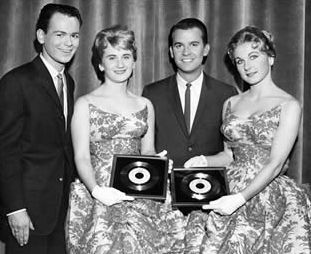


“Joplin’s Shooting Star”
1966-1970

Janis Joplin featured in a ‘Newsweek’ cover story, ‘Rebirth of the Blues,’ May 26, 1969.
     In the rock ‘n roll firmament of the 1960s, Janis Joplin was a shooting star who burned white hot for five short years. She died of a heroin overdose at age 27. 

Joplin sang her own brand of the blues in an incendiary style. Yet in her short time — between 1966 and 1970 — she carved out a piece of music history that was distinctly her own.

During these years, she traveled from the conservative community of Port Arthur, Texas to the expansive and unpredictable world that was the drug/hippie/music scene of 1960s San Francisco — and mostly in the glare of national stardom.

Joplin was born in Port Arthur, an oil refinery town, in 1943.  As a teenager in the late 1950s, she had read about Jack Kerouac and the Beatniks, began to dress in her own style, and started listening to blues music with a few high school friends. Black blues singers Bessie Smith and Leadbelly were among her heroes.

An outcast in Port Arthur by the early 1960s, Joplin had made her way to California a time or two, and eventually came to San Francisco’s music and hippie scene.  At the June 1967 Monterey Pop Festival she captured national attention with a stunning blues performance of “Ball and Chain.”  From that point on, she became something of national phenomenon. But not everyone loved Janis Joplin. Her stage antics and whiskey-swilling, devil-may-care style put many people off. Some were convinced she had a death wish and was killing herself slowly with each performance and each day’s excesses, so that when she sang “Piece of My Heart,” the meaning was for real.

The article that follows here covers some of the main events in the last four years of her life, from her rapid rise to stardom to her untimely death.

Janis Joplin performing at the Monterey Pop Festival in June 1967 where she would do a stunning version of ‘Ball and Chain’ that would mark her as an overnight blues sensation. Photo, Ted Streshinsky. Click for studio DVD version.


Music Player
“Piece of My Heart”-’68


Rock Epiphany

Janis Joplin did not initially see herself as a big-time performer or a major talent. But in 1966, when she first teamed up with a real rock band she had met through friends, Joplin had a kind of epiphany. 

Chet Helms, a fellow Texan and one of San Francisco’s music promoters, introduced her to a then little-known band called Big Brother and the Holding Company. Up to that point, Joplin was thinking she had a good enough voice for local gigs, but that was about it.

“… All of a sudden someone threw me into this rock band,” she would later explain, recalling her Big Brother session. “They threw these musicians at me, man, and the sound was coming from behind, the bass was charging me, and I decided then and there that was it, I never wanted to do anything else.  It was better than it had been with any man, you know… Maybe that’s the trouble…”

Joplin joined Big Brother in June 1966. Her first public performance with them was at the Avalon Ballroom in San Francisco where they became the house band. In the following year, they cut their first album, Big Brother and The Holding Company, and gained a following with songs from that album, including, “Bye Bye Baby,” “Blind Man” and “Down On Me.” Then on June 17, 1967 she an Big Brother performed their show-stopping set on the second day of the Monterey International Pop Festival, setting them on a path to national stardom.

Janis Joplin with members of Big Brother and the Holding Co., on album performance at Winterland in San Francisco. Click for CD or digital.
     After Monterey, and after signing with Bob Dylan’s manager, Albert Grossman in November 1967, Joplin and Big Brother were playing all over the country. Grossman got them a whopping recording contract with CBS/Columbia Records. They were soon making about $10,000 a performance, with Joplin’s annual income rising to about $150,000 — then very big money. 

In February 1968, they began an East Coast tour in Philadelphia, and also played Anderson Hall in in New York where Joplin revealed her raw power over an audience. On the last day of their East Coast swing, April 7, 1968, Joplin and Big Brother performed at the “Wake For Martin Luther King Jr.” concert in New York along with Jimi Hendrix, Buddy Guy, Joni Mitchell, Richie Havens, Paul Butterfield and Elvin Bishop. The next month or so was spent recording the album Cheap Thrills, which would be released later that summer. 

In July 1968 she hit the Newport Jazz Festival in Rhode Island. In August, Cheap Thirlls was released and debuted at No. 1 on the Billboard album charts. It sold one million copies in the first month featuring songs such as “Piece Of My Heart,” among others. Joplin and Big Brother appeared on the West coast TV show, Hollywood Palace on October 26, 1968, performing two songs: “Summertime” and “I Need a Man to Love.”

Janis Joplin on the cover of the March 15th, 1969 edition of Rolling Stone, featuring a story that asks if she is “the Judy Garland of Rock?” Click for copy.
     By early December 1968 Joplin decided to leave Big Brother, and by the end of the year she had formed a new band called the Kozmic Blues Band, a soul revue band with a complete horn section.  Their first performance playing soul music was in late December in Memphis, TN. However, the band’s performances at the Fillmore East in February 1969 received mixed reviews. Elsewhere though, Janis and her band were getting more notice.

In March 1969 there was a TV appearance on CBS’s 60 Minutes with Mike Wallace and a Rolling Stone cover story that month posing the question: “Janis: The Judy Garland of Rock?”  Also in March, Joplin and her band appeared on The Ed Sullivan Show.  Then it was back to San Francisco to Winterland and The Fillmore West.

A European tour came in April-May 1969 — Frankfurt, Stockholm, Amsterdam, Copenhagen, and Paris.  Her debut in London at Albert Hall that April produced rave reviews in the papers and trade press — Disc, Melody Maker, and The Telegraph.  Back in the States, studio work for another album, Kozmic Blues, began in Hollywood in June.  Joplin also appeared on The Dick Cavett Show for the first time July 18,1969.  She would appear on Cavett’s show two more times in 1970.  She and her band also played various music festivals that summer–Devonshire Downs in Northridge, CA, and the Atlanta Pop Festival in Georgia in July.  At the Atlantic City, New Jersey Pop Festival in early August, she sang with Little Richard.

Janis Joplin performing at Woodstock, 1969.
     Then in mid-August came Woodstock where she performed on the second day of the festival, singing a ten-song set that included such tunes as: “To Love Somebody,” “Summertime,” “Try (Just a Little Bit Harder),” Piece of My Heart,” and “Ball & Chain.” 


Music Player
“Try (Just a Little Bit Harder)”

Joplin by then had parted ways with Big Brother & the Holding Company.  Still, she had a full compliment of musicians backing her at Woodstock, where she performed in the wee hours, Saturday-to-Sunday, at about 2:00 a.m.  Some reported that without her normal band, Joplin’s performance lacked its usual punch, but others found it a solid performance.

Henry Diltz was an official photographer at Woodstock and had an “all-access pass” that got him to the stage, and more importantly, “a little catwalk built just under the lip of the stage” where he took photographs of Joplin performing. “I was literally feet in front of her while she was singing — the absolutely best seat in the entire house of 400,000 people.”  Diltz said of Joplin’s performance: “Everything I saw her sing, it was nothing held back.”

A younger Janis Joplin performing at an unidentified rock-festival venue sometime in the 1960s.

Following Woodstock, and through the remainder of 1969, there were other outings for Joplin and her band.

In September they played the New Orleans Pop Festival at Baton Rouge International Speedway in Louisiana and at the Hollywood Bowl in L.A.

In October there were gigs in Austin and Houston, Texas. In November she appeared at Curtis Hall concert in Tampa, Florida where she was charged with two counts of using vulgar and obscene language on stage. Later that month she appeared at Auditorium Hall in Chicago, and also Madison Square Garden in New York where she sang with Tina Turner at a Rolling Stones concert.

Her first solo effort, I Got Dem Ol’ Kozmic Blues Again Mama!, with the Kozmic Blues Band, had been released in September 1969, and received mixed reviews. It included songs such as “Try (Just a Little Bit Harder)” and “To Love Somebody,” a cover of a Bee Gees’ tune.

At the end of November 1969 Joplin played the West Palm Beach Rock Festival.  In December there was an appearance in Nashville and another at Madison Square Garden — called a “rousing display of blues and rock” by the New York Times — where she was joined on stage by Johnny Winter and Paul Butterfield.  It was about this time that she was “romantically linked” with Joe Namath in the New York papers, which appears to have been exaggerated beyond a meeting and a date or two.  Other appearances in 1969 included ABC-TV’s Tom Jones Show, the Quaker City Rock Festival/Philadelphia, the Civic Center/Baltimore, ABC-TV’s show Music Scene, and the Toronto Pop Festival.  Back home in California, meanwhile, Joplin moved into to a secluded home in a Redwood forest in the Larkspur area of Marin County, California, north of San Francisco, a beautiful spot between Mount Tamalpais and the San Francisco Bay.  But toward the end of 1969, Joplin decided to take some time off.


Janis Joplin & David Niehaus on Copacabana Beach in Brazil, 1970, where Janis was surrounded by, and talking with, reporters.

R&R in Brazil

In January of 1970, Janis and her Kozmic Blues band parted ways, and in February, she traveled to Brazil with her friend and costume designer Linda Gravenites.  Gravenites had been with Joplin since 1966 and had lived a clean and sober life and was traveling with Joplin in part to help her kick her drug and alcohol habits.

In Brazil, Joplin met and became involved with David Niehaus, a clean and sober American schoolteacher who was traveling around the world at the time. At their meeting, Niehaus was unaware of her celebrity. The two were later photographed as happy revelers at Carnival in Rio de Janeiro, described as a “carefree” couple having a great time. Niehaus was one of the first men in Janis’s life at the time who saw her as a woman and not a rock star, and Janis was quite taken with him. By April she reported from Rio that she was “going off into the jungle with a big bear of a man.” But when Joplin returned to the U.S. she began using heroin again and her relationship with Niehaus appeared to end, but not for good. Some letter writing would continue (more on this later). Still, some friends would say that Niehuas was, for Janis, the love of her life.

Poster for a Janis Joplin concert on June 12, 1970 in Louisville, KY with her new Full-Tilt Boogie Band.
     Back in San Francisco, meanwhile, Joplin had formed her new band, the Full Tilt Boogie Band — a band composed mostly of young Canadian musicians; a band that Joplin had taken a more active role in forming than she did with her prior group.  She would later describe this band as more fully her own.  Joplin began touring with the Full Tilt Boogie Band in May 1970 and was quite happy with their performances and the feedback from fans and critics.  Still, earlier that year, she had done a few performances with her former bandmates.

On April 4th in San Francisco, she performed a reunion gig with Big Brother & The Holding Co. at the Fillmore West.  Again, on April 12th, she appeared with Big Brother at Winterland where she and group were found in excellent form.  By the time she began touring with Full Tilt Boogie in May 1970, Joplin had told friends she was drug-free.  In fact, the young Canadians in her new band were also drug free and had no association with her old San Francisco crowd.  Still, some noticed that her drinking had increased. 

In late June 1970, she appeared on TV’s The Dick Cavett Show, where she announced she would attend her ten-year high school class reunion later that summer in Port Arthur, Texas.  High school had not been a happy time for Joplin, noting at one point that her classmates, “laughed me out of class, out of town and out of the state.”  More on the high school visit later.

1970 poster advertising Canada’s transconti- nental Festival Express.
Festival Express logo sticker.


The Festival Express

In late June and early July 1970, Joplin and her new band joined the all-star Festival Express tour through Canada.  On this tour, Joplin and her band performed on the same bill with other acts including: the Grateful Dead, Delaney and Bonnie, Rick Danko and The Band, Eric Andersen, Ian and Sylvia, and others.

The Festival Express was unique among rock festivals.  Rather than flying to each city — Toronto, Winnipeg, Calgary and Vancouver were each scheduled — the musicians would travel by chartered Canadian National Railways train.  The idea was to foster an atmosphere of musical creativity and closeness between the performers.  The trips between cities were a mix of jam sessions and partying, with no shortage of drugs and alcohol.  One of these sessions became quite notable — with Rick Danko of The Band, Jerry Garcia and Bob Weir of the Grateful Dead, and Janis Joplin all having a rollicking good time.

During the actual Festival Express series of concerts — which saw the Vancouver concert cancelled due to the mayor’s “anti-hippie” edicts — Janis Joplin gave some memorable performances.  Footage of Joplin singing “Tell Mama” in Calgary would later become an MTV video in the 1980s.  This performance would also be included on later Joplin albums and DVDs. 

The Festival Express Tour ended in early July 1970, but some 30 years later, in 2003, a “rockumentary” was produced featuring the original Festival Express tour, its music, and travels.  That film would reap more than $1.2 million at the U.S. box office, and the DVD would become a hot seller as well.  Shortly after the Festival Express, Joplin and the Full Tilt Boogie Band traveled to Honolulu, Hawaii where they performed in early July 1970 at the International Center Arena.  But then it was back to California.

Poster for July 1970 Janis Joplin concert.


San Diego

On July 11th, Joplin and the Full Tilt Boogie Band arrived in San Diego for a concert there at the Sports Arena.  They were joined in San Diego by longtime Doors producer, Paul Rothchild, who was being considered to work with Joplin on her next album.  Janis’s sister, Laura, would later write of Rothchild in her book, Love, Janis:

“In San Diego, Janis gave him a stopwatch, saying ‘Look, I’ve got thirty-five good minutes in me. You stand behind the amps and I’ll look you over, you flash me how much time I have left.’ Paul thought it was a good sign that she was pacing herself like a runner.”

Joplin was fighting her alcohol and drug demons at the time.

Psychedelic-style poster for the July 11, 1970 concert in San Diego with Janis Joplin photo.
     Rothchild later said of watching Joplin’s performance as she was singing:

“. . . I was enraptured because I was listening to one of the most brilliant vocalists I ever heard, in classical, pop, or jazz music. What a voice. . . all of the woman was revealed.  The vessel of Janis vanished. For somebody like me, who was always talking about the inner beauty and all that stuff, it got me big. So I was totally hooked from that moment on, on every single possible level.”

Several weeks later, Rothchild would help Janis work on her final album, Pearl.

On the plane ride back to San Francisco after the San Diego concert, Janis was upbeat, as the presence of old friends at the concert had energized her.  She bought drinks for everyone on the plane.

But some of those with her, like Big Brother guitarist James Gurley, thought she was a bit “too exuberant, trying to be the life of the party.” 

Joplin was still on an emotional roller coaster; high and then low.  She was struggling to maintain her equilibrium.


Shea Stadium

In early August 1970, Joplin again appeared on The Dick Cavett Show, and a few days later, on August 6, 1970, performed as a surprise guest at the Festival for Peace at Shea Stadium in Queens.  Joplin was not on the original roster of performers for the concert, but since she was in New York and her former band, Big Brother, was on the bill, she agreed to do the concert. By some accounts, at least 50,000 fans attended  Joplin’s performance, re- portedly aided by a bottle of Southern Comfort. This concert — also called the Summer Festival for Peace — followed a Winter Festival for Peace that had been staged earlier that year at Madison Square Garden.  These concerts were among the first ever in the U.S. to be used for political fund raising and anti-war purposes.  Such concerts were not generally seen prior to 1970, but became more common thereafter.  The acts at the Peace Festivals generally donated their time and performances.  Among the performers at Shea Stadium that August were Peter Yarrow, Pacific Gas & Electric, Tom Paxton, Dionne Warwick, Poco, Ten Wheel Drive, Al Kooper, Richie Havens, Sha-Na-Na, The Young Rascals, Paul Simon, Creedence Clearwater Revival, Steppenwolf, The James Gang, Miles Davis, Johnny Winter, Herbie Hancock and others.  The show ran from 10:00 a.m. to midnight.  And by some accounts, at least 50,000 fans attended.  Joplin’s performance — reportedly aided by a bottle of Southern Comfort whiskey — included at least four of her songs: “Ball & Chain,” “Summertime,” “Turtle Blues” and “Piece of My Heart.”


Bessie’s Marker

Headstone for Bessie Smith’s grave site that Janis Joplin helped pay for. Inscription:‘The greatest blues singer in the world will never stop singing.’
     One of Joplin’s idols growing up had been Bessie Smith, the famous blues and jazz singer of the 1920 and 1930s.  Smith’s music had been an early influence on Joplin.  But when Joplin learned that Smith’s grave site had no marker, she moved to help provide a major portion of the funds to obtain one.  A few days following her concert at Shea Stadium, on August 8, 1970, Joplin provided at least part of the financing to provide a headstone for Smith’s unmarked grave at Philadelphia’s Mount Lawn Cemetery.  An inscription on the installed headstone reads: ‘The greatest blues singer in the world will never stop singing.’

Joplin’s next scheduled appearance in 1970 was in Boston, at Harvard College, but her band’s equipment was stolen. The group managed to make their performance at Harvard Stadium on August 12 th before 40,000 fans using borrowed equipment. Still, they seemed to have delivered a decent concert, as a front-page story in Harvard Crimson newspaper gave the concert a positive review.  It would be Joplin’s last public appearance with the Full Tilt Boogie Band and her last public performance.  Her next stop was her former home town, Port Arthur, Texas for the tenth year reunion of her high school class.


Janis’ Texas Hurt
1956-1964

Joplin as she appeared in her 1960 high school photo.
     Growing up in the conservative oil refining town of Port Arthur, Texas in the 1950s was not easy for young Janis Joplin.  Although she was loved by her family while growing up there, her high school and local college experiences in Texas appeared to have scarred her deeply.  As a teenager she had read the Beatniks, began to dress in her own style, and started singing folk and blues music locally.  But in high school, she had gained weight and developed bad skin, and was called “pig” by some of the other kids.  After graduating high school in 1960, she attended Lamar State College that summer, at nearby Beaumont Texas, and continued there in the fall.  Ridiculed there as well, and not comfortable in class, she dropped out.  In 1961, after passing a secretarial exam, Joplin’s parents sent her to Los Angeles to live with her aunts, but she soon found a place of her own in Venice Beach where drugs became part of her life. The visit home to Port Arthur for the reunion did not achieve what Joplin had hoped, and once again she left town feeling rejected and unloved. By the end of the year, she returned home to Port Arthur.  In 1962, she enrolled in fine arts at the University of Texas in Austin and was also singing locally, blues mostly, but also with a blue grass band.  Her experiences on the University of Texas campus, however, weren’t much better than in Port Arthur or Beaumont, as she was nominated for the “Ugliest Man on Campus” award at one point, a deep cut.  After hearing about the post-Beat scene in San Francisco, Joplin made her way to North Beach in San Francisco and then Haight-Ashbury, then becoming more heavily involved with alcohol and drugs.  After a near-death experience, and reportedly dropping to a weight of about 88 pounds at one point, she returned to Port Arthur in 1965.  Back home, she tried college again at Lamar, this time enrolling as a sociology major.  She kicked her drug habit, changed her look to a more conservative style, but still, her experiences at Lamar were no better. In Austin, meanwhile, she continued singing blues at a few clubs in late 1965 and early 1966.  By mid-1966 she returned to California for good, pursuing her music career in San Francisco by joining Big Brother and the Holding Company.  By late 1967, following her debut at the Monterey Festival, she was on her way to national stardom.

Janis Joplin on the cover of "Rolling Stone," August 6, 1970. Click for copy.
     In mid-August 1970, when Joplin returned to Port Arthur for her 10th year high school reunion, she was coming back, in part, to make a statement about her success, and specifically for those who had treated her badly as a teenager.  But during the visit, Joplin was drinking hard and she did not attempt to “tone down” her dress or her style.  She had also previously made negative remarks about Port Arthur in the national press — or as one New York Times writer put it — “never missed a chance to dismiss her blue-collar hometown as a bastion of small-town intolerance.”  On August 14th, Joplin attended her high school reunion at Thomas Jefferson High School.  She was accompanied by fellow musician and friend Bob Neuwirth, road manager John Cooke, and her younger sister, Laura.  Dressed in the popular San Francisco hippie fashion of the day with feathers and beads and her trademark purple-tinted glasses, Joplin answered questions at a press conference, during which some of her more painful high school days came up again.  All in all, it wasn’t a pleasant visit for Joplin.  Generally, this visit home to Port Arthur for the reunion did not achieve what she had hoped, and once again she left town feeling rejected and unloved.  She soon returned to California to work on her music.


Final Days 

During late August, Joplin arrived in Los Angeles to begin work on a new album.  Sessions were planned for the Sunset Sound Studio with producer Paul Rothchild.  Joplin checked into the nearby Landmark Motel.  She had been seeing a steady new boyfriend, a younger and wealthy easterner named Seth Morgan, and they were rumored to be engaged.  But Joplin at the time threw herself into her recording sessions and the work on her new album.When he entered her motel room, Cooke found Joplin dead on the floor.  She also had a bit of fun at the session, at one point recording a birthday greeting for John Lennon that would be sent to him later — using the Roy Rogers / Dale Evens tune, “Happy Trails.”

On Saturday, October 3, 1970, Joplin visited the Sunset Studios to listen to the instrumental track for the song “Buried Alive in the Blues” prior to recording her vocal track with it, scheduled for the next day. But on Sunday afternoon, she failed to show up at the studio. Producer Rothchild and road manager John Cooke became concerned. Cooke drove to the Landmark Motel where he found Joplin’s psychedelically painted Porsche still in the parking lot.  When he entered her motel room, Cooke found Joplin dead on the floor. The official cause of death was later determined as an overdose of heroin, possibly combined with the effects of alcohol. Janis Joplin was 27 years old. Her ashes were later scattered into the Pacific Ocean along Stinson Beach north of San Francisco.

At the front desk of the Landmark Motel the morning after Janis’s death, a telegram from David Niehaus – who she had met and traveled with in Brazil and was quite fond of – was found. The telegram reportedly read, “Love you Mama, more than you know.” Apparently, Janis and Niehaus were planning to reunite after she finished recording Pearl, as letters were found expressing her hopes for a future with him, about wanting to slow down and buy a house with him in Northern California. Some of those close to Joplin wondered if she had received the telegram sooner, might it have changed the outcome.

Janis Joplin's "Me & Bobby McGee" single from 'Pearl' album, 1971. Click for digital.
     Joplin’s newly recorded material from her Los Angeles studio sessions, meanwhile, had not gone to market.  Four months after her death, in February 1971, the new material was released under the album name, Pearl, a nickname sometimes used for Joplin.  The album included the songs “Mercedes Benz,” “Get It While You Can,” and “Me and Bobby McGee.”  Pearl topped the album charts for nine weeks, and “Me and Bobby McGee” became a No. 1 single in 1971 and one of her biggest hits. But the one song on that album without Joplin’s lyrics — the performance she never showed up for the weekend of her death — was left as an instrumental, “Buried Alive in The Blues.” Part of the verse in that song goes as follows: “All caught up in a landslide / Bad luck pressing in from all sides / Just got knocked off my easy ride / Buried alive in the blues.”  And as Joplin herself once said: “People, whether they know it or not, like their blues singer’s miserable. They like their blues singers to die afterwards.”


Cover photo for Janis Joplin boxed set of 3 CDs. Click for set.

Joplin as Icon

Joplin’s death was a blow to her fans and the music world, especially since only weeks earlier, Jimi Hendrix had also died.  Joplin was remembered as a musical force and an icon for her own times as well as the ages.  Many thought Joplin was just hitting her stride with Pearl, and might have gone on to much greater things had she overcome her demons. Tom Moon, writing in his book, 1,000 Recordings to Hear Before You Die, calls Pearl, “the precious last testament of a belter.” By her last year, Moon says, Joplin had grown into “a devastatingly original voice, the rare white interpreter of African American music who resisted the ready cliche. She treated old Delta songs and ’50s R&B ballads as theatrical platforms, ripe for large-scale rethinking. Her blues woe was never typical blues woe. …[S]he could turn out a plea that made listeners feel like they were part of a fateful make-or-break moment happening right then.”

Jon Pareles of the New York Times wrote that Joplin was: “overpowering and deeply vulnerable, brassy and shy, stylized and direct, indomitable and masochistic.  She took the tough rasp of old blues shouters and made it her own by bringing out pain and tension to match the bravado.  With magnificent timing Joplin made it seem as if she was pouring out unvarnished emotion.”

The Rock ‘n Roll Hall of Fame, writing her 1995 induction description, adds: “Janis Joplin has passed into the realm of legend: an outwardly brash yet inwardly vulnerable and troubled personality who possessed one of the most passionate voices in rock history.”

Janis Joplin, undated photo.
     Megan Terry, among other authors writing in the book, Notable American Women, observes: “Joplin brought to her music a distinctive sound and look, passion and an honest interpretive ability.  Her hold over an audience was as great as that of Elvis Presley and her success was an extraordinary and unprecedented feat in the male- dominated rock and music world.”

Music Player
“Me & Bobby McGee”


In fact, along with Grace Slick of The Jefferson Airplane, Joplin is credited with opening doors for women who would follow her in the rock ‘n roll business.  And finally, music journalist Ellen Wills noted that “Joplin belonged to that select group of pop figures who mattered as much for themselves as for their music.  Among American rock performers, she was second only to Bob Dylan in importance as a creator-recorder-embodiment of her generation’s mythology.”  Joplin was inducted into the Rock and Roll Hall of Fame in 1995, and was given a Grammy Lifetime Achievement Award in 2005.  Musicologists and historians continue to revisit her work.  In November 2009, Case Western Reserve University and the Rock and Roll Hall of Fame and Museum celebrated the music of Janis Joplin during the 14th annual American Music Masters series, calling her one of rock ‘n roll’s most passionate and influential artists.

Janis Joplin photograph, undated.
     Back in Port Arthur, Texas, meanwhile, and nearly two decades after her death, some of the love and recognition Janis Joplin had sought from her hometown began coming her way in after-the-fact fashion.  In 1988, Joplin’s life and achievements were showcased and recognized at a January Convention Center gathering — an event, wrote Peter Applebome of the New York Times, “that perhaps had as much to do with economics as with affection.”  Some 5,000 people came out for the ceremony, a major turn out for Port Arthur.  There was a dedication of a Janis Joplin Memorial, which included a multi-image bronze sculpture of Joplin.  The sculpture, along with momentos of Joplin’s career, as well as that of other local musicians including the Big Bopper (Jiles Perry Richardson, Jr.) and Johnny Winter, would eventually become part of the Museum of the Gulf Coast, housing a permanent Joplin exhibit on the second floor.

In January 2008, Port Arthur celebrated Joplin’s 65th birthday by putting a historical marker in front of her childhood home.  The town now proclaims its link to Joplin with billboards, brochures, an annual concert, and local tours of various Joplin landmarks.  “She was a very popular figure in the ’60s, and she had a lot to do with the style of music that evolved at that time,” said Yvonne Sutherlin of Jefferson County Historical Commission in January 2008.  “We just want people to know that she’s from here.”

Associated Press, November 7th, 1970.
Beyond Port Arthur, the life and career of Janis Joplin has been explored on stage and screen in a number of productions and documentaries. In 1974-75, Janis, a Canadian film about her career using archival footage was produced. In 1979, the Hollywood film, The Rose, starring Bette Midler, was loosely based on Joplin’s life. In 1992, the biography, Love, Janis was published, written by Joplin’s sister, Laura. A musical stage show with the same title, Love, Janis, ran off-Broadway during 2001-2003 for more than 700 performances. In Washington, D.C., the Arena Stage featured a 2013 production – A Night with Janis Joplin – which includes the Janis character telling stories of inspiration from other artists such as Odetta and Aretha Franklin. A star on the Hollywood Walk of Fame came for Joplin in 2013, and a U.S. Postal Service commemorative stamp was issued in her honor in 2014. And in 2015, the documentary film, Janis: Little Girl Blue, directed by Amy J. Berg, was shown at the Toronto film festival, since airing to positive reviews in early 2016 on the American Masters PBS-TV series.

See also at this website: “Selling Janis Joplin, 1995,” about a Mercedes-Benz TV ad using a Joplin song, and “White Rabbit,” a profile of a Jefferson Airplane song, its politics, and the group’s lead singer, Grace Slick. Other stories on notable women can be found at the topics page, “Noteworthy Ladies.” Thanks for visiting – and if you like what you find here, please make a donation to help support the research and writing at this website. Thank you. — Jack Doyle

Please Support
this Website

Donate Now

Thank You

______________________________

Date Posted:  7 December 2009
Last Update:  10 December 2025
Comments to:  jackdoyle47@gmail.com

BlueSky: jackdoyle.bsky.social

Article Citation:
Jack Doyle, “Joplin’s Shooting Star,”
PopHistoryDig.com, December 7, 2009.

______________________________


Sources, Links & Additional Information

Janis Joplin on cover of 1972 album. Click for CD.
Janis Joplin, 1960s; Michael Ochs Archives.
KQED/PBS photo of Janis Joplin performing at the Monterey Folk Festival 1967 with Big Brother & the Holding Co.
Janis Joplin & ‘Southern Comfort’ photo by Jim Marshall, shot backstage at San Francisco’s Winterland in 1968. “Janis was a great subject to photograph,” observed Marshall, “ because she was not afraid of the camera and came alive on stage... She was very real and still a little girl when she died, a very famous little girl.”
Janis Joplin with Columbia Records president Clive Davis at a 1968 party celebrating Joplin's record deal. Davis had seen Joplin perform at the Monterey Pop Festival with Big Brother, later telling ‘Rolling Stone’ magazine that her performance was “mesmerizing”
Holly George-Warren’s 2019 book, “Janis: Her Life and Music,” Simon & Schuster, 400pp. Click for copy.
“Janis: Little Girl Blue” is a 2015 American documentary film (105 min) directed by Amy J. Berg, and was broadcast by PBS on the “American Masters” series May 2016. Click for DVD, VHS, or Amazon Prime.

Robert Shelton, “Janis Joplin Is Climbing Fast In the Heady Rock Firmament; Singer Makes Her New York Debut With Big Brother and the Holding Company,” New York Times, Monday, February 19, 1968, p.51.

Paul Nelson, “A Report on Janis Joplin: The Judy Garland of Rock?,” Rolling Stone, March 15, 1969.

Peter Barnes, “Rebirth of the Blues,” Newsweek, May 26, 1969.

Mike Jahn, “Janis Joplin Gives A Rousing Display Of Blues and Rock,” New York Times, Saturday, December 20, 1969, p. 36.

Mike Jahn, “Janis Joplin and Her New Group Give Rousing Forest Hills Show,” New York Times, Tuesday, August 4, 1970, p. 22.

“Rock Singer Janis Joplin, 27, Found Dead in Hollywood Motel,” Los Angeles Times, October 5, 1970, p. 3.

Reuters, “Janis Joplin Dies; Rock Star Was 27,” New York Times, Monday, October 5, 1970, p. 1.

George Gent, “Death of Janis Joplin Attributed To Accidental Heroin Overdose,” New York Times, Tuesday, October 6, 1970, p. 50.

Robert Hilburn, “Janis Joplin’s Lifetime: ‘A Rush’,” Los Angeles Times, October 7, 1970, p. E-1.

Don Heckman, “Janis Joplin 1943-1970,” New York Times, Sunday, October 11, 1970, Arts & Leisure, p. 135.

“Music: Blues for Janis,” Time, Monday, October 19, 1970.

“Janis Joplin Estate Left to Parents,” Los Angeles Times, October 21, 1970, p. D-8.

“Janis Joplin: 1943-1970,” Rolling Stone, October 29, 1970.

“Janis Joplin Death Ruled Accidental,” Los Angeles Times, October 29, 1970, p. A-3.

“CBS Wins Ruling on Joplin Concert Disc,” Los Angeles Times, December 22, 1970, p. IV-14.

John Byrne Cooke (ed.), Janis Joplin: A Performance Diary 1966-1970, First Glance Books, 1997.

Mike Jahn, “Pearl, Last Album Janis Joplin Made, May Be Her Finest,” New York Times, Saturday, January 16, 1971, p. 19.

Robert Hilburn, “Janis Joplin’s ‘Pearl’ Album Released,” Los Angeles Times, January 19, 1971, p. H-8.

Don Heckman, “Janis: She Was Reaching for Musical Maturity,” New York Times, Sunday, May 21, 1972, Arts & Leisure, p. D-30.

“Janis: A Look at a Jet Age Red Hot Mama on the Second Anniversary of Her Death,” International Times, October 1, 1972.

Myra Friedman. Buried Alive: The Biography of Janis Joplin, New York: William Morrow, 1973.

Midge Decter, “The Earth Mother Was No More Than The Dearest Daughter Of The Angel of Death,” New York Times Book Review, August 12, 1973.

Megan Terry, “Janis Joplin,” in Barbara Sicherman & Carol Hurd Green (eds.), Notable American Women: A Biographical Dictionary, Boston, Harvard University Press, 6th Edition, 1980, pp. 385-387.

Peter Applebome, “Town Forgives the Past and Honors Janis Joplin,” New York Times, January 21, 1988.

David Dalton, Piece of My Heart: The Life, Times and Legacy of Janis Joplin, Cambridge, MA: Da Capo Press, 1991.

Laura Joplin, Love, Janis, New York: Villard Books, 1992.

Jack Doyle, “Selling Janis Joplin, 1995,” Pop HistoryDig.com, March 10, 2008.

Steve Roser, “Do What You Love: The Continuing Story of Big Brother & the Holding Company,” Goldmine, September 25, 1998.

Alice Echols. Scars of Sweet Paradise: The Life and Times of Janis Joplin, New York: Henry Holt, 2000.

Rosanne Cash, “Janis Joplin, The Immortals: The Greatest Artists of All Time,” Rolling Stone, April 15, 2004.

Lana Berkowitz, “Port Arthur Embraces Janis Joplin on Her 65th Birthday,” Houston Chronicle, January 15, 2008.

Associated Press, “Janis Joplin’s Childhood Home in Port Arthur Gets Historic Marker,” KHOU.com, Sunday, January 20, 2008.

Henry Diltz, “PhotoSynthesis: Janis Joplin,” Spinner.com, November 14, 2007.

JanisJoplin.net (good, comprehensive site).

“Janis Joplin,” Times Topics, New York Times.

“Janis Joplin,” Wikipedia.org.

 “Festival for Peace,” Wikipedia.org.

Anthony Decurtis, Music, “5 Days, 2,100 Miles, Countless Bottles,” New York Times, July 25, 2004.

Dave Kehr, Film Review, “A Legendary Train Ride Through Rock’s Fabled Past,” New York Times, July 30, 2004.

Liane Hansen, “Woodstock on a Rail in ‘Festival Express’ — Rock Documentary Captures 1970 Train Tour Across Canada,” National Public Radio, NPR, August 29, 2004.

Tom Moon, “Pearl – Janis Joplin,” 1,000 Recordings to Hear Before You Die, Workman Publishing: New York, 2008, pp. 410-411.

Jay Allen Sanford, “50 Greatest Concerts in San Diego History 1917-2005,” San Diego Weekly Reader, October 9, 2008.

“Janis Joplin Biography, 1943-1970,” Biography .com, A&E Television Networks, 2009.

Bond, “Tuneage Tutelage — Janis Joplin,” Big LeatherCouch.com, Monday, September 24, 2007.

“Janis Joplin,” Induction, Rock and Roll Hall of Fame and Museum, 1995.

Mick Brown, “How Never-Seen-Before Letters Reveal the Inner World of Janis Joplin,” The Telegraph (London), January 28, 2016.

Janis: Little Girl Blue, American Masters / PBS, Documentary film, 2016. Click for Amazon.

Janis Joplin | “Janis: Little Girl Blue,” Wiki-pedia.org.


“I’m A Dole Man”
1996

One of the campaign buttons used in the 1996 Presidential campaign of U.S. Senator Bob Dole (R-KS).
     In the 1996 presidential race, U.S. Senator Bob Dole, Republican from Kansas, ran against incumbent President Bill Clinton. The Democrats and President Clinton had enjoyed a solid first term in the White House following the 1992 election, as the U.S. economy had prospered amid a generally peaceful global context. On Capitol Hill, however, the Republicans had come to power as a result of gains made in the mid-term 1994 congressional elections, led by Rep. Newt Gingrich. The Republicans captured majorities in both the House and the Senate and were hoping they might win the White House in 1996 as well.

     Bob Dole, a popular World War II veteran and much respected member of Congress, was first elected to national office in 1960.  He became involved in Presidential politics in 1976 when he served as Gerald Ford’s running mate in a losing contest to the Democrat’s slate of Jimmy Carter and Walter Mondale.  Again in 1980 and 1988, Dole sought the Republican presidential nomination, losing out both times in the primaries, respectively, to Ronald Reagan and George Bush, Sr.

Bob Dole on Senate floor, June 11, 1996, announcing his farewell to colleagues to focus on his Presidential bid.
     In 1996, however, he became the front runner and won the Republican nomination, besting a field that included Senator Phil Gramm of Texas, Senator Arlen Specter of Pennsylvania, populist Pat Buchanan, Tennessee governor Lamar Alexander, publisher Steve Forbes and others.  Dole chose former Cabinet Secretary Jack Kemp of New York as his running mate.  In addition to facing the Democrats’ Bill Clinton-Al Gore, Dole and Clinton also faced third-party candidate, Ross Perot.  In the election, the Clinton-Gore ticket prevailed, winning by a substantial margin in both the popular vote and the electoral college.  But during that election year there were some interesting twists and turns, not the least of which was some campaign music that cropped up in Bob Dole’s campaign.


Sam & Dave on album cover of their 1967 hit song, "Soul Man." Click for CD.
“Soul Man”

     In the summer of 1996, Sam Moore, who 30 years earlier was a member of the rock n’ roll duo “Sam & Dave,” re-recorded a 1967 hit song that he and partner Dave Prater had made popular, entitled “Soul Man.”  Moore adapted the song for use in Bob Dole’s campaign, keeping the same underlying sound and melody but adding a few new lyrics.

In the process, the song’s namesake and chief refrain of “I’m a soul man” became “I’m a Dole man.” Dole then started using the song at his campaign rallies.

The lyrics and origins of this song, however  — coming out of Detroit’s inner city and forming the beginnings of 1960s African American soul music  — were somewhat far afield from the conservative heritage of Kansan Bob Dole.

“Soul Man”
Sam & Dave

Coming to you on a dusty road
Good loving, I got a truck load
And when you get it,
          you got something
Don’t worry, ’cause I’m coming

[Refrain]
I’m a soul man, I’m a soul man

Got what I got the hard way
And I make it better,
          each and every day
So honey, said don’t you fret
‘Cause you ain’t seen nothing yet

[Repeat refrain]
I was brought up on a side street
I learned how to love
          before I could eat
I was educated at Woodstock
When I start loving,
          whoa I can’t stop

[Repeat refrain…]
Just grab the rope and
          I’ll pull you in
Give you hope and be
          your only boyfriend
Yeah, yeah, yeah, yeah

I’m talking about a soul man,
soul man, soul man, soul man….


Song History

     “Soul Man” was written in 1967 by Isaac Hayes and David Porter who then worked in Detroit for the Stax record label of Atlantic Records. At least part of the inspiration for “Soul Man” reportedly came to Hayes in July 1967, in the aftermath of the 12th Street riot in Detroit, Michigan.

During those troubled days, black Detroit residents had selectively marked certain buildings with the word “soul” to protect them from damage. The buildings so marked where mostly stores or other structures owned and/or operated by African-Americans.

In the midst of those times, Hayes and songwriting partner David Porter were moved to write something that captured “a story about one’s struggle to rise above his present conditions,” as well as a song that conveyed a measure of pride — almost a kind boasting  — as in, “I’m a soul man, and proud of it.”


Music Player
“I’m A Soul Man”-1967

     In any case, Hayes and Porter crafted the song and lyrics that summer.  Singers Sam Moore and Dave Prater recorded it on the Stax record label, with the musical backing of the house band at the time, Booker T. & the M.G.’s, a band that had their own hit songs, such as the 1962 instrumental, “Green Onions.”  But Sam and Dave’s “Soul Man” was issued in the summer of 1967.  It became the most successful Stax single to date upon its release. 

     During October-November 1967, the single peaked at No. 1 on the Billboard Hot Black Singles chart for about seven weeks, and at No. 2 on the Billboard Hot 100 for about three weeks.  It stayed in the Top 40 for nearly three months.


Early Soul Artists

“Soul Man” was the first successful pop hit single for Sam and Dave. An earlier song, “Hold On, I’m Comin”, had been a No. 1 hit on the R& B charts in the summer of 1966.  “Soul Man” was later followed by other hits through 1968, including: “I Thank You”, “When Something is Wrong with My Baby”, “Wrap It Up”, and others. 

Sam Moore and Dave Prater seen here in a 1960s’ photo used for a later album cover. Click for CD.
     In the 1965-168 period, Sam & Dave were especially successful on the R&B chart, scoring ten consecutive Top 20 singles and three consecutive Top 10 albums.  Their crossover appeal to white pop audiences helped pave the way for a major break out of what came to be known as soul music.  “Soul Man,” in fact, was one of the first songs by a black group to top the pop charts using the word “soul”, helping define that genre.  “Soul Man” was a No. 2 pop hit in November 1967.  “Soul Man” was awarded the 1968 Grammy Award for Best Rhythm & Blues Group Performance, Vocal or Instrumental.  Over the years, the song has also been recognized for its influence by the Grammy Hall of Fame, the Rock & Roll Hall of Fame, Rolling Stone magazine, and RIAA Songs of the Century.  The song, re-recorded by Sam Moore and Lou Reed, was also featured as the soundtrack and title for a 1986 film Soul Man,  a movie about a white guy who pretends to be black so he can get a scholarship to Harvard.  In 1988, Sam Moore’s original partner, Dave Prater, was killed in an automobile accident.  In 1992, Moore and his former partner were inducted into the Rock ‘n Roll Hall of Fame.  Moore thereafter continued his own career, recording and performing through the 1990s.  In 1994, his visibility increased somewhat after he did a duet with Conway Twitty on “Rainy Night In Georgia.”  Then in 1996 Moore became involved with Bob Dole’s campaign.

Bob Dole speaks at a campaign rally in Madison, September 5, 1996. Photo by Joseph W. Jackson III, Wisconsin State Journal.


Politics & Music

     Politicians for years have sought slogans, catchy jingles, and popular music to use in their campaigns.  For Franklin Roosevelt in the 1930s it was “Happy Days are Here Again,” also a perennial favorite of Democrats and practically any candidate who wins.  One of FDR’s later Democrat rivals, Al Smith, used “East Side, West Side” in one of his campaigns.  Jack Kennedy in 1960 had Frank Sinatra sing a little ditty for his campaign.  And in recent years, some politicians have sought to associate themselves with one or another genre of music or particular musicians, all to curry favor with certain voter blocs.

     In the 1992 campaign, candidate and then Arkansas Governor, Bill Clinton, had made good use of a baby boomer- favored Fleetwood Mac tune, “Don’t Stop” (a use which initially brought some objection from songwriter and band member Christine McVie, who in early 1992 asked Governor Bill Clinton to stop using it).  By 1996, Dole, who was then 73 years old, wanted music that helped him reach younger audiences.  “Soul Man” was a good jumpy tune, and could get folks in a good mood, part of the role of any campaign music.  Sam Moore had re-written the lyrics for the campaign, with some lines that — at least in one version — purposely spoofed Dole’s age, which was something of an issue in the campaign.  But the song also included a few digs that were aimed at the opposition, such as: “And he [Dole] ain’t from Hope, and he don’t have no girl friends, no!”  The Dole team liked what they heard and began using the song pretty regularly at rallies and campaign stops.

'Soul Man' record sleeve.

     In 1996, of course, Bob Dole wasn’t the only candidate using popular music during the campaign season.  In fact, as the two political conventions rolled out that August, a whole range of music was used as part each party’s respective “show,” ever mindful of the TV and listening audiences — as well as the need to fire up convention delegates.

Campaign button for Republican Convention, San Diego, CA, August 1996.
     The Republicans were up first in San Diego.  As Time magazine reported on August 15th: “Inside the Convention Center, bright placards, balloons and deliriously happy rally troops find every TV camera as speaker after speaker repeats the mantra of Hope, Growth and Victory.  Everywhere are the strains of “I’m a Dole Man!” and “You’ve Got To Be A Football Hero” and everyone is on message…”  The Republicans also made use of the “Macarena” at their convention, a Los del Rio’s hit that was then also a popular dance.  The Democrats did as well, with Vice President Al Gore gaining some fame for his robotic interpretation of the dance at one point.  Gore had used Paul Simon’s “You Can Call Me Al” as a theme song in some of his previous campaigning.  But in San Diego, the Republicans used a range of music throughout their program, as New York Times reporter Jon Parles later recounted:

“…So the band in San Diego had a role like Paul Shaffer’s group on The Late Show With David Letterman.  Each top speaker was ushered in like a talk-show guest, with a theme [song] that had a more or less obvious allusion: state songs for elected officials, ‘Stars and Stripes Forever’ for Gen. Colin L. Powell, ‘My Girl’ for the nominee’s wife, Elizabeth Dole.

1996 Republican campaign button featuring the Bob Dole-Jack Kemp ticket.

Bob Dole made his entrance to the theme from ‘Rocky,’ seeking the mantle of the good-hearted, hard-punching, working-class underdog.  After Mr. Dole’s acceptance speech, in which he invoked the honorable values of past eras, the country singer Travis Tritt sang a stern postscript, declaring, ‘I wish I could turn the clock back to the way my daddy said it was before.’…

When the Republican band wanted to ratchet up enthusiasm, it turned to soul standards.  Mr. Dole’s theme on the road has been ‘Dole Man’…  ‘Shout,’ the Isley Brothers song, provided the beat for the convention’s biggest floor demonstration.  Mr. Dole has been denouncing the indulgences of the generation represented by Bill Clinton, but he has latched on to baby-boomer favorites for the campaign…..”

     At the Democratic convention, too, a range of pop tunes and live performances were prominent parts of the program, from the cast of the Broadway play Rent performing “Seasons of Love” and Emmylou Harris singing  “Abraham, Martin and John,” to Aretha Franklin doing the national anthem.  There was also a hint of Chicago’s “Beginnings” following Clinton’s acceptance speech, with its Latin percussion, big-band horns, and lyrics that promised “only the beginning, only just the start.”

In September 1996, Bob Dole was joined by his ally Sen. John McCain, R-Ariz., at the American Legion's convention in Salt Lake City.


“Dole Man” Continues

     Following the conventions, and into September, Dole’s campaign continued using Sam Moore’s “Dole Man” adaptation at its rallies.  However, it turned out that Sam Moore was not really in a position to grant Dole the legal right to use this song, even in its variant and parody forms with adjusted lyrics.  For Sam Moore neither owned the song nor its music publishing rights.  The song was written by Isaac Hayes and David Porter as described above, and publishing company Rondor Music International Inc.,also had some control over the song’s rights and use.  Rondor was owned by Jerry Moss and Herb Alpert, who were politically liberal.  The holders of music publishing rights can object to the use of the composition if it is used in ways that can be seen as “commercial,” or if the song is at risk of losing its integrity, as in this case, by changing words, such as from “soul” to “Dole.”

     Rondor Music sent a letter to the Dole campaign threatening to sue if the campaign continued to use the song.  Rondor did not agree with the claim by the Dole camp that their use of the song was “fair use”as parody. “…[P]eople may get the impression that David [Porter] and I endorse Bob Dole, which we don’t.” 
                        – Isaac Hayes, Sept 1996 
In the September 10th, 1996 letter to Dole, Rondor threatened to sue Dole for up to $100,000 each time the song was played at an event.  Rondor said that the campaign’s altering the lyrics resulted in an “unauthorized derivative work” that required permission to use.  There were also other issues involved, not the least of which was an aura of endorsement the song gave to Dole by association, suggesting the song’s creators were Dole backers.  “Soul Man’s” co-writer, Isaac Hayes, spoke out about the song’s use in an interview with the New York Daily News.  “Nobody gave any permission here,” Hayes said referring to Dole’s use of the song without permission.  “As a U.S. Senator, he ought to know that you can’t do that.  It also bothers me because people may get the impression that David [Porter] and I endorse Bob Dole, which we don’t.”  In the end, however, no legal action transpired, as the Dole campaign quit using “I’m a Dole Man.”

Bob Dole on the stump, 1996.


Press Critique

     In addition to the legal threats, a few press accounts ran that were critical of Dole for using the tune.  Charles Memminger of the Honolulu Star-Bulletin, for example, offered some of his views in a September 13, 1996 column, having a little fun at Dole’s expense:

“…Playing a hip song like ‘Soul Man’ is supposed make people forget that Dole is older than time.  The usual routine is for Dole to bound onto the stage like a mummified rock star while the crowd sings ‘I’m a Dole Man! I’m a Dole Man!’  Republicans can be so cool when they have to be.
     Actually, I thought the choice of song was kind of stupid.  Half the time, I thought the crowd was bellowing ‘I’m a Dull Man.’ Or ‘I’m a Sold Man.’  It left just too much room for misinterpretation.…Connecting Bob Dole to ‘Soul Man’ is like con- necting Jeffrey Dahmer [mass murderer] to ‘Feel- ings.’
                    -Charles Memminger
                    Honolulu Star-Bulletin

    
It may not matter, since Rondor Music International, which owns the song, says it’ll sue if Dole doesn’t give up their ‘Soul.’
     I think Dole has a legal leg to stand on, since song parodies are considered free speech.  And anyone who doesn’t consider “Dole Man” a parody doesn’t understand irony.  Connecting Bob Dole to ‘Soul Man’ is like connecting Jeffrey Dahmer [mass murderer] to ‘Feelings.’
     Anyway, this is a battle Dole doesn’t have to fight.  There are a lot of other songs out there he could rip off that would give him the same chance — which is to say very little — of overcoming his 20 point poll deficit to Bill Clinton…”

     Mark Steyn, writing in Slate.com in October 1996 observed that “Soul Man” was “so un-Dole.”  He also called it a parody, adding:  “Dole obviously has never heard of it, any more than he’s heard of Tupac Shakur or those other gangsta rappers his advisers periodically call on him to denounce…”  More ironic, continued Steyn, “is that the song is an exquisite musicalization of the candidate’s most frequently cited defect: his campaign’s lack of any central theme.  ‘Dole Man’ isn’t about anything at all….”


Springsteen & Rabbitt

Springsteen's 'Born in the USA.'
     Bob Dole’s troubles with campaign music, however, didn’t end with “Soul Man.”  Looking for other music to use in place of “Soul Man,” Dole’s campaign came up with Bruce Springsteen’s “Born in the U.S.A.” which was used in early October 1996 as a Bob Dole caravan rolled into Red Bank, New Jersey for a campaign rally.

That prompted Springsteen himself to write an open letter to his local newspaper, The Press of Asbury Park, New Jersey: “I read in The Press this morning that my music was appropriated for the Republican rally for Bob Dole in Red Bank yesterday.  Just for the record, I’d like to make clear that it was used without my permission and I am not a supporter of the Republican ticket.”

     Dole’s campaign then went the country music route, asking for permission to use the song “American Boy” by Eddie Rabbitt, a song released in 1990 from Rabbitt’s Jersey Boy album, shown below.  The song was quite popular then, reaching No. 11 on country charts, Rabbitt’s first in the Top 40.  The song was also especially popular among U.S. servicemen and their families during the 1991 Gulf War.  The song, for many Dole supporters, was seen as a much more appropriate “Bob Dole” tune.

Bob Dole’s campaign found some compatible campaign music in Eddie Rabbitt’s ‘American Boy’. Click for CD.
     In the song, Rabbitt’s character says he wants to “live in a place where they name their kids Billy,” cheer at football games on Friday night, and go wherever he pleases.  In this kind of place, he explains, he’s a free man.  In the song, he also explains:

I’m an American boy.
Drive me a Chevy, ain’t got no Peugeot.
My older brother was a G.I.-Joe.
Red, white and blue from my head to my toes.
I’m an American boy.

     The song also includes, at certain points, words and speech excerpts from Martin Luther King Jr., Neil Armstrong and John F. Kennedy.  In October 1996, Dole’s campaign asked Rabbitt for permission to use the song at their political rallies, with Dole reportedly saying in the request: “I’m really a big fan and I really enjoy your music and I really like your song.”  Rabbitt gave Dole’s campaign permission to use the song, personally responding, “with my pleasure, you can use my song.”  For a time, the Dole campaign was also using the theme from Rocky, the 1976 Sylvester Stallone film.


Sam & Dole

Bob Dole photo, 1990s.
     In any case, following the November 1996 election, the campaign music ended for Bob Dole, as the Clinton-Gore ticket swept to a second term. Dole then began a new phase of his career, becoming a senior advisor at a Washington, D.C. law firm, and settling into what appeared to be a fairly comfortable and prosperous political afterlife of lobbying, public speaking, celebrity advertising, board appointments, and occasional diplomatic missions.

In January, 1997 at a White House ceremony, Dole was awarded the Presidential Medal of Freedom, an award made to persons deemed to have made especially meritorious contributions to the nation. Dole also served as the National Chairman of the World War II Memorial Campaign for the monument that was constructed in Washington, D.C. Back in his home state of Kansas, meanwhile, The Robert J. Dole Institute of Politics was opened at the University of Kansas in July 2003. The $11 million, 28,000-square-foot facility houses Dole’s papers and hosts frequent political events and seminars. Dole’s 1996 opponent, Bill Clinton, gave one of the first “Bob Dole Lectures” there in 2004.

Sam Moore on 'The Tavis Smiley Show,' Sept 2007.
     Sam Moore, meanwhile, continued recording and touring with his own musical career through the 1990s and 2000s.  In 2002 Moore’s solo album, Plenty Good Lovin‘, originally recorded in 1971 but never released, finally came to record stores. “Soul Man” and the Sam & Dave act of the 1960s continued to collect kudos as well.  In 1999, “Soul Man” was inducted into the Grammy Hall of Fame. Rolling Stone magazine named “Soul Man” one of the 500 greatest songs of all time in December 2004.  Sam & Dave were also honored at the Stax Museum in Memphis, Tennessee, opened in 2003, which features them prominently in a museum film and a permanent wall display. In December 2008, Sam & Dave, the Original Soul Men DVD was released, featuring video performances of Sam & Dave from 1966-1980.

     However, in one interesting turn of events in the 2008 presidential election, Sam Moore once again became involved with political campaign music.  In 2008, Moore sent a cease and desist letter to Barack Obama’s campaign to stop the using the Sam & Dave song “Hold On I’m Coming” at political rallies.  Yet, apparently there were no hard feelings here, as in January 2009, Moore performed with Sting and Elvis Costello at one of Barack Obama’s inaugural balls.

Additional stories at this website on music and politics, include, for example: “I Won’t Back Down,1989-2008″ (on the use of Tom Petty’s song by Republicans and Democrats and other venues); “Baracuda Politics, 2008″ (on Sarah Palin and RNC’s use of the song “Baracuda” by rock group, Heart; includes RNC video); and, “Reagan & Springsteen, 1984” (about President Ronald Reagan’s campaign trail remarks mentioning Bruce Springsteen and some of his music; also includes a related George Will Washington Post column). Thanks for visiting — and if you like what you find here, please make a donation to help support the research and writing at this website. Thank you. – Jack Doyle

Please Support
this Website

Donate Now

Thank You

______________________

Date Posted:  3 December 2009
Last Update:  5 August 2019
Comments to:   jackdoyle@gmail.com

BlueSky: jackdoyle.bsky.social

Article Citation:
Jack Doyle, “I’m A Dole Man, 1996”
PopHistoryDig.com, December 3, 2009.

______________________


Sources, Links & Additional Information

The Robert J. Dole Institute of Politics at the University of Kansas, Lawrence, Kansas.
Inside the main hallway of The Robert J. Dole Institute of Politics at the University of Kansas.
Sam & Dave performances. Click for 2008 DVD.

“United States Presidential Election, 1996,” Wikipedia.org.

“Sam and Dave,”in Holly George-Warren and Patricia Romanowski (eds), The Rolling Stone Encyclopedia of Rock & Roll, Rolling Stone Press, New York, 3rd Edition, 2001, p. 856.

“Sam & Dave,” Wikipedia.org, November 17, 2009.

“Samuel David Moore,” Wikipedia.org, Nov. 1, 2009.

Jon Pareles, “The Dance Within the Hit Parade,” New York Times, Saturday, August 31, 1996, p. 9.

“Nervous In San Diego,” Time, Thursday, August 15, 1996

Rob Bowman, Soulsville U.S.A.: The Story of Stax Records, New York: Schirmer Trade, 1997.

Charles Memminger, “Some Looney Tunes for The Dole Man,” Honolulu Lite, Honolulu Star-Bulletin, Friday, September 13, 1996.

Jan Uebelherr, “Striking the Wrong Chord Dole’s Deeds Irk The Boss, Bozo,” The Milwaukee Journal Sentinel, October 10, 1996.

“Dole Finally Finds an Agreeable Tune- smith,”Albany Times Union (NY), October 13, 1996.

“Dole Finds a Friend,” St. Petersburg Times, (FL) October 13, 1996.

Mark Steyn, “Theme Party: Politics Really Is a Song and Dance,” Slate.com, Wednesday, October 16, 1996.

Shana Alexander, ” ‘Call Me Al’? ‘I’m a Dole Man’?,” New York Times, November 3, 1996.

“American Boy”(Eddie Rabbitt song), Wiki- pedia.org, November 2009.

Sarah Wheaton, “Accompaniments; Theme Songs and Others,” New York Times, February 16, 2008.

Nicole Colson,”Sing a Song of Hypocrisy; Do the Political Candidates Pick the Songs That Fit Them?,” SocialistWorker.org, March 28, 2008, Issue 667.

Jack Sanders, “Springsteen, Walmart, Populism and Republicans,” IssueOriented. com, Thursday, March 19, 2009.

“The GOP in San Diego, August 12-15, 1996,” Online NewsHour: Convention ’96, PBS.

Roger L. Sadler, Electronic Media Law, Sage, 2005, p. 296.

The Robert J. Dole Institute of Politics, DoleInstitute.org, University of Kansas, Lawrence, Kansas.

One version of the “I’m a Dole Man” song had been posted earlier online at DoleTown.com.

Karen De Witt, “The 1992 Campaign: Media; MTV Puts the Campaign on Fast Forward,” New York Times, Saturday, February 8, 1992.


“Start Me Up”
1995

Bill Gates silhouetted against the “start” button during a video portion of the Windows 95 launch at Microsoft  in Redmond, Washington, August 1995. AP photo.
Bill Gates silhouetted against the “start” button during a video portion of the Windows 95 launch at Microsoft in Redmond, Washington, August 1995. AP photo.
     In the annals of advertising history, one of the great coups in the use of rock ‘n roll music to help sell things came in the summer of 1995 when Bill Gates of the Microsoft Corporation used the Rolling Stones’ “Start Me Up” song to help launch his company’s Windows 95 computer software.

As the story goes, it was Gates’ idea to use the song, as the tune dovetailed nicely with the prominent “start button” feature that appeared on the Windows computer screen.  Initially it was rumored that Gates paid something in the neighborhood of $10-to-$14 million to the Stones to use their song. The actual amount was much lower, and would end up at around $3 million after negotiations. The earlier figures, which appeared in the UK press, according to some accounts, may have been purposely rumored by the Stones to boost their musical worth. 

New York Times story of August 18, 1995 on the use of 'Start Me Up" in Windows 95 ad campaign.
But reportedly, as some accounts had it, Gates personally had asked Jagger how much it would cost to use the song. And Jagger threw out what he thought would be a very high number, something in the millions; a number that would surely dissuade Gates in his quest, since the Stones at the time weren’t especially keen on using their music in advertising. 

But Jagger’s ploy didn’t dissuade Gates — at least according to legend. Whatever amount Jagger had suggested, Gates at least agreed to continue talking about it. 

Then came longer negotiations between the Stones and Microsoft’s marketing people and their advertising agency, Wieden & Kennedy, regarding the details on rights and usage.  But the deal did get made. (For one detailed account on the deal and negotiations see, Brad Chase, “The Windows 95 ‘Start Me Up’ Story.”)

     Once the song was wedded to the Microsoft campaign and its TV spot, most who heard and/or saw it agreed it was a most effective piece of commercial persuasion. “The power-guitar chords are unmistakably familiar, imprinted on us through decades of party time,” wrote Newsweek’s Stephen Levy describing the opening bars of “Start Me Up” in his September 1995 piece on the Windows launch. He called the tune’s use by Microsoft an attempt to “anthemize” the Windows 95 operating system. “The purchase of that classic hook,” Levy wrote, “symbolizes the brilliant way that Microsoft marketing wizards have managed to transmogrify a technological molehill into the Mount McKinley of software…”

     In the TV spot itself, as seen above, a series of quick-cut screen shots are shown with children and adults working with computers in various settings as descriptive word titles for those uses flash across the screen in sync with the Stones’ music and the ad’s “start” theme — Start Exploring, Start Discovering, Start Learning, Start Doing, Start Organizing, Start Connecting, Start Managing, Start Creating, Start Playing, Start Moving, and finally, Start Windows 95.  As the ad closes with the music still playing, the final screen shot has the Microsoft Windows 95 logo and then the last phrase, “Where do you want to go today?”  But the Stones’ music is definitely effective in carrying the message and setting an upbeat tone.


Song History

‘Start Me Up’ began as a reggae tune in earlier years, but was turned into a more hard-driving rock sound for use in this ‘Tatto You’ album by 1981. Click for CD.
     “Start Me Up” actually began its musical journey with the Stones back in the 1970s.  It was one of the songs used in recording sessions in Munich, Germany during 1975 for the album Black and Blue.  Initially the song was recorded as a reggae-rock track, but after dozens of takes the band stopped recording it, as it reminded them of something on the radio.  The song also cropped up from time to time in other Stones recording sessions in the late 1970s, and at some point it had bee given working titles such as “Never Stop” and “Start It Up.”  But it had never been formally recorded or released.  By 1981, heading out to tour and surveying their old taped archive, a version of the song was found that had more of a rock sound to it they liked and soon began re-working it.  This version, with overdubbing, was tracked in early 1981, mixing in some unique reverb, with final touches added in a New York recording session, including Jagger’s switch in lyrics from “start it up” to “start me up.”  The lyrics in the final version allude partly to motorcycle metaphors and the rider’s love interest, with hidden and not-so-hidden meanings and sexually-loaded double-entendre throughout.  A few of the lines in the final tune are similar to some used by a Keith Richards- favored blues singer named Lucille Bogan.

‘Start Me Up’ cover sleeve for Rolling Stones single released in August 1981. Click for digital.
     One recent reviewer of the song at the James BioMagazine notes that while much of the music world was hurting following the death of John Lennon in 1980, and writing maudlin tributes, the Rolling Stones’ “Start Me Up” came as “a reaffirmation of rock music’s vitality,” showing that the Stones at least “were still keeping the torch alive, as lascivious and as powerful as ever.”  This reviewer also added that much of the music genre the Stones had made their own — from blues to the urban music of the 70’s and 80’s — was built upon sexual longing.  “Maybe that’s why the Stones were better than any other rock band at assimilating those styles;” he wrote, “they understood this reality and, rather than running from it or prettifying it, they reveled in it, pure and unadulterated.  ‘Start Me Up’ is the epitome of that…”

     In any case, “Start Me Up” in 1981 became a Rolling Stones pop hit and also the lead track on their August 1981 album, Tattoo You.  The song was also released as a single.  In the U.K., it peaked at No. 7.  In the U.S., “Start Me Up” spent three weeks during October and November 1981 at No. 2 on the Billboard Hot 100 chart, and in Australia, it went to No. 1.  “Start Me Up” thereafter became a popular song for opening the Stones’ live shows, and it has been featured on their live albums as well as most Stones’ compilation albums since its release, and other albums including Rewind (1971-1984), Jump Back, and Forty Licks.


Windows 95

     Nearly 15 years after the song’s initial popularity, Bill Gates hit upon the idea of using “Start Me Up” for the Windows 95 launch. Gates happened to meet Mick Jagger at some point and asked him how much it would cost to use the song in advertising. And, as noted earlier, Jagger reportedly replied with some amount in the millions — $10 million by one account  — a sum, in any case, that Jagger thought would be outrageously high.Microsoft’s “Start Me Up” campaign was aimed at key groups of Rolling Stones followers — from baby boomers to twenty- somethings…   But Gates, reportedly, was undeterred, and turned over the deal making to his marketing people. Still, there were some months of negotiating between Microsoft and the Stones to nail down the song’s use, including talks with the Stones’ agent and financial advisor, Prince Rupert, as well as some direct talks with the Stones in Amsterdam. This was the first time that Mick Jagger and Keith Richards, the group’s songwriters, had sold a song’s use for advertising. Jagger and Richards hold the rights to Rolling Stones’ songs they have written since 1972.  However, some of their earlier songs, which they did not hold the rights to, had been used in previous advertising, including one use of the song “Satisfaction” in a Snickers candy bar ad by Mars, Inc. Jagger and Richards were not happy about that incident, but those rights were held by a former manager. Jagger and Richards had generally not been keen on using their material in advertising, but with Gates and Microsoft, they made a deal.

The Microsoft 'Windows 95' logo.
     “Start Me Up” became a key part of the Microsoft product launch, as the consumers the company especially wanted were in that large, tech-savvy and mostly well-off demographic that ranged from baby boomers to twentysomethings  — also a key group of Rolling Stones devotees.  The commercials with the “Start Me Up” music first aired in August 1995 during NBC’s popular Seinfeld TV show, and continued broadcasting thereafter for a time on other shows as well.  The Stones’ music got the attention of Microsoft’s target demographic and beyond, leaving no doubt for some a lasting association between the song and Microsoft’s product.  (In fact, a few critics would later refer pejoratively to one of the song’s lines — not used in the ad, however — “you make a grown man cry,” referring to subsequent Windows 95 problems).  But the Stones’ song, as important as it was in the Windows 95 launch, was still only part of Microsoft’s much larger $300 million advertising and promotion campaign.


Jay Leno, Too

Microsoft’s Bill Gates on stage with Jay Leno at the Windows 95 launch event in Redmond, WA.
     In the U.S., the promotional kick-off for Windows 95 was centered in Redmond, Washington and included popular late-night talk show host Jay Leno, who served as a kind of MC for the ceremonies in a big pavilion event and unveiling on the Microsoft campus.  Over 12,500 people were invited to attend the launch, plus live satellite broadcasts were made available in 42 U.S. cities and world capitals.  The Rolling Stones tune accompanied Bill Gates on stage as he booted up the new program at the ceremony.  It was broadcast live via satellite to other launch events and retail outlets nationwide.  Gates’ best line during the show, digging at Jay Leno, was: “Windows 95 is so easy even a talk-show host can figure it out.”  The event in Redmond, however, was no casual affair.  It took more than 20 days and a crew of over 200 to set it up.  It was later described as a cross between a high-tech expo and a carnival, including its own “midway” with various pavilions where attendees could try out the new Windows 95 software and related products.  As for the product itself, there were more than 11 million lines of code involved and some 500 people at Microsoft who worked on it, all introduced en masse at one point during the ceremony.  But the media blitz for Windows 95 went well beyond the Redmond event, and in fact, all around the world.

USA Today ran a front-page story on the big ‘Windows 95' show that Bill Gates put on in Redmond, WA.
     A 30-minute promotional TV video, or “cyber sitcom” as it was called — featured then-popular Friends sitcom TV stars Jennifer Aniston and Matthew Perry using and highlighting the Windows 95 software.  Another Windows 95 “infomercial” with popular ER TV star, Anthony Edwards, also appeared.  Print ads and in-store events were also part of the campaign. 

In London, Microsoft struck a deal with Rupert Murdoch’s News Corporation, owner of The Times of London newspaper, printing 1.5 million copies of a special edition and giving them all way — twice the paper’s normal run of 845,000. Credit for the giveaway was attributed to Microsoft at the top of the front page in a box that read: “Windows 95 Launch — Today The Times is Free Courtesy of Microsoft.” Also across the bottom of the front page was another Microsoft pitch for its new software: “Windows 95. So Good Even The Times Is Complimentary.” Inside the paper, a Microsoft supplement continued the pitch with articles about the new software, as well as advertising from Microsoft and other computer hardware and software companies and retailers.

     In New York, Microsoft’s logo colors — orange, yellow and green — were used for a special lighting of the Empire State Building.  In Toronto, a 300-foot Windows 95 banner hung from the CN Tower.  New York Times reporter Richard Stevenson wrote that the series of Microsoft promotions were “more reminiscent of the recording industry than the computer business, complete with parties and midnight store openings…”


Return on Investment

     Bill Gates and Microsoft, meanwhile, were pretty confident that their $300 million in hype would pay off and that the company would recoup its marketing and promotional outlays — and then some.Roughly 100 million com- puter users with earlier versions of Windows would sooner or later  upgrade to Windows 95. They knew at the time there were roughly 100 million computer users who had earlier versions of Windows who would sooner or later upgrade to Windows 95.  Then there was at least another $250 million of expected sales from add-on software that could be used with Windows 95.  And within days of the launch, millions of copies of Windows 95 were sold; more than 40 million in the first year.  Windows 95, in its day, soon became the most successful operating system ever produced.  And within three years of its introduction — as is the way of the world with computer software  — Windows 95 would be followed by new Microsoft software, Windows 98, and subsequent versions, continuing to present times.

Rolling Stones, circa 2005, from left, Charlie Watts, Keith Richards, Mick Jagger, and Ronnie Wood.
     The Rolling Stones, meanwhile, were quite happy to have been of service for Windows 95, collecting some cool millions for renting out their music, and no doubt, reaping some increased sales of “Start Me Up” and the rest of their music.  Microsoft, of course, became one of the world’s most powerful corporations, and Bill Gates, one of the world’s wealthiest men.

     See also at this website, “Microsoft & Too Close,” a story on Microsoft’s 2012 TV ad using a dubstep song by Alex Clare titled “Too Close” that helped market Microsoft’s Explorer 9 web browser while also advancing Clare’s career and his song.

Other stories at this website on the Rolling Stones include: “Paint It Black, 1966,” “Stones Gather Dollars, 1989-2008,” and “Shine a Light, 2008.” 

Additional stories on music and advertising include: “Big Chill Marketing, 1980s & 1990s,” “Nike & The Beatles,1987-1989,” “Madonna’s Pepsi Ad, 1989,” “Selling Janis Joplin, 1995,” “Sting & Jaguar, 1999-2001,” and “G.E.’s Hot Coal Ad, 2005.” Thanks for visiting — and if you like what you find here, please make a donation to help support the research, writing, and continued publication of this website. Thank you. — Jack Doyle

Please Support
this Website

Donate Now

Thank You

__________________________________

Date Posted:   23 November 2009
Last Update:   17 January 2023
Comments to: jackdoyle47@gmail.com

Twitter: https://twitter.com/PopHistoryDig

Article Citation:
Jack Doyle, “Start Me Up, 1995,” PopHistoryDig.
com
, November 23, 2009.

__________________________________


Rolling Stones at Amazon.com…

Best-selling, remastered Rolling Stones album, “Let It Bleed.” Click for copy.
Rolling Stones - “All The Songs” book. Click for copy.
Rolling Stones classic album, “Hot Rocks: 1964-1971”. Click for copy.


Sources, Links & Additional Information

Keith Richards & Mick Jagger portrayed on the cover of ‘Rolling Stone’ magazine, 21Aug 1980 with story line: ‘Monuments of Rock. The Rolling Stones: The Band That Refuses to Die.’ Click for copy.
Mick Jagger & Keith Richards on the cover of ‘Rolling Stone’ magazine, 7 Sept 1989. Click for copy.

“The Media Business; Microsoft Throws Stones Into Its Windows 95 Ads,” New York Times, August 18, 1995.

Denise Gellene, “Microsoft Hopes Rolling Out Stones Will Gather Interest; Firm Wants its Windows 95 Campaign to Strike a Chord in Old and Young,”Los Angeles Times, August 19, 1995, p. D-1.

David Segal, “With Windows 95’s Debut, Microsoft Scales Heights of Hype,” Washington Post, Thursday, August 24, 1995, p. A-14.

Richard W. Stevenson, The Media Business: Advertising; Software Makes Strange Bed- fellows in Britain as Microsoft and Murdoch Team to Push Windows 95,” New York Times, Thursday, August 24, 1995, p. D-6.

Peter H. Lewis, “Snubbed at Windows Party? Log On the Internet,” New York Times, Friday, August 25, 1995 p. D-4.

Steven Levy, “Gimme Software,” Newsweek, September 4, 1995.

Mike Littwin (Baltimore Sun), “Even Mick Jagger, Stones Now Work For Bill Gates,”The Register-Guard (Eugene, Oregon), Thursday, September 7, 1995, p. 6-B.

“Start Me Up, Just Try,” Business Week, Septem-ber 24, 1995.

“Start Me Up,” Wikipedia.org, November 12, 2009.

Ken Polsson, “Chronology of Personal Comput-ers,”@ IslandNet.com.

“Windows 95,” Business Week (Int’l edition), Cover Story, July 17, 1995.

Bob Johnson, “The Launch of Windows 95,” Concentric.net.

JBev, “Hang Fire: Ranking the Stones ’80s Output (Songs 5-1),” JamesBioMagazine, Sep-tember 1st, 2009.

Tony Long, “Aug. 24, 1995: Say Hello to Windows 95,” Wired, August 24, 2007.


_______________________________


Books at Amazon.com…

Rich Cohen’s book on the Rolling Stones. Click for copy.
Keith Richards’ best-selling book, “Life.”  Click for copy.
Keith Richards’ best-selling book, “Life.” Click for copy.
Stanley Booth, “True Adventures of the Rolling Stones.” Click for copy.


“Motown’s Heat Wave”
1963-1967

Martha & the Vandellas on 1964 record sleeve, from left: Martha Reeves, Annette Beard & Rosalind Ashford. Click for 'Best of' CD.
     One of the 1960s’ more renowned “girl groups” coming out of Berry Gordy’s Motown music center in Detroit, Michigan, was named “Martha and the Vandellas.”  Between 1963 and 1967, this group — consisting initially of Martha Reeves, Annette Beard, and Rosalind Ashford — laid down a string of hits that helped define the popular music of that day.

The Martha and the Vandellas sound was distinctive, and it would become one of the hallmark musical identities associated with Motown for years thereafter. 

In the 1960s, this music also distinguished Motown as a rising music power. For at that time, Motown was just beginning to be noticed at the national level.


Heat Wave’s Hope

One of the first big hits to come from Martha and the Vandellas was “Heat Wave”–  a key song released in July 1963; a song that helped send this group, Motown, and its songwriters into the realm of big business. At the time, leading-edge baby boomers, with their significant buying power, were moving through their high school years. “Heat Wave” hit the streets precisely as millions of these kids were coming of age.

A 45 rpm of Martha & The Vandellas’ ‘Heat Wave’ on the Gordy label from Motown, 1963. Click for digital.
As well as any song of that era, “Heat Wave” — a buoyant, hard-driving rock ‘n roll tune — captured the spirit and optimism of its time, along with the energy of its young listeners. Even to this day, “Heat Wave” is an irresistible dance tune. In 1963, it quickly scaled the pop charts.


Music Player
“Heat Wave” – 1963

The song’s full title is actually “(Love is Like a) Heat Wave,” with lyrics about teen love describing a young girl’s heart burning with desire — “like a heat wave.”  As Martha and her ladies ask: “Has high blood pressure got a hold on me, or is this the way love’s supposed to be?”  Their answer: “Can’t explain it, don’t understand it, ain’t never felt like this before.” But in 1963, the power of this song was not in its lyrics. Rather, this tune aroused its listeners with buoyant hand-clapping, an unyielding drum beat, and pure musical drive. Its “message” was its energy and its vibrancy. “Heat Wave” offered its coming-of-age charges pure possibility. To them, the song’s optimistic musical assessment suggested wide-open horizons with few limitations. Indeed, the times were more innocent and full of hope — those halcyon days of September 1963, prior to JFK’s assassination.

 
Million Seller

     “Heat Wave” became a million seller, and by late September 1963 it had risen to No. 4 on the pop charts and No. 1 on the R&B charts, remaining in those spots for about five weeks. “Heat Wave” was produced by a famous three-person team at Motown — a team consisting of the two brothers, Brian and Edward Holland, along with Lamont Dozier. This talented trio — “Holland-Dozier-Holland” as they came to be known, or HDH — wrote and arranged a number of Motown’s top songs, producing a distinctive sound that helped define American popular music in the 1960s. 

Cover of a 2009 U.K. remastered CD with 'Come & Get These Memories' & 'Heat Wave,' plus four bonus tracks. Universal/Island. Click for CD.
During their tenure at Motown, from 1962-1967, Dozier and Brian Holland were the composers and producers, while Eddie Holland wrote the lyrics and arranged the vocals. Thus, “Holland-Dozier-Holland” was the credit line that often appeared on many of the Gordy and other Motown labels during that period.

“Heat Wave” was the second collaborative hit between the Vandellas and HDH. “Come and Get These Memories” had been Martha & the Vandellas’ first hit, released earlier in February 1963. “Memories” rose to No. 29 on the Billboard singles chart, and No. 6 Billboard R&B chart. But it was “Heat Wave’s” success that helped propel the “Vandellas-HDH-Motown” sound to new heights.  The song also garnered the group’s only Grammy Award nomination — Best R&B Vocal Performance by a Duo or Group for 1964.  “Heat Wave” was followed shortly by another song in the same vein, as HDH turned out “Quicksand,” released in October 1963. 

“Quicksand,” like “Heat Wave,” was another very “danceable” tune. In its lyrics, the lover this time was bringing his lady “closer and closer” — into a love that was like “quicksand,” causing her to fall “deeper and deeper in love” with him. This tune rose quickly on the charts, reaching No. 8.  It was the third hit for the Vandellas and the HDH team.


Getting Their Start
Young Artists Rising


1960s photo of Martha & The Vandellas – from left: Annette Beard, Martha Reeves, and Rosalind Ashford at the Apollo Theater in Harlem.
     Martha Reeves, Annette Beard, and Rosalind Ashford formed a singing group in high school called the Del-Phis.  They recorded one single with the Check-Mate records, a subsidiary of Chess Records.  Martha Reeves had also sung on her own under another name.  However, in 1961, Reeves took a secretarial job at Motown working for recording producer Mickey Stevenson.  On one occasion in July 1962, Motown’s head, Berry Gordy, was in need of some back-up singers for a recording session, and Reeves and her friends were called in to sing behind Marvin Gaye on two songs — “Hitch Hike” and “Stubborn Kind of Fellow.”  Now under contract with Gordy and Motown, the three young singers soon recorded their first song, “I’ll Have To Let Him Go.”  By then they adopted their new group name, Martha and the Vandellas — “Vandellas” being a word combi- nation made from Detroit’s Van Dyke Street and Martha Reeves’ favorite singer, Della Reese.  By February 1962 they released “Come and Get These Memories,” their first song to chart, and with that, they were on their way.


European record sleeve for 1964's ‘Dancing in the Street’ single. Click for digital single.

“Dancing in the Street”

In July 1964, came perhaps the crowning gem of Martha & The Vandellas’ career — “Dancing in the Street” — another signature Motown tune and one of the Vandellas’ most famous songs from that era.  This song was produced by William “Mickey” Stevenson and written by Stevenson and soon-to-become Motown star in his own right, Marvin Gaye.


Music Player
“Dancing in the Street”-1964

Originally written with another singer in mind, Kim Weston, Martha and the Vandellas did the song after Weston passed on it. When Martha Reeves first heard the demo, she asked if she could arrange her own vocals to fit the song’s message. Gaye and Stevenson agreed. They also included a new Motown songwriter, Ivy Jo Hunter, who helped with instrumentation and musical composition. The song was then recorded in two takes.

Martha & the Vandellas performing, 1960s.
     “Dancing in the Street” peaked at No. 2 on the Billboard chart in September 1964 and would remain in the Top 40 for 11 weeks.  It was released as the first single from the group’s third album, Dance Party.  “Dancing’s” lyrics offer a good time “in the streets” in practically whatever city the listener could imagine.  The song’s lyrics, in part, go as follows:

Calling out around the world,
“Are you ready for a brand new beat?”
Summer’s here and the time is right
For dancing in the street
They’re dancing in Chicago
Down in New Orleans
In New York City…

All we need is music, sweet music
There’ll be music everywhere…

“Dancing in the Street” was released in late July 1964 and played through that summer at the height of the civil rights movement in the U.S.  Some interpreted the song as a call to “demonstrate in the streets,” others as an anthem for social change.  However, Martha Reeves would remark at one point that it was nothing more than “a party song.”  And according to co-writer William “Mickey” Stevenson, the song was inspired by the sight of a group of multi-racial kids playing in the spray of a fire hydrant on hot summer evening in Detroit in the summer of 1964:  “All the hatred and prejudice in the world, and these kids had no concept of it,” Stevenson would say.  And notably, Berry Gordy had fashioned his Motown music business for commercial success with the idea of his stars “crossing over” to appeal to larger white audiences all across the country.  So “Dancing in the Street” was not designed as music to incite street riots.

Martha & the Vandellas ‘Dance Party” album of 1965 included ‘Dancing in the Street’ and other of their popular songs, and is regarded by some as one of their best compilations. Click for CD.
     Still, black activists such as H. Rap Brown began playing the song while organizing demonstrations, and some radio stations began taking the song off play lists. That the music had a certain energy and conveyance for many people, there is no question.

Motown recording artist Marvin Gaye would later observe that of all the Motown acts he’d recalled from the 1960s, “Martha & The Vandellas came closest to nearly saying something [political].” 

Gaye added: “It wasn’t a nearly conscious thing, but when they sang ‘Quicksand’ or ‘Wild One’ or ‘Nowhere To Run’ or ‘Dancing In the Street’, they captured a spirit that felt political to me. I like that.” Still, for many, it was just good music.

It does appear, however, that by 1967 something of a turning point had occurred, as Martha and the Vandellas and other Motown artists toured the country during a time of racial strife and urban unrest.  “Dancing in the Street” and other Motown songs became more politically freighted than they had been, whether intended or not.“Dancing in the Street” and other Motown songs became more politically freighted than they had been, whether intended or not.  In fact, politics and pop music from that time on became more intertwined at Motown and elsewhere.  At least some of the music at Motown and other labels — as well as the artists themselves at those labels — began addressing civil rights and other national issues more directly than had occurred previously.

In more recent years, books such as Dancing in the Streets: Motown and the Cultural Politics of Detroit (2000, Harvard University Press) by Suzanne Smith, and Ready For a Brand New Beat: How “Dancing in the Street” Became the Anthem for a Changing America (2013, Riverhead) by Mark Kurlansky, have probed the historical and cultural impact of Motown’s music and business on both Detroit and the broader civil rights movement.  In addition, recent magazine articles, including Rollo Romig’s New Yorker piece of July 2013, “‘Dancing in the Street’: Detroit’s Radical Anthem,” and another that same month at Slate.com, adapting a piece from Kurlansky’s book, are also worth exploring.

“Dancing in the Street,” in any case, was a huge hit in the mid-1960s, and remains a classic of the period.  Tom Moon, writing in his book, 1,000 Recordings to Hear Before You Die, labels it the “Quintessential Summer Single.”  In November 2005, the song was ranked No. 40 by Rolling Stone’s list of “The 500 Greatest Songs of All Time.”  And in April 2006, Library of Congress announced that Martha and the Vandellas’ version of “Dancing in the Street” would be preserved by the National Recording Registry.

Record sleeve for Martha and the Vandellas’ single ‘Nowhere to Run,’ Holland. Click for digital.

“Nowhere to Run”

“Nowhere to Run,” another of the Vandellas’ HDH-Gordy-Motown hits, was released in February 1965.  This song tells the story of a woman trapped in a bad relationship with a man she cannot help but love.  Musically, the sound is quite similar to “Dancing In The Street.” The song also appeared on the album Dance Party. “Nowhere to Run” hit No. 8 the Billboard singles chart, and No. 5 the Billboard R&B chart. It also charted in the U.K., peaking at No. 26. Over the years, “Nowhere to Run” has been played at football contests and other sporting events, sometimes to taunt opposing teams, or otherwise to energize crowds.

Other songs for Martha and the Vandellas followed “Nowhere to Run,” as seen on the list of hits below.  Two of these were Top Ten finishers — “I’m Ready for Love” in 1966 and “Jimmy Mack” in 1967.  But after 1967, it proved tougher going for the group.

Martha & The
Vandellas
Selected `60s Hits

Come and Get These Memories
1963- No. 29; 6 R&B
Heat Wave
1963- No. 4; 1 R&B
Quicksand
1964 – No. 8; 7 R&B
Dancing In The Street
1964 – No. 2; 8 R&B
Wild One
1965 – No. 34; 11 R&B
Nowhere To Run
1965 – No. 8; 5 R&B
I’m Ready For Love
1966 – No. 9; 2 R&B
Jimmy Mack
1967 – No. 10; 1 R&B
________________________
Not a complete list.

By 1971, when the Motown organization moved west to Los Angles, Martha and the Vandellas parted company with the record label, going out on their own for a time.  Things were never quite the same thereafter.  Reeves, in fact, was stunned to learn of Motown’s move to Los Angeles and she fought a legal battle with the label to be released from her contract.  In the 1970s, Reeves had a bout with prescription drug problems, but emerged in the late 1970s drug free.

As female artists at Motown, Martha & the Vandellas were second only to Diana Ross and the Supremes, with whom they competed for resources and attention.

One story has it that Berry Gordy favored the Supremes, and allocated resources accordingly.  Once the Supremes had demonstrated their crossover appeal with a couple of No. 1 pop hits, Gordy decided they would be the more lucrative group, and he reportedly sent the best material to the Supremes and helped them in other ways. Martha Reeves would later write that Gordy held back the song “Jimmy Mack” for two years because it sounded too much like a Supremes song. 

In the 1980s, Reeves and two other Vandellas —  Beard and Ashford — would also sue Motown for back royalties. Beard and Ashford, in fact, claimed at one point they had received no royalties from Motown dating to the 1960s. There was a settlement in some of the litigation, and at least one lump sum payment to Beard and Ashford. But as of 2004 or so, disputes were still ongoing in some of the cases. Martha Reeves also appears to have had separate litigation dating to 1983, and won a lawsuit for some back royalties, an award which also specified royalties for current and future reissues of past work.

Through The Years

     During their years of performing, Martha and the Vandellas’ personnel changed a few times. Betty Kelly replaced the departing Annette Beard in 1964, and after Kelly left in 1967, Lois Reeves came on. Sandra Tilley was added to the group in 1969 after Rosalind Ashford left. Martha Reeves remained throughout the group’s 1963-1972 run.  The group broke up in 1973 after a final farewell performance in December 1972 at Detroit’s Cobo Hall.  Reeves tried a solo career briefly in the mid-1970s, but the magic of the 1960s did not return. Throughout the 1980s and 1990s there were occasional reunions and perfor- mances, variously constituted, and also a recording here and there.  In 1994, Reeves published an autobiography, Dancing in the Street: Confessions of a Pop Diva, with Hyperion and writer Mark Bego.  By 2005, Reeves ran for and won a seat on Detroit’s city council, which she held until an election loss in August 2009.  Thereafter she returned to performing with her sisters as “Martha Reeves and the Vandellas.”  This group had a sold out tour in the UK in 2009.

Top Motown Group

In their heyday, Martha and the Vandellas proved to be one of Motown’s top acts, and their popularity led to spots on popular TV shows of that era, including The Ed Sullivan Show, The Mike Douglas Show, American Bandstand, and Shindig!

During their nine-year run on the charts, from 1963 to 1972, Martha and the Vandellas had over 26 hits.  Twelve of these charted within the Top 40 of the Billboard Hot 100; six within the Top Ten including: “Dancing in the Street,” “Heat Wave,” “Nowhere to Run” and “Jimmy Mack.”  Two of their songs — “Heat Wave” and “Jimmy Mack” — were also No. 1 R& B hits, while eight others finished in the R&B Top Ten.

In 1995 the trio was inducted in the Rock and Roll Hall of Fame.  “Heat Wave” and “Dancing in the Street” were included in the Rock and Roll Hall of Fame’s 500 Songs that Shaped Rock and Roll.  In 2004, Rolling Stone ranked Martha and the Vandellas at No. 96 on their list of the 100 greatest artists of all time.  The group has also received various other awards and recognition, including  induction into the Vocal Group Hall of Fame.

See also at this website, “1960s Girl Groups,” a more detailed account of the “girl group” music genre, including many of the groups involved during the 1958-1967 period, as well as some of the producers and songwriters involved.

For additional music stories and artist biography, see also the “Annals of Music” category page, or visit the “Noteworthy Ladies” page for a selection of stories in that category. 

Thanks for visiting – and if you like what you find here, please make a donation to help support the research, writing and continued publication of this website. Thank you. – Jack Doyle

______________________

Please Support
this Website

Donate Now

Beowulf psp

Thank You

Date Posted:   7 November 2009
Last Update:   18 April 2020
Comments to:   jackdoyle47@gmail.com

BlueSky: jackdoyle.bsky.social

Article Citation:
Jack Doyle, “Motown’s Heat Wave, 1963-1967,”
PopHistoryDig.com, November 7, 2009.

_____________________________


Sources, Links & Additional Information

Martha Reeves’ biography with Mark Bego – ‘Dancing in the Street: Confessions of a Motown Diva’ – was issued in August 1994 by Hyperion Books. Click for copy.
Martha & the Vandellas – Dutch record sleeve for single, “Heat Wave.”Click for digital single.
Martha & the Vandellas – Dutch record sleeve for single, “Quicksand.” Click for digital single.

“Martha and the Vandellas / Martha Reeves,” in Holly George-Warren and Patricia Romanowski (eds), The Rolling Stone Encyclopedia of Rock & Roll, Rolling Stone Press, New York, 3rd Edition, 2001, pp. 613-614.

Richard H. Lingeman, “The Big, Happy, Beating Heart Of the Detroit Sound,” The New York Times Magazine, Sunday, November 27, 1966, p. 25.

Andrew Briggs, “Martha, Vandellas in Town”[at Whisky-a-GoGo, W. Hollywood], Los Angeles Times, May 6, 1967, p. B-7.

Loraine Alterman, “Meet the Graduates of the Motown Sound; Recordings,” New York Times, Sunday, July 28, 1974.

“New Image Shown By Martha Reeves At the Bottom Line,” New York Times, Sunday, September 15, 1974.

“Miss Reeves, Solo, at Reno Sweeney’s,” New York Times, Thursday, December 18, 1975, p. 63.

Richard Skelly, “Martha Reeves and the Vandellas: The Motown Years,”Goldmine, March 3, 1995, pp. 34-50.

Emily Gaul, “The Recordings of Martha Reeves and the Vandellas,” Goldmine, March 3, 1995, pp. 64-68.

Gerri Hirshey Nowhere to Run: The Story of Soul Music, New York: Times Books, 1984.

Martha Reeves and Mark Bego, Dancing in the Streets: Confessions of a Pop Diva, New York: Hyperion Books, 1994.

“Martha and the Vandellas,” Rock and Roll Hall of Fame & Museum, Induction, 1995.

“Dancing in the Street,” Wikipedia.org.

“Martha and the Vandellas,” Wikipedia.org.

“Martha Reeves,” Wikipedia.org.

Dave Marsh, “No. 50, ‘Heat Wave,’ Martha and the Vandellas,”The Heart of Rock and Soul – The 1001 Greatest Singles Ever Made, 1989.

Jeff B. (ed), Martha & The Vandellas,” Digital DreamDoor.com.

“Motown Artists Continue to Lose Royalties: Martha and the Vandellas Cannot Void Contract,” BlackWebPortal.com, by EURWeb, March 5, 2004.

Martha and the Vandellas Record Sleeves, Dutch Motown Artone Collection, 7InchRecords.com, site accessed, November 2009.

Also at the PopHistoryDig.com, see other Motown and 1960s music stories, including: “Do You Love Me,” on The Contours; “Fingertips, Pt.2,” on Stevie Wonder; “Hello Stranger,” on Barbara Lewis; and “Lost That Lovin’ Feelin’,” on the Righteous Brothers.

Rollo Romig, “‘Dancing in the Street’: Detroit’s Radical Anthem,” The New Yorker, July 22, 2013.

Mark Kurlansky, “How Martha and the Vandellas Started ‘Dancing in the Street;’ The Backstory of a Motown Song That Defined a Generation,” Slate.com, July 17, 2013.


“FDR & Vanity Fair”
1930s

Caricature of NY Governor Franklin D. Roosevelt on the September 1932 cover of ‘Vanity Fair’, by Mexican artist Miguel Covarrubias  (artist bio featured later below).
Caricature of NY Governor Franklin D. Roosevelt on the September 1932 cover of ‘Vanity Fair’, by Mexican artist Miguel Covarrubias (artist bio featured later below).
     Franklin Delano Roosevelt (FDR) was in his second term as governor of New York when he was nominated to run for President at the June 1932 Democratic National Convention in Chicago. America was then three years into the Great Depression.

During the fall election campaign that year, Vanity Fair, a magazine of the arts and culture based in New York, put a caricature of Roosevelt on its September 1932 cover, shown at right. 

The illustration — by Mexican-American artist Miguel Covarrubias — featured a dapper, blue-eyed and smiling FDR against a background of an American flag’s red and white stripes. This would be the first of about a dozen Vanity Fair covers that would either feature FDR, his New Deal programs as president, or the situation in Washington and nation during the early- and mid-1930s.

Vanity Fair, although primarily a magazine of arts and culture, would use its magazine covers, its artists, and its inside pages to draw attention to Roosevelt’s programs and his time in office through late 1935, when the magazine ceased publishing for at time. A review of some of that coverage — focused primarily on the cover art — follows below, along with a few sketches of the artists involved, cover subject, and the politics of the day.

Herbert Hoover was the first political figure on a ‘Vanity Fair’ cover, Oct 1931. Hoover was then blamed for much of the nation’s economic woes, as the Depression arrived on his watch. Here, the artist extends him a bouquet of flowers in appreciation for his moratorium on Germany's reparations payments, which helped protect Europe from financial chaos.  (Miguel Covarrubias)
Herbert Hoover was the first political figure on a ‘Vanity Fair’ cover, Oct 1931. Hoover was then blamed for much of the nation’s economic woes, as the Depression arrived on his watch. Here, the artist extends him a bouquet of flowers in appreciation for his moratorium on Germany's reparations payments, which helped protect Europe from financial chaos. (Miguel Covarrubias)
     Also portrayed on the September 1932 cover above, in the lower right-hand corner, is an “everyman” mug of beer, symbolizing Roosevelt’s pledge to end Prohibition. The national ban on alcohol had been in effect since January 1920, and calling for Prohibition’s end would be popular with many voters. “Franklin D. Roosevelt’s stand on prohibition in the present campaign,” wrote one New York Times reporter, “is wetter than Alfred E. Smith’s was four years ago…” [when Smith, former Democratic Governor of New York, ran for President]. In fact, the shift in the Democrats’ position on Prohibition between 1928 and 1932, observed the reporter, was like going  from the Gobi Desert to the Mediterranean Sea. 

     Roosevelt, of course, had more on his mind than Prohibition. He was keenly focused on the nation’s dire economic straits. During his campaigning from July through October of 1932, he promised a program of social reconstruction and federal support of the economy — programs aimed at the “forgotten man.” He stressed the need for an economy that would foster a more balanced distribution of wealth with the least possible federal interference. One of the contributing causes of the Depression, according to some economists at the time, was the concentration of wealth in the stock market and other capital accumulation that was being held back and not being spent or circulated in the wider economy.

     FDR’s opponent, the incumbent president, Republican Herbert Hoover — who presided over the stock market crash of 1929 and the onset of the Depression — called for private enterprise solutions, charging that Roosevelt’s program was socialistic. Yet on Hoover’s watch, the Depression had some of its worst years. GNP in 1932 had fallen a record 13.4 percent; unemployment rose to 23.6 percent. Industrial stocks had lost 80 percent of their value since 1930.  Some 10,000 banks had failed since 1929, and GNP had fallen a total 31 percent. Over 13 million Americans had lost their jobs since 1929 and international trade was off by two-thirds. Congress had passed the Federal Home Loan Bank Act and the Glass-Steagall Act of 1932, and the nation’s top tax rate had been increased. But public opinion considered Hoover’s measures too little too late. More on the Depression and FDR’s election in a moment. But first some background on Vanity Fair.


Vanity Fair, 1930s

New York mayor Jimmy Walker was the featured caricature on the April 1932 cover of ‘Vanity Fair,” shown here welcoming himself to New York.
     By the 1930s, Vanity Fair, owned by New York publisher Conde’ Nast, was an established culture and society magazine catering to a somewhat upper-crust, avant garde readership.  In 1909, Nast had started a fashion magazine named Vogue.  Four years later in 1913, he acquired two other magazines — one called Dress, and another named Vanity Fair from Britain.  The former was a men’s fashion magazine.  Vanity Fair had flourished in Britain since the 1860s as a society magazine with theater and book reviews, serialized fiction, reports on social events and scandals, and more.  It had taken its name from its use in John Bunyan’s 17th-century The Pilgrim’s Progress, and William Thackeray’s 19th-century novel, Vanity Fair.  After pur- chasing the two magazines, Nast decided to merge them into a new publication called Dress & Vanity Fair, which lasted only four issues before it was re-launched in January 1914 as simply Vanity Fair.  This came about after Conde’ Nast sought the advice of a well-known New York editor named Frank Crowninshield who said the magazine should cover “the things people talk about.  Parties, the arts, sports, theater, humor, and so forth.”  Crowninshield became Vanity Fair’s editor not long thereafter, and would preside over its output for the next 22 years.

     By the mid-1920s Vanity Fair was one of America’s leading culture chroniclers.  It contained writing by top writers of the day, including Thomas Wolfe, T. S. Eliot and P. G. Wodehouse, theater criticisms by Dorothy Parker, and photographs by Edward Steichen; Claire Booth Luce was one of its editors for a time.  From the fall of 1931, the magazine’s covers ran, in varying order, the words “Art,” People” “Politics” “Satire,” “Sports,” “Humor,” “Books,” “Stage” along one or two of its outer borders (see issues above and below for examples).  Politics seemed to gain somewhat more visibility on VF’s covers at about that time, as well.  In fact, no political figure had appeared on the cover prior to October 1931, as the magazine’s covers had focused primarily on subjects related to the arts.  Herbert Hoover was the first political figure to be caricatured on a Vanity Fair cover — appearing on the October 1931 issue shown above.  He was followed by others, including various world leaders: India’s Mahatma Ghandi in November 1931, Britain’s prime minister Ramsay MacDonald in January 1932, and New York Mayor Jimmy Walker in April 1932 (shown above).  U.S. Secretary of the Treasury, Andrew Mellon was featured on the May 1932 cover, following his departure from office (see below).  Germany’s elderly chancellor Paul von Hindenburg appeared on the cover June 1932; Hindenburg had then narrowly defeated Hitler in a runoff election that April.  The magazine also put caricatures of dictators Benito Mussolini of Italy and Adolf Hitler, respectively, on its October and November 1932 covers (shown later below).

The only other Hoover-era official to be featured on a VF cover was Treasury Secretary, Andrew Mellon, in May 1932, shown in white chin beard with coin atop his head. Unpopular at the onset of the Depression, Mellon faced scandal & impeachment with many calling for his removal, forcing Hoover to name him as an ambassador (artist, Paolo Garretto).
     FDR first appeared on a Vanity Fair cover with the September 1932 cover shown at the top of this article.  Throughout the next three years, caricatures and drawings of FDR, New Deal programs, Uncle Sam, and the state of the nation’s economy would be depicted by various artists on Vanity Fair covers.  Inside the magazine as well, articles on FDR’s programs and administration, and sometimes photographs of its officials and/or critical opponents, would also appear during this period.

     A typical Vanity Fair issue in the 1930s had four main sections — “Articles,” included short pieces written on the issues of the day, covering film, books, theater, politics and other subjects; “Short Stories” ran pieces of fiction and nonfiction; “Photographs,” usually a dozen or so large-to-medium sized, featured stage and screen stars and other notables, some of portraiture quality; and finally “Art and Caricature,” featuring paintings by new artists, satirical and comic drawings, and caricatures of celebrities and other notables.  Advertising pages were positioned in the front and back of the magazine, running ten to twelve pages in each section, with the magazine’s core content in the middle.

     By the 1930s, Vanity Fair was at its peak, with a circulation at just under 90,000 — certainly no threat to the larger circulating Saturday Evening Post, then in the millions-per-week.  Vanity Fair’s circulation by 1935 was 88,000, compared to 553,577 at Time, 127,959 at the New Yorker, and 155,476 at Vogue, a sister magazine also owned by Conde’ Nast.  Vanity Fair, however, wasn’t after the mass audience; it catered to a more sophisticated readership; one that followed art, film, literature, and to a lesser extent, politics, too — what might today be called the “influentials” or “opinion-makers” market.  However, by the mid-1930s, the magazine had fallen out of sync with the times, and would become a casualty of the Great Depression.  With the poor economy and the rise of Fascism at the forefront of readers’ minds, subscribers moved to more no-nonsense news coverage.  Declining advertising revenues were also a factor, although Conde’ Nast was happy to subsidize this magazine with other revenue.  Still, in 1936 Vanity Fair was folded into Conde’ Nast’s Vogue magazine.  It would make a comeback in the 1980s.  But prior to its first ending — during that early- and mid-1930s time of economic difficulty and political change — Vanity Fair did its share to cover and spotlight politics, with FDR and his programs getting a fair amount of play and artist attention.  A further sampling of some of that coverage continues below.

Vanity Fair’s February 1933 ‘valentine’ cover to President-elect Franklin Roosevelt and Vice President-elect, Rep. John Nance Garner, prior to their March 1933 swearing in.   (Miguel Covarrubias)
Vanity Fair’s February 1933 ‘valentine’ cover to President-elect Franklin Roosevelt and Vice President-elect, Rep. John Nance Garner, prior to their March 1933 swearing in. (Miguel Covarrubias)


February 1933

Roosevelt Elected

     Roosevelt won the 1932 election in a landslide with a popular vote of 22.8 million to Hoover’s 15.7 million.  He also swamped Hoover in the electoral vote, 472 to 59.  But the new president would not be sworn in until March 1933, as was then the custom.  Vanity Fair, meanwhile, offered a Valentine caricature on its February 1933 cover depicting the new president-elect and his former foe, Vice President-elect John Nance Garner, a U.S. Congressman from Texas and then Speaker of the House. 

Garner had initially ran against Roosevelt for the Democratic Presidential nomination in 1932, becoming one of Roosevelt’s most serious opponents.  When it became evident that Roosevelt would win the nomination, Garner cut a deal with the front-runner, becoming Roosevelt’s Vice Presidential candidate.  This cover was another from artist Miguel Covarrubias who by this date had already done a number of caricatures for VF covers, as well as inside pieces (see artist profile below).  FDR, meanwhile, had begun his fireside chats on radio as a way to directly communicate with the American people.

‘Fickle Washington’ –  May 1933 ‘Vanity Fair’ cover.  Artist: Vladimir Bobritsky.
‘Fickle Washington’ – May 1933 ‘Vanity Fair’ cover. Artist: Vladimir Bobritsky.


May 1933

“Fickle Washington”

     In the May 1933 edition of Vanity Fair, a cover scene depicting “fickle” Washington, D.C. was  offered by artist Vladimir Bobritsky.  The cover showed half the scene full of sunshine, blue skies, and flag-flying patriotism, with the other half terrorized by storm clouds and lightening, suggesting the city’s unpredictable and whimsical political nature — patriotic and optimistic one minute, foreboding and disastrous the next.  FDR and his Administration at this time were in the middle of their first “100 days” in office, cranking out all manner of new laws in the March-through-June 1933 period to help right the nation’s economic course  — from providing relief payments to states, to raising farm prices.  Inside this issue of Vanity Fair, meanwhile, there was also an article by writer Jay Franklin, entitled “Not a Cabinet But a Coalition,” describing Roosevelt’s selection of cabinet members.

     Among Roosevelt’s main problems when he first took office was the banking crisis.  Runs on banks had forced bank failures and official “bank holidays.”  Emergency banking powers were among the first laws enacted, giving the government the power to reopen banks once declared secure.  Related to the banking and financial issues was gold and gold trading.


June 1933

“Wailing Wall”

The June 1933 cover of ‘Vanity Fair’ offered ‘The Wailing Wall of Gold’ by artist Miguel Covarrubias.
     In the 1920s, European governments and the U.S. had tied their currencies to gold.  But a rise in demand for gold through 1928 had a depressionary effect on the price of goods.  Abandonment of gold standard, it was thought, would allow more money to be put into circulation, though creating mild inflation.  Soon, governments began abandoning the gold standard; the U.K did so in September 1931, with Sweden shortly thereafter and other European nations somewhat later.  At his inauguration, and as one of his emergency actions in March 1933, Roosevelt had put an embargo on the withdrawal of gold for export or domestic use.  And by mid-April 1933, FDR took the U.S. off the gold standard for its currency.  This caused the dollar to decline in foreign exchanges, but commodities and stocks rose in the American market.  The net effect was to make money more available to Americans and thereby, stimulate the economy.  However, during 1933, there was still much debate on the matter of gold in international circles, especially by France, which sought a return to the gold standard, and at one point had alluded to an allied force of western nations acting in unison as a “wall of gold” also called a “gold bloc.”  This debate on gold appears to have caught the attention of Vanity Fair in its June 1933 issue, with artist Miguel Covarrubias depicting the various national symbols in caricature — Uncle Sam, John Bull, etc. — commiserating at “The Wailing Wall of Gold.”  In mid-June 1933, at the London Economic Conference, there would be more debate about gold.  In the U.S., meanwhile, the dollar was allowed to float freely on foreign exchange markets with no guaranteed price in gold.  Markets responded well to the suspension, although initially it was assumed to be temporary.  There would be continued debate for a time on the pros and cons of the gold standard, but the U.S. and other nations did not return to it.

Miguel Covarrubias
Artist Profile

Covarrubias at work on a mural, 1939. Photo, Life magazine.
     Miguel Covarrubias (b.1904- d.1957) is the Mexican-American painter, illustrator, caricaturist, and writer who did numerous works and covers for Vanity Fair, Vogue, The New Yorker, Fortune, Life and Time.  He also did illustrations for more than 20 books.  For Vanity Fair, he was one of a handful of artists who helped give the magazine its distinctive image in the 1930s.  The Vanity Fair covers of FDR and Herbert Hoover that appear above, as well as several others throughout this article, feature his work.  Covarrubias covered a range of subjects.  Working from the 1920s-1950s, his art explored the Harlem renaissance; Bali, Mexican, and Caribbean cultures; relations between Mexico and the U.S., and more.  He arrived in New York in 1923 at the age of 18 on a scholarship from the Mexican govern- ment having contributed illustrations to popular Latin American newspapers.  By 1924, Vanity Fair’s editor, Frank Crownshield, had begun to use his work in the magazine and he soon became a regular contributor.  A book of his caricatures — The Prince of Wales and Other Famous Americans — was published in 1925 and was a hit.  By 1926 Covarrubias had become one of the most hopeful new caricaturists in America and would soon become as well known as some of his celebrity subjects.  He also did some famous illustrations for advertising, such as an award-winning “American in Paris” drawing for Steinway & Sons pianos.
Impossible Interview: Al Capone v. Chief Justice Hughes, 1932.

     At Vanity Fair, Covarrubias also became noted for the magazine’s “Impossible Interviews” series of caricatures that featured unlikely pairings of public figures from opposing sides of the political and/or social spectrums.  Each sketch was accompanied by a short and witty caption or contrived dialogue.  The sketches were usually of two famous people unlikely to even be in the same room with one another — i.e., mob boss Al Capone and Chief Justice Charles Hughes; conservative and moralist, U.S. Senator Smith W. Brookhart (R-IA) and movie star Marlene Dietrich; writer Gertrude Stein and comedienne Gracie Allen; movie star Clark Gable and the Prince of Wales; J. D. Rockefeller and Josef Stalin; dancer/stripper Sally Rand with modern dance pioneer Martha Graham; and others.

Benito Mussolini cover by Miguel Covarrubias, Oct 1932.

     Through his exposure at Vanity Fair, The New Yorker, and other outlets, a great demand for Covarrubias’ art developed.  Throughout the 1930s he continued designing covers for Vanity Fair and Vogue.  Among others he sketched or caricatured were D.H. Lawrence, Joe Louis, Walt Disney, Benny Goodman, and scenes from the 1943 Broadway musical, Carmen Jones.  Covarrubias would later leave Manhattan and return to Mexico, undertaking a study of the anthropology and ethnology of ancient American cultures, while also writing and teaching. He had wide-ranging interests, from archeology and folk art to theater and dance. choreography.  He counted among his friends and associates both the Whitney and Rockefeller families, as well as leftist causes and known communists such as Diego Rivera.  In 1950, as the U.S. descended into its McCarthyism hysteria, Covarrubias, under scrutiny from the FBI 1943, was labeled a threat to national security.  Without visas for U.S. travel, his career took a turn for the worse.  He died in 1957 due to complications from ulcers.  His art survives today, and is periodically shown in American, Mexican, and other museums.


Paolo Garretto's rendition of Uncle Sam in the shape of numeral “4” featured on the July 1933 cover of ‘Vanity Fair.’


July 1933

“Despondent Sam”

     The July 1933 issue of Vanity Fair featured artist Paolo Garretto’s rendition of Uncle Sam in the shape of an Independence Day numeral “4.”  Garretto portrays a despondent Sam, head in hands, seated in the western hemisphere, with storm clouds above.  Although a number of FDR’s New Deal programs had been launched, domestically there was little to cheer about, as the economy was dismal. 

Overseas, the picture was also dire, with the U.S. set apart from its European allies over international monetary policy.  Roosevelt’s rejection of an agreement reached in mid-June at the London Economic Conference resulted in an overwhelmingly negative response from the British and French, as well as inter- nationalists at home.  Also in Europe, the Nazis in Germany by this time had already staged massive public book burnings, and had forbidden all non-Nazi political parties.


August 1933

“The Sporting Life”

Vanity Fair’s August 1933 cover focuses on professional athletes of the day, with the exception of FDR on his yacht, bottom center.
     Taking a break from the otherwise dismal news of that time, the August 1933 cover of Vanity Fair, featured various star athletes of that era as caricatured by Constantin Aladjálov (see  background on him below at 1935 Ringmaster cover). Among those included in this cover offering were New York Yankee baseball slugger Babe Ruth and tennis champions Helen Wills and Ellsworth Vines. 

Also shown was polo player Tommy Hitchcock, Jr., as polo in the early 1930s was having one of its greatest eras, not only surviving during the Depression, but expanding with a rising number of clubs and recognized national players.  Hithcock was one of the latter, known as “a ten-goaler” who for 20 years was an American favorite. 

Other notables on this Vanity Fair cover are several boxing athletes, among them, Germany’s Max Schmeling, who was heavyweight champion between 1930 and 1932, shown wearing a swastika.  He is flanked by two other smaller boxers, one a Jewish boxer adorned with the Star of David, possibly Barney Ross, a lightweight and welterweight fighter at that time, and on the other side of Schmeling, possibly Jimmy McLarnin, a popular Irish boxer and welterweight champion, shown wearing a shamrock on his sweater.  Golf champion Gene Sarazen is also shown.  

And finally, though not an athlete, FDR is shown at the bottom of the magazine in a caricature by artist Constantin Alajalov, as a high society yachtsman.

‘Vanity Fair’ cover of October 1933 issue contrasts the ‘Aristocrat’ fat cat of 1929's pre-crash stock market boom, with the ‘down-and-out’ hobo of 1933's Great Depression.


October 1933

Fat Cat & Hobo

     The October 1933 issue of Vanity Fair, while not on FDR or the New Deal per see, focused on the contrasting economics of boom and bust in the years 1929 and 1933.  Two silhouette characters are featured, shown as cut-outs from newspaper stock market numbers — one shown as a stout, wealthy aristocrat with cigar for the year 1929, pre-crash, and the other, as a down-and-out hobo for the much-deflated realities and hard times of 1933.  The two characters portrayed the vast difference between America’s financial attitudes in 1929 and 1933 and the still dire straits that then existed.  Roosevelt’s New Deal, meanwhile, unveiled the Civil Works Administration in early November 1933, a government program designed to create jobs through new federal, state, and local projects.  Eventually, about $1 billion would be spent on nearly 400,000 projects.  Rural America, at that time, was also being ravaged by fierce dust storms.  A particularly strong storm on November 11th, 1933 stripped farmland badly in South Dakota — one in a series of disastrous storms that year.  Rural America was being hit doubly hard — by natural events bordering on catastrophe plus the Depression.  By the end of the year, some 2,000 rural schools would not open for the fall semester and 2.3 million eligible children were not in school.  In addition, throughout the nation, a number of colleges and universities were forced to close and some 200,000 teachers were out of work.


February 1934

FDR to The Rescue?

Cover of Vanity Fair’s February 1934 issue, showing FDR on a ‘rough ride.’
     In the early days of Roosevelt’s administration in 1933-34, cartoonists and caricaturists tended to show him as a confident, strong, and energetic leader whose intentions for the nation were good and hopeful.  These cartoons and renderings suggested an American faith in their president and that he could lead the nation out of hard times.  The cover of the February 1934 issue of Vanity Fair at left, with caricature of FDR by artist Leon Carlin, shows a smiling President Roosevelt riding a bucking horse in the shape of the United States, suggesting he’s on a rough ride but in control and seemingly optimistic with the outcome.

     In January 1934, in his message to Congress, FDR had requested $10.5 billion to advance his recovery programs over the next 18 months.  In January, Congress also passed the Gold Reserve Act which empowered the president to fix the value of the dollar in terms of its relation to gold, all aimed at giving the Federal government control over fluctuations in the value of the dollar.  By late February, Congress would pass the Crop Loan Act to continue programs by the Farm Credit Administration through 1934 to insure that farmers were given loans for crop production and harvesting.  More farm programs would follow that spring.

March 1934 cover of ‘Vanity Fair’ showing FDR drawing superimposed over field of political figures of that day.


March 1934

FDR & Politics

     In mounting his economic recovery programs, FDR was doing battle on a variety of fronts and dealing with an array of special interests. To give an idea of his political engagement and influence at the end of his first year in office, Vanity Fair’s March 1934 edition offered cover art with a line drawing of the president’s face superimposed over a field of other political and business figures of that time — more tableau than political statement, although FDR friends and foes were both depicted. A number of the caricatured faces came from earlier works by various VF artists, including those of Miguel Covarrubias, Will Cotton, and others. The green line drawing of FDR’s face, though not attributed, could be the work of another artist, possibly Jean Carlu, who had also done cover art for Vanity Fair in the early 1930s.

     The New Deal by then was encountering opposition from both ends of the political spectrum.  Unions had sparked job actions in various places across the country.  A prominent left-wing threat to Roosevelt came from U.S. Senator, Huey P. Long, Democrat of Louisiana, who railed at the New Deal for not doing enough.  Long is shown in a smaller Miguel Covarrubias caricature near the top of this cover beneath the “N” in “Vanity Fair.”  To the immediate left of Long, in a larger facial caricature, is Al Smith, former New York Governor and 1928 Democratic Presidential candidate.  Smith founded the American Liberty League in 1934 to attack New Deal programs as fostering unnecessary “class conflict.”  Eleanor Roosevelt  — FDR’s wife and sphere of New Deal influence in her own right — is shown on the cover at bottom-center, beneath FDR’s chin, in a drawing by artist Will Cotton.

U.S. Senator William Borah, R-Idaho.
     Another of Will Cotton’s faces on this cover is that of Senator William Edgar Borah, Republican of Idaho.  By the time of Roosevelt’s election in 1932, Borah was an established Republican and Chairman of the Senate Foreign Relations Committee. In 1932, unhappy with the conservative policies of President Herbert Hoover in light of the Great Depression, Borah refused to publicly endorse Hoover’s reelection campaign. As Dean of the Senate, Borah supported certain components of the New Deal, such as old-age pensions and the confiscation of U.S. citizens’ gold by executive order, but opposed others, including the National Industrial Recovery Act (NIRA) and the Agricultural Adjustment Act. He fought the National Recovery Administration (NRA) because he believed it would promote monopoly and would work against the small, independent businessmen that he believed were the bedrock of American economic democracy.  Borah made defending the interests of small business the focus of an unsuccessful bid for the 1936 Republican presidential nomination.

Chief Justice Hughes, from March 1934 VF cover.
     Also on this cover, in the upper right hand corner beneath the title line, is a Miguel Covarrubias caricature of Chief Justice of the U.S. Supreme Court, Charles Evans Hughes. Hughes was appointed by Herbert Hoover as Chief Justice in 1930. His appointment was opposed by progressive elements in both parties who felt that he was too friendly to big business. Hughes, however, often aligned with Justices Louis Brandeis, Harlan Fiske Stone, and Benjamin Cardozo in finding FDR’s New Deal measures to be Constitutional, although he would write the opinion invalidating the National Recovery Administration in 1935 and also led the fight against FDR’s attempt to pack the U.S. Supreme Court.  Also on this Vanity Fair cover, directly below Hughes, is Oliver Wendell Holmes, caricatured with the long white mustache by artist Will Cotton. Holmes was also a famous Supreme Court judge, who served for over 30 years.  Holmes had just retired from the court in 1932.

Journalist Arthur Brisbane from March 1934 VF cover.
     Arthur Brisbane is shown near the top of the March 1934 Vanity Fair cover, beneath the title line, in a Miguel Covarrubias caricature. Brisbane was one of the most widely read newspaper columnists in America at the time. His “Today” column — published in 1,000 daily and weekly newspapers for two decades — was then read by 20 million people. He had worked for Joseph Pulitzer’s New York World in the 1890s. But in 1897, William Randolph Hearst made him managing editor of his New York Evening Journal, where Brisbane became a practitioner of sensational-style “yellow journalism.” He also became a close friend to Hearst and a well-paid editor. Brisbane interviewed or conversed with nearly all the U. S. presidents during his career, and had visited FDR at Hyde Park during his first presidential run in 1932. Brisbane’s columns often ran on the front page of Hearst newspapers.  As long as Hearst and FDR were getting along, Brisbane’s columns, typically conservative, were restrained with regard to the New Deal.  But after 1934, they turned more critical, accusing the New Deal of taking the country down the road toward communism.  Hearst had helped Roosevelt get the Democratic nomination and become president in 1933. But Roosevelt had alienated Hearst with New Deal regulations, taxes, and spending programs. Hearst was once in labor’s corner too, but came to see unions as a threat to his newspaper empire.  Brisbane had made a similar turn.  In the 1961 biography, Citizen Hearst, by W.A. Swanberg, Brisbane is described as “a one-time socialist who had drifted pleasantly into the profit system… in some respects a vest-pocket Hearst — … a liberal who had grown conservative, an investor.”  Brisbane’s columns continued until his death in 1936.

Walter Lippman caricature from March 1934 VF cover.
Lippman caricature from March 1934 VF cover.
     Another journalist, Walter Lippmann (b.1889- d. 1974) — shown inside FDR’s “chin” on the March 1934 cover in a Miguel Covarrubias caricature — had been an editor at the New Republic in 1914-17.  Lippmann became Assistant Secretary of War during WWI and worked at the New York World newspaper in the 1920s.  In 1931 he began writing for the New York Herald Tribune and soon had a highly influential syndicated column.  His early books, such as Public Opinion (1922), and A Preface to Morals (1929) championed liberalism, and he was an early supporter of FDR the New Deal, but he later became disillusioned and an FDR and New Deal critic.  In 1936, he would support Republican Alf Landon for president, leading some to conclude he had become a reactionary, though he was a defender of liberal principles, as found in a later book, The Good Society. Lippmann would win a special Pulitzer Prize citation in 1958 praising his powers of news analysis.

     All of the other faces on the March 1934 cover of Vanity Fair are also those of various political and business figures of that day.


June & Sept 1934

FDR’s “Brain Trusts”

Artist Paolo Garretto gives Washington’s Capitol building a ‘brain trust’ look with scholarly glasses and a mortarboard for the June 1934 cover of Vanity Fair.
     Throughout his New Deal tenure, Franklin Roosevelt had a group of key advisors — university educated, wise men and women who helped him launch, revise, and relaunch various New Deal programs during 1933-1936.  This “team-of-experts” approach seems to have originated with speechwriter and legal counsel Samuel Rosenman who suggested in March 1932 that FDR have an academic team to advise him.  It wasn’t wholly unprecedented, however, as President Woodrow Wilson had a group of academic advisors in 1917 to help him prepare for peace negotiations following World War I. But in 1932, New York Times writer, James Kieran, first used the term “Brains Trust” when referring to a close group of experts that surrounded then-candidate Roosevelt. Others say that close FDR advisor, Louis Howe, actually used the term first, though derisively, in conversation with Roosevelt.  FDR had two brain trusts — one early in the first New Deal, primarily during 1933, and another in the second phase of the New Deal in 1935-36. Among those in the first group were Columbia law professors — Raymond Moley, Rexford Tugwell, and Adolph Berle — and also James Warburg from the Bank of Manhattan, who became a financial adviser to FDR. Although these experts never met as a group, each of the original Brain Trusters had Roosevelt’s ear on certain matters, and they played key roles in shaping and/or advancing the original New Deal.  Newspapers of the day, however, often ridiculed them as idealists. The second FDR brain trust, helping craft the programs of 1935-1936, were men associated with the Harvard law school — Benjamin Cohen, Thomas Corcoran, and Felix Frankfurter.

Vanity Fair’s September 1934 issue featured FDR’s Brain Trust as an educated eagle with Uncle Sam in its grasp.
   Vanity Fair, using the talents of Italian caricaturist and artist Paolo Garretto, made the Brain Trust their cover subject for both the June and the September 1934 issues. In June, the Capitol building was shown wearing a pair of scholarly glasses and a mortarboard to symbolize the influence of FDR’s first Brain Trust bringing, presumably, good and enlightened policy.

By the fall of 1934, a number of government programs that FDR and his administration had created were becoming fair game for journalists and artists. For the September 1934 issues, Paolo Garretto once again caricatured the Brain Trust in a cover scene showing the New Deal era symbol, the NRA eagle, cast in academic black with mortarboard, carrying in its talons, a somewhat watchful Uncle Sam, holding onto his hat. Presumably, this enlightened American thunderbird is taking Sam to a better place, but perhaps not. 

In fact, in due time, some of FDR’s Brain Trusters would part ways with him and his policies. Raymond Moley of the first Brain Trust broke with Roosevelt and became a sharp critic of the New Deal from the right. James Warburg also left FDR’s government in 1934, having come to oppose certain policies of the New Deal.


October 1934

“Tattooed Sam”

Vanity Fair of October 1934 featured Uncle Sam as ‘The Tattooed Man,’ bearing all manner of New Deal program and/or government agency acronyms.
     Artist Paolo Garretto also did the cover art for the October 1934 issue of Vanity Fair, titled, “The Tattooed Man,” capturing the beginning of FDR’s “alphabet soup” of agencies and programs that would proliferate in the New Deal. In this case, Garretto shows Uncle Sam with all manner of tattoos on his body, each an acronym for one of the New Deal’s laws or programs — each also signifying an attached special interest. The sign on the curtain over Sam’s left shoulder and above the tattoo artist at work, reads: “Dr. Braintrust, Tatoo Artist; $1.00 Per Letter; Eagles, $3.00 Each.”

     Among the programs or agencies tattooed on Sam in this illustration are: AAA, the Agricultural Adjustment Administration, created in 1933 to pay farmers to reduce crop area with the intention of reducing crop surpluses to help raise crop values to restore farm stability; CCC, for the Civilian Conservation Corps of 1933-1942, which employed young men to perform unskilled work, often installing natural resource-conserving improvements in rural areas; NRA (with Eagle on Sam’s chest) was the National Recovery Administration created by the National Industrial Recovery Act of 1933 to promote economic recovery by ending wage and price deflation and restoring competition; and the FERA, Federal Emergency Relief Administration, which during the first hundred days of the Roosevelt Administration distributed federal monies to the states to be used to provide work relief or direct relief to households. The FHOLC, or Federal Home Owners Loan Corporation, was created in 1933 to assist in the refinancing of homes. Between 1933 and 1935 one million people received long term loans through this agency that helped save their homes from foreclosure. The Public Works Administration (PWA) was another emergency agency established in 1933, while the Public Buildings Administration (PBA) and the Public Roads Administration (PRA) were prior federal agencies that were rearranged to offer grants to states and cities to build roads and federal buildings outside Washington, D.C. These grants were also used largely to employ workers but also for building public infrastructure and buildings — dams, roads, and schools.

     The CSB, or Central Statistical Board, was created in 1933 to coordinate federal and other statistical services.  Its duties were later absorbed by the Budget Bureau in 1939. The SAB, also known as The National Research Council’s Science Advisory Board, was created by an executive order issued by President Franklin D. Roosevelt in July 1933 to help address scientific problems of the various government departments, initially to undertake a survey of the overall relationship between science and the government. The FCC, or Federal Communications Commission, was created in 1934 to regulate interstate and foreign communication by telegraph, telephone, cable, and radio. The SEC, or Securities and Exchange Commission, was created in 1934 to protect public and private investors from stock market fraud, deception and insider manipulation on Wall Street.

Paolo Garretto
Artist Profile

Paolo Garretto, photographed by Lusha Nelson, for the August 1934 issue of Vanity Fair.
     Paolo Garretto, (b.1903-d.1989), was born in Naples, Italy.  As a young boy at age 12 or so, he lived in Philadelphia for a time as his father a was a scholar and teacher who frequently traveled.  With the outbreak of WWI the family returned to Italy.  After a brush with fascism as a youth, his father pushed Paolo back to school for an architecture degree, then to England where he became a caricaturist, later moving to the U.S.  He was first commissioned for work at Vanity Fair by Clair Booth Brokaw/Luce in 1930, the magazine then promoting color caricature.  Garretto specialized in major political figures and jazz-age celebrities and he helped give Vanity Fair a portion of its graphic identity in the 1931-35 period, designing some 50 covers there.  Later, when World War II broke out, Garretto, an Italian citizen living in the U.S., was interned as an enemy alien and deported to Italy.  He was approached by the Nazis to produce caricatures of President Roosevelt and other Allied leaders.  When he refused, he was interned as a political prisoner in Hungary from 1942 until the end of the war.  Garretto, in fact, a decade earlier, had done a caricature of Hitler’s head affixed to the “body” of the swastika on a Nazi flag for the Nov 1932 cover of Vanity Fair.

A Paolo Garretto caricature of New York Democrat, Al Smith, for ‘Vanity Fair,’ October 1934.
     Garretto often critiqued celebrity culture with gaiety, wit and satire.  Art experts note that he used a stark and stylized approach in casting his subjects.  In the October 1934 issue of Vanity Fair, in addition to “The Tattooed Man” cover (above), he also did a drawing inside the magazine of Al Smith, the four-term governor of New York, progressive reformer, and onetime presidential contender.  This caricature evoked the “Happy Warrior” Al Smith of the campaign trail, capturing his flamboyant character and a “patriotic heart,” depicting him in a theatrical gesture amid the city’s skyscrapers; or as one critic observed, ” a celebration of New York’s native son and Smith’s distinctive character.”  But in late 1934, Smith’s political fortunes within the Democratic Party were declining due to a feud with FDR.  Over the years, Garretto’s work has emerged periodically in U.S. museum and libraries, such as one New York Public Library exhibition titled “Celebrity Caricature in America.”  His work today resides in various collections, including those at the National Portrait Gallery, the Library of Congress, and the Smithsonian Museum of Art.  The web site Cartantica.It offers a sampling of some of Garretto’s celebrity caricatures.


November 1934

FDR’s “Blue Eagle”

Vanity Fair’s November 1934 issue shows master chef FDR serving up one of his favorite New Deal program symbols: the National Recovery Administration’s Blue Eagle.
     Through 1934, FDR continued doing battle with one political faction or another not happy with his initiatives.  Conservatives argued that Roosevelt had done too much. Some of them organized the American Liberty League in August 1934 to galvanize the right. However, in the mid-term elections November 1934, the Democrats gained enough seats in both houses of Congress to enjoy veto-proof majorities. Vanity Fair that month offered a Miguel Covarrubias cover illustration depicting FDR as a master chef who is shown serving up a dish of American fare featuring the NRA blue eagle on a platter. Some viewed this as perhaps a counterpoint to former president Herbert Hoover’s promise of a “chicken in every pot.” However, Roosevelt’s Blue Eagle NRA took a fair amount of lampooning and criticism during its tenure, which was somewhat shortened by its legal and constitutional difficulties.

     The National Industrial Recovery Act (NIRA) of June 1933 was one of the famed “first 100 Days” laws enacted in FDR’s first term to deal with the Great Depression. It was enacted to promote economic recovery by ending wage and price deflation and restoring competition. Among other things, the act authorized the President to regulate industry and permit cartels and monopolies in an attempt to stimulate economic recovery. The Act was implemented by the National Recovery Administration (NRA) and the Public Works Administration (PWA), and it authorized the creation and use of industrial codes of fair competition, guaranteed trade union rights, permitted the regulation of working standards, regulated the price of certain refined petroleum products, and authorized public works projects.

‘Blue Eagle’ poster displayed by U.S. companies during 1933-35 that were in compliance with certain New Deal recovery programs.
     Under the program, a blue eagle — a blue-colored American “thunderbird” with outspread wings — became a prominent symbol used in display by U.S. companies to show compliance with the NIRA. The Blue Eagle became an official symbol of the industrial recovery in July 1933. All companies that accepted the Re-employment Agreement or a special Code of Fair Competition were permitted to display a Blue Eagle poster with the slogan, “NRA Member. We Do Our Part.” Consumers were encouraged to buy products and services only from companies displaying the Blue Eagle poster. However, under the NRA, regulations proliferated, which eventually led to a significant loss of political support for Roosevelt and the New Deal. Roosevelt had sought reauthorization for the NIRA in February 1935, but the backlash against the New Deal, coupled with congressional concern over the NIRA’s suspension of antitrust law, left FDR without the needed political support. NIRA was set to expire in June 1935, but in a major case, the Supreme Court held it unconstitutional in the case of Schechter Poultry Corp. v. United States.

     The Blue Eagle’s days as an official symbol of the NRA and the economic recovery ended by September 1935. However, a part of its legacy survives to this day in the name of the Philadelphia Eagles football team, as in 1933, Philadelphia native and college football coach Bert Bell, who had formed a new National Football League franchise to replace the defunct Philadelphia team named the Frankford Yellow Jackets, named his new team the Eagles in recognition of the NRA.

     However, during its two years or so of operation, the NRA issued 557 basic and 189 supplemental industry codes. In addition, some 3,000 administrative orders were issued, running to over 10,000 pages of rules, with thousands of opinions and guidelines from national, regional, and local code boards. Debate over the NIRA’s creation and effectiveness continues to this day, but chief among its failings was its allowance of economically harmful monopolies and its lack of support from the business community, including powerful players such as Detroit automaker, Henry Ford. Franklin Roosevelt, meanwhile, had shifted his views on the best way to achieve economic recovery, and began a new legislative program that would become known as the “Second New Deal” in 1935.


Vanity Fair rang in the 1935 new year with a foldable cover design that revealed a leaner Sam from 1934.

January 1935

The New Year

     As the nation rang in its new year of 1935, Vanity Fair’s January issue offered a Miguel Covarrubias caricature of a seemingly robust and pleased Uncle Sam on its cover symbolizing the hoped-for better year ahead.  Readers of this issue found instructions on an inside page, that after a series of folds of the cover art, which opened out in two halves, a sad and leaner version of Uncle Same appeared, representing the previous year, 1934, contrasting sharply with the stout and happy figure presented for 1935.  By 1935, however, the country had only achieved a modest degree of recovery, with Roosevelt and his Administration under siege by a variety of critics.  Still, on January 4, 1935, when FDR delivered his State of the Union message to Congress, he proposed legislation with long-term goals for “social security” — programs for the aged, the unemployed, and the ill.  He also called for better housing, taxation reforms and more jobs for the unemployed, and Congress, with its increased Democratic margins, would respond with new programs and more money, helping FDR with what would become known as his “second New Deal.”


Vanity Fair’s March 1935 cover has artist Paolo Garretto depicting FDR as puppet master playing industrialist against the working man as his ‘second New Deal’ offered labor strengthened bargaining rights.

March 1935

Labor Rights

     In the spring of 1935, responding to the setbacks in the courts and skepticism throughout the nation, FDR, his Administration, and allies in Congress embarked on their “second New Deal” with initiatives that in some ways were regarded as more radical, more pro-labor, and more anti-business than programs of the first New Deal of 1933-34.  Among these was the National Labor Relations Act, also known as the Wagner Act, for Senator Robert Wagner of New York.  Following in the wake of earlier initiatives for worker rights and collective bargaining begun in 1933-34 under the NIRA, the Wagner Act would bring more specific law protecting labor organizing.  Under the law — debated in Congress during early 1935 and signed by FDR in July that year — employers could not restrain, interfere, with or coerce employees in the exercise of their rights, could not create or support “company unions,” could not discriminate against an employee for union activities, and could not refuse to bargain with a duly designated majority union. Accordingly, Vanity Fair’s March 1935 cover, by Paolo Garretto, had FDR as puppet master, playing industrialist against the working man, also a commentary on FDR’s second New Deal as being more pro labor.


April 1935

“Ringmaster”

Vanity Fair, April 1935: Franklin Roosevelt shown as confident ringmaster taming all manner of political beasts.  Artist, Constantin Aladjálov.
Vanity Fair, April 1935: Franklin Roosevelt shown as confident ringmaster taming all manner of political beasts. Artist, Constantin Aladjálov.
     The cover of Vanity Fair’s April 1935 issue features an illustration by Russian illustrator Constantin Aladjálov who cast Franklin Roosevelt as a jolly ringmaster. FDR appears to have tamed all the unwieldy political beasts, while cajoling and aiding others to their best performance. The Republican elephant is shown, along with the Democrat’s donkey; Wall Street’s bull and bear are there too — the bull appearing on his last legs with tongue hanging out; the bear, wide-eyed and scratching his head, perhaps trying to figure out what FDR would throw at the economy next. The Tammany tiger is there too, looking tamed and obedient. Tammany Hall was the political machine that had dominated New York city politics, but Roosevelt stripped Tammany of its federal patronage. Caged above FDR is a diminished American eagle, while the New Deal’s NRA blue eagle is on the floor below, appearing to have a splint on its leg, as the NRA by then had received a fair amount of criticism and was headed for a fall in the Supreme Court. Still, the overriding theme on this April 1935 Vanity Fair cover is FDR in control, leading the way, and putting a smiling face on the still very bleak times.

     Constantin Aladjálov — the artist who did this cover (b.1900- d.1987) — was a painter and illustrator who studied at the University Petrograd, Russia. His work appeared on the covers of Vanity Fair and other Conde’ Nast publications during the 1930s. Until he arrived in New York in 1924, Aladjálov dabbled in everything from sign painting, to portrait painting, to court painting. He designed covers for The New Yorker from 1926-1960 as well as The Saturday Evening Post.  His work also appeared in George Gershwin’s Song Book (1932) and Alice Duer Miller’s Cinderella (1943). Over the years, there have been various national and solo shows of his work in Hollywood, New York, and Dallas. His art is found today in collections at the Brooklyn Museum, Philadelphia Museum of Art, the Modern Museum of Art, and the Dallas Museum of Art.

     Back in the New Deal, FDR by 1935 had Democratic majorities in the Congress, and in the spring of that year his Administration charged ahead with more ambitious programs to help the economy. In April, Congress established the Soil Conservation Service in the Department of Agriculture to help stanch the dust storms plaguing the west, and it also authorized nearly $5 billion in relief spending used to set up various programs such as the Works Progress Administration (WPA), established in May 1935. The WPA would become one of the best known New Deal programs, putting millions of Americans to work on various public works projects.

Vanity Fair’s May 1935 issue features a Paolo Garretto caricature of FDR crushing an electric utility executive with his ‘utility reform' Easter Egg.


May 1935

“Utilities”

     In the 1920s, electric utility holding companies had consolidated in America to such an extent that by the end of the decade, less than a dozen utility systems controlled three-fourths of the nation’s electric power business.  The booming utilities, seen as secure investments in the 1920s, lured in millions of investors, though their pyramidal structures and inflated values were revealed in the 1929 market crash.  Attempts at weak regulation followed.  FDR fought vehemently against the holding companies, calling them “evil” in his 1935 State-of-the-Union address. 

     After a hard-fought campaign in Congress, the Public Utility Holding Company Act of 1935 was passed. Among other things, the new law required holding companies which owned 10 percent or more of a public utility to register with the Securities and Exchange Commission and report details of their transactions and holdings. The legislation had a dramatic effect on holding companies and over the next two decades their numbers would decline dramatically — from 216 to 18 between 1938 and 1958.

     Vanity Fair’s May 1935 issue — in a cover take-off on the annual Easter Egg roll at the White House — featured a caricature by artist Paolo Garretto depicting a grinning Roosevelt pushing a giant Easter egg labeled “Utilities” over a top-hatted electric company executive who is holding a banner that reads “private ownership.”

     FDR’s fight for public power became an integral part of his New Deal campaign. In addition to the utilities bill, Congress also passed the Federal Power Act of 1935, which gave the Federal Power Commission regulatory power over interstate transmission and wholesale transactions of electric power. The Federal Power Act also gave the FPC the legal power ensure that electricity rates were “reasonable, nondiscriminatory and just to the consumer.” And adding to this public power initiative, and that of the Tennessee Valley Authority (TVA) already created in 1933, Roosevelt by executive order in May 1935 authorized the U.S. Rural Electrification Administration (REA) to create and finance rural utility companies to serve farmers and rural Americans all across the country.


Demise of Vanity Fair

Miguel Covarrubias' illustration, 'Bali Beauty,' for the February 1936 issue of Vanity Fair, marked the last issue of the magazine that had used its covers to spotlight FDR & the New Deal.
     Vanity Fair’s cover art shifted away from FDR and the New Deal after May 1935, focusing on Europe and the rise of the Nazi threat, with Paolo Garretto cover art on those topics in June and August 1935. Thereafter, the front covers were also somewhat lighter — a race horse was featured in September 1935, Charles Lindbergh and Anne Morrow in October 1935, a Hollywood scene for November, and Santa Claus in December. For the last two issues in 1936, a stylized skier was used on the January 1936 cover, and for the final February issue, a Miguel Covarrubias illustration appeared, shown at right, “Bali Beauty”.

     Lack of advertising revenue, the continuing Depression, and the changing times helped to hasten the end of Vanity Fair, which was folded into Vogue, another Conde’ Nast publication. Vanity Fair had seen some of its best years in terms of sales in 1931 and 1935, and it continued to attract new readers in that period.  Vanity Fair had become more political during the Depression than it ever had been before, bringing along some of its previously non-political sophisticates into an at least appreciative following of politics. Vanity Fair’s readership, according to some, even though it showed signs of growth, no longer had the market value it once did: its readers weren’t buying the advertised products. It was also considered a bit too urbane for those times. So it ceased publication. But it would rise again, in a new form, in the 1980s.

     As for FDR and the New Deal, had Vanity Fair lasted through the later terms of his presidency, and the controversies that swirled around them, there is no telling what turns the cover art may have taken — but it is likely that good caricature and satire would have continued in fair display. Happily, in its modern rebirth since 1983, Vanity Fair has renewed and continued the creative blending of art, satire, and politics to good effect, though there still may be some pining for that old-form, art caricature that can grab readers’ attention in unique ways and leave lasting impressions.

Readers of this story may also find others on similar topics at the “Politics & Culture” category page and/or the “Print & Publishing” page. See also “Magazine History,” a topics page with links to additional stories in that category. Thanks for visiting – and if you like what you find here, please make a donation to help support the research and writing at this website. Thank you. – Jack Doyle

Please Support
this Website

Donate Now

Thank You

___________________________________

Date Posted:  2 November 2009
Last Update:  10 June 2021
Comments to:  jdoyle@pophistorydig.com

Article Citation:
Jack Doyle, “FDR & Vanity Fair, 1930s,” Pop
HistoryDig.com, November 2, 2009.

___________________________________
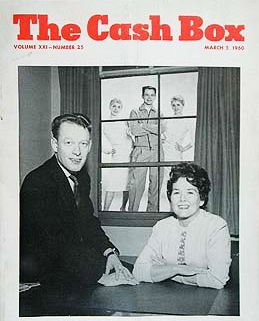


Sources, Links & Additional Information

Another sample of Vanity Fair cover art from January 1932 – Paolo Garretto depicts the changing allegiances of Ramsay MacDonald, then Britain's prime minister, by dressing him in worker's overalls on one side and an aristocrat's suit and top hat on the other.
Miguel Covarrubias’ cover for Vanity Fair’s August 1932 issue featured tennis star Helen Wills Moody.
Miguel Covarrubias’ caricature of Greta Garbo appeared on the February 1932 cover of Vanity Fair.
Paolo Garretto casts Adolf Hitler in political cartoon for Vanity Fair’s November 1932 cover.
John D. Rockefeller & Joseph Stalin, ‘Impossible Interviews,’ Vanity Fair, April 1932.
Queen Marie & Mae West, ‘Impossible Interview,’ June 1932, Vanity Fair
Miguel Covarrubias caricatures of Walter Lippmann & Walter Winchell, ‘Impossible Interviews,’ Vanity Fair, 1930s.
Lippmann & Walter Winchell, ‘Impossible Interviews,’ Vanity Fair, 1930s. Miguel Covarrubias.

David Friend, “Vanity Fair: The One-Click History,” VanityFair.com, 2008.

Amy Fine Collins, “Vanity Fair: The Early Years, 1914-1936,” VanityFair.com, 2008

Susan Ronald, Condé Nast: The Man and His Empire – A Biography, 2019, St. Martin’s Press, 448 pp. Click for copy.

Cleveland Amory and Frederic Bradlee, Vanity Fair: A Cavalcade of the 1920s and 1930s. The Best Stories, Articles, Humor, Photographs, Art from America’s Most Memorable Magazine, 1960, Viking Press, 327 pp. Click for copy.

Graydon Carter with David Friend, Bohemians, Bootleggers, Flappers & Swells: The Best of Early Vanity Fair, 2014, Penguin Press. Click for copy.

Graydon Carter, David Friend, Vanity Fair: The Portraits: A Century of Iconic Images, 2008, Abrams, 384 pp. Click for copy.

“Vanity Fair,” The American Studies 1930s Project, English Department, University of Virginia, site accessed, October 2009.

David Friend, “The 1930s and Vanity Fair,” VanityFair.com, June 11, 2008.

Kitty Hoffman, “A History of Vanity Fair; A Modernist Journal in America.” Dissertation, University of Toronto, Canada,1980.

Walter Lippman, “Post Mortem: The Election,” Vanity Fair, January 1929.

“West Will Launch Roosevelt Boom; State of Washington Expected to Put Him Before Nation for Presidency Feb. 6,” New York Times, Tuesday, January 5, 1932, p. 8.

Jay Franklin, “New Years Day and Mr. Hoover,” Vanity Fair, January 1933.

Marcus Duffeld, “Brightening Up Politics,” Vanity Fair, January 1933.

“Roosevelt Orders 4-Day Bank Holiday, Puts Embargo on Gold, Calls Congress,” New York Times, March 6, 1933.

“President and Wife Call on Mr. Holmes; Felicitate the Former Supreme Court Justice on His Ninety-Second Birthday,” New York Times, Thursday, March 9, 1933, Section, Social News, p. 17.

Jay Franklin, “Not a Cabinet But a Coalition,” Vanity Fair, May 1933.

“The New Deal,” Wikipedia.com

David A. Horowitz, “Senator Borah’s Crusade to Save Small Business From the New Deal,” The Historian, June 22, 1993.

“Walter Lippmann,” The Columbia Encyclopedia, sixth edition, Encyclopedia.com, 2008.

Johnna Rizzo, “Covarrubias’ Early Days in New York,” Humanities, May/June 2006.

Edward Sorel, “Covarrubias,” American Heritage Magazine, Vol. 45, Issue #8, December 1995.

“Miguel Covarrubias,” Wikipedia.com.

Kurt Heinzelman (ed), The Covarrubias Circle: Nickolas Muray’s Collection of Twentieth-Century Mexican Art, University of Texas Press, 2004.

“Illustration: The Genius of Miguel Covarrubias,” AnimationArchive.org, Monday, May 14, 2007.

Henry C. Pitz, “Miguel Covarrubias of Mexico City,” American Artist, January 1948, pp 21-24.

Samples of Miguel Covarrubias artwork, American Art Archives.

________________________________

Miguel Covarrubias, “Impossible Interviews”
(samples follow below)

“Marie of Romania vs. Mae West,” text by Corey Ford, Vanity Fair, June 1932.  The Romanian Queen laments her neglect by the public, to which West replies:  “What I mean, sister, lemme put you wise. Royalty don’t get you any place, any more.  Today they only want the kind of a Queen they can hold on their laps. Lookit me, for instance.  Every other inch a Queen, from hips to whoozis.” (see image, below right)

“John D. Rockefeller Sr. vs. Joseph Stalin,” Vanity Fair, April 1932.

“Senator Smith W. Brookhart vs. Marlene Dietrich, Vanity Fair, September 1932.

“S.L. Rothafel vs. Arturo Toscanini,” Vanity Fair, February 1933.

“Herr Adolf Hitler and Huey ‘Hooey’ Long vs. Joseph Stalin and Benito Mussolini,”Vanity Fair, June 1933.

“Sally Rand (dancer/stripper) vs. modern dance pioneer, Martha Graham,” Vanity Fair, December 1934, text by Cory Ford.  In the accompanying mock dialogue, stripper Sally is quoted as saying they were “…just a couple of little girls trying to wriggle along.”

“Freud vs. Jean Harlow,” Vanity Fair, May 1935.

George Arliss vs. Cardinal Richelieu, Duke of Wellington, and Disraeli,” Vanity Fair, January 1936.

___________________________

Mike Rhode, “Miguel Covarrubias Portraits on Display This Fall” (with earlier review), ComicsDC, Thursday, August 30, 2007.

Steven Heller, “Paolo Garretto: A Reconsider- ation,” undated paper (PDF) with sample Paolo Garretto works, 13pp.

“Paolo Garretto Is Dead; Italian Caricaturist, 86,” New York Times, Tuesday, August 8, 1989.

Sampling of Paolo Garretto caricatures at Cartan- tica.It.

Steven Heller, Design Literacy: Understanding Graphic Design, Allworth Press, 2004, 433pp.

Price Fishback, Professor of Economics, University of Arizona, New Deal 2 Editor, “Impact of New Deal Programs on Welfare,” Analysis Online.Org.

Price V. Fishback, William C. Horrace and Shawn Kantor, “Did New Deal Grant Programs Stimulate Local Economies? A Study of Federal Grants and Retail Sales During the Great Depression,” Journal of Economic History, March 2005.

Fishback, Price V., William C. Horrace, and Shawn Kantor, “The Impact of New Deal Expenditures on Mobility During the Great Depression,” Explorations in Economic History, 43 (April 2006), 179-222.

Alex J. Pollock, “A 1930s Loan Rescue Lesson,” Washington Post, Friday, March 14, 2008

National Labor Relations Board, The First 60 Years — The Story of the National Labor Relations Board: 1935-1995, American Bar Association, 1995.

Cabell B. H. Phillips, From the Crash to the Blitz, 1929-1939, Fordham University Press, 596pp.

PBS, “Regulation: Public vs. Private Power: From FDR to Today,” Frontline, Program: “Blackout: What Caused the Power Blackout in California?  And Who’s Profiting?,”  A co-production of Frontline and The New York Times, June 2001.

See Vanity Fair Store to purchase prints of vintage Vanity Fair magazine covers from the 1930s and other time periods.


“Beatles in America”
1963-1964

The Beatles in a session with Ed Sullivan prior to their February 9th, 1964 show. From left: Paul McCartney, Ed Sullivan, George Harrison, John Lennon, and behind & above, Ringo Starr.
     The Beatles became a sensation in the U.K. in 1962-63, about a year or more before anyone in the U. S. knew much about them. However, before that, the Beatles had honed their craft playing in nightclubs and other gigs dating to the late 1950s. 

Known by earlier names such as The Quarrymen, Johnny & The Moondogs, and The Silver Beatles, they played a variety of venues, with a change or two in personnel during those early years. 

In Hamburg, Germany, and Liverpool, England, from about 1960 on, they worked hard and steadily in nightclubs, putting in long hours, improving their stage act, increasing their range of music, and writing their own songs. They were a cover band as well, as most English rock bands then were. They offered their own versions of Buddy Holly, Little Richard, Chuck Berry, Carl Perkins, Larry Williams, and others. 

By late 1961, they were playing to packed houses at the Cavern nightclub in Liverpool, England where they were discovered by their manager-to-be Brian Epstein in November 1961. Epstein did a wardrobe and style make-over on them, cleaning them up for the music industry. By May 1962, after being rejected by a number of U.K. record labels, they signed a deal with EMI, then the U.K.’s leading music company.

The Beatles as photographed upon arrival at JFK Airport in New York, Feb 7, 1964, from top left: John, Paul, George & Ringo.
     During 1962, their songs began hitting the British Melody Maker music chart and others. “Love Me Do,” a Lennon / McCartney composition, rose to No. 21 that fall, and their first No. 1 hit came with “Please, Please Me” on February 22, 1963. At about this point, what came to be known as “Beatlemania” began to break out in the U.K.
 

Music Player
“Please Please Me”- 1963-64

 
The Beatles’ first U.K. album was titled Please Please Me, released in April of 1963. Within four weeks it would be the No.1 U.K. album, remaining in that position for 30 weeks, followed by their second U.K. album, With the Beatles. From then on, there came a string of No. 1 Beatles’ hits and No. 1 albums until the group broke up in 1969-1970.

     In the American music industry, however, there was an initial hesitancy about the Beatles, as some record executives and DJs, especially in 1963, didn’t think that British acts generally would do well in America.  That perspective would soon change.

     What follows below is a timeline marking the rise of Beatles’ music and appearances in the U.S. during 1963 and 1964, along with a few photos, anecdotes, and sidebar stories.  It is not a complete and comprehensive treatment of the Beatles’ activities during these years, nor is it meant to be.  There are entire books and websites devoted to that topic, some of which are noted in “Sources & Additional Information” at the end of this article.  What is offered here, hopefully, is a representative sampling of activity in those first two “Beatles-in-America” years, mixing in music history, business developments, and news-of-the-times — plus one or two stories that may be new to many readers.

_______________________________________________________


“Beatles-in-America Timeline”
1963-1964


January 1963
George Martin of EMI in London sends a copy of “Please Please Me” to U.S. subsidiary Capitol Records, urging executives there to distribute Beatles’ songs in the U.S. They decline, saying: “We don’t think the Beatles will do anything in this market.”  Lesser known labels then begin picking up Beatles’1963 songs for U.S. release.

Vee-Jay single of Beatles’ “Please Please Me,” in Feb 1963, distinguished by ‘Beattles’ mis-spelling, later corrected. Click for digital.

25 Jan 1963
Vee-Jay record label of Chicago obtains a contract to release limited number of Beatles records in the U.S. for a limited time period.

25 Feb 1963
“Please Please Me”/ “Ask Me Why” released as single on Vee-Jay label. The song is played on Chicago’s WLS radio station by DJ Dick Biondi (making him the first American DJ to play Beatles music). The song reaches No. 35 on the WLS music survey in March. However, the song does not chart nationally; not on Billboard.

27 May 1963
“From Me To You” / “Thank You Girl” released as a single by Vee-Jay, but is barely visible; No. 116 on August Billboard chart, drops off thereafter.

Record sleeve for ‘She Loves You’ / 'I’ll Get You’ single issued by Swan Records in Sept. 1963, which went ‘virtually unnoticed.’ Click for digital.


16 Sept 1963
“She Loves You” / “I’ll Get You” released in U.S. by Swan Records, a Philadelphia label, but does not chart on Billboard.

31 Oct 1963
American TV variety show host, Ed Sullivan, traveling to London, has his arrival delayed at London Heathrow Airport by a screaming crowd of teens welcoming the Beatles home from a tour of Sweden.  Sullivan has his first thoughts of booking these rising British music stars with strange haircuts — perhaps as novelty act.

11-12 Nov 1963
Beatles manager Brian Epstein travels to New York and persuades Ed Sullivan to book the Beatles for an unprecedented three consecutive appearances on Sullivan’s much-watched Sunday evening variety show — February 9th, 16th and 23rd, 1964.  CBS-TV gets one year’s exclusive rights to the Beatles’ U.S. television appearances.

Brian Epstein, who discovered the Beatles and became their manager, also negotiated early business deals and arranged for publicity.
15 Nov 1963
Time magazine take notice of the “Beatlemania” craze sweeping England and the Beatles’ command performance for British royalty in London.

16 Nov1963
CBS News bureau London — at the suggestion of Beatles’ manager Brian Epstein — sends a news crew to the British seaside resort of Bournemouth where they film a Beatles concert, thousands of screaming fans, and a few Beatles’ comments on camera.  This film clip is later sent to New York.

Mid-late Nov 1963
Brian Epstein phones Capitol Records president Alan Livingston over label’s refusal to distribute Beatles songs in America.  Epstein urges Livingston to listen to the U.K. single, “I Want To Hold Your Hand,” while mentioning the Beatles’ upcoming 1964 Ed Sullivan Show appearances as a big opportunity for Capitol.  Livingston later agrees to spend $40,000 for Beatles promotion, equal to about $250,000 in today’s money.

Beatles’ ‘I Want To Hold Your Hand' song that Brian Epstein asks Capitol Records Alan Livingston to consider, Nov 1963. Click for digital.

18 Nov 1963
NBC’s evening news program, The Huntley-Brinkley Report, airs a four-minute segment on the Beatles.

22 Nov 1963
U.K. album, With The Beatles, is released in the U.K., rising to No. 1 on the British album charts and remaining there for 21 weeks.  With The Beatles becomes the Beatles’ first million-selling album in Britain, and the second album of any kind in Britain to sell one million copies, the first being the South Pacific soundtrack.

22 Nov 1963
The “CBS Morning News With Mike Wallace” runs a story on the Beatles for the network’s morning news show.  CBS planned to repeat the segment that evening on Walter Cronkite’s newscast.  However, that day, in mid afternoon, Walter Cronkite was breaking the tragic news to a shocked nation that their President, John F. Kennedy, had been shot and killed while visiting Dallas, Texas.

29 Nov 1963
The Beatles’ single “I Want To Hold Your Hand” is released in the U.K. and immediately hits No. 1 on the British pop charts.


“Dick Clark & The Beatles”
Aug-Dec 1963

Dick Clark was a partner for a time in Swan Records. Click for Bandstand story.
     Swan Records was a Philadelphia, PA record label founded in 1957 by Bernie Binnick, Tony Mammarella, and Dick Clark. Clark was then host of American Bandstand, a popular dance and pop music TV show.  Binnick, an accountant, had worked with Clark on earlier music projects, and Marmmarella was a producer at Bandstand. Initially, Clark held 50 percent of Swan Records, with Binnick and Mammarella each holding a 25 percent share.  After the 1959-60 payola scandal that had implicated music DJs in “play-for-pay” music deals, Dick Clark — though never found guilty of any wrong-doing — divested his music holdings, including Swan, which he sold to Binnick and Mammarella.  By 1963, Clark was still at American Bandstand, and very much a recognized leader in the business of rock ‘n roll music.

     The Beatles in England by this time were already a sensation, with hit after hit, setting music sales records.  On August 23, 1963, the Beatles released the song “She Loves You” in the U.K. on EMI’s Parlophone record label.  “She Loves You” hit No. 1 in the U.K. on August 29, 1963.  However, in the U.S., Capitol Records, a subsidiary of EMI, declined to issue “She Loves You” in America.  They had also not issued other Beatles’ U.K hits — “Love Me Do”, “Please Please Me” and “From Me To You.”  That left the door open to other smaller companies to obtain the U.S. distribution rights for Beatles’ songs.

Swan Records released the Beatles’ ‘She Loves You’ in Sept 1963, but it went nowhere. Re-issued in early 1964 after Beatles’ music soared, it hit No. 1 in March. Click for vinyl.

     According to John Jackson’s excellent book, American Bandstand: Dick Clark and the Making of a Rock ‘n Roll Empire, Bernie Binnick acquired the American rights for “She Loves You” for his Swan Record label while on vacation in England in the summer of 1963. When he returned, he pressed his old friend Dick Clark about the song, obviously hoping for some American Bandstand attention.

“What do you think?” he reportedly asked Clark, who replied that the song sounded like “Buddy Holly and the Crickets and Chuck Berry and a lot of other early American songs sort of mixed together.”

Clark was not reassuring, though Binnick tried to interest Clark in the new group’s novel look.  But after glancing at a picture of the Beatles, Clark noticed their long hair and reportedly told Binnick, “you’re absolutely insane….It’ll never fly.” 

     Still, Binnick’s Swan label released “She Loves You” to the American market in mid-September 1963.  But nothing happened.  Clark, meanwhile, appears to have given the record a review on American Bandstand’s “rate-a-record” segment — probably in the Oct-Nov period.  Bandstand’s “rate-a-record” consisted of a selected group of teenagers reviewing several new records that were played, then rated on a numeric scale by the teens who were interviewed by Clark.  “She Loves You” reportedly did poorly on the rate-a-record segment, earning a seventy-one out of a possible ninety-eight points — not an impressive showing.  According to another account, Clark would later explain that the Beatles’ disc rated “just fair.”  He also added, “then I pulled a picture of the group out, and the audience just giggled.  I figured these guys were going nowhere.”  But as Clark would later acknowledge, “We all found out the truth soon enough.”

New songs were rated by teens on Bandstand, who reportedly gave the Beatles’ ‘She Loves You’ a poor rating in 1963.

     Binnick, meanwhile, had a pile of newly pressed Swan recordings of “She Loves You” going nowhere.  Then in late 1963 he got a telephone call from Beatles’ manager, Brian Epstein, who was then in New York arranging an American television appearance for the Beatles.  Epstein wanted to know how “She Loves You” was doing in America.  Binnick replied that the record was “a stiff.”  Epstein shot back that it might soon become a huge hit, explaining that the Beatles were going to appear on The Ed Sullivan Show.  Binnick, unimpressed, told Epstein he “blew it,” saying he should have had the Beatles appear on Dick Clark’s American Bandstand rather than The Ed Sullivan Show, suggesting that Clark’s show was more popular.

     About a month or so later, Jack Paar, who hosted a Friday evening variety TV show on NBC, had just returned from England that December, marveled to his viewing audience over the “Beatlemania” that he had observed overseas. Paar was also able to get a film clip of the Beatles performing “She Loves You” in an English town, and he aired it on his show Friday, January 3, 1964, showing the Beatles performing the song as their teenage fans went wild.  According to Binnick, “the record exploded [in sales] the following Monday.” Binnick and Swan re-issued “She Loves You” to meet demand. By March 21st it would become the No. 1 hit in the land. “She Loves You,” in fact, would sell 1 million copies, creating a temporary windfall for Binnick and Swan Records. However, Swan’s option on future Beatles songs had been lost since it stipulated that ‘She Loves You” had to sell 50,000 copies in its first year, 1963, which it did not. Swan also had the rights to the German version of “She Loves You,” which did reasonably well too, but not enough to save Swan from its troubles. The company went out of business in 1967. As for Dick Clark’s American Bandstand, the Beatles never did appear on the show; they didn’t need to.


29 Nov 1963
Radio station KIOA in Des Moines, Iowa begins playing “I Saw Her Standing There” from a Drake University student’s copy of Beatle’s U.K. album, Please Please Me, and a few days later, “I Want to Hold Your Hand,” from a U.K. Beatles’ single  (see sidebar story below).

1 Dec 1963
The New York Times Sunday Magazine, runs a story on “Beatlemania” in the U.K.


4 Dec 1963
Capitol Records issues a press release announcing that it will begin selling the Beatles’ first U.S. 45 rpm single, “I Want To Hold Your Hand,” on Monday, January 13th, 1964.

10 Dec 1963
A four-minute CBS film segment on The Beatles that had been pre-empted by the JFK tragedy is aired on Walter Cronkite’s  CBS Evening News. 

Capitol Records issues "Beatles' Cam-paign" memo to its staff, Dec 23rd, 1964.
17 Dec 1963
Radio disc jockey Carroll James at Washington. D.C. station WWDC, plays rare U.K. copy of  “I Want to Hold Your Hand” on the radio after 15-year-old girl from Silver Spring, MD wrote to him  requesting Beatles music after seeing the CBS-news segment.  James arranged to have an airline stewardess buy a U.K. copy of the Beatles’ latest single in London.  Listeners phone in repeatedly to request the song.

18-19 Dec 1963
Capitol Records threatens to sue WWDC to stop playing song, but then reverses itself and decides to rush-release “I Want To Hold Your Hand,” previously scheduled for  January 13, 1964.  Christmas leave is canceled at Capitol Records, as pressing plants and staff gear up for rush release.

23 Dec 1963
Capitol Records issues a memo to its sales people and regional managers across the country, outlining an extensive “Beatles Campaign” using various promotional items — from major music magazine trade ads and a fake tabloid Beatles newspaper (reprinted in the thousands), to Beatle buttons, Beatle stickers, Beatle wigs, and a battery-powered, “Beatles-in-motion,” bobble-head-like, window display for music stores.


“Beatles’ Iowa Breakout”
29 November 1963


On the evening of Nov 29, 1963, a Drake University student showed up at this Iowa radio station waving a copy of a new U.K. Beatles’ album at the DJ through the window. Click for album.
     Stu Adams was a disc jockey at Des Moines, Iowa radio station KIOA — one of the “KIOA Good Guys,” as that station’s DJs were known locally.  It was late November 1963, the Friday after Thanksgiving.  In fact, it was exactly a week after the assassination of President John F. Kennedy.  The programming at the station was gradually getting back to normal.  Adams was working the 6:00 to 9:00 pm shift on that cold November night.  He was situated at his radio post behind a huge storefront plate glass window in the studio at 803 Keo Way in Des Moines.  While working, he was interrupted by an urgent rap on the window.  Outside was a young man trying to get his attention.  He was holding up a copy of a Beatles LP from England, Please Please Me, their first album, unavailable in the U.S.

     At first, Adams tried to ignore the young man.  But he persisted, holding up the album and pointing to it emphatically.  So Adams finally let him in out of the cold.  The young man was a Drake University student who had recently returned from a trip to England.  He insisted that the station play the Beatles’ new music.

On the evening of Nov 29, 1963, a Drake University student showed up at Iowa radio station KIOA with this Beatles’ U.K. album. Click for album.
      Adams, as music director at the station, was aware of the Beatles.  In fact, the station had tried playing “She Loves You” back in September 1963 when it was released in the U.S. by Swan Records.  But the song received little interest.  In fact, a teen record panel that met weekly at the station to rate songs had also given it a thumbs down.  Adams was also hearing talk in the music industry that English records were a hard sell in the U.S., and that the Beatles wouldn’t make it here either.  But Adams was more open-minded on that score, since a late summer song by England’s Cliff Richard, “Lucky Lips,” had been a Top Ten KIOA hit.

     The Drake student, meanwhile, insisted the Beatles album he had was better than previous Beatles recordings, and that “I Saw Her Standing There,” on the album, was one of the songs that was then very popular in England.  Adams, having been playing a steady parade of “car tunes and surfing music,” decided to give the new Beatles album a whirl.  He “slapped the Parlophone labeled Please Please Me LP on a turntable” and asked his listeners to call in and let the phone ring just once if they liked it.  “Instantly, all the lines lighted up and stayed that way until well after the song ended,” recalled Adams in a later account of the playing.  “With that,” said Adams, “Beatlemania was not only born in Iowa, but throughout the Midwest.”

This was the U.K. Beatles’ LP that Iowa radio station DJ Stu Adams began playing on Nov 29, 1963.
     Requests continued for the Beatles music the next day.  Adams had no choice but to add “I Saw Her Standing There” to the station’s playlist, using a dubbed version taken from the student’s album.  It became the most requested song at the station, but it didn’t make the station’s top tunes survey because that survey was based on local record sales, and at the time, there were no copies of that record in stores.  No sales meant no chart position.  But according to Adams, “the requests just kept on coming in.”  Several days later, the Drake University student returned with the new UK Beatles single, “I Want to Hold Your Hand” backed with “This Boy.”  Said Adams: “sales in England were phenomenal and as soon as we put it on the air we could see why.”  But as Adams and KIOA continued playing these U.K. Beatles releases, local record shop owners in Des Moines weren’t too happy, as they had none to sell.  Soon, Capitol Records, which held the rights to the Beatles records in the U.S., ultimately was forced to move up the release date for “I Want to Hold Your Hand” — the first scheduled U.S. Beatle’ single from Capitol — from January 13th, 1964, to December 26th, 1963.  Once released, the single, with “I Saw Her Standing There” on the B side, hit No. 1 in record sales in Des Moines and made it to No. 1 on the KIOA survey — as it soon did throughout the rest of the U.S.


The Beatles’ single ‘I Want To Hold Your Hand,’ issued by Capitol Records, went on sale in the U.S. in late December 1963. Click for vinyl re-issue.
26 Dec 1963
Capitol Records begins distributing “I Want To Hold Your Hand” to radio stations in major U.S. cities where it is played regularly.  With teens home for Christmas-New Years break, radios get full-time use, and the record begins selling like crazy.  In New York City, 10,000 copies are sold every hour.  In the first three days, 250,000 copies are  sold.  Capitol was so overloaded it contracted Columbia Records and RCA to help with the pressings.

28 Dec 1963
The New Yorker magazine publishes a Brian Epstein interview; regarded as first serious article in U.S. about the Beatles and their manager.

29 Dec 1963
New York city radio station WMCA joins others  broadcasting “I Want To Hold Your Hand.”  Back in London, meanwhile, Sunday Times critic Richard Buckle praises the Beatles as the greatest composers since Beethoven.

A Beatles' film clip was shown on Jack Paar's TV show in early January 1964.
30 Dec 1963
A two-page ad from Capitol Records pitching the Beatles’ recordings runs in Billboard and Cash Box music industry magazines.  Bulk reprints of these ads have already been distributed to Capitol’s sales agents for use with radio stations and in enlarged, easel-scale size for use in music store displays across the country.

3 Jan 1964
Jack Paar, host of the late night U.S. TV talk show, “The Jack Paar Show,” airs a filmed Beatles’ performance of “She Loves You” from England.  It is the first complete Beatles song shown on American TV, and for many in America, the first time they see the Beatles.

V-J’s promotional cover sleeve for Beatles’ ‘Please Please Me’ single following Jack Paar show, Jan 1964.


10 Jan 1964
Vee-Jay Records releases the first Beatles album in the U.S., Introducing…The Beatles.  Legal and business issues plague the album, but by late fall, it would sell more than 1.3 million copies.

10 Jan 1964
Two weeks after the Capitol Records release of “I Want To Hold Your Hand,” sales hit 1 million copies — a staggering number at that time for an unknown music group from overseas.

mid-Jan 1964
Vee-Jay Records’ issues special record sleeves for promoting “Please Please Me” to radio DJs,  noting Beatles’ clip on Jack Paar’s show, upcoming Ed Sullivan Show dates, and national news coverage in Time, Life & Newsweek magazines.

Click for similar 'With The Beatles', UK remastered.


18 Jan 1964
“I Want to Hold Your Hand” debuts on Billboard at No. 45; soon hits No. 1 (Feb 1,’64, for 7 wks).

20 Jan 1964
Capitol Records issues Meet the Beatles, the Beatles’ first Capitol album in the U.S.

20 Jan 1964
To promote the Meet The Beatles album and their upcoming first American visit, Capitol Records distributes pre-recorded interview with the Beatles to American radio stations.

29 Jan 1964
Capitol Records announced in a press releases, that Meet the Beatles had already sold 400,000 copies by January 27th.

Vee-Jay's "Please Please Me," released a 2nd time, late Jan 1964.


30 Jan 1964
Vee-Jay Records releases, for the second time, the single “Please Please Me” / “From Me to You,”  entering the Billboard chart at No. 69.  It would later reach No. 3, and Vee-Jay would sell at least 1.1 million copies.

7 Feb 1964
At about 1:20 p.m. the Beatles arrive at Kennedy International Airport in New York where they are greeted by 3,000 screaming teenagers, 200 reporters and photographers, and more than 100 New York police officers.  At a televised press conference the Beatles come off as witty, charming and playful.

Beatles at press conference after landing in New York, February 7, 1964.


9 Feb 1964
Elvis Presley sends The Beatles a telegram wishing them well in their upcoming Ed Sullivan Show appearance later that evening.

9 Feb 1964
Beatles perform live on The Ed Sullivan Show, reaching a record-breaking audience of 73 million, or according to A.C. Nielsen, 23.2 million households.  One estimate at 40% of population.  They perform five songs: “All My Loving,” “Till There Was You,” “She Loves You,” “I Saw Her Standing There” and “I Want To Hold Your Hand.”

Beatles performing on ‘Ed Sullivan Show,’ Feb 9, 1964, before estimated TV audience of 73 million. Click for DVD.


11 Feb 1964
The Beatles give their first live concert performance in the U.S. at the Washington Coliseum in Washington, D.C.

12 Feb 1964
The Beatles perform two shows at Carnegie Hall in New York City.

16 Feb1964
Second appearance on The Ed Sullivan Show, live from the Deauville Hotel in Miami Beach, Florida. Approximately 70 million people tune in, or 22.4 million households. Songs performed: “She Loves You,” “All My Loving,” “This Boy,” “I Saw Her Standing There,” “From Me to You,” and “I Want to Hold Your Hand.”

Beatles clowning with boxer Cassius Clay (later known as Muhammad Ali) during visit to Miami, FL, Feb 1964.  Photo, Harry Benson.
Beatles clowning with boxer Cassius Clay (later known as Muhammad Ali) during visit to Miami, FL, Feb 1964. Photo, Harry Benson.


22 Feb 1964
The Beatles return to London, U.K.;  at Heathrow Airport at 7 a.m. they are met by an estimated 10,000 fans.

23 Feb 1964
Beatles appear for 3rd time on Ed Sullivan Show, a performance that was taped earlier in New York — performing three songs: “Twist and Shout”, “Please Please Me” and “I Want to Hold your Hand.”

13 Mar 1964
Meet the Beatles LP by this date is reported to have sold 3,600,000 copies. “Can’t Buy Me Love” their next single, has advance orders of 1,700,000 copies in the U.S.

The Beatles, 'Saturday Evening Post' cover, 21 March 1964.


14 Mar 1964
“Please Please Me” is a massive hit, rising to No. 3 on the Billboard Hot 100 chart by this date.

16 Mar 1964
“Can’t Buy Me Love/You Can’t Do That” is released as single by Capitol Records; sells 940,225 copies first day, 2.1 million by March 19th.

21 Mar 1964
Beatles appear on the cover of The Saturday Evening Post, one of America’s mainstream magazines at the time.  Post’s cover story — “The Secrets of The Beatles” — promises “an intimate account of their American tour and a probing analysis of their incredible power to excite frenzied emotions among the young.”

23 Mar 1964
“Do You Want to Know a Secret” / “Thank You Girl” released as a Vee-Jay single.

28 Mar 1964
Capitol Records reports sales of “I Want To Hold Your Hand” in excess of 3.4 million copies.


Beatles' 2nd album from Capitol, released April 10th, 1964. Click for album.

31 Mar 1964
The Beatles hold the top five slots on Billboard: (1) Can’t Buy Me Love, (2) Twist and Shout, (3) She Loves You, (4) I Want To Hold Your Hand (5) Please Please Me — a musical first.

10 Apr 1964
The Beatles’ Second Album is released by Capitol Records, which replaces the Beatles first Capitol album, Meet The Beatles, at No. 1 on the Billboard album chart from May 5th to June 2nd.

11 Apr 1964
The Beatles hold 14 slots on Billboard’s Hot 100 chart.

14 Apr 1964
The Beatles’ Second Album reaches $1 million in sales by this date.

Beatles’ Hot 14
Chart #s on Billboard
April 11, 1964

1.      Can’t Buy Me Love
2.      Twist & Shout
4.      She Loves You
7.      I Want To Hold Your Hand
9.      Please Please Me
14.    …Want to Know a Secret
38.    …Saw Her Standing There
48.    You Can’t Do That
50.    All My Loving
52.    From Me To You
61.    Thank You Girl
74.    There’s A Place
78.    Roll Over Beethoven
81.    Love Me Do
___________________
               Billboard Hot 100, 1964.


27 April 1964
“Love Me Do”/ “P.S I Love You” released as single by Tollie Records, a Vee-Jay subsidiary.

1 June 1964
“Sweet Georgia Brown” / “Take Some Insurance Out on Me” released as Atco Records single.

‘A Hard Day’s Night’ became one of the fastest-selling soundtrack albums of the 1960s. Click for CD.

June 1964
Advance orders for the soundtrack album from the Beatles’ forthcoming film, A Hard Day’s Night, are 250,000 in the U.K. and 1 million in the U.S.; album would sell 2 million copies in the U.S. by October, and 600,000 in the U.K. by year’s end.  American version, with somewhat different songs, was released on June 26, 1964 by United Artists Records.


June 1964
The Beatles fly to Hong Kong, June 8-10, perform two concerts there and then go to Austrailia, June 12-14.  In Adelaide, Australia they are greeted by an estimated crowd of 300,000 along their motorcade route.

Beatles’ single, ‘And I Love Her’. Click for digital.

 13 July 1964
“A Hard Day’s Night” / “I Should Have Known Better” released as single by Capitol Records.

20 July 1964
“I’ll Cry Instead”/ “I’m Happy Just To Dance With You” released as single by Capitol Records.

20 July 1964
“And I Love Her”/ “If I Fell” released as single by Capitol Records, as well as a new Beatles’ album, Something New.

1964 film poster. Click for film.

11 Aug 1964
Beatles first film, A Hard Day’s Night, opens in America and is a huge hit.  Shown in 500 theaters across U.S., it earns $1.3 million in the first week.  Some 15,000 prints made for world-wide distribution — historical first in film industry.

12 Aug 1964
Variety magazine reports that by August 1964, the Beatles had sold approximately 80 million records globally.

19 Aug 1964
The Beatles perform at the Cow Palace in San Francisco, California, in the first concert of their USA/Canada tour, which lasts a month through August and September.

24 Aug 1964
“Matchbox” / “Slow Down” is released as a single by Capitol Records.

'Life' magazine, 1964. Click for special edition.


August 1964
The Beatles received a request from the White House press office to be photographed with President Lyndon B. Johnson, laying a wreath on the grave of John F. Kennedy.  The request was politely declined by their manager, Brian Epstein, saying it was not the group’s policy to accept “official” invitations.

25 Aug 1964
The Beatles’ single, “A Hard Day’s Night,” is certified gold for exceeding sales of more than 1 million copies.

26 Aug 1964
Beatles’ North American tour plays Denver, Colorado.

27 Aug 1964
Beatles’ North American tour plays Cincinnati, Ohio.

28 Aug 1964
Life magazine article reports that the Beatles’ 33-day tour of 23 American cities is a sell out at every location and is expected to gross millions. Beatles pandemonium at the time is such that some hotels along the tour route refused to house the Beatles, and Los Angeles’ Lockheed Airport forbad any Beatles plane from landing there for fear of screaming fans running on to the tarmac.


“Charlie O & The Beatles”
17 September 1964


Ticket stub, Beatles' Sept 17,1964 concert in Kansas City, MO.
     Charles O. Finley (b.1918 – d.1996) was an American businessman who made his fortune in medical insurance.  In December 1960, he became the owner the Kansas City Athletics professional baseball team in Kansas City, Missouri.  He later moved this team to Oakland, California where they became the Oakland Athletics.  However, in Kansas City, “Charlie O” as he was sometimes called — remembered for his promotional antics and not always winning teams — was also responsible for bringing the Beatles to Kansas City in 1964.  The Athletics played their games at Kansas City’s Municipal Stadium then, and Finley promised the city’s people he would bring the Beatles to Kansas City during the group’s first American tour that summer.  But Kansas City was not on the list of cities where the Beatles had arranged to perform.

Finely on ticket back.
     Finley went to San Francisco on August 19, 1964, where the Beatles were playing their first date.  There he met with the Beatles’ manager, Brian Epstein.  He told Epstein that he was disappointed that Kansas City was not on the Beatles’ itinerary.  He then offered Epstein $50,000 and then $100,000 if the Beatles would schedule a concert for Kansas City.  Epstein refused, pointing out that on the only free date available, September 17, the band was scheduled for a day of rest in New Orleans.  Finley left disappointed, but again encountered Epstein in Los Angeles a week later.  Epstein again rejected Finley’s offer of $100,000, noting that the band wanted to use their only day off to “explore the traditional home of jazz.”  Undeterred, Finley tore up the $100,000 check and wrote a new one for $150,000 (equal to about $1 million in today’s money).  Astonished, Epstein excused himself to talk to the group.  John Lennon speaking for his bandmates replied, “We’ll do whatever you want.” So Epstein accepted Finley’s check, and they agreed to play Kansas City.  At the time it was the highest fee ever paid for a musical concert, working out to about $4,838 per minute (or roughly $33,000 per minute in 2009 $$).  When the Beatles performed there they included their version of the song “Kansas City.” They also gave a memorable press conference at the Hotel Muehlebach, available today on CD.

CD of Beatles' 1964 Kansas City press conference.
     Finley had justified the Beatle’s high-priced recruitment to Kansas City with the quip, “Today’s Beatles Fans Are Tomorrow’s Baseball Fans” — printed on the back of the concert tickets.  Also shown on the back of some of the tickets was a photo of Finley in a Beatle’s wig — which were sold as a fad at the time as part of Beatles’ promotional merchandise.

     At the concert, however, a crowd of 20,207 attended, which was just over half of Municipal Stadium’s full capacity of 35,000 when seats were installed on the field.  The drop off in attendance was due in part to local animosity over Finely’s record with the Athletics and some of his promotional antics, which weren’t always welcomed in the community.  In fact, the local media at the time, and especially The Kansas City Star, suggested boycotting the Beatles’s concert as a way to protest Finley’s unpopular management of the Athletics.  Still, thousands came out, as Beatles’ fans heard a full set of their tunes performed that night.  Finley, meanwhile, who had earmarked profits from the event for Children’s Mercy Hospital, had to write a $25,000 check to cover the minimum donation he had pledged to the hospital in the event that the concert did not earn a profit.
_______________________
Sources: “Charles Finley,” Wikipedia.org; “Can’t Buy Him Love,” Kansas City Public Library; and, Mark Lewisohn, The Beatles Live!: The Ultimate Reference Book, New York: Henry Holt & Co., 1986, pp. 168-69.


Vee-Jay Record’s “Beatles vs. Four Seasons” two-album set, October 1964.
20 Sept 1964
The Ed Sullivan Show replays broadcast of Beatles’ February 16th appearance on the show.

1 Oct 1964
The Beatles vs. The Four Seasons two-record set is released by Vee-Jay Records.  Package is basically two previous albums — 1963’s Golden Hits of the 4 Seasons and VJ’s Beatles album, Introducing The Beatles. VJ hypes the package as “The International Battle of the Century!”

1 Oct 1964
Book by Brian Epstein, A Cellarful of Noise, is released by Souvenir Press; includes his autobiography and inside account of early Beatles.  Later edition issued in 1998 by Byron Preiss Multimedia Books.

Beatles’ Tour
North America
Aug-Sept 1964

Aug 19    San Francisco
Aug 20    Las Vegas
Aug 21    Seattle
Aug 22    Vancouver
Aug 23    Los Angeles
Aug 26    Denver
Aug 27    Cincinnati
Aug 28    New York
Aug 30    Atlantic City
Sept 2     Philadelphia
Sept 3     Indianapolis
Sept 4     Milwaukee
Sept 5     Chicago
Sept 6     Detroit
Sept 7     Toronto
Sept 8     Montreal
Sept 11   Jacksonville
Sept 12   Boston
Sept 13   Baltimore
Sept 14   Pittsburgh
Sept 15   Cleveland
Sept 16   New Orleans
Sept 17   Kansas City
Sept 18   Dallas
Sept 20   New York

2 Oct 1964
As of this date, ten million Beatles’ records had been sold in the U.S.; their American concert tour had grossed at least $1 million; their film, A Hard Day’s Night, had reaped $5.8 million at the U.S. box office in six weeks.  EMI, their record label, was reporting fiscal year sales of $265 million, up 12 percent largely on Beatles’ business.  Capitol Records was reporting its revenues were up as well, by 17 percent.  Brian Epstein and the Fab Four, meanwhile, were millionaires many times over, with total income earned beyond the U.K. then estimated to be some $56 million.

Atco album, of Beatles' songs and other U.K. artists, October 1964.

5 Oct 1964
Ain’t She Sweet album is released by Atco Records, an American album featuring four 1961 Beatles tracks from Hamburg, Germany and cover versions by other British groups.

13 Nov 1964
CBS TV shows a 50-minute doc- umentary, “What’s Happening! The Beatles in the U.S.A.,” filmed by Albert Maysles, covering the Beatles U.S. tour and other activities that year.

23 Nov 1964
“I Feel Fine” / “She’s a Woman” single released by Capitol Records.

23 Nov 1964
The Beatles Story double LP is released by Capitol Records, billed as “a narrative and musical biography of Beatlemania on two long-play records.”  The albums feature interviews, press conferences, and songs by the The Beatles.  It was The Beatles’ fourth release by Capitol Records.

'The Beatles' Story' album, 1964.


1 Dec 1964
Ringo Starr has his tonsils removed at the University College Hospital in London.

15 Dec 1964
Beatles ’65 album is released by Capitol Records featuring 11 Beatles’ cuts, among them: “I’m a Loser,” “Baby’s in Black,” “I’ll Follow the Sun,” “Mr. Moonlight,” “Honey Don’t,” “I’ll Be Back,” “She’s a Woman,” and “I Feel Fine.”

December 1964
Christmas recordings, with Christmas songs and messages from individual Beatles, are sent to fan club members in the U.K and U.S.


1964 Grammys

'Beatles '65' album, December 15, 1964.

     The 7th Grammy Awards, held in 1965, recognized the accomplishments of musicians for the year 1964.  This was the year musically when Barbra Streisand won a Best Vocal Performance award for “People,” and Louis Armstrong for “Hello, Dolly!”; the year Stan Getz and Astrud Gilberto won Record of the Year for “The Girl from Ipanema,” and songwriter Jerry Herman, Song of the Year, for “Hello, Dolly!” 1964 was also the year that Henri Mancini won a Grammy for the “Pink Panther Theme” and Roger Miller took home several Country & Western music awards, while Nancy Wilson won Best Rhythm & Blues Recording, Petula Clark for “Downtown,” and Gale Garnett, Best Folk Recording for, “We’ll Sing in the Sunshine.”  Not to be left out, of course, The Beatles won two awards: Best New Artist and Best Performance by a Vocal Group for “A Hard Day’s Night.”  But the Beatles’ 1964 arrival left its mark on more than music awards.


A Sound of Change

     The Beatles’ bursting onto the music scene of 1963-64 with their numerous popular songs has been described by some historians as a rare “pop explosion” — a musical infusion lasting basically four years, 1963-1967. This Beatles’ infusion, however, produced change that would last much longer than four years, not only in music but more broadly throughout popular culture —  in fashion, literature, politics and beyond.  But it would all start with the music, especially that first flush of Beatles’ songs in 1963-64.  What the Beatles had then, according to rock music historian Greil Marcus writing for The Rolling Stone Illustrated History of Rock & Roll, “was that elusive rock treasure, a new sound — and a new sound that could not be exhausted in the course of one brief flurry on the charts.”

Bob Dylan
…On the Beatles 

     “We were driving through Colorado [and] we had the radio on and eight of the Top Ten songs were Beatles songs.  In Colorado!  ‘I Want to Hold Your Hand,’ and those early ones.

     “They were doing things nobody was doing.  Their chords were outrageous, just outrageous, and their harmonies, made it all valid…  But I kept it to myself that I really dug them.  Everybody else thought they were for the teenyboppers, that they were gonna pass right away.  But it was obvious to me that they had staying power.  I knew they were pointing the direction that music had to go…in my head, the Beatles were it.  In Colorado, I started thinking but it was too far-out.  I wouldn’t deal with it — eight in the Top Ten.

     “It seemed to me a definite line was being drawn.  This was something that never happened before.”
_______________________
Source: “Bob Dylan, 1971,” The Rolling Stone Illustrated History of Rock & Roll, p. 212.

This new Beatles’ sound, according to Marcus, is best captured in a selection of their 1963-64 tunes, such as: “Please Please Me,” “I Saw Her Standing There,” “Boys,” “There’s A Place,” “It Won’t Be Long,” “All My Loving,” “She Loves You,” “A Hard Day’s Night,” “Things We Said Today,” “Eight Days A Week,” among others.  This Beatles’ sound, at that time, was different and unique — exciting, optimistic, playful, and fresh.  Also unique was what the Beatles did together musically —  i.e., their group dynamic; beat, rhythm, vocals, composition, etc. — yielding a very high level of music quality.  It blew away most of the competition.  In fact, what the Beatles had in this case was “so fluid and intelligent,” says Greil Marcus, “that for years they made nearly everything else on the radio sound faintly stupid.”

     Between January and March 1964, the Beatles accounted for 60 percent of all record sales in the U.S.  In 1964 alone, the Beatles put 19 hit songs in the Top 40, and 30 in the Top 100.  They had 15 separate recordings in 1964 — nine singles and six albums — that each sold 1 million or more copies, representing total Beatle sales in the U.S. that one year of more than 25 million copies.  That feat has never been matched.  Many of the Beatles’ songs from 1964 went on to enjoy continued success.  “I Want To Hold Your Hand” would proceed to have worldwide sales of 15 million copies, the largest-selling single in rock history until Elton John’s 1997 version of “Candle in the Wind” for Princess Diana, eclipsed it.  “Can’t Buy Me Love” would have worldwide sales of 6 million; “She Loves You,” 5 million, and several others from that year each surpassing 2 million or more copies.

     On Billboard, the prominent U.S. music chart that reflects single and album popularity and success, the Beatles set a slew of records, most in the March-April 1964 period, but a few of which still stand today.  Among their marks in 1964: most songs on the Billboard Hot 100 chart at the same time (14); most songs within the Billboard Top 40 ranking at the same time (7, on two occasions); most songs within the Billboard Top 10 and Billboard Top 5 at the same time (5); and most songs charting on the Billboard Hot 100 within a calendar year (30).  On April 4, 1964, Beatles’ singles and albums simultaneously held the top five Billboard singles spots and the top two Billboard album ratings — a record that still stands.

     The Beatles’ impact, of course, goes well beyond their music-chart numbers in 1963-64.  Yet these Beatle years marked a turning point for rock ‘n roll, both musically and as a business.  From their Ed Sullivan Show appearance onward, the Beatles made plain the power of good music meeting the right demographic — in this case, Baby Boomer disposable income.…Between January and March 1964, the Beatles accounted for 60 percent of all record sales in the U.S. In 1964 alone, the Beatles put 19 hit songs in the Top 40, and 30 in the Top 100.  This Boomer market was clearly visible before the Beatles’ pop explosion, but they certainly took it to another level, revealing a gigantic “rock business” segment that would only expand over the next several decades in all manner of ways, from concert touring to MTV and beyond.  In 1964, the Beatles opened the door for other British rockers that helped to change and enlarge the nature of the rock music business globally.  In that year, for example, the Dave Clark Five, Dusty Springfield, the Searchers, Billy J. Kramer, Peter & Gordon, Gerry & the Pacemakers, the Animals, Manfred Mann, the Zombies, Herman’s Hermits, and the Rolling Stones all had Top 20 hits on the U.S. music charts.  It wasn’t just the British sound, of course, as all of rock ‘n roll was going great guns by then — from Motown to the Surf sound, the Beach Boys to the Supremes, Bob Dylan to Marvin Gaye, and many more to come.  But the Beatles had their distinct effects on the music business — influencing the rise of album format in rock music, for example, and also presaging and influencing the music video era with their 1960s’ film-making techniques.  The Beatles were also one of the first acts to package and exploit pop music as a multi-media business opportunity — combining music, television, film, concerts, and merchandising.

Beatles’ "Rock Band" video game, released internationally Sept 2009, features more than 40 Beatles songs. Click for video game.

     Today, more than 40 years after the Beatles’ musical explosion of 1963-64, their music from that era is still a cultural and business phenomenon.  By September 2009, Beatles’ songs from the 1960s were being used again to form a major new Beatles’ business built around family-based video games.  And in November 2010, Beatles’ songs were made available on iTunes and similar digital media. 

In any case, the sales of Beatles’ music — whether for video games or digital media — will only add to the 1.6 billion singles and albums already credited to their legacy.

See also at this website other Beatles stories, including: “Beatles’ D.C. Gig: 1964,” featuring their first live performance in America; “Dear Prudence: 1967-68,” which includes the famous Beatles song of that name and detail on their trip to India at that time;’ and “Tomorrow Never Knows,” a profile of the group in 1966 and an early psychedelic-era Beatles song that also made a cameo in a 2015 MadMen TV episode.

A Beatles “topics page” can also be found at “Beatles History.” For additional stories that profile other popular music, artists, and various uses of music in politics, advertising and film, see the “Annals of Music” page.

Thanks for visiting – and if you like what you find here, please make a donation to help support the research, writing and continued publication of this website. Thank you. – Jack Doyle

Please Support
this Website

Donate Now

Thank You

____________________________

Date Posted:  20 September 2009
Last Update:  27 January 2024
Comments to:  jackdoyle47@gmail.com

Twitter: JackDoyle/PopHistoryDig
BlueSky: jackdoyle.bsky.social

Article Citation:
Jack Doyle, “Beatles in America, 1963-1964,”
PopHistoryDig.com, September 20, 2009.

______________________________


Beatles Music at Amazon.com…


The Beatles: 1967-1970, “The Blue Album,” 28 songs. Remastered.  Click for Amazon.
The Beatles: 1967-1970, “The Blue Album,” 28 songs. Remastered. Click for Amazon.
“The Beatles 1,” Remastered (2000), 27 songs. Click for Amazon.
The Beatles, “Abbey Road” album, Remastered (2009). 17 songs.  Click for Amazon.
The Beatles, “Abbey Road” album, Remastered (2009). 17 songs. Click for Amazon.


Sources, Links & Additional Information
[Note: Click on images in right-hand column for related Amazon.com pages]

‘Introducing...The Beatles’ was the first Beatles album sold in the U.S., by Vee-Jay Records. Business problems spoiled a planned July 1963 debut, but it did appear on January 10, 1964. Legal issues also plagued the album, but Vee-Jay was permitted to sell it until the fall of 1964, selling more than 1.3 million copies. Click for vinyl.
Beatles' 'Can't Buy Me Love' / 'You Can't Do That' single, Capitol Records, 16 March 1964.
Beatles' 'Do You Want to Know A Secret?' single, Vee-Jay, 23 March 1964. Click for digital.
Beatles’ single, ‘Love Me Do’ with ‘P.S. I Love You,’ April 1964, Tollie Records.
Beatles’ ‘Hard Days Night’ single, released by Capitol Records, July 14, 1964.
Beatles’ ‘I’ll Cry Instead’ single, released by Capitol Records, July 20, 1964.
Beatles’ ‘Something New’ – 3rd Capitol album of 1964, released July 20th. It spent 9 weeks at No. 2 behind then No. 1 Beatles’ 'A Hard Day's Night' album by United Artists.
Beatles’ 'Matchbox' / 'Slow Down' single by Capitol Records, August 24, 1964.
Beatles’ ‘I Feel Fine’ / ‘She’s A Woman’ single, Capitol Records, Nov 23, 1964.
1998 edition of Brian Epstein’s book, ‘A Cellarful of Noise,’ first released Oct 1, 1964, includes his autobiography & inside account of early Beatles.
Poster for Beatles' Washington, D.C. concert, 11 Feb 1964.

“The Beatles,” in Holly George-Warren and Patricia Romanowski (eds), The Rolling Stone Encyclopedia of Rock & Roll, Rolling Stone Press, New York, 3rd Edition, 2001, pp. 56-59.

“Singers: The New Madness,” Time, Friday, November 15, 1963.

Stephen Watts, “Nonconformists and Newcomers on the British Screen; Anomaly Universal “Beatles” Rising Star,” New York Times, Sunday, November 24, 1963, Arts & Leisure, p. 35.

Frederick Lewis, London, “Britons Succumb To ‘Beatlemania’,” New York Times Magazine, Sunday, December 1, 1963.

Lawrence Malkin, “Liverpudlian Frenzy; British Beatles Sing Up a Teen-Age Storm,” Los Angeles Times, December 29, 1963, p. G-4.

Ann Rauscher, “The Beatles in America: We Loved Them, Yeah, Yeah, Yeah,” Newseum, Washington D.C., February 5, 2009.

Paul Russell, National Album Merchandising Manager, Capitol Records, Memo to B/D Sales Managers, Regional Managers, “Additional Meeting Subject: The Beatles! Campaign,” December 23, 1963, 2 pp.

Jack Gould, “TV: It’s the Beatles (Yeah, Yeah, Yeah); Paar Presents British Singers on Film,” New York Times, Saturday, January 4, 1964, Business, p 47.

Bob Scott, “Beatles Bounce Over,” Los Angeles Times, January 26, 1964, p. A-24.

Capitol Records, Inc., Press Release, “What’s Happening in Beatleland …,” January 29, 1964.

CBS, Inc., Press Release, “The Beatles to Make Three Appearances on Sullivan Show,” February 3, 1964.

CBS, Inc., Press Release, “Beatles Will Sing Their Number One Hit on the Ed Sullivan Show,” February 5, 1964.

Paul Gardner, “3,000 Fans Greet British Beatles; 4 Rock ‘n’ Roll Performers Hailed by Teen-Agers,” New York Times, Saturday, February 8, 1964, Food & Fashion, p. 25.

“‘Beatles’ Descend on New York; Teen-Agers Frantic,” Washington Post-Times Herald, February 8, 1964; p. A-4.

“Girls Go Bug-Eyed as Beatles Perform,” Los Angeles Times, February 10, 1964, p. 2.

L. Laurent, “Beatles Set Back Cultural Exchange,” Washington Post-Times Herald, February 12, 1964, p. C-7.

Jerry Doolittle, “Beatles Arrive, Teen-Agers Shriek, Police Do Their Duty, and That’s That,” The Washington Post-Times Herald, February 12, 1964, p. 1.

“Teen-Agers in Capital Squeal for Beatles,” Los Angeles Times, February 12, 1964, p. 14.

John S. Wilson, “2,900-Voice Chorus Joins the Beatles; Audience Shrieks and Bays and Ululates,” New York Times, February 13, 1964.

Bill Henry, “Yeah, Yeah for Those Beatles,” Los Angeles Times, February 14, 1964, p. A-1.

United Press International, “4,000 Hail Beatles on Arrival in Miami,” New York Times, Friday, February 14, 1964, p. 16.

John A. Osmundsen, “Peoplewise, the Beatles Provide New Study for the Sociologists,” New York Times, Monday, February 17, 1964, p. 1.

“Reds Claim Beatles Blind Youth to Woe,” Los Angeles Times, February 18, 1964, p. 17.

“Beatles Depart for Britain As 4,000 Admirers Scream,” New York Times, Saturday, February 22, 1964, Food & Fashion, p. 18.

Ronald J. Ostrow, “Beatles to Launch Theater Tele- vision,” Los Angeles Times, February 19, 1964, p. B-8.

“Singers: The Unbarbershopped Quartet,” Time, Friday, February 21, 1964.

“The Beatles in the United States,” Wikipedia.org, viewed September 2009.

“Please Please Me” (song), Wikipedia.org, viewed, September 2009.

John Whelan, “The Beatles Timeline,” Ottawa Beatles Site, January 1, 2000.

Saki & Ed Chenn, “American Bandstand and the Fabs,” Newsgroups: RecMusicBeatles, no date.

D. Lowe, Thomas Whiteside, The Talk of the Town, “Beatle Man,” The New Yorker, December 28, 1963, p. 23.

“Politician Cites Beatles,” Washington Post-Times Herald, March 9, 1964, p. A-9.

“Beatles Are Praised By Duke Ellington,” Washington Post-Times Herald, March 10, 1964, p. A-3.

“2 Million Will View Beatles at 170 Theaters,” Los Angeles Times, March 13, 1964, p. C-17.

“Song Writer Medal Presented Beatles,” Washington Post-Times Herald, March 23, 1964. p. B-23.

“Beatles Honored for Contribution to British Music,” Los Angeles Times, March 23, 1964, p. 23.

“Beatles Are Toppled From Hit Parade Peak,” Washington Post-Times Herald, April 15, 1964, p. A-2.

Gene Sherman, “The Man Behind the Beatles,” Los Angeles Times, May 3, 1964, p. B-1.

“250,000 Hail Beatles in Australia,”Los Angeles Times, June 15, 1964, p. 4.

“Beatles to Sing Six New Tunes in Their Movie,” Los Angeles Times, August 11, 1964, p. C-9.

“Yeah? Yeah. Yeah!: Yeah? Yeah. Yeah!,” Time, Friday, August 14, 1964.

“The Beatles Started It All,” Washington Post-Times Herald, August 14, 1964, p. C-5.

Hedda Hopper, “‘Hard Day’s Night’ Beatles’ Bonanza,” Los Angeles Times, August 15, 1964, p. B-6.

Penelope Gilliatt, “The Beatles in Their Own Right,” Washington Post-Times Herald, August 16, 1964, p. G-1.

Daryl Lembke, “Hysterical Fans Greet Beatles Here and in S.F.,” Los Angeles Times, August 19, 1964, p. A-1.

Louella Parsons, “Vegas Took the Beatles in Stride,” Washington Post-Times Herald, August 26, 1964, p. A-18.

“Britain: The Beatle Business,”Time, Friday, October 2, 1964.

Myra MacPherson, “Help! The Day The Mania Came To Washington,” Washington Post, February 7, 1984.

Dennis McLellan, “Alan W. Livingston Dies at 91; Former President of Capitol Records,” Los Angles Times, March 14, 2009.

Martin Lewis, “Tweet The Beatles! How Walter Cronkite Sent The Beatles Viral… in 1963!,” The Huffington Post, July 18, 2009.

Fred Bronson The Billboard Book of Number 1 Hits, Billboard Books, 5th edition, October 2003, 1,008 pp.

Bruce Spizer, Songs, Pictures and Stories of the Fabulous Beatles Records on Vee-Jay, Four Ninety-Eight Productions, April 1998, 242 pp.

Bruce Spizer, The Beatles Swan Song: She Loves You & Other Records, Four Ninety-Eight Productions, March 2007, 280 pp.

Bruce Spizer, The Beatles Are Coming! The Birth of Beatlemania in America, Four Ninety-Eight Productions, December 2003, 246 pp.

Stu Adams, “Defining Moments of The ’60’s at KIOA,” DesMoinesBroadcasting.com.

“List of The Beatles’ Record Sales,” Wikipedia.org, viewed September 2009.

“The Beatles Interviews Database” (with photos), Beatles Ultimate Experience, viewed, Sept 2009.

Beatles On The Charts, 1963 to1964, Dermon.com, According to Billboard Magazine.

“Beatles Record Sleeves,”RareBeatles.com.

Hank Bordowitz, Turning Points in Rock and Roll, New York: Citadel Press/Kensington Publishing, 2004, 282 pp.

Greil Marcus, “The Beatles,” in Anthony DeCurtis and James Henke, with Holly George-Warren (eds), The Rolling Stone Illustrated History of Rock n Roll, New York: Random House, revised edition, 1992, pp. 209-222.

Martin Goldsmith, The Beatles Come to America, J. Wiley & Sons, January 2004, 208 pp.

John C. Winn. Way Beyond Compare: The Beatles’ Recorded Legacy, Volume One — 1957-1965, Three Rivers Press, 416pp, 2008, and That Magic Feeling: the Beatles’ Recorded Legacy, Volume Two — 1966-1970, Three Rivers Press, 416pp, 2009.

Philip Norman, Shout!: The Beatles in Their Generation,” Simon and Schuster, 2005, revised edition, 546 pp.

Bob Spitz, The Beatles: The Biography, Little Brown, 2005.

Jonathan Gould, Can’t Buy Me Love: The Beatles, Britain and America, Piatkus Books, 2008.

“The First U.S. Visit: A Film by Albert and David Maysles,” DVD, Apple/Capitol Records, 1964, Revised 1990.

“The Beatles Anthology,” Directed by Geoff Wonfor, VHS, Apple/Capitol Records, DVD, Apple/Capitol Records, 1996.

“The Four Complete Historic Ed Sullivan Shows Featuring the Beatles,” VHS & DVD, Sofa Entertainment, 2003.

“The Beatles in Washington, D.C.,” Passport Video, 2003.

“Beatles Around the World,” DVD, Entertainment Properties, 2003.

Brian Epstein Website, BrianEpstein.com.


Beatles Books at Amazon.com…
 

Ian MacDonald’s book, “Revolution in the Head: The Beatles' Records and the Sixties,” 544 pp, 3rd edition, 2007. Click for copy.
Mark Lewisohn’s book, “Tune In: The Beatles: All These Years,” 2016 paperback edition, NYTimes Bestseller, Click for copy.
Peter Doggett’s book, “You Never Give Me Your Money: The Beatles After the Breakup,” 416 pp, Harper paperback, 2011. Click for copy.


“Legs: Cyd Charisse”
1950s-1990s

     “She’s got legs, she knows how to use them,” is a line from a 1984 ZZ Top rock song entitled “Legs.” The good ol’ boys of ZZ Top likely did not have Cyd Charisse in mind when they wrote this tune — Charisse being the famous statuesque dancer of the 1950s who lit up the silver screen with grace and good looks in the heyday of MGM musicals. Nevertheless, ZZ’s lyrics serve this lady well. 

Cyd Charisse with Gene Kelly, from the ‘Broadway Melody Ballet’ sequence in 1952 film, ‘Singin’ in The Rain,’ MGM. Click for this and her other films, including those with Fred Astaire, at Amazon Prime.

In fact, rumor had it — as did at least one Guinness record book entry — that Charisse’s legs were insured for millions in the 1950s. However, Charisse later reported that this was an MGM-inspired publicity stunt. Still, those legs of hers certainly appeared to be worth every one of those purported millions — and more. For beyond their mere sexy appearance, the legs of Cyd Charisse were made for dancing — and dance this lady did; with poise, power, and entertaining provocation. But it didn’t start out that way for a little girl in Texas.

     Born Tula Ellice Finklea in Amarillo, Texas in March 1922, Cyd Charisse had a brush with polio as a child, making dancing seem a pretty remote possibility.  But the sickly Tula began dancing at home at the encouragement of her father.By the age of 14 she was dancing with a Russian ballet troupe.   He built her a practice bar and a full-length mirror in her bedroom.  He wanted her to work and stretch her muscles.  She began dance lessons at age 8.  “I was this tiny, frail little girl, I needed to build up muscle,” she would say in a later interview, “and I fell in love with dancing from the first lesson.”  During a family vacation in Los Angeles when she was 12, her parents enrolled her in classes at a Hollywood ballet school.  As a teenager, she returned to the school as a full-time student.  One of her teachers there was Nico Charisse, a handsome young dancer.  At age 14, she auditioned for and later joined the Ballet Russe de Monte Carlo, touring under Russian-required stage names Natacha Tulaelis and Felia Siderovaa.

Cyd Charisse, 23-year-old ballet dancer and aspiring film star, posing on a Santa Monica beach in September 1945 for Life magazine photographer, Peter Stackpole.
     Later, on a European tour, she and Nico Charisse met again, became involved, and were married in Paris in 1939.  She was 18.  Their son, Nicky, was born in 1942.  World War II in Europe led to the break-up of the dance company and Charisse returned to Los Angeles, where she resumed dancing.  There she was discovered by choreographer Robert Alton (who had also discovered dancer Gene Kelly) and joined the MGM film studio as a ballet dancer.   She soon began a career of dance film-making that paired her with two of the best dancers then in Hollywood — Fred Astaire and Gene Kelly.  These roles and others would take her beyond ballet, and into many styles of dance.

     Her film debut came in 1943 under the name Lily Norwood in Something to Shout About, with Don Ameche and Janet Blair.  That role came about when David Lichine was hired for a ballet sequence in the film and he needed a partner.  The movie was not a blockbuster, but its ballet sequence attracted notice, and Charisse, still billed as Lily Norwood, began receiving movie offers.

“I had just done that number with David as a favor to him,” she would later explain. “Honestly, the idea of working movies had never once entered my head. I was a dancer, not an actress.  I had no delusions about myself. I couldn’t act — I had never acted. So how could I be a movie star?” But movie dance star she would later become, and signed on at MGM with a seven-year contract.

Cyd Charisse in a solo spot in 1946 film, ‘Ziegfeld Follies.’ Click for DVD.
     Charisse spent nearly a decade in small roles, sometimes anonymously.  She first appeared with Fred Astaire in a brief number in the film Ziegfeld Follies, a star-studded 1946 production that included notables such as Judy Garland, Lucille Ball, Fanny Bryce and others.  Charisse also had a solo number early on in that film.  She conintued to play supporting roles in other major musicals, including “The Harvey Girls” and “Till the Clouds Roll By,” both in 1946 with Judy Garland.  As a kid, she had been nicknamed “Sid” by her brother who had trouble pronouncing “Sis.”  Ziegfeld Follies producer Arthur Freed is said to have preferred her married name, Charisse to the stage name Norwood, and he also changed the spelling of Sid to “Cyd,” thus christening her “Cyd Charisse” ever after.  By the late 1940s, she was getting more notice in her dance roles.  In 1947, she joined Ricardo Montalban in the film Fiesta in which she did a bamba dance and a flamenco number.  In 1948, she had a much-praised cameo as a fiesta dancer in The Kissing Bandit with Frank Sinatra. After a serious romance with millionaire Howard Hughes ended, she married singing star Tony Martin in 1948.  Offered the lead opposite Gene Kelly in what would become the 1950 Academy Award winning film, An American In Paris, Charisse was then pregnant with son Tony and had to decline.  But her big break came in 1952’s Singin’ in the Rain, where she danced memorably with Gene Kelly.


“Singin’ in The Rain”

     Singin’ in the Rain was an MGM comedy musical released in August 1952.  It starred Gene Kelly, Donald O’Connor, and Debbie Reynolds.  Reynolds, however, was not a dancer so Kelly chose Charisse to partner with him in the “Broadway Melody” portion of the film, in which Charisse had no dialogue but danced two segments with Kelly.  The most memorable of these is the scene in which Charisse appears as a tall and leggy gun moll.  Charisse was 5′, 6” tall, but in heels and full-length stockings, she could look much taller. 

In the “Broadway Melody” scene, Charisse appears in a green flapper dress, smoking a cigarette with holder.  She proceeds to dance seductively around the awe-struck Kelly, who plays the hopeful young dancer looking for a break.  As they continue in a dance segment, Kelly’s character remains smitten with the tall beauty.  But at scene’s end, she walks off with a wiseguy gangster.  For many who first saw the film, the scene with Charisse was especially memorable.


Cinema Uproar

     David Shipman, a British film historian and author of the book, The Great Movie Stars, among others, offered this observation of Charisse’s appearance:

     “If you were in an Air Force cinema, circa 1952, you’ll never forget the sound which greeted the appearance of Cyd Charisse halfway through the climactic ballet in Singin’ in the Rain.  The audience to a man greeted the sinuous leggy beauty with a loud and prolonged ‘Ooooaah!’  As she slithered round an understandably bewildered Gene Kelly, there was uproar in the cinema.  Cyd Charisse didn’t do more than dance in Singin’ in the Rain and people remember her in it.”

     Film and dance historian Larry Billman also noted of Charisse’s breakthrough dancing in this film that she was “strong, lithe, and drop-dead gorgeous to look at.”  Charisse’s style, and the material she had to work with, set her apart from earlier Hollywood dancers.


Sensual, Inventive

“After years when Hollywood’s leading dancers were cute and fluffy,” explained Billman in a 2007 interview with The Los Angeles Times, “Cyd took dance to a more sensual realm in the 1950s.”  Working with Kelly, Astaire, and good choreographers, the dancing she did was also sometimes quite inventive.

     In another dance sequence with Kelly in Singin’ in the Rain, Charisse is cast at the other extreme of her flapper bad girl — as the elusive ideal dressed in white.  She and Kelly then danced a scene in which Charisse stunned critics and audiences by including a long, 25-foot Chinese silk scarf in the dance that floated in the air with the aid of a wind machine.


Cyd Charisse on the cover of Life magazine, June 29, 1953, in ‘Spectrum of Stars’ story. Click for copy.


More Notice

     In the early 1950s, as she began dancing with Fred Astaire in a series of productions, more national press began to cover her and feature her in major stories.  In late June 1953, she appeared on the cover of Life magazine, featured in the story, “A Spectrum of Stars.”  Charisse’s good looks fit in well during a Hollywood era in which sex appeal at the box office was the emerging trend, with actresses such as Marilyn Monroe and Sophia Loren among the more appealing and glamorous stars of the big screen.  But Charisse, with her beauty and grace, would come to rule the dance portion of that Hollywood world, and in fact, in that era, according to dance historian Larry Billman, would become the personification of dancing sophistication, at least on film.

Charisse & Astaire on the cover of Newsweek, July 6, 1953, in advance of 'The Band Wagon's' premiere.
  One sketch of her at Turner Classic Movies would later note:  “Charisse was one of the finest dancers ever to achieve star status in Hollywood.  While her acting and singing abilities were decidedly modest, her grace, serenity and earthy sensuality (somewhat reminiscent of the more fiery Ava Gardner, whom she strongly resembled) made her presence a decided plus.”

     By 1953, she was working with Fred Astaire on the musical that would become The Band Wagon.  A July 1953 cover story for Newsweek showed the pair dancing together with the tag line “Charisse and Astaire: It’s Hard Work.”  Look magazine also put her on the cover of its August 8, 1953 edition.  Charisse had her first lead female role in The Band Wagon, in which she danced with Astaire in two routines — “Dancing in the Dark” and “Girl Hunt Ballet”.  The film, a musical comedy, was released in August 1953.  It is regarded as among the finest of the MGM musicals, although in its day, it was not a box-office smash.  It tells the story of an aging musical star, Astaire, who hopes a Broadway play will restart his career.  The film popularized the songs “That’s Entertainment!” and “Dancing in the Dark.”

Poster for 1953 film, ‘The Band Wagon,’ w/Fred Astaire & Cyd Charisse. Click for framed copy.

     Perhaps the most famous dance scene in The Band Wagon is the one set in Central Park, with Charisse and Astaire performing to “Dancing in the Dark” (shown practicing on Newsweek cover above) and has become a favorite of many Charisse and Astaire fans.  Another dance sequence shot for The Band Wagon, but not used in final film, featured Charisse in a seductive routine performing “Two-Faced Woman”. However, that scene was later incorporated into the Hollywood retrospective, That’s Enter-tainment! III, first released in 1994. 

The Band Wagon, meanwhile, was selected for preservation in the United States National Film Registry by the Library of Congress in 1995.  The American Film Institute has also named it among “best musicals,” ranking it at No. 17 in 2006.

Cyd Charisse & Fred Astaire in 'Dancing in The Dark' segment of 'The Band Wagon.' Click for related photo.

     In 1954 Charisse co-starred with Gene Kelly in the Scottish-themed musical Brigadoon, adapted from the 1947 Broadway show by the famous team of Alan Lerner and Frederick Loewe.  Although not known for her acting skills, as she did not have the theatrical training that even some Hollywood dancers did, film viewers found that Charisse gave a believable performance in her somewhat vulnerable Brigadoon character. 

In the story, American tourists Gene Kelly and Van Johnson stumble upon a mysterious Scottish village that materializes only once every 100 years.  There, Kelly falls for a beautiful villager named Fiona played by Charisse, and they dance together twice in the film to “The Heather on the Hill.”

Kelly’s character in the story learns that his love for Fiona will make it possible for him to remain in Brigadoon forever. But he is unwilling to commit himself and backs down as Brigadoon disappears at its appointed hour. Back in New York City, he can think only of Fiona and returns to Scotland. There, his love for Fiona causes Brigadoon to materialize and he crosses the bridge into the village to be with Fiona forever.

Cyd Charisse, ‘Meet Me in Las Vegas’ promo, 1956. Click for DVD.
     In December 1954, Deep in My Heart was released, an MGM film in which Charisse received notice for a sexy duet she danced with James Mitchell.  A lead role for Charisse in another pairing with Gene Kelly came in MGM’s 1955 musical, It’s Always Fair Weather, a film that some believe was much underrated. 

A number of Charisse’s fans praise her performance in the film’s dance number, “Baby You Knock Me Out.”  It’s Always Fair Weather was among the final group big 1950s musicals.  Critically acclaimed, the film had modest box office success.  It was also the last film co-directed by Gene Kelly and Stanley Donen.

     In Meet Me in Las Vegas (1956), Charisse has more dance scenes.  In one, as Sammy Davis Jr. croons the tragic jazz ballad “Frankie and Johnny,” Charisse commands the scene dancing across a nightclub’s floor.  She is dressed in a tight sequined gown slit to her thigh, with four-inch high heels, admirers later marveling that she could move at all, let alone dance.  In the number at one point, she grabs a pistol, vaults over the bar, and shoots her two-timing lover, pivoting around for the final take, shaking her tail feather at the close.

Astaire vs. Kelly

     Gene Kelly and Fred Astaire were very different dance partners for Cyd Charisse, as she explained in a 1992 New York Times interview: “Gene was always interested in ballet, and he was more of a ballet partner.  He was more of a physical dancer…” As for Astaire, she said, on some occasions he was the perfect partner: “Fred moved like glass.  Physically, it was easy to dance with him.  It was not as demanding on me.  I didn’t need the same vitality and strength.”

     In her autobiography, Charisse also reflected on her experience with Astaire and Kelly: “As one of the handful of girls who worked with both of those dance geniuses, I think I can give an honest comparison.  In my opinion, Kelly is the more inventive choreographer of the two.  Astaire, with [choreographer] Hermes Pan’s help, creates fabulous numbers — for himself and his partner. But Kelly can create an entire number for somebody else …  I think, however, that Astaire’s coordination is better than Kelly’s … his sense of rhythm is uncanny.  Kelly, on the other hand, is the stronger of the two.  When he lifts you, he lifts you! … To sum it up, I’d say they were the two greatest dancing personalities who were ever on screen.  But it’s like comparing apples and oranges.  They’re both delicious.”


     By 1957, Charisse was back with Fred Astaire in the film Silk Stockings, which was a musical remake of 1939’s film Ninotchka.  Taking the role formerly played by Greta Garbo, Charisse is a Russian efficiency expert who is sent to Paris to bring back a defecting pianist and three commissars who have become bewitched by western ways.  There she meets and falls for carefree Hollywood producer played by Fred Astaire.  She and Fred then dance to Cole Porter tunes such as “All of You” and “Fated to Be Mated.”  In Fred Astaire’s autobiography, he pays tribute to Charisse, calling her “beautiful dynamite” and writing: “That Cyd!  When you’ve danced with her you stay danced with.”  Silk Stockings was Charisse’s last major musical, as that era of Hollywood film-making was coming to an end.  Television began winning audience share just as Hollywood musicals became more expensive to make.  Foreign audiences weren’t buying either.  So MGM began dismantling its collection of talent.

     With the decline of the Hollywood musical, Charisse retired from dancing but continued to appear in film and TV productions.  In 1958 she played opposite Rock Hudson in a dramtic role in Twilight for The Gods,  a film about a court-martialed Navy captain who turns to drink while sailing a rundown schooner in the South Seas with a disparate group of passengers on board.  That year she also played opposite Robert Taylor in Party Girl, a ganster film in which she did two dance scenes that some critics felt were overlooked.  In 1962, she took on a dramatic role as Kirk Douglas’s wife in Two Weeks in Another Town.  She also had a supporting role that year in Something’s Got To Give, the last, unfinished film of Marilyn Monroe. 

     By 1964 Cyd and husband Tony Martin had launched a successful nightclub act that was taken to Las Vegas and other cities.  In 1966, she appeared with Dean Martin in The Silencers, a spy movie spoof.  She also had a few successful TV specials, and made guest appearances on a number of TV shows, including Hawaii Five-O and The Love Boat in the 1970s, and Murder, She Wrote in the 1980s.  She also worked in theater in the 1980s, performing in Charlie Girl in London.  One blogger, R.A.D. Stainforth, wrote of seeing Charisse in Charlie Girl at the Victoria Palace theater in the mid-1980s when “London theatregoers gave her a huge ovation.”


“Meet Cyd Charisse”
Ford Startime TV Show & Others

     As the glory days of the MGM movie musicals began to fade in the late 1950s, some of the Hollywood stars — including Cyd Charisse and her husband Tony Martin — began doing television specials.  On December 29, 1959, for example, a musical variety show named Meet Cyd Charisse aired on the NBC television network as part of the Ford Startime series showcasing various stars.  The Ford series ran for about two years in 1959 and 1960.  In this episode starring Cyd Charisse, there was dancing, singing, and comedy sketches and a company of over 20 dancers.  In one act, Charisse and dance partner James Mitchell did a dramatic ballet set on the Hong Kong waterfront involving a mini-storyline about an ill-fated romance between an Oriental entertainer and a thief.  Another dance with Charisse and Mitchell featured a romantic story set to Gershwin’s “Love Walked In.”  Charisse also did a song and dance number with husband Tony Martin and two featured dancers, one of whom was Mary Tyler Moore.  Another dance and short sketch featured comedienne Eve Arden and dancer Ray Kellogg educating coffeehouse beatniks on the dance and music of the flapper generation.  There was also a Tropical Rhythms dance sketch performed by Charisse and a dance ensemble.  The show closed with a “last dance” performed by Charisse and other of the show’s guests.

‘MGM Parade’ was an earlier, 1955-56 TV show MGM sought to use to promote its stars & films.  Cyd Charisse & George Murphy are shown here.
‘MGM Parade’ was an earlier, 1955-56 TV show MGM sought to use to promote its stars & films. Cyd Charisse & George Murphy are shown here.

     In the 1960s, she and husband Tony Martin would do similar variety shows on the Hollywood Palace series on the ABC television network, mostly in the 1964-1967 period.  Charisse would sometimes host the special, with Martin and other guests performing.  Charisse also starred in two TV concert specials — “The Cyd Charisse Special” and “Center Stage: Cyd Charisse” in 1967 and 1968.  She would later explain that she and husband Tony, would often take their television material on the road, doing shows in Europe and elsewhere.

     A decade earlier, in the mid-1950s, some of the Hollywood film studios had sought to use television to improve their lot at the box office.  MGM Parade was the name of a 1955-56 TV show that MGM tried to use to promote its stars and films.  But by the late 1950s, and continuing through the 1960s, the TV variety show — like those described above — had essentially carved up the old Hollywood musicals format for use in shorter-length TV segments. 


Cyd Charisse, 1953.
Cyd Charisse, 1953.
     Cyd Charisse’s last film was an Italian drama, Private Screenings in 1989, but she continued working in other venues. She made cameo appearances in two music videos — Blue Mercedes’s I Want To Be Your Property (1987) and Janet Jackson’s Alright (1990).  In 1990, following similar moves by others in Hollywood, Charisse produced an exercise video for active seniors.  At the age of 70 in 1992, she made her Broadway debut in Grand Hotel, The Musical, playing an aging ballerina.  She also appeared in 1994’s That’s Entertainment! III as one of the on-screen narrators in the series that paid tribute to MGM musicals.  On December 15th, 2000, in Monoco, Princess Caroline presented Cyd Charisse with a Vaslav Nijinsky Award for her lifelong contributions to the world of dance ( Nijinsky was a Russian ballet dancer and choreographer of Polish descent who is regarded as one of the most gifted dancers in history who performed in the early 1900s-1910s).  In 2006, President George W. Bush presented Cyd Charisse with the National Medal of the Arts and Humanities, the highest official U.S. honor available in the arts.  Charisse died in June 2008 after an apparent heart attack.  She was 86.

     At her passing, there was much remembrance and recognition of her style and contribution to film and dance.  “She Put The Move In Movies,” said the Washington Post headline at her death, continuing  — “Cyd Charisse Danced Rings Around Even the Best.”  The Boston Globe’s headline said, “Cyd Charisse Was a Cool Classic,” with that story calling her “the choreographic equivalent of a classic Sinatra LP.” “Charisse had a whole different way of carrying herself, pulled-up and light, those legs stroking forward like a cat’s…” 
                        — Sarah Kauffman,
                              Washington Post.

 Charisse, said the Globe, “expressed her persona through movement rather than dialogue — and in her case that persona was smoky, sinuous, and cool: a quintessential ’50s mix of sex and poise.”  Charisse herself remarked to Anna Kisselgoff of the New York Times in 1992: “I think that in all my dancing I play a role.  To me, that’s what dancing is about.  It’s not just steps.”  Certainly in film, her innovative approach to dance, coupled with her sensuous appeal made her an all-time audience favorite.  Her contributions to MGM and the Golden Age of Hollywood musicals remain in a class all their own.  “Unlike the other great movie dancers…,” wrote Sarah Kaufman of the Washington Post, “Charisse had a whole different way of carrying herself, pulled-up and light, those legs stroking forward like a cat’s, because she had been a ballerina before she ever danced a step with Fred Astaire or Gene Kelly.”  She brought something special to her craft and the silver screen.  Adds Kauffman: “Charisse, with those legs and that heart, was a choreographer’s dream, an instrument in heavenly form, willing, smart and musical.”

Cyd Charisse in “purification” Gypsy Dance from 1953 film “Sombrero,” seeking atonement for death of her bullfighter brother. Click for DVD.
     Cyd Charisse appeared in more than 35 films, a number of which had multiple dance scenes.  Throughout her career, however, she was always quite struck by the special place MGM was in the 1950s…. “Ballet is a closed world and very rigid; MGM was a fairyland,” she said in one interview.  “You’d walk down the lot, seeing all these fabulous movies being made with the greatest talent in the world sitting there.  It was a dream to walk through that lot.” 

     But Cyd Charisse, it seems, also kept a bit of humility about her.  “I never thought of myself as a ‘Star,’ not even after I made my biggest films,” she would say in later years.  “Perhaps that’s because I am basically an introvert.  I knew that I loved working, performing.  What the public made of it was their business.  I hoped that they liked me and admired my work, of course, but that pedestal they stuck me up on was insignificant in my view.” 

Yet clearly, her contributions to dance and musical expression during a unique era of movie making remain in a place of high regard.

See also at this website, “Charisse & Astaire: Girl Hunt Ballet, 1953.” Readers may also find “Ava Gardner” of interest, or “Bette Davis Eyes,” a story about Davis and a popular 1981 song about her. See also the “Film & Hollywood” page or the “Noteworthy Ladies” topics page for additional story choices in those categories. Thanks for visiting – and if you like what you find here, please make a donation to help support the research and writing at this website. Thank you. – Jack Doyle

Please Support
this Website

Donate Now

Thank You

_________________________

Date Posted:  7 September 2009
Last Update:  8 December 2019
Comments to:  jackdoyle47@gmail.com

Article Citation:
Jack Doyle, “Legs: Cyd Charisse, 1950s-1990s,”
PopHistoryDig.com, September 7, 2009.

Twitter: JackDoyle/PopHistoryDig
BlueSky: jackdoyle.bsky.social

_________________________


Related Film at Amazon.com…


"The Band Wagon Film" with Cyd Charisse & Fred Astaire. Click for film at Amazon.
Deluxe Four-Disc Collector's Edition of "That's Entertainment" films. Click for Amazon.
"Brigadoon" film with Charisse & Kelly. Click for selection of her films at Amazon Prime Video.


Sources, Links & Additional Information

Charisse on cover of UK’s Dec. 1955 ‘Picturegoer’ mag: ‘she’s got THE perfect figure.’
Fred Astaire & Cyd Charisse in promo photo for 1953 musical film, ‘The Band Wagon.’
Fred Astaire & Cyd Charisse in dance scene from 1953's ‘The Band Wagon.’ Click for video & story.
Fred Astaire & Cyd Charisse in dance scene from 1953's ‘The Band Wagon.’
MGM promo photo, Cyd Charisse & Fred Astaire, 'The Band Wagon,' 1953. Click for wall art.

Bosley Crowther,  “‘Singin’ in the Rain,’ Starring Gene Kelly, Ushers In Spring at the Music Hall…,” New York Times, Friday, March 28, 1952, Amusements, p. 27.

Thomas M. Pryor, “Stardom Planned for Cyd Charisse; M-G-M Officials Preparing New Musical, ‘Songs of Solomon,’ as Lead Vehicle for Dancer,” New York Times, Tuesday, March 31, 1953, p. 36.

Eliot Elisofon, “A Spectrum of Stars,” Life, June 29, 1953.

Thomas M. Pryor, “Warners Has Film for Cyd Charisse; Studio Negotiating to Borrow Her from M-G-M for Title Role in ‘Helen of Troy’,” New York Times, Wednesday, February 10, 1954, p.38.

Cyd Charisse cover photo, Picturegoer (UK), December 1955.

Bosley Crowther, “The Screen: ‘Silk Stockings’ Arrives; Fred Astaire and Cyd Charisse Co-Star,” New York Times, Friday, July 19, 1957, p. 11.

“Meet Cyd Charisse,” New York Times Magazine, Sunday, November 22, 1959, p. 102.

“Film Role Given to Cyd Charisse; Actress Will Co-Star With Taylor in ‘Party Girl’…,” New York Times, Monday, August 19, 1957, p.17.

Val Adams, “Bing Crosby Show Listed by A.B.C.-TV; Star’s 4 Sons May Appear With Him on Sept. 29 – Cyd Charisse Is Sought,” New York Times, Monday July 6, 1959, Business, p. 49.

Jack Gould, “TV Review; Cyd Charisse Makes Debut on ‘Startime’,” New York Times, Wednesday, December 30, 1959, Business, p. 45.

Anna Kisselgoff, “Dance; Cyd Charisse’s Dance Card Is Full Once More,” New York Times, April 5, 1992.

“Singing in the Rain,” WetCircuit.com, October 16, 2006.

“Meet Me In Las Vegas,” WetCircuit.com, February 1, 2007.

Bob Thomas, Associated Press, “Cyd Charisse, 86: Danced with Astaire, Kelly,” TheStar.com, June 17, 2008.

Mary Rourke, “Cyd Charisse, 86; Dancer Starred in Movie Musicals with Gene Kelly, Fred Astaire,”Los Angeles Times, June 18, 2008.

Robert Berkvist, “Cyd Charisse, 86, Silken Dancer of Movies, Dies,” New York Times, June 18, 2008.

Joe Holley and Adam Bernstein, “Cyd Charisse, 86; Actress Danced Across Silver Screen,” Washington Post, Wednesday, June 18, 2008, p. B-5.

Reuters, “Actress and Dancer Cyd Charisse Dies at 86,” June 19, 2008.

Sarah Kaufman, “She Put The Move In Movies; Cyd Charisse Danced Rings Around Even the Best,” Washington Post, Thursday, June 19, 2008, p. C-1.

Manohla Dargis, “An Appraisal: Sylph or Siren, the Legs Have It,” New York Times, June 19, 2008.

“Cyd Charisse,” Wikipedia.org.

Staff Reporter, “Cyd Charisse, The Lady With Legs Worth $1 Million, Dies Aged 86,” Daily Mail, (MailOnLine, U.K.), June, 18, 2008.

Cyd Charisse — Archive Interview, You Tube, Part 2 of 4 (25 minutes), by Archive of American Television.

Tony Martin and Cyd Charisse, as told to Dick Kleiner, The Two of Us, New York: Mason/Charter, 1976.

Andre Soares, “Cyd Charisse,” Alternative Film Guide, June 17, 2008.

‘Most Valuable Legs’ entry in the 2001 Guinness Book of Records, notes a $5 million insurance policy reportedly accepted on the legs of Cyd Charisse in 1952.

Cyd Charisse Website.

Cyd Charisse Fan Site, “Legs: A Tribute to Cyd Charisse.” Extensive site with photos.

James Robert Parish and Ronald L. Bowers, The MGM Stock Company, The Golden Era, New Rochelle, N.Y., 1974.

Fred Astaire, Steps in Time, Harper, 1959, 338 pp.

“Meet Cyd Charisse,” Ford Startime, NBC-TV, Season 1, Episode 13, December 29,1959.

TV Show, Hollywood Palace, ABC-TV, Season 2, Episode 18, Host: Cyd Charisse, January 30, 1965.

“Cyd Charisse, Biography,” Turner Classic Movies, TCM.com, 2009.

Larry Billman, Film Choreographers and Dance Directors: An Illustrated Biographical Encyclopedia, With a History and Filmographies, 1893 Through 1995, McFarland & Company, 1997, 252pp.

Hugh Fordin, M-G-M’s Greatest Musicals: The Arthur Freed Unit, Da Capo Press, 1996, 576pp.

Lawrence Thomas, The Golden Age of Movie Musicals: The MGM Years, Columbia House,1972.

Jane Feuer, The Hollywood Musical, Indiana University Press; 2nd Edition, 1993, 176 pp.

Clive Hirschhorn, Gene Kelly: A Biography, St. Martins Press,1985, 296 pp.

“A Conversation with Actors and Dancers Ann Miller, Skitch Henderson, Cyd Charisse and Van Johnson about the Heyday of Hollywood Movie Musicals and a 1997 Tribute entitled ‘MGM at Carnegie Hall’,” The Charlie Rose Show, Monday, July 14, 1997 (video, 26:35 minutes).

________________________________________


“Let The River Run”
1988-1989

‘Let The River Run,’ by Carly Simon – from the movie ‘Working Girl’ – won an Oscar, two Grammys, and a Golden Globe. Arista single cover, 1989. Click for CD or vinyl.
     In 1988, singer-songwriter Carly Simon was living in Martha’s Vineyard with her second husband, Jim Hart, and her two children. By then, Simon was already a popular recording artist with a number of hit songs, among them: “Anticipation” (1972), “You’re So Vain” (1973), and “Nobody Does It Better” (1977).

In 1988, Mike Nichols, director of films such as The Graduate (1967), Carnal Knowledge (1971), and Silkwood (1983), asked Simon to score the music for a new film he was working on — a film that would become Working Girl, starring Melanie Griffith, Harrison Ford, Sigourney Weaver, and Joan Cussak.

This would be the second time in her career that Carly Simon would write  music for a Mike Nichols movie. Two years earlier, in 1986, Simon had written “Coming Around Again” for the Nichols’ film Heartburn, based on the Nora Ephron book. A strong audience response to that song led to its release as a single, becoming one of Simon’s biggest hits.

In Working Girl, Melanie Griffith, the film’s central character, plays a smart, but stuck-in-a- dead-end-job secretary, who later rises to the top with a good idea despite various foils along the way. As the story unfolds, the music becomes a key part of the set up and compliments the film’s message, lingering in effect for many viewers long after the film’s showing

Simon would later explain that working on the film score took her the better part of 1988.  The result was not disappointing.  “Let The River Run” became the film’s signature song.  She wrote it initially as the film’s opening theme.  Mike Nichols liked the song from the time he first heard it.  “Mike was ecstatic about it right from the beginning,” Simon would later say.  However, studio executives at one point threatened to replace it with “Witchy Woman,” a song made famous by the rock group The Eagles.  But Nichols wanted Simon’s song and his choice prevailed — to the benefit of film, viewers, and listeners.  Simon’s uplifting tune fit the mood of the film quite well, complimenting the “working girl’s” rise to the corner office and getting her due.

Melanie Griffith, in character, on her work-a-day ferry ride to the 'Wall Street jungle' in 1988's 'Working Girl'. Click for Blue Ray or DVD.


Music Player
“Let The River Run”

 
In a February 1989 story by Stephen Holden of the New York Times, Simon noted that the song was partly inspired by the movie’s New York city shooting script:

     “The opening sequence was so grand with its images of the Hudson River, the Statue of Liberty and the gleaming steel buildings that it seemed to call up a Walt Whitman feel. …I looked through ‘Leaves of Grass’ [Whitman’s famous poem] and though I couldn’t find what I wanted, the poetry helped me get toward the feeling I wanted.  From the beginning, I thought it should be a hymn with a jungle beat.  To me, there was something very grand yet jungle-like about the story of these naive secretaries going every day into the Wall Street jungle.”

     …The song started with a different title.  “First it was ‘The Wall Street Hymn,’ then it was ‘The New Jerusalem.’  That was originally a throwaway line I thought I’d change, but I kept it because it gave New York an aura of holiness, as though it were the promised land.”

Carly Simon’s music helped make the 1988 film ‘Working Girl’ a memorable hit. Click for CD.

Working Girl became the feel-good movie of the year, and Simon’s theme a kind of anthem for working women everywhere. The song also became a moderately successful single on the Billboard music charts in early 1989 — it peaked at No. 49 on the Billboard Hot 100 and No. 11 on the Adult Contemporary chart.

Simon and the song also picked up some prestigious awards — winning an Oscar for Best Song of the year, a Golden Globe for best original song (1989), and a Grammy for best song written for a motion picture or television (1990). And in making that trifecta, Simon became the first artist to win a Grammy, an Oscar, and a Golden Globe for a song composed, written, and performed entirely by a single artist.

But beyond the awards, “Let The River Run” has also inspired praise and comment from a number of listeners — those who saw the film and others who just liked the music.“. . .[I]t’s one of the songs I listen to when I need to get fired up….”
                                   – Carly Simon fan.
  “I have a strange obsession with the song ‘Let the River Run’ by Carly Simon,” wrote one male blogger from Alaska in 2004.  “…I know I probably shouldn’t admit this, but it’s one of the songs I listen to when I need to get fired up…. I listen to it before I might have a date or before an exam or before a job interview….it just gets the blood pumping better than some of the stupid dance music I usually listen to…”  Another male fan from Ballston Lake, New York, writing to Simon at her website in 2003, noted: “I picked up your Anthology CD set for one song, ‘Let the River Run.’ I rarely buy CD’s, but this song speaks to my soul….Your song speaks of SO much truth, it really is ‘in the asking’! … I love it!”  Beyond her own website, there are other music sites that also offer listener comment on this song with similar results — i.e., “powerful,” “uplifting,” “positive song!”, etc.

There is also something deeper about this song, not necessarily stated in the lyrics, but more between the lines; a kind of emotional subtext – a feeling about the immigrant experience generally and historically; and a paying homage to that process and the rising of the nation from it. And also, on a personal level, this music celebrates the rising of any soul doing his or her best in the process of daily living; in the struggle to move forward.

“Let the River Run”
Carly Simon
1988-89

Let the river run,
Let all the dreamers
Wake the nation.
Come, the New Jerusalem.

Silver cities rise,
The morning lights
The streets that meet them,
And sirens call them on
With a song.

It’s asking for the taking.
Trembling, shaking.
Oh, my heart is aching.

We’re coming to the edge,
Running on the water,
Coming through the fog,
Your sons and daughters.

We the great and small
Stand on a star
And blaze a trail of desire
Through the dark’ning dawn.

It’s asking for the taking.
Come run with me now,
The sky is the color of blue
You’ve never even seen
In the eyes of your lover.

Oh, my heart is aching.
We’re coming to the edge,
Running on the water,
Coming through the fog,
Your sons and daughters.
[guitar solo]

It’s asking for the taking.
Trembling, shaking.
Oh, my heart is aching.

We’re coming to the edge,
Running on the water,
Coming through the fog,
Your sons and daughters.

Let the river run,
Let all the dreamers
Wake the nation.
Come, the New Jerusalem.


Carly Simon

Carly Simon, born in 1945, was raised in a well-to-do family where the likes of Rogers and Hammerstein dropped by for dinner.  “George Gershwin came by our house the year that Porgy and Bess came out and he played songs for my mother and father,” she explained in one interview.  Her father, Richard Simon was a founder of New York’s Simon and Schuster publishing house, though Carly remembers that he was at his best on the piano.  Her father died when she was 15.  She attended private schools and traveled abroad at a young age.  Still, she did not have an automatic or gilded rise to recording success in the music business.  As a child, to about age 10, she had something of serious stutter, and had difficulty getting a sentence out without stammering.  But her mother would say, “sing it, Carly,” and she did — without the stammer.  With the singing technique she eventually overcame her stammering.


Sister Act

As a teen, she and older sister Lucy taught themselves how to play guitars and began singing together, forming a duo. They hitch-hiked to some early gigs in Provincetown, MA. In March 1964, Carly and Lucy, appeared on the ABC’s Hootenanny variety show. Carly was then in college at Sarah Lawrence. The sisters had one minor hit, signed a record contract, and played more live performances.

“…We played the Bitter End and the Gaslight clubs in Greenwich Village, opening for Woody Allen, Bill Cosby, Dick Cavett and other soon-to-be-famous people,” recalls Carly on her website. “We wore matching dresses and caught the train, very late at night, back to our schools in the private sector.”  The sisters disbanded their act when Lucy married.  Carly dropped out of Sarah Lawrence and by 1968 was on her own in New York, working at part-time jobs. 


New York

In New York she worked with various musicians, among them, Mike Bloomfield, Al Kooper, and others who would become known as The Band.  She was also writing songs at that point, hoping to gain exposure if not a few bucks through publishing rights.  At one point she had sent four of five of her songs out to Dionne Warwick, Cass Elliot, Burt Bacharach, and Judy Collins.  But no luck.  She bounced around a bit more, found a manager, and was given a shot at Elektra records, signing a contract in 1970.

Her first hit song, which she also wrote, came in the summer of 1971 — “That’s The Way I’ve Always Heard It Should Be” — which rose to No.10, and was also on her debut album, Carly Simon.  That album was followed quickly by a second in November 1971, Anticipation, a bestseller with a hit single of the same name, reaching No.13.  Simon, meanwhile, won that year’s Best New Artist Grammy.

Sheet music, "You're So Vain."
     Her big break-out hit, however, came in 1972 — “You’re So Vain” — which hit No. 1 on the U.S. charts and sold nearly two million copies in the U.S. alone.  The song helped move the album No Secrets, also No.1 for six weeks.  At the Grammys, “You’re So Vain” received three awards, including those for Best Record and Best Song of the year.

Much of Simon’s music is autobiographical and personal; about her love life and personal experiences.  Simon had relationships with, among others: Cat Stevens, Warren Beatty, Mick Jagger, Kris Kristofferson, Keith Hernandez, and singer songwriter James Taylor.

In November 1972, she and James Taylor married; two children followed in 1974 and 1977.  Simon and Taylor sang some songs together, and their 1974 duet, “Mockingbird” hit No. 5.  For a time, they were seen as “the golden music couple.”  Simon also scored big with her own 1974 song, “I Haven’t Got Time for the Pain.”  And other opportunities also came Simon’s way.

Rolling Stone cover, June 1, 1978.


Bond Hit & No Nukes

“One snowy day in late ’76 Marvin Hamlisch called and asked if I would listen to a song he and Carole Bayer Sager had written for the new James Bond movie, The Spy Who Loved Me,” writes Simon on her website.  “It had been a lifelong dream of mine to sing a song for a movie. I had done this many times as a young girl with only a mirror recording my movements…”  The song she recorded for the Bond film in 1977 — “Nobody Does It Better” — became a big hit, reaching No. 2 on the pop charts and No. 1 on the Adult Contemporary Chart for seven weeks.  It was followed in 1978 by another hit, “You Belong to Me” reaching No. 6 on the charts.

People cover, July 17, 1978.
     About this time, Simon and Taylor also became involved in anti-nuclear movement.  In late September 1979, following the Three Mile Island nuclear power plant accident near Harrisburg, PA, there were a series of concerts held at New York’s Madison Square Garden, sponsored by Musicians United for Safe Energy, a group of musicians co-founded by Orleans singer John Hall.  Simon and James Taylor were part of the concerts, later produced as a live album, No Nukes, and a documentary film.  Their own music continued as well.  She and Taylor’s duet of the Everly Brothers’ hit “Devoted to You” went to No. 36; Simon’s “Jesse”, a million seller, hit No.11 in 1980. But it was around this time, on a tour to promote her 1980 album Come Upstairs, that Simon had a recurring bout with stage fright causing her to cancel further touring. And in 1981, she filed for divorce from James Taylor.

The 1987 album ‘Coming Around Again’ was a million-seller. Click for CD.
     Simon then began to shift her musical style somewhat, working with popular standards, producing the album Torch in 1981 with songs from Hoagy Carmichael, Rodgers and Hart, and others.  She would later do two more albums of standards.  In the mid-1980s, however, Simon’s contemporary albums were less successful, although some of her singles did quite well on adult mainstream charts and radio.  In 1986, Simon signed with Arista Records and began to rebound.  But it was her composing for film music in the late 1980s that helped produce more hit songs — such as “Coming Around Again” for Heartburn in 1987 and “Let the River Run” for Working Girl in 1988.  A 1987 album, Coming Around Again, became a million seller with four Top 10 Adult Contemporary hits and a Grammy nomination.  Confronting her stage fright, Simon gave a concert on Martha’s Vineyard in 1987 that became a popular HBO special, later released on an updated DVD.  A 1988 album, Greatest Hits Live, her second greatest hits album, did well too, reaching million-seller status in about a year or so.  She also composed music for the film Postcards From the Edge (1990), yielding “Have You Seen Me Lately?”  In 1993, she contributed the song, “In the Wee Small Hours of the Morning” for the film Sleepless In Seattle.  Simon also did that song and “Guess I’ll Hang My Tears Out to Dry” with Frank Sinatra in 1993 on his Duets album.  In 1994, she recorded “Take Me Out To The Ball Game” for Ken Burns’ 1994 PBS film, Baseball.

DVD cover for Carly Simon’s 1987 concert from Martha’s Vineyard. Click for DVD.
     At one point in the late 1980s, Jackie Onassis, then a New York book editor, tried to get Simon to write an autobiography.  “I wrote some 50 pages and then gave up in a flurry of regret about revelations,” says Simon on her website.  “I could talk about my own life with all its vicissitudes, long and short comings, but not those of other people.”  She turned instead, at Jackie Onassis’ suggestion, to writing children’s books, and has since written at least five.  In addition, a 1993 opera for young people, Romulus Hunt, which debuted at the Metropolitan Opera and the Kennedy Center for the Performing Arts.  Of Jackie Onassis, Simon writes: “I grew to be friends with her and before the end of her life I wrote a song for her called ‘Touched By The Sun’ (1994).”

In 1995, Simon began touring again for the first time in 14 years.  In fact, in April of that year, she surprised thousands of commuters at New York’s Grand Central Terminal with an unannounced concert there that was filmed for a Lifetime Television Special and later released in home video.   She also toured that year in some 16 cities with Hall & Oates, and in late August 1995, made a rare joint appearance with her ex-husband, James Taylor at a Martha’s Vineyard benefit concert.

In 1997 Simon was diagnosed with breast cancer.  After undergoing a mastectomy, chemotherapy, and reconstructive surgery she went back to work and wrote and recorded The Bedroom Tapes, which include personal songs such as “Scar” that dealt with her cancer ordeal.  In 2001, Simon performed on a song with Janet Jackson on Jackson’s album All for You and she also contributed back-up vocals for two songs on Mindy Jostyn’s 2001 album Blue Stories.

Carly Simon
Selected Hit Singles

1971   “That’s the Way I Always
Heard It Should Be” #10
1972    “Anticipation” #13
1973    “You’re So Vain” #1
1974    “Mockingbird” #5*
1974    “Haven’t Got Time
For The Pain” #14
1977    “Nobody Does It Better” #2
1978    “You Belong to Me” #6
1980    “Jesse” #11
1986    “Coming Around Again” #18
_________________________
Song rank, U.S. Billboard 100
*with James Taylor

Since then Simon has continued to write, record, and perform on her own.  In 2004, her fourth greatest hits album, Reflections: Carly Simon’s Greatest Hits, peaked at No.22 on the Billboard charts that year. In 2005, she released her fourth album of standards, Moonlight Serenade, which reached No.7 on the Billboard Album charts, also performing two concerts onboard the Queen Mary II cruise ship to promote the album, released on DVD in 2005.  The following year, an album of covers, Into White, included songs from Cat Stevens, Judy Garland, The Beatles and the Everly Brothers, as well as two of her own new songs.  This album also features collaborations with her adult children, Ben and Sally, also recording artists.  In March 2008, Simon signed with the Starbucks record label, Hear Music, producing the album, This Kind of Love.  Another album with Iris Records, reworking many of her classic songs, is being planned for late 2009.

In 1994, Carly Simon was inducted into the Songwriters Hall of Fame.  Since 1971 when she made her debut album, Simon has released more than 30 albums and compilations.  She has had several million-selling singles and albums and has written and composed popular film songs.  Her music has reached tens of millions around the world.  A more detailed and autobiographical accounting of Carly Simon’s music and career is found at her website.  Additional sources are also provided below.

For other stories at this website see, for example, “Noteworthy Ladies,” a topics page offering a selection of stories on notable women and their careers, including: writer and ecologist Rachel Carson and her book, Silent Spring; Olympics star and pro golfer, Babe Didrikson; singer and TV celebrity Dinah Shore; rock star Tina Turner; and Hollywood dancer/movie star, Cyd Charisse. Thanks for visiting – and if you like what you find here, please make a donation to help support the research, writing, and continued publication of this website.  Thank you. – Jack Doyle

Please Support
this Website

Donate Now

Thank You

________________________________

Date Posted:  31 August 2009
Last Update:  22 February 2019
Comments to:  jackdoyle47@gmail.com

Twitter: JackDoyle/PopHistoryDig
BlueSky: jackdoyle.bsky.social

Article Citation:
Jack Doyle, “Let The River Run, 1988-1989,”
PopHistoryDig.com, August 31, 2009.

________________________________


Related Books at Amazon.com…


Carly Simon’s 2019 book, “ Touched by the Sun: My Friendship with Jackie,” Farrar, Straus & Giroux, 256pp. Click for Amazon.
Sheila Weller’s 2008 book, “Girls Like Us: Carole King, Joni Mitchell, Carly Simon ...,” Click for copy,
Carly Simon’s 2015 book, “Boys in the Trees: A Memoir,” NY Times Bestseller, Flatiron Books,384pp.  Click for Amazon.
Carly Simon’s 2015 book, “Boys in the Trees: A Memoir,” NY Times Bestseller, Flatiron Books,384pp. Click for Amazon.


Sources, Links & Additional Information

Carly Simon’s 1st greatest-hits compilation, released Nov 1975, covers her 1971-1975 songs. Click for CD.
“Timeline,” Carly Simon’s Website, (earlier web-site, accessed in 2009).

“Carly Simon,” in Holly George-Warren and Patricia Romanowski (eds), The Rolling Stone Encyclopedia of Rock & Roll, Rolling Stone Press, New York, 3rd Edition, 2001, pp. 883-884.

Don Heckman, “Carly Simon Sings At the Bitter End; She’s Flying High,” New York Times, Saturday, December 18, 1971, p.35.

John Rockwell, “Carly Simon–The Fans Don’t Scare Her Anymore; Carly Simon Is Performing Again,” New York Times, Sunday, June 12, 1977, Arts & Leisure, p. 69.

Stephen Holden, “Carly Simon’s Emotion-Laden Self-Portrait,” New York Times, Sunday, May 3, 1987.

Stephen Holden, “The Pop Life,” New York Times, Wednesday, February 22, 1989.

DVD cover for Carly Simon’s “A Moonlight Serenade On The Queen Mary 2,” 2005. Click for DVD.

Todd Leopold, “Carly Simon Bares Her Soul; Singer-Songwriter Returns with Anthology, Christmas Album,”CNN.com, Entertainment, November 26, 2002.

CNN, People in the News, “Paul Zahn Interview With Carly Simon,” CNN, May 8, 2004.

“Artist Biography — Carly Simon,” Billboard Magazine.com.

“Carly Simon,” Wikipedia.org.

Janet Maslin, “Heroines in the Footlights, From All Sides Now,” [ Book Review of Sheila Weller, Girls Like Us: Carole King, Joni Mitchell, Carly Simon and the Journey of a Generation, Atria Books, 2008, 584 pages], New York Times, April 17, 2008.

Stephanie Zacharek, Book Review, “Natural Women: The Lives and Times of Carole King, Joni Mitchell & Carly Simon,” New York Times, April 27, 2008.

“Carly Simon Signs With Starbucks’ Hear Music,” Rolling Stone, February 29, 2008.


“JFK, Pitchman?”
Omega Watches, 2009

Omega watch magazine ad of 2009 using JFK image and quote, ‘We choose to go to the moon,’ and also commemorating the 40th anniversary of the American moon landing .
     Well, perhaps not pitchman — but awfully close. The image and words of John F. Kennedy, the 35th president of the United States, were used in a 2009 advertising campaign to sell Omega Speedmaster watches. JFK’s image is there, big as life, as seen in the sample magazine ad copy at right. That ad ran in the August and September 2009 editions of Wired magazine, among others. 

JFK is also shown in a TV version of the ad that used historical film footage from a 1962 speech he gave (see video clip later below). The magazine and TV spots were created around the 40th anniversary of the American landing on the Moon and the Apollo space program that Kennedy initiated.

     Still, in the Omega ads, Kennedy is the all-important center of attention. No, he doesn’t endorse the product; doesn’t say anything remotely connected to a watch, although a watch is clearly shown. Kennedy’s presence in the ad, however, is quite enough; it’s an endorsement by association, which is obviously what Omega intended. In fact, the company says as much in an April 2009 press release: “Omega is basing a worldwide campaign for its iconic Speedmaster chronograph watches around a photograph of President John Fitzgerald Kennedy.”

     Omega Speedmaster watches have history with the U.S. space program; the Omega Speedmaster Professional was the official watch tested and approved by the National Aeronautics and Space Administration (NASA) for use by U.S. astronauts in the 1960s. In fact, a few of the watches eventually made their way to the moon with astronauts wearing them — a claim made in the upper portion of the ad in the small print beneath the Omega logo: “The first and only watch worn on the moon. 20 July 1969.” This ad isn’t using astronauts, however, but rather a famous president whose name and image in print — and voice in the TV clip — summon up a whole era, and not just the moon program.

Close-up of JFK Library drawing used in Omega ad.
     Omega, of course, obtained all the requisite permissions to use the JFK material from the rights holders — in this case, the John F. Kennedy Library Foundation in Boston. It is presumed there was some kind of compensation involved for the use of the material, but no amount has been revealed publicly. There does appear to have been some kind of agreement for including the John F. Kennedy Presidential Library and Museum on the advertising copy, as there is a small drawing of the library building in the lower left-hand corner of the ad with a note urging readers to “learn more” by visiting the JFK Library at their website, www. jfklibrary.org.


Moon Program

     Kennedy first proposed that the nation launch a major undertaking to reach the Moon in a May 1961 address to Congress, saying: “I believe that this nation should commit itself to achieving the goal, before this decade is out, of landing a man on the Moon and returning him back safely to the earth.” Later, in 1962 speech at Rice University, he reiterated the nation’s commitment to that goal. Omega watches became involved in the space program with Astronaut Gordon Cooper’s launch on May 15th, 1963, when the Speedmaster watch was approved by NASA for use on all of its manned flights, including the six lunar landings. When Apollo 11 landed on the Moon on July 21st, 1969, Omega watches went there as well, one in the landing craft and one on Buzz Aldrin’s wrist when he joined Neil Armstrong on the lunar surface. Thus the company’s claim: “the first and only watch worn on the Moon.” More detail about the history and use of Omega watches in the Apollo program can be found in an article at the Lunar Surface Journal website and also at OmegaWatches.com.


     The video spot Omega used in its 2009 advertising campaign is a 30-second piece that excerpts images and words from Kennedy’s September 1962 speech at Rice University in Houston, Texas.  “…We choose to go to the moon…,” Kennedy says, as a portion of that speech is shown. “We choose to go to the moon and do the other things before the end of this decade not because they are easy, but because they are hard…” Cut to Apollo rocket launch. Then cut to final frame with an Omega Speedmaster Watch that zooms large to close up, filling the screen. This is followed by credit lines and a brief glimpse of the JFK library drawing similar to the one in the print ad with the words, “Learn more. www.jfklibrary.org…”

     Omega’s JFK ad campaign went out internationally as well as within the U.S., part of a larger effort by the company to increase its exposure worldwide. The print ads and TV spots ran in the summer of 2009, July through September. Omega was then offering its Speedmaster Professionals in two special, limited editions — “40th Anniversary Apollo 11 Moonwatches” — a stainless steel version with a limited run of 7,969 produced, and another 18-karat yellow gold version with 69 produced. Each watch would bear special engraving commemorating the lunar landing and also numbered editions for each watch.


Exploiting Kennedy?

     Some may rightly wonder if Omega was exploiting America’s famous past president by hawking their watches on his good name and image, as well as the U.S. space program’s seminal accomplishment. Rachel Day, a spokeswoman for the group that runs the JFK Library, told the New York Times she was unaware of any prior sanctioned use of Kennedy’s image for commercial purposes. Then why start with watches?

Horizontal version of the JFK Omega watch ad, 2009.
     Omega officials, for their part, say they were trying to tap into the history of the event and the significance of the accomplishment. “It was an unbelievable achievement,” Stephen Urquhart, president at the Omega division of the Swatch Group, told the New York Times in June 2009, referring to the moon landing — “probably the most important scientific achievement of the last century.”

Urquhart also suggested that the Omega ad was in part an attempt to revive history, although he acknowledged, “with so much going on in the world today, it’s not easy to revive memories, and some people have for-gotten.” Still, his company found that even for “the younger generation, it rings an emotional bell” because of the historic nature of the event. The September 2009 issue of Wired magazine — a magazine popular with young, upwardly mobile technology readers — carried the horizontal version of the Kennedy ad spread across two full pages in the magazine’s front section.

Omega & Apollo
Astronauts Using Watch

Apollo 8      Bill Anders
Apollo 8      Jim Lovell
Apollo 10    Tom Stafford
Apollo 11    Neil Armstrong
Apollo 11    Mike Collins
Apollo 12    Dick Gordon
Apollo 13    Fred Haise
Apollo 14    Alan Shepard
Apollo 14    Ed Mitchell
Apollo 15    Al Worden
Apollo 15    Jim Irwin
Apollo 17    Ron Evans
_________________________
* Not a complete list.
Source: “Flown Omega Speedmaster Pro-
fessional Chronographs Currently on Public
Display,” Lunar Surface Journal, 2004.

     Still, there were a few observers on the web who did comment on the Kennedy-Omega advertising — this by no means an exhaustive survey of such comment, much of which seemed more focused on watch styles and quality. 

One writer noted a potential conflict between politics and marketing. “I don’t really mind the celebrity endorsements or JFK, as a man,” he wrote. “I just find it odd that Omega chose a politician in their ad. Politics are a very sensitive matter and having a political figure, past or present, is not a good idea from a marketing perspective.” He acknowledged, however that Omega was trying to tap into historic aspect of JFK and the space program.

Another writer named Brittany, added: “…While the ad is done in a pretty tasteful manner, I can’t help but think of the implications it has on JFK’s public image, advertising and what it says in general about the use of the deceased to sell (largely non-beneficial) wares. I always feel a bit uneasy when images of people who have passed away are used in advertisements — even if their likeness is being used primarily to evoke the aura of an era long-gone…”

     Comedian Jon Stewart appears to have noticed Kennedy’s use in the ad, too.  In a send up he did on the moon landing’s 40th anniversary on the July 20, 2009 Daily Show, Stewart showed clips of the moon activity, astronauts, and Kennedy’s speech, quipping at one point about “that guy from the Omega watch ad,” among other things.

     In any case, the history of NASA’s involvement with Omega watches suggests that the technical merits of the watch, and the ease of its use and preference by the astronauts in the Apollo program, were the factors that convinced NASA in the 1960s to use it in the program.  And as Omega notes at its website, NASA made its decision to use the watches quite independent of any arm-twisting from Omega. 

Still, in terms of advertising copy, it’s plain to see that ads featuring former President John F. Kennedy’s speech and image would be a lot more evocative and appealing to prospective magazine readers and TV viewers than alternatives that might have featured the watch’s scientific or technical performance.

January 1961 Life magazine photo of JFK with wife Jacqueline at inaugural ball.


Omega & Kennedy

     Turns out that Omega also has another connection with Kennedy — and another watch it marketed in association with his name. In 1960, a friend and political donor of Kennedy’s, Grant Stockdale, gave then-senator John Kennedy an Omega Ultra Thin watch. That watch was later seen on Kennedy’s wrist in a photograph taken of Kennedy during his January 20th, 1961 presidential inauguration — a photo published in the January 27th edition of Life magazine. 

Years later, in December 2005, Omega bought the actual watch that Kennedy wore for $350,000 at an auction. That watch then went to the Omega Museum in Biel, Switzerland. Also coming along with that watch was an original letter from Jacqueline Kennedy who wrote to Grant Stockdale thanking him for the watch, calling it the “thinnest most elegant wristwatch” and also commenting on how much her husband liked it compared to a more “chunky little one” that she had given him.

     In 2008, Omega decided to sell some commemorative editions of this watch, which they dubbed the “Kennedy Omega Ultra Thin.” This watch, designed to look like the original JFK watch — which Omega says Kennedy wore throughout most of his presidency — went on sale in mid-2008, limited to 261 numbered commemorative pieces. Each watch came with an 18-k gold case, black leather strap, and the gold “Omega” stamp and logo. They were priced at $8,250 each.

Omega’s
“Ambassadors”

     In addition to former U.S. Presidents, Swatch’s Omega brand has also associated with a number of celebrities in recent years who have helped the company sing the praises of its watches around the world, in both advertising campaigns and personal appearances. Omega calls its celebrity spokespersons “ambassadors,” and at last count there were some 14 or so famous and near-famous from the worlds of sport, Hollywood and elsewhere doing their part for Omega watches. Among Omega’s “ambassadors” as of mid-2009 were: Olympic swimmers Michael Phelps of the U.S., Massimiliano Rosolino of Italy, and Alexander Popov of Russia; pro golfers Sergio Garcia of Spain and Michelle Wie of the U.S.; yachtsman Dean Barker of New Zealand who led his team to an Americas Cup; film stars George Clooney, Nichole Kidman, Daniel Criag (James Bond), Zhang Ziyi (Crouching Tiger, Hidden Dragon, Memoirs of a Geisha), Abhishek Bachchan (Bollywood actor, India); supermodel Cindy Craw- ford; racecar driver Michael Schumacher; U.K. yachtswoman Ellen MacArthur, the youngest person to circumnavigate the earth in a solo yacht race; and Eugene Cernan, the last astronaut to walk on the Moon.


The Swatch Group

     Omega is part of the Swatch Group, a Swiss company that is the world’s largest watch manufacturer. It was formed in 1983 through the merger of two Swiss companies, ASUAG and SSIH, taking the name Swatch in 1998. The company produces some 19 watch brands, and came to be known in part for its colorful plastic Swatch watches, as well as higher-end brands such as Breguet, Blancpain and Omega.  Other of its brand-name watches include:  Jaquet Droz, Glashütte Original, Union Glashütte, Léon Hatot, Omega SA, Tiffany & Co., Rado, Longines, Tissot, Calvin Klein, Certina, Mido, Pierre Balmain, Hamilton, Flik Flak and Endura. 

     In 2007, gross sales of the Swatch Group were in the neighborhood of 6 billion Swiss francs making it the equivalent of a Fortune 400 company or better.  Beyond watches and their components, Swatch has also ventured into high technology, fabricating microprocessors, smartcard technology, portable telephones, and other future-oriented designs.  It has also produced wrist watches that double as telephones and credit cards.  In October 1998, Swatch debuted a novel small-car venture with Daimler-Benz called the Smart car, a project from which Swatch later withdrew.

     Swatch is no stranger to self promotion and pushing its wares. In 1996, when the company was aggressively pushing for attention and market share in the U.S. market, it opened a mega-store on New York’s 5th Avenue, became the official timekeeper to the Olympic Games in Atlanta that summer, and also mounted a giant Swatch watch in New York’s Times Square to count down the year minute-by-minute on the way to 1997. In 2008, a big part of its strategy in China came with its sponsorship of the 2008 Beijing Olympic Games and securing rights as the official timekeeper at the Games.  In the runup to the Games, Swatch placed a giant ‘Olympic Countdown Clock’ in Tiananmen Square. The company reportedly spent something in the neighborhood of $100 million in connection with its sponsorship and promotions during the games.  Swatch and its various brands also use various celebrities from the world of sport and cinema to advertise its products. (see sidebar).

George Clooney is among the Omega “ambassadors” doing advertising for the company. This ad includes the wording “George Clooney’s choice” just above the featured watch.
     In 2009, as part of its Moon landing advertising and promotion, Omega also featured former astronauts Buzz Aldrin and Eugene Cernan, along with NASA engineer James Ragan, in press and other events in various cities around the world.  In June 2009, former astronaut Buzz Aldrin and NASA engineer James Ragan appeared with Omega president Stephen Urquhart, to open an Omega-sponsored exhibition at the Hong Kong Space Museum celebrating the 40th anniversary of the Apollo 11 mission.  This same group also appeared a few days earlier in Tokyo, Japan for a press event at the Omega boutique store in the Ginza Prefecture to commemorate the Moon landing.  Earlier in June, Buzz Aldrin had appeared separately at an Omega press event and VIP cocktail party in New York City at the company’s 5th Avenue store.  Also in June, astronaut Eugene Cernan, the former astronaut and the last man to walk on the Moon, was in Portugal and Spain to help Omega launch its Speedmaster Apollo 11 “40th Anniversary ” limited-edition watches.

     Other stories at this website about John F. Kennedy can be found at the “Kennedy History” page.  Also at this website, stories about the use of celebrities and/or popular music in advertising include, for example: “Madonna’s Pepsi Ad,” “Nike & The Beatles,” “Dennis Does Ameriprise,” “Sting & Jaguar,”and “Selling Janis Joplin.” Thanks for visiting — and if you like what you find here, please make a donation to help support the research and writing at this website. Thank you. –Jack Doyle

Please Support
this Website

Donate Now

Thank You

_______________________________

Date Posted:  29 August 2009
Last Update:  12 April 2026
Comments to:  jackdoyle47@gmail.com

Article Citation:
Jack Doyle, “JFK, Pitchman? Omega Watches,
2009,” PopHistoryDig.com, August 29, 2009.

Twitter: JackDoyle/PopHistoryDig
BlueSky: jackdoyle.bsky.social

_______________________________


Related Books & Watches at Amazon.com…


“Apollo Expeditions to the Moon: The NASA History 50th Anniversary Edition,” 2019, Dover Books, 368 pp.  Click for Amazon.
“Apollo Expeditions to the Moon: The NASA History 50th Anniversary Edition,” 2019, Dover Books, 368 pp. Click for Amazon.
Omega Speedmaster Professional Moonwatch & others. Click for selection at at Amazon page.
Charles Fishman, “One Giant Leap: The Impossible Mission That Flew Us to the Moon,”2019, Simon & Schuster, 480 pp.  Click for copy.
Charles Fishman, “One Giant Leap: The Impossible Mission That Flew Us to the Moon,”2019, Simon & Schuster, 480 pp. Click for copy.


Sources, Links & Additional Information

Cover photo from John Logsdon’s 2010 book, “John F. Kennedy and The Race to the Moon.” Click for book.
Alan Shepard,  Deke Slayton, et al., “Moon Shot: The Inside Story of America's Race to the Moon,”  1994, Turner Publishing, 416 pp. Click for copy.
Alan Shepard, Deke Slayton, et al., “Moon Shot: The Inside Story of America's Race to the Moon,” 1994, Turner Publishing, 416 pp. Click for copy.

Mary Jane Pittilla, “Omega Chooses the Moon in New JFK Ad Campaign,” The Moodie Report, April 27, 2009.

Ariel Adams, “Omega’s New John F. Kennedy Speedmaster Watch Ads,” Luxist.com, April 30, 2009.

Stuart Elliott, “Marketers Look to the Heavens to Honor the First Moon Walk,” New York Times, June 10, 2009.

Andrew Adam Newman, “Omega’s Reminder: J. F. K. Wore One,” New York Times, August 3, 2009.

Lee Bailham and Eric M. Jones, “Omega Speedmaster Professional Chronographs,” Apollo Lunar Surface Journal, 2004.

“How the Omega Speedmaster Became the Moonwatch,”OmegaWatches.com, Monday, April 6, 2009.

“Omega’s Presidential Campaign — The JFK Library Foundation, Apollo 11 and The Speedmaster,” OmegaWatches.com, April 23, 2009.

“OMEGA Celebrates the First Moon Landing with 2 Limited Edition Watches,” Omega  Watches.com, Tuesday, July 21, 2009.

“JFK’s Omega Ultra Thin Wristwatch,” OmegaWatches.com, Tuesday, March 28, 2006

Deidre Woollard “Omega To Sell Replica JFK Watches,” Luxist.com, February 22, 2008.

“Ambassadors,”OmegaWatches.com.

“Dr. Buzz Aldrin: Legendary Moonwalker Lands at Omega’s NYC Boutique,” OmegaWatches.com, Wednesday, June 3, 2009.

“Omega Welcomes Buzz Aldrin to Tokyo,”OmegaWatches.com, Wednesday 17. of June 2009

“Hong Kong Space Museum Opens ‘Beyond Time’ Exhibition,” OmegaWatches.com, Friday, June 19, 2009.

OMEGA Welcomes the Last Man to Walk on the Moon to Portugal,”OmegaWatches.com, Friday, June 19, 2009.

Ram Mudambi, “Branding Time: Swatch and Global Brand Management,” The Richard J. Fox School of Business & Management, Temple University, Philadelphia PA, 2005, 19 pp.


“…Keeps on Ticking”
1950s-1990s

Close-up portion of full-page 1953 ad for a ‘torture tested’ Timex watch taped to Mickey Mantle’s baseball bat.
     In the 1950s and 1960s, Timex, a brand-named wristwatch, became something of an iconic American product through a long-running advertising campaign that used celebrities to pitch the product.  Print ads, such as the one at right with New York Yankee baseball star, Mickey Mantle, were featured in the major magazines of the day.  They showed Timex watches being subject to various kinds of “torture tests” to demonstrate their durability, shock resistance, and/or superior waterproofing.  In the ad at right, the watch was taped to Mantle’s bat as he took batting practice.

     The Timex “torture test” advertising was also used in TV ads, a series made popular by celebrity newscaster John Cameron Swayze who hosted the spots.  A number of these ads also featured sports celebrities who doled out the tough treatment to the watches and/or supplied an endorsing statement.  Swayze also hosted non-celebrity Timex ads in which the watch would be subject to other trials — whether placed in a washing machine or attached to the bow of a speed boat.  Swayze had made a name for himself as a broadcaster and became a trusted national personality and a believable pitchman for Timex.  For over 20 years — well into the 1970s — Swayze appeared in the advertising series with one kind of Timex watch or another being subject to various physical challenges to prove their durability, shock resistance, and/or superior waterproofing.

Full page layout of Mickey Mantle ad.
 

     In the Mickey Mantle print ad, for example, the full-page version, shown at left, starts off with the following headline:

“AMAZING TEST BY MICKEY MANTLE PROVES TIMEX WATCHES ARE REALLY RUGGED…”

     Two photographic panels then show Mantle in action swinging his bat, with one close-up of the barrel of the bat with the Timex watch taped to it.  Then the ad’s text and a smaller headline run below the photos:

“Unusual Verified Shock Test Proves Timex Can Take a Beating Yet Keep on Ticking”

     “At Yankee Stadium, Mickey Mantle, one of the great power hitters of modern baseball stepped to the plate.  To the back of his bat was strapped a Timex Marlin watch.  50 times a ball was pitched to the Yankee slugger.  50 times, he sent scorching drives to all corners of the park.  Then, in the presence of witnesses, Mickey examined the Timex watch.  It was still running — and still on time!  Here is dramatic proof of the amazing sturdiness, accuracy and dependability which has made Timex the watch choice of millions.”


Timex Origins

Full-page Timex ad touting its watches in the ‘Saturday Evening Post,’ 1953.
     Timex is an American watch company with roots that date to 1854 and the Waterbury Clock Company that began in Connecticut’s Naugatuck Valley.  Waterbury became known as the “Switzerland of America” during the 19th century.  Its sister company, Waterbury Watch, manufactured the first inexpensive pocket watch in 1880.  By World War I, Waterbury began making wristwatches, which were just then becoming popular.  In the 1930s, Waterbury became known for creating the first Mickey Mouse clock with Mickey’s hands pointing to the time.

     During World War II, Waterbury Clock became U.S. Time Company and following the war, in 1950, it introduced the Timex wristwatch.  At first, jewelers resisted carrying the watch because of its low 50 percent mark-up, as other brands offered 100 percent mark-ups.  U.S. Time Co. then went elsewhere with its watches, setting up displays in drugstores, department stores, and cigar stands — mechanical displays that dunked a ticking watch into water and banged it with a hammer.  Then the company began its magazine advertising, stressing its product’s durability, shock resistance, and waterproofing.  Consumers soon began buying the watches.  By 1951, the company had produced almost 2 million, gaining an 18 percent share of the low-priced U.S. wristwatch market.

1950s’ print ad showing turtles ‘testing’ Timex watches  – ‘banged around all day on ten turtles underwater. They all kept running right on time...They all lived up to the waterproof, shock-resistant guarantee...’
1950s’ print ad showing turtles ‘testing’ Timex watches – ‘banged around all day on ten turtles underwater. They all kept running right on time...They all lived up to the waterproof, shock-resistant guarantee...’
     Then in 1952-54, the company began a more focused advertising campaign, first with print ads using the torture tests — a la Mickey Mantle, race horses, swimming turtles, and more.  Shortly thereafter, in 1956, it teamed up with spokesman John Cameron Swayze to do TV advertising, and sales took off.  The company later became the Timex Corporation, then the Timex Group.  To date, Timex has sold over one billion watches.  But it was in the 1950s that the brand established itself, and in no small part due to its celebrity-assisted, “torture test” advertising, using the famous line, “It takes a licking and keeps on ticking.”

     What made Timex watches so durable was their design and inner workings.  Technically, the watch employed a special escapement which had a cone-shaped balance staff that rotated in bearings made of a very hard alloy called “Armalloy.”  The balance staff is the most delicate component in a watch, the part most likely to be displaced by a jolt.  Timex made theirs sturdier, which greatly enhanced the watch’s shock-resistance.  In addition, the Timex movement had fewer parts than other watches, making it even more durable.  The Timex watch was also priced right — with 1950s prices ranging initially from $6.75 to $7.95, then $9.95 to $12.95.  And the watches kept reasonably good time, off only by a minute or two a day, according to one 1950s’ estimate.  Consumers loved them, and they snapped them up in the millions.

Timex magazine ad of 1954 showing four sports stars who tested and/or endorsed Timex watches.
     One round of ads in the print series appearing in 1954 featured sports stars in addition to Mickey Mantle.  Ben Hogan, a top professional golfer in the 1950s, was also featured in some Timex ads during this period (see below, later), as was professional boxer Rocky Marciano, shown below in a separate ad.  The Timex print ads also included female athletes putting the watch through its paces. 

     In the ad copy at right — with a headline billing Timex as “The Action Watch for Active People” — four panels show a selection of athletes who tested the watches.  In ad’s top half, skater Barbara Ann Scott is shown in the left photograph, and golf star, Babe Didrikson at right. Scott won North American, World and Olympic figure skating honors between 1945 and 1948 and was the first female to land a double lutz when she was 13.
 
Didrikson, a phenomenal Olympic track star in the 1930s, later turned to a successful career in professional golf. Scott and Didrikson, like Mantle and Marciano who are also shown here, were featured in separate magazine ads as well as this composite.

Saturday Evening Post ad, June 1954, featuring Rocky Marciano.


Rocky’s Ad

     One version of the Rocky Marciano ad appeared in the Saturday Evening Post of June 1954. Marciano was then the World Heavy-weight Boxing Champ. In the ad, the headline and text ran as follows:


The Watch ‘The Rock’ Couldn’t Stop!


     “The Timex Waterproof Marlin rides Rocky Marciano’s smashing, jolting punches on the body bag, the rapid, bouncing blows in the light bag, then a hot and cold shower.  At the end of this workout, Rocky checked and said:  ‘Still running, and right on time. It’s true that Timex takes a licking and keeps on ticking — a true champion’.”

     Then in 1956, Timex moved its torture-test advertising campaign to television, teaming up with John Cameron Swayze.


John Cameron Swayze
The News & Timex

John Cameron Swayze, NBC Radio.
     In the person of John Cameron Swayze, Timex found a perfect pitchman — a much-liked and confident newsman with a “crisp but folksy voice,” as one New York Times writer would later describe him.  Swayze, working with Timex, received about twenty years’ worth of national TV exposure in the ad series and he became a familiar celebrity and something of a household name as a result.

     Swayze was born in Wichita, Kansas in 1904.  He aspired first to the Broadway stage and had attended drama school in New York, but in the late 1920s and early 1930s, the dismal economy foreclosed acting possi- bilities.  He threw in his lot as a newspaper reporter, working in Kansas City, shortly becoming a radio broadcaster there.  He then moved to Hollywood in 1944 landing a desk job with NBC’s Western News Division.  In 1947 the network moved him to New York, where Swayze proposed a radio quiz program, Who Said That, in which a panel tried to identify people behind a famous quote.  NBC liked the idea and so did his listeners.  NBC later appointed Swayze to moderate their televised coverage of the 1948 Republican and Democratic national conventions — the first ever such coverage.  The following year he became one of the first “news anchormen,” hosting the Camel News Caravan, a 15-minute news program sponsored by Camel cigarettes that was broadcast five times a week on NBC ( later sponsored on alternating nights by Plymouth automobiles, called the Plymouth News Caravan). 

John Cameron Swayze in TV news studio, 1949.
     At the time, newspapers and newsreels were the primary sources of news.  The News Caravan shows replaced the old newsreel format, becoming the forerunners of the modern TV newscast.  The show included live news events, interviews with entertainers and government officials, and roundups by commen- tators from different cities.  Swayze would later be described by New York Times writer Randy Kennedy as bringing ” a light, jaunty touch to the news.” He would also be accused by some as being more interested in pictures and personalities than hard news.  Swayze would later say that part of his role was “making people feel good.”  In any case, the news show became quite popular, and Swayze with it, becoming one of TV’s first “news celebrities.” In addition to the News Caravan, Swayze appeared on other programs during the early ’50s including as a permanent panelist on the NBC quiz show Who Said That? where he impressed viewers and colleagues with his encyclopedic knowledge of current events.  He also hosted a show for kids called Watch the World.

Swayze at torture test with outboard motor.
     On the evening news show, Swayze built up huge ratings as an energetic and confident newscaster.  He wrote most of the scripts and memorized them so he could look directly as his audience.  Those who worked with him said he had a terrific memory.  However, by 1956 as his rating slipped, Swayze had fallen out of favor and was dismissed as NBC brought on a new anchor team Chet Huntley and David Brinkley.  Swayze then moved over to Timex, essentially bringing his newscasting style to “reporting” the gospel according to Timex, becoming known for the trade-marked ‘keeps on ticking’ catch-phrase at the end of each spot.  Swayze did the Timex TV ads for about two decades.  He appeared in advertising for other products as well, including Camel cigarettes and Studebaker cars.  Swayze also made a few movie cameos during his career, but he is most remembered for his Timex spots.  John Cameron Swayze died in August 1995 at his summer home in Sarasota, Florida, having moved there from Connecticut after falling into ill health.  He was 89.


Swayze & Timex

     The Timex TV ads — with Swayze setting up the action and reporting on the results — showed Timex watches being strapped to the propeller of an outboard motor, taped to a lobster claw in an underwater tank, or being held fist-first by a famous Acapulco cliff diver going head first into the sea from high cliffs. In these action spots, Swayze would retrieve the watch after the test and show it close up, or the camera would otherwise zoom in on the watch after its torture so viewers could see the sweep hand moving over the watch face. Swayze at that point would typically add something like: “Incredibly, the watch is still working after taking that pounding — Timex takes a licking and keeps on ticking.”  Americans loved the ads, and many wrote in by the thousands, suggesting new ways to torture the Timex pieces.  One Air Force sergeant even offered to crash a plane while wearing a Timex watch.  But the torture tests were selling those watches.  By the end of the 1950s, one out of every three watches bought in the U.S. was a Timex.

1950s Timex ad with pro golfer, Ben Hogan.

     Among other tortures that Timex watches endured and survived in these demonstrations were the following: being placed in a paint mixer, frozen in an ice cube tray, spun in a vacuum cleaner, placed on the leg of a race horse, attached to ice skater’s boot above the blade, tossed over the Grand Coulee Dam, attached to an archer’s arrow tip that was shot through a pane of glass, attached to the blade of an outboard motor, strapped to a tackle line and cast off a deep-sea fishing boat, attached to the pontoon of a plane that landed on water in Hawaii, and swallowed by a farmer’s cow in Texas.

However, there was one reported incident of an elephant crushing a Timex — when a board with a Timex affixed to its underside was stood upon by the elephant in a one-leg pose.

     In most of the tests — some done live — Swayze was always his buoyant self and rarely at a loss for words, filling in with appropriate banter when need be — as he did when one Mexican cliff diver was being banged around in rough surf after completing his dive with a Timex.  In another live commercial, broadcast in 1958 during The Steve Allen Show, a watch that had been fastened to the blade of outboard motor being run in a stage tank, came off during the test and Swayze could not retrieve it.  “Without missing a beat,” explains New York Times writer, Randy Kennedy, Swayze reported that the watch was probably “still ticking” at the bottom of the tank.

Timex ads in more recent years have sought a hipper image, with various plays on one’s use of time, here for the Ironman triathlete type (2009). Click for Ironman watch.
     In May 1960, Swayze and Timex received some special exposure when three Timex TV ads ran on the much-watched Frank Sinatra Timex Show — Welcome Home Elvis.  That show starred Sinatra and his “Rat Pack” group of friends and entertainers who were welcoming Elvis Presley back from his stint in the U.S. Army.  In one of the ads during that show, Swayze stood by as the dolphin “Nellie” tested the watch in a series of jumps at Marine World in Florida.  Timex, meanwhile, continued to do well in sales, and was soon at the top of the U.S. and world markets.  By 1963, nearly half the watches sold in the U.S. were from Timex.  By 1967, it was the world’s best-selling watch brand.

     In the 1970s, the American watch and clock industry was devastated by the arrival of cheap mechanical watches from the Far East, as well as the development of digital quartz watches pioneered by the Japanese.  Timex survived the 1970s and 1980s and began a comeback.  It phased out mechanical watch production in favor of digital watches and also introduced new lines.  In 1986, its “Ironman Triathlon” watch, jointly devised by athletes and industrial designers, became America’s best-selling watch, later adding a full line for men and women to become the world’s largest selling sports watch well into the1990s.  Timex remains profitable and competitive today, although its primary market remains the U.S. and Canada.  The company sells a number of other brands such as Guess, Nautica, Ecko, Opex and is also in the luxury watch market with Versace.  It also manufactures the Timex Datalink series of PDA-type watches, GPS-enabled watches, heart rate monitor exercise watches, and other high-tech devices.

1991 Timex ad touting survival abilities of its wearer and the ‘keeps-on-ticking’ slogan in red lettering that encircles description, below. Click for ladies watches.
1991 Timex watch ad description of Helen Thayer.


“Ticking” in 1990s

     John Cameron Swayze and his Timex ads, meanwhile, remained a staple of the company’s TV advertising through the mid- to-late-1970s, then being phased out.  However, in 1989, about a decade after the ads had ceased, Timex decided to bring back the famous slogan — and also Swayze’s recorded voice — to use in some newer TV ads.  Swayze at the time was then in his 80s.  Timex desperately wanted to modernize its image at the time and not return to the past.  However, research convinced Timex otherwise, showing that baby boomers who grew up with the ads had a fondness for them and remembered Swayze and the lines.  Timex asked 2,000 consumers what they remembered most about the watch maker. “Just about everyone said, ‘It takes a licking and keeps on ticking’,” said Timex advertising manager Ron Sok in 1989. “Keep in mind, we hadn’t used that slogan in our ads for 10 years.”

     So Timex dusted off its old slogan, added some funny plot lines, and launched their new TV ads for 1989-1990.  One featured Timex watches strapped to the bellies of Sumo wrestlers — with the watches surviving.  Another showed a psychic with mind power that could bend a fork, but couldn’t stop a Timex watch.  A third had an opera singer’s shrill voice shattering every object in the opera hall — except the Timex watch.  And at the end of each of these ads came Swayze’s voice assuring the viewers that, indeed, Timex watches “keep on ticking.”  In print ads too, Timex featured individuals who endured /survived rugged physical challenges — i.e., took a licking, but kept on ticking — as shown in the 1991 sample ad at right.  But in these ads, Timex also found a way to keep using its venerable slogan, “it takes a licking and keeps on ticking,” printed in red to encircle the descriptive ad copy.

     Timex has since revamped its advertising strategy a few times, using newer and hipper themes —  though departing from its classic slogan with some trepidation.  In 2003 or so, it tried “Timex: Life is Ticking” and more recently it has used, “Timex: Be There Now,” as in the ad sample for the Ironman watch shown above earlier.  Still, in the pantheon of memorable advertising, the “keeps on ticking” line remains one of the top rated ad campaigns —  ranked No. 40 by Advertising Age on its list of the top 100 campaigns of the 20th century.  The classic Timex campaign of the 1950s and 1960s is also a good example of the use of novelty action and celebrity association in advertising.

     To see additional stories on advertising at this website, go to the “Madison Avenue” page. See also, “Athletes Advertising,” a topics page with additional choices in that category, or go to the “Annals of Sport” page or the “TV & Culture” page for further story choices. Thanks for visiting — and if you like what you find here, please make a donation to help support the research and writing at this website. Thank you. — Jack Doyle

Please Support
this Website

Donate Now

Thank You

______________________________

Date Posted: 17 August 2009
Last Update: 27 April 2025
Comments to:  jackdoyle47@gmail.com

Twitter: Jack Doyle/Pop History Dig
BlueSky: jackdoyle.bsky.social

Article Citation
Jack Doyle, “…Keeps on Ticking, 1950s-1990s,”
PopHistoryDig.com, August 17, 2009.

______________________________


Books & Film at Amazon.com…


James Twitchell, “Twenty Ads That Shook The World: The Century's Most Groundbreaking Advertising...,” Apr 2000, Crown. Click for Amazon.
TV Series , “Mad Men: The Complete Collection [DVD + Digital, 7 seasons],” w/ actors Jon Hamm, January Jones, etc. Click for Amazon.
Stephen Fox, “The Mirror Makers: A History of American Advertising and Its Creators,”1997, Univ, of Illinois Press, 416 pp. Click for Amazon.


Sources, Links & Additional Information

John Cameron Swayze also did advertisements for Camel cigarettes in the 1950s, as Camel sponsored his news show.  In that day, however, celebrities of all stripes -- actors, TV personalities, even sports stars -- did tobacco ads.
John Cameron Swayze also did advertisements for Camel cigarettes in the 1950s, as Camel sponsored his news show. In that day, however, celebrities of all stripes -- actors, TV personalities, even sports stars -- did tobacco ads.
Timex also sponsored popular TV shows, touting its sponsorship in advertising, as in this 1957 ad for 'The Bob Hope Show'.
More recent Timex ad: ‘Before you yell ‘Surf’s Up!’ make sure you know what you’re talking about. The Timex E-Instruments E-Tide & Temp provides tidal trend and air or water temperature readings all with the push of a button.’ Click for Timex watches.

“Amazing Test by Mickey Mantle Proves Timex Watches Are Really Rugged,” Timex Adver- tisement, Saturday Evening Post, various dates, 1953-1954.

“John Cameron Swayze,” Wikipedia.org.

“Timex History and Vintage Timex Watch Com- mercials,” RyanRooney.com.

“Corporations: Watches For an Impulse,” Time, Friday, March 15, 1963.

“Timeline,” TimeExpo, The Timex Museum.

Rocky Marciano, in full-page advertisement for Timex Watches at training camp, Saturday Evening Post, June 1954.

Isadore Barmash, “The Mainspring of Timex; Lehmkuhl Pins Hope On Quartz Watches,” New York Times, Sunday, December 5, 1971, Business & Finance, p. F-7.

Randall Rothenberg, The Media Business: Advertising, “Some of Those Slogans Just Keep On Ticking,” New York Times, Friday, December 9, 1988.

Bruce Horovitz, “It’s Commercial ‘Deja Vu’ As Old Ad Slogans Become the Latest Thing,”Los Angeles Times, September 19, 1989.

Brian Jenkins, “John Cameron Swayze Dead at 89,”CNN, August 16, 1995.

Randy Kennedy, John Cameron Swayze, 89, Journalist and TV Pitchman,” New York Times, August 17, 1995.

“Top 100 Advertising Campaigns: The Advertising Century,” AdAge.com, (Advertising Age maga- zine), viewed, August 16, 2009.

Timex Torture Test TV Ad (1950s), “Extreme Cliff Diving,” Timex TV Ad with John Cameron Swayze featuring Champion Cliff Diver, Raoul Garcia at the La Perla Cliffs, Aculpulco, Mexico, on You Tube. (2:23 minutes).

Timex Torture Test TV Ad (1960), “Nellie The Dolphin,” Timex TV Ad with John Cameron Swayze at Marine World, Florida, on You Tube (2:05 minutes)

Timex Torture Test TV Ad (1971), “Champion Skater,” at Sun Valley, Idaho with John Cameron Swayze,on You Tube. (1:30 minutes)

Timex Torture Test TV Ad, “Archer’s Arrow Through Pane of Glass,” Timex Ad with John Cameron Swayze on You Tube (1:49 minutes)

Barbara Matusow, The Evening Stars, New York: Houghton-Mifflin Co.,1983.

Jeff Alan, Anchoring America: The Changing Face of Network News , 2003, 426pp.

Stuart Elliott, The Media Business, “Advertising: ‘Takes a Licking and Keeps on Ticking’ Is On The Way Out at Timex. Now, it’s ‘Life is ticking’,” New York Times, August 26, 2003.

1955 TV Newscast With John Cameron Swayze (Sample 1), Plymouth News Caravan of April 18, 1955,formerly posted on You Tube (8:42). Early TV newscast bears little resemblance to today’s more sophisticated product, but it does show early origins of TV news and format. Stories covered in this example include the death of Albert Einstein and some earlier statements by Einstein on camera. Also includes commercials.

1955 TV Newscast with John Cameron Swayze, (Sample 2), Plymouth News Caravan of April 21, 1955 (14+ minutes). Plymouth News Caravan alternated with Camel News Caravan on Tuesday and Thursday nights, 7:45-8pm, Eastern Time.

Timex Website, “As Advertised In.”

Camel Newsreel Theatre, A 10-minute Fox/ Movietone Newsreel Narrated Off-Screen by John Cameron Swayze February 1948 – February 1949.

Camel News Caravan,  A 15-minute Televised Newscast Hosted by John Cameron Swayze, February 1949 – October 1956.

Matt Zoller Seitz, Mad Men Carousel: The Complete Critical Companion, 2017, Abrams Press, 464 pp. Click for Amazon.

Kerry Segrave’s 2005 book, Endorsements in Advertising: A Social History, McFarland, 239 pp, Click for Amazon.

Robert C. Foster III, Ad Man: True Stories from the Golden Age of Advertising, Kindle Edition, 2018, 152 pp. Click for Amazon.


Books on Advertising at Amazon.com…


Roberta J. Newman 2019 book, “Here's the Pitch: The Amazing, True, New & Improved Story of Baseball & Advertising..” Click for Amazon.
Jim Heimann, 2018 book, “50s All-American Ads” (1950s),  Taschen America, 679 pp., multilingual edition. Click for Amazon.
Jim Heimann, 2018 book, “50s All-American Ads” (1950s), Taschen America, 679 pp., multilingual edition. Click for Amazon.
Jane Maas, “Mad Women: The Other Side of Life on Madison Avenue in the '60s and Beyond,” Thomas Dunne, 2012. Click for Amazon.


“Shine A Light”
2008


Note: This is the official trailer for Martin Scorsese’s documentary
film on the Rolling Stones, Shine a Light. The full two-hour film
features Rolling Stones performances that took place during their “A
Bigger Bang Tour” of 2006. The full film also includes other Rolling
Stones archival footage, earlier news footage, and some VIP appearances
both on stage and in the audience, ranging from former President Bill
Clinton to co-performer Christina Aguilera. The film takes its title from
the song of the same name featured on the band’s 1972 album Exile on
Main St.
Both the film and a soundtrack album were released in 2008.
Click here for film at Amazon.com.


Short Story
See related story at this website on the history of the Rolling Stones’
touring success from 1989 through the present day at, “Stones Gather
Dollars, 1989-2008.”


Video Source
The original source for this video is found at YouTube.

Please Support
this Website

Donate Now

Thank You


____________________

Date Posted: 3 December 2008
Last Update: 15 September 2024
Comments to: jackdoyle47@gmail.com

_________________________


Rolling Stones at Amazon.com…

Best-selling, remastered Rolling Stones album, “Let It Bleed.” Click for copy.
Rolling Stones - “All The Songs” book. Click for copy.
Rolling Stones classic album, “Hot Rocks: 1964-1971”. Click for copy.


“Streets of Philadelphia”
1993-1994

Cover of single for the ‘Streets of Philadelphia.’ Click for digital.
     In 1993, a very moving piece of music about the plight of AIDS victims was written and performed by rock star Bruce Springsteen for the Hollywood film Philadelphia. The film stars Tom Hanks, who plays dying AIDS victim and young lawyer Andy Beckett who is wrongly fired from his job at a prestigious law firm.

Music Player
“Streets of Philadelphia”
(scroll down for lyrics)

Springsteen’s song, “The Streets of Philadelphia,” is a haunting, powerful tune that captures the pain and tragedy of AIDS — the immune system disease formally known as “acquired immune deficiency syndrome.” 

     In the film, the song is used in the opening credits, played over street scenes of Philadelphia as the story opens with Hanks as rising young lawyer Andy Beckett working at a highly-regarded private law firm. 

But the power of Springsteen’s song, which fit the movie well, went beyond the film’s airing. For some, the music later helped recall particular movie scenes, and for others, their own experiences with AIDS victims. In its day, the film, and the “Streets of Philadelphia” song, helped provide a much-needed and more sympathetic understanding of AIDS victims and the epidemic. Tom Hanks received an Oscar for his performance in the film, while the Springsteen song won an Oscar, a Golden Globe, and four Grammys.

     Released in early 1994 as a single, and also on the movie soundtrack, the “Streets of Philadelphia” became a top-of-the-charts hit, peaking at No.9 on the U.S. Billboard Hot 100 and reaching No.1 in several European countries including France, Germany, Ireland and Norway. Along with the soundtrack, sales of the song exceeded one million copies worldwide. There was also a music video made for the song in which Springsteen is featured walking through the streets of Philadelphia with a short appearance by the Tom Hanks character as well.

“Streets of Philadelphia”
Bruce Springsteen

I was bruised and battered and
I couldn’t tell what I felt
I was unrecognizable to myself
Saw my reflection in a window
I didn’t know my own face
Oh brother are you gonna leave me
wasting away
On the streets of Philadelphia

I walked the avenue till my legs felt like stone
I heard the voices of friends vanished and gone
At night I could hear the blood in my veins
Just as black and whispering as the rain
On the streets of Philadelphia

Ain’t no angel gonna greet me
It’s just you and I my friend
And my clothes don’t fit me no more
I walked a thousand miles just to slip this skin

The night has fallen, I’m lyin’ awake
I can feel myself fading away
So receive me brother with your faithless kiss
or will we leave each other alone like this
On the streets of Philadelphia

The song itself has spare musical sound, using a single drum beat at its opening, then merging with an organ/synthesizer, Spring-steen’s vocals, and some nice, light backing by a male chorus. The lyrics and arrangement do the rest, making for quite a powerful rendition, especially with lines, such as: “Ain’t no angel gonna greet me, it’s just you and I my friend.”  Or, “I walked a thousand miles just to slip this skin…”

     Helping the song’s exposure through 1994 and early 1995 were three Springsteen performances during high-profile, prime-time TV shows: the Hollywood Academy Awards in March 1994; the MTV Music Video Awards in September 1994; and the Grammy Awards in March 1995. Tens of millions saw the song’s performance on those shows. 

By then, millions had also seen the film and “Streets of Philadelphia” had also racked up various music awards: a Golden Globe for Best Song; an Oscar for Best Song; four Grammy awards (Best Song, Best Rock Song, Best Male Rock Vocal Performance, Best Song Written for a Motion Picture); and finally, an MTV Video Music Award for Best Video from a Film.

     Critics generally had high praise for the film, some noting the effects of its music. Jonathan Demme, the director (Melvin and Howard, 1980; The Silence of the Lambs, 1991), had a particular strategy in mind regarding the film’s music. Demme wanted people not familiar with AIDS to come to the film, and felt that rock musicians contributing to its score might help bring an audience that would not ordinarily come to film about a gay man dying of AIDS. 

Demme had first thought about using a song like Neil Young’s “Southern Man” for the film’s opening sequence. But he later decided not to use Young’s music at the opening, and kept looking for other possibilities. However, Young would write and perform another quite moving song used at the film’s ending wake scene and gathering of friends. More on that later.

Still needing an opening song, Demme asked Springsteen to do it. Working from his home studio in New Jersey in the summer of 1993, Springsteen produced a piece using lyrics he had previously written about the death of one of his friends. Not quite satisfied with what he came up with, and finding a rough fit with a rock beat, Springsteen nevertheless sent an early, unfinished demo to Demme for a listen. Demme liked what he heard and the piece soon became part of the film. (Trailer for the film follows below for those who may not be familiar with its subject and story line).


     “Streets of Philadelphia” is perhaps the most memorable tune that came from the film. But Demme also used other music throughout the movie to enhance and imprint its message. In one quite memorable scene, Hanks’ Beckett character is in the advanced stages of AIDS, but is preparing for his court appearance in a meeting at his home with his attorney, played by Denzel Washington. 

AIDS victim, Andy Beckett, in the emotional grasp of "La Mama Morta", interpreting its meaning.
Hanks/Beckett is taking on-going treatment for his illness, and during this meeting he is tethered to a mobile IV unit as the Italian opera Andrea Chénier is playing in the background. Maria Callas is singing “La Mamma Morta.” Hanks, moving around the room attached to the IV unit, proceeds to make an emotional interpretation of the opera song, line by line, for Washington, who is moved and shaken by the episode as he leaves Hanks that evening. Film critic Roger Ebert explains:

“…Washington isn’t an opera fan, but as the music plays and Hanks talks over it, passionately explaining it, Washington undergoes a conversion of the soul.  What he sees, finally, is a man who loves life and does not want to leave it.  And then the action cuts to Washington’s home, late at night, as he stares sleeplessly into the darkness, and we understand what he is feeling.”

     At the end of the film, too, sometime after the Hanks character has succumbed to AIDS, there is another powerful and moving scene that is amplified by its music. The setting is at a gathering of friends at a private residence paying their respects to Andrew Beckett’s family and friends for their loss, captured by the video clip below.


As the camera pans the room of guests, friends are shown arriving and greeting one another, some embracing family members for their loss. After a time of panning around the room showing the guests, the camera then begins to slowly zoom in on a video monitor that is playing a loop of home movies with the Hanks’ character as a child. In the background is the voice of Neil Young, accompanied only by a spare piano. Young sings plaintively in what has been described as his “lost-little-boy” voice. He sings a gentle song with lyrics that cover a lifetime — from childhood and sexual discovery ( “When we were boys and girls / And the secrets came unfurled”), to the grown man’s final fight with AIDS and his community ( “City of brotherly love / Place I call home / Don’t turn your back on me / I don’t want to be alone”). 

The Young song — titled “Philadelphia” — was also nominated for the Best Song Oscar in the same year with “Streets of Philadelphia,” which took the prize. Demme generally won praise for “book-ending” his film with the two moving, contemporary songs rather than using the more traditional classical scoring.

DVD cover for the 1993-94 film, 'Philadelphia,' starring Tom Hanks as an AIDS-afflicted Philadelphia attorney who is wrongfully fired and hires lawyer Denzel Washington to sue his former employer. Click for DVD.
     In the end, Philadelphia went a long way in helping to increase AIDS awareness while removing some of the disease’s social stigma. The film was one of the first Hollywood productions to make AIDS its primary subject, and is historically important for that reason. Now more than 25 years old, Philadelphia and its music seem to hold up quite well with each passing year.

Additional stories on film music at this website include: “The Saddest Song,” a story which tracks the history and impact of Samuel Barber’s “Adagio for Strings” and the powerful use of that music in film scores for Elephant Man (1980), Platoon (1986), and other films; “Philadelphia Morning, 1976-77″, a story about an underrated but highly effective song from Bill Conti’s popular score for the first Rocky film; and Carly Simon’s rousing “Let the River Run,” the theme song for the 1988 film, Working Girl.

Other stories at this website exploring the use of music in film include: Mickey & Sylvia’s 1957 song, “Love is Strange” and The Contours’ 1962 song, “Do You Love Me?” (both used in the 1987 film, Dirty Dancing); and the Righteous Brothers’ songs “You’ve Lost That Lovin` Feelin`” used in Top Gun (1986), and “Unchained Melody,” used in Ghost (1990).

Thanks for visiting – and if you like what you find here, please make a donation to help support the research and writing at this website. Thank you. – Jack Doyle

Please Support
this Website

Donate Now

Thank You

_________________________________

Date Posted:  10 August 2009
Last Update:  1 December 2018
Comments to:  jackdoyle47@gmail.com

Article Citation:
Jack Doyle, “Streets of Philadelphia, 1993-1994,”
PopHistoryDig.com, August 10, 2009.

_________________________________


Sources, Links & Additional Information

Tom Hanks in scene from 1993 film, "Philadelphia."
Cover of soundtrack from "Philadelphia". Click for CD.

Bill Higgins, “‘Philadelphia’ Moves the Masses,” Los Angeles Times, December 16, 1993, p. E-2.

Janet Maslin, “Philadelphia; Tom Hanks as  AIDS Victim Who Fights the Establishment,” New York Times, Wednesday, December 22, 1993, p. C-15.

Steve Hochman, “Touching the Heart of ‘Philadelphia’,” Los Angeles Times, January 2, 1994, p. 60.

Stephen Holden, “Eloquent Movies With Eloquent Soundtracks,” New York Times, January 30, 1994.

Steve Hochman, “The Boss? Neil Young? Are We in the Right Place?,” Los Angeles Times, March 20, 1994, p. 27.

Robert Hilburn, “Springsteen Closes Rock Music Gap: For the First Time in 40 Years of Rock ‘n’ Roll, Hollywood Gives the Best Song Oscar to a Pure Rock Songwriter for ‘Streets of Philadelphia’,” Los Angeles Times, March 22, 1994, p. F-2.

Robert Hilburn, “Bruce Springsteen’s ‘Streets of Philadelphia’ Heads Our Critic’s Top 10 List at Midyear,” Los Angeles Times, July 2, 1994, p. F-1.

“Streets of Philadelphia” and “Philadelphia,” Wikipedia.org.

“Streets Of Philadelphia, by Bruce Spring- steen,” Song Facts.com.

Rob Kirkpatrick, The Words and Music of Bruce Springsteen, The Praeger Singer-Songwriter Collection, Westport, Connecticut, 2007,  198 pp.

Philadelphia Trailer on You Tube (shown above).

Philadelphia Movie Ending on You Tube with Neil Young song “Philadelphia.” (shown above).

Neil Young song “Philadelphia”on You Tube separately without ending film sequence.

See You Tube also for other short film clip selections from Philadelphia, such as “Tom Hanks in Philadelphia.”

Roger Ebert, Film Review, “Philadelphia,” SunTimes.com, January 14, 1994.

Return to Home Page


“Dear Prudence”
1967-1968

John Lennon, background, and Paul McCartney, working on their music in Rishikesh, India during a 1968 visit there with the Maharishi Mahesh Yogi. The song, ‘Dear Prudence,’ about a woman in the group there, Prudence Farrow, was written by John Lennon.
     “Dear Prudence” is the name of a Beatles song written by John Lennon.  It appears on the Beatles’ November 1968 double-disc White Album.  Lennon wrote the song earlier that year in India, inspired by a woman named Prudence Farrow, sister of actress Mia Farrow.

The Beatles and the Farrow sisters were part of a larger group who were then visiting the Maharishi Mahesh Yogi on a weeks-long retreat in Rishikesh, India. It was February-March 1968. 

Prudence Farrow, then focused on learning transcendental meditation (TM), stayed in her room for long periods of time.  Lennon, worried she was depressed, wrote the song “Dear Prudence,” inviting her — as his lyrics would say — to “come out to play.”

     “All the people around her were very worried about the girl,” Lennon would later say.  “…So, we sang to her.”  Lennon and George Harrison were delegated by the group to help bring Prudence out, as she had held up in her room for some time.  Farrow was intent on learning the TM technique well enough to be able to teach it herself. 

“I would always rush straight back to my room after lectures and meals so I could meditate,” she would later explain.  “John, George and Paul would all want to sit around jamming and having a good time and I’d be flying into my room.  They were all serious about what they were doing, but they just weren’t as fanatical as me…” 

 Prudence Farrow in India.
Prudence Farrow in India.
     Later, as the Beatles were leaving India, George Harrison mentioned to Prudence that they had written a song about her.  Farrow, flattered at the attention, would not hear the song until it came out on the album. 

Music Player
“Dear Prudence” — 1968 


     The resulting song, in any case, is quite beautiful musically; with finger-picking guitar featured prominently throughout, along with some very nice, harmonic Beatle vocals. The song’s lyrics offer simplicity and innocence while praising nature’s beauty:

“…The sun is up, the sky is blue, it’s beautiful, and so are you…”.  Lennon is said to have considered it one of his favorite Beatles songs, and his son Julian has also named it his favorite.


Cover of Beatles’ EP which includes BBC broadcast hit, “All You Need is Love.”
Background

     In the time period leading up to and including the Beatles’ trip to India — 1967-1968 — there had already been, and would continue to be, significant change in both the Beatles’ musical growth as well as the social and political setting of those times.  The Beatles by then were nearly four years removed from the hysteria of the earlier “Beatlemania” that had prevailed in 1963-1964.  They had also produced by then more complex and interesting music, adding the album Rubber Soul in December 1965 followed by Revolver in 1966.  And just as the “summer of love” was taking form in San Francisco in 1967 — ushering in the hippie-counterculture movement  — the Beatles produced a highly innovative new album, Sgt. Pepper’s Lonely Hearts Club Band, released in June 1967. The Beatles’ music gained  global reach in the sum- mer of 1967, after they were featured in the first live, satellite-fed, global TV broadcast singing “All You Need is Love.” That same month, the first live, satellite-enabled global television link occurred when the BBC in London featured the Beatles and others in a June 25th studio performance of the song “All You Need Is Love.”  The BBC’s production, which included a longer two-hour show linking 26 nations entitled Our World, had the largest television audience ever up to that point — some 350 to 400 million people.  The most famous segment, however, starred the Beatles plus a 13-piece orchestra performing “All You Need Is Love,” a song written by John Lennon.  During the live telecast from the Beatles’ Abbey Road studios, other notable U.K. musicians, including the Rolling Stones’ Mick Jagger and Keith Richards, Eric Clapton, Marianne Faithfull, Keith Moon, Graham Nash, and others joined the Beatles, some singing along.  “All You Need is Love” was so well-received that the Beatles released it as a single in the U.K. in early July 1967, where it rose to No. 1 on the U.K. charts, remaining there for three weeks.  In the U.S., the song hit No.1 on the Billboard charts August 19th, 1967.  The Beatles and their music were then at a peak globally; they were a group attuned to their times, changing music and culture as they went.


The Beatles & India

     Not long after the Beatles had performed “All You Need Is Love” on their global broadcast, they met the Maharishi Mahesh Yogi for the first time in London at a lecture.  George Harrison and his then wife, former model and photographer Patti Boyd, had become interested in Indian culture.  George had discovered the sitar, an Indian musical instrument, and had visited India in the fall of 1966, where he first heard the Maharishi speak.  The Beatles, at the time, especially Lennon and Harrison, were looking for more cosmic awareness and had been experimenting with LSD.  The Maharishi’s transcendental meditation promised an alternative to hallucinogenic drugs.

The Beatles with the Maharishi Mahesh Yogi (center) sometime before their trip to India, possibly August 1967, in Bangor, Wales. From left: Paul McCartney, John Lennon, George Harrison, and Ringo Starr.

     In late August 1967, the Beatles attended a weekend retreat with the Maharishi in Bangor, Wales.  While there, they received news that Brian Epstein, their manager, had died of a drug overdose.  The Maharishi helped them through the Epstein tragedy with Hindu philosophy, and in February 1968, the Beatles decided to join him for a retreat at Rishikesh, India, a major center to study yoga. 

“The Saturday Evening Post” cover story of May 4, 1968 featured the Beatles, Mia Farrow, and others on their retreat in India.
Among others in a group attending the retreat in India around that same time were: American actress Mia Farrow (soon to be divorced from Frank Sinatra); Mia’s sister, Prudence Farrow; Mia’s brother John; Paul Horn, jazz flautist; Lewis H. Lapham, journalist, Paul Saltzman, film-maker (and later, author of The Beatles in Rishikesh), Scottish singer-songwriter Donovan of “Sunshine Superman” fame (1966); American actress Candice Bergen; Mick Jagger of the Rolling Stones; British singer Marianne Faithfull; Mike Love and Al Jardine of the Beach Boys; John Densmore and Ray Manzarek of The Doors; and Patti Harrison, Jane Asher, and a number of others.

     The gathering in India, with all its high-powered celebrity, attracted a press following and a share of newspaper and magazine stories, a number of which appeared in the U.S., the U.K., and elsewhere.  The Saturday Evening Post, for example, ran a featured cover story on the trip in its May 4th, 1968 edition, having sent a reporter to go with Beatles to Rishikesh.  “Here’s the Scene:,” began the headline on the Post’s cover story.  “The Beatles, Mia Farrow and a Post Reporter All Gather in India to Meditate with The Maharishi Mahesh Yogi.” This was actually a two-part story, with the conclusion running in the Post’s May 18th edition. 

John Lennon & Paul McCartney working on their music in India, Feb-Mar 1968.
     There was also a spate of stories at the time surrounding the spiritual aspects of the Beatles’ retreat and related stirrings in the larger society, with some religious leaders, such as the president of the University of Chicago divinity school and others, commenting on the event with a range of opinion.  Some well-known writers of that day, too, including conservative columnist William F. Buckley, Jr., wrote opinion pieces mentioning the Beatles’ trip to India.

     The Beatles had planned to make it a three month retreat.  However, after about ten days, Ringo Starr returned home, reportedly because he couldn’t deal with spicy Indian food, heading back to the U.K. “for egg and chips,” as one account put it.  Paul left soon thereafter, with John and George leaving later.  Although the Beatles left the retreat before the course on transcendental meditation was finished, Prudence Farrow, Mike Love of the Beach Boys, and others stayed on and became TM teachers.  During the Beatles’ stay, however, they did a fair amount of song writing in their spare time, with McCartney and Lennon getting together frequently to compare notes.  “Regardless of what I was supposed to be doing,” Lennon would later say, “I did write some of my best songs there.”

John Lennon penned 'Dear Prudence' while in India, 1968.
     During the retreat, however, there was one alleged incident of sexual impropriety between Mia Farrow and Maharishi, which reportedly had upset Lennon and some others in the group, leading Lennon to later write a critical song about the Maharishi — though with changed lyrics in the final version; a song that became “Sexy Sadie.” 

One of the original lines in that song, though later changed, went: “Maharishi — what have you done? You made a fool of everyone.” 

Other accounts, however, report there was nothing to the allegations about the Maharishi. And some reports say that the Beatles were asked to leave by the Maharishi because of some backsliding on drug use while attending the retreat. 

In any case, Beatles historians credit the India trip as a spur to the Beatles’ creativity; reviving their song-writing fortunes. When they returned to England they came home with at least 30 new tunes, in rough form. They then went to work on these, including “Dear Prudence” and other songs that would become the White Album. 

“Whatever shortcomings the Beatles’ interaction with the Maharishi may have had,” observed New York Times music reporter Allan Kozinn in 2008, “the experience… seems to have opened a floodgate of creativity and got them out of what threatened to be a creative rut.”


Song & Album

     In May 1968, a week before they were to begin work on what would become the White Album, the Beatles gathered at George Harrison’s house in Esher, England.  There, they ran through the songs they had worked up in India and made a tape of the ones they would consider for formal recording in the studio.  In all, some 30-to-40 songs were at least initially compiled during their trip to India, and many, though not all, would appear on the White Album.  Some of the songs would surface years later, including in various bootleg versions.

‘Dear Prudence’ appears as the 2nd song on side one of the Beatles two-disc ‘White Album,’ shown here on the Apple record label in its 33.3 rpm vinyl version.
     In late August 1968, as the Beatles continued their studio work on the White Album — most of which was done at the Abbey Road studios in London — the work on “Dear Prudence” began.  The work on this song, took place over a three-day period at Trident Studios in London.  This studio had new eight-track recording equipment, which the Beatles used on the “Dear Prudence” song.  The basic track, recorded on this first day, featured Lennon on finger-picked guitar, George Harrison on lead guitar, and Paul McCartney on drums, as Ringo Starr had temporarily left the group.  On the following day, McCartney recorded a bass part, and Lennon manually double-tracked his lead vocals and backing vocals.  Handclapping and tambourine were performed by McCartney and Harrison with other contributions from others at the studio.  On the final day of recording, McCartney added a piano track and a very brief flügelhorn section.  “Dear Prudence,” of course, was only one of many songs on the White Album.  The Beatles and their studio producer, George Martin, continued with work on the full album.  The finished, two-disc White Album with 30 songs — double anything the Beatles had done in previous albums — was not released in the U.S. and U.K. until late November 1968.  In the U.S. by then, Richard Nixon had been elected to his first term as president.

Sheet music cover for the Beatle’s ‘Dear Prudence.’ Click for Amazon link for “The White Album”.
     “Dear Prudence,” meanwhile, was not released as a single.  It was likely first heard on the radio airwaves in late November and early December of 1968 as the album began to receive play on FM radio stations and through individual sales.  On the album, “Dear Prudence” directly follows and bleeds in from the first song on side one, “Back in the U.S.S.R,” a more raucous tune, which at its ending has “jet landing” sounds that run over the early acoustic guitar lead for “Dear Prudence.”

     In the U.K., the White Album debuted at No. 1 on December 1st,1968, spending a total of eight weeks at the top of the U.K. charts and holding in the Top Ten for another four weeks.  In the U. S., the album debuted at No.11, reaching No. 1 in its third week, spending nine weeks there and remaining on the Billboard 200 album chart for 155 weeks.  The White Album sold more than 1 million copies in its first two weeks on the market.  In the U.S., it became the Beatles’ all- time best-selling album at “19 times platinum” — i.e., selling 19 million copies and ranking tenth among all best-selling U.S. albums.

     “Dear Prudence,” meanwhile, has had its fans over the years, one of whom was fellow musician Jerry Garcia, a founder of the famed Grateful Dead rock group.  Garcia is said to have marked the song as one of his all-time personal favorites.  Starting around 1979, his Jerry Garcia Band was known to have covered the song regularly at concerts until Garcia’s death in 1995.  The song also appeared on the 1991 album, Jerry Garcia Band.  The Garcia performance version of “Dear Prudence” — as with much music in “the Grateful Dead tradition” and their 1970s-era style — was often extended and improvised, some exceeding ten minutes.

Prudence Farrow
…Since 1968

     After India, Prudence Farrow went on to teach TM for about 37 years.  She also received a BA, MA and PhD in South and Southeast Asian studies from University of California at Berkeley and raised three children. There are four grandchildren as well. Prudence Farrow has also worked in film production, with credits including The Muppets Take Manhattan of 1984 and The Purple Rose of Cairo of 1985, with Mia Farrow and director Woody Allen. She also conceived and co-produced the 1994 film Widow’s Peak. In this latter film — set in an Irish town of the 1920s — Prudence’s mother, actress Maureen O’Sullivan, was initially intended to play the role of Miss O’Hare. but she declined due to her advanced age. The part went instead to O’Sullivan’s daughter and Prudence’s sister, Mia. The late Natasha Richardson was also in that film. In June 2015, Prudence Farrow Bruns published a memoir, Dear Prudence: The Story Behind the Song, which covers her Hollywood childhood and her experience with the Beatles in India.

     “Dear Prudence” has also been covered by a range of other groups.  English post-punk/ alternative rock band, Siouxsie & the Banshees, released their version of “Dear Prudence” in 1983, a song that became one of that group’s biggest hits, peaking at No. 3 on the U.K. singles chart.  In commercial advertising, Cellular South, a wireless phone company based in Mississippi, began using portions of a “Dear Prudence” cover version for a TV commercial in mid-2008.

     “Dear Prudence” memorabilia has come to the fore in at least one instance.  In 1987, nearly 20 years after the song first appeared, Lennon’s original handwritten copy of the 14 lines of verse from “Dear Prudence,” was sold at auction to an unidentified investor for $19,500. 

Prudence Farrow, meanwhile, would work as an elementary school teacher along with her husband, both continuing to practice TM (see box at right).  For the Beatles, the trip to India and what had preceded it — including Brian Epstein’s death — began a process of unraveling that would lead to the group’s demise.  Although India had provided them with a temporary spur to their musical output, differences and strains within the group had become apparent during the White Album recording sessions; differences that would lead to the Beatles’ break up in 1970. For more about the Beatles’ break up see, “The Paul-Is-Dead Saga, 1969-1970,” which also covers their final days together and the circumstances preceding their dissolution.

     Other Beatles and Beatles-related stories at this website include: “Beatles’ Closed-Circuit Gig, March 1964,” “Nike & The Beatles, 1987-1989,” “Nike’s Revolution Ad, 1987-1988″ (video), and “Michael & McCartney, 1980s-2009.”

See also, “Beatles History,” a topics page with additional story choices. Thanks for visiting – and if you like what you find here, please make a donation to help support the research, writing, and continued publication of this website.  Thank you. – Jack Doyle 

Please Support
this Website

Donate Now

Thank You

_____________________________

Date Posted:  27 July 2009
Last Update:  25 June 2019
Comments to:  jackdoyle47@gmail.com

Twitter: JackDoyle/PopHistoryDig
BlueSky: jackdoyle.bsky.social

Article Citation:
Jack Doyle, “Dear Prudence, 1967-1968,”
PopHistoryDig.com, July 27, 2009.

______________________________


Beatles Music at Amazon.com…


The Beatles: 1967-1970, “The Blue Album,” 28 songs. Remastered.  Click for Amazon.
The Beatles: 1967-1970, “The Blue Album,” 28 songs. Remastered. Click for Amazon.
“The Beatles 1,” Remastered (2000), 27 songs. Click for Amazon.
The Beatles, “Abbey Road” album, Remastered (2009). 17 songs.  Click for Amazon.
The Beatles, “Abbey Road” album, Remastered (2009). 17 songs. Click for Amazon.


Sources, Links & Additional Information

In 1968, the Beatles also released their animated film, ‘Yellow Submarine,’ previewed above with two Beatle characters on an early cover of a new music magazine named ‘Rolling Stone’–  this being the magazine’s 9th issue of April 27, 1968.
In 1968, the Beatles also released their animated film, ‘Yellow Submarine,’ previewed above with two Beatle characters on an early cover of a new music magazine named ‘Rolling Stone’– this being the magazine’s 9th issue of April 27, 1968.
A silkscreen print copy of John Lennon’s hand-written “Dear Prudence” lyrics. The original was sold at auction in 1987.
“Beatles in Rishikesh,” book by photographer Paul Saltzman, featuring 75 photos and anecdotes on the Beatles and others at the retreat, Penguin Studio Books (hardback), October 2000, 144 pp.
The Beatles and other celebrities, with their travels to India to study TM with the Maharishi Mahesh Yogi, helped bring global attention to him and spawn something of a global enterprise thereafter. He is depicted here on the October 13th, 1975 cover of Time magazine with the story, “Meditation: The Answer to All Your Problems.”

Steve Turner, A Hard Day’s Write: The Stories Behind Every Beatles Song, New York: Harper Paperbacks, updated edition, 2005.

Allan Kozinn, “Meditation on the Man Who Saved the Beatles,” New York Times, February 7, 2008. p. E-1.

“The Beatles & Maharishi,” Snuh.LiveJournal .com, Viewed, July 2009.

Richie Unterberger, “Dear Prudence,” Song Review, AllMusic.com.

“Dear Prudence,” BeatlesBible.com

“Dear Prudence,” Wikipedia.org.

Paul Saltzman (photographer), Beatles in Rishikesh, Featuring 75 photos and anecdotes on the Beatles and others at the retreat, Penguin Studio Books (hardback), October 2000, 144pp.

Paul Saltzman, “With the Beatles in India,” BeatlesAgain.com, 2006.

“The Beatles in India,” A Photo Collection, Child of The Moon, Blogspot.com, Viewed, July 2009.

“The White Album,” Wikipedia.org.

Ian MacDonald, Revolution in the Head: The Beatles’ Records and the Sixties (2nd Revised Edition, London: Pimlico (Rand). 2005, pp. 310-311.

Sara Rimer, “The Beatles and Youth At Auction,” New York Times, Sunday, June 28, 1987.

Mark Lewisohn, The Beatles Recording Sessions, New York: Harmony Books, 1988, p. 152.

James Wolcot, Blog, “A Bliss Before Dying,” Vanity Fair, February 6, 2008.

Charles Reid, “Ravi Shankar and …The Beatles Put the Sitar on the ‘Pop’ Map Overnight,” The New York Times Magazine, May 7, 1967.

Sydney Gruson, “Beatles Put Off India Pilgrimage; TV Special Gets Nod Over Discipleship in Meditation,” New York Times, September 11, 1967, p. 53.

Associated Press, “Mia Farrow Plans Meditation in India,” New York Times, October 5, 1967.

“The Prophet the Beatles Follow Is Without Honor in His Own Country,” Washington Post, Times Herald, November 4, 1967, p. A-7.

“India Mystic Delivers Peace – For a Price; Guru Counts The Beatles Among His Disciples, Expects Them Next Year,” Los Angeles Times, December 15, 1967, p. A-1.

Barney Lefferts, “Chief Guru of the Western World; Maharishi Mahesh Yogi, Who Numbers the Likes of Shirley Maclaine, Mia Farrow and the Beatles Among His Followers…,”The New York Times Magazine, December 17, 1967.

Joseph Lelyveld, “Beatles’ Guru Is Turning Them Into Gurus With a Cram Course,” New York Times, February 23, 1968, p. 13.

William F. Buckley, Jr., “The Guru or the Gospel?,” Los Angeles Times, March 1, 1968, p. A-5.

“Beatles Cable For British Food,” Washington Post, Times Herald, March 5, 1968, p. A-13.

Dan L. Thrapp, “Bishop Pike, Beatles Cited; Noted Cleric Criticizes Resurgence of Spiritism,” Los Angeles Times, March 7, 1968, p. B-6.

William F. Buckley, Jr., “The Beatles & the Guru,” National Review, March 12, 1968.

Dan L. Thrapp, “New Beliefs Traced to Faith Crisis; Christianity Lags, So Men Turn to Yogi, Cleric Says…,” Los Angeles Times, March 24, 1968, p. L-4.

Cover Story, “Here’s The Scene: The Beatles, Mia Farrow and a Post Reporter All Gather in India to Meditate with The Maharishi Mahesh Yogi,” Inside: “There Once Was a Guru from Rishikesh (Part 1),” Saturday Evening Post, May 4, 1968.

“There Once Was a Guru From Rishikesh (Part 2),” Saturday Evening Post, May 18, 1968.

“Yogi’s Posters Are Taken Down,” Washington Post, Times Herald, May 20, 1968, p. A-14.

“India Gives Culture, Gets Dollars,” New York Times, July 31, 1968, p. 43.

“The Beatles in India,” Wikipedia.org.

“Maharishi Mahesh Yogi,” The Beatles Bible.

Patricia Sullivan, “Maharishi Mahesh Yogi; Was Meditation Guru to the Beatles,” Washington Post, February 7, 2008.

“The White Album,” BeatlesInterviews.org.

Jewish World Features/The Forward, “Jewish Photographer Henry Grossman’s Unique Eye on the Beatles: Photographer Shot Thousands of Photos of the Fab Four During Five-year Run,” Haaretz.com, March 7, 2013.


Beatles Books at Amazon.com…
 

Ian MacDonald’s book, “Revolution in the Head: The Beatles' Records and the Sixties,” 544 pp, 3rd edition, 2007. Click for copy.
Mark Lewisohn’s book, “Tune In: The Beatles: All These Years,” 2016 paperback edition, NYTimes Bestseller, Click for copy.
Peter Doggett’s book, “You Never Give Me Your Money: The Beatles After the Breakup,” 416 pp, Harper paperback, 2011. Click for copy.


“RFK in Brooklyn”
1966-1972

Bust of Robert F. Kennedy, Brooklyn, New York.  (Photo, Flikr.com, ElissaSCA, May 2008).
Bust of Robert F. Kennedy, Brooklyn, New York. (Photo, Flikr.com, ElissaSCA, May 2008).
     A large bronze memorial bust of Robert F. Kennedy, former U.S. Senator and U.S. Attorney General in the 1960s, sits in the center of Brooklyn, New York at Columbus Park. Kennedy, a Democrat, served as New York’s U.S. Senator from 1965 to the time he was assassinated in June 1968 while running for his party’s Presidential nomination. 

The Kennedy sculpture and memorial in Brooklyn, shown at right, is there not only for his service to New York and nation, but also for what he did for Brooklyn and the local community. More on that in a moment.

     Robert F. Kennedy was born in 1925, the third son of Joseph Kennedy, the patriarch of the powerful Kennedy family of Boston, MA. His older brother, John F. Kennedy (b.1917 – d.1963), served as the 35th U.S. President.

“Bobby” Kennedy was close to his brother Jack, had directed his political campaigns, and served in his brother’s administration as U.S. Attorney General. The November 1963 assassination of JFK had a deep and profound impact on Bobby. He was not quite himself for a considerable time, but gradually recovered. 

By September 1964, Robert Kennedy resigned from his post as U. S Attorney General, moved into an apartment at United Nations Plaza in Manhattan, and decided to run for New York’s U.S. Senate seat. Although the Massachusetts born and bred Kennedy was accused of being a “carpetbagger” by running for a seat in New York, he mounted a successful campaign in the 1964 national elections, becoming New York’s junior U.S. Senator. President Lyndon Johnson that fall — the former vice president who had filled President Kennedy’s term following the assassination — had won a landslide victory as president over Republican Barry Goldwater. Kennedy assumed his office as a U.S. Senator in January 1965. National events would later move him to make a run for his party’s 1968 presidential nomination. But what endeared Kennedy to many in Brooklyn was the work he undertook in a community called Bedford-Stuyvesant.

October 10, 1960: RFK lauded on Time cover as manager of JFK's presidential campaign.
Sept 16, 1966. RFK on Time cover as New York's U.S. Senator. Click for Robert F Kennedy book page at Amazon.

     America in the mid-1960s was in the thick of the Vietnam War abroad, and grappling with civil rights at home.  Robert Kennedy as U.S. Attorney General in the early 1960s, had become directly engaged in civil rights politics, though somewhat awkwardly — approving J. Edgar Hoover’s FBI wiretaps on Martin Luther King on the one hand, yet helping protect King and his family on other occasions, pushing voter rights registration in the south, and dispatching federal marshals to protect Freedom Riders. 

President Lyndon Johnson, meanwhile, had embarked on his ambitious Great Society domestic agenda at the outset of his reelection and was instrumental in pushing the 1964 voting Rights Act. But soon, Johnson found that the political and financial demands of the Vietnam War would detract from and undermine his ambitious domestic agenda.


His Politics Change

     In the early and mid-1950s, as a young lawyer, Robert Kennedy did a stint as a Senate committee staffer, serving on the U.S. Senate Permanent Subcommittee on Investigations during the reign of Republican Senator Joe McCarthy when the hunt for communists in the Federal government was at its peak. RFK had also worked as an aide to Adlai Stevenson during the 1956 presidential election. 

By the late 1950s, Robert Kennedy had made a name for himself as the hard-charging chief counsel of the Senate Labor Rackets Committee and his investigations of labor and organized crime. But after managing JFK’s successful presidential campaign, he had become more fully a national figure. And when he became U.S. Attorney General in 1961, his politics began to change as he dealt with civil rights issues. 

Following the assassination of his brother in 1963, and as a U.S. Senator, RFK continued his political metamorphosis. He gradually became a more vocal and aggressive champion for minority rights — for African Americans, Latinos, Native Americans, and immigrant groups. 

Kennedy aligned himself with the leaders of civil rights and social justice campaigns, becoming a voice within the Democratic party for a more aggressive agenda on eliminating discrimination on all levels. He supported busing to desegregate schools, integration of all public facilities, and the Voting Rights Act of 1965, as well as anti-poverty programs to increase education, provide job opportunities and health care. By the time Robert Kennedy ran for president in 1968, he had become one of the nation’s most prominent spokesmen on behalf of those he called the “disaffected, the impoverished, and the excluded.”

Photo of U.S. Senator Robert F. Kennedy and Donald F. Benjamin of the Central Brooklyn Coordinating Council surrounded by children in Bedford-Stuyvesant, Brooklyn, NY, Feb 5, 1966.  Photo Dick DeMarsico.
Photo of U.S. Senator Robert F. Kennedy and Donald F. Benjamin of the Central Brooklyn Coordinating Council surrounded by children in Bedford-Stuyvesant, Brooklyn, NY, Feb 5, 1966. Photo Dick DeMarsico.
     During his time in the Senate, Kennedy also served as a member of the committee reviewing the effectiveness of Lyndon Johnson’s ‘War on Poverty’ programs.  But he was also looking for other ways to make progress on the nation’s urban and poverty problems.  One of Kennedy’s key initiatives, however, was not a government program per se, but a public-private initiative he would help instigate in Brooklyn’s Bedford-Stuyvesant, a neighborhood that had severe housing and other urban problems in the 1960s.


Bedford-Stuyvesant

     During and after World War II, large numbers of African-Americans, migrating from the South, came north to New York and other cities.  Some came to Brooklyn and moved into the neighborhood known as Bedford-Stuyvesant.  A series of problems there soon led to a long decline in the neighborhood — unemployment, a decline in public facilities and services, inability to deal with increasing crime, and difficulties in municipal government all took their toll on Bedford-Stuyvesant.  In the 1960s one of the first urban riots took place in this neighborhood following tensions over charges of racism in local school districts and following police actions.  In addition, by 1965, a lawsuit under the Voting Rights Act had been brought charging racial gerrymandering; claiming that Bedford-Stuyvesant was divided among five congressional districts, each represented by a white member of Congress.  The suit later resulted in the creation of New York’s 12th Congressional District and by 1968, the election in of Democrat Shirley Chisholm, the first black woman ever elected to the U.S. Congress.

Kennedy in Bed-Sty, 1966.
     Prior to this, Robert Kennedy had been thinking about what might be done to address the nation’s urban problems.  In January, 1966, he gave two speeches entitled “Problems of the Urban Negro.”  The riots in Bedford-Stuyvesant in 1964, and those in the Watts district of Los Angeles, California in 1965, had convinced Kennedy that a new approach was needed to deal with the problems of the urban ghetto.  In early February 1966 Kennedy made a visit to Bedford-Stuyvesant.  At the time, “Bed-Sty” as it was called, had a population of about 450,000 that was 82 percent African American and 12 percent Puerto Rican.  New York’s Harlem district then was known for its tenements.  But Bedford Stuyvesant’s streets had Brownstone homes.  And 15 percent of the population owned their homes as opposed to 2 percent in Harlem.  Still, “Bed-Sty” had poorer conditions — fewer unified families, higher unemployment, little job history, much lower income, and no federal aide.  Its decay seemed nearly irreparable.  On Kennedy’s walking tour of February 4th, 1966, he saw it all:  burnt out buildings, vacant lots teeming with garbage and trash, abandoned vehicles rusting on the street.

RFK Quotations

_________ 

[ Engraved on the granite surface surrounding the RFK monument at its base are four quotes from Kennedy, which appear, respectively, front, right, left and rear. ]

 * * * * * * *

     “Few will have the greatness to bend history itself; but each of us can work to change a small portion of events, and in the total of all those acts will be written the history of this generation.”

* * * * * * *

* * * * * * *

     “All great questions must be raised by great voices, and the greatest voice is the voice of the people speaking out — in prose, or painting or poetry or music; speaking out — in homes and halls, streets and farms, courts and cafes — let that voice speak and the stillness you hear will be the gratitude of mankind.”

* * * * * * *

       “What we require is not the self-indulgence of resignation from the world but the hard effort to work out new ways of fulfilling our personal concern and our personal responsibility.”

* * * * * * *  

     “We must get our house in order. We must, because it is right.  We must because it is might.”

* * * * * * *

     After the tour, Kennedy met with community activists, and they were cynical and irritated. “You’re another white guy that’s out here for the day,” said one. “You’ll be gone and you’ll never be seen again. And that’s that. We’ve had enough of that.” Heading up this delegation was state supreme court judge Thomas R. Jones, the top political leader in the area. And Jones too, was skeptical.


“Weary of Study”

“I am weary of study, Senator,” Judge Jones said to Kennedy. “Weary of speeches; weary of promises that aren’t kept… The Negro people are angry, Senator, and, judge that I am, I’m angry, too. No one is helping us.” Elsie Richardson was a leader of the Central Brooklyn Coordinating Council, the group that brought Kennedy to the neighborhood. Ms. Richardson, too, asked him to go beyond what previous visiting officials had done. And in terms of federal money, the Vietnam War was first in line.

     After leaving the meeting with the activists in Bedford-Stuyvesant, Kennedy too, was irritated; upset over the reception he had received; feeling a bit besieged and blamed for something he did not create. But at the same time the problem ate at him, and he wondered if Bedford-Stuyvesant might be the place to try to do something different. Still, his aides were at a loss to see that much of anything could be undertaken there to make a difference. Kennedy started thinking in terms of those he knew in the private sector and at foundations who might help. His idea was to establish something non-partisan and nonpolitical, as far as that was possible.


Business & Foundations

One by one, he was soon enlisting folks to help: McGeorge Bundy at the Ford Foundation; Vincent Astor at the Astor Foundation; the Taconic Foundation who had helped on a black voter registration drive in the south when he was Attorney General. By September 1966, Kennedy and his team were also recruiting business leaders — Thomas J. Watson of IBM; William Paley of CBS; J.M. Kaplan of Welch’s Grape Juice; James Oates of Equitable Life Assurance; George Moore of National City Bank; and Andre Meyer of Lazard Freres.  He also recruited an old line New Dealer, David Lilienthal, who had helped with Tennessee Valley Authority, as well as Douglas Dillon and Roswell Gilpatric.

     A later recruit was a skeptical Republican businessman, Benno Schmidt, a partner in J. H. Whitney & Co., who had voted for Nixon in 1960 and Kennedy’s U.S. Senate opponent in 1964, Kenneth Keating (“so much the better,” Kennedy would later say, underscoring his effort to make the entity non- partisan).  New York’s Republican mayor, John Lindsay — a potential competitor for Kennedy in the future — was also recruited, along with New York’s senior U.S. Senator, Jacob Javits. 

Working with Javits in the Senate, Kennedy secured passage of an amendment to the Economic Opportunity Act of 1964 that established the Special Impact Program, allowing for federal funding of community development projects in urban poverty areas.  That provision became law in November 1966.

Robert Kennedy at Bed-Sty com- munity meeting, December 1966.


Kennedy Delivers

     On December 10, 1966, ten months after he had taken his walk through “Bed-Sty”, Kennedy along with New York Mayor John Lindsay and Senator Javits, presented his plan to the some 1,000 or so people assembled at a Bedford-Stuyvesant school. 

The new entity would come to be known as the Bedford-Stuyvesant Development and Service Corporation.  There would be two separate corporations: one for the people to decide on the programs and the development, and one comprised of business leaders and mangers who would bring in the investment dollars and help make management decisions.

     “The program for the development of Bedford Stuyvesant will combine the best of community action with the best of the private enterprise system,” said Kennedy at the meeting.  “Neither by itself is enough, but in their combination lies our hope for the future.”

Robert Kennedy with other officials at announcement of Bedford-Styvesant initiative, December 10, 1966.
     Franklin A. Thomas, a black lawyer, headed the community group, and John Doar left the U.S. Justice Department to head up the Development and Service Corporation in early 1967.  Kennedy himself would stay involved with the project, and he occasionally attended meetings.  But by 1968 he became involved in his run for the Democratic presidential nomination, which tragically ended with his assassination in June 1968.

     Through the 1960s and 1970s, the Bedford-Stuyvesant Restoration Corporation, as it is known today, had its fits and starts, along with the typical battling and in-fighting that comes with any such project. Corporation and community had their ups and downs over the years. Still, 40 years after its creation, the Bedford-Stuyvesant Restoration Corporation is seen as helping the community. Elsie Richardson, one of those who was there with Kennedy in February 1966 told the New York Times in 2009 that the project’s work paid off. “It did a lot for the neighborhood,” she said. “The neighborhood developed a spirit of being able to do things for itself.”


Bed-Sty Today

     As of early 2009, the Bedford Stuyvesant Restoration Corporation  — located at Restoration Plaza south of Fulton Street  — comprises a one-block complex of several buildings, including one that was once an abandoned milk-bottling plant.  Colvin Grannum, president of the Bed-Sty Corporation, explained to the New York Times in 2009 that the entity has become a vehicle for “resident-driven revitalization.”  Since 1967, the Bed-Sty project has catalyzed important improvements throughout central Brook- lyn. From the beginning, he explained, the Corporation aimed to address neighborhood problems broadly — through the arts, educational programs, employment counseling, job training, tax preparation, etc. Since 1967, the Bed-Sty project has catalyzed important improvements throughout central Brooklyn.  It has constructed or renovated 2,200 units of housing; provided $60 million in mortgage financing to nearly 1500 homeowners; attracted more than $375 million in investments; and placed over 20,000 youth and adults in jobs. It also established a Youth Arts Academy offering classes in dance, martial arts, music, visual arts, and theater to approximately 400 students ages 3-19 each year, and its Billie Holiday Theatre offers a 36-week season that serves 30,000 people annually, also providing a training ground for aspiring theater professionals.  A primary and continuing goal still remains — what Grannum calls “placemaking,” and having residents value their community and its services.  Forty years later, the Bedford-Stuyvesant experience is still a model for other communities across the country.

U.S. Senator Robert F. Kennedy on the cover of Life magazine, November 19, 1966, about the time he was engaged in helping establish the Bedford-Stuyvesant initiative. Life asks: ‘Will He Dare Run in ’68?’

     For Robert Kennedy, Bedford-Stuyvesant became part of a larger national effort to address the needs of the dispossessed and powerless — the poor, the young, racial minorities and Native Americans. He sought to bring the facts about poverty to the American people, and he visited urban ghettos, Appalachia, the Mississippi Delta, and migrant workers’ camps, sometimes with the national press following.

“There are children in the Mississippi Delta whose bellies are swollen with hunger,” he would tell the press in the 1960s. “…Many of them cannot go to school because they have no clothes or shoes. These conditions are not confined to rural Mississippi. They exist in dark tenements in Washington, D.C., within sight of the Capitol, in Harlem, in South Side Chicago, in Watts. There are children in each of these areas who have never been to school, never seen a doctor or a dentist. There are children who have never heard conversation in their homes, never read or even seen a book.”

Kennedy had also traveled to South Africa in 1966, where he spoke out against the practice of apartheid.  A quote from an address he gave there at the University of Cape Town appears on his gravestone at Arlington National Cemetery — “Each time a man stands up for an ideal, or acts to improve the lot of others, or strikes out against injustice, he sends forth a tiny ripple of hope…” By 1968, Kennedy had also called for a halt in further escalation of the Vietnam War. All of these issues became part of his run for the Democratic Presidential nomination in 1968, which ended tragically with his assassination in June of that year.


Kennedy Memorial

Anneta Duveen at work on her Robert F. Kennedy sculpture, 1971.
     At some point in the late 1960s or early 1970s, it was decided that a memorial be created in New York to honor the state’s former U.S. Senator, Robert F. Kennedy. Sculptor Anneta Duveen, a native of Brooklyn and also a writer, was commissioned to create a large, oversized bust of Kennedy. Duveen’s piece was completed in 1971 and was dedicated in 1972.  It features a polished granite pedestal with four quotes from Kennedy inscribed at the statue’s base (see earlier sidebar, above). The four excerpts from Kennedy are meant to inspire community action, whether at the local, national, or global level. On November 2, 1972, Robert F. Kennedy’s widow, Ethel Kennedy, attended the ceremony unveiling the sculpture of her late husband, marking New York City’s first memorial to its former Senator.  The bust is located in Columbus Park in front of the New York State Supreme Court building east of the Borough Hall subway station.

     For more on Robert Kennedy’s run in the 1968 Democratic presidential primary, see at this website, “1968 Presidential Race, Democrats.” See also “Kennedy History,” a topics page with additional stories on JFK and the Kennedy family, and the “Politics & Culture” page for additional stories in that category.

Thanks for visiting – and if you like what you find here, please make a donation to help support the research, writing, and continued publication of this website. Thank you. – Jack Doyle

Please Support
this Website

Donate Now

Thank You

______________________________

Date Posted:  20 July 2009
Last Update:  5 April 2025
Comments to: jackdoyle47@gmail.com

Article Citation:
Jack Doyle, “RFK in Brooklyn, 1966-1972,”
PopHistoryDig.com, July 20, 2009.

Twitter: JackDoyle/PopHistoryDig
BlueSky: jackdoyle.bsky.social

_____________________________


Bobby Kennedy Books at Amazon.com…


Chris Matthews’ 2017 book, “Bobby Kennedy: A Raging Spirit,” Simon & Schuster, 416 pp. Click for Amazon.
Larry Tye’s book, “Bobby Kennedy: The Making of a Liberal Icon,” Random House, 608 pp. Click for copy.
Kerry Kennedy’s 2018 book, “Robert F. Kennedy: Ripples of Hope “(in conversation w/others). Click for copy.


Sources, Links & Additional Information

Another look at the RFK memorial in Brooklyn, NY.
“Robert F. Kennedy Monument, Columbus Park,” New York City Department of Parks & Recreation, December 1, 2001.

Arthur M. Schlesinger, Robert Kennedy and His Times, Boston: Houghton Mifflin Harcourt, 2002, pp. 786-788.

“The Personal Papers of Thomas M.C. Johnston (1936-2008),” John F. Kennedy Presidential Library & Museum, National Archives and Records Adminis- tration, Boston, MA.

“History – Bedford Stuyvesant Restoration,” Restoration Plaza.org.

“Bedford-Stuyvesant, Brooklyn,” Wikipedia.org.

Steven V. Roberts, “Redevelopment Plan Set for Bedford-Stuyvesant; Brooklyn Ghetto Gets Revival Plan,” New York Times, Sunday, December 11, 1966, p.1.

Steven V. Roberts, “Rebuilding Effort Helps Street In Slums to Become Untypical; After a Year, Tangible Signs of Change in Bedford-Stuyvesant Are Few, but Organizers Are Confident,” New York Times, Monday, December 25, 1967, p. 27.

Jake Mooney, “Examining the Kennedy Legacy in Brooklyn,” New York Times, January 30, 2009, p. CY-1.

Jake Mooney, “Star Power, Still Shining 40 Years On,” New York Times, January 29, 2009.

Francis X. Clines, “Bust of Robert Kennedy Unveiled by His Widow,” New York Times, November 3, 1972, Friday, p. 43.

RFKMemorial.org.


“The Rocky Statue”
1980-2009

Statue of the famed Rocky Balboa character from the ‘Rocky’ film series, shown here in the early 1980s, in its much-disputed ‘top-of-the-steps’ perch at the Philadelphia Art Museum, looking out on center city. Photo, Vicki Valerio, Philadelphia Inquirer, July 1982.
     In 1982, Sylvester Stallone, Hollywood movie star and producer of the Rocky film series, donated a statue of his Rocky Balboa character to the City of Philadelphia. The statue was left near the entrance to the Philadelphia Art Museum, where it touched off a 20-year controversy over its location and artistic merit. 

     In the first Rocky movie of 1976-77 — which won the Academy Award for Best Picture — Rocky Balboa, South Philly’s “Italian Stallion,” is a down-and-out heavyweight boxer who is unexpectedly given an opportunity to fight in a world championship bout. 

In his training for the big fight, Rocky runs the long series of steps that rise up to the entrance plaza at the Philadelphia Art Museum.  The steps climb to a location that also offers one of the finest views of Philadelphia’s skyline.

     In the film, Rocky, the underdog and out-of-shape contender, does a daily, pre-dawn “battle with the steps” while the city sleeps.  Rocky is “beaten” by the steps day after day, but he keeps at it.  Finally, in one scene he triumphs — now becoming fit — shown sprinting to the top of the steps with energy to spare. Having beaten the steps and arriving at the museum’s plaza, he proceeds to do the “champ dance” with relish, arms raised in victory as the camera moves around him capturing the early morning city skyline over his shoulders.  It’s a memorable film scene, and one that has survived in the hearts and minds of millions of filmgoers.

Philadelphia Art Museum and its long series of steps rising to the main entrance - steps now nick-named `the Rocky steps' after the 1976-77 `Rocky' movie. Click for Museum handbook.

     In fact, even today, many tourists who come to Philadelphia go to the museum not for the art, but to run “the Rocky steps,” as they are called. Some of those Rocky imitators, reaching their goal, also do the “champ dance” at the top of the steps. There’s even a book about those who come to Philadelphia to run those steps, titled Rocky Stories.

Back in 1982, however, when it came time to finally place the donated “Rocky” statue, the top-of-the-steps location seemed to be the obvious choice — but not for everyone.

Poster from ‘Rocky’ film with Rocky celebrating at Art Museum, looking out on the city. Click for wall art.

“Not Art”

     The 12′ – 8″ bronze “Rocky” statue had been commissioned by Sylvester Stallone in 1980 for use in a subsequent Rocky film — Rocky III, which came to theaters around Memorial Day, 1982.  In the film, the statue makes its appearance atop the museum steps as part of the film’s storyline when the fictional Rocky champ is honored by the city with a statue dedicated to him at that location. 

At the completion of the filming for Rocky III, Stallone left the statue in place as a gift to the city.

     As noted above, the top-of-the-steps location at the Philadelphia Art Museum is a choice spot, offering a commanding view of Eakins Oval at the bottom of steps directly in front of the museum (named for Philadelphia resident and artist Thomas Eakins) and the Benjamin Franklin Parkway stretching out toward Philadelphia City Hall.

The Rocky statue remained at this location in 1982 for several months following its use in the Rocky III film.  And that’s about when the debate erupted over whether the statue at that location was boon or bane, art or something less than art.

Rocky statue in 1982, atop Philadelphia Art Museum steps.
 

“Movie Prop” 

     Philadelphia Commerce Director Dick Doran was thrilled with the statue.  In fact, he said that Stallone had done more for the city’s image “than anyone since Ben Franklin.”  Others were not similarly enthused.  The Philadelphia Art Museum and the Philadelphia Art Commission had some differences over the meaning of “art”.  Some regarded the statue as nothing more than a movie prop.  Others saw it as kitsch; something garish or as sentimental art; not usually considered in good taste — or as one put it, “should be nowhere near a museum.” 

     Some museum officials worried the statue could impugn the museum’s international reputation.   But others saw a silver lining with the Rocky statue at the museum.  “People who had never been inside the museum,”  noted one observer, “at least got close to the entrance.”  Still others found inspiration in the likeness, pride in their city, a booster for tourism, etc.  So, a running debate over the statue’s location continued off and on over the course of 20 years, especially as the statue was moved around.

The Rocky statue was moved to Philadelphia’s Spectrum in 1982.

     After it was left on the museum’s steps in 1982, the city considered various alternate locations.  Several months went by, but the city then settled on an outside location at the front of the Spectrum, an indoor sports arena in South Philadelphia where the Philadelphia 76ers professional basketball team and Philadelphia Flyer’s ice hockey team then played.  Rock concerts were also held at the Spectrum.  Across the street was Veterans Stadium, home to the Philadelphia Phillies baseball team and Philadelphia Eagles football team.  The Spectrum location seemed to make sense since this was the sports area of the city.  So, in 1982, after a brief few months at the art museum, the Rocky statue was moved to the Spectrum.  Photo at right shows the statue outside the Spectrum front entrance facing Veterans Stadium.

The Rocky statue made a few ‘for-filming-only’ appearances at the Museum location, but remained at the Spectrum through 2002.
     Over the next decade, there were a few temporary filming excursions that brought the Rocky statue back to its museum location, one of which was the filming for the 1987 movie Mannequin with Andrew McCarthy.  In 1990, the Rocky statue was again temporarily placed atop the museum steps for the filming of Rocky V.  Renewed debate about the location ensued as well.  In 1993-94, it was moved there briefly again for the filming of the movie Philadelphia with Tom Hanks and Denzel Washington.  But afterward, on each occasion, the statue was returned to the Spectrum.  However, one complaint about the Spectrum location was that it was too far off the beaten path for tourists; too far away from the Art Museum.  Confused tourists couldn’t find it.


In Storage

     By 2002, the Rocky statue was put into storage during the demolition of Veterans Stadium and it remained in storage.  In August 2005, filming began on the sixth Rocky movie, Rocky Balboa, which was slated for release in 2006, the 30th anniversary of the first Rocky film.  Again, folks started talking about moving the Rocky statue back to the Art Museum location.  The statue continued to have its supporters and detractors.  “If a film about Donald Duck in Philadelphia comes out, do we put a Donald Duck statue in our park system?” asked E. Harris Baum, the city’s park commissioner. “Rocky is fine. But other films have relevance too. Where do we stop?”

Scott Weinberg, a lifelong Philadelphian and self-described “movie geek,” posted this view on the continuing debate in 2006:

“…Give Rocky the spotlight.  Sure he’s a fictional character, but this character has done more for this city than the last 11 mayors combined.  Ask a guy from California what he knows about Philly, and ‘Rocky’ will be one of his top five answers, guaranteed.  So what if the statue was initially created as a movie prop?  It’s a pretty impressive piece of work all the same.  More importantly, it’s a well-known, well-established, and well-admired symbol of this city, regardless of what the Art Experts have to say on the matter…”


New Location

In 2006, the Philadelphia Art Commission approved a location near the Museum for the Rocky statue.
     In September 2006, the Philadelphia Art Commission approved a plan to return the statue to the steps near the Philadelphia Museum of Art, off to one side, near the bottom — but not at the top of the steps.  On September 5th, 2006, by a 6-2 vote, the commission voted to move the statue, to a street-level pedestal in a grassy area off to one side of the museum steps.  “We’re thrilled,” said City Commerce Director Stephanie Naidoff.  “What more wonderful a symbol of hard work and dedication is there than Rocky?”

     But two Art Commission members had voted against the move — Moe Brooker, artist and professor at Moore College of Art and Design, and University of the Arts President, Miguel Angel Corzo.  Both said the move was inappropriate.  “It’s not a work of art, and …it doesn’t belong there,” said Brooker.  Corzo, who suggested he might resign from the commission over the vote, said placing the statue near the museum ran counter to the commission’s desire to “raise the standards of the city.”


2006 Ceremony

     On September 8th, 2006, the Rocky statue was installed at its new location. The unveiling ceremony included live music, the debut of the first full trailer for the Rocky Balboa film, and a free showing of the first Rocky movie from 1976. A cheering crowd of a couple of thousand Rocky fans attended the affair, some traveling quite a distance to be in attendance. 

Film star and Rocky creator, Sylvester Stallone, with the Rocky statue at September 8th, 2006 ceremony installing the statue at its new location at the base of the steps to the Philadelphia Museum of Art.

     Jason Yun, 28, drove eight hours from Columbus, Ohio to attend the installation ceremony. He was among the first at the barricade surrounding the statue, having slept in his car. “I love Sly,” he told Philadelphia Inquirer reporter Michael Vitez. “He’s my hero,” Yun said. “He’s inspired me to change my lifestyle.” Pamela Weicht, 35, and her husband, Tim, 41, took the day off work and drove to Philly from Camp Hill, PA, near Harrisburg. This couple had played the Rocky III tune, “Eye of the Tiger,” at their wedding. Chet Jelinski, 51, a self-employed carpet cleaner from Bloomfield, New Jersey, and a loyal fan of the Rocky film series, also took day off to come to the event.

Statues & Icons
Series

     This story is one in an occasional series that explores how America and other countries honor their icons — from famous politicians and military leaders, to movie stars, TV celebrities, and sports heroes.  Societies have been erecting statues or otherwise commemorating their famous and beloved figures for thousands of years.  But in modern times, even fictional characters, their ranks swelled by cinema and television, are now joining those up on the pedestal, some for purely commercial reasons.  As statues and busts, the famous personages are typically cast in outsized proportions, some placed in parks or other public spaces.  Still others are found on postage stamps, murals, buildings, near sports arenas, or used in various place names.  Not all of those so honored, however, meet with public approval, though some have broad and continuing support.  The stories offered in this series include short sketches on some of these figures — past and present — providing a bit of the history and context on each and how the proposed honor came about. 

     At the ceremony, Mayor John Street said that the Art Museum steps were one of Philly’s biggest tourist attractions, and that Stallone, a native New Yorker, had been gladly adopted by Philadelphia. Stallone  — who agreed to pay for moving and maintaining the statue — thanked the Mayor, the Fairmount Park Commission, and the Art Commission for allowing the statue to be moved to its new location. He also spoke to the crowd.


Stallone Remarks

“All you want is a slice of the American dream,” Stallone said to the crowd during the installation ceremony. “…That’s what Rocky was about,” he said. “Having the opportunity. Not to win. Not to set records. Not someday to be made into a statue. But just the opportunity to run the race and see if you can finish.” The statue, he added, “is not about me. It’s about you. Because inside of every one of you, there’s a real Rocky.”

     Long-time Philadelphia Inquirer writer Clark DeLeon, posted the following observation after attending the unveiling ceremony:

     “…Among the thousands who crammed into the green leafy area on the north side of the front steps of the Art Museum Friday evening, dodging rush hour traffic to see and hear Sylvester Stallone speak at the unveiling of the Rocky statue, I must have heard five foreign languages spoken by those who eagerly sought to get a glimpse.

     “I heard Chinese, I heard German, I heard what could have been Serb or Croatian, I heard Philippino….

     “I’m not saying that Philadelphia isn’t a cosmopolitan city, but in my lifetime of walking its streets, I’ve never heard so many different foreign languages in such a short time.  They were Rocky fans.  And for the first time I realized in a personal way that Rocky belongs to the world, not just Philadelphia.

     “And in any language, the chant is the same — Roc-KY! Rah-KEE! Wa-QI! Ya-CHEE!…”

A Philadelphia jogger does a ‘Rocky’ imitation on the steps of the Philadelphia Art Museum looking out on center city, November 2006.  Photo, Ryan Donnell, New York Times. Click for assortment of Rocky Balboa wall art.
A Philadelphia jogger does a ‘Rocky’ imitation on the steps of the Philadelphia Art Museum looking out on center city, November 2006. Photo, Ryan Donnell, New York Times. Click for assortment of Rocky Balboa wall art.

No Downside

     By mid-November 2006, a few Philadelphians, including some with resume in the arts, were speaking pretty positively about the Rocky statue’s new location.  Stephanie Naidoff, the founding president of Philadelphia’s Kimmel Center, a hall built in 2001 as home to the Philadelphia Orchestra, was quite upbeat about the Rocky statue’s value to the city. “It is unbelievable what an icon it is for visitors and residents alike,” she explained to New York Times reporter Robert Strauss.  Naidoff by then was Philadelphia’s director of commerce. “There is no doubt that lots of people are now coming just to see the statue,” she continued, “– and then a good number of them are attracted to the museum. I can’t see any real downside to it.”  Naidoff added that if the museum could showcase the wedding dress of Philadelphia’s famed movie star and princess of Monaco, Grace Kelly, then it could also have a Rocky statue outside.

     James Binns Sr., a former Pennsylvania boxing commissioner and a friend of Stallone’s, put it this way:  “Look, if art is supposed to inspire, then this is it. Rocky was a winner, and now he’s a winner in his proper place, by the steps he made famous.” Binns says he sees visitors at the Rocky statue at all hours. “I’ve driven past there at 2 a.m. and seen people taking photos with it,” he said.  “…When I go by on a good Saturday afternoon, they are waiting in line.” And then there was Miller Redpath from Minneapolis, visiting Philadelphia with his two sons that November 2006: “I only came for Rocky, but, heck, why not go inside? Who figured Rocky would lead me to culture?”


Rocky in Serbia
August 2007

Rocky statue at evening unveiling ceremony, Zitiste, Serbia, August 2007. (AP Photo/Srdjan Ilic)
     The fate of the Rocky statue may well have been debated in Philadelphia for more than two decades, but in one small Serbian village, a similar version the Rocky statue was received with opened arms.  On August 18th, 2007, in the town square of the small Serbian village of Zitiste some 55 kilometres north of Belgrade, a ceremony was held dedicating a statue of the Hollywood boxing underdog.  The village had experienced some hard times, was buffeted by crime, and was getting no respect.  The town’s people were in some despair and needed something to feel good about.  “For years, only negative reports on farm disease, monstrous murders, floods and landslides have been coming from our village,” explained Mayor Zoran Babic.

Rocky statue in town square, Zitiste, Serbia.  (Reuters photo)
Rocky statue in town square, Zitiste, Serbia. (Reuters photo)
     So in February 2007, the town council voted to undertake something uplifting in hopes of enhancing the town’s self image.  A local resident and Rocky movie fan, Bojan Marceta, is credited with advancing the idea of doing something to pay tribute to his favorite film hero while doing something good for the village.  “I felt as if Rocky has come from our village, and had to fight to win his place in society,” said Marceta.  The town council hired Croatian artist Boris Staparac to create the statue.  On August 18th, 2007 in the town of 3,000 people, a small ceremony was held to unveil the three-metre, bronze-and-concrete sculpture in the village square.  “This is the chance to give a better, more positive image to Zitiste,” said Mayor Babic.  The residents of Zitiste say they like Rocky’s underdog, overcoming-the-odds image and want the world to know that they’re not beaten.  “Our idea has really stirred the public,” said local official Zoran Kasalovic.  “Now, no one in Serbia can say they don’t know about Zitiste.”

     The Rocky statue that now graces the village square of Zitiste is similar to, but is not a copy of the Rocky Balboa statue at the Philadelphia Art Museum.


Earlier base plate on the Rocky statue with inscription: "Thunder In His Heart. The Character Who Represents The Courageous Spirit of the Great City of Philadelphia And The Brotherhood of It's [sic] People."
     Back in America, the original Rocky statue was initially commissioned by Sylvester Stallone in 1980.  Sculptor A. Thomas Schomberg of Denver, Colorado, created the statue.  It stands 12 feet 8 inches from the bottom of the pedestal to the top of the boxing gloves and weighs 1,400 pounds. 

An earlier plaque at the base of the Philadelphia Rocky statue (since removed) had labeled it “Rocky,” crediting A. Thomas Schomberg as its sculptor.  And for a time, it also carried the following additional inscription:  “Thunder In His Heart.  The Character Who Represents The Courageous Spirit of the Great City of Philadelphia and The Brotherhood of It’s [sic] People.”

Sylvester Stallone with his Rocky likeness in Philadelphia at the 2006 ceremony.
     Two other large Rocky statues were also created by Schomberg. One was reportedly installed in the private collection of Robert Breitbard of San Diego, California, a local football hero and former high school classmate and friend of baseball great Ted Williams. Breitbard, a successful local businessman and sports enthusiast, built the San Diego Sports Arena in 1966 and also created the San Diego Hall of Champions Museum where his Rocky statue is housed. However, this Rocky statue was reportedly acquired by Sylvester Stallone for $400,000 in December 2017 after the San Diego Hall of Champions closed.  

A third large Rocky by Schomberg was also planned but not cast, as it was listed on eBay at various times in 2003-2005, being auctioned to raise funds for a proposed International Institute for Sport and Olympic History at State College, PA. The eBay notice initially listed a starting bids for the project, but it is not known if the third Rocky statue was finally cast and/or sold.

     In addition to the monument-scale Rocky statues, a number of smaller replicas were made available for purchase through a collaborative venture between Schomberg and MGM film studios. 

In 2006 at the 30th anniversary of the first Rocky film, two smaller sizes of the Shomberg Rocky were made available: a 12-inch sculpture cast in resin and hand painted for $98; and a 20-inch sculpture cast in resin, bronze plated, and hand painted at $468.00. In addition, a limited number of the 20-inch sculptures, cast in traditional bronze and mounted on a black marble base, were also made available, signed and numbered, at $2,600.00 each. There are also smaller, desk-top versions of the Rocky statue available on-line through various vendors, including the Philadelphia Art Museum.


“Rocky Dollars”

The Rocky Films
Global Box Office
1976-2023

Rocky (1976)
$225 million
Rocky II (1979)
$200 million
Rocky III (1982)
$125 million
Rocky IV (1985)
$300 million
Rocky V (1990)
$120 million
Rocky Balboa (2006)
$156 million
Creed (2015)
$173 million
Creed II (2018)
$214 million
Creed III (2023)
$275 million

(click titles for Prime Video)

     The Rocky name and business franchise, meanwhile, have done quite well over the last 40 years.  The six Rocky films alone have had a worldwide box office of more than $1 billion, with about half of that generated in the U.S. Rocky IV, with its $300 million global box office, is considered the most financially successful sports film of all-time. And with Creed holding its own in 2015-2023, the series appears to be maintaining its momentum. The nine films together have grossed nearly $1.8 billion worldwide to date.

In addition to box office revenue, there is probably at least another $100-to-$200 million from sales of  books, soundtracks, DVDs, video games, and other Rocky-related merchandise over that same time period. Rocky music and the film soundtracks, all by Bill Conti, have also done well. The main theme song in the 1976 Rocky, “Gonna Fly Now,” hit No. 1 on the Billboard Hot 100 in early July 1977.

     Back in Philadelphia, meanwhile, the Rocky statue appears to be earning its keep. As one entry from the History.org website by Ron Avery explains:

“…[T]here is no debate among tour guides regarding the lasting fame the Rocky saga brought to Philadelphia and to the Philadelphia Museum of Art.  Thousands still climb the steps and strike a Rocky-like pose.  And by now there are countless cellphone snapshots of visitors posing alongside the bronze boxer. Few foreign visitors know or care about Betsy Ross, Carpenters’ Hall, or Oney Judge, but their eyes light up in recognition when they see the Museum’s steps and the statue of Rocky near the base.”

According to a 2023 post at Jim Murphy’s RealPhillyHistory blog, some experts estimate four million people a year now visit the “Rocky Steps” – only exceeded by the Liberty Bell & Independence Hall.


Rocky Update

Given the uproar and long-running debate that occurred in Philadelphia over the appropriate location of the Rocky statue – with the Philadelphia Art Museum location being at the center of that storm for some 20 years – it is interesting to note that in March 2014, the museum served as the host location for a cocktail reception and special screening of the latest edition of the 1976 Rocky film (see invitation below). In early 2014, Twentieth Century Fox released a brand-new 4K Blu-ray set of the Rocky movies — The Rocky Heavyweight Collection — and to celebrate, the Philadelphia Museum of Art opened its doors to Rocky fans for a special screening of the film and reception with the film’s director John G. Avildsen.

March 2014: Invitation to a special screening of the 1976-77 “Rocky” film at the Philadelphia Museum of Art.

Avildsen had filmed the original movie in 28 days, ten in Philadelphia and the rest in Los Angeles. Avildsen also won the Best Director Oscar, and Rocky took Best Picture that year – against competition that included: Taxi Driver, Network, All the President’s Men, and Bound for Glory. Still, the Museum of Art became known for its stand-offish reputation with regard to Rocky. So, the March 2014 reception and special screening marked something of a change. “The trick for the Art Museum,” noted Philadelphia Inquirer columnist Karen Heller, a few days after the screening, “is to capitalize on Rocky and draw new patrons inside. Showing the movie, finally, is a start.”

Updated Rocky I poster. Click for original.
“We thought we would celebrate the original film and the original director, and bring Rocky up the steps and inside the museum,” said museum president Gail Harrity to columnist Heller. “The Rocky story is an iconic film known worldwide, and this is one of the great film sites that happens to be a world-class museum. A lot of people here have never been inside.” Indeed. As veteran museum guide Deena Gerson noted to the Inquirer’s Heller: “If that statue was brought inside, given that there are always lines of people, we would be one of the wealthiest museums in the country.”

Meanwhile, in Stallone’s 2015 installment in the Rocky film series with Creed, the two main characters – Rocky (now a manager), and his boxer charge, Adonis (Donnie) Johnson – after returning to Philadelphia, make their way up the Philadelphia Art Museum’s steps to gaze out on the city’s skyline. …Stay tuned, Rocky is still in the building.

See also at this website, “Philadelphia Morning,” about the Rocky film segment and music of that name – and other Bill Conti music from the 1976 film that helped make it such a big success. For other stories on boxing history at this website, see: “Ali-Frazier History,” covering the 1971 and subsequent Muhammad Ali-Joe Frazier fights and related background, and, “Dempsey vs. Carpentier,” a profile of the that historic July 1921 championship bout and the role radio played in bringing a major sporting event to large mass audience for the first time. See also the “Film & Hollywood” category page or the “Annals of Sport” page for stories in those categories. Thanks for visiting – and if you like what you find here, please make a donation to help support this website. Thank you. – Jack Doyle

Please Support
this Website

Donate Now

Thank You

________________________________

Date Posted:  20 July 2009
Last Update:  23 November 2023
Comments to: jackdoyle47@gmail.com
Twitter: https://twitter.com/PopHistoryDig

Article Citation:
Jack Doyle, “The Rocky Statue: 1980-2009,”
PopHistoryDig.com, July 20, 2009

________________________________


Film/Video at Amazon.com…

Rocky: Heavyweight Collection, 6 Film Set. Click for copy.
PBS Video: The Rise & Fall of Jack Johnson. Click for copy.
The Creed Collection, 3 Film Set. Click for copy.


Sources, Links & Additional Information

Poster from the first 'Rocky' film, 1976. Click for metal poster.
Laura Holzman’s 2019 book, “Contested Image: Defining Philadelphia for the Twenty-First Century,” includes analysis of the Rocky statue. Temple University Press, 216 pp.  Click for copy.
Laura Holzman’s 2019 book, “Contested Image: Defining Philadelphia for the Twenty-First Century,” includes analysis of the Rocky statue. Temple University Press, 216 pp. Click for copy.
“40 Years of Rocky: The Birth of a Classic,” documentary film. Sylvester Stallone recounts the making of the Rocky film that made him an icon. Here described as “An Unknown Actor. An Impossible Dream. The Ultimate Underdog Film.” Click for Amazon.
The famous soundtrack for the first Rocky film, by Bill Conti. Click for Amazon.

“Sly Urges Statue To Look Up To,” Philadel-phia Daily News, December 11, 1980, p. 42.

Clark DeLeon, “The Scene,” Philadelphia Inquirer, March 16, 1981, p. D-2.

Sal Vittolino, “A ‘TKO’ For Rocky; Two Locations Eyed for Statue,” Philadelphia Evening Bulletin, November 20, 1981.

William Robbins, “Rocky’s Homecoming Hailed; Statue Fight Ends in a Draw,” New York Times, May 25, 1982, p. A-16.

W. Speers, “Stallone Resurrects That Statue Matter,” Philadelphia Inquirer, January 9, 1990.

Clark DeLeon, “Statues: Readers Rage Over Rocky,” Philadelphia Inquirer, February 21, 1990, p. B-2.

Mark Fazlollah, “Statue of Rocky to Leave the Art Museum – Again,” Philadelphia Inquirer, February 25, 1990, p. B-3.

Gloria Campisi & Mark McDonald, “Steps in the Right Direction, ‘Rocky’ Going Back to Museum, but Not to Famous Spot,” Philadelphia Daily News, May 11, 2006.

Stephan Salisbury, “Comeback for Rocky Statue,” Philadelphia Inquirer, May 11, 2006.

“‘Rocky’ Statue May Fight Again,” Los Angles Times, May 12, 2006.

Editorial, “Has Rocky Found a Home?,” Philadelphia Inquirer, May 12, 2006.

“Philadelphia Officials Reject Rocky Statue for Art Museum,” CBCNews.ca, Friday, August 4, 2006.

Scott Weinberg, “Rocky Wins Battle With Snooty Art Critics … Kinda,” Cinematical, August 24, 2006.

“Rocky Statue Returns to Philadelphia Art Museum,” CBC Radio, Canadian Broadcasting Corporation, Wednesday, September 6, 2006.

Editorial, “Rocky’s New Home,” Philadelphia Inquirer, September 9, 2009.

Ron Avery, “Philadelphia Oddities – Rocky Statue,” USHistory.org

“Rocky: The Monumental Statue,”Schomberg Studios.com.

“A. Thomas Schomberg,” Profile.

“Rocky Film Series,” Wikipedia.org.

“Rocky Statue on eBay,” Posted by David Pescovitz, May 29, 2005.

National Public Radio, “‘Prop’ Culture? Rocky Statue Blurs Art Line,” All Things Considered, July 30, 2006, Joel Rose reporting, NPR Member Station WHYY in Philadelphia, PA,

Stephan Salisbury, “Will City K.O. Rocky’s Bid for O.K.?,” Philadelphia Inquirer, August 3, 2006.

Clark DeLeon, “Obstructed View of Rocky,” The Daily Deleon, September 9, 2006.

Associated Press, “Rocky Statue Headed Back to Museum Steps; Philadelphia Art Com-mission Votes to Return Boxer to Original Locale,”MSNBC.com, Wednesday, September 6, 2006.

Michael Vitez, “Stallone — and Thousands — Cheer Rocky Statue,” Philadelphia Inquirer, September 8, 2006.

Joann Loviglio, Associated Press, “Rocky Balboa Statue Causes Controversy,” Sep-tember 14, 2006.

Robert Strauss, “Rocky Statue Makes Comeback at Museum,” New York Times, November 19, 2006.

“Serbian Village Venerates Rocky,”BBC News, February 12, 2007.

“Rocky Statue Draws Crowds in Serbia,” Independent Television News (U.K.), Sunday, August 19th, 2007.

Associated Press, “Serbian Village Gets Rocky Statue,” USA Today, August 20, 2007.

Daniel Rubin, “Piece Of The Rock,” Blinq. The Philadelphia Inquirer, November 5, 2006.

Michael Vitez (author),Tom Gralish (photo- grapher), Sylvester Stallone (foreword), Rocky Stories: Tales of Love, Hope, and Happiness at America’s Most Famous Steps, (Paper-back), Paul Dry Books; 2006, 144 pp. Click for copy.

“Running in Rocky’s Famous Footsteps,” National Public Radio, November 22, 2006.

Karen Heller, Philadelphia Inquirer, “Rocky – The Movie – Finally Makes it Inside the Art Museum,” Philly.com, March 13, 2014.

Laura. Holzman, “A Question of Stature: Restoring and Ignoring Rocky,” Public Art Dialogue, October 2014, pp. 249–265.

Sylvester Stallone’s 2005 workout book: Sly Moves: My Proven Program to Lose Weight, Build Strength, Gain Will Power, and Live Your Dream. Illustrated, William Morrow, publisher, 225 pp. Click for copy.

Jim Murphy, “It’s a Knockout! ‘Rocky Statue’ is Still a Huge Hit in Philly,” RealPhillyHistory.com, November 20, 2023.


More Stallone…

Stallone Collection, 5 Films. Click for copy.
The Ultimate Stallone Reader. Click for copy.
Rambo: The Complete Collector's Set. Click for copy.


“Four Dead in O-hi-o”
Kent State: 1970

Life magazine of May 15, 1970 showing one of the Kent State University students who was shot by National Guardsman during a time of unrest over the Vietnam War. Click for Amazon page.
     “Ohio” is the name of a song that marks one of America’s darkest moments on the home front during the Vietnam War.

The song came in reaction to the May 1970 shooting deaths of four students at Kent State University in Kent, Ohio — students shot by National Guard troops sent there to quell student unrest over the Vietnam War. 

“Ohio” — performed by the rock group Crosby, Stills, Nash & Young —  is both a commemorative tune and a protest song that became popular, rising on the music charts following the shootings. More on the song in a moment. First, the events leading up to the shootings.

On April 30th, 1970, U.S. President Richard Nixon addressed the nation in a televised broadcast in which he explained that American military troops, engaged in the Vietnam War, had been sent into neighboring Cambodia. This action — perceived by many as an expansion of the war and an invasion of another country — came in the midst of an already contentious national mood over the Vietnam War.

Student protests over the war had already occurred on many college campuses. With the Cambodian invasion, more protesting ensued, including protests at Kent State University, located in the town of Kent in the northeastern Ohio, not far from the Pennsylvania border. 

In the town of Kent, on Friday evening, May 1st, following daytime demonstrations on campus, some store fronts were damaged, leading to a call to Ohio Governor James Rhodes and his activation of a National Guard unit.

National Guardsmen with bayonets fixed near Taylor Hall at Kent State University, prior to shootings.
     On Saturday, May 2nd, some students helped clean up the damage that had occurred in town.  However, later that evening, an Army Reserve Officer Training (ROTC) barracks on campus was surrounded by some 1,000 protesters, with a few setting it on fire.  Tensions mounted on all sides along with misunderstandings.  The National Guard, meanwhile, herded students into dormitories.

On Sunday morning, May 3rd, Ohio’s Republican Governor James Rhodes, in a press conference that was also broadcast to the troops on campus, vowed to “eradicate the problem” of protest at Kent State.  Later that day, some impromptu demonstrations occurred in the streets with tear gas being fired by the Guard. As the planned campus demonstration for Monday, May 4th proceeded, about two thousand students gathered on a commons area.  The National Guard assumed a position nearby with loaded weapons and fixed bayonets.  The students were ordered to disband and things soon got out of control, resulting in the Guard firing on the students.  It was later determined that the Guard fired between 61 and 67 rounds over a period of 13 seconds.  Four students were killed — two men and two women; two of whom were 19 years old and two 20.  Nine other male students were also wounded, one left with permanent paralysis.  Most of the injured were also in their early 20s.  Among those shot, not all were demonstrators; some were simply innocent bystanders.  The incident sparked national outrage  (see “Sources” below for links to more detailed accounts).

Mary Vecchio, screaming over the dead body of Jeffrey Miller, killed at Kent State on May 4, 1970. Photo was taken by undergraduate John Filo and appeared on newspaper front pages the next day. It has become the iconic image of that tragic day.
     The press and national media covered the story in detail, with many front-page newspaper accounts using what would become the iconic photograph of the event —  a young girl with arms outstretched screaming over the body of one of the slain students.  In the immediate aftermath of the shootings, protests and a student strike ensued across the country.


Nixon: “Bums”

Also fueling the outrage that followed was a remark President Nixon had made on a visit to the Pentagon on May 1st, 1970. Talking informally with office workers gathered in a corridor to greet him, Nixon, when talking about youth in college generally, and then protesters in particular, said, “…You see these bums, you know, blowing up the campuses…”

Some newspapers carried Nixon’s comments as a separate story on May 1st, the day the Cambodia story had made front-page headlines. In the Milwaukee Journal of May 1, 1970, for example, the Cambodia incursion was the dominant front-page headline, but also just below the fold was a second headline, “Nixon Rips ‘Campus Bums’.” Other papers and newscasts also covered the president’s comment and it reverberated across the nation. As one account would later put it, the comment was like pouring gasoline on a fire.

Meanwhile, on May 5th, Arthur Krause, a distraught and angry father who had that day identified the corpse of his daughter, Allison Krause, one of those killed at Kent Sate, told TV and print reporters: “My daughter was not a bum… She felt that our crossing into Cambodia was wrong. Is this dissent a crime? Is this a reason for killing her? Have we come to such a state in this country that a young girl has to be shot because she disagrees deeply with the actions of her government?”

May 18, 1970: Newsweek made the Kent State shootings its cover story. Click for copy.
Two days after the Kent State incident, police wounded four demonstrators at the University of Buffalo. At Jackson State College in Jackson, Mississippi, two students were killed and at least twelve wounded during May 14th demonstrations there.

On May 8th, some 100,000 protesters — angered over Kent State and the Cambodian invasion — gathered in Washington. Another 150,000 protested in San Francisco. Nationwide, four million students and 450 universities, colleges, and high schools would become involved in the student strike, which included mostly peaceful protests and walkouts. However, on some campuses, ROTC buildings were attacked or set on fire, and 26 schools witnessed clashes between students and police. National Guard units were mobilized on 21 campuses in 16 states.

Public opinion polls taken during the second week of May supported Nixon’s actions, with 50 percent of the American public backing him. Fifty-eight percent blamed the students for what had occurred at Kent State. In one pro-Nixon demonstration in NY City on May 8th, some construction workers supporting the President’s actions rioted and attacked demonstrating students.

Following the Kent State tragedy there were extensive investigations that went on for years, with long-running legal proceedings and numerous books and articles written, some offering conspiracy theories.  The event was dissected from beginning to end to determine who was responsible, but debate continues to this day regarding what some believe are still unanswered questions (see “Sources” below for more detail & links).  But one notable reaction to the Kent State shootings came with the song “Ohio” by the rock group Crosby, Stills, Nash & Young — a song that reached the airwaves quite soon after the event.


Song History

Single sleeve for the Crosby, Stills, Nash & Young song, ‘Ohio.’ Click for digital version.
     David Crosby, Stephen Stills, and Graham Nash — each a singer, songwriter and guitarist — had formed their group, “Crosby, Stills & Nash” in 1968-69. Their debut album, Crosby, Stills & Nash, released in mid-1969, became quite popular among young listeners and especially on college campuses across the country.


Music Player
“Ohio”/Lyrics Below

The group became known for their lyrics and melodic harmonies, and particularly songs from that first album, including: “Marrakesh Express,” “Suite For Judy Blue Eyes,” “Guinnevere,” “Wooden Ships,” and “Helplessly Hoping.”  Another song on that album, “Long Time Gone,” by David Crosby, was a response to the 1968 assassination of Robert F. Kennedy. “Marrakesh” and “Judy Blue Eyes” also became successful singles. 

By the summer of 1969, the group began touring and Neil Young, another singer-songwriter, had joined them. Young would later write the song “Ohio.”

Neil Young, shown here at about age 25, wrote the song, "Ohio".

By March 1970, now a foursome, Crosby Stills, Nash & Young (CSN&Y) released a second album, Déjà Vu.  In addition to having advance orders for more than 2 million copies (it eventually sold more than 7 million copies), this album included additional songs that marked the group as speaking for their generation and the unsettling times.

Among these was “Woodstock,” a song commemorating the giant gathering at the August 1969 music festival in New York’s Hudson Valley north of New York city (the song “Woodstock” was written by singer-songwriter Joni Mitchell who released her own somewhat different version). “Teach Your Children,” was another “message” song from the Déjà Vu album. Both became Top 20 hits as singles. Then came the Kent State shootings in early May 1970.

Two Famous Photos

     In May 1970, Howard Ruffner was a second year student at Kent State University majoring in broadcast communications.  Before attending Kent State, he had spent four years in the Air Force where he had learned photography.  At the university, Ruffner was on the staff of the Daily Kent Stater newspaper and had captured some of the events that occurred during the shootings on May 4, 1970.  One of his photographs ended up on the Life magazine cover above, with others used in the cover story that ran inside the magazine.  Of the students who suffered that day, Ruffner stated, “I saw their faces and I could feel their pain, and I took their pictures so that no one would ever forget what happened at Kent State and the trauma that it caused for our nation.”

     Another Kent Stater on May 4th, 1970 was John Filo, a young undergraduate working in the Kent State photo lab.  As the protest ensued that day, he decided to grab his camera and see if he could get an interesting picture.  He saw one student waving a black flag on the hillside, with the National Guard in the background.  He took that photograph, believing he had recorded the moment.  As he wandered through a parking lot where a lot of the students had gathered, the National Guard suddenly opened fire.  Filo thought they were shooting blanks, and started taking pictures.  A second later, he saw Mary Vecchio crying over the body of one of the students who had just been killed.  He took the picture.  A few hours later, he started to transmit the photos he had taken to the Associated Press from a small newspaper in nearby Pennsylvania.  The photograph won him a Pulitzer Prize.

Neil Young by then had already demonstrated his singer-songwriter talents on previous work and he brought an important dimension to the group’s sound and message. His song “Ohio,” about the Kent State shootings, captured some of the anger and frustration felt by many young people at that time.


Young Pens Song

According to the story behind this song, Young was given an early copy of the Life magazine issue that had run the dramatic cover photo of a shot student being attended on its May 15th, 1970 issue (photo at top of page, above).  David Crosby had given him the magazine copy, and after Young looked at the photos and read the story, he reportedly disappeared for several hours, returning later with his song.

The four musicians then rehearsed a version of the song which was later recorded on the evening of May 15th, 1970 at the Record Plant Studios in Los Angeles. The foursome, with other back-up musicians, recorded it live in just a few takes. During the same session they also recorded what would become the single’s B-side, Stephen Stills’ ode to war dead, perhaps generically and/or in Vietnam, “Find the Cost of Freedom” (below). Stills is said to have written the song earlier when he visited a Civil War battle site.
 

Music Player
“Find The Cost of Freedom”


Rush Release

The two songs were then mastered and the single rush-released by the Atlantic record label soon after the recording session. It was being sold on the market as a 45 rpm single in June and “Ohio” was being heard on the radio even before that, within weeks of the shootings.

The new song, however, wasn’t welcomed everywhere. In some parts of the country it was banned from radio playlists — especially AM radio, the mainstream pop radio in those days. The song was held off the air at a number of those stations because of it’s “anti-war” and “anti-Nixon” sentiments. 

Meanwhile, FM radio, then regarded as underground radio, played the song without hesitation. In any case, the song’s lyrics — especially the refrain, “four dead in O-hi-o” — became a ringing anthem for a generation angered by the war and what had happened at Kent State.

“Ohio”
Lyrics by Neil Young

Tin soldiers and Nixon coming,
We’re finally on our own.
This summer I hear the drumming,
Four dead in Ohio.

Gotta get down to it
Soldiers are cutting us down
Should have been done long ago.
What if you knew her
And found her dead on the ground
How can you run when you know?

Gotta get down to it
Soldiers are cutting us down

Should have been done long ago.
What if you knew her
And found her dead on the ground
How can you run when you know?

Tin soldiers and Nixon coming,
We’re finally on our own.
This summer I hear the drumming,
Four dead in Ohio.
Four dead in Ohio.
Four dead in Ohio…

[ fade…]
…How many more…?  Why?…

Bill Halverson, who was the engineer in the studio for the recording of “Ohio,”and had worked with the group on their other music, later explained of the AM/FM radio issue: “… I do recall that AM wouldn’t play it, and it was very controversial that AM wouldn’t play it.  And FM, the underground — all the FM stations started playing it… And it got up in the 30s or so [on the music charts] just with FM play. …At that point, FM was pretty underground and AM was the deal.  But they tried to ban it.”

In any event, “Ohio” entered the music charts on July 11th, 1970 and reached No. 14 at its peak, remaining in the Top 40 for about seven weeks that summer. “Ohio” was also listed at No. 395 on Rolling Stone magazine’s “Greatest Songs of All Time” in December 2004. And in 2009, it was inducted into the Grammy Hall of Fame.


Presidential Commission

Following the tragedy at Kent State University — and also at Jackson State College in Jackson, Mississippi, where two students were killed and at least twelve wounded during May 14th demonstrations that followed the Kent State shootings — President Nixon established the President’s Commission on Campus Unrest on June 13, 1970.  The Commission conducted a series of hearings and an investigation,  issuing its findings in a formal report September 1970. That report concluded the Kent State shootings were “unnecessary, unwarranted, and inexcusable.”  The report also added: “Even if the guardsmen faced danger, it was not a danger that called for lethal force.  The 61 shots by 28 guardsmen certainly cannot be justified…. The Kent State tragedy must mark the last time that, as a matter of course, loaded rifles are issued to guardsmen confronting student demonstrators.”

Meanwhile, years later, Crosby, Stills, and Nash visited the Kent State campus on May 4, 1997, attending the 27th annual commemoration of the shootings.  When asked about the song “Ohio” on this occasion and why the group was attending the commemoration, Graham Nash responded:  “Four young men and women had their lives taken from them while lawfully protesting this outrageous government action.  We are going back [to Kent State] to keep awareness alive in the minds of all students, not only in America, but worldwide…to be vigilant and ready to stand and be counted… and to make sure that the powers of the politicians do not take precedent over the right of lawful protest.”  Crosby, Stills, and Nash performed “Ohio” at the end of the commemoration ceremony.

Graham Nash, Stephen Stills, and David Crosby, on the cover of their 1969 album that helped advance the singer-songwriter genre of music in the 1970s. Click for CD, vinyl or MP3.


The CSN&Y Sound

     Crosby, Stills, Nash and Young had a significant impact on the music scene of the late 1960s and 1970s. In 1969, their first album in particular, Crosby, Stills & Nash, proved very influential in advancing the singer-songwriter movement of that era, and helped define a kind of “California” or “soft rock” sound subsequently heard throughout the 1970s in groups such as The Eagles, Jackson Browne, Fleetwood Mac, and others.

The album has been rated among the top 300 all time by Rolling Stone, and it has been issued on compact disc three times: the mid-1980s, again in 1994, and most recently as an expanded edition in 2006.  Their second album as well, Déjà Vu, which was a No. 1 album at its release in March 1970, has also been named as one of the top albums of all time by Rolling Stone, VH-1, and others.

David Browne's 2019 book on CSN&Y.  DaCapo Press, 280pp. Click for copy.
David Browne's 2019 book on CSN&Y. DaCapo Press, 280pp. Click for copy.
CSN&Y’s “Ohio” is perhaps the most well-known song associated with the Kent State shootings.  However, at least a dozen other artists have also made Kent State tribute songs, including Dave Brubeck, the Beach Boys, Steve Miller, Bruce Springsteen, and Joe Walsh (see “artist tributes.”).

See also at this website: “Kent State Reaction,” a short story on the protest and I-5 freeway occupation by students at the University of Washington in Seattle upon learning of the Kent State shootings; and also, “Crosby, Stills & Nash: 1960s & Beyond,” for a detailed piece on the music of CSN&Y.

For an excellent historical perspective on the Kent State shootings and Cambodia, public reaction at the time, and the political aftermath, see the 2015 PBS documentary, Kent State: The Day the ’60s Died.

For additional stories at this website on politics see the “Politics & Culture” page, and for music, the “Annals of Music” page. Thanks for visiting – and if you like what you find here, please make a donation to help support the research, writing and continued publication of this website. Thank you. – Jack Doyle
 

Please Support
this Website

Donate Now

Thank You

______________________________

Date Posted: 13 July 2009
Last Update: 13 August 2023
Comments to:  jackdoyle47@gmail.com

Twitter: JackDoyle/PopHistoryDig
BlueSky: jackdoyle.bsky.social

Article Citation:
Jack Doyle, “Four Dead in O-hi-o: Kent State, 1970,”
PopHistoryDig.com, July 13, 2009.

______________________________


Sources, Links & Additional Information

National Guard in position on the campus of Kent State University, early May 1970.
“Inquire, Learn, Reflect: May 4, 1970,” Kent State University Website.

“Kent State Shootings,” Wikipedia.org.

Photos – “Four Dead Students and Nine Injured,” May 1970.

I. F. Stone, The Killings at Kent State; How Murder Went Unpunished, New York: Vintage Books, 1970.

I. F. Stone, “Fabricated Evidence in the Kent State Killings”, The New York Review of Books, Vol. 15, No.10, December 3, 1970.

“At War with War” (cover story on student protest & Kent State shootings), Time, Monday, May 18, 1970.

Tear gas being fired on demonstrators at Kent State University, May 4, 1970.

“New Trial Called in Kent State Suit That Seeks Damages in ’70 Killings; Governor Told Not to Talk,” New York Times, Tuesday, September 13, 1977, p. 16.

“Ohio Approves $675,000 to Settle Suits in 1970 Kent State Shootings; Governor Rhodes and 27 National Guardsmen Offer Their Regrets for Deaths of 4 and Injuries to 9; Earlier Trial Finding Deep Emotions Over Years,” New York Times, Friday, January 5, 1979, p. A-12.

“May 1-4, 1970: Why and How It All Began,” Athens Forum.

New York Times of May 5, 1970 with headline ‘4 Kent State Students Killed by Troops,’ and subhead, ‘8 Hurt as Shooting Follows Reported Sniping at Rally.’
James Renner, “The Kent State Conspiracies: What Really Happened On May 4, 1970?”, Cleveland Free Times, Vol 14, No. 3, May 2006.

“Ohio,” Wikipedia.org.

William A. Gordon, Four Dead in Ohio, North Ridge Books, 1995.

Photos from Kent State shootings, May 1970.

The Ohio Historical Society, “Kent State University: May 4, 1970,” Ohio Historical Marker, Kent State University, Kent, Ohio. See for example: “Kent State University Shooting 2.”

The Report of the President’s Commission on Campus Unrest, Wash., DC: U.S. Government Printing Office, Sept. 1970 (w/Jackson State).

The Parkersburg News of Parkersburg, West Virginia carried a somewhat different headline on the shootings, but also mentioned Cambodia in a top headline.

Henry Diltz and Dave Zimmer, Crosby Stills & Nash: The Authorized Biography, St. Martin’s Press, 1984

“Crosby, Stills, Nash and Young,” in Holly George-Warren and Patricia Romanowski (eds), The Rolling Stone Encyclopedia of Rock & Roll, Rolling Stone Press, New York, 3rd Edition, 2001, pp. 224-225.

The Tony Bittick Interview: Text of Interview with Bill Halverson About the Recording of ‘Ohio’ and the Events at Kent State.

Scott Bills, Kent State/May 4: Echoes Through a Decade, Kent, OH: Kent State University Press, 1988.

National Geographic Channel documentary series, How It Was: Kent State Shootings, 2008.

May 15, 1970 headlines from Athens, Ohio, home to Ohio University, where demonstrations also occurred. Headline below photo notes Jackson, Miss. shootings. Front page photo, courtesy Ken Steinhoff.

Gary Tuchman, “Kent State Shootings Remembered,” CNN.com, May 4, 2000

Suzanne Goldenberg, Washington Bureau, “Tape Reveals Order’ to Shoot Vietnam Protesters; 37-Year-Old Recording of Kent State Killings Found,” The Guardian (U.K.), Wednesday, May 2, 2007.

Christopher Maag, “Kent State Tape Is Said to Reveal Orders,” New York Times, May 2, 2007.

Extensive On-Line Kent State University Photo Archive, at: University News Service, Photographs, April 30, 1970 – May 4, 1977 (bulk May 4, 1970).

“At War With War,” (cover story on student protest & Kent State shootings), Time, Monday, May. 18, 1970.

Ken Steinhoff, “Kent State: Never Forget,” Story & Photo Gallery.

Ken Steinhoff, “Kent State: ‘Never Forget’,” PalmBeachBikeTours.com, May 4, 2009.


“Orleans-to-Congress”
1972-2011

John Hall, center, a founding member of rock group Orleans, on the cover of their 1976 album, ‘Waking & Dreaming’.
     In 1972, John Hall was a founding member of the rock ‘n roll group Orleans.  Thirty-four years later he was elected to the United States Congress.

     Hall was born in Baltimore, Maryland in 1948 and later lived many years in New York’s Hudson River Valley.  In high school he was three-time National Science Foundation scholar. At Notre Dame University he studied physics, but later transferred to Loyola College. 

After a time at Loyola, he left school to pursue a full-time career in music. By 21 he was writing and composing music for Broadway and off-Broadway productions. He then became a session musician and songwriter, spending time with artists such as Janis Joplin, Seals & Crofts, and Bonnie Raitt. 

Then in January 1972, at about age 24, John Hall became a founding member of Orleans, forming the group at Woodstock, New York in Ulster County. Other members at the time included Wells Kelly and Larry Hoppen.  Lance Hoppen, Larry’s brother, joined the band later that year.  Another member Jerry Marotta, also joined later.  Hall served as the group’s songwriter and as one of its guitarists.

After his election to Congress in 2006, Rep. John Hall was soon engaged in the public policy process, including matters such as the war in Iraq.  He is shown here with Army General David Petraeus on a visit to Iraq in October 2007.
After his election to Congress in 2006, Rep. John Hall was soon engaged in the public policy process, including matters such as the war in Iraq. He is shown here with Army General David Petraeus on a visit to Iraq in October 2007.
     Orleans soon became a top 1970s American rock band turning out hits such as: “Dance with Me”(1975), “Still the One”(1976), and “Love Takes Time”(1979). 

Orleans had first started out touring clubs and colleges in the northeast U.S. However, the group soon had a recording contract with ABC Dunhill Records, releasing Orleans, a debut album in 1973. 

Their first Billboard Hot 100 hit came in early 1975 with “Let There Be Music” on Asylum Records. “Dance With Me” followed, rising to No. 6 on the pop charts. “Dance With Me” placed the group in a “soft-rock” category, and they toured with Melissa Manchester, but also with bands such as Little Feat.

Orleans lineup in 1976-77, from left:  Wells Kelly, Larry Hoppen, Jerry Marotta, Lance Hoppen & John Hall.
Orleans lineup in 1976-77, from left: Wells Kelly, Larry Hoppen, Jerry Marotta, Lance Hoppen & John Hall.
 

     In 1976, another big hit came with “Still the One.” The single peaked at No.5 on the charts as Orleans then did a major cross-country tour with Jackson Browne.


Music Player
Orleans – “Still the One”


The ABC television network, meanwhile, made “Still The One” its theme song for a 1977 promotional campaign, giving the song continuing and wide exposure to a large national audience.  The song was also used in TV advertising spots and movie soundtracks.  However, within Orleans, some internal stresses emerged, and John Hall left the group to pursue a solo career.  He formed the John Hall Band and released two albums, but this venture disbanded after limited success.


John Hall, running for the U.S. Congress.


John Hall, Activist 

      During his music career, meanwhile, John Hall had become active in the anti-nuclear movement, co-founding Musicians United for Safe Energy (MUSE). He co-produced “No Nukes” concerts that were held in Madison Square Garden in the late 1970s.  He was also involved in successfully fighting a proposed nuclear power plant site on the Hudson River in Greene County, New York. Living in Saugerties, New York, he co-founded Saugerties Concerned Citizens and helped write the town’s first zoning law.  When Ulster County announced plans for a 200-acre solid waste dump to be sited on a historic farm, Hall led the opposition.  By 1989, Hall was elected as an Ulster County legislator.  In the late 1990s he was twice elected to the Saugerties Board of Education, later becoming Board president.

     During this time, however, Hall had not abandoned his music.  He continued writing songs for other artists and reunited with Orleans in 1990, 1996, and 2000.  In 2005, he released Rock Me on the Water, an album of songs inspired by an extensive sailing trip he’d taken.  He also formed another band named Gulf Stream Night.  But politics soon became John Hall’s central gig.


Bid For Congress

     In 2006, Hall set his sights on higher public office, then concerned for the future of the Hudson River Valley and disillusioned with the war in Iraq.  He ran in the Democratic primary for a seat in the U.S. Congress representing New York’s 19th congressional district.  He won the primary with 48 percent in a four-way race and then faced incumbent Republican Sue W. Kelly in the fall elections.  In October, the New York Times — noting he was a musician, but “not a posturer or political dabbler” — endorsed Hall for Congress.  “His platform is ambitious and coherent,” said the Times, “with calls for universal health coverage, a return to fiscal discipline and a full-bore national effort to achieve energy independence. He blends a deep-blue idealism with a crisp command of details…”

An enthusiastic John Hall supporter.
     However, his opponent, Republican Sue Kelly, had been a popular, six-term incumbent, who was well funded in her races.  She had won handedly in 2004 with 73 percent of the vote.  Nevertheless, Hall defeated Kelly in November 2006 with 51 percent of the vote, beating her in her home county of Westchester to help pull off an upset victory.  He was only the third Democrat elected in the district since WWI. 

    John Hall was helped in his election win by 1,200 volunteers who did door-to-door work and manned phone banks prior to the election.  Some of Hall’s old rock ‘n roll fans turned out as well — a few amazed at the novelty of voting for a former rock star.  Offered one New York blogger at “Fred Sez,”Hembeck.com, in the run up to the 2006 election: “Tomorrow, I get to do something I’ve never had a chance to do before: vote for someone who I first saw perform live on stage back in the mid-seventies, and then whose records I bought…”  But there was also a separate $500,000 campaign by businessman Adam R. Rose that also contributed to Hall’s victory.  Rose, an openly gay real-estate developer bankrolled the Majority Action group which ran negative advertisements against Hall’s opponent, Sue Kelly, because of her support for the Federal Marriage Amendment, which would ban same-sex marriage.

Pete Seeger, Jackson Browne, and John Hall playing some music.


Muscians Help

     In his campaign, Hall also had the support of fellow musicians, some of whom helped raise money for him (see box below).  Others gave concerts on his behalf.  Singer Jackson Browne, for example, gave concerts for Hall.  Browne did four benefit concerts for Hall in New York, June 2-4, 2006, which also included Dar Williams and Pete Seeger.  On August 20, 2006, Browne again performed on behalf of Hall in New York city, along with Rosanne Cash, Steve Earle and Nanci Griffith.


“Rockers for Hall”
2006

     In the spring of 2006, musicians Jackson Browne, Graham Nash, and Bonnie Raitt, wrote a fundraising letter on behalf of John Hall’s bid for Congress.  Here’s the text of that letter:

Dear Friend,

     Our longtime friend, fellow No Nukes/MUSE artist, John Hall, whom you may also remember as a leader of Orleans (Dance With Me, Still the One) is running for Congress in the 19th District of upstate New York. John’s been a lifelong activist and right out of the starting gate, is emerging as a very welcome and successful candidate in debates and testing so far. He’s up against a very tough contender, the six-term incumbent Republican (and Tom DeLay crony) Rep. Sue Kelly, and of course needs to raise as much money as possible early in this primary race.

     A bunch of us MUSE folks and other music industry friends have already lent our support and I’m writing to ask if you would consider contributing to help get John Hall elected. John is extremely smart, articulate, committed and in our minds, would absolutely bring a much needed fresh and clearheaded voice to our muddled political quagmire. Please spread the word if you agree and thank you so much for your support.

     You can check out his positions and background at http://www.johnhallforcongress.com/, contribute on line at http://www.actblue.com/page/johnhallforcongress/ or send your contributions to “John Hall For Congress,” PO Box 377, Dover Plains, NY 12522.

     As you may know the limit for personal contributions during the primary period is $2100 (MARCH 31st is the end of the 1st Quarter FEC filing period so act quickly please), and an additional $2100 may be sent to his General Election Escrow Account, which will be returned with interest if he does not win the nomination.

     We think it’s fantastic that John has decided to set aside his music career for the time being and dedicate himself to politics for the better of us all.

     Thank you for your support. We can make a difference,

     Bonnie Raitt, Graham Nash and Jackson Browne

P.S. Any amount that you contribute will help. If 2000 people send $50 each, John’s campaign will receive a $100,000 boost. This will keep him in the game to carry the message of peace and diplomacy, economic justice, government and corporate accountability, healthcare for all, environmental protection and alternative energy.


Rep. Hall addressing constituents.

     Once in Congress, John Hall served as a progressive Democrat. He became a member of the Congressional Progressive Caucus, and in his first term, among others things, he voted to raise the minimum wage and supported federal funding of stem cell research. 

In his freshman term, Hall was appointed by then Speaker Nancy Pelosi to be Chairman of the House Veterans’ Affairs Subcommittee on Disability Assistance and Memorial Affairs. He was one of only three freshmen to be assigned a chairmanship. Hall used the opportunity to seek reform, holding hearings and surveying veterans and their families, health and mental health experts, Veterans Administration officials, active and retired military, and Veterans’ Service organizations to help craft the Veterans Claims Modernization Act of 2008, which passed the House and Senate unanimously and was signed into law by President George W. Bush.

Hall also became engaged in the daily work of serving his constituents on a variety of fronts, including help for public schools. Nor did he forget the issues in his home state that had brought him into politics, calling for closing the Indian Point Nuclear Power Plant, for example, and continuing that fight and others in Congress.


Nuke “Bailouts”

From left: Bonnie Raitt, Rep. Shelley Berkley (D-NV) & Graham Nash, with Rep. John Hall at news conference on Capitol Hill, Oct. 23, 2007, urging Congress not to approve federal loan guarantees for new nuclear power plants. Not shown, Jackson Browne.
     In October 2007, during his first term, Hall also took part in a gathering of rock ‘n roll artists who came to town to lobby against federal loan guarantees for nuclear power plants.  In his younger days in the late 1970s, in the wake of the nuclear plant accident at Three Mile Island in Pennsylvania, Hall had joined with rock musicians Bonnie Raitt, Jackson Browne and Graham Nash and others to organize the “No Nukes” concerts at Madison Square Garden that helped stir public opposition to nuclear power at that time.   In October 2007, these musicians and others reconvened to hold a press conference and lobby Congress to oppose the loan guarantee provisions in a pending energy bill.  “Thirty years ago, we felt that this monster was dead,” Graham Nash told an Associated Press reporter.  On Capitol Hill in Washington, the musicians warned that a Senate version of the energy bill contained the loan guarantees provisions, which they called a “virtual blank check from taxpayers” to help build more nuclear plants.  They noted, however, that the bill as a whole contained some very good provisions, including those for renewable energy sources and improved energy efficiency standards.

John Hall with reporter in New York.
     The musicians’ group had also launched a petition drive and a YouTube music video as part of their campaign.  A number of environmental groups lent their support, along with dozens of other music artists and rock banks, including R.E.M., Ben Harper, Maroon 5, Pearl Jam, Patti Smith and Wynton Marsalis.  Their petition drive had collected more than 120,000 signatures to present to Congress. 

The Nuclear Energy Institute, meanwhile, dismissed the effort, saying nuclear energy was on the brink of a revival due to increased energy demands and concerns about global warming.  “It’s almost as if they’re in a time capsule [from the 1970s] and they’ve been transported forward,” said Steve Kerekes of Nuclear Energy Institute. 

But Reps. Edward Markey (D-MA) and John Hall said they expected that the musicians group would provide more positive lobbying muscle on the energy bill. The nuclear power industry continued to push Congress to expand federal loan guarantees for building new nuclear power plants.

Hall meeting with constituents.


Targeted in ’08

     In the 2008 election campaign, meanwhile, John Hall drew numerous potential challengers for his re-election bid, including former Rep. Sue Kelly and Emily Pataki, daughter of former popular Republican Governor George Pataki. At one, point, Republicans had sought former White House Press Secretary Ari Fleischer to oppose Hall, but Fleischer declined.  Hall had also been targeted by the National Republican Congressional Committee in the fall election. A Republican newcomer, Kieran Lalor, became Hall’s opponent. On November 4, 2008, John Hall was re-elected, defeating Lalor with 58 percent of the vote.

     Hall’s Congressional website as of July 2009 noted that he opposed privatization of Social Security, and supported a swift and orderly withdrawal of U.S. troops from Iraq combined with renewed emphasis on diplomacy. He also backed more intensive efforts to produce more renewable energy, increased funding of veterans’ programs, universal health care, and full funding of No Child Left Behind. He also voted for the Healthcare Reform Bill that passed in the House on November 7, 2009 and opposed the Stupak Amendment which proposed to restrict the use of federal funds for abortion funding. Hall was also a critic of BP’s handling of the Deepwater Horizon oil spill in the Gulf of Mexico. Hall served on three House Committees — Transportation and Infrastructure, Veterans’ Affairs, and The Select Committee on Energy Independence and Global Warming.

Cover of 2016 paperback edition of John Hall's book, 'Still The One'.
In the fall of 2010, Hall faced a tough re-election bid in Republican challenger Nan Hayworth, who won the election by some 10,000 votes.

Hall remained a viable candidate for a rematch in 2012, but in July 2011, he announced he would not run again. Hall said he wanted to spend time with his family and travel across the country with his band. Democrat Sean Patrick Maloney won the seat in November 2012, defeating Hayworth.

After leaving Congress, Hall wrote a book about both his musical and political careers, titled, Still The One: A Rock `n Roll Journey to Congress and Back. Hall is married to Pamela Bingham Hall, a graduate of Vassar College and an attorney who has worked as General Counsel to the Tennessee State Treasurer and as Tennessee Assistant State Attorney General.

     One final item on a musical note. During the national presidential campaign of 2008, Hall criticized Republican Presidential candidate John McCain for using the Orleans song “Still The One” at campaign rallies without seeking permission. Four years earlier as well, in late October 2004, Hall had criticized the campaign of President George W. Bush for using the same Orleans song at his campaign events without permission (Bush had a similar problem with a Tom Petty tune). In the case of Bush using “Still The One,” formal cease-and-desist letters went out to the Republican National Committee and the Bush-Cheney ’04 Campaign, and the song was later dropped from the campaign’s playlist.

See also at this website the “Politics & Culture” page and the “Annals of Music” page for additional story choices in those categories. Thanks for visiting — and if you like what you find here, please make a donation to help support the research and writing at this website. Thank you. – Jack Doyle

Please Support
this Website

Donate Now

Thank You

______________________________

Date Posted:  10 July 2009
Last Update:  12 March 2018
Comments to:  jdoyle@pophistorydig.com

Article Citation:
Jack Doyle, “Orleans-To-Congress, 1972-2009,”
PopHistoryDig.com, July 10, 2009.

______________________________


Sources, Links & Additional Information

“Orleans,” Wikipedia.org.

“John Hall,” Wikipedia.org.

“An Endorsement for Congress,”(Westchester), New York Times, October 22, 2006.

Katrina vanden Heuvel, “He’s Still the One,” The Nation, Wednesday, October 25, 2006.

Andrew Miga, Associated Press, “Rockers Renew 1970s Anti-Nuke Theme,” USA Today, October 23, 2007.

Harvey Wasserman, “No-Nukers Sing a New Green Tune,” The Nation.com, November 9, 2007.

Margaret Menge, “Cornwall Lays KJ Pipeline Issue at Feet of Freshman Rep. John Hall,” Cornwall LocalOnline.com, Saturday, February 23, 2008.

Union of Concerned Scientists, “Massive Federal Loan Guarantees for New Nuclear Power Plants Would Put Taxpayers, Ratepayers at Risk,”March 4, 2009.

Abby Livingston, NBC / Domenico Montanaro, First Read, “Rep. To McCain: Stop Using My Song!,” MSNBC.com, Friday, June 13, 2008.


“Michael & McCartney”
1980s-2009

Paul McCartney and Michael Jackson in studio during their early 1980s’ collaboration.  Photo, Linda McCartney
Paul McCartney and Michael Jackson in studio during their early 1980s’ collaboration. Photo, Linda McCartney
     In 1970, after the Beatles broke up, each member of the group — Paul McCartney, John Lennon, Ringo Starr, and George Harrison — went their separate ways musically. They each began new solo careers, making their own recordings, and sometimes working with other artists. 

After John Lennon was killed in 1980, the three remaining Beatles came together briefly for George Harrison’s song, “All Those Years Ago.” But for the most part, they each continued working solo, with occasional collaborations.

In the early 1980s, Paul McCartney and pop star Michael Jackson came together briefly to produce a few songs and videos. These projects undertaken jointly between 1981 and 1983.  McCartney by then already had a decade of success with his group Wings, releasing a number of singles and albums between 1971 and 1981. Michael Jackson at that time was just hitting his stride, having released his first solo album Off the Wall in 1979, and then his blockbuster, Thriller, in 1982. In the McCartney/Jackson collaboration of the early 1980s, the two artists produced a few singles together that were also used on each other’s albums and for music videos. However, this collaboration became a very interesting pairing given what would later transpire between McCartney and Jackson in terms of their respective business interests. More on that in moment. First the music.

Cover of 1982 single ‘The Girl is Mine,’ featuring a Paul McCartney-Michael Jackson duet.
 

“The Girl Is Mine”

     The first single released jointly by Paul McCartney and Michael Jackson was “The Girl is Mine,” a 1982 duet by the two artists.  The song was written by Jackson and produced by Quincy Jones for Jackson’s epic Thriller album, his sixth studio album.  “The Girl is Mine” was recorded in Los Angeles in April 1982.  It was released as a single on the Epic label in mid-October of that year with “Can’t Get Outta the Rain” on the B side.  It soon topped the R & B singles chart, peaking at No. 2 on the Billboard Hot 100, and rising to No. 8 in the U.K.  By 1985, it had sold 1.3 million copies, and was later certified platinum by the Recording Industry Association of America for shipments of at least two million units.  Jackson stated at one point that the recording of the song was one of his most enjoyable moments in the studio.  “One of my favorite songs to record, of all my recordings as a solo artist, is probably ‘The Girl Is Mine,’ because working with Paul McCartney was pretty exciting and we just literally had fun.  It was like lots of kibitzing and playing, and throwing stuff at each other, and making jokes.  We actually recorded the track and the vocals pretty much live at the same time, and we do have [film] footage of it…”  The footage of the pair recording the song was later shown at The Paul McCartney World Tour.


Visit With Paul

     The second song released jointly by McCartney and Jackson was “Say, Say, Say,” which would also appear on McCartney’s fifth solo album, Pipes of Peace, released in 1983.  The history of this Jackson/McCartney collaboration actually predates “The Girl is Mine” single of 1982.  And it was during this recording visit that Jackson would be introduced to the financial value of the music publishing business.  “Say, Say, Say” was recorded at Abbey Road Studios from May to September 1981. During one of Michael’s visits to the McCartney home in 1981, Paul  pro- duced a thick booklet of  song publishing rights he owned.  “This is the way to make big money,” he told Jackson. Michael Jackson had come to the U.K. as a guest of Paul, as the two had agreed to explore joint music projects.  While there, Jackson stayed at a nearby hotel, but often had dinner at the home of Paul and Linda McCartney, a Tudor estate on hundreds of acres about an hour’s drive from London. During these visits, Jackson and the McCartneys developed a friendship, sometimes hanging out in the McCartney kitchen for informal conversation.  One night at the McCartney dinner table, Paul produced a thick booklet displaying all the song and publishing rights he owned, such as those of 1950s’ rocker Buddy Holly and others.  “This is the way to make big money,” he told Jackson.  “Every time someone records one of these songs, I get paid. Every time someone plays these songs on the radio, or in live performances, I get paid.”  McCartney was then reportedly earning about $40 million a year from other people’s songs.  Jackson became quite interested as McCartney paged through his booklet.  He wanted to know more about owning songs, and how they were acquired and put to use.  This dinner-table vignette of Paul advising Michael on the lucrative world of music publishing and song ownership, would later play out in a somewhat ironic way, as Jackson would come to own a number of Beatles songs.

Cover art for the Paul McCartney /Michael Jackson single, ‘Say, Say Say’, 1983-1984.
     Meanwhile, the McCartney/Jackson recording of “Say Say Say” was completed in February 1983 with former Beatles’ producer George Martin helping with its studio production. “Say, Say, Say” proceeded to have a good run on the music charts, hitting No.1 on the Billboard Hot 100 and staying there for six weeks in late 1983 and early 1984. 

A fairly elaborate music video for “Say Say Say” was also produced, at a cost of $500,000, which featured Jackson and McCartney, with appearances by Linda McCartney, LaToya Jackson, and Mr. T.  Another McCartney/ Jackson song that appears on McCartney’s Pipes of Peace album is “The Man,” co-written by Paul and Michael, but not released as a single.

Paul and Michael, meanwhile, continued their friendship and musical relationship through the 1980s — that is, until some mutual musical and financial interests came between them.


Among the first catalogs Michael Jackson acquired in the mid-1980s was one with the songs of Sly & the Family Stone such as ‘Everyday People.’
Jackson Invests

     In 1983-84, having taken Paul McCartney’s advice to heart about making money with music publishing rights, Michael Jackson was soon on the hunt to buy music catalogs and song copyrights.  Within a year or two, he spent about $1 million buying up some available collections — the Sly Stone collection, which included songs such as, “Everyday People”(1968) and “Everybody Is a Star” (1970). 

Jackson also acquired Len Barry songs such as “1-2-3” (1965), the Soul Survivors’ “Expressway to Your Heart” (1967), and two 1961 songs by Dion DiMucci — “The Wanderer” and “Runaround Sue.”

Jackson continued his search for more music catalogs to buy, but only those with songs that meant something to him. He was shown dozens more catalogs, approaching 40 or so, but he only bid on a handful of these. Then came the prize he wanted badly: a catalog of Beatles songs. First, a little history.

Early Beatles’ songs -- such as those from their early 1960s albums -- became part of the ATV music catalog that Michael Jackson acquired in 1985.

In 1968-69, a U.K. company named ATV Music Publishing, a subsidiary of Britain’s Associated TeleVision, had become the owner of 250 or so Beatles’ songs — many of which were the most important “Lennon & McCartney” compositions from the 1960s.  How the Beatles’ songs made their way to these owners is a bit of another story which is covered at length elsewhere.  But essentially, for tax reasons, the Beatles put much of their music publishing rights into a public company, which they later lost control of.  ATV became the owner.  ATV Music Publishing had formed in the late 1950s after it acquired Pye Records, one of the major U.K. record companies at the time.  ATV and Pye were at the forefront of the 1960s music explosion in the U.K.  Among artists then on the Pye label were The Searchers, The Kinks, Donovan, The Moody Blues, and Petula Clark.  Through the 1970s, ATV remained the owner of the Beatles catalog and expanded its holdings to other songs.  By 1984, however, the ATV Music Publishing became the property of a new owner — an Australian investor and corporate raider named Robert Holmes a Court.  Holmes a Court was interested in turning quick profits on his investments and he soon let it be known that the ATV music catalog — then comprised of some 4,000 songs including those by the Beatles — was up for sale.  That’s when Michael Jackson entered the bidding.

In the mid-1980s, Michael Jackson and Paul McCartney both wanted the Beatles songs in the ATV music catalog.

     Paul McCartney, meanwhile, was also keenly aware of the ATV holding.  One account claims that McCartney had made it known to the owners that he would be willing to top any best offer by 10 percent.  However, McCartney is also on record saying that at one point he was offered the catalog for a price of £20 million (pounds).  But McCartney was hesitant to make that deal on his own, since it might be perceived by Beatles fans as a “Paul McCartney grab” of John Lennon’s property, and he didn’t feel comfortable with that.  So he called Lennon’s widow, Yoko Ono, and asked her if she wanted to split the bid at £10 million each.  That arrangement did not work out for whatever reason, and McCartney appeared to drop out of the process.  Michael Jackson, however, really wanted the catalog, and especially the Beatles’ songs, and he set about on a careful and thorough business course to acquire it.

     Jackson was first informed of the availability of the ATV catalog in September 1984 by his attorney John Branca, who put together the earlier catalog acquisitions that Jackson had already made.  That September, Branca, Jackson, and his manager, Frank Dileo, were in one of their regular business meetings during Jackson’s Victory tour with his brothers in Philadelphia.  Jackson was very excited at the news of the ATV/Beatles catalog becoming available, but Branca warned him it would be a tough fight as other investors were also interested, and Holmes a Court was a tough negotiator.  Branca also reportedly contacted an attorney for McCartney, who said McCartney was not interested in bidding for the catalog as it was “too pricey”.  Branca and his associates then set out on a careful course of “corporate due diligence” checking out their quarry and later spending $1 million over some months to verify the validity of ATV’s claims about earnings and song ownership.

Attorney John Branca became key Jackson aide.
     By November 20th, 1984, Jackson and Branca sent a Telex to Holmes a Court with a $46-million bid for the ATV catalog.  They were aware of another bid of $39 million, and had spent time determining the value of the ATV catalog.  They believed their $46 million was a good bid, and that it had cushion enough to be above the rest.  In addition to McCartney as a possible rival in the contest, the other investors and music industry executives competing for the ATV catlog were: Charles Koppelman and Marty Bandier’s New York-based The Entertainment Co., Virgin Records of London; New York real estate tycoon Samuel J. Lefrak, and financier Charles Knapp.  John Lennon’s widow, Yoko Ono, had been contacted but did not enter the bidding.

“We Are The World”
1985

     During the time Jackson’s team of lawyers and music specialists were trying to acquire the ATV/Beatles music catalog, Jackson was also involved with his music for a good cause.  He teamed up with fellow singer Lionel Ritchie to write a song for Ethiopian charity relief that became “We Are The World.”  The song was produced and conducted by Quincy Jones and became notable for the “supergroup” of 45 popular musicians who performed it — from Bob Dylan, Bruce Springsteen, and Diana Ross, to Paul Simon, Stevie Wonder and Ray Charles — and dozens of others.  The charity single was intended to raise funds to help famine-relief efforts in Africa, which had unusual drought in 1984/1985.  The recording was produced in January 1985 and released in March 1985.  It became one of the fastest- selling singles in the modern pop era, reaching No.1 on the Billboard Hot 100 on April 17, 1985 and remaining there for four weeks.  The single eventually sold 7.5 million copies in the U.S. and also spawned an album and a video — all of which raised over $63 million for famine relief.  The song also inspired millions of people to help, and many lives were saved.  The song went on to win four 1985 Grammys.  Michael Jackson performed the song at the World Music Awards in November 2006.

     In the end, Jackson would win the prize — but only after a long and protracted chess game with Holmes a Court that went on for some 10 months or more, and who for a time, erroneously suspected that Jackson was a front man for a Paul McCartney purchase.  In any case, for Jackson’s camp, the process of putting the deal together, and verifying the assets, businesses, and copyrights, etc. was not a casual process, as Los Angeles Times reporter Robert Hilburn explained in 1985:

     …One team of Jackson’s lawyers was sent to the United States Copyright Office in Washington to check on the authenticity of every significant composition in the nearly 4,000-song catalogue.  Meanwhile, other teams were at work in London and at ATV offices around the world to certify legal documents in those countries.  In total, an estimated half a million to a million pages of contracts were examined.

     At the same time, the L.A.-based accounting firm of Gelfand, Rennert & Feldman was overseeing a team of 20 people who were checking ATV books in London, Los Angeles, Toronto, Sydney, Munich and Amsterdam.

     The contract for the prospective deal had gone through eight drafts.  But then, negotiations broke off for a time and the deal seemed doomed.  In June 1985, Branca and Jackson learned that Holmes a Court had signed a tentative $50-million deal with Charles Koppelman and Marty Bandier’s Entertainment Co.  Talks then resumed between the Jackson and Holmes a Court negotiating teams.  Jackson raised his bid to $47.5 million.  Holmes a Court accepted Jackson’s bid over the higher $50 million from Koppleman/Bandier presumably because Jackson’s was more liquid and could be consummated quicker.  Jackson also reportedly threw in a charity concert in Perth, Australia.  An announcement was made in mid-August 1985 that Michael Jackson had acquired the ATV music publishing catalog with the Beatles songs.  Michael Jackson was a happy camper.

Michael Jackson said ‘Yesterday’ was his favorite Beatles song.  Released as a single in the U.S. in Sept 1965, it stayed at No.1 for the month of October and sold 1 million copies in five weeks.
Michael Jackson said ‘Yesterday’ was his favorite Beatles song. Released as a single in the U.S. in Sept 1965, it stayed at No.1 for the month of October and sold 1 million copies in five weeks.
     With the deal done, Jackson spoke with Los Angels Times reporter Robert Hilburn in September 1985 at the Jackson family house in Encino, California.  He was quite excited about the Beatles’ songs he now owned. “The melodies… are so lovely…(and) structured so perfectly,” he said.  Coaxed to name some of his favorite Beatles songs, Jackson  said “Yesterday” was his favorite, though he quickly ticked off others — “Here, There and Everywhere,” “Fool on the Hill,” “Let It Be,” “Hey Jude,” “Eleanor Rigby” and “Penny Lane.”  He couldn’t name just five; he liked them all.

     Meanwhile, Paul McCartney, who had wanted the ATV Beatles’ songs, apparently was unable or unwilling to raise enough money or pay for the entire 4,000 song ATV catalog.  As noted earlier, McCartney at one point urged Yoko Ono to join him in a joint bid, but she declined.  Ono did comment upon hearing that the rights were acquired by Jackson.  “Michael Jackson is a fellow songwriter,” she said, “so I just think it’s a nice thing to happen.”  McCartney, however, did admit to feeling somewhat undercut by his one-time friend and collaborator.  “I think it’s dodgy to do things like that,” McCartney reportedly said, “– to be someone’s friend and then buy the rug they’re standing on.”

     The publisher’s rights that Jackson acquired were distinct from those of the songwriter.  McCartney still had those, of course, as royalties for “Lennon & McCartney” songwriting still flowed to McCartney and to John Lennon’s estate regardless of who held the publisher’s rights.  Still, publisher rights could be quite lucrative — as Paul had shown Michael back in 1981.  The Beatles songs, in particular, would be especially valuable resources that could be mined for years with possible uses in film, television, advertising, stage productions, video games, and more.  The prize that Jackson had won would become a very valuable asset indeed.  In fact, it would prove to be one of the best investments Michael Jackson would ever make.


Nike Ad

1980s Nike TV-ad with Beatles music & joggers. Click to view.
     The first unpleasantness between McCartney and Jackson over the use of  Beatles music came in 1987 when Nike struck a deal to use the Beatle’s song “Revolution” in one of its athletic shoe television commercials.  At the time, Nike reportedly paid $500,000 to use the song, half to EMI-Capitol Records and half to Jackson.  The three surviving Beatles, along with their record label, Apple, filed a lawsuit objecting to Nike’s use of the song.  The suit was aimed at Nike, its ad agency, and Capitol-EMI Records — not Jackson.  The Nike TV ad with the Beatles music — and there were at least three versions — ran from 1987 through early 1988, even as the litigation proceeded, with former Beatles George Harrison and Paul McCartney objecting in the press.

Michael Jackson & Paul McCartney together in 1990, reportedly to dispel rumors about their falling out over the Beatles song catalog Jackson then held.
     By March 1988, although still in court, Nike decided to discontinue airing the ads as its music right for using the song expired.  In November 1989, although the case had spawned more lawsuits by then, an undisclosed out-of-court settlement was reached among all parties.  McCartney, meanwhile, had reportedly asked Jackson to increase the share of his writer royalties for the Beatles’ songs that Jackson held as publisher, but Jackson refused.  In 1990, McCartney and Jackson appeared together in a photograph to allay fears — publicly at least — that there was no bad blood between them.  Jackson was soon confronting problems of a different kind, as charges against him for molesting a 13-year-old boy were settled out of court in 1994.

     Then in early November 1995 George Harrison and Paul McCartney made comments in the U.K.’s Elle magazine about Jackson’s use of Beatles songs in advertising.  Harrison made remarks similar to those he had made during the 1988 fight over Nike’s use of “Revolution” in their TV ad.  “Unless we do something about it,” said Harrison, referring to the merchandising of their songs, “every Beatles song is going to end up advertising bras and pork pies.”  McCartney added that Jackson had “cheapened” the songs released.


Financial Problems

Michael Jackson was at the top of his game in the 1980s, on the cover of Time, March 19, 1984. By the mid-1990s, things began to slide, with mounting debt by the late 1990s.
     Jackson by then was beginning his descent into serious financial difficulty as he began to leverage his assets for cash and credit.  On November 9, 1995 it was reported that Jackson had sold a 50 percent stake in the ATV/Beatles song catalog for about $100 million — money used by Jackson, according to one adviser, to help shore up his “wobbling accounts.”

     Although Jackson was a smart guy when he wanted to be, and was on top of his financial situation for a good part of his career — and actively involved with his business interests — by the mid-1990s things started to slip pretty badly. Jackson’s exorbitant and quirky life style — coupled with legal battles and lower music revenues — would soon eat away at his assets and push him into big-time indebtedness.

In the 1980s, Jackson had made a ton of money, with top-selling albums and concert tours. But he spent it as fast at it came in, and then some, often in bizarre ways, chartering jets and renting hotel suites for his entourages, or traveling with a pet chimpanzee. 

In his work, as well, Jackson spared no expense, hiring the best at premium rates. In 1987, for example, he hired noted film director Martin Scorsese for $1 million to direct a video for his album Bad.

Michael Jackson’s quirky and expensive life style in the 1980s and 1990s, helped push him into big-time debt.

In California, Jackson’s Santa Barbara County estate, “Neverland” — purchased in 1987 for $19.5 million — was a continuing and considerable expense. Neverland, named for the island of Peter Pan and the Lost Boys who never age, soon encompassed some 2,600 acres. Jackson spent $35 million making it a wonderland complete with amusement park, small-car race track, miniature railroad, a pet zoo, ornate landscaping and flower beds, a 50-seat cinema, and two helicopter landing pads. At its peak, Neverland had a staff of 150, and cost $10 million a year to maintain.

People magazine cover story on Michael Jackson in Feb 1994 asked if his settlement with a young accuser might cost the pop star his credibility – and his future.
     In 1993, Jackson was accused of sexually abusing a 13-year-old boy.  An out-of-court settlement was reached in 1994, reportedly in the neighborhood of $20 million.  However, Jackson’s reputation — and some say his earning power as well — began taking big hits in the media and the tabloids.  Headlines such as, “Peter Pan or Pervert?”, run by the New York Post in August 1993, hit Jackson hard.  Some close to Jackson say the incident marked beginning of a downward spiral for him — emotionally, financially, and legally.  In the mid-1990s, Jackson undertook to answer his critics in part with feisty song lyrics and a $30 million publicity and promotion campaign for his 1995 HIStory album, part of which included the use of nine giant Michael Jackson statues, one of which was floated down the Thames River through London.  In the 1990s Jackson was also married twice and divorced twice, with costly settlements — first to Elvis Presley’s daughter, Lisa Marie Presley, and then his dermatologist’s secretary, Debbie Rowe, who bore two of his children.  Meanwhile, music sales for Jackson in the 1990s, although still formidable, were not at the level they were in the 1980s.

     By the late 1990s he had taken out hundreds of millions of dollars worth of loans.  He used some of the loan money to invest in risky ventures.  “The leading drain on Mr. Jackson’s ample resources may have been monumentally unwise investments that apparently produced equally colossal losses,” wrote New York Times reporters Jeff Leeds and Andrew Ross Sorkin in a later story on the evolution of Jackson’s financial troubles.  Among the unwise investments was $50 million or so for deals that never panned out — amusement-park ideas and global-scale entertainments featuring giant Marvel comic-book type characters.  Jackson was getting bad advice.  By early 2000, Jackson’s biggest burden began shifting to his enormous monthly interest payments on his debt.  At one point in 2000, Jackson’s finances were so shaky that one of his financial advisers warned that Jackson’s control of the rights to his own music catalog and that of the Beatles was at risk.


Sell The Beatles?

     In early 2001, there had been rumors that Jackson was putting the ATV/Beatles catalog up for sale to cover the maintenance of his Neverland ranch in California as well as legal bills relating to cancelled concert tours.  Jackson then made a statement to the press in May 2001 about the status of the Sony/ATV/Beatles catalog.  “I want to clarify a silly rumor,” he said in a May 9, 2001 statement, “the Beatles catalogue is not for sale, has not been for sale and will never be for sale.”  Still, the catalog was becoming less and less his to control as he diminished his share to hold off his creditors.

Comeback In 2001?

      In the fall of 2001, it appeared there might be a re-emergence of Michael Jackson.  In September he made a surprise appearance at the 2001 MTV Video Music Awards, as he joined ‘N Sync on stage near the end of their act and performed some of his dance moves.  At the end of October 2001, Jackson’s new album, Invincible was released, rising to the top of the charts.

     In November 2001, Michael Jackson appeared on the cover of TV Guide.  The Guide touted his upcoming TV special on its cover — “Michael Jackson: The Star Studded TV Special, The New Album (at last), The Famous Friends, The “Wacko Jacko” Image — Does it Add Up to Comeback?” 

     In 2002, however, Jackson had some legal troubles.  His longtime concert promoter Marcel Avram, sued Jackson for $21.2 million for canceling two Millennium concerts.  A court ordered Jackson to pay Avram $5.3 million in damages.

     Meanwhile, there appeared to be little change in Jackson’s spending habits.  In September 2001, he paid a $1 million fee to Marlon Brando to appear at a Madison Square Garden event and in a video honoring Jackson.  In the spring of 2002, he racked up a $100,000 hotel bill on a brief trip to New York.  And he could still drop $1 million at a time on any number of shopping expeditions, for antiques, automobiles, paintings, or other luxuries.  Forbes scored him as owing a Beverly Hills jeweler $2 million for a watch, and once on a whim he spent $10,000 on a bottle of perfume for his friend Elizabeth Taylor.

     By November 2003, it didn’t appear that Jackson was in imminent danger of going broke, as Forbes magazine placed his net worth at $350 million. But he then had heavy liens against his property and his spending was characterized as “out of control”.

Forbes also noted of Jackson: “for the first time in four decades, he finds himself without a record contract.” The magazine described him as “a franchise in decline.” Number Ones, a Jackson greatest-hits album, released in 2003, would sell about 1 million copies, considerably less that other Jackson albums.

     By 2005, a turn for the worse occurred, especially with Jackson’s very public trial on charges of molesting a young boy.  Although acquitted, more of Jackson’s financial turmoil surfaced in the trial.  An accountant testified that Jackson spent up to $30 million per year more than he earned. His loans were soon becoming his major liability, with crushing interest payments.

By 2005, Jackson was reportedly making monthly payments of about $4.5 million on $270 million in debt, which works out to an annual interest rate of about 20 percent, a rate that usually signals high risk.

     Jackson’s partner in the ATV/Beatles catalog, Sony, was now concerned about the prospect of a Jackson bankruptcy. They also wondered who they might have to negotiate with as their partner, especially since Jackson by then had established that his share would be represented by a trust. For Sony, that added to the uncertainty, and they remained attentive to Jackson’s situation.


Sony Steps In

Logo for Sony/ATV Music Publishing.
     By April 2006, Jackson was living temporarily in Bahrain after his child molestation trial.  Needing money, Jackson again turned to the Sony/ATV/Beatles catalog to help with creditors.  It appeared he would have to sell some portion of his share in the catalog to raise funds.  Instead, Sony came to the rescue and sent two executives to Bahrain.  The Sony executives negotiated a deal for Jackson that resulted in Jackson getting a lower interest rate on his $300 million debt through a refinancing arrangement.  In return, Sony gained more authority to operate Sony/ATV/Beatles catalog, and also retained an option to buy a further half of Jackson’s share.  This meant, if the option was exercised, Jackson would then only retain a 25 percent share of the Sony/ATV/Beatles catalog.

Michael Jackson in more recent years.
     There were also a few wealthy patrons who came to Jackson’s aide during his financial troubles, each also looking for a piece of business from Jackson or his related assets.  Abdulla bin Hamad Al Khalifa, the second son of the king of Bahrain, who took Jackson and his family in for a time following his trial, also helped Jackson keep the lights on at Neverland and paid some of his legal bills in 2005.  Al Khalifa thought he had made a business deal with Jackson to do an album and write an autobiography; Jackson claimed the $7 million he received was a gift.  Al Khalifa sued.  Thomas Barrack, chairman and CEO of Los Angeles-based real estate investment firm Colony Capital set up a joint venture with Jackson to take ownership of Neverland, yielding a $23 million loan.  Barrack believed a spruced-up Neverland could fetch as much as $80 million.  Colony and Barrack — also involved in Las Vegas nightclubs and casinos — had been talking with Jackson about repackaging his image and beginning a comeback, with the prospect of  multiple-year, Céline Dion- type performances in Vegas ( she had grossed $400 million in 4 years), and/or a Cirque du Soleil- type musical production like the Beatles Love production.  Then there was Philip Anschutz, whose concert promotion company, AEG Live, had started work with Jackson, planning to do 50 shows featuring him in London beginning in July 2009.  AEG also hoped to generate a further $400 million in business with Jackson through tours and merchandizing over the next few years.

Jackson’s Neverland faced foreclosure in 2008. Click for book, 'Conversations in Neverland'.
     Jackson, meanwhile, had laid off workers at Neverland by 2006.  In 2008, he defaulted on a $24.5 million loan and narrowly escaped foreclosure there.  By early 2009 an auction had been scheduled to sell off some of Jackson’s personal property to raise funds.  Nearly 1,400 items from his Neverland Ranch were assembled by Julien’s Auction house and set for a sale in April 2009, but the auction was cancelled.  A five-volume, 900-page catalog of items had been prepared by Julien’s and was posted at their website for a time.

     Through all of Jackson’s difficulties and financial woes, however, his music publishing interests were a key asset, anchored by the 251 Beatles songs.  He was personally involved with that business, and the idea of doing more with it in the future appealed to him.  In addition to his share of the Sony/ATV/Beatles catalog, he also held his own publishing catalog, called Mijac.  That catalog is estimated to be worth $50 million to $100 million, but it too has an unknown amount of debt attached.


Catalog Grows

     The Sony/ATV/Beatles catalog, meanwhile, had grown significantly in size and value since Jackson first acquired it in 1985, especially in recent years.  Between November 2001 and May 2007, Sony/ATV had made at least four acquisitions of other music catalogs.  There were now more than 500,000 songs in the Sony/ATV catalog — including tunes by Elvis Presley, the Drifters, Little Richard, Hank Williams, Roy Orbison, Taylor Swift, and the Jonas Brothers.  At Jackson’s death, the Sony/ATV/ Beatles catalog was said to be worth $1 billion and held more than 500,000 songs.  Among songs now found in this catalog, for example, are “Blowin’ in the Wind” by Bob Dylan, “Sweet Caroline” by Neil Diamond, “E-Pro” by Beck, “Crazy” by Willie Nelson, and “No Such Thing” by John Mayer.  The works of a number of songwriters are also included, among them: Stevie Nicks, Sarah McLachlan, Destiny’s Child, Garth Brooks, and Richie Sambora of Bon Jovi.  Still, in terms of earning power, the 251 Beatles songs are the most significant group, whether in terms of generating regular or “mechanical” royalties from CD sales, or future use in advertising and other commercial ventures.  Bachman Turner Overdrive’s “Takin’ Care of Business,” is one example of a Sony/ATV song licenced for a major advertising campaign, in this case, for Office Depot.

     At Jackson’s death in June 2009, the Sony/ATV/Beatles catalog was said to be worth $1 billion.  How much of that would accrue to the Jackson estate, however, was unclear given his indebtedness and other possible liabilities.


Paul McCartney

Paul McCartney, at premiere of the show 'Love' by Cirque du Soleil, Las Vegas, June 2006.
     Paul McCartney, of course, had not forgotten about his old friend’s ownership of the Beatles tunes.  In recent years, it still bothered McCartney that someone else held the publishing rights to the Beatles’ songs, and he said as much in 2006.  “You know what doesn’t feel very good, is going on tour and paying to sing all my songs,” he said.  “Every time I sing ‘Hey Jude,’ I’ve got to pay someone.”  That someone, of course, was Michael Jackson/Sony/ATV.

     After Jackson’s passing in June 2009, McCartney publicly offered his respects and condolences, commenting on his time working with Jackson.  “I feel privileged to have hung out and worked with Michael,” McCartney said, calling him “massively talented” and a person with a gentle soul.  “His music will be remembered forever and my memories of our time together will be happy ones,” he said.  With Jackson’s passing, there had come rumors that Jackson had planned to give the rights back to the Beatles.  In fact, it was rumored that Jackson had intended to do so in his will, in order to make amends with Paul McCartney.  But when the will surfaced, there was no mention of such a transfer.  And Sony stepped in to say that the Beatles portion of the Sony/ATV catalog was going nowhere and would remain in their custody.  McCartney, for his part, seemed to be mellowing somewhat on the whole matter, explaining that with time, certain rights would revert to him anyway.

Logo for McCartney Productions, Ltd., Paul McCartney’s music business.
     McCartney, in any case, was doing pretty well for himself without the Beatles tunes that Jackson had acquired.  Since the Beatles broke up in 1970, McCartney had become a major music publisher himself, going well beyond what he showed Jackson at the McCartney dinner table back in 1981.  McCartney’s music publishing business uses the name MPL Communications and has bought or secured publishing rights to hundreds of songs, including a few early Beatles songs issued as singles that were separate from the others — such as “Love Me Do,” “P.S. I Love You,” “Please Please Me,” and “Ask Me Why.”  He also holds other rock ‘n roll songs such as those by Buddy Holly.

     MPL stands for “McCartney Productions Limited,” the company that operates out of London and New York.  MPL has grown over the years and is now comprised of 25 subsidiary companies, some with names such as Desilu Music Corp, ARKO Music Corp., and others.  MPL owns a wide range of copyrighted material stretching over 100 years, including songs such as, “Rock-a-Bye Your Baby With a Dixie Melody” made famous by Al Jolson, to show tunes, pop music, and rock ‘n roll songs such as 1960s classics from the Four Seasons, “Sherry” & “Big Girls Don’t Cry.”  There are also standards in the MPL collection such as “Autumn Leaves,” “Sentimental Journey,” and “Stormy Weather.”  MPL also represents musicals and their songs such as: “How To Succeed In Business Without Really Trying” by Frank Loesser, and “A Chorus Line” by composer/arranger Marvin Hamlisch and lyricist Edward Kleban.


The Jackson Legacy

Promo for Michael Jackson concerts that had been planned for London in July 2009. Click for film.
     Michael Jackson’s own music catalog, meanwhile — including previously unreleased material — is likely to become one of the all-time most valuable music catalogs in modern music history.  Given the popular reaction to his music since his death, with his past albums dominating the charts in June and July 2009  — plus the prospect of all kinds of uses for his music in the years ahead — it is expected that a music business legacy equivalent to, or exceeding that, of Elvis Presley, Rodgers & Hammerstein, Frank Sinatra, the Beatles, and other famous music names will be quite possible.  Only time will tell, of course, with history as the final judge.

For another Michael Jackson story at this website see, “The Jackson Statues, 1995,” a story of nine giant Michael Jackson statues used to promote Jackson’s 1995 HIStory album and world tour. For additional Beatles and Paul McCartney stories at this website see, “Beatles History,” a topics page with links to 12 Beatles stories. Thanks for visiting – and if you like what you find here, please make a donation to help support the research, writing, and continued publication of this website. Thank you. – Jack Doyle


Addendum/Update: In 2012, Sony/ATV Music Publishing and other investors acquired EMI Music Publishing for approximately $2.2 billion. In doing so, Sony/ATV, as principal administrator, became the world’s largest music publisher with a library of over 2 million songs. As of March 15th, 2016, Sony acquired the Michael Jackson share of the Sony/ATV Music Publishing catalog for $750 million, which included classic Beatles material. Meanwhile, Paul McCartney has begun a legal process to regain his portion of that Beatles catalog using a provision of the U.S. Copyright Act of 1976 which allows original songwriters to regain their U.S. publishing rights after a certain time period, which for McCartney would begin in 2018.

Please Support
this Website

Donate Now

Thank You

_______________________________

Date Posted:  7 July 2009
Last Update:  27 February 2019
Comments to:  jackdoyle47@gmail.com

Twitter: JackDoyle/PopHistoryDig
BlueSky: jackdoyle.bsky.social

Article Citation:
Jack Doyle, “Michael & McCartney, 1990s-2009,”
PopHistoryDig.com, July 7, 2009.

_______________________________


Related Books at Amazon.com…
 

“Michael Jackson: The Magic, The Madness, The Whole Story,” Grand Central, 768 pp. Click for Amazon.
“Northern Songs: The True Story of the Beatles' Song Publishing Empire,” Omnibus, 236pp. Click for Amazon.
“Man on the Run: Paul McCartney in the 1970s,” Ballantine Books, 2014, 288pp. Click for Amazon.


Sources, Links & Additional Information

TV Guide, November 2, 2001. Click for Jackson page at Amazon.
TV Guide, November 2, 1991.
TV Guide, November 14, 1992.
TV Guide, December 4, 1999.
TV Guide, Nov 10, 2001 (two editions).

“Beatles’ Song Rights Reported Sold,” New York Times, August 16, 1985.

Wm. Knoedelseder Jr., “Michael Jackson Pays $40 Million for ATV Music; Beatles Song Catalogue Acquired,” Los Angeles Times, August 15, 1985, Business, p. 1.

Robert Hilburn, “The Long and Winding Road,” Los Angeles Times, September 22, 1985.

J. Randy Taraborrelli, Michael Jackson: The Magic and The Madness, Birch Lane Press, 1991.

Michael Jackson (autobiography), Moon Walk, New York: Doubleday, 1988.

“Say, Say, Say,” Wikipedia.org.

Jay Cocks, Elizabeth L. Bland, New York, and Elaine Dutka, Los Angeles, “Wanna Buy a Revolution?,” Time, Monday, May 18, 1987.

Andrea Adelson, The Media Business, “EMI to Pay Michael Jackson $70 Million to Manage Music,” New York Times, November 25, 1993.

Angella Johnson, “Jackson Angers Ex-Beatles,” The Guardian (U.K..), Monday November 6, 1995

John Horn, “Jackson Sells Beatles Songs to Sony,” Associated Press, November 9, 1995.

“Jackson ‘Will Not Sell’ Beatles Songs,” BBCNews (U.K.), Thursday, May 10, 2001.

Shaheem Reid, “King Of Dirty Pop? Michael Jackson Joins ‘NSYNC At VMAs,” MTV.com, September 6, 2001.

Brett Pulley, “Michael Jackson’s Ups And Downs,” Forbes, November 21, 2003.

Richard Harrington, “The King Of Pop’s Fizzled Finances; Soft Sales, Alleged Debt Add to Jackson’s Woes,” Washington Post, November 23, 2003, p. D-1.

“Jackson ‘Financial Crisis’ Denied,” BBC News (U.K.), Friday, February 13, 2004.

Gary Strauss, “Jackson’s Finances Are Solid, Adviser Says,” USA Today, April 27, 2004.

Paul Farhi, “Prosecution Witness Testifies Jackson Was Millions in Debt,” Washington Post, Wednesday, May 4, 2005, p. C-1.

“Jackson’s Beatles Catalog at Risk,” CNN.com, Thursday, June 9, 2005.

“Sony/ATV Music Publishing,” Wikipedia.org.

Stacy Perman, “Michael Jackson’s Financial Thriller,” Business Week, June 15, 2005.

Jeff Leeds and Andrew Ross Sorkin, “Michael Jackson Bailout Said to Be Close,” New York Times, April 13, 2006.

Jeff Leeds and Andrew Ross Sorkin, “Jackson Makes Deal to Overhaul His Finances,” New York Times, April 14, 2006.

“Jackson Strikes Deal Over Loans,” BBC News, April 14, 2006.

Jeff Leeds, The Basics, “Why a Song Catalog Doesn’t Go for a Song,” New York Times, April 16, 2006.

“Michael Jackson,” Wikipedia.org.

Timothy L. O’Brien, Jeff Leeds, Andrew Ross Sorkin, “What Happened to the Fortune Michael Jackson Made?,” New York Times, May 14, 2006.

Jeff Leeds, “Viacom to Sell Music Publishing Unit to Sony/ATV,” New York Times, May 31, 2007.

Ethan Smith, “Economic Reality Prompts a Makeover at ‘Neverland’, Investors Refurbish Michael Jackson’s Estate; No More Orangutans,” Wall Street Journal, June 13, 2009, p. 1.

Ethan Smith, Hollywood Report, “Michael Jackson: The Next Elvis? A Private Equity Group Hopes to Relaunch The Singer’s Career in Vegas,” Wall Street Journal, June 13, 2008 p. W-1.

Alison Boshoff, “Michael Jackson – The Man Who Blew a Billion. The Mind-Boggling Spending of the World’s Wackiest Pop Star,” MailOnline (Daily Mail, U.K.), November 24, 2008.

Deal Book, “The Pop Star and the Private Equity Firms,” New York Times, June 26, 2009.

“We Are The World,” Wikipedia.org.

Liz Thomas, “Question Mark Over Jackson’s Stake in £500m Company That Owns the Beatles’ Songs,” The Daily Mail (U.K.), June 26, 2009.

Tim Arango and Ben Sisario Estate Has Piles of Assets but Loads of Debt, New York Times, June 27, 2009.

Bloomberg News, “Sony/ATV Plans to Keep Rights to Invaluable Beatles Catalogue,” Washington Post, Sunday, June 28, 2009.

Peter McCabe and Robert D. Schonfeld, Apple to the Core, New York: Simon and Schuster, 1972.

MPL Communications website.

A former YouTube video (since taken down), “Michael Jackson  …How He Came to Own The Beatles Songs,” included a Paul McCartney press conference in 1990 in which he discussed how Michael Jackson came to own the lion’s share of The Beatles’ Lennon & McCartney song catalog.  That press conference was held during a Paul McCartney tour, April 14, 1990, at Joe Robbie Stadium in Miramar, Florida.  See related audio clip and transcript of McCartney’s remarks at: MJJinfo.Blogspot.

Brian Southall, Northern Songs: The True Story of the Beatles Song Publishing Empire, Omnibus Press, 2008.


“The Jackson Statues”
1995

Cover of Michael Jackson’s ‘HIStory’ CD using photo of studio-built Jackson statue (see later below) used by Sony Music for the album’s promotion in June 1995. Click for CD at Amazon.
     In 1995, music pop star Michael Jackson and his record label, Sony Music, were preparing for the release of a new album — what would become Jackson’s HIStory: Past, Present and Future, Book 1. The project would become one of the most expensive album rollouts and music promotions ever. 

Part of the plan for promoting this album came from Jackson himself. Reportedly, when record executives asked him what he thought might be done, Jackson told the Sony executives “build a statue of me.” 

Not only did Sony build one statue of Jackson — they built nine of them, each about 32 feet tall, constructed with steel and fiberglass. These Jackson statues — with Michael cast in military garb, bandolier across his chest, fists clenched at his side, gazing off into the distance — were placed strategically in European cities in June 1995.  They became center pieces in an elaborate $30 million campaign to promote Jackson and his new album during 1995 and 1996.

On June 15th, 1995, one of the giant Jacksons was floated on a barge through London, England down the Thames River. London’s Tower Bridge was raised to let the giant Jackson pass through. The statue was then moored near the Tower of London for a week before “touring the country.” About a week after the giant Jackson statue floated on the Thames another of the Jackson statues was put into its promotional position in Berlin, Germany, on June 29th, 1995, lowered there by a giant construction crane at the Alexanderplatz public square. 

One of Michael Jackson’s 9 giant statues used to promote his 1995 ‘HIStory’ album, this one  floated on the Thames River at London, June 15th, 1995, then  moored near the Tower of London for a week.
One of Michael Jackson’s 9 giant statues used to promote his 1995 ‘HIStory’ album, this one floated on the Thames River at London, June 15th, 1995, then moored near the Tower of London for a week.

During the HIStory promotional campaign, other Jackson statues would appear at various locations, among them: the Champs-Élysées in Paris, France; the Gallerie di Piazza Scala in Milan, Italy; Prague, Czechoslovakia; the Netherlands; Los Angeles, California; and elsewhere. Smaller versions of the Jackson statue were also positioned in theater venues, and photos of the statue were also used variously on the covers of concert tickets, CDs, and DVDs serving as an image theme throughout the HIStory campaign. 

Statues & Icons
Series

     This story is one in an occasional series that will explore how America, and other countries, honor their icons — from famous politicians and military leaders, to movie stars, TV celebrities, and sports heros.  Societies have been erecting statues or otherwise commemorating their famous and beloved figures for thousands of years.  But in modern times, even fictional characters, their ranks swelled by cinema and television, are now joining those up on the pedestal, some for purely commercial reasons.  As statues and busts, the famous personages are typically cast in outsized proportions, some placed in parks or other public spaces.  Still others are found on postage stamps, murals, buildings, near sports arenas, or in this case, used in a special promotion.  Not all of those so honored, however, meet with public approval, though some have broad and continuing support.  The stories offered in this series will include short sketches on some of these figures — past and present — providing a bit of the history and context on each and how the proposed honor came about.


Jackson’s “HIStory”

     HIStory was Michael Jackson’s ninth studio album.  It was a double disc set, a combination of past hits and new material. Recording started in September 1994 and continued through early spring 1995.  Some of the songs Jackson wrote attacked the press and tabloids for their criticism of him. 

By this time in his career, Jackson had begun facing criticism and there had been one 1993 charge of sexual abuse charges from a 13 year old boy — a case that was later settled out of court. 

Still, Jackson had a huge global following and he became personally invested in the success of his HIStory album and its related activities. He was heavily involved in the production of the album and its promotion. 

Among the items in the campaign was an extravagant “teaser” video that Jackson made to promote the album — a video that would run on MTV, in movie theaters and elsewhere. In the video, Jackson is shown in full military garb, striding amid hundreds of Eastern Bloc-type soldiers past delirious fans. He shot the video in Hungary and hired Hungarian soldiers to march in it. The video cost some $4 million to make. 

“When they were shooting this thing in Hungary,” recounted Dan Beck, a senior marketing executive who worked on the video, “the production company would call me in the middle of the night and say, ‘Michael wants more troops’.”  

Beck, relaying this tale to the New York Times years later, added of Jackson: “He dreamed the big dream. It was P. T. Barnum.”

One of the Jackson statues being positioned by crane in Berlin.
     Prior to the release of the album, Jackson — then married to Lisa Marie Presley — appeared on U.S. television. On June 14th, he and Lisa Marie appeared together on the American TV show, Prime Time Live, for the full hour in an interview with Diane Sawyer.   

On the show Jackson and Lisa Marie revealed some details of their marriage and Jackson discussed his music and career.Beck said of Jackson: “He dreamed the big dream. It was P. T. Barnum”. The Prime Time Live TV program was seen by some 60 million viewers and was one of the most watched programs that year.

The following day in London (Friday, June 16, 1995), Sony floated the huge Michael Jackson statue down the River Thames to publicize the next day’s release of the HIStory album.  This statue, and eight others, were each 32-feet tall, weighed about 4,625- pounds, built with a steel truss frame and fiberglass surface. According to one report, it took a team of at least 30 people to build the statues over a three-month period, and additional expense and manpower to put them into position.


Model & Scale Up

The prep work for the giant Jackson statues appears to have begun in the New York studios of photographer Timothy White around May 1994. That’s where Jackson was photographed in his military outfit from several perspectives. These photos were then used by American sculptor and computer graphics artist Diana Walczak and her firm to build the first clay model statue of Jackson. Walczak, working from the photos arrayed around her, completed the clay model with the help of two assistants in about a week’s time.

Sculptor Diana Walczak at work on the model clay figure of Michael Jackson later digitized for the ‘HIStory’ album cover art and the other larger promo statues . Walczak worked from an array of large Jackson photos.

After a plaster cast model was prepared from the model, its dimensions and all proportions were then carefully calibrated by Walszak and her assistants in a grid-like overlay for digitization by computer so that scaling up to larger statues could be accomplished with precision (see YouTube.com video). In addition to the giant Jackson statues that were built from these designs, other smaller versions were made as well, including some 6-foot cardboard renditions also used in the HISstory promotional campaign.


Album Release

Giant Michael Jackson statue used in Prague, Czechoslovakia during 1996 "HIStory" album tour.

     The HIStory album, meanwhile, was released for worldwide sale on June 18th, 1995. The two-disc album was a compilation of old and new material. The first disc featured 15 Jackson hits from 1979-1991 period.  The second featured 15 new tracks, some collaborations, including those with rappers Shaquille O’Neill and Notorious B.I.G, singers Boyz II Men, and guitarist Slash. A few of Jackson’s songs struck some reviewers as angry and defensive, as Jackson used some of his song lyrics to fight back against the bad press he was then getting.  The album/CD also came with a 52-page color booklet with photos, lyrics, and artwork, featuring Jackson as a popular and beloved figure with endorsements from Stephen Spielberg and Elizabeth Taylor. The booklet also listed Jackson’s various music awards and showed him in photographs with U.S. Presidents and surrounded by adoring children.

     “From its packaging to its songs,” wrote the New York Times’ Jon Pareles in June 1995, “HIStory is a psychobiographer’s playground.  Everything is on a gargantuan scale…”  Pareles especially noted the military and statue-related scenes in Jackson’s video teaser released to promote the album.  Chris Willman of the Los Angeles Times, also reviewing the album and its video promo, noted the “King of Pop” placards placed among the admiring throngs in the video, and also a well-placed child calling out, “I love you, Michael!”  Willman concluded: “The clip doesn’t just stop at representing previously known levels of Michael mania, it goes well beyond the bounds of self-congratulation to become perhaps the most baldly vainglorious self-deification a pop singer has yet deigned to share with his public, at least with a straight face.”


Sales Boom

     HIStory broke sales records in its first week on the charts.  In the U.K. it sold 100,000 copies in just two days and in Australia the advance order of 130,000 copies was the largest initial shipment in Sony Australia’s history.  Similar sales figures were witnessed all over Europe.  In the U.S. and 18 other countries, the album went to No. 1. In the U.S. and 18 other countries, the album went to No. 1. It eventually sold more than 15 million copies. Sony reported in August 1995, that sales at its two music subsidiaries in Japan and the U.S. rose 2.2 percent largely because of Jackson’s HIStory album.  Sony added in its report that the album had sold six million copies worldwide.  Sales would eventually surpass 15 million copies.  In addition, five singles from the album were also released.  “You Are Not Alone,” for example, broke a world record becoming the first-ever single to debut at No.1 on the Billboard music charts.  In the year following the album’s release, a HIStory World Tour began on September 7, 1996.  Jackson performed 82 concerts in 58 cities covering 35 countries on five continents.  More than 4.5 million fans saw the show, and the tour became one of Jackson’s most successful in terms of total audience.  The tour ended on October 15, 1997; it grossed a total of $163.5 million.


Financial Straits

     Jackson by this time appears to have needed every bit of money he could make from the sale of the HIStory album and his HIStory World Tour.  By November 1995, for example, Jackson had sold a 50 percent stake in the Beatles song catalog he owned for more than $100 million, which one adviser at the time said would help shore up Jackson’s wobbling accounts.

Another view of one of the Michael Jackson statues built to promote his ‘HIStory’ album,  displayed at Eindhoven, the Netherlands.
Another view of one of the Michael Jackson statues built to promote his ‘HIStory’ album, displayed at Eindhoven, the Netherlands.
     As for the nine, giant Michael Jackson statues, it is not known what their final disposition was in every case. Although built with substantial materials as noted above, these statues, as far as is known, were not intended for permanent installation anywhere.  However, it appears that some of the statues have been placed in parks and other locations more or less permanently. 

In the photo at left, for example, this Michael Jackson statue from the 1995 promotion is found in Eindhoven, the Netherlands, according to Wikipedia, and may be a permanent installation there.  It is quite possible that the remaining Jackson statues have also been placed in other locations following their use in the promotion.  Others may have been destroyed, acquired by collectors, or perhaps are stored in a Sony Music warehouse somewhere. 

     It is known, however, that at the time of their use in 1995, there was a fair amount of criticism of Jackson and Sony for the initiative, some calling it “excessive,” “over the top,” and worse.  But hey, Michael Jackson was a showman; this is what he did in life, all the world was his stage.  He was also a businessman and an entertainment marketer. 

In any case, many of Jackson’s fans in 1995, despite his critics, were excited by, and enthusiastic supporters of, his HIStory promotion gig, however overblown it may have seemed to others.

See also at this website, “Michael & McCartney, 1980s-2009,” a story profiling some of the collaborative and feuding history between Michael Jackson and Paul McCartney; Jackson’s acquisition of a major Beatles’ song catalog; and Jackson’s financial difficulties in his later years. For additional stories on the history of popular music, artist profiles, and selected song analysis, see the “Annals of Music” category page.  Thanks for visiting — and if you like what you find here, please make a donation to help support the research, writing and continued publication of this website. Thank you. — Jack Doyle

Please Support
this Website

Donate Now

Thank You

_______________________________

Date Posted:  30 June 2009
Last Update:  31 March 2019
Comments to:  jackdoyle47@gmail.com

Article Citation:
Jack Doyle, “The Jackson Statues, 1995,”
PopHistoryDig.com, June 30, 2009.

Twitter: JackDoyle/PopHistoryDig
BlueSky: jackdoyle.bsky.social

__________________________________


Michael Jackson Albums at Amazon.com…
 

“Michael, Music From The Motion Picture.” Click for Amazon Music.
“The Essential Michael Jackson” album. Click for Amazon Music.
Michael Jackson’s “Thriller” album. Click for Amazon Music..


Sources, Links & Additional Information

Photo of one of the Jackson statues as used to illustrate DVD box cover.
Photo Slide Show, “Real Life Spinal Tap Moments: The Dumb Things Rock Stars Do – And You Thought it Was Just a Movie,” VirginMedia.com. Page viewed, June 27, 2009.

James Hurley, MSN Music Editor, Photo Slide Show, “Jacko Floats A 30-Foot Statue Of Himself Down The Thames – 1995,” Page viewed, June 27, 2009.

Chris Willman, Pop Music Reviews, “Michael’s Back, and He’s Big…REALLY BIG; Jackson’s Self-Aggrandizing Video Promotes a Lot of Audience Hisses Along With His Upcoming Album, ‘HIStory’,” Los Angeles Times, June 5, 1995, p. F-1.

Richard Harrington, ” Is He History? The King of Pop’s Crown Looks Wobbly As He Releases His First Album in 4 Years,” Washington Post, June 18, 1995, p. G-1.

“Michael Jackson: The Ultimate Makeover, The Singer, in His ‘HIStory’ CDs, Is Working Hard to Prove That He’s Been the Victim of Evil Schemes,”Philadelphia Inquirer, June 18, 1995.

Jon Pareles, Pop View, “Michael Jackson Is Angry, Understand?” New York Times, June 18, 1995.

Richard Harrington, “‘HIStory’: Jackson’s Past-iche,” Washington Post, June 18, 1995, p. G-11.

Chris Riemenschneider, “Jackson’s Fans Turn Out to Get Their Own Piece of ‘HIStory’,”Los Angeles Times, June 21, 1995.

Richard Harrington, “Michael Jackson Changes His Tune on Lyrics,” Washington Post, June 23, 1995, p F-1.

“Sony’s Group Profit Rises 91 Percent,” New York Times, Friday, August 11, 1995.

Another of the Jackson statues that appears to be in a park. Note young boy near base. Location unknown.

Timothy L. O’Brien, “What Happened to the Fortune Michael Jackson Made?,” New York Times, May 14, 2006.

“Michael Jackson“, Wikipedia.com.

“HIStory: Past, Present and Future, Book I,” Wikipedia.com.

Photo Slide Show of Michael Jackson, CharlotteObserver.com.

“Michael Jackson Kicks Off `History’ Tour In Prague,” Chicago Tribune, September 3, 1996.

Neil Strauss, “Michael Jackson’s ‘HIStory’ Shows the Growing Stature of Global Marketing,”New York Times, Monday, November 25, 1996.

Reuters, “Jackson Statues,” Video Clip.

Chris Cadman and Craig Halstead, Michael Jackson: For The Record, Authors OnLine Ltd, February 2007, 412 pp.

Iris Nippers, Forever My Thriller: A Collection Of Michael Jackson Poetry And Short Stories, CreateSpace, December 2008, 46 pp.

Bob Jones and Stacy Brown, Michael Jackson: The Man Behind the Mask, New York: Select Books, June 2005, 163 pp.

J.Randy Taraborrelli, Michael Jackson: The Magic and the Madness, Pan Books, June 2004, 400 pp.

Michael Jackson, Thriller 25th Anniversary: The Book, Celebrating the Biggest Selling Album of All Time, ML Publishing Group Ltd., October 2008, 141 pp.

Aphrodite Jones and Tom Mesereau, Michael Jackson Conspiracy, iUniverse, June 2007, 296 pp.

Carrie P. Huang, “HIStory – The Making of The Album COVER,” MJblog, October 16, 2010.

“Michael Jackson HIStory Statue,” Wikipedia.org.

K.G., “1995: Michael Jackson Builds a Monument to Michael Jackson,” Spin.com, June 26, 2013.

“Diana Walczak Sculpting Michael Jackson HIStory Statue,” YouTube.com, July 2014.
______________________________________________


Michael Jackson Books at Amazon.com…
 

“Michael Jackson: The Magic, The Madness, The Whole Story,” Grand Central, 768 pp. Click for Amazon.
Ian Halperin’s book, “Unmasked: The Final Years of Michael Jackson,” 2026, Gallery Books, 426 pp, Click for Amazon.
“Moonwalk,” by Michael Jackson (...“His Life, In His Words”).  Arrow, 2010, paper, 320pp. Click for Amazon.
“Moonwalk,” by Michael Jackson (...“His Life, In His Words”). Arrow, 2010, paper, 320pp. Click for Amazon.


“The Sound of Money”
2009

A poster for the 1965 film version of Rodgers & Hammerstein’s ‘The Sound of Music,’ one of many R&H productions that have yielded long-lived economic returns in music, film, and continuing stage productions. Click for 50th anniversary DVD edition.
     “I see musicals as a very big growth area for investment,” said André de Raaff, chief executive of Imagem Music Group in April 2009.  Mr. de Raaff’s company had just acquired the rights to a mother lode of Broadway hits by music legends Richard Rodgers and Oscar Hammerstein.  Imagem is owned by a giant Dutch pension fund and the European media company CP Masters.   The company is believed to have paid some $250-to-$300 million for the rights to the Rogers and Hammerstein treasures.  The deal was first reported on April 21, 2009.

     Richard Rodgers (1902-1979) and Oscar Hammerstein (1895-1960) were the re- nowned American songwriting team who created a string of popular Broadway musicals in the 1940s and 1950s.

“Rodgers & Hammerstein,” as they are popularly known, reigned over what is considered the golden age of Broadway.  Richard Rodgers did the composing and Oscar Hammerstein the writing.

The musicals with their songs — and the film versions that typically followed — garnered an impressive array of awards over the years, among them some 34 Tony awards, 15 Academy Awards, two Pulitzer Prizes, and two Grammys.  Five of their shows — Oklahoma!, Carousel, South Pacific, The King and I, and The Sound of Music — became runaway successes and are now regarded as musical icons.  The music from these shows — and other Rodgers & Hammerstein work — remains popular among millions around the world and is regarded as a business gold mine.

     In the deal that Imagem made, it acquired not only Rodgers & Hammerstein rights, but others as well, covering some 12,000 songs, 900 concert works, 100 musicals, and 200 writers.  Among these are compositions by Irving Berlin and Mr. Rodgers’s other collaborator, Lorenz Hart.  Irving Berlin’s song “White Christmas” — one of history’s top-selling songs ever — and  his hit musical, Annie Get Your Gun, are also included, as are the Rodgers & Hart songs “Pal Joey” and “The Lady is a Tramp.”   Imagem made its deal with the New York city-based Rodgers & Hammerstein Organization (RHO), which formerly managed all of this material.  Imagem essentially acquired the RHO organization wholesale, retaining its existing management staff.

The Rodgers & Hammerstein Organization was created in 1943 to manage the works of Richard Rodgers & Oscar Hammerstein.

     “The sale represents a transfer of power over one of America’s most famous song catalogs and the licensing rights for future productions of the musicals,” wrote New York Times reporter Patrick Healy.  RHO president and executive director, Theodore S. Chapin, who agreed to stay on at RHO, suggested that Imagem’s global reach would help RHO find new licensing deals for their holdings in Europe and Asia.  “[S]ince Imagem is global,” he said, “I hope they can help us disseminate the works we represent with a little more moxie.”

     Over the years, RHO had run its business fairly conservatively, collecting royalties from tens of thousands of licenses it issued for theatrical productions of R&H works.  They also issued  thousands of licenses for performances and recordings of their copyrighted songs, musicals, and concert works. Imagem’s deal with RHO covers some 12,000 songs, 900 concert works, 100 musicals and 200 writers.  By 1990, for example, RHO was licensing about 3,000 productions a year and its music-publishing division employed about 20 people.  RHO had been run in recent years by two Rodgers & Hammerstein heirs — daughters Mary Rodgers Guettel and Alice Hammerstein Mathias, who appeared satisfied with the deal they made with Imagem.  Speaking on behalf of the Hammerstein family, Alice Hammerstein Mathias stated: “The collaboration between my father and Richard Rodgers was extraordinary.  That they kept everything together, including the management of their copyrights, is a testament to their shared vision, and now that vision will be continued in this promising new venture.”  Added Mary Rodgers Guettel: “My father always believed in moving forward. This is a big and wonderful step, and I am thrilled by the new opportunities that André and his team bring to my father’s songs and shows…”

The composer Richard Rodgers, left, and the lyricist Oscar Hammerstein at work in 1953.


Rodgers & Hammerstein

     RHO was initially founded by Richard Rodgers and Oscar Hammerstein in 1943, then for the purpose of controlling their own musicals, and additionally, those of Rodgers and Lorenz Hart, some separate Hammerstein works, and later other properties such as Irving Berlin’s Annie Get Your Gun of 1946.

     In the early 1940s, by the time Rodgers and Hammerstein came together for their extended collaboration, they had each had separate careers.  They were both over 40 by then.

Hammerstein had success in the 1920s, helping create stage hits with operetta-style musicals such as Rose-Marie of 1924 and The Desert Song of 1926.


Richard Rodgers and Lorenz Hart on the cover of Time magazine, September 26, 1938.
Oscar Hammerstein II on the cover of Time magazine, October 20, 1947.

     In 1927, his hit musical Show Boat(with Jerome Kern), broke new ground on Broadway on a number of fronts, becoming the first, as they say, to integrate “book, music and lyrics” into a coherent whole. 

Show Boat, known for Paul Robeson’s classic performance of “Old Man River,’ also broached several social issues, among them, addictive gambling, alcoholism, racism and interracial marriage.

Hammerstein, in fact, would become known as a key innovator and “book writer” on Broadway — making the story, not the songs or the performers, central to the production. Still, by the early 1940s, Hammerstein’s good fortune had evaporated and he went for about ten years without a hit show. 

Richard Rodgers on the other hand, working with lyricist Lorenz Hart, had composed the scores for a number of hit shows that included: On Your Toes (1936), Babes in Arms (1937), The Boys From Syracuse (1938), Pal Joey (1940), and By Jupiter (1942). More than 80 popular tunes came from those works. 

Both Rodgers and Hart were featured on the cover of Time magazine in September 1938. But Hart’s health was in decline and he passed away in 1943.

     Rodgers and Hammerstein, who had worked together on occasion in the past, came together again in the early 1940s to work on what would became Oklahoma! This production furthered what Hammerstein had started in Show Boat — focusing on story, and integrating all aspects of the musical around plot and characters. Oklahoma! began the string of major Rodgers & Hammerstein successes, five of which are explored in more detail below.  

Between them, Rodgers and Hammerstein had a prolific output over the years. Hammerstein wrote an estimated 850 songs; Rodgers composed more than 900. Their work, either separately or together, is found in more than 40 Broadway musicals, and indirectly in many others, as well as Hollywood films and television adaptations. 

Hammerstein died at the age of 65 shortly after the opening of The Sound of Music in 1960. Rodgers died in 1979 at age 77.


“Rodgers & Hammerstein Gold”
Some of Their Selected Works


‘Oklahoma!’ opened in March 1943 and ran for 2, 212 performances. Click for film DVD.
     Oklahoma!, the first musical written by Rodgers & Hammerstein — about a cowboy and his farm-girl romance in the early 1900s when Oklahoma was a territory — opened on Broadway in March 1943.  It was a box-office smash and ran for an unprecedented 2,212 performances.  In the decade before Oklahoma!, no Broadway show had run over 500 performances. Oklahoma! is regarded by some as the first real phenomenon in modern Broadway history.  Notable songs in the production include: “Oh, What a Beautiful Mornin’,” “The Surrey with the Fringe on Top,” “People Will Say We’re in Love,” and “Oklahoma!.”  Some of this music appeared on the popular music charts over multiple decades.  “People Will Say We’re in Love” was a No.1 song in 1943 and “Oh, What a Beautiful Mornin'” and “The Surrey with the Fringe on Top” also topped the charts.  New York Times writer Stephen Holden later observed that this musical “helped to define a national mood of optimistic self-assurance that persisted for two decades, until the assassination of John F. Kennedy. … And perhaps more than any Broadway show before or since, it addressed America’s urban and rural cultures in a language that both could understand.”  A 1955 film adaptation starred Gordon MacRae and Shirley Jones.  The film’s soundtrack was No. 1 on the 1956 album charts.  For years the play has enjoyed numerous revivals, national tours, and foreign productions, including one in 1999 starring Hugh Jackman and Josefina Gabrielle in London.  Oklahoma! continues to be a favorite play for school and community productions.

Cover of cast album for ‘Carousel,’ first opened on Broadway in April 1945. Click for vinyl, CD, or digital.
     Rogers & Hammerstein’s Carousel opened on Broadway on April 1945 and ran for 890 performances.  In London, the show opened in June 1950, and ran for 566 performances there.  Among Carousel’s notable songs are “If I Loved You,” “June Is Bustin’ Out All Over,” and “You’ll Never Walk Alone.”  The play was adapted for a Hollywood film in 1956 and also a made-for-television special in 1967.  The 1956 film version starred Gordon MacRae and Shirley Jones.  A 1994 Broadway revival won five Tony Awards, including Best Musical Revival.

     Carousel, set between 1873 and 1888 in a New England coastal village in the state of Maine, tells the tale of a love affair between Billy Bigelow, a traveling, carefree carnival man, and Julie Jordan, a local factory worker.  Billy loses his job just as he learns that Julie is pregnant and, desperately intent upon providing a decent life for his family, he is coerced into being an accomplice to a robbery.  Caught in the act and facing the certainty of prison, he takes his own life.  When he reaches Heaven, he is denied entry because of his terrible deeds.  Years later, Billy is allowed to return to Earth for one day, where he encounters the grown daughter he never knew, now besmirched by her father’s former reputation.  Billy seeks to instill in both his daughter and her mother a sense of hope and dignity.  When the play first ran, The New York Daily Mirror wrote: “(Carousel is) beautiful, bountiful, beguiling…it is the product of taste, imagination and skill.”. In December 1999, Time magazine named Carousel the Best Musical of the 20th century on its “Best of the Century” list, with the editors adding that Rodgers and Hammerstein “set the standards for the 20th century musical”.  Carousel is especially well-regarded in the theater community, and Richard Rodgers called it his favorite musical.

DVD cover of  1958 film version of ‘South Pacific.’ Click for DVD or video.
DVD cover of 1958 film version of ‘South Pacific.’ Click for DVD or video.

     South Pacific, a Rodgers and Hammerstein stage production, opened on Broadway in April 1949.  A U.S. tour ran for almost five years in 118 cities from April 1950 through March 1955.  Among its popular songs are: “Bali Ha’i,” “Younger than Springtime,” and “Some Enchanted Evening.”  Based upon short stories from James A. Michener’s Tales of the South Pacific, Rodgers and Hammerstein, along with co-writer Joshua Logan, won a 1950 Pulitzer Prize for their adaptation.  The original production featured Mary Martin as Nellie Forbush a naive young Navy nurse from Arkansas and opera star Ezio Pinza, as Emile de Becque, a French plantation owner.  In the story, these two main characters become romantically involved. The story, set in World War II, also involves the frustrations of bored military men stationed on the South Pacific islands with too few women around.  Racism is also a part of this story, emerging when Nellie learns that Emile has fathered dark-skinned Polynesian children with a former partner, and another character, Cable, refuses to marry a local Vietnamese girl.

Concert version of ‘South Pacific’ at Carnegie Hall, telecast by PBS in 2006.
     The Broadway production of South Pacific was nominated for ten Tony Awards and won all of them, including Best Musical and Best Score.  It was the only musical production ever to win all four Tony Awards for acting.  The show was a critical and box office hit and also spawned a 1958 film.  There were also a number of U.S. and U.K. revivals. In film, Glenn Close, Harry Connick, Jr. and Rade Šerbedžija starred in a 2001 ABC television version of South Pacific.  A June 2005 concert version, edited down to two hours, but with all of its music, ran live at Carnegie Hall with stars Alec Baldwin, Reba McEntire, and Brian Stokes Mitchell.  This production was also taped and telecast by PBS in April 2006.  A recent Broadway revival of South Pacific opened in April 2008 at New York city’s Lincoln Center Theater.  This revival won seven Tony Awards, including best musical revival and through early 2009 was still doing a healthy box office.  At the show’s 60th anniversary in April 2009, more than a dozen of the remaining cast members from the 1949 production, along with Mary Rodgers, daughter of Richard Rodgers, and Alice Hammerstein, daughter of Oscar Hammerstein, attended a special matinee performance.  A national tour based on the 2008 Broadway revival will begin in San Francisco September 2009.

50th anniversary edition DVD for Rodgers & Hammerstein’s ‘The King and I’. Click for DVD or video.
     The King And I opened on Broadway in March 1951 and launched the career of relatively unknown actor named Yul Brynner, who played The King.  The story is based on the popular 1944 novel Anna and the King of Siam, by Margaret Landon, based on a true story about Anna Leonowens, a Victorian Englishwoman who became the governess to the children of the King of Siam in the 1860s. 

     Rodgers and Hammerstein had the benefit of a 1946 film version of the novel preceding their own work, which was first proposed as a musical to them by the actress Gertrude Lawrence who wanted and got the leading role.  In the production, The King is largely considered to be a barbarian by those in the West, and he seeks Anna’s assistance in changing his image, if not his ways.  Although both Anna and King hold fast to their respective traditions and values, they grow to understand and respect one another, and become involved in a unique kind of love story.  This Rodgers and Hammerstein production resulted in a number of hit songs, including: “I Whistle a Happy Tune”, “Hello, Young Lovers,” “Getting to Know You,” “We Kiss in a Shadow,” “Something Wonderful,” “I Have Dreamed,” and “Shall We Dance?”

Jodie Foster & Chow Yun-Fat in 1999 film, 'Anna and The King'. Click for film.
     Many credit Rodgers & Hammerstein with creating a fair picture of the orient in this production; a picture of the East with dignity, without resorting to any of the clichés often found in western productions.  One reviewer, noting the careful attention to staging, costumes, etc., touted the production as promoting “a flowering of all the arts of the theater”. 

     In 1956, a Hollywood film adaptation was made starring Yul Brynner and Deborah Kerr.  It won five Oscars including one for Brynner as Best Actor.  The King and I returned to Broadway in 1977 and 1985, and also as a short-lived 1972 TV sitcom, Anna and the King.  Yul Brynner, over the course of 34 years, played The King more than 4,600 times, first on stage, then on the big screen, and also on the television series.  In the first week of January 1985, as Brynner began his final engagement in the play at the Broadway Theatre, a new Broadway record was set for advance ticket sales in a single week, grossing $1,541,547.  Another Hollywood film version, Anna and The King, starring Jodie Foster and Chow Yun-Fat , was produced in 1999, though with many differences from the musical production.

Poster for 1965 film version of Rodgers & Hammerstein’s ‘The Sound of Music.’ Click for poster.
     Rodgers and Hammerstein’s The Sound of Music presents the story of the von Trapp family of Austria fleeing their Nazi oppressors during World War II.  It was adapted from Maria von Trapp’s autobiography, The Trapp Family Singers.  In The Sound of Music, Maria Rainer is the cheerful teacher to Georg von Trapp’s seven children, who also helps lead the family to safety over the Alps to Switzerland in flight from the Nazis.  The Sound of Music opened on Broadway at the Lunt-Fontanne Theatre on November 16, 1959.  It starred Mary Martin and Theodore Bikel.  The production left a number of memorable songs, including “Climb Ev’ry Mountain” “Do-Re-Mi,” “My Favorite Things,” “So Long, Farewell,” “Sixteen Going on Seventeen,” and “Edelweiss.”  On June 15, 1963 The Sound of Music closed at the Mark Hellinger Theatre, New York, after 1,443 performances. The show also had a long run in London, closing on January 14, 1967 at the Palace Theatre after six years and 2,385 performances — one of the longest running American musicals ever in London.

     A movie version of The Sound of Music produced in 1965 by 20th Century Fox starred Julie Andrews and Christopher Plummer.  It won five Oscars, including Best Picture and Best Director.  The film premiered at the Rivoli Theatre in New York city in March 1965, where it ran for 93 weeks.In 2005, Box Office Mojo listed The Sound of Music  as the third-biggest-gross- ing film of all time at the domestic box office.  The movie’s initial run in the U.S. release lasted four-and-a-half years, prompting Variety magazine at the time to proclaim it the “all-time box office champion.”  In 2005, Box Office Mojo listed The Sound of Music as the third-biggest-grossing film of all time at the domestic box office, at $911.5 million, adjusted for inflation.  Only Gone with The Wind and Star Wars grossed more.  When the home video version first became available in 1979, it set sales records and hit the Billboard Top 40 video sales chart, remaining on the chart for more than 300 weeks.  Today, The Sound of Music remains one of the top grossing films of all time and is perhaps the world’s most popular musical ever made.  The motion picture soundtrack, released by RCA, has sold over 10 million copies worldwide, and home video sales of the film in VHS and DVD formats, have done quite well too.


Too Sugary?

     Over the years, the works of Rodgers and Hammerstein have held up quite well for their musical and production values, although receiving sharp criticism at times for being too sugary and too goody-goody in terms of the social values conveyed.  In 1993, New York Times writer Stephen Holden offered this synopsis of the Rodgers and Hammerstein era: “Once upon a time, America dreamed of itself as a singing fairy tale for grown-ups, with a happy ending.  Norman Rockwell painted this storybook country, and Richard Rodgers and Oscar Hammerstein wrote its songs.  More than just pop confections, they added up to a kind of secular catechism that sweetly but firmly instructed people on the rules of behavior in a world where America knew best and good triumphed over evil…”

Rodgers & Hammerstein -- 'too sugary'?
     American pop since the mid-1950’s came partly as reaction to the values of Rodgers and Hammerstein.  “Certainly rock-and-roll at its rawest represented a spontaneous burst of rebellion by huge segments of American society that found the cultured urbanity of Rodgers and Hammerstein’s Broadway songs too sweet, too sophisticated and too pious to speak for them,” offered Holden.  Oscar & Hammerstein’s works, in those subsequent years, became for many, too optimistic, too cheerful, too hymnal and churchy, filled with sexual stereotypes, and too professed of American values and hegemony.  Yet in their time, those values were mainstream; they were part of the national character, practiced by the majority.  By the 1970s and 1980s, of course, Broadway self-corrected, as Hoden notes, producing disturbing and certainly “less-than sugary” works such as Sweeney Todd, Into The Woods, and others.

     Holden concluded in his 1993 piece: “The America of Rodgers and Hammerstein — where the good guys won, love conquered all and progress was taken for granted — was itself a dream, a golden bubble of postwar hope and confidence that evaporated more than it burst.”  True enough.  Yet the Rodgers & Hammerstein works live on in the hearts of many, and still serve the values espoused, tempered, of course, by their own times.  Hope and optimism, it seems, even if too sugary, are hard to extinguish.  And certainly in terms of musical influence, Rodgers and Hammerstein continue to be heard in the strains of many pop ballads to this day.


Musical Value

Cover of 1996 CD for cast recording of R&H musical, ‘The King and I’. Click for CD.
     The Rodgers & Hammerstein acquisition by Imagem offers a continuing source of economic value for its new owners.  Fees from music publishing rights can be collected from a broad range of uses, and many of these are not vulnerable to piracy.  While the major record labels have suffered in recent years with declining sales due to changing technology, music publishing rights are still quite lucrative. This part of the music business has held its value far better than recordings. 

Music publishers make money when songs are played on the radio, in restaurants and bars, and when any version of a song is used in a movie, TV show, video game, or commercial advertisement.  Also, other artists singing Rodgers & Hammerstein tunes — called “cover versions” — require license arrangements and yield standard royalties.  The Rodgers & Hammerstein properties already have an extensive track record of doing business of one kind or another, and more is expected.

John Coltrane’s 1961 album includes rendition of ‘My Favorite Things.’ Click for CD or digital.
     “My Favorite Things” from The Sound of Music, for example — made popular during its Broadway run and with Julie Andrews in the film version — has been used in advertising.  In the late 1980s and early 1990s, the song was used in automobile commercials for Mitsubishi.  In 2007, it was used in advertisements for the Skoda Fabia, a mini-car produced by Czech auto maker Škoda, owned by Volkswagen.  It was also used that year in Master Card ads, one of which featured actress and singer Penelope Fortier.

     “My Favorite Things” has also become a jazz standard, with John Coltrane’s album of the same name becoming a historic landmark of sorts, which helped spark the rediscovery of soprano sax.  The song has also been performed by a range of artists in jazz and other styles, including: Stanley Jordan, Grant Green, Carmen Lundy, Dave Brubeck, Bill Evans, McCoy Tyner, Kenny Rogers, Tanya Tucker, Rod Stewart, Sarah Vaughan, The Supremes, the Gimme Gimmes, Kimiko Itoh, Tony Bennett, 2Pac, Barbra Streisand, Tennessee Ernie Ford, Andy Williams, Luther Vandross, and others.

     “Climb Ev’ry Mountain,” another Sound of Music song, was used by Australian Idol contestant Guy Sebastian in 2003 when he performed it on Australian TV in the show’s first season there.  Sebastian went on to win, becoming the first Australian Idol, and in 2004 he recorded “Climb Ev’ry Mountain” on his No.1 single, “All I Need Is You.”   The Rodgers & Hammerstein song was also adapted for National Australia Bank’s “Confidence” TV ad campaign in 2007.

In 1954, Roy Hamilton’s version of ‘You'll Never Walk Alone’, became an R&B No.1 hit for eight weeks and a national Top 30 hit, boosting Hamilton to fame. Click for digital.
     Over the last 60 years, “You’ll Never Walk Alone” — a song from Carousel — has been recorded by dozens of artists, some charting as hit songs in their time of play.  Among those covering this song, for example, have been Frank Sinatra, Judy Garland, Gerry & The Pacemakers, Elvis Presley, Roy Hamilton, Johnny Cash, Tom Jones, Renée Fleming, Nina Simone, Gordon MacRae, Ray Charles, Patti Labelle, the Righteous Brothers, Dionne Warwick, and others.  The song is also a popular anthem for European soccer teams and has been used to help raise money for disaster victims and hurricane relief.  Jerry Lewis has used the song for years during his Labor Day Muscular Dystrophy telethons.  It has also been sung by Joan Baez, Marilyn Horne, Patti LaBelle and others in association with AIDS Walk campaigns and rallies in New York, Los Angeles, San Francisco, Philadelphia and Chicago. In 2002, opera star Renee Fleming sang “You’ ll Never Walk Alone”  at Ground Zero during first year commemoration of the 9/11 attacks.  In 2009 she sang it again, this time globally telecast from the steps of the Lincoln Memorial at the Inauguration of President Barack Obama.

“You’ll Never Walk Alone”

When you walk through the storm
Hold your head up high
And don’t be afraid of the dark
At the end of the storm
There’s a golden sky
And the sweet silver song of the lark

Walk on, through the wind
Walk on, through the rain
Though your dreams be tossed and blown
Walk on, walk on, with hope in your heart
And you’ll never walk alone
You’ll never walk alone

Walk on, walk on, with hope in your heart
And you’ll never walk alone
You’ll never walk alone

     Rodgers & Hammerstein’s “Some Enchanted Evening”  from South Pacific was recorded by a succession of popular artists in the first year of its release, 1949, including: Frank Sinatra, Perry Como, Jo Stafford, Bing Crosby, Ezio Pinza (original cast recording), and Al Jolson. But in later years as well, others also did versions of the song, including Willie Nelson, Jay and the Americans, and Barbra Streisand.  Jon Bon Jovi did it on the Ally McBeal TV show, and even Harrison Ford did a version in the film American Graffiti. 

“People Will Say We’re in Love” from Oklahoma!  has also been covered by dozens of artists, some resulting in early Top 40 hits — Bing Crosby ( No.2), Frank Sinatra ( No. 3) and The Ink Spots ( No. 11).

“Hello, Young Lovers” from 1951’s The King and I was covered that year by Perry Como and Guy Lombardo with Kenny Martin. Earl Grant did the song on his 1958 album The End.  Bobby Darin did an upbeat swinging version of the song, and Paul Anka had a popular 1960 version in the Bobby Darin style. 

Poster art for a production of Rodgers & Hammerstein’s ‘Carousel'.
Frank Sinatra slowed down “Hello, Young Lovers” for his 1965 album, September of My Years.  Marvin Gaye did a version of the song which appears in The Marvin Gaye Collection, a boxed set. Philip Quast covered the song on his Live at the Donmar album, as did Mark Murphy on his 1993 album Very Early.  In 2004 Kevin Spacey covered the song on his Beyond The Sea soundtrack for his film about Bobby Darin.

    RHO, despite this history of success, has not been the most aggressive marketer of its portfolio’s possibilities.  Primarily, it has been content to steadily licence its shows for stage productions, while limiting the exposure of its classic works in an attempt to protect their value.

     It is known, however, that there is increasing demand for use of R&H material in film and television.  But in the past, RHO has usually denied these kinds of uses because they sought to uphold the artistic integrity of their work, only licensing it for theatrical production and concerts.  Imagem, on the other hand, is expected to seek a fuller range of marketing options.

Imagem’s Playlist
Sample List*

“Love & Affection”
– Joan Armatrading
“As Long As You Love Me”
– Backstreet Boys
“Think Twice”
– Celine Dion
“Numb”
– Linkin Park
“Take A Bow”
– Rihanna
“When The Going Gets Tough”
– Billy Ocean
“You Are Not Alone”
– Michael Jackson
“Ray Of Light”
– Madonna
“Karma Chameleon”
– Culture Club
“Baby One More Time”
– Britney Spears
“American Idol Theme”
– American Idol
“Since You’ve Been Gone”
– Kelly Clarkson
“Rock Your Body”
– Justin Timberlake
“I Believe I Can Fly”
– R. Kelly
“Who Do You Think You Are?”
– Spice Girls
“All Summer Long”
– Kid Rock
“Run To The Hills”
– Iron Maiden
“Thunder in My Heart”
– Leo Sayer
____________________
*Imagem Music Group holds rights
to about 100,000 songs.  Source:
www.imagem-music.com


Imagem’s Portfolio

Imagem, however, is something of a newcomer to the global music and entertainment industry.  It was founded in 2008 by ABP, one of the world’s biggest pension funds ($223 billion), in conjunction with Dutch independent music publisher and media company CP Masters.  ABP is the pension fund for some 2.6 million persons and employers who work for the Dutch government or its education system.
 
Imagem began building its business by acquiring other music publishing rights and music catalogs.  After Universal Music Group bought Bertelsmann’s BMG music-publishing unit, several of its pop music catalogs were spun off to satisfy federal anti-trust regulators — Zomba UK, Rondor UK, 19 Music, and 19 Songs. Imagem then picked up these catalogs. 

As of mid-2009, Imagem’s collection included a number of tunes from pop artists such as those in the box at right, including: Madonna, Linkin Park, Celine Dion, Justin Timberlake and others.  From its London location, Imagem manages its back catalog and has a roster of 40 writers creating new music.  It also seeks out and signs new talent, recently signing, for example, artists such as Australia’s Jarrad Rogers and the Portico Quartet.

     In April 2008, Imagem acquired Boosey & Hawkes, a large classical-music publisher, whose catalog includes works of renowned artists such as, Benjamin Britten, Aaron Copland, Serge Prokofieff, Igor Stravinsky, and Sergei Rachmaninoff.  This catalog also includes jazz and other works by artists and composers such as Karl Jenkins, Elliott Carter, John Adams, and Wynton Marsalis.  Boosey and Hawkes is also involved in the market for music in advertising and film, where revenues are currently growing at about 30 percent annually per annum, according to Imagem.  Other clients at Boosey & Hawkes include orchestras, choirs, record companies, and radio stations.

     In the April 2009 deal with RHO, Imagem also acquired works by other artists including Adam Guettel, Sheldon Harnick, Jerome Kern, Stephen Schwartz, Kurt Weill, Lin-Manuel Miranda, and others.  RHO had represented Andrew Lloyd Webber in the past, including his musicals Cats, Evita, and Joseph and the Amazing Technicolor Dreamcoat.  At the time of the deal with Imagem, RHO and Webber’s group were in discussions about continuing that relationship.

Actor Hugh Jackman on cover of a 1999 production of Rodgers & Hammerstein’s ‘Oklahoma!’. Click for Blu-ray or DVD.
     Imagem’s strategy is one of diversification; assembling a mix of pop, classical, jazz, and show tunes, as well as stage productions and their production rights.  Imagem (with Boosey & Hawkes) now owns the rights to more than 200,000 songs and reports annual revenues of about $130 million.  The company believes that established songs are one of the safest asset classes around since their usage is relatively constant, generating steady royalty income.

     Imagem appears eager and willing to go where other established music business interests will not go, and willing also to spend what others will not.  In the recently completed Rodgers & Hammerstein deal, other potential suitors included some of the world’s biggest music publishers, among them, Warner Music Group’s Warner/Chappell Music and Sony Corp.’s Sony/ATV Music Publishing.  These two had considered buying RHO, but dropped out of the bidding because they considered it overpriced, especially for a catalog of Broadway songs.

     “Our purchase of the Rodgers & Hammerstein Organization is a once in a lifetime opportunity to acquire the publishing and theatrical rights of some of the most beloved shows and songs ever written,” said CEO André de Raaff at the time of the deal.  He also added: “I personally believe that the world of musicals in which RHO is a leading player will grow further on a worldwide basis and we look forward to adding value to these rights through long term cultivation and development.”

Update. Since this story was first posted in 2009, Imagem and its properties have been absorbed by a larger company. On June 2, 2017, Concord, an independent creative rights company headquartered in Nashville that develops, manages and acquires music and theatrical rights, acquired Imagem for $500 million. The deal included 250,000 Imagem compositions and tripled Concord’s publishing copyrights and holdings. Imagem’s pop catalog by then also included works by Nik Kershaw, Phil Collins, Genesis, The Temper Trap, M.I.A., Pink Floyd, Vampire Weekend, Dire Straits and Daft Punk; as well as some European rights to Linkin Park and Justin Timberlake. Concord holds rights to nearly 900,000 songs, composed works, plays, musicals and active recordings – “The Sound of Money,” indeed ! For more on Concord, see Wikipedia.

For additional stories at this website on “Film & Hollywood” topics, see that category page, and for stories on music-related topics, see the “Annals of Music” page. Thanks for visiting – and if you like what you find here, please make a donation to help support this website. Thank you. – Jack Doyle

Please Support
this Website

Donate Now

Thank You

_____________________________

Date Posted:  24 June 2009
Last Update:  18 September 2022
Comments to:  jackdoyle47@gmail.com
Twitter: https://twitter.com/PopHistoryDig

Article Citation:
Jack Doyle, “The Sound of Money, 2009,”
PopHistoryDig.com, June 24, 2009.

_____________________________


Sources, Links & Additional Information

Poster art for a production of Rodgers & Hammerstein’s ‘The King & I’.
Mark Eden Horowitz’s 2022 book, “The Letters of Oscar Hammerstein II,” hardcover edition, Oxford University Press.  Click for Amazon.com.
Mark Eden Horowitz’s 2022 book, “The Letters of Oscar Hammerstein II,” hardcover edition, Oxford University Press. Click for Amazon.com.
Cover of the cast album for Rodgers & Hammerstein’s 1949 production of ‘South Pacific’. Click for CD, cassette, or vinyl
Mary Martin, co-star of Rodgers & Hammerstein’s ‘South Pacific,’ shown on the cover of Life magazine, April 18, 1949, as the show began playing on Broadway.

Brian Garrity, “Sale Overtures: Rodgers & Hammerstein Ouevre May Be on Block “ New York Post, September 2, 2008.

Ethan Smith, “New Partners for a Music Catalog; Dutch Investors Buy Rights to Rodgers & Hammerstein, Adding to Library,” Wall Street Journal, April 21, 2009, p. B-6.

United Press International, “Rodgers & Hammerstein Catalog Sold,” UPI.com, April 21, 2009.

Andre Paine, London, “Imagem Acquires Rodgers & Hammerstein Org,” Billboard. Biz, April 21, 2009.

The Rodgers & Hammerstein Organization, New York, NY.

Joe Dziemianowicz and Leo Standora, “Songs Sale ‘Something Wonderful’,” New York Daily News, Tuesday, April 21, 2009.

Gordon Cox, “Imagem Nabs Rodgers & Hammerstein,” Variety.com, Tuesday, April 21, 2009.

Patrick Healy, “Rodgers and Hammerstein Catalog Sold,” New York Times, April 22, 2009, p. C-3.

Press Release, “Imagem Music Group Buys R&H — Imagem Music Group Buys Rodgers & Hammerstein, Becoming World’s Leading Independent Music Publisher,” The Rodgers and Hammerstein Organization, Updated, May 22, 2009.

Andrew Lloyd Webber, “The Showmen,” Time, Monday, June 8, 1998.

“Rodgers and Hammerstein,” Wikipedia .org.

Laurence Maslon, “Memorable Musicals: Oklahoma!,” Broadway: The American Musical, A Production of Thirteen/WNET New York., PBS, The Public Broadcasting System, 2004.

Erik Piepenburg, Arts Beat Blog, “Some Enchanted Musical,” New York Times, April 6, 2009.

David W. Dunlap, Commercial Property, “Tin Pan Alley; Rodgers & Hammerstein Is Moving to Broadway,” New York Times, January 14, 1990.

“South Pacific (musical),” Wikipedia.org.

“South Pacific,” TheatreHistory.com.

“The King And I,” TheatreHistory.com.

Stephen Holden, Theater, “Their Songs Were America’s Happy Talk,” New York Times, Sunday, January 24, 1993.

Bert Fink, “From Broadway to Hollywood,” Show History, The Sound of Music, The Rodgers and Hammerstein Organization, New York, NY.

“The Gross Is Greener” (re: The Sound of Music), Time, Friday, January 14, 1966.

Todd S. Purdum, “The Hills Still Resonate,” New York Times, May 30, 2005.

Richard Corliss, “That Old Feeling: Richard Rodgers’ Century,” Time, Friday, June 28, 2002.

“Richard Rodgers,” Wikipedia.org.

Geoffrey Block, The Richard Rodgers Reader, New York: Oxford University Press, 2002.

Frederick Nolan, The Sound of Their Music: The Story of Rodgers and Hammerstein, New York: Applause Books, 2002.

Richard Harrington, “Some Enchanted Teaming; Discs Celebrate Rodgers & Hammerstein’s 50th,” Washington Post, September 8, 1993, p. D-7.

Return to Home Page.


U2 Song- “One”
1992

Limited edition prints and artwork for U2 and song ‘One’ by graphic arts designer & photographer Kostas Tsipos @ http://kostas-tsipos.blogspot.com/.
     In the spring of 1992, a song by the Irish rock group U2 entitled “One” was riding at the top of the modern music charts in the U.S., the U.K., and a number other countries.  The song was the third single released from U2’s November 1991 album, Achtung Baby. 

“One” is widely considered to be one of U2’s greatest songs and is consistently ranked by music surveys as one of the most popular songs of the 1990s, with some listener surveys ranking it the No. 1 or No. 2 song of the decade.


Music Player
U2 Song – “One”
[scroll down for lyrics]


     First released in March 1992, the song became a top-ten hit on U.K. and U.S. pop music charts in May 1992 and also reached the top of the U.S. Modern Rock Tracks chart.

     Part of the song’s popularity has to do with its message, variously interpreted by listeners and often attributed multiple meanings.  More on that in a moment.  However, the song’s creation and production also tell something of its meaning and origin, as well as the growth of the band.  By the early 1990s, U2 was a full decade into its stardom as one of the world’s best rock bands, but the group had received a round of criticism and was then struggling with its musical identity, looking for new direction.


Origins

     Founded in Dublin, Ireland in the mid-1970s, the U2 band consists of frontman and lead singer Paul “Bono” Hewson; guitarist Dave “the Edge” Evans who also does key- boards and vocals; Adam Clayton, bass guitar; and Larry Mullen, Jr., on drums and other percussion. U2 rose to international acclaim first as a live act and then to worldwide superstardom following their 1987 album, Joshua Tree. But not long thereafter, suffering some press criticism and feeling the need for a change, they began looking for new direction.

Limited edition poster art for U-2 song ‘One’ featuring Bono, by Greek graphic arts designer and photographer Kostas Tsipos  @ http://kostas-tsipos.blogspot.com/.
Limited edition poster art for U-2 song ‘One’ featuring Bono, by Greek graphic arts designer and photographer Kostas Tsipos @ http://kostas-tsipos.blogspot.com/.
In 1990, the band had begun working on recording sessions for the album that would become Achtung Baby, their sixth studio album.  They were in Berlin at the time, in the midst of the “new Europe” optimism and German unification following the fall of the Berlin Wall.  They had gone there for inspiration.  The band itself, however, was then having some internal disagreements over their musical direction.  But in Berlin they began to find their muse again.

     Among the songs developed was “One,” which became something of a breakthrough for the then struggling group.  The song emerged on two tracks.  Band members The Edge and others were working on the music, and Bono on lyrics.  Part of the inspiration for the lyrics reportedly grew out of a note Bono had sent to the Dalai Lama declining an invitation to a festival called Oneness. The note included, in part, the line, “one — but not the same,” a line which would later appear in the song’s lyrics.  That idea of “oneness,” Bono would later say, was a key concept for the song. 

     Known for his sometimes fortuitous improvisations at the microphone during recording sessions, Bono would later explain that the lyrics for “One” arrived in like fashion — “just fell out of the sky, a gift.”  Improvements to the song’s music and lyrics were made right up to the time of final recording back in Dublin, Ireland some months later.  Also important in this process was the production team of Daniel Lanois and Brian Eno who had helped U2 on previous albums.  However, in Berlin, when it first came together on “One,” there was a feeling they had found something new with this music, validated their “blank page” approach, and were on the right track.

“One”

Is it getting better, or do you feel the same?
Will it make it easier on you,
     now you got someone to blame?
You say one love, one life,
     when it’s one need in the night.
One love, we get to share it
Leaves you baby if you don’t care for it.

Did I disappoint you
     or leave a bad taste in your mouth?
You act like you never had love
     and you want me to go without.
Well, it’s too late tonight to drag the past
     out into the light.
We’re one, but we’re not the same.
We get to carry each other,
     carry each other… one

Have you come here for forgiveness,
Have you come to raise the dead
Have you come here to play Jesus to the
     lepers in your head
Did I ask too much, more than a lot
You gave me nothing, now it’s all I got.
We’re one, but we’re not the same.
Well, we hurt each other, then we do it again.

You say love is a temple, love a higher law
Love is a temple, love the higher law.
You ask me to enter,
     but then you make me crawl
And I can’t be holding on to what you got,
     when all you got is hurt.

One love, one blood, one life,
     you got to do what you should.
One life with each other: sisters, brothers.
One life, but we’re not the same.
We get to carry each other, carry each other.
One, one. 

     “At the instant we were recording it, I got a very strong sense of its power,” explained The Edge.  “We were all playing together in the big recording room, a huge, eerie ballroom full of ghosts of the war, and everything fell into place. It was a reassuring moment… It’s the reason you’re in a band — when the spirit descends upon you and you create something truly affecting.  ‘One’ is an incredibly moving piece.  It hits straight into the heart.”

     Rolling Stone’s Elysa Gardner reviewing the finished album in January 1992 singled out the song as well. “…On the radiant ballad ‘One’,” she wrote, “the band invests an unexceptional message — ‘We’re one/But we’re not the same/We get to carry each other’ — with such urgency that it sounds like a revelation.  Few bands can marshal such sublime power, but it’s just one of the many moments on Achtung Baby when we’re reminded why, before these guys were the butt of cynical jokes, they were rock & roll heroes — as they still are.”


Message & Meaning

     The song’s lyrics, at their start, appear to focus on the ebb and flow of a personal love relationship and all its difficulties, head games, and contradictions.  But as the song progresses, it seems to become more of a universal message on the need for diverse peoples to work together despite their differences. 

Bono has stated about writing the song: “I had a lot of things going on in my head at the time, about forgiveness, about father and son angst,” raising some of Bono’s past relationship with his father following the death of his mother when he was 14.  But on the more universal front, Bono has offered additional description.  “It is a song about coming together,” he explained to Los Angeles Times writer Robert Hilburn in 1993, “but it’s not the old hippie idea of  ‘Let’s all live together.’  It is, in fact, the opposite.  It’s saying, ‘We are one, but we’re not the same.’  It’s not saying we even want to get along, but that we have to get along together in this world if it is to survive.  It’s a reminder that we have no choice.”

     After the song’s release, listeners attributed their own interpretations to the song — ranging from an HIV-infected gay son in conversation with his father, to a confrontation between Christ and Satan over universal spiritual values.  Adding to, and/or, fueling these varying interpretations of the song were three music videos, each with somewhat different material.  One with a gay son confessing to his father that he is HIV-positive; another with footage of blooming flowers and buffalos (buffalo going over a cliff are also depicted on the single CD cover), and a third video with Bono in a bar, smoking a cheroot and drinking beer.  Interpretations aside  — and these can be found in great abundance on the web —  the song and the album, Achtung Baby, did quite well commercially.

CD cover for “One,” depicting buffalo going over a cliff. Photo, David Wojnarowicz. Click for 'One' digital.


Multi-Platinum

     From its first release in Europe, “One” rose into the Top Ten on most but not all charts.  It hit No. 1 in Ireland the first week of March 1992; No. 1 on Billboard’s Modern Rock Tracks by April 4, 1992; and No. 1 in Canada for four weeks in May 1992.  In the U.K. it peaked at No. 7 on the singles chart and in the U.S. it rose to No. 10 on the Billboard Hot 100.  It also had a Top Ten performance in Australia and Top 40 ranking in Holland, France, and Switzerland, also doing well in Germany and Denmark.  Meanwhile, the full album Achtung Baby, which also featured the song “One” as its third track, had done well too.  It peaked at No.2 on the U.S. album chart and at No.1 on the U.K. album chart, also doing well in other countries such as Switzerland and Australia.  Achtung Baby — which won a Grammy for Best Rock Album by a group — was certified multi-platinum by the Recording Industry Association of America ( RIAA) and would sell more than 10 million units.

     U2 had donated a large amount of the proceeds from the single’s sale to AIDs charities.  The photograph of buffalo going over a cliff used on the U2 single was by gay artist David Wojnarowicz who intended it as symbolism to highlight the AID crisis.  Wojnarowicz later died from AIDs.  The second music video which used some of this buffalo imagery was also used on a huge screen as the backdrop to U2’s performance of the song during their Zoo TV tour.  The resulting work combined words, running buffalo and flowers.  A number of concert attendees who reported seeing it with U2’s performance of “One” described it as quite a moving experience.


“One” Stands Out

     After being in the musical firmament for more than a decade, U2’s “One” continues to register its share of fans and admirers.  In 2003, the British music magazine Q asked a selection of well-known musicians to cast their votes for a list of great songs — a list that would include the 1001 Greatest Songs of All-Time.  Voted No. 1 in this survey was U2’s “One”.  Q’s editor-in-chief, Paul Trynka, said of the winner: “I think people voted for this because it’s a classic that still feels fresh…It’s a great tune but despite being over ten years old we haven’t had time to get bored of it,” he said.  “It’s inspirational, it makes people feel good, but it also feels profound It’s inspirational, it makes people feel good, but it also feels profound…
                           – Q editor Paul Trynka
                              on U2’s “One.”
— all the more so when you hear Johnny Cash’s recent cover version.”  Cash had covered the song in November 2000 on his American III: Solitary Man album.  “One” has been covered by more than 25 other artists.

     In December 2004, when Rolling Stone magazine compiled its list of 500 Greatest Songs, “One” was ranked at No. 36, lower than Led Zeppelin’s “Stairway to Heaven”(No. 31) and the Righteous Brothers’ “You’ve Lost that Lovin’ Feelin” (No. 34 ) for example, but ahead of “Gimme Shelter” by The Rolling Stones (No. 38); and “Dancing in the Street,” by Martha and the Vandellas (No. 40). In 2005, when U2 gave a concert in New York, hip-hop and soul artist Mary J. Blige was invited on stage to perform the song with U2. The performance received a standing ovation. The song was then recorded featuring Blige on lead vocals, with Bono supplying additional vocals and the band performing the music. That song was then featured on Mary J. Blige’s multi-platinum album The Breakthrough, released in late 2005, and also released as an international single in April 2006.


Recent U2

U2 group, from left: Adam Clayton, The Edge, Bono, and Larry Mullen, Jr. Photo, Time, Deidre O’Callaghan. Click for U-2 page at Amazon.
     In late March 2008, U2 signed a 12-year deal with music concert promoter Live Nation worth an estimated $100 million which includes Live Nation controlling the band’s merchandise, sponsor- ing, and website. 

The band’s February 2009 album, No Line on the Horizon, was released to popular acclaim and was well received by most critics. It sold 484,000 copies its first week on the market.

But in its March 19th, 2009 edition, Rolling Stone magazine featured the group in a cover story indicating the group was once again in search of its muse — “U2 Digs Deep: Inside the Group’s Troubled Quest for a New Sound & Soul.” 

Yet, U2 emerged as strong as ever, as another decade of successful albums and touring followed. According to Billboard, the band grossed $1.67 billion in ticket sales from 1990 to 2016, second only to the Rolling Stones.

Rolling Stone featured U2 in their Nov 28, 1991 issue, touting an ‘exclusive’ on the making of the album, ‘Achtung Baby’. Click for RS magazines & publications at Amazon.
     As of May 2015, U2 have sold an estimated 150–170 million records worldwide. They have also taken home 22 Grammy Awards, more than any other band. In 2005, U2 was inducted into the Rock and Roll Hall of Fame in their first year of eligibility.

Throughout their career, the band and its members have campaigned for human rights and social justice causes, including Amnesty International and the ONE Campaign, a U.S.-based, nonpartisan, non-profit organization founded in 2004 with funding from The Bill and Melinda Gates Foundation. ONE is seeking, among other goals, to increase the effectiveness of international aid programs aimed at extreme poverty and global diseases. For more on U2, their music and other activities see their website link below and/or other listed sources.

See also at this website: “U2’s MLK Songs: 1984,” (history of two songs by Bono & U2 commemorating Martin Luther King); and, “The iPod Silhouettes, 2000-2011” (about Apple’s iPod & iTunes advertising imagery and music, including a section on Bono & U2 in one of those campaigns). For additional stories on music history, see the “Annals of Music” category page.

Thanks for visiting – and if you like what you find here, please make a donation to help support the research, writing, and continued publication of this website. Thank you. – Jack Doyle.

Please Support
this Website

Donate Now

Thank You

________________________

Date Posted:  3 June 2009
Last Update:  22 August 2019
Comments to: jackdoyle47@gmail.com

Twitter: JackDoyle/PopHistoryDig
BlueSky: jackdoyle.bsky.social

Article Citation:
Jack Doyle, “U2 Song – ‘One,’ 1992,”
PopHistoryDig.com, June 3, 2009.

___________________________________
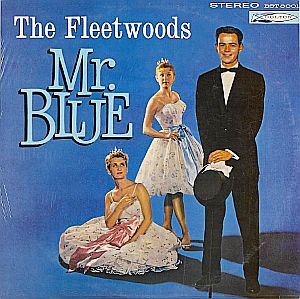


Sources, Links & Additional Information

‘One’ also appears on U2's ‘18 Singles’ album. Cover photo taken in Dublin in 1979. From left: Adam Clayton, Larry Mullen, Jr., Bono, and The Edge. Click for CD.
U2's ‘Best of 1990-2000' album. Click for CD.
U2's "All That You Can't Leave Behind" album (Oct 2000). Click for CD, vinyl or digital.

U2 Website.

U2 artwork by Kostas Tsipos, graphic designer and photographer based in Greece.

“U2,” Wikipedia.com.

“Achtung Baby,” Wikipedia.com

“U2’s One Named ‘Greatest Record’,” BBC News November 18, 2003.

“David Wojnarowicz’s Buffalo Over a Cliff,” Dinesh’s Photo Album, June 27, 2008.

Neil McCormick (ed.), U2 by U2, New York: HarperCollins, 2006.

Tania Branigan, “U2 Crush Beatles in Top Album Poll,” The Guardian, Thursday, November 22, 2001.

Mark Chatterton, U2: The Complete Encyclopedia, New York: Firefly, 2001.

Bill Flanagan, U2: At the End of the World, New York: Delta, 1996.

Cover Story, “Exclusive: The Making of Achtung Baby,” Rolling Stone, November 1991.

Elysa Gardner, Album Review, “U2, Achtung Baby,” Rolling Stone, January 9, 1992.

Jon Pareles, Recordings View, “U2 Takes a Turn From the Universal to the Domestic,” New York Times, Sunday, November 17, 1991.

Stephen Holden, “Irish U2, a Young Quartet, Plays at the Ritz,” New York Times, March 9, 1981.

“U2: Induction Year 2005,” Rock and Roll Hall of Fame.

Brian Eno, “The Making of Achtung Baby,” The U2 Station News Blog, January 1, 1991.

Josh Tyrangiel, “U2’s Unsatisfied — and Unsatisfying — New Album,” Time, Thursday, February 26, 2009.

Photo Gallery: “Thirty Years of U2,” Time, February 2009.

J. Freedom du Lac, “U2 Finds There’s Much Virtue on ‘The Horizon’,” Washington Post, February 24, 2009, p. C-1.

Chris Klimek, “U2’s Roots Revisited In ‘The Joshua Tree’; Album’s Musical Power Endures In New 20th-Anniversary Reissue,” Wash- ington Post, November 27, 2007. p. C-5.

Sridhar Pappu, “Bono’s Calling; The Irish Rocker Has a Mission: To Fight Poverty, and Enlist the Powerful in the Battle,” Washington Post, November 26, 2007, p. C-1.

“Bono and Friends Open Bid to Make World Poverty a Focus of ’08 Race,” Washington Post, Politics, June 12, 2007, p. A-6.

“The 500 Greatest Songs of All Time,” Rolling Stone, November-December 2004.


Bill Bradley
1960s-2020s

Bill Bradley on the March 18, 1968 cover of ‘Sports Illustrated,’ early in his ten-year career with the New York Knicks professional basketball team.
     Before he became a U.S. Senator in 1978 and a presidential candidate in the year 2000, Bill Bradley was a famous high school, college and pro NBA basketball player who reaped All-American and pro Hall-of-Fame honors.

     In the 1950s at Crystal City High School, in Crystal City, Missouri, Bradley first drew national attention by becoming a scholastic All-American. At Princeton, too, he set the nets on fire. In fact, by 1965, he would be named the nation’s best college player. Profession-ally, with the New York Nicks, he posted an impressive ten-year career, helping land two NBA championships, and was selected to the Hall of Fame. In politics, he became a much-respected Democratic Senator and a highly-touted, “thinking man’s” presidential candi-date. But first came the basketball.

     William Warren “Bill” Bradley was born in Crystal City, Missouri, July 28, 1943. He began playing basketball in fourth grade and within a few years he was headed for his first rounds of fame as a high school star. At Crystal City High, he scored 3,068 points, and was twice named a high school All-American. A top student with excellent grades, Bradley also attained the Distin-guished Eagle Scout Award. He was, in many ways, the all-American boy.

     But Bill Bradley was also an incredibly hard worker. He became an adherent of “determined practice” long before it was a topic of interest for academics and journalists such as Malcolm Gladwell (Outliers, 2008). As a high school kid, Bradley set his own rigid training course to become a superior basketball player. 

Young Bill Bradley, early NY Knicks, June 1967, Life studios.
According to once source, he would practice almost constantly — “for three-and-a-half hours every day after school, nine-to-five on Saturday, one-thirty-to-five on Sunday, and, in the summer, about three hours a day.” Bradley also put ten pounds of lead slivers into his sneakers, and set up chairs as opponents and dribbled through them in slalom fashion. As he dribbled, Bradley “wore eyeglass frames that had a piece of cardboard taped to them so that he could not see the floor, as good dribblers never look at the ball.” Bradley’s work ethic would stay with him into his political career.


Special Sight

     Bill Bradley also had something else: incredible eyesight.  He was blessed with unusually wide peripheral vision, which came in handy on the basketball court.  While most people’s horizontal field covers 180 degrees, Bradley’s went to 192 degrees.  His vertical field was better, too.  Most people can see 47 degrees upward; Bradley could see 72 degrees.  This meant that peripherally, he could practically see behind himself, and vertically, he could very nearly see the basket even when looking at the ground.  This of course, gave Bradley an edge as a basketball player, seeing things others could not, as well as detecting threats or seizing opportunities earlier than others might.

     Given his top grades in high school and his athletic prowess, Bradley — by then, 6′ 5″tall — received 75 scholarship offers from colleges and universities.  Although he had made a commitment to attend Duke University he decided instead to go to the Ivy League’s Princeton even though Ivy League schools then offered no athletic scholarships.

December 7, 1964. Bill Bradley on the cover of “Sports Illustrated” with tagline: “Best in The Nation – Princeton’s Bill Bradley”. photo, Neil Leifer. Click for copy.
John McPhee’s 1965 book on Bill Bradley’s basketball prowess at Princeton -- “A Sense of Where You Are” – McPhee's first book. Click for copy.
A cast bronze statue of Bill Bradley, Princeton basketball star, by Harry Weber; installed on the Princeton campus in 2014 outside Jadwin Gymnasium.


A Princeton Tiger

     Bradley’s basketball career at Princeton was nothing short of amazing.  He led the school to three straight Ivy League championships (it might have been four had he been allowed to play as a freshman).

At Princeton, Bradley scored almost 1,000 points more than any other Princeton player since. He still holds the top 11 single-game scoring totals in the school’s history.

In the 1965 NCAA championship tour-nament, Bradley’s play is ranked as one of the best ever, with one 58-point game that stands out among Final Four games. And during a time when professional players were barred from Olympic contests, Bradley also captained the gold medal-winning U.S. basketball team at the 1964 Summer Olympics in Tokyo.

     In his stellar career at Princeton, Bradley scored 2,503 points, averaging 30.2 points per game.  In 1965, he became the first basketball player chosen as winner of the James E. Sullivan Award, presented to the United States’ top amateur athlete in the country.  During his college years, Bradley had some memorable games and a few singular accomplishments.  As a freshman he sank 57 successive free throws, a record then unmatched by any other player, college or professional.  As a sophomore he led the league in rebounds, field goals, free throws, and total points.  In one NCAA tournament game his sophomore year against St. Joseph’s in Philadelphia, he turned in a record-breaking 40 point performance.  As he left that game after fouling out, he was given a standing ovation.  In his junior year, he scored 51 points in a game against Harvard, more than the entire opposing team had scored before he was taken out.  Bradley’s 33.1 points-per-game average that season set an Ivy League record.  He also had a 41-point game in an 80-78 loss to heavily favored Michigan in that year’s 1964 Holiday Festival.  Bradley had fouled out in that game, with his team then leading 75-63.

     In his senior year as captain, Bradley led Princeton to one of their finest seasons ever, finishing only behind UCLA and Michigan in the NCAA championship tournament. His performance in that tournament has been rated among the top ten of all time by ESPN.  In five tournament games that year, Bradley scored 177 points, still second highest in tournament play as of 2007.  In the regional final against Providence, Bradley went 14-for-20 from the field, also hitting everyone of his 13 foul shots.  He scored 41 points that game, with 10 rebounds, and nine assists as Princeton crushed Providence 109-69.  In his final college game against Wichita State — the runner up game in the ’65 tournament — he scored a then record-setting 58 points as Princeton won, 118-82.  Bradley was 22 for 29 from the field that night and also shot 14 for 15 at the free-throw line.  One of that game’s referees, Bob Korte, sought Bradly out as the buzzer sounded.  “That was the greatest exhibition I ever saw,” Korte told Bradley. “It was a pleasure to watch.” 

       John McPhee, a native of Princeton, then just beginning what would become a notable writing career, did a book about Bradley’s play at Princeton in 1965, entitled A Sense of Where You Are.  The book was well received and helped send McPhee on is way.  Bradley, meanwhile, graduated from Princeton with honors and was awarded a Rhodes Scholar-ship. For the next few years he studied at Worcester College, University of Oxford, U.K., where he received a MA degree.

     After completing his studies at Oxford, Bradley played professional basketball briefly in Italy during the 1965-66 season where he won a European Champions Cup.  In 1967, he returned to the U.S. and began his professional basketball career with the New York Knicks of the National Basketball Association.  In 1969-70, Bradley helped the Knicks win their first NBA championship, followed by a second in 1972-73.  That season was Bradley’s best as a pro, making the All-Star team. But in the NBA, Bradley did not become the scoring threat he had been in college.  Over ten years with the Knicks, he scored a total of 9,217 points for an average of 12.4 points per game.  In his best year, he averaged 16.1 points per game.  Still, Bradley was a good pro player, and was elected to the Basketball Hall of Fame in his first year of eligibility.  The Knicks would later retire his No. 24 jersey.

1995 paperback edition of Bill Bradley’s 1976 book, ‘Life on the Run’. Click for copy.


Edging Into Politics

     During his NBA career, however, Bradley began to use his basketball fame to explore social as well as political issues, meeting with journalists, government officials, academics, business people, and social activists. He also worked as an assistant to the director of the Office of Economic Opportunity in Washington, D.C., where he made contacts in Democratic Party circles.

Bradley’s name first surfaced in politics in August 1973 when he was suggested as a possible candidate for a U.S. Congressional seat in northern New Jersey. Still playing professional basketball at that time, Bradley officially took his name out of consideration for the Congressional race in April 1974. But he was soon undertaking activities that would prepare the way for a political future.

In 1976, he published a popular book that chronicled his NBA experiences and the people he met along the way, titled Life on the Run. The book was well received by the critics and made the best-sellers list. Washington Post writer Jonathan Yardley, reviewing the book in May 1976 called it “a pleasant surprise — a sports book of intelligence and style…”  Newsweek called it, “A remarkable, searching, smart book… absorbing, thoughtful.”

“The Basketball Moment”
– Bill Bradley

     “…The money and the championships are reasons I play, but what I’m addicted to are the nights like tonight when something special happens on the court. The experience is one of beautiful isolation.  It cannot be deduced from the self-evident, like a philosophical propo- sition.  It cannot be generally agreed upon, like an empirically verifiable fact, and it is far more than a passing emotion.  It is as if a lightning bolt strikes, bringing insight into an uncharted area of human experience.  It makes perfect sense at the same time it seems new and undiscovered.  The moment in basketball depends on the blending of human forces at the right time and in the right degree.  It goes beyond the competition that brings goose pimples or the ecstasy of victory.  With my team, before the crowd, against our opponent, no one else but me can feel what it all means.  It’s my private world. No one else can sense the inexorable rightness of the moment.  A back-door play that comes with perfect execution at a critical time charges the crowd, but I sense an immediate transporting enthusiasm and a feeling that everything is in perfect balance.

     “Those moments require a childlike imagination….  In those moments on a basketball court I feel as a child and know as an adult.  Experience rushes through my pores as if sucked by a strong vacuum.  I feel the power of imagination that creates a sense of mystery and wonder I last accepted in childhood, before the mind hardened….”

___________________
Excerpted from Life on the Run, pp. 220-221.


Senator Bradley

     In 1978, Bradley decided to run for United States Senate.  In his home state of New Jersey at the time, a seat held by liberal Republican and four-term incumbent Clifford P. Case was up for re-election. In the primary, Case lost to anti-tax conservative Jeffrey Bell, and Bradley won the seat in the general election with 55 percent of the vote.

     Bradley had made his run for office at time in the late 1970s when anti-tax sentiment was running high across the country. Howard Jarvis’s Proposition 13 in California — cutting property taxes by 57 percent — had surged to passage in 1978 and conservatives such as Edward King of Massachusetts were winning governor’s races. 

Bradley had also faced the supply-side economic theory of Kemp-Roth in his campaign, so when he came to the U.S. Senate, tax policy and federal finance matters were subjects he had thought about.


Finance Committee

Bradley joined the U.S. Senate Finance Committee, but started carefully there, mindful of his sports-star /celebrity origins.  He deferred to committee chairmen, volunteered for mundane tasks, and learned the rules.  In time he had a few victories, but also showed his independent side.

In 1981, he broke with most Democrats by voting for Reagan budget cuts but against the Reagan supply-side tax cuts.  Had this position prevailed, it would have reduced the deficit to nearly zero at a time of sharp inflation.

     In 1982, he worked closely with then Senate Finance Chairman Bob Dole (R-KS) on Dole’s tax package; making gains in a bi-partisan way, although like all other Democrats, he voted against the bill as a whole. 

In 1983, he cosponsored the Bradley-Gephardt “fair tax,” bill, with Rep. Dick Gephardt (D-MO) which proposed reducing the 11 tax brackets to 3, abolishing most deductions except for those most commonly used such as mortgage interest and charitable contributions, while also cutting tax rates sharply with the revenue gained from eliminating tax preferences.

This tax package repelled both traditional Democrats who wanted sharply progressive rates, and traditional Republicans who liked tax preferences for business. Still, Bradley-Gephardt influenced Rep. Jack Kemp’s (R-NY) tax simplification program in 1984 which Kemp admitted was modeled on Bradley-Gephardt.

Bill Bradley, shown in what appears to be a campaign photo with a positive outcome at a political rally, perhaps during one of his earlier U.S. Senate campaigns.  Photo, Gwendolyn Stewart.
Bill Bradley, shown in what appears to be a campaign photo with a positive outcome at a political rally, perhaps during one of his earlier U.S. Senate campaigns. Photo, Gwendolyn Stewart.


Wins Re-Election

Bradley’s 1984 book, ‘The Fair Tax’. Click for copy.
     In the fall of 1984, Bradley faced re-election, and won handily with 64 percent of the vote. He still retained popularity in New Jersey from his Knicks days.  But he was also attentive to his constituents.  His annual Labor Day “talk-to-citizens” strolls along Jersey Shore beaches became a popular practice.

     Back in the Senate on tax reform, Bradley showed he could be persistent and also play a good inside game in the legislative process.  “Quietly, without any publicity at all,” explained the National Journal’s Michael Barone and Grant Ujifusa, Back in the Senate on tax reform, Bradley showed he could be persistent and also play a good inside game in the legislative process.“Bradley met constantly with House members, starting with Ways and Means Chairman Dan Rostenkowski; he even played basketball with younger House members.” Brad-ley, in fact, played a key role in getting the bill through Ways and Means and the House, which Rostenkowski readily acknowledged.  And when the bill stalled in Senate Finance Committee, as Senators tried to save pet preferences, it was Bradley’s ideas that reportedly inspired Chairman Bob Packwood (D-Or) — “over a pitcher of beer” — to come up with the lower rates that eventually produced a bill.  The result, after some usual legislative wrangling, was the Tax Reform Act of 1986.  It overhauled the federal tax code, reducing the tax rate schedule to just two brackets,15 percent and 28 percent, and eliminated many deductions.

     In his senate career, Bradley was also a key supporter of environmental protection measures, various liberal causes, and political reform.  But he sometimes broke ranks with his party, as he did with his initial support for Ronald Reagan’s policy of aiding the Contras in Nicaragua.  But Bradley also led, or was a major player in, other key areas — reform of child support enforcement; health problems of children related to lead-poisoning; campaign finance reform; re-apportionment of California water rights; federal budget reform; federal deficit reduction.


Presidential Buzz

A few party insiders offered Bradley’s name in 1984.
     Bill Bradley’s name had been raised as a possible presidential candidate as early as 1984, when a few Democrats were looking for an alternative to Walter Mondale.  Bradley was not running in 1984.  Again in 1988, there was speculation that he might seek the Democratic nomination for President, and he polled well in early primary states, but he eventually decided not to run.  Still a Senator in 1990, Bradley had a tough re-election fight that year, as a controversy over a state income tax increase had broken out.  Bradley refused to take a position, which almost did him in.  A once-obscure rival for his Senate seat, Republican Christine Todd Whitman, became a formidable candidate in the race.  Bradley prevailed, but he won only by a slim margin.

     In 1992, Bradley had again been urged to run for President.  Some thought it was the perfect time for him, as no Democrat was then a sure thing.  Among those who urged him to run at the time were Hollywood moguls Michael Eisner and Michael Ovitz, and others as well.  He later decided against it, as his daughter was still young.  However, after former Arkansas Governor Bill Clinton was closing in on the 1992 Democratic presidential nomination, Clinton aide, Warren Christopher did approach Bradley in a private meeting about the vice presidential slot, which Bradley declined.  Back in the Senate, Bradley in the 1990s focused on civil rights and reforming federal water allocation in the American west, among other issues.

Bill Bradley published ‘Time Present, Time Past,’ a memoir, in June 1996. Click for copy.

     During the 1990s, Bradley also had his share of personal travail.  He lost two close college friends to suicide, and another to liver cancer.  His wife was diagnosed with breast cancer in 1992 and later had a double mastectomy and chemotherapy, emerging cancer-free thereafter.  Both his parents passed on in 1994-95.  All of this would figure into a personal memoir he would begin writing in 1995.

     In 1996, he opted not to run for re-election to the U.S. Senate, publicly declaring American politics “broken,” as he had watched, among other things, his own party dismantle some of the tax reforms he had previously worked to enact into law.  By June of that year, Bradley published the memoir he’d been working on, entitled Time Present, Time Past, in which he covered his own personal life, his basketball career, and his 18 years in the U.S. Senate, also offering his views on the issues of the day.  The book became a bestseller in the summer and fall of 1996, and a paperback edition followed in January 1997. 

     In the book, Bradley covered topics ranging from campaign finance and tax reform, to water and land use issues, racism, and the national economy.  He also focused on the difficulties that middle-class Americans faced in adjusting to downsized work force and stagnant wages.  He relayed how, as Senator, he had traveled the length and breadth of the country, visiting nearly every state at one time or another and meeting all kinds of people.  He wrote, in part:

“…Sometimes during these campaign journeys I encountered the fruits of my legislative efforts in the U.S. Senate, for which I was either damned or praised, picketed or presented awards.  I also came face-to-face with unmet needs of Americans who were living in poverty, many of them paralyzed by self-doubt and terrorized by violence: “…In those pockets of America, I was reminded that I am in politics to take action, to stop suffering, to promote opportunity….” I saw mothers in urban America afraid to send their children to school through neighborhoods controlled by gangs; families in Appalachia living bone-chilling poverty with their Scoth-Irish independence beaten down; colossal failure of our Native American reservations.  I saw fear of the future in the faces of middle-aged men who had lost their jobs; what they thought would never change had disappeared, and they had nowhere to go.  In those pockets of America, I was reminded that I am in politics to take action, to stop suffering, to promote opportunity.  Without a new approach and more resources, the cycle of despair in the inner cities, in Appalachia, in the Dakota badlands, would never be broken.  Without more good-paying jobs, the hopes of middle-class families would never be realized…”

     Bradley was no longer a U.S. Senator from the state of New Jersey, but he was thinking well beyond that now.  In 1997-1998 he also had appointments at the University of Maryland, Notre Dame and Stanford where he lectured and led conferences on the issues of the day.  On the speaking and consulting circuit he did O.K. as well, garnering $1.6 million in speaking fees from banking, insurance, health, high-tech, communications, and real estate interests.  He earned $430,000 in consulting work for J.P. Morgan, Morgan Guaranty and the Gartner Group, a technology services company.  He was also a CBS television weekend commentator for one year, receiving $47,000.


Bill Bradley’s book on ‘basketball values’ – also of some help in his presidential bid. Click for copy.
Basketball Values

     Then in January 1999 came another book from Bradley, Values of the Game.  On its surface, this was a book about basketball and the life lessons Bradley found there.  It is organized around ten major themes with corresponding story essays — Passion, Discipline, Selflessness, Respect, Perspective, Courage, Leadership, Responsibility, Resil-ience and Imagination. 

In this book, Bradley wrote about competition and teamwork, the “unselfish pass,” the individual courage to risk a last-second shot; responsibility to teammates, coaches, and fans; how it felt to face a hostile crowd; the value of hard work, and more.

     The book received a number of kind and approving reviews: “[Bradley] has written a love letter to basketball…,” wrote one reviewer in the Boston Globe. “[I]t is every bit as prescient, thoughtful, and just plain valuable a work as you’d expect from a man who never approaches any task without a full commitment.”

People magazine’s blurb — later appended to the paperback cover — said: “[Bradley] offers slam dunk life lessons in teamwork and character.” The Dallas Morning News added: “This may be the single most important present a parent can give a sports-loving child.”

Bill Bradley autographing NBA basketballs  in 1999 during his presidential bid.  AP photo.
Bill Bradley autographing NBA basketballs in 1999 during his presidential bid. AP photo.

     This book was also a reminder to many Americans that Bill Bradley was one of them, a regular guy who had played an American game, had worked hard, and also had some good ideas about national values and national direction.  Was it a primer for a presidential run?  Not a wonkish tome, certainly, but one that helped endear this guy to the great American Middle — especially a guy who had played memorable college and pro basketball.  That’s not a bad thing, of course.  And it certainly didn’t hurt that Phil Jackson — who had played pro ball with Bradley on the New York Knicks and was also well known as the coach who had taken Michael Jordan and the Chicago Bulls to NBA championships — wrote the book’s forward and was mentioned by name on the book’s cover.

     Later, in January 2000, after Bradley had formally announced that he would seek the Democratic Party nomination for President, the book’s publisher released the paperback edition of Values of The Game just as the early Democratic presidential primaries were beginning, noting the following:

“…As the Presidential run heats up with the start of the primary season in New Hampshire on February 2, the attention to the candidates and their issues will become even more intense. Values of the Game is an ideal book to understand Bill Bradley, the man and the candidate.  The values that Bill speaks of so frequently during his campaign speeches are reflected in Values of the Game–responsibility, discipline, passion, selflessness and respect….”


'Bradley for President' campaign button.

Run For President

     In September 1999, Bill Bradley formally began his bid for president in the year 2000 national elections by seeking the Democratic party nomination in the primaries.

In making his bid, Bradley ran in opposition to incumbent Vice President Al Gore, the favorite for the party’s nomination. Bradley campaigned as the liberal alternative to Gore, taking positions to the left of Gore on a number of issues, from universal health care and the environment, to gun control and campaign finance reform.

Bradley on Time cover, October 4, 1999, with editors’ note: ‘Bill Bradley has the brains, the bio, and the bucks. But what’s really behind his hot streak?’. Click for copy.
     Bradley used his past Senate victories with the Tax Reform Act of 1986 as a departure for talking about further tax reform, advocating low rates and no loopholes. But he refused to rule out the idea of raising taxes to pay for his health care reform. He called for more money for public education in the form of block grants to states and promised to bring 60,000 new teachers into the system annually by offering college scholarships to anyone who agreed to become a teacher. He also made child poverty a major issue in his campaign, called for 400,000 more children to be enrolled in Head Start, and promised to repeal the “Welfare Reform Act,” charging it would only bring higher poverty levels.

By early October 1999, Bradley was on the cover of Time magazine, with the editors posing him as “the man who could beat Gore.”  Bradley came under increased media scrutiny during his run.  The Washington Post published an in-depth, six-part series covering his life before politics, his time in the Senate, and his views on the future.  In one part of the series, Post reporters Barton Gellman and Dale Russakoff musing on why Bradley wanted to be president wrote: “He wanted the nation to face its short- comings — child poverty, racism, tens of millions of people without health insurance, a political system mortgaged to big money and base instincts — and right them.”

Bill Bradley year 2000 fundraiser program, Madison Square Garden, signed by Bradley’s former Knicks teammates. Campaigning for President exhibit, Museum of the City of New York / Museum of Democracy.
     During his campaign, Bradley received a number of important and high-profile endorsements. Then current U. S. Senators Paul Wellstone, Bob Kerrey, and Daniel Patrick Moynihan supported him, as did former Senators John A. Durkin and Adlai Stevenson III.  A number of sitting and former Governors supported him as well, including former Governors Lowell Weicker, Mario Cuomo, Brendan Byrne, Neil Goldschmidt, and others.  In the U.S. Congress, among his supporters were: George Miller, Bill Lipinski, Pete Stark, Jerrold Nadler, Luis Gutiérrez, Anna Eshoo, Jim McDermott, and Diana DeGette.  Former U.S. Secretary of Labor Robert Reich supported Bradley, as did former New York City Mayor Ed Koch and former Federal Reserve Chairman Paul Volcker.; former Watergate Special Prosecutor Archibald Cox.  San Francisco Supervisor Tom Ammiano and Seattle Mayor Paul Schell supported Bradley.  In the arts and letters, filmmaker Spike Lee, Harvard Professor Cornel West, and feminist icon Betty Friedan supported Bradley.  And last but not least, basketball star Michael Jordan and Bradley’s former Knicks teammate Phil Jackson also supported him for president.

Bradley campaign poster.
     Bradley’s campaign initially had strong prospects, and his fundraising base provided a sufficient war chest.  Yet in some ways, Bradley’s campaign was overshadowed by Republican Senator John McCain who received more national media attention and had campaigned  — some say “stole” — some of Bradley key issues.  Bradley did not win in the early primaries, losing badly in the Iowa caucus, despite heavy spending there.  The unions in Iowa went with Gore.  He then lost in New Hampshire, 53-47 percent.  By the “Super Tuesday” round of primaries, Bradley had finished a distant second to Gore.  His presidential run was over.

Bill Bradley button, Dem Convention, L. A.
     At the Democratic convention in mid-August 2000, however, Bradley was praised by the New York Times and others for his remarks about child poverty and health care — citing the 13.5 million poor children in America who together would form “a city bigger than New York,” and the 44 million Americans without health insurance, “equal all the people living in 12 states between the Mississippi and the Rocky Mountains.”  In early September 2000, Bradley turned down an invitation to become chairman of the United States Olympic Committee.  He had given the post serious consideration, but wasn’t sure he could devote the time necessary to do the job properly, and turned it down.
In September 2000, Bill Bradley published this book of essays. Click for copy.


Looking Ahead

     After his run for the Democratic Presidential nomination failed, Bradley didn’t sulk.  Instead, he published a short book of essays in September 2000 under the title The Journey From Here, a forward-looking book in which he offered his ideas for America’s future.  “The fact that I didn’t succeed in winning,” he wrote, “doesn’t make the cause less just or the fight less honorable.”  His essays covered the issues he had campaigned on — health care, campaign finance reform, poverty, econom- ics, racial issues, foreign affairs, among others.  With the campaign fresh in his mind, and the national election still in the balance, Bradley wrote about a new politics not freighted with big money, political infighting, or pandering to public opinion.  However, with that Fall’s contested national election result, between Al Gore and George W. Bush, the battle lines of party politics only hardened.

     In October 2002, Bradley turned down a last-minute offer from New Jersey Democrats to replace Senator Robert Torricelli on the ballot.  Torricelli decided not to make a re-election bid, as he was then under a cloud of suspicion regarding former campaign donations.  Frank Lautenberg, became the Democrat’s nominee and Senator.  By 2004, some thought Bradley might again run for President, but he did not make that move and showed little interest in returning to political office.  In January 2004, he endorsed Howard Dean for President in the Democratic primaries.  He also helped Dean to become head of the Democratic National Committee after the 2004 election.

Bill Bradley with the late Tim Russert of NBC’s ‘Meet the Press,’ March 2007 in Wash., DC, discussing Bradley’s book, "The New American Story." Photo, Chip Somodevilla, Getty Images.

     Bradley continued to publish his own books, including The New American Story, released in March 2007 in which he expanded on his last book with proposals ranging from free college tuition for the top third of every high-school class, to banning trans fats.  But at the core of his 2007 book was the idea that country comes before political party.  In 2008, Bradley supported Barack Obama in the Democratic primary, announcing for Obama in January 2008.  He also campaigned for Obama and appeared on political news shows as a surrogate.  Following Obama’s election, Bradley was mentioned as a potential contender for Director of the CIA, and later, as a possible Secretary of Health and Human Services, although others later filled those slots.


Voice To Others

Bradley states in 2007 book that country must take precedence over party. Click for copy.
     Bill Bradley’s story shows how a famous sports career can be parlayed into politics, and also how adding book publishing to the mix can help expand and auger that celebrity and build beyond it.  Although a sports celebrity and nationally-known political figure for most of his life, Bradley in recent years has turned his notoriety and personal efforts toward highlighting the lives of others. In 2007, Bradley became associated with the StoryCorps project, which is aired on National Public Radio’s Morning Edition show.  StoryCorps collects the stories of everyday Americans for the American Folklife Foundation.

Bradley also hosts his own radio show, American Voices, a weekly show on Sirius Satellite Radio that highlights the accomplishments of Americans both famous and unknown.  This show includes interviews with everyday Americans who have interesting jobs, or who have made unique or helping contributions with no expectation of financial return.  His guests have also included well-known Americans such as actor Hal Holbrook, singer Bonnie Raitt, and former boxer George Foreman. Bradley’s books, speeches, Op-Eds, and other details can be found at his website. In early 2009, Bradley’s name was also mentioned as a possible replacement for retiring NBA commissioner David Stern. In 2023, he released an autobiographical film, Rolling Along, produced with Spike Lee

See also at this website the “Politics & Culture” page or the “Annals of Sport” page for additional story choices in those categories. Thanks for visiting – and if you like what you find here, please make a donation to help support the research, writing, and continued publication of this website. Thank you. – Jack Doyle

______________________________

Please Support
this Website

Donate Now

Thank You

Date Posted: 28 May 2009
Last Update: 24 March 2024
Comments to: jackdoyle47@gmail.com

Article Citation:
Jack Doyle, “Bill Bradley, 1960s-2009,”
PopHistoryDig.com, May 28, 2009.

______________________________


Basketball Books at Amazon.com…
 

Harvey Araton’s book, “When the Garden Was Eden,” during Knicks  run w/Bradley. Click for copy.
Harvey Araton’s book, “When the Garden Was Eden,” during Knicks run w/Bradley. Click for copy.
2018 book by Jackie MacMullan, et. al., “Basketball: A Love Story,” Sports history. Click for copy.
2013 book. Ivy League Basketball: “From Bill Bradley to Penn's Final Four, 1964-1979.” Click for copy.


Sources, Links & Additional Information

Revised edition of John McPhee’s book, “A Sense of Where You Are: Bill Bradley at Princeton,” Farrar, Straus & Giroux; 240pp,  June 1999. Click for copy.
Revised edition of John McPhee’s book, “A Sense of Where You Are: Bill Bradley at Princeton,” Farrar, Straus & Giroux; 240pp, June 1999. Click for copy.
Bill Bradley’s one-man stage show about his life, “Rolling Along: An American Story,” produced with Spike Lee and released in 2023 as a 1.5-hour show with interspersed film clips on Max. Click for film at Amazon.
Bill Bradley’s 2012 book, “We Can All Do Better,” Vanguard Press, 207 pp. Kirkus Reviews called it, ”An important contribution to the national discussion with appeal to independents as well as the more traditionally party-minded.”  Click for copy.
Bill Bradley’s 2012 book, “We Can All Do Better,” Vanguard Press, 207 pp. Kirkus Reviews called it, ”An important contribution to the national discussion with appeal to independents as well as the more traditionally party-minded.” Click for copy.
Bill Bradley interview on 'The Charlie Rose Show,' January 1996. Click for video.
Campaign button commemorating the Bradley-Gore Democratic Presidential debate in Manchester, New Hampshire, January 26, 2000.
Bill Bradley, New York Knicks photo.

Bill Bradley Website.

Bill Bradley’s radio show, American Voices, airs on Sirius Satellite Radio Channel 102 on Sundays at 5:30 am, 6:30 am, 7:30 am and 9:30 am EST as well as Mondays at 5:00 am, 7:00 am, Noon and 2:00 pm EST.

Frank Deford, “An Ivy Leaguer Is The Best,” Bill Bradley cover photo and story, Sports Illustrated, December 7, 1964.

John McPhee, A Sense of Where You Are: Bill Bradley at Princeton, New York: Farrar, Straus & Giroux, 1965.

Curry Kirkpatrick, “An Answer To The Bradley Riddle,” Bill Bradley cover photo and story, Sports Illustrated, Volume 28, Issue 11, March 18, 1968.

“Bill Bradley Considered For Race for Congress,” New York Times, Wednesday, August 29, 1973, p. 81.

“Bill Bradley Withdraws As Possible Candidate,” New York Times, Thursday, April 4, 1974, p. 45.

Bill Bradley, Life on the Run, Quadrangle, 1976.

Joan Ryan, ” ‘Life on Run’ for Bradley Summed Up With Insight,” Washington Post, April 23, 1976, p. C-1.

Jonathan Yardley, “The Knick Of Time: Book Review: Life on the Run, By Bill Bradley,” Washington Post, Book World, May 9, 1976, p. K-7.

Joseph F. Sullivan, “Bill Bradley: New Game in Town,” New York Times, November 20, 1977, Sunday, Section: New Jersey Weekly, p. NJ-8.

“Bill Bradley,” Wikipedia.org.

Joseph F. Sullivan, “Politics: For Bill Bradley, A New Target,” New York Times, New Jersey Opinion, Sunday, February 19, 1978, p. NJ-32.

Evan Thomas, “A Sense of Where He Is,” Time, June 30, 1986.

Jeffrey H. Birnbaum, Showdown at Gucci Gulch, 1987.

Michael Barone and Grant Ujifusa, The Almanac of American Politics 1988, Washington, DC: National Journal, 1987, pp. 731-733.

“An Interview with Bill Bradley,” The Charlie Rose Show, Thursday, January 25, 1996.  Synopsis: “U.S. Senator Bill Bradley of New Jersey discusses his memoir, Time Present, Time Past, which chronicles his life as a basketball player for the New York Knicks, his career in politics, and his personal goals, which may include a run for the presidency, after retirement.”

Eric Pooley, “The Priest At The Party,” Time, April 27, 1998.

Thomas B. Edsall & Helen Dewar, “Bradley as Leader: A Mixed Assessment; Senate Record Includes Key Achievements, Time on Sidelines,” Washington Post, June 25, 1999, p. A-1.

David Corn, “Bill Bradley: Can He Get Into the Game?,” The Nation, July 5, 1999.

David S. Broder, “Bill Bradley: Loping and Listening,” Washington Post, July 28, 1999 p. A-23.

Thomas B. Edsall, “From the Left, Bradley Enters Race; Democrat Formally Declares With Pledges on Poverty, Health Care,” Washington Post, September 9, 1999, p. A-1.

David S. Broder, “Environmental Group Will Endorse Bradley; Ex-Senator Termed ‘Superior’ to Gore,” Washington Post, September 14, 1999, p. A-12.

David S. Broder, “Gore, Taking Bradley Seriously, Seeks Advantage in ‘Tough Fight’,” Washington Post, September 30, 1999, p. A-1.

Eric Pooley, “The Art of Being Bradley,” Time, October 4, 1999.

John F. Dickerson/Washington, “The Problem With Bradley’s Big Idea,” Time, October 11, 1999.

Howard Kurtz, “Bill Bradley’s Senate Record: The Untold Story,” Washington Post, October 18, 1999, p. C-1.

Nancy Gibbs, “What Kind Of Democrats Are They?,” Time, November 1, 1999.

Eric Pooley, “Gore in Your Face,” Time, December 20, 1999.

David S. Broder, “Bradley Dismisses His Heart Ailment; He Blames Episode on Skipped Medication,” Washington Post, December 12, 1999, p. A-28.

Barton Gellman & Dale Russakoff, “A Mother’s Ardent ‘Project’ — Disciplined Young Bradley Was Coached to Achieve,” (Part 1 of 6), Washington Post, December 12, 1999. (also published under headline, “Big Hopes for a Small-Town Boy,” Washington Post, December 12, 1999).

Barton Gellman & Dale Russakoff, “Driven Scholar Athlete Paid a Price to Meet Demands” (Part 2 of 6), Washington Post, December 13, 1999. (also published under headline, “At Princeton, Bradley Met Impossible Demands,” Washington Post, December 13, 1999).

Barton Gellman & Dale Russakoff, “A Private Journey Comes Full Circle: Rebellion and Return,”- (Part 3 of 6), Washington Post, December 14, 1999.

Barton Gellman & Dale Russakoff, “A Religious Journey With Twists and Turns: Moral Foundations,” (Part 4 of 6), Washington Post, December 15, 1999.

Barton Gellman & Dale Russakoff, “In the Senate, Prepping for the Presidency: Picking His Shots,” (Part 5 of 6), Washington Post, December 16, 1999. (also published under headline, “In the Senate, Big Issues, and a Close Call,” Washington Post, December 16, 1999).

Barton Gellman & Dale Russakoff, “Meandering Toward A Destination Certain: The Ex-Senator Examines His Life,” (Part 6 of 6), Washington Post, December 17, 1999. (also published under headline, “Bradley: Meandering Toward a Candidacy,” Washington Post, December 17, 1999).

Eric Pooley, “How To Tell Them Apart.” Time, January 17, 2000.

Eric Pooley, “A Sense Of Where You’re Not,” Time, January 31, 2000.

Eric Pooley, with Karen Tumulty & Tamala M. Edwards, “How Al Came Back To Life,” Time, March 13, 2000.

Barbie Presents: Thumbelina hd Editorial, “A Metropolis of Poor Children,” New York Times, Thursday, August 17, 2000.

Desmond Bieler, “The Running Men: Bill Bradley,” Washington Post, Monday, November 3, 2008, p. E-2.


“I Only Have Eyes For You”
1959

The Flamingos of the late 1950s shown on the cover of a 1997 CD featuring a compilation of 18 of their songs. Click for digital.
     “I Only Have Eyes For You” is the name of a song made popular in the spring and summer of 1959 by a group called the Flamingos. The song was actually written for a film in the 1930s, and it also became popular on the music charts at that time. 

However, the Flamingos’ 1959 version gave the song a whole new dimension. Set in the “doo-wop” style of its day, their “deep-echo” version proved to have broad national appeal, rising on both the rhythm & blues (R&B) and pop charts.

Music Player
1959 – The Flamingos

     Today, the Flamingos’ “I Only Have Eyes For You” continues to resonate with many listeners, young and old. Music historians of the 1950s regard the song as a classic.

For some listeners, the song offers a “take-you-away” musical immersion, and for a few, a near-hypnotic, otherworldly experience. Listen to this Flamingos’ song on the music player above and judge for yourself.


Chicago Roots

     The Flamingos were formed from a group of friends and relatives on Chicago’s southside in the early 1950s.  They began recording in 1953, and became a group with a long list of recordings, working with a number of record labels, including Chance, Parrot, Chess/Checker, Decca, End, and others.  And although they never had a No. 1 hit on the pop charts — coming close several times — they are regarded as one of the classic “doo wop” groups of their day, noted for their exceptional harmonies and unique sound.  By the time “I Only Have Eyes for You” hit the streets in April/May 1959, the group was comprised of six members:  founding “cousins” Jake and Zeke Carey, Terry Johnson, Paul Wilson, Tommy Hunt, and Nate Nelson.  In 1958, the group had been recording with the Chess/Checker label in Chicago, but after relocating to New York City, they soon hooked up with a record producer there named George Goldner who helped the group score with some of their biggest hits in the late 1950s and early 1960s.

Sample recording from Flamingos’ earlier years with Chance Records, 1953. Click for digital.


George Goldner

     Goldner was considered one of the biggest record hustlers of his day, also among the biggest producers of what would be called “doo wop” records.  Goldner was not a rock  ‘n roll fan, per se, but had Latin and jazz musical influences in his past.  He had worked with Tico, a label that specialized in Latin artists, during the late 1940s.  He had also worked with some early rock ‘n roll artists, as well, and had an ear for pop hits. 

     Much of Goldner’s success had come with producing and releasing singles.  But he was also among those who liked to market “packages” of songs, or LPs, as albums were called in those days.  In late 1956, he had released one of the first doo-wop albums, Teenagers, on the Gee record label.  And by 1959, working with other artists, he had released a 12-track album by The Chantels, and another by Little Anthony & The Imperials.  These two groups would later become successful and well known in their own right.  The Flamingos, meanwhile, had come to Goldner after an unsatisfying period with their then-current record label, Decca, which they had joined in1957.

Geo. Goldner, the producer who helped The Flamingos.
     In late 1958, it was Goldner’s idea to have the Flamingos record an album of old standards, but do it in “doo wop” style.  Some believe Goldner was influenced by what had been done earlier with groups such as the Orioles and Ravens; groups  that had successfully produced cover versions of older songs in a more popular style.  Terry Johnson, one of the Flamingos’ lead singers, recalled the group’s experience with Goldner in an interview some years later with Marv Goldberg :

“…George Goldner wanted us to go in another direction than regular R&B. He wanted us to do standards like the Platters, who were doing songs like ‘Smoke Gets in Your Eyes.’ I was open to the idea, because I wasn’t raised on R&B; my parents listened to Patti Page, the Mills Brothers, the Ink Spots and Bing Crosby. When George said he wanted me to change the structure of the songs and give them a nice flavor, I was excited because it was such a good challenge for me.”

The Flamingos’ 1958 hit with End Records, ‘Lovers Never Say Goodbye’. Click for MP3.
     Goldner, in fact, took Richard Barrett to a music store and bought up the sheet music to every old song he could find, turning them over to Terry Johnson to arrange new songs for the Flamingos.  One of the first songs the Flamingos did with Goldner that hit the pop charts was “Lovers Never Say Goodbye”, written by Terry Johnson, who shared the lead on the song with Paul Wilson.  On the B-side was “That Love Is You”, with Nate Nelson in the lead.  “Lovers Never Say Goodbye” reached No. 25 on the R&B charts and No. 52 on the pop countdown.

1958-59 magazine ad for Flamingos’ music by End Records, with lower corner box thanking radio DJs for playing  their hit, ‘Lovers Never Say Goodbye.’
1958-59 magazine ad for Flamingos’ music by End Records, with lower corner box thanking radio DJs for playing their hit, ‘Lovers Never Say Goodbye.’
     But by October 1958, with some money to spend on instrumentation and a good echo chamber available for recording, Goldner brought The Flamingos in for another studio session to record what would become the album, Flamingo Serenade.  Terry Johnson and Paul Wilson were recorded as lead singers on three of the 12 songs selected for the album.  Nate Nelson was in the lead for some of the album’s songs as well, including most notably, “I Only Have Eyes for You.” 

     As the album and its songs went into production for the next few months, the Flamingos did some performing in New York.  Meanwhile, one of the Flamingos earlier record labels, Checker, seeing that the group was capable of turning out hits, decided to put out a single with two earlier-recorded but unreleased songs in January 1959.  Checker would also issue a Flamingos LP the following month.  But by this date, sales of their new single with Goldner — “Lovers Never Say Goodbye” — was already having considerable success.  In January alone, it helped  push Goldner’s labels to the one-million level in total sales.  February was even better.  More success was about to come with the forthcoming album, Flamingo  Seranade.

Poster from 1959 Alan Freed film in which The Flamingos appeared.
     In mid-January 1959, meanwhile, The Flamingos booked into New York’s Apollo theater where they had played a number of times before.  Other notable  performers  appearing at the Apollo at that time included: Jerry Butler, the Crests, Little Anthony and the Imperials, the Quin-Tones, Wade Flemons, Doc Bagby, and Clay Tyson. 

In February 1959, the Flamingos were filmed in a New York studio singing and dancing to a lively version of another of their songs, “Jump, Children.”  This song, along with the Flamingos’ dance routine, would appear in a movie with disc jockey Alan Freed — a movie titled, Go Johnny Go! This was the second Alan Freed movie the Flamingos had appeared in, the first being Rock, Rock, Rock of December 1956, which also included stars such as Chuck Berry and Connie Francis. 

The Flamingos at this point, had also become well known for their stage show and choreography. Later groups that used choreography in their acts, such as The Temptations of the 1960s, would cite the Flamingos as a major influence.  The film Go Johnny Go! would appear in theaters through mid-1959. The Flamingos’ debut album, meanwhile, Flamingo Serenade,  was released in April 1959 on Goldner’s End record label.

The Flamingos’ 1959 album of old standards, ‘Flamingo Serenade;’ includes their big hit, ‘I Only Have Eyes For You.’ Click for CD or digital.
     Flamingo Serenade also helped with the release of singles.  The first song released from this album was “Love Walked In,” issued ahead of the album, in March 1959.  This single, however, failed to chart.  But the next song they tried as a single, “I Only Have Eyes For You,” with Nate Nelson singing the lead, hit pay dirt.  The song became a big hit.  It first received notice in Philadelphia, and soon spread through the Northeast.  Later that summer, the Flamingos would do a ten-day stretch of live performances at Philadelphia’s Uptown Theater.

“I Only Have Eyes for You” peaked at No. 11 on the Billboard pop chart in June 1959, and rose to No.3 on the R&B chart.  With its shimmering “doo-bop sh-bops” in the echo chamber, and Nate Nelson’s clear, distinctive lead, the record became a classic, and remains one of the most popular oldies of all time. 

“I Only Have Eyes for You” is also said to have been The Flamingos’ favorite recording, regarded as one of those moments in the studio when everything came together for a superb production.

'I Only Have Eyes For You,' 45rpm.
     For George Goldner, the Flamingos proved to be among his most successful groups.  They had at least eight singles on the End label that reached the pop charts, including a Top 30 hit in 1960, “Nobody Loves Me Like You Do.”  They also turned out three full albums on the End label in addition to Flamingo Serenade, including: Flamingo Favorites (1960), Requestfully Yours (1960), and The Sound of the Flamingos (1962). 

     “I Only Have Eyes For You,” however, remains the classic hit single. In May 2011,  Rolling Stone magazine ranked the Flamingos’ version of the song at No. 158 on their “500 Greatest Songs” list. The Flamingos’ version was also used on the soundtrack for the 1973 film, American Graffiti.


Fans Love It

     To this day, the “Flamingos sound” has a very loyal following.  And some who hear The Flamingos’1959 version of “I Only Have Eyes for You” come away with a lasting impression, as did one fan named “Larry,” who wrote about his experience with this Flamingos’ song on the blog, Funky16 Corners:

“I Only Have Eyes
For You”

My love must be a kind of blind love
I can’t see anyone but you.

Are the stars out tonight?
I don’t know if it’s cloudy or bright
I only have eyes for you, dear.

The moon maybe high
but I can’t see a thing in the sky,
‘Cause I only have eyes for you.

I don’t know if we’re in a garden,
or on a crowded avenue.

You are here, and so am I
Maybe millions of people go by,
but they all disappear from view.
And I only have eyes for you.

     “…I can’t be one hundred percent certain of the first time I ever heard ‘I Only Have Eyes For You’ by the Flamingos, but I’m guessing it was when I saw American Graffiti in 1973.  I was only eleven years old, but as soon as this song came on the soundtrack it was instantly drilled deep into the pleasure centers of my brain.  As I got older, and started to understand something of how records were made, my deep respect for the astounding level of craft involved in the making of ‘I Only Have Eyes For You’ has grown every time I hear it.

     “There’s something special about the spare instrumentation — pretty much just piano, drums and guitar — contrasted with a rich, velvety blanket of human voices, all of it arranged to perfection… that simply blows my mind.

     “I’ve always had a love for what might be (if only in my own mind) considered “night time” records that sound as if they were recorded in the wee small hours specifically for use in that same time period, whether for lovers or those engaged in solitary meditation, and ‘I Only Have Eyes For You’ is the ne plus ultra of that very specific subgenre…

     “…It’s almost the musical equivalent of a meditative exercise, where you just close your eyes, allow yourself to be enveloped by the music …and just kind of feel it.  Whether the Flamingos intended it or not, this record is possessed of a kind of otherworldly magic….”


Cover of sheet music featuring ‘I Only Have Eyes for You’ from the 1934 Warner Brothers film, ‘Dames’. Click for film.

Song Origin & Covers

     The Flamingos, of course, were not the first group to record “I Only Have Eyes For You.”  The song, in fact, was written in 1934 for the film Dames starring Dick Powell and Ruby Keeler.  It was composed by Harry Warren and lyricist Al Dubin.  The song plays throughout the film’s soundtrack and is featured in two scenes.  Powell first sings it to Ruby Keeler on the Staten Island ferry, expressing bedazzlement; and that he “only has eyes” for her.  The second time the song appears, Powell is riding the subway and sees Keeler’s face everywhere he looks.  The dream sequence that follows in the film features a elaborate dance scene by famed Hollywood choreographer and co-director Busby Berkeley. The dancers in the scene at one point all wear Ruby Keeler masks. 

     In 1934, the song also charted in three versions — at No. 2 with Ben Selvin and His Orchestra, Howard Phillips vocal; No. 4 with Eddy Duchin and His Orchestra, Lew Sher- wood vocal; and No. 20 with Jane Froman.  And for years thereafter, the song would be covered by a number of other artists.  Billy Eckstine recorded the song on National Records in 1949.  Peggy Lee also did it in 1950.  In May 1952, the Swallows out of Baltimore, Maryland did an R&B version on King Records, somewhat slower than the Flamingos’ version.  The Swallows’ recording is still available today and can be sampled online.  Other R&B artists also did versions of the song as well.  But R&B tunes generally suffered during segregation, and only began to be heard on some pop radio stations in the mid-1950s.

Art Garfunkel’s 1975 version of ‘I Only Have Eyes For You’ hit No. 1 in the U.K. and U.S. Adult Contemporary chart. Click for MP3.
     In 1962, Frank Sinatra recorded his version of “I Only Have Eyes For You,” accompanied by Count Basie’s orchestra.  In 1966, the song became a Billboard Hot 100 hit when it was released as a single by The Lettermen from their album A New Song for Young Love.  Jerry Butler covered the song in 1972.  Art Garfunkel, formerly of Simon & Garfunkel, had a No.1 single with the song in the U.K. for two weeks in October 1975.  It was the first time Garfunkel had a hit there as a solo artist.  Garfunkel’s version, also on his 1975 Breakaway album, reached No. 18 on the U.S. Billboard Hot 100 and No. 1 on the adult contemporary chart.  He also performed the song on the second episode of Saturday Night Live.

     In 1976, Johnny Mathis named an album after the song.  It was also featured in the 1980-81 Broadway revival of the Tony award-winning musical 42nd Street.  In 1990, the Count Basie Orchestra recorded it with George Benson.  And since then, still others have made cover versions, including: Mercury Rev in 1998, Martina Topley-Bird, Jamie Cullum, and Mark Eitzel of American Music Club in 2002.  But the 1959 version of the song has remained popular, and has also found its way into other venues.

1973 film, ‘American Graffiti’ used the Flamingos’ song, among others from the 1950s & ’60s. Click for film.


Film & TV

     The Flamingos’ version of “I Only Have Eyes For You” has been used in a number of films, including: American Graffiti (1973), The Right Stuff (1983), One Good Cop/One Man’s Justice (1991), My Girl (1991), Heart and Souls (1993), A Bronx Tale (1993), Milk Money (1994), Past Tense (1994-TV), Four Dogs Playing Poker (2000), Cherish (2002), and Something’s Gotta Give (2003).  On television, too, The Flamingos’ version has also been used, as in one 1998 episode of Buffy the Vampire Slayer and also in The Sopranos series during 1999.

     The Flamingos’ song has also been used to give expression to experimental and artistic film making.  In 2002, an exhibit titled “Revelation,” at the Perth, Australia International Film Festival, posted the description below of a short, seven-minute film by Tom Jarmusch and Fabienne Gaultier (USA/France) that used the Flamingos’ “I Only Have Eyes For You” in its production:

“…Jarmusch and Gaultier collaborate to (re)produce their multiple screen installation work for cinema viewing — and an excellent work it is. Using multiple film and video formats including 16mm, domestic video and a toy video camera, they have produced a hypnotic work with a wonderful tactile nature.  Structured around the Flamingos’ tune “I Only Have Eyes For You,” it is a strangely poetic and layered experimental work which literally compels the audience to watch. Described as a “triple screen city symphony” its lyrical quality is alluring and wonderfully hypnotic.”

     However, not all uses of Flamingos’ “I Only Have Eyes For You” have been approved or authorized by the group or their estates.


Pepsi Lawsuit

     In 1997, Pepsi-Cola used the Flamingos’ 1959 version of “I Only Have Eyes For You” in a television commercial that ran nationwide for about six months.  In 2003, two surviving members of The Flamingos, Terry Johnson and Tommy Hunt, and the estates of the deceased members, brought a lawsuit against Pepsi for the alleged wrongful action.  They were represented by San Francisco entertainment lawyer Steven Ames Brown.

     A collective bargaining agreement made with the American Federation of Television and Radio Artists requires advertisers to get permission for commercial use of music, and to pay fees to the music publishers, the record labels, and the artists. In 2006, a judge ordered Pepsi and its advertising company to pay $250,000 to The Flamingos for using their song in a TV ad without their permission.  “In our case, they didn’t even ask,” said San Francisco attorney Brown, in a later interview with Associated Press.

     In 2006, a judge ordered PepsiCo Inc. and its advertising company to pay $250,000 to the The Flamingos for using “I Only Have Eyes For You” without their permission.  According to Brown, it wasn’t the first time that Pepsi neglected to pay a recording artist for a song.  He charged that Pepsi failed to pay black performers for their songs before.  “Pepsi routinely pays the Caucasian performers who appear on camera but refuses to pay the African-American singers whose voices are used in the soundtrack unless they sue,” Brown said.  Brown had successfully sued Pepsi on a previous occasion on behalf of singer Doris Troy, whose 1963 hit “Just One Look” was used in another popular Pepsi commercial with supermodel Cindy Crawford that featured two young boys.

     A spokesman for Pepsi said the failure to pay The Flamingos directly was an oversight and that Pepsi didn’t realize the song was subject to the collective bargaining agreement.  “We have a long history and strong track record of supporting diversity in our advertising,”said Dave DeCecco of the Purchase, New York-based PepsiCo Inc.


The Flamingos

CD of 20 Flamingos’ songs on Chess Records; part of the Chess 50th Anniversary Collection. Click for Amazon.
     Today, the Flamingos’ music has survived most of its original members.  In fact, the group began to split apart in the early 1960s, with some members then going solo or to other groups.  Around that time, Nate Nelson went to the Platters and Tommy Hunt became a minor soul star.  Nelson later died of a heart attack in 1984 at the age of 52.  Terry Johnson formed The Modern Flamingos for a time then went to Motown through a friend, Smokey Robinson, to help produce records there.  Jake and Zeke Carey continued to lead one version of the Flamingos into the late 1990s.  There were also other Flamingos configurations that continued thereafter.  These various groups, offshoots, and later revivals are discussed elsewhere in more detail as indicated in “sources” below.  However, in 2001 the original Flamingos were inducted into the Rock and Roll Hall of Fame, winning praise for their vocal quality.  The Hall singled out “I Only Have Eyes For You,” calling it the group’s signature song, and “one of the most sublime and enduring vocal-group recordings of all time.”  The Hall also noted one of the group’s earlier songs — their third single, “Golden Teardrops,” released in 1953 — which some have hailed as “perfect-sounding” and also “a legendary masterpiece.”  The Flamingos recorded well over 100 songs between 1953 and 1964, plus additional unreleased material.  For a full history on the group and a listing of their discography see, for example, the profile at Marv Goldberg’s R&B Notebooks, as well as other sources noted below.

See also at this website, “Dion DiMucci, 1950s-2002,” for another exploration of the 1950s-1960s “doo-wop” sound, and also “1960s Girl Groups,” for the rise and evolution of that musical genre. Beyond these, see the “Annals of Music” page for additional story choices, or the “Pop Music, 1950s” topics page, for more than a dozen story choices from that era. Thanks for visiting – and if you like what you find here, please make a donation to help support the research, writing, and continued publication of this website. Thank you. – Jack Doyle

Please Support
this Website

Donate Now

Thank You

_________________________

Date Posted:  25 May 2009
Last Update:  11 February 2019
Comments to:  jackdoyle47@gmail.com

BlueSky: jackdoyle.bsky.social
Twitter: https://twitter.com/PopHistoryDig

Article Citation:
Jack Doyle, “I Only Have Eyes For You,”
PopHistoryDig.com, May 25, 2009.

____________________________________
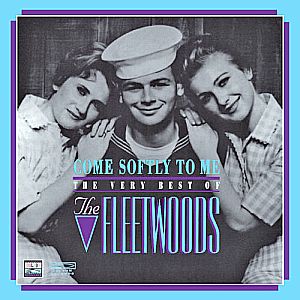

1950s-Related Reading at Amazon.com…


J.C. De Ladurantey’s 2016 book, “Rock & Roll and Doo-Wop...” 1950s & Early 1960s. 256 pp. Click for Amazon.
Richard Aquila’s 2016 book, “Let's Rock!: How 1950s America Created Elvis and the Rock and Roll Craze,” 368 pp. Click for Amazon.
David Halberstam’s best seller, “The Fifties,” w/fascinating profiles of Madison Avenue, Ricky Nelson, Elvis Presley, etc. Click for Amazon.


Sources, Links & Additional Information

2019 book by Todd R. Baptist, “The Flamingos: A Complete History of the Doo-Wop Legends,”  McFarland Publishing, 248 pp. Click for copy.
2019 book by Todd R. Baptist, “The Flamingos: A Complete History of the Doo-Wop Legends,” McFarland Publishing, 248 pp. Click for copy.
Composition of The Flamingos’ group in 1959.
Side 1 of ‘Flamingo Favorites’ album, issued on the End Record label, 1960. Click for digital, vinyl or CD.

“I Only Have Eyes For You — The Flamingos,” The Doo Wop Box: 101 Vocal Group Gems From the Golden Age of Rock ‘n Roll, (liner notes booklet), Rhino Records Inc, 1993, p. 64.

Marv Goldberg, “The Flamingos,” Marv Goldberg’s R&B Notebooks,  Based on interviews with Johnny Carter and Terry Johnson, 2006.

Jason Ankeny, “The Flamingos,” All Music Guide.

“The Flamingos,” Wikipedia.org.

“The Flamingos,” Vocal Group Hall of Fame, Inducted, 2000.

Sandra Burlingame, “I Only Have Eyes for You  (1934),” JazzStandards.com.

David Edwards and Mike Callahan, “The George Goldner Story,” BsnPubs.com, last update, January 26, 2009.

David Edwards and Mike Callahan, “End Label Album Discography,” BsnPubs.com, last update, February 28, 2008.

Robert Pruter, “The Flamingos: The Chicago Years,” Goldmine (magazine) April 6, 1990, pp. 28-30. (Goldmine.com is also a music and music memorabilia website featuring articles on recording stars of the past and present, listing all known releases. Goldmine, the bi-weekly print magazine, also distributes a weekly e-newsletter, and broadcasts streaming radio.)

Larry, “The Flamingos — I Only have Eyes For You,” Funky16 Corners, June 12, 2008.

Kim Curtis, Associated Press, “The Flamingos Wins Settlement From Pepsi For Unauthorized Song in Ad,” TargetMarket News.com, January 30, 2006.

Associated Press, “Doo-Wop Band Wins Settlement From Pepsi,” USA Today, January 30, 2006.

“The Flamingos,” HarmonyTrain.com.

“Pepsi Must Pay for Flamingos Song,” Los Angles Times, February 1, 2006.

Stephen Cook, Album Review, I Only Have Eyes for You: The Best of The “End” Years, The Flamingos ( Sequel, 1994), All Music.com. 

Anthony J. Gribin, Andrew M. Schoff & Matthew M. Schiff, The Complete Book of Doo-Wop, Wisconsin: Krause Publications, 2000.

Robert Pruter. Doo-Wop: The Chicago Scene, Champaign, IL: University of Illinois Press, 1996.

“The Flamingos,” Rock and Roll Hall of Fame, Induction, March 19, 2001.

A Flamingos Discography.

“I Only Have Eyes For You,” 2002 Films/Short Film Showcase, Revelation Perth International Film Festival.

J.C. Marion, “The Flamingos, Part 2: Decca, End, and Beyond,” Doo-Wop Nation, Issue #6.

“The 500 Greatest Songs of All Time,” Rolling Stone, November-December 2004.

Terry Johnson’s Flamingos History.

“I Only Have Eyes for You,” Wikipedia.org


Ava Gardner
1940s-1950s

Ava Gardner in a publicity photo for 'The Killers', a 1946 film that also debuted Burt Lancaster. Click for canvas art print.
     When 18 year-old Ava Gardner hit the streets of New York in the summer of 1940 to visit her sister Beatrice, she was still very much a country girl — one of seven children raised on a hardscrabble North Carolina farm.  But this country girl was a striking beauty; a slender brunette with green eyes. 

Beatrice’s husband, Larry Tarr, who was a professional photographer, took some portrait photos of Gardner and displayed them in his Fifth Avenue studio window. One interested party — a Loews Theater messenger trying to get a date with the girl in the photograph — suggested someone send the photos to the MGM film studios, advice which Larry Tarr heeded. He promptly sent a big package of Ava’s photos over to MGM. 

Young Ava by this time had returned to North Carolina, where she was attending secretarial classes at Atlantic Christian College. But MGM soon called her to New York for an interview.

In New York, she did a screen test which showed her as awkward and unpolished. Yet when veteran test director Al Altman viewed the footage, he was struck when Gardner looked straight into the camera lens, seeing “a flash of hypnotic fire” there, according to Gardner biographer Lee Server. So Ava was offered a standard studio contract.

Ava Gardner arrived in Hollywood in August 1941 with her sister Beatrice. There, the country girl began to get a make over. An MGM voice coach went to work on her North Carolina drawl, considered nearly incomprehensible, and she was also put through other training. Within a year, she started appearing in films, but would labor in MGM’s backwaters for some years before she would rise to major stardom.


Ava Gardner, age 13.
Country Girl

     Ava Gardner was born in a small North Carolina farming community in Johnston County named Brogden, also known by the nickname “Grabtown.”  Her father, Jonas Bailey Gardner, was of mixed descent — Irish Catholic and Tuscarora American Indian.  At the time of Ava’s birth in 1922, he owned a cotton and tobacco farm, which he worked with his wife and Ava’s mother, Molly, a Baptist of Scots-Irish and English origin.  Ava grew up with two brothers and four sisters.  Hard times came with the Great Depression, causing the family to lose their farm.  Her father then went to work in a saw mill and her mother as a cook and a housekeeper.

Ava Gardner photos taken by Larry Tarr, 1940.

     Ava’s first brush with acting came in first grade in the operetta, A Rose Dream — presented at the Brogden School in 1929.  During her teens, the family bounced around a bit between Virginia and North Carolina.  Her father died in 1935 when Ava was a teenager.  She had grown up as a bit of Tom boy running around in bare feet, sneaking cigarettes behind the barn.  Hard times also brought her hand-me-down clothes and teasing at school. 

     At the age of 13, Ava Gardner already had “heart-stopping” good looks.  Her mother, however, monitored her suitors, and once followed Ava when she drove with a boy to a nearby lake, dragging her daughter from the car and giving her a stern lecture.  A similar fate befell Ava and her boy in the midst of a goodnight porch kiss after a New Years’ dance one year.  Her mother was fiercely protective 

     As a teen, Ava did some Hollywood dreaming, confiding in a note to one girlfriend at age 13:  “I always wanted…to be a movie star,” she wrote.  “I still do, but I know I can’t so I have about given up hope.”  Her favorite actor was Clark Gable.  In later years, she also thought about being a singer in a swing band. 

     Ava and some of her siblings attended high school in North Carolina, with Ava graduating and going on to Atlantic Christian College in Wilson, North Carolina.  But it was her trip to her sister’s place in New York, and Larry Tarr’s photographs, that helped change her life and send her to Hollywood.

Movie poster from the 1946 film, ‘The Killers,’ staring Ava Gardner and Burt Lancaster. Click for DVD.


Rise To Stardom

     In Hollywood, after they smoothed out Gardner’s rough country edges, she appeared in more than 20 films through the early 1940s.  But none of these propelled her to stardom.  Then in 1946 she played opposite Burt Lancaster in The Killers.  It was this film that brought her wide notice.  She then became known as a movie star and sex symbol.  Other films quickly followed, among them, The Hucksters (1947), One Touch of Venus (1948), The Bribe (1949) with Robert Taylor, and The Great Sinner (1949).  By the end of 1950, MGM’s publicity department was sending out black-and-white photos of Gardner at the rate of three thousand requests per week.

MGM photo of Ava Gardner from ‘The Killers,’ 1946. Click for her Amazon page.

     In September 1951, Gardner appeared on the cover of Time magazine, featured in a story titled “The Farmer’s Daughter,”   which also  covered the history and importance of the female star in Hollywood.  In the piece, Time’s writers lavished praise on Gardner: “…[T]he consensus is that Ava Gardner may well turn out to be the best thing for Hollywood since the late Jean Harlow.”

Still, Gardner, then 29, was competing with other rising actresses of that day, including: Elizabeth Taylor, 19; Shelley Winters, 28; Jennifer Jones, 31; Susan Hayward, 32; Linda Darnell, 29; Virginia Mayo, 28; and swim star Esther Williams, 29. Betty Grable, 34, was then the reigning box office queen. Other established stars at the time included Irene Dunne, 43; Joan Crawford, 43; and Loretta Young, 38. 

Time, in its piece on Gardner, added some caveats, noting that she was not “the most beautiful babe” in Hollywood, nor was she the best actress.  However, she exuded an allure and mysterious qualities, said Time, that sent the glamor meters clicking.  Time’s writers concluded she just might be the one new star who could bring glamour back to Hollywood.

Ava Gardner on Time magazine’s cover, September 3, 1951.

     By 1951, Gardner was getting more serious film work and better quality films, with Showboat in 1951 and The Snows of Kilimanjaro in1952.  She played opposite Clark Gable in 1953’s Mogambo, a role for which was nominated for an Academy Award, but lost to Audrey Hepburn who had starred in Roman Holiday.  In 1954, opposite Humphrey Bogart, she played the title role in The Barefoot Contessa — considered her “signature film” by some — as a Madrid slum gypsy who rises to screen stardom but is murdered by her jealous husband.  In 1956 she made Bhowani Junction, with director George Cukor playing an Anglo-Indian half breed heroine who is torn between two cultures and multiple lovers.  In 1957’s The Sun Also Rises, she played party-girl Brett Ashley, a 1920s story of post-war ‘lost generation’ expatriates set in Paris and Madrid.

Movie poster for 1953's ‘Mogambo,’ with Ava Gardner, Clark Gable & Grace Kelly. Click for DVD.
     In 1958, Gardner left MGM and became an independent actress, then earning up to $400,000 a movie, most of which were made in Europe.  Among her films in this period were: On the Beach in 1959 with Gregory Peck, a story of Australian survivors facing global contamination after a nuclear war; 55 Days at Peking in 1963, a story of Americans in China during the Boxer Rebellion with Charlton Heston and David Niven; and Seven Days in May in 1964 in which she played a patriotic but discarded mistress of a deranged general played by Burt Lancaster. 

In 1964, Ava Gardner also gave what some thought her finest performance as hotel keeper Maxine Faulk in The Night of the Iguana, a Tennessee Williams story in which she lusts after defrocked priest Richard Burton.  In 1968, after undergoing a hysterectomy to allay fears of uterine cancer that had killed her mother, she made the Mayerling, playing the Austrian Empress Elisabeth opposite James Mason playing Emperor Franz Joseph.


Ava Gardner, 1950s.
Ava Gardner, 1950s.
 
Salty Language

     Throughout her life, Gardner was known for her frank talk and down-to-earth quips, sometimes cutting to the quick.  Of Clark Gable — once her teen idol — she is reported to have said: “Clark is the sort of guy that if you say, ‘Hiya, Clark, how are you?’ he’s stuck for an answer.” 

     When she arrived in Australia to make the film On the Beach, a remark attributed to her in the press enraged many in that nation.  “I’m here to make a film about the end of the world, and this sure is the place for it,” she was reported to have said, although some have charged this was partly invented by the Australian press.  Others would also cite her salty language, noting she could “swear like a truck driver.”  But it was Gardener’s life off-screen that held a special fascination for many of her fans and the general public.


Sheet music cover for ‘Song of the Barefoot Contessa’ from 1954 film. Click for film.
Love Life

     Arriving in Hollywood as a 19 year-old,  Ava Gardner first met and married fellow MGM actor Mickey Rooney.  They were wed in January 1942, but divorced 17 months later.  She then dated wealthy aviator Howard Hughes for a time thereafter, knocking him out cold once with a heavy candlestick in one stormy confrontation.  Despite this, the two remained friends for years. 

Gardner’s second marriage came in 1945 to jazz musician and band leader Artie Shaw.  It was Shaw’s sixth marriage, and he was highly critical of Gardner’s lack of education.  He insisted she read books of his choosing, go to a psychoanalyst, and was often insulting of Gardner in public.  The marriage ended after a year and led Gardner into some serious drinking.  She would later say of Shaw: “He was god-almighty, I never stood a chance.”

      Her third and final marriage was to Frank Sinatra from 1951 to 1957.  Sinatra left his wife Nancy and their three kids for Gardner and the whole affair made headlines.  The subsequent stormy relationship between Sinatra and Gardner kept the Hollywood gossip columns busy for years (see sidebar section below).  They separated in 1953, had a number of reconciliations, but finally divorced in 1957. 

Ava Gardner with bullfighter Luis Miguel Dominguin in 1954.
     During the 1950s, she had also gone to Spain a few times, where a friendship with writer Ernest Hemingway led at one point to an affair with bullfighter Luis Miguel Dominguín.  Through the years there were other affairs as well, among them, Robert Mitchum and George C. Scott, the latter of whom was abusive to Gardner on at least two occasions, according to biographers and her own accounts.

      Other men she met throughout her life, such as author and poet Robert Graves, were bewitched by her charm and intelligence. In 1958, Graves wrote short story tribute to her for The New Yorker titled, “A Toast to Ava Gardner.” Bert Pfeiffer, a painter who became captivated by Ava’s performance as a statue who comes to life in the 1948 film One Touch of Venus, began painting regular portraits of her, which he later donated to the Ava Gardner Museum in Smithfield, North Carolina. He also donated his fifty-year collection of other Gardner memorabilia, including European press clippings, slides, negatives, photographs, movie posters, and autographed images.

Ava & Frank


Ava Gardner, circa 1940s.
     One of Hollywood’s most dramatic and dazzling love affairs of the early 1950s was that between Ava Gardner and Frank Sinatra.  According to Lee Server’s biography, Ava Gardner: Love is Nothing, the chemistry between the two began in the Fall of 1949 at the Palm Beach home of producer Darryl F. Zanuck.  Gardner’s career by then had taken off, propelled from her staring roles in films such as The Killers. She was then one of Hollywood’s top stars.

     Sinatra on the other hand, had seen better times by then, as his singing and recording career were then in a slump.  But the meeting between the two — characterized by some as “The Voice” meets “The Shape” — became a wild night for the pair, who both liked their alcohol.  Gardner asked if Sinatra was still married.  He said the marriage was over, done with.  They continued their talk for hours, drinking and flirting, but soon left the party, taking a bottle along as they departed.  They climbed into Sinatra’s Cadillac and roared off down the highways passing the bottle back and forth as they went.  Server described them “like two kids on a joyride.”

Frank Sinatra, circa 1940s.
     Soon, they ended up in the small town of Indio, as Sinatra pulled over and parked on the main street where he and Ava made out under the stars.  Later, Sinatra opened the glove compartment and pulled out two .38 Smith & Wesson pistols.  He, then Ava, commenced to shooting out street lights, whooping it up with each hit.  Sinatra, enchanted by his new wild friend, was sure he had found his soul mate.  Ava consumed more liquor, as her next pistol shot went into a hardware store.  She then proceeded to empty the gun with a rebel yell.  As Sinatra began to turn his Cadillac around and head back to Palm Springs, two town policemen pulled him over and approached with their guns at the ready.  A few hours later, down at the station, with Ava lying unconscious on a wood bench, a publicist from Los Angeles arrived by chartered plane with a big black bag that he handed over to the cops.  Sinatra and Gardner were released.  There would be no paper trail and no publicity.  Reportedly, the cops enjoyed a prosperous retirement.

Frank Sinatra with thin mustache and Ava Gardner at the Flamingo in Las Vegas, January 1, 1952. Photo,  Hulton Archive / Getty Images.
Frank Sinatra with thin mustache and Ava Gardner at the Flamingo in Las Vegas, January 1, 1952. Photo, Hulton Archive / Getty Images.
     Sinatra’s winning of Gardner was complicated by the difficulty of getting a divorce from his wife.  And there were also occasional competitors.  At one point in May 1950, Sinatra flew to Spain where Gardner was filming a new movie.  She was being pursued there by another suitor, Mario Cabre, 34, a part-time actor and bullfighter then playing a role in the same film.  Sinatra presented Gardner with a $10,000 emerald necklace, which presumably helped his cause.

     Ava and Frank were married in November 1951, as Sinatra left his wife, Nancy and the kids to be with Ava.  Gossip columnists Hedda Hopper and Louella Parsons, along with the Hollywood establishment and all manner of fans, beat up on Sinatra for leaving his “good wife” for Gardner, the exotic femme fatale.   Sinatra’s public image had changed by this time, as he was once portrayed as a shy, romantic dreamer leading a quiet family life.  The new gossip about Sinatra sold newspapers and magazines by the ton.  And Gardner, a top box office draw, had a following too.  Adding to the press fervor was the Catholic Church, which denounced both Sinatra and Gardner.  Sinatra and his former wife were Catholics.  Some church leaders advised their parishioners to boycott Sinatra’s records and Gardner’s films.

Ava Gardner & Frank Sinatra in happier times.
      Sinatra, meanwhile, had career troubles, as his vocal chords suffered damage in 1952 and his talent agency dropped him. Gardner’s career, on the other hand prospered.  Headlines of her affair with Sinatra only solidified her sexy screen image. 

The marriage to Sinatra was stormy — passionate fighting, jealousy, at least one suicide attempt by Sinatra, and numerous separations and reunions. 

But Gardner reportedly used her influence to get Sinatra cast in the 1953 film From Here to Eternity.  Sinatra agreed to play a supporting role in the film for $8,000.  But he made the most of it.  In fact, in that year, both he and Ava were nominated for Oscars — Ava for Mogambo and he for Eternity.  Frank won, but Ava lost to Audrey Hepburn for Roman Holiday.

Frank Sinatra and Ava Gardner at Los Angeles political rally for presidential candidate Adlai Stevenson, 1955.
Sinatra and Gardner, meanwhile, continued an on-again, off-again relationship through the mid-1950s. In 1955, then reported to be separated, Sinatra and Gardner, appeared together at a Hollywood political rally for Adlai Stevenson at the Palladium Theater. Stevenson was then seeking the 1956 Democratic presidential nomination. With Sinatra and Gardner appearing together at the rally, some thought the two had reconciled their differences, as Gardner introduced Sinatra to the audience as “my husband,” describing him as “a wonderful, wonderful man.” Sinatra that night sang, “When You’re Smiling, the Whole World Smiles With You.” Sinatra’s career was then on the rise. He would receive an Oscar nomination that year for his portrayal of a drug addict in The Man with the Golden Arm. His voice had recovered as well, and his songs became more popular than ever. But aside from occasional joint appearances such as this rally, the Sinatra-Gardner marriage showed no signs of real repair, and it finally ended in divorce in 1957.

     At one point during their marriage, Gardner had become pregnant but had an abortion due to the volatility of their relationship. She had always wanted children, but said in later years: “We couldn’t even take care of ourselves. How were we going to take care of a baby?” Gardner and Sinatra remained good friends for the rest of her life.

Ava Gardner, London flat, 1984.

Spain & London

     After her marriage to Sinatra ended, Gardner moved to Spain, where she had been on previous occasions, and had filmed the 1951 movie Pandora and the Flying Dutchman there. In Spain, Gardner became a big fan of the country’s culture, especially bullfighting and flamenco dancing, and also became involved with bullfighters.  One report in Time magazine of September 1955 noted: “In the bull ring of the ancient town of Alcala de Henares, slight, curly-haired Cesar Giron, 21, was so inspired by Ava’s presence in the stands that he dispatched his bull in high style, won both ears and the tail, presented his bloody trophies to Ava, who clutched an ear to her lips for a long kiss as the crowd cheered.”

     In 1961 she began year-long affair with Claude Terrail, a European playboy and owner of the Paris restaurant La Tour d’Argent. By the time it ended, Terrail reportedly said: “I had to give up-she was too dangerous for me,” alluding to her Jekyll-and-Hyde type personality after the liquor began to flow.  By the late 1960s, Gardner had moved to London from Spain after Spanish tax authorities claimed she owed $1 million in back taxes.  In the 1970s she continued to appear in films — as Lillie Langtry in 1972’s The Life and Times of Judge Roy Bean, opposite Paul Newman, and in 1974 opposite Charlton Heston in Earthquake.  Retiring from Hollywood film by 1982, she made a television debut in 1985 in the Knot’s Landing series.  She also had a notable role as the scheming Agrippina in the 1985 TV miniseries A.D. (Anno Domini), a six-part British/Italian production of the life histories of the Apostles in Rome after the death of Jesus.


Later Life

People magazine’s February 1990 cover-story tribute to Ava Gardner, with cover note that read in part: ‘She was the most irresistible woman in Hollywood. Ravishing, fiery and dangerous, she had a smoldering beauty that awed even Liz Taylor...’ Click for copy.
     A lifetime smoker, Gardner suffered from emphysema in later years and also contracted an autoimmune disorder.  In 1986 she suffered two strokes and was left partially paralyzed.  Frank Sinatra paid her medical expenses.  Toward the end of her life and living in London, Gardner reportedly listened regularly to Sinatra’s records as her health failed.  She also wrote an autobiography, Ava, My Story, that was later published in 1990.  She died in London of pneumonia in late January 1990.  She had just turned 68 the previous December.

     People magazine, in an extensive cover story tribute to Gardner at her death in its February 12, 1990 issue, offered the following on her life and times:

     “A siren who was wildly insecure about her looks, a star who swore she couldn’t act, Gardner had always been a study in contradictions. To the moviegoers entranced by Ava during World War II, she was sensuality itself. But while part of her was the flamboyant temptress whose beauty cowed even Elizabeth Taylor, another part was a country girl who went barefoot, took seconds on fried chicken and disliked anything that hinted of pretension. A loner who felt miscast as a movie queen, she learned to drink her liquor straight-not because she liked the taste, but because alcohol took the edge off her shyness. Addicted to stormy relationships, she was a quick-tempered scene maker who fought and made love with equal fervor. In her later years, she began saying that she would have traded her film career for ‘one good man I could love and marry and cook for,’ but friends doubted that she could have made it as a hausfrau…”.

Ava Gardner, sometime in the early-to-mid 1950s.
     After her death, one of Frank Sinatra’s daughters found him privately grieving Gardner’s passing; he was quite broken up.  Gardner was the love of his life.  She had inspired one of his most personal and magical songs, “I’m a Fool to Want You”, which he recorded after their separation.  As for Gardner, despite her seemingly carefree life after Sinatra, actress Arlene Dahl later noted of Gardner: “She told me that she never loved another man as much as she loved Frank.”

     At her funeral, on a rainy day that reminded some of a scene from The Barefoot Contessa, about 50 relatives and friends gathered at the family plot, where Gardner would be buried next to her brothers and parents.  Several hundred others gathered beyond the roped-off grave site.  Earlier, some 3,000-odd visitors had come through the Smithfield funeral home to pay their respects, where one flower-wreath’s card was signed, “with my love, Francis.”  One rumor had it — and perhaps that’s all it was — that a lone black limousine appeared at the funeral whose occupant never emerged, but was assumed to have been Frank Sinatra. Sinatra died in 1998. Today in Smithfield there is an Ava Gardner Museum in town and also a website. In the summer of 1998, a bronze sculpture of Ava Gardner’s Pandora character was erected in her honor in the village of Tossa de Mar, Spain, where she had made the 1951 film, Pandora and the Flying Dutchman.

Ava Gardner, close up, 1950s.

     Ava Gardner appeared in more than 60 films between 1942 and 1982.  In June 1999, the American Film Institute included her on a list of greatest Hollywood stars.  In 2008, The Killers was selected for preservation in the United States National Film Registry by the Library of Congress as being “culturally, historically, or aesthetically significant.” 

     At her death, Charles Champlin wrote in the Los Angeles Times:

“Her tall beauty was indubitably regal, but, from the start, the impression was that she was impatient and uncomfortable atop a pedestal, as if she had a fear of that particular height…. If Gardner was a symbol of the swift and dizzying glories that stardom can grant, she was a symbol as well as of its penalties, frustrations and disorientings. Everything is not quite enough, and the line between screen fictions and life as lived can start to blur…”

See also at this website, “Film & Hollywood” or “Celebrity & Icons” for additional stories in those categories. And the topics page, “Noteworthy Ladies,” includes additional story choices on other notable women. For more on Sinatra, see the “Sinatra Stories” topics page. Thanks for visiting – and if you like what you find here, please make a donation to help support the research, writing and continued publication of this website. Thank you. – Jack Doyle

Please Support
this Website

Donate Now

Thank You

__________________________

Date Posted:  23 May 2009
Last Update:  9 August 2019
Comments to: jackdoyle47@gmail.com

Article Citation:
Jack Doyle, “Ava Gardner, 1940s-1950s,”
PopHistoryDig.com, May 23, 2009.

Twitter: https://twitter.com/PopHistoryDig
BlueSky: jackdoyle.bsky.social

_______________________________


Sources, Links & Additional Information 

Ava Gardner and Robert Taylor in the 1949 film, ‘The Bribe.’ Click for DVD.
Ava Gardner w/ Humphrey Bogart in 1954's ‘The Barefoot Contessa.’ Click for film.
Ava Gardner with Tyrone Power in the 1957 film, ‘The Sun Also Rises.’ Click for DVD.
Ava Gardner with Gregory Peck on the set for 1959 film, ‘On The Beach.’ Click for DVD.
Ava Gardner with Richard Burton in the 1964 film, ‘Night of the Iguana.’ Click for DVD.

Edwin Schallert, “‘Black Angel’ to Star Ava Gardner at The U,” Los Angeles Times, April 1, 1946. p. 9.

“Artie Shaw’s Ava Gardner Asks Divorce,” Los Angeles Times, August 16, 1946, p.A-1.

Hedda Hopper, “Culture, Not Love, Her Aim Now, Says Ava Gardner; Personal Life Secondary to Film Career,” Los Angeles Times, August 24, 1947, p. C-1.

“Grouchy Sinatra Meets Ava Gardner in Spain; Gossip Says She’s in Love With Bullfighter, Reporters Tell Him Before Rendezvous,” Los Angeles Times, May 12, 1950, p. 14.

“Hearth & Home,” Time, Monday, May 22, 1950.

“Frank Sinatra, Ava Gardner Fly to Mexico,”Los Angeles Times, August 2, 1951, p. 2.

“Hearts & Flowers,” Time, Monday, August 13, 1951.

“The Farmer’s Daughter,” Time, Monday, September 3, 1951.

Hedda Hopper, “Highly Dramatic Role Goes to Ava Gardner,”Los Angeles Times, October 2, 1952, p. B-8.

“People,” Time, Monday, September 19, 1955.

Thomas M. Pryor, “M-G-M Proposes, Actress Disposes; Studio, Seeking Star Roles for Ava Gardner, Runs Into Vehicle Trouble,” New York Times, Friday, January 27, 1956, p. 18.

Ava Gardner, Ava: My Story, New York: Bantam, 1990.

“Ava Gardner,” Wikipedia.org.

Roland Flamini, Ava: A Biography, 1983.

Peter B. Flint, “Ava Gardner Is Dead at 67; Often Played Femme Fatale,” New York Times, January 26, 1990.

Charles Champlin, “Ava Gardner – Image of a Bygone Era,” Los Angeles Times, January 26, 1990, p. F-1.

Burt A. Folkart, “Ava Gardner, Sultry Film Star, Dies at 67 in London,” Los Angeles Times, January 26, 1990.

Michelle Green, Doris Bacon, Eleanor Hoover, Cathy Nolan, Jane Walker, Linda Kramer, David Hutchings, Dick Lemon, “Many Passions, No Regrets — A Hard-Living Renegade Who Hated Stardom, Ava Gardner Became the World-Class Symbol of Scandal and Sexuality,” Cover Story, People, February 12, 1990, pp. 72-81.

Reid Buckley, “Ave Ava — Ava Gardner,” National Review, April 16, 1990.

Robyn Karney, “Ava Gardner,” St. James Encyclopedia of Pop Culture, Gale Group, 2002.

Lee Server, Ava Gardner, Love is Nothing, New York: St. Martin’s Press, 2006, Illustrated, 551 pp.

Ava Gardner Museum in Smithfield, North Carolina.

Janet Maslin, Books of the Times, “Ava Gardner in Lee Server’s Biography: Hollywood Star as Wild Spirit,” New York Times, April 17, 2006.

Peter Bogdanovich, “Ava’s Allure,” Review of Ava Gardner, by Lee Server, Sunday Book Review, New York Times, April 23, 2006.

“Biography of Ava Gardner,” Turner Classic Movies, Movie Data Base.

Jane Ellen Wayne, Ava’s Men: The Private Life of Ava Gardner, 1989, St. Martin’s Press, 260 pp.

Karin J. Fowler,” Ava Gardner: A Bio-Bibliography,” 1990.

Doris Rollins Cannon, Grabtown Girl: Ava Gardner’s North Carolina Childhood and Her Enduring Ties to Home, 2001.

Dennis Drabelle, “Movie Stars: The Odd and Amazing Careers of Ava Gardner, Barbra Streisand, Patricia Neal and Ed Sullivan,” Book World, Washington Post, Sunday, July 2, 2006, p. BW-8.

On-line galleys and text of book: Ava: My Story, New York: Bantam, 1990.

“Frank Sinatra and Ava Gardner Shoot Out the Night,”Seraphicpress.com. April 28, 2009.

“Film Drops Ava Gardner Over ‘Excessive Demands’,” [‘Pink Panther’], New York Times, Tuesday, November 6, 1962, p. 39.

Hedda Hopper, “Burton to Co-Star With Ava Gardner,” Los Angeles Times, May 16, 1963, p. C-6.

Roderick Mann, “Films, Privacy and Ava Gardner,” Los Angeles Times, April 20, 1978, p. E-13.


“Taylor Swift, Rising”
2003-2009

Taylor Swift at age 19, on October 22, 2008 cover of ‘Billboard’ music magazine, with a tagline below her name that reads: ‘Country’s Teen Queen Takes Her Music Global.’
     Taylor Swift was a freshman sitting in her high school math class in Hendersonville, Tennessee when she began writing her first hit song. She was 14 years old. Within three years of that moment, her net worth began building to the tune of tens-of-millions-of-dollars. After her first headlining concert tours in 2009 and 2010, she became a top star, generating corporate-level revenue.

     Initially a rising star in country music, Taylor Swift employed an array of talents to boost her career.  She was a songwriter, a savvy user of social media, a budding actress, a video editor, a dress designer, a poetry lover, and more.  In those early years, teens swarmed to her. Many of their moms did too, approvingly, as Taylor offered a clean-cut teen image.  She was then on the edge of her own teenage years, which gave her a special cachet with her audience. Still, she grew up quickly in those years, projecting at times a wiser and more mature person well beyond her years.  She could be surprisingly business savvy one minute, and then gushingly teen the next, finding her way in the music world, though entitled to her teen exhuberances.

     Her first hit song — the one penned in high school — was titled “Tim McGraw.” It’s a song about teenage love — a timeless ingredient in songwriting, and one that became a specialty for Taylor.  “I’m in love with love,” she would later say, returning to that territory again and again in her songwriting.  More on that later. Suffice it to say for the moment that Taylor Swift would prove she had a magic pen when it came to teen love and heartache. “Tim McGraw,” for example, tells a tale of summer love about to end with the girl left behind. She the freshmen, and he the college-bound senior. “Their song” was one of those by country singer Tim McGraw, hence the song’s title. It held special meaning for them. “…[W]hen you think Tim McGraw,” Swift writes in the lyrics, “I hope you think my favorite song / The one we danced to all night long …” And it didn’t hurt, of course, that the actual Tim McGraw was one of the most popular country artists at that time.

CD cover photo of  Taylor Swift’s first single, ‘Tim McGraw.’ Click for digital single.
CD cover photo of Taylor Swift’s first single, ‘Tim McGraw.’ Click for digital single.
     “Tim McGraw” began to get radio play in mid-2006, and by late January 2007, had risen to No. 6 on Billboard’s Hot Country chart. “Tim McGraw” is the tune that first brought notice to this young singer-songwriter in the Nashville music world — and soon, much beyond.  For this song was only the first in a quick succession of other country and pop hits — along with top-selling albums, all kinds of music awards, magazine covers, a gazillion internet hits and video streams, TV appearances, and much more. Her whirlwind rise to the top of both the country and pop music industries is redefining what a young kid, coming from practically nowhere, can achieve with a mix of innocence, moxie, helpful parents, and no small talent.

     In 2008, at the age of 19, Taylor Swift became the biggest-selling solo artist of the year with more than 7 million albums sold. She was also breaking records on the internet for paid downloads and streaming videos. In 2008, she was the most searched artist on MySpace with more than 200 million streams. Forbes magazine ranked her at No. 4 on its annual “top earners” list of country musicians for 2008, giving her an estimated take of $18 million — just ahead of Tim McGraw and Brad Paisley, both at $16 million. In the top three slots were Kenny Chesney at $65 million, Rascal Flatts at $60 million, and Toby Keith at $52 million. But hey, Taylor Swift was just getting started.


Music, Roots & Rhyme

     Taylor Swift’s musical good fortune did not simply materialize out of the ether one day while musing in her ninth grade math class. Her song-writing abilities began forming back in her early childhood. She was a kid who liked poetry, among other things.“…Poetry was something that just stuck in my head and I was replaying those rhymes and try to think of my own…” She read the Shel Silverstein poems and the Dr. Seuss books, and would later explain to Rolling Stone: “I noticed early on that poetry was something that just stuck in my head and I was replaying those rhymes and try to think of my own.” In school, as the other kids complained about having to write poems, Taylor reveled in the challenge. She would write multiple-page poems when most kids could hardly muster a line. By the fourth grade she won a national contest for the poem, Monster In My Closet. Taylor Swift remembers just having a really keen interest in rhyming. “Poetry was the first thing that ever fascinated me about words and about writing,” she would later tell Rolling Stone. “Poetry is what turned me into a songwriter.”

Young Taylor Swift and her mother, Andrea, 1997.
     Taylor grew up in Berks County, Pennsylvania, in the south-central part of the state between Harrisburg and Philadelphia.  She lived on a Christmas tree farm for a time, rode horses as a kid, and had good early schooling, attending the nationally-recognized Wyndcroft School in Pottstown, PA.   Both her parents had been in finance, with her father, Scott, a stockbroker and her mom, Andrea, later becoming a full-time mom.  Young Taylor started local performing at about the age of 10,  in various contests, fairs, and festivals in Reading and other Pennsylvania towns.

Taylor Swift, age 7, at Pottstown, Pennsylvania’s Wyndcroft School.
     She grew up with music in her ears, and early on discovered she liked country music, especially country tunes by women.  When she was six she listened to an album by country artist LeAnn Rimes, who was herself a teenage country star.  But Taylor soon learned more about country music, and Patsy Cline and Dolly Parton were in the air too.  But it wasn’t all country.  Her mom was a big fan of Def Leppard, a  heavy metal rock band.  And then there’s the matter of genetics.  Her grandmother was a musical performer and an opera singer who had married an oil man and traveled the world performing in all kinds of exotic places.  Taylor would later tell The Reading Eagle, her former hometown newspaper that she’d remembered her grandmother singing and was thrilled by it.  “She was one of my first inspirations,” Taylor said.

Taylor Swift, giving soccer a try in her middle school years.
     At about ages 10 through 12, Taylor was also in a children’s acting company, and she landed many of the leads because she was a tall kid who could play adult parts.  By the time she was 12 or so, she had played Sandy in Grease; Kim in Bye, Bye Birdie; and Maria in The Sound of Music.  But actually, it was the after-show parties with the moms and the kids  — when Taylor discovered a karaoke machine — that sent her on her way.  That’s when she first began doing country music, singing Dixie Chicks, Shania Twain, and Faith Hill songs.  Some folks hearing her karaoke acts told her mom, “You know, she really ought to be singing country music.”

Taylor Swift, age 10.
     But in middle school, Taylor had some rough going when the “cliques” ostracized her for liking that “dumb” country music.  Taylor took it to heart, tried sports to salvage her dignity, but she was not the super-athlete type.  She turned a bit inward, discovered the 12-string guitar, and began writing songs about her feelings and  middle school emotion.  Her mom would later say that writing songs was Taylor’s way of filtering the world.

Taylor Swift, age 12, with her brother Austin and cardboard figure on a Nashville trip.
     Undeterred by her middle school critics, Taylor took her karaoke skills over to Straustown, Pennsylvania where  a weekly contest was held, the prize being a chance to open for real country performers.  Week after week she entered the contest, and did not win.  But after a year of keeping at it, she won the contest and the prize: she opened for Charlie Daniels’ show — at 10:30 a.m.  Charlie didn’t appear, until his 8:30 pm showtime.  No matter to this  kid; she had moxie and determination and knew what she wanted.  Her sights were squarely set on Nashville, Tennessee, where her favorite country women had made their way.

     At about age 11 or so, she and her mom took a trip to Nashville. Taylor thought she could just go down there, drop off some tapes, and land a record deal. Her mom drove the car down Music Row in Nashville as Taylor gave out her karaoke tapes, one by one, to every record label there. Back in Pennsylvania, however, the phone did not ring. But Taylor kept at it, working all the avenues. She would soon make other visits to Nashville. In Pennsylvania, meanwhile, Taylor was also doing something else: “…It occurred to me that the National Anthem was the best way to get in front of a large group of people if you don’t have a record deal…” she was singing the National Anthem at sporting events and other gatherings — a strategy she later explained to Rolling Stone, revealing a precocious business perspective:

“When I was 11 years old, it occurred to me that the National Anthem was the best way to get in front of a large group of people if you don’t have a record deal. So, I started singing the National Anthem anywhere I possibly could — 76ers’ games, the US Open, and I would just send my tapes out everywhere. I would sing the National Anthem at garden club meetings. I didn’t care. I figured out that if you could sing that one song, you could get in front of 20,000 people without even having a record deal. So I’ve sung that song many, many, many, many times and it still gives me chills, you know, when I get to sing it at an event like the World Series (which she later did, for the Philadelphia Phillies in game 3 of 2008 World Series).

Taylor Swift, age 13, about a year before the moved to Hendersonville, Tennessee.
     When Taylor sang the National Anthem at the U.S. Open tennis tournament one year, she thoroughly impressed the crowd. Britney Spears’ manager, Dan Dymtrow, happened to be in the audience that day and signed her up for a time.  By 2003 there was also an artist development deal with RCA records.  She was 13 by then.  Not long after that, her parents decided to move to Tennessee to put their daughter in better reach of Nashville’s music world. By then, they knew their daughter had some talent and were keenly aware of her drive and determination. So, in 2004, in the summer before her freshman year of high school, they moved to Hendersonville, Tennessee, just outside of Nashville. Taylor Swift was 14 years old.

     “They didn’t put me under pressure at all,” Taylor later explained of her parents’ expectations of her in making this move. “It wasn’t like, ‘This is your one shot, so make it happen.’ They presented it as a move to a nice community. If I made something out of it, great. But if that didn’t happen, that’s OK, too.” Taylor had written an earlier song titled “The Outside” which was selected for a 2004 Maybelline’s compilation CD, entitled Chicks with Attitude, an annual project to help young female artists get started. In May 2004, she was also featured at a BMI Songwriter’s Circle showcase at the Bitter End night club in Greenwich Village, New York, a known haunt for hosting a long line of famous comedians and musicians. So she wasn’t coming to Nashville empty handed.

Taylor Swift at May 2005 songwriting deal with Sony/ATV. Seated from left are BMI's Shelby Kennedy, Taylor, and BMI's Perry Howard. Standing, from left, are: Sony/ATV’s 's Woody Bomar & Arthur Buenahora. Photo by Alan Mayor.
     In Nashville, Taylor Swift found her way around just fine. She would also work with known song writers such as Troy Verges, Brett Beavers, and the Warren Brothers. Then in early May 2005 she was hired as a staff songwriter — the youngest ever, still 14 — at the Sony/ATV publishing house. She later told the New York Times writer Jon Caramanica that she prepared herself for the skeptical adult colleagues she might face: “I knew every writer I wrote with was pretty much going to think, ‘I’m going to write a song for a 14-year-old today’,” she explained. “So I would come into each meeting with 5-to-10 ideas that were solid. I wanted them to look at me as a person they were writing with, not a little kid” — exhibiting a certain maturity and strategy beyond her years. By age 15, she also walked away from an earlier 2003 deal she had made with RCA Records. The company wanted to extend her another one-year offer, but they refused to allow her to record her own songs. Taylor was not excited about their one-year offer and was determined to do her own material. Then came Scott Borchetta.


Big Machine Records

     Scott Borchetta was a guy who knew his way around Nashville and beyond.  He had a 20-year career in the music business and had helped engineer Toby Keith’s rise to stardom.  He had also been a former executive at DreamWorks Records, a venture record label founded in 1996 by Hollywood moguls David Geffen, Steven Spielberg and Jeffrey Katzenberg. DreamWorks Records was a subsidiary of DreamWorks film studios.  But that label — which also had a Nashville, country music branch named DreamWorks Nashville — shut down in 2005.  And that’s when Brochetta was looking around for something new.  He soon found it, or at least part of it,  in young Taylor Swift.

Scott Borchetta.
Scott Borchetta.
     Borchetta had heard a bit about Swift and knew she was a young songwriter over at Sony.  He invited her to drop by his office to play some of her songs.  He then watched her perform at Nashville’s Bluebird Café where she was being showcased one night.  Taylor later recalled watching him in the audience that night as she performed, and noticed that he “was the only one who had his eyes closed and was totally into the music.”  But Borchetta had competitors in the café that night, as he later told CBS.  “There were several other record companies that were in the room.  And I’m looking around, I’m going, ‘I hope none of these other guys are getting it.'”  Borchetta liked what he heard that night, and soon called Taylor to a meeting.  What Borchetta was planning was a new record label and he wanted Taylor Swift to be a part of that — an independent label that would take on the major Nashville Music Row companies.  That sounded perfect to Taylor who seemed to like long odds and shaking things up.  Borchetta, for his part, saw that Taylor had all the requisite ingredients for success in the music business:  she had intelligence, was a good writer, had a great attitude, and was a hard worker.  Big Machine Records was born shortly thereafter and Taylor Swift became its first artist.
Taylor Swift used ‘Tim McGraw’ as the title for her first single, a clever move that got Nashville’s attention.


First Song & Album

     Taylor Swift, age 15, was in her sophomore year of high school when she signed with Borchetta’s Big Machine Records. She recorded in the studio after school — and with her first song, “Tim McGraw” (CD cover shown earlier above), her career began its rise.  In many ways, using the name Tim McGraw as her first song title was a very clever bit of marketing.  McGraw, son of former baseball player Tug McGraw, is one of the nation’s most successful and recognized country artists who is also married to country singer Faith Hill.  Many in the country music world would automatically be curious about a song with McGraw’s name attached to it.  The single began to get radio play in the summer of 2006.

Taylor Swift’s debut album of Oct 2006 spawned 5 hits on both pop & country charts in 2007 and 2008. Click for album.


     Taylor left Hendersonville High School after her sophomore year.  For her junior and senior years she was home-schooled, finishing both years of course work in 12 months.  She finished with a 4.0 average.

     Back at Big Machine studios, meanwhile, a full album was in production — Taylor’s first, named appropriately, Taylor Swift.  It used “Tim McGraw” as its lead track.  Taylor, now 16, also wrote or co-wrote 10 other tracks on the album.  Swift wrote three songs by herself, and collaborated on seven others with writing partner Liz Rose, a skilled song editor who she had met at RCA Records.  Taylor Swift was released in late October 2006.  At its debut, the album started modestly with 39,000 copies sold in the first week.  Gradually, it would gain more attention as additional singles from it were released.  More on that in a moment.

Taylor Swift at Detroit Lions-Miami Dolphins 2006 Thanksgiving Day football game where she sang National Anthem. Photo, Al Messerschmidt / Getty Images
     At this point in her career, Taylor Swift was still an aspiring country artist.  The outcome was uncertain, and during 2006 she continued plugging away at her usual haunts, performing in local venues and at sporting events as she had previously done.  She performed in mid-March at the Legends of Tennis event and at the Hillcrest Racquet Club back in Berks County, Pennsylvania.  And she also continued doing the National Anthem — at a NSCAR event on November 12th, and on Thanksgiving Day in Detroit, November 23, 2006, at the Detroit Lions-Miami Dolphins football game.  During the year she was also performing at selected clubs as well.  In mid-June 2006, for example, she performed at the Maverick Saloon & Grill in Santa Maria, California.

     By late January 2007, “Tim McGraw” had risen to No. 6 on Billboard’s Hot Country Songs chart, and four other singles from the album followed — “Teardrops on My Guitar,” released on February 24, 2007; “Our Song,” August 22, 2007; “Picture to Burn,” January 2008, and “Should’ve Said No,” on May 19, 2008.  All of these singles made it into both the Top Ten on the Billboard country chart and the Top 40 of the Billboard Hot 100 pop chart — marking Swift’s special “crossover” appeal to both audiences, a big plus business-wise.  Of her initial group of singles, “Our Song” was her first No. 1 hit on the Billboard Country Chart.  Swift was also the first female artist to land five singles in the country Top Ten from a debut album.  And some of her singles lingered there for many weeks.  “Tim McGraw,” for example, stayed on the Billboard country chart for 35 weeks.  By the end of 2008, Swift’s debut album, Taylor Swift, had sold more than 3 million copies.

Taylor’s Digital Nation
Early Web Years

       Many of the singles from Taylor Swift’s albums typically have special videos made — common practice since the days of MTV in the early 1980s.  And some of these videos are no small productions — mini-dramas and love stories, all appealing and “must haves” to her fans.  All of her songs are also available in digital format to purchase electronically and download from the internet.

Apple's iTunes offers a downloadable 'extended play' (EP) album of 8 Taylor Swift songs--a sampling of the digital availability.
     Taylor Swift herself — very much an internet person, savvy in video editing, blogging, and all things web-wise — has used her MySpace page to broadcast her music and broaden her fan base.  Between her videos being available on You Tube, as well as her own MySpace page and at the TaylorSwift.com website, millions of page views, “video streams” and downloads of her music began occurring early on, and continues to grow like wildfire.  This electronic “buzz” and digital proliferation of her material occurs simul- taneously with — and sometimes in advance of — any release in physical CD formats.  The music video for “Tim McGraw,” for example, has been viewed more than 25 million times on YouTube.  More of the same is found in her subsequent songs, albums, and videos.  Reporter Jon Caramanica of The New York Times observed in November 2008: “She has aggressively used online social networks to stay connected with her young audience in a way that, while typical for rock and hip-hop artists, is proving to be revolutionary in country music.”  Indeed, Taylor Swift has built a loyal and growing following, especially of teenage girls, who post her stuff all over their own MySpace pages and follow her every blog.  This network amounts to a very lucrative web of commerce — or “Taylor Swift Nation,” as some now call it.


National Notice

Taylor Swift on the cover of the April 13, 2008 ‘USA Weekend’ magazine, in advance of the annual Country Music Awards show.

     By mid-May 2007, with her music rising on the national charts, Taylor Swift began receiving wider national recognition.  In mid May 2007, she performed at the Academy Of Country Music New Artists’ Show in Las Vegas.  On May 15, 2007, Swift performed “Tim McGraw” at the Academy of Country Music Awards, actually meeting McGraw and his wife, Faith Hill, for the first time, in the audience.  They would later invite Taylor to be an opening act on their 2007 tour.

     In early November 2007 at the Country Music Association Awards, Swift, now 17, received the coveted CMA Horizon Award for best new artist. Among past recipients had been Garth Brooks, The Dixie Chicks and Carrie Underwood. 

In December 2007, at the Grammy awards, Swift was also a nominee in the Best New Artist category, but Amy Winehouse won the award. A week later, Swift celebrated her 18th birthday, still pretty happy with the way things went in 2007.


Taylor Swift on the April 2008 cover of ‘Blender,’ a music magazine. Click for copy.
     In 2008, Taylor Swift also began appearing on magazine covers.  In April, she appeared on the cover of Blender, a music magazine. In advance of the annual Country Music Awards later that spring, she appeared on the cover of USA Weekend magazine on April 13th (above).  The editors there offered her as the possible “breakthrough country star.”  People magazine also named her to its Most Beautiful People list in April.  Meanwhile, at the Country Music Television(CMT) Awards in mid-April 2008, Swift took home two prizes, Video of the Year and Female Video of the Year,  for “Our Song.”  She followed that a month later, on May 18th, by winning the Top New Female Vocalist honor at the Academy of Country Music Awards ceremony in Las Vegas, where she also sang.

     In the summer of 2008, Swift continued performing in various venues, including, for example, the Verizon Amphitheater in San Antonio, Texas on June 22, 2008.  Her Taylor Swift CD by this date was in its 20th week as country music’s No.1 selling CD.  And also by this time, she had passed 50 million MySpace streams for her videos.  In mid-July 2008, she performed outdoors at the 16th Annual Country Thunder gathering at Shadow Hill Ranch in Twin Lakes, Wisconsin.


Wal-Mart Deal

Taylor Swift at Country Thunder event, July 2008, Twin Lakes, Wisconsin. Photo, Rick Diamond/WireImage

     Also during the summer of 2008, in mid-July, Big Machine Records released an EP, or “extended play,” CD volume of Taylor Swift songs entitled Beautiful Eyes.  EP’s are something more than a single, but less than a full album.  This one included six tunes, some of which were already available as singles.  A companion DVD with nine song videos was also available.  A limited number of the EPs were pressed so that they would not be confused with Swift’s forthcoming second major studio album, then in the works (see below). 

Beautiful Eyes was marketed in an exclusive deal with Wal-Mart stores. In its first week of release, the EP sold 45,000 copies, debuting at No. 1 on Billboard’s Top Country Albums and No.9 on the Billboard 200 albums chart.  By late December 2008, it had sold more than quarter million copies in U.S. 

In August 2008, Taylor Swift’s love life got some media attention, as a brief involvement between she and teen throb Joe Jonas, 19, of the Disney group, the Jonas Brothers, fueled the teen gossip pages.  But that was all over within a couple of months or so, reportedly providing material for a Swift tune named “Forever and Always.”

Taylor Swift performs National Anthem at game 3 of the World Series, Oct 25, 2008 in Philadelphia. Photo, John Mabangalo-Pool, Getty Images.


2008 World Series

     In late October 2008, Taylor Swift was invited to perform the National Anthem at the World Series baseball classic, game three in Philadelphia, where the Tamp Bay Rays and Philadelphia Phillies were contending for the championship. 

Swift, in her earlier days of National Anthem singing, had also done the circuit with the Phillies’ minor league team in Reading, Pennsylvania — the Reading Phillies.  In fact, it wasn’t that long ago since she had done her last National Anthem performance there, in early April 2007.  But these days Taylor Swift wasn’t doing the National Anthem to get noticed, now she was doing the National Anthem because she was Taylor Swift.

     By this time, Taylor had appeared on the October 22nd cover of Billboard music magazine (first photo at top of article).  She was also performing at live venues, such as a sold-out mid-October show in Chattanooga, Tennessee. 

Taylor Swift and Hank Williams Jr. at the BMI Country Awards, Nov 11, 2008 in Nashville. Photo by Rick Diamond/WireImage.
     By early November 2008, her first album, Taylor Swift had sold over three million copies and she also had scored some 7.5 million downloads of her singles. She was also being honored with more country music awards. 

At the November 11th, 2008 BMI Country Awards in Nashville, Swift’s “Teardrops On My Guitar,” which she also co-wrote, won country song of the year. ( BMI is Broadcast Music, Inc., one of three U.S. performing rights organizations that collects license fees on behalf of songwriters, composers, and music publishers and distributes them as royalties to its members.)

By November 2008, however, a lot of the business planning around her music was focused on her forthcoming second studio album, titled Fearless. An opening salvo for that album came on national television with The Ellen DeGeneres Show, which devoted the entire show to Taylor Swift’s album release party.


Taylor Swift’s ‘Fearless’ album, released in November 2008. Click for platinum edition.
“Fearless”

     When Taylor Swift’s Fearless hit the streets in November 2008, it debuted at No. 1 on the Billboard 200 albums chart.  It quickly sold more than 590,000 copies in its first week, the best first-week sales for any female artist in 2008.  Fearless includes 13 tracks, all of which Swift wrote or co-wrote, and seven of which are hers alone. Newsday, The Boston Globe, Allmusic, and Rolling Stone, among others, all gave the album positive reviews.

Like her previous album, Fearless spun off singles, released separately. “Love Story” came out before the album, on September 8, 2008.  “White Horse” was released on December 8, 2008, and “You Belong With Me,” on April 20, 2009. Swift’s music was also beginning to show up as background music on television shows. “White Horse,” for example, was used in the season premiere of the prime time TV drama Grey’s Anatomy on September 25, 2008.

CD cover for ‘Love Story’ single from Taylor Swift’s ‘Fearless’ album. Click for digital single.
     But it was “Love Story” that became the album’s rising star, a song that Swift later told Time magazine took her about 20 minutes to write on her bedroom floor.  In less than a year, “Love Story” would become the country song with most paid downloads in history, surpassing 3 million.  The song was also released as an international single  — her first — and it rose on the charts in several countries, hitting No.1 in Australia.  Taylor, meanwhile, continued to pick up more music awards and appear in the national media.  On November 23rd in Los Angeles, she received the “favorite country music female artist award” at the American Music Awards.  Later that month, the December issue of CosmoGirl magazine came out with Taylor on the cover.  She was featured in a companion story about her songwriting as the magazine also designated her as one of its 2008 “Born to Lead” award winners.  On December 31 st, 2008, she performed during New Year’s Eve festivities in Times Square.


SNL guest banner featuring Taylor Swift.
SNL & CSI

     Although the national notice for the rising young star continued to roll in, she was still capable of being amazed and thrilled by what was happening to her.  In early January 2009, she was invited to be a musical guest on NBC’s Saturday Night Live (SNL), the popular Saturday night TV comedy show.  “I just found out that I get to play on SNL!!,” she wrote on her MySpace blog after hearing about the appearance.  “January 10th!  It’s my mom’s birthday, and I don’t think either of us would’ve believed you [if you] told us a few years ago that we’d get to spend her birthday in New York City — at Saturday Night Live!  Wow.  It’s pretty unreal.”

Taylor Swift expressing happy surprise to audience reaction at January 2009 SNL performance.
     Swift was the youngest musical guest ever on SNL, and one of only a handful of country artists — among them, Garth Brooks, Dolly Parton and Tim McGraw — to perform on the show over its past 32 years.  The guest host that night was Neil Patrick Harris, former Doogie Howser, M.D. TV star also in the current show, How I Met Your Mother.

MTV News interviewed Swift while she was doing her SNL rehearsal, and she admitted that her rising good fortune had been quite amazing.  “It feels like everything the past couple of months has been a dream,” she said. 

On the SNL show she performed two songs, “Love Story” and “Forever and Always,” and she also did a bit comedy sketch as “Annie” from the Broadway play.  The reviews were mixed, with some taking issue with “too sparkly” guitar and others charging she used too much make-up.  Her fans, however, were generally happy with her two SNL songs.

Taylor Swift shown with actor George Eads in a clip from the ‘CSI’ TV show of March 2009.
     Another TV appearance for Swift followed in March — this one, her first short dramatic role — in the CBS series, Crime Scene Investigation, or CSI, as it more popularly known.  She played the daughter of a motel manager who gets into serious trouble and is murdered, becoming the corpse of the crime scene investigation.  In an earlier series of flashbacks, she is seen engaging with CSI’s Nick Stokes (George Eads), one of the investigators, and in various scenes with different hair styles and and a faked piercing.  The show also used a remix of one of her songs, “You’re Not Sorry,” as background music.  CBS was pretty happy about her appearance, as viewer numbers at 21 million were up by 3 million over the previous week.  The Taylor Swift blogosphere, meanwhile, lit up with fan cheers after her CSI debut.  But while Hollywood may beckon, her day job is keeping her pretty busy.  She had filmed the CSI segment in California in January 2009, and that’s when a Rolling Stone writer and photographer caught up with her for an interview and photo shoot. More on that later.
Taylor Swift taking a photo of Katie Couric in early 2009 when the two were shopping. Photo, CBS/John P. Filo.


The 2009 Tour

     But the big Taylor Swift news in early 2009 was her planned 52-city tour through the U.S. and Canada.  As tickets went on sale in city after city, the concert was sold out. After the date was announced for her show at the Staples Center in L.A., for example, it was sold out in two minutes. The New York city show sold out in a flash as well. 

The Fearless tour, touting the music of her second album, will run for six months, beginning in April 2009 in Evansville, Indiana and ending in October 2009 at Minneapolis/St. Paul, Minnesota.

     “Headlining my own tour is a dream come true!,” she said in a January 30th press release announcing the tour. 

“…Having written my own songs, they are all stories in my head, and my goal for this tour is to bring those stories to life….” She added there would be affordable tickets for everyone who wanted to come to her show. Ticket prices started at $20.

Miley Cyrus and Taylor Swift at conclusion of their duet of ‘Fifteen’ at the Grammy Awards, Feb 2009. Photo, John Shearer/WireImage.
     Also in early 2009, Taylor and her mom were interviewed by CBS News anchor Katie Couric, as Katie was then preparing her “All Access Grammy Special” ahead of the 2009 Grammy Awards. Taylor recounted for Katie her early love of words as a child, and that she was constantly after her mother to tell her stories. Her mom acknowledged to Couric that as a child, Taylor could be “exhausting.”

During the meeting, Katie and Taylor also went on a brief shopping jaunt to Jeffrey’s, a New York city boutique. And later on the outing, Taylor is seen photographing Katie for material to use on Taylor’s My Space blog. 

At the Grammy Awards, meanwhile, Taylor Swift and another teen star, Miley Cyrus of Disney and “Hannah Montana” fame, performed a duet of Taylor’s song “Fifteen” during the nationally-televised awards show.


“Good Girl”

Taylor Swift on the cover of ‘Rolling Stone’ magazine, March 2009. Click for copy.
     In March 2009, Taylor Swift appeared on the cover of Rolling Stone magazine along with a feature story titled: “Taylor Swift: Secrets of Good Girl.”  The story explained that Swift had never smoked a cigarette or taken a drink of alcohol.  Nor is she into drugs.  “I have no interest in drinking,” she told Rolling Stone.  “I always want to be responsible for the things I say and do.”  Indeed, at the moment, Taylor Swift is a clean-cut role model for millions of kids out there, but occasionally ventures into a rebel role, if only as a provocateur.  She once drew a small red heart on her ankle, vowing to replace it with a tattoo if her records sold over 2 million copies.  However, her father said if she did that, he might have to use a belt sander to take it off.  Still, for the most part, Taylor appears to have a fair grip on how she wants to live her star-struck life  — and being a “rehab regular” is not part of her plan.  She gets reenforcement for her clean-cut life style from the moms who tell her what she means to their kids.  And her ninth- and tenth-grade fans seem to like her style too, calling her “down to earth” and “a good person.”  Some go well beyond that, writing her long letters about what her music means to them, as one tenth-grader did in a letter shared with Rolling Stone:

“…When I first discovered your music a few years ago, something in me opened up….I had been feeling upset, and you told me that I’m not alone…Your lyrics mean the world to me, and I swear they are the narration of my life…. I wish more than anything that I could change a teenager’s perspective, the way you have done for me….”

Taylor, The Brand

     Taylor Swift is a hot commodity. Like any rising celebrity in the national limelight, she is being sought out to sell things.  She has already made a deal with Jakks Pacific to do line of Taylor Swift dolls, and she is also endorsing the L.e.i. clothing brand, and a line of sundresses to be carried exclusively at Wal-Mart stores.  More such deals are sure to come.  And having already traveled with some success in Australia and England, there is interest in broadening “Taylor Swift Nation” beyond U.S. shores, and making her something of a global commodity.  There are plans afoot for taking her tour abroad beyond the few previously-arranged dates she had already played recently in London.  Australia and Japan are both in the offing, and likely other countries as well.

     Swift is especially attentive to her fans, and through her MySpace page and her personal blogging she has a direct and “anytime” line to millions of them.  And she has also made a point of being personal with most fans, signing autographs, dispensing hugs, throwing them bracelets, from the stage, mixing with the front-row audience while performing sometimes, and more.  It is part of her core program, fiercely guarded, and appears genuine.

     As of March 4, 2009, Taylor Swift’s Fearless album had an extended its stay at No. 1 on the Billboard album chart, holding there for an 11th week, with sales of 73,000 copies that week. 

Only five other solo female artists have had No. 1 albums for 11 or more weeks in the 53-years that Billboard has been keeping the chart: Alanis Morissette, Whitney Houston, Mariah Carey, Carole King and Judy Garland. 

Fearless was named album of the year at the Academy of Country Music Awards on April 5, 2009.  The album by then had total sales just over 3 million copies.


The “Kid” Inside
…As of March 2009

     It was March 2009. Taylor Swift was then still a teenager; a kid with a freshness and exuberance that bubbled through her no-nonsense music-making. That teenage part of the package was on display when Rolling Stone sent her the magazine’s forthcoming March 2009 cover she would appear on. She was in London at the time, and Rolling Stone sent along a flip camera with their package to tape her reaction to seeing the cover for the first time. 

From video of Taylor Swift seeing her first 'Rolling Stone' cover (formerly posted by RS, since taken down).

     As she unwrapped the cover for the first time came her reaction: “Everything you’d expect from a 19-year-old,” said Rolling Stone’s editors: “giddiness, awe and pure excitement.” She couldn’t believe it: on the cover of Rolling Stone — the dream of any modern day pop or country artist. And as Rolling Stone added: the young woman you see in the video — although a composed and driven musician — is still at her core a wide- eyed teen, excited and exuberant in what she is experiencing (Rolling Stone video since removed).


The Real Thing

     Some have wondered whether Taylor Swift is the real thing, or a manufactured “too-good-to-be true” media package.  Rolling Stone’s Vanessa Grigoriadis, on her 2009 assignment to cover Swift, followed her from the set of the TV show CSI to Faith Hill and Tim McGraw’s Los Angeles mansion which she used while the couple were away.  Grigoriadis continued on with Swift to press junkets in New York and also to Swift’s home near Nashville, Tennessee, getting a pretty good look at her in different settings.

     Grigoriadis believes Swift really is the “good girl” she appears to be.  “For whatever reason she’s never felt a need to rebel from those values and that’s cool,” says Grigoriadis.  The Rolling Stone writer also found Swift “really focused on making her music” and being very involved in the songwriting, the technical aspects, and accessing her feelings.  “She really is that girl in the tiny little bedroom at home writing songs about the things she hopes and dreams and feels,” concludes Grigoriadis.  But Grigoriadis also thinks that Swift’s music may change with time.  “I think because she’s not a manufactured product she could potentially show a broodier side…,” said Grigoriadis in a Rolling Stone background piece.  “You never know, I think she’s a true artist.  I think you can count on her doing something different.”  Others have also found her song-writing to be clever and evocative, and better than many writers twice her age.  If she keeps maturing as a songwriter, they say, in a few years she could become even more awesome than she is now with her teen talent, perhaps then growing into another genre as well.


Love, Lyrics & Meaning

     “The words,” said Taylor Swift in a 2008 interview with her former hometown news- paper, The Reading Eagle, “I love words. I love to write. Being an artist is what I love.”

At that time, the words were about love and teenage heartache, and Taylor Swift explained that was a special thing with her, being into teen love and emotion; able to feel it and capture it — all fair game for her pen.

“I love love,” she told Rolling Stone. “I love studying it and watching it. I love thinking about how we treat each other, and the crazy way that one person can feel one thing and another can feel totally different.” She is also attentive to unique and sometimes painful world of adolescent girls, and wants to help them, through her music, to feel better about themselves.  She has looked at the world from the teen perspective and taken it to heart. 

Taylor Swift as photographed for ‘Rolling Stone,’ January 21, 2009. At times, she flashes  facial similarities to actresses Helen Hunt and Jenna Elfman. Photo, Peggy Sirota
Taylor Swift as photographed for ‘Rolling Stone,’ January 21, 2009. At times, she flashes facial similarities to actresses Helen Hunt and Jenna Elfman. Photo, Peggy Sirota
“In school, I loved reading To Kill a Mockingbird, and I’m very interested in any writing from a child’s perspective.” This is a young lady who has thought quite a bit about what she is writing; there is a depth and intellectual curiosity there; a capacity to move to next levels, whenever they may present themselves.

     Then there is her grounding in the country women singers — studying them and admiring them for what they have stood for, not just their sound or lyrical quality.  As she told Rolling Stone in the “Unabridged Taylor Swift” of early December 2008:

     …I think the thing that cemented it in my mind and made me fall in love with country music was seeing three great examples of what females could bring to country music — I saw that Shania Twain brought this independence and this crossover appeal; I saw that Faith Hill brought this classic old-school glamour and beauty and grace; and I saw that the Dixie Chicks brought this complete “we don’t care what you think” quirkiness, and I loved what all of those women were able to do and what they were able to bring to country music.

I thought, “You know, if Nashville is the town that lets you be yourself and do things like that, and be different, then that’s where I need to be.” … It was such a big deal to me that those three women stood for things in country music…

Producer Scott Borchetta, Taylor Swift, and producer Nathan Chapman with ‘best album’ award for ‘Fearless’ at Academy Of Country Music Awards, April 5, 2009, Las Vegas, Nevada. Photo by Jason Merritt/Getty Images.


The Road Ahead

     Taylor Swift’s story is a quintessential “American Dream” stuff  — an amazing rise to fame and fortune in a very short space of time, owed, it appears, to hard work, talent, and yes, luck.  But the kid has had a lot going for her, including two indulging parents that helped make it all happen, though with a measure of leavening. Her mom counseled, for example, according to Taylor, to always to have “high hopes but low expectations.” And Taylor herself appears to have her feet on the ground, as she told The Reading Eagle in 2008:

“… I continue to walk around with the mentality that I’m not really a big deal because as fast as it came, it can go.”

Taylor’s late teen /early young lady good looks haven’t hurt her rise either. But her good fortune has come largely after the initiative; after the middle school rejection; and after she discovered the “inside thing” looking for an outlet. 

Taylor Swift has talent, good instincts, intelligence, and grit. She’ll need all of that and more in the years ahead as she continues her journey through the music world and beyond. Certainly with the rigors of touring her youthful exuberance and faith in her fans will be tested. The hard experience of the road, constant performing, and media attention can both wither and inspire, as any artist who’s been there will likely tell her. Hopefully for Taylor Swift, the travels ahead will teach her well, bringing experience that only adds to her creative reservoir, along with a measured maturity that does not crush her spirit.

Note: This piece on Taylor Swift was written in 2009, and its focus, as stated, is on the early years of her career. Obviously, a lot has transpired for her since then. At any rate, according to Forbes magazine, as of October 2023, Taylor Swift became a billionaire, the world’s first musician to do so, “solely based on her songs and performances.” As of October 2024, Forbes estimated her net worth at $1.6 billion, making her the richest female musician in the world.

Among more recent popular Taylor Swift albums is her 8th, “Folklore,” released in July 2020. Click for Amazon.
Another popular Taylor Swift album, her 9th, is “Evermore,” released in December 2020. Click for Amazon.

For other music-related stories at this website please see the “Annals of Music” category page. Additionally, the topics page, “Noteworthy Ladies,” includes 36 stories on women who have made their mark in entertainment and various other fields. Thanks for visiting – and if you like what you find here, please make a donation to help support the research, writing, and continued publication of this website. Thank you. – Jack Doyle

Please Support
this Website

Donate Now

Thank You

_________________________________

First Posting:  12 May 2009
Last Update:  30 May 2025
Comments to:  jackdoyle47@gmail.com

BlueSky: https://bsky.app/profile/jackdoyle.bsky.social
Twitter: https://twitter.com/PopHistoryDig

Article Citation:
Jack Doyle, “Taylor Swift, Rising,” 2003-2009,
PopHistoryDig.com, May 12, 2009.

_________________________________


Books on Taylor Swift at Amazon.com…


Kevin Evers’ 2025 book, “There's Nothing Like This: The Strategic Genius of Taylor Swift,” 304 pp. Harvard Business. Click for copy.
Kristie Frederick Daugherty (Ed,), “Invisible Strings: Poets Respond to the Songs of Taylor Swift.” 2024, Ballantine, 304pp. Click for copy.
Annie Zaleski’s 2024 book, “Taylor Swift: The Stories Behind the Songs,” Thunder Bay Press, 240 pp. Click for Amazon.


Sources, Links & Additional Information

Taylor Swift’s 2014 album, “1989,” spent 11 weeks on the Billboard chart, and has sold over 10 million copies worldwide. Click for Amazon.
Rolling Stone magazine's "Taylor Swift: The Ultimate Guide," including all 129 of her songs ranked; 98pp., May 2018. Click for copy.
Taylor Swift with November 2007 ‘best new artist’ Country Music Association award.
Taylor Swift in October 2008 “got milk” print ad for the Milk Processor Education Program.

“Songwriter Taylor Swift Signs Publishing Deal With Sony/ATV,” BMI.com, May 12, 2005.

Taylor Swift website.

Jamison Rotch, “Life in the Swift Lane,” Great American Country, GACTV.com, Fall 2006.

Eileen Finan, “Taylor Swift: Country’s Teen Queen,” People, May 21, 2007, p. 122.

“Taylor Swift Finds Friends on MySpace,” Great America Country, GACTV.com, July 17, 2007.

Tracy Rasmussen, “Berks Native Taylor Swift’s Remarkable Rise to The Top,” The Reading Eagle (Reading, PA), February 8, 2008.

CBS News, “Second Cup Cafe: Taylor Swift,” The Early Show, May 17, 2008.

Dennis McCafferty, “Taylor’s Swift Rise,” USA Weekend,com, April 13, 2008

Gavin Edwards, “Country Lolita: How Taylor Swift is Reinventing Teen Stardom,”Rolling Stone, May1, 2008.

“Taylor Swift Tops 50 Million MySpace Streams & Has Country’s #1 Selling CD for 20th Week,” Group, UniversalMusic.com, June 24, 2008.

Jon Caramanica, “A Young Outsider’s Life Turned Inside Out,” New York Times, September 7, 2008.

“Taylor Swift,” Wikipedia.org.

Jon Caramanica, “My Music, MySpace, My Life,” New York Times, November 9, 2008.

Canadian Broadcasting Corporation, “Taylor Swift Tune Named BMI Country Song of the Year,” CBC News, November 12, 2008.

Austin Scaggs, “Q&A: Taylor Swift,” Rolling Stone.com, November 27, 2008.

“The Unabridged Taylor Swift,” Rolling Stone, December 2, 2008.

George Hatza, Entertainment Editor, “Taylor Swift: Growing Into Superstardom,” The Reading Eagle (Reading, PA), December 8, 2008.

Jon Caramanica ” Sounds of Swagger and Sob Stories,” New York Times, December 19, 2008.

PR Newswire, Reuters, “Taylor Swift, Billboard’s Best-Selling Artist of 2008, Announces ‘Fearless 2009’ Headlining Tour,” Friday, January 30, 2009.

“Taylor Swift is Already Queen of Country Pop,” The Sunday Times (U.K.), February 22, 2009.

“Taylor Swift: The Story Behind Rolling Stone’s Cover Story,” Rolling Stone.com, February 17, 2009.

Press Release, “Taylor Swift Sets Historic Top 40 Radio Milestone for Country Artist,” Big Machine Records, Tuesday, February 17, 2009.

Vanessa Grigoriadis, “The Very Pink, Very Perfect Life of Taylor Swift,” Rolling Stone, February 19, 2009.

Photographs, “Taylor Swift’s Family Album: Shots of Our Cover Girl’s Picture-Perfect Life – At Home and Onstage, Childhood Snaps of Country’s Crossover Queen,” Rolling Stone.com.

Vanessa Grigoriadis, “Taylor Swift In Her Own Words: The World’s New Pop Superstar on Boys and Breaking Into the Bigtime,”Rolling Stone.com, February 20, 2009.

Exclusive Taylor Swift Video: “Oh My God, I’m on the Cover of Rolling Stone,” Rolling Stone.com, February 20, 2009.

Ben Sisario; compiled by Dave Itzkoff, “Record-Breaking Week For Taylor Swift,” New York Times, February 26, 2009.

Lauren Streib, “The Top-Earning Country Stars,” Forbes.com, April 22, 2009.

“Taylor Swift Discography,” Wikipedia.org.

Ben Sisario, “Chart Milestone, if Not Huge CD Sales,” New York Times, January 31, 2009.

“All Access: Taylor Swift,” CBS News.com, February 4, 2009.

Ben Sisario, Arts Beat Blog, “Taylor Swift Tops Jonas Brothers in Teen-Tycoon Showdown,” New York Times, March 4, 2009.

“Beautiful Eyes,” Wikipedia.org.

10 Questions, “Taylor Swift Will Now Take Your Questions,” Time, May 4, 2009, p. 4.

Big Machine Records web site.


___________________________


Sting: “Russians”
1985-2020s

1985 CD single for Sting’s ‘Russians’ song. Click for digital.
     Among musicians who produced music aimed at nuclear weapons and the Cold War in the 1980s was British singer/songwriter Sting. In 1985 Sting believed this to be an important arena for song, and he produced one with a message and point of view — a song that became popular for time, especially in Europe.

Formerly a member of the rock group Police, Sting had embarked on a new phase in his career. His debut solo album, The Dream of the Blue Turtles, released in June 1985, included a song entitled “Russians,” which was also released as a single in November that year.


Music Player
Sting: “Russians”
[scroll down for lyrics]

     Ronald Reagan was President of the United States at the time, and Margaret Thatcher was Prime Minister of the U.K.  In the Soviet Union, a succession of three leaders had occurred in the early- to mid-1980s: Yuri Andropov, Konstantin Chernenko, and Mikhail Gorbachev. The nuclear arsenals of the two “superpowers” — as the U.S. and the Soviet Union were then called  — were still aimed at each other. 

     Sting’s song was leveled at both sides, drawing on the Cold War’s nuclear rhetoric, which by the early- and mid-1980s was running quite hot between the U.S. and Russia, with Europe caught in the middle.  Sting set his lyrics to the dirge-like Russian music of Sergei Prokofiev’s Lieutenant Kije Suite.  His song covers some Cold War history, the bomb’s origins, and the tough talk that began in the 1950s.


“Mr. Khrushchev Says…”

Nikita Khrushchev, 1950s.

     Sting first points to the famous November 1956 line by Soviet premier Nikita Khrushchev, who said, generally translated, “we will bury you” meaning the capitalist West. Khrushchev was addressing Western ambassadors at a Polish embassy reception in Moscow on November 18, 1956 when he made the remarks. 

Time magazine about a week later reported on Khrushchev’s speech, noting that he said, in part:  “…Whether you like it or not, history is on our side.  We will bury you!”

There were some differences over the exact translation of Khrushchev’s words, interpreted by some as “we will dig you in,” or to mean “we will attend your funeral.”

Khrushchev on the cover of Time magazine early September 1961 when the Soviets resumed nuclear testing.
     Khrushchev himself, some years later in August 1963, in remarks he made in Yugoslavia, offered further clarification: 

“I once said, ‘We will bury you,’ and I got into trouble with it.  Of course we will not bury you with a shovel.  Your own working class will bury you.” Khrushchev was here referring to the Marxist proletariat as “the undertaker of capitalism” with communism the ultimate victor. 

In any case, “we will bury you” is what stuck and became a famous line from the mid-1950s on. Everyone knew the threat and implication. Republican U.S. Senator Barry Goldwater, when he ran for president in 1964, used a clip of Khrushchev making the remark during his presidential campaign. Khrushchev came off as a gruff and hostile leader in his speeches, prone to expressive outbursts. 

In an October 1960 speech at the United Nations (photo above), he reportedly pounded his shoe on the rostrum for effect. His unpredictable and blunt style, made him even more menacing in Western eyes. In any case, he was one of those Russian leaders who augured the Cold War ideology deeply into the world’s psyche in those years, which is why, no doubt, Sting chose to use him in the song.


“Oppenheimer’s Deadly Toy…”

J. Robert Oppenheimer, Life magazine cover, October 10, 1949.
     Sting also touches on the origins of the bomb, with the line: “how can I save my little boy from Oppenheimer’s deadly toy.”  Oppenheimer here is J. Robert Oppenheimer (1904- 1967), the American theoretical physicist and University of California, Berkeley physics professor who is known as “The Father of the Atomic Bomb.”  He was the scientific director of the Manhattan Project: the World War II effort to develop the first nuclear weapons at the secret Los Alamos National Laboratory in New Mexico.  Much has been written about Oppenheimer’s changing views on the value of nuclear weapons, first believing they would end all wars, then in later years trying to put the genie back in the bottle. 

Oppenheimer explaining the atomic bomb to U.S. military leaders, 1946.
     At the Trinity test in New Mexico, where the first bomb was tested in 1945, Oppenheimer is said to have uttered phrases from the Bhaga- vad Gita, an important Sanskrit Hindu scripture, including:  “If the radiance of a thousand suns were to burst at once into the sky, that would be like the splendor of the mighty one,” and, “Now I am become Death, the destroyer of worlds.”

     The bomb that Oppenheimer and his team developed was used on Japan during WWII, dropped on two cities in August 1945 — Hiroshima and Nagasaki — touching off for decades thereafter, an escalating nuclear arms contest between the U.S. and the Soviet Union.  The understanding that followed with the nuclear arms build-up in both the U.S. and Soviet Union was that any nuclear exchange between the superpowers would result in all-out war and “Mutually Assured Destruction” (MAD).


“Winnable War”

     In 1981, as the Administration of U.S. President Ronald Reagan assumed power in Washington, there began some tough and loose talk about the use of nuclear weapons.  Reagan himself remarked at one point, for example, “Yes, there could be a limited nuclear war in Europe.” “The probability of nucle- ar war is 40 percent …and our strategy is winnable nuclear war.”
                -Richard Pipes, 1982
And Secretary of State Alexander Haig in 1981 also said: “We have contingency plans to fire a [nuclear] warning shot at the Soviet Union, warning of U.S. intentions to begin a nuclear war.”  By late 1981, as reported by the New York Times, President Reagan approved a National Security Decision Document committing the United States to fight and win a global nuclear war.  And some of Reagan’s top advisors at the time were quite clear on their positions.  “There is no alternative to war with the Soviet Union if the Russians do not abandon communism,” said Richard Pipes, a top Reagan adviser in 1981.  And Pipes again in 1982:  “The probability of nuclear war is 40 percent…and our strategy is winnable nuclear war.”  This, no doubt, is what Sting is singing about in the next verse of his song:

“There is no historical precedent,
To put the words in the mouth of the president
There’s no such thing as a winnable war
It’s a lie that we don’t believe anymore…”


Ronald Reagan and his ‘Star Wars’ defense initiative on Time’s cover, April 4, 1983.


“We Will Protect You…”

     Next came Ronald Reagan’s Strategic Defense Initiative (SDI), also known as “Star Wars,” a take-off on the popular 1977 film of that name by George Lucas.  Reagan gave his “Star Wars” speech on March 23, 1983, proposing a space-based defense system equipped with high-powered lasers that would shoot down incoming Soviet missiles. 

     Only a few weeks earlier, on March 8, 1983, Reagan had given his “Evil Empire” speech, in which he pointedly meant the Soviet Union.  In an earlier speech to the British House of Commons on June 8, 1982, although he did not use the exact phrase “evil empire,” Reagan had sounded similar anti-Soviet themes, outlining the evils of totalitarianism. 

     All of this rhetoric was needed, in part, to justify the new nuclear defense hardware Reagan was proposing.  But the “Star Wars” plan brought protests from Congress, Europe, and elsewhere, and was also charged with violating other international measures to prohibit the militarization of space.  Still, the Reagan Administration charged ahead with money and planning as the U.S. Defense Department began to work on the new program.  But Sting, in his song, wasn’t buying the idea of protection.

“Russians”
Sting – 1985

In Europe and America
There’s a growing feeling of hysteria
Conditioned to respond to all the threats
In the rhetorical speeches of the Soviets

Mr. Khrushchev said we will bury you
I don’t subscribe to this point of view
It would be such an ignorant thing to do
If the Russians love their children too

How can I save my little boy
From Oppenheimer’s deadly toy
There is no monopoly of common sense
On either side of the political fence

We share the same biology
Regardless of ideology
Believe me when I say to you
I hope the Russians love their children too

There is no historical precedent
To put words in the mouth of the President
There’s no such thing as a winnable war
It’s a lie we don’t believe anymore

Mr. Reagan says we will protect you
I don’t subscribe to this point of view
Believe me when I say to you
I hope the Russians love their children too

We share the same biology
Regardless of ideology
What might save us, me and you
Is if the Russians love their children too


“…The Same Biology”

     In his song, Sting’s plea is for common sense.  “We share the same biology, regardless of ideology,” he says in one of  the lines, asking more or less, why do we want to kill one another; what’s the sense in that?  His hope: “that the Russians love their children too.”

In a later interview in 1994, Sting gave some of the background on this song and how it came about:

     “Russians” is a song that’s easy to mock, a very earnest song, but at the time it was written —  at the height of the Reagan-Rambo paranoia years, when Russians were thought of as grey sub-human automatons only good enough to blow up — it seemed important.  I was living in New York at the time, and a friend of mine had a gizmo that could pull the signal from the Russian satellite.  We’d go drinking and then watch Russian morning shows in the middle of the night.  It was apparent from watching these lovingly made kids shows that Russians weren’t quite the automatons that we’d been told they were.  The song was also precipitated by my son asking me if there was a bomb that existed that could blow up the world, and I had to tell him, ‘Actually, yeah, there is.’  So he was introduced to that horror, the horror we’ve all lived with for most of our lives.  It’s very cheeky to have stolen a bit of Prokofiev and stuck it in a pop song, but in that context it was right.  (See more Sting comments on this song under “discography” at his website).

In the mid-1980s, with the escalating nuclear rhetoric, the outlook did not seem bright. And Sting’s song found its listeners. Around the world, the song rose on the pop charts.

U.K. rock star, Sting.
In France, the song did especially well, peaking at No. 2 for three weeks and remaining in the top 50 for 19 weeks. In France the single also reached “gold” sales status, selling more than 500,000 copies. The single also hit No. 8 on the Dutch charts; No. 11 on the Irish charts; No. 16 on the Swedish charts; No. 13 on the Swiss charts; No. 12 on the U.K. singles chart; and No. 16 the U.S. Billboard Hot 100.

     In his music, Sting has not been reticent about raising political matters, or incorporating current events into his songs, which he would continue to do throughout his career.  In fact, on The Dream of the Blue Turtles album, in addition to “Russians,” there are two other “social concerns” songs — “Children’s Crusade,” about heroin addition, and “We Work the Black Seam,” about the 1984 U.K. coal miners’ strike and nuclear power plants.

Later publication of Jonathan Schell’s “The Fate of the Earth,” also incorporating later book, “The Abolition”. Click for book.
Scene from 1983 TV film, “The Day After,” here showing a nuclear detonation near Ft. Riley, Kansas. Click for DVD.


Citizen Protest

Nuclear Freeze

Among the contributing reasons Sting’s “Russians” song found a receptive audience around the world was the fact that through the early and mid-1980s a U.S. and global activism had emerged around the idea of a “nuclear freeze” – meaning that the U.S. and Russia should then halt their nuclear build-ups, and move to de-nuclearize.

A very powerful global, grassroots and political movement emerged around this idea – to stop the nuclear arms race. It was helped along by scientific and popular initiatives that gave it “political legs” throughout the 1980s, to the point where even Ronald Reagan would soften his aggressive position, admitting at one point that a nuclear war could not be won.

Millions of people signed petitions and hundreds of thousands marched in street demonstrations in major cities. U.S. public opinion polls in 1982 and 1983 indicated an average of 72 percent supporting a Nuclear Freeze, with 20 percent in opposition.

Contributing to the popular sentiment supporting the freeze movement were scientific theories and projections of a possible “nuclear winter” – a prolonged global climatic cooling hypothesized to occur following a nuclear war (caused by bombing-induced firestorms that would inject soot into the stratosphere, blocking sunlight, resulting in widespread crop failure and famine).

In early 1982, Jonathan Schell, a prominent journalist, wrote a series of essays for The New Yorker magazine that became a best-selling book, The Fate of the Earth, (March 1982) which cast nuclear war as global extinction event rather than a military-political battle between nation states.

In the U.S. Senate, Ted Kennedy(D-MA) and Mark Hatfield (R-OR) introduced a Freeze resolution in March 1982, and in May 1982, the U.S. House of Representatives passed a Freeze resolution by a vote of 278 to 149.

In November 1983, an ABC-TV film, The Day After – which followed the residents of a Midwestern city during and after a nuclear attack – also moved public opinion, as nearly 100 million Americans had watched the initial broadcast.

1984 book “The Cold and The Dark,” on nuclear winter, featured writing by Carl Sagan & others. Click for book.
In 1984, the Nuclear Freeze was backed by all the major candidates for the Democratic presidential nomination and became part of the Democratic Party’s presidential campaign platform.

Carl Sagan, a popular scientist, and his colleagues, published and promoted work on nuclear winter, which was adopted and advanced by activists to dispel the notion of surviving a nuclear war.

In 1984, The Cold and the Dark was published – the record of a 1983 Washington, D.C. conference of more than 200 scientists on the global climate and biological consequences of nuclear war, featuring two principal papers by Carl Sagan and Paul Ehrlich.

With the re-election of Ronald Reagan in the fall of 1984, and declining media attention to the nuclear issue, the nuclear freeze movement lost some of its steam and reorganized into various anti-nuclear, disarmament, and peace efforts. However, the Nuclear Freeze campaign in the U.S. and abroad can take credit for generating pressure that moved Ronald Reagan and his administration to reverse their hard-line stand, even to the point where Reagan – to the surprise of his Secretary of State, George Shultz – began privately entertaining the idea of proposing to his Russian counterparts that they eliminate all nuclear weapons.

In 1987, Ronald Reagan and Mikhail Gorbachev, in historic meetings, agreed to reduce nuclear arsenals as intermediate- and shorter-range nuclear missiles were later eliminated. In early November 1989, the Berlin Wall began to come down, and by December 31, 1991 the Soviet Union formally dissolved, ending the Cold War. The worry about nuclear weapons, however, did not dissipate, especially for those stockpiled in the Soviet Union during the Cold War that could now find their way to terrorists or rogue nations.


"Russians" - Sting, 2022.

“Russians” Redux

Fast forward to February 2022. Russia, under KGB-bred Vladimir Putin, invaded an innocent, peace-loving and independent Ukraine in a bloody and destructive war, seeking a military takeover there, while threatening European security and world peace. Once again, renewed Cold War fears and nuclear threats came to the fore, as Europe and NATO sought to sanction and isolate Russia for its insane aggression. And once again, as well, Sting’s “Russians” – nearly four decades after its first release – became relevant for another round of listening and consideration. In fact, in early March 2022, following Russia’s invasion of Ukraine, Sting posted a video on Instagram of himself singing the song along with this note:

…“I’ve only rarely sung this song in the many years since it was written, because I never thought it would be relevant again. But, in the light of one man’s bloody and woefully misguided decision to invade a peaceful, unthreatening neighbor, the song is, once again, a plea for our common humanity. For the brave Ukrainians fighting against this brutal tyranny and also the many Russians who are protesting this outrage despite the threat of arrest and imprisonment – We, all of us, love our children. Stop the war.”

Sting also recorded an acoustic version of the song in 2022, with proceeds going to humanitarian and medical aid in Ukraine.

CD cover of 1988 Sting single, ‘They Dance Alone.’ Click for digital.
     Over the years, Sting has used his talents to send other musical messages. A classic in this vein is his 1987 song, “They Dance Alone”(Gueca Solo), about women in Chile who assemble in quiet protest to dance “with the invisible ones” — their fathers, husbands, sons, and brothers — who “disappeared” in Chile, presumed tortured and murdered by the military dictatorship under Army General and President Augusto Pinochet (b.1915-d.2006).  Sting, who witnessed one of these public dance protests, offered this explanation in liner notes on his 1987 album Nothing Like The Sun:

     “On the Amnesty Tour of 1986 the musicians were introduced to former political prisoners, victims of torture and imprisonment without trial, from all over the world.  These meetings had a strong affect on all of us.  It’s one thing to read about torture but to speak to a victim brings you a step closer to the reality that is so frighteningly pervasive.  We were all deeply affected.  Thousands of people have “disappeared” in Chile, victims of murder squads, security forces, the police, the army.  Imprisonment without trial and torture are commonplace.  The ‘Gueca’ is a traditional Chilean courting dance.  The ‘Gueca Solo,’ or they dance alone, is performed publicly by the wives, daughters and mothers of the “disappeared.”  Often, they dance with photographs of the loved ones pinned to their clothes.  It is a symbolic gesture of protest end grief in a country where democracy doesn’t need to be ‘defended’ so much as exercised.  (see more on this song, and more on Sting’s impressions of what he saw and experienced in Chile, under “discography” at Sting’s website).

Trudie Styler and Sting.
     Sting and his wife, Trudie Styler, have used their celebrity on numerous occasions to help advance various social and environmental causes.  Sting has also acted independently to advance his music when traditional avenues appear to block or slow its dissemination.

See also at this website, “Sting & Jaguar, 1999-2001,” on how Sting and Jaguar teamed up to help promote a new Sting song, and also, “LBJ’s Atomic Ad, 1964,” another Cold War tale that covers the onset of negative political advertising in American presidential campaigns. For additional story choices in politics please see the “Politics & Culture” category page, and for music, the “Annals of Music” page. Thanks for visiting – and if you like what you find here, please make a donation to help support this website. Thank you. – Jack Doyle

Please Support
this Website

Donate Now

Thank You

_________________________________

Date Posted:  30 April 2009
Last Update:  10 July 2023
Comments to:  jackdoyle47@gmail.com

BlueSky: jackdoyle.bsky.social

Article Citation:
Jack Doyle, “Sting: ‘Russians’, 1985-2020s,”
PopHistoryDig.com, April 30, 2009.

_________________________________


Books & Film at Amazon.com…

Pulitzer Prize winning, “American Prometheus.” Click for copy.
“Broken Music” - a Sting memoir.  Click for copy.
“Broken Music” - a Sting memoir. Click for copy.
PBS video: “Trials of J. Robert Oppenheimer”.  Click for copy.
PBS video: “Trials of J. Robert Oppenheimer”. Click for copy.


Sources, Links & Additional Information

Sting’s ‘Dream of the Blue Turtles’ album, 1985, which includes the song, ‘Russians’. Click for CD.

“Khrushchev Tirade Again Irks Envoys,” New York Times, November 19, 1956, p.1.

“We Will Bury You!,” Time, Monday, November 26, 1956.

You Tube clip: Barry Goldwater’s Khruschev Clips, 1964 Election Ad.

Jan Sejna, We Will Bury You, Sidgwick & Jackson, London, England, 1982. Book on communist Cold War strategies by former communist general Jan Sejna of the Czechoslovak Army, who later emigrated to the U.S.

Nikita Khrushchev, Khrushchev Remembers, Little Brown & Co., January 1970.

“The United State Prepares for Nuclear War in the 1980s,” American Studies, Colorado.EDU.

Sting’s Website.

“Russians,” Wikipedia.org.

Sting’s ‘Fields of Gold’ album, a Best-of-Sting compilation, which includes ‘Russians’ and ‘They Dance Alone,’ among others. Click for CD or digital.
Kai Bird, American Prometheus: The Triumph and Tragedy of J. Robert Oppenheimer, New York: Alfred A. Knopf, 2005.

Bernard Gwertzman, “Reagan Clarifies His Statement on Nuclear War,” New York Times Thursday, October 22, 1981, p. A-1.

Hon. Ronald Reagan, President of the United States, “Address to the Nation on National Security,” March 23, 1983, reprinted in Congressional Record, U.S. Senate, March 29, 1996, p. S-3206.

Lou Cannon, “Reagan Defends ‘Star Wars’ Proposal,” Washington Post, September 5, 1984, p. A-1.

Cass Peterson, “U.S. Won’t Abandon ‘Star Wars’,” Washington Post, December 24, 1984, p. A-1.

David Hoffman, “U.S. Firm In Pursuing ‘Star Wars’,” Washington Post, January 4, 1985, p. A-1.

Don Oberdorfer, “Reagan Claims ‘Star Wars’ Progress Does Not Violate Terms of ABM Pact,” Washington Post, October 13, 1985, p. A-11.

Sting Interview, Independent On Sunday (U.K.), November 1994.

Amy Argetsinger and Roxanne Roberts, “The Reliable Source: Mrs. Sting, Happy to Play Her Part,” Washington Post, April 1, 2009, p. C-3.

Jack Doyle, “Sting’s Answer to Putin’s Nuclear Threats,” Pittsburgh Post-Gazette / post-gazette.com, April 19, 2022.


“Basketball Dollars”
NCAA-History

Logo for the 2009 NCAA ‘Final Four’ basketball championship, played in Detroit, Michigan.
     A front-page story in the Washington Post that ran a few days before the April 2009 “final four” championship NCAA basketball games, focused on the big money that would be flowing into Detroit’s local economy because of the tournament.  And indeed, organizers of the event estimated that between $30 million and $40 million would come to the host city.  More than 100,000 people were expected to come to Detroit for the event, described by the Post as “the most lavish celebration in college sports.”   On April 4, 2009, the first two games were played at Detroit’s  Ford Field stadium, and for the first time in tournament history, an NCAA attendance record was set, with some 72,000 fans attending.

     The Post story — headlined: “Desperate For a Rebound, Detroit Turns to Basketball”  — contrasted the good times for the NCAA with the hard times in Detroit and Michigan, epitomized by the current declining economic fortunes of Detroit’s automakers. NCAA basketball is just one part of what appears to be a rapidly growing “entertainment economy.”  But perhaps there is also a broader message to spotlight here:  the rise of the “media and entertainment” sectors of America’s economy in recent years versus the declining manufacturing sector.

     Manufacturing, obviously, is vital for sustaining any national economy, and Americans would like to see nothing better than a solid manufacturing come-back in the Midwest and elsewhere in the months ahead.  Still, in recent decades, the sports, media, and entertainment portions of the American economy have been exploding in value and growth.  NCAA basketball is just one part of that — part of what some have called in recent years, “the entertainment economy.”  Whether this “new economy” is as desirable as the old industrial variety is another question, certainly, but it is occurring nonetheless.

     Sports in general have become a rising and significant part of the U.S. media/entertainment sector.   In 1960, for example, there were 42 professional sports franchises, mostly in the northeastern U.S.  By 2000,there were more than 110 franchises, and they were spread over more regions of the country.  The media, meanwhile, have loomed powerfully over this growth.  Since 1980s the annual number of hours of sports programming aired by major broadcast networks and cable systems has more than doubled, rising to 10,000 hours in 2000.  The increasing economic value of sports broadcast and cable rights have attracted media and entertainment companies as sports franchise investors, as well as wealthy individuals.  And “big event” playoff games and the like, draw lots of attention from would-be host cities.

Ford Field in Detroit played host to more than 72,000 fans for the Final Four NCAA basketball games of early April 2009.
     “The Super Bowl, Olympic Games, all star games, and league play-offs for the four major professional sports leagues, and the [NCAA basketball] tournament, qualify as sports mega-events in the United States,” observe analysts Robert A Baade and Victor A Matheson.  “Convinced that these sports events produce substantial incremental economic activity, cities compete as vigorously to host them as do the athletes who participate in the events…”

     In April 2009, CNN.com reported a story headlined: “Hawaii Looks to Sports for Economic Boost,” explaining how the NFL Pro Bowl game  — featuring all-star professional football players in an end-of-season contest — has been an important contributor to the state’s economy for more than 20 years.   The game had been played in Honolulu at Aloha Stadium every year since 1980, and it sold out every time.  Honolulu Mayor Mufi Hannemann explained that the tens of thousands of people who came to that game every year spent “at least $30 million” across the state.  Honolulu lost the game to Florida recently, but Mayor Hannemann is optimistic about getting it back in 2011 and 2012.  Hannemann also co-chairs the U.S. Conference of Mayors’ Olympic Task Force, which is hoping to bring the Olympics to Chicago in 2016.  Hawaii could benefit from that as well, becoming a stopping off point for visiting fans and participating teams on their way to Chicago.  Sports, it seems, is an important part of Hawaii’s economic planning.


1979 NCAA championship players Magic Johnson of Michigan State, left, and Larry Bird of Indiana, right. Click for book featuring Bird & Johnson: “When March Went Mad”.
NCAA Basketball

     NCAA basketball, a part of the larger sports universe, has become its own big business.  But this has happened in a relatively short space of time, with broadcast and cable television serving as a powerful handmaidens.  NBC telecast the championship NCAA game over its network for the first time in 1969, continuing to do so through the 1970s.  There was no cable television then.

     By 1979, however, there came Bill Rasmussen, founder of ESPN, an “all sports” cable TV network. Rasmussen had rounded up broadcasting rights for tape-delayed NCAA basketball games as part of what he was then building.  There was little TV coverage then of the games leading up to the NCAA finals.  It also happened about that time that fan interest in college basketball was ignited by two young rival players named Magic Johnson and Larry Bird who battled each other in the NCAA finals. 

CBS' ad revenues.
CBS' ad revenues.
     In March 1979 when Bird and Johnson played in the championship game, more than 35 percent of the TV sets turned on were tuned to that game.  That type of TV audience share is not possible in today’s market, but it did show the way to the gold mine in NCAA basketball broadcasting.  ESPN, meanwhile, was soon broadcasting 14 of 32 first-round games, and often showed the most competitive games, gaining national appeal.  The NCAA tournament was boosted considerably by ESPN’s tournament coverage.

     In 1979, the NCAA tournament had a 40-team field.  It was expanded twice over the next six years, to 48 teams in 1980 and 64 teams in 1985.  The TV rights fees were $5.2 million in 1979.  They doubled in 1980.  By 1982, when CBS outbid NBC for the tournament, the price went to $48 million.  In 1985, they doubled again to $96 million.  By 1994 CBS paid $1.73 billion for NCAA games through the year 2002.  The current package through the year 2011 cost CBS $6.2 billion.  But CBS appears to be getting some of that back in ad revenues, both from conventional broadcast and the internet (see graphic).

     The televised play of the Final Four NCAA basketball tournament, of course, is only part of the NCAA tournament’s overall economic effect.  And basketball is only one of many NCAA sports with championship events, with various college conferences and leagues participating as well.  Advertisers from Nike to Chevrolet have been attaching themselves to NCAA sports, and in some cases, individual players, for some time now.  On March 10, 2009, for example, Nike announced it would outfit the players of five NCAA teams  for tournament play — Duke, Gonzaga, Memphis, Michigan State, and the University of Oregon.  Nike would equip the players head-to-toe with a  ‘360’  treatment, providing “base-layer apparel, unique uniforms, and customized footwear”.  Pontiac, Coca-Cola, AT&T meanwhile, were among prominent Final Four advertisers.

One of a myriad of NCAA video games available for a number of college sports.
     The NCAA itself is a major business, sharing its revenue with the leagues and schools in some sports.  One only need visit the NCAA.com website to get an idea of the business side of college sports these days and how college sports have become a powerful force in the national economy.  As USA Today has recently reported, individual univer- sities are also striking their own sports deals.  The University of Maryland now plays football at the Chevy Chase Bank Field at Byrd Stadium as part of its 25-year, $20 million naming-rights deal with the bank.  The money also helped finance new luxury suites and other upgrades at the Maryland football stadium.  The University of Kansas basketball team recently dropped former sponsor Nike and went with Adidas in a new apparel contract.  An eight-year, $26.67 million deal with the athletic company, among other things, places the Adidas three-stripe logo on UK’s basketball jerseys.  The University of Texas is exploring its own TV network to fill a statewide cable channel and various internet outlets to broadcast University of Texas football, basketball, and other sports. In fact, since early 2007, at least 37 schools have guaranteed themselves a combined $1.7 billion in fees by bundling and selling multimedia rights.


The Bigger Picture

     College sports, of course, are only a sliver of the great American sports pie, and the U.S., only one part of the larger global sports scene. But adding up only the “sports parts” of the media/ entertainment/advertiser juggernaut that is now found globally — Media & entertainment now contribute well north of $500 billion annually to the global economy, and some analysts expect that an even more powerful sports/entertainment component will emerge in the decades ahead. whether World Cup Soccer, Indian cricket, Olympic events, tournament golf and tennis, NASCAR racing and more — plus the prospect of NFL, NBA and Major League Baseball expansion abroad in the future, and one can get an idea of the shift that is occurring in national and global economies. And sports, of course, are only one part of the bigger media/ entertainment engine. There is Hollywood and Bollywood, the music industry, television and radio, Broadway and the West End, the internet, video games, hand-held entertainment, related software/ hardware, and much more.  These are all economic powers within the media/entertainment equation. They now contribute well north of $500 billion annually to the global economy, and some analysts expect that an even more powerful sports/media/entertainment component will emerge in the decades ahead, current economic difficulties notwithstanding. NCAA basketball, and its elevation in recent decades to mega-sport event status, illustrates how modern societies are incorporating media, sports, and entertainment elements as increasingly important economic contributors.

     Stay tuned to this website for future stories on these and related topics. Other stories at this site on entertainment economics and its history include: “Disney Dollars, 1930s” and “All Sports, All the Time, 1978-2008,” about the rise of ESPN. For additional sports stories see the “Annals of Sport” category page. Thanks for visiting — and if you like what you find here, please make a donation to help support the research and writing at this website. Thank you. — Jack Doyle

Please Support
this Website

Donate Now

Thank You

____________________________

Date Posted:  5 April 2009
Last Update:  30 March 2025
Comments to:  jackdoyle47@gmail.com

BlueSky: jackdoyle.bsky.social

Article Citation:
Jack Doyle, “Basketball Dollars, NCAA History,”
PopHistoryDig.com, April 5, 2009.

_____________________________


March Madness Books at Amazon.com…


John Feinstein, “The Back Roads to March: The Unsung, Unheralded, Unknown Heroes...,” 2020, Doubleday, 432pp. Click for copy.
J. Walker & R. Roberts, “Road to Madness: How 1973-1974 Season Transformed College Basketball,” 2016, UNC Press. Click for copy.
John Feinstein, “Five Banners: Inside the Duke Basketball Dynasty,”2024, Duke University Press, 208 pp. Click for copy.


Sources, Links & Additional Information

Tom Hager, 2012 book, “The Ultimate Book of March Madness: The Players, Games, and Cinderellas that Captivated a Nation,” 368pp.  Click for copy.
Tom Hager, 2012 book, “The Ultimate Book of March Madness: The Players, Games, and Cinderellas that Captivated a Nation,” 368pp. Click for copy.
2017 book, “Unwinding Madness: What Went Wrong with College Sports and How to Fix It,” Brooking Institution, 320pp.

Liz Clarke, “Desperate for a Rebound, Detroit Turns to Basketball; Local Officials, NCAA Organizers Hope Final Four Provides Lasting Boost to Struggling City, Washington Post, Thursday, April 2, 2009, p. A-1.

Harold L. Vogel, Entertainment Industry Economics: A Guide for Financial Analysis, Boston: Cambridge University Press, 2004.

Michael Wilbon, “30 Years Ago, Madness Tipped Off,” Washington Post, Thursday, March 26, 2009, p. E-1.

Robert A Baade and Victor A Matheson, “An Economic Slam Dunk or March Madness? Assessing the Economic Impact of the NCAA Basetball Tournament,” in John Fizel and Rodney D. Fort, Eds, Economics of College Sports, Westport, CT: Praeger Publishers, 2004, pp. 111-134.

John Fizel and Rodney D. Fort, Eds, Economics of College Sports, Westport, CT: Praeger Publishers, 2004.

Business Wire, “Nike Outfits NCAA Basketball Teams for Battle with Innovative Uniform System,” March 10, 2009.

“NCAA Men’s Division I Basketball Championship,” Wikipedia.org.

“2009 NCAA Men’s Division I Basketball Tournament,” Wikipedia.org.

Steve Wieberg & Steve Berkowitz, “NCAA, Colleges Pushing the Envelope With Sports Marketing,” USA Today, April 1, 2009.

Eric Benderoff, “NCAA Tournament: CBS Winning in The Online-Revenue Bracket,” Chicago Tribune. com, March 19, 2009

“NCAA, Member Schools Continue To Work More Like A Business,”SportsBusinessDaily.com, April 2, 2009.

Bloomberg, “CBS Says Internet Ad Revenue for NCAA Tournament May Rise 30%,” March 10, 2009.

Seth Davis, When March Went Mad: The Game That Transformed Basketball, St. Martin’s Press, 2009. Click for copy.

Joe Lunardi, David Smale, et al., 2021 book, Bracketology: March Madness, College Basketball, and the Creation of a National Obsession, 256pp. Click for copy.

Mike Krzyzewski, 2023 book, Leading with the Heart: Coach K’s Successful Strategies for Basketball, Business, and Life. Click for copy.

“Glory Road” (film), Story of 1966 West Texas team that won NCAA national championship, beating Kentucky. Click for DVD or Prime Video

Barry Wilner & Ken Rappoport, The Big Dance: The Story of the NCAA Basketball Tournament, 2012, Taylor Pub., 256pp. Click for copy.

Mark Mehler & Charles Paikert, 2018 book, Madness: The Ten Most Memorable NCAA Basketball Finals, 256 pp. Click for copy.


“Ruth at Oriole Park”
1930s-2009

Statue of a young Babe Ruth just outside the gates of Oriole Park at Camden Yards, Baltimore. Statue by Susan Luery; photo by Leo Cloutier, pbase.com. Click for Babe Ruth books at Amazon.
     In Baltimore, Maryland, at the Camden Yards baseball park, home of the Baltimore Orioles professional baseball team, there is a statue of Babe Ruth, the famous New York Yankee slugger. Although he became famous as a Yankee, George Herman Ruth ( b. 1895, d. 1948) had lots of history in Baltimore. He was born there, first of all, and he learned the game of baseball on its sandlots. And later, as a professional player, Ruth would hit home runs out of earlier Oriole Parks — for all his old friends and school chums to see. 

The statue of Ruth at today’s Camden Yards Oriole Park portrays him as an older boy, at the edge of young manhood, about the time he was leaving the Baltimore orphanage where he had spent much of his boyhood.  The statue is named  “Babe’s Dream,” alluding no doubt, to his longing for a big league future, or at least something better than the orphanage.

     Ruth was born on February 6th, 1895, a Baltimore saloonkeeper’s son. He became something of a problem child, and at the age 7, his parents placed him in Baltimore’s St. Mary’s Industrial School for Boys for his “incorrigible” behavior. The school was run by Catholic Xaverian brothers, and Ruth spent almost his entire youth there. St. Mary’s was the place where Ruth — with the help and encouragement of Brother Matthias Boutlier — developed into a promising baseball player.

     In 1914, Ruth was first signed to play professional baseball by the Baltimore Orioles manager Jack Dunn who had heard about his play at the St. Mary’s orphanage.  The Orioles were then a minor league team, and Ruth was signed on as a 19 year-old pitcher. When the other players on the Orioles first saw Ruth, they nicknamed him “Jack’s newest babe” — a moniker that stuck and stayed with Ruth for the rest of his life.

Ruth shown, top left, in 1910s-era St. Mary’s team photo, with catcher’s mitt and fielder’s glove, as he both caught and pitched for St. Mary’s.
Ruth, bottom right, in his short-lived career with the Baltimore Orioles minor league team for a few months in 1914.


In The News

     In March 1914, Ruth did well in spring training with the Orioles at their camp in North Carolina.  He pitched successfully against the major league Philadelphia Athletics on March 25th, and was also hitting some notably long shots as a hitter.

Baltimore’s newspapers began to pick up on the young rookie. At the time, a few early baseball trading cards of Babe Ruth as a Baltimore Oriole also appeared. They were issued in 1914 by the Baltimore News, along with a team photo card with Ruth included. 

However, during the 1914 season, the minor league Orioles’ business suffered. The professional Federal League had established a Major League team in Baltimore that year directly across the street from the Orioles. As a result, the Orioles’ attendance plummeted, seating as few as fifty fans in the stands for some games. To avoid bankruptcy, owner Jack Dunn was forced to sell his best players.


Ruth To Boston 

     About mid-season 1914, in July, Dunn decided to trade Babe Ruth.  Dunn packaged Ruth with two other players and asked Connie Mack of the Philadelphia Athletics for $10,000 for all three players.  Mack refused the offer.  The Cincinnati Reds also passed on the deal.  However, on July 9th or 10th, 1914, Dunn sold the trio to the Boston Red Sox for a reported $25,000. 

Ruth then appeared in five games for the Red Sox that year, but was sent down to the minors for the remainder of the season — to the Providence Grays of Providence, Rhode Island.  At the conclusion of the baseball season that year, Ruth married Helen Woodford, a waitress he had met in Boston.  They were married in Ellicott City, Maryland.  In the next three years, Ruth played major league baseball for the Boston Red Sox, primarily as a pitcher, but he was also becoming a much-noted power hitter.

     According to Lee Montville’s book, The Big Bam, Ruth would play in a pair of games in Baltimore in April 1918 in which the Boston Red Sox played Jack Dunn’s minor league Orioles.  Some of Ruth’s old friends from St. Mary’s were likely in the stands, along with a few of the Xaverian Brothers.  Ruth was in his early 20s by this time. Ruth went 4-for-4 against the Orioles — all four of his hits were home runs.   On the following day, he hit two more home runs in his first two at- bats.  In the first game, on April 18, 1918, Ruth went 4-for-4 against the Orioles — all four of his hits were home runs.   He also had two walks that game.  On the following day, April 19th, he hit two more home runs in hist first two at- bats.  No doubt, his old Baltimore pals were pleased.  After that game, the Red Sox went on to play the New York Yankees at the Polo Grounds for opening day of the 1918 baseball season.  In his first at bat in that game, Ruth hit a lined shot to center field that gave him an inside-the-park home run.  The Red Sox beat the Yankees 10-0.

     Ruth had become a hitting sensation for the Red Sox, drawing crowds wherever he played. But Boston sold him to the New York Yankees in 1920, where he would go on to have a colossal career, becoming a paramount figure in the game, rejuvenating baseball as a business and setting home runs records.  

Babe Ruth in action, 1931, at Oriole Park, Baltimore, Maryland. Photo from Robert F. Kniesche / Kniesche Collection / Maryland Historical Society.

There is more about the life and career of Babe Ruth at this website, including, for example, “Babe Ruth Days, 1947-48,” which recounts his glory days and later commemorations in his honor at Yankee Stadium. During his career, Ruth would make appearances from time to time in Baltimore as a player, both at earlier Oriole Parks and other locations, and some photographs of him playing at these parks surface from time to time. There are several photographs of Ruth at Oriole Park in the 1930s, for example, some showing him in action, as the one above.

Babe Ruth autographing baseball for kids at Baltimore’s Oriole Park, 1936. Photo by LeRoy Merriken.

     Another photograph of Ruth at Oriole Park in the 1930s, displayed at left, shows the Babe in his New York Yankee uniform autographing a baseball in the midst of a crowd of kids. He is standing near the dugout at the old Oriole Park in Baltimore, as several other Yankee players can be seen in the photo as well. 

The photo was taken by famous photographer Leroy Merriken. On the back of the black-and-white sepia image, Merriken wrote in blue pen: “Babe Ruth 1936, Oriole Park. Photo by LeRoy Merriken.”

As of February 2009, one web site advertised this photo as an “original unpublished Babe Ruth photograph,” calling it “rare and historic,” offering it for sale at $1,200.


Babe’s Statue

Babe Ruth statue at the Eutaw Street (Gate H) entrance of Oriole Park at Camden Yards, roughly behind center field, where the majority of fans enter the park. Sculpture by Susan Luery. Click for Babe Ruth films at Amazon.
     Decades later, Babe Ruth would return to Baltimore in his iconic form.  In fact, in 1991, as the Baltimore Orioles professional baseball team was making plans for a new stadium in Baltimore, there were some who wanted to name the new park after Ruth.  But that plan was nixed, according to press reports of August 1991.  Sometime later, in 1992, the Ruth statue was proposed and eventually approved for Oriole Park at Camden Yards.  Among those supporting the idea were: Larry Lucchino, Baltimore Orioles CEO and president, then overseeing the building of the new ballpark; Peter Angelos, who would become the Orioles new owner in 1993; Michael Gibbons of the Babe Ruth Museum, who directed the project and helped raise funds for it; and the City of Baltimore.

     Susan Luery, a sculptor and Baltimore native, was commissioned to do the Ruth statue.  She produced the 9.5-foot bronze likeness of the young Babe after reading books about him and talking to people with both knowledge of Ruth and baseball.  She also had a look-alike model come into her studio while she worked on the statue.

     “I was intrigued by the concept of Babe Ruth as an American icon — I thought he was amazing,” Luery later said in an interview with The Examiner.  “Going into this, I really didn’t know anything about him, but I learned about his disregard for authority, his joy for life, his talent and sense of humor.  This [Baltimore] is where Babe Ruth got his start.  From a sports aspect, this is important to Baltimore history:  He was more than just a ballplayer.”

     Luery spent seven months forming the 28-inch model statue before creating the large-scale version. The final statue was nearing completion in late 1994, and ground was broken on its location at Camden Yards on the Babe’s 100th birthday in February 1995.  In May, the statue was officially unveiled at an Oriole’s game at which Luery and Ruth’s daughter, Julia Ruth Stevens, threw out the game ball. The 9.5 foot bronze statue portrays a young Ruth leaning on a bat with his left arm, fielder’s glove hanging from his right hand, resting at his hip.  Ruth is gazing out into the future. “A man looking at his destiny,” is how Susan Luery put it. “His poise was in the sense of determination that he was a great player,” she said.  “He’s facing out — he had everything in front of him.” Indeed he did; Ruth’s career rose pretty much straight into the record books from there.

Oriole Park at Camden Yards. Babe Ruth statue is found roughly behind the centerfield scoreboard on the Eutaw Street promenade side, which runs the length of red brick warehouse behind the outfield stands.


Camden Yards

     The Ruth statue is located at the Eutaw Street (Gate H) entrance to Oriole Park at Camden Yards.  The location is roughly behind centerfield, where the majority of fans enter the ballpark. The location, in fact, is also not far away from where Ruth and his parents lived in the early 1900’s — at 406 Conway Street, in what is now the ballpark’s centerfield.  Babe’s father operated Ruth’s Cafe on the ground floor of their residence at the time, and Babe often used the nearby train station.

     The Eutaw Street promenade is popular with fans who come to the park, as it runs parallel to the long B & O warehouse and separates it from the ballpark’s seating areas.  It’s also in the general area where Baltimore Orioles’ playing legends are honored with large wall numerals, among them, power hitters Frank Robinson (586 career homers) and Eddie Murray (504 career homers). “…I was totally captivated by the magnificent sculp- ture of Babe Ruth…”
                  – Howard Buchanan
Also nearby is the Babe Ruth Museum and Birthplace, the Baltimore row house where Babe Ruth was born, which includes an extensive collection of Babe Ruth memorabilia and exhibits.  The Babe Ruth statue, however, remains a favorite photographic venue and meeting location for many who come to the park.  And for some, the statue is the high point of their visit.

     Howard Buchanan from Cumberland, Maryland, a local official considering Susan Luery in 2005 for a sculpture project in his own town, wrote of his experience coming to Camden Yards to see a baseball game and the Ruth statue:

Ruth Museum logo.
Ruth Museum logo.

     “In June 2005, my wife, Rosalyn, son John and daughter Beth treated me to a Father’s Day gift of a weekend in Baltimore.  The main item on the schedule was to see a baseball game, Orioles vs. Twins.  The game was only the second Major League game that I had ever seen.  I was impressed with the condition of the facilities, the ball diamond and the general condition of everything in sight.  However, more than by anything else, I was totally captivated by the magnificent sculpture of Babe Ruth.  To any boy growing up in the 1930s and ’40s, Babe Ruth was a national hero, and here in this beautiful park, in this magnificent city where he was born and educated, this icon of American athleticism.  How appropriate…”

See also at this website: “Baseball Stories,” a topics page with links to additional baseball stories, including two other stories on Ruth – “Babe Ruth Days, 1947 & 1948”( covers special days honoring Ruth at Yankee Stadium and reviews his career); and “Babe Ruth & Tobacco” (Ruth’s endorsements of various cigar, cigarette, and chewing tobacco products, as well as appearances at a tobacco shop in Boston). For additional stories on sport and sports business at this website see “Annals of Sport.” Thanks for visiting – and if you like what you find here, please make a donation to help support the research and writing at this website. Thank you. – Jack Doyle

Please Support
this Website

Donate Now

Thank You

____________________________

Date Posted:  29 March 2009
Last Update:  12 May 2020
Comments to:  jackdoyle47@gmail.com

Article Citation:
Jack Doyle, “Ruth at Oriole Park, 1930s-2009,”
PopHistoryDig.com, March 29, 2009.

Twitter: JackDoyle/PopHistoryDig
BlueSky: jackdoyle.bsky.social

_____________________________


Babe Ruth Books at Amazon.com…


Jane Leavy’s 2018 book, “The Big Fella: Babe Ruth and the World He Created,” Harper, illustrated, 656 pp, Click for copy.
Thomas Barthel’s 2018 book, “Babe Ruth and the Creation of the Celebrity Athlete,” McFarland; illustrated, 286 pp. Click for copy.
Leigh Montville’s “The Big Bam: The Life and Times of Babe Ruth,” 2007, Knopf Doubleday, 420 pp. Click for Amazon.


Sources, Links & Additional Information

Rare Babe Ruth baseball trading card issued by the Baltimore News in 1914 when Ruth was briefly a minor league player in Baltimore, shown here in its PSA-graded collector’s case. Click for Ruth trading cards.
Associated Press, “Baseball; Ruth a Strikeout For Oriole Park,” August 15, 1991.

“Sports Briefly,” The Sun (Baltimore, MD), September 1, 1993, p. 2-D.

David J. Williams, “Sculptor’s Model Fine Tunes His Pitch Being the Babe,” The Sun, June 3, 1994, p. 1-D.

“Q&A,” The Sun, Sports, July 7, 1994, p. 7-C.

“Statue Of Babe Has Just One Catch,”Seattle Times.com, June12, 1995.

Charlie Vascellaro, “‘Pigtown’ Site Is House That Babe Ruth Built,” Washington Weekend, Cover Story, Washington Times, February 5, 2004

Leigh Montville, The Big Bam: The Life and Times of Babe Ruth, New York: Doubleday, 2006.

Elizabeth Skalski, “Babe Statue Labor of Love for Baltimore Sculptor,” The Examiner (Baltimore, MD) and Examiner.com, August 14, 2007.

“Original Unpublished Babe Ruth Photograph by Leroy Merriken,” Vintage Baseball Collectibles, as of February 2009.

Jim Rednour, “Ruth Heralded as Hometown Hero With Statue at Camden Yards,” Monday, December 31, 2007.

“1914 Baltimore News Babe Ruth Rookie Card,” June 25, 2007, WatermelonAntiques.com, explores some comparative auction values of the rare Babe Ruth baseball card.

Tyler Kepner, “Visiting the Birthplace of the Babe,” New York Times, Blogs, April 19, 2008.

“Buchanan Says Oriole Park Likeness of Babe Ruth Helped Inspire Courthouse Project,” Cumberland Times-News (Cumberland, MD), December 13, 2008.

Susan Luery, Sculptor.

“Oriole Park at Camden Yards,” Wikipedia.org.

John Eisenberg, From 33rd Street to Camden Yards: An Oral History of the Baltimore Orioles New York: McGraw-Hill, March 2001.

Jack Doyle, “Babe Ruth Days,1947 & 1948,” PopHistoryDig.com, April 17, 2008.

Thom Loverro, Home of the Game: The Story of Camden Yards, Taylor Trade Publishing, April 1999.

Peter Richmond, Ballpark: Camden Yards and the Building of an American Dream, Fireside, July 2007.

The Babe Ruth Birthplace and Museum, Baltimore, Maryland.

Mike Jensen, “Number 3?”(Babe Ruth), Obit-Mag.com, July 20, 2007.


Baseball Books & Film at Amazon.com…


“Baseball: A Film By Ken Burns,” – the definitive history; fully restored  in high definition, 2021, blue-ray or DVD. Click for Amazon.
“Baseball: A Film By Ken Burns,” – the definitive history; fully restored in high definition, 2021, blue-ray or DVD. Click for Amazon.
Ben Lindbergh & Travis Sawchik’s best-selling 2020 book, “The MVP Machine,” building baseball talent. Basic Books, 416 pp. Click for book.
Joe Posnanski’s 2020 best seller, “The Baseball 100,” the 100 greatest players, with foreword by George Will. Simon & Schuster. Click for copy.


“Dinah Shore & Chevrolet”
1951-1963

Dinah Shore in prime time – on the TV studio set of her ‘Chevy Show,’ probably sometime in the 1950s.

     Dinah Shore was one of the first television celebrities whose name became synonymous with a product — and not just any product.  For Dinah Shore was perhaps the one person in the 1950s and early 1960s most responsible for putting Chevrolet automobiles in the driveways and garages of millions of Americans.  In doing so she became the “queen of General Motors” in its heyday — a super-salesperson and more.  For in this role, Dinah Shore also became a 1950s’  cultural icon — and for millions, a much-admired and trusted personality. 

     But before she became “Ms. Chevrolet”, Dinah Shore  was a well-known singer and entertainer who worked hard at her craft; a person who had traveled from blues on the radio and entertaining the troops during WWII, to leading a nation to suburbia and the open highway.  In later years she also helped define the female talk show format with a genteel, kitchen-table style, presaging in some ways Oprah Winfrey’s show and “The View,” though without the sharp elbows in the latter case.


The Chevy Jingle

“See the USA in your Chevrolet,
America is asking you to call…
Drive your Chevrolet through the USA,
America’s the greatest land of all…”

                                                                      – Dinah Shore, singing.

     In her prime-time days as a 1950s TV show hostess and performer, Dinah Shore rose to the top of her craft and became a national celebrity.  With a likeable mixture of Southern charm, good looks, and friendly hospitality, she became one of America’s favorite TV personas of the era, making millions of viewers feel good about themselves and their country.  On her TV show for many years she sang “the Chevy jingle” at the show’s opening and closing.  The short song — which included the lines “See the USA in your Chevrolet… America’s the greatest land of all” — became something of an anthem for the era; a tune approaching patriotic status.  Her sweeping good-bye kiss thrown to the audience at the end of each show became her trademark gesture, and a genuine part of her hospitable style.


Tennessee Roots

Young Dinah Shore as a brunette, before she became the blonde TV host, shown here on a 2001 CD from RCA. Click for CD.
     Born in March 1917 to Solomon and Anna Stein Shore in the small town of Winchester, Tennessee, Dinah Shore was first named Frances Rose.  As a child she was called “Fanny Rose” or “Fannye” by nickname and sometimes teased at school.  She also did battle with polio in her right leg for six years, but with a regimen of tennis and swimming overcame it, leaving some damage to her right foot.  She began singing and performing at an early age. 

     “When I was four or five,” she would later recall, “my father had a general store in Winchester and I don’t think the farmers could ever leave on Saturday afternoon until I had been placed up on the counter to sing.” 

     Also encouraged by her mother who once had operatic ambitions, Dinah learned to play the ukelele, took voice lessons, and ventured out in amateur dramatics with a night-club appearance at age fourteen.  She went on the Vanderbilt University where she studied sociology.  While in college, she made her radio debut with a regular 15-minute program on the Nashville station WSM.  The radio theme song there, “Dinah,” a 1925 hit tune, later inspired her name change.  She used her radio earnings to help pay her college costs.

     By 1938, she was in New York, and bounced around some in auditions, radio work, and a big band singing.  Xavier Cugat hired her to sing with his band which played at the prestigious Waldorf-Astoria.  She recorded some hit songs with Cugat, “The Breeze And I” of 1940 among them.  About that time, Victor Records offered her a contract on their Bluebird label.  In 1942, “Blues in the Night” became her first million-selling record… She had also been singing on CBS Radio and became a house singer on NBC Radio’s Sunday afternoon jazz show that was “networked” coast-to-coast.  The music played there featured notables such as Sidney Bechet, Jelly Roll Morton, and the young Lena Horne.  As a vocalist on the show, Dinah Shore built a national following and by 1940 had become a well known on radio, recordings, and juke-boxes.  Through 1941 she also appeared regularly on Eddie Cantor’s radio show “Time To Smile.”  By 1942 she had her own networked radio show and her recording career had taken off by then, too.  “Blues in the Night” was her first million-selling record in1942 and two years later she had her first No. 1 hit with “I’ll Walk Alone,” a World War II song of longing.

Dinah Shore, a popular singer of her day, traveled with USO tours in Europe to entertain the troops; 1943 or so.
     Dinah Shore was also a hit with the troops during World War II, making appearances in Normandy and other Allied bases in Europe. She did one tour visiting hospitals and G.I.s in which she sang more than 150 songs over 11 straight hours. She also made numerous appearances on the Armed Forces Radio’s live show, “Command Performance,” popular with the troops.

On domestic radio, she also had her own half-hour show in 1943, “Call for Music,” sponsored by General Foods. In Hollywood, she had appeared in a few films, such as Belle of the Yukon, Up in Arms, and others, but acting was not her strong suit.  She also did several songs for Walt Disney productions, with her voice used in Disney animations.  Her recordings, meanwhile, continued to do well.  Through the 1940s she sold one million copies of “Yes, My Darling Daughter.”  Between 1940 and 1955, she would have some 75 hit records.  Among these were: “The Gypsy” (1946), “The Anniversary Song” (1947), “Buttons and Bows” (1948) and “Dear Hearts and Gentle People” (1949).  Her record sales were well over 6 million by the late 1940s.  That’s about when she began to venture into the new medium of television starting on the Ed Wynn Show.


This photo and one below from 1952 TV ad with Dinah Shore for Chevrolet Bel Air model. Click for DVD product.
The Chevrolet Bel Air model for 1953.

TV & Chevrolet

     In 1950 she made a guest appearance on Bob Hope’s first NBC television special.  The following year, NBC gave her a quarter-hour show in the early evening which ran twice weekly.  It was called the Dinah Shore Show.  It was the first network show hosted by a woman. 

GM’s Chevrolet division became her sponsor.  For some months prior to the show, talks had gone on with the sponsor. According to Bruce Cassiday in his book, Dinah!:

“The Chevrolet Division of General Motors made no secret of it: they wanted to sell cars not only to men but to women as well. Dinah Shore had already proved herself as a ‘seller’ with the servicemen in World War II. Her image was that of the girl next door… The women [in her audience], it was hoped, would approve of having her in their homes.”

 
Chevy and GM joined Dinah Shore from the beginning of her TV career. It also didn’t hurt that RCA/NBC corporate chief, David Sarnoff, liked Shore’s choice of music and her mainstream appeal. The Dinah Shore Show, in its shorter, twice weekly format, would run through July 1957. However, she would soon have a full hour on Sunday nights, reaching millions. Some of her longer shows began as specials in 1956. More on the longer show in a moment.

Dinah Shore in 1950s print ad pitching a Chevrolet contest. Click for 'Chevy shorts' DVD.

     General Motors by then, as other major companies, had begun to use television-show sponsorship and television advertising to push their product.  Chevrolet, in fact, even in the early 1950s, had the single largest advertising budget in the business, handled by the advertising agency Campbell-Ewald.  Some years later, Campbell-Ewald would take credit for “launching” Dinah on her November 1951 show where she began singing the Chevrolet song. 

By the fall of 1952, Dinah Shore, in addition to singing the Chevy jingle on her new show, was also making TV commercials for Chevrolet.  She had made one “See the USA” TV commercial in 1952 featuring the Chevrolet song and Chevrolet cars traveling the roads of America.

Dinah Shore making TV ad for what appears to be a mid-1950s Chevrolet model.

Another film short made for Chevrolet in the fall of 1952 features its new 1953 Chevrolet Bel Air model (earlier photo above right). The 12-minute film, titled “A New Star,” opens on the set of television studio as Shore is filmed singing an entire song about spring. After the song, she addresses her audience to talk about the beauty and various features of the new Chevy model, then heads to the dressing room for a wardrobe change for another song. A salesmen then comes on the set with “actor consumers” as the staged filming of the ad continues. The salesmen makes his best Chevrolet pitch as the camera pans the new car. Dinah, meanwhile, returns in a new outfit and sings the whole version of “See the U.S.A. in your Chevrolet.” Throughout her career with Chevrolet as her sponsor, Dinah Shore would continue to make TV and print ads, auto show appearances, new dealer dedications, race track appearances, and other Chevrolet product endorsements and special appearances.


Dinah’s Chevy Show

Dinah Shore singing on her show with Mahalia Jackson.
     By 1956, Dinah’s show was expanded to a full one-hour — now named the Dinah Shore Chevy Show.  The hour-long show ran from October 1956 through 1963.  It marked a generally buoyant, time in America; the Eisenhower and Kennedy years; a time mostly of peace, prosperity, and optimism, though still with the Cold War shadow. 

Dinah’s show ran on weekend evenings, mostly Sundays, and included popular guests of the time such as Peggy Lee, Frank Sinatra, Pearl Bailey, George Burns, Jack Lemmon, Mahalia Jackson, Groucho Marx, Bing Crosby, Red Skelton, Shirley Temple, Nat King Cole, and others.  Dinah would sometimes sing or dance with guests, or engage in comedy skits. She was the perfect hostess; a cheerful personality who fit the times and set people at ease. 

Dinah Shore became quite popular by the late 1950s, winning Emmy awards for her show and was named several times to lists of “most admired” woman.  But her show’s most enduring image was her signature “See-The-USA” song, as she beckoned an eager nation to the open road.

Opening frame from the set of ‘The Dinah Shore Chevy Show’. Click for related show.
     Chevrolet, meanwhile, by December 1957, was paying weekly installments of $145,000 (in 1950s’ money) for each Dinah Shore Chevy Show. Dinah’s show by then, although not the nation’s top show, still had a very respectable audience of about 44 million. 

A GM spokesman told Time magazine in December 1957 that the company considered its link with Dinah to be “one of the most enduring love affairs in TV.”  Indeed, Dinah Shore was helping to make Chevrolet the most popular automobile brand in America.  In the 1950s, Chevy sales in the U.S. averaged one million or more cars and trucks every year.


TV Guide, June 26th, 1953.
TV Guide, Dec 15th, 1956.
TV Guide, Dec 7th, 1957.
TV Guide, April 18th, 1959.


GM’s Money & Models

     It wasn’t just Dinah Shore powering Chevrolet sales forward.  Chevrolet itself was spreading TV advertising dollars around liberally, as the company had been doing since the late 1940s and the days of radio.  By 1960, Chevrolet alone was spending something on the order of $100 million annually (in 1960s’ dollars) on TV ads and sponsorship.  Chevy was associated with a number of TV shows at various times during the 1950s, including: Dave Garroway’s “Wide Wide World”, Robert Trout’s “CBS News”, Lowell Thomas’ “High Adventure”, and various shows by Pat Boone, Garry Moore, and Milton Berle.  But the performer who would personify Chevy in that era was Dinah Shore.  By the early 1960s, her show was regarded as “a Sunday night staple.”  Advertising Age would later write that Dinah Shore “helped make Chevy the unchallenged leader in America and the Chevy jingle one of the most famous in TV history.”  But General Motors was doing its part, too, turning out the hardware.  By the mid-1950s, as GM became one of the most powerful companies in the world, attractive new Chevy models were hitting showrooms all across America.

     In October 1954, Chevrolet’s new line-up boasted a spiffy new model — the ’55 Chevy — with a 265 cubic inch V-8 engine that put out 160 horsepower.  It was the first mass-market car with a V-8 engine.  In earlier years, GM had put V-8s into its up-scale Cadillac line, but the high-revving, “small block” V-8s, as they came to be known, were the first to be put into everyday, “working-class” Chevys.  These models sold like crazy.  And the good times continued though the next few years with other Chevy models.

Dinah Shore & Pat Boone in TV ad for the 1958 Chevy Impala.
     By 1958, Chevy introduced its Impala model, a lower-end luxury car that also became wildly popular.  Dinah Shore appeared in TV ads and film shorts hyping the new Impala.  She and Pat Boone did one together in the fall of 1958, doing a little song and dance on a Chevrolet set to tout the new 1959 Impala.  By 1960, the Chevrolet Impala became the best-selling automobile in America.  Five years later, it would set an all-time industry annual sales record for an individual model, selling more than 1 million.

     When the Dinah Shore Chevy Show began in 1956 it started as a series of monthly specials broadcast for an hour on Friday nights.  From 1957-1961 it became the Sunday night staple, broadcast at 9 pm. In the fall of 1961, CBS came up with a new show — a western named Bonanza, destined to become one of the all-time TV powerhouse shows.  Bonanza then took the 9 pm time slot.  Dinah’s show then became the Dinah Shore Show, broadcast on Friday nights at 9:30pm.  In its last two seasons, The Dinah Shore Show went back to Sundays at 10 pm, broadcast on a rotating basis with assorted specials.  The last telecast was May 12, 1963.

     By 1962-63 — roughly coinciding with the final run of her show — Chevy sales alone were more than 2 million a year.  All GM models in those years accounted for fully half of all vehicles sold in the U.S.  Dinah Shore had certainly done her part for Chevrolet and beyond.  Even after her show went off the air, she continued to sing the Chevy song for the company in advertising for several more years.  Her name would remain associated with the Chevrolet brand for many years after her formal arrangement with the company had ended.

     “The Chevrolet brass were ecstatic,” wrote Bruce Cassiday in his biography of Dinah.  “For ten years, right up into the fall of 1961, when she began a reduced schedule, Chevy sponsored her and listened to the jangle of cash registers as American’s bought Chevrolet’s by the millions to the tune of Dinah’s voice singing ‘See the USA in Your Chevrolet…’.”

     By 1964, America had changed.  The cars were different and so was the music.  Ronny and the Daytonna’s 1965 hit song “Little GTO” came out shortly after a GM whiz-kid engineer/executive named John DeLorean put the actual GTO Pontiac, with its giant engine, on the street.  Wilson Pickett’s song “Mustang Sally “of 1966 told a story about Ford’s hot new Mustang model.  The muscle car era was in full swing.  Detroit’s automakers by this time were heading in a whole new direction — and not always for the better.

Smog, Safety & MPG
1960s-1970s

     As Dinah Shore was helping America enjoy its love affair with the automobile, there were some serious automotive downsides that started to become apparent nationwide at about that time.  Dinah, of course, had nothing to do with these.  But by the mid-1950s, a new dangerous kind of air pollution called smog had begun to form in Los Angeles, later connected nationwide to uncontrolled automobile tail-pipe exhausts and engine emissions. 

     Safety and auto accidents also became national concerns. Congress, in fact, had first attacked what was called the “horsepower race” in 1957, believing the rising horse-power in automobiles to be partly responsible for killing and maiming tens of thousands in speed-related accidents.  Automakers then pledged not to pitch their wares for speed and to stop using racing results in auto advertising.  But all of this was soon forgotten and pushed aside by 1962, as the muscle-car era dawned. 

     Pollution control in automobiles, meanwhile, remained minimal, even as a U.S. Justice Department lawsuit was initiated in 1969 against Detroit’s auto- makers alleging a 1954-to-1969 conspiracy to hold back pollution-control technology.  This suit was settled out of court, but the automakers continued to drag their feet on pollution control and automotive fuel economy for decades.  On the safety front, a consumer advocate named Ralph Nader, emerged in 1965 with book Unsafe at Any Speed, attacking the poor safety record of Detroit’s automakers, sparking a consumer movement and new auto safety laws.  By the mid-1970s, fuel economy became the major concern, with Detroit again faring poorly in the miles-per-gallon (MPG) competition as Japanese automakers engineered more efficient models.


Dinah Can’t Help

     Years later, in May 1999, Chevy tried to make an advertising comeback with Dinah Shore, even though she had passed on by then. 

In a campaign aimed at resurrecting GM’s Chevrolet Impala model, the company brought back Dinah’s “See the U-S-A-in-Your-Chevrolet” anthem and mounted a brief ad campaign with her appearing in some retro ads. 

Using a bit of televised techno-wizardry, they had Dinah on-screen, appearing to chat with then Chevy General Manager, Kurt Ritter about Chevy’s greatness. 

     Off screen, Ritter explained that the old Chevy jingle scored well with Baby Boomers who fondly remembered the Eisenhower years. Chevy also found that even GenX-ers who never knew Dinah Shore, were intrigued with the cheery message she offered, encouraging them to get in their car and hit the road. 

Back in the heyday of Impala, Chevy had sold over a million of the full-size models annually. But by 1999, Chevy had stiff competition from the Ford Taurus, the Honda Accord, and the Toyota Camry. They were hoping to sell 400,000 or so Impalas with the the new campaign, but even that was optimistic. As it turned out, not even a resurrected Dinah Shore could help at that point.


GM’s Tech Failures

     What had become clear by the 1990s, if not long before, was that Detroit’s Big Three automakers, led by GM in particular, had failed in the 1950s and 1960s to adopt the early technological advances in safety, pollution control, and fuel economy that would have kept them in a world leadership position through the 21st century.

     Instead, for decades, Detroit’s Big Three became their own worst enemy, spending time and money opposing progressive public policy and technological change rather than leading it. 

Opposition to improved automotive fuel economy from the 1980s through the early 2000s made matters worse. Other poor decision-making, bad investments, ill-advised mergers and acquisitions, and an over-the-top emphasis on SUV and light truck production all contributed to Detroit’s continuing problems, leading in part to their economic woes of the mid-and late 2000s.


“See The USA…”
Chevy Jingle

See the USA in your Chevrolet
America is asking you to call
Drive your Chevrolet through the USA
America’s the greatest land of all

On a highway, or a road along the levy
Performance is sweeter, nothing can beat her
Life is completer in a Chevy

So make a date today to see the USA
And see it in your Chevrolet

Traveling East, Traveling West
Wherever you go Chevy service is best
Southward or North, near place or far
There’s a Chevrolet dealer for your Chevrolet car

See the USA in your Chevrolet
The Rocky’s way out west are calling you
Drive your Chevrolet through the USA
Where fields of golden wheat pass in review

Whether traveling light or with a load that’s heavy
Performance is sweeter, nothing can beat her
Life is completer in a Chevy

So make a date today to see the USA
And see it in your Chevrolet.
______________________________
Dinah Shore singing “See-The-U.S.A…”, 1952.

Dinah the Icon

     Dinah Shore, meanwhile — after her variety show went off the air in 1963 — would fade from the public eye briefly.  But she would later continue her television career with a series of talk shows.

During the 1960s, she raised a family, occasionally made a few TV specials, continued singing, and was still listed in Gallup polls citing her among America’s most admired women. 

     In 1970, she initiated her first talk show, Dinah’s Place (NBC, 1970-74), followed by Dinah! (1974-79) and Dinah and Friends (1979-84) — the latter two, 90-minute daily shows syndicated on CBS stations.  A Conver-sation with Dinah (1989-91) was her final daytime show, which ran on the Nashville Network cable channel. 

During her 20-year talk-show run, however, she became one of the most popular personalities on daytime TV and a pioneer for others who would follow her in that format.

     Divorced from former husbands George Montgomery, an actor, and Maurice F. Smith, a tennis player, Dinah Shore’s love life received some national tabloid attention in the 1970s when she became involved with a much younger Burt Reynolds for six years.

     Shore was also an avid golfer and a long- time supporter of women’s professional golf.  In 1972, she helped found the Colgate Dinah Shore golf tournament, which today is known as the Kraft Nabisco Championship. The tournament is held each spring near Shore’s former home in Rancho Mirage, California.  The event remains one of the four major golf tournaments on the Ladies Professional Golfers Association Tour.  Shore also wrote series of cookbooks, including in 1971,the best-selling Someone’s in the Kitchen With Dinah.

Dinah Shore & Burt Reynolds, ‘People’ magazine, October 28, 1974.

     In 1993, she was diagnosed with cancer. She passed away less then a year later in February 1994 at her home in Beverly Hills. She was 77.

In her childhood hometown of Winchester, Tennessee, there is a “Dinah Shore Blvd” that leads to the town square where her father once had his store. 

In California, as well, there is a road named after her  — “Dinah Shore Drive” —  a busy road that runs through the desert cities of Rancho Mirage and Cathedral City.  

Dinah’s former husband, actor and sculptor George Montgomery, produced a life-size statue of her that stands near the 18th hole at the Mission Hills Country Club golf course in Rancho Mirage, CA. 

The statue, along with “Dinah’s Walk of Champions,” were dedicated formally by Nabisco in March 2000 with remarks by former president Gerald Ford. 

In August 2009, she was one of twenty 1950s’ TV icons to appear on a commemorative U.S. postage stamp.


50 Years Broadcasting

1970. Dinah shore with U.S. Senator Albert Gore, Sr. (D-TN), possibly at some media or campaign-related function.
March 1982: Bob Dylan, at his induction into the Songwriters Hall Of Fame, had asked to be photographed with Dinah Shore, he said, “So my mother will finally think I'm somebody”.

     Dinah Shore had a prominent presence in broadcasting — and in the public eye — a presence that spanned more than 50 years. Hers was a career that began in late-1930s radio and continued with television until 1991. And whether in radio, popular recording, or television, she made her mark. 

Dinah Shore had 75 hit records between 1940 and 1955. In television, her ten Emmy awards makes her one of the most honored females in the award’s history. In 1992, she was inducted into the Academy of Television Arts and Sciences’ TV Hall of Fame. She also won a Peabody Award and a Golden Globe.

     Still, in all of her career accomplishments, Dinah Shore is perhaps best remembered for burnishing the Chevrolet brand into the national psyche. 

The 1951-through-1963 era framed a “feel good” time for most Americans, happy about their cars and the open roads they drove on. It might well be called “the Dinah Shore era.”  It was certainly a golden era for Chevrolet and General Motors. And Dinah Shore helped make it golden — at least for a time.

For additional stories on notable women at this website see, “Noteworthy Ladies,” a topics page with more than 30 story choices. Other GM-related stories include: “The DeLorean Saga: 1960s-1980s” (about GM wunderkind, John DeLorean, and his departure to build the DeLorean Motor Car); and “GM & Ralph Nader: 1965-1971″ (about the controversy surrounding GM and Ralph Nader following Nader’s damning book on the Chevrolet Corvair, Unsafe at Any Speed).

Thanks for visiting – and if you like what you find here, please make a donation to help support the research, writing, and continued publication of this website.  Thank you. – Jack Doyle

__________________________________
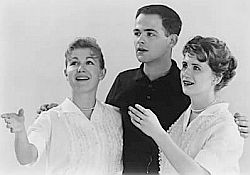
Please Support
this Website

Donate Now

Thank You

Date Posted:  22 March 2009
Last Update:   18 May 2025
Comments to: jackdoyle47@gmail.com
Twitter: https://twitter.com/PopHistoryDig

BlueSky: jackdoyle.bsky.social

Article Citation:
Jack Doyle, “Dinah Shore & Chevrolet, 1956-1963,”
PopHistoryDig.com, March 22, 2009.

_____________________________


Sources, Links & Additional Information

2017 4-CD set, “Dinah Shore: All The Hits & More 1939-60,” Click for copy.
Michael B. Druxman’s 2015 book, “Miss Dinah Shore: A Biography,” Bear Manor Media, 212 pp. Click for Amazon.
‘Great Ladies of Song’ series (1995 CD) features Dinah Shore’s 1959-61 period with Capitol Records. Click for CD.
‘Dinah Shore and Her TV Glad Rags,' says cover tag for this February 1, 1960 issue of ‘Life’ magazine. Click for copy.
Dinah Shore picking up Emmy award for 'best female singer', March 1956.
2-CD set, “Best Of Dinah Shore: The Capitol Recordings, 1959-1962.” Click for copy.

“Dinah Shore With Troops Abroad,” New York Times, Wednesday, August 2, 1944, Business, p. 32.

“Dinah Shore Stirs 7,000 at Stadium; Radio and Film Star Shares Honors With Goodman in Philharmonic Program,” New York Times, Wednesday, July 4, 1945, Amusements, p. 10.

“Dinah Shore in London; Singer Wins Ovation in Show at Palladium Theatre,” New York Times, Tuesday, August 31, 1948, Amusements, p. 15.

George Gallup, “Dinah Shore Favorite in Vocalist Poll,” Los Angeles Times, January 1, 1951, p. 17.

The Dinah Shore Show (sample, 15-minute show). Dinah sings “Getting to Know You,” “Stardust,” and others, November 29, 1951. In the NBC Collection of the Motion Picture, Broadcasting and Recorded Sound Division, Library of Congress, Washington, D.C.

Jack Gould, Radio & Television, “Dinah Shore Scores in Her New N.B.C. Video Series…,” New York Times, Monday, December 3, 1951, Business, p. 37.

“Dinah Shore’s TV Art.” Look, December 15, 1953.

Val Adams, “N. B.C. Still Seeks Spot for 2 Stars; Cuts in Sunday Drama Shows Urged to Open TV Time for Dinah Shore and Bob Hope…,”New York Times, Tuesday, July 24, 1956, p. 53.

“Television: Is There Anyone Finah?,” Time, Monday, December16, 1957.

“Dinah Shore Brings ‘Chevy Show’ East,” New York Times, Monday, January 13, 1958, p. 49.

Val Adams, “Dinah Shore, Hope Named for Prizes; To Receive Peabody Awards Here Today…”, New York Times, Wednesday, April 2, 1958, p. 63.

“‘Chevy Show’ Is Set for Tv All Summer,” New York Times, Wednesday, April 2, 1958, p. 63.

The Dinah Shore Chevy Show ( sample, 60-minute show). Cast: Gwen Verdon, Art Carney, Louis Jourdan, October 5, 1958. In the NBC Collection of the Motion Picture, Broadcasting and Recorded Sound Division, Library of Congress, Washington, D.C.

“Dinah Shore and Her TV Glad Rags,” Life (cover story), February 1, 1960.

“Dinah Shore Is Award Winner,” Washington Post-Times Herald, August 27, 1960, p. D-7.

George Eells, “Dinah Shore: How She grew, How She lives, How She Dresses, How She Drives Herself,” Look (cover story), December 6, 1960. In-depth article with photos. Dinah Shore cover photo by Bob Vose.

Dinah Shore Renews Pact for ’60’-61 Season,” Los Angeles Times, April 15, 1960, p. A-9.

“Dinah Shore, Chevrolet To Part After 10 Years,” Washington Post-Times Herald, February 17, 1961, p. C-8.

Dorothy Kilgallen, “Dinah Shore to Plug Peace Corps,” Washington Post-Times Herald, December 8, 1964, p. B-12.

Bruce Cassiday, Dinah! A Biography, New York: Franklin Watts, 1979.

Jack Lloyd, Knight-Ridder Newspapers, “Bubbly Dinah Shore Does a Really Live Show,” Chicago Tribune, August 28, 1986, p. 10.

Ken Gross, “Impala: It’s Not A Great Car,” Automotive Industries, May 1999.

Jack Doyle, Taken for A Ride: Detroit’s Big Three and The Politics of Pollution, New York: Four Walls Eight Win-dows, June 2000.

Stephen Holden, “Dinah Shore, Homey Singer And Star of TV, Dies at 76,” New York Times, February 25, 1994.

Jim Brennan, “Favorite Automobile Spokesperson: See the USA in Your Chevrolet with Dinah Shore,” Car Domain .com, February 24, 2009.

“Biography for Dinah Shore,” TCM.com, accessed March 2009.

PBS, “MWAH!: The Best of The Dinah Shore Show 1956-1963,” March 2003. This hour-long, PBS TV special includes videotape footage of Dinah doing duets with guests Ella Fitzgerald, Jack Lemmon, Frank Sinatra, Bing Crosby, Pearl Bailey, George Burns, Groucho Marx, Peggy Lee, and Mahalia Jackson.

Tim Brooks and Earle March, The Complete Directory to Prime Time Network and Cable TV Shows, 1946-Present, Eighth Edition, 2007.

Video. “A Great New Star,” is a 1952 video produced by the Handy (Jam) Organization for the Chevrolet Motor Division of General Motors Corp., featuring Dinah Shore as hostess, who sings two songs, including the Chevy jingle, in an extended promotion piece for the new 1953 Chevrolet Bel Air model. This piece is set around the making of an advertisement, providing the viewer a behind the scenes look at studio process and actors, along with Dinah’s singing. You Tube offers the clip in two parts, each running about 6 minutes.

Dinah Shore, Someone’s in the Kitchen with Dinah, Garden City, New York: Doubleday, August 1971.

Dinah Shore, The Dinah Shore American Kitchen, 1990.

Douglas Gomery, “Dinah Shore: U.S. Musical Performer,” The Museum of Broadcast Communications, accessed March 2009.

Henry B. Aldridge “The Dinah Shore Show,” The Museum of Broadcast Communications, accessed March 2009.

Dinah Shore, “Someone’s In The Kitchen With Dinah” (Dinah Shore’s popular, best-selling cook book, with “over 200 of her favorite recipes”), Doubleday, 179 pp. Click for copy at Amazon.


“Paint It Black”
1966-2000s

Record sleeve for ‘Paint It Black’ single issued in South Africa, 1966. Click for Rolling Stones “Hot Rocks” album.
In the spring of 1966, all was not well in the world. The Vietnam War was then raging and American involvement there was escalating. U.S. troop strength had reached 200,000 by then, and draft quotas at home had doubled.

Earlier that spring, in April, U.S. Senator J. William Fulbright (D-AR), one of the few Senators challenging U.S. involvement in Vietnam, had given his famous “Arrogance of Power” speech at Johns Hopkins University, critical of the “might-makes-right” approach and more, aimed squarely at the U.S.

In Vietnam, meanwhile, the military government of South Vietnam under Premier Ky was doing battle with Buddhist rebels in Da Nang in mid-May. China at this time had made its Cultural Revolution pronouncement.

     Despite these woes, the day-to-day rhythms of life went on as normal throughout much of the world. In America, Vice-President Hubert Humphrey and U.S. Secretary of the Interior Stewart Udall dedicated the new Gateway Arch in St. Louis on May 25th, 1966. Busch Stadium, home to baseball’s St. Louis Cardinals, had opened there earlier that spring. In the world of boxing, late May, Muhammad Ali, then known as Cassius Clay, would knock out the U.K.’s Henry Cooper in a six-round heavyweight match in London.

Young Rolling Stones shown on German single, 1966.
     In music, the Beach Boys had released their Pet Sounds album, and Bob Dylan his Blonde on Blonde album.  About that time as well, around mid-May 1966, a new song titled “Paint It Black” by the British rock group the Rolling Stones, began to be heard across the U.S. and in the U.K.  It was one of those hard-driving rock ‘n roll tunes from this raucous new group that was catching on in a big way.


Music Player
“Paint It Black”

     “Paint It Black,” written by Mick Jagger and Keith Richards, is not a happy tune in its lyrics, but in 1966 its musical appeal pushed it to the top of the pop charts.  Released as a single, the record reached No. 1 in the U.S. and the U.K. in late May, holding the top position for two weeks or so.  It remained in the Top 40 for ten weeks through the summer.  The song became popular throughout Europe and around the world.

“Paint It Black”

I see a red door and I want it painted black
No colors anymore I want them to turn black
I see the girls walk by dressed in their summer clothes
I have to turn my head until my darkness goes

I see a line of cars and they’re all painted black
With flowers and my love, both never to come back
I see people turn their heads and quickly look away
Like a newborn baby it just happens ev’ryday

I look inside myself and see my heart is black
I see my red door and it has been painted black
Maybe then I’ll fade away and not have to face the facts
It’s not easy facing up when your whole world is black

No more will my green sea go turn a deeper blue
I could not forsee this thing happening to you
If I look hard enough into the setting sun
My love will laugh with me before the morning comes

I see a red door and I want it painted black
No colors anymore I want them to turn black
I see the girls walk by dressed in their summer clothes
I have to turn my head until my darkness goes
Hmm, hmm, hmm…

I wanna see it painted black, painted black
Black as night, black as coal
I wanna see the sun, blotted out from the sky
I wanna see it painted, painted, painted, painted black
Yeah


Hot Group

     The Rolling Stones by this time already had two big breakthrough hits in 1965 — “I Can’t Get No Satisfaction” and “Get Off of My Cloud” — along with two top albums that year; Out of Our Heads and December’s Children. Their third album Aftermath, which included “Paint It Black” in the U.S version, was also a hit.

     “Paint It Black” is about a man whose lover has died, and is beside himself with grief, seeing his whole world “painted black.”  He even wants the sun “blotted out.”  He’s depressed, feeling down, worthless, and without direction or connection.  Some say that Mick Jagger and Keith Richards were then on an introspective writing streak partly influenced by Bob Dylan’s work.  “Paint it Black” came out a few months after the Stones had released their last single, “19th Nervous Breakdown.”

     “Paint It Black” also has some eastern musical influences, as a sitar is used in the song. The sitar’s use came about through Brian Jones, then the group’s lead guitarist, who had visited with the Beatles’ George Harrison who was also then using the Indian instrument. The sitar’s use in the song, says music critic Richie Unterberger, “qualifies as perhaps the most effective use of the Indian instrument in a rock song. The exotic twang was a perfect match for the dark, mysterious Eastern-Indian melody. . .”
 

'Paint It Black' single sleeve, Italy, 1966.

Long Sales Life

     “Paint it Black” would become one of those songs from the Rolling Stone’s catalogue that would enjoy a second and third sales life, in some cases, 30 and 40 years after its initial release. It would be re-issued as a single on at least two other occasions — once in June 1990 when it hit the U.K charts for three weeks, and again in May 2007 when it hit the U.K. charts for a week or so, reaching No. 70. The song has also appeared on at least a dozen Stones albums and compilations. Billboard rated “Paint it Black” No. 21 on its list of the 100 top songs of 1966. 

But beyond the conventional record business, pop chart performance, and awards, “Paint It Black” has also found its way into a number of other uses, particularly in film, television, and video games. These uses have kept the song very much alive and well for many years beyond the 1960s.

 
Vietnam Association

The ‘Tour of Duty’ TV show, late 1980s, used ‘Paint It Black’ as theme song. Click for DVD.
Later packaging of ‘Paint It Black’ with red banner corner note that reads: ‘As Featured on the TV Series Tour of Duty’. Click for 'Aftermath' album

     In the late 1980s, “Paint It Black”  became associated with the Vietnam War due to its use in both Hollywood films and TV shows. It was used in the ending credits of the 1987 film Full Metal Jacket and it also became the theme song for the CBS-TV show, Tour Of Duty, a Vietnam war era series that ran from 1987-1990. The airing of the song on the TV show especially — which played around the world — contributed to the song’s revised popularity in the late 1980s-early-1990s. In May of 1990 in the Netherlands, after “Paint It Black” was re-released there as a single again, it hit No.1 on the Dutch Top 40 chart.  Later marketing and packaging of the song in those years also referred to the Tour of Duty TV show.

     Some Vietnam veterans have identified with the song as well.  One writer to SongFacts.com — “Bill,” from Queens, New York — made the following observation about the song’s Vietnam association:

“…While the Rolling Stones’ song “Paint It Black” was not written about the Vietnam War, it has great meaning for many combat veterans from that war.  The depression, the aura of premature death, loss of innocence, abandonment of all hope are perfectly expressed in the song.  When you walk off the killing fields, still alive, physically intact, you want everything painted black, like your heart, your soul, you mind, your life.”

     “Paint it Black” was also used on the NBC-TV show American Dreams in a 2004 episode when a central character in the show — young J.J. Pryor from Philadelphia, PA — goes missing in Vietnam. 

 
Other Uses

The song’s other film appearances, either in its original or cover versions, include: 1997’s The Devil’s Advocate, a thriller/horror film starring Keanu Reeves, Al Pacino, and Charlize Theron; 1999’s For Love of the Game, a film about baseball with Kevin Costner; and, Stir of Echoes, a supernatural thriller, also in 1999, starring Kevin Bacon. In that film, the song is used as plot device, as Kevin Bacon’s character hears the first few chords of the song in a memory, but he can’t name the song.

On television, “Paint It Black” has also had more recent uses, as in a July 2003 pilot episode of the cable TV show Nip/Tuck — a show described by New York Times writer Alessandra Stanley as “a ‘Miami Vice”-style drama about two dashing and unscrupulous plastic surgeons in South Florida.” In the pilot episode, as a facial reconstruction takes place, “Paint It Black” plays on. 

In the 2016-2022 HBO series Westworld, “Paint it Black” is used in an orchestral version arranged by composer Ramin Djawadi, featured in both the pilot episode and also used in a later Season 2 episode.

In the 2016-2022 HBO series Westworld, “Paint it Black” is used in an orchestral version. Click for music at Amazon
“Paint It Black” is heard in the 2022 film, “Black Adam,” starring Dwayne Johnson. Click for film.

The song is also used in the 2022 American superhero film, Black Adam, based on the DC Comics character of the same name, starring Dwayne Johnson.

In February 2020, a cover version of “Paint it Black” was used by Missy Elliott and H.E.R. in a Super Bowl 54 commercial for Pepsi Zero Sugar.

In the ad, R&B singer H.E.R. is seen among a countless number of people dressed in red who hold a red can of that “other cola” (i.e., Coca-Cola) and sing the opening words to “Paint It Black.” The red can suddenly turns into a black can of Pepsi Zero Sugar. H.E.R. takes a sip, breaks away from the pack and runs through a wall into a black room with the Pepsi logo in the background. Elliott then appears, rapping over the music as the two stars lead a group dance.

Writer Stephen King has used “Paint It Black” in his Dark Tower series of novels; the song is heard by several characters as they pass the same music shop in New York at different time periods. Janet Fitch’s 2006 novel Paint It Black is named after the song, and uses the first four lines from the lyrics as a quote preceding the first chapter.


‘Paint It Black’ is  used in the popular ‘Guitar Hero’ video game. Click for copy.
‘Paint It Black’ is used in the popular ‘Guitar Hero’ video game. Click for copy.

Video Games

     The video game industry has also discovered “Paint It Black.”   The song is used in a number of games — either during game play or heard in the background.  Among games using the song are: Conflict: Vietnam; Twisted Metal: Black; Guitar Hero III: Legends of Rock; and the Eve of Destruction modules for Battlefield 1942; Battlefield: Vietnam; and Battlefield 2. “Paint It Black” is also used in one version of the karaoke game SingStar.  The song has also been used in some video game advertising.  A number of video game players have stated that their first experience with the song was hearing it on one of the games.  A parent named “Viki” from Liberty, Texas wrote SongFacts.com to share her view of the song as used on the Guitar Hero game:

“…I love hearing this song come out of my 12-yr-old kid’s room when he’s playing Guitar Hero 3.  He asked me if I’d ever heard of it.  I laughed so hard and told him I was raised on it!!  You can diss Guitar Hero all you want, but it’s introducing a whole new generation of kids to classic rock songs — which are WAY better than the crap they’re coming out with now!!”

“…Every kid these days knows ‘Paint It Black’ because it’s in Guitar Hero…”

      Another writer, responding in late October 2008 to a short story in the New York Times about some Beatles music being planned for a new interactive video game, raised concerns about which songs should be included in video games, noting the prominence of “Paint It Black”:

“…I’m a music teacher, and lately I’ve been finding that Guitar Hero and similar games actually help and inspire kids to learn to play real instruments — they don’t necessarily replace real instruments in kids’ minds.  My only concern is the extent to which Guitar Hero creates a rigid repertoire of songs that kids know — every kid these days knows “Paint It Black” because it’s in Guitar Hero, but it’s strictly a matter of opinion whether that’s a better Rolling Stones song than “Jumpin’ Jack Flash” or “Street Fighting Man,” which no kid knows or cares about.  Similarly, the producers of the new Beatles game need to take very seriously their responsibility of passing on the right songs to the next generation….” – I. Barry D’Paul


Oct 1989 edition of Forbes business magazine featuring Mick Jagger & Keith Richards. Click for story.

“Paint it Lost”

     In any case, “Paint It Black” has had a long and varied career since it was first launched in May of 1966.  In 2004, the song was ranked No. 174 on Rolling Stone magazine’s list of the “500 Greatest Songs of All Time.”  But sadly for the Rolling Stones, “Paint It Black” is one of the tunes they no longer control; losing rights to the song during their younger years.

In a legal settlement with an earlier manager named Allen Klein, the Stones relinquished their publishing rights, along with lucrative royalties, to this song and others. In 1965, Klein, a New York manager also involved with other rock groups, had helped the Stones negotiate a new contract with Decca Records, then winning the group their first million-dollar payday. But in the process, Allen Klein also helped himself. Subsequent lawsuits over the years between the Stones and Klein have brought some relief to the Stones, but Klein’s company, ABKCO, still retains the rights to the Stones’ early songs from the 1960s to 1971.

The Stones parted ways with Klein in 1970, and have long since become a much more sophisticated and business-savvy rock ‘n roll group. See, for example, “Stones Gather Dollars, 1989-2008.”

     Other stories about the Rolling Stones at this website include: “…No Satisfaction, 1965-1966,” “Start Me Up, 1995,” and the trailer for the Martin Scorsese film, “Shine A Light, 2008.”  For additional stories on music see the Annals of Music category page.  Thanks for visiting – and if you like what you find here, please make a donation to help support the research, writing, and continued publication of this website. Thank you. – Jack Doyle

________________________________

Please Support
this Website

Donate Now

Thank You

Date Posted: 19 March 2009
Last Update: 19 June 2026
Comments to:  jackdoyle47@gmail.com

Article Citation:
Jack Doyle, “Paint It Black, 1966-2000s,”
PopHistoryDig.com, March 19, 2009.

Twitter: JackDoyle/PopHistoryDig
BlueSky: jackdoyle.bsky.social

_____________________________

 
Rolling Stones at Amazon.com…

Best-selling, remastered Rolling Stones album, “Let It Bleed.” Click for copy.
Rolling Stones - “All The Songs” book. Click for copy.
Rolling Stones classic album, “Hot Rocks: 1964-1971”. Click for copy.


Sources, Links & Additional Information

A CD compilation of Rolling Stones hits, 1964- 1971, ABKCO Records, 2013. Click for copy.
“Paint It Black,” Wikipedia.org.

“Paint It Black,” Song Facts.com.

Alessandra Stanley, Television Review, “Snipped, Implanted, But Short Of Perfect,” New York Times, July 22, 2003.

Richie Unterberger, “Paint It Black, Rolling Stones,” Song Review, All Music.com, as of February 2009.

I. Barry D’Paul, comment to the New York Times, October 30, 2008.

“Allen Klein,” Wikipedia.org.

Jack Doyle, “Stones Gather Dollars, 1989-2008,” The Pop History Dig.com.

“J. William Fullbright,” Wikipedia.org.


________________________________________________
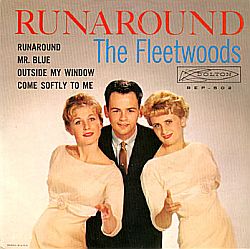
 

Books at Amazon.com…

Rich Cohen’s book on the Rolling Stones. Click for copy.
Keith Richards’ best-selling book, “Life.”  Click for copy.
Keith Richards’ best-selling book, “Life.” Click for copy.
Stanley Booth, “True Adventures of the Rolling Stones.” Click for copy.


“Hello Stranger”
1963-1966

Barbara Lewis, sometime in the early 1960s.
     In the summer of 1963, a very smooth and sexy piece of music was being heard on the radio that was also rising on the pop charts.  The name of the tune was “Hello Stranger” and it was written and performed by a 20 year-old named Barbara Lewis. 


“Hello Stranger”
Music Player

The music was distinctive for its time, in part because it couldn’t be easily characterized.  Lewis’ style was smooth and silky, and might be called “smooth jazz” or “smooth R & B” by some.  But in the early 1960s, the sound found its mark and rose on the charts, as Lewis would turn out other tunes in a similar style over the next few years.

     Barbara Lewis was born in February 1943 in rural Salem, Michigan, about 15 miles from Ann Arbor, home of the University of Michigan.  Music was a part of her family life; both parents played musical instruments and had led orchestras.  She attended high school at South Lyon, Michigan, where she was the only African-American student.  At one point there,  she had finished second in a school talent contest.  She had been writing music since the age of nine, and began recording in her teens.  She worked with record producer Ollie McLaughlin, a black disc jockey at Ann Arbor’s WHRV radio station, since renamed. 

Barbara Lewis’s debut album, ‘Hello Stranger’, issued by Atlantic in 1963. Click for digital or CD.

     By 1962, she had cut a record, an upbeat song titled “My Heart Went Do Dat Da,” which became a local hit but did not chart nationally.  However, the song  convinced Ollie McLauglin that Lewis had potential.

     In January 1963, McLaughlin took Lewis to the Chess Studios in Chicago the day before they had  arranged a recording session.  There she watched Etta James cut a single, and came home a bit depressed, saying to her Mom, “I’ll never have a hit like that.”  But on the next day, for her own session, she brought a song she had written, “Hello Stranger.” The lyrics came to her from traveling around town with her father. 

“I would make the circuit with my dad and people would yell out: ‘Hey stranger, hello stranger, it’s been a long time’,”  Lewis recalled. “…But I know that second verse [in the song] makes it sound like lovers.”  And indeed, that’s the interpretation that sticks for most listeners —  a romantic, come-hither plea to a returning lover.

     The song’s arrangement uses a signature organ riff in the lead along with drums and cymbal as the vocals come in.  At the recording session, DJ Ollie McLaughlin managed to pull in as background singers a good popular group called the Dells.  The Dells have a memorable part backing Lewis with classic sounding “shoo-bop, shoo-bop, my baby” vocals.  Lewis had also written the background vocals.  In the recording session, Lewis was in a tiny booth with the five Dells and two microphones.  Riley Hampton did the arranging and John Young played the keyboards.  They did 13 takes before they were satisfied with the song.  At the end, one of Dells, Chuck Barksdale, became very excited about what they had recorded.  As Barbara Lewis later recounted: “Chuck kept jumping up and down and saying, ‘It’s a hit, it’s a hit.’ …I didn’t really know. It was all new to me.”

Barbara Lewis with her ‘Hello Stranger’ album in the 1960s.
     And the song was a hit.  “Hello Stranger” broke into the Top 40 in May 1963 and rose to No. 3 that summer remaining in Top 40 for about 10 weeks.  It went to No. 1 on the R & B charts.  A debut album also titled Hello Stranger followed, with a dozen songs, all of which Lewis wrote. 

     It was unusual at the time — a time when professional songwriters in New York’s Brill Building and elsewhere across the land were turning out songs for new groups — for the performer to also write the music.  Still, despite her talents, Lewis’s share of the rewards for her music was not what it should have been, especially in the early years. 

     When she began her career, she was naïve about the business side of her music, and executives got most of the money.  Some of her royalty checks were sent to fictitious persons.  At one point, Lewis was given a check for $500, with her handlers telling her it was the best they could do.

     Following her initial hit, Lewis continued to work with Olllie McLauglin.  In August 1963, Sharon McMahan, a writer and later artist in her own right who worked with McLaughlin and Lewis, wrote a follow-up single for Lewis, “Straighten Up Your Heart” that hit No. 43 on the music charts.  McMahan would also write another later song for Lewis on Stax Records, “Do I Deserve It Baby.”

Barbara Lewis’s 2nd hit, ‘Baby I’m Yours,’ summer 1965. Click for digital.
     Lewis then recorded in New York with producers Bert Berns and Jerry Wexler. Two more hits followed. “Baby I’m Yours,” written by Van McCoy, was released in July 1965 and rose to No. 11 on the charts. Thirty years later the song was used in the soundtrack for the 1995 Meryl Streep/Clint Eastwood film, “The Bridges of Madison County.”

Another hit for Lewis followed in October 1965, “Make Me Your Baby,” written by Helen Miller and Rodger Atkins, which also peaked at No 11. Lewis’s final top forty hit was “Make Me Belong To You” of August 1966, which rose to No. 28.  By the end of 1960s, Lewis had released another album on Stax Records. Described by some as “a grittier sounding” album, it met with mixed results. Lewis also penned songs for other groups in the 1960s, with some success. She continued recording in Chicago into the early 1970s, but then withdrew from the music business.

     Barbara Lewis soon found herself  in the work-a-day world, where she did everything from running her own jewelry store to working security.  But in her various jobs, she never touted her former fame to co-workers; nobody knew she had earlier been a popular recording artist.  “I never felt like a big star, anyway.  …I went back to Michigan and I never told a soul….” – Barbara Lewis “I never felt like a big star, anyway,” Lewis told former Minneapolis Star writer, Chuck Laszewski, in a 2008 interview for MinnPost.com.  “I went back to Michigan and I never told a soul.  I would hear it on the radio and it was disassociation.  It was another lifetime.  I was never sad about it.  I just went about my life.” 

     By 1993, however, Lewis began wondering if she could still sing and perform.  She made a few calls to old contacts and before long was once again playing on the nostalgia circuit.  As of mid-2008, she was still performing, explaining to Chuck Laszewski: “Last year, I worked an awful lot.  My voice is better than it ever was.  …I still sing the songs in their original key.  I’ve been very, very blessed.”


A Barbara Lewis album released by Enterprise in 1970. Click for CD.
Long Coattails

     Over the years, Lewis’ songs, or the ones she initially recorded, have  found a number of willing users among other artists.  Even in the 1960s and 1970s her contemporaries were covering her songs.  In 1965, the same year that Lewis cut her second hit song, “Baby I’m Yours,” Peter & Gordon of the U.K. did the song for the British market, becoming a Top 20 singles hit there.  The following year, the U.K.’s Cilla Black recorded the song on her album Cilla Sings a Rainbow.  In 1969, Dusty Springfield did Lewis’s 1966 song, “Don’t Forget About Me.”  Country singer Jody Miller remade “Baby I’m Yours” in 1971 and released it as a single, reaching No. 5 on the Country Singles chart. Canada’s Suzanne Stevens hit with a 1975 disco version of “Make Me Your Baby.”  Back in the U.K., Linda Lewis had a top forty hit in 1976 with “Baby I’m Yours.”

     In 1977, “Hello Stranger” was recorded by U.S. singer Yvonne Elliman, which hit No. 15 on the pop chart and No.1 on the Adult Contemporary chart. It also hit the U.K. singles Top 30. Debby Boone’s 1978 version of “Baby I’m Yours” — a B-side to her “God Knows” song — peaked separately at No. 18 on the Adult Contemporary chart and No. 33 on the Country Singles chart. A range of artists — from Debby Boone to the Arctic Monkeys — have covered her songs. “Baby I’m Yours” was also done by Tanya Tucker in 1983, and also made the Billboard country chart.  In 1990, U.S. singer Cher released her version of “Baby I’m Yours” as the first European single release from the soundtrack to the movie Mermaids.  In 1995, “Baby I’m Yours” was featured on the soundtrack from the film The Bridges of Madison County.  Other artists who have recorded “Baby I’m Yours” include Petula Clark, The Paramounts, Billy Preston, and Maureen McGovern.  And last but not least, in 2006, the Arctic Monkeys released a cover of  the song in a collaborative effort with The 747s.  It was released as a B-side of the single, “Leave Before the Lights Come On,” which hit No. 4 on the U.K. Singles Chart.  There are also a range of other artists who have done Barbara Lewis tunes, as this is not a complete list.

This ‘Best of Barbara Lewis’ compilation by Atlantic was first issued in 1994, reissued in 2005. Click for CD.


“The Best of…”

     In July 1994, Rhino Records released a compilation of Lewis’s tunes, titled Hello Stranger: The Best of Barbara Lewis, a 20-tune compendium of her hits, basically tracking her career.  This album also includes Lewis’s endorsement on the back as well as extensive liner notes.  In one review of this album, Stephen Thomas Erlewine at All Music.com, says that Lewis’s work, along with Atlantic’s production, resulted in “an alluring body of work that still sounds seductive, yet comforting, years after their release.”  He calls The Best of…, “an excellent compilation.”  Other online reviewers, such as Dave Moore at Hitsville Soul Club.com, have gone through Lewis’s discography in detail, offering additional perspective on her music and its impact, including some of her lesser-known songs.

See also at this website, “Noteworthy Ladies,” a topics page with additional story choices on women who have made their mark in various fields. The “Annals of Music” page also offers additional story choices in that category. Thanks for visiting – and if you like what you find here, please make a donation to help support the research and writing at this website and its continued publication. Thank you. – Jack Doyle


Please Support
this Website

Donate Now

Thank You

______________________ 

Date Posted:  17 March 2009
Last Update:  15 September 2020
Comments to:  jdoyle@pophistorydig.com

Article Citation:
Jack Doyle, “Hello Stranger, 1963-1966,”
PopHistoryDig.com, Mach 17, 2009.

_____________________________


Sources, Links & Additional Information

'Barbara Lewis, Platinum Collection', issued by Rhino/Wea. Click for CD.

“Barbara Lewis” and “Baby I’m Yours,” Wikipedia.org.

Richie Unterberger, Song Review, “Hello Stranger,” All Music.com.

Chuck Laszewski, “‘Hello Stranger’: Barbara Lewis In Town For ‘Taste’,” MinnPost.com, Monday, June 30, 2008.

Dave Moore, “Barbara Lewis: No Stranger To Soul,” Hitsville Soul Club.com, August 2005.

Stephen Thomas Erlewine, Hello Stranger: The Best of Barbara Lewis, Album review, All Music.com.

Website of singer/songwriter, Sharon McMahan.

“Barbara Lewis,” African American Registry.com.

“Barbara Lewis Fan Club,” Squidoo.com.


“1968 Presidential Race”
Republicans

Richard Nixon, center, is flanked by Dan Rowan, left, and Dick Martin right, hosts of then-popular 'Laugh-In’ TV show at October 1968 campaign stop in Burbank, CA. Nixon appeared on ‘Laugh-In’ in mid-Sept 1968 in the humorous 'sock-it-to-me' segment, covered later below. (AP photo)
     In the 1968 presidential race, Hollywood and celebrity involvement in politics reached a level not seen in several decades.  The participation of movie stars, singers, directors, authors, sports figures, and other celebrities in the election was more prominent among Democrats perhaps, but was also a factor on the Republican side.

Historically, Republicans were more suspicious of liberal-leaning Hollywood than Democrats. And Hollywood itself, especially after the communist witch hunts of the late 1940s and 1950s, was leery of politics generally. 

     “People in Hollywood are generally afraid to be active in politics,” said actor Dick Powell in September 1960. “This is especially true of some in television who believe that their sponsors would not want them to be identified with a political party.”

Another actor, Vincent Price, added in the same 1960 interview: “Here in Hollywood, actors are not supposed to have political opinions.” But many did, of course.

Dick Powell, for example, was then, in September 1960, heading up a group of Hollywood Republicans supporting the Richard Nixon-Henry Cabot Lodge ticket then bidding for the White House.  But by the later 1960s, and in 1968 in particular, celebrity involvement in politics would become much more prominent.

Ronald & Nancy Reagan at victory party after winning the 1966 California governor's race.


Murphy & Reagan

     In fact, by the mid-1960s, Republican actors began running for, and winning, public office. Actor/dancer George Murphy was elected to the U.S. Senate in 1964, and actor Ronald Reagan won the California Governor’s race in 1966. Murphy was a film actor who danced with Shirley Temple in the 1938 film Little Miss Broadway and acted opposite Judy Garland in Little Nellie Kelly (1940). Murphy became active in California politics in the 1950s and had served as director of entertainment for Dwight Eisenhower’s presidential inaugurations of 1953 and 1957. By 1964, Murphy became a politician himself, winning a California U.S. Senate seat.

     Ronald Reagan had been movie actor in the 1930s and 1940s, appearing in variety of films, and also became a familiar 1950s TV host for the popular “General Electric Theater.”  Reagan’s second wife, Nancy, had also appeared in Hollywood films.  In addition to Reagan and Murphy winning office, one of Hollywood’s most notable childhood stars from the 1940s, Shirley Temple, ran for an open seat in Congress in 1967, but did not win.  Still, by the time of the 1968 presidential election, with Ronald Reagan as California’s governor and George Murphy in the U.S. Senate, Hollywood and its celebrities were clearly a presence in Republican politics. But among the candidates for the Republican presidential nomination that year, was the very “un-Hollywood” former Vice-President, Richard M. Nixon.


Three to Tango ipod

Nixon’s Rise 

Nixon cheering himself over election returns in 1950 in defeat of Democrat Helen Gahagan-Douglas in U.S. Senate race.
     Richard Nixon had grown up in the shadow of Hollywood, but was certainly not a Hollywood type himself or inclined toward its culture or lifestyle.  Still, throughout his political career, Nixon would find a measure of star power in his campaigns, with various celebrities and studio executives supporting him.  Yet in his early career, Nixon would probe Hollywood as a Congressman hunting communists, and in 1950 he would launch a Senate bid opposing former Hollywood actress, Helen Gahagan-Douglas.

     Nixon first made his way onto the national scene in 1946, elected as a Congressman from California.  In Washington he quickly made a career for himself in the late 1940s as a member of the House Un-American Activities Committee (HUAC), which pursued alleged communists in government and in Hollywood.  Although Nixon became known for his role in the Alger Hiss case  — a State Department official accused of being a Soviet spy — he also helped HUAC query Hollywood actors and executives suspected of communist activities or lacking in their loyalties.  In 1947 hearings, for example, he asked Jack Warner of Warner Brothers, “How many anti-communist movies have you made?” 

George Murphy, shown here with Shirley Temple in 1938, helped Richard Nixon in his bid for the White House in 1960, and became a U.S. Senator himself in 1964.
     In 1950, Nixon ran for a U.S. Senate seat from California, opposing Democrat Helen Gahagan Douglas. Douglas was a 1920s Broadway actress who starred in the 1935 movie She.  Elected to Congress in 1944, Douglas served three terms in the U.S. House as a liberal New Dealer. She was married to a former actor, Melvyn Douglas, later a Hollywood executive and also among “suspect liberals.”  During Nixon’s Senate campaign with Gahagan-Douglas, he cited her alleged “Communist-leaning” votes in Congress.  On the campaign trail he called her “the Pink Lady” (“pinko” being short slang for communist), saying at one point she was “pink right down to her underwear.” Nixon won the election, but many felt he had run a smear campaign against Douglas. (Some years later, in 1998, Greg Mitchell published a book with Random House titled, Tricky Dick and the Pink Lady: Richard Nixon vs Helen Gahagan Douglas-Sexual Politics and the Red Scare, 1950.” Click for copy).

     As a young Congressman and then a Senator, Nixon rose quickly in the Republican party, becoming Dwight D. Eisenhower’s vice-presidential running mate in 1952 (though Nixon did have one brush with controversy that year nearly costing him his career; see “Nixon’s Checkers Speech”).  The Eisenhower/ Nixon ticket, in any case,  won two successive terms  — 1952 and 1956.  But when Nixon ran for President in 1960, opposing John F. Kennedy, he lost.  Then in 1962, he tried to become California’s Governor and lost again, this time to Democrat Pat Brown.  In each of these elections, from the early 1950s, there was always some contingent of Hollywood — both actors and studios — supporting Nixon and/or the Eisenhower/Nixon ticket.  Nixon first met entertainer Bob Hope in the 1950s when Nixon was Vice President.   Hope would become a friend and supporter thereafter.  In 1960, when Nixon ran for the White House, Hollywood stars George Murphy and Helen Hayes formed a “Celebrities for Nixon Committee.”

Nixon had met Bob Hope in the 1950s when he was Vice President with Eisenhower.  Hope became a Nixon supporter, and is shown here in September 1969 with President Nixon in the Oval Office.
Nixon had met Bob Hope in the 1950s when he was Vice President with Eisenhower. Hope became a Nixon supporter, and is shown here in September 1969 with President Nixon in the Oval Office.
     Another Hollywood supporter helping Nixon in 1960 was Mervyn LeRoy, a film director and producer.  In the 1930s LeRoy directed Edward G. Robinson in Little Caesar (1931) and as head of production at MGM in 1938, produced The Wizard of Oz.  Involved in advancing the careers of Clark Gable, Loretta Young, Robert Mitchum and Lana Turner, LeRoy also produced musicals in the 1950s and a series of hits for Warner Brothers such as Mister Roberts, The Bad Seed, No Time for Sergeants, The FBI Story and Gypsy.  In August 1960, LeRoy was heading up a drive in Hollywood to recruit others for Nixon.  In addition to LeRoy, George Murphy, and Helen Hayes, the 1960 Nixon/Lodge ticket also had other Hollywood backers, including: Jimmy Stewart, Gary Cooper, Rosalind Russell, Robert Montgomery, Robert Cummings, Robert Taylor, Irene Dunn, Cesar Romero and Mary Pickford.  Again in 1962, when Nixon ran for Governor of California,  he found a similar roster of Hollywood supporters — among them, Jimmy Stewart, Red Skelton, Rosalind Russell, Dick Powell, June Allyson, Robert Young, Tony Martin, Cyd Charisse, Irene Dunn, Johnny Mathis, Louise Beavers, and Efrem Zimbalist, Jr.

Nixon on Jack Paar TV show, believed to be March of 1963. Parr is holding Nixon’s book, ‘Six Crises,’ published in 1962. Click photo for Nixon books.


Loss to Pat Brown

     But after Nixon lost badly to Pat Brown in the 1962 California Governor’s race — by nearly 300,000 votes — he charged that the media had showed favoritism to Brown.  Many pundits at the time thought Nixon was finished as a politician, especially since he declared the day after his loss: “You won’t have Nixon to kick around anymore because, gentlemen, this is my last press conference.”  But several months later, Nixon appeared on The Jack Paar Program, (a talk show similar to that of today’s David Letterman or Jay Leno ) leaving the door open to his political future.

     And sure enough, by the mid-1960s, Richard Nixon was rising from the ashes of his prior losses, on his way to one of the biggest political comebacks in American history.  Nixon joined a New York law firm after his California gubernatorial defeat, and from there laid the groundwork for his return.  He campaigned vigorously for Republicans in the 1966 Congressional elections, providing a key base of indebted members.  Republicans added 47 House seats in that election, three in the Senate, and eight governorships.  Nixon was also traveling and advancing his ideas on national politics and international affairs among Republican insiders.  So it was no surprise to party regulars in January 1968, when he formally announced his candidacy for the Republican presidential nomination.


Romney, Rocky & Reagan

In some 1967 polling, Michigan Governor George Romney, a former auto company executive, led Nixon among moderates.
     Nixon’s initial challenger for the Republican nomination was Gov. George Romney of Michigan, father of Mitt Romney, the recent Republican presidential candidate of 2008.  George Romney was a successful business leader at the American Motors car company from 1954 to 1962, maker of one of the early compact cars named the Rambler.  He became Governor of Michigan from 1963 to 1969.  Romney formally entered the race for the Republican presidential nomination in late November 1967, saying, “A Republican president can work for a just peace in Vietnam unshackled by the mistakes of the past.”  Although Romney led Nixon among moderates in very early polls, he soon met with political misfortune.  Romney had initially supported the war in Vietnam, but later moderated his position after making a fact-finding visit there in 1965.  “I no longer believe that it was necessary for us to get involved in South Vietnam to stop Communist aggression in Southeast Asia,” he explained at one point, urging “a sound peace in South Vietnam at an early time.”  This was a sharp reversal from his earlier belief that the war was “morally right and necessary.”  However, in making his reversal on the war, Romney explained during one interview of being misled by military officials, using the term “brainwashed,” which would turn out to be an unfortunate choice of words that eventually undid his presidential bid.  By February 1968, less than two weeks before the New Hampshire primary, Romney pulled out of the race.

Nelson Rockefeller, shown on Time’s Aug 1960 cover, had previously battled Nixon for the nomination and lost.
     Nelson Rockefeller, governor of New York, became the heir apparent to moderate and anti-war Republicans after Romney went down.  A descendant of the Rockefeller oil fortune, Rockefeller had been New York’s governor since 1959.  He had also run for the Republican presidential nomination twice before — once in 1960 losing to Nixon, and again in 1964 losing to conservative Arizona Senator Barry Goldwater. 

     In the first primary of 1968 — New Hampshire on March 12th, now without Romney — Nixon took 78 percent of the vote. Republicans wrote in the name of then yet-to-announce Rockefeller, who received 11 percent of the vote.

Rockefeller became something of a reluctant candidate, but allowed party members and others to work on his behalf.  And eventually, Rockefeller did get into campaign mode, putting forward a plan to disengage from Vietnam and also offering some novel Republican strategies to address urban problems. But throughout the 1968 primary season, Nixon generally led Rockefeller in the polls, although Rockefeller won the April 30th Massachusetts primary.

     The other Republican candidate then on the horizon, and a potential problem for Nixon, was filmstar-turned-politician Ronald Reagan. 

Ronald Reagan and Nancy Davis star in 1957's ‘Hellcats of the Navy,’ by Columbia Pictures.
Even before he became California’s Governor in 1966, Reagan had begun to attract a national following, especially among conservatives.  He had given an important, televised speech supporting Barry Goldwater for President in 1964 which had marked him as a rising star. 

     By 1968, with support from conservatives, Reagan emerged as a potent challenger to Nixon. According to Gene Kopelson, author of Reagan’s 1968 Dress Rehearsal: Ike, RFK, and Reagan’s Emergence as a World Statesman (2016), Reagan at the time was being mentored, in part, by President Eisenhower, and he actually viewed Democrat Robert F. Kennedy as his main potential political rival. During his 1968 bid, Reagan first raised the issues he would pursue in his later presidency – tearing down the Berlin Wall, proposing an antimissile defense shield, and pushing for freedom behind the Iron Curtain. During the 1968 contest, Reagan had campaign staff across the nation, and he focused on the Wisconsin, Oregon, and Nebraska primaries. In the Nebraska primary of May 14th, he was Nixon’s chief rival. Still, Nixon took 70 percent of the vote there to 21 percent for Reagan, and 5 percent for Rockefeller. Nixon continued to win the primaries, with the exception of California, which he conceded to Reagan — a primary in which only Reagan’s name appeared on the ballot. 

     Reagan’s large margin in California, however, gave him a narrow lead in the nationwide primary popular vote — Reagan had 1,696,632 votes or 37.93% compared to Nixon’s 1,679,443 votes or 37.54%.  Some believe that if Reagan had made a committed run for the nomination, and had mounted a more determined campaign earlier, he could have beat Nixon. Still, by the time the Republican National Convention assembled in August 1968, Nixon had 656 delegates, needing only 11 more to reach the nomination at 667. Author Gene Kopelson notes, however, that many delegates were obligated to Nixon on the first ballot, but could not wait to vote for Reagan had Nixon been stopped.


Celebrities for Nixon

Nixon shown here with Rudy Vallee in the 1960s.  Vallee had been a well known radio and Hollywood film star of the 1930s & 1940s.
Nixon shown here with Rudy Vallee in the 1960s. Vallee had been a well known radio and Hollywood film star of the 1930s & 1940s.
      Ronald Reagan, of course, was Hollywood personified, and with wife Nancy Davis who had also been an actress, they were well-connected throughout Hollywood.  But Richard Nixon had his own Hollywood connections, reaching back to the older network of stars who had supported his earlier campaigns.  Nixon’s Hollywood stars, however, were somewhat older than those on the Democratic side in 1968. Nixon’s group included stars who had reached their peak in earlier years, such as Ray Bolger and Rudy Vallee, for example — but stars, nonetheless, who still had a following.  “I have been making speeches for the Republicans, trying to create more party unity,” explained Ray Bolger to a reporter in April 1968.  “They sought me out, but I happen to be very fond of Dick [Nixon] and think he’s very able.  I’ve played golf with him.”  Rudy Vallee was also quoted at the time saying that Nixon was “the most qualified man in this country, intellectually and emotionally.”  Nixon’s campaign would also recruit other TV entertainers, athletes, and singers to help in his 1968 presidential bid.  Among these stars, for example, were: Pat Boone, Connie Francis, Jackie Gleason, Hugh O’Brian, Ginger Rogers, and last but not least, John Wayne.

John Wayne’s movie, ‘The Green Berets', was released in July 1968. Click for film.


John Wayne

     Wayne had backed Nixon over Kennedy in the 1960 presidential race, and in 1968 he was backing Nixon again.  Wayne liked Nixon for his anti-communist stance.  A supporter of the Vietnam War, Wayne was a critic of Lyndon Johnson’s handling of the War. Wayne had made a popular Vietnam war movie at the time — a very patriotic film called The Green Berets (June-July 1968). The film had a premier in Atlanta, Georgia on June 25, 1968, which coincided with that city’s “Salute To America” celebration.  Wayne served as grand marshal in the parade, and the overall event attracted some 300,000 people. The Green Berets film, meanwhile, was cheered in the south, but protested in northern cities and university towns. Nixon’s campaign staff had noted Wayne’s appeal to blue collar voters and a certain segment of the white southern vote. One of Nixon’s campaign aides at the time, Kevin Philips, explained Wayne’s appeal to a segment of voters Nixon needed: “Wayne might sound bad to people in New York,” he said, “but he sounds great to the schmucks we’re trying to reach through John Wayne — the people down there along the Yahoo Belt. If I had time I’d check to see in what areas The Green Berets was held over [in theaters], and I’d play a special series of John Wayne [Nixon campaign] spots wherever it was.”  Wayne was also scheduled to speak at the Republican Convention in Miami that August.

Green Bay Packer quarterback Bart Starr – shown on a ‘Sport Illustrated’ Jan 1967 cover – was a Nixon supporter in 1968.


Bart Starr & Wilt

     Among other Nixon supporters were famous athletes, including, former heavyweight boxing champ Joe Louis, Los Angeles Lakers basketball star Wilt Chamberlain, and Green Bay Packer quarterback Bart Starr.  Joe Louis was long retired from the boxing ring by then, but his name was still well known to sports enthusiasts.  Bart Starr was probably the most famous professional football player in the country at the time.  He had led the Packers to NFL Championships in 1961, 1962, 1965, 1966, and 1967.  In 1966 and 1967, he also led the Packers to convincing victories in the first two Super Bowls and was named the Most Valuable Player of both games. 

Pro basketball player Wilt Chamberlain  — the LeBron James and Shaqueal O’Neill of his day — was nearly ten years into his career by then, and had played for the Harlem Globetrotters, the Philadelphia/San Francisco Warriors, and Philadelphia 76ers.  He would help Nixon reach out to the black community and tout Nixon’s ideas on “black capitalism.”

Tex Ritter, who sang the famous 1952 movie song, ‘Do Not Forsake Me Oh, My Darlin’, was a Nixon supporter. Click photo for famous Gary Cooper film at Amazon.


Tex Ritter

     Another Nixon supporter in 1968 was Tex Ritter, a singing cowboy who began a radio career in the late 1920s, and also had success with stints in radio, film, Broadway, and recording.  Ritter, father of the late actor John Ritter, was also known for singing the famous High Noon film song of 1952, “Do Not Forsake Me Oh My Darlin.”  It won an Academy award for Best Song of the year and also became a popular hit.  Ritter sang the High Noon song at the Academy Awards ceremony in 1953, the first to be televised.  By 1968, Ritter had also become quite active in Republican politics, supporting the runs of various candidates including, John Tower of Texas, Howard Baker of Tennessee, George Murphy of California, Barry Goldwater of Arizona, and Ronald Reagan in California.  A personal friend of Nixon’s, Ritter also wrote a campaign song for Nixon in 1968.  On one occasion when Ritter was on tour in Germany, Nixon arranged for a plane to meet Ritter and his wife so that Ritter could entertain a political gathering being held for Nixon in Nashville, Tennessee where nearly 25,000 supporters were gathered.  Nixon would also garner the support from Roy Ackuff of the Grand Ole Oprey.

Republican convention in Miami, August 1972, where Nixon was nominated on the first ballot.


Miami Convention

     On August 5, 1968 at the opening of Republican National Convention, Miami Beach Convention Center in Miami Beach, Florida, there were mini-skirted Rockefeller girls, Nixon men on stilts costumed as Uncle Sam, and live elephants out in the street. Celebrities such as Hugh O’Brien and John Wayne were on hand too.  On the first morning of the convention, delegates cheered enthusiastically as John Wayne spoke.  Nelson Rockefeller, technically still in the running at that point, had his celebrities, too — among them, Kitty Carlisle, Teresa Wright, Nancy Ames, Hildegarde, and singer Billy Daniels.  On the evening of August 7th, 1968, an estimated guest list of some 8,000 were wined and dined at a Nelson Rockefeller reception.  Lionel Hampton’s band provided music, and among the guests were hundreds of celebrities.

Actor John Wayne addressing RNC in Miami.
     During the main business of the convention, however, Nixon was nominated on the first ballot with 692 votes. Rockefeller was second at 277, and Reagan third at 182. For vice president, House Minority Leader Gerald Ford proposed New York City Mayor John Lindsay. However, Nixon turned to Maryland Governor Spiro Agnew as his running mate. After Nixon received the nomination, celebrities who had lined up for the other candidates shifted their support to Nixon. By September 1968, “Celebrities for Nixon-Agnew,” had more than 100 famous names on its roster, among them, Rory Calhoun, Ray Milland, Art Linkletter, Guy Lombardo, and Connie Francis.  Three weeks later, the Democrats convened their national convention in Chicago, nominating Vice President Hubert Humphrey and U.S. Senator Ed Muskie from Maine (see companion piece on the Democrats).

Ronald Reagan threw his full support to Nixon at the 1968 convention.
     The Democrats’ gathering in Chicago had been quite messy and divisive, with fighting over the Vietnam War and clashes in the streets between police and demonstrators, all televised to a national audience.  Nixon and his campaign capitalized on the Democrats’ misfortune by staging a massive campaign appearance in Chicago that fall, with Nixon’s “law and order” speeches blending imagery of the Democrat’s convention violence along with the general unrest in the country that year.  This “law and order” theme, coupled with his courting of the “law-abiding” middle class, was used heavily in political campaign ads that fall.

Nixon campaigning in the Philadelphia, PA area, July 1968.
     In May 1968, Nixon had given a radio speech that focused on the “silent center” of American voters — “the millions of people in the middle spectrum who do not demonstrate, who do not picket or protest loudly” — but were at the heart of America.  Nixon courted this constituency and refined his message in the fall calling these Americans the “silent majority”.  The core of the idea, according to Nixon speechwriters, was found in a 1948 book by historian Arthur Schlessinger, Jr., called The Vital Center.  But Nixon made it his own during the campaign, hitting the theme time and time again, at the convention and throughout the fall of 1968.  Nixon claimed to speak for this majority of law-abiding citizens; citizens who felt in 1968 they were being blamed for the social problems of the day; citizens the liberals “talked down to.”  Amidst the growing social upheaval, Nixon appealed to these voters, promising a return to the stability of the Eisenhower years.


The Celebrity Preacher

     Another prominent American who had the ear of the middle America, and was also a supporter of Richard Nixon in 1968, was evangelist Billy Graham.  Graham was a very popular religious leader with a huge following.  A long-time friend of Nixon’s, Graham had prominently supported Nixon over Kennedy in the 1960 presidential election.  In the 1950s, he had also supported Eisenhower.  When Nixon was Vice President, Graham arranged for Nixon to address major gatherings of Methodists, Presbyterians, among others, and wrote at least one speech for him, according to Garry Wills.Billy Graham’s huge popu- larity in the south was  seen as especially helpful to Nixon’s “Southern stra-tegy.”  “Graham worked closely with Nixon in the 1968 campaign, advised him on relations with the Evangelical community, and vouched for him in that community,” explains Wills in his book Head and Heart: American Christianities.  Graham’s huge popularity in the south, in particular, was regarded as especially helpful to Nixon’s “Southern strategy” in 1968, a bid to appeal to conservative white Democrats in southern states, many still fearful of racial desegregation.  Although Graham had desegregated his own religious activities in the South during the 1950s, he denounced civil rights agitators in the 1960s.  His endorsement of “law and order” fit nicely with Nixon’s plan to attract Southern whites to the Republican side by denouncing liberal activists.

Billy Graham & Richard Nixon, 1970.
     Graham also rose publicly to Nixon’s defense during the fall election campaign after Humphrey supporter George W. Ball, a former ambassador to the Unite Nations, had made a negative comment about Nixon’s character. “Mr. Ball reflected on Mr. Nixon’s character and personal integrity,” said Graham to reporters in September 1968. “I have known Richard Nixon intimately for more than 20 years. I can testify that he is a man of high moral principle.” Ball had said he thought Nixon a man “more interested in public opinion polls than principles.” Ball said he found “no pattern in Mr. Nixon’s life. He is a man who is one thing one day, and another the next”. Billy Graham was also advising Nixon when he chose Spiro Agnew as his vice president at the Republican convention, although Graham had favored Sen. Mark Hatfield of Oregon, an active Christian. At one of his crusade services in Pittsburgh shortly before the 1968 election, Graham accorded Nixon a place of prominence and praised Nixon “effusively,” according to author Michael G. Long in his book, The Legacy of Billy Graham.


Connie & Jackie

Popular singer Connie Francis made a TV ad for Nixon in 1968. Click for this album at Amazon.
     Nixon also enlisted singing artists and television personalities to offer public endorsements or do campaign ads. In September 1968, the Nixon campaign made a TV commercial with singer and movie actress Connie Francis. Francis was then a popular singer and had a large following. Among her hit songs in the 1950s and early 1960s were: “Who’s Sorry Now”(#4, 1958), “Everybody’s Somebody’s Fool”(#1, 1960), “Don’t Break the Heart That Loves You”(#1 1962), and others. She had also appeared in few films, such as Where The Boys Are and Follow The Boys (1963). In the late 1960s, Francis had a number of albums on the market and was also appearing on TV shows and performed for audiences abroad as well. In her appearance in the Nixon campaign ad, Francis commented on finding disrespect for America in her travels abroad, while also noting a deplorable lack of respect for authority at home. In the TV ad, Francis said Nixon would set things right if elected president. The spot ran during the popular Laugh-In TV show. New York Times writer Jack Gould, reviewing the Connie Francis ad, said it “embraced all the ills of the oversimplified campaign ad…”
Jackie Gleason, known for the ‘Honey- mooners’ TV show, also made 1961 film, ‘The Hustler.’ Click for Amazon page.

     In the fall of 1968, Jackie Gleason, the TV entertainer and film actor — making his first endorsement in national politics — threw his support to Richard Nixon. Gleason was the star of The Jackie Gleason Show and The Honeymooners, both of which were popular TV shows of the 1950s and early 1960s. Gleason had also made a few movies by then, including The Hustler of 1961, in which he played opposite Paul Newman as pool shark Minnesota Fats. (Newman had supported Democrat Eugene McCarthy). Gleason in 1968 was still a popular celebrity and had a following throughout the country. 

     In the fall campaign, Gleason kicked off a one-hour long televised rally for Nixon from New York’s Madison Square Garden on October 31, 1968.  He introduced the hour with his personal endorsement of Nixon, stating on the tape it was his first ever political endorsement as he made his appeal to voters. 

     On the tape, after a narrator introduces Gleason — who is dressed in a dapper suit with a carnation in his lapel — he makes his pitch:

Nixon with Jackie Gleason on golf course.

     “I love this country.  It’s been good to me — beyond my wildest dreams.  And because I love America so much, lately I’ve been concerned.  Like a lot of you, I’m concerned about where American is going in the next four years.  That’s why I’ve decided to speak up for Richard Nixon.  He sees it like it is.  And he tells it like its is.  I’ve never made a public choice like this before.  But I think our country needs Dick Nixon —  and we need him now.  I think we’ll all feel a lot safer with him in the White House.
     In the next hour, you’re going to see him, hear him speak.  Listen to him.  Make up your own mind.  Never mind what everybody else tells you he says.  Listen to him say it, yourself.  And see if you don’t agree with me.  Dick Nixon’s time has come.  We need him.  You and I need him.  America needs him.  The world needs him.  …And so Madison Square Garden, ‘a-wa-a-a-y we go!’.”

Richard Nixon with Jimmy Stewart, Fred MacMurray, and Bob Hope at Burbank, CA Lakeside Golf Club in January 1970.  (AP photo)
Richard Nixon with Jimmy Stewart, Fred MacMurray, and Bob Hope at Burbank, CA Lakeside Golf Club in January 1970. (AP photo)
     Following the election, Nixon and Gleason would continue to have contact with one another, particularly in Florida. Gleason lived in Florida and Nixon had a compound on Biscayne Bay only miles away, where he would vacation during his presidency. 

In addition, both were avid golfers, and Gleason would have Nixon as a guest at some of his later celebrity and charity golf tournaments.

During his Presidential years, Nixon would also play golf with Hollywood celebrities from time to time.

T.V. Strategy

Esquire’s May 1968 cover had some fun with a stock Nixon photo mixed with some cosmetics ad copy. ‘This time he’d better look right,’ said the cover note, alluding to Nixon’s poor showing vs. JFK in 1960.  Nixon did not debate Humphrey in 1968 and held few press conferences.
Esquire’s May 1968 cover had some fun with a stock Nixon photo mixed with some cosmetics ad copy. ‘This time he’d better look right,’ said the cover note, alluding to Nixon’s poor showing vs. JFK in 1960. Nixon did not debate Humphrey in 1968 and held few press conferences.
     Back on the 1968 campaign trail, meanwhile, Nixon and his handlers were careful in how they used television.  Although Nixon disliked the press, and he had fared poorly in his televised debates with John F. Kennedy in 1960, his 1968 campaign made great creative use of television in political advertising.  In addition to celebrities such as Connie Francis and Jackie Gleason pitching for Nixon, there were also some well known and up-and-coming politicians who made political spots supporting Nixon.  Former actor and California governor Ronald Reagan made a Nixon TV ad urging voters not to vote for the third-party candidate (i.e., George Wallace), calling it a “wasted vote.”  Hollywood’s U.S. Senator George Murphy of California also urged voters in a TV ad to elect Nixon, stressing Nixon’s qualifications in world affairs.  And a Congressman named George Bush (i.e., George Bush senior) made a TV ad for Nixon focused on youth and Nixon’s “new answers for the 70s” — stressing Nixon’s “confidence in kids.”  Law and order and crime were also themes in Nixon’s TV ads.  Some played on fear, as in one showing a woman walking down a poorly lighted street while the narrator spoke of a rising crime rate, violence, and assault, and the  need to make streets safe.  Using the “law and order”theme, the campaign also turned out ads that tried to associate Nixon’s opponent, Hubert Humphrey, with social protest, rising crime, and violence in the streets.  One ad showed a smiling Humphrey as images of Vietnam, protests, and the out-of-control Democratic convention rolled by to a Dixieland rendition of “A Hot Time in the Old Town Tonight.”  The spot ran once in prime time but was pulled after Democratic protest.  Nixon meanwhile, mindful of how television hurt him in 1960, refused to debate Humphrey directly and held few press conferences during his campaign.  But he did appear in a series of hour-long TV programs and biographical profiles — programs produced by media consultant Roger Ailes, then in one of his first political jobs (Ailes is today the president of Fox News Channel).  In these controlled settings, Nixon was interviewed by panels of carefully-selected citizens.  He occasionally faced tough questions, but the discussions took place in front of partisan audiences from which the press was excluded.


“Sock it To Me”

     Nixon did, however, make one notable TV appearance in the 1968 election; an appearance on one of the more popular TV shows of that day — Laugh-In.  Formally known as Rowan and Martin’s Laugh-In, the comedy and variety show was something like the Saturday Night Live of its day, though more of a fad show.  But it was quite popular among the young.  It offered witty skits and political barbs, and made stars of Goldie Hawn and Lily Tomlin.  But most importantly for advertisers and politicians, Laugh-In had a very good rating, with millions watching.  In mid-September 1968, Nixon broke from his general election campaign to appear on the show and recite the show’s signature catchphrase, “sock it to me,” often done by noted celebrities. Some believe that Nixon’s ‘sock-it-to-me’ appearance on Laugh-In helped him win the election, as it cast the otherwise formal and stodgy Nixon in a few seconds of self-deprecat- ing humor. Nixon’s taped appearance ran on September 16, 1968.  Nixon himself had been reluctant to do the spot, not being a big fan of TV to begin with.  And most of his aides were not very keen on the idea either, and advised against it.  But one of the show’s writers, Paul Keyes, was a friend of Nixon’s, and when Nixon was out in California for a press conference they took a camera and got him aside to do the phrase.  But it wasn’t easy. It took several takes.  Nixon kept saying the phrase in an angry tone.  Finally, Nixon did the line as a question, “Sock it to me?, with emphasis and uptick on the “me.”  That was the version used, and the producer thought it made Nixon look good — so good, in fact, they thought Hubert Humphrey should appear on the show in an equal role.  For Humphrey, they were thinking of using a variation of the phrase — “I’ll sock it to you, Dick” — as if responding to Nixon.  But Humphrey’s handlers thought it would appear undignified, so Humphrey did not appear.  Happily for Nixon, his Laugh-In appearance may have helped him in the election.  Some believe that the brief clip had cast the otherwise formal and stodgy Nixon in a few seconds of self-deprecating humor.  Even Humphrey would later tell the show’s producer that not making the appearance on Laugh-In  might have cost him votes in the election.  Nixon would also make an appearance with Laugh-In’s Dan Rowan and Dick Martin at a campaign stop in Burbank, California in October 1968 (see photo at beginning of story above).

Nixon campaigning in Philadelphia, PA, on Chestnut Street, September 1968. (AP photo).

Nixon Wins

     On election day that November, in one of the closest elections in U.S. history, Nixon beat Humphrey by a slim margin.  Although Nixon took 302 electoral votes to Humphrey’s 191, the popular vote was extremely close: Nixon at 31,375,000 to 31,125,000 for Humphrey, or 43.4 percent to 43.1 percent.  Third party candidate George Wallace was a key factor in the race, taking more votes from Humphrey than Nixon, hurting Humphrey especially in the south and with union and working class voters in the north. Wallace recorded 9.9 million votes, or 13.5 percent of the popular vote, winning five southern states and taking 45 electoral votes.  Democrats retained control of the House and Senate, but the country was now headed in a more conservative direction.

     In his victory, Nixon brought some of his famous friends along with him to celebrate at the inaugural festivities.  And beyond that, a few also made it into the realm of policy and received formal appointments.  Shirley Temple Black was appointed by Nixon to be U. S. Representative to the United Nations.  Other of Nixon’s famous friends became informal advisors and helped set a new cultural and even moral tone in the country. 

Esquire magazine ran a June 1969 cover story on ‘the Nixon style’ featuring his celebrity friends (behind Nixon):  Art Linkletter, Billy Graham, Rudy Vallee & Lawrence Welk.
Esquire magazine ran a June 1969 cover story on ‘the Nixon style’ featuring his celebrity friends (behind Nixon): Art Linkletter, Billy Graham, Rudy Vallee & Lawrence Welk.

     In June 1969, Esquire magazine poked fun at the new “Nixon style” in Washington with a cover story depicting Nixon supporters Lawrence Welk, Rudy Vallee, Billy Graham, and Art Linkletter along with Nixon himself for the story, “Getting Hep to the Nixon Style.”

     Nixon would subsequently win re-election in November 1972, crushing Democrat George McGovern. But the Watergate scandal — which began as a back-pages, police-blotter news story about a bungled break-in at the Democrat’s Washington, D.C. headquarters — was already in motion.  Watergate would soon unravel to become a full-fledged national scandal that would shake the federal government to its core, bringing Nixon to impeachment and then resignation as President in August 1974.  Meanwhile, back in California where Nixon’s career had begun, there were those who remembered the 1940s and 1950s, and proudly sported a popular bumper sticker during the Watergate years that read: “Don’t Blame Me, I Voted for Helen Gahagan-Douglas!”

Other Richard Nixon stories at this website include: “Nixon’s Checkers Speech, 1952” (during which the Vice President extricates himself from scandal through the “magic” of television); “The Frost-Nixon Biz”(covering the famous 1977 David Frost-Richard Nixon TV interviews and the related book, stage, and film productions that followed); and “Enemy of the President” (about cartoonist Paul Conrad and some of his famous Nixon Watergate cartoons). Nixon is also covered in part in, “JFK’s 1960 Campaign,” as well as “The Pentagon Papers, 1967-2018,” where the seeds of Watergate were first planted. See also at this website, the Democrats’ 1968 story at, “1968 Presidential Race – Democrats.” Thanks for visiting – and if you like what you find here, please make a donation to help support the research and writing at this website. Thank you. – Jack Doyle

___________________________

Please Support
this Website

Donate Now

Thank You

Date Posted: 11 March 2009
Last Update: 24 July 2024
Comments to: jackdoyle47@gmail.com

Twitter: https://twitter.com/PopHistoryDig

Article Citation:
Jack Doyle, “1968 Presidential Race, Republicans,”
PopHistoryDig.com, March 11,2009.

______________________________


Books at Amazon.com…


Charles Kaiser’s book (2018 edition), “1968 in America: Music, Politics, Chaos....” Grove Press; anniversary edition, 336 pp. Click for copy.
Luke Nichter’s 2023 book, “The Year That Broke Politics: Collusion and Chaos in the ... Election of 1968.” Yale Univ Press, 396 pp. Click for copy.
Mark Kurlansky’s best-selling book, “1968: The Year That Rocked the World,” 2005, Random House, 480 pp. Click for copy.


Sources, Links & Additional Information

Joe McGinniss’s 1969 book – “The Selling of the President,” Trident Press, 253 pp. Click for copy.
Lawrence O’Donnell’s 2017 book on the 1968 election, “Playing With Fire.” Click for copy.
Gene Kopelson’s 2016 book on Ronald Reagan’s 1968 campaign. Click for copy.

Murray Schumach, “Producer Plans Drive for Nixon; Mervyn LeRoy, Heading the G.O.P. Hollywood Push,”New York Times, Tuesday, August 23, 1960, p. 26.

Murray Schumach, “Hollywood Slate; Luminaries Come to the Aid of Their Parties in the Presidential Race,” New York Times, Sunday September 25, 1960, p. X-9.

Murray Schumach, “Hollywood Joins Political Battle; Stars Jump on Bandwagons in Brown-Nixon Contest,” New York Times, Monday, September 17, 1962, p. 37.

“The Brainwashed Candidate,” Time, Friday, September 15, 1967.

Chris Bachelder, “Crashing The Party: The Ill-Fated 1968 Presidential Campaign of Governor George Romney,” Michigan Historical Review, September 22, 2007.

Warren Weaver, “M’Carthy Gets About 40%, Johnson and Nixon on Top in New Hampshire Voting; Rockefeller Lags,” The New York Times, Wednesday, March 13, 1968, p. 1.

Louis Calta, “Entertainers Join Cast of Political Hopefuls; They Get Into Act to Back 3 Candidates for the Presidency,” New York Times, Saturday, April 6, 1968, p. 42.

Associated Press, “Celebrities Endorse Candidates,” Daily Collegian (State College, PA), May 5, 1968.

“NFL Quarterbacks Head Busy Day for Athletes,” The Washington Post, Times-Herald, May 23, 1968, p. C-9.

“Wilt Chamberlain for Nixon,” New York Times, Saturday, June 29, 1968, p. 30.

Tom Wicker, “Nixon Is Nominated on the First Ballot,” New York Times, Thursday, August 8, 1968, p. 1.

“Wilt Chamberlain Will Push ‘Black Capitalism’ Program,” New York Times, Thursday, August 8, 1968, p. 30.

Robert J. Donovan, “GOP Names Nixon on First Ballot,” Los Angeles Times, August 8, 1968, p. 1.

Don Irwin, “Nixon Comeback Had Its Start in Ashes of 1964 GOP Debate, Los Angeles Times, August 8, 1968, p. 1.

“Chamberlain to Aid Nixon’s Slum Program,” Los Angeles Times, August 8, 1968, p.10.

“Nixon Image Defended; Billy Graham Blasts Ball,” St. Petersburg Times, Monday, September 30, 1968, p. 10-A

UPI, “Billy Graham Says Nixon Is Not ‘Tricky’,” The Washington Post, October 1, 1968, p. A-4.

“Nixon Gets Quasi-Psychedelic Plug,” New York Times, Wednesday, October 9, 1968, p. 33.

Thomas J. Foley, “Politicians Take Cue From Show Business; Nixon, Humphrey Both Use Panel Shows, Documentaries in Biggest TV Campaign, Los Angeles Times, October 6, 1968, p. A-16.

For 1968 campaign ads, see Museum of the Moving Image, “The Living Room Candidate: Presidential Campaign Commercials: 1968.”

Gary A. Yoggy (ed.), Back in the Saddle: Essays on Western Film and Television Actors, 1998, McFarland & Company, Inc., 1998, 224pp.

Norman Mailer, Miami and the Siege of Chicago, Weidenfeld and Nicolson,1968.

Garry Wills, Head and Heart: American Christianities, New York: Penguin Group, 2007.

Nancy Gibbs and Michael Duffy, Billy Graham: The Preacher and the Presidents: Billy Graham in the White House, Center Street, 2007.

Seth Dowland, “Judgment Days: Two New Books Find Good and Evil in the Rev. Billy Graham’s Presidential Politics,” Mountain Express, Vol. 14 / Issus 11, October10, 2007.

Cecil Bothwell, The Prince of War: Billy Graham’s Crusade for a Wholly Christian Empire, Brave Ulysses Books, 2007. Click for copy.

Ann Heppermann & Kara Oehler, “This Weekend in 1968: Political Plays to the Silent Center,” American Public Radio, May 17, 2008.

“The Presidents Series: Richard M. Nixon,” American Experience, PBS/WGBH, 2002-2003.

____________________________________________
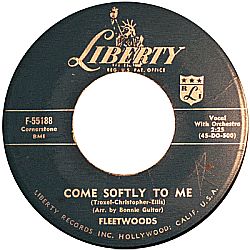

Books at Amazon.com…


2013 book, “When Hollywood Was Right: How Movie Stars, Studio Moguls, and Big Business Remade American Politics”. Click for copy.
Lewis L. Gould’s book, “1968: The Election That Changed America,” 2010 edition,  Ivan R. Dee  Publisher, 192 pp.  Click for Amazon.
Lewis L. Gould’s book, “1968: The Election That Changed America,” 2010 edition, Ivan R. Dee Publisher, 192 pp. Click for Amazon.
Ken Hughes, “Chasing Shadows: The Nixon Tapes, The Chennault Affair, and the Origins of Watergate,” Miller Center, 2014. Click for copy.


“I Won’t Back Down”
1989-2020s

Cover of Paul Zollo’s 2005 book, “Conversations With Tom Petty,” Omnibus Press, 284pp. Click for Amazon link.
     “I Won’t Back Down” is the first single from Tom Petty’s first solo album, Full Moon Fever, released in 1989. The song was written by Petty and his writing partner at the time, Jeff Lynne. It rose to No. 12 on the Billboard Hot 100 single’s chart. It also rose to No. 1 on Billboard’s Mainstream Rock chart, which ranks radio play. The song’s popularity helped send Full Moon Fever to the multi-million-selling sales club. By October 2000, the album had sold more than five million copies.


Music Player
“I Won’t Back Down”

     “I Won’t Back Down” says it all in its title; it’s a fighter’s song — Petty is standing his ground and he won’t back down. The lyrics — shown later below in a separate sidebar at the bottom of this story — suggest a struggle against the odds, whatever they might be; and a determined stand against the powers that be, whoever they are. And Petty’s defiant tone in the performance provides just the right touch of attitude.

     The song will resonate with those who have been wronged, as well as those who might be out to prove a point. It has a kind of universal and personal appeal. Plus, it’s good rock ‘n roll. It’s also a perfect song for a political campaign. And not surprisingly, more than a few politicians — Republicans, Democrats, and Independents — have all used it, especially in the 1990s and early 2000s.


Politics & Music

     Politicians, especially in recent years, have begun scouring the pop, country, rap and hip hop music charts for tunes that strike a chord with their would-be supporters.  They “borrow” these tunes and use them as theme music during their campaigns, playing them before speeches and at rally locations on the campaign trail.  Sometimes, however, they don’t bother asking the artist’s permission to use the songs, or acquire all the requisite legal blessings.  Such “oversight” can sometimes lead to embarrassing situations — for both candidate and artist.

     Happily, for most of those using Tom Petty’s song in various campaigns over the last decade or so, there have only been only one or two of those awkward situations.  Notably in this category, however, was the year 2000 presidential campaign of then Texas Governor W. Bush.  Bush had used “I Won’t Back Down” at campaign events during the 2000 race, becoming practically “a fixture” at those events, according to one report.  Tom Petty wasn’t happy about that. In early 2000, Tom Petty’s publisher sent George Bush a “cease and desist” letter to stop his campaign from using the song. So, he had his publisher send Bush a “cease and desist” letter.  That meant Bush was compelled to stop using the song at his campaign events.  Petty did not want the use of his song to be construed as an endorsement of candidate Bush.

Young Tom Petty.
Young Tom Petty.
     Petty’s publisher, Randall Wixen of Wixen Music, wrote to Bush in early February 2000 telling him to “immediately cease and desist all uses of the song in connection with your campaign.”  Wixen said in his letter to Bush that the use of the song “creates, either intentionally or unintentionally, the impression that you and your campaign have been endorsed by Tom Petty, which is not true.” 

     About a week later, Michael Toner, a lawyer for Bush’s campaign, wrote back to Wixen, saying:  “We do not agree that the mere playing or use of a particular song at a campaign event connotes any impression, either intentionally or unintentionally, of endorsement.” 

Nevertheless, Toner confirmed that the Bush campaign would not use the song at any future campaign events. “So we backed down,” said Bush spokesman Dan Bartlett, jokingly, to reporter Jake Tapper, then covering the issue for Salon.com.


Dems Like Tune

U.S. Senate candidate Jim Webb at an October 2006 campaign stop in Annandale, Virginia. Photo-Brendan Smialowski/Getty. Click for Webb book.
     On the Democratic side of the aisle, a number of candidates had used Tom Petty’s “I Won’t Back Down” in their political campaigns. Virginia Democrat Jim Webb, a Vietnam Vet and former Secretary of the Navy who mounted a pugnacious, reform-minded run to win a U.S. Senate seat in 2006, used the Petty song in his campaign. On November 3rd, 2006, right before the election, Webb’s campaign staged a lively outdoor rally with prominent Democrats at Virginia Union University in Richmond. At that rally, Webb took to the stage to the beat of Tom Petty’s “I Won’t Back Down.”  Webb won the race over  Republican incumbent George Allen.

     Another U.S. Senator in 2006, Democrat Robert Menendez of New Jersey, during his re-election bid, made “I Wont’ Back Down” his campaign’s theme song.  It could be heard playing on sound systems from schools to senior centers all across the state.  It was played wherever Menendez appeared, usually as he entered the room or took the stage.  In some cases, the song was played live by a local band rather than the pre-recorded Tom Petty version.

Senator Menendez campaigning in Trenton, NJ, October 2006. Photo, Sylwia Kapuscinski/Getty. Click for Menendez book.
     In West Deptford, NJ that fall, a local group of senior musicians called The Entertainers was used — four guys that had been playing local gigs for seven years.  When the Menendez campaign told the band the Petty song was the song they would be using, the band leader had never heard of it.  He then ran out and bought the CD, found the lyrics online, and had The Entertainers rehearse it briefly before Menendez’s appearance.  Later that same day, as Menendez was joined by former President Bill Clinton at Essex County College in Newark, the Tom Petty version was back on the sound system.  Menendez was 52 at the time of his re-election bid.  He was being challenged by Republican  Thomas Keane, Jr., a state senator and son of former governor and 9-11 Commission member Thomas Keane.  Menendez, the son of Cuban immigrants, had previously served as a school board member, mayor and state legislator before being elected to Congress in 1992.  In January 2006, he was appointed by New Jersey Governor Jon Corzine to fill the Senate seat vacated by Corzine to serve as Governor. Menendez then won the seat in the general election that fall, becoming New Jersey’s first elected Hispanic senator. In 2006, he prevailed over Keane and was re-elected to a second term. [However, in more recent times, Menendez ran afoul of the law, and in July 2024 was convicted of accepting bribes — perhaps placing him, more appropriately, in the category below]. 
Cover of Brooke Masters’ 2006 book on Eliot Spitzer.


Some “Backing Down”

     Sometimes, however, the political candidates using a particular song come to bad end — certainly, no fault of the song’s artist.  In two cases where the Petty song was used prominently in campaigns there came a bit of irony, as the candidates in these instances — both fighters in the populist mold — would unfortunately, “back down.” 

One of these fighters was the promising New York Democrat and progressive, Eliot Spitzer, who had used “I Won’t Back Down” in launching his 2006 New York gubernatorial bid and throughout that campaign. The song had played prominently in Buffalo as Spitzer launched his bid, and it was frequently heard on the campaign trail as well.

 Other Venues

     “I Won’t Back Down” has also been heard in other prominent venues, some political. During the 2000 presidential election pitting former Texas Governor George W. Bush against then Vice President Al Gore, Tom Petty and other musicians attended an election-eve gathering of supporters at Al Gore’s Vice Presidential home in Washington, where Petty performed the song for Gore and his supporters.

     Petty also played the song as part of the September 21, 2001 benefit telethon for the victims of the 9-11 terrorist attacks. Nearly 60 million people in the U.S. watched that televised special, which included celebrities such as Julia Roberts, Bruce Springsteen, Tom Hanks, and Tom Cruise. The song became something of a patriotic anthem after the 9-11 attacks.

“I Won’t Back Down” was also one of four songs Tom Petty & the Heartbreakers performed during the 2008 Super Bowl halftime show.


Spitzer, as New York Attorney General, had come on like gangbusters, taking on the powerful at every turn, even on Wall Street. And if ever there was a guy who wasn’t going to “back down,” it was Spitzer through and through, with his sights set on Washington and bigger things ahead. In November 2006, Spitzer was elected governor of New York with 69 percent of the vote, the largest margin of victory ever in a New York gubernatorial race. But alas, it was Spitzer’s personal peccadilloes and call-girl revelations that forced him to resign from office in March 2008.


John Edwards

     A somewhat similar case was that of the formerly, much-admired Democratic Presidential candidate John Edwards, who also cultivated the image of a fighter.  Edwards speeches were filled with references to fighting corporations and American revolutionaries, often urging his listeners to rise up against special interests.  Through 2007 and 2008, Tom Petty’s “I Won’t Back Down” could be heard in a repertoire of Edwards campaign songs that fit his themes and underlined his message.  In gearing up for the New Hampshire primary in August 2007, for example, Edwards spoke in the town of Hookset.  After the event, the campaign played “I Won’t Back Down” as Edwards shook hands of supporters on the way to boarding his “Fighting for One America” campaign bus. However, many months later, after the primaries had ended, Edwards’ revelations about a campaign relationship outside of his marriage helped take him out of the national political arena.


Hillary Clinton celebrates her April 2008 win in the Pennsylvania Democratic primary with Governor Ed Rendell. Click for Amy Chozick's 2018 book on Hillary

“Defiance” Music?

     Then comes Democratic presidential candidate Hillary Rodham Clinton during her hard-fought 2007-08 Democratic presidential primary campaign. In late April 2008, after she had won the Pennsylvania primary, but was nevertheless being urged to drop out of the race given an uphill delegate climb, she emerged at her victory party to Tom Petty’s “I Won’t Back Down.”

And again in June, after a Hillary speech in New York that was not a formal concession speech, “I Won’t Back Down” was piped out over the sound system. Was the candidate sending out a little message of defiance here? Certainly it appeared that way to a few reporters. Nothing wrong with that, of course. At least she kept them guessing for a time.

"I Won't Back Down" is also played over the ending credits of the 2008 Bush v. Gore  film, "Recount". Click for DVD.
"I Won't Back Down" is also played over the ending credits of the 2008 Bush v. Gore film, "Recount". Click for DVD.


Tom Petty’s “I Won’t Back Down” is also played, appropriately, during the ending credits for the 2008 HBO TV film, Recount, which focuses on the contentious battle at the end of the “too-close-to-call” U.S. presidential election of November 2000 between former Vice President Al Gore (D) and then former Texas Governor George W. Bush (R).

This docu-drama, with Hollywood stars Kevin Spacey, Laura Dern, Denis Leary and others, revisits the bitter battle of the two sides over Florida’s determining 25 electoral votes.

The film covers the messy Florida voting system and recount effort, the resulting parade of lawsuits, and the “never-give-up” efforts of the Gore camp to have all votes counted.

However, the final disposition of the case came with controversial U.S. Supreme Court actions stopping a statewide recount and allowing a previous Florida vote certification to stand, giving the Bush camp Florida’s 25 electoral votes for a 271 national total, one more than the 270 required to be elected president.


Trump’s Try

On June 20th, 2020, at President Donald Trump’s Tulsa, Oklahoma campaign event – coming in the middle of the corona virus pandemic and Black Lives Matter protests – Tom Petty’s “I Won’t Back Down” song was played during the event, bringing a quick objection from the Petty family. Tom Petty had passed away in October 2017, and so his estate and family members sent a “cease and desist” order to the Trump campaign that same day to stop him from further use of the song.

2020. Donald Trump’s use of “I Won’t Back Down” brought “cease & desist” order from Petty family.

“Trump was in no way authorized to use this song to further a campaign that leaves too many Americans and common sense behind,” said a statement issued by the Petty family the day of the event. The statement, which appeared on Twitter, and was signed by Petty’s ex-wife Jane, his widow Dana, and his daughters Adria and Annakim, continued as follows:

…Both the late Tom Petty and his family firmly stand against racism and discrimination of any kind. Tom Petty would never want a song of his used for a campaign of hate. He liked to bring people together.

Tom wrote this song for the underdog, for the common man and for EVERYONE. We want to make it clear that we believe everyone is free to vote as they like, think as they like, but the Petty family doesn’t stand for this. We believe in America, we believe in democracy. But Donald Trump isn’t representing the noble ideals of either. We would hate for fans that are marginalized by this administration to think we were complicit in this usage, Concurrently, we have issued an official cease and desist notice to the Trump campaign.

In addition to the Petty family, Benmont Tench III, a founding member of the Tom Petty and the Heartbreakers group, agreed with the family’s statement on Twitter, and also issued an Instagram post, stating: “I in no way approve of Trump even whistling any piece of music associated with our band…” Other artists have also asked Trump not to use their music, including: Neil Young, Adele, Guns N’ Roses, Pharrell, Earth, Wind & Fire, Queen, REM’s Michael Stipe, The Rolling Stones, Rihanna, and Aerosmith’s Steven Tyler.

“Tom Petty: An American Treasure,” career-spanning 4-CD box set, featuring 60 tracks. Click for CD.

     Political candidates come and go, of course, but the music lives on to play in many other battles. Doubtless, Tom Petty’s “I Won’t Back Down” will be heard in other campaigns to come. And that’s not a bad thing, when approved, as the nation needs inspired political participation and determined candidates — or at the very least, those who want to try. Music and politics can be a healthy mix, especially if it helps bring more folks into the political process.

     See also at this website, “Rhino Skin,” another story featuring a Tom Petty song, as well as other “music & politics” stories, including: “I’m A Dole Man” (Republican Presidential candidate Bob Dole’s use of a Sam and Dave song); “Four Dead in O-hi-o” (music about the 1970 Kent State shootings); and “Only a Pawn in Their Game” (civil rights music from Bob Dylan). See also the “Politics & Culture” category page. Thanks for visiting — and if you like what you find here, please make a donation to help support this website. Thank you. – Jack Doyle.

_______________________________

Please Support
this Website

Donate Now

Thank You

Date Posted:    7 March 2009
Last Update:   16 September 2024
Comments to:  jackdoyle47@gmail.com

Article Citation:
Jack Doyle, “I Won’t Back Down, 1989-2020s,”
PopHistoryDig.com, March 7, 2009.

_______________________________


Sources, Links & Additional Information

Cover of Tom Petty’s 1989 album that includes  ‘I Won’t Back Down’ track. Click for CD.
Cover of Tom Petty’s 1989 album that includes ‘I Won’t Back Down’ track. Click for CD.
Frank Bruni, “The 2000 Campaign: Campaign Notebook; A Wistful Bush Reflects On Hearth and Home,” New York Times, Friday, January 28, 2000.

Randall D. Wixen, Wixen Music Publishing, Inc., Calabasas, CA, Letter to Governor George W. Bush, Austin, TX, Re: Tom Petty/”I Won’t Back Down”, February 4, 2000.

Michael E. Toner, General Counsel, George W. Bush for President, Austin, TX, Letter to Randall D. Wixen, Wixen Music Publishing, Inc., Calabasas, CA, Re: Tom Petty/”I Won’t Back Down”, February 11, 2000.

Jake Tapper, “Don’t Do Me Like That: Tom Petty Tells George W. Bush to ‘Back Down’ From Using one of Petty’s Songs at his Events,” Salon.com, September 16, 2000.

Patrick Healy, “Democracy in Action,” New York Times, May 30, 2006.

Andrea Bernstein, “Spitzer Bus Tour Is Unofficial Campaign Kick-Off,” WNYC.org, Radio & print report, June 3, 2006.

David W. Chen, with reporting by Jonathan Miller & Nate Schweber, “As Expected, New Jersey Primaries Create Senate Race Between Kean and Menendez,” New York Times, June 7, 2006.

Cynthia Burton, “Menendez: He Has Risen Despite Defying Alliances,”Philadelphia Inquirer October 15, 2006.

“I Won’t Back Down”
Tom Petty & Jeff Lynne

Well I won’t back down,
no I won’t back down
You can stand me up at the gates of hell
But I won’t back down

Gonna stand my ground,
won’t be turned around
And I’ll keep this world from
draggin’ me down
Gonna stand my ground,
and I won’t back down

Chorus:
Hey baby, there ain’t no easy way out
Hey I will stand my ground
And I won’t back down.

Well I know what’s right,
I got just one life
In a world that keeps on
pushin’ me around
But I’ll stand my ground,
and I won’t back down

Hey baby there ain’t no easy way out
Hey I will stand my ground
And I won’t back down
No, I won’t back down
________________________
Note: song is longer than appears when full
chorus & recurring refrains are added.

Todd Jackson and Michael Sluss, “Senate Hopefuls Still Pounding the Pavement; George Allen Gets an Endorsement and James Webb Trots out Some Democrat Heavyweights,” Roanoke.com, of The Roanoke Times, November 3, 2006.

David W. Chen, “A Fight Song Comes Alive,” New York Times, November 5, 2006.

Peter Nicholas, Edwards Levels Attack on Clinton-era White House,” Los Angeles Times, August 24, 2007, p. A-12.

Adam Nagourney, “Do You Know the Words to the Edwards Fight Song?,” The Caucus Blog, New York Times, December 19, 2007.

Adam Nagourney, “On the Trail: The Edwards Playlist,”New York Times, December 20, 2007.

Sarah Wheaton, “Accompaniments; Theme Songs and Others,” New York Times, February 16, 2008

Imprint ipod Gail Collins, “Hillary’s Smackdown,” New York Times, April 24, 2008.

 Kleinheider, “That Ain’t Any Kind Of Concession Speech I Ever Heard Of,” NashvillePost.com, June 3, 2008.

“I Won’t Back Down,” SongFacts.com.

“I Won’t Back Down,”Wikipedia.org.

U.S. Senator Robert Menendez, United States Senate.

U.S. Senator Jim Webb, United States Senate.

“Eliot Spitzer,” Times Topics, New York Times.

“John Edwards,” Times Topics, New York Times.


“Ralph Kramden Statue”
August 2000

Close-up of Ralph Kramden-Jackie Gleason statue at the August 2000 'TV Land' unveiling in New York city.
     Ralph Kramden is the name of a fictional New York City bus driver who starred in the popular 1950s TV comedy, The Honey-mooners. Actor Jackie Gleason played the role of Ralph, who was a memorable, one-of-a-kind character. In the show, Gleason’s Ralph Kramden made $62 a week driving his Madison Avenue bus route. 

At home, in a small Brooklyn walk-up apartment, where most of the shows were set, Ralph was always coming up with some “get rich” scheme or other venture in which his wife, Alice, and neighbors Ed Norton with wife Trixie, were typically recruited as skeptical or unwilling accomplices. The schemes usually ended badly for Ralph, with wife Alice typically adding a final cut of the “I-told-you-so” variety. 

Alice was played to a T by Audrey Meadows, with equally good performances by Art Carney as Norton and Joyce Randolph as Trixie.  Although all of the skits were humorous, and some slapstick, many also had a dramatic component or a pointed lesson that viewers could identify with. The show had a strong “everyman” appeal and following when it first ran in the 1950s, with each of its characters popular among the general public.  TV historians often rate the show as one of the best of the early situation comedies.

Statues & Icons
Series

     This story is one in an occasional series that will explore how America, and other countries, honor their icons — from famous politicians and military leaders, to movie stars, TV celebrities, and sports heros.  Societies have been building statues and monuments to commemorate their famous and beloved figures for thousands of years.  But in modern times, even fictional characters, their ranks swelled by cinema and television, are now joining those up on the pedestal, some for purely commercial reasons.  As statues and busts, the famous personages are typically cast in outsized proportions, some placed in parks or other public spaces.  Still others are found on postage stamps, murals, buildings, near sports arenas, or used in various place names.  Not all of those so honored, however, meet with public approval, though some have broad and continuing support.  The stories offered in this series will include short sketches on some of these figures — past and present — providing a bit of the history and context on each and how the proposed honor came about.

     In recent years the television series came to be owned by the media conglomerate Viacom. Viacom’s cable TV channel, TV Land, began airing The Honeymooners series as part of its classic TV programming.  Sometime in 1999, TV Land came up with the idea of developing and erecting statues of some of its fictional TV characters as a way to publicize the network and its shows.  The statue for Ralph Kramden became the first of these projects, to be located in New York city at the New York-New Jersey Port Authority Bus Terminal building in mid-town Manhattan.  TV Land developed the statue in cooperation with the Jackie Gleason estate and commissioned sculptor Robert DuGrenier to create the likeness.

     The statue, which portrays Kramden in his bus driver’s uniform carrying a lunch pail, was formally dedicated at a brief ceremony in August 2000.  At the time, the Port Authority management regarded the Gleason-Kramden statue as an art project in its public space, providing a service to its patrons.  The statue’s presence at the terminal, said management, would help make commuting more enjoyable for the 185,000 passengers who then came through the depot every day.  Cedrick T. Fulton, general manager of the bus terminal, said he envisioned bus passengers stopping to have their pictures taken with the statue.  TV Land, for its part, said its Kramden statue was “honoring a public icon.”  The cable TV channel paid for the statue, but was not charged a promotional or advertising fee by the Port Authority.  Rob Pellizzi, TV Land’s vice president for marketing, indicated that the statue was then part of a larger publicity campaign to promote the show and the cable channel.

Kramden-the-statue at his post outside the entrance to the Port Authority Bus Station. Photo: Flickr.com, wallyg.


TV Land Promo

     In addition to the statue, TV Land was then airing television ads with Art Carney’s character from the show, Ed Norton, dancing to the song “Wild Thing,” a hit from the 1960s by the British group The Troggs.  As part of this TV Land campaign, some city buses were also painted from top to bottom with scenes from the series, some showing bus driver Kramden behind the wheel.  Pellizzi indicated at the time that TV Land was thinking of promoting other shows in “similar partnerships” — with permanent statues placed across the country.  They were calling their program “TV Land Landmarks”

     “Creating TV Land Landmarks helps us recognize those locations throughout the country that are closely identified with TV that people want to visit,” explained Larry W. Jones, Executive Vice President and General Manager of TV Land in a press statement for the Ralph Kramden ceremony. 

...In a different light.
      “As Jackie Gleason’s Ralph Kramden character evokes New York City,” Jones continued, “TV Land felt strongly that the Port Authority Bus Terminal was the perfect location from which to kick off this initiative.”   Jones added that his company was optimistic about bringing the statues initiative “to other landmarks around the country over the next few years” — projects which TV Land later did pursue.

To date, among the shows and characters that TV Land has included at other “landmark” locations are the following: The Mary Tyler Moore Show (Minneapolis, MN), The Andy Griffith Show (North Carolina), The Bob Newhart Show (Chicago), Bewitched (Salem,MA), Elvis Presley’s Aloha from Hawaii show, and the “Fonzie” character from the Happy Days show (Milwaukee, WI).  Some of these TV Land statues and landmarks may be profiled in future stories at this website.


The Honeymooners

Classic kitchen scene from the ‘Honeymooners’ TV show of the 1950s. From left, Jackie Gleason, Art Carney, Audrey Meadows, and Joyce Randolph. Click for framed photo with program dates.
     Although The Honeymooners ran on CBS for only one season in 1955-1956, the show left a very influential mark on early television and had an extremely loyal following.  Some early baby boomer kids also watched the show with their parents.  The Honeymooners ranked as the No. 2 TV show during its run, and garnered Emmy Awards for the acting of Audrey Meadows and Art Carney in their supporting roles.  In syndication, The Honeymooners series has had a long life, not only in the U.S., but also in many countries around the world.  In some markets, the syndicated shows have been aired for decades, almost from the time when the show ended in its original broadcast.  Viacom aired the original series, and also some later discovered “lost” episodes, at least from the mid-1980s.  Honeymooners episodes also appeared on Showtime, and in more recent years, on the TV Land channel.  The episodes in syndication have also been released in VHS and DVD formats.

Double photo from ‘TV Land’ – top, Ralph driving his bus with cast along for the ride; and bottom, Alice bringing Ralph his lunch pail. Click for Gleason, Meadows, etc. page.
     In August 2000, an unveiling ceremony was held in New York City.  Joyce Randolph, who played Ralph Kramden’s neighbor “Trixie” on the show, was one of the special guests.  “He loved hoopla,” said Ms. Randolph of Gleason, “and the statue is gorgeous.”  Also attending the ceremony were New York transit authority officials.  “Who better than Ralph Kramden to greet commuters and bus drivers in front of the place where more than 200,000 commuters and 7,000 buses pass through every day?” said Ken Philmus, director of tunnels, bridges, and terminals.  “We think this is a wonderful gift to all the people of New York city.” 

     Some passers-by that day also watched the dedication.  “I like that guy Kramden,” said one construction worker, Tino Riveria, looking on at the dedication.  “He was a big mouth, but there are millions of big mouths in New York.  So naturally, people here are going to identify with him.” Another observer was Ruthie Escalante, a record store clerk.  She told a reporter that Kramden’s nonstop battles with his wife — and reconciliation at the end of each show  — came about as close to defining married life as anything she had seen on television.  “Gleason really told it like it is,” she said. “And I watch the reruns all the time with my husband. It is a ritual.”

Ralph Kramden with lunch pail, surveys Manhattan’s busy streets and the comings and goings of thousands of daily commuters. Photo: pbase.com, Hubert J. Steed.

     TV Land, however, was not the first to honor Jackie Gleason and Ralph Kramden in a public venue.  In 1988, one of the New York city bus service depots in Brooklyn was renamed the “Jackie Gleason Bus Depot.”  All buses that originate from that depot bear a sticker on the front that has a logo derived from the “face on the moon” opening logo that ran on The Honeymooners opening credits.  The MTA also renumbered one of its busses to 2969 and made it the “official Jackie Gleason bus.”  There is also a statue of Jackie Gleason in his Ralph Kramden bus driver’s attire at the Academy of Television Arts & Science’s Hall of Fame in North Hollywood, California.  That statue, however, is posed in Gleason’s famous “and away we go” stance, which he often did at the opening of his TV variety show.  The North Hollywood statue also pre-dates TV Land replica.

     The eight-foot, 1,000-pound likeness of Ralph Kramden/Jackie Gleason is found today at the 40th Street and 8th Avenue terminal entrance.  The plaque on the base of the statue reads:

“Jackie Gleason as Ralph Kramden: Bus Driver – Raccoon Lodge Treasurer – Dreamer.  Presented by the People of TV Land.”  

Close-up detail, other view, Kramden statue.
     As of 2008, the Port Authority Bus Station served some 7,200 buses and about 200,000 people on an average weekday. Over 3 billion passengers have used the building since it began operation in 1950.

For other statue and iconic landmark stories at this website, see for example: “The Jackson Statues, 1995″ (regarding nine giant Michael Jackson statues used to promote one of his record albums); “JFK’s Texas Statue, Ft. Worth:2012” (a tribute site dedicated to President John F. Kennedy in Ft. Worth, Texas in 2012); and, “Ruth at Oriole Park, 1930s-2009″ (regarding a Babe Ruth statue at Baltimore’s Camden Yards and his Baltimore history). See also the “TV & Culture” page for more stories in that category. Thanks for visiting – and if you like what you find here, please make a donation to help support this website. Thank you. – Jack Doyle

Please Support
this Website

Donate Now

Thank You

_____________________________________
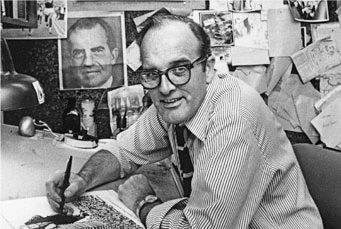
Date Posted:  7 March 2009
Last Update:  15 February 2019
Comments to: jackdoyle47@gmail.com

Article Citation:
Jack Doyle, “Ralph Kramden Statue, August 2000,”
PopHistoryDig.com, March 7, 2009.

_____________________________________


Sources, Links & Additional Information

Scene from 'Honeymooners' TV show.
Another scene from the 'Honeymooners' set.
Honeymooners’ stars Jackie Gleason and Audrey Meadows on ‘TV Guide’ cover, week of May 21-27, 1955.

Dean E. Murphy, “Hey, Norton, Get a Load of Ralphie Boy,” New York Times, August 26, 2000.

“Ralph Kramden Statue,”TV Acres.com.

Stephen M. Silverman, “Ralph Kramden Home to Roost,” People.com, August 26, 2000.

PR Newswire, New York, “TV Land Honors Ralph Kramden — America’s Most Famous Bus Driver — With Statue at Port Authority Bus Terminal,” August 28, 2000.

“Gotham Honors A Heavyweight,” CBS, New York, August 28, 2000.

“Gleason Gets Statue In New York,” TV Land, studio briefing, August 29, 2000.

Josh Getlin, “Ralph Kramden Statue By Windsor Sculptor Is Unveiled in New York,” Los Angeles Times, August 29, 2000.

See also Honeymooners.net, described as “a site with everything you could possibly want to know about the classic sitcom.” Registration required.

TV Land’s website had previously offered a 360-degree virtual tour of the Ralph Kramden statue in its setting, and also included a brief promotional film clip on the statue. However, much of that has since been taken down, now replaced by a brief narrative description.

An extensive fan website on all things Honeymooners if found at HamniaHamina.com.

See YouTube.com for a selection of posted Honey-mooners episodes.

“TV Land”, Wikipedia.org.

“The Honeymooners”, Wikipedia.org.


_________________


“Rosie The Riveter”
1940s-2020s

Norman Rockwell’s ‘Rosie The Riveter’ cover, May 29, 1943 edition of 'Saturday Evening Post,' the first visual image to incorporate the ‘Rosie’ name. Click for copy at Amazon.
     “Rosie the Riveter” is the name of a fictional character  who came to symbolize the millions of real women who  filled America’s factories, munitions plants, and shipyards during World War II.  In later years, Rosie also became an iconic American image in the fight to broaden women’s civil rights. 

     After the Japanese bombing of Pearl Harbor in December 1941 and the full involvement of the U.S. in World War II, the male work force was depleted to fill the ranks of the U.S. military.  This came precisely at a time when America’s need for factory output and munitions soared.

The U.S. government, with the help of advertising agencies such as J. Walter Thompson, mounted extensive campaigns to encourage women to join the work force.  Magazines and posters played a key role in the effort to recruit women for the wartime workforce.

     Saturday Evening Post cover artist, Norman Rockwell, is generally credited with creating one of the popular “Rosie the Riveter” images used to encourage women to become wartime workers. 

Rockwell’s “Rosie,” shown at right, appeared on the cover of the May 29th, 1943 edition of The Saturday Evening Post. The Post was then one of the nation’s most popular magazines, with a circulation of about 3 million copies each week.  In addition to Rockwell’s Rosie, however, another image would become the more commonly known “Rosie the Riveter” image.

J. Howard Miller's 'We Can Do It!' poster, commissioned by Westinghouse and shown briefly in Feb 1943. Click for copy.


Westinghouse Posters

     In 1942, Pittsburgh artist J. Howard Miller was hired by the Westinghouse Company’s War Production Coordinating Committee to create a series of posters to motivate employees for the war effort. One of these posters became the famous “We Can Do It!” image — an image that in later years would also become known by many as “Rosie the Riveter,” though that was not the intended purpose at its creation. In fact, at the time of the poster’s release the name “Rosie” was in no way associated with Miller’s image. The poster — one of 42 produced in Miller’s Westinghouse series — was used exclusively within Westinghouse and not initially seen much beyond several Westinghouse factories in Pennsylvania and the Midwest where it was displayed for two weeks in February 1943. It was only years later, after the Miller poster was rediscovered in 1982 – some 40 years later, in fact – that his rendering began to be associated with “Rosie The Riveter,” and more importantly, women’s liberation and other causes.

In terms of the origin of Miller’s “We Can Do It!” image, there have been some reports that an actual WWII woman worker may have been used as the source and/or inspiration – either from a photograph or as an in-person studio model. A 1942 wire service photo of one WWII female worker at Alameda Naval Air Base in California dressed in bandanna and work clothes has been suggested as a possible source, but one friend of Miller’s has noted that he rarely worked from photographs.

Both images, however — Rockwell’s and Miller’s — were used to help motivate the WWII workforce, but in Miller’s case, perhaps only at Westinghouse factories. But Rockwell’s “Rosie,” in particular, helped encourage female workers to fill WW II production jobs. Sheridan Harvey of the U.S. Library of Congress has noted: “Rosie’s appearance on the Memorial Day cover of the Saturday Evening Post implied that her work might help save soldiers’ lives.” And in later years, up to present times, both of these images – Miller’s and Rockwell’s – have become iconic symbols of women’s rights struggles and are occasionally adapted for other causes and political campaigns as well. But in any case, it was during the World War II years that “Rosie the Riveter” got her start.

“Rosie the Riveter”
Song Lyrics

While other girls attend their fav’rite
cocktail bar
Sipping Martinis, munching caviar
There’s a girl who’s really putting
them to shame
Rosie is her name

All the day long whether rain or shine
She’s a part of the assembly line
She’s making history,
working for victory
Rosie the Riveter
Keeps a sharp lookout for sabotage
Sitting up there on the fuselage
That little frail can do more than a
male will do
Rosie the Riveter

Rosie’s got a boyfriend, Charlie
Charlie, he’s a Marine
Rosie is protecting Charlie
Working overtime on the
riveting machine
When they gave her a production “E”
She was as proud as a girl could be
There’s something true about
Red, white, and blue about
Rosie the Riveter

Everyone stops to admire the scene
Rosie at work on the B-Nineteen
She’s never twittery, nervous or jittery
Rosie the Riveter
What if she’s smeared full of
oil and grease
Doing her bit for the old Lendlease
She keeps the gang around
They love to hang around
Rosie the Riveter

Rosie buys a lot of war bonds
That girl really has sense
Wishes she could purchase
more bonds
Putting all her cash into national
defense
Senator Jones who is “in the know”
Shouted these words on the radio
Berlin will hear about
Moscow will cheer about
Rosie the Riveter!
_____________________
Paramount Music Corporation, NY,
1942. Listen to song at YouTube.


First, The Song

     Rosie the Riveter appears to have come first in song, not in art. In 1942, a song titled “Rosie the Riveter” was written by Redd Evans and John Jacob Loeb and was issued by Paramount Music Corporation of New York. The song was released in early 1943 and was played on the radio and broadcast nationally. It was also performed by various artists with popular band leaders of that day.

The song, it turns out, was inspired by a newspaper story about a 19-year old female riveter named Rosalind Palmer who worked at the Vought Aircraft Company in Stratford, Connecticut riveting the bodies of Corsair fighter planes. That Rosie – perhaps the first Rosie – was known as “Roz” by friends, and would become Rosalind P. Walter, a famous and long-time benefactor of PBS and WNET in New York. She was born into a prosperous North Shore Long Island family – her father, Carleton Palmer, was president and then chairman of E.R. Squibb and Sons, a drug company made prosperous by WWII penicillin (now part of Bristol Myers Squibb), and her mother, W. Bushnell, a professor of literature at Long Island University. Rosalind, a prep school student who might have gone off to college at Smith or Vassar, instead heeded the WWII call for female workers. Syndicated newspaper columnist, Igor Cassini, took up her story, writing about Rosalind the riveter in his “Cholly Knickerbocker” column. That story, in turn, inspired the songwriters Evans and Loeb – and since it was syndicated in many newspapers — possibly Rockwell too.

The song, meanwhile, became quite popular, particularly one version recorded by the Four Vagabonds, an African-American group — a version that caught on and rose on the Hit Parade. It seems likely that Saturday Evening Post artist Norman Rockwell heard this song, and possibly was influenced by it, especially since he wrote the name “Rosie” on the lunch box in his painting.

     In the Post’s cover illustration, Rockwell’s Rosie is shown on her lunch break, eating a sandwich from her opened lunch pail as her riveting gun rests on her lap.  A giant American flag waves behind her.  Rosie appears content, gazing off into the distance.  However, Rockwell portrays her with some important details, from the lace handkerchief visible in her right hand pocket, to her foot placed smack on the cover of Adolph Hitler’s Mein Kampf at the bottom of the painting. But there was also something else in Rockwell’s Rosie.


The “Isaiah Effect”

     In early June 1943, after The Saturday Evening Post cover of Rosie had hit the newsstands and had been widely circulated, the Kansas City Star newspaper ran images of Rockwell’s Rosie alongside of Michelangelo’s Isaiah from his Sistine Chapel ceiling painting.  The splash in the Star drew a lot more attention to Rockwell’s Rosie.  Followers of Rockwell’s illustrations in those years knew well his penchant for touches of humor and satire.

     In more recent years, reviewers of Rockwell’s Rosie have added their interpretations and observations. “Just as Isaiah was called by God to convert the wicked from their sinful ways and trample evildoers under foot,” wrote one Sotheby’s curator in a May 2002 review, “so Rockwell’s Rosie tramples Hitler under her all-American penny loafer.” 

Rockwell had used a petite local woman as a model for his Rosie — Mary Doyle (Keefe), then a 19 year-old telephone operator — but he took liberties with her actual proportions to make his Rosie appear as a more powerful, Isaiah-like figure. 

“Righteousness is described throughout Isaiah’s prophecy as God’s ‘strong right arm’,” continued the Sotheby’s reviewer, “a characterization that must surely have occurred to [Rockwell] as he portrayed Rosie’s muscular forearms.” Rockwell’s Rosie also has a halo floating just above the pushed-back visor on her head.Rockwell’s “Rosie” was later donated to the U.S. War Loan Drive and briefly went on a public tour. Rockwell had fun with his paintings, using some irreverent humor here and there, but also including the necessary serious messages and patriotic tone.

     Rockwell’s Saturday Evening Post  Rosie was widely disseminated during the war.  In addition to the magazine’s 3 million-plus circulation, Rockwell’s Rosie was also displayed in other publications, including The Art Digest of July 1, 1943.  However, Rockwell’s image of Rosie might have enjoyed an even wider circulation had it not been for the actions of the magazine’s publisher, Curtis Publishing. In 1943, Curtis initially used the phrase “Rosie the Riveter” on posters it distributed to news dealers advertising the forthcoming Post issue with Rockwell’s painting on the cover.  However, according to author Penny Colman, within a few days, Curtis sent telegrams to the news dealers ordering them to destroy the poster and return a notarized statement attesting to the fact that they had.  Curtis issued its retraction because it feared being sued for copyright infringement of the recently released song “Rosie the Riveter.”  Rockwell’s painting of Rosie was then donated to the U.S. Treasury Department’s War Loan Drive, and then went on a tour for public display in various cities across the country.

A ‘Wendy-the-Welder’ in 1940s’ shipbuilding at Richmond, CA.


Real Life Rosies

     In June 1943, about two weeks after Rockwell’s Saturday Evening Post cover appeared on newsstands, the press picked up the story of a woman worker named Rose Bonavita-Hickey. She and partner Jennie Florio, drilled 900 holes and placed a record 3,345 rivets in a torpedo-bombing Avenger aircraft at the former General Motors Eastern Aircraft Division in North Tarrytown, New York. 

Hickey’s feat was recognized with a personal letter from President Roosevelt, and became identified as one of many  real-life “Rosie the Riveters.” Other women workers doing riveting — as well as others generally who were filling heavy-industry “men’s” jobs all across the nation – e.g., “Wendy-the-welders,” etc. — also gained media attention during the war years.

WWII-era photo showing Dora Miles and Dorothy Johnson at Douglas Aircraft Co. plant in Long Beach, CA.
     Sybil Lewis, an African-American riveter who worked for Lockheed Aircraft in Los Angeles, would later provide this description of women riveters:

“The women worked in pairs.  I was the riveter and this big, strong, white girl from a cotton farm in Arkansas worked as the bucker.  The riveter used a gun to shoot rivets through the metal and fasten it together.  The bucker used a bucking bar on the other side of the metal to smooth out the rivets.  Bucking was harder than shooting rivets; it required more muscle.  Riveting required more skill.”

     In early August 1943, Life magazine featured a full cover photograph of a woman steelworker, along with an inside photo-story spread of other “Rosie” steelworkers, some quite dramatic.

The photographs were taken by Margaret Bourke-White, the famous Life photojournalist who was the first female war correspondent and the first woman to be allowed to work in combat zones during World War II.

Life magazine cover photo of August 9, 1943 shows steel-worker Ann Zarik at work with her torch. Click for copy.

     Bourke-White had spent much of WWII in the thick of things overseas, but also managed to do domestic stories such as the “Women in Steel” spread, which included at least a dozen photographs displayed in Life’s August 9, 1943 edition. These photos captured women at work in the American steel industry, including some taken at Tubular Alloy Steel Corp. of Gary, Indiana and Carnegie-Illinois Steel Company.

Some of the photos showed the women wielding torches and working on heavy plate and structural steel with sparks flying, with others working amid giant steel caldrons that carried the molten steel. A display of these and other Rosie photographs, culled from the Life magazine archive, can be seen at “The Many Faces of Rosie The Riveter, 1941-1945.”


Need More Women

     The government, meanwhile, continued to call for more women in the workforce.  They needed women to work in all kinds of jobs, not just those in munitions plants or military-related factory work.  By September 1943, the Magazine War Guide was asking magazine publishers to participate in a “Women at Work Cover Promotion.”  They wanted publishers and others to push all kinds of employment as vital “war jobs.”  Everyday “civilian jobs” were vital, too, not just the factory jobs.  The slogan for this promotion was: “The More Women at Work the Sooner We Win.”

Norman Rockwell’s portrayal of American ‘liberty girl’ in her ‘jack-of-all-trades’ mode, capable of doing many kinds of civilian jobs to help the War effort –  September 4, 1943, Saturday Evening Post.
Norman Rockwell’s portrayal of American ‘liberty girl’ in her ‘jack-of-all-trades’ mode, capable of doing many kinds of civilian jobs to help the War effort – September 4, 1943, Saturday Evening Post.
     The Saturday Evening Post used Norman Rockwell again to produce a cover for this campaign — a cover that appeared on its September 4th, 1943 issue.  It was entitled “Rosie To The Rescue.”  For this cover, Rockwell created a “liberty girl” dressed in patriotic clothes but cast as a jack-of-all-trades composite, capable of doing any number of civilian jobs — nurse, mechanic, telephone operator, milkman, farmer, etc.  This “liberty girl” image did not resonate the same way that Rosie did, but Rockwell and the publishers were still doing their part for the War effort.

     Rockwell and The Saturday Evening Post  were only part of a much bigger campaign to move women into the workplace.  Motion pictures, newspapers, radio, museums, employee publications, and in-store displays were all involved.  Some 125 million advertisements were produced as posters and full-page magazine ads. 

Fine print reads: ‘Uncle Sam Needs Stenographers. Get Civil Service Information at Your Post Office.’Click for copy.
In fact, the govern- ment was quite direct about the propaganda campaign it needed to mount. According to the Basic Program Plan for Womanpower in the Office of War Information, for example: “These jobs will have to be glorified as a patriotic war service if American women are to be persuaded to take them and stick to them.  Their importance to a nation engaged in total war must be convincingly presented.”
A 'WOW' was a 'Woman Ord-nance Worker.' Click for copy.

     Some promotional films were produced as well.  Hollywood actor Walter Pidgeon, working for the government War Bond effort, made a short film promoting the war effort in which he recruited a real “Rosie the Riveter” worker named Rose Will Monroe whom he met while touring Ford Motor’s Willow Run aircraft factory.  The short film was shown in theaters between featured films to encourage viewers to buy War Bonds. 

Unrelated to the War Bond effort, a Hollywood movie called Rosie the Riveter was also made in 1944; it was a B-grade romantic wartime comedy made by Republic studios with Jane Frazee as Rosie Warren who worked in an airplane factory.

Female trainees at Middletown, PA, 1944. The Middletown Air Service Command stockpiled parts and overhauled military airplanes. During WWII, Middletown’s workforce grew from 500 to more than 18,000, nearly half of them women.


Women’s Work

     The women who responded to “Rosie’s call” during the 1940s’ war years did all kinds of work.  In 1942, the Kaiser shipyards opened in Richmond, California, becoming a major shipbuilding center for the war effort.  A woman named Bethena Moore from Derrider, Louisina was one of thousands who came to work there.  In Louisiana, she had been a laundry worker.  A small woman of 110 pounds, Bethena was one of the workers who would climb down into the bowels of ships — sometimes four stories in depth — on a narrow steel ladder, tethered to a welding machine.  She did the welds on the ships’ double-bottoms.  “It was dark, scary,” she later recounted to a New York Times reporter in October 2000.  “It felt sad, because there was a war on.  You knew why you were doing it — the men overseas might not get back.  There were lives involved.  So the welding had to be perfect.”

Woman working inside the tail of a B-17 aircraft at Boeing production line in Seattle, WA, 1940s.
     Phyllis McKey Gould was another worker at the Richmond, California Kaiser shipyard No. 2.  She worked as a welder there, later recalling the work she did:  “I’d never worked in my life,” she said.  “I loved the look of welding, the smell of it… You’d look through really dark glass and all you’d see was the glow.  You moved the welding rod in tiny, circular motions, making half-crescents.  If you did it right, it was beautiful.  It was like embroidery.”  At the war’s height, women, many of them African-American, made up more than a quarter of the Richmond shipyards’ 90,000 workers.

Women welders at Landers, Frary & Clark Plant, New Britain, Connecticut, 1943.
     In Maine during the early 1940s, Dorothy “Dot” Kelley was recently divorced, out on her own, and raising four children.  After seeing women from the Portland shipyard cashing $600 checks, she quit her job at a Montgomery Ward department store and went to work at the South Portland Shipyards.  She worked there helping build ships from 1942 until the shipyard closed in 1945.  She worked nights so her days could be free for her children.  Dot and other the women welders wore heavy clothes against the cold, and they wriggled into the ships’s tight spaces to weld its seams together.  Her neck and chest became spotted with tiny burn marks from the sparks — common to other welders as well.  But after the war ended, Dot Kelley was forced to work two jobs, and her children were sometimes left to fend for themselves at home.  She was determined, however, to keep working and keep her family together.  She lived to be 94 years old, and through her daughter, National Public Radio told her story in a December 2006 broadcast.

Women working at the Redstone Arsenal in Alabama, 1940s.
     In Georgia, Eloise Strom, a young mother of two young boys, rose every morning before dark and rode an hour and a half in a car pool with five other women to go to work at the aircraft plant in Marietta.  Some worked in the office, others worked in production. In the early 1940s the plant was called the “Bell Bomber plant,” later to become Lockheed-Martin.  During WWII, it employed some 28,263 workers at its peak — about 10,000 of them women.  It then paid well above the minimum wage.  The factory produced B-29 bombers — some 668 in all.  The B-29s were used mainly in the Pacific Theater to bomb Japan; they had a longer range than the B-17s used in Europe.  The Marietta plant not only reshaped the work force, it also transformed Marietta from a sleepy town of 8,000 into a booming industrial center.

Sante Fe Railroad ad singing the praises of its women workers.
     Near Hunstville, Ala- bama, a military ordnance complex known as the Redstone Arsenal, also used women throughout its facilities.  By December 1942, about 40 percent of Redstone production line employees were women, and that share would rise to 60 percent or more on some production lines by war’s end.  Dealing with munitions, chemicals, and other dangerous substances, the jobs at Redstone entailed a degree of risk, and several women were killed there during the WWII years, with a number of others injured.

     In Michigan, at Ford Motor Co., more than 30 percent of Ford workers in 1943 in the machining and assembly departments were women.  Women at Ford plants built jeeps, B-24 aircraft, and tractors.  They also became test pilots for the B-24s.  And they operated drill presses, welding tools, heavy casting machinery and riveting guns. 

     The Sante Fe Railroad also used women in war-time jobs. One of the company’s wartime ads explained in part: “…Right now, thousands of Santa Fe women are doing war-vital work to ‘keep-em-rolling’.  Many of them are pitching into ‘unglamourous jobs’… greasing engines, operating turntables, wielding a shovel, cleaning roller bearings, working in blacksmith and sheet metal shops.  They take pride in their work too!”  A small inset box in the ad also read: “Another chapter in the story ‘Working for Victory on the Sante Fe’.”

Marilyn “Rosie” Monroe
June 1945

Marilyn Monroe, before she became a Hollywood star, appeared in a series of airplane factory photos in June 1945 that led to her becoming a model and film star.
     One of the “Rosies” during the WWII years was none other than Marilyn Monroe — well before she became “Marilyn the Hollywood star,” however.  In the 1945 photo at right, Marilyn was then the 19 year-old Norma Jean Dougherty working at the Radioplane munitions factory in Burbank, California. Monroe was then married to Merchant Marine seaman James Dougherty, whom she had wed in Los Angeles in June 1942.  In 1943, after Dougherty joined the U.S. Merchant Marine and was sent overseas in 1944, Monroe started work at the Radioplane plant, where she was “discovered” by an Army photographer.  In the summer of 1945, Capt. Ronald Reagan of the Army`s 1st Motion Picture Unit,  sent 26-year-old private David Conover, a professional photographer, on an assignment for Yank magazine, the Army weekly. Conover was sent to the Radioplane plant to shoot morale-boosting photographs of pretty girls doing their job to help the war effort, none of which were used by Yank. (There have been some discrepancies on this point, as Yank did a prior story, “Women in Industry,” published in December 22, 1944.  But apparently no photo of Norma Jean Dougherty was ever used by Yank).  Conover, on his first encounter with Marilyn at the factory, would later write: “I moved down the assembly line, taking shots of the most attractive employees.  None was especially out of the ordinary. I came to a pretty girl putting on propellers and raised the camera to my eye.  She had curly ash blond hair and her face was smudged with dirt.  I snapped her picture and walked on.  Then I stopped, stunned.  She was beautiful.  Half child, half woman, her eyes held something that touched and intrigued me.” 

Another of David Conover's photos of 19 year-old Norma Jean Dougherty.
      Conover introduced himself to Monroe, and there began a professional relationship.  Monroe’s appearance and natural ease in front of the camera captivated Conover.  He would later write that she had “a luminous quality in her face, a fragility combined with astonishing vibrancy.” Upon hearing that she wanted to become an actress, he told her that she would need to become a model, and then spent the next two weeks snapping photos of her, and coaching her on how to pose and “address” the camera. Thereafter, Conover was sent to the Philippines and the two lost touch.  Monroe, meanwhile, moved out of her mother-in-law’s home, stopped writing to her husband, James Dougherty, and filed for divorce in 1946. Dougherty later remarried after the war in 1947 and joined the Los Angeles Police Department.  In 1950, he was one of the police officers who held back the crowd at the premiere of Monroe’s movie, The Asphalt Jungle. It was not until 1953 that photographer David Conover learned that Norma Jean Dougherty had become movie star Marilyn Monroe, who would later credit Conover with having “discovered” her. Tutor and student were reunited in 1953 on the set of Gentlemen Prefer Blondes. To learn more about the Conover-Monroe photos, read Conover`s 1981 book, Finding Marilyn.  See also at this website, “Marilyn & Joe, et al., A 70-Year Saga,” and also a short story about Elton John’s tribute song to Monroe, “Candle in the Wind.”


Opening The Door

Mexican American women workers on the Southern Pacific Railroad during WW II.
     During the WWII years, the government’s war-related “get-women-to-work” campaigning opened the door to women in the workforce, setting off a key change for women’s civil rights and altering the demographics of the workforce in later years.  At the end of December 1941, there were about 13 million women at work.  ‘Rosie the Riveter’ and other campaigns helped to increase that number to 15 million in early 1943.  By 1944, there were 20 million women in the workforce, with 6 million of those working in factories. And according to the American Rosie the Riveter Association, the millions of Rosies who filled the factories helped turn out critical war materiel, including nearly 300,000 airplanes, more than 100,000 tanks, and some 44 billion rounds of ammunition.

     Although many of the jobs held by women during WWII were initially returned to men after the war ended, the workforce would never be the same again. Sybil Lewis, who worked as a Lockheed riveter during those years stated: “You came out to California, put on your pants, and took your lunch pail to a man’s job. This was the beginning of women’s feeling that they could do something more.” Inez Sauer, who worked as a Boeing tool clerk in the war years, put it this way:

     “My mother warned me when I took the job that I would never be the same.  She said, ‘You will never want to go back to being a housewife.’  At that time I didn’t think it would change a thing.  But she was right, it definitely did. . . . at Boeing I found a freedom and an independence that I had never known.  After the war I could never go back to playing bridge again, being a club woman . . . when I knew there were things you could use your mind for.  The war changed my life completely.  I guess you could say, at thirty-one, I finally grew up.”

Women at Douglas aircraft plant during WWII.
 

     Women discovered a new sense of pride, dignity and independence in their work and their lives.  Many realized their work was just as valuable as men’s, though for years, and to this day, an earnings disparity still exists.  During the war years, however, a number of women workers joined unions, gaining major new benefits from labor representation.  Black and Hispanic women also gained entry to major industrial plants, factory and other jobs throughout the country.  But the fight for equal rights in the workplace and equal pay for women was just beginning, and would be fought over many years following WWII.


Women’s Lib

America’s working women were praised during the war, but when the war ended they were encouraged to return to homemaking. Click for poster.
     As the women’s rights movement emerged in the 1970s, Rosie the Riveter imagery was called upon for use in campaigning and popular literature.  By the 1980s, the historical importance of the WWII “Rosie workers” began to be revisited in books and film.  One documentary film entitled, The Life and Times of Rosie the Riveter, was made by Connie Field, who originally got the idea for the film after attending a California Rosie-the-Riveter reunion.  The film, released in September 1981, is based on extensive research and some 700 interviews.  It profiles five females who were working in low-paying jobs before the war and become wartime workers.  The five “Rosies” recall their WW II-era experiences working in Detroit, Los Angeles, New York and San Francisco.  Their stories are interwoven with archival recruitment films, stills, posters, ads, and music from the period.

     The film’s views contrast with some of the popular legends and mythology surrounding the Rosies of WW II, including the fact that many Rosies were denied opportunities to continue working once the war ended.  The film is regarded as one of the best accounts of women working in heavy industry in World War II, and also of home-front life during those years.  In the film’s first year, some 1 million viewers saw it, a very high number for a documentary.  It has also won various film festival prizes and was dubbed into six languages. In 1996, it was selected for preservation in the United States National Film Registry by the Library of Congress as being “culturally, historically, or aesthetically significant”.

Rosie stamp, circa 1999.

‘When America marched off to war, the women marched into the factories,’ says this 1984 movie promo. ‘From then on...nothing was ever the same again.’
     In 1984, Goldie Hawn’s Hollywood film, Swing Shift, made with Warner Brothers, also built its storyline around the Rosie workers of World War II.  That film also starred Christine Lahti, Kurt Russell, Fred Ward and Ed Harris.  Swing Shift focuses more on the personal relationships of its WW II-era female workers played by Hawn and Lahti while their husbands are away in the war.  This film, however, also fairly portrayed what happened to women workers at the war’s end as male workers returned and the female workers were no longer needed.  In the 1990s, Rosie the Riveter imagery and stories continued to pop up in various venues.  Smithsonian magazine did a story on WWII era Rosie poster art in its March 1994 edition, putting the J. Howard Miller “We Can Do It” Rosie on the cover.  In November 1998, the U.S. Postal Service authorized a new first-class postage stamp honoring the WW II-era working women, also using the “We-Can-Do-It!” Rosie.

Rosie, the action figure.
     And by this time, too, there was all manner of Rosie-the-Riveter paraphernalia available — from T-shirts to Rosie action figures and bobble head dolls.  The Rosie action figure, for example, is a five-inch, all-plastic toy replica with moveable arms, legs and head.  It also comes with a lunch box and a “riveting action” rivet gun.  One of the toy’s merchants — having a little fun with his promotion — offered the following play scenarios:  “…You can use her [Rosie] to beckon your Barbies out of their mansions and into the factories to do their part for the US of A.  …Or, you can ignore her historical significance and pit her against your WWF [World Wrestling Federation] action figures in a cage match battle extreme!”

     Back in the real world, however, thousands of older Rosies who had actually worked in the wartime production frenzy, were getting up in years, and many were recalling their experiences in their wartime jobs.  Some were having reunions, while others began communicating with one another.  In 1998, the “American Rosie the Riveter Association” was formed in Warm Springs, Georgia and is today headquarterd in Birmingham, Alabama.  By 2004 this organization had 1,400-members.  In California, meanwhile, something else was afoot: a National Park  (follows below the Rockwell sidebar).

Rockwell’s Rosie & Beyond
Rising Value


     Over the years, Norman Rockwell’s Rosie the Riveter has generally yielded in popularity to the J. Howard Miller/Westinghouse “We Can Do It!” poster girl.  Copyright restrictions on Rockwell’s Rosie in subsequent years meant it was less frequently reproduced.  The Miller/Westinghouse poster image, on the other hand, was without such copyright limitations, and over the years, appeared in numerous forms — on coffee mugs, magnets, t-shirts, and mouse pads.  Still, Rockwell’s original painting had some interesting travels. …By the 1990s, certainly, Rockwell’s body of work had received serious attention of historians and art critics alike… And in the art world, Rockwell’s Rosie enjoyed a considerable following.  In the 1940s, after Rockwell’s painting was donated to the government War Bond effort, it went on public tour, as did other works of art during those years.  Items on these tours were sometimes offered as prizes in raffles as a way to increase public interest and contributions for the war effort.  Reportedly, at one of those events — believed to have been when the painting was displayed at the Strawbridge & Clothier store in Philadelphia, Pennsylvania — Rockwell’s original Rosie was raffled off and won by a Mrs. P. R. Eichenberg of Mount Lebanon, Pennsylvania.  After that, the painting appears to have been acquired by the Chicago Pneumatic Tool Co. on E. 44th St. in New York city, where it was hung in a display window next to a placard explaining Rosie’s history.  Also included in that window display were some riveting hammers identical to the one Rockwell’s painting placed in Rosie’s lap.  After its window display, it appears that Rosie was held by Martha Parrish and James Reinish of New York.

Rockwell's Rosie painting sold for millions. Click for wall print.
     By the 1990s, certainly, Rockwell’s body of work — for The Saturday Evening Post and elsewhere — had received serious attention of historians and art critics alike.  Rockwell captured the best of America with his brush, also exploring patriotic subjects.

“Rockwell’s pictures often honored the American spirit,” wrote Judy Larson and Maureen Hart Hennessey in their 1999 book, Norman Rockwell: Pictures for the American People.  “Particularly during times of crisis, Rockwell created images that communicated patriotism and unquestioned allegiance to the United States.” 

Others would write that his Rosie the Riveter was a testament to the indomitable strength of the American spirit during one of the nation’s most challenging times. “Rosie’s cool self confidence, sheer physical might, and unwavering support of her country,” said one, “parallel the strength, determination and patriotism of the American people.”

     Sometime in the year 2000, the original Rockwell Rosie painting was sold to an anonymous collector for $2 million.  By 2002, that collector decided to sell.  In the meantime, Rockwell’s Rosie had been part of an all Norman Rockwell exhibition entitled “Norman Rockwell: Pictures for the American People,” which had run at the Solomon R. Guggenheim Museum in New York from November 1999-February 2002. In 2002, Rockwell’s Rosie was sold at Sotheby’s for $4.95 million. Rockwell’s Rosie had illustrated the exhibit brochure’s back cover as well as interior pages.  After the exhibition, it was then featured on the cover of Sotheby’s May 2002 American Paintings auction magazine.  The auction was held on May 22, 2002.  The bidding on Rockwell’s “Rosie the Riveter” painting began at $1.5 million and proceeded in $100,000 increments until it was sold for $4,959,500.  The buyers were a husband-and-wife team — Kelly Elliott owner of the Elliott Yeary Gallery of Aspen, Colorado, and her husband, Jason Elliott, a partner in Ranger Endowments Management of Dallas, Texas.

Isabella Keiser, 7, checks out Rosie’s lunch pail. Photo, Leonardo Carrizo, Columbus Dispatch.
     “‘Rosie’ was the first piece of art I ever appreciated back in grade school,” Jason Elliott, 32, explained to a New York Times reporter.  “…She’s colorful, she’s calm and this is my favorite representation of America.”  Kelley Elliott, 29, who had done the bidding for the Rockwell painting, said it would be displayed in the Colorado gallery for the summer.  No longer range plans for the painting were announced at that time, but Jason Elliott indicated that he wanted the painting to be seen.  “I don’t want it locked away in a room somewhere,” he said.  Rockwell’s “Rosie,” however, would be sold again.  In June 2009, it was reported that Alice Walton, daughter of Sam Walton, founder of Walmart Stores, acquired the Rockwell painting for $4.9 million.  The “Rosie the Riveter” painting is currently housed at the Crystal Bridges Museum of American Art in Bentonville, Arkansas.  The museum, which opened in November 2011, is largely the creation of Alice Walton and the Walton Family Foundation.

     Beyond “Rosie the Riveter,” Norman Rockwell’s work today is still admired broadly throughout America.  Museum exhibits of Rockwell’s work at The Saturday Evening Post and elsewhere have appeared over the years throughout the country.  In Columbus, Ohio, for example, during February-March 2009, there was a “Rockwell’s America” exhibit at the Ohio Historical Center in Columbus, Ohio.  A photo from the Rosie the Riveter portion of that exhibit appears at left.  There is also the Norman Rockwell Museum in Stockbridge, Massachusetts, where Rockwell lived the last 25 years of his life.  Founded in 1969, it holds the world’s largest collection of original Rockwell art — some 574 original works as well as the Norman Rockwell Archives of photographs, fan mail, and other documents.


Rosie Memorial & Park

Rosie the Riveter Memorial looking out toward Richmond Marina & San Francisco Bay beyond. This site was formerly Kaiser Shipyard No. 2.
    On October 14th, 2000, a “Rosie the Riveter memorial” was dedicated in Richmond, California, a location on the San Francisco Bay where one of WWII’s amazing engineering feats took place — with women workers playing a key role.  For it was here that Kaiser shipbuilding devised mass-assembly techniques to more quickly produce the vessels that were needed in the war.  In that undertaking, Richmond became a Mecca for workers, as other factories, including a Ford Motor plant, were also converted to war-time production of jeeps and other equipment.  In the 1990s, with some of these sites deteriorating and/or fading in memory, a few local officials sought to improve their locale and draw tourist and public attention to the historic role women workers had played at some of these locations.  A modest “Rosie the Riveter” memorial was first proposed at the site of one the Kaiser shipbuilding docks, and work began in the late 1990s.  But this memorial soon sparked, and became part of, a much larger vision and plan that would come to encompass the “Rosie the Riveter WW II Home Front National Historical Park” — a U.S. National Park with multiple venues and historic sites along Richmond’s 22-mile waterfront.

Rosie park poster.
Rosie park poster.
     In the U.S. Congress, legislation authorizing the “Rosie the Riveter WWII Home Front National Historical Park” was submitted by U.S. Rep. George Miller (D-CA), U.S. Senator Barbara Boxer (D-CA), and U.S. Senator Diane Feinstein (D-CA) in March of 2000. The bill was signed into law by President Bill Clinton in October 2000.

“Preservation is not only for parks and wilderness areas,” said Congressman George Miller at the bill’s signing. “We are also committed to using our resources to preserve historic sites that help tell the story of America’s development, and the Rosie the Riveter Home Front National Historical Park will stand as a lasting tribute to these brave women who played such a crucial role in winning the war.” Today, the park includes a number of exhibits on the “homefront” and “Rosie-the-Riveter” contributions to the WWII-era production that took place in Richmond. Other exhibits for the park are also planned.

View toward Bay from hull sculpture looking down walkway. Engraved pavement sections are visible as well as “image ladders” with period photographs & shipyard memorabilia.
     At the October 2000 dedication of the Rosie the Riveter memorial, for example, hundreds of visitors and dignitaries came to the ceremony, not the least of whom were some 200 “Rosies” returning to the former workplace to revisit their past.

The memorial, which includes a sculpture of part of a ship’s hull under construction, evokes the ship building that went on there, with a granite walkway that stretches the length of a Liberty ship the to the water’s edge. The granite walkway includes etched words from women workers. The site also includes “image ladders” with photographs and memorabilia, and a timeline of events on the home front and individual memories of the period. 

On the overlook platform at the memorial, in a prominent location, is the following quote for all to read: “You must tell your children, putting modesty aside, that without us, without women, there would have been no spring in 1945.”

Norman Rockwell with Mary Doyle Keefe, the model for the 1943 'Rosie-the-Riveter' Saturday Evening Post cover.
     Additional stories at this website on notable women include, for example, those on author and ecologist Rachel Carson and her book, Silent Spring; Olympics star and pro golfer, Babe Didrikson; and singer and TV celebrity Dinah Shore.  The topics page, “Noteworthy Ladies,” offers more than 40 story choices on women who have made their mark in various fields.

Additional history on the work of Norman Rockwell can be found at “Rockwell & Race, 1963-1968,” and more on Saturday Evening Post cover art is included at “Falter’s Art, Rising”(John Falter covers, 1940s-1960s) and “U.S. Post Office, 1950s-2011” featuring the work of Stevan Dohanos and other Post illustrators.

Thanks for visiting – and if you like what you find here, please make a donation to help support the research and writing at this website..  Thank you. – Jack Doyle

Please Support
this Website

Donate Now

Thank You

_________________________________
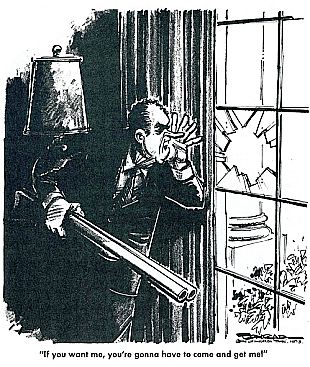
Date Posted:  28 February 2009
Last Update:  10 April 2024
Comments to: jackdoyle47@gmail.com

Article Citation:
Jack Doyle, “Rosie The Riveter, 1940s-2020s,”
PopHistoryDig.com, February 28, 2009.

Twitter: JackDoyle/PopHistoryDig
BlueSky: jackdoyle.bsky.social
_________________________________
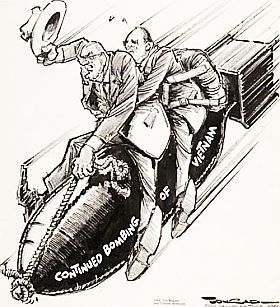
 

Women’s Books at Amazon.com…
 

Liza Mundy’s “Code Girls: The Untold Story of the American Women Code Breakers of World War II,” 2018,  Hachette, 448 pp.  Click for copy.
Liza Mundy’s “Code Girls: The Untold Story of the American Women Code Breakers of World War II,” 2018, Hachette, 448 pp. Click for copy.
Sonia Purnell’s “A Woman of No Importance: ...American Spy Who Helped Win World War II,”  2020, Penguin, 368 pp. Click for copy.
Sonia Purnell’s “A Woman of No Importance: ...American Spy Who Helped Win World War II,” 2020, Penguin, 368 pp. Click for copy.
Keith O'Brien’s 2018 book, “Fly Girls: How Five Daring Women Defied All Odds and Made Aviation History.” 378 pp.  Click for copy.
Keith O'Brien’s 2018 book, “Fly Girls: How Five Daring Women Defied All Odds and Made Aviation History.” 378 pp. Click for copy.


Sources, Links & Additional Information

March 1994 issue of Smithsonian magazine features a story on Rosie the Riveter 'the WWII poster icon.' Click for Rosie items at Amazon.
Click for CD of WWII 'songs that won the war'.
Connie Field’s film on the WW II ‘Rosies,’ called “an unusually tough-minded and intelligent documentary”.
WW II worker I.D. badge, Redstone Arsenal.
'Can't Win Without Them'. Click for posters.
 'Their Real Pin-Up Girl.' Click for copy.
'Their Real Pin-Up Girl.' Click for copy.
Poster for the B-grade 1944 romantic comedy film made by Republic studios. Click for film.
Penny Colman's book, "Rosie the Riveter: Women Working on the Home Front in World War II,” 128 pp, for ages 10 and up. Click for copy.

Transcript of video presentation by Sheridan Harvey, “Rosie the Riveter: Real Women Workers in World War II,” Library of Congress, Washington., D.C., date of presentation not stated.

“Rosie The Riveter,” Wikipedia.org.

“Women’s Work,” Click! The Ongoing Feminist Revo-lution (web exhibit), ClioHistory.org/click/, 2015.

“Northrop Workers Show 35,000 Visitors How Planes Are Built, Los Angeles Times, December 28, 1942, p. A-1.

Norman Rockwell’s “Rosie The Riveter” illustration appears in, The Kansas City Star, June 6, 1943.

Jeannette Guiterrez, “Naomi Parker Fraley, The Original ‘We Can Do It!’ Gal,” Diary of A Rosie.com (site focused on saving Willow Run bomber plant & more), March 11, 2016.

“U.S.O. to Open Women War Workers’ Club,” Los Angeles Times, June 21, 1943, p.13.

“We Can Do It!,” Wikipedia.org.

Aline Law, “Women Do a Lot to Keep ‘Em Flying; Tour of Plane Plant Reveals Proportion High,” Los Angeles Times, November 28, 1943, p. D-13.

“Rosie the Riveter Keeps Her Glamour in Shape; Special Beauty Treatments at Douglas Plant Retain Girls’ Looks for After-War Home Life,” Los Angeles Times, October 1, 1944, p. 12.

“Marilyn Monroe,” Wikipedia.org.

Article on the Norman Rockwell “Rosie the Riveter” painting, Art Digest, April 15, 1945, p. 18.

“Riveter Rosie Asks Man’s Pay, Woman’s Rights,” Los Angeles Times, December 10, 1944, p. 13.

“Women War Workers Quit Plants in Droves,” Los Angeles Times, December 17, 1945, p. 1.

The Life and Times of Rosie The Riveter, a documentary film produced and directed by Connie Field, 1981.

C. Gerald Fraser, “Rosie’s Life after the War Was Not So Rosy,” New York Times, Saturday, May 2, 1981, p. 13.

Maureen Honey, Creating Rosie the Riveter, Amherst: The University of Massachusetts Press, 1984.

Sherna B. Gluck, Rosie the Riveter Revisited, Boston, Twayne Publishers, 1987.

Laura L. Dresser and Sherri A. Kossoudji, “The End of a Riveting Experience: Occupational Shifts at Ford After World War II,” American Economic Review, May 1992.

“Powers of Persuasion: Poster Art From World War II,” The National Archives, From an Exhibit in Washington, D.C., May 1994 – February 1995.

Penny Colman, Rosie the Riveter: Women Working on the Home Front in World War II, Crown Books, 1995.

Dr. Kaylene Hughes, “Women at War: Redstone’s WWII Female Production Soldiers,” paper originally written by Dr. Kaylene Hughes, Senior Historian, U.S. Army Missile Command Historical Office, for presentation to the U.S. Army Historians Conference, June 1994. The paper was adapted to book-format by Dr. Hughes in early 1995.

Tony Marcano, “Famed Riveter In War Effort, Rose Monroe Dies at 77,” New York Times, June 2, 1997.

National Public Radio (NPR), “Rosie the Riveter” [Re: Rose Monroe’s death], All Things Considered, June 2, 1997.

Megan Garrett, “Folk Hero Rosie The Riveter and Women’s Labor,” Lewis & Clark College, Portland, Oregon, April 23, 1998.

U.S. Army Ordnance Corps. “Rosie the Riveter: More Than a Poster Girl,” October 1, 1998.

Joanne Klement, “Stamp Will Honor `Rosie the Riveter,” Knight Ridder/Tribune News Service, November 10, 1998.

M. Paul Holsinger, “Rosie The Riveter,” War and American Popular Culture: A Historical Encyclopedia, 1998.

Judy Larson and Maureen Hart Hennessey, Norman Rockwell: Pictures for the American People, New York, 1999.

Maureen Honey, Creating Rosie the Riveter: Class, Gender, and Propaganda During World War II, University of Missouri Press, 1999.

Shirley Ann Wilson Moore, To Place Our Deeds: The African American Community in Richmond, California 1910-1963, University of California Press, January 2000.

Patricia Leigh Brown, ‘Rosie the Riveter’ Honored in California Memorial,” New York Times, October 22, 2000.

“Rosie Gets Her National Park as Clinton Signs Miller’s Bill,” RosieTheRiveter.org., Wash., DC, October 25, 2000.

Carol Vogel, “Inside Art: And Rosie’s Still Riveting,” New York Times, April 5, 2002.

James Barron, “The Model for ‘Rosie,’ Without Rivets or Brawn,” New York Times, May 19, 2002.

Dara Mitchell, “Riveting Rosie,” Sotheby’s Auction Preview, American Paintings, 1334 York Avenue, New York, May 22, 2002.

James Barron, “Boldface Names: An Admirer Lands ‘Rosie’,” New York Times, May 23, 2002.

Penny Colman, Letter to the Editor, “It’s Just ‘Rosie’,” New York Times, May 24, 2002.

“Rockwell’s Rosie the Riveter Painting Auctioned,” RosieTheRiveter.org

Jeffry Scott, “Efforts To Recognize ‘Rosie the Riveters’ Picks Up Momentum,” The Atlanta Journal-Con-stitution, December 7, 2004.

“Women in War Jobs – Rosie the Riveter (1942-1945),” Ad Council.org.

National Park Service Website, Rosie The Riveter / WWII Homefront National Park.

Aerial view of featured sites at Rosie The Riveter National Park.

“Yank, the Army Weekly,” Wikipedia.org.

Ford Motor Co., “The Real Story of ‘Rosie the Riveter:’ A Ford Motor Company Employee,” Ford.com.

Lincoln Cushing, “‘Rosie the Riveter’ Is Not the Same as ‘We Can Do It!’,” DocsPopuli.org.

James J. Kimble and Lester C. Olson, “Visual Rhetoric Representing Rosie the Riveter: Myth and Miscon-ception in J. Howard Miller’s ‘We Can Do It!’ Poster,” Rhetoric & Public Affairs, Vol. 9, No. 4, Winter 2006, pp. 533-569.

“Rosie The Riveter: Wars and Battles, World War II Home Front,” U-S-History.com.

National Public Radio (NPR), “My Mother’s Story: Dot the Welder,” by Joyce Butler, on Morning Edition by Michael Garofalo; senior producer for StoryCorps Sarah Kramer, December 15, 2006.

Photographs, etc., “Boeing Aircraft Plant Seattle Washington in WW II.”

An excellent collection of “Rosie worker” photographs, culled from the Life magazine archive, is displayed at “The Many Faces of Rosie The Riveter, 1941-1945.”

Margaret Bourke-White, “Women in Steel” (photo-graphs), Life, August 9, 1943.

Carol Vogel, “A Billionaire’s Eye for Art Shapes Her Singular Museum,” New York Times, June 16, 2011.

Website, Crystal Bridges Museum of American Art, Bentonville, Arkansas.

Roger Hurlburt, “Monroe An Exhibit Of The Early Days Of Marilyn Monroe — Before She Became A Legend — Brings The Star`s History In Focus,” SunSentinel.com  (Florida) January 6, 1991.

“David Conover,” Wikipedia.org.

“Marilyn Monroe,” Webster’s Online Dictionary.

“USA Edition, YANK USA 1945,” WarTimePress.com, (re: note on Marilyn Monroe).

Julie Zauzmer, “Rosie The Riveter, 70 Years Later: Women Who Stepped Into Nontraditional Jobs During World War II Remember Their Work With Pride,” Washington Post, Aug. 11, 2014, p. B-1.

Joseph Berger, “Rosalind P. Walter, the First ‘Rosie the Riveter,’ Is Dead at 95,” New York Times, March 5, 2020.
____________________________


“Baseball, 1929”
Jimmie Foxx

Jimmie Foxx, 21 year-old baseball star of the Philadelphia Athletics, featured on Time magazine cover, July 29, 1929.
     In the summer of 1929, the year in which the stock market crashed, America was a nation not expecting disaster.  These were, after all, the “Roaring Twenties” and America was feeling pretty good about itself. A lot of change and prosperity had occurred during the decade. Radio was the emerging national media with about 10 million sets in use.

On Wall Street, the stock of the Radio Corporation of America (RCA) was setting records in 1929, rising from $100-to-$500 a share — a little “irrational exuberance” well before the time when that term would be used to describe another frothy market; the dot-com bubble of the 1990s. 

New businesses in the fields of communication, publishing, news, and entertainment were then on the rise. CBS, Business Week, and Walt Disney were among the emerging enterprises of that day. Talking motion pictures, only a few years old, had become the dominant movie form. 

In May, Hollywood’s first Academy Awards were made in a ceremony that lasted less than a half hour. Wings took the Best Picture award. Across the nation, good times were still rolling along practically everywhere through mid-year. 

Although there may have been a few insiders on Wall Street who saw the economic storm clouds gathering, and there had been a jolt or two in the market in March, there was little hint of the prolonged ill wind to come, especially on Main Street. The market peril and crashing stocks would not arrive until late October. In fact, for most of the year, the nation was simply going about business as usual. And nothing was more business-as-usual than baseball.

Babe Ruth, left, in Philadelphia, Pa. on Sept. 21, 1932. Ruth had set the home run record in 1927 at 60, but in 1932, Jimmie Foxx almost caught him with 58. (AP Photo)


Time’s Cover Story

     In late July, Time magazine ran a baseball cover story about the changing nature of the game, assessing teams and players at mid-season.  Featured on the cover was a young player from the Philadelphia Athletics named Jimmie Foxx, who would also get a share of the ink in Time’s cover story. 

Baseball by then was the nation’s major national pastime and its biggest commercialized sport. But one concern in the game at the time was whether the ball had been juiced, as there had been a noticeable increase in hitting since the games of the 1910s. 

In 1912, “home run” Baker, as he was called, had set the record for round trippers at 13; in 1927, Babe Ruth hit 60. Spalding, the manufacturer of baseballs, insisted the “juiced ball” theory was a myth, but the debate continued.

     Time‘s story also focused on some of the young players creating a sensation that year, among them, 19 year-old Mel Ott of the New York Giants. Up to that point in the season Ott had hit 26 home-runs with a batting average of .324, impressing fans with his speed, outfielding abilities, and strong arm.

But Time reserved its strongest praise for Jimmie Fox, described as “even more sensational than player Ott.” Foxx that July was in a neck-and-neck race for the batting title, as he and rival Heine Manush of the St. Louis Browns, both of whom had averages at the time around the .400 level.

Manush had won the American League batting title in 1926 when he was with the Detroit Tigers, hitting .378. But neither he nor Foxx would win the 1929 title. Lew Fonseca of the Cleveland Indians would take the prize, hitting .369. Still, Foxx hit a very good .354 average that year with 33 home runs.


Farm Boy Foxx

Jimmie Foxx with farm-boy build.
     The year 1929 was Foxx’s first full year in the majors.  He had come up to the Athletics in 1924 when he was about 16, from a minor league team in Maryland’s Eastern Shore League.  Foxx proved himself a versatile player, handling any position except pitching.  Although he preferred third base, with the Athletics in 1928 he became their first baseman, hitting .328 that season in 118 games.

     Foxx was a strong farm boy, from Sudlersville, Maryland; he stood just under six foot weighing in at about 185-pounds with a good build.  He described for Time, with some farm-boy bravado, how life on the farm prepared him for baseball:

…I worked on a farm and I am glad of it.  Farmer boys are stronger than city boys.  When I was 12, I could cut corn all day, help in the wheat fields, swing 200-pound bags of phosphate off a platform into a wagon.  We had games on the farm to test strength and grip.  A fellow had to plant both feet in half a barrel of wheat and then pick up two bushels of wheat or corn and balance them on his shoulders.  Another trick was to lift a 200-pound keg of nails without letting the keg touch your body.  I could do that easily but I never realized then it was helping me train for the Big Leagues.

Rare Hitting Feat

     The year 1929 also marked another extraordinary hitting performance which occurred at Phila-delphia’s other team, the National League’s Philadelphia Phillies. The Phillies that year had a player named Lefty O’Doul, acquired in a trade with San Francisco. O’Doul would hit .398 for the Phillies in 1929, winning the National League batting title. He also had 32 home runs, 122 runs batted in and scored 152 runs.

     But O’Doul’s extraordinary feat that year was his 254 hits in a single season — a rare feat equaled or exceeded only by four other players in professional baseball history: George Sisler of the St. Louis Browns in 1920 with 257 hits; Bill Terry with the New York Giants in 1930 with 254 hits; and Ichiro Suzuki of the Seattle Mariners, who holds the record with 262 hits set in 2004.

     Foxx became known as a good hitter and also for his prodigious home run shots.  He hit drives that soared over the roof of Philadelphia’s old Shibe Park Stadium, and was the only man up to that time to hit a ball over the centerfield wall there, 468 feet from home plate.  He had also become the only man to hit two homers over the roof of Chicago’s Comiskey Park, both of which went some 500 feet, plus.  In New York’s Yankee Stadium, Foxx sent one of Lefty Gomez’s pitches into the third deck.  Time was right about featuring the up-and-comer on its July 1929 cover. Foxx would go on to have a Hall of Fame career.


Foxx Chases Ruth

     In 1932, Jimmie Foxx hit 58 homers and might well have matched or broken Babe Ruth’s record that year with 60 or 61, but he fell off a ladder at home and missed the last few games of the season. In 1933, he took the American League Triple Crown with 48 homers, 163 RBI and .356 batting average. 

When Jimmie Foxx retired in 1945, he ranked No. 2 on the all-time home-run list with 534 home runs, behind only Babe Ruth. He also had 1,922 runs batted in and a lifetime batting average of .325. He won three MVP awards and his 12 consecutive seasons with 30 or more home runs was a major league record that stood for more than 60 years until broken by Barry Bonds in 2004. He also held the record for the youngest player (32 years old) to hit 500 career home runs until eclipsed by Alex Rodriguez of the New York Yankees in August 2007, then a younger 32 year-old.

The A’s faced the Chicago Cubs in the 1929 World Series, including from left: Rogers Hornsby, Hack Wilson, Kiki Cuyler, and Riggs Stephenson, shown at Wrigley Field.


1929 World Series

     In the 1929 World Series, Foxx and the Philadelphia Athletics, with their American League pennant-winning record of 104 wins and 46 losses, played the Chicago Cubs of the National League, with their season record of 98 wins and 54 losses.  Both teams had sell-outs for their home games by late September 1929, with one report noting the Cubs organization had taken in $1.2 million for tickets for its games. 

     The first two games were played at Wrigley Field in Chicago on October 8th and 9th, and the last three at Shibe Park in Philadelphia on October 11th, 12th and 14th. Notable perfor- mances in that series came in Game 1 with aging A’s pitcher Howard Ehmke setting a record of 13 strikeouts that stood until 1953 when Carl Erskine broke it with 14. Jimmie Fox hit one home run in Game 1 and 2 more in Game 2, becoming the first major leaguer to homer in his first two World Series games.

A’s Al Simmons crossing home plate during the 10-run 7th inning of game 4 in the ‘29 Series. Jimmie Foxx, facing out, awaits his turn to hit.
 

“Mack Attack”

     But in game 4 of the Series in Philadelphia, the famous “Mack Attack” of the A’s occurred, named for the A’s legendary manager, Connie Mack. In that game, the Athletics overcame an eight-run deficit by scoring ten runs in the 7th inning after Cubs’ center fielder Hack Wilson lost a fly ball in the sun resulting in a bases-clearing, inside-the-park home run. 

     The A’s went on to win that game and the World Series.  It was perhaps one of the last big hurrahs for the “Roaring Twenties,” an era that had also been characterized by major sports accomplishments and major sports personalities.


Crowd forms on Wall Street after 1929 crash.
Market Crash

     Ten days following the World Series, on October 24th, 1929  in New York, a day known in financial lore as Black Thursday, the Stock Market began its catastrophic plunge.  The euphoria and financial gains of the great bull market were shattered that day, when share prices on the New York Stock Exchange collapsed and continued to fall at an unprecedented rate.   On October 28 and 29 — Black Monday and Black Tuesday, as they came to be known — the decline was even worse, precipitating widespread panic.  The stock collapse continued for a month, sending many investors to financial ruin and marking the onset of hard times.  The country and much of the world then fell into a deep economic depression which continued for years.  By 1932, Wall Street stocks were worth only 11 percent of what they had been in 1929.

As the hard times of the 1930s wore on, star players like Foxx with large salaries became prime trade fare. Foxx shown here after he went to the Boston Red Sox in 1936.
     Baseball, meanwhile, would try to follow its seasonal rhythms, as the business of  sport and life marched on — at least for a time.  In February 1930, professional players were reporting to their respective camps for spring training.  That fall, Jimmie Foxx and the Athletics would again make it to the World Series, this time besting the St. Louis Cardinals, four games to two.

     But even baseball would feel the hard times.  By 1933 the average per game national attendance had fallen to below five thousand.  Baseball tried to raise interest that year by starting the All-Star game, played at mid-season, when the best players from each league were assembled to play against one another.  But as the Great Depression ground on, some owners were unable to pay the salaries of their star players.  The Athletics owner, Connie Mack,  was obliged to sell off a number of his stars, including Jimmie Foxx.  In late 1935, Mack sold Foxx’s contract to the Boston Red Sox.  Foxx then played in Boston for a time, as a teammate of an up-and-coming youngster named Ted Williams.  But Foxx himself still had a few good years ahead.

Jimmie Foxx shown in the late 1930s with Ted Williams. Click for collector plaque photo.

Boston Power

     With Boston in 1938, Foxx had a phenomenal year: he hit 50 home runs and drove in 175 runs with a batting average of .349.  He narrowly missed the Triple Crown but did garner that year’s MVP award.  In 1939 he had another good year, hitting .360.  His 50 home runs at Boston would remain the single-season record for that team until David Ortiz of the Red Sox hit 54 in 2006.  Foxx would finish his career in the 1940s with the Chicago Cubs and Philadelphia Phillies.  He was inducted into the Baseball Hall of Fame in 1951.

Portrait of Foxx. Click for book.
     Foxx did some minor league and women’s baseball coaching in the 1950s, and was also head baseball coach at the University of Miami in 1956 and 1957.  However, a series of bad investments left him broke in 1958.  He died in Miami, Florida in 1967 at the age of 59.  Still today, Foxx remains one of the all-time greats.  In 1999, he was ranked No. 15 on The Sporting News’ list of the 100 Greatest Baseball Players.  In July 2000, he was one of 20 players commemorated with a U.S. postage stamp in the “Baseball Legends” group.

See also at this website, the “Baseball Stories” category page for additional stories on other famous players, including: Jackie Robinson, Yogi Berra, Sandy Koufax, Babe Ruth, Mickey Mantle, Christy Mathewson, Stan Musial, Bill Mazeroski, Lou Gehrig, and Honus Wagner. The “Annals of Sport” page has additional sports stories as well.

Thanks for visiting – and if you like what you find here, please make a donation to help support the research and writing at this website. Thank you. – Jack Doyle

Please Support
this Website

Donate Now

Thank You


___________________

Date Posted:  21 February 2009
Last Update:  28 August 2024
Comments to: jackdoyle47@gmail.com

Twitter: https://twitter.com/PopHistoryDig

Article Citation:
Jack Doyle, “Baseball, 1929: Jimmie Foxx,”
PopHistoryDig.com, February 21, 2009.

___________________________________
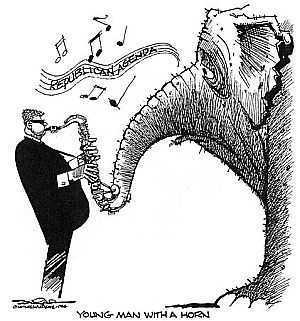

Baseball Books & Film at Amazon.com…


“Baseball: A Film By Ken Burns,” – the definitive history; fully restored  in high definition, 2021, blue-ray or DVD. Click for Amazon.
“Baseball: A Film By Ken Burns,” – the definitive history; fully restored in high definition, 2021, blue-ray or DVD. Click for Amazon.
Ben Lindbergh & Travis Sawchik’s best-selling 2020 book, “The MVP Machine,” building baseball talent. Basic Books, 416 pp. Click for book.
Joe Posnanski’s 2020 best seller, “The Baseball 100,” the 100 greatest players, with foreword by George Will. Simon & Schuster. Click for copy.


Sources, Links & Additional Information

Cover of vintage 1929 World Series program featuring team mascots and photos of Philadelphia Athletics manager, Connie Mack, and Chicago Cubs manager, Joe McCarthy. Click for collectible copy.

“Baseball, Midseason,” Time, Monday, July 29, 1929.

John B. Holway, “Double XX,” BaseballGuru .com.

“Athletics Sold Out for Series; Cub Fans Remit $1,200,000,” New York Times, September 18, 1929, Sports, p. 26.

“Jimmie Foxx,” Wikipedia.org.

PBS, “The Crash of 1929,” American Experi-ence, WGBH, Boston, October 2004.

Associated Press, “Mack Sells Grove and 4 Other Stars; Athletics’ Pilot Breaks up Club in Startling Deals, Receiving $300,000,” New York Times, Wednesday, December 13, 1933, Sports, P.32.

Associated Press, “Red Sox Not to Bid $200,000 for Foxx; Cronin Says Boston Prefers to Spend Money Asked for the Star on Younger Players,” New York Times, Thursday, October 3, 1935, Sports, P. 32.

“Foxx to Sox,” Time, Monday, December 23, 1935.

Mark R. Millikin, Jimmie Foxx: The Pride of Sudlersville, Scarecrow Press, September 2005, 304pp. Click for book.

W. Harrison Daniel, Jimmie Foxx: The Life and Times of a Baseball Hall of Famer, 1907-1967McFarland & Company, September 1996, 256pp. Click for book.

Gregory H. Wolf, et. al., Winning on the North Side: The 1929 Chicago Cubs, Society for American Baseball Research, January 2015, 314pp. Click for Amazon.

Roger Snell, Root for the Cubs: Charlie Root and the 1929 Chicago Cubs, Wind Publications, April 2009, 280pp. Click for book.


Philadelphia Athletics players, Bing Miller, Jimmie Foxx, Al Simmons, and Mickey Cochrane pose for photo prior to Game 1 of the 1929 World Series against the Chicago Cubs.


“When Harry Met Petula”
March-April 1968

Harry Belafonte with Petula Clark on her 1968 TV show.
     In 1968, British pop singer Petula Clark already had a string of top hit records, including, most famously, “Downtown,” a recording that had sold three million copies in America alone.  It was the No. 1 song on the U.S. charts in January 1965. 

“Downtown” was the first of fifteen consecutive Top 40 hits for Clark in the U.S. Among others were: “I Know a Place”, “My Love”, “A Sign of the Times”, “I Couldn’t Live Without Your Love”, “This Is My Song,” and “Don’t Sleep in the Subway” — all in the 1960s. 

The American recording industry honored her with Grammy Awards for “Best Rock & Roll Record” in 1964 for her hit song, “Down-town,” and in 1965 for “Best Contemporary Female Vocal Performance” for the song, “I Know a Place.”

     In early 1968, NBC invited her to host her own TV special in the U.S. Black singer Harry Belafonte was invited to perform on the show and also to join Clark in doing a song or two. 

     Harry Belafonte by then was a well known Jamaican-American musician and actor, who had helped make Calypso and Caribbean music popular throughout the world with his singing in the 1950s. 

Petula Clark shown on popular 1965 album, “Downtown,” with 12 songs. Click for Petula Clark page at Amazon.
Belafonte was known for a number of songs, especially the “Banana Boat Song”, which include a famous “day-o” lyric throughout. 

Belafonte was also known for his support of civil rights and humanitarian causes.  He was an early supporter of the civil rights movement in the 1950s and one of Martin Luther King’s confidants.  He provided financial support for King and his family, and bailed King out of jail when he was arrested in Birmingham, Alabama during a demonstration. 

Belafonte had also raised thousands of dollars to release other imprisoned civil rights protesters.  And he supported voter registration drives, helped organize the historic civil rights March on Washington in 1963, and sang for activists in the summer of 1964 in Greenwood, Mississippi. But in early 1968, Belafonte was in his role as an entertainer, about to appear on television in a guest slot to sing on Petula Clark’s TV show.


Chrysler V.P. Objects

Harry Belafonte and Petula Clark in their ‘controversial’ touching scene that one Chrysler official wanted removed from the performance.
     During a taping of the show in March 1968, while singing a duet with Belafonte titled “On the Path of Glory” — an anti-war song that Clark had composed — she innocently and naturally touched Belafonte’s arm toward the end of the song. 

Doyle Lott, a vice president from Chrysler, the show’s sponsor, was present at the taping.  Lott objected to the “interracial touching” and feared the brief moment would offend Southern viewers — this at a time when racial conflict was a major issue in the U.S. 

Lott insisted they substitute a different take — one with Clark and Belafonte standing well away from each other. But Clark and her husband, Claude Wolff, the executive producer of the show, refused. In fact, they destroyed all the other takes of the song, and delivered the finished program to NBC with the touching segment as part of the show. 

Clark, who had ownership of the special, told NBC that the performance would be shown intact or she would not allow the special to be aired at all.

Harry Belafonte & Petula Clark during 1968 TV performance.
Portion of a March 8, 1968 news story reported by the Associated Press.

The Clark-Belafonte-Chrysler incident soon made news, as several American newspapers reported on the controversy. A New York Times story appeared on March 7, 1968, with the headline, “Incident at TV Taping Irks Belafonte.” In that account, Belafonte stated that Doyle Lott, the Chrysler/ Plymouth executive, had stormed off the set during taping, and that later, representatives for Young and Rubicam, Plymouth’s advertising agency, came back and “read the riot act,” saying their client wanted a retake – which didn’t happen. Other stories on the incident also appeared in the Washington Post, the Los Angeles Times, and by the Associated Press.

Lott’s Detroit office issued a statement in an attempted explanation and mea culpa of his behavior, in which he stated: “I was tired. I over-reacted to the staging, not to any feeling of discrimination. In spite of all the misunderstanding and all the flak today, I am still of the opinion that it is a great show.” Lott also said that he phoned Belafonte at 11:30pm, the night the show was taped, and “told him I thought his performance in the show was excellent and thanked him.”

Belafonte, angered over the incident, also reported that he had rejected “an apology” from Lott. Meanwhile, spokesmen for both sides of the controversy reported that everything had been smoothed over and the special would be aired on NBC on April 2, 1968. Plymouth/Chrysler also issued a statement saying it was very happy with the show and if any incident occurred, “it resulted solely from the reaction of a single individual and in no way reflects the Plymouth Divisions attitude or policy on such matters.” Plymouth and its parent Chrysler, said the statement, “are actively trying to combat all forms of discrimination wherever they exist.” In any case, on March 10, 1968, it was reported that Doyle Lott had been “relieved of his responsibilities.”

The press stories, however, only heightened viewer interest in the show. Advertising for the Petula Clark Show ran all across the country, with some local TV guides featuring Clark and Belafonte on the cover, as shown below. The show was broadcast on April 2nd, 1968 with Clark doing several numbers on her own as well as Belafonte doing several on his own before they sang together. It marked the first time a man and woman of different races exchanged physical contact on American television. When the show finally aired, it received high ratings and critical acclaim.

Cover of weekly TV program guide from the ‘Independent Star-News’ of Pasadena, CA showcasing ‘Petula Show’ with Harry Belafonte, April 1968.


Rave Reviews

     Reviews of the show were mostly positive and many quite laudatory. Wade Mosby of the Milwaukee Journal, writing on April 3rd, described the show as “a steady pleasant hour of song,” calling Clark a “gifted British import,” equally at home with rock and roll and a broad range of ballads.  He also mentioned the “celebrated touching incident,” calling it a “friendly gesture” that “would have gone unnoticed by most viewers” had it not been for the advance press coverage it received.

     Bob Hull writing in the Hollywood Reporter of April 4, 1968, said: “…With her guest Harry Belafonte, Petula sang about the horrors of war in the song ‘On the Path of Glory.’  At the end of it, Miss Clark touched Belafonte’s arm, the incident which, during the taping, resulted in a agency rep who must have been thinking of the white-sheet crowd in the South…”

Barbara Delatiner, in her review of April 3, 1968 for Newsday wrote: “…Miss Clark dominated the well-paced hour. . .whether reprising her hits in a plain studio setting…or joining Harry Belafonte, her lone, magnificent guest star, in that now-celebrated rendition of ‘On the Path of Glory.’  Celebrated?  Yes, because when at the conclusion of this stirring song Miss Clark touched Belafonte’s arm the sponsor’s representative attempted to kill the number.  He was unsuccessful, thankfully.  The number was one of the most moving musical interludes on TV ever.”

C. J. Skreen, writing a positive review of the show for the Seattle Times on April 3, 1968, did not mention the incident, but did say: “…Particularly moving was her duet with Harry Belafonte on an antiwar song, ‘On the Path of Glory.’ ” Kay Gardella of the New York Daily News, offered a glowing review of the show on April 3, 1968:

Petula Clark, performing one of her songs.

…A stylish, sophisticated musical hour with a nice contemporary flavor, excellent sets and a star who can sing like a dream.  That just about sums up Petula Clark’s first American TV special on NBC last night.

Except, perhaps, for the fact that the hour received some unpleasant advance publicity. It was reported that during the taping of the show a sponsor representative objected to Miss Clark and her guest star, Harry Belafonte, touching during a duet of “On the Path of Glory.”

Ironically, this was the highlight of the hour and Belafonte never showed off to such advantage. How unfortunate that anything should have marred this otherwise flawless program….

     Variety magazine, in its review, noted: “… the touching bit which caused such a stir…could only disturb the spiritually sick.”

Some advertising by Plymouth/Chrysler.

     In the wake of the incident, there were a number of news and opinion pieces that appeared in the national press, including a piece in the New York Times by Belafonte himself.  Most of these pieces focused on the issue of racial discrimination in the entertainment industry and beyond. 

In a few cases, in the weeks following the incident, as at CBS, there were directives from on high to writers, producers, directors, and studio programming heads instructing them “to intensify immediately the portrayal and use and actual number of Negroes in entertainment programs.”


Belafonte’s Recounting

     In August 2000, Harry Belefonte did an extensive interview with Ken Paulson at the First Amendment Center at Vanderbilt University in Nashville, Tennessee covering the entire trajectory of Belafonte’s career and his work in civil rights.  In the course of that interview, they briefly revisited The Petula Clark Show incident, in which Belfonte stated, in part:

…Petula Clark and I performed together on television, and it was a heralded show, because Petula Clark was at the height of her fame.  I was in the height of my ascendancy at the time.  We loved the work that each other had done and enjoyed performing together.  And at the end of this particular song that we sang together — at the end of it, because we had successfully achieved what was a rather difficult technical approach to accomplish — she reached over, delighted at the success…that we had technically achieved our goals, and she put her hand on my hand.“…[Petula] said, ‘I will go any way that you want to go, Harry.’ And I said, ‘Well, I’d like to take ’em on.’ And she said, ‘Well, then let’s do that’.”
                     – Harry Belafonte
  The account executive for the sponsor of the show saw the touch and said that he was violated by it.  He did not want it to go forward, that it would upset Southern viewers, and that he wanted that shot struck from the [tape]…  he wanted it edited out.  Petula Clark had the rights to her show, and they called her to tell her quietly what had happened, why…they were having difficulty… [A]nd then she told me what the problem was, and she wanted to know, how did I want to handle it?  And I told her we were in a very peculiar place at that moment.  Here we were, getting on television for the first time, seeking to have black images put in positive ways on television, and that, certainly, to raise a question at this time would not only frighten other people but, perhaps, even cause her — her show to be suspended, and that I would defer to her.  And she said, “I will go any way that you want to go, Harry.”  And I said, “Well, I’d like to take ’em on.”  And she said, “Well, then let’s do that.”  So we took it on, and the press carried a lot of stories on the subject.  She survived.  The show did very well.  Her ratings went up, and she stayed on television for a very long time.

Petula & Harry during the show.

     In September 2008, forty years following the broadcast of the show, Petula Clark and producer Claude Wolff joined moderator Midge Woolsey of WQXR at the Paley Center for Media in New York City to revisit the incident and discuss its impact.

There is also an April 2008 on-camera interview with director/producer Steve Binder about the history of The Petula Clark Show and the Belafonte incident conducted by the Archive of American Television Blog. This interview provides some additional perspective on the show and additional behind-the-scenes objections to Belafonte’s involvement in that show.

     For other stories at this website see the Archive, Home page, or the “Annals of Music” category page. See also the “Noteworthy Ladies” topics page for stories about famous women, and “Civil Rights Topics” for stories in that category. Thanks for visiting — and if you like what you find here, please make a donation to help support the research and writing at this website. Thank you — Jack Doyle

__________________________________
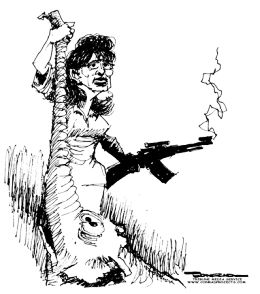
Please Support
this Website

Donate Now

Thank You

Date Posted:   7 February 2009
Last Update:   25 April 2023
Comments to: jackdoyle47@gmail.com

Article Citation:
Jack Doyle, “When Harry Met Petula, March-April 1968,”
PopHistoryDig.com, February 7, 2009.

Twitter: JackDoyle/PopHistoryDig
BlueSky: jackdoyle.bsky.social

__________________________________


Sources, Links & Additional Information

2012 paperback edition of Harry Belafonte book, “My Song: A Memoir of Art, Race, and Defiance,” with  Michael Shnayerson, Vintage, 512 pp, first published by Knopf in 2011. Click for copy.
2012 paperback edition of Harry Belafonte book, “My Song: A Memoir of Art, Race, and Defiance,” with Michael Shnayerson, Vintage, 512 pp, first published by Knopf in 2011. Click for copy.
"Portrait of Petula Clark," DVD. Click for copy.
“Ultimate Petula Clark”' album (2003), remastered with 21 songs. Click for CD.

Robert E. Dallos, “Incident at TV Taping Irks Belafonte,” New York Times, Thursday, March 7, 1968, p. 87.

“Belafonte Reports Sponsor Objected to Petula’s Touch,” Washington Post, March 7, 1968, p. D-24.

“Belafonte Charge of TV Discrimination Denied,” Los Angeles Times, March 8, 1968, p. C-21.

“TV Sponsor Calls Singer To Apologize,” Washington Post, March 8, 1968, p. B-11.

“Auto Aide Relieved in Belafonte Case,” New York Times, Monday, March 11, 1968, p. 82.

Jack Gould, “TV: Petula Clark With a Network Hour of Her Own; She Sings ‘Downtown’ and Other Hits; Belafonte Joins Show on N.B.C. as Guest,” New York Times, Wednesday, April 3, 1968, p. 95.

Barbara Delatiner, “Pet Clark Show an Anachronistic Triumph,”Newsday, April 3, 1968.

Kay Gardella, “That Girl from England Stars in Stylish Special,” New York Daily News, April 3, 1968.

Wade H. Mosby, “TV Puts Final Touch on Charm of Petula,” Milwaukee Journal, April 3, 1968.

C. J. Skreen, “Pet Clark: A Charmer,” Seattle Times, April 3, 1968.

Robert Windeler, “C.B.S. Will Seek to Add Negroes; Network Planning to Pay for New-Show Development,” New York Times, Friday, April 19, 1968, p. 95.

Harry Belafonte, “Belafonte: ‘Look, They Tell Me, Don’t Rock the Boat’,” New York Times, Sunday, April 21, 1968, p. D-21.

“Harry Belafonte ‘Speaking Freely’ Transcript,” First Amendment Center, Recorded, August 26, 2000, in Nashville, Tennessee.

“Petula Clark” and “Harry Belafonte,” Wikipedia.org.

Gail Lumet Buckley, “When a Kiss Is Not Just a Kiss,” New York Times, March 31, 1991.

Interview with Petula Clark Show Producer/Director, Steve Binder, “40th Anniversary of Petula Clark-Harry Belafonte “Touch” Controversy,” TV Interviews Archive Blog, Wednesday, April 9, 2008.

The Official Web Site of Petula Clark, Petula Clark.net.

John J. O’ Connor, “Review/Television; For ‘Heat Of Night,’ A New Life,” New York Times, April 5, 1988.

“A Sign of the Times: The Petula Clark Special with Harry Belafonte,” The Paley Center for Media, New York, NY, Monday, September 22, 2008.

“Harry Belafonte with Petula Clark – ‘On The Path Of Glory’,” YouTube.com.

Andrea Kon, This is My Song: Petula Clark (biography), January 1, 1983, Publisher, W.H. Allen, 256pp. (Click for copy).

Judith E. Smith, Becoming Belafonte: Black Artist, Public Radical, September 2014, University of Texas Press, 368 pp. (Click for copy).


“The Frost-Nixon Biz”
1977-2009

Poster for the 2006-2007 stage play ‘Frost/Nixon’ based on the 1977 television interviews of former President Richard Nixon by British talk show host, David Frost.
     In 1975, former U.S. President Richard Nixon — who had been driven from office the previous year by the Watergate scandal — made a business deal with British celebrity talk show host David Frost. 

Nixon agreed to be filmed by Frost for a series of “tell-us-what-happened” TV interviews.  It would be the first time the American public would see and hear Nixon in a series of no-holds-barred TV interviews since resigning from office.  Nixon agreed to do more than 20 hours of on-camera interviews with Frost and would receive $1 million or more in fees and profits for the sessions. 

Frost pulled something of a coup in getting the exclusive sessions with Nixon, upstaging American journalists and broadcast networks. The initial interviews were compressed and edited into a series of 90-minute TV shows that were then broadcast in May 1977 and watched by millions.  But the interviews themselves were just the beginning. 

In the wake of their initial broadcast, and over the next 30 years, a small cottage industry grew up around the event, spawning a series of books, VHS tapes, DVDs, stage productions, a Hollywood film, and a fair amount of ongoing debate.  Part of that story follows here.


Background

     Richard Nixon had resigned as President of the United States on August 9th, 1974.  His political demise was brought about principally by the 1972 Watergate affair: an illegal caper involving clandestine operatives.  The operatives — later linked to the White House and Nixon’s re-election committee — were caught bugging the Democratic Party’s national headquarters at the Watergate office building in Washington, D.C.  Nixon and his team maneuvered to cover up their connection to this crime in what then became additional illegal activities including obstruction of justice.  A protracted legal and political battle ensued over the next two years between Nixon’s White House and those pursuing the case, including:  the national media and the press, the U.S. Congress, two Special Prosecutors, and the U.S. Supreme Court.  All of this culminated in the July 1974 House Judiciary Committee’s vote approving two articles of impeachment.  Headed for a certain trial in the U.S. Senate, Nixon pre-empted that possibility by resigning.

Nixon’s departing ‘victory’ salute as he leaves the White House by helicopter after his 1974 resignation as President.
     Among indelible impressions of Nixon’s final day at the White House prior to his departure, is the famous raised, double-armed victory salute at the helicopter door just prior to lift off from the White House lawn. Vice-President Gerald Ford, who then became president, gave Nixon a full presidential pardon a month later in September 1974, an act which later helped Democrat Jimmy Carter beat Ford in the November 1976 presidential election.  Nixon thereafter secluded himself at his San Clemente, California residence where he would begin work on his memoirs.  Many in the nation would have just as soon forgotten Nixon at that point.  Yet there were still many unanswered questions about the former president and his role in Watergate, and for some, no justice served since Congress had not taken Nixon to trial and President Ford had given him a full pardon.  In the news media, meanwhile, there was keen interest in getting Nixon on the record to tell his story — but many believed he would never talk.  One who was challenged by that possibility, however, was David Frost.


Golden Boy vs. Nixon

     David Paradine Frost had been something of TV phenom in Britain during the early 1960s.  In his 20s, he was among a group of young entertainers that broke new ground on British television with an aggressive weekly show of satire called That Was the Week That Was.  Begun in 1962, the show lampooned the British Establishment and became a popular success.  Frost and the show caught America’s attention in 1963 when they paid serious homage to assassinated President John F. Kennedy.  A U.S. version of the show, also featuring Frost, ran on NBC from January 1964 to May 1965.  He soon had various TV business interests and other TV talk shows in Britain and the U.S.  The David Frost Show ran in America for three years and won a primetime Emmy in 1970. During that time, Frost had become a trans-Atlantic jet setter, also known as something of a playboy, dating a range of models and movie stars, among them: Diahann Carroll, Karen Graham, Carol Lynley, Liv Ullmann, and Bibi Andersson.  Wrote People magazine of Frost in 1975: “Once he flew 60 friends to Bermuda just for lunch, and it delighted him the time he beat out a Rothschild for a chartered jet to take a girlfriend to dinner in Vienna.”

David Frost, in 1968 photo with a young Candice Bergen, was known as something of jet-setter and playboy in the 1960s and 1970s.  -Time, Inc. photo
David Frost, in 1968 photo with a young Candice Bergen, was known as something of jet-setter and playboy in the 1960s and 1970s. -Time, Inc. photo
     But Frost lost his U.S. talk show in 1972 and, by the mid-1970s, many believed his best years were behind him.  By then, David Frost was a well-heeled businessman with many interests — from packaging TV shows and pop concerts, to film production and book publishing plus an investment company.  By May 1977 he had an estimated worth of at least $5 million.  His Paradine, Ltd. conglomerate grossed an estimated $20 million a year.  Among projects underway in 1977 were: The Slipper and the Rose, an eight-part Cinderella movie musical; Crossroads of Civilization, a TV series with a $2.5 million budget shot in Iran; and Nessie, a $7.5 million sci-fi film on the Loch Ness monster.

     Richard Nixon, meanwhile, in addition to being a disgraced former president, was in debt big time.  He had huge legal bills and back taxes to pay.  By 1975, Nixon was angling for book deals and possible TV interviews as ways to raise funds.  But Nixon did not want any of the well-known U.S. journalists to interview him, such as Walter Cronkite, David Brinkley, or others from the CBS show, 60 Minutes.  Nixon also planned to extract a handsome price for any interview, and that would help rule out some of the American networks that had policies prohibiting payment for interviews.  In fact, about that time, a controversy had broken out over CBS paying H.R. Haldeman, a Nixon aide, for an on-camera interview, prompting charges of “check-book journalism.”

David Frost in 1968 at a London news stop – by then  a TV personality with business interests in news & media.   - Time, Inc., photo.
David Frost in 1968 at a London news stop – by then a TV personality with business interests in news & media. - Time, Inc., photo.
     David Frost, meanwhile, had Nixon in his sights.  Frost, in fact, had pursued Nixon almost from the day he left the White House.  Frost was in Australia the day Nixon resigned in August 1974, and while there, he placed a call to Nixon with an offer for a TV contract.  Nixon showed no interest then and put Frost off for about a year or so, saying he would likely be unavailable.

     In July 1975, after Nixon signed his $2 million deal with Warner Books for his memoirs, his literary agent, Irving Lazar, also began talking with the TV networks in New York about a Nixon interview.  NBC was interested and had placed a bid to interview Nixon, reportedly at $400,000.  Frost then made Nixon a new offer: $500,000 for four shows.  Frost made his offer through Nixon’s former communications chief, Herb Klein, then an executive at Metromedia in Los Angeles.  But Nixon’s agent, Irving Lazar, wanted more money.  Frost then raised his offer to $600,000 also giving Nixon a cut of the profits.  NBC did not match Frost’s bid.  Frost then had his deal.  Lawyers for each side hashed out the details in a 13-page contract.  Nixon would be available for at least 20 hour-long taping sessions that would later be edited for a series of TV shows.  The interviews would not air before 1977 so as not to be a factor in the 1976 elections. Under the terms of the contract, Nixon would have no control over content of questions or editing, and would not see any of the questions in advance.  “Nixon can, of course, refuse to answer questions,” Frost told reporters.  “But then I am able to film his refusing to answer.”

     When the deal was first announced, Nixon’s agent, Irving Lazar, said that Nixon had chosen Frost because of Frost’s “unique and wide-ranging experience.”  But there was more to it than that.  Nixon also wanted a certain kind of journalist, one who was not confrontational, and one who Nixon thought he could out-smart.  David Frost, then 36, appeared to fit the bill.  Hearing of the Frost deal, some critics immediately tagged Nixon as opting for “show business” rather than the “news business.” “Can David Frost succeed where John Sirica, Archibald Cox and Leon Jaworski failed?”
            –Time, May 1977
And Frost, they implied, was no news heavyweight, known for throwing soft balls rather than being a tough interrogator.  Yet Frost was no stranger to the political arena, and had interviewed British heads of state and other world leaders.  He had also interviewed Nixon in 1968, and in1970 was invited to the Nixon White House to emcee a Christmas party.  Frost’s relaxed style of interviewing, some believed, was effective in extracting information without being overbearing.  On The David Frost Show, he once interviewed Ted Sorensen, former aide to President John Kennedy, who said on the air that Senator Ted Kennedy, a longtime friend, could not run for President in the aftermath of his 1969 Chappaquiddick incident.  Still the conventional wisdom among newsmen and others at the time was that Frost was not tough enough for Nixon, and would not succeed in doing what a federal judge and two special prosecutors failed to do.  “Can David Frost succeed where John Sirica, Archibald Cox and Leon Jaworski failed?,”asked Time magazine.


Images At Stake

     The planned televised interviews — with a huge audience likely in the U.S. and abroad — had seeming benefits for both Nixon and Frost.  For Nixon, the interviews would present a chance to salvage his presidential reputation, make his case to the American public, and review his diplomatic and other presidential accomplishments.  For Frost, the interviews would be a chance to prove himself a serious interviewer and also elevate his celebrity credentials.  But for both men there were risks as well.  Television in the past had both hurt and helped Nixon — saving him in 1956 in his “Checkers Speech” which kept him on the Eisenhower ticket, and costing him dearly in 1960s with a poor showing in the first televised presidential debate with John F. Kennedy.  Frost, too, faced the risk of failure with Nixon in front of millions, which could sink the remainder of his career.  But both men were ambitious, even in their respective desperations.  Frank Langella, who would later play Nixon in both the stage and film versions of Frost/Nixon, observed that the two men had much in common by 1977.  They both had their share of critics, Langella noted, and both had reputations that were sullied or damaged.  They were also “two men born of modest circumstances who had immortal yearnings,” Langella added. “They had a great desire to get to the top of the ladder — and stay there.”

David Frost and Richard Nixon during one of the taping sessions in California, March-April 1977.
     The taping sessions were conducted north of San Clemente, California in the home of a Nixon friend and ran over 12 days, producing more than 28 hours of taped conversation.  Frost had come to the U.S. for the duration, lodging at the Beverly Hills Hilton.  Nixon’s home then was in San Clemente.  The preparation for the interviews was extensive and both sides had their respective “teams” of experts and helpers.  Nixon had then been working on his memoirs, becoming familiar with all the details of his days in office, and was also being helped by a team of researchers including Colonel Jack Brennan, his former White House military aide; Ken Khachigian his head researcher; Ray Price, a former speechwriter; Diane Sawyer, a former White House press assistant (and later famous TV correspondent); and Richard Moore, a former White House aide.  Nixon’s people were told what topics would be covered, but never the questions to be asked. 

Richard Nixon and James Reston, Jr. in 1977.  Reston would later write the 2007 book, ‘The Conviction of Richard Nixon,’ an inside account of the Frost-Nixon interviews  (see later, below).
Richard Nixon and James Reston, Jr. in 1977. Reston would later write the 2007 book, ‘The Conviction of Richard Nixon,’ an inside account of the Frost-Nixon interviews (see later, below).
     Frost had a research group that included Robert Zelnick, 36, a Washington journalist and lawyer, and James Reston, Jr., 36, who had co-authored with Frank Mankiewicz, Perfectly Clear: Nixon from Whittier to Watergate.  Reston was the son of the New York Times editor, James Reston, and would write Frost a lengthy strategy memo that 30 years later would become part of a book about the interviews.  Washington freelance writer Phil Stanford was also on Frost’s team, as well as John Birt, 32, a London TV news executive, who produced and directed the taping sessions and the TV production.  Among Frost’s financial backers for his initial production costs was investment banker James Goldsmith who also owned the French magazine L’Express.

     The taped interviews occurred between March 23rd and April 20th, 1977, and they covered every aspect of Nixon’s presidency.  The taped sessions were then edited and compressed into initially four 90-minute TV shows, and later, a fifth show.  The sessions with Nixon, however, proved frustrating to Frost and his team, as initially they failed to extract much of anything that was really new.  As the contracted hours ticked by, sometimes with Nixon running on with long-winded answers, Frost’s team worried that the whole enterprise would fall flat for lack of getting what they had hoped from Nixon: some admission of guilt and remorse for what he had done.  Finally, in two sessions near the end of the taping, Frost became more aggressive and cornered Nixon into a confession of guilt and an apology.  These would be the sessions edited for use as the “Watergate” segment; the show that would air first in the series, on May 4th, 1977.


Broadcast & Advertising

May 1977 Time magazine cover story on the Frost-Nixon interviews. Click for copy.
     At first, it was unclear whether the broadcast of the Frost-Nixon interviews would even get off the ground or have an adequate outlet, especially since the major U.S. networks then — ABC, CBS, and NBC — were not involved.  Frost, however, found Syndicast, a New York-based independent TV marketing agency, to help sell broadcasting rights to individual stations, and eventually put together a network of 145 U.S. stations and 14 foreign outlets to air the broadcasts.  Next was the matter of sponsors and advertisers.  Initially, advertising sold poorly, but later picked up.  In the immediate run-up to the first televised interview with Nixon, there was a heavy round of publicity.  That week, major articles appeared on the interviews in Time, Newsweek and TV Guide.  And on the Sunday evening preceding the first interview, CBS’s popular show 60 Minutes ran a 20-minute segment on the upcoming interview with Mike Wallace interviewing Frost about what he found.

TV Guide also gave the Frost-Nixon interviews top billing in May 1977.
     Time magazine, in fact, had arranged with Frost early on to have its Washington news editor, John Stacks, cover Frost’s taping of Nixon.  Stacks, went to California for six weeks and essentially lived with the Frost staff in their Beverly Hills Hilton headquarters, looking at video tapes, interviewing Frost, and observing his staff strategy sessions.  Time photographer John Bryson was also the only photographer allowed at the taping sessions and took a number of photos that appeared with Time‘s story.  In covering the story, Stacks would observe that an “incredible number of Nixons” emerged from the former President during the interviews. “The shows are a kind of video psychobiography,” Stacks explained in the issue that hit newstands the week of the first interview.

Local TV station ad for Frost-Nixon interviews, May 1977.
     As the interviews aired in May 1977, America was still reeling from the Watergate scandal and the Vietnam War.  Jimmy Carter was then in his first few months as President. Inflation was on the rise as energy price shocks from Mideast Arab oil restrictions continued to ripple through the economy. In music, Fleetwood Mac’s Rumours album had been released a few months earlier, and in the U.K. the punk rock group, The Clash, had come on the scene.  A movie named Star Wars would debut in Hollywood on May 25th and, in June, the Apple II personal computer would go on sale.

     The first of the Nixon interviews — and the most forceful for Frost — which had actually come near the end of the taping sessions, aired on Wednesday evening, May 4th,1977 at 8:30 pm.  It was during this session that Nixon made his admission about his part in the Watergate scandal:  “I let down my friends,” he said.  “I let down the country.  I let down our system of government, and the dreams of all those young people that ought to get into government but now think it too corrupt… I let the American people down, and I have to carry that burden with me the rest of my life.”  That episode drew 45 million viewers, about a third of the U.S. viewing public at the time. It was then the largest television audience in history for a public affairs telecast.

“I Have Impeached Myself”
Excerpt: Frost/Nixon interview, May 4th, 1977


FROST:     …You got caught up in something and it snowballed?

NIXON:     It snowballed, and it was my fault. I’m not blaming anybody else. I’m simply saying to you that as far as I’m concerned, I not only regret it. I indicated my own beliefs in this matter when I resigned. People didn’t think it was enough to admit mistakes; fine. If they want me to get down and grovel on the floor; no, never. Because I don’t believe I should. On the other hand there are some friends who say, “just face ’em down. There’s a conspiracy to get you.” There may have been. I don’t know what the CIA had to do. Some of their shenanigans have yet to be told, according to a book I read recently. I don’t know what was going on in some Republican, some Democratic circles as far as the so-called impeachment lobby was concerned. However, I don’t go with the idea that there … that what brought me down was a coup, a conspiracy etc. I brought myself down. I gave them a sword, and they stuck it in and they twisted it with relish. And I guess if I had been in their position, I’d have done the same thing.

Nixon:1977 interview.

FROST:     Could you just say, with conviction, I mean not because I want you to say it, that you did do some covering up. We’re not talking legalistically now; I just want the facts. You did do some covering up. There was some time when you were overwhelmed by your loyalties or whatever else, you protected your friends, or maybe yourself. In fact you were, to put it at its most simple, part of a cover-up at times.

NIXON:     No, I again respectfully will not quibble with you about the use of the terms. However, before using the term I think it’s very important for me to make clear what I did not do and what I did do and then I will answer your question quite directly. I did not in the first place commit the crime of obstruction of justice, because I did not have the motive required for the commission of that crime.

FROST:     We disagree on that.

NIXON:     I did not commit, in my view, an impeachable offense. Now, the House has ruled overwhelmingly that I did. Of course, that was only an indictment, and it would have to be tried in the Senate. I might have won, I might have lost. But even if I had won in the Senate by a vote or two, I would have been crippled. And in any event, for six months the country couldn’t afford having the president in the dock in the United States Senate. And there can never be an impeachment in the future in this country without a president voluntarily impeaching himself. I have impeached myself. That speaks for itself.

FROST:     How do you mean “I have impeached myself”?

NIXON:     By resigning. That was a voluntary impeachment. Now, what does that mean in terms of whether I … you’re wanting me to say that I participated in an illegal cover-up. No. Now when you come to the period, and this is the critical period, when you come to the period of March 21 on, when Dean gave his legal opinion, that certain things, actions taken by, Haldeman, Erlichman, [attorney general John] Mitchell et cetera, and even by himself amounted to illegal coverups and so forth, then I was in a very different position. And during that period, I will admit, that I started acting as lawyer for their defense. “…And under the circum- stances I would have to say that a reasonable person could call that a cover-up. I didn’t think of it as a cover-up. I didn’t intend it to cover-up.”
                                       – Richard Nixon
I will admit, that acting as lawyer for their defense, I was not prosecuting the case. I will admit that during that period, rather than acting primarily in my role as the chief law enforcement officer of the United States of America, or at least with the responsibility of law enforcement, because the attorney general is the chief law enforcement officer, but as the one with the chief responsibility for seeing that the laws of the United States are enforced, that I did not meet that responsibility. And to the extent that I did not meet that responsibility, to the extent that within the law, and in some cases going right to the edge of the law in trying to advise Erlichman and Haldeman and all the rest in how best to present their cases, because I thought that they were legally innocent, that I came to the edge. And under the circumstances I would have to say that a reasonable person could call that a cover-up. I didn’t think of it as a cover-up. I didn’t intend it to cover-up.

NIXON:     Let me say, if I intended to cover-up, believe me, I’d have done it. You know how I could have done it so easy? I could have done it immediately after the election simply by giving clemency to everybody. And the whole thing would have gone away. I couldn’t do that because I said clemency was wrong. But now we come down to the key point and let me answer it in my own way about how I feel about the American people. I mean about whether I should have resigned earlier or what I should say to them now. Well, that forces me to rationalize now and give you a carefully prepared and cropped statement. I didn’t expect this question, frankly though, so I’m not going to give you that. But I can tell you this …

Nixon:1977 interview.
FROST:     Nor did I.

NIXON:     I can tell you this. I think I said it all in one of those moments that you’re not thinking sometimes you say the things that are really in your heart. When you’re thinking in advance and you say things that are, you know, tailored to the audience. I had a lot of difficult meetings in those last days and the most difficult one, the only one where I broke into tears, frankly except for that very brief session with Erlichman up at Camp David, that was the first time I cried since Eisenhower died. I met with all of my key supporters just the halfhour before going on television. For 25 minutes we all sat around the Oval Office, men that I had come to Congress with, Democrats and Republicans, about half and half. Wonderful men. And at the very end, after saying thank you for all your support during these tough years, thank you particularly for what you have done to help us end the draft, bring home the POWs, have a chance for building a generation of peace, which I could see the dream I had possibly being shattered, and thank you for your friendship, little acts of friendship over the years, you sort of remember with a birthday card and all the rest. Then suddenly you haven’t got much more to say and half the people around the table were crying. And I just can’t stand seeing somebody else cry. And that ended it for me. And I just, well, I must say I sort of cracked up. Started to cry, pushed my chair back.

NIXON:     And then I blurted it out.  And I said, “I’m sorry. I just hope I haven’t let you down.” Well, when I said: “I just hope I haven’t let you down,” that said it all. I had: I let down my friends, I let down the country, I let down our system of government and the dreams of all those young people that ought to get into government but will think it is all too corrupt and the rest.“Yep, I let the American people down. And I have to carry that burden with me for the rest of my life. My political life is over.”
                        – Richard Nixon
  Most of all I let down an opportunity I would have had for two and a half more years to proceed on great projects and programs for building a lasting peace. Which has been my dream, as you know since our first interview in 1968 before I had any, when I thought I might win that year. I didn’t tell you I thought I might not win that year, but I wasn’t sure. Yep, I let the American people down. And I have to carry that burden with me for the rest of my life. My political life is over. I will never yet, and never again, have an opportunity to serve in any official position. Maybe I can give a little advice from time to time. And so I can only say that in answer to your question that while technically I did not commit a crime, an impeachable offense — these are legalisms. As far as the handling of this matter is concerned, it was so botched up, I made so many bad judgments. The worst ones mistakes of the heart rather than mistakes of the head, as I pointed out, but let me say a man in that top judge job, he’s got to have a heart, but his head must always rule his heart….


Obstruction of Justice

     Frost also probed Nixon about directing his aides to have the CIA ask the FBI to stop following certain leads in its investigation of Watergate.  In this exchange, Nixon admitted that an earlier claim he’d made — that he was only trying to keep the FBI out of national security matters — was “untrue.”  Actually, Nixon in this case was trying to stop the FBI from tracing Watergate money back to his political committee.  Nixon later tells Frost in the interview, “It was a grievous mistake to have gotten the CIA involved in this thing.”  Still, in this exchange, Nixon insists this was not a criminal act.  But Frost replies that Nixon knew that criminals would be protected.  Nixon objects and tries to qualify, but Frost persists: “An obstruction of justice is an obstruction of justice if it’s for a minute or five minutes…”  On the televised portion of the interviews at this point, Nixon appears shaken.  He then says his “absence of motive” precludes any criminal intent.  But Frost jumps on that and surprises Nixon, suggesting the ex-president’s knowledge of the law is incomplete.  “The law states,” says Frost, “that when intent and foreseeable consequences are sufficient, motive is completely irrelevant.”  Nixon says nothing and appears uncomfortable.

     After the May 4th interview, the next three televised interviews ran in the same evening time slot, and were spaced evenly over the next three weeks, on May 12th, May 19th, and May 25th.  In the May 19th session, for example, Nixon asserted that a president could order actions such as burglaries and eavesdropping against American dissidents — actions which he termed “legal” when the president ordered them.

Presidential Power
Excerpt: Frost/Nixon interview, May 19, 1977


FROST:     …The wave of dissent, occasionally violent, which followed in the wake of the Cambodian incursion [re: Vietnam War], prompted President Nixon to demand better intelligence about the people who were opposing him. To this end, the Deputy White House Counsel, Tom Huston, arranged a series of meetings with representatives of the CIA, the FBI, and other police and intelligence agencies.

1977 interview.
1977 interview.

FROST:     These meetings produced a plan, the Huston Plan, which advocated the systematic use of wiretappings, burglaries, or so-called black bag jobs, mail openings and infiltration against antiwar groups and others. Some of these activities, as Huston emphasized to Nixon, were clearly illegal. Nevertheless, the president approved the plan. Five days later, after opposition from J. Edgar Hoover, the plan was withdrawn, but the president’s approval was later to be listed in the Articles of Impeachment as an alleged abuse of presidential power.

FROST:     So what in a sense, you’re saying is that there are certain situations, and the Huston Plan or that part of it was one of them, where the president can decide that it’s in the best interests of the nation or something, and do something illegal.

NIXON:     Well, when the president does it that means that it is not illegal.

FROST:     By definition.
“Well, when the president does it that means that it is not illegal.”
                         – Richard Nixon

NIXON:     Exactly. Exactly. If the president, for example, approves something because of the national security, or in this case because of a threat to internal peace and order of significant magnitude, then the president’s decision in that instance is one that enables those who carry it out, to carry it out without violating a law. Otherwise they’re in an impossible position.

FROST:     So, that in other words, really you were saying in that answer, really, between the burglary and murder, again, there’s no subtle way to say that there was murder of a dissenter in this country because I don’t know any evidence to that effect at all. But, the point is: just the dividing line, is that in fact, the dividing line is the president’s judgment?

1977 interview.
1977 interview.
NIXON:     Yes, and the dividing line and, just so that one does not get the impression that a president can run amok in this country and get away with it, we have to have in mind that a president has to come up before the electorate. We also have to have in mind, that a president has to get appropriations from the Congress. We have to have in mind, for example, that as far as the CIA’s covert operations are concerned, as far as the FBI’s covert operations are concerned, through the years, they have been disclosed on a very, very limited basis to trusted members of Congress. I don’t know whether it can be done today or not.

FROST:     Pulling some of our discussions together, as it were; speaking of the Presidency and in an interrogatory filed with the Church Committee, you stated, quote, “It’s quite obvious that there are certain inherently government activities, which, if undertaken by the sovereign in protection of the interests of the nation’s security are lawful, but which if undertaken by private persons, are not.” What, at root, did you have in mind there?

NIXON:     Well, what I, at root I had in mind I think was perhaps much better stated by Lincoln during the War between the States. Lincoln said, and I think I can remember the quote almost exactly, he said, “Actions which otherwise would be unconstitutional, could become lawful if undertaken for the purpose of preserving the Constitution and the Nation.”“…[I]s there anything in the Constitution or the Bill of Rights that suggests the president is that far of a sovereign, that far above the law?”           – David Frost

NIXON:     Now that’s the kind of action I’m referring to. Of course in Lincoln’s case it was the survival of the Union in wartime, it’s the defense of the nation and, who knows, perhaps the survival of the nation.

FROST:     But there was no comparison was there, between the situation you faced and the situation Lincoln faced, for instance?

NIXON:     This nation was torn apart in an ideological way by the war in Vietnam, as much as the Civil War tore apart the nation when Lincoln was president. Now it’s true that we didn’t have the North and the South…

FROST:     But when you said, as you said when we were talking about the Huston Plan, you know, “If the president orders it, that makes it legal”, as it were:  Is the president in that sense — is there anything in the Constitution or the Bill of Rights that suggests the president is that far of a sovereign, that far above the law?

NIXON:     No, there isn’t. There’s nothing specific that the Constitution contemplates in that respect. I haven’t read every word, every jot and every tittle, but I do know this: That it has been, however, argued that as far as a president is concerned, that in war time, a president does have certain extraordinary powers which would make acts that would otherwise be unlawful, lawful if undertaken for the purpose of preserving the nation and the Constitution, which is essential for the rights we’re all talking about.


Frost & Nixon Gain

People magazine put Frost and Nixon on the cover of its May 23rd 1977 issue, around the time of the 4th televised interview.
     The televised interviews covered a full range of topics from Nixon’s presidency, not only Watergate and Vietnam.  Although there were some sharp exchanges, and Nixon did admit his wrongdoing — however obliquely — there was also enough of Nixon’s accomplishments on view that he appeared to have redeemed a bit of his political stature, also drawing sympathy from some viewers as later Gallup public opinion polling would confirm.  In the end though, the Gallup poll taken after the interviews found that 72 percent of those who watched believed Nixon was guilty of obstruction of justice and other impeachable crimes.

     For David Frost, the interviews were a major success, if only because Frost was the single journalist then to have such an extended and exclusive on-camera arrangement with the ex-president.  The interviews gave Frost broad national and international exposure and elevated his celebrity.  He was praised by some in the news media, and offered begrudging respect by others who had wanted the Nixon interviews.  Some news executives conceded that Frost’s style was perhaps better than a more aggressive inquisitor such as 60 Minutes’ Mike Wallace.  Barbara Walters reportedly cabled Frost after the Watergate session aired, saying: “I burst with pride for you last night.  You were superb. Bravo!”

Cover of 1978 David Frost book telling 'behind the scenes' story of his interviews with fallen U.S. President, Richard M. Nixon. Click for book.
The Guardian of London ran a May 27, 1977 story with the headline, “Frost’s Standing Rises in the U.S.,” in which Washington correspondent Jonathan Steele wrote: “[T]he consensus is that he performed superbly, not only as a cross-examiner but in drawing out Mr Nixon’s barely repressed desire for maudlin self-analysis.”

     Frost also stood to make a fair amount of money from the interviews.  In fact, even before the broadcasts were aired, the rights to foreign broadcasts alone had netted Frost $1 million.  It was expected he would make more than $2 million in final profits.  And given Nixon’s share of those profits, as specified in the contract, he too would make $1 million or more for the entire enterprise.

     But there was still more to come for David Frost in the way of new opportunities, especially now that his reputation had been raised.  But first, Frost would also get additional mileage from the interviews themselves.  A fifth televised interview with Nixon was telecast in early September 1977 which focused on, among other things, the White House tapes that played a key role in Nixon’s downfall. Subsequent books and conflicting remembrances by Nixon aides H.R. Haldeman, John Erlichman and others kept the interviews and their aftermath in the news. And Frost himself added to this by writing a “behind-the-scenes” book on the interviews.


Paperback edition of Frost's 'behind-the-scenes' book. Click for copy.

January 1978

Frost’s Book

     Frost’s book was published in January 1978 in London and New York.  It used the title, “I Gave Them A Sword”  (see cover above).  The principal title line came from a phrase Nixon had used during the interviews.  The book was published in hardback editions in London by Macmillan and in New York by Morrow.  The book’s subtitle promised it would go behind the scenes of the Nixon interviews, which Frost did in the writing.  

The 320-page book covered the story of the Nixon interviews from the beginning: how Frost first came up with the idea of interviewing Nixon; how he pursued and landed the deal; and how his financiers were became wary of the project.  It also recounted the sessions with Nixon, the strategies involved on both sides, and what went on over the many days of taping.  Part II of the book included the edited transcripts from the five TV telecasts, titled in the book as: “Watergate”, “The Huston Plan”, “Chile”, “Vietnam”, and “Kissenger”.  The Frost book also revealed some newsworthy items, including the assertion that Alabama Gov. George G. Wallace was asked by Nixon to help him get the vote of an Alabama congressman to vote against impeachment.  Wallace’s refusal to do this, helped clinch Richard Nixon’s decision to resign the presidency, according to Frost.

Paperback edition, back cover.
     One review in the New York Times Book Review called Frost’s book “Compelling. Dramatic. Excruciating.”  A reviewer for King Features Syndicate added: “Fascinating!  Frost’s insights into his own and Nixon’s behavior are truly compelling.  The assorted and assembled clippings from the cutting room floor are far more intriguing than the television version.”  A Vintage/Ballantine paperback version of the book followed the hardback.  The paperback version, as shown here above right and left with front and back covers, played up “The Nixon Interviews” on the cover more prominently than the hardback edition.  The publishers also hyped the “insider’s accounting” of the process on the book’s back cover.

     Frost by this time, had moved on to other ventures and would compile a long resume of media outings through the 1980s and early 1990s.  Among his various U.S. and U.K. TV shows and specials were the following: Headliners With David Frost (1978), David Frost’s Global Village (1979-82), The Bee Gees Special (1979), The Kissinger Interviews (1979), The Shah Speaks (1980), The American Movie Awards (1980), Elvis — He Touched Their Lives (1980), The Royal Wedding (1981), Onward Christian Soldiers (1981), David Frost Presents the International Guinness Book of World Records (1981-86), Frost on Sunday (1981-92), Good Morning Britain (1982), Rubinstein at 95 (1982), Pierre Elliott Trudeau (1982), Frost Over Canada (1982-83), The Search for Josef Mengele (1985) The Guinness Book of Records Hall of Fame (1986-88), The Next President with David Frost (1987-88), Entertainment Tonight (1987-88), Through the Keyhole (1987-93), and in 1989, The President and Mrs. Bush Talking with David Frost.

Shown above is Vol.1 of the 1992 Universal Studios five-volume set. Click photo for box set of all 5 VHS tapes.

November 1992

Home Video Series

     In November 1992, at the 20th anniversary of the Watergate scandal, MCA/Universal studios released “The Nixon Interviews With David Frost” in VHS home video format. The VHS format had been around since the late 1970s, but had become especially popular by the early 1990s. 

MCA/Universal issued a five-volume series of cassettes, each then selling for $19.98. In the series, which is still available today, each volume covers the interviews as they were broadcast in 1977, organized generally around specific themes. Volume 1, titled “Watergate,” covers the Watergate scandal primarily, the payment of “hush money” to certain principals in the scandal, and related issues including impeachment. Volume 2, “The World,” covers Nixon’s international diplomacy and foreign policy, his dealings with China and Russia, his meetings with Mao and Brezhnev, and his relationship with Henry Kissinger. Volume 3, “War at Home and Abroad,” focuses on the Vietnam War, protests at home, and the effect of the War on Nixon’s presidential career. It also covers wartime strategy, wiretaps, “dirty tricks” and organized harassment to quell domestic protest. Volume 4, “The Final Days,” covers the last moments of a failed presidency, the pardon from president Ford, and the work of Washington Post reporters Bob Woodward and Carl Bernstein. Volume 5 is titled “The Missing 18 1/2 Minutes and More,” and covers the issue of a key missing segment from the White House tape recording system during the Watergate scandal and also the stories of Attorney General John Mitchell and his wife Martha.

“Blow The Safe And Get It!”
Nixon-1971

     David Frost’s 1977 interviews, of course, did not pry open all of Nixon’s nefarious deeds or the full force of his audacity.  As more of the official record would come to light in subsequent years, the full picture of what Nixon was about would become even clearer.  A tape that was released in 1996, for example, covered a meeting where Nixon and top aides Bob Haldeman and John Ehrlichman, along with Henry Kissinger, are discussing some documents that are held at the Brookings Institution in Washington — documents that could be embarrassing to the Democrats. Nixon reminds this group that something along the lines the Tom Huston’s plan of black-bag break-ins and dirty tricks might be in order. “You remember Huston’s plan?,” says Nixon. “Implement it,” he says. Kissinger adds at one point in this conversation, “Now Brookings has no right to have classified documents.” Then says Nixon: “Goddamn it, get in and get those files. Blow the safe and get it.” This is 1971, one year before the Watergate break-in of 1972, when the “black-bag” crew were about bugging Democratic Party campaign headquarters.

1992 & Beyond

Watergate’s “Legs”

     At the 20th anniversary of the Watergate scandal in 1992, there was a news and media revival around the scandal and all things Nixon. Seminars, talk shows, and new books came forth on Nixon and Watergate. 

This activity has more or less repeated itself in subsequent years as Watergate principals have died off, confidential sources have come to light, or new information has surfaced from national and personal archives. Among some of these events, for example, have been: the death of Richard Nixon in 1994; newly released tapes in 1996; the 30th anniversary of Watergate break-in in 2002; the 30th anniversary of Nixon’s resignation in 2004; the revelation that FBI agent Mark Felt was the famed “Deep Throat” source for Washington Post reporter Bob Woodward in 2005. Similar spurts of activity would also come with new releases of Watergate-related White House tapes and/or new memoirs. 

All of this activity helped to keep the “Nixon/Watergate” legacy in the news — and the market for “Nixon/Watergate” history, debate, and memorabilia very much alive — including the Frost-Nixon material. Watergate and Richard Nixon history would prove to have a long and continuing shelf life — or “legs,” as marketing and newspeople sometimes say of such phenomena. But by the mid-2000s, the Watergate legacy was heading in the direction of historical entertainment, and first, a stage production.


August 2006

The Play

Advertisement for the stage play, ‘Frost/Nixon,’ in London, 2006.
     In August 2006, a play about the 1977 Frost-Nixon interviews — titled Frost/ Nixon — premiered at the intimate, 250-seat Donmar Warehouse theater in London.  The play featured American actor Frank Langella as Nixon and British actor Michael Sheen as Frost.  It was written and adapted for the stage by British playwright Peter Morgan who was then known for writing the British television drama, The Deal, about a political arrangement made between Britain’s Tony Blair and Gordon Brown.  Morgan would also win fame for his script for and the 2006 film, The Queen, which won an Oscar for Best Original Screenplay.  Morgan’s work was then being cited as reviving a more socially-conscious strain of film and stage production venturing into the political arena with some focus also on the media that cover politicians.  Indeed, in Frost/Nixon, the power of television comes in for a fair amount of thrashing, if only by way of illustration.  In the actual interviews, Frost had arranged for more close-up shots of Nixon to be shown, while he, Frost the interviewer, was cast in mostly better shots.  In the play, a bank of television monitors is available on stage for the audience to watch the various scenes and the framing of the principals as they appear on stage and on the TV screen.

Poster for the ‘Nixon/Frost’ play, opened in London August 2006 and a year later in New York.
     But the essential ingredients in the play, of course, are the two main characters.  And both Michael Sheen and Frank Langella offered observations about the play and playwright to the BBC’s Vincent Dowd in August 2006.  “Peter Morgan has been very careful to make sure no one gets sent up — every character is human and complex,” explained Michael Sheen.  Langella added: “None of us is doing a caricature.  The great thing is the play turns inexorably to tragedy over the course of two hours in the theater.”  Langella had extensively studied Nixon for the role.  “I did a great deal of research on Nixon and met a lot of people who’d been around him.  They almost all said ‘Please don’t do him as a cliche — as a crook or a drunk.’  Nixon had a tragic flaw — he couldn’t stop the demon voices in his head which were to bring him down.  Ultimately one has to feel compassion for that, though what he did was wrong and illegal.”“[Nixon] thought everyone was out to get him.  He was so fabulously labyrin- thine and tortured.”
               – Peter Morgan, playwright.

     Morgan, too, had his own observations about Nixon, which he shared with The Guardian’s Gareth McLean in August 2006:

     “Self-destruction is such an interesting thing for a dramatist, and what’s particular to Nixon is how human the failings were that led to his downfall.  I really think he was a man who could have had greatness in his grasp.  Despite being in a totally unassailable position — he’d reached détente with the Chinese, he presided over economic stability at home, he was about to be re-elected by a massive landslide — he snatched defeat from the jaws of victory.  And if you look back over his career, he was a serial self-destructor.  What he did with Watergate and the abuses of power were the actions of a man who, despite all evidence to the contrary, thought everyone was out to get him.  He was so fabulously labyrinthine and tortured.”

On Broadway...
On Broadway...

     The play was Morgan’s first stage production, and it received high praise in the British press.  “[A]s a study of two men in a camera combat, the play rivets the attention,” wrote Michael Billington of The Guardian on seeing the play at the Donmar in August 2006.  “…I felt I had not only got a glimpse into the characters, but became nostalgic for an era when televison itself had a theatrical weight and power.” Benedict Nightingale of The Times, U.K., who also saw the play at the Donmar that August, observed of both the Nixon and Frost characters: “[N]ow we see the insecurity, the inner vulnerability the two men share and hope not to show. Factual, fictional, it makes for riveting drama.” After its run at the Donmar, the play continued to run in London’s West End.

The play in 2008 with Stacy Keach.
     In the wake of the play’s U.K. success, Frost/Nixon was soon imported to Broadway.  In late March 2007, the play went into previews and officially opened at the Bernard B. Jacobs Theater on April 22, 2007 where it ran for 137 performances until closing in mid-August 2007.  Reviewers again liked what they saw, especially in the performance of Frank Langella, “whose portrayal of Nixon,” wrote Ben Brantley of the New York Times, “is one of those made-for-the-stage studies in controlled excess in which larger-than-life seems truer-to-life than merely life-size ever could.”  A newly-casted version of the Peter Morgan/ Michael Grandage play, with Stacy Keach playing Nixon and Alan Cox as Frost, began running and touring selected cities in 2008.  In November 2008, it played the Kennedy Center in Washington, D.C.

2007

Frost/Nixon Books

Cover of 2007 hardback book on the Frost/Nixon interviews by former Frost team member James Reston, Jr. Click for book.
     As the initial play became popular in London and New York, and rumors of a movie version began to surface, a new round of books emerged.  In June 2007, a book came out that was written by James Reston, Jr., a former member of David Frost’s research team in 1977.  Reston’s 208-page book was titled: The Conviction of Richard Nixon: The Untold Story of the Frost/Nixon Interviews, and had its genesis back in 1977 during the unfolding of the interview ordeal with Nixon.

     Frost had personally recruited Reston in May 1976 to leave an academic post and join his Nixon interview research team.  Reston became a key member of Frost’s team, writing for example, a 96-page interrogation strategy memo for Frost in the process.  He also wrote a private narrative and journal of his experiences during the Frost/Nixon interviews, highlighting the tensions in the Frost camp and his own feelings and critique about what was then occurring.  Reston put much of this material away and forgot about for 30 years.  Then Peter Morgan called, and Reston once again became involved in the Frost/Nixon time warp, offering his views and knowledge about what had happened in 1977 as Morgan crafted his play.  Reston dug out his old writing and shared it with Morgan and also spent time with Morgan and his cast in London as they developed the play.  Reston soon published his manuscripts in book form as The Conviction of Richard Nixon in June 2007.  Reston’s account of those interviews has become an important addition to the historical record and a necessary complement to the play and the subsequent Hollywood film.  Reston himself, however, became somewhat unhappy with how certain events were compressed and omitted in both the play and film, though conceding that the realms of drama and history are quite different in terms of what each presents.  Still Reston made his views public in a January 2009 Smithsonian magazine article.

     Reston had made a key discovery when working for Frost back in 1977.  He had found then-undisclosed transcripts of taped conversations between Nixon and Charles Colson — one of the Watergate conspirators.  These conversations of February 13th and 14th, 1973, revealed Nixon’s role in the coverup.  And Frost used this information at a key moment in the interviews. In 1977, James Reston had found undisclosed tran- scripts of taped conversa- tions between Nixon and Charles Colson. On the February 14th tape, Nixon says: “The cover-up is, is the main ingredient…  That’s where we gotta cut our losses.  My losses are to be cut.  The President’s losses got to be cut on the cover-up deal.”  In the interview, Frost’s citing of this taped exchange between Nixon and Colson stuns Nixon.  Neither Nixon nor any member of his team had seen this transcript.  The Colson tapes contradicted Nixon’s assertion that he first learned of the cover-up on March 21, more than a month later.  At this point in the interviews, Frost had Nixon on the ropes, as it were, and he now burrowed in, charging Nixon that he knew a cover-up was underway more than a month before he formerly said he knew of it — in other words, that Nixon had lied.  And in that moment, Nixon appeared flustered and beaten.  On the Colson tapes, Nixon also ordered his aides to “turn over any cash we got” to buy the Watergate burglars’ silence, this being the “hush money.”  All pretty devastating material.

2007 updated edition of David Frost’s 1978 book, ‘I Gave Them a Sword,’ that includes additional Frost narrative on the making of the stage play. Click for book.
     Key parts of this Colson material, and the related Frost-Nixon exchange, do not appear in the play or the film.  Reston, in his consultations with Peter Morgan during the preparation of the play, had urged that the Colson segment be included.  And while the viewer does not miss this material in either the play or the film given the excellent performances, it is a departure from actual history, and that is the concern of James Reston. 

Reston’s book then, with its actual record of the interviews, is an important supplement to play and film, especially for those who want the real sequence and substance of the 1977 interviews.

     In addition to Reston’s book, an updated version of David Frost’s 1978 book, I Gave Them A Sword, was also released in October 2007.  This time, the book was given the title, Frost/Nixon, in a bid to tie in with the play and the anticipated Hollywood film.

In this updated version, Frost explains the deal he made with Peter Morgan for the rights to produce the material as a play, and how he felt about it’s final casting plot and the character portrayals.

“Frost/Nixon provides the authoritative account of the only public trial that Nixon would ever have,” says the publisher on the book’s back cover. This is the story, continues the blurb, of “David Frost’s quest to produce one of the most dramatic pieces of television ever broadcast…”


December 2008

The Film

Ron Howard at premiere of 'Frost/Nixon' in New York, November 2008.  (AP Photo/Peter Kramer)
Ron Howard at premiere of 'Frost/Nixon' in New York, November 2008. (AP Photo/Peter Kramer)
     American film director Ron Howard became interested in doing Frost/Nixon as a film after he had read some of the Frost/Nixon interviews and saw the play in London.  He also remembered seeing the original interviews in 1977 when he was in his early 20s.  But it was Peter Morgan’s play that really grabbed him, as he explained on The Charlie Rose Show:

     …I was expecting to learn something.  I was expecting to admire it.  I wasn’t expecting to be on the edge of my seat…. I wasn’t expecting to laugh at it and with it the way I did.  It’s such a rare thing to have, you know, something that as smart, unusual as this story, the way Peter Morgan framed it, and really have it be that engrossing an experience to watch it. …Even as I was watching it, I was beginning to get ideas about how the adaptation might work. …I fantasized grabbing a camera and jumping on stage and starting to move with these guys… I just began to feel a sort of a cinematic version of this in my mind.  I became very ambitious for it, really wanted to do it…

     Howard had been a famous child TV star playing the young boy, Opie Taylor, on the Andy Griffith Show of the 1960s, and as a teenager on Happy Days in the 1970s.  After his acting years, Howard became a successful film director, producing a range of films, including: Splash (1984), Cocoon (1985), Far and Away (1992) Apollo 13 (1995), Cinderella Man (2005), A Beautiful Mind (2001), and The Da Vinci Code (2006).  A Beautiful Mind received four Academy Awards, including those for Best Director and Best Picture.

Poster for 'Frost/Nixon' film. Click for DVD.
     After Howard saw Frost/Nixon in London, he became fascinated with the inside drama and the characters, and decided he wanted to make a film adaptation of the play.  He had some previous dealings with British playwright Peter Morgan, who agreed to sell him the film rights and also work on the screenplay for the film.  It was briefly rumored that Warren Beatty might play the role of Nixon, but Howard, struck by their performances he saw in the play, wanted to use both Frank Langella and Michael Sheen as the main characters in the film as well.  “It became clear to me that anybody else was going to be walking in their shadows,” he would later say of Langella and Sheen in their respective roles, “and I really wanted film audiences to see what these actors could bring.”

     Still, Frost/Nixon on the big screen might be received somewhat differently than the stage play, described by one reviewer as “a good pick for the Atlantic Monthly/Harper’s crowd,” suggesting a limited, more intellectual audience.  Morgan would acknowledge this in a conversation with one reporter in 2007, noting the difficulty of enticing people into test screenings:  “If you go into a mall and say, ‘Would you like to come and see a film about the interviews done by David Frost and Richard Nixon in 1977?’, they just walk past you.  They think you’re mad.”

     But Howard was committed to bringing the edge-of-seat drama that he saw on stage to the film.  He also wanted to show the human side of both Frost and Nixon, while being honest to the history as far as he could.  “One of my goals was to never apologize for Richard Nixon or David Frost,” said Howard about making the film in an interview with Time magazine.  “But certainly with Nixon, who has been so vilified, deservedly so in many ways, I also wanted you to understand what made him tick.”  In fact, Howard had voted for Richard Nixon in 1972.  He was 18 that year, as he explained to the New York Times’ Deborah Solomon in November 2008: “Richard Dreyfuss, when we were doing [the film] American Graffiti, was pumping me to vote for McGovern.  But I think I wound up going for Nixon.  I thought he could get us out of the Vietnam War quickly. Ha.”  In depicting Frost, too, Howard wanted to capture Frost’s “entrepreneurship,” as he explained in his interview with Deborah Solomon:

…One of the things I probably emphasized was the pressure on David Frost and the entrepreneurship of the whole enterprise.  Yes, Frost faces the difficult task of stopping Nixon from hiding behind long-winded and self-serving statements and getting him to apologize for Watergate.  As an interviewer, that’s one thing.  Frost’s pride and his reputation are at stake.  But as a producer, it’s another thing.  It was really new broadcast territory.
     …The fact that David Frost had packaged this thing, had gained the rights, wanted to produce it and be the interviewer — the networks didn’t want to farm out something like that.  What he did was create the first fourth network; the interviews ran on local stations all over the country.

Kevin Bacon as Nixon advisor Jack Brennan and Frank Langella as Nixon  in a scene from Ron Howard’s film, ‘Frost-Nixon’.
Kevin Bacon as Nixon advisor Jack Brennan and Frank Langella as Nixon in a scene from Ron Howard’s film, ‘Frost-Nixon’.
     Howard’s film was shot in August 2008 and it premiered in November.  Film critic Roger Ebert praised the performances of Langella and Sheen.  Rolling Stone’s Peter Travers said that Howard’s direction “turned Peter Morgan’s stage success into a grabber of a movie laced with tension, stinging wit and potent human drama.”  Other critics compared it unfavorably to Oliver Stone’s 1995 film, Nixon, in which Nixon is played by Anthony Hopkins.  David Edelstein of New York Magazine felt the Frost/Nixon film overstated the importance of the actual interviews, elevating them to “momentous event” status in the history of politics and media.  Yet at the time they aired in 1977, these interviews were important and history-making.

     Still others were emphatic about historic distortion in the film or how Nixon was presented, including former Washington Post Watergate-era editor Ben Bradlee.  “They never should have let him apologize in the film,” he said of Nixon’s portrayal after seeing the film at a VIP screening in December 2008.  “Nixon never was sorry for what he did.”  Elizabeth Drew, a journalist who wrote on politics at the time of  Watergate and Nixon’s downfall, was also unhappy with the film, and said so in a detailed Huffington Post.com article:

     …[I]t’s because of the enormously historical importance of that period that the film raises serious questions of its legitimacy.  The film’s plot is a contrivance; its telling is so riddled with departures from what actually happened as to be fundamentally dishonest; and its climactic moment is purely and simply a lie.  Literary license in the name of drama or entertainment is one thing; the issue comes down to what one is taking license with, and the degree of license being taken.

   For others, however, the film succeeded in doing what Howard hoped it would do — i.e., to bring viewers into the inside drama of the contest and the strategizing between Frost and Nixon.  “Neither the title nor the subject matter prepares you for the pure fun of ‘Frost/Nixon,'” wrote Washington Post’s movie critic Philip Kennicott in a December 2008 review.  “…You expect something dry, historical and probably contrived. But you get a delicious contest of wits, brilliant acting and a surprisingly gripping narrative…” Adds Kennicott later in the same review:

…The writing is so good, the acting so powerful, that the film goes well beyond the courtroom drama into the territory of the classic history play. Nixon is Henry II, the fallen leader, and his call to Frost comes from a larger emotional dungeon than mere political disgrace. Frost, the young prince, the high-living Hal who needs to sober up if he’s to become Henry V, begins to take his quest seriously.
     It isn’t Shakespeare, but it is drama at a level one doesn’t often get in the movies…

2008 DVD of the 1977 Frost-Nixon interviews. Click for DVD.
     Frost/Nixon was nominated for, but did not win, five Golden Globe awards: Best Motion Picture Drama, Best Director, Best Actor, Best Screenplay and Best Original Score. The film was also selected by the American Film Institute as one of the ten best movies of 2008.

     At the release of the Frost/Nixon film, David Frost reissued his book on the interviews, this time in paperback format in the U.K. using the title: Frost/Nixon: One Journalist, One President, One Confession.  This version of the book was published by Pan Books as a media tie-in edition and went on sale in late November 2008.  A new DVD of the Nixon interviews was also issued by Liberation Entertainment in early December 2008, using the title Frost/Nixon: The Original Watergate Interviews (1977).  This DVD is 88 minutes long, and also includes new footage shot by Frost in 2007 in which he discusses his reactions to his 1977 encounter with Nixon and the historical impact of the interviews.  Frost also shares his views on Peter Morgan’s interpretation and screenplay based on the interviews.  A second DVD of the Frost/Nixon interviews is scheduled for release sometime in 2009. No doubt, the “Frost/Nixon” franchise will roll on for some years to come, intertwined as it is with Watergate, as well as the unending queries into the lessons of political power.


Frost & Nixon

     After his 1977 interviews with Nixon, David Frost went on to do more interviewing and TV shows, among other things.  As of 2008 he had interviewed the last seven American presidents and the last six British prime ministers.  He was knighted in December 1992, becoming “Sir David Frost.” In later years, Nixon gained great respect in foreign affairs, consulted by Democrat and Repub- lican alike. When Frost visited The Daily Show in November 2008, host Jon Stewart suggested that Frost interview President George Bush about some of his administration’s controversial activities.  Today David Frost is the host of the Al Jazeera English program, Frost Over the World.

     Richard Nixon, on the other hand, lost his political career and was disbarred from legal practice in New York, and he resigned from legal practice elsewhere.  But Nixon didn’t fade completely from the limelight.  In fact, he went on to author ten books in his later life and maintained a routine of speaking, writing, and travel.  In subsequent years, Nixon would be interviewed by journalists, book reviewers, and policy analysts.  On occasion, he met with foreign leaders such as Japanese Prime Minister Yasuhiro Nakasone in Japan, Chinese leader Deng Xiaoping in China, and Mikhail Gorbachev in the Soviet Union.  Despite his historic failings, Nixon gained great respect in foreign affairs, consulted by Democrat and Republican alike in later years.  Libraries and institutes were opened in his name, including the Richard Nixon Library in Yorba Linda, California and the Nixon Center for Peace and Freedom, a Washington, D.C.  Nixon suffered a stroke on April 18, 1994 and died four days later, at the age of 81.


History & Drama

'Frost/Nixon' at the Jacobs Theatre. Click for opening night copy of playbill.
     The Nixon and Watergate legacies continue to be debated to this day, along with the Frost/Nixon interviews and their various interpretations — whether stage play, Hollywood film, or multiple books.  These materials all provide, in their own way, a useful and provocative collection of history lessons from that time, and a window into politics and personality.  Frost/Nixon — the play and the film — were clearly focused on portraying the drama of the contest as well as the human foibles of the two main characters, both flawed and looking for their respective rewards and/or redemptions.  True, some licence was taken with the actual history, with some scenes wholly created or omitted, while others were fictionalized for the sake of good story telling.  Still, these productions succeeded in capturing the essence of the Frost-Nixon contest, the larger principles then at stake for law and nation, and the quirkiness and human qualities of both Frost and Nixon.  They also introduced and/or drew out some new facets — whether of the personalities themselves, the role of television, or the chess-game strategies involved in the interviews.  In so doing, they serve history not as the most definitive accounts of what happened — as the books are certainly better for that, at least in a factual and chronological sense.  Yet the play and film are important for their different, unique, and focused perspectives.  They also serve as valuable reminders of what a major event this was in its day, as well as educational prods to learn more about a tragic man at the pinnacle of power and how a democratic state dealt with him.

Other Richard Nixon-related stories at this website include: “Nixon’s Checkers Speech, September 1952” (during which the Vice President extricates himself from scandal through the “magic”of television); the “1968 Presidential Race” (featuring the Republican primaries and general election that year, Nixon’s election, and celebrities and other notables who helped Republican candidates, including Nixon); and, “Enemy of the President”(about cartoonist Paul Conrad and includes some of his famous Nixon and Watergate cartoons). Nixon is also covered in part in, “JFK’s 1960 Campaign.” Additional stories on politics can be found at the “Politics & Culture” category page. Thanks for visiting – and if you like what you find here, please make a donation to help support the research and writing at this website. Thank you. – Jack Doyle

Please Support
this Website

Donate Now

Thank You

__________________________________

Date Posted:  January 15, 2009
Last Update:  March 11, 2019
Comments to: jackdoyle47@gmail.com

Article Citation:
Jack Doyle, “The Frost-Nixon Biz, 1977-2009,”
PopHistoryDig.com, January 15, 2009.

______________________________
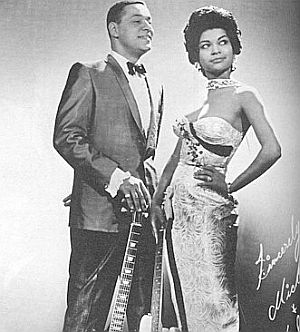


Sources, Links & Additional Information

Rick Perlstein's 2008 book, 'Nixonland: The Rise of a President and The Fracturing of America'. Click for book.
Evan Thomas' 2015 book, "Being Nixon: A Man Divided," Random House, 640pp. Click for book.
Keith Olson's 2016 book, "Watergate: The Presidential Scandal That Shook America," University Press of Kansas, 264pp.
1974 edition of “All the President's Men,” by Washington Post reporters Bob Woodward and Carl Bernstein, who together won a Pulitzer Prize for their coverage of the Watergate scandal. Time magazine praised this book, as “the work that brought down a presidency...perhaps the most influential piece of journalism in history.” Simon & Schuster, 384pp.
Stanley Kutler (ed.), 2009, "Watergate: A Brief History With Documents" (2nd edition), Wiley-Blackwell. Click for copy.
Kasey Pipes' 2019 book, "After The Fall: The Remarkable Comeback of Richard Nixon," Simon & Schuster, 256pp.

Eric Pace, “Nixon Is Said to Be Open To $2-Million for Memoirs,” New York Times, Thursday, August 29, 1974, p. 23.

“Nixon Sells Hard-Cover Rights to Memoirs,” New York Times, Saturday, September 28, 1974, p.19.

“Memoirs of Nixon Rejected by CBS,” New York Times, July 20, 1975.

Les Brown, “NBC News Seeks Nixon Interview; Watergate Would Be Part; Fee Put at Under $1-Million,” New York Times, July 29, 1975.

“NBC Terminates Talks For Memoirs of Nixon,” New York Times, August 8, 1975.

“David Frost Signs To Interview Nixon; Sum Is Undisclosed,” New York Times, August 11, 1975.

Charles B. Seib, “The Richard Nixon Show,” Washington Post, August 18, 1975, p. A-20.

“Frost’s Big Deal,” Time, Monday, August 25, 1975.

“The New Nixon Tapes Are Just Another Deal for Media Showman David Frost,” People, September 01, 1975, Vol. 4, No. 9.

“Times Co. Buys Serial Rights to Nixon Memoirs; Work Will Be Offered Prior to Warner’s Publication of Book in Fall of ’77,” New York Times, Wednesday, June 16, 1976, p. 61.

Jack Anderson and Les Whitten, “Frost: Tough Questions for Nixon,” Washington Post, November 22, 1976, p. E-19.

“Nixon and Frost in May,” Washington Post, February 12, 1977, p. E-4.

Les Brown, “Advertising Spots for Nixon TV Interview Sell Slowly,” New York Times, February 14, 1977.

“Frost Reaffirms Control over Nixon Interviews,” New York Times, April 8, 1977.

Les Brown, “Last-Minute Publicity Drive for Nixon TV Series Helps Swell Ad Revenues and Network of Stations; …Hinted $2 Million in Gross Revenues…,” New York Times, Sunday, May 1, 1977, p. 27.

“Nixon Says Watergate Cover-Up Sought to Protect the Innocent,” Washington Post, May 2, 1977, p. A-3.

“Nixon-Frost Interviews,” ABC Evening News, Reporters: Harry Reasoner, Bob Clark, Barbara Walters, and John Scali, Wednesday, May 4, 1977.

Bob Woodward and Scott Armstrong, “Nixon Sheds Little New Light on Scandal,” Washington Post, May 5, 1977, p. 1.

Haynes Johnson, “Nixon Stirs All the Old Memories,” Washington Post, May 5, 1977, p. 1.

“Frost and a Researcher Disagree on Nixon Respite,” Washington Post, May 6, 1977, p. A-12.

James M. Naughton, “Nixon, Conceding He Lied, Says ‘I Let the American People Down,’ Denies Any Crime on Watergate,” New York Times, May 5, 1977 p. 1.

Les Brown, “Nixon’s TV Audience Placed at 45 Million; Surveys Rank Program With Leading Series,” New York Times, May 6, 1977, p. 1.

“Nixon Tells Frost Kissinger Differed on Cambodia,” New York Times, May 9, 1977.

“Nixon Talks,” Time, Monday, May 9, 1977.

“David Can Be a Goliath,” Time, Monday, May 9, 1977.

James M. Naughton, “Nixon Says a President Can Order Illegal Actions Against Dissidents; In Frost Interview on TV Tonight,” New York Times, May 19, 1977, p. 1.

Fred Hauptfuhrer, “Frost’s Frontiers,” People, May 23, 1977, Vol. 7, No. 20.

“Nixon Admits Plan To Use Hughes Cash,” Washington Post, May 25, 1977, p. A-2.

Jonathan Steele, Washington correspondent, “Frost’s Standing Rises in The U.S.,” The Guardian, Friday May 27, 1977.

George Gallup, “Intense Dislike Of Nixon Eases After TV Show,” Washington Post, May 29, 1977, p. 55.

Clay F. Richards, “Watergate Legacy After 5 Years: Fame, Disgrace,” Washington Post, June 17, 1977, p. A-1.

Les Brown, “Frost Plans 5th In Nixon Series,”New York Times, August 2, 1977.

James M. Naughton, “Watergate Evidence Cited in Frost Talk; Nixon Says He Told Aide to Ruin Tapes,” New York Times, Sunday, September 4, 1977, p. 1.

“Excerpts From Interview With Nixon About Watergate Tapes and Other Issues,” New York Times, Sunday, September 4, 1977, p. 24.

Lou Cannon, “Haldeman Disputes Nixon on Tapes,” Washington Post, September 12, 1977, p. A-10.

Associated Press, “Frost Quotes Nixon: Wallace’s Reticence Cinched Resigning,” Washington Post, January 27, 1978, p. A-9.

“‘The Ends of Power’: It’s Haldeman’s Turn To Talk,” Washington Post, February 3, 1978, p. D-2.

Haynes Johnson, “Nixon, Haldeman, Frost and… Hype,” Washington Post, February 15, 1978, p. A-3.

“Haldeman Accuses Nixon,” Washington Post, February 16, 1978, p. A-1.

David Frost, I Gave Them A Sword: Behind the Scenes of the Nixon Interviews. New York: Morrow, 1978.

Tom Zito, “The News That Makes the Books: There’s Big Money in the Jump From Front Page to Best-Seller List; The Big Book Push,” Washington Post, May 6, 1978, p. B-1.

Fred Emery, Watergate: The Corruption and Fall of Richard Nixon, 1994.

Bob Minzesheimer, “Frost Rewinds Nixon Tape to 1977 and Hits Play,” USA Today, October 22, 2006.

Rita Zajacz, “David Frost: British Broadcast Journalist/Producer,” The Museum of Broadcast Communication, viewed, January 2008.

“Frost/Nixon Interviews,” Wikipedia.org

Peter M. Nichols, “Home Video; Promoting the Famous,” New York Times, November 12, 1992.

Raymond Snoddy, “Frosty The Showman,” The Independent (London, U.K), Monday, May 30, 2005.

Fred Emery, “Making a Drama Out of a Crisis: Nixon’s Last Stand,” The Independent, Sunday, July 23, 2006.

Gareth McLean, “When The Playboy Met The Liar,”The Guardian, Tuesday, August 1, 2006.

Vincent Dowd, “Historic Nixon Interviews On Stage,” BBC News, August 21, 2006.

Michael Billington, “Frost/Nixon”, The Guardian,(London), August 22, 2006.

Benedict Nightingale, “Frost/Nixon”, The Times (London), 22 August 2006.

“Trial by Television,” Book Review, The Conviction of Richard Nixon: The Untold Story of the Frost/Nixon Interviews, by James Reston, Jr., Book World, Washington Post, Sunday, July 15, 2007, p. 4.

Sylviane Gold, “The Interview That Was a Play Becomes a Film,”New York Times, November 2, 2008.

Deborah Solomon, “Talking Head: Questions for Ron Howard,” New York Times Magazine Sunday, November 9, 2008.

Stephanie Green, “Bradlee Slams ‘Frost/Nixon’: ‘Nixon Never Was Sorry’,” Washington Times, Tuesday, December 2, 2008.

“10 Questions for Ron Howard,” Time, Thursday, December 4, 2008, p. 2.

Manohla Dargis, “Mr. Frost, Meet Mr. Nixon,” New York Times, December 5, 2008.

Philip Kennicott, “Meant for Each Other: ‘Frost/Nixon’ Is a Good Fight With Two Winners,”Washington Post, Friday, December 12, 2008, p. C-1.

Elizabeth Drew, “Frost/Nixon: A Dishonorable Distortion of History,” Huffington Post.com, December 14, 2008.

Peter Morgan, “Morgan Savors Howard’s On-Set Vibe; Duo’s ‘Frost/Nixon’ Confab Produces a Winner,” Variety.com, December 18, 2008.

The David Frost Show website.

James Reston, Jr., “Frost, Nixon and Me,” Smithsonian, January 2009, pp. 86-92.
__________________________________________________
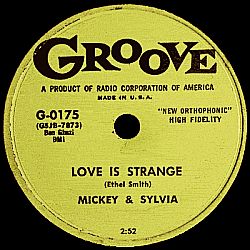


“Slingin’ Sammy”
1930s-1950s

     It was December 1937 in Chicago.  The Washington Redskins professional football team had come to town to play the fearsome Chicago Bears in the National Football League championship game at Wrigley Field.  It was a bitterly cold day with frozen turf.  Washington, although a good team, wasn’t given much of a chance against “the big bruising Bears,” as Washington Post reporter Shirley Povich called them.  But the Redskins had a new powerful weapon in the person of Sammy Baugh, their 23-year-old rookie running back.

Sammy Baugh, quarterback for the Washington Redskins, in action during a 1942  game vs. the Chicago Bears.
Sammy Baugh, quarterback for the Washington Redskins, in action during a 1942 game vs. the Chicago Bears.

     Baugh had come out of the college ranks, an innovative “passing” back, still something of a rarity in professional football at that time.  In his college career at Texas Christian University (TCU), Baugh was an All-American who had led the nation in passing in his junior and senior years and finished fourth in 1936 Heisman Trophy voting.  He had helped TCU to victories in the Sugar Bowl and Cotton Bowl.  But Sammy Baugh’s professional career — played entirely with the Washington Redskins over 16 years — would be even better.  In fact, he would change the way pro-football was played.  “The history of pro football simply cannot be written without the story of Slingin’ Sammy,” says Washington Post sports columnist Michael Wilbon.


The Forward Pass

     In the late 1930s when Sammy Baugh arrived in Washington, throwing the ball in football games — i.e., the forward pass — was still quite new, especially in professional football.  Pro football was then second fiddle to college football, which was much more popular.  In fact, the first time the passing technique had been used in football was at the college level, dating to an 1895 game between North Carolina University and the University of Georgia — an illegal use, it turns out, not then “approved” by the rules of play.  Passing began at the college level, and slowly made its way to the pros, where it was used only sparingly by the early 1930s. But the first officially approved forward pass also occurred at the college level — in September 1906 when St. Louis University used it against Carroll College of Wisconsin.  St. Louis University, however, was in the Midwest, and due to the nature of communication in those days — primarily newspapers — not many other colleges “back East” had heard of or used the technique, so its adoption by other schools was slow. But in 1913 a then little-known minor school named Notre Dame used the forward pass in a surprise win over a highly-touted team from Army.  The technique demonstrated how a smaller Notre Dame team could use it to their advantage in beating the bigger Army team ( Knute Rockne then played end for Notre Dame and Gus Dorais, quarterback).  After that game, the forward pass began to get more notice.  A variety of college coaches and teams all experimented with passing and new formations — among them: Knute Rockne, who later became a coach at Notre Dame; Pop Warner, who used it as a college coach; Jim Thorpe and the Carlisle Indians; Alonzo Stagg at the University of Chicago; Johnny Heisman at Georgia Tech; various Ivy League teams; and others.

1997 book on Sammy Baugh’s TCU years by writer Whit Canning and editor Dan Jenkins of the Fort Worth Star-Telegram.
     Still, passing then was also not like the conventional drop-back passing of the modern game today, centered on the quarterback.  Passing came out of the single wing formation, where play responsibility was split between a separate play-caller and another running back who may have thrown the ball.  Passing was also more of desperation measure then, not a planned part of the offensive attack.  At the professional level, the first passing appears to have been used in the late 1920s and early 1930s, but then only rarely.  Professional football games then could be very dull and boring compared to today’s games. They used the single- and double-wing offenses, and almost always ran the ball — no sixty-yard touchdown pass plays.  But that more pedestrian style of football play was about to change with the arrival of Sammy Baugh in Washington in 1937.  Baugh was one of the few experienced passers from the college level, and  he would soon prove to be one of the best of the new breed at the pro level.


Swinging Tire

     Sammy Baugh was born in Texas in 1914, and played three sports in high school at Sweetwater, Texas — football, basketball and baseball.  In preparing to play for his high school team, Baugh practiced with an old tire strung from a tree which he would try to throw the ball trough while the tire was swinging and he was on the run.  He developed a strong arm and pretty good accuracy.  And although he did well in high school football, Sammy had his heart set on becoming a professional baseball player, and that’s the sport where he would pick up the name “slingin’ Sammy.”   A sportswriter impressed with Sammy’s throwing arm as a college third baseman is credited with giving him that nickname.

December 1936 AP photo of TCU star running back, Sammy Baugh.
     After high school, Sammy had played semi-pro baseball for a time, and had met a guy who was going to arrange for a baseball scholarship at Washington State University.  But Sammy hurt his knee right before he was to attend, and the baseball scholarship fell through.  But as Baugh would later recount, “Dutch Meyer [ the football coach at TCU] told me he’d get me a job and help me through TCU if I’d come there and play baseball and football and basketball — the whole thing.  So that’s where I went.”

     At TCU, it was Sammy’s football play that would put him in the big time — although he remained a very good baseball player at TCU as well. However, in football as a college junior, he threw for 1,241 yards and 18 touchdowns. TCU only lost one game that year, to national champion SMU.

As a senior at TCU, Baugh threw for 1,196 yards, completing 50.5 percent of his passes. He led the nation in both passing and punting his final two seasons at TCU. 

Many believe that Baugh’s performance at TCU helped bring national press notice to Texas football at a time when press coverage tilted to eastern sports teams.  And although Baugh did not win Heisman Trophy in 1936 — he finished fourth in the voting  — his performance is believed to have opened the door for his successor at TCU, Davey O’Brien, who did win the Heisman two years later.

Sammy Baugh during his short-lived baseball career with the St. Louis Cardinals.
     Still, when Sammy completed college, his thought was to play professional baseball. Baugh wasn’t convinced football was his best sport. He also thought he might have a longer career in baseball. 

Baugh had been a star third baseman for TCU, and drew the notice of a few scouts. Rogers Hornsby, the famous St. Louis Cardinals baseball Hall-of-Famer, was then a St. Louis Cardinals scout, and in the spring/summer of 1937, he signed Baugh to play with the Cardinals. 

However, Baugh was farmed out to the minor league Columbus team after being converted to shortstop, and then was sent even lower down in the minor league system to Rochester. There, Baugh still had to play behind Rochester’s starting shortstop, Marty Marion, who would go on to the major leagues and become a Cardinals regular for 11 years. Baugh knew he would never be as good as Marion.

“The other [problem] was I couldn’t hit that curve [ball] very well,” Baugh would later say. “So I left in August [1937] to play football, and after that I stuck with football.”


Preston Marshall

     But the courting of Sammy Baugh by Washington Redskins owner George Preston Marshall had begun when Baugh was still at TCU.  Marshall’s Washington Redskins professional team, in fact, was then newly arrived in Washington, as Marshall had moved them from Boston where he lost money and failed to generate a fan base.  But Marshall’s fortunes would change in Washington, and Baugh would become one of his best new assets.  Baugh later described his early meetings with Marshall and the salary discussions:

     “…In the spring of my last year, 1937, George Marshall brought me to Washington and offered me $4,000 to play with the Redskins.  Now down here in Texas, no one knew anything about pro football.  They didn’t even know what it was.  I didn’t know if I could make it in pro football, and since Dutch Meyer had offered me a job as freshman coach, I told Mr. Marshall I thought I was going to stay in Texas and coach. “…So I asked Mr. Marshall for $8,000, and I finally got it. Later I felt like a robber when I found out what Cliff Battles [a Redskins star] and some of those other good players were making… If I had known what they were getting I’d have never asked for $8,000…”
              – Sammy Baugh
 See, I still wanted to be a baseball player, but I wanted a coaching job to fall back on.

     Anyway, the summer after I got out of college I went to Chicago to play in the College All-Star football game against Green Bay.  I talked with the rest of the boys on the All-Star squad and found that a bunch of them were going to play pro football.  I found that most of them were just like me — that they hadn’t been out of the country too often themselves — and that I could play ball better than 99% of them.  So I became more confident.  As it turned out, we beat Green Bay, and then Mr. Marshall got after me pretty hot.

     I didn’t know how much pro players were making, but I thought they were making pretty good money.  So I asked Mr. Marshall for $8,000, and I finally got it.  Later I felt like a robber when I found out what Cliff Battles [a Redskins star player] and some of those other good players were making.  I’ll tell you what the highest-priced boy in Washington was getting the year before — not half as much as $8,000!  Three of them — Cliff Battles, Turk Edwards and Wayne Millner — got peanuts, and all of ’em are in the Hall of Fame now.  If I had known what they were getting I’d have never asked for $8,000….”


“Which Eye?”

Sammy Baugh at the Polo Grounds in New York, December 1938.
     When Baugh first reported to the Redskins for practice, he had a meeting with coach Ray Flaherty and had an exchange that reportedly went something like this:

“They tell me you’re quite a passer,” said Flaherty, handing Baugh a football.

“I reckon I can throw,” Baugh answered.

“Let’s see it.  Hit that receiver in the eye,” said Flaherty, pointing to a man running down the field.

“Which eye?” said Baugh.

     For years, this exchange was believed to have been more urban legend that truth, but Washington Post sportswriter Shirley Povich confirmed it with Baugh himself in the 1990s. Baugh admitted the exchange was true, adding it was the one time he had been a little too flip.  “Yep, ah said it,” he acknowledged in his Texas drawl to Povich.  “First and last time in my life ah was cocky.”  But Baugh would soon show he had something to be cocky about.


Threw Spirals

     At 6′ 2″ and 182 pounds, Baugh was a good size for a throwing back.  He also had large hands, and could grip the ball in a way at the laces to send it skyward in a spiraling fashion, achieving both accuracy and distance when he threw it.  And throw it, he did.

     In his first game, and the Washington Redskins first game in Washington at Griffith Stadium, Baugh completed 11 of 16 passes for 116 yards as the Redskins defeated the New York Giants, 13-3.  Baugh’s passing, still new to the NFL, would become a key part of Washington’s attack.  Washington Post reporter Shirley Povich greeted Baugh’s performance with high praise: “There was Slingin’ Sammy Baugh, putting his college reputation squarely on the spot, and justifying every advance notice with his magnificent forward-passing barrage against the Giants.”  In the 11-game season that year, the rookie Baugh set an NFL record, completing 91 of 218 attempts and throwing for a league-high 1,127 yards, taking the Redskins to the NFL championship. Baugh was also defensive back and the team’s punter, or quick kicker in those days.

Sammy Baugh, No. 33, of the Washington Redskins, being tackled, far right, during NFL Championship game at Wrigley Field in Chicago on December 12, 1937, in which the Redskins prevailed, 27-21, on stellar play and passing heroics of Sammy Baugh.

     The 1937 NFL championship featured  the Western Division’s Chicago Bears (9-1-1) vs. the Eastern Division’s Washington Redskins (8-3). It was only the fifth time the annual NFL championship game had been played. Washington was the distinct underdog, not expected to have much chance against the “Monsters of the Midway” as the Bears would later be called. The contest was held on December 12, 1937, on a bitterly cold day on frozen turf at Wrigley Field in Chicago. The recorded attendance that day was 15,870. This was, of course, long before the Super Bowl and television. Players still played both offense and defense then, including running backs, and they had no face masks. The game was a lot rougher then as well. Quarterbacks were not protected and could be hit at will until the end of the play. In the Chicago game, in particular, Baugh was targeted by certain Bear players — linebacker and fullback Bronco Nagurski among them — who were trying to knock him out of the game. In pile ups, there was also some purposeful Sammy Baugh leg twisting.

Sammy Baugh, No. 33, making a run in another game.
     In that championship game, the Bears had pinned Washington to their own five-yard line in the early minutes of the game, pushed up against the end zone. On first down, Baugh called for “punt formation,” but in the huddle told his teammates, “we’re gonna pass.” Passing, then used sparingly at the professional level, was hardly ever used on first down, and certainly not when a team was deep in their own territory. So Baugh got some weird looks on the call from his teammates. With the Bear lineman charging hard to block a punt, Baugh calmly tossed a pass to halfback Cliff Battles, who then ran for 42 yards. A few plays later Washington scored, and went on to win the game, 28-to-21. Baugh in that game turned in a stellar, championship performance, completing 17 of 34 passes for 352 yards — an astounding number even by modern day passing standards. Baugh’s passing yardage alone that day was more yardage than the entire Chicago offense had managed.  He threw three touchdown passes — of 35, 55 and 78 yards. “Baugh was a one-man team,” one of the Bears coaches told reporters after the game.

Dallas Morning News, December 21, 1937.
     By the end of his first year, Baugh had become a pro football veteran and a key player to the Redskins’ future. Back in Sweetwater, Texas that December, a few weeks after Baugh and Redskins had won the championship game with Bears, the home town boy was honored at a gathering of townspeople, ex-teammates, and former coaches.

The townsfolk praised Baugh and said he done more to “put Sweetwater on the map that any citizen in history.” Red Sheriden, one of Baugh’s former Sweetwater High School football teammates, said that “all the adulation had not gone to his head,” and was still “the level-headed, likeable kid he was back in 1931 and 1932 when in high school.”  Baugh’s high school coach Ed Hennig, was credited with teaching Baugh both football and modesty.

The Preston Marshall Show
1930s-1940s

      Back in Washington, Redskins owner, Preston Marshall, was setting out to build a business empire around his new team. Marshall was a colorful character who had once dabbled in the business of Vaudeville entertainment, dated Hollywood star Louise Brooks, and married another film star, Corinne Griffith. Marshall had been the owner of a chain of laundries in Washington, built up from a single store founded by his father — a business which Marshall later sold for a considerable profit.  By the time Sammy Baugh was signed, Marshall had only been in the football business for a few years.  In the early 1930s he and three other partners acquired a National Football League franchise in Boston naming their team the Boston Braves.  By 1936, Marshall had gained sole control of the team and renamed it the Boston Redskins.  But the team fared poorly, was not supported by the fans, and Marshall moved the team to Washington in 1937, the year he signed Sammy Baugh. 

Preston Marshall as a younger man.
     According Washington Post sportswriter Shirley Povich, who followed the Redskins organization from its start, Marshall had brought his franchise to Washington with a plan to make the Redskins “the South’s team.” Marshall established a network of radio stations in Southern cities and towns to carry the games, and later TV coverage as well, and he directed his coaches to draft players mostly from Georgia, North Carolina, Virginia and Texas colleges. They did, and the team became, according to Povich, “the Confederates of the NFL.”  In fact, one original line in the Redskins’ fight song originally was penned as, “Fight for Old Dixie,” later changed to “Fight for Old D.C.”

     In bringing notice to his team, Marshall also sought the help of sportswriters.  “I need the support of you guys,” he said to reporters, according to Povich, who was among those Marshall was pitching.  “I’m paying Sammy Baugh $8,000, and I need to put 12,000 people in the park [Griffith Stadium] to break even.”  In 1937 the Redskins sold 958 season tickets.  By 1947, with the help of Marshall’s promotional flair, all of the stadium’s 31,440 regular seats were selling out.  Marshall was also something of a showman, and installed entertainment for the fans with a band and a team song, “Hail to The Redskins.” He also once paid for an entire train of multiple cars to take 10,000 Redskins fans to a New York Giants game in 1937.  When Baugh first came to Washington, Marshall also insisted he wear cowboy boots and a Stetson hat, even though Baugh was more small-town boy than Texas cowboy.

Sammy Baugh & Preston Marshall, believed to be sometime in the 1940s.
     Marshall was also active in opening the game up through rule changes and advanced a proposal to divide the league into divisions, keeping more teams involved in title races.  According to Baugh, Marshall also helped win a rule for protecting quarterbacks: “…Marshall called me into the office one day and said, ‘What if we could get a rule put in that after a passer threw the ball, that they couldn’t run him down and knock him around?’ I said, ‘Do that and the passer will play about 10 years longer than he used to.’ And he picked up the phone and called [the Bears’] George Halas, and George went for it, and they put the rule in.”

     But one area where Marshall was not progressive was in the matter of racial integration, believed related to his southern states business strategy (see related book, posted below in “Sources”). Some pro teams had begun signing and drafting black players in 1946-1949, but it wasn’t until 1962 when Marshall did. And that came about only after Interior Secretary Stewart Udall threatened to revoke the Redskins’ 30-year lease on the new D.C. Stadium (RFK Stadium), paid for with government money.

     Marshall was also a meddlesome owner on the field at times, frustrating and firing his coaches.  Baugh, in fact, played for ten different coaches, a fact which may have held Sammy back from an even greater career.  But Sammy Baugh was undoubtedly the best investment Preston Marshall ever made, as Sammy helped put the Redskins on the map in those early years, boosting the organization and its business.


Passing From the “T”

Sammy Baugh football trading card (front & back) issued by Bowman Gum in 1948.
     Sammy Baugh began his career with the Redskins as a tailback, playing from the single-wing and double-wing formations.  Baugh was responsible for passing and punting, while another back, Riley Smith, handled the play-calling duties.  But all that began to change in the 1940s when the Redskins and other teams began to adopt the T-formation.  In this formation, the quarterback became a more central figure, taking responsibility for both play-calling and passing, giving the quarterback full control of the offense.  And this is where Baugh excelled — making the forward pass a more a designed-in part of the game, played from the line scrimmage.  With the “T”formation and passing now part of the planned attack, Baugh helped bring a more exciting form of play to the pro game.  From 1940 to 1949, Sammy Baugh led the league in passing five times. Together with his passing championship from his rookie season, Baugh would claim six career passing titles; a feat only equaled by Steve Young of the San Francisco 49ers in the 1990s.

     Baugh would direct the team to four division titles and two NFL championships in1937 and 1942.  In a career spanning 162 games, he threw 1,693 completed passes in 2,995 attempts, a 56.5 percent completion rate.  He totaled some 21,886 passing yards and 187 touchdowns.  At the time of Baugh’s retirement, he held a number of NFL and Washington Redskin records, some of which still stand at this writing.

     Baugh played his entire 16-year career with the Washington Redskins through the 1952 season.  But in Washington, he also had a few bad games, the most notorious of which was the 73-0 drubbing by the Chicago Bears for the 1940 championship.  He was pulled out of the game to spare him embarrassment, after completing 9 of 16 passes for a total of 91 yards with 2 interceptions.  But two years later, Baugh and the Redskins took some satisfaction in stopping Chicago’s perfect season, then at 11-0 until Washington beat them 14-6 in the championship game.  In 1945, Baugh compiled his best statistical season, completing 128 of 182 attempts for 1,669 yards and a 70.3 percent completion average — an NFL record that stood for decades before being surpassed in 1982 by Ken Anderson of the Cincinnati Bengals who posted a completion rate of 70.6 percent.  One of Baugh’s most impressive games came fittingly on “Sammy Baugh Day” in 1947 when he threw six touchdown passes against the Chicago Cardinals.  But by all accounts, Baugh worked hard at his craft, as it was said that in practice he liked to complete 100 consecutive passes before leaving for the day, and missing one, he’d start again.

“Sammy Goes Hollywood”
1941

     Sammy Baugh had a brief run with movie stardom in 1941 when Hollywood’s Republic Studios approached him about acting in a Western TV series, King of the Texas Rangers.  Republic was then known for its quality B pictures, especially westerns and movie serials. John Wayne, Gene Autry, and Roy Rogers were among those who played in Republic westerns and became recognizable stars at the studio.  With Sammy being a well-known football star by then, both nationally and in Texas from his TCU days, Republic wanted to capitalize on that notoriety by using him in its films.  So Sammy signed a contract to make a dozen or so of the Texas Rangers serials, all filmed in June and July of 1941. 

Advertisement for a 'King of the Texas Rangers' film serial in which Sammy Baugh starred as Joe King.
     In the series, Sammy played the role of Joe King, a Texas college football star who leaves school and to join the Texas Rangers. King takes up with the Rangers to avenge the death of his father who had been murdered by a group Nazi-like agents acting on the U.S./Mexican border with designs on the Texas oil fields. King teams up with Sally Crane, a reporter who witnessed his father’s murder, and Mexican police officer, Pedro Garcia, who is also after the saboteurs. Garcia is played by Duncan Renaldo who later becomes a star in The Cisco Kid series. In the Texas Rangers serials, King pursues the villains on horseback, fights them with his fists, and in gun battles.

     Though inexperienced as an actor, Baugh was a quick study and had worked on a ranch as a youth, so he was a capable horseback rider.  He did his own riding in the serial, but others, including, Davey Sharpe and Tommy Steele, did the more dangerous stunts for him. Some film analysts say the serial contains “one of the greatest cliffhangers of all time.” King (Baugh) jumps onto a speeding train and gets into the engine cab just as the train enters a tunnel in a mountain.  The villains detonate explosives causing a landslide at the other end of the tunnel. But Baugh saves the day yelling “Open that throttle!” as the train shoots out of the tunnel to safety.

Sammy Baugh with Bob Hope on the set where Hope was filming ‘The Lemon Drop Kid’, in 1950-51.
     Sammy Baugh was offered more roles by Republic, but acting wasn’t quite Sammy’s cup of tea.  He took it as a one-time experience, and enjoyed it, but it wasn’t a new career path for him.  He preferred playing football and spending time with his family.  However, some of those in the film industry who worked with him, such as director William Whitney and co-star Kenne Duncan, believed that Sammy had Western star potential and thought he should stay in the business.  But after filming ended, Sammy returned to football, and he also bought a ranch in Rotan, Texas, which he named “Double Mountain Ranch” for the two mountains overlooking the property.  Sammy’s Texas Rangers serial, however, continued to run for many years in television syndication.  But Sammy apparently had some unique character qualities about him, as in the late 1980s, actor Robert Duvall visited Sammy in Texas to study his manner, crafting the character of Gus McCrae in the Lonesome Dove series after Baugh.


All-Around Player

Sammy Baugh played in the day of 'two way' players, excelling as a defensive back as well as a quarterback, here making an interception.
     In his professional football career, Sammy Baugh was an all-around athlete. In an era when players played both offense and defense, before the days of free substitution, Sammy Baugh played defensive safety, and did well at the position.  He was not shy of contact either, taking down the toughest runners of the day, including the likes of Bronco Nagurski.  “He had that tough, prairie strength,” says NFL historian Steve Sabol. “He was a leathery kind of guy.”

     Baugh’s agility and quarterback sense made him an excellent aerial defender, and he shares a defensive record to this day of making four interceptions in one game.  In 1940, he intercepted 11 passes in just 10 games, which Washington Post columnist Thomas Boswell has singled out as especially noteworthy. “How good is that?,” says Boswell, adding that “no NFL player has intercepted 11 passes since 1981 and the last man to have more than an interception per game was Night Train Lane in 1952.”  In 1943, Sammy was one of the few players to win a rare pro football “triple crown” distinction in offensive, defensive, and special teams categories — passing, punting, and interceptions.  In 1943 he completed 133 of 239 attempted passes for 1,754 yards and 23 touchdowns.  In punting, his 50 kicks averaged 45.9 yards for a total 2,295 yards.  And he also led the league that year in interceptions with eleven.  Baugh is the only player ever to lead the league in offensive, defensive and special teams categories.  As a passer, he was known for his ability to accurately connect with his receivers over long and short distances in the face of onrushing defensive linemen.  In nine seasons — 1937, 1940, 1942, 1943 and 1945-49 — he led the NFL in completion percentage.  Sammy also passed for six touchdowns in a single game on two occasions — once in October 1943 and again in November 1947.

Sammy Baugh, quarterback.
     After retiring as a player in 1952, Baugh returned to his 7,600-acre ranch in Rotan, Texas, about 95 miles south of Lubbock. Although ranching would become a major part of his life thereafter, he also stayed involved with football. 

In 1955, Baugh began five years of college coaching at Hardin-Simmons College at Abilene, Texas. He was also a coach of freshman football at Oklahoma State University and a backfield coach at the University of Tulsa. In 1960 and 1961 he was head coach of the New York Titans of the new American Football League — the team that would later become the New York Jets. In 1964, he became head coach of the Houston Oilers, posting a 4-10 record. Thereafter, however, he decided he needed to focus on his West Texas cattle operation. 

In November 1993, during a pre-game ceremony at a TCU football game, the university retired Baugh’s No. 45 college jersey. His No. 33 Washington Redskins jersey was also retired, and is the only one the Washington organization has retired to date.  And each year since 1959, the Sammy Baugh Trophy has been awarded to the nation’s top collegiate passer.

Sammy Baugh was also a good punter.
     But Sammy Baugh, despite his one year of film acting, or even his stardom as a football player, was never much into being a celebrity.  After retiring from football, he stayed out the limelight for the most part, and lived a pretty modest life in west Texas.  Washington Post columnist Thomas Boswell would later write that every decade or so, reporters would journey to Texas to seek Sammy out for an update.  “They always found him a gentleman,” said Boswell, a fellow who told stories punctuated by a single “hell” or “damn,” but otherwise, was a model of restraint.  Although there was a flurry of activity around him in 1994 when the NFL selected him to its 75th anniversary all-time team.  In September of that year he “stole the show,” according to some, with his “hysterical frankness and salty language” on the TNT cable TV special, 75 Seasons: The Story of the NFL.

     Baugh had married his college sweetheart, Edmonia Smith, of Sweetwater, Texas in 1938.  They had five children, followed by 11 grandchildren and 12 great-grandchildren. His wife died in 1990, and he lost a son in 2006. But Baugh himself lived to the age of 94, when he died of kidney failure and pneumonia.  The doctor said his body just wore out.


“Changed The Game”

Sammy Baugh at Hall of Fame induction, 1963.
     Sammy Baugh was inducted to the Professional Football Hall of Fame in 1963, a charter member, along with George Halas, Bronko Nagurski, Red Grange, Jim Thorpe, Curly Lambeau and about ten others.  But only Halas and Baugh were selected unanimously.  Sammy’s Hall of Fame profile calls him a “premier passer” who influenced a the game’s great offensive revolution.  “When Baugh first started with the Redskins,” says the profile, “pro football was largely a grind-it-out ground game.  The forward pass was something to be used with caution. . . By the time Baugh was through, the forward pass was a primary offensive weapon.  Obviously, such a change could not be totally brought about by one individual.  But Baugh was the catalyst that changed the game. No one had seen a passer who could throw with such accuracy.”

     Putting some perspective on this accomplishment, Washington Post sports columnist Thomas Boswell observes: “What Babe Ruth’s home runs did for baseball in the early 1920s, Baugh’s bombs did for the NFL in the late ’30s.”  In 1936, the season before Baugh arrived, the average NFL team scored 11.9 points a game and completed 5.6 passes. “What Babe Ruth’s home runs did for baseball in the early 1920s, Baugh’s bombs did for the NFL in the late ’30s.”
                           – Thomas Boswell
 The NFL completion percentage was 36.5. The entire sport threw only 67 scoring passes. As a rookie, starting only five games, Sammy Baugh broke the NFL completion record with 81. By 1940, he was completing 62.7 percent of his passes.

Before Baugh came,” says Boswell, “only one man ever passed for 1,000 yards in a season. By 1947, Baugh completed 210 passes for 2,938 yards… If Ruth [in baseball] quadrupled the prevailing view of how many home runs were possible in a season, then Baugh tripled the notion of how much yardage a team could gain through the air.” Baugh was a trendsetter, who influenced other great quarterbacks of his day, including Sid Luckman in 1942 and Otto Graham in 1946, who also helped move the game into its modern era.

     For those who saw him play, Sammy Baugh remains one of the game’s best.  Said legendary sportswriter Grantland Rice in 1942: “Sammy happens to be just about the most valuable football player of all time, according to most pro coaches I’ve talked to.”  In the 1990s, sportswriter Dan Jenkins a Fort Worth, Texas native who saw Baugh play at Texas Christian University and as a pro, called him “the greatest quarterback who ever lived, college or pro.”  Steve Sabol, president of NFL Films and a noted football historian told the Washington Post’s Michael Wilbon about an experience he had as a young boy seeing Sammy play:

     “I was 9 years old and my father took me to Shibe Park in Philadelphia to see the Eagles play the Redskins.  It was 1951.  My dad said: ‘See the man wearing Number 33? That’s Sammy Baugh.’  That’s all he said.”

     “It was like pointing out the Empire State Building, the Washington Monument or Niagara Falls. ‘That’s Sammy Baugh.’  That’s all that needed to be said to anyone who followed pro football in the 1940s and early 1950s.”

Sammy Baugh, quarterback for the Washington Redskins, attending to an admiring crowd of young fans and autograph seekers during height of his career.

Additional pro football stories at this website include: “Bednarik-Gifford Lore,” a story that tracks the respective football careers of Philadelphia Eagles linebacker, Chuck Bednarik, and New York Giants running back, Frank Gifford, and their famous gridiron collision of November 1960. Joe Namath’s career, AFL-NFL history, and Namath’s famous Superbowl III prediction in 1969, are all covered in the story, “I Guarantee It.” And “Celebrity Gifford, 1950s-2000s,” provides a detailed look at the advertising, sports broadcasting, and TV/film/radio career of Frank Gifford. See also the “Annals of Sport” category page for other sports stories.

Thanks for visiting – and if you like what you find here, please make a donation to help support the research and writing at this website. Thank you – Jack Doyle

Please Support
this Website

Donate Now

Thank You

____________________________
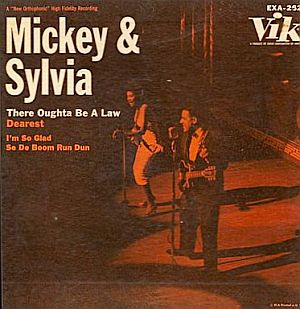
Date Posted:  21 December 2008
Last Update:  19 October 2018
Comments to: jackdoyle47@gmail.com

Article Citation:
Jack Doyle, “Slingin’ Sammy, 1930s-1950s,”
PopHistoryDig.com, December 21, 2008.

_____________________________
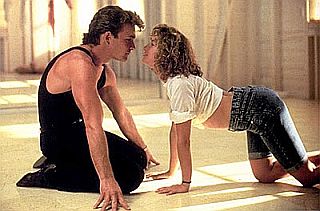


Football Books at Amazon.com…
 

Michael MacCambridge’s 2005 book, “The Epic Story of How Pro Football Captured a Nation.” Click for copy.
NFL History, Rob Fleder, et al., “NFL 100: A Century of Pro Football,” with Peyton Manning intro. Click for copy.
Ray Walker’s book, “The Ultimate Pittsburgh Steelers Trivia Book,” 2020 edition. Click for copy.


Sources, Links & Additional Information

First published in 1948, My Greatest Day in Football is a collection of stories from football’s early stars, including Sammy Baugh, Pop Warner, George Gipp, Knute Rockne, Paul Brown, and 30 others. The 244-page book was republished by Kent State University press in 2008.
Andrew O'Toole's 2016 book, "Fight for Old DC: George Preston Marshall, the Integration of the Washington  Redskins, and the Rise of a New NFL".
Andrew O'Toole's 2016 book, "Fight for Old DC: George Preston Marshall, the Integration of the Washington Redskins, and the Rise of a New NFL".

“Boston Bravery,” Time, Monday, Aug. 19, 1935

See Sammy Baugh in action at “Sammy Baugh Video, 1937-1952,” at this website.

Shirley Povich, “Baugh Stars as Redskins Annex Title,”Washington Post, December 13, 1937, p. 1.

“Heroes for Pay,” Time, Monday, November 1, 1937.

Associated Press, “Sweetwater Pays Tribute to Sam Baugh as Leading Citizen,” Dallas Morning News, December 21, 1937, Section 2, p. 7.

“PowWow,” Time, Monday, Dec. 12, 1938.

Joe Holley, “A Redskin Forever Hailed: Slingin’ Sammy Baugh Passed His Way Into Gridiron History,” Washington Post, Saturday, February 4, 2006, p. C-1.

Shirley Povich, “Slingin’ Sammy Baugh: The Magic of Number 33,” Washington Post, From paperback book manuscript posted online.

By Shirley Povich, “George Preston Marshall: No Boredom or Blacks Allowed,”Washington Post, From paperback book manuscript posted online.

Shirley Povich, “Sammy Baugh Retires,” Washington Post, December 10, 1952.

“Sammy Baugh,” Wikipedia.org.

“Biography – Sammy Baugh,” Football Hall of Fame, Class of 1963.

Myron Cope, “A Life For Two Tough Texans,” Sports Illustrated, October 20, 1969.

Dennis Tuttle, “Still Slingin’,” Sporting News, November 7, 1994.

Larry Schwartz, “Baugh Perfected the Perfect Pass,” Special to ESPN.com, 2007.

Scott Hurrey, “Sammy Baugh – The Best Ever?,” TheHogs.net.

1930s — Sammy Baugh, “Face of the Program,” ESPN.com

“King of the Texas Rangers,” Wikipedia.com.

Associated Press photos.

Richard Goldstein, “Sammy Baugh, N.F.L. Great, Dies at 94,” New York Times, December 18, 2008.

Joe Holley and Bart Barnes, “The First of the Gunslingers — Quarterback Led Redskins to Two Titles, Football Into Modern Era,” Washington Post, Thursday, December 18, 2008, p. E-1.

Michael Wilbon, “Getting In a Word For Slingin’ Sammy,” Washington Post, Friday, December 19, 2008, p. E-1.

Thomas Boswell, “Rock of the Redskins, Arm of the NFL,” Washington Post, Friday, December 19, 2008, p. E-1.

Samu Qureshi and Valerie Grissom, “Team Report” Cover Story, (Letters from Hall of Fame quarterback Sammy Baugh and owner George Marshall reveal the Redskins’ early struggles on — and off — the field.) Washington Post Magazine, Sunday, August 2, 2009, pp 8- 13+.

The Intercollegiate Football Researchers Association.

____________________
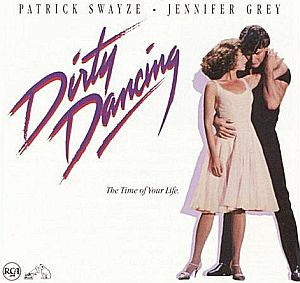


“Stones Gather Dollars”
1989-2008

October 1989 edition of Forbes business magazine featuring Mick Jagger & Keith Richards among the world's 'highest paid entertainers'.
     In October 1989, Forbes magazine featured rock ‘n roll stars Mick Jagger and Keith Richards of the Rolling Stones on its cover. The story’s headline asked: “What’ll They Do With All That Money?” — then referring to some big paydays ahead as they embarked on a world tour. Rock concerts were then about to turn a new and profitable corner.

In the feature story, Forbes writer Peter Newcomb provided a detailed look at what the Stones were then up to, and by way of their experience, a revealing look at the rock ‘n roll business on its way to the 1990s.

The Stones, even then, were a “senior” rock ‘n roll group, having risen to fame, along with the Beatles, a good 25 years earlier in the 1960s. Yet at this point in their lives and careers, they still had another 20 years of performing ahead. But in the late 1980s when Forbes caught up with them, they were at the beginning of a series of live concerts called the “Steel Wheels Tour,” a tour launched to coincide with a new album, also titled Steel Wheels. This tour, however, also presaged a new era in the business of rock ‘n roll, and specifically the big business of concert touring.

     In 1988, a Canadian promoter named Michael Cohl had guaranteed the Stones a take of $70 million for the tour.  The math went something like this: the tour would draw 3 million people in just under 60 locations.  At about $30 a ticket, a $90 million gate would be generated, with 40 percent paid to the stadium owners and local promoters, leaving 60 percent — or more than $50 million — to the Stones and the tour promoter.  Tour-related merchandise, including T-shirts, jackets, and other paraphernalia, would boost the take to the guaranteed $70 million.  In fact this tour, and its related business, would generate considerably more than $70 million.


Macy’s, Bud & Beyond

     The Stones had also made arrangements to sell tour-related material not only at the concert sites, but also at department stores such as Macy’s, J. C. Penney, and Marshall Field.  In some of these stores, “Rolling Stones boutiques” offered a full line of products stamped with the Steel Wheels logo: $5 bandanas, sweatshirts, skateboards, $450 bomber jackets, and two lines of Converse high-top sneakers.  There were also pay-per-view TV rights in the offing at $6-to-$7 million, not including foreign TV rights.  A tour-related movie and a two-hour TV special were being planned as well. “We never dreamed there was any money when we started this thing. It was idealism. It was not knowing what else to do with your life. But then, suddenly, the impossible happened.”
              – Keith Richards, 1989
 And finally, Anheuser-Busch paid close to $6 million for rights to make its Budweiser beer the tour sponsor.  All of this meant that the Stones would gross about $90 million for the year.

     By the time of their 1989 concert tour, however, the Stones were already a group with a significant cache of assets.  They also had a musical legacy — a “bank account” of sorts — to draw upon even in off years when there was no tour income or no new album.  Between 1964 and 1979, the Stones had turned out at least one album every year; sometimes 2 or 3 albums per year in that period.  Many of these albums charted in the U.S and the U.K., often in the Top 10 or Top 20.  So by 1989, this catalog of older Stones recording was still selling, and selling well, at about 1 million copies a year.  With a royalty rates then about $1.75 per record, they would have about $2 million a year coming in just from that catalog, making a kind of annuity possible even if they quit work.  But if they chose on top of that to do a single new album which sold at around 3 million copies, the annual take would rise to as much as $7 million a year.  There was also income from radio airplay as well.  And as songwriters the Stones had agreements for a royalty of about 5 cents per airplay, which can also add up to real money with popular hits — or as Keith Richards once put it, “making money while I sleep.”

Budweiser was a Steel Wheels sponsor.


Business Savvy

     At the time of the Steel Wheels Tour in 1989, the Rolling Stones were already pretty savvy business people.  Since 1971, they had secured the services of a former London merchant banker named Rupert Zu Loewenstein, who carries an old Bavarian title of “Prince” and became their financial advisor.  The Stones by then were also pretty capable when negotiating recording deals.  In 1985 they signed a distribution agreement with CBS Records that reportedly gave the band $25 million for four albums and the rights to all the old Rolling Stones catalog from Atlantic.  Walter Yetnikoff, the CBS record chief who negotiated with Jagger, said that “Mick was very astute,” lauding him as a guy who could think on his feet, capable of figuring royalty and tax rates in his head.  Jagger had studied macroeconomics at the London School of Economics, which he would later say was mostly economic history.

     But the Stones weren’t always on top of their game economically.  In fact, in the early years, they lost a good deal of money making bad deals.  During the mid-1960s, when the Stones first broke out, they had sold some ten million singles, including their monster 1965-66 hit “Satisfaction.”  They also sold some five million albums in the early years.  Still, they were not making money.“When we first started out, there wasn’t really any money in rock ‘n roll. There wasn’t a touring industry; it didn’t even exist….”
                          – Mick Jagger
  “When we first started out, there wasn’t really any money in rock ‘n roll,” Jagger explained to Fortune magazine in 2002.  “There wasn’t a touring industry; it didn’t even exist.  Obviously there was somebody maybe who made money, but it certainly wasn’t the act. …[E]ven if you were very successful, you got paid nothing.”  The Stones also suffered from lack of negotiating experience.  “I’ll never forget the deals I did in the ’60s, which were just terrible,” Jagger would later say.  In 1965, Allen Klein, a New York manager, helped the Stone’s negotiate a new contract with Decca records and also helped the group win their first million-dollar payday.  But Allen Klein also helped himself.  His company, ABKCO, still retains the rights to the Stones’ early songs from the 1960s through 1971 — a sore point with the Stones, who parted ways with Klein in the early 1970s.  Since then, the Stones have been very much a business-minded rock ‘n roll group, attentive to everything from royalty rates to tax policy.  But by the time of their 1989 Steel Wheels tour, their business savvy had reached a new level and demand for their music was as strong as ever.


Steel Wheels Success

Just as the Rolling Stones were beginning their North America 'Steel Wheels' tour in 1989, they appeared on the cover of Time magazine, September 4th, 1989. Click for copy.
     The 36-city Steel Wheels tour started on August 31, 1989 in Philadelphia.  From there it proceeded north to Toronto, Canada, then to Pittsburgh, Pennsylvania and beyond.  Near the start of the tour, the Stones appeared on the cover of Time magazine’s September 4th edition.  Time’s cover story focused on the staying power of older rock groups.  On the tour, meanwhile, there were sell outs in some places months before the event.  When the New York City shows were announced, 300,000 tickets were sold in a record six hours.  And at the concerts, it wasn’t just middling baby boomers who were coming out to relive the 1960s.  Younger fans were also discovering the Stones — at least at New York’s October 1989 Shea Stadium show. Jennifer Ames, then a 19-year-old college sophomore, told a New York Times reporter she had liked the Stones since she was a young girl.  “My parents, my older brothers all played their records,” she explained.  “There are two or three generations of fans here,” added Raymond Finocchio, 42, who brought his 11-year-old son to the concert that night.  But other younger fans had discovered the Stones on their own:  “We’re fans, not children of fans,” said Paula Giglio, 29, of the Bronx, also attending the Shea Stadium show.  The Steel Wheels Tour in North America ended on December 20, 1989 at Convention Center in Atlantic City, New Jersey.  The tour had earned about $260 million, which was then a record for any rock concert tour.


Tour Model Honed

     Yet 1989’s Steel Wheels was just the beginning for the Rolling Stones.  More gate-busting tours would follow over the next two decades.  But Steel Wheels became the model.  Its promoter, Canadian Michael Cohl, was hired permanently by the Stones to become their full-time tour manager.  With each subsequent tour, the 1989 experience was honed, costs were pared, and even bigger paydays resulted. 

The Rolling Stones
Selected Tours
1989-2007

Steel Wheels
1989
Urban Jungle Tour
1990
Voodoo Lounge Tour
1994-1995
Bridges to Babylon Tour
1997-1998
No Security Tour
1999
Forty Licks Tour
2002-2003
A Bigger Bang Tour
2005-2007

     The Stones’ Voodoo Lounge tour of 1994-95 grossed nearly $370 million worldwide.  In 1997-1999, the Bridges to Babylon/No Security Tour grossed more than $390 million, attracting some 5.6 million people worldwide.  By 2002, Fortune magazine estimated that between 1989 and 2002, the Stones pulled in about $1.5 billion, including tours and other business, an amount that exceeded what other rock ‘n roll competitors did in that same period, whether U-2, Michael Jackson, Britney Spears, or Bruce Springsteen.  Nor did the Rolling Stones’ touring end in 2002.  Their Forty Licks world tour of 2002-2003 played to an audience of 1 million, generating $200 million over 32 show dates in the U.S., Canada, Europe, and the Far East.  In 2005, they released a studio album, A Bigger Bang, followed by another tour — this one the highest-grossing tour in history, pulling in $558 million between the fall 2005 and late August 2007, according to Billboard.

     The Stone’s success with touring and their tour-related businesses no doubt had an impact on other “retired” rockers who in recent years decided to get back in the game and on the road again.  But other economic factors were also at work by the late 1990s.  The traditional music sales model was changing dramatically with the internet and MP3 players, as album and CD sales began to plummet.  The live-performance business became a much more important source of income for artists, old and new.  Still, the Stones appear to have made a special category all their own.

     Fortune magazine’s Andy Serwer, writing in September 2002 on why the Stone’s continued their appeal way beyond their prime hit-producing years, explained:

“…Subjectively, the Rolling Stones sound pretty damn good, even after all these years.  And objectively, if they’re such has-beens, then how do you explain the band’s phenomenal commercial success over the past decade? No, they aren’t writing groundbreaking songs anymore — in fact they haven’t really recorded any new material of note in 20 years — but we sure are listening to their old stuff.  A lot.  And buying concert tickets.  Millions and millions of them.  And that’s the wrinkle here. Even though the Stones have been in what you might call a creatively fallow period, we want to hear them more than ever.  Couple that with the fact that they have perfected their business model, and it’s easy to understand why they are such an astounding money-making machine.”

Although not turning out hits at the rate they did in the 1960s & ‘70s, the Rolling Stones in the 1990s & 2000s used concert filming & DVDs to package their music in a new way as in 1995's Voodoo Lounge DVD.
     Although by the late 1990s and 2000s the Stones’ hits weren’t coming as frequently as they did in the 1960s and 1970s, they were still putting new songs on the music charts.  The single “Don’t Stop” charted in the U.S. and the U.K. in 2003.  “Streets of Love,”released in August 2005, did the same.  Their concert films, and other videos, both older and more recent, have also done well as DVDs.  In 2003, they released Four Flicks, a four-disc DVD set that included several of their concert shows from their 2002-2003 World Tour.  This DVD debuted at No.1 on Billboard’s music video chart selling 53,000 copies during the first week.  As of April 2007, the DVD had sold 360,000 copies.  In February 2006, the Stones also demonstrated they could still draw a crowd, bringing out a record-setting 1.5 million fans at a free concert on the Copacabana beach in Rio de Janeiro (see photos at end).


Songwriting, Ads & Film

     Beyond touring and DVDs, there have also been other business deals and income streams to help fill the Stones’ coffers.  Songwriting royalties continue to flow to Jagger and Richards for the 200 or so songs they have jointly written.  “Music publishing is more profitable to the artist than recording,” Jagger explained to Fortune magazine in 2002.  “It’s just tradition.  There’s no rhyme or reason.  The people who wrote songs were probably better businesspeople than the people who sang them were.  You go back to George Gershwin and his contemporaries — they probably negotiated better deals, and they became the norm of the business.  So if you wrote a song, you got half of it, and the other half went to your publisher.  That’s the model for writing.”  So anytime one of the Jagger/Richards songs is played on the radio or any other public venue, they get a piece of the action.

In 1995, Bill Gates made a multi-million-dollar deal to use the Rolling Stones’ 1981 song ‘Start Me Up’ as the theme song in an advertising campaign to launch & sell Microsoft’s new computer software.
     In 1995, the Stones made their first major venture into using one of their songs in commercial adver- tising — a multi-million-dollar deal (some estimates say $13 million) with Bill Gates at Microsoft.  Gates wanted the Stones’ 1981 song “Start Me Up” as the theme song to launch and advertise his company’s new Windows 95 computer software.  The campaign, associated with the start button on the Microsoft program, was widely used and became quite successful.  Not to be out done, rival computer maker Apple used the Stones’ 1967 song “She’s a Rainbow”to launch its colored iMacs in 1999.  And then there’s the movies.  “We do a lot of film licensing,” Jagger said in his Fortune interview.  “We get lots of requests, and I usually say yes.  It’s a great business…”  The Stone’s music can be found in films dating to the early 1970s and many others since then, as well as numerous TV shows.  As of 2002, Stones’ songs used in films were averaging in the low six figures.  In fact, during the 1992-2002 decade, Fortune estimated that the Jagger/Richards songwriting team pulled in about $56 million from radio play, advertising, and movie deals.

     Ray Gmeiner, a vice president at Virgin Records has stated that “The Rolling Stones are a unique brand because they’ve taken the business side of rock and roll to the level that few if any other bands have.”  Add Roger Blackwell and Tina Stephan in their 2004 book, Brands That Rock:  “The Rolling Stones organization is a well-oiled, money making machine, and to say it resembles anything less than a Fortune 500 firm would be unjust…”


Still Rocking

The Rolling Stones, 2005.
     As of 2008, the Rolling Stones were still rocking and showed few signs of retreat.  Shine a Light, a 2008 documentary film featuring some of the Stones’ recent concerts and produced by famed Hollywood director Martin Scorsese, was released to theaters in April 2008.  The film cost about $1 million to make and grossed about $14 million.  A companion soundtrack album for the film from Universal was also released and charted in the U.S. and U.K.  During their career, the Rolling Stones have released 24 studio albums and nine concert albums in the U.S., plus numerous compilations, with similar numbers in the U.K.  Over the years they have had more than 40 songs that have charted in the Top 40; more than 30 in the Top 10.  In 1971, they began a run of eight consecutive No. 1 U.S. albums. Their business empire aside, love of the blues, love of rock music, and love of performing that music is still at the center of what the Rolling Stones are all about. They have sold more than 200 million albums worldwide and their catalog continues to sell. 

     Their business empire aside, however, at the center of the Rolling Stones is their music.  Millions of fans young and old still enjoy that music, and will no doubt continue to enjoy it for many years into the future.  And for the Stones too, the music is key.  They don’t really need to be touring; they make money standing still.  In a 1995 interview with Jan Wenner of Rolling Stone magazine, Jagger told Wenner that love of the blues, love of rock music, and love of performing that music was at the center of what he did.  And Keith Richards has said much the same.  “This whole thing runs on passion,” Richards told Fortune in 2002.  “Even though we don’t talk about it much ourselves, it’s almost a sort of quest or mission.”  New York Times reporter Stephen Holden recently wrote in an April 2008 review of Martin Scorcese’s documentary featuring Stone’s concerts, “…[T]he Rolling Stones appear supremely alive inside their giant, self-created rock ‘n roll machine. The sheer pleasure of making music that keens and growls like a pack of ravenous alley cats is obviously what keeps them going.  Why should they ever stop?”

Other stories on the Rolling Stones at this website include: “Paint It Black” (song history & subsequent uses); “Start Me Up” (use of song by Microsoft as Windows 95 theme song), “…No Satisfaction”(1966 song that marked a kind of cultural divide at the time); and, “Shine A Light” (Martin Scorsese / Rolling Stones film trailer). Additional stories on music history, song profiles, and artist biography can be found at the “Annals of Music” category page. Thanks for visiting – and if you like what you find here, please make a donation to help support the research and writing at this website. Thank you. – Jack Doyle

Please Support
this Website

Donate Now

Thank You

____________________________
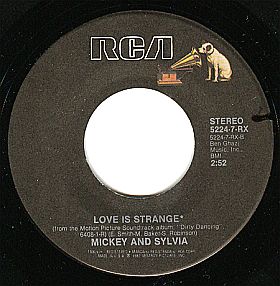
Date Posted:  3 December 2008
Last Update:  9 July 2017
Comments to: jackdoyle47@gmail.com

Article Citation:
Jack Doyle, “Stones Gather Dollars, 1989-2008,”
PopHistoryDig.com, December 3, 2008.

_____________________________
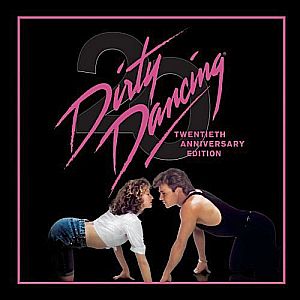

Rolling Stones at Amazon.com…

Best-selling, remastered Rolling Stones album, “Let It Bleed.” Click for copy.
Rolling Stones - “All The Songs” book. Click for copy.
Rolling Stones classic album, “Hot Rocks: 1964-1971”. Click for copy.


Sources, Links & Additional Information

Poster for 2008 Martin Scorsese film of Rolling Stones’ concerts.
Jay Cocks, “Roll Them Bones,” Time, Monday, September 4, 1989.

Peter Newcomb, “Satisfaction Guaranteed,” Forbes, October 2, 1989.

Constance L. Hays, “2 Generations of Fans Enjoy Rolling Stones’ Live Legacy,” New York Times, October 11, 1989.

Tom Harrison – Music Critic, “Keith Richards Sets The Tone,” The Vancouver Province, November 1, 1989.

Michiko Kakutani, Pop View, “Troubadours Of Fickle Time And Its Passing,” New York Times, September 4, 1994.

Richard Harrington, “That Old Jagger Edge; At RFK, the Stones Rock and Roll On,” Washington Post, August 2, 1994, p. F-1.

“Microsoft Throws Stones Into Its Windows 95 Ads,” New York Times, August 18, 1995.

David Segal, “With Windows 95’s Debut, Microsoft Scales Heights of Hype,”Washington Post, Thursday, August 24, 1995, p. A-14.

Jann Wenner, “Jagger Remembers: The Rolling Stone Interview,” Rolling Stone, December 14, 1995.

Michiko Kakutani, “Heart of Stones,” New York Times Magazine, October 12, 1997.

Richard Harrington, “Smooth Stones Roll Out The Oldies,” Washington Post, October 24, 1997, p. D-1.

Kelefa Sanneh, “Rolling Stones Revel in the Act of Survival,” New York Times, September 27, 2002.

Andy Serwer and associates Julia Boorstin and Ann Harrington, “Inside the Rolling Stones Inc.,” Fortune, September 30, 2002.

“A Conversation With Mick Jagger,” The Charlie Rose Show, Thursday, November 14, 2002

Roger Blackwell and Tina Stephan, Brands That Rock, Hoboken, NJ: John Wiley & Sons, 2004.

Jon Pareles, “Swaggering Past 60, Unrepentant,” New York Times, August 23, 2005.

J. Freedom du Lac, “Time on Their Side; The Rolling Stones, Still Rocking Like It’s 1995, or 1965,” Washington Post, October 4, 2005, p. C-1.

The Rolling Stones, No. 4, “The Forbes Celebrity 100,” Forbes, June 14, 2007.

Stephen Holden, “Only Rock ‘N’ Roll, but They’re Still at It,” New York Times, April 4, 2008.

“The Rolling Stones” and “Shine a Light,” Wikipedia.org, 2008.

_______________________________________________________
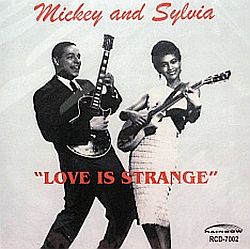

Seaside streets & Copacabana Beach in Rio de Janeiro, Brazil, 'filling up' with hundreds of thousands of onlookers & fans during the evening prior to Rolling Stones’ concert, February 2006.


Later that night -- February 18th, 2006 -- at the same venue on Copacabana Beach as Stones played to a ‘full house’ estimated at 1.5 million.


“Nike & The Beatles”
1987-1989

By 1987, Nike had passed 1 billion dollars in sales.
     In 1987, Nike, the famous athletic shoe manufacturer, had passed the $1 billion mark in corporate sales. Yet in those days, its chief competitor, Reebok, was the world’s No. 1 athletic shoe company.  

Nike was then in the process of revamping its advertising and marketing strategies and had already hooked up with a rising NBA basketball star named Michael Jordan. The company had also come up with a tag line for promoting a new group of Nike Air athletic shoes — “Revolution in Motion.”  But this campaign  needed some catchy music to use in its TV advertising to help launch the shoe.  That’s when Nike and its advertising agency, Weiden & Kennedy, got the idea of using the Beatles’ classic 1968 song, “Revolution” to help sell the shoes.

     However, Beatles’ music — at least in its original form as sung by the Beatles themselves — had never been used in a TV commercial before. In one case in 1985 the Beatles’ 1965 song “Help!” was used in a Lincoln-Mercury car ad, but the song was performed in that case by a sound-alike group. Nike’s ad agency, Weiden & Kennedy, wanted the real thing. “We never considered sound-alikes,” said the agency’s Kelley Stoutt, explaining Nike’s intentions for its “revolution” ad to Time magazine in May 1987. “In our minds,” said Stoutt, emphasizing the plan to use the original 1968 song, “it was the Beatles or no one.”

The Beatles, from left: John Lennon, George Harrison, Paul McCartney & Ringo Starr. Click for Beatles page at Amazon.com.
     In mid-1987, Nike made a deal to use the Beatles song in their ad campaign shelling out $500,000 to do so.  However, Nike didn’t make the deal with the Beatles, but rather, with pop star Michael Jackson and EMI-Capitol Records.  According to Time, Nike paid $250,000 to the record companies and a similar amount to Jackson to use the song for one year.  Jackson had acquired “Revolution” and 200 other Beatles tunes in 1985 when he paid $47.5 million to an Australian group for a catalog of some 4,000 songs, including the Beatles’ songs.  The Beatles, however, along with their record label, Apple, had decided after  the earlier use of “Help!” in the 1985 Ford Lincoln-Mercury ad, that there would be no more use of Beatles music in advertising.  Yet the Beatles didn’t own the rights to “Revolution” any longer; and Nike had paid its fee to Jackson and Capitol Records for the right to use the song.  How the Beatles lost control of “Revolution” and many of their other songs, and how Michael Jackson acquired them, is covered in part in another story at  this website — see “Michael & McCartney.”  Music publishing rights in the early 1960s were valued somewhat differently, and many performers didn’t always realize the full economic value of their songs.  The Beatles, for their part, had also made a few management mistakes along the way, and were not well served by some of their business partners and managers.  With the right advice at the time, the Beatles might well have retained full and clear control of “Revolution” and their other early songs.  Still, there is much more to this story than space permits here.

Record sleeve for 1968 Beatles’ singles ‘Hey Jude’ and ‘Revolution’. Click for digital versions at Amazon.
     In any case, by early 1987, Nike believed it had the legal rights to use “Revolution,” and proceeded to make the ad with the original Beatles music.  The ad began running on television in mid-March 1987.  Then, in the summer of 1987, the three surviving Beatles along with their record label, Apple, filed a lawsuit objecting to Nike’s use of the song.  The suit was aimed at Nike, its ad agency, Wieden & Kennedy, and Capitol-EMI Records.  The TV ad with the music — and there were at least four versions — continued to run as the litigation proceeded.


Song History

     “Revolution” was written by John Lennon in the spring of 1968, then a tumultuous time in the U.S. and Europe.  Vietnam War protests and other civil unrest had occurred.  In Paris that May, about the time Lennon wrote the song, student demonstrations had reached a fevered pitch.  A massive strike there and resulting riots led to the collapse of the government of Charles DeGaulle.  Lennon aimed his song at the world’s young revolutionaries, agreeing with their basic beliefs but advocating non-violence.  The song, which became the Beatles first venture into political territory, was recorded in Jully 1968 at Abbey Road studios in London.  It was released on B-side of the “Hey Jude” single in August that year.  The single reached No. 12 on the U.S. music charts.  The song was a product of the recording sessions for the Beatle’s White Album, and in fact, the original slower version of “Revolution,” sometimes called “Revolution 1,” appears on that album.

     The popular and more electric version of “Revolution,” and the one that became the subject of Nike’s advertising interest, was a hard-driving tune for the Beatles, one of the group’s loudest and most aggressive then to date.  It was a good bit different than a lot of their prior material.  In fact, for some, it presaged what would be called “heavy metal” music to come later.  “The Beatles position is that they don’t sing jingles to peddle sneakers, beer, pantyhose or anything else. …They wrote and recorded these songs as artists and not as pitch- men for any product.”
                          – Apple, July 18, 1987.
Still, it was basic rock ‘n roll, opening with a loud electric guitar, followed by Beatle vocals: “You say you want a revolution…,” then more guitars, electric piano, Beatle vocals with some screaming by John Lennon at one point.  But by the mid-1980s, nearly twenty years after the first recording of the song, John Lennon was dead, and Michael Jackson had acquired the song’s rights.  Nevertheless, in court, the surviving Beatles moved to protect their music.

     “The Beatles position is that they don’t sing jingles to peddle sneakers, beer, pantyhose or anything else,”said Apple’s attorney in a statement of July 18, 1987.  “Their position is that they wrote and recorded these songs as artists and not as pitchmen for any product.”  The Beatles charged that Nike “wrongfully traded on the good will and popularity of the Beatles” by using the song.  Capitol-EMI countered by saying the lawsuit was “groundless” because Capitol had licensed the use of “Revolution” with the “active support and encouragement of Yoko Ono Lennon, a shareholder and director of Apple.”  In addition to the legal action, there was also a backlash from Beatles fans to Nike’s use of the song, many saying that John Lennon would have objected.

“Revolution”
1968

You say you want a revolution
Well, you know
We all want to change the world
You tell me that it’s evolution
Well, you know
We all want to change the world
But when you talk about destruction
Don’t you know that you can
count me out
Don’t you know it’s gonna be all right
all right, all right

You say you got a real solution
Well, you know
We’d all love to see the plan
You ask me for a contribution
Well, you know
We’re doing what we can
But when you want money
for people with minds that hate
All I can tell is brother you have to wait
Don’t you know it’s gonna be all right
all right, all right
Ah

ah, ah, ah, ah, ah…

You say you’ll change the constitution
Well, you know
We all want to change your head
You tell me it’s the institution
Well, you know
You better free your mind instead
But if you go carrying pictures of
chairman Mao
You ain’t going to make it with
anyone anyhow
Don’t you know it’s gonna be all right
all right, all right
all right, all right, all right

     “If it’s allowed to happen,” said former Beatle George Harrison of the Nike deal in November 1987, “every Beatles song ever recorded is going to be advertising women’s underwear and sausages.  We’ve got to put a stop to it in order to set a precedent.  Otherwise it’s going to be a free-for-all.  It’s one thing when you’re dead, but we’re still around!  They don’t have any respect for the fact that we wrote and recorded those songs, and it was our lives.”  By February 1988, as Nike continued to use the ad and its music while the court fight proceeded, Paul McCartney said:  “[T]he most difficult question is whether you should use songs for commercials.  I haven’t made up my mind.  Generally, I don’t like it, particularly with the Beatles stuff.  When twenty years have passed maybe we’ll move into the realm where it’s okay to do it.”


Upbeat & Energetic

     The Nike ads that ran using the “Revolution” music, however, were well received by many who saw them.  One of the ads — showing a collage of quick-cut sports scenes that fit well with the music —  was generally upbeat and energetic.  It was purposely crafted by the producers to have the look of a grainy black-and- white home movie.  They wanted the ad to come across as “a kind of radical sports documentary,” and in 1987-88, it likely had that effect.  It showed a few quick clips of professional, well-known athletes — including very brief appearances of John McEnroe and Michael Jordan.  But there were also lots of shots of amateurs doing their own sports things — from joggers and tennis players, to toddlers, rope skippers, and air guitarists.  Some Madison Avenue managers at the time thought it was a coup for Nike to have used original Beatles’ music in the spot, calling the music “a very, very powerful tool.”  Others weren’t so sure, pointing to the anti-war demonstrations of the Vietnam War era when the song was first aired, suggesting that association might be the more powerful one.

     Meanwhile, as the litigation over the use of the music dragged on, Nike continued to air the ad.  At least four versions of the TV spot were produced and run, including one version with women joggers.  But finally, in March 1988, although the case was still in court, Nike decided to discontinue airing the ads using the “Revolution” song.  More than a year later, in November 1989 the Los Angeles Daily News reported that the “tangle of lawsuits between the Beatles and their American and British record companies has been settled.”  One condition of the out-of-court settlement was that terms of the agreement would be kept secret.  The settlement was reached among the three groups of interests involved: the former surviving Beatles — George Harrison, Paul McCartney, and Ringo Starr — John Lennon’s wife, Yoko Ono; and the music businesses, Apple, EMI, and Capitol Records.  A spokesman for Yoko Ono noted of the lawsuit and settlement, however,  “It’s such a confusing myriad of issues that even people who have been close to the principals have a difficult time grasping it.  Attorneys on both sides of the Atlantic have probably put their children through college on this.”


Sells Music, Too

Cover sleeve used in South Africa for Beatles' single recordings, "Revolution" and "Hey Jude."
     Turns out that the Nike “Revolution” ad not only helped to sell lots of Nike athletic shoes, but also helped to sell, re-energize, and introduce the Beatles’ music to a whole new generation of listeners.  In fact, according to one blogger who was in high school at that time, Nike’s ad helped introduce him and his peers to the Beatles’ music.  “As a kid entering high school and discovering music, hearing “Revolution” every night on TV opened my eyes and ears to the whole world of Beatles music,” he writes at his blog, dsicle.com.  “Suddenly, the Beatles weren’t just dusty records on my parent’s shelf, they were current, popular musicians.”  He adds that in 1987 there were certain songs guaranteed to be played at every high school party, including: “Fight For Your Right” by the Beastie Boys, “It’s Tricky” by RUN-DMC, “Lean On Me” by Club Nouveau – and also “Revolution” by the Beatles.  “As amazing as it sounds,” he writes, “a 20 year-old Beatles song was popular with high school kids–no doubt spurred by the Nike Air Max ‘Revolution’ commercial.”

     During the summer of 1987, the Beatles’  White Album, which contained a version of “Revolution,” was released on CD for the first time, reaching No. 18 on the Billboard albums chart nearly 20 years after its original release.

John McEnroe in Nike ad.
     In the advertising world, meanwhile, the Nike “Revolution” ad was given high marks, seen as an excellent example of how advertising and iconic music can help with “branding” a product, elevating it in the minds of consumers, and distinguishing it from its competitors. Some advertising wags even say the 60-second ad played an important role in creating the Nike brand. 

The ad’s mixture of famous athletes like Michael Jordan and John McEnroe with everyday, average-person joggers and weekend athletes also had a pointed effect, as author John Katz observes in his 1994 book on Nike, Just Do It:

Michael Jordan in Nike ad, briefly.

The message seemed designed to diminish the distance between the greatest athletes and people who play and exercise for fun.  Though Nike dogma would have previously precluded the potential muddying of a great athlete’s image, the carefully contrived commercial ennobled every kid, pro athlete, and duffer who appeared.  With the Beatles in the background, the commercial was like a sixty second celebration.  And the shoes moved out of the stores.

     Indeed, the Beatles’ music, mixed with the powerful sports images, helped give this ad an emotional tone and power, as marketing consultant Tim Glowa observed in 2004:  “This commercial illustrates how television advertising can become the ultimate emotion builder….and demonstrates that a brand can be emotional and thought provoking.”


Key Business Event

     Some years later, TheStreet.com, a business-oriented website,  ran a piece commemorating the top 100 business events that shaped the 20th century.  Nike’s Revolution ad made the cut at No. 97.  The Street.com claimed the ad worthy of joining the 100 key events since it helped “commodify dissent,” as the editors put it, creating a new genre of advertising. The Street.com named Nike’s ad to its list of 100 key business events, saying it helped “commodify dissent”. “It’s not the first time the ideals of the 1960s — freedom, individuality, anti-materialism, dissent — are called upon to push product,” said the editors.  “But it may stand as the biggest co-optation. …Now it’s almost impossible to escape ads that sell not just products, but breaking the rules, dude.”

     True, like the use of other rock tunes in advertising, Nike’s “Revolution” ad and the litigation that followed, further pushed the envelope on the use of popular music in advertising.  “The Nike ‘Revolution’ use was monumental in many ways,” explained Josh Rabinowitz, director of music at the Grey Group in a 2009 Ad Week piece.  Not only did the ad “resonate with the visuals and concept,” said Rabinowitz, it also “really opened the door to high-concept ads utilizing great — and expensive — music.”  Nike’s Revolution ad also broke ground for “a cottage industry of commercial music-licensing experts and internal commercial-licensing resources,” according to Rabinowitz.  In fact, entire departments in those specializations were created at record labels and music publishers, “because nobody wanted to get embroiled in that type of legal nuisance again.”  Still, there would be more legal battles to come.  Yet by the 1990s, what was once a valiant effort by artists to keep their music out of the commercial advertising arena appeared to be wearing down as more and more songs would be incorporated into advertising.  Stay tuned to this site for those stories and others related to the “music-and-advertising” issue.

Please Support
this Website

Donate Now

Thank You

     Find other Beatles stories at the “Beatles History” topics page, such as: “Beatles D.C. Gig, 1964”, “Dear Prudence, 1967-1968,” and others. Additional stories on advertising can be found at the “Madison Avenue” category page. Thanks for visiting — and if you like what you find here, please make a donation to help support the research and writing at this website. – Jack Doyle

______________________________________________

Date Posted:  27 September 2008
Last Update:  26 August 2024
Comments to: jackdoyle47@gmail.com

BlueSky: jackdoyle.bsky.social

Article Citation:
Jack Doyle, “Nike & The Beatles, 1987-1989,”
PopHistoryDig.com, September 27, 2008.

___________________________ 


Beatles Music at Amazon.com…


The Beatles: 1967-1970, “The Blue Album,” 28 songs. Remastered.  Click for Amazon.
The Beatles: 1967-1970, “The Blue Album,” 28 songs. Remastered. Click for Amazon.
“The Beatles 1,” Remastered (2000), 27 songs. Click for Amazon.
The Beatles, “Abbey Road” album, Remastered (2009). 17 songs.  Click for Amazon.
The Beatles, “Abbey Road” album, Remastered (2009). 17 songs. Click for Amazon.


Sources, Links & Additional Information

Sheet music for the Beatles 'Revolution.'
Jay Cocks,  Elizabeth L. Bland, New York, and Elaine Dutka, Los Angeles, “Wanna Buy a Revolution?,” Time,  Monday, May 18, 1987.

Associated Press, July 18, 1987.

Mark Potts, “Got to Get You Out of Our Life; Former Beatles Sue Over Use of Song in Nike Commercial,” Washington Post, July 29, 1987, p. F-1.

“EMI Calls Beatles Suit `Absurd’,” Washington Post, July 30, 1987, p. E-1.

Janice Kalmar, “Nike Vows to Continue Using Beatles Song in Ads,” United Press International (UPI), August 4, 1987.

Jon Pareles, “Nike Calls Beatles Suit Groundless,” New York Times, August 5, 1987.

Mark Potts, “It’s a Long and Winding Lawsuit; Beatles Seek $80 Million From EMI-Capitol, Also End to `Revolution’ Ad,” Washington Post, August 9, 1987, p. H-1.

Phil Knight, “Shoe Dog: A Memoir by the Creator of Nike,” 2016 NYTimes bestseller, Scribner, 400 pp. Click for copy.

Los Angeles Daily News, November 9, 1989.

Robert Fontenot, “Revolution: The History of This Classic Beatles Song,” About.com.

David E. Long, “Nike Strikes Up A Revolution,” The Gavel (Cleveland-Marshall College of Law), September 1987.

“The Basics of Business History: 100 Events That Shaped a Century,” The Street.com, December 6, 1999.

Bernice Kanner, “100 Best TV Commercials,” The Chief Executive, June 1999.

“The Beatles Song” at “Nike, Inc.” profile, Wikipedia.org.

“Beatles Buy-Out: How Nike Bought the Beatles’ ‘Revolution.”‘ Dispatch,  November 3, 1994.

Associated Press, “Nike To Kill Beatles TV Ads As Song Rights Challenged,” Ocala Star-Banner, February 25, 1988, p. 7-B.

Dsicle, “Revolution,” Dsicle.com, Monday, September 19, 2011.

Tim Glowa, “White Paper: Advertising Process Models,” North Country Research Inc., Calgary, Canada, June 24, 2002.

Donald Katz, Just Do It: The Nike Spirit in the Corporate World,” New York: Random House, 1994, 336pp. Click for copy.

“The 5 Worst (and Best) Ad Songs of All Time,”AdWeek.com, June 2, 2009.


Beatles Books at Amazon.com…
 

Ian MacDonald’s book, “Revolution in the Head: The Beatles' Records and the Sixties,” 544 pp, 3rd edition, 2007. Click for copy.
Mark Lewisohn’s book, “Tune In: The Beatles: All These Years,” 2016 paperback edition, NYTimes Bestseller, Click for copy.
Peter Doggett’s book, “You Never Give Me Your Money: The Beatles After the Breakup,” 416 pp, Harper paperback, 2011. Click for copy.


“A Star is Born”
1910s

Cover of Kelly Brown’s book on Florence Lawrence, Hollywood’s first movie star. 2007 paperback edition. Click for Amazon.
      The movie industry of the early 1900s, during the silent film era, was not the star-centered commercial enterprise it is today.  Most actors, in fact, labored in obscurity.  And film makers liked it that way.

The film studios then were out to produce a cheap, standardized product and part of the strategy was to keep actors anonymous and low paid.  Indeed, most actors of that day focused on the Vaudeville stage, and many, in fact, thought it down right horrid to work in the “flickers.”

     But during the early 1900s, the seeds of change were being sown, as a few actors tried some self-promotion in the trade press, and film exchange owners were also beginning to see that audience familiarity with actors was good for business. Still, one of the most popular actresses of that day was Florence Lawrence of the Biograph Studios. But Lawrence was not known to movie fans by her real name.  A Canadian in her twenties, Lawrence had already made 38 films for the Vitagraph Co. before coming to Biograph. But even at Biograph, though her face was well known, she was simply known to the public as “The Biograph Girl.” Then came a film producer named Carl Laemmle.

     Laemmle, born into a Jewish family in 1860s Germany, had come to the U.S. when he was 17. He opened a Chicago nickelodeon some years later, and moved into film distribution in the Midwest. By 1909, after fighting with inventor and film-maker businessman Thomas Edison over film distribution rights, he established his own film production company, the Independent Motion Picture Company of America, also known as IMP. “Biograph Girl” Florence Lawrence, meanwhile, had a falling out with her employer, and Laemmle hired her to his company. Laemmle then went about creating some first-of-a kind publicity to introduce her.


Biograph Girl Dead !

Copy of ad on the 'Florence Lawrence incident,' which mentions IMP's new film.
     Although there are some variations of the story, plus a degree of myth-making added over the years, the gist of what happened appears to be roughly along the lines that follow.  In February 1910, Laemmle planted a fictitious news story that the actress had been killed in a street-car accident. Newspapers and magazines were the only real “media” then, and key to spreading a story of the kind Laemmle had created.  After Laemmle gained press attention for his false story, he then placed ads in newspapers and the movie trade press that the story about Lawrence’s death was, in fact, a lie.  In the March 12, 1910 edition of Moving Picture World, a full-page announcement appeared explaining that Biograph — angry over losing its “Biograph girl,” Lawrence, to Laemmle — had created the false story.  This announcement also included a small photo of Lawrence and explained, by the way, that she was making a new movie for Laemmle’s IMP called, The Broken Oath, and that “very shortly, some of the best work of her career” would be released (in the ad, the film’s title was misspelled as “The Broken Bath”).

Florence Lawrence, the new "star".
     Laemmle then arranged for — and publicized — a personal appearance for his soon-to-be-star, along with her leading man, King Babbott, and the film’s director, in St. Louis, Missouri. They  made two appearances at St. Louis theaters — the Gem and the Grand Opera House. According to Karen Ward Mahar, writing in Women Filmmakers in Early Hollywood: “The St. Louis Times announced their arrival by train, planned a welcome party,  and offered a clip-out coupon to female fans who would receive a photograph of Lawrence upon presenting it to the actress.” Lawrence “was mobbed by a huge crowd of fans, who tore the buttons off her coat.” It was the first staged media appearance by a film star. At the event Lawrence “was mobbed by a huge crowd of fans, who tore the buttons off her coat,” according to historian Robin Cross. Lawrence that day in St. Louis drew more people to her coming out event than had the President of the United States, William Howard Taft, who had visited the city a week earlier.  Thus, with this event and its generated press, “a star was born,” created by the studio head Carl Laemmle, who would later help found Universal Studios.  Before long, Florence Lawrence became a well-known film personality and a household name.  Laemmle — with the help of a growing print media at the time — had created the early outlines of the Hollywood “star system,” though it wasn’t called that at first. No longer would movie actors and actresses labor in obscurity, or go unnoticed or unnamed. Again, Karen Ward Mahar, writing in Women Filmmakers in Early Hollywood, notes: 
Carl Laemmle, founder of the IMP film company, staged the Florence Lawrence event, making her America's first 'film star'.

…A mere two months after Lawrence’s live appearance in St. Louis, Moving Picture World’s “Man About Town” [magazine column] professed astonishment at “the interest the public has taken in the personality of many of the picture players.”  Letters allegedly poured into the offices of film manufacturers and exchanges, from both men and woman, asking for autographed photos of their favorite leading actors. One actress [Florence Turner] claimed to have received three thousand offers of marriage just three months after the Lawrence incident. By the end of 1910, Moving Picture World’s “Picture Personalities” column profiled Flor-ence Turner of Vitagraph, Mary Pickford of Biograph, and Pearl White of the Powers film manufacturing company. Even if it did not invent the film star, the Lawrence incident signaled to the industry that the star had arrived [emphasis added].


“Famous Players”

Mary Pickford, who followed Florence Lawrence as the ‘Biograph Girl,’ soon became a giant star with Adolph Zukor.
     Other fledgling Hollywood studios by this time were also moving toward promoting the names of actors to make them popular. In 1912, Jewish emigree Adolph Zukor established a film distribution business using the moniker “Famous Players in Famous Plays.”

Zukor soon found himself running a business that sought to bring noted stage and Vaudeville actors to the screen, one of whom was a child actress named Mary Pickford. 

Pickford, in fact, had initially followed Florence Lawrence as the Biograph Girl.  However, by 1913 the Famous Players Film Company was established, producing The Prisoner of Zenda.  That year, Zukor told Mary Pickford’s mother, “if feature pictures succeed, we expect to pay according to the drawing power of the box office.”

Theda Bara, starring in 'Cleopatra.'
     By 1915 Pickford was on a salary of $10,000 a week — a huge amount at the time — and her drawing power became the foundation of the evolving Zukor empire which,  after a series of business deals, became Paramount Pictures with Zukor as president.  At Paramount, Zukor revolutionized the film industry by organizing production, distribution, and exhibition within a single company.  But it was the movie stars like Pickford and others who became the collateral on which the film companies could borrow huge sums of money.

     Another film maker who helped push the early star system forward in the 1910s was William Fox. A German-Jewish immigrant like Carl Laemmle, Fox had made a fortune in the film exchange business. By 1915, he went into film production as head of the Fox Film Corporation.  But Fox needed a star, and his solution was simply to create one.

Fox transformed a somewhat “plain Jane” stage actress named Theodosia de Coppet (Goodman), into the screen’s first ‘vamp’ and million-dollar star, Theda Bara.  His early movies with Bara, such as A Fool There Was (1915), produced the funds to help found the Fox Film Corporation, while others with Bara like Cleopatra (1917) helped make Fox a successful studio.

Clara Bow, 1921, among the early film stars signed by Paramount’s Adolph Zukor, an early booster of Hollywood’s ‘star system’.
     Carl Laemmle was on the rise by then too, becoming a partner in 1912 in the Universal Film Manufacturing Company.  Known later as simply Universal or Univeral Studios, Laemmle  would eventually become its sole owner.  In March 1915, Laemmle, amid much publicity,  opened his new Universal City studios on the north side of the Hollywood Hills.  Built on some 230 acres of farmland, it was world’s largest motion picture production facility.  Hollywood was now the place where more and more films were being made, shifting from its former New York and New Jersey base.  In 1915 alone, over 250 pictures poured out of the Laemmle’s Universal City studios, most of them two-reelers and serials.

     Adolph Zukor at Paramount, meanwhile, developed many of the leading early film stars.  In addition to Mary Pickford, Zukor would also sign Douglas Fairbanks, Gloria Swanson, Rudolph Valentino, Clara Bow, and Wallace Reid.  With so many “famous players,” Zukor’s Paramount was able to introduce block booking, which meant that an exhibitor who wanted a particular star’s films had to buy a year’s worth of other Paramount productions.  It was this system that gave Paramount a leading position in the 1920s and 1930s.  It also later led the government to pursue the company on anti-trust grounds.  In any case, it was the early star system that helped build the Hollywood studios into the business giants they would become.


Celebrity & Fan Culture

     “The Famous Players were now more important than the Famous Plays,” film historian Robin Cross would later say of the changing film industry in the 1910s.  Celebrity culture was on its way, now given a much larger reach in those early days of film promotion. But celebrity culture would go well beyond film, becoming a powerful force in its own right and a key part of entertainment and marketing economics in the years to come.Celebrity culture — born in the early movie star sys-tem of the 1910s, fueled by the urban masses — would go well beyond film & Hollywood. For celebrity culture would not only rise in Hollywood and film, but also in radio, sports, and later television, spawning a host of new specialties and cottage industries, from talent agencies to a vast new advertising industry.

     There is, of course, a lot more detail on the history and rise of the Hollywood star system.  But it does appear that “mass appeal stardom” first took hold in the film industry of the 1910s in part through the actions of business-wise film makers and promoters like Carl Laemmle, Adolph  Zukor, William Fox, and others.  This “movie star” phenomenon was soon spread to the urban masses by the eager newspaper and magazine industries, forming a “celebrity press” that stoked the rise of celebrity and fan culture that followed.

     See also at this website, “Talkie Terror, 1920s” (the revolutionary arrival of “talking pictures” in Hollywood and what that meant for actors, producers, and the film production process); “Pearl White, 1910s-1920s” (history of a silent film star & early female action figure); and “Anna Q. Nilsson, 1910s-1920s”(Photoplay magazine art, early Hollywood cover girls, and the history of a Swedish immigrant silent film star). For additional film history and celebrity-related story choices see the “Film & Hollywood” category page and the “Celebrity & Icons” category page.

Thanks for visiting – and if you like what you find here, please make a donation to help support the research, writing, and continued publication of this website. Thank you. – Jack Doyle

Please Support
this Website

Donate Now

Thank You

___________________________
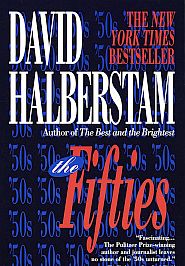
Date Posted: 30 October 2008 
Last Update: 16 September 2017
Comments to: jackdoyle47@gmail.com

Article Citation:
Jack Doyle, “A Star is Born, 1910s,”
PopHistoryDig.com, October 30, 2008.

Twitter: JackDoyle/PopHistoryDig
BlueSky: jackdoyle.bsky.social

_____________________________
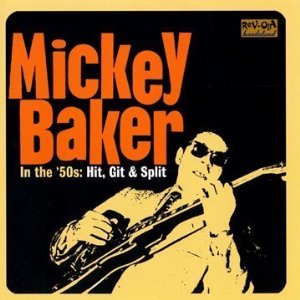

Related Reading at Amazon.com…


Landon Y. Jones, “Celebrity Nation: How America Evolved into a Culture of Fans and Followers,” 2023, Beacon Press, 216 pp. Click for Amazon.
Susan J. Douglas & Andrea McDonnell, “Celebrity: A History of Fame,” 2019, NYU Press, 336 pp. Click for Amazon.
Sharon Marcus, “The Drama of Celebrity,” 2020, Princeton University Press, paperback, 328 pp. Click for Amazon.


Sources, Links & Additional Information

Robyn Karney (ed.), Cinema Year By Year, 1894-2005, London: Dorling Kindersley, Ltd., 2005, p.79.

“Paramount Pictures,” Wikipedia.org

Eileen Bowser, The Transformation of Cinema, 1907-1915 (History of the American Cinema, 2), Berkeley & Los Angeles: University of California Press, May 1994, 337 pp.

Karen Ward Mahar, Women Filmmakers in Early Hollywood,  John Hopkins University Press, 2006, 332 pp.

Kelly R. Brown, Florence Lawrence, The Biograph Girl: America’s First Movie Star, North Carolina, McFarland & Co., 2007, 230 pp.


Also at This Website. . .

Jack Doyle, “Talkie Terror, 1920s”(the revolutionary arrival of “talking pictures” in Hollywood and what that meant to actors, producers, and the film production process), PopHistoryDig.com, October 19, 2010.

Jack Doyle, “Pearl White, 1910s-1920s”(history of a silent film star & early female action figure), PopHistoryDig.com, April 26, 2008.

Jack Doyle, “Anna Q. Nilsson, 1910s-1920s” (Photoplay magazine art, Hollywood cover girls, and the history of a Swedish immigrant silent film star), PopHistoryDig.com, March 29, 2008.

___________________________


“Big Chill Marketing”
1980s-1990s

Poster for the 1983 film, with subhead above that reads: 'The story of eight old friends searching for something they lost, and finding that all they needed was each other.' For many Baby Boomers who saw this film, the soundtrack was especially memorable, a fact not lost on Madison Avenue.
     In September 1983, a movie named The Big Chill was released — a story about eight former 1960s’ college friends who gather for an unscheduled reunion after a friend’s untimely death. The Columbia film was nominated for, but did not win, three academy awards, including Best Picture.

The Big Chill did reasonably well at the box office and also in its DVD afterlife, and today still has fans online and elsewhere. 

But for many who first saw the film in 1983, it was the soundtrack — an evocative collection of original 1960s rock ‘n roll tunes — that was especially memorable and enduring.  In fact, the movie’s music became something of a key landmark in the history of advertising, as it would help to spur the use of original rock music in a myriad of advertising applications in the years that followed. 

Prior to The Big Chill, for the most part, popular rock musicians sang company jingles, or advertisers used copied versions of their songs, performed by imitators and studio groups. But after The Big Chill, there was a decided turn by Madison Avenue to use original rock ‘n roll songs, or portions of them, in all kinds of advertising. 

“…[T]he movie probably gave far too many ad agencies the notion to buy up the rights to 60s’ songs for use in pushing the nostalgia buttons of key-demographic consumers,” later wrote Ken Tucker in The New York Times.  

Indeed, by the mid-1980s oldies rock ‘n roll had reached vintage nostalgic value among middling Baby Boomers, who were then arriving by the millions in their full, prime-time spending years. And while it wasn’t the only factor, The Big Chill certainly helped persuade Madison Avenue to begin using original-track rock ‘n roll more prominently in their advertising. In fact, a few industry wags would call the practice “Big Chill advertising.” 

Big Chill Music
1983 Soundtrack
[click titles for Amazon singles]


“I Heard it Through the Grapevine”
Marvin Gaye (1968, #1)
“You Can’t Always Get What You Want”
The Rolling Stones (1973, #42)
“A Whiter Shade of Pale”
Procol Harum (1967, #5)
“Tracks of My Tears“(1965, #16)
Smokey Robinson & The Miracles
“Wouldn’t it Be Nice“(1966, #8)
The Beach Boys
“Tell Him“ (1963, #4)
The Exciters
“The Weight“(1968, #63)
The Band
“Good Lovin’“(1966, #1)
The Rascals
“Strangers in the Night”
Instrumental
“Gimme Some Lovin’“(1967, #7)
Spencer Davis Group
“Bad Moon Rising“ (1969, #2)
Creedence Clearwater Revival
“Ain’t Too Proud to Beg“(1966, #13)
The Temptations
“When a Man Loves a Woman“(‘66,#1)
Percy Sledge
“A Natural Woman“(1967, #8)
Aretha Franklin
“In the Midnight Hour”
The Rascals
“I Second That Emotion“(1967, #4)
Smokey Robinson & The Miracles
“Joy to the World“(1971, #1)
Three Dog Night
“Quicksilver Girl“(1968)
The Steve Miller Band
“My Girl“(1965, #1)
The Temptations

___________________
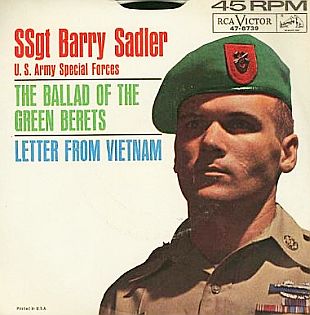
Songs listed by approximate appearance in the film. 

What follows below is some history on Madison Avenue’s use of rock music in advertising; but first, a few words on The Big Chill’s storyline and its musical packaging.


The Film

The Big Chill is an introspective film featuring a weekend of soul searching by the group of college friends who have lost one of their former inner circle to suicide, activist Alex Marshall (Kevin Costner played the corpse).  The film’s star-studded cast included Glenn Close, William Hurt, Tom Berenger, and Jeff Goldblum, among others.

The story opens at the funeral of Alex, as his death is the first unpleasant bit of reality to hit the group. They soon become immersed in a “ten-years-later” reality check on what they each have become since their college days.

Included among this group of friends are: a medical doctor; an owner of athletic shoe company; a TV actor; a public-defender-turned-corporate-lawyer; an aimless and somewhat traumatized Vietnam veteran; a bored-to-tears housewife; a People magazine writer; and an attractive, somewhat younger woman who was living with the departed Alex at the time of his suicide.


Big Chill Sampler
“A Whiter Shade of Pale”-Procol Harum

This assorted mix of characters retires from the funeral to the South Carolina home of one of the group, where they each work through their various feelings, concerns and hopes during the weekend. They eat, drink, cavort, reminisce, dance, smoke dope, and bare their souls. They fondly recall their college days and their causes, but also confront their disappointments and the waning of their idealism.

Though never stated per se, “the big chill” has hit them; the reality that their undergraduate dreams and intentions are not being realized. Their lives and careers have not turned out exactly as they envisioned them in college. Turns out, life is more difficult and less inspiring than what they thought it would be.

In the end, after the weekend of soul-searching, some find new direction, some not. Others pick up where they left off. The film’s viewers, meanwhile, are fully engaged with the message, and also with the excellent soundtrack, as music becomes a big part of the film’s take-away connection.


The Music 

The Big Chill soundtrack, in fact, is top shelf; some of the best music of the 1960s, placed nicely in the film’s storyline, hitting its intended viewers in their deepest memory banks and remaining in their heads for days after seeing the film. During the church scene at the funeral of the departed Alex, the campus revolutionary, one of the group begins to play a few riffs of Alex’s favorite song on the church organ — the Rolling Stone’s “You Can’t Always Get What You Want” — as the camera pans the knowing smiles of his friends’ faces. The organ riff segues into the original tune which plays throughout the funeral scene.


Big Chill Sampler
“Tell Him” -The Exciters

In another scene in the kitchen where the group is cleaning up after a pasta and wine fest, The Temptations’ “Ain’t to Proud to Beg” is played, leading to impromptu dancing among friends.  “The scene encapsulates the spirit of the film,” one reviewer would later write, “friendship forged in the footloose optimism of the 60’s; camaraderie instantly regained through the nostalgic power of good pop music.” (see film promo clip).

Other tunes in the film — such as “A Natural Woman” by Aretha Franklin; “Wouldn’t it Be Nice” by the Beach Boys; “The Weight” by The Band; “Bad Moon Rising” by Creedence Clearwater Revival; “Tracks of My Tears” by Smokey Robinson; “I Heard it Through the Grapevine” by Marvin Gaye; and “A Whiter Shade of Pale” by Procol Harum — all fit nicely into their scenes, serving as a kind of “comfort food” for Boomers.  The Big Chill soundtrack, in fact, quickly became a popular best-seller for Motown, climbing to #17 on the Billboard albums chart in 1983, selling 1 million copies by late March 1984.  All of this, of course, was not lost on Madison Avenue.

     The Big Chill wasn’t the first movie to use original rock ‘n roll music in a soundtrack.  Other films dating to the 1950s had already done so — such as 1955’s Blackboard Jungle, which used Bill Haley’s “Rock Around The Clock” over the opening and closing credits.  The Beatles were among the first to integrate film and original rock music in their mid-1964 A Hard Day’s Night, which used about a dozen of their songs.  Easy Rider of 1969 used rock music effectively in its score, and so did American Graffiti in 1973, the latter in a purposeful nostalgic vein.  Madison Avenue, meanwhile, had a long history of using all kinds of music in advertising.  However, rock ‘n roll music in advertising — especially original-version rock ‘n roll — was still new territory for advertisers in the early 1980s.


Pre Big Chill: 1960s-1985

In fact, prior to the mid-1980s, original rock ‘n roll music had pretty limited and spotty use in advertising.  Rock and popular recording artists were commissioned to sing company jingles or musical spots for various products using company-provided lyrics or compositions.  In 1963,  the folk music group The Limeliters helped inaugurate a series of radio ads for the Coca-Cola company.  They also did a few early TV ads.  The Shirelles, one of the popular “girl groups” of the early 1960s, were among the first pop acts chosen by Coke to record radio commercials, doing a series of those ads for the company over several years.  Among others who did Coke ads in 1965, and whose names appeared on vinyl promo recordings produced by Coke’s ad agency McCann-Erickson, were: the Four Seasons, Roy Orbison, Jay & the Americans, Jan & Dean, and others. In the 1965-69 period, for example, one Coca-Cola historian found 63 Coke radio spots by popular artists, including one by Freddie and the Dreamers singing one Coke lyric to their tune “I’m Telling You Now.”

Sample label from 1965 advertising recording of Coca-Cola jingles produced by ad agency McCann-Erickson featuring artists Roy Orbison and Jan & Dean
     Among other Coke artists doing radio and/or TV spots during this era and later years were: the Bee Gees, Neil Diamond, the Moody Blues, the Tremeloes, the Troggs, Los Bravos, the Everly Brothers, Otis Redding, the Box Tops, Leslie Gore, Marvin Gaye, the Supremes, and Ray Charles.  Pepsi, 7-Up, and a number of other companies were then recording jingles with pop groups as well.  In the U.K., the young Rolling Stones recorded a rock jingle in the 1960s for Rice Krispies cereal that appeared on a European TV spot.  Still, most of this music was commissioned specifically for the product, and did not use original, pre-existing rock songs.  The nostalgic and “associative” value of these original rock songs, aimed at specific target groups, had yet to be linked to advertising pitches.

By the late 1970s, rock music was surfacing in a few other TV formats, as the 1976 Orleans hit, “Still the One” started to be used as the ABC-TV network theme song and also by the Nine Network in Australia for the same purpose.  In 1981, there were musicians hooking up with beer and liquor companies in a variety of relationships, some of which involved TV and radio spots, doing company jingles, appearing in print ads, or becoming involved in sponsorship arrangements.  These included Dave Mason of Traffic and later Fleetwood Mac, and Charlie Daniels of the Charlie Daniels Band doing beer commercials — Mason for Miller and Daniels for Busch.  The Commodores became involved with Schlitz beer; Kool & The Gang with Schlitz Malt Liquor, Journey joined Budweiser, and The Marshall Tucker Band with Ronrico Rum. In the 1960s and 1970s, the nostalgic and “associa- tive” value of original rock  `n roll music had yet to be linked to specific advertis- ing pitches. Ad agencies in the early and mid-1980s were also using some popular song melodies, but inserted their own product-specific lyrics usually performed by cover groups.  As writer Carrie McLaren noted in research she’d done on this history: the Platters’ “Only You” became “Only Wendy’s”; the Diamonds’ “Little Darlin'” became KFC’s “Chicken Little”; Buddy Holly’s “Oh Boy” became “Oh Buick!”; Jerry Lee Lewis’ “Whole Lotta Shakin’ Goin’ On” became Burger King’s “Whole Lotta Breakfast Goin’ On”; Danny and the Juniors’ “At the Hop” becomes “Let’s Go Take a [Granola] Dip”; and Bobby Darin’s “Mack the Knife” became “It’s Mac Tonight.”  In mid-1982, a version of the Beach Boys’ ”Good Vibrations” was being used in a Sunkist ad.  By this time too, MTV, “music television,” was becoming a force.  Launched in August 1981, the whole point of MTV was to use music videos to sell music.  But it also had a major impact on advertising.  By early 1984, for example, super pop sensation and MTV star Michael Jackson, then of “Thriller” and “moon walk” fame, had made two TV spots for Pepsi — ads that used Pepsi lyrics to the beat and sound of Jackson’s popular “Billie Jean” song in Pepsi’s “new generation” campaign.


Boomer Connection

Meanwhile, on another level, The Big Chill of 1983-84 helped show advertisers the way to a new kind of advertising to Baby Boomers through the rich connection to original rock songs.  “It became prevalent in the mid-’80s after The Big Chill came out,” according to Ray Serafin, an automotive writer for Advertising Age.  Many of the spots that followed The Big Chill, he explained, were trying “to evoke an emotional connection.” By the time of The Big Chill , the evocative con- nection between the ’60s music and its Boomer audience had become especially ripe. By the time of The Big Chill in 1983-84, the evocative connection between the music and its Boomer audience had become especially ripe.  More years had elapsed between the music’s initial popularity and Boomers’ middling years.  The music had, for this group, reached its “prime-time nostalgic vintage,” and so, had a more powerful appeal and connection.

In both film and advertising psychology, the music-emotion tie is a well-studied phenomenon, and has become a valued strategy.  Movie producers know that the right music in a movie scene can make the scene more powerful, more memorable.  Hollywood producers would pay hundreds of thousands of dollars to get the legal rights to use the right song in the right spot.  Advertisers by the mid-1980s were willing to do the same.


Ford’s Yuppie Ads

In 1985, Ford Motor Company’s advertising agency, Young & Rubicam (Y&R), became an early developer of this approach, producing a series of 19 television commercials using 1960s and 1970s music.  These ads were used to pitch Ford’s Lincoln-Mercury cars.  Ford and Y&R called their advertising “The Yuppie Campaign” — meaning “Young Urban Professional” or “Young Upwardly Mobile Professionals,” describing a desirable Boomer market segment.  The aim of the Ford/Y&R campaign was to make an emotional connection with Yuppies, bringing back memories of when they were in college. Different popular songs were used on each commercial, some in the original, some by imitators.

Bette Midler Case
1986-1988

     Back in 1985, when the Ford Motor Co. and its ad agency, Young & Rubicam, Inc., launched a series of 19 television ads with rock ‘n roll music in their “The Yuppie Campaign,” one of the songs used was a 1973 Bette Midler tune, “Do You Want to Dance.” With some of the songs Young & Rubicam chose for this campaign, they tried to obtain the original song versions. However, in ten cases the ad agency employed “sound-alikes” and not the original artists or original versions. One of the “sound-alikes” imitated Bette Midler in her song “Do You Want to Dance.” Midler by then was a nationally known actress and singer who had won a 1973 Grammy as Best New Artist, and also had recordings that had gone Gold and Platinum. She was also nominated in 1979 for an Academy award for Best Female Actress in The Rose, in which she portrayed a pop singer Janis Joplin. Midler had a long history of avoiding commercial endorsements, and in fact had refused Ford’s offer to do the ad herself. When the backup singer produced a very Midler-like version of the song for Ford — a version that even fooled Midler’s friends — Midler took legal action.

     In 1986-87, Midler sued Lincoln-Mercury and Young & Rubicam, alleging that the use of a sound-alike in their ad constituted “an unlawful misappropriation of her persona.”  She lost her first attempt when her case was dismissed at the trial court level. But the Ninth Circuit Court of Appeals came to her aide in a 1988 decision, noting that, “… when a distinctive voice of a professional singer is widely known and is deliberately imitated in order to sell a product, the sellers have appropriated what is not theirs and have committed a tort in California.”  She was also awarded $400,000 by the jury. Midler’s success — which came to be known as the “Midler tort” in California — put a damper on the use of sound-alikes. But soon, outright licensing of original songs became the preferred way to go for commercial interests, although many artists would not go down that path.

In early March 1985, for example, Lincoln-Mercury used the music from the Beatles song “Help”in one of their ads — though the tune in this case was sung by other artists, not the Beatles.  Still, it was the first time that a Beatles song was used in an American TV spot, and Lincoln-Mercury paid $100,000 at the time to use it.  After that, The Beatles refused to allow their music to be used in commercials, though that would change after a later battle with Nike.  Other artists whose music was used in the Lincoln-Mercury ads — either in the original or by imitators — included Bette Midler, the Coasters, the Four Tops, the Temptations, Tina Turner, and Martha & the Vandellas.

Among artists and fans, meanwhile, there was resistance to using rock ‘n roll songs in advertising and other commercial applications.  Some artists refused to allow their songs to be used for advertising. Among artists in the mid-1980s then resisting the practice were, for example, Bruce Springsteen, Neil Young, Joan Jett, Chrissie Hynde, Billy Idol, and John Mellencamp.  Some music fans would object to the practice in more fundamental way.

Carrie McLaren, writing some years later about music and advertising, described how she associated a car commercial with the song “Everyday People” by Sly and Family Stone. After casually hearing the song on a radio at a bagel shop, she caught herself in thought, angered by the car-ad association. Rather than remembering the artist per se, or “the everybody-can-get-along” message of the song, or even her college days when she first heard the music, her reaction took a different turn.

“When I reacted to “Everyday People,'” she explained, “it wasn’t about [the artist] selling out or some ’60s multicultural love-in; it was as if the song in my head had been swiped.”

And that for many fans — the appropriation and/or distortion of musical memory — would continue to be an issue as more and more original music was used in advertising. 

Still, the genie was out of the bottle by this time. Advertisers had discovered the power in original rock music and there would be little turning back. By 1986 Rolling Stone magazine had launched a separate newsletter, Marketing Through Music,  aimed at promoting the use of rock music to sell consumer goods, especially to the young adult audience.

The “Big Chill advertising” that began in the mid- and late-1980s was just the beginning.  Some important legal fights were yet to come, including the Beatles’ fight with Nike in the late 1980s over the use of one of their songs.  But increasingly, through the 1990s (see “Selling Janis Joplin”, for example ), the use of original rock music in advertising would escalate and become more common.

15th anniversary DVD edition, 1998. Click for copy.
     As for The Big Chill, the movie and music continued to have a good run for years after its initial opening. In the year after the movie’s debut, a second album of music was released: The Big Chill: More Songs from the Original Soundtrack.

The original soundtrack meanwhile sold 2 million copies by late September 1985. It would eventually sell more than six million copies, becoming one of Motown’s best-selling albums. 

In 1998, at the film’s 15 anniversary year, there was a theatrical reissue of the film in November and a DVD version by Sony the following January. The DVD includes a retrospective documentary, deleted scenes, the movie’s trailer, and a six-page insert. 

“The Big Chill reasserts itself effortlessly… as an irresistibly satisfying cultural artifact,” wrote Entertainment Weekly’s Lisa Schwarzbaum at the film’s 1998 reissue. In 1998 as well, both the original and supplemental Big Chill music albums were remastered and released anew. 

In 2004, a deluxe edition of the soundtrack was released containing all but two of the eighteen songs from the film, plus three additional instrumentals from the film. A second “music-of-a-generation” disc of nineteen additional tracks was also included in the deluxe edition, some of which had appeared on the original albums.  In 2008, some twenty-five years after its release, The Big Chill still had an online following.

Other stories on music and advertising at this website include: “Nike & The Beatles,1987-1989,” “Levi’s Be My Baby (TV Ad), 1980,” “Madonna’s Pepsi Ad, 1989,” “Selling Janis Joplin, 1995,” “Sting & Jaguar, 1999-2001,” and “G.E.’s Hot Coal Ad, 2005.” Thanks for visiting — and if you like what you find here, please make a donation to help support the research and writing at this website. Thank you. — Jack Doyle

Please Support
this Website

Donate Now

Thank You

_________________________________
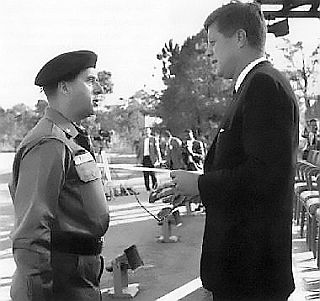
Date Posted:  22 October 2008
Last Update:  13 September 2021
Comments to:  jackdoyle47@gmail.com

Twitter: https://twitter.com/PopHistoryDig

Article Citation:
Jack Doyle, “Big Chill Marketing, 1980s & 1990s,”
PopHistoryDig.com, October 22, 2008.

_____________________________
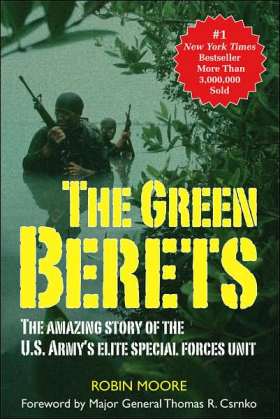

Related Books at Amazon.com…


2013 book, “Hit Brands: How Music Builds Value for the World's Smartest Brands,” 211 pp.  Click for Amazon.
2013 book, “Hit Brands: How Music Builds Value for the World's Smartest Brands,” 211 pp. Click for Amazon.
2018 book, “Advertising Revolution: The Story of a Song - From Beatles Hit To Nike Slogan.” Click for Amazon.
Brendan Kane’s 2020 book, “Hook Point: How to Stand Out in a 3-Second World,” 304 pp.  Click for Amazon.
Brendan Kane’s 2020 book, “Hook Point: How to Stand Out in a 3-Second World,” 304 pp. Click for Amazon.


Sources, Links & Additional Information

'The Big Chill' soundtrack. Click for copy.
Michiko Kakutani, “A Film Festival With an American Accent,” New York Times, September 18, 1983.

Vincent Canby, Screen: “‘The Big Chill’, Reunion of 60’s Activists,” New York Times, Friday, September 23, 1983.

For The Big Chill song list in sequence by days of the film’s plot and specific movie moments, see website, Musica & Memoria (“music & memories”)

Bill Sizemore, “Advertisers Put ‘Big Chill’ on Boomers,” The Virginian-Pilot, Business section, Friday, February 24, 1995, p. D-1.

Carrie McLaren and Rick Prelinger, “Salesnoise: The Convergence of Music and Advertising,” and “Timeline of Music and Advertising,” both from Stay Free! #15, Fall 1998.

'Big Chill' soundtrack, 1998. Click for copy.
Carrie McLaren, “Licensed to Sell: Why the Jingle is Dead and Commercial Pop Rules,”Stay Free!, 1998.

“The Big Chill,” Wikipedia.org.

Lenn Millbower, “Talkin’ ‘Bout Pop Music,” Heroiclist.com.

Steve Chapple and Reebee Garofolo, Rock ‘n’ Roll is Here to Pay, Nelson-Hall, 1977.

Marc Eliot, Rockonomics: The Money Behind the Music. Franklin Watts, 1989.

Russell A. Stamets, “Ain’t Nothin’ Like the Real Thing, Baby: The Right of Publicity and the Singing Voice,” FCLJ, No. 46, Volume 2, Indiana Law School (re: Bette Midler case).

Stephen Holden, “The Pop Life,” New York Times, November 30, 1988.

More 'Big Chill' music, 1998. Click for copy.

Ken Tucker, The New Season/Film; “Ain’t Too Proud to Obsess, All Over Again,” New York Times, September 13, 1998 [Ken Tucker is the critic-at-large for Entertainment Weekly.].

Don Aucoin, “Fifteen Years Later, `Big Chill’ Is Cooler than Ever,” Boston Globe, November 6, 1998.

Alex funeral scene from The Big Chill on You Tube (6:37 min).

________________________________________
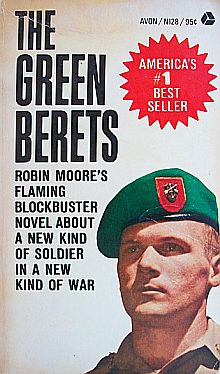


The Big Chill cast in front of the home in South Carolina where the film was shot, from left: Glenn Close, Kevin Kline, Meg Tilly, William Hurt, Tom Berenger, Mary Kay Place, Jeff Goldblum, and JoBeth Williams.


“Only A Pawn in Their Game”
1962-1964

July 1963: Bob Dylan at civil rights gathering in Greenwood, Mississippi singing ‘Only a Pawn in Their Game,’ a song about the murder of activist Medgar Evers.
     In the summer of 1963, the civil rights movement in the United States was gaining increasing national attention.  There had already been eight years of activism in the south, beginning with the 1955 bus boycott in Montgomery, Alabama, where a young preacher named Martin Luther King began to emerge as a leader. In 1957, the integration of Central High School in Little Rock, Arkansas had begun.

In the early 1960s, lunch counter sit-ins challenging “whites only” serving policies at drug stores and restaurants had received national notice after small groups of black activists in Greensboro, North Carolina and college students in Nashville, Tennessee conducted such protests in their towns. In 1961, hundreds of black and white “freedom riders” were drawn to the south to test federal requirements for desegregating interstate bus travel. By then as well, a few black students, for the first time, had gained admission to the universities of Alabama and Georgia. Blacks across the south and elsewhere were finding they could act to change their world. Medgar Evers, of Decatur, Mississippi, in his mid-30s by that time, was one of those who became committed to action.

Meanwhile, a world away in New York’s Greenwhich Village, a new, young singer named Bob Dylan had been playing coffee houses and recording new folk music along with old blues. Some of his songs would turn toward civil rights matters. More on Dylan in a moment.

Medgar Evers, 1963.
Medgar Evers, 1963.
     Back in Mississippi, Medgar Evers would become one of the rising young leaders in the state’s civil rights movement.  In the 1940s, he had dropped out of high school at the age of 17, joined the army and fought in Europe during WWII, completing his service honorably in 1945.  But when Evers returned home, he was prevented from voting in elections, and was also intimidated by a mob of white men.  He vowed then to work for change.  By 1952, he graduated from Alcorn State University and married a classmate Myrlie Beasley. 

“Only a Pawn
in Their Game”
1963

A bullet from the back of a bush
took Medgar Evers’ blood.
A finger fired the trigger to his name.
A handle hid out in the dark
A hand set the spark
Two eyes took the aim
Behind a man’s brain
But he can’t be blamed
He’s only a pawn in their game.

A South politician preaches
to the poor white man,
“You got more than the blacks,
don’t complain.
You’re better than them, you been born
with white skin,” they explain.
And the Negro’s name
Is used it is plain
For the politician’s gain
As he rises to fame
And the poor white remains
On the caboose of the train
But it ain’t him to blame
He’s only a pawn in their game.

The deputy sheriffs, the soldiers, the
governors get paid,
And the marshals and cops get the same,
But the poor white man’s used in the
hands of them all like a tool.
He’s taught in his school
From the start by the rule
That the laws are with him
To protect his white skin
To keep up his hate
So he never thinks straight
‘Bout the shape that he’s in
But it ain’t him to blame
He’s only a pawn in their game.

From the poverty shacks, he looks
from the cracks to the tracks,
And the hoof beats pound in his brain.
And he’s taught how to walk in a pack
Shoot in the back
With his fist in a clinch
To hang and to lynch
To hide ‘neath the hood
To kill with no pain
Like a dog on a chain
He ain’t got no name
But it ain’t him to blame
He’s only a pawn in their game.

Today, Medgar Evers was buried from
the bullet he caught.
They lowered him down as a king.
But when the shadowy sun sets on the one
That fired the gun
He’ll see by his grave
On the stone that remains
Carved next to his name
His epitaph plain:
Only a pawn in their game.

     In early 1954, Medgar Evers applied to the then-segregated University of Mississippi to study law.  When his application was rejected, Evers became the focus of an NAACP campaign to desegregate the school that would later culminate in the 1961-62 case of another student, James Meredith.  By this time, Evers and his family were living in Jackson, Mississippi and he became the first field secretary of the NAACP in that state.  He traveled throughout Mississippi recruiting new members, organizing voter-registration, protesting unequal social conditions, and boycotting companies that practiced discrimination.  Evers soon had a high profile as an activist, and that made him a threat to the power structure in Mississippi, and also a target.


Shot in the Back

     On June 12, 1963, just past midnight, Evers drove up to his Jackson home, parking under the car port, the kitchen door to his house a short distance away.  Evers that night had attended a group meeting at New Jerusalem Baptist Church, while his wife Myrlie and his children watched President Kennedy’s televised speech — a speech that focused on the racial tensions in Birmingham, Alabama, where violent clashes between protesters and police had been going on for the past two months. 

As Evers got out of his car, he grabbed a bundle of T-shirts that were to be handed out the next morning to civil rights demonstrators.  He only took a few steps away from his car toward the kitchen door when he was shot in back.  The bullet tore though his body and went into the house where his wife Myrlie and their three children were. 

“Medgar was lying there on the doorstep in a pool of blood,” his wife, Myrlie, would later say. “I tried to get the children away. But they saw it all — the blood and the bullet hole that went right through him.”  Medgar Evers was 37.

     On June 19th, 1963 in Washington D.C., Evers was buried at the Arlington National Cemetery, receiving full military honors.  More than three thousand people attended. It was the largest funeral at Arlington since the interment of John Foster Dulles, former U.S. Secretary of State in 1959. 

Back in Mississippi meanwhile, on June 23rd, 1964, Byron De La Beckwith, a fertilizer salesman and member of the White Citizens’ Council and Ku Klux Klan, was arrested for Evers’ murder, but it would take decades before justice was finally served.

Two previous trials of Beckwith in 1964 had resulted in hung juries. Beckwith was then a free man, and went on to live in Tennessee until 1994, when reporting by Mississippi newspaper, The Jackson Clarion Ledger, helped bring about a new trial. The 1994 state trial, held before a jury of eight blacks and four whites, convicted Beckwith of first-degree murder for killing Medgar Evers.

New evidence in that trial included testimony that Beckwith had boasted of the murder at a Klan rally and on other occasions. His attempted appeals were denied, and more than 30 years after the murder of Medgar Evers, Beckwith began serving his life-without-parole prison term, dying in jail seven years later at the age of 80 in 2001.


“Oxford Town”

     Meanwhile, back in the early 1960s, in New York’s Greenwhich Village, Bob Dylan had generated some commercial interest with his folk music and performances at local coffee houses, and had begun recording.  In 1962, he released his first album, titled Bob Dylan. By then he had also written songs such as “Blowin in the Wind” and “A Hard Rain’s Gonna Fall,” which were labeled “protest music” by some since they touched on issues of the day, including civil rights. 

Some of Dylan’s music then focused on specific civil rights controversies of that time. In 1962, for example, he wrote “Oxford Town” — a song about the riots that occurred in Oxford, Mississippi after James Meredith became the first black student to be admitted to University of Mississippi.

“Oxford Town”
1962

Oxford Town, Oxford Town
Ev’rybody’s got their heads bowed down
The sun don’t shine above the ground
Ain’t a-goin’ down to Oxford Town

He went down to Oxford Town
Guns and clubs followed him down
All because his face was brown
Better get away from Oxford Town

Oxford Town around the bend
He come in to the door, he couldn’t get in
All because of the color of his skin
What do you think about that, my frien’?

Me and my gal, my gal’s son
We got met with a tear gas bomb
I don’t even know why we come
Goin’ back where we come from

Oxford Town in the afternoon
Ev’rybody singin’ a sorrowful tune
Two men died ‘neath the Mississippi moon
Somebody better investigate soon

Oxford Town, Oxford Town
Ev’rybody’s got their heads bowed down
The sun don’t shine above the ground
Ain’t a-goin’ down to Oxford Town

     The small town of Oxford was the university’s main campus and on September 20, 1962, it became something of battleground, as U.S. Marshalls had been sent there under direct order from President John F. Kennedy to ensure James Meredith’s enrollment and protection.  Rioting ensued; two were killed and numerous students were injured.  Dylan’s “Oxford Town” focused the events surrounding the campus riots and Meredith’s enrollment there, and also the larger civil rights movement then unfolding.  “Oxford Town” was written by Dylan in October or November 1962 and first recorded on December 6, 1962.  He is said to have performed the song at appearances in the fall and winter of 1962 and 1963, including a Carnegie Hall concert in October 1963.  The song also  appears on Dylan’s second album The Freewheelin’ Bob Dylan.


Music Player
“Oxford Town”-1962


     Back in New York, Dylan continued to perform in Greenwich Village, as well other cities during 1963, and also a few television shows. 

On May 12, 1963, Dylan sparked controversy when he walked out of a rehearsal for a scheduled appearance on The Ed Sullivan Show.  Dylan wanted to perform “Talkin’ John Birch Paranoid Blues” but was informed by CBS Television’s “head of program practices” that the song was potentially libelous to the John Birch Society.  Rather than comply with the censorship, Dylan refused to appear on the program.  He did perform several days later with Joan Baez on May 18, 1963 at the Monterey folk festival in California.  His second album, Freewheelin’ Bob Dylan was released at the end of May 1963.

Pete Seeger performing in Greenwood, MS. Thoedore Bikel seen here adjusting mics.
     Following the murder of Medgar Evers on June 12th, 1963, Dylan was moved to write a song about the incident, which he titled “Only a Pawn in Their Game.”  In Mississippi that summer, there were voter registration drives underway in various communities, one of which was in Greenwood, Mississippi. It was here that Dylan visited on July 2, 1963 at the urging of fellow folksinger, actor and Newport Folk Festival co-founder, Theodore Bikel. After an overnight flight to Mississippi, paid for by Bikel, Dylan performed “Only A Pawn…” and other songs in Greenwood before a small gathering of civil rights workers. Pete Seeger, who had been there for a few days already, also performed at the Greenwood gathering, which Theodore Bikel and others also attended.

Joan Baez & Dylan in August 1963 at the historic ‘March on Washington’. Click for their separate story.
     Elsewhere that summer, Dylan would also perform his songs, including those with the civil rights themes, at numerous performances.  At the July 26, 1963 Newport Music Festival, he performed “Only A Pawn…” and did duets with Joan Baez, some in small group sessions. On the main stage near the end of the festival, the songs “We Shall Overcome” and “Blowin’ in the Wind” were performed with a larger group that included Dylan, Baez, Pete Seger, the Freedom Singers, and Peter, Paul and Mary.  In late August 1963, at the historic “March on Washington,” Dylan also sang “Only A Pawn…,” among others, at the Lincoln Memorial — where Dr. Martin Luther King made his famous “I Have A Dream” speech. Nor would Dylan end his civil-rights songwriting with his 1963 Medgar Evers piece.


Hattie Carroll’s Death

     Dylan also wrote and recorded a song in late October 1963 entitled, “The Lonesome Death of Hattie Carroll.”  The song first appeared on Dylan’s 1964 album The Times They Are A-Changin.’ However, he performed the song live very soon after he had first written it. The song provides what is believed to be a generally factual account of the death of 51 year-old African American barmaid named Hattie Carroll. 

“The Lonesome Death
Of Hattie Carroll”

William Zanzinger killed poor Hattie Carroll
With a cane that he twirled around his diamond ring finger
At a Baltimore hotel society gath’rin’.
And the cops were called in and his weapon took from him
As they rode him in custody down to the station
And booked William Zanzinger for first-degree murder.
But you who philosophize disgrace and criticize all fears,
Take the rag away from your face.
Now ain’t the time for your tears.

William Zanzinger, who at twenty-four years
Owns a tobacco farm of six hundred acres
With rich wealthy parents who provide and protect him
And high office relations in the politics of Maryland,
Reacted to his deed with a shrug of his shoulders
And swear words and sneering, and his tongue it was snarling,
In a matter of minutes on bail was out walking.
But you who philosophize disgrace and criticize all fears,
Take the rag away from your face.
Now ain’t the time for your tears.

Hattie Carroll was a maid of the kitchen.
She was fifty-one years old and gave birth to ten children
Who carried the dishes and took out the garbage
And never sat once at the head of the table
And didn’t even talk to the people at the table
Who just cleaned up all the food from the table
And emptied the ashtrays on a whole other level,
Got killed by a blow, lay slain by a cane
That sailed through the air and came down through the room,
Doomed and determined to destroy all the gentle.
And she never done nothing to William Zanzinger.
But you who philosophize disgrace and criticize all fears,
Take the rag away from your face.
Now ain’t the time for your tears.

In the courtroom of honor, the judge pounded his gavel
To show that all’s equal and that the courts are on the level
And that the strings in the books ain’t pulled and persuaded
And that even the nobles get properly handled
Once that the cops have chased after and caught ’em
And that the ladder of law has no top and no bottom,
Stared at the person who killed for no reason
Who just happened to be feelin’ that way without warnin’.
And he spoke through his cloak, most deep and distinguished,
And handed out strongly, for penalty and repentance,
William Zanzinger with a six-month sentence.
Oh, but you who philosophize disgrace and criticize all fears,
Bury the rag deep in your face
For now’s the time for your tears.

Carroll was struck by a wealthy young tobacco farmer from Charles County, Maryland named William Devereux “Billy” Zantzinger — named “William Zanzinger” in Dylan’s song.  For his crime, Zantzinger served a sentence of six months in a county jail.  In 1963, Charles County, Maryland was still strictly segregated by race in public facilities such as restaurants, churches, theaters, doctor’s offices, buses, and the county fair. The schools of Charles County, for example, would not be integrated until 1967, four years after Hattie Carroll was killed.

     Reportedly, the main incident occurred at a white-tie Spinsters’ Ball at the Emerson Hotel in Baltimore, Maryland in early February 1963. A drunken Zantzinger arrived at the hotel carrying a toy cane — a cane later described by Time magazine as “a wooden carnival cane that he had picked up somewhere.”  

At the Emerson Hotel, Zantzinger assaulted at least three of the hotel workers: a bellboy, a waitress, and at about 1:30 in the morning of February 9th, barmaid Hattie Carroll. She was 51 years old, the mother of ten children. Zantzinger — then 24 years old and about 6′-2″ — struck her after she did not bring his bourbon quickly enough.

     When Zantzinger and his party arrived at the hotel that night, he was already drunk and had earlier assaulted employees at a Baltimore restaurant, also using his toy cane. At the hotel Ball, however, he continued to be abusive, calling a 30-year-old waitress a “nigger” and hitting her with his cane. Shortly thereafter he started in on Hattie Carroll when she didn’t bring his bourbon immediately, cursing her — calling her a “nigger” and a ” black son of a bitch” — and hitting her on the shoulder with the cane. He also attacked his own wife, knocking her to the ground and hitting her with his shoe. 

Hattie Carroll meanwhile, told co-workers she felt ill after being hit and verbally abused, and then collapsed. She was hospitalized shortly thereafter and died eight hours later. Her autopsy showed hardened arteries, an enlarged heart, and high blood pressure. A brain hemorrhage was the reported cause of death.

     Zantzinger was initially charged with murder. His defense was that he had been extremely drunk and said he had no memory of the attack. His charge was reduced to manslaughter and assault, based on the likelihood that it was her stress reaction to his verbal and physical abuse that led to the intracranial bleeding, rather than blunt-force trauma from the blow that left no lasting mark. On August 28, 1963 Zantzinger was convicted of both charges and sentenced to six months’ imprisonment.

Bob Dylan at the Newport Folk Festival, 1963.
     Time magazine, covering the sentencing, noted:

     “In June, after Zantzinger’s phalanx of five topflight attorneys won a change of venue to a court in Hagerstown [50 miles or so west of Baltimore], a three-judge panel reduced the murder charge to manslaughter.  Following a three-day trial, Zantzinger was found guilty. For the assault on the hotel employees: a fine of $125. For the death of Hattie Carroll: six months in jail and a fine of $500. The judges considerately deferred the start of the jail sentence until September 15, to give Zantzinger time to harvest his tobacco crop.”

     Bob Dylan, meanwhile, had been following the case in the news, and reportedly wrote the song in Manhattan, sitting in an all-night cafe. He recorded it on October 23, 1963, when the trial was still relatively fresh news, and incorporated it into his live performances. Dylan also performed the song on Steve Allen’s network television program soon after its release. A studio version of the song was later released on January 13, 1964 and it also appears on Dylan’s 1964 album, The Times They are A-Changin’. But by then Dylan had begun moving away from protest and folk music.


Reluctant Icon

Dylan, with guitar, on back porch of the SNCC office (Student Nonviolent Coordinating Committee), among civil rights activists & others, Greenwood, MS, July 1963.
     Dylan, by virtue of his early 1960s protest music, had become something of a civil rights icon and protest leader — at least in the eyes of many civil rights workers at the time.  But he soon moved to take himself out of that role, feeling restricted and pigeon- holed by the designation.  In December 1963, three weeks after the assassination of John Kennedy and four months after the March on Washington, Dylan was the invited guest of the Emergency Civil Liberties Committee at their annual Bill of Rights dinner.  There, Dylan was to receive the Tom Paine Award for services to the cause.  But in accepting the award that evening, and after some heavy drinking, Dylan signaled his frustration with the protest role, finding it a burden and a limit on his creativity.  For some, this was Dylan marking the end of that involvement; expressing his rejection of his role in protest politics and of folk musician in that genre.  It would be something of a pattern for Dylan whenever the outside world tried to define him.  In mid-1964 he reportedly said to writer Nat Hentoff: “Me, I don’t want to write for people anymore — you know, be a spokesman.  From now on, I want to write from inside me …I’m not part of no movement… I just can’t make it with any organization…”  Then came Dylan’s embrace of electric music at the Newport Folk Festival in July 1965, which left many of his fans and colleagues in shocked disbelief.  Yet the change in style, like his speech at the civil rights award dinner, would be “Dylan being Dylan,” following his muse, and rejecting outside labels, especially when others would try to impose some definition on who he was or what his music meant.

     In any case, while Dylan the musician continued to move on to new musical forms and genres — as he does to this day — his contributions to protest music remain significant and have become legend.  Dylan’s protest songs of the early 1960s did make an important contribution for many in the civil rights arena and beyond. Dylan’s contributions to protest music remain significant and have become legend. “He was a folk-singer writing during a time when popular song focused on ‘Moon-June’ sentimentality and vacuous ditties,” wrote Robert Chapman in the late 1990s on why Dylan was important to civil rights in the early 1960s.  “At the time it was unheard of for a young white songwriter to compose the kind of songs that he did, and he knocked down some serious barriers as to what was thought possible within the parameters of popular music.”  In addition to “A Pawn in the Game,” “Oxford Town,” and “The Lonesome Death of Hattie Carrol” mentioned here, other protest and civil rights-related songs he wrote include: “The Times They Are A-Changin'”, “A Hard Rain’s A-Gonna Fall”, and “The Death Of Emmett Till” (a song about the a young Chicago boy beaten to death on a visit to Mississippi in 1955 for whistling at a white woman).  And of course, there is also “Blowin’ in the Wind.”

Another photo of Bob Dylan and Pete Seeger at the July 1963 Greenwood, MS gathering.
     Although “Blowin’ in the Wind” is regarded generally as a protest song about peace, war, and freedom, it became something of an anthem for the civil rights movement.  Upon first hearing the song in the 1960s, other musicians involved with civil rights, such as Marvin Gaye and Mavis Staples of the Staples Sisters, were quite impressed.  Staples, in fact, said she was amazed at how a young white man at that time could write something that captured the frustration and aspirations of black people. 

     “Blowin’ in the Wind,” however, was not made famous by Dylan, but by folk group Peter, Paul and Mary. Albert Grossman, who then managed Dylan, also managed Peter, Paul and Mary. Their version of the song, released as a single in 1963, sold 300,000 copies in the first week. By mid-July 1963, it was No. 2 on the Billboard pop chart and had sales exceeding one million copies.  But it was Dylan’s songwriting that shone through on this and other songs of that era.

See also at this website, “Dylan’s Hard Rain, 1962-1963,” a story on the history, reaction, and various interpretations of his song, “A Hard Rain’s A-Gonna Fall.” See also, “Diamonds & Rust: Joan & Bob, 1960s-1980s” – on the Bob Dylan-Joan Baez years, together and apart. For additional stories on music, see the Annals of Music category page, and for politics, the Politics & Culture page. Thanks for visiting – and if you like what you find here, please make a donation to help support the research, writing, and continued publication of this website. Thank you. – Jack Doyle

Please Support
this Website

Donate Now

Thank You


___________________________________
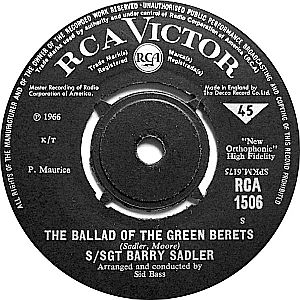
Date Posted:  13 October 2008
Last Update:  26 December 2024
Comments to:  jackdoyle47@gmail.com

BlueSky: jackdoyle.bsky.social

Article Citation:
Jack Doyle, “Only A Pawn in Their Game,”
PopHistoryDig.com, October 13, 2008. 

________________________________________
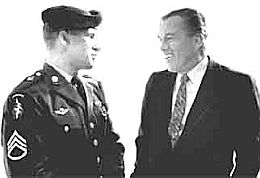

Books & Music at Amazon.com

Daniel Kramer photos, “Bob Dylan: A Year and A Day,” Taschen. Click for Amazon.
“Bob Dylan’s American Journey, 1956-1966.” Promo CD, SonyBMG w/10 songs. Click for CD.
3-disc set, “Joan Baez: The Complete Gold Castle Masters.” Click for Amazon.


Sources, Links & Additional Information

This 1964 Dylan album contains both ‘Only A Pawn...’ and ‘Lonesome Death of Hattie Carroll.’ Click for CD.
1965 recording of songs & narrative related to voter registration drive & related activities. (2004, Smithsonian Folkways). Click for CD.
Bob Dylan & The Band, The Basement Tapes Complete, 6-CDs & booklet. Click for set.

“Northern Folk Singers Help Out at Negro Festival in Mississippi, New York Times, July 7, 1963.

Robert Shelton, No Direction Home, Da Capo Press, 2003 reprint of 1986 original, 576 pp.

Pete Seeger, “Report from Greenwood, Mississippi: A Singing Movement,” originally published in Broadside Magazine, No. 30, August 1963; also in, Pete Seeger, The Incompleat Folksinger, New York: Simon and Schuster, 1972, p. 247.

Gerry Cordon, Liverpool Community College, Book Review: Chimes of Freedom: The Politics of Bob Dylan’s Art, by Mike Marqusee New Press, 2003, Review posted, January 18, 2005.

“The Spinsters’ Ball,” Time, Friday, February 22, 1963.

“Farmer Convicted in Barmaid’s Death,” New York Times, June 28, 1963. p. 11.

“Farmer Sentenced in Barmaid’s Death,” New York Times, August 29, 1963. p. 15.

“Deferred Sentence,” Time, September 6, 1963.

Robert Chapman, writing on “African American Culture and Bob Dylan: Why He Matters,” posted to selected newsgroups, Saturday April 26, 1997, and later reprinted at “Things Twice” web page.

Bob Dylan’s website; source for “Dylan in South photo.”

“Bob Dylan” and “Blowin’ in the Wind” and “The Lonesome Death of Hattie Carroll,” Wikipedia.org.

“Negro Applies to Enter Ole Miss,” The Jackson Daily News (Jackson, MS), January 22, 1954.

Manfred Helfert, “A Bullet from the Back of a Bush — The Life and Death of Medgar Wiley Evers,” Dignity, No. 9, Mar/Apr 1997, pp. 18-24.

Audio recording, The Story of Greenwood Mississippi, Recorded and Produced by Guy Carawan for the Student No-Violent Coordinating Committee (SNCC), Featuring Bob Moses and SNCC workers, Fanny Lou Hammer and Greenwood citizens, Mass meetings, hymns, prayers, Freedom songs, Medgar Evers and Dick Gregory, 2004 Smithsonian Folkways Recordings / 1965 Folkways Records #5593.

Murray Lerner, producer, The Other Side of the Mirror: Bob Dylan Live at Newport Folk Festival 1963-1965 (DVD), Sony, 2007.

See also a new journal devoted to Bob Dylan’s art named Montague Street and also a related blog at GardenerIsGone.

_________________________
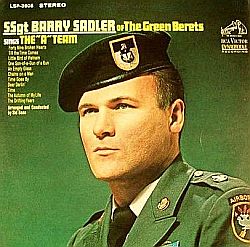

Return to Home Page


“G.E.’s Hot Coal Ad”
2005

One of GE’s ‘model miners’ featured in its 2005 TV ad touting the company’s ‘clean coal’ technology. Click to view ad.
     In 2005, General Electric, the giant American conglomerate began an advertising campaign to tout its new-found concern for the environment and global warming. 

The advertising series, and its affiliated campaign, were part of a company-wide, GE initiative then titled “Ecomagination” — GE’s word for environmental innovation. The company had allocated some $90 million to launch the campaign, of which the TV ads were part. 

     One of the first ads to be featured used a coal mining theme and was titled “Model Miners.”  The music backing the ad was from the 1950s hit song “Sixteen Tons” by Tennessee Ernie Ford. 

GE used the spot to push “clean coal,” a phrase which given coal’s carbon content, is regarded as something of an oxymoron by those concerned with global warming. Still, GE’s “Model Miners” TV ad  was part of the company’s message that the nation could use its coal reserves in an environmentally friendly way to help solve its energy problem.


Opening scene from G.E.'s coal mining TV ad.


Cue ‘Model Miners’      

     The ad opens at a coal mining site, with processing buildings in the background, as a group of male and female “model miners” descend a slight grade on their way into a coal mine.  The camera then pans to various work scenes in the mine  — the gals clad in tank tops and a few of the guys shirtless. 

All of the “model miners,” of course, have very good looking bodies and are sweating appropriately, yet not too much.  At the ad’s opening and throughout its first scenes, Tennessee Ernie Ford sings his legendary song, “Sixteen Tons,” in the background:

Well, I was born one mornin’ when the sun didn’t shine.
I picked up my shovel and I walked to the mines.
I loaded sixteen tons of Number Nine coal,
And the straw-boss said, “Well, bless my soul.”

You load sixteen tons and what do you get?
Another day older and deeper in debt.
Saint Peter, don’t you call me ’cause I can’t go,
I owe my soul to the company store.

Scene from G.E.'s coal mine ad with one of its "model miners".

     As the song fades off lightly into the background, the narrator delivers GE’s intended message:

“Imagine if a 250-year supply of energy were right here at home… Now, thanks to emissions-reducing technology from GE Energy, harnessing the power of coal is looking more beautiful every day…..Another product of pure Eco-imagination.  GE, imagination at work.”

     As the narrator is making the pitch, the scene cuts to frame after frame of attractive workers flashing their muscles, the ladies in particular, wielding shovels and at least one with a jackhammer, most smiling and a few in near-flirting poses.  The final screen shot, as the announcer finishes, shows the GE logo with “GE Imagination” printed below it, remaining on screen until close. 

     “The commercial we see,” offered Josh Ozersky in a July 2005 review of the ad in The New York Times, is visually indistinguishable from a Victoria’s Secret ad, right down to the blue filters and hubba-hubba slow motion.”  Others thought the ad resembled a Madonna MTV video.

In fact, at the unveiling of the “ecomagination” campaign in Washington D.C. where the TV ads were played and introduced at a VIP reception, CEO Jeffrey Immelt described the “Model Miners” ad as “a play on how to make coal sexy again.”  Applauding heartily for the ad when it was played, according to one attendee, was James Connaughton, President Bush’s senior environmental advisor.

Another of G.E.'s "model miners".


No OSHA Regs

GE’s coal mine, of course, is a highly stylized, Hollywood coal mine. There are no OSHA regs here; no breathing masks required. And there’s plenty of room to stand up and strut one’s stuff. No low ceilings or cramped quarters. 

In fact, GE’s ad agency, BBDO, did not actually use a real coal mine to make the ad. Rather, they built a replica of the coal mining scenes on a soundstage to make the ad — at no small cost, to be sure. 

In the advertising community, meanwhile, BBDO and GE would later win praise for their efforts. Some of the avant garde on Madison Avenue gave the piece high marks for its artistry, and BBDO won an award or two for the production. 

Yet others saw the piece as all wrong.

“It strikes me as disingenuous to call for a massive resurgence in coal mining and then portray the job as a stylish sex party,” wrote Seth Stevenson of Slate magazine.  Real miners, he said, still get black lung and still die in cave-ins.

Song Meaning

"Model miners" at work in G.E.'s 2005 coal mining ad.
     GE’s use of the song “Sixteen Tons” also brought objection, especially among those who cited the heritage of the song and what it was saying about the brutish world of coal mining and company-ruled mining towns.

True, the song was written about the struggles in the 1930s and 1940s, and things have improved since then. Still, as many who worked in the mines pointed out, things even in 2005 were still far from peachy-keen.

BBDO’s Executive Creative Director Don Schneider told Slate’s Seth Stevenson that “Sixteen Tons” was used in the ad because it “instantly feels like a coal-mining song.” He also told Stevenson, “you can picture coal miners singing it without any negative feelings.” 

Really? Coal miners happily singing “another day older and deeper in debt”? Perhaps Mr. Schneider might have looked a bit deeper into the song’s history before he made that assertion.

“Sixteen Tons” is certainly not “Hi Ho, Hi Ho, It’s Off To Work We Go.” Merle Travis, the song’s author, had another world in mind when he penned the tune in the 1940s. (See “Sixteen Tons” for that background). “No one expects G.E. to preach a Marxist sermon,” wrote Josh Ozersky the New York Times, referring the deeper message in the song, “but the use of “Sixteen Tons” as a jokey soundtrack is an odd public relations move.”

More "model miners" in the G.E. TV ad.

Clean Coal Clients?

Jonathan Klein, a GE spokesman had explained the ad’s purpose to the New York Times. “In ‘Model Miners,'” he said, “the goal is to communicate that G.E.’s emission-reducing technology can make coal a more appealing energy source.” More appealing, that is, to GE’s coal and electric utility clients, perhaps?

Building coal gasification facilities, coal-fired power plants, and sequestering carbon are all potentially huge capital goods businesses for GE. That may account for the company’s keen interest in projecting coal as a clean and happy “MTV generation” enterprise.

BBDO and GE are not making their pitch to coal miners or coal communities here, or even the general public necessarily. Their message is really aimed at bigger corporate and government clients, saying in effect, “we can reduce your costs and increase your profits by reducing your future environmental liabilities, your pollution.” That’s not a bad thing, certainly, but running roughshod over coal mining’s labor heritage and short changing its dangers with misplaced imagery is.


Ad is Pulled

Another of G.E.'s "model miners" from its 2005 TV ad.
     It appears, however, that GE did get the message that its “Model Miners” ad was not striking the right chord with many of its viewers. TreeHugger.com, a Discovery Com-pany website, reported that “GE was eventually pressured into dropping the ad campaign after it received numerous complaints from coal mining families.” 

Also, on January 2, 2006, the dangers of coal mining in the U.S. had become quite apparent once again, as the Sago Mine explosion in Sago, West Virginia became the dominant national news story, with days of continuous CNN and other coverage. Twelve miners died in the Sago mine tragedy. Not a good time, in any case, for “Model Miners” type advertising.

Group shot of "model miners" from G.E.'s TV ad of 2005.
     Still, GE continued other parts of its Ecomagination campaign in various forms and venues for some years, using television and print advertising, among other outlets. A sampling of some of these ads and other GE information on the project can be found at YouTube.com and other online sources.

Additional stories at this website on coal-related topics can be found at the “Coal History” topics page, where links to a dozen more stories can be found, including, for example: “Sixteen Tons, 1950s,” which explores the song used in the G.E. ad and some coal-related history; “Mountain Warrior: Harry Caudill, 1950s-1980s,” about a famous Kentucky author and strip-mine activist; and “Paradise,” a story that uses a John Prine song as introduction to the coal-related demise of a small Kentucky town named Paradise. See also at this website, the “Environmental History” topics page for more story choices in that category. Thanks for visiting – and if you like what you find here, please make a donation to help support the research, writing, and continued publication of this website. Thank you. – Jack Doyle

Please Support
this Website

Donate Now

Thank You

___________________________

First Posting:  5 October 2008
Last Update:  23 May 2025
Comments to:  jackdoyle47@gmail.com

BlueSky: jackdoyle.bsky.social
Twitter: https://twitter.com/PopHistoryDig

Article Citation:
Jack Doyle, “G.E.’s Hot Coal Ad, 2005,”
PopHistoryDig.com, October 5, 2008.

________________________


Books on Coal Mining & Labor at Amazon.com…


Bonnie E. Stewart’s book, “No.9: The 1968 Farmington Mine Disaster,” 2012, West Virginia University Press, 288 pp. Click for Amazon.
Rachel Scott’s 1974 book, “Muscle and Blood: The Massive, Hidden Agony of Industrial Slaughter in America,” Dutton, 306 pp. Click for copy.
James Green’s book, “The Devil Is Here in These Hills: West Virginia’s Coal Miners...,” 2015, Atlantic Monthly Press, 448pp. Click for copy.


Sources, Links & Additional Information

Barbara Ellen Smith (author), Earl Dotter (photographer), “Digging Our Own Graves: Coal Miners and the Struggle over Black Lung Disease,” 2020,  Haymarket Books, 250 pp. Click for copy.
Barbara Ellen Smith (author), Earl Dotter (photographer), “Digging Our Own Graves: Coal Miners and the Struggle over Black Lung Disease,” 2020, Haymarket Books, 250 pp. Click for copy.

“Perfect Bodied Coal Miners Strike A Pose In New GE Campaign,” Adrants.com, May 2005.

General Electric, Press Release, “GE Launches Ecomagination to Develop Environmental Tech-nologies; Company-Wide Focus on Addressing Pressing Challenges”, May 9, 2005.

Greg Schneider, “GE Determined to Show More ‘Ecomagination’ – Program Sets Pollution Reduction Targets,” Washington Post, Tuesday, May 10, 2005, p. E-2.

Amanda Griscom Little, “Just My ‘Ecomagina-tion’,” Salon.com, May 12, 2005.

Frank O’Donnell, “GE’s Greenwashing,” Tom Paine.com, May 13, 2005.

Lewis Lazare, “GE Eco-Ads Generate Heat,” Chicago Sun-Times, May 19, 2005.

Seth Stevenson, Ad Report Card: GE Ad, “Coal Miners’ Hotter Sex Sells; But Can GE Use Sex to Sell Coal?,” Slate, May 31, 2005.

“Load 16 Tons And What Do You Get? Sex & Hot Bods,” Confined Space: News and Commentary on Workplace Health & Safety, Labor and Politics, Tuesday, June 7, 2005.

Josh Ozersky, “Working in a Coal Mine: Lord I Am So Tired, but Good-Looking,” New York Times, July 3, 2005.

Daren Fonda, “GE’s Green Awakening,” Time, Thursday, July 7, 2005.

Daniel Fisher, “GE Turns Green,” Forbes, August 15, 2005.

Business Wire, “GE’s ‘Imagination at Work’ and ‘Ecomagination’ Rack up Advertising Week Honors,” September 30, 2005.

Jeremy Elton Jacquot, “Great Moments in ‘Green’ Advertising: GE’s ‘Sexy Coal Miners’ Commercial,” Treehugger.com, a Discovery company, 10.8.07.

For deep-mine coal safety history, and some disasters in the 1968-early 2000s period, see the second part of “Kennedy Coal History – Bobby & Ted, 1968-2008,” which features Ted Kennedy’s efforts in coal-mine safety regulation in Congress.

___________________________________________________


Books on G.E’s history at Amazon.com…


Thomas Gryta & Ted Mann, “Lights Out: Pride, Delusion, and the Fall of General Electric,” 2020, Mariner, 368pp.  Click for Amazon.
Thomas Gryta & Ted Mann, “Lights Out: Pride, Delusion, and the Fall of General Electric,” 2020, Mariner, 368pp. Click for Amazon.
Thomas F. O' Boyle’s book, “At Any Cost: Jack Welch, General Electric, and the Pursuit of Profit,” 1999, Vintage, 480pp.  Click for copy.
Thomas F. O' Boyle’s book, “At Any Cost: Jack Welch, General Electric, and the Pursuit of Profit,” 1999, Vintage, 480pp. Click for copy.
Thomas Evans’ 2006 book, “The Education of Ronald Reagan: The General Electric Years...” Columbia University Press,  320 pp.
Thomas Evans’ 2006 book, “The Education of Ronald Reagan: The General Electric Years...” Columbia University Press, 320 pp.


“Sixteen Tons”
1955-1956

Cover sleeve for Capitol Records EP with 1955-56 hit song “Sixteen Tons” by Tennessee Ernie Ford. Click for EP collection.
     The top song in America during late 1955 and early 1956 was a tune about coal mining — a song about the hard life and poverty of being a coal miner.  Its title was “Sixteen Tons” and it was made popular by a singer named Tennessee Ernie Ford. The song had actually been written in the 1940s, its verse grown piecemeal from oft-heard phrases and the lives of miners dating to the 1930s.  And although “Sixteen Tons” had been previously recorded in the 1940s, it wasn’t until the 1950s that it became a big hit.

In 2015, “Sixteen Tons” was recognized for its cultural significance by the U.S. Library of Congress. and was adopted into the National Recording Registry.


By Merle Travis

     In the mid-1940s, Merle Travis was a guitar-playing, country musician from Kentucky who had worked in radio, studio recording, and live stage shows.  He also had bit parts in Hollywood films singing in B Westerns.  In 1946, he signed a recording contract with Hollywood-based Capitol Records and had some early hits.  Capitol also asked him to record an “album” of folk songs — four 78 rpm disks — three of which were songs that Travis wrote about coal mining.  They were about life in the mines of Muhlenberg County, Kentucky, where his father had worked.  One of the songs was “Dark As A Dungeon” and another, “Sixteen Tons.”  For the latter song, Travis had pieced together fragments of phrases he had heard while growing up and in later life.  A letter his brother sent during WWII made a comparison to working in the coal mines, saying:  “You load sixteen tons and what do you get?  Another day older and deeper in debt.”  Travis had also heard an expression his father used with neighbors, which Travis adopted for “Sixteen Tons,” as he later recounted:  “…The chorus is from a saying my Dad often used.  He never saw real money. He was constantly in debt to the coal company. When shopping was needed, Dad would go to a [coal company] window and draw little brass tokens against his account.  They could only be spent at the company store. His humorous expression was, ‘I can’t afford to die.  I owe my soul to the company store.’ “

Merle Travis music. Click for DVD.
     Travis’ version of “Sixteen Tons” was released by Capitol records in 1947 on Folk Songs of The Hills.  But the song did not receive much notice.  In fact, during the Cold War hysteria of the late 1940s, songs dealing with workers’ woes by “folk music activists,” as they were called, became suspect.  Ken Nelson, a Capitol record producer who had also worked at WJJD radio in Chicago in the 1940s, later explained in 1992 that FBI agents advised the radio station not to play Travis’ records because they considered him a “communist sympathizer,” which Travis was not.  Although his version of “Sixteen Tons” — produced with a single guitar — did not become a hit, Merle Travis continued his music career, becoming one of the most highly regarded country guitarists in history.  His “Sixteen Tons” would be made famous by Tennessee Ernie Ford.


“Tennessee” Ernie’s Big Hit

Ernie Ford in Capitol recording session.
     Ernest Jennings Ford was from Bristol, Tennessee, where in high school his baritone voice had first been noticed.  After a stint in the military during WWII, he adopted the stage name “Tennessee Ernie.”  He began his career as a singer of country music on radio stations in San Bernardino and Pasadena, California.  By 1949, he signed a contract with Capitol records, had a few hit records and also became a local TV star on the popular Southern California show, Hometown Jamboree. 

     In 1954 Tennessee Ernie Ford became nationally known through his several appearances on the I Love Lucy TV show as a visiting “country cousin.”  Ford knew the “Sixteen Tons” song from working with Merle Travis who had appeared on Hometown Jamboree.  Ford’s grandfather and uncle had also worked in the mines.  In early 1955, Ford did a version of “Sixteen Tons” on television.  Within five days, NBC received over 1,200 letters from viewers asking about the song.  In July 1955, Ford performed the song again at the Indiana State Fair before a crowd of 30,000 and the response was “deafening,” according to one report.

Capitol's 78 rpm, ‘Sixteen Tons’. Click for digital and other versions.
     Capitol Records, meanwhile, informed Ford in September 1955 that he needed to produce a new record to meet the terms of his contract. Shortly thereafter, a two-sided single was produced. “You Don’t Have To Be A Baby To Cry” appeared on the “A” side and “Sixteen Tons” on the B side. 

Capitol believed that the A-side song was destined to be Ford’s biggest hit yet. On October 17th, 1955, Capitol shipped the new record to radio DJs who began playing the B side, “Sixteen Tons.” In about ten days’ time, the record promptly sold 400,000 copies. Demand for “Sixteen Tons” became so great that Capitol geared all its pressing plants nationwide to produce the record. 

In less than month after its release, over one million recordings of “Sixteen Tons” were sold.  It became the fastest-selling single in Capitol’s history.

 'Sixteen Tons' album. Click for CD.
'Sixteen Tons' album. Click for CD.


No. 1 Hit

     “Sixteen Tons” hit Billboard’s Country Music charts in November 1955, and held the No. 1 position for ten weeks.  By December 15, 1955, more than 2 million copies were sold, then making it the most successful single to date.  But there was still more notice for the song, as it crossed over to the pop music charts in early 1956, holding the No. 1 position there for eight weeks. 

Ford later gave some background on the song’s recording in an interview he did with the Saturday Evening Post:   
    
(…continues, at right…)

Sixteen Tons

Now, some people say a man’s made out of mud,
But a poor man’s made out of muscle and blood,
Muscle and blood, skin and bones,
A mind that’s weak and a back that’s strong.

You load sixteen tons and what do you get?
Another day older and deeper in debt.
Saint Peter, don’t you call me ’cause I can’t go,
I owe my soul to the company store

Well, I was born one mornin’ when the sun didn’t shine.
I picked up my shovel and I walked to the mines.
I loaded sixteen tons of Number Nine coal,
And the straw-boss said, “Well, bless my soul.”

You load sixteen tons and what do you get?
Another day older and deeper in debt.
Saint Peter, don’t you call me ’cause I can’t go,
I owe my soul to the company store

Well, I was born one mornin’, it was drizzlin’ rain.
Fightin’ and trouble is my middle name.
I was raised in the bottoms by a mama hound.
I’m mean as a dog, but I’m as gentle as a lamb.

You load sixteen tons and what do you get?
Another day older and deeper in debt.
Saint Peter, don’t you call me ’cause I can’t go,
I owe my soul to the company store

WeIl, if you see me a-comin’ you better step aside.
A lotta men didn’t and a lotta men died.
I got a fist of iron, and a fist of steel.
If the right one don’t get you, then the left one will.

You load sixteen tons and what do you get?
Another day older and deeper in debt.
Saint Peter, don’t you call me ’cause I can’t go,
I owe my soul to the company store


Ford Interview

     “…Sometimes it’s a new twist that boosts one of those songs up into the million sales class.  ‘Sixteen Tons’ was written eight years before I recorded it, too.  I’d sung ‘Sixteen Tons’ years before [on radio], but it hadn’t been any blockbuster, and Merle Travis, who’d written it, had put it in an album of his songs called Folk Songs of the Hills.  Nothing happened then either.  Then we decided to do some of Merle’s things with modern instrumentation [on television].  When Merle did them, he’d used a straight guitar music background.  When we did them we used a flute, a bass clarinet, a trumpet, a clarinet, drums, a guitar, vibes and a piano.  They gave it a real wonderful sound.”

     “I snapped my fingers all through it.  Sometimes I set my own tempo during rehearsal by doing that….  After I was through rehearsing that song, Lee Gillette, who was in charge of the recording session for Capitol Records, screamed through the telephone from the control room, ‘Tell Ernie to leave that finger snapping in when you do the final waxing.'”

     “They liked ‘Sixteen Tons,’ all right, at Capitol, …but nobody threw a fit over it.  Nobody said, ‘We’re glad you brought this along because it’s sure to sell a million copies in twenty-one days.’  They didn’t say that because anybody in his right mind knew that wouldn’t happen.  Yet that’s exactly what did happen.”  [end Ford interview]

     “[N]o American song in many a generation has got as much [play] in such a short time…as ‘Sixteen Tons’,” wrote a Time magazine reporter in December 1955.  “It is currently the No. 1 hit on almost every list.  It has been called deeply American by some and dangerously radical by others.”


Coal mining town of Dehue, West Virginia showing a 1934 labor march.

Danger & Debt

     The song’s lyrics also aimed at the dangers and exploitation of the coal mining life — and the hard times in coal mining communities. And indeed, from the early 1900s through the 1940s, life in the coal mining communities all across the country was pretty grim. Mine workers were frequently killed in mine accidents and most who worked in the mines developed “black lung” disease from years of breathing coal dust. Although mine conditions improved following the unionization of mine workers in the 1930s and subsequent mine safety laws, even in the mid-1950s when “Sixteen Tons” was at the top of the charts, mine accidents and deplorable conditions in mining communities were still found throughout the coal fields.

     And as “Sixteen Tons” made plain in its lyrics, indebtedness to the company was also a problem in some coal communities, especially before labor reforms were adopted.  Coal miners often became indebted to the “company store,” also known as the general store in some locations.  With no competition, the company could keep prices high for everyday items, and employees — especially those with families — often needed to pay in credit with tokens or scrip.  A never-ending cycle of debt often resulted, meaning essentially that the workers were perpetually bound to the company. 

September 1946: Miners and their families gather around the company store and office, Lejunior, Harlan County, Kentucky.

According to George Korson, author of Coal Dust on the Fiddle: “Miners resented the company store for three reasons: prices were much higher than those charged by independent retail stores, their grocery and supply bills were checked off their earnings even before they received their pay, and trading was compulsory.” Miners knew, of course, they were being robbed, some referring to the store as a “pluck-me” arrangement. The company store manager essentially determined how the family budget was managed, through indebtedness. “Moreover,” continues Korson in his book, “the debts which a miner piled up in the store bound him as securely to his employer as miners were bound to feudal barons in medieval Scotland…”


Coal Mine Dangers
1950s-2010s


Miner working in a confined, cramped position inside a narrow coal seam on a piece of equipment called a ‘lizard.’  (photo, Earl Dotter. Click for book of his coal photography).
Miner working in a confined, cramped position inside a narrow coal seam on a piece of equipment called a ‘lizard.’ (photo, Earl Dotter. Click for book of his coal photography).

     Although mine safety has generally improved over the years — and “Sixteen Tons” spoke largely to an earlier era — coal mining accidents were still occurring through the 1950s and 1960s, as they have to the present day.  In December 1951, for example, the Orient No. 2 mine in West Frankfort, IL exploded killing 119 miners. In Farmington, WV, the Jamison No. 9 mine exploded in November 1954 killing 16. And in McDowell County, WV, the Bishop No. 34 mine had two fatal explo- sions in the 1950s — one on February 1957 that took 37 lives, and another in October 1958 that killed 22. The 1960s saw more of the same. A March 1960 mine fire killed 18 in the No. 22 mine at Pine Creek, WV. Suffocation took the lives of 6 workers in a Dora, PA mine in June 1966.  And in 1972, a collapsed coal wastewater impoundment at Buffalo Creek, WV killed 126, injured more than 1,000, and displaced thousands more after flooding several downstream communities.

“Digging Our Own Graves,” 1987 book on black lung. Click for copy.
In recent years, mine accidents have continued to occur, as in the May 2006 Darby Mine explosion in Harlan County, KY that took five lives; the August 2007 Crandall Canyon Mine cave-in of Emery County, Utah that killed six miners and later three rescuers; and the Montcoal, WV mine explosion of April 2010 at Massey Energy’s Upper Big Branch mine that killed 29 miners. And beyond the U.S., there are many more coal mine disasters. On November 19th, 2010 in New Zealand, 29 coal miners were killed following an underground mine explosion at the Pike River Mine. On March 29th, 2013 an explosion in Babao Coal Mine in China killed 36 people. A second explosion there on April 1st, 2013 killed 17 more workers. Another coal mine explosion in China at the Taozigou Coal Mine on May 11th, 2013 killed 28 people. In fact, during 2013, some 1,049 workers were killed in Chinese coal mines. In Soma, Turkey, 301 people were killed on May 13th, 2014 in an underground coal mine explosion and fire in one of the worst mining accidents in that country’s history. Some 787 workers at that mine were underground at the time of the explosion. In addition to the dangers of mine accidents, there is also the occupational hazard of contracting the debilitating black lung disease. For more coal safety history see the Ted Kennedy section of “Kennedy Coal History.”


"Sixteen Tons" album. Click for CD.
Song Resonates

     “Sixteen Tons” caught on all across the country in 1955 and 1956, as it offered a distinctly different sound; somber and fatalistic, in sharp contrast to the up-beat pop ballads of that day.  Rock ‘n roll was just starting its rise to prominence then.  Still, the lyrics of “Sixteen Tons” offered memorable lines and helped bring the plight of miners more into general pubic awareness at that time.  Some listeners were also thought to identify with the tune in their own lives, as they too were living on credit or stuck in never-ending jobs, seeing themselves as “owing their souls” to a kind of “company store.” In any case, Capitol Records was certainly happy, as “Sixteen Tons,” along with other songs, helped improve 1955 sales to a record $21.3 million, up 25 percent over 1954, with profits up by 33 percent. In a 1990 Associated Press story, Ford was quoted as saying the recording had sold 20 million copies by then.


Cover of 'TV Guide' in March 1957, one of four he would appear on.

Ford’s Career Soars

     Tennessee Ernie Ford, meanwhile, went on to a successful TV career hosting prime-time network music and variety shows from 1956 to 1965.  Ford proved a versatile performer, cutting across comedy, film, and various music genres, including country, pop, gospel and religious music. 

Ernie Ford also appeared in Hollywood films, sang the title song for the 1954 Marilyn Monroe/Robert Mitchum film, River of No Return, a song which became a pop hit.  He also did the “Ballad of Davy Crockett,” another hit record in 1955. On television, he received national notice as “Cousin Ernie” on the popular I Love Lucy show in 1954 when he played the humorous country cousin of Lucy Ricardo.

Ford’s music career continued as well, in fact through the 1970s, as he completed a 1975 album with Glen Campbell, as this and other music from his past enjoyed a second life with new listeners and CD sales in the 1990s.  At age 71 in 1990, Ford was inducted into the Country Music Hall of Fame.  He passed away the following year due to liver cancer.

From ‘Life’ magazine story of December 5th, 1955, noting that Ford’s coal mine song “is a gold mine.”

     In 2005, some fifty years after “Sixteen Tons” had made its run at the top of the music charts, the giant industrial corporation, General Electric Co. — better known as “G.E.” — used the song in a TV advertising campaign designed in part to promote the use of “clean coal.”  For more on that story see “G.E.’s Hot Coal Ad.”

In 2015, Ford’s version of “Sixteen Tons” was inducted into the National Recording Registry by the U.S. Library of Congress. “Ford’s deep voice and the spare, dark instrumentation gave ‘Sixteen Tons’ a gravitas that stood out among the lighthearted popular songs of the era,” noted the Library in its announcement. “…[I]t was Ford’s powerful vocal that transformed “Sixteen Tons” from a simple labor song into a defiant declaration of Faulknerian endurance…”

See also at this website: “Harry Caudill, 1950s-1980s,” about a famous Kentucky author and strip-mine activist, and “Paradise,” a story about a John Prine song describing strip mining, “Mr. Peabody’s coal train,” and the demise of a small Kentucky town. For stories on music see the “Annals of Music” category page. Thanks for visiting – and if you like what you find here, please help support this website with a donation. Thank you. — Jack Doyle

Please Support
this Website

Donate Now

Thank You

_____________________________

Date Posted:  6 October 2008
Last Update:  24 June 2021
Comments to:  jackdoyle47@gmail.com

BlueSky: jackdoyle.bsky.social
Twitter: https://twitter.com/PopHistoryDig

Article Citation:
Jack Doyle, “Sixteen Tons, 1955-56,”
PopHistoryDig.com, October 6, 2008.

_____________________________


Books on Coal Mining & Labor at Amazon.com…


Bonnie E. Stewart’s book, “No.9: The 1968 Farmington Mine Disaster,” 2012, West Virginia University Press, 288 pp. Click for Amazon.
Rachel Scott’s 1974 book, “Muscle and Blood: The Massive, Hidden Agony of Industrial Slaughter in America,” Dutton, 306 pp. Click for copy.
James Green’s book, “The Devil Is Here in These Hills: West Virginia’s Coal Miners...,”2015, Atlantic Monthly Press, 448pp. Click for copy.


Sources, Links & Additional Information

'Music of Coal: Mining Songs from the Appalachian Coal-fields', box set, 2 CDs with 69-page booklet. Click for CD.
Library of Congress, "Songs & Ballads of The Bituminous Miners." Click for CD.

“Tennessee Ernie Ford,” Wikipedia.org.

“Merle Travis,” Wikipedia.org.

“The Wild Birds Do Whistle,” Time, Monday, December 19, 1955.

“High-Priced Pea Picker,” Time, Monday, May. 27, 1957.

Pete Martin, “Tennessee Ernie Ford Interview.” Saturday Evening Post, September 28, 1957, p. 124.

Archie Green, Only a Miner, Urbana, Illinois 1972, pp. 301-302.

George Korson, Coal Dust on the Fiddle, Hatboro, Pennsylvania, 1965, pp. 72-73.

George Vecsey, “Strike Frees Miners From ‘Dungeon’ Peril” (Dante, VA), New York Times, Saturday October 2, 1971, p. 16.

Herbert C. Bardes, “A Chronicle of Coal Company Scrip,” New York Times, Sunday, April 1, 1973, p. 183.

Leonard Sloane, “The Company Store Comes Out of the Coal Mines; The Company Store, Revised for 1975,” New York Times, Business & Finance, Sunday, June 22, 1975, p. 147.

“Kentucky Coal Area Recalls Days of Token Money”(Dunmor, KY), New York Times, Sunday, May 4, 1980, p. 59.

Ace Collins, The Stories Behind Country Music’s All-Time Greatest 100 Songs, New York: Berkeley Publishing Group, 1996, pp. 91-93. Click for copy.

The Billboard Book of Number One Hits (fifth edition).

“Sixteen Tons: The History Behind the Legend,” formerly at: ErnieFord.com.

Rhonda Janney Coleman, “Coal Miners and Their Communities in Southern Appalachia, 1925-1941” West Virginia Historical Society Quarterly, Volume 15, Nos. 2 & 3.

Dehue, West Virginia, “Past & Present: Another Day Older…” (Dehue labor photo from this site).

“Coal Mining Disasters,” (incidents with 5 or more fatalities), NIOSH Mining Safety and Health Research, National Institute for Occupational Safety & Health.

Tennessee Ernie Ford website, TEF Enterprises, LP.

Library of Congress, “Songs and Ballads of the Bituminous Miners.”

“National Recording Registry To “Ac-Cent-Tchu-Ate the Positive,” Library of Congress, March 25, 2015.

_______________________________________


“Sting & Jaguar”
1999-2001

Rock star ‘Sting,’ especially popular through the 1980s and 1990s, cut a deal with the Jaguar car company in 2000 to use his ‘Desert Rose’ song in their TV commercials, helping make the song & its album top hits.
     Sting, the rock star, whose real name is Gordon Sumner, is a U.K. musician, popular since the late 1970s.  He is the recipient of numerous music awards and has taken home at least 16 Grammys in various categories.  He has also been nominated for the best song Oscar. 

In his musical career, Sting has had a number of affiliations, among them, as principal songwriter, lead singer, and bass player of the rock band Police. Including his years with Police, as well as his own solo career, Sting has sold over 100 million records worldwide. 

Among his hits with Police, for example, have been: “Message in a Bottle” (1979), “Every Little Thing She Does” (1981), and “Every Breath You Take” (1983).  Solo hits have included:  “If You Love Somebody Set Them Free” (1985), “We’ll Be Together” (1987), “All This Time” (1991), “If Ever I Lose My Faith in You” (1993), and others.  Sting has established himself as an artist pushing out the boundaries of pop music, incorporating elements of jazz, classical, and world music into his writing and songs.

CD for 'Desert Rose' single, which includes a Sting duet with Algerian raï singer Cheb Mami. Click for copy.
     In the fall of 1999, however, Sting’s Brand New Day album was not exactly setting the music charts on fire — at least not initially.  Included on the album was “Desert Rose,” a haunting, calling love song with desert imagery and some Arabic verse. The song is said to have been inspired, in part, by the science fiction novel and movie, Dune, both of which use desert imagery and Arabic language. In fact, Sting had an acting role as the character Feyd Rautha in the 1984 film version.

The song “Desert Rose” includes a Sting duet with Algerian raï singer Cheb Mami, and some reviewers noted the song’s “world music” flavor. But when Sting and his team tried to get the song played on the radio, they had little success. Sting’s new music, some suggested, was perhaps a bit too sophisticated for normal pop radio. Radio programmers reportedly showed Sting research that supposedly proved listeners did not want to hear “Desert Rose.” That’s when Sting and manager, Miles Copeland, were forced to “plan B,” as they say.


Video Used a Jag

Jaguar S-Type, similar to the one used in 'Desert Rose' video.
     Sting’s video maker had shot a music video for the “Desert Rose” song.  It featured Sting taking a trip through the desert in a stylish, chauferred car on his way to a nightclub to perform the song with Cheb Mami.  The car they chose to shoot the video was a new Jaguar S-Type.  In fact, when the video was completed, Sting’s manager, Miles Copeland, thought it looked a lot like a car commercial.  He then sent it to Jaguar’s advertising agency and asked them to make their car commercial look like the video in exchange for free use of the song.  The Jaguar people loved the tape as soon as they saw it.  Sting then licensed “Desert Rose” to Jaguar and the two sides then collaborated on the project for developing the TV commercials, which were similar to the video.  (Various versions of the video appear on YouTube and elsewhere.)


     Jaguar’s advertising agency, Ogilvy & Mather of New York developed two TV spots — a 30-second and a 60-second version in a campaign they titled, “Sting S-Type.”  It first began running on March 20, 2000 in the U.S.  By August 2000, the ads began appearing in several international markets as well.  The spots used footage from the Sting music video along with previous Jaguar footage. “Everyone dreams of becoming a rock star. What then do rock stars dream of?”
           – Jaguar’s ‘Sting-S-Type’ TV ad
“To have Sting in our car and the ‘Desert Rose’ music behind the product is what marketing executives dream about,” explained Jaguar’s Al Saltiel, general marketing manager.  “With the introduction of the S-Type last year and the upcoming launch of the X-400, one of our key strategic goals is to reach a broader market.  We believe this campaign will help us do that.”  The voice-over in the spots and the ad’s main line — “What do rock stars dream of” — grew out of the lyrics in Sting’s song.  “Desert Rose” is based on a dream,” explained Ogilvy & Mather’s Anton Crone, describing the ad’s theme.  “And from that we got the line, ‘Everyone dreams of becoming a rock star.  What then do rock stars dream of?’ ”  The answer: riding in a Jaguar S-Type, of course.

This Jaguar press kit was handed out at the New York International Auto Show 2000. It included ‘Desert Rose’ videos,  Jaguar TV ads using the song, a CD-single with three versions of the song, and photos with Sting and car.
This Jaguar press kit was handed out at the New York International Auto Show 2000. It included ‘Desert Rose’ videos, Jaguar TV ads using the song, a CD-single with three versions of the song, and photos with Sting and car.
     In early 2000, at the International Auto Show in New York, Jaguar also handed out and extensive press kit on their Sting and “Desert Rose” collaboration. It included a ‘Desert Rose’ video and two Jaguar TV ads using the song: a 60-second version and a 30-second version.  A promotional CD- single was also included in the packet that had three versions of the song — a radio version at 3:54 minutes; an LP verison at 4:46; and a club mix version at 4:44.  There were also six 35mm full color transparencies featuring Sting and car, full color sheets of the same photos, and some Jaguar background info.  However, the deal between Sting and Jaguar to run the ads raised some eyebrows, considering that Sting was an avid environmentalist who was endorsing a gas-guzzling vehicle.  The Jaguar ads, however, helped turn the tide for “Desert Rose” and the album Brand New Day.  The ad ran everywhere and people started demanding the song, and it was soon being played on the radio and beyond.

     “. . .‘Desert Rose’ was a moderately successful U.K. single, but in the States it became a phenomenon, turning into one of the biggest sleepers for some time,” explains one summary of the song at Sting’s website. The song ran for a good six months on the U.S. music charts and had “top ten” showing all across Europe. “[The Jaguar] TV commercial proved an excellent piece of marketing, with the song being continually exposed to mainstream TV audiences, who got 30 seconds of prime Sting when they least expected it.”  The song ran for a good six months on the U.S. music charts and had “top ten” showing all across Europe. It became Sting’s biggest hit in 10 years. It also lifted the album Brand New Day to become one of Sting’s best selling ever. By January 2001, the album had sold more than three million copies (triple platinum). The album also won several Grammys for the year 2000, and at the Grammy awards ceremony, Sting performed “Desert Rose” with collaborator, Cheb Mami. Meanwhile, to date, Sting’s Brand New Day album has sold over 4 million copies.

Desert Rose
Sting

I dream of rain
I dream of gardens
   in the desert sand
I wake in pain
I dream of love as time runs
   through my hand

I dream of fire
Those dreams are tied to a
   horse that will never tire
And in the flames
Her shadows play in the
   shape of a man’s desire

This desert rose
Each of her veils, a secret promise
This desert flower
No sweet perfume ever tortured
   me more than this

And as she turns
This way she moves in the logic
   of all my dreams
This fire burns
I realize that nothing’s as it seems

I dream of rain
I dream of gardens in the desert sand
I wake in pain
I dream of love as time runs
   through my hand

I dream of rain
I lift my gaze to empty skies above
I close my eyes, this rare perfume
Is the sweet intoxication of her love

I dream of rain
I dream of gardens in the desert sand
I wake in pain
I dream of love as time runs
   through my hand

Sweet desert rose
Each of her veils, a secret promise
This desert flower
No sweet perfume ever tortured
   me more than this

Sweet desert rose
This memory of Eden haunts us all
This desert flower, this rare perfume
Is the sweet intoxication of the fall

     In September 2000, Sting also performed the song with Cheb Mami, among others, at a Sting concert in New York’s Central Park before 20,000 fans who were given free tickets by the chain store Best Buy, then making its debut in the New York market.  Ann Powers, reporting for The New York Times, made the following observations on the concert and Sting:

     …No one seemed the least bothered by Best Buy’s ubiquity at Central Park; such deals do not undermine Sting’s credibility because they are utterly congruous with his image.  Sting’s music is the sound of money well spent.  His signature mix of torchy balladry and uplifting dance pop can absorb almost any outside influences, and he furnishes his songs with cosmopolitan touches like the Algerian rai music that underlies “Desert Rose” or the Cuban conjunto rhythms that occasionally enlivened Tuesday’s show.  It’s the old colonialist way, updated for an age of corporate, rather than state, domination: if you love something, buy it up.  It’s possible to view Sting’s genre-shopping as artistically commendable.  After all, this is pop, whose essence is assimilation.  In his groundbreaking band the Police, Sting rubbed reggae against punk to create a hybrid whose energy reflected the anxiety caused by such miscegenation.  As he matured, Sting grew suspicious of rock’s amateurishness and moved toward an ideal based in poised musical interplay instead of conflict.  His belief in a true world music led him to form outstanding bands, including the one appearing Tuesday.  It also pushed his music toward a rootlessness that can seem decadent.
     His cosmopolitanism illuminates when it holds that seed of self-awareness.  It’s there in “Desert Rose,” in the amazing second vocal by Cheb Mami, the Algerian rai vocalist who joined Sting as an opening act at the concert.  Sting, the Englishman, can nearly match the North African’s sinewy technique, but Sting’s fairy-tale lyrics about a veiled seductress are undermined by the immediacy of Cheb Mami’s voice.  Performing the song with him, Sting finally surrendered, allowing his partner to lead its final crescendo.  Humbly giving over to his inspiration, Sting proved himself a sensitive collaborator…

     Sting also performed the song on the 2001 Superbowl pre-game show, reaching an audience in the millions. “Desert Rose” also became a regular song featured on Sting’s ‘Brand New Day’ world tour.  So in many ways, the Jaguar deal proved a powerful catalyst for Sting’s new music; providing lift off for “Desert Rose” and the album.

     Before making the deal with Jaguar, Sting’s record company had planned on selling about 1 million albums. Their marketing and promotion budget had been estimated at about $1.8 million, including $800,000 to make the “Desert Rose” video.  Jaguar, by comparison, shelled out about $18 million for the TV commercial time, and gave the song exposure to a global audience Sting might not have otherwise reached. But as Sting’s then manger, Miles Copeland, would later explain of the Jaguar deal:

“…Initially all those around Sting, and to a degree Sting himself were fearful of doing a commercial as it was a given at that time that doing a commercial was ‘selling out.’ Sting agreed, reluctantly, mainly because the record company was not going to release another single in the U.S., and believing in the song, he wanted to give it a chance. The record company also thought I had given the store away UNTIL they saw the $18 million commitment [by Jaguar] for the TV buy. They were then supportive… [But] they still did not release it [the ‘Desert Rose’ single] in the U.S. UNTIL radio began demanding it.”

Jaguar’s Ad Music
“Greatest Hits” – 1999-2008

Desert Rose
Sting
History Repeating
Propellerhead & Shirley Bassey
I Turn My Camera On
Spoon
The Girl’s Attractive
Diamond Nights
Hardcore Days & Softcore Nights
Aqueduct
Signs Of Love
Moby
I’m In Love With My Car
Queen
Battle Without Honor…#2
Tomoyasu Hotei
London Calling
The Clash
Two Rocks And A Cup Of Water
Massive Attack
Hush
Deep Purple
__________________________
Sources: “Jaguar TV Ad’s Greatest Hits,”
Rhapsody Radish, February 20, 2007, and
Jaguar.com.

Also, according to Copeland: “the success of the [Jaguar] TV spot enabled me to get Olgivy and Mather to create a $3.5 million print campaign. This time Sting, with the encouragement of people around him, said no, so the campaign was scrapped.” Copeland also believed that another potentially big single on the album could have been “After the Rain Has Fallen,” which was in fact released as the third single April 1, 2000.

Copeland, reading the positive reception that “Desert Rose” had received on Top 40 radio – because of the Jaguar TV spot, he believed – then sought “to get another ‘cool or hip’ product like Jaguar to buy into [“After The Rain”] if it was going to have a chance.”

Copeland did succeed in getting another company to agree to a $10 million TV budget to advertise around that song. The record company, learning of this, was thrilled. However, this time, according to Copeland, “Sting (again with those around him telling him it would be a mistake) said NO. In fact, his words were, ‘Well, we will find out if I can have a hit single without the help of a sponsored TV commercial’.” In any case, the single “After the Rain Has Fallen” did not have the success that “Desert Rose” did.

     Jaguar, for its part, was quite happy to have used Sting’s “Desert Rose” song, and the experience appears to have had an impact on Jaguar’s thinking about how to package itself thereafter. Then owned by the U.S. auto giant Ford, Jaguar was the venerable U.K. car company known for its luxury cars, but also at that time, for its somewhat stuffy image. However, in the 1999-2008 period at least, Jaguar continued to use popular music in other car ads — from Deep Purple’s “Hush”, a 1968 hit, to Spoon’s more current tune, “I Turn My Camera On.”  Songs by Clash, Queen, Moby and Propellerhead have also been used. Granted, not all of these worked as well as Sting’s “Desert Rose.” Yet taken together, such pop and progressive music tracks were helping to give Jaguar a new brand image, which in turn helped the company reach new groups of potential buyers.


Timothy D. Taylor’s 2012 book, “The Sounds of Capitalism: Advertising, Music, and the Conquest of Culture,”  University of Chicago Press, 345 pp.  Click for copy.
Timothy D. Taylor’s 2012 book, “The Sounds of Capitalism: Advertising, Music, and the Conquest of Culture,” University of Chicago Press, 345 pp. Click for copy.

New Song vs. Old Song

     On the artist side of the equation, a few years after Sting’s success using the Jaguar ad, other artists followed allowing their music and/or image to be used in product advertising, including Bob Dylan, Sheryl Crow and Paul McCartney.  However, some of the artists, like Sting, were using TV ads not so much to capitalize on older music, but as a way to help launch new songs or albums. Music fans are often offended to find their favorite old songs appearing in TV ads.  They call it “selling out” and regard the advertising as a crass exploitation of the emotional connection built up over their years with song and artist. However, a new song used in a commercial, unknown and without a track record — no “emotional constituency,” so to speak — might be seen somewhat differently. Artists argue that given the tougher climate in the music industry and the keen competition out there, a new song needs all the help it can get. And TV spots are a good way to get noticed. Still, one car company ad or beer commercial does not always mean immediate pop success for the artist. And the chosen sponsor can also carry baggage that the artists’ fan base may not like. For the sponsor too, the chosen music can boomerang on the company or turn off other customers. Music fans, meanwhile, remain divided on the practice, whether old song or new, with some being more vehement about it than others.

See also at this website, “Sting: Russians, 1985,” for a profile of Sting’s cold war tune that also calls out the Reagan-era Star Wars “we-will-protect-you” Strategic Defense Initiative. For additional stories on music and marketing at this website, see, for example: “Nike & The Beatles, 1988-1989”; “Big Chill Marketing, 1980s-1990s”; and, “Google & Gaga, 2011”. See also the “Madison Avenue” category page for other choices. Thanks for visiting – and if you like what you find here, please make a donation to help support the research and writing this website. Thank you. – Jack Doyle

Please Support
this Website

Donate Now

Thank You

______________________________

Date Posted: 27 September 2008
Last Update: 23 July 2021
Comments to: jackdoyle47@gmail.com

Twitter: JackDoyle/PopHistoryDig
BlueSky: jackdoyle.bsky.social

Article Citation:
Jack Doyle, “Sting & Jaguar, 1999-2001,”
PopHistoryDig.com, September 27, 2008.

_______________________________ 


Sources, Links & Additional Information

Bethany Klein’s 2009 book, “As Heard on TV: Popular Music in Advertising,” 1st Edition, Routledge, 178 pp.  Click for copy.
Bethany Klein’s 2009 book, “As Heard on TV: Popular Music in Advertising,” 1st Edition, Routledge, 178 pp. Click for copy.

“Song Details, Desert Rose,” Sting.com.

Jaguar website, Jaguar.com.

Desert Rose Remix video at You Tube.

“In Rock Stars’ Dreams — The Jaguar S-Type,” Automotive Intelligence News, March 16, 2000.

Cherie DeLory, “Sting Rides a Jaguar S-Type,” ‘boards, March 23, 2000.

Ann Powers, Pop Review, “It’s Sting’s World: Exoticism, Torchy Ballads and the Good Life,” New York Times, September 14, 2000.

Phil Patton, “Like the Song, Love the Car,” New York Times, September 15, 2002.

John Schacht, “Sting Pioneers Revolutionary Trail to TV Commercials,” Creative Loafing.com, published 09.01.04.

Bill Flanagan, “Selling Records Or Selling Out?,” CBS Sunday Morning, February 26, 2006.

Janet Morrissey, “If It’s Retail, Is It Still Rock?,” New York Times, October 28, 2007.

“Jaguar TV Ad’s Greatest Hits,” Rhapsody Radish, February 20, 2007.

“Desert Rose,” SongFacts.com.

“Desert Rose” and “Sting,” Wikipedia.org.

Miles Copeland, Email Correspondence to Jack Doyle, PopHistoryDig.com, September 6, 2016.

____________________________________


“Dempsey vs. Carpentier”
July 1921

     In 1921, they called it “the largest audience in history,” the 300,000 or so people estimated to have heard one of the first radio broadcasts of a special event — the outdoor heavyweight championship boxing match between American Jack Dempsey and French challenger, Georges Carpentier.  Dempsey was reigning world champ at the time, and Carpentier was a European boxing champion and decorated French Army veteran.  The fight’s promoter had billed the event as the “Battle of the Century.”

July 2, 1921. Jack Dempsey and Georges Carpentier get ready to square off in championship fight before 80,000 fans.  The fight ushered in a 'golden age' of sport in the 1920s, and with radio, the beginnings of sport as mass-audience, big-business entertainment.
July 2, 1921. Jack Dempsey and Georges Carpentier get ready to square off in championship fight before 80,000 fans. The fight ushered in a 'golden age' of sport in the 1920s, and with radio, the beginnings of sport as mass-audience, big-business entertainment.

          A hastily assembled outdoor arena was built on a farm in Jersey City, New Jersey, not far from New York City.  More than 80,000 fans came to see the fight in person on July 2, 1921, producing boxing’s first million-dollar gate.  Dempsey won in four-round knockout in a scheduled 12-round fight.  But the big news for many was the radio broadcast of the fight.  It was the first ever broadcast to a “mass audience,” with the blow-by-blow call of the fight from ringside relayed over the new “radiophone,” reaching hundreds of thousands in the northeast U.S.  Wireless Age magazine, reporting on the event a few weeks later, described the fight’s call over radio by “a voice that sounded loud and clear throughout the Middle Atlantic states.”  It was “history in the making,” said the magazine.


“Hero” vs. “Slacker” 

    There was also a good deal of hype associated with this fight, as there would be for any major event of this kind.  The promoter of the fight, Tex Rickard, cast its principal contestants as “hero” vs. “villain.” The billed “hero” in this case was not the American Jack Dempsey, but rather, the Frenchman, Georges Carpentier, the light-heavyweight champ who had distinguished himself as a pilot in World War I.

Dempsey, on the other hand, was cast as the “villain” as he had been labeled a “slacker” for avoiding the military draft — even though he had been found not guilty of the offense in 1920.  Promoter Rickard offered Carpentier $200,000 for the fight and $300,000 to Dempsey — considerable sums for the time — as well an equal share of 25 percent of the film profits.  Rickard saw the radio broadcast of the fight as a positive for his future business, and he did what he could to accommodate the new technology at the site.  He believed that radio might be a way to advance prizefighting in the post-World War I popular culture.  Rickard allowed for a makeshift wooden room for the radio broadcast to be constructed under the stands.  Telephone lines and a temporary radio transmitter, sponsored by the Radio Corporation of America (RCA), were installed at the Delaware, Lackawanna and Western Railway terminal in Hoboken, New Jersey.


David Sarnoff, of the early RCA Company, was among those who saw that the Dempsey-Carpentier fight would help advance radio.   (1922 photo).
David Sarnoff, of the early RCA Company, was among those who saw that the Dempsey-Carpentier fight would help advance radio. (1922 photo).
Early Radio

     Radio beyond the reach of a few people had barely begun in the early 1920s.  Fledgling operations had started in 1916 in both New York city and Pittsburgh, Pennsylvania.  In Pittsburgh, a Westinghouse employee named Frank Conrad began sending out recorded music played from a phonograph over a radio transmitter set up in his garage.  By 1920, Conrad’s employer, Westinghouse, noticed that the broadcasts had increased the sales of radio equipment, which Westinghouse was then manufacturing.  The company had Conrad move his transmitter to the Westinghouse factory roof.  Westinghouse then applied for a government license and started the pioneer station KDKA, which in early November 1920, began radio programming with the Harding-Cox Presidential election returns.  Those broadcasts, however, were only reaching a few thousand hobbyists.

     In New York City, too, local radio broadcasts had begun in the fall of 1916 over Lee DeForest’s experimental “Highbridge” station.  David Sarnoff, a manger at the American Marconi telegraph company, who lived in New York had heard the early Highbridge broadcasts. Sarnoff wrote a brief memo to the Marconi’s president in 1916-17 about a business possibility for developing a “radio music box” to sell to amateur radio enthusiasts.  But nothing came of Sarnoff’s idea at the time.  Marconi was then in the heat of WWI. A few years later, however, in January 1920, the Radio Corporation of America (RCA) was established when General Electric acquired American Marconi and Sarnoff, with it.  RCA had formed in 1919 after the U.S. Government relinquished control of the wireless industry following World War I.

Poster advertising fight at the New York Theater in NY city. Such advertising ran for several days in advance of the bout. This theater would be one of many locations in New York and elsewhere that would fill with listeners on fight day.


The Radio Box

“…For Entertainment”

     David Sarnoff, meanwhile, wrote another, more detailed memo on the prospects for radio business and sales to the general public — a 28-page memo titled Sales of Radio Music Box for Entertainment Purposes.

“I have in mind a plan of development which would make radio a ‘household utility’ in the same sense as the piano or phonograph,” Sarnoff began.  “The idea is to bring music into the house by wireless,” by which he meant radio.

Sarnoff saw a large potential market, which he then put at about 7 percent of the total families,” yielding a gross return of about $75 million annually in 1920s dollars. Both estimates would soon prove to be very conservative. 

“Aside from the profit to be derived from this proposition,” he wrote, “the possibilities for advertising for the company [RCA] are tremendous…”  The company’s name “would ultimately be brought into the household,” he said, and radio thereby would receive “national and universal attention.” Indeed it would, and did.  But it was the broadcast of the Dempsey-Carpentier fight that would help spark the early public curiosity in the radio and also help the rise of RCA and the radio business. RCA, in fact, made its broadcast debut with the July 2, 1921 championship fight.

     Sarnoff also appears to have played an important role in the radio broadcast of the Dempsey-Carpentier fight, although some say the extent of his role has been exaggerated.  Still, it does appear that Sarnoff helped make the broadcast possible: he provided money for expenses, a high-powered GE transmitter, and the use of the Lackawanna Railroad terminal antenna in Hoboken, New Jersey.

Cover of the fight program for the July 1921 Jack Dempsey-Georges Carpentier boxing match.
On Boardwalk, Asbury Park, NJ, a “rolling chair” offers passers by a listen to the fight by wireless radio telephone.

There are also varying accounts as to who initially came up with the idea to do a wide-area radio broadcast of the fight, with some attributing the idea to Sarnoff, and some to others. Julius Hopp, manager of the Madison Square Garden concerts at the time, had observed amateur radio men in more limited venues and was impressed with their descriptions by voice.  Some credit Hopp with the idea. 

In any case, in April 1921, it appears the idea of broadcasting the Dempsey-Carpentier fight was offered to promoter Tex Rickard and his partner, both of whom liked the idea.  There had also been one previous fight broadcast on radio in the Pittsburgh area in April 1921, heard only by a limited number of listeners and radio hobbyists in that location.  The broadcast that planners had in mind for the Dempsey-Carpentier fight, however, was for a much broader region.

Boxer Jack Dempsey, being introduced to new “radiophone” technology, appears on cover of “The Wireless Age” magazine, July 1921.

     An early July edition of Wireless Age magazine described the plan for how the broadcast would work:

     …The radio station at Hoboken will be connected by direct wire to the ringside at Jersey City, and as the fight progresses, each blow struck and each incident, round by round, will be described by voice, and the spoken words will go hurtling through the air to be instantaneously received in the theaters, halls and auditoriums scattered over cities within an area of more than 125,000 square miles.

     Through the courtesy of Tex Rickard, promoter of the big fight, voice-broadcasting of the event is to be the means of materially aiding the work of the American Committee for Devastated France [i.e., following World War I] and also the Navy Club of the United States. These organizations will share equally in the contributions secured by large gatherings in theaters, halls and other places. The amateur radio operators of the country are to be the connecting link between the voice in the air and these audiences. … Any amateur who is skilled in reception is eligible, whether or not he is a member of any organization.


This photo provides a partial view of the huge crowd surrounding the outdoor boxing ring at the Dempsey-Carpentier fight in Jersey City, NJ, July 2, 1921.
Fight Day 

     On fight day, a notable cast of local and national dignitaries attended the actual event in person. Among politicians and celebrities who joined the 80,000-to-90,000 fans who came to watch the fight were: industrialists John D. Rockefeller, Jr. William H. Vanderbilt, George H. Gould, Joseph W. Harriman, Vincent Astor, and Henry Ford; entertainers Al Jolson and George M. Cohan; literary figures H.L. Mencken, Damon Runyon, Arthur Brisbane, and Ring Lardner; the three children of Theodore Roosevelt — Kermit Roosevelt, Theodore Roosevelt, Jr. and Alice Roosevelt Longworth; prominent Long Island residents, such as Ralph Pulitzer, Harry Payne Whitney and J.P. Grace; Jersey City Mayor Frank Hague; and New Jersey Governor Edward I. Edwards.  At the gate, meanwhile, the fans who poured in payed a then-record $1,626,580.  It was the first time that a million-dollar amount had been exceeded for a boxing event.

Interest in the fight was keen, as this photo illustrates, showing a crowd of more than 10,000 outside the New York Times building in Times Square awaiting updates.
     In addition to those assembled at the fight location in New Jersey, tens of thousands gathered in various public venues — bars, restau- rants, theaters and halls where ham operators or radio hook-ups had been made.  Among such locations, for example were: Loew’s New York roof top at Broadway & 45th St. where some 1,200 were assembled; Colonial Hall in Bridgeport, Connecticut where an audience of 500 enjoyed the returns courtesy of the Bridgeport Radio Club; some 570 listened to the fight at The Playhouse in Wilmington, Delaware — and at hundreds of other such places.  In Times Square, New York a huge throng of some 10,000 people gathered outside the New York Times Building to hear marquee-posted updates of the fight that were relayed to the crowd.

New York Times photo showing Dempsey standing after a Carpentier knock down.
     By fight time, the anticipation and build-up for this fight was sky high.  In addition to Rickard’s promotion, famous writers such as George Bernard Shaw chimed in.  Shaw claimed that Carpentier was “the greatest boxer in the world” and suggested that the odds should be placed 50-to-1 against Dempsey.  But the match turned out to be less of a contest than many assumed it would be, as Dempsey dominated — but not a first.  Carpentier got off to a fast start and hit Dempsey hard in the first round, and again with two hard shots to the head in the 2nd round, stunning the champ.  One reporter at ringside, however, noted a furious comeback by Dempsey with a flurry of punches, still in round 2. Carpentier broke his thumb when he hit Dempsey in the 2nd.  In the next round, the bigger, stronger Dempsey began to get the best of Carpentier, punishing him on the ropes.  In round 4, the Frenchman was knocked down once, and then again for the ten-count.  Dempsey won.  But in an interesting gesture of kindness no doubt rarely seen in a boxing ring, Dempsey moved to help his opponent to his feet and to his corner at the fight’s end.

The fight’s results made front-page news across the country, along with the equally big news of the fight’s 1.6 million-dollar gate (in above clip, see headline below photo).
 

Golden Age

    The results of the fight were big news all across the country in the next day’s newspapers — including the fight’s astounding $1.6 million gate.  Some historians, in fact, see the fight as a key landmark for the Golden Age of sport that boomed during the 1920s; a Golden Age that also brought expanded media coverage and business promoters like Tex Rickard into the arena, setting sports media on the path to big-business entertainment. 

As for radio, other sports broadcasts followed. By August 5th, 1921, the first broadcast of a baseball game was made over Westinghouse station KDKA — a game between the Pittsburgh Pirates and the Philadelphia Phillies from Forbes Field in Pittsburgh. Demand for home radio equipment soared that winter. 

By the spring of 1922, David Sarnoff’s prediction of popular demand for broadcasting was coming true, and over the next eighteen months, he and RCA gained in stature and influence. RCA soon went into cross-licensing arrangements with AT&T and Westinghouse, which helped propel the company into a leadership role in both the broadcasting and recording industries.


Ringside broadcaster calling the fight’s blow-by-blow action, then sent out across northeast U.S. from Hoboken, NJ.

1922: 30 Stations

     By 1922, there were 30 radio stations in America, and things picked up considerably after that.  By late January 1923, programming from New York’s WEAF station was being carried simultaneously over a second station WNAC in Boston, giving rise to the concept of the “network” or “chain broadcasting.”

Less than a month later, on February 2nd, a transcontinental network broadcast link was formed between WEAF in New York and KPO, San Francisco, which was the Hale’s Department Store station.  Although New York’s WEAF had featured one of radio’s first paid advertisements in August 1922 — by the Queensboro Corporation using a ten-minute pitch to advertise a new real estate development — broadcasting was not yet supported by advertising. 

Most of the early stations were owned by radio manufacturers, department stores trying to sell radios, or by newspapers using them to sell newspapers or express their owners’ opinions.

Photo from ringside also showing part of immense crowd.  Carpentier is down for the count here.  Radio broadcaster is located at the tip of the white arrow.  Photo from, ‘Wireless Age’, August 1921.
Photo from ringside also showing part of immense crowd. Carpentier is down for the count here. Radio broadcaster is located at the tip of the white arrow. Photo from, ‘Wireless Age’, August 1921.
     Still by 1923, the number of stations had grown to 550 and about 3 million people had access to some kind of radio, many using crystal sets with earphones to receive news, bulletins and music.  Radio programming soon expanded to the stock market, weather reports, comedy shows, music broadcasts, and more.  In the fall of 1923, another sporting event — baseball’s World Series games between the New York Yankees and the New York Giants — helped boost radio again, making a big impression on many listeners, as a former concert singer by the name of Graham McNamee began doing the game’s play-by-play in a colorful and enthusiastic announcing style on New York’s WEAF.  McNamee thereafter became one of radio’s first broadcast personalities.  In 1926, RCA purchased its first radio station, WEAF in New York it also launched the National Broadcasting Company (NBC), the first radio network in America.  Four years later, David Sarnoff had become president of RCA and NBC.


Map showing approximate range of the Dempsey-Carpentier radio broadcast in the eastern U.S., reaching a potential audience of 200,000-to-500,000.
Radio Landmark

     Radio historians mark the July 1921 Dempsey-Carpentier fight as one of the landmark events advancing the “radio era” and big-audience communication.  And as would become the pattern for other communications technology in the future — whether the Muhammad Ali vs. Joe Frazier fight by satellite TV in 1975, or subsequent global telecasts of World Cup Soccer, Superbowl games, or the Olympics — big sporting events would often be used to introduce or showcase new technology or expanded capability, reaching not just hundreds of thousands, but hundreds of millions and billions. The 2008 Olympics in Bejing, for example, had an estimated total audience of some 4 billion viewers.  Special, multi-venue rock concerts and global charity events can now reach billions as well.  And online communications only add to these numbers.  Still, it wasn’t that long ago when our communications world was a lot smaller; when “big” was a few hundred thousand, as it was on that day in July 1921 when the human voice beamed out over the northeast United States.

Ticket for the Dempsey-Carpentier fight of July 2, 1921, with promoter Tex Rickard’s name at lower right, main stubb.
Other boxing-related stories at this website include: “Ali, Frazier, Sinatra, et al.,” covering the 1971 Muhammad Ali-Joe Frazier fight and related background issues surrounding that fight and its promotion. Also at this website, see: “The Rocky Statue, 1980-2009,” on the 20-year controversy in Philadelphia over the Rocky Balboa statue, and, “Philadelphia Morning,” featuring Bill Conti’s film music as critical to the success of the first Rocky film of 1976-1977. See also the “Annals of Sport” page for additional story choices in that category. Thanks for visiting — and if you like what you find here, please make a donation to help support the research and writing at this website. Thank you. — Jack Doyle

Please Support
this Website

Donate Now

Thank You

_____________________________________

Date Posted:  8 September 2008
Last Update:  14 May 2020
Comments to: jdoyle@pophistorydig.com

Article Citation:
Jack Doyle, “Dempsey vs. Carpenteir, July 1921,”
PopHistoryDig.com, September 8, 2008.

_____________________________


Sources, Links & Additional Information

1921 poster announcing filmed newsreels of the Jack Dempsey-Georges Carpenteir boxing match.
Jim Waltzer’s book, “The Battle of the Century: Dempsey, Carpentier, and the Birth of Modern Promotion.” Click for copy.

“July 2nd Fight Described by Radiophone – The Great International Sporting Event Will Be Voice-Broadcasted from the Ringside By Radiophone Under the Direction of the National Amateur Wireless Association on the Largest Scale Ever Attempted,” The Wireless Age, July, 1921.

“Voice-Broadcasting the Stirring Progress of the ‘Battle of the Century’ – How The Largest Audience in History Heard the Description of the Dempsey-Carpentier Contest Through Use of the Radiophone,” The Wireless Age, August 1921, pp. 11-21.

Carmela Karnoutsos, “Dempsey-Carpentier Fight: Boyle’s Thirty Acres at the Montgomery Oval, Montgomery Street and Florence Place,”  Jersey City, Past and Present ( Jersey City, NJ history site), Project Administrator: Patrick Shalhoub.

“Tex Tours Jersey City,” New York Times, April 14, 1921.

“Dempsey Knocks Out Carpentier in the Fourth Round; Challenger Breaks His Thumb Against Champion’s Jaw; Record Crowd of 90,000 Orderly and Well Handled,” New York Times, July 3, 1921.

Ed Brennan, “The Day History Was Made in Jersey City.” Jersey Journal, February 9, 1960.

Lud Shahbazian, “Jersey City Gave Boxing Its First Million Dollar Gate Just 50 Years Ago Today.” Hudson Dispatch, July 2, 1971.

Randy Roberts, Jack Dempsey: The Manassa Mauler, New York: Grove Press, 1979.

Roger Kahn, A Flame of Pure Fire: Jack Dempsey and the Roaring 20s, New York: Harcourt Brace, 2000.

George Mercurio, “The ‘Battle of the Century’,” Jersey City Reporter 16 July 2001.

Alexander B. Magoun, PhD, David Sarnoff Library, “Pushing Technology: David Sarnoff and Wireless Communications, 1911-1921,” Presented  at IEEE 2001 Conference on the History of Telecommunications, St. John’s, Newfoundland, July 26, 2001

Thomas H. White, “Battle of the Century: The WJY Story,” January 1, 2000.

“Jack Dempsey Smashes Carpentier,” The Hartford Courant (Hartford, CT), July 3, 1921.

Greg Moore, “Dempsey Cocktail,” Cocktail101.org, November 16, 2011.

Randy Roberts, Jack Dempsey, The Manassa Mauler, 2003, University of Illinois Press, 336 pp (click for copy).


“Nixon’s Checkers Speech”
September 1952

Time magazine cover of August 25, 1952 features Republican vice presidential candidate Richard Nixon in a flattering feature story a few weeks before “secret Nixon fund” reports emerged.
     In September 1952, the Republicans had just set their national ticket for the fall elections. It was Dwight David Eisenhower for President of the United States and Richard Nixon for Vice President. 

Eisenhower, or “Ike” as he was known, was the popular military general who had been Supreme Allied Commander during the critical D-Day landing of World War II. 

Richard Nixon was a young rising political star from California who had been elected to Congress in 1946, and made a name for himself as an aggressive anti-Communist serving on the House Un-American Activities Committee. 

Four years later at age 38, he was elected to the U.S. Senate. There he became an outspoken critic of President Truman’s conduct of the Korean War and wasteful spending by the Democrats. Nixon was then regarded as a good choice to run with Eisenhower.

So in the fall of 1952, with six weeks to go until the national elections, the Republicans appeared to be set with their ticket.

     But then on September 18th, 1952, the New York Post ran the front-page headline: “Secret Nixon Fund,” with a detailed story and second headline inside the paper that read: “Secret Rich Men’s Trust Fund Keeps Nixon in Style Far Beyond His Salary.” The newspaper story charged that wealthy Californians had given $18,235 (about $170,000 in today’s money) to a secret campaign fund for Nixon in return for political favors. Other newspapers soon picked up the story.

1952 Vice Presidential candidate Richard Nixon with family dog, ‘Checkers,’ among campaign gifts which Nixon sought to explain in his famous, nationally-televised September 1952 speech.

The New York Herald Tribune called on Nixon to withdraw from the Republican ticket. Some Republican party leaders asked him to resign.

The secret fund, in turned out, was for political purposes and was perfectly legal. But the impression created by the stories was that Nixon was on the take; being paid to do the bidding of special interests.

     Eisenhower was not happy with the story, having been critical of the Truman Administration for corruption during the campaign. Privately, it was said that Ike thought it might be a good thing if Nixon took himself off the ticket.  But others, including Nixon supporter and former New York governor and presidential candidate Thomas Dewey, suggested that Nixon use the new medium of television to respond to the charges. Eisenhower agreed, advising Nixon: “Tell the country everything you have ever received, how much money you have earned, what it’s been used for, what your worth is.”

Nixon in some consternation after September 1952 meeting with Ike. Senator William Knowland is at right.
     National politicians then had not used television for such purposes, but Nixon needed to clear his name and do it quickly as the Republican ticket was at stake. So the Republicans put up $75,000 to buy 30 minutes of prime-time television for Nixon to plead his case.

Nixon hired an advertising agency to help produce the live broadcast. The ad agency brought in soap opera directors from Hollywood for advice and also rounded up the best make-up artists and prop men to assist with the broadcast.

     The speech was broadcast nationwide on September 23, 1952 from the El Capitan Theater in Hollywood where TV stage crews built a mock middle-class den with desk and fake library as part of the set. Nixon would address a combined TV and radio audience that included a network of some 64 NBC television stations, 194 CBS radio stations, and the 560 stations in the Mutual Broadcasting network. 

In 1952, about 40 percent of the nation’s homes had television sets and about 80 percent had radios. It would be one of the first political uses of television to appeal directly to the populace.

Richard Nixon during his nationally-televised Checkers speech.
Nixon’s wife, Pat, on the set during speech, was also shown in some camera shots.
Richard Nixon seated at his studio-made office during his Sept 1952 “Checkers” speech.
Nixon standing during his televised Checkers speech, when at one point he would say 'I'm not a quitter'.


The Speech

     In the speech, Nixon began seated at a desk, with his wife Pat nearby, sitting in a parlor chair. The camera focused mostly on Nixon, who also stood up and walked close to the desk at one point.

In his talk, Nixon made clear that he “wasn’t a rich man,” laying out some family history, describing his father’s grocery store and his own experiences working his way through law school. Nixon denied any wrongdoing with regard to the fund, citing an independent audit that cleared him of any malfeasance. The money, he asserted, did not come to him as income, but rather as reimbursement for expenses.

Nixon also gave a complete financial history of his personal assets, finances and debts, including his mortgages, life insurance, and loans. He went into great personal detail, saying for example, he owned a 1950 Oldsmobile, had two houses with mortgages, and was making regular payments on a $3,500 loan from his parents. This litany painted Nixon and his family as living an austere lifestyle.

     “Well, that’s about it,” he said, summing up the financial disclosures. “That’s what we have and that’s what we owe. It isn’t very much, but Pat and I have the satisfaction that every dime that we’ve got is honestly ours. I should say this — that Pat doesn’t have a mink coat. But she does have a respectable Republican cloth coat.” 

Then came the Checkers part of the speech, which Nixon would later say came from his memory of Franklin Roosevelt’s swipe at a critical press corps who were attacking his dog, Fala. Checkers was given to Nixon as a gift, as he explained during his televised speech:

“One other thing I probably should tell you…. We did get something — a gift — after the election. A man in Texas heard Pat on the radio mention the fact that our two youngsters would like to have a dog. . . . We got a message from the Union Station in Baltimore saying they had a package for us. . . . You know what it was? It was a little cocker spaniel in a crate. . . . Black and white, spotted. And our little girl, Tricia, the six year old, named it Checkers.  And you know, the kids, like all kids, love the dog and I just want to say this right now, that regardless of what they say about it, we’re gonna keep it.”

     Nixon also turned the speech back on the Democrats, and challenged Democratic Presidential candidate Adlai Stevenson to give a similar public account of his finances.  He also attacked alleged corruption in the Truman administration and labeled Truman’s foreign policy a failure that had led to the Korean War.  He ended by appealing directly to the public, urging his listeners and viewers to telegraph or write the Republican National Committee on whether he should remain the Vice-Presidential nominee.

     When the speech ended it was unclear what the response would be, though there were reportedly some in the studio who were moved to tears over Nixon’s “plain folks” disclosures and the Checkers story. Nixon himself thought he had failed.  However, he did get an early telephone call from Hollywood movie producer Daryl Zanuck giving his speech a rave review.  But the national press was not as generous. Nixon, said the New York Post, had indulged in “a private soap opera” in which “the corn overshadowed the drama.” The New York Times charged that Nixon made no acknowledgment “that he had made any sort of mistake in accepting these funds in the first place.” The nation’s voters, however, reacted much differently. They were moved by Nixon’s distress and his candor. 

Newspaper report on overwhelming telegram response to Nixon's Checkers speech and his appeal to voters for their help.
As soon as Nixon went off the air, telegrams began pouring into the Republican Party’s national headquarters, the effect of which would not be revealed to Nixon or the nation for a day or so. It turned out that the mail was also hugely in Nixon’s favor. By one count, some three million letters and two million telegrams came in. The New York Daily Mirror of September 25, 1952 had a large front page photo showing an aide working behind piles of letters and telegrams with the headline, “Nixon Wires Swamp GOP.” The Herald Tribune, which had called for Nixon’s resignation from the ticket only days before, now pronounced him “fully vindicated.” On the campaign trail a day or two later in West Virginia, Eisenhower greeted Nixon warmly as it was clear by then that Nixon had helped himself and the Republican ticket going into the national elections.

Nixon with wife Pat, two daughters & their dog, Checkers.
     Nearly 60 million people had watched Nixon on television, which was half the total number of potential viewers and the largest TV audience ever until the 1960 Kennedy/Nixon debate eight years later. Radio was still an important source for news and the day’s politics, with 70 percent of voters getting their information from radio. The Mutual radio network estimated that nine out of ten radio homes had their sets tuned to Nixon’s speech. But the election of 1952 would be the last modern campaign when more voters got their candidate information from radio. Still, in this instance it was television that helped Nixon clear his name and regain his political footing. And in the process, Nixon discovered that he could use television to ignore the print media.


Halberstam on Nixon

     Journalist David Halberstam, writing years later about the Checker’s speech in his book The Powers That Be, made the following observations about the speech and how it changed Nixon’s thinking about the national media.  Halberstam relies here on one of Nixon’s aides, Ted Rogers, who had worked with Nixon since the days of his 1950 Senate campaign:

     . . .On the famous Checkers speech, . . .Rogers had his doubts about putting Pat Nixon on [the set] that night, thinking it might be improper.  But Nixon insisted.  It was, Rogers thought, as if it were the Nixons against the world. In her husband’s mind, her honor and reputation had been attacked just as his own had been.  Rogers had no idea what Nixon was going to say that night, and when the speech was over, with Nixon bursting into tears at the end, deeply moved by his own words, Rogers, like many others, thought it masterful.  It had clearly saved Nixon’s place on the ticket, and it had turned the flow of the campaign around.
     But there were doubts about it later. It was as if somehow in saving himself, Nixon had paid too high a price. He had made himself even more the issue — not his politics, but himself. . . . From then on. . . Nixon became an electronic candidate. . . . [H]e did not care much about the writing press. . . He had done it his way, with no impertinent questions and answers at the end. Suddenly, television was magic. . . . There was a growing feeling among the political and journalistic taste makers of the country that Nixon was not quite acceptable for very high office.   He had gone just a little too far.  (The taste makers sensed that perhaps Dwight Eisenhower shared their opinion, although Ike welcomed Nixon back on the ticket.) . . . .
     There was something else that Rogers noticed about the Checkers speech — the powerful impact it had, not just on the nation and not just on Eisenhower, but on Nixon himself.  From then on, as far as Rogers was concerned, Nixon became an electronic candidate.  He had an immediate consciousness of the power of television. From then on, he did not care much about the writing press (though he liked reporters of all sorts less and less).  He had done it his way, with no impertinent questions and answers at the end.  Suddenly television was magic.  Rogers, who liked much of the writing press, noticed immediately Nixon’s changed attitude toward reporters.  Up until then he had been very cautious and solicitous in the care and feeding of reporters, and reasonably accessible. But from then on it changed. If the [campaign] bus was ready to roll and they weren’t there, he’d simply say, “F___ ’em, we don’t need them.”  The Checkers episode had taught Nixon first that the national press was potentially antagonistic and harmful to him, personally, and second that he could go over their heads.” 

Dwight D. Eisenhower & Richard M. Nixon on November 4, 1952, after winning the national election.  (AP photo.)
Dwight D. Eisenhower & Richard M. Nixon on November 4, 1952, after winning the national election. (AP photo.)
     That fall, the Eisenhower-Nixon ticket crushed the Democrats’ Adlai Stevenson – John Sparkman ticket.  Richard M. Nixon would be Vice President of the United States for the next eight years.  Television had helped Richard Nixon weather the storm that nearly led to his removal from the Republican ticket.  But television for Nixon would not always prove to be the beneficent saviour it had been in this case, as he would later discover in the first televised presidential debates of 1960 with Democrat John F. Kennedy.

See also at this website: “1968 Presidential Race, Republicans” (in- cludes Nixon’s run for the White House and role of celebrities in his and other campaigns); “The Frost-Nixon Biz, 1977-2009”( the media, publishing, film & theater business that grew up around the David Frost/Richard Nixon interviews); and “Enemy of the President, 1970s” ( includes Watergate political cartoons from Paul Conrad who appeared on Nixon’s “enemies list.”). See the Politics & Culture page for other story choices in that category. Thanks for visiting – and if you like what you find here, please make a donation to help support the research and writing at this website. Thank you – Jack Doyle

__________________________

Please Support
this Website

Donate Now

Thank You

Date Posted:  7 September 2008
Last Update:  21 August 2019
Comments to: jdoyle@pophistorydig.com

Article Citation:
Jack Doyle, “Nixon’s Checkers’ Speech, 1952,”
PopHistoryDig.com, September 7, 2008.

_______________________________


Sources, Links & Additional Information

Feb 24th, 1953 issue of ‘Look’ magazine continued to raise questions about Richard Nixon, asking in a banner tagline across its cover, ‘Is Richard Nixon Fit to Be President?,’ also offering copies of his income tax returns.
Rick Perlstein's book, 'Nixonland: The Rise of a President and The Fracturing of America'. Click for copy.

“Richard M. Nixon, Checkers Speech,” full text of speech @ AMDOCS: Documents for the Study of American History.

See American Rhetoric.com for full text of Nixon’s Checkers Speech and video excerpt.

See History.com video story on Nixon & his Checkers Speech narrated by Roger Mudd, which is preceded by short commercial and runs into other segments on the Nixon presidency.

“Nixon Blames Smear For Fund Revelation; Nixon Should Withdraw,” Washington Post, September 20, 1952, p. 1.

James Reston, “Eisenhower Backs Nixon on Ticket,” New York Times, Saturday, September 20, 1952, p. 1.

Edward T. Folliard, “Ike Wants to Know His Running Mate Is Morally Clear Before Closing Case,” Washington Post, September 21, 1952, p. M-1.

Associated Press, “Eisenhower to Make Up Mind After Nixon Speech Tonight,” Washington Post, September 23, 1952, p. 1.

Gladwin Hill, ” ‘I’m Not a Quitter’; Senator Says He’ll Let Republican National Committee Decide; Nixon Puts Fate Up to G. O. P. Chiefs,” New York Times, Wednesday, September 24, 1952, p. 1.

“Nixon Wires Swamp GOP,” Daily Mirror (NY, NY), September 25, 1952, p. 1.

“G. O. P. Heads Rally to Nixon’s Support; Summerfield Asserts Attack Has ‘Backfired’ — Senator’s Position Held Stronger,” New York Times, Thursday, September 25, 1952, p. 1.

Dent Williams, “Ike Declares Nixon Will Remain After Face-to-Face Meeting Here; City Roars Out Huge Ovation as General Says Nixon Okay,” Wheeling Intelligencer (Wheeling, West Virginia), September 25, 1952, p. 1.

James A. Hagerty, “Nixon’s Speech ‘Shot in Arm’ To the G. O. P., Survey Finds,” New York Times, Monday, September 29, 1952, p. 1.

“Nixon Family Turns Back Flood of Cash,” Washington Post, October 2, 1952, p. 3.

Drew Pearson, “Questions Nixon Hasn’t Answered,” Washington Post, October 30, 1952, p. 41.

David LaGesse, “The 1952 Checkers Speech: The Dog Carries the Day for Richard Nixon, U.S. News & World Report, usnews.com, January 17, 2008.

Joe Garner, Stay Tuned: Television’s Unforgettable Moments, Kansas City: Andrews McMeel Publishing, 2002, pp. 60-63.

“Richard M. Nixon: Checkers Speech,” Great Speeches Collection, TheHistoryPlace.com.

“Checkers Speech,” Wikipedia.org.

David Halberstam, The Powers That Be, New York: Alfred A. Knopf, 1979, pp. 330-331.

Sean Wilentz, “Pleading For Their Political Lives,” New York Times, August 24, 1998.

____________________
Return to Home Page


“Lost That Lovin’ Feelin'”
1960s-2000s

Early 1960s photo of Bill Medley & Bobby Hatfield on a 2006 issue two-CD set. Among songs included is the No.1 hit of 1965, 'You've Lost That Lovin' Feelin' '. Click for CD.
In December 1964, a song titled “You’ve Lost That Lovin’ Feelin'” began to be heard on the radio. It was a song that would one day become the 20th century’s “most played” radio song. It was performed by two guys from California — Bill Medley and Bobby Hatfield; two guys who came to be known as the Righteous Brothers.


Music Player
“You’ve Lost That Lovin’ Feelin'”
(scroll down for lyrics)

Their stage name came about after a black U.S. Marine, attending one of their early nightclub acts, shouted out approvingly: “That was righteous, brothers!”  The label stuck, and the two singers became a distinctive duet, with Bill Medley, the taller of the two, providing the bass-baritone, and blond-haired Bobby Hatfield singing tenor. Their style would later be dubbed “blue-eyed soul,” and there was no doubt about their vocal talent. They had a range and style that helped create a strong and distinctive sound. But they also had another potent ingredient in their music that helped make it distinctive — a music producer named Phil Spector.

Regarded as a musical genius in the studio, Phil Spector was then coming into his most productive years. With the Righteous Brothers, Spector made especially good use of their talents, packaging their songs in a distinctive way as he pushed the boundaries of popular music using his then-becoming-famous “wall of sound” technique. Spector’s sound used a flood of instrumentation behind good vocals that gave pop music a near-orchestral quality. His treatments became quite distinctive, often described as “full and powerful”; they changed popular music.

"You've Lost That Lovin' Feelin' single. Click for digital.
Spector himself, however, would also become known for his quirky and bizarre behavior, some of it violent, which years later would result in a second-degree murder conviction in the Los Angeles case of actress Lana Clarkson, for which Spector is currently serving a 19-years-to-life prison sentence. But in his earlier life, during his 1960s’ music production and studio work with the Righteous Brothers and other groups, Spector had magical abilities and was a much sought-after producer.


Honing a Hit

     Said to have been inspired in part by “Baby I Need Your Loving” — a song by the Motown group the Four Tops (#11, July 1964) — “You’ve Lost That Lovin’ Feelin'” was written by the New York Brill Building husband-and-wife team Barry Mann and Cynthia Weil, along with Phil Spector.  The production of the song went through many hours of experimentation, retakes, and studio time before it was recorded and released.  As the Righteous Brothers’ Bill Medley would later recall:  “Barry Mann wrote this ballad and I remember him telling me he wanted to write a song that was like the Four Tops’ records, and he wanted that kind of a song.  So they wrote this ballad and Phil Spector and Barry Mann sat down at the piano and sang it to us.  And they both had real high voices.  And when they got done I said, ‘man, that’s a great song for The Everly Brothers’ — ’cause they sounded like The Everly Brothers.  They had these real high thin voices.  And I couldn’t imagine this was the song Phil Spector wanted to do with us…  So we started learning it and the complexion of the song changed dramatically by trying to find the right key.  The song has a pretty huge range to it….”

Phil Spector as he appeared in the 1960s, here on the cover of a collection of his songs. Click for comparable collection.
To get up to the really high notes in the song — a song, it would turn out, that builds and builds — there had to be a low start, so they kept experimenting to find just the right start and voice. In the end, what had begun with Mann and Spector at the piano with their high, thin sound, became something very different — but in a good way.

“The whole vibe of the song” changed, explained Bill Medley. But he credits “Spector’s phenomenal production” for making a song that was pretty unique. “Great song! Great production! And I think Bobby and I did a real good job.” Spector also had some back-up singers on the song, namely Sonny & Cher, before they hit it big on their own. 

Years later, the Rock and Roll Hall of Fame would single out the song, and Spector’s production, at the induction of the Righteous Brothers. “Spector heard a deeper potential in the blend of Medley’s earthy thunder and Hatfield’s heavenly fire,” said the Hall, calling the song “magnificently produced” and citing it as a kind of “symphonic pop.” Spector’s wall-of-sound production technique on this song, said the Hall, “scaled unparalleled heights for a pop single.”

Righteous Brothers, 1960s.  Bill Medley & Bobby Hatfield, in younger days.
Righteous Brothers, 1960s. Bill Medley & Bobby Hatfield, in younger days.
     Still, at the time it was made, “You Lost That Lovin’ Feelin'” had a couple of quirks about it that could make it a problem — especially for radio disc jockeys playing the new record.  The opening line — “You never close your eyes anymore when I kiss your lips” — was done very slowly in Bill Medley’s very deep bass baritone.  It was so slow and so deep, in fact, that upon hearing the record, some thought it was being played on the wrong speed.  A second possible problem was the song’s length — nearly four minutes in play time when most songs then on the radio were in the two minute range.  But Spector fixed that, at least temporarily, altering the actual 3:50 play time on the disc label by reversing the last two numbers, making it 3:05, which helped get the song past time-conscious radio DJs and music pro- grammers.  But when the song was finally played by the DJs, the sound they heard was pure gold.  It features, in part, a powerful back-and-forth between Medley and Hatfield in their respective baritone and tenor, almost in a call-and-response fashion, and gives the song a dramatic, soulful flair.  Vanity Fair called it “the most erotic duet between men on record.”

45 rpm version of 1965's ‘Unchained Melody’ on Phil Spector’s label. Click for 3-song CD.
     “We had no idea if it would be a hit,” recalled Bill Medley some years later.  “It was too slow, too long, and right in the middle of The Beatles and the British Invasion.”  But within two months of its release, by early February 1965, “You’ve Lost That Lovin’ Feelin'” had reached the #1 spot in the U.S. and the U.K.  It became one of the most successful pop singles of its time, despite exceeding the standard length for radio play.  Indeed, “You’ve Lost That Lovin’ Feelin'” remains one of the most played songs in radio history, estimated to have been broadcast more than 8 million times to date.  The Righteous Brothers, meanwhile, proceeded to have three more Phil Spector-produced Top Ten hits: “Just Once in My Life” (#9), “Unchained Melody” (#4), and “Ebb Tide”(#5) — all in 1965.  Those were heady days for the two singers, a time when they were actively recording in New York, as Bill Medley later recounted:

“. . .The Brill Building – you know, that’s where they did all that great writing…. Where Barry Mann and Cynthia Weil, Carole King, and Neil Sedaka [were]; . . . just [where] all the phenomenal writers came from.  Well, when it was time for us to go in and record we would just call Screen Gems and say, ‘listen, we’re gonna record on the ninth of January and we need a song and we will fly into New York to hear what you guys come up with.’  So we would fly into New York at a certain time and they would parade these unbelievable artists in to us.  They would sing these phenomenal songs.  None of them were bad. They were all phenomenal.  And what a great problem to have; to try and pick the best song out of all these wonderful songs.  So I’m sure we turned down several hits.  Couldn’t do them all.  Certainly would have liked to.” [For more on the Brill Building songwriters and that era, see the “Goffin and King” story, and also the Brill Building sidebar midway in the “1960s Girl Groups” story].

“You’ve Lost
That Lovin’ Feelin'”

The Righteous Brothers
1964-65

You never close your eyes anymore
when I kiss your lips
And there’s no tenderness like before
in your fingertips
You’re trying hard not to show it, (baby)
But baby, baby I know it

You’ve lost that lovin’ feelin’
Whoa, that lovin’ feelin’
You’ve lost that lovin’ feelin’
Now it’s gone, gone, gone, woah

Now there’s no welcome look in your
eyes when I reach for you
And now you’re starting to criticize
little things I do
It makes me just feel like crying, (baby)
‘Cause baby, something beautiful’s dying

You’ve lost that lovin’ feelin’
Whoa, that lovin’ feelin’
You’ve lost that lovin’ feelin’
Now it’s gone, gone, gone, woah

Baby, baby, I’ll get down on my knees
for you
If you would only love me like you
used to do, yeah
We had a love, a love, a love you don’t
find everyday
So don’t, don’t, don’t… let it slip away

Baby [baby], baby [baby]
I’m begging you please, please
I need your love [I need your love]
So bring it on back [So bring it on back]
Bring it on back [So bring it on back]

Bring back that lovin’ feelin’
Woah, that lovin’ feelin’
Bring back that lovin’ feelin’
‘Cause it’s gone, gone, gone
And I can’t go on, woah

Bring back that lovin’ feelin’
Whoa, that lovin’ feelin’
Bring back that lovin’ feelin’
________________________
(…. ) = background chorus
[…. ] = Medley-Hatfield call-and-response

     Before the Righteous Brothers scored big with “You’ve Lost That Lovin’ Feelin’,” the two had performed on the September 1964 premiere of ABC-TV’s rock `n roll variety show, Shindig!, and they continued to make appearances on the show thereafter.  They had also served as an opening act for the Beatles’ first America concert tour and later for the Rolling Stones as well.  But once their songs began climbing the charts, they were soon in demand for their own act.


“Blue-Eyed Soul”

     The Righteous Brothers’s sound, however, had fooled some listeners in the mid-1960s, including a few in the black community thinking the two singers were black artists. Black music was also then called “rhythm & blues,” or R&B music, having been changed from the previous “race records” label of earlier times. 

In the 1960s, a number of cities with R&B radio stations were surprised to learn that the Righteous Brothers’ songs were those of two white performers. Rocky Grosse, Program Director at WWRL, a major R&B station in New York, was one of those with the mistaken impression. 

George Woods, an on-air radio personality with WDAS in Philadelphia, is credited with coining the term “blue-eyed soul” to describe the kind of music these two white Righteous Brothers were then turning out — music enjoyed by both R&B and pop listeners. In fact, the Righteous Brothers songs helped open up the R&B radio stations to other white artists who also had a “soul sound” to their music.

     “When we were both 13 we didn’t know each other,” Medley would later say about Hatfield and himself, “but our musical college was the same.  Rock ‘n Roll caught us right at puberty.  First time I heard Little Richard, my life changed.  I would buy all these records by Fats Domino, B.B. King, Bobby Bland and Ray Charles and listen to them all day long.  When it came time for me to sing on stage, I was trying to be like them. . . .”


Las Vegas Act

     The Righteous Brothers quickly became one of the top groups on the music scene in the mid-1960s. They also became one of the first rock ‘n roll acts to play Las Vegas. As Bobby Hatfield later recounted about those times:

“. . .It was a great reception. We were working [The Sands] with Frank Sinatra. He was in the main room and we were in the lounge. It was a real thrill to meet and actually become friends with people like Frank Sinatra, Sammy Davis Jr., and Dean Martin. They were all working The Sands at that time…and Bill and I became …well, not close friends, but at least acquaintances, where they knew us by name and most of them just called us ‘the righteous boys’.”


Post-Phil Spector

Record sleeve cover for 1966 No. 1 hit song, ‘Soul & Inspiration.’ Click for CD or single.
     By 1966 the Righteous Brothers left Phil Spector and the Philles label, making a better business deal with Verve Records. Verve bought the Righteous Brothers’ contract for $1 million. Their first song with Verve, “(You’re My) Soul and Inspiration” was also a No. 1 hit and a million seller. Bill Medley, who had some experience with sound production, was able to replicate a Spector-like “Wall of Sound” treatment for the duo’s new song. Through the remaining 1960s, however, they would have only a few more Top 40 hits. 

In 1968, Medley left for a solo career.  Hatfield kept the Righteous Brothers going for a time with another singer, Jimmy Walker.  But the act wasn’t the same.  Medley had a couple of hits on his own, and for a time, neither he nor Hatfield did alone what they had done together.  In 1974 they reunited for one hit, “Rock and Roll Heaven,” and in later years did some touring together on the oldies circuit and nightclub performing in Las Vegas and elsewhere.

The Righteous Brothers’ ‘Unchained Melody’ helped make the ‘pottery scene’ from the 1990 film ‘Ghost’ one of the most memorable ever – and the film's popularity gave the song & Righteous Brothers’ music new life. Click for film DVD.
 

Movie Power

     However, two of the Righteous Brothers’ 1960s songs would later receive a boost from subsequent use in major films. “You’ve Lost That Lovin’ Feelin’ ” received a second run at the music charts in 1986 after it was used on the soundtrack of the May 1986 movie, Top Gun, starring Tom Cruise.


Music Player
“Unchained Melody” – Bobby Hatfield

In 1990, the Righteous Brothers’ “Unchained Melody,” featuring Bobby Hatfield, was used memorably in the Patrick Swayze-Demi Moore film Ghost, rising to No. 14 on the pop charts and becoming a million seller more than 25 years after its first recording. “Unchained Melody” also then topped the U.S. adult contemporary chart for 2 weeks and was No.1 in Australia for 7 weeks through January 1991. 

In the U.K., meanwhile, “You’ve Lost That Lovin’ Feelin'” became the only song to enter the UK Top Ten three different times: once in 1965 when it was originally released, again in 1969 when it was re-released, and a third time in 1990 following Ghost, when “Unchained Melody’s” rise to No. 1 there also brought attention to “You’ve Lost That Lovin’ Feelin,'” which itself rose to No. 3 on the UK charts. “Unchained Melody,” however, was the best-selling UK single that year. In the U.S., a 1990 anthology album, Best of the Righteous Brothers, also became a million seller. In 2004, the American Film Institute listed “Unchained Melody” at No. 27 on AFI’s 100 Years…100 Songs survey of top songs in American films.

Bill Medley's No.1 hit with Jennifer Warnes used in "Dirty Dancing" film. Click for digital.
“Unchained Melody” is actually a song first written and recorded in 1955 when it was used in the film Unchained. It has since been covered extensively, with some 1,500 recordings, in multiple languages, made by more than 670 artists.

However, the Righteous Brothers version from 1965 featuring Bobby Hatfield, who changed wording in one of the song’s later lines to “I need your love,” has become the classic.

     Separately, in 1987, Bill Medley’s duet with Jennifer Warnes on “(I’ve Had) The Time of My Life” — a featured song in the film Dirty Dancing  — topped the Billboard Hot 100 that November, and later earned a Grammy Award. The film’s soundtrack, with the song, also became a gigantic best seller — in fact, the most successful soundtrack since Saturday Night Fever, selling 14 million copies.


“Most Played”

     In December 1999, Broadcast Music, Inc. (BMI) announced that “You’ve Lost That Lovin’ Feelin'” was the No. 1 song of the 20th century in terms of songs played most frequently on American radio and television.  At that time, “You’ve Lost That Lovin’ Feelin’ ” had passed the 8 million “plays” mark. The 8 million ‘radio plays’   of “You’ve Lost that Lovin’ Feelin'” equals more than 45 years of back-to-back airplay. “One million continuous performances of a song of the average length of 3 minutes represents 5.7 years of continuos airplay,” explained BMI in its announcement.  “The 8 million performances of “You’ve Lost that Lovin’ Feeling’ ” equals more than 45 years of back-to-back play.”

     The Righteous Brothers’ songs have been covered by a number of groups.  Elvis Presley, for one, frequently sang “You’ve Lost That Lovin’ Feelin'” and “Unchained Melody” during his 1970s performances.  Dionne Warwick, Hall and Oates, and Neil Diamond, among others, have also done versions of “You’ve Lost That Lovin’ Feelin’.”  Warwick’s version hit #16 in 1969, and Hall and Oates’ remake hit #12 in 1980.


Homesick Blues

     But for some fans of the Righteous Brothers’ sound, there’s no substitute for the real thing. Here’s rock critic and writer Dave Marsh, recalling his memories of “You’ve Lost That Lovin Feelin” both as a young teen and in later adult years, as described in his book, The Heart Of Rock & Soul: The 1001 Greatest Singles Ever Made:

     “…The [radio] deejay told me that this [song] was by the Righteous Brothers, who I already knew from TV’s Shindig.  They were a Mutt and Jeff act.  Somber-voiced Bill Medley stood way over six feet, dark and halfways handsome; tenor Bobby Hatfield was blond, five-five or so and greaser cute…
     …Naturally, I bought the record, surprised at its red and yellow Philles label… So I sat and stared at the label and being in another line of work at the time — eighth grade — came to no unnecessary conclusions.. . . In the spring of 1987, staying at a hotel in downtown Chicago, I strapped on headphones and went for a run. . . I’d been on the road a couple of weeks, and felt home- sick, a little afraid, frightfully lonely. . .  I loved the record (wore out one copy, picked up another used), harbored a half-secret devotion to the Righteous Brothers no matter what they did well into adulthood, moved on to other things, but still turned “Lovin’ Feelin'” way up whenever it came across the radio.
     In the spring of 1987, staying at a hotel in downtown Chicago, I strapped on headphones and went for a run.  There was a parade on Michigan Avenue, and I dodged in and out among the crowd until I got down by the lake, where there was almost nobody.  I’d been on the road a couple of weeks, and felt homesick, a little afraid, frightfully lonely.  The tape I listened to was composed of random favorites, deliberately jumbled so I couldn’t remember what came next.  Somewhere over by the lake, “Lovin’ Feelin'” came on.  I jammed the volume all the way up and the clash of those voices came through again.  When they started begging and pleading — “Baby, baby, I’d get down on my knees for you,” sang Medley, “If you would only love me like you used to do,” responded Hatfield — tears sprang from my eyes. In the center of the continent, at the heart of a population of six million, I was suddenly, unmistakably, nerve-tinglingly abandoned and alone.
     God knows what passersbys thought.  But with the title — “You’ve lost that lovin’ feelin'” — echoing in my ears I understood at last:  We worship the thing we fear…”


Recent Years

Righteous Brothers performing in later years.
     During the 1990s and early 2000s, the Righteous Brothers were sometimes performing 60-80 shows a year on the road and in concert. They were also appearing in Las Vegas for about 12 weeks a year. But in 2003, they were recognized for their earlier contributions to rock ‘n roll music. On March 10, 2003, they were inducted into the Rock and Roll Hall of Fame. Billy Joel was their presenter. “In the mid-1960s the Righteous Brothers became a fixture on Top 40 radio and the televised rock and roll variety show Shindig!…,” says their Hall of Fame description. “Medley’s commanding baritone and Hatfield’s forceful tenor ranked among the most indelible voices of that charmed era.” But sadly, only several months after their Hall of Fame induction, tragedy struck, as Bobby Hatfield died suddenly in November 2003 during one of their tours. He was 63 years old. In 2008, an earlier 21st anniversary special on the Righteous Brothers’ music that had been filmed in 1983 at the Roxy in Los Angeles, was aired nationally on many PBS television stations.

See also at this website “To Know, Know…Him,” for more background on Phil Spector, or go to the “Annals of Music” page for additional story choices in that category. Thanks for visiting – and if you like what you find here, please make a donation to help support the research and writing at this website. Thank you. – Jack Doyle

Please Support
this Website

Donate Now

Thank You

_____________________________________________

Date Posted: 31 August 2008
Last Update: 7 January 2025
Comments: jackdoyle47@gmail.com

Article Citation:
Jack Doyle, “Lost That Lovin’ Feelin’,”
PopHistoryDig.com, August 31, 2008.

Twitter: JackDoyle/PopHistoryDig
BlueSky: jackdoyle.bsky.social

________________________


Books at Amazon.com…

Bill Medley w/ Mike Marino, “The Time of My Life: A Righteous Brother's Memoir,” 2014.  Da Capo Press, 256 pp. Click for Amazon.
Bill Medley w/ Mike Marino, “The Time of My Life: A Righteous Brother's Memoir,” 2014. Da Capo Press, 256 pp. Click for Amazon.
Peter Doggett’s 2009 book, “There's a Riot Going On: Revolutionaries, Rock Stars, and the Rise and Fall of the '60s.”  Click for Amazon.
Peter Doggett’s 2009 book, “There's a Riot Going On: Revolutionaries, Rock Stars, and the Rise and Fall of the '60s.” Click for Amazon.
Mick Brown’s 2008 book, “Tearing Down the Wall of Sound: The Rise and Fall of Phil Spector,” Knopf Doubleday, 512 pp. Click for copy.


Sources, Links & Additional Information

"The Very Best of the Righteous Brothers" on Verve, featuring "Unchained Melody". Click for CD.
CD with 'You've Lost That Lovin' Feelin'. Click for copy.

“The Righteous Brothers,” in Holly George-Warren and Patricia Romanowski (eds), The Rolling Stone Encyclopedia of Rock & Roll, Rolling Stone Press, New York, 3rd Edition, 2001, p. 824.

“The Interview” (1996), Righteous Brothers Official Website.

“You’ve Lost That Lovin’ Feelin’, The Righteous Brothers,” Rolling Stone, December 9, 2004.

“BMI Announces Top 100 Songs of the Century – ‘You’ve Lost That Lovin’ Feelin’ ‘ Is Number One,” BMI.com, December 13, 1999.

Dave Marsh, The Heart Of Rock & Soul: The 1001 Greatest Singles Ever Made, New York: Da Capo Press, 1999. pp.7-8.

“Righteous Brothers,”Rock and Roll Hall of Fame, Induction Year: 2003

Dave Thompson, “You’ve Lost That Lovin’ Feelin’ by The Righteous Brothers,” Song Review, All Music Review.

“You’ve Lost That Lovin’ Feelin’” and “The Righteous Brothers,” Wikipedia.org.

Richie Unterberger, “The Righteous Brothers,” Biography, All Music Review.

“Blue-Eyed Artists Herald Musical Integration of Airways,” Billboard, 1960s.

“You’ve Lost That Lovin’ Feelin’ by The Righteous Brothers,” Songfacts.com.

“Unchained Melody,” Wikipedia.org.

“America’s Greatest Music in the Movies,” AFI’s 100 Years…100 Songs, American Film Institute, June 2004.


1968 Presidential Race
Democrats

Paul Newman, one of many notable Hollywood stars who became active during 1968's Democratic primary & general elections. Life magazine, May 10, 1968. Click for his Amazon page.
     In 1968, celebrity participation in the presidential primary and general elections of the United States reached a level that had not been seen in some years. This participation was more prominent among Democrats perhaps, but was also a factor in the Republican races.  Many in Hollywood and the arts community had been wary of political activism after experiencing the communist witch-hunts of the late 1940s and 1950s.  Congressional hearings, loyalty oaths, and Hollywood blacklists during that period had terrorized actors, producers, musicians, and others, wrecking careers and ruining lives.

     Yet in the 1960s,  the caldron of social issues and political unrest throughout the country,  coupled in 1967-68 with an offering of hopeful candidates — especially on the Democratic side — brought both older and newer Hollywood celebrities into the political process like never before.  “In no other election,” observed Time magazine in late May 1968, “have so many actors, singers, writers, poets, artists, professional athletes and assorted other celebrities signed up, given out and turned on for the candidates.”

     A war was then raging in Vietnam and a military draft was taking the nation’s young to fight it.  President Lyndon Johnson had raised U.S. troop strength in Vietnam to 486,000 by the end of 1967.  Protests had erupted at a number of colleges and universities.  In late October 1967, tens of thousands of demonstrators came to the Pentagon calling for an end to the war.  In addition, a growing civil rights movement had pointed up injustice and racism throughout America.  Three summers of urban unrest had occurred.  Riots in 1967 alone had taken more than 80 lives.  In the larger society, a counter culture in music, fashion and values — brought on by the young — was also pushing hard on convention.  And all of this, from Vietnam battle scenes to federal troops patrolling U.S. cities, was seen on television as never before.  Society seemed to be losing its moorings.  And more was yet to come, as further events — some traumatic and others unexpected — would fire the nation to the boiling point.  There was little standing on the sidelines; people from all walks of life were taking sides.

From left, Sidney Poitier, Harry Belafonte & Charlton Heston at 1963 Civil Rights march.

     Hollywood and the arts community had a long history of political involvement and activism on behalf of presidential candidates, dating at least to the 1920s.  Even in the dark days of the 1950s there had been a sizeable swath of Hollywood backing Democrat Adlai Stevenson for his Presidential bids of 1952 and 1956.  And in the 1960 election of Jack Kennedy, there was notable support from Frank Sinatra and friends, as well as Kennedy family connections to Hollywood. Others, like singer Pete Seeger, had never stopped their activism, even in the face of political pressure. 

By the early 1960s, with the civil rights movement in particular, a new wave actors and singers such as Joan Baez, Harry Belefonte, Marlon Brando, Bob Dylan, Charlton Heston, Sidney Poitier, Paul Newman and others were becoming involved in one way or another. Some lent their name or provided financial support; others joined marches and demonstrations.

By the mid-1960s, however, the Vietnam War became a goading factor for many in Hollywood. And among the first to speak out and oppose the war was an actor named Robert Vaughn.

TV actor Robert Vaughn led early Hollywood opposition to the Vietnam War.


The Man from UNCLE

     Robert Vaughn was the star of a popular primetime TV spy series called The Man From U.N.C.L.E., which ran from September 1964 to mid-January 1968. Vaughn was among the first to criticize President Lyndon B. Johnson on the Vietnam war — and he did so very publicly in a January 1966 speech.  In Indianapolis, at a dinner given to support Johnson’s re-election, Vaughn spoke out against the war and LBJ’s policy there. “Everyone at the front table had hands over their eyes,” Vaughn later explained when asked about the reaction. Vaughn became worried about the Vietnam War after immersing himself in all the documents, books and articles he could find on the subject. “I can talk for six hours about the mistakes we have made,” he told one reporter in 1966. “We have absolutely no reason to be in Vietnam-legal, political or moral.”

     In late March 1966, Vaughn went to Washington to meet with politicians.  He lunched with Senator Frank Church (D-ID) and also had a lengthy meeting with Senator Wayne Morse (D-OR) to discuss the war. He told the press then “the Hollywood community is very much against” the Vietnam War. “[T]he Hollywood com- munity is very much against” the Vietnam War.
        – Robert Vaughn, March 1966.
But wasn’t it risky for a star to be so outspoken, he was asked? “I’ve had nothing but encouragement from my friends in the industry, from the studio, even the network,” he said.  On his visit to Washington that weekend Vaughn was a house guest of Bobby Kennedy’s at Hickory Hill in nearby Virginia.  He continued to be visible in the Vietnam debate, appearing as a guest on William F. Buckley’s TV talk show, Firing Line. He also engaged in impromptu debate with Vice President Hubert Humphrey on a live Minneapolis talk show. At the peak of Vaughn’s popularity, he was asked by the California Democratic Party to oppose fellow actor, Republican Ronald Reagan, then running for California governor in the 1966 election.  Vaughn, however, supported Democrat Edmund G. Brown, who lost in a landslide to Reagan.

     Vaughn would continue to oppose the war, leading a group called Dissenting Democrats.  By early 1968, Vaughn supported the emerging anti-war presidential candidate Senator Eugene McCarthy (D-MN), then running for his party’s nomination. (Vaughn had later planned to switch to Robert Kennedy, a close friend, if Kennedy won the June 1968 California primary).


Gene McCarthy

U.S. Senator Gene McCarthy at 1968 campaign rally in Wisconsin.

     Gene McCarthy had announced his candidacy for the White House on November 30, 1967.  Opposing the war was the main issue for McCarthy, who had been prodded to run by anti-war activists.  On the Republican side, former vice President Richard Nixon announced his candidacy in January 1968.  And on February 8th, Alabama’s Democratic Governor George Wallace — the segregationist who in June 1963 had stood at the doors of the University of Alabama to block integration — entered the presidential race as an Independent.

     McCarthy attracted some of the more liberal Democrats in Hollywood, including those who had been for Adlai Stevenson in the 1950s.  “…[H]e’s the man who expresses discontent with dignity,” actor Eli Wallach would say of McCarthy in 1968.  Wallach had won a Tony Award in 1951 for his role in the Tennessee Williams play The Rose Tattoo and also became famous for his role as Tuco the “ugly” in the 1966 film The Good, the Bad and the Ugly. Wallach liked the fact that McCarthy had taken “a firm position on the war in Vietnam.”  Wallach and his wife Anne Jackson, a stage actress, were among those who held fundraisers and poetry readings for McCarthy.  Actress Myrna Loy was another McCarthy supporter.  She had played opposite William Powell, Clark Gable, Melvyn Douglas, and Tyrone Power in films of the 1930s and 1940s.  Loy was a lifelong activist who had supported Adlai Stevenson in 1952 and 1956.  In 1968, she became a stalwart for McCarthy, making personal campaign appearances for him and hosting fundraisers.  But perhaps the most important Hollywood star to come out for McCarthy was Paul Newman.


Paul Newman Factor

Hollywood actor Paul Newman at 1968 Democratic fundraiser.
     Paul Newman was then among Hollywood’s most popular actors, and among its top five box office draws. By 1968, he had appeared in more than a dozen major films and had a following of both older and younger Americans. Among his films, for example, were: Somebody Up There Likes Me (1956), as boxer Rocky Graziano; Cat on a Hot Tin Roof (1958), opposite Elizabeth Taylor; and The Young Philadelphians (1959). He also appeared with his wife Joanne Woodward in several films including: The Long, Hot Summer (1958), Rally ‘Round the Flag, Boys!, (1958), From the Terrace (1960), Paris Blues (1961), and A New Kind of Love (1963). Other signature films of Newman’s in the 1960s were: Exodus (1960), The Hustler (1961), Hud (1963), Harper (1966), Hombre (1967), and Cool Hand Luke (1967). Along with Joanne Woodward, Newman took time away from his profession during 1968 to work months at a time for McCarthy. He made numerous campaign appearances for McCarthy throughout the country during the Democratic primaries and also became a McCarthy delegate to the Democratic convention.

      Newman’s support for McCarthy — like many others — was largely because of the Vietnam War. McCarthy, however, was not well known outside of the U.S. Senate in Washington D.C. and his home state of Minnesota. In addition to actively campaigning for McCarthy, Newman was also filmed in political ads for the candidate and emceed a telethon to raise money for McCarthy that had been quite successful. But it was Newman’s early help in the New Hampshire primary that was particularly important for McCarthy — especially given the results and the political fallout that followed. In fact, some credit Newman with raising McCarthy’s visibility enough to enable him to make the strong showing he did in New Hampshire — a showing which later affected decisions by both Lyndon Johnson and Bobby Kennedy.

Life magazine photo of May 1968 showing Paul Newman campaigning for McCarthy in Indiana. Others would say that Newman’s campaigning for McCarthy earlier in New Hampshire had helped give McCarthy national recognition, and “put him on the map” – as McCarthy’s later showing in the primary there then became a factor in LBJ dropping out.

     Newman made campaign appearances in New Hampshire during February and March 1968, some with wife Joanne Woodward.  Tony Randall and Rod Serling also made appearances for McCarthy in New Hampshire. But it was Newman who drew the crowds and notice by the press. In March 1968, Newman went to Claremont, New Hampshire to campaign for McCarthy. Tony Podesta, then a young MIT student, was Newman’s campaign contact. Podesta worried that day that only a few people might show up to hear Newman. Some credit Paul Newman with raising McCarthy’s visibility in New Hamp- shire, enabling his strong showing there. Instead, more than 2,000 people came out to mob Newman. “I didn’t come here to help Gene McCarthy,” Newman would say to his listeners that day. “I need McCarthy’s help.”

     “Until that point,” said Podesta, “McCarthy was some sort of a quack not too many people knew about, but as soon as Paul Newman came to speak for him, he immediately became a national figure.”  In New Hampshire, the Manchester Union Leader newspaper published a political cartoon showing Newman being followed by McCarthy with the caption: “Who’s the guy with Paul Newman?”  Author Darcy Richardson would later write in A Nation Divided: The Presidential Election of 1968, that Newman’s visit to the state “caused a great stir and drew considerable attention to McCarthy’s candidacy.” New Republic columnist Richard Stout, attributing honesty and conviction to Newman’s New Hampshire campaigning, wrote that the actor “had the star power McCarthy lacked, and imperceptibly was transferring it to the candidate.” Barbara Handman, who ran The Arts & Letters Committee for McCarthy, would later put it more plainly: “Paul turned the tide for McCarthy. . . Paul put him on the map — he [ McCarthy] started getting national coverage by the press. He started being taken seriously.”


New Hampshire Earthquake

     On March 12, 1964, McCarthy won 42 percent of the vote in New Hampshire to Lyndon Johnson’s 49 percent, a very strong showing for McCarthy and an embarrassment for Johnson.  McCarthy’s campaign now had a new legitimacy and momentum that would have a cascading effect on decisions that both Lyndon Johnson and Bobby Kennedy would make.  Paul Newman, meanwhile, continued to campaign for McCarthy beyond New Hampshire and throughout the election year.

March 22, 1968 edition of Time magazine, reporting on McCarthy’s surprising showing in New Hampshire & the emerging Democratic fight.
      McCarthy soon had a long list of luminaries supporting his run for the White House, including: Alan Arkin, Betty Comden, Melvyn Douglas, Adolf Green, Woody Allen, Carl Reiner, Barbra Streisand, Jill St. John, Darren McGavin, Eva Marie Saint, Burt Lancaster, Sonny Fox, Alan Jay Lerner, Dick Van Dyke, and Leonard Nemoy.  Bette Davis was also a McCarthy supporter and served as hostess for some of his functions.  Playwright Arthur Miller, and author William Styron were also active for McCarthy as were folk singers Peter, Paul & Mary.  Some of the famous names would also participate in what were then called “Eugene cabarets”– fundraising, entertain- ment, and other gatherings held in New York, San Francisco, and other cities using an admission price to raise money for McCarthy.  These events ranged from nightclub shows to poetry readings.  One featured Elaine May doing comedy, another had social critic and cartoonist Jules Feiffer as the guest.  In Los Angeles, a “Eugene cabaret” featured novelist William Styron, actor Ossie Davis, and writer James Baldwin in a debate on Styron’s novel, The Confessions of Nat Turner.  In later months, the “Eugene cabarets” would be contributing $11,500 a week to McCarthy’s campaign. And there would be larger events too.  In mid-May 1968, some 19,000 Eugene McCarthy supporters attended a star-studded event at New York City’s Madison Square Garden.  Playwright Neil Simon along with comedians Tony Randall and Larry Blyden performed a satirical skit spoofing Johnson and Humphrey, along with other events.  The entertainers that night raised $300,000 for McCarthy.  But it was the New Hampshire primary that had sent McCarthy on his way.  Also important for McCarthy in New Hampshire had been the college kids who came “clean for Gene” and gave endless hours to his campaign.  However, in the wake of McCarthy’s surprise showing in New Hampshire, came Bobby Kennedy.

Bobby Kennedy, 1968.
 

Kennedy In, LBJ Out

On March 16th, four days after the New Hampshire primary showed Lyndon Johnson to be vulnerable and McCarthy viable, Bobby Kennedy jumped into the race, angering many McCarthy supporters.  Kennedy had agonized over whether to enter the race for months, and in fact, McCarthy and supporters had gone to Kennedy in 1967 to urge him to run.  McCarthy then decided to enter the race after it appeared Kennedy was not going to run.  But once Kennedy entered the race, he and McCarthy engaged in an increasingly heated and sometimes bitter contest for the nomination.

     In 1968, however, party leaders still had a great deal of influence in the nominating process and the selection of delegates.  Primaries then were less important and fewer in number than they are today.  Still, a strong showing in certain primaries could create a bandwagon effect and show the party establishment that a particular candidate was viable.  In 1960, John Kennedy helped get the party’s attention when he defeated Hubert Humphrey in the West Virginia primary.  Now in 1968, Gene McCarthy had the party’s attention.

Lyndon Johnson's surprise announcement of March 31, 1968 made headlines across the country.
      Robert Kennedy would have to defeat McCarthy and President Johnson in every primary that he could then still enter.  Among the primaries then available were: Indiana and Washington, D.C. on May 7th; Nebraska on May 14th; Oregon on May 28th; California and South Dakota on June 4th; and New York on June 18th.  But then unexpectedly, following Kennedy’s announcement less than two weeks later, came another jolt for the party.  Lyndon Johnson, a sitting president and the presumed nominee of his party, stunned the nation by announcing on national television that he would not accept nor seek the Democratic presidential nomination.  Johnson, among other things, had seen polling data from the then-pending Wisconsin primary showing McCarthy in the lead, which on April 2nd McCarthy would win with 56 percent of the vote to LBJ’s 35 percent.

King shot, April 4, 1968.
 

King Shot!

     On April 4th, 1968, several days after LBJ’s bombshell, the nation was ripped apart by news that civil rights leader Martin Luther King had been assassinated in Memphis, TN. In the next few days, dozens of American cities erupted.

RFK making famous speech in Indianapolis the evening Martin Luther King died. AP Photo/Leroy Patton, Indianapolis News. Click for PBS DVD.
      Robert Kennedy, who had then begun his campaign, had arrived in Indiana on April 4th to begin some campaigning there for the upcoming primary.  On a flight from Muncie to Indianapolis, he learned that civil rights leader Dr. Martin Luther King, Jr., had been shot, and before landing heard that King had died.  Despite warnings from Indianapolis police that they could not guarantee his safety, Kennedy decided to proceed with plans to address an outdoor rally to be held in the heart of the city’s African American community.  On that cold and windy evening, Kennedy broke the news of King’s death in an impassioned, extemporaneous speech on the need for compassion in the face of violence.  It has proven to be one of the great speeches in American political history.  Although a number of cities erupted with riots following King’s death, Indianapolis did not.  Political campaigns, meanwhile, were suspended for about a week as the nation mourned King’s death.

     By the end of April, the nation was boiling on other fronts, too. Student protesters at Columbia University in New York City took over the administration building on April 23rd and shut down the campus.  On the campaign trail, McCarthy won the April 23rd Pennsylvania primary, and a few days later, on April 27th, Lyndon Johnson’s Vice President, former Minnesota senator Hubert Humphrey, formally announced he would seek the Democratic presidential nomination.

Vice President Hubert Humphrey enters the race for the Democratic nomination, April 1968.
      Humphrey, however, was taking a distinctly different route to the nomination than McCarthy and Kennedy.  Humphrey, for the most part, did not go the primary route, although he did have surrogates in a few states. Instead, Humphrey planned to use the “party machine” to gather his delegates and was the favored establishment candidate.

     Lyndon Johnson would also help Humphrey, but mostly from behind the scenes since Johnson was regarded a liability for any candidate given his Vietnam record. 

Meanwhile, on the campaign trail, a showdown of sorts was brewing between Kennedy and McCarthy as the May 7th Indiana primary approached.


Celebs for McCarthy

     In April and early May of 1968, there was a lot of campaigning in Indiana, and star power was again at work with celebrities helping McCarthy.  In April, Paul Newman was drawing large crowds in the state for McCarthy, where he made 15 appearances.  At one of those stops, Newman explained from a tailgate of station wagon: “I am not a public speaker. I am not a politician. I’m not here because I’m an actor. I’m here because I’ve got six kids. I don’t want it written on my gravestone, ‘He was not part of his times.’ Also making appearances for McCarthy in Indiana were  Simon & Garfunkel, Dustin Hoffman, Myrna Loy,  and  Gary Moore. The times are too critical to be dissenting in your own bathroom.”  Newman continued campaigning for McCarthy through May 7 and was then still drawing crowds, with his own motorcade sometimes followed by cars of adoring fans.

     Also making appearances for McCarthy in Indiana were actor Dustin Hoffman, singing duo Simon & Garfunkel, Myrna Loy, and TV host Gary Moore.  Simon & Garfunkel sang at a McCarthy fundraiser at the Indiana State Fairgrounds Coliseum in May 1968, where Dustin Hoffman introduced them.  Hoffman’s popular film at the time, The Graduate — filled with a Simon & Garfunkel soundtrack — was then still in theaters.  This celebrity support for McCarthy, as Newman had shown in New Hampshire, was important for McCarthy.  “When you have a candidate who is not as well known, and there’s no money so that you can’t by television time,” explained Barbara Handman, head of the Arts and Letters Committee for McCarthy, “these people [celebs] become more and more effective for us.  They’re well-known drawing cards…”  Handman had previously headed up similar committees for Jack Kennedy in 1960, and Lyndon Johnson in 1964.  Her husband, Wynn Handman, was co-founder of the American Palace Theater.  Both were well connected in Hollywood.


Celebs for Kennedy

Andy Williams, Robert Kennedy, Perry Como, Ted Kennedy, Eddie Fisher at unspecified 1968 fundraising telethon, Lisner Auditorium, G.W. University, Wash., D.C. (photo, GW University).
     Robert Kennedy, a celebrity in his own right, would draw crowds like a rock star once his campaign got going — especially later in California.  But even Kennedy had famous names on his side.  After he announced his candidacy in March 1968, his campaign was deluged with offers of help from Hollywood — some 100 actors, directors and producers called offering their support.  And in a blow to McCarthy, some of his early Hollywood supporters, such as Lauren Bacall, Kirk Douglas, Sammy Davis Jr., Candice Bergen, Rosemary Clooney, Andy Williams, and the rock ‘n roll group, Jefferson Airplane, now broke for Kennedy.  Among other Hollywood and celebrity supporters working for Kennedy were: Warren Beatty,  Bill Cosby, Tony Curtis, Bobby Darin, Henry Fonda, Jack Lemon, Shirley MacLaine, Malina Mercouri, Jack Parr, David Suskind, Nancy Wilson, Gene Kelly, Jack Lemon, Gregory Peck, and Rod Steiger.  Sammy Davis, Jr., who was performing in Chicago in the spring of 1968 in Golden Boy, would campaign for Bobby on his days off at small colleges in the nearby states of Nebraska and Indiana.  Filmmaker John Frankenheimer directed and produced ads for Robert Kennedy, and Kennedy also hired documentary filmmaker Charles Guggenheim to produce campaign films.

Bobby Kennedy campaigning in Indianapolis, May 1968. Behind Kennedy to the right, are NFL football stars Lamar Lundy, Rosey Grier and Deacon Jones. Photo by Bill Eppridge from his book, 'A Time It Was'. Click for book.
      Kennedy also had a number of professional athletes in his corner, including NFL football stars Lamar Lundy, Rosey Grier, and Deacon Jones and former prizefighter Tony Zale. Rafer Johnson, a 1960 Olympic gold medalist, headed an “Athlete’s for Kennedy” committee and often accompanied Kennedy on his tours through black communities.

     Lesley Gore, a pop singer who by then had several Top 40 hits — including “It’s My Party” (1963), “You Don’t Own Me” (1964), “Sun-shine, Lollipops & Rainbows” (1965), and “California Nights” (1967) — also became a Kennedy supporter.  At 21 years old, and about to graduate from Sarah Lawrence College in Yonkers, New York, Gore became head of Kennedy’s effort to get young voters, called “First Voters for Kennedy.” She volun-teered after she heard that Kennedy needed someone to attract young voters. “I understand there are 13 million first-time voters this year,” she told a New York Times reporter in early April 1968. “After my graduation next month I intend to give more of my time to visiting colleges and universities around the country.” In this effort, Gore would be traveling with actresses Candice Bergen and Patty Duke, and also the rock group, Jefferson Airplane.

     Andy Williams, a friend and skiing companion to Kennedy, was also a key supporter. “I’m doing it because I think it important,” Williams told a New York Times reporter. “I am worried about the image of America. People don’t think Nixon is swell, and they don’t think Humphrey is swell.  Bobby has star quality.” Williams would refurbish his guest house for use by the Kennedy family when Bobby campaigned in California.


Sinatra for Humphrey

Frank Sinatra & Hubert Humphrey, Washington, D.C., May 1968.
      One entertainer noticeably absent from the Kennedy list was Frank Sinatra.  Sinatra had backed JFK in 1960 but had a falling out with Jack Kennedy after that election.  And as Attorney General, Bobby had initiated some actions against the Las Vegas gambling scene where Sinatra had friends and interests.  Sinatra supported Vice President Hubert Humphrey for the nomination, and had met with Humphrey in Washington in early May, pledging to make campaign appearances for Humphrey in California and elsewhere.  Sinatra headlined an Oakland, California gala for Humphrey and a delegate slate that opposed RFK in May.  At the Oakland fundraiser, held on May 22, 1968, Sinatra gave an extensive live performance, which in recent years has been found on the web in various bootleg editions.  Sinatra also performed for Humphrey at other events, including an early August 1968 gala at Cobo Hall in Detroit, and he also did a TV ad for Humphrey that fall.

     During his campaign, Humphrey would gather additional Hollywood and celebrity supporters beyond Sinatra.  Among these were some of the older and more established Hollywood names, sports stars, and other leading names, including actress Tallulah Bankhead, opera star Roberta Peters, jazz singer Sarah Vaughan, former heavyweight boxing champ Jack Dempsey, writer and naturalist Joseph Wood Krutch, and fashion designer Mollie Parnis.


Indiana & Beyond

A Gene McCarthy campaign celebration, 1968.
      Back on the campaign trail, Kennedy won the Indiana primary on May 7th, and then defeated McCarthy in the Nebraska primary on May 14th.  But McCarthy upset Kennedy in the Oregon primary on May 28th — the first time a Kennedy had ever lost a public election.  After Kennedy’s defeat in Oregon, the California June 5th primary became the crucial showdown for Kennedy and McCarthy.

     Both candidates campaigned vigorously throughout California, a winner-take-all contest with a large pot of delegates.  McCarthy stumped the state’s colleges and universities, where he was recognized for being the first candidate to oppose the war.  Kennedy campaigned in the ghettos and barrios of the state’s larger cities, where he was mobbed by enthusiastic supporters.  A few days before the election, Kennedy and McCarthy also engaged in a televised debate — considered a draw.

     On the east coast, meanwhile, and in New York city in particular, there was a star-studded celebrity fundraising rally for McCarthy in New York’s Madison Square Garden on May 19, 1968.  One Canadian blogger, who as a teenager happened to be in New York city that weekend with a friend, recently wrote the following  “forty-years-ago” remembrance of the event:

. . .Rob and I did many crazy things that weekend. . . .We learned that McCarthy was having a rally at Madison Square Garden on the Sunday night so along we went figuring we’d meet some more chicks. That event was awe inspiring.

All sorts of famous people spoke or performed that night. Paul Newman, Phil Ochs, Mary Tyler Moore to name a few. A new, young actor said a few words to the crowd on behalf of the candidate. We recognized him as the star of the ‘adult’ movie we had seen the night before. The movie was The Graduate and he was a very young Dustin Hoffman.

Celebrities walked thru the arena imploring people to donate to the campaign. Tony Randall came up our aisle and we gave him a couple of bucks. Stewart Mott (General Motors rich kid) stood up and donated $125,000 right there on the spot. The crowd was delirious. Sen. McCarthy spoke to the crowd and promised to take his fight against Sen. Kennedy all the way to the Chicago convention in August. It was pretty heady stuff for a 17 year-old from Toronto….

RFK campaigning in California.
      On May 21, 1968, the Kennedy campaign in California unveiled its “Hollywood for Kennedy” committee.  According to Joseph Palermo’s book, In His Own Right, this committee was chaired by singer Andy Williams, and included, among others: Lauren Bacall, Otto Preminger, Mahalia Jackson, Sidney Portier, Janet Leigh, Shelley Winters, Marlene Dietrich, Rita Hayworth, Kim Novak, Trini Lopez, Milton Berle, Henry Mancini, Elizabeth Montgomery, and Marlo Thomas.  According to Palermo: “Kennedy could count on well-known actors and entertainers who shared his views on the war and on race relations.“…Kennedy’s enlistment of the Hollywood elite built on his family ties to the entertainment industry dating back to the 1920s…” . . . A unique tactical alliance developed between Califor-nia’s exorbitantly wealthy celebrity class, and some of the poorest, most dispossessed people of the state. Kennedy’s enlistment of the Hollywood elite built on his family ties to the entertainment industry dating back to the 1920s, and helped craft the image that he might restore to the White House some of the glamour of Camelot.”  Michael Harrington, author of The Other America, also campaigned for Kennedy in California, as did John Fell Stevenson, the son of Adlai Stevenson.  The Kennedy campaign also organized two star-studded “Kennedy for President” galas, one at the Los Angeles Sports Arena on May 24, the other at the San Francisco Civic Auditorium on June 1st.  These were nationally-televised events that gave Kennedy added exposure.

Senator Robert F. Kennedy shaking hands with supporters during 1968 campaign..
      On June 4th, 1968, the day of the California primary, after a grueling campaign of some 85 days to that point, Kennedy rested with his wife Ethel and six of their children at the Malibu, California home of movie director and friend, John Frankenheimer. 

Late in the day, Frankenheimer brought Kennedy to the campaign’s election night headquarters at the Ambassador Hotel. In a suite there, Kennedy awaited the results in the company of friends and supporters, among them, Andy Williams, Shirley MacLaine, Rafer Johnson, and Milton Berle.


RFK Assassinated!

      Four hours after the polls closed in California, Kennedy claimed victory as he addressed his campaign supporters just past midnight in the Ambassador Hotel.  On his way through the kitchen to exit the hotel, he was mortally wounded by assassin Sirhan Sirhan.  His death became yet another of 1968’s convulsing events.  Seen as an emerging beacon of hope in a dismal time, many had pinned their hopes on Kennedy and took his loss very personally.  The Democratic party went into a tailspin as a stunned nation grieved.  Thousands lined the tracks as Kennedy’s funeral train moved from New York City to Washington D.C.  Millions watched his funeral on television.  At the request of Bobby’s wife, Ethel, Andy Williams sang the “Battle Hymn of the Republic” at Kennedy’s funeral.

New York Times headlines, June 5, 1968.
      Kennedy had defeated McCarthy in California, 46 percent to 42 percent.  Kennedy’s team believed that by winning California, he would knock McCarthy out of the race and set up a one-on-one contest against Hubert Humphrey at the national convention that August.  Kennedy had also planned to woo Humphrey delegates before the convention. 

Still, Kennedy was in second place overall after the California primary, with 393 delegates compared to Humphrey’s 561.  McCarthy then held 258 delegates.  McCarthy was aiming for the New York primary, where he had support from antiwar activists in New York City.

     Historians and journalists have disagreed about Kennedy’s chances for the nomination had he not been assassinated.  Michael Beschloss believes it unlikely that Kennedy could have secured the nomination since most of the delegates were then uncommitted and yet to be chosen at the Democratic convention.  Arthur M. Schlesinger, Jr. and author Jules Witcover have argued that Kennedy’s broad appeal and charisma would have given him the nomination at the convention.  And still others add that Kennedy’s experience in his brother’s presidential campaign, plus a potential alliance with Chicago mayor Richard Daley at the Democratic Convention, might have helped him secure the nomination.


Dems Realign

     Leading up to Democratic convention in Chicago, former Kennedy supporters tried to sort out what had happened and whether and how they would line up with other candidates. George Plimpton, a well known New Yorker and journalist who authored the 1963 book Paper Lion, had been a Kennedy supporter. Leading up to Democratic convention in Chicago, former Kennedy supporters tried to sort out what to do next…. He was with Kennedy the night he was assassinated in the Ambassador Hotel kitchen, walking in front of him. In New York, on August 14, 1968, Plimpton sponsored a party at the Cheetah nightclub on behalf of McCarthy supporters, along with co-sponsor William Styron, author of the The Confessions of Nat Turner. Henry Fonda was scheduled to host a McCarthy rally in Houston. “I started out with Senator Kennedy,” explained Fonda to a New York Times reporter, “Now I think McCarthy is the best choice on the horizon.”  McCarthy supporters had other rallies and fundraisers scheduled in 24 other cities for mid-August ahead of the Chicago convention, including one at New York’s Madison Square Garden that included conductor Leonard Bernstein and singer Harry Belafonte.  Hubert Humphrey’s campaign also had fundraisers, including one in early August at Detroit’s Cobo Hall with performances by Frank Sinatra, Trini Lopez, and comedian Pat Henry.

Humphrey campaign poster.
      Trini Lopez, a popular singer in the 1960s who had more than a dozen pop and adult contemporary hit songs, including 1963’s “If I Had A Hammer,” worked vigorously for Humphrey in August1968.  Lopez postponed an opening at Harrah’s nightclub in Las Vegas to travel with Humphrey and help him with younger voters.  Humphrey also made pre-convention campaign appearances with other music celebrities, including one with singer James Brown in the Watts section of Los Angeles, where Humphrey targeted “black business ownership” as the subject of his pitch, but also, after Brown’s prompting, did a little “soft shoe” Boogaloo with the singer.  On the California television show It’s Happening, Humphrey chatted with the leader of the rock group, Paul Revere and The Raiders, attempting to reach younger voters.

     By mid-August 1968, “Entertainers for Humphrey” included Hollywood names such as Bill Dana, Victor Borge, Alan King, and George Jessel. There were also more than 80 other luminaries in a somewhat less well-known “arts & letters” group including: classical pianist Eugene Istomin, author and scholar Ralph Ellison, violin virtuoso Isaac Stern, manager/impresario Sol Hurok, playwright Sidney Kingsley, opera singer Robert Merrill, authors John Steinbeck, James T. Farrel, and Herman Wouk, and dancer Carmen de Lavallade. Humphrey had also picked up some former supporters of Republican Nelson Rockefeller, including architect Philip Johnson and dancer Maria Tallchief. But Humphrey’s biggest challenges were directly ahead at the Democratic National Convention.

1968: National Guardsmen at the Conrad Hilton Hotel at DNC in Chicago.


Turmoil in Chicago

As the 1968 Democratic National Convention opened in Chicago on August 26, 1968, there was a fractured party and little agreement on the main platform issue, the Vietnam War. 

In addition to the formal business of the presidential nomination inside the convention hall, there was a huge focus on the convention location as a protest venue for the Vietnam War. Thousands of young activists had come to Chicago. But Chicago’s Democratic Mayor Richard J. Daley — also the political boss running the convention — had prepared for anything, and had the Chicago police and the National Guard ready for action. Tensions soon came to a head.

Convention floor, 1968.
      The convention became a national spectacle — both inside the hall and outside in the streets — and one of the most violent political scenes in American history.  And much of it was played out on prime-time television.  Americans were shocked to see Chicago police brutally beating anti-war protesters in the streets.  Tear gas used to disperse the protesters wafted into hotel suites of delegates and even that of candidate Humphrey. 

At the convention itself, Chicago mayor Richard Daley was blamed for the police clubbings in the streets. Daley at one point was seen on television angrily cursing Senator Abraham Ribicoff of Connecticut, who had made a speech denouncing the excesses of the Chicago police (this scene shown later below on book cover in Sources). Inside the hall, CBS News reporter Dan Rather was attacked on the floor of the convention while covering the proceedings.

Heather Hendershot’s 2023 book, “When the News Broke: Chicago 1968 and the Polarizing of America,” 396 pp, University of Chicago Press. Click for copy.

     Haynes Johnson, a veteran political reporter who covered the convention for the Washington Post, would write some year later in Smithsonian magazine:

“The 1968 Chicago convention became a lacerating event, a distillation of a year of heartbreak, assassinations, riots and a breakdown in law and order that made it seem as if the country were coming apart. In its psychic impact, and its long-term political consequences, it eclipsed any other such convention in American history, destroying faith in politicians, in the political system, in the country and in its institutions. No one who was there, or who watched it on television, could escape the memory of what took place before their eyes.”

A number of the notable Hollywood activists and celebrities who had campaigned for various candidates attended the convention — some as formal delegates. 

Paul Newman and playwright Arthur Miller came as McCarthy delegates from Connecticut. 

Television coverage of the convention not only captured the action of the formal proceedings and some of the violence in the streets, but also did interviews with various pundits and some of the attending celebrities. 

1968: Paul Newman & Arthur Miller on the convention floor.
ABC News of August 28, 1968, for example, included short interviews with Paul Newman, Tony Randall, Gore Vidal, and Shirley MacLaine. Sonny Bono — of the famed “Sonny & Cher” rock star duo — had come to Chicago to propose a plank in the Democratic platform for a commission to look into the generation gap. Bono, then 28, would become a Republican Congressman in the 1990s. 

Dinah Shore made a brief convention appearance for McCarthy, singing her famous “See The USA in Your Chevrolet” anthem, adapting it as, “Save The USA, the McCarthy Way, America is the Greatest Land of All,” throwing her trademarked big kiss at the end.


The Nomination

Humphrey supporters, 1968 Democratic National Convention.
      During the convention process, there had been some attempt to prevent Hubert Humphrey from getting the nomination. Robert Kennedy’s death had sent the already frayed Democratic Party into disarray. Kennedy’s delegates had not united behind any single candidate: some went to McCarthy, some went to a late candidacy of Senator George McGovern of South Dakota, and others simply did not vote. The splintering of Bobby Kennedy’s supporters appeared to help Humphrey.  And the Vietnam plank being considered was not supported by many liberals. At the convention, McCarthy would say that “if Senator Kennedy had not died, we would have this party under control on Vietnam.” And although McCarthy did not personally like Robert Kennedy and fought him bitterly in the primaries, he offered to support a make-shift plan to nominate his younger brother, Senator Ted Kennedy, on the first ballot. McCarthy was approached on the proposal by Stephen Smith, Kennedy’s brother-in-law, and McCarthy offered to throw all his weight to Ted Kennedy.  McCarthy’s gesture was unexpected, but the Ted Kennedy effort faltered in any case. In the end, Humphrey beat McCarthy and McGovern on the first ballot. The convention then chose Senator Ed Muskie of Maine to be Humphrey’s running mate. But Time magazine would later report in its September 6th issue, showing the Humphrey-Muskie pairing on its cover, but with Mayor Daley in the background, “What was to have been remembered as the Democratic Convention that nominated Hubert Humphrey may go down in history instead as an event of rancor and rioting.”

Time cover Sept 6, 1968: Humphrey-Muskie ticket shadowed by Chicago. Click for copy.
      Post-Chicago, a number of active Democrats, including various Hollywood supporters, were not happy with the choices before them.  Walter Matthau called the Humphrey-Nixon face-off “a choice between strychnine and arsenic.”  Paul Newman told a Time reporter he might need “a month of serious drinking” before deciding on whether to support Humphrey actively.  Newman did say, however, that he would cast his ballot for Humphrey.  Steve Allen, also among McCarthy’s Hollywood supporters, lent his name to the Humphrey campaign as well.

     Humphrey, for his part, attempted to reach out to Hollywood celebrities, as California would be a crucial state in the general election.  Humphrey met with a number of celebrities during and after the convention, one of whom was Warren Beatty.  Beatty in 1967 had directed and starred in the movie Bonnie & Clyde, a huge box office hit.  Beatty had appeared in a number of earlier films as well, from Splendor in the Grass (1961) to Kaleidoscope (1966).  Beatty reportedly offered to make a campaign film for Humphrey if he would agree to denounce the war in Vietnam, which Humphrey would not do.  During September and October 1968, a number of Hollywood’s stars and celebrities came around to support Humphrey, with gala events and/or rallies such as one at the Lincoln Center for Performing Arts in New York in late September, and another at the Shrine Auditorium in Los Angeles in late October.

Hollywood actor E.G. Marshall narrated a political ad for Hubert Humphrey in 1968 that pointedly raised doubts about opponents Nixon and Wallace. Click to view video.
      There were also celebrities who helped Humphrey in television advertising, such as E. G. Marshall, a two-time Emmy Award-winning actor. Marshall played a lawyer named Lawrence Preston on a popular 1960s TV show, The Defenders and also co-starred in a famous 1957 movie 12 Angry Men.  Marshall narrated a four-minute TV ad for Humphrey that contrasted Humphrey’s record versus that of opponents, Richard Nixon and George Wallace. In the ad, the authoritative and well-spoken Marshall stood by large, life-size photographs of each Wallace and Nixon, ticking off the problems of each candidate as he stood by their likeness. At the end, alongside of Humphrey’s photograph, after extolling his best qualities, Marshall concludes: “There is only one man of the three who trusts me, and who trusts you…. Now he is asking us to trust him… This is a time when a good man can become a great man. I believe in Hubert Humphrey, and I trust him.  And God willing, he will be our next President.”

New York Times, 7 Nov 1968.


Nixon Wins

     On November 5th in one of the closest elections in U.S. history, Nixon beat Humphrey by a slim margin. Although Nixon took 302 electoral votes to Humphrey’s 191, the popular vote was extremely close: Nixon at 31,375,000 to 31,125,000 for Humphrey, or 43.4 percent to 43.1 percent. 

Third party candidate George Wallace was a key factor in the race, taking more votes from Humphrey than Nixon, especially in the south and among union and working class voters in the north. Nearly 10 million votes were cast for Wallace, some 13.5 percent of the popular vote. He won five southern states and took 45 electoral votes. Democrats did retain control of the House and Senate, but the country was now headed in a more conservative direction. 

In the wake of their loss, the Democrats also reformed their presidential nominating process. As Kennedy and McCarthy supporters gained more power within the party, changes were adopted for the 1972 convention making the nominating process more democratic and raising the role of primary elections. Hubert Humphrey would become the last nominee of either major party to win the nomination without having to compete directly in primary elections.

Warren Beatty, who worked for Bobby Kennedy in 1968, continued his activism & political film making, flirting with White House bid himself in 1999. Click for DVD.


Celebrity Postscript

     Many of the celebrities who worked for Democratic candidates in 1968 did not throw in the towel after that election. They came back in subsequent presidential election cycles to work for and support other Democrats ranging from George McGovern and Jimmy Carter to Hillary Clinton and Barack Obama. 

And some of 1968’s activists, and their successors, also continued to use Hollywood film-making to probe American politics as film subject. Among some of the post-1968 films that explored politics, for example, were: The Candidate (1972, with Robert Redford, screenplay by Jeremy Larner, a Gene McCarthy speechwriter); All the President’s Men (1976, with Dustin Hoffman and Robert Redford); Wag The Dog, (1997, with Dustin Hoffman and Robert De Niro), Bullworth (1998, produced & directed by Warren Beatty who also plays the central character), and others.

     And certainly by 1968, if not before, it had become clear that Hollywood and politics were intersecting in an increasing number of ways, especially in the packaging of candidates.  Hollywood experience, in fact, was becoming a political asset for those who decided to run for office. By the mid-1960s, Hollywood actors and TV personalities like Ronald Reagan and George Murphy were winning elections — Murphy taking a U.S. Senate seat as a California Republican in 1964, and Reagan elected in 1966 as California’s Republican Governor. Certainly by 1968, if not before, it had become clear that Hollywood and politics were intersecting in an increasing number of ways. Reagan, of course, would become president in 1980, and others from Hollywood, such as Warren Beatty, would also consider running for the White House in later years.

     Today, celebrities and Hollywood stars remain sought-after participants in elections and political causes of all kinds. Their money and endorsements are key factors as well. Yet polling experts and political pundits continue to debate the impact of celebrities on election outcomes, and many doubt their ability to sway voters. Still, in 1968, celebrity involvement was a factor and did affect the course of events, as every political candidate at that time sought the help of Hollywood stars and other famous names to advance their respective campaigns.

See also at this website the related story on the Republicans and Richard Nixon in 1968, and also other politics stories, including: “Barack & Bruce” (Bruce Springsteen & others campaigning for Barack Obama in 2008 & 2012); “The Jack Pack” (Frank Sinatra & his Rat Pack in John F. Kennedy’s 1960 campaign); “I’m A Dole Man”( popular music in Bob Dole’s 1996 Presidential campaign); and generally, the “Politics & Culture” category page.

Thanks for visiting – and if you like what you find here, please make a donation to help support the research, writing, and continued publication of this website. Thank you. — Jack Doyle

Please Support
this Website

Donate Now

Thank You

___________________________________

Date Posted: 14 August 2008
Last Update: 24 July 2024
Comments to: jackdoyle47@gmail.com

Twitter: https://twitter.com/PopHistoryDig

Article Citation:
Jack Doyle, “1968 Presidential Race, Democrats,”
PopHistoryDig.com, August 14, 2008.

                                                             
_________________________________


Books at Amazon.com…


Kyle Longley’s 2018 book, “LBJ's 1968: Power, Politics, and the Presi-dency in America's Year of Upheaval,” Cambridge, 374 pp. Click for copy.
David Charles Hoeh’s 1994 book, “1968 McCarthy New Hampshire: I Hear America Singing,” Lone Oak Press, 515 pp. Click for copy.
Thurston Clarke’s 2008 book, “The Last Campaign: Robert F. Kennedy and 82 Days That Inspired America,” Henry Holt, 336 pp. Click for copy.


Sources, Links & Additional Information

Charles River, eds.,: “The 1968 Democratic Convention: The History of America’s Most Controversial Political Convention” (Mayor Daley shown shouting). Click for book.
Frank Kusch’s book, “Battleground Chicago: The Police and the 1968 Democratic National Convention.” Click for copy.
Norman Mailer’s classic book on both conventions: “Miami and the Siege of Chicago.” Click for copy.
Chris Matthews’ book, “Bobby Kennedy: A Raging Spirit.” Click for copy.
“The Passage of Power,” best-selling book from Robert Caro’s multi-volume series on the life and career of Lyndon B. Johnson. Click for copy.

“The D.O.V.E. from U.N.C.L.E.,” Time, Friday, April 1, 1966.

Peter Bart, “Vaughn: The Vietnik from U.N.C.L.E.,” New York Times, May 29, 1966, p. D-9.

Satan’s Little Helper ipod Warren Weaver, “M’Carthy Gets About 40%, Johnson and Nixon on Top in New Hampshire Voting; Rockefeller Lags,” The New York Times, Wednesday, March 13, 1968, p. 1.

“Unforeseen Eugene,” Time, Friday, March. 22, 1968.

‘The Hustler’ Is on Cue for McCarthy,” Washington Post-Times Herald, March 23, 1968, p. A-2.

E. W. Kenworthy, “Paul Newman Drawing Crowds In McCarthy Indiana Campaign,” New York Times, Monday, April 22, 1968, p.19

Louis Calta, “Entertainers Join Cast of Political Hopefuls; They Get Into Act to Back 3 Candidates for the Presidency,” New York Times, Saturday, April 6, 1968, p. 42.

Associated Press, “Celebrities Endorse Candidates,” Daily Collegian (State College, PA), May 5, 1968.

Lawrence E. Davies, “Sinatra Supports Slate Competing With Kennedy’s,” New York Times, Sunday, May 5, 1968, p. 42

“The Stars Leap Into Politics,” Life, May 10, 1968.

Leroy F. Aarons, “Poetry’s Popular At Club Eugene,” The Washington Post, Times Herald, May 16, 1968, p. A-20.

“The Pulchritude-Intellect Input,” Time, Friday, May 31, 1968.

“Newman and Miller Named Delegates to Convention,” New York Times, Wednesday July 10, 1968, p. 43.

“HHH Office Unit Opens, With Sinatra,” Washington Post, Times Herald, August 2, 1968, p. A-2.

Richard F. Shepard, “Stage and Literary Names Enlist for Candidates; Plimpton Giving a Party in Night Club to Further McCarthy’s Cause,” New York Times, Wednesday, August 14, 1968, p.40.

Florabel Muir, “Trini Goes All Out for HHH,” The Washington Post, Times Herald, August 15, 1968, p. D-21.

Dave Smith, “Singer to Tell Democrats of Youth’s Views,” Los Angeles Times, Aug 23, 1968, p. 27.

Victor S. Navasky, “Report on The Candidate Named Humphrey,” New York Times Magazine, Sunday August 25, 1968, p. 22.

“Guests Flock to Week-Long Party Given by Playboy…” New York Times, August 29, 1968.

Jack Gould, ” TV: A Chilling Spectacle in Chicago; Delegates See Tapes of Clashes in the Streets,” New York Times, Thursday August 29, 1968, p. 71.

Tom Wicker, “Humphrey Nominated on the First Ballot After His Plank on Vietnam is Approved; Police Battle Demonstrators in Streets,”New York Times, August 30, 1968.

David S. Broder, “Hangover in Chicago – Democrats Awake to a Party in Ruins,”The Washington Post, Times Herald, August 30, 1968 p. A-1.

“Dementia in the Second City,” Time, Friday, September 6, 1968.

“The Man Who Would Recapture Youth,” Friday, Time, September 6, 1968.

“Dissidents’ Dilemma,” Time, Friday, September 20, 1968.

Richard L. Coe, “Candidates By Starlight,” The Washington Post, Times Herald, November 3, 1968, p. K-1.

E.G. Marshall, 1968 T.V. ad for Humphrey Campaign, “Nixon vs. Humphrey vs. Wallace,” @ The Living Room Candidate.org.

Joe McGinniss, The Selling of the President, New York: Trident Press, 1969.

Pope Brock, “Myrna Loy: So Perfect in Her Way, it Almost Seems We Imagined Her,” People, April 4, 1988, p. 47.

Charles Kaiser, 1968 In America: Music, Politics, Chaos, Counterculture, New York: Grove Press, 1997, 336pp.

Ted Johnson (managing editor, Variety magazine), “Paul Newman: Bush is America’s ‘Biggest Internal Threat’,”Wilshire & Washington.com, June 26, 2007.

Ted Johnson, “Flashback to 1968,” Wilshire & Washington.com, April 25, 2008 (also ran in Variety magazine; Ted Johnson is managing editor).

Darcy G. Richardson, A Nation Divided: The 1968 Presidential Campaign, iUniverse, Inc., 2002, 532pp.

Tom Brokaw, Boom! Voice of the 1960s: Personal Reflections on the ‘60s and Today, New York: Random House, 2007, 662 pp.

“Robert Vaughn,” Wikipedia.org.

Ron Brownstein, The Power and The Glitter, New York: Knopf Publishing Group, December 1990 448 pp.

Joseph A. Palermo, “Here’s What RFK Did in California in 1968,” Huffington Post.com, January 10, 2008.

Joseph A. Palermo, In His Own Right: The Political Odyssey of Senator Robert F. Kennedy, New York: Columbia, 2001.

Associated Press, AP Photos @ www.daylife .com.

Ray E. Boomhower, “When Indiana Mattered – Book Examines Robert Kennedy’s Historic 1968 Primary Victory,” The Journal-Gazette, March 30, 2008.

“Forty Years Ago This Weekend – May, 1968….,”BlogChrisGillett.ca, Sunday, May 18, 2008.

Haynes Johnson, “1968 Democratic Convention: The Bosses Strike Back,” Smithsonian magazine and Smithsonian.com, August 2008.

“Democratic National Convention,” Wikipedia .org.

“United States Presidential Election, 1968,” Wikipedia.org.

See also, “The 1968 Exhibit,” a traveling and online exhibit organized by the Minnesota History Center partnership & others.

______________________________


Books at Amazon.com…


Charles Kaiser’s book (2018 edition), “1968 in America: Music, Politics, Chaos....” Grove Press; anniversary edition, 336 pp. Click for copy.
Luke Nichter’s 2023 book, “The Year That Broke Politics: Collusion and Chaos in the ... Election of 1968.” Yale Univ Press, 396 pp. Click for copy.
Mark Kurlansky’s best-selling book, “1968: The Year That Rocked the World,” 2005, Random House, 480 pp. Click for copy.


Return to Home Page

“Disney Dollars”
1930s

Mickey Mouse was born in 1928, shown here in the film short, 'Steamboat Willie,' which debuted in New York.  Click for DVD.
Mickey Mouse was born in 1928, shown here in the film short, 'Steamboat Willie,' which debuted in New York. Click for DVD.
     In the 1930s, in the depths of the Depression, a new kind of economics began to emerge from an unlikely source: a cartoon character named Mickey Mouse and his animated friends. Mickey was the creation of a young Los Angeles-based artist named Walt Disney.

Along with partner Ub Iwerks, Disney had bounced around Hollywood and New York with some fits and starts, but no real major successes. Then in 1928 the two artists tried a new mouse character in place of an earlier Disney rabbit named Oswald, which Universal Studios claimed as their property. Thereafter, Disney vowed to secure his inventions, and it was then that he and his partner created the new mouse character. 

Disney first thought to name his mouse “Mortimer,” but his wife Lillian suggested “Mickey” to his and history’s good fortune. Disney and Iwerks first introduced the Mickey Mouse cartoon character to the world in a May 1928 silent short titled Plane Crazy. That first cartoon was not a success, as Disney then lacked the needed distribution channels. But the next cartoon released in November 1928, Steamboat Willie, was a success. A short film just under 8 minutes as most then were, Steamboat Willie was the first to synchronize sound with movement and character — in this case Mickey whistling as he piloted his boat.

Walt Disney and Ub Iwerks, early career. Click for 2018 book about them.
Steamboat Willie met with great success among the movie-going public. Disney’s earlier Mickey cartoons were then reissued with sound, followed by a dozen new ones — all issued in 1929. 

Walt Disney Productions was formed that year as well, and the company began turning out the short, animated films — “shorts,” as they were called — on a regular basis. 

By 1932, Disney received a special Academy Award for the creation of Mickey Mouse, whose series was moved into color by 1935.  Along the way, a cast of supporting animated characters were introduced in the Mickey films — Minnie Mouse, Horace Horsecollar, Clarabelle Cow, Donald Duck, Goofy, Pluto and others.

Disney 'Skeleton Dance' poster, 1929-30.  Click for DVD set.
Disney 'Skeleton Dance' poster, 1929-30. Click for DVD set.
     Alongside the Mickey Mouse series, Disney also produced short cartoon films called the “Silly Symphonies” that were, according to the Walt Disney Family Museum, “more daring, quirkier and more diverse” than anything in the Mickey Mouse series.  Some of these films were also highly artistic, and helped bring notice to Disney & Co. on that level as well.  Among the most famous and remembered of the Silly Symphonies are: The Skeleton Dance, Flowers and Trees, The Old Mill, and Three Little Pigs. Disney’s animated characters populated these shorts as well, including — Donald Duck, the Big Bad Wolf, Elmer Elephant, and Max Hare, among others.  Still, it was Mickey Mouse who became Disney’s star, and it turned out, well beyond the movie houses.


Mickey “Multiplier”

     America in the 1930s, however, was not in jovial state.  Following the 1929 stock market crash, the economy deteriorated steadily.  Through 1932, Herbert Hoover was president and he did not believe the federal government should become directly involved in fixing the economy.  In 1933, shortly after President Roosevelt was elected and inaugurated, “New Deal” programs sought to stimulate the economy and provide jobs.  Still, there was a long road ahead.  Unemployment by then had reached historic levels, as the nation’s financial system teetered on the edge of collapse.  In the midst of this, the country looked for any signs of optimism, recovery, and prosperity ahead.  And some of that came from a surprising quarter — from Walt Disney’s animated creations.  The short Mickey Mouse cartoons had become a hit with movie goers of all ages, and new films of Mickey and his friends were being churned out by Disney and his artists at a rate of about one per month.  But most importantly for the 1930s, the cartoons were proving to be a business stimulus.

     By 1935 Mickey Mouse and his friends had become a merchandising phenomenon. No less a cheerleader than the New York Times chronicled Mickey and Disney’s rising “multiplier role” in an otherwise bleak national economy. “New applause is heard for Mickey Mouse. . .”, wrote H.L. Robbins in the New York Times Magazine of March 1935.“The fresh cheering is for Mickey the Big Business Man, the world’s super-salesman. He finds work for jobless folk. He lifts corporations out of bank- ruptcy…”
                         – The New York Times
                            March 1935
“The fresh cheering is for Mickey the Big Business Man, the world’s super-salesman. He finds work for jobless folk. He lifts corporations out of bankruptcy.  Wherever he scampers, here or overseas, the sun of prosperity breaks through the clouds.”

     Indeed, through the 1930s, Mickey Mouse merchandising exploded; hundreds of products were available across the country and around the world.  There were Mickey Mouse phonographs and radios; Mickey Mouse wrist-watches, satchels and briefcases.  There was also Mickey Mouse soap, candy, playing-cards, hairbrushes, chinaware, alarm clocks, hot-water bottles, table covers and napkins, Mickey Mouse biscuits and dairy, Mickey Mouse book-ends, and of course, Mickey Mouse music.  At least four publishers were then selling Mickey Mouse books, one of which in1934 had sold 2.4 million copies. Mickey Mouse pencils, paper, school notebooks, and tablets were sold by the million as well.  Food-product companies “hired” Mickey to sell breakfast cereal and also used Madison Avenue advertising to tout their new friend. In England there was Mickey Mouse marmalade.  New York’s Fifth Avenue sold Mickey Mouse charms and bracelets, some in gold and platinum, and a few with diamonds.  A Cartier diamond bracelet sold for $1,200. Some department stores used Mickey Mouse window displays, which could cost $25,000 for a single display.  By 1934, Mickey merchandise was earning about $600,000 a year.

Screenshot of title card & credits for Disney's 1928 Mickey Mouse cartoon, "Steamboat Willie."
     Walt Disney Enterprises in the 1930s had its New York offices in the United Artists Building on 7th Avenue just off Times Square.  Those offices, among other things, dealt with the licensing and commercial business that Mickey and his friends were generating.  The first concession for a Mickey Mouse product, in 1930, had gone to a doll maker. Five years later there were eighty product-related licensees for Mickey and other Disney characters in the U.S., fifteen in Canada, fifteen in Australia, forty in England, eighty in other European counties. Disney Enterprises by then had branch offices in Chicago, Toronto, London, Paris, Copenhagen, Milan, Barcelona, Lisbon and Sydney.  Mickey was becoming a burgeoning global business, and even kept a few companies from going bankrupt.  Take the company that made a Mickey Mouse wrist watch.


Good Timing

Sample of 1930s Ingersoll Mickey Mouse wrist watch. Click for current Mickey watch.
     The Mickey Mouse Watch was first made in mid-1933 by the Ingersoll-Waterbury Clock Company of Waterbury, Connecticut.  The company’s financial condition at the time was not good, but the Mickey Mouse watch was offered for sale at an expensive $3.25, or about $52.00 in today’s money.  Still, the response to the watch was somewhat favorable, even at that price.  However, the market improved when Ingersoll-Waterbury reduced the price to $2.95, using some advertising to tout the new price (see below). In fact, the watch did well enough for Ingersoll-Waterbury that it is credited with helping to keep the company afloat during the Depression. Ingersoll-Waterbury became “Timex” in the 1960s, continuing to produce Mickey and Minnie Mouse watches.  Other companies have since become involved in making Mickey Mouse watches including Seiko, Fossil, Colibri, and Disney Time Works.

Mickey wrist watch ad, 1930s.
     Lionel Trains was another company that was helped by Mickey in the 1930s.  Lionel had been a very prosperous company that appeared to weather the initial blows of the 1929 stock market crash.  But, the economic crisis soon caught up with the company, and by 1931 sales dropped dramatically at Lionel as Americans tightened their belts. In the 1930s, however, Lionel introduced the Mickey Mouse wind-up handcar toy that came with a box of its own track. The reaction to the toy caught Lionel by surprise. Selling for $1 or less ($16 in 2007 dollars), the company sold over 250,000 units in under four months and could not keep up with demand.  The Mickey Mouse Handcar train toy would sell over one million units in three years.  Still, even with Mickey’s success, Lionel would continue to struggle.  Yet some credit this one toy with keeping the company from bankruptcy.  The toy brought Lionel cash flow, positive business press, and access to funding for other profitable projects.

     As Mickey Mouse products were having a positive effect throughout the economy of the 1930s, the bigger enterprise of Walt Disney Productions — and what would become its mainstay business and product well-spring for years to come — would be its feature-length animated motion pictures.  And that too, began in the 1930s.


Movie poster for Walt Disney’s first feature-length animated film, 'Snow White and the Seven Dwarfs,' 1937. Click for poster.
“Snow White” Effect

     Mickey and Disney’s fortunes in the 1930s had risen primarily on the basis of its nine-minute cartoons.  Granted, there were a number of them running in theaters regularly through the mid-1930s.  But no major motion picture by Disney then existed.  The first would come in late 1937 when Disney released a full-length animated film, Snow White and the Seven Dwarfs.  Many wondered whether Disney would make money with so extravagant a production as Snow White, which took years to make and cost $2 million to produce — then an enormous expenditure.  For a time, in fact, Snow White was dubbed “Disney’s Folly” — but not for long.

     When it opened in Hollywood at the Carthay Circle Theater on December 21, 1937, one trade paper noted that “a picture capable of making happy kiddies out of the bluebloods of Hollywood… will captivate the plain population as perhaps no other motion picture ever has or will.”  And it did. 

Walt Disney on the cover of Time magazine, December 27, 1937, along with his seven new friends.
isney on the cover of Time magazine, December 27, 1937, along with his seven new friends.
     As Snow White and The Seven Dwarfs opened around the country, the general public couldn’t get enough of it. In New York, it opened at Radio City Music Hall in January 1938 and ran for five weeks, and could have gone longer except for prior contracts. No feature had then played the Music Hall for more than three weeks. ”If you miss it,” said film critic Frank S. Nugent of the ‘New York Times,’ ”you’ll be missing the ten best pictures of 1938.” Time magazine had featured Walt Disney on its December 27, 1937 cover showing Disney at his work desk along with studio miniatures of his new stars — the Seven Dwarfs.

     By the spring of 1939, Snow White had earned an estimated worldwide gross of $10 million, then a sizeable fortune.  But Snow White had also broken a barrier, going beyond cartoon shorts.  No longer would animation be limited to a minor supporting role or one-reel shorts.  Snow White was a clear signal that animation could become a major new business, as Disney’s subsequent films would prove.  The success of Snow White, says the Disney Family Museum “was more than a gratifying success story — it was the gateway to a practically unlimited future.”

       Even in 1938, Disney’s success was being viewed by some observers as a sign of something much bigger.  By May 1938, the film had become such a merchandising success that the New York Times celebrated its economic impact, using the term “industrialized fantasy” in a positive way, touting the new business not only as a positive contributor to climbing out of the 1938 recession, but also as a promising new industry.  Here’s the complete May 2, 1938 New York Times editorial: “Prosperity Out of Fantasy”:

“Prosperity Out of Fantasy”
New York Times Editorial
May 2, 1938

     It is said that what America needs to swing it out of the present economic tailspin is a new industry. Many things just over the horizon, such as television, air-conditioning in the home and flivver airplanes, have been suggested. But none of them seems yet to have materialized in terms of wages and heavy sales. Would it be ridiculous to suggest that industrialized fantasy may prove to be the answer?

     Industrialized fantasy sounds like something extremely complex. Yet it is quite simple. Walt Disney’s picture-play “Snow White and the Seven Dwarfs” is an excellent example. Here is something manufactured out of practically nothing except some paint pots and a few tons of imagination. In this country imagination is supposed to be a commodity produced in unlimited quantities.“Figments of Disney’s imagination have already sold more than $2,000, 000 worth of toys since the first of the year.” If it can be turned out as an article of commerce which the public will readily buy, then prosperity should be-well, just around the corner, anyway. The Disney picture cost about $2,000,000 to produce.

     To be sure, it gave employment to no flesh-and-blood actors, human attributes being confined to voices on the sound tracks. But it kept a small army of artists, animators and gag men busy for many months. And from all reports it will not only return more than this investment to Mr. Disney, but is showering fortune on every playhouse that shows it. Dopey, Grumpy and their fellow-dwarfs, despite the fact that they get no wages themselves, have been the most valiant miners and sappers against recession whom the moving picture magnates have hired this year. No matter what business may have been in most theaters, the exhibitors of “Snow White” have not had to layoff a single dwarf.

     Moreover, the picture has virtually developed a new industry from its by-products. Figments of Disney’s imagination have already sold more than $2,000,000 worth of toys since the first of the year. Since January, says Kay Kamen, Mr. Disney’s representative here, 117 toy manufacturers have been licensed to use characters from “Snow White.” The only thing in the picture that the public doesn’t seem to crave is poisoned apples.

     One factory in Akron, Ohio, which makes little rubber dwarfs, has been running twenty-four hours a day, while many of the other rubber factories are closed. Dopey and Grumpy are putting men to work in paint shops, box factories, silica mines, stone quarries and mills all over the map. Wherever they turn up, prosperity begins to radiate. “Snow White” is Disney’s first full-length picture. What is going to happen when he really gets into his stride? Industrialized fantasy? It should be industrially fantastic.    

One of many ‘Walt and Mickey’ statues found throughout the Disney empire today. Click for desk-size replica/ornament.


New Kind of Commerce

      Disney of the 1930s, of course, pales beside the Disney of today. But even in those early years, Disney’s “entertainments” were having a decided impact on the larger world. The Disney of the 1930s was not only helping to buoy a shaky American economy, it was also helping to build the foundation of something new — a global entertainment economy. As time would tell, this new kind of commerce would reverberate in jobs, finance, balance-of-trade and more, becoming a much bigger part of the national and global economies. It would also permeate popular culture and politics in new and more powerful ways.

    Readers of this story may also find other business & entertainment history at this website of interest, including the following: “They Go To Graceland” (story about the big business that is Elvis Presley’s Graceland estate near Memphis); “Dempsey vs. Carpentier, July 1921” (early radio & rise of sports entertainment biz); “Basketball Dollars, NCAA-2009” (sports & the ‘entertainment economy’); “Stones Gather Dollars, 1989-2008” (Rolling Stones & rise of much bigger rock concert biz); “Empire Newhouse, 1920s-2012” (Newhouse publishing & media history, from newspapers and magazines to Reddit.com); and “Disney’s Movie Vault, 1984-1998.”

Thanks for visiting – and if you like what you find here please make a donation to help support the research and writing at this website. Thank you. — Jack Doyle.

_________________________________

Please Support
this Website

Donate Now

Thank You

Date Posted:  31 July 2008
Last Update:  26 April 2018
Comments to: jdoyle@pophistorydig.com

Article Citation:
Jack Doyle, “Disney Dollars, 1930s,”
PopHistoryDig.com, July 31, 2008.

_____________________________


Sources, Links & Additional Information

1938 newspaper ad for Snow White & The Seven Dwarfs cut-outs on “Post Toasties” cereal box.

L. H. Robbins, “Mickey Mouse Emerges as Economist,” The New York Times Magazine, March 10, 1935.

“Mouse & Man,” Time (cover story), Monday, December 27, 1937.

“Prosperity Out of Fantasy,” Editorial on Disney’s Snow White movie, Topics of the Times, New York Times, May 2, 1938.

Charles Solomon, “The Golden Age of Mickey Mouse,” The Walt Disney Family Museum.

“Walt Disney” and “Mickey Mouse,” Wiki-pedia.org.

“Ingersoll Mickey Watch (1935) & Lionel Mickey Mouse Handcar (1935),” Cowan Collection: Animation, Tuesday, May 13, 2008.

“A Mickey Mouse Watch History: An Introduction,” formerly at: Mickey.Mouse-Watches.com (now an incorrect/dead link; not found elsewhere).

J.B. Kaufman, “The Success of ‘Snow White’,” The Walt Disney Family Museum.

Derek Thompson, “In 1938, The New York Times Thought Disney Toys Would Save the U.S. Economy,” The Atlantic.com, July 7, 2014.
__________________________________________________


“Do You Love Me?”
1962 & 1988

2003 album cover showing The Contours. Click for CD.
      It was early summer 1962.  Berry Gordy, Jr., of Motown Records was in a swivet. He was itching to record a new piece of music he was sure would be a hit record. The name of the song was “Do You Love Me?,” a jumpy dance tune that Gordy thought would be perfect for The Temptations, a new singing group destined to become one of Motown’s top performers.

At the time, however, the Temptations had no hit records. But Gordy believed his new song would be just the ticket to send them on their way. So on that day he was on a frantic search to find the group to record the song. But the Temptations couldn’t be found; they were out working a gospel review. 

As it happened that day, Gordy ran into another group of Motown artists in the hallways of his studio; a group called The Contours, the group that finally recorded the song.

     “Do You Love Me?” became a major 1962 hit single for The Contours on Motown’s “Gordy” record label, with Berry Gordy writing and producing the song.  The Contours then consisted of singers Billy Gordon, Hubert Johnson, Billy Hoggs, Joe Billingslea, Sylvester Potts, and guitarist Hugh Davis.  The group had recorded and released two previous singles — “Whole Lotta’ Woman” and “The Stretch” — but neither had charted.  In fact, the Contours were then in danger of being dropped from the label, until that afternoon when fate smiled upon them.

Original Gordy record label 45 rpm recording of 'Do You Love Me?,' first issued in June 1962. Click for digital.
      “Do You Love Me?,” released in late June 1962, peaked at No. 3 on the Billboard pop singles chart, and was No. 1 on the Billboard R&B singles chart.  An album titled, Do You Love Me? (Now That I Can Dance), was also released in October 1962 — the first album ever released on the Gordy Records label.  The single sold over 1 million copies and the album had respectable sales as well.  


Music Player
“Do You Love Me?”


     “Do You Love Me?” was also covered in the U.K. by a group named Brian Poole and the Tremeloes and went No. 1 there for three weeks in October 1963.  The Dave Clark Five also did a version of the song in 1964 that went to No. 11 in the U.S.  The Contours, meanwhile, became a headlining act for Motown and were part of the first Motor Town Revue tour. Although no other Top 40 hits materialized for the Contours on the pop charts, they did turn out several other successful dance tunes that rose into the R&B Top 40, including, “Shake Sherry”(1962), “First I Look at The Purse” (1965), and “Just A Little Misunderstanding” (1966), among others.  By 1967, the group’s seven-year contract with Motown had expired.  A year later, after the Contours’ lead singer Dennis Edwards was asked to replace the departed David Ruffin of The Temptations, The Contours disbanded.


Dirty Dancing

Cover of 1988's 'More Dirty Dancing' CD, which includes the Contours' original 1962 hit song 'Do You Love Me?,' which hit the 'Billboard Hot 100' for a second time in 1988. Click for CD.
      But then, more than 25 years later, lightning struck again. In 1987 came the movie, Dirty Dancing, starring Patrick Swayze and Jennifer Grey, which included a memorable dance scene backed by the Contours’ original “Do You Love Me?” song.  The film’s soundtrack of 1960s music became wildly successful, and was soon issued in multiple editions, most of which include “Do You Love Me?”.  In fact, in 1988, with the release of a follow-up soundtrack album entitled More Dirty Dancing, “Do You Love Me?” became a pop hit for a second time.  By July 1988 the song, which was also re-issued as a single, peaked at No. 11 on the Billboard Hot 100.  It remained on the chart for eight weeks.  The Contours — by then comprised of Joe Billingslea and three new members — joined other 1960s stars, including Ronnie Spector of The Ronettes, Bill Medley of the Righteous Brothers and others, on a “Dirty Dancing Tour.”  That tour ran for ten-months, entertaining over two million fans in eight countries.  Two subsequent CDs — 1989 Dirty Dancing Live In Concert and 1998’s Great Dirty Dancing Hits — also included “Do You Love Me” and other Contours songs, as well as those of other artists.  Dirty Dancing soundtracks have sold more than 30 million units worldwide.  As the Contours put it on their web site, “Dirty Dancing has been very good to [us].”  In recent years, the surviving and replenished Contours have continued to perform in the U.S. and abroad.

Janelle Monáe in 2016 Super Bowl ad for Pepsi, dances to “Do You Love Me?” in 1960s segment of the ad. Click for her CD.
Meanwhile, on the web, the Contours’ “Do You Love Me?” has shown up in a range of uses as background music — from Disney animations to one creative Happy Feet adaptation (formerly posted on YouTube, but since taken down). Another popular song from the Dirty Dancing film that had it origins in the 1950s is Mickey & Sylvia’s “Love is Strange,” also profiled at this website.

In 2016, pop sensation Janelle Monáe was featured in a Super Bowl TV ad for Pepsi in which she dances her way through a couple of decades of music history, beginning with the Contours’ “Do You Love Me” track, then to Madonna’s “Express Yourself,” and finally to Monáe’s own present-day act touting Pepsi – shown drinking a bit of the cola as she goes. It’s one of a continuing line of Pepsi ads over the last 20 years using pop stars and pop music to promote their sugar water – from Britney Spears and Madonna to Michael Jackson and Bob Dylan, among others. For additional stories on music and/or film, please see the “Annals of Music” category page or the “Film & Hollywood” page.

Thanks for visiting – and if you like what you find here, please make a donation to help support the research, writing and continued publication of this website. Thank you. —Jack Doyle

Please Support
this Website

Donate Now

Thank You

__________________________________

Date Posted:   28 July 2008
Last Update:   18 April 2020
Comments to:  jdoyle@pophistorydig.com

Article Citation:
Jack Doyle, “Do You Love Me?, 1962 & 1988,”
PopHistoryDig.com, July 28, 2008.

_____________________________


Sources, Links & Additional Information

Cover of The Contours: Essential Collection. Click for CD.

“The Contours,” in Holly George-Warren and Patricia Romanowski (eds), The Rolling Stone Encyclopedia of Rock & Roll, Rolling Stone Press, New York, 3rd Edition, 2001, p. 206.

“The Contours,” “Do You Love Me”, and “Do You Love Me (Now That I Can Dance)”, Wikipedia. org.

“The Contours, 20th Century Masters: Millen-nium Collection,” Amapedia.Amazon.com.

For more detail on the history of The Contours see Joe Billingslea & The Contours.

Zoe Camp, “Janelle Monáe Dances in Super Bowl Pepsi Commercial; Watch Her Dress like Madonna,” Pitchfork.com, February 4, 2016.

Maura Judkis, “Janelle Monae Dances Her Way Through the Years in Pepsi’s 2016 Super Bowl Ad,” WashingtonPost.com, February 7, 2016.

Jack Doyle, “Madonna’s Pepsi Ad, 1989”(history of controversy around Madonna’s music & TV ad), PopHistoryDig.com, April 26, 2008.

Jack Doyle, “Pepsi’s Madonna Video: TV Ad: 1989,” PopHistoryDig.com, November 16, 2010.

____________________________________

Return to Home Page.


“Beatles’ D.C. Gig”
Feb-March 1964

     When the Beatles first came to the U.S. in 1964, primarily to appear on the Ed Sullivan Show television broadcast from New York on February 9th, 1964, they also performed two live concerts. The first of these concerts — and their first ever in the U.S. — was performed in Washington, D.C. at the Washington Coliseum on February 11th. 

The Beatles performing at their  February 11, 1964 concert at the Washington Coliseum indoor arena in Washington, D.C.,  their first ever live U.S. concert performance. From left: Paul McCartney, George Harrison, John Lennon, and Ringo Starr on drums.
The Beatles performing at their February 11, 1964 concert at the Washington Coliseum indoor arena in Washington, D.C., their first ever live U.S. concert performance. From left: Paul McCartney, George Harrison, John Lennon, and Ringo Starr on drums.

Not to be confused with an outdoor athletic-type coliseum, the Washington Coliseum was an indoor arena where professional and college basketball teams played. Originally built in 1941, it was first named the Uline Arena when it hosted hockey games. It was renamed the Washington Coliseum in 1959. It held a capacity crowd of about 7,000 people. Although the building still stands today near Washington’s Union Station, it is now used as an indoor parking garage. However, it is also a protected historic property under the D.C. Historic Preservation Review Board, and is slated for redevelopment. In the 1960s it hosted a variety of music acts and concerts, of which the Beatles’ February 11th, 1964 concert was one.

Ticket stub to Beatles' first live American concert in Washington, D.C., February 11th, 1964.
     The Beatles also made another live concert appearance during their February 1964 U.S. visit — at New York City’s Carnegie Hall on February 12th.  In New York there were two shows, but in Washington, only one.  However, the D.C. performance was filmed in black and white video by CBS with the permission of the Beatles’ then manager, Brian Epstein.

This filmed version of the live D.C. performance was then packaged into a “closed-circuit” offering by a private company to be aired several weeks later at selected theaters across the U.S.  More detail on these theater showings follows later below. First, the D.C. performance.

The D.C. Concert

At the Washington Coliseum, the Beatles performed on a boxing-ring stage, changing position during the show. Feb 11, 1964.
     The February 11th, 1964 concert at the Washington Coliseum, located at 3rd and M Streets N.E., occurred during a cold and snowy night. It was the Beatles’ first live American performance after their televised appearance on the CBS Ed Sullivan Show. They had arrived in D.C. earlier that day by train from New York. Before their show that evening, they also appeared at a brief press conference. 

At show time, by one count, there was a sold-out, over-capacity crowd of 8,000 fans who had jammed the arena. Before the Beatles came on, there were other opening acts.

Three groups were advertised to perform as opening acts that night – including the girl group, The Chiffons, and also Tommy Roe and The Caravelles. However, an East Coast snow storm prevented The Chiffons from getting to Washington.

Beatles's D.C. show. Click for poster.
Although the existing historical record is unclear about which groups actually performed that night as opening and/or intermission acts, Tommy Roe reports that he was there, and performed three songs – “Sheila,” “Everybody,” and “Carol.” Also reportedly appearing that night were Jay & The Americans, The Righteous Brothers, and The Caravelles. The opening acts were quite good, according to some in attendance that evening.

In any case, when the Beatles came on, the place erupted with screaming and incessant flash bulbs. They played for nearly an hour. Because of the set-up in the Coliseum, the Beatles were essentially performing on a boxing ring-type stage, and had to move their equipment around on stage a few times in order to give everyone in the audience a chance to see them. Ringo was seen moving his drum set around on stage between sets.

     Some Beatles aficionados and music critics regard the D.C. performance as a singular event in Beatles history, especially since it captured the group’s fresh and exuberant performance for the first time with a live, American audience — the “big market” the Beatles had dreamed of cracking. Music critic Richie Unterberger, for one, would later write of their performance:

Beatles Set List
Washington, D.C.
February 1964

Roll Over Beethoven
From Me to You
I Saw Her Standing There
This Boy
All My Loving
I Wanna Be Your Man
Please Please Me
Till There Was You
She Loves You
I Want to Hold Your Hand
Twist and Shout
Long Tall Sally

“…[H]ere are the early Beatles at their on-stage best. They’re more visibly delighted, indeed almost overwhelmed, by the crowd’s enthusiasm here than at any time before or since. Despite the seeming overnight success of their invasion of America, it had in reality been a long hard climb to the top, taking about seven years of diligent work and numerous excruciating setbacks, and also a year or so where they’d made virtually no inroads into the U.S. market despite their mushrooming British superstardom. This was the payoff, and though the group would get fed up with touring before screaming teenagers within a couple of years, at the Washington Coliseum they were if anything having an even greater time than their admirers….”

     After their live D.C. performance, the group attended a masked ball at the city’s British Embassy.  Reportedly, British Prime Minister Sir Alec Douglas-Home decided not to attend for fear of being upstaged by the group.

Meanwhile, during the Embassy party that evening, according to former Washington Star newspaper columnist and rock history author, Michael Oberman, Beverly Rubin, who was with Washington D.C. disc jockey Barry “Reazar” Richards, cut off a lock of Ringo’s hair without asking him. The Beatles remained at the Embassy party for a time and then returned to their rooms at the Shoreham Hotel.

Tommy Roe, an opening act for the Beatles that evening, recalls the scene at the Shoreham as “chaotic,” noting there were “many agents and celebrities trying to get close to the fab four…” Roe had toured the U.K. about a year earlier, and the Beatles were a featured act on his tour. In the lobby of the Shoreham after the show, Roe recalls seeing Jay, of Jay and the Americans, along with Bobby Hatfield of the Righteous Brothers, and New York City disc jockey, Murray-the-K, who wanted to book the Beatles for shows in New York. Roe also noted: “…I know Al Gore Jr was there, he was a good friend of my producer, Felton Jarvis, and a fan of mine, and I remember him coming up to me and saying hello.” Roe was also invited to the Beatles’ suite at the hotel later that evening by Brian Epstein, and was soon besieged by friends and colleagues who “wanted me to take them along to meet the boys…” However, visitors to the Beatles’ suite that evening were restricted, although Roe did get in briefly to thank them for putting him on as an opening act. “I remember their suite was packed with press and photographers doing interviews…”

Another shot of The Beatles at their February 11th, 1964 concert at the Washington Coliseum arena in Washington, D.C.

The following day, U.S. President Lyndon B. Johnson, meeting with British Prime Minister Sir Alec Douglas-Home at the White House, reportedly said of the Beatles: “I like your advance guard. But don’t you think they need haircuts?” The Beatles that day returned to New York by train for their Carnegie Hall concerts — two 25-minute performances before 2,900 fans attending each show.

1964 ad for the Beatles' closed-circuit concerts.


Closed-Circuit Concerts

     However, about a month later, in mid-March 1964, the CBS filming of the Beatles’ live D.C. show — together with separate footage of performances by the Beach Boys and Lesley Gore — was shown in selected U.S. movie theaters as a closed-circuit concert.  Billed in advertising as — “The Beatles: Direct From Their First American Concert” — the complete 90-minute film was transmitted over telephone lines to selected U.S. and Canadian theaters in four separate shows — two each day — over the weekend of March 14th and 15th, 1964.

     The first round of closed-circuit concerts occurred on Saturday, March 14, 1964, and among the receiving theater locations that day, for example, were: the Stanley Theater in Pittsburgh, Pennsylvania; the Hippodrome Theater in Cleveland, Ohio; the El Monte Legion Stadium in El Monte, California; the Public Auditorium in Portland, Oregon; the Village Theater in Westwood, California;  and many others.  The following day, on Sunday, March 15, 1964, the show went out again to a number of locations, including: the Norva Theater in Norfolk, Virginia; Lake Theater in Oak Park, Illinois; Fox Theater in San Jose, California; and also back in Washington, D.C.  at the Coliseum.  In Albany, New York that weekend, there were three showings at the Palace Theater.  In Indianapolis, Indiana, the Lyric Theater received the show on March 14th and March 15th, as did a big screen theater at the State Fair Coliseum in Dallas, Texas.

     The total audience for the special closed-circuit broad- casts of the Beatles’ concert film was expected to exceed 500,000.  The shows were seen in more than 100 theaters in the U.S. and Canada.  The promoters — identified in advertising as the National General Corporation, or their subsidiary, Theater Color Vision — made millions.  One 1964 estimate placed the take at some $4 million, or roughly $30 million in today’s money.  This Beatles’ concert showing was apparently the first use of closed-circuit broadcasting for a rock concert, as previously this closed-circuit theater network had been used only for championship boxing matches.

     Excerpts from the film have shown up in numerous video compilations, including The Beatles Anthol- ogy.  In 2003, a company named Passport released a DVD entitled The Beatles in Washington D.C., February 11, 1964.


Master Tape at Auction

     Decades after the Beatles’ February 1964 performances, a reported master tape of the CBS film of the Beatles’ D.C. concert surfaced on the internet, appearing at the website, BeatleSource .com, displayed in its shipping box. According to this site, the tape was sold in 2005 through its auction-house holder at the time — “It’s Only Rock and Roll” — to an unnamed bidder for an unspecified price.

CBS Beatles tape in box.
     The description of the master tape at the website noted “…a variety of poor quality kinescopes transferred to video versions of the [Beatles’ D.C.] concert have circulated on bootlegs, imports and, most recently, as a commercially released DVD.  These versions are missing the on-stage announcements and footage of the Beatles running through the audience en route to the stage.  In addition, these inferior copies end abruptly midway through ‘Twist & Shout,’ and are totally missing the finale of ‘Long Tall Sally’ and footage of the Beatles leaving the stage.  Even the footage seen by millions on the Beatles Anthology series was far removed in picture and sound quality from what fans saw in their local theaters in March 1964.”

     The website also notes: “We can unequivocally say that there exists no other videotaped Beatles concert that remotely approaches the quality of this performance by the Beatles at Washington Coliseum.”


Click for Beach Boys 'lost' concert.

“Lost” Beach Boys

     There also appears to have been a film excerpt made of the Beach Boys’ portion of this show, which in recent years has been marketed as a separate DVD.  The disc offers 22 minutes of the Beach Boys performance, described in the marketing literature as a “long-lost concert video” only now available.  That Beach Boys’ performance — which was spliced into the Beatles’ closed-circuit film along with the Lesley Gore performance — was originally videotaped by NBC-TV in Burbank, California.  Both of those performances were part of  a separate concert hosted in Los Angeles in late January 1964 by L.A. disc jockey Roger Christian.  But after the Beatles’ closed-circuit TV show was aired, including the Gore and Beach Boys’ portions, the Beach Boys segment remained virtually unseen for decades.  Then in 1998, according to one account, the Beach Boys’ portion, or a version of the original session, was rediscovered and began being sold in June 1999 as a separate DVD.  “Beach Boys fans will be delighted with the quality of the digitally mastered picture and sound,” says one review of “The Lost Concert.”  It also captured the Beach Boys in their early days, when Brian Wilson was featured in the lead, as he would later stop touring with the band.  The DVD also includes cutaway shots that provide a glimpse of what teen audiences were like during the heyday of the surfing craze, according to one description.  “[P]lenty of Gidget hairdos, and a few parents in the crowd, marveling at the frenzy of it all…,” says the description.  Among the Beach Boys’ songs on the disc are: “Fun Fun Fun,” “Little Deuce Coupe,” “Surfer Girl,” “Surfin’ USA,” “Shut Down,” “In My Room,” and others.  See also, “Early Beach Boys, 1962-1966.”


iTunes Video

Poster for Beatles' closed-circuit concert in Providence, R.I., 1964.
     In late 2010, a high-quality video of the 1964 Beatles’ Washington, D.C. concert was reported to have surfaced in a couple of places, suggesting that it might be the 1964 master tape, or was somehow related to that tape.  In November 2010, Apple, Inc.’s iTunes music service announced that it would begin selling Beatles’ music – singles, albums, and a special boxed set, among other items. The “Beatles Box Set” – which iTunes was then selling for $149.00 – included 13 remastered Beatles’ studio albums and other Beatles’ music. The box set was also advertised to include something else: the live 1964 Washington Coliseum Beatles’ concert film. iTunes reported that it had a “worldwide exclusive” on the film. Apple at that time was also allowing Beatles fans to stream and view the 1964 concert film from iTunes for free during November and December 2010.

     Then, in December 2010, another report announced that the “not-seen-since-1964” closed-circuit film – complete with Beach Boys and Lesley Gore segments, Roger Christian’s introductions, and the Beatles’ “Long Tall Sally” concert segment – would be given a special theatrical showing at the American Cinematheque Egyptian Theater in Hollywood on February 11, 2011.  Hosting this screening would be: Alan Boyd, director of the documentary Endless Harmony: The Beach Boys Story; Domenic Priore, author of Riot on Sunset Strip: Rock ’n’ Roll’s Last Stand in Hollywood; and Ron Furmanek, a rock ‘n roll film archivist.  “This will be the first time the ENTIRE production has been seen in full since the two days it was screened as a nationwide closed-circuit theater event…”, said the announcement, adding:  “Our test screenings left us bedazzled, feeling as though we had just seen The Beatles in person… it’s that good.”  Since then, however, it is not clear how often the “lost concert” Beatles film was actually aired in U.S., if at all, as a tour of U.S. theaters was promised, but there appears to have been some difficulty in showing the film — at least in some locations.


Innocent Time

     In any event, the Beatles’ in-theater, closed-circuit concerts that were aired in 1964 offer a look at an earlier, more innocent time in the music concert business — and a rare piece of  music industry history.  It also appears that those music fans who attended the 1964 theater showings of the Beatles’  first live U.S. concert — along with the added Beach Boys and Lesley Gore performances — were part of a rare event that occurred only in a limited number of U.S. locations.

The Beatles’ February 11, 1964 concert at the Washington Coliseum indoor arena in Washington, D.C.,  their first ever live U.S. concert performance. Photo: Rowland Scherman, http://www.snapstour.com/
The Beatles’ February 11, 1964 concert at the Washington Coliseum indoor arena in Washington, D.C., their first ever live U.S. concert performance. Photo: Rowland Scherman, http://www.snapstour.com/

     Other Beatles-related stories at this website include: “Beatles in America, 1963-1964;” “Dear Prudence, 1967-1968;” “Nike & The Beatles, 1987-1988;” “Nike’s Revolution Ad, 1988″ (video clip); “Michael & McCartney, 1980s-2009;” and “Beatles History: Ten Stories.” Thanks for visiting –and if you like what you find here, please make a donation to help support the research and writing at this website. Thank you. – Jack Doyle

Please Support
this Website

Donate Now

Thank You

___________________________________

Date Posted:  9 July 2008
Last Update:  12 February 2021
Comments to: jackdoyle47@gmail.com

BlueSky: jackdoyle.bsky.social

Article Citation
(Original Posting) Jack Doyle, “Beatles’ Closed-Circuit Gig, Feb-March 1964,”
PopHistoryDig.com, July 9, 2008.

(Title Change) Jack Doyle, “Beatles’ D.C. Gig,” Feb-March 1964,
PopHistoryDig.com, January 29, 2014.

___________________________________


Beatles Music at Amazon.com…


The Beatles: 1967-1970, “The Blue Album,” 28 songs. Remastered.  Click for Amazon.
The Beatles: 1967-1970, “The Blue Album,” 28 songs. Remastered. Click for Amazon.
“The Beatles 1,” Remastered (2000), 27 songs. Click for Amazon.
The Beatles, “Abbey Road” album, Remastered (2009). 17 songs.  Click for Amazon.
The Beatles, “Abbey Road” album, Remastered (2009). 17 songs. Click for Amazon.


Sources, Links & Additional Information

Beatles on the Washington, D.C. mall, Feb 1964.
Beatles on D.C. mall with U.S. Capitol, Feb 1964.
February 1964:  Fans outside the Washington, D.C. Coliseum waiting for the Beatles to arrive. (Photo, Keystone/Getty)
February 1964: Fans outside the Washington, D.C. Coliseum waiting for the Beatles to arrive. (Photo, Keystone/Getty)
Paul McCartney’s 2023 book of photos, “1964: Eyes of the Storm,” 275 images, 373 pp. Click for Amazon.

Jerry Doolittle, “Beatles Arrive, Teen- Agers Shriek, Police Do Their Duty, and That’s That,” The Washington Post-Times Herald, February 12, 1964, p. 1.

On YouTube.com, there are several videos of the Beatles’ February 1964 performance at the Washington Coliseum. These are typically grainy, black-and-white videos of various lengths, some 30 minutes or more, with shots of the Beatles performing, screaming fans, and the general pandemo- nium of that concert. 

John S. Wilson, “2,900-Voice Chorus Joins the Beatles; Audience Shrieks and Bays and Ululates,” New York Times, February 13, 1964.

“Potential $4 Million Box Office For Beatles On Closed Circuit TV,” Broadcasting, February 24, 1964.

“Closed TV Shows Here for Beatles,” Dallas Morning News (Dallas, TX), March 2, 1964.

Myra MacPherson, “Help! The Day The Mania Came To Washington,” Washington Post, February 7, 1984.

For more detail on Beatles’ tickets, see:   “Closed-Circuit Telecast Tickets,” rare- beatles.com.

Jeff Shannon, Review of Beach Boys “Lost Concert” DVD (June 1999), Amazon.com.

Richie Unterberger, “The Beatles at the Washington Coliseum, Washington, DC, February 11, 1964.” See also his book, The Unreleased Beatles: Music & Film, available at Amazon and other booksellers.

For Beatles’ photographs of the 1964 D.C. performance see Rowland Scherman website.

J. Freedom duLac, “Paul McCartney, Al Gore, Tommy Roe Recall Beatles’ First U.S. Concert in D.C.,” Washington Post, December 3, 2010.

News Release, “The Beatles Now On iTunes: All 13 Legendary Beatles Studio Albums & Special Digital Box Set,” Apple.com, November 16, 2010.

David Beard, “The Beach Boys Lost Concert Completely Restored with the Beatles First American Concert Closed Circuit Broadcast,” Endless Summer Quartely.blogspot, Decem-ber 16, 2010.

Chuck Miller, “Did the Beatles Appear in Albany Movie Theaters BEFORE “A Hard Day’s Night”? Yes They Did…,” Times Union.com, January 13, 2011.

See also, Pictorial History Of Uline Arena website for excellent photos of Beatles at D.C. concert (scroll to bottom of page).

WPGC Beatlemania Website.

Tommy Roe, E-mail correspondence to Jack Doyle, January 2, 2014.

Michael Oberman, E-mail correspondence to Jack Doyle, February 11, 2021.

_______________________


Books at Amazon.com…

“All the Songs: The Story Behind Every Beatles Release,” every album, every song, 1963-1970. Click for Amazon.
Glenn C. Altschuler’s  “All Shook Up: How Rock 'n' Roll Changed America,” Oxford University Press, 240 pp. Click for Amazon.
Glenn C. Altschuler’s “All Shook Up: How Rock 'n' Roll Changed America,” Oxford University Press, 240 pp. Click for Amazon.
“The Rolling Stones All the Songs: The Story Behind Every Track” (2022 expanded ed.). 340 songs, 760pp. Click for Amazon.


“Bette Davis Eyes”
1981

Bette Davis captured by photographer Alfred Eisenstaedt for Life magazine, January 23, 1939. Click for copy.
      In May and June of 1981, the most popular song around was a tune about a Hollywood actress — or more precisely, about her eyes. “She’s got Bette Davis eyes” was the refrain made famous by the top-selling song of 1981, appropriately titled, “Bette Davis Eyes.”  The song was performed by singer Kim Carnes, and was originally written in the mid-1970s by singer-songwriter Jackie DeShannon and Donna Weiss.  DeShannon had also recorded a version of the song on her New Arrangement album of 1975.  But it was the Kim Carnes version of the song in 1981 that became the big hit.

     “Bette Davis Eyes,” in fact, became the third best-selling song of the entire 1980s decade, ranking only behind “Physical” by Olivia Newton John and “Endless Love” by Diana Ross and Lionel Richie.  In 1981, it also won Grammy Awards for Song of the Year and Record of the year. Released on the EMI America label as a single in the spring of 1981, the song spent a total of nine weeks at #1 on the U.S. Billboard Hot 100 chart during May, June and July.  It remained in the Top 40 for about 20 weeks.  The Kim Carnes album containing the song — Mistaken Identity — also hit #1 and sold over eight million copies.


Song History

     Jackie DeShannon has stated that she was moved to write “Bette Davis Eyes” in 1974 after seeing the classic 1942 film Now Voyager, and one scene in particular, in which actor Paul Henreid, smitten by Bette Davis, is falling over himself lighting cigarettes for her.  In the lyrics for the song by DeShannon and writing partner Donna Weiss, an intriguing, teasing woman is presented (see lyrics below).  Bette Davis, of course, was a Hollywood legend.  She had appeared in more than 100 films.  She was known in part, for her large, expressive eyes, her engaging repartee, and for her sometimes sassy film roles.  More about Davis in a moment.  First, the song.

DVD cover for 1942 film, 'Now, Voyager'. Click for DVD.


Music Player
“Bette Davis Eyes”

      In 1980, Kim Carnes was a 34-year-old singer and songwriter who had experience in both Hollywood and the music business.  She had begun her career at the age of 18 in Los Angeles, singing commercial jingles and doing nightclub work. 

In the 1960s she joined the New Christy Minstrels folk troupe where she met Kenny Rogers and Dave Ellingson, later marrying Ellingson with whom she did some joint singing and songwriting.  She also produced some solo albums in the 1970s and had a minor hit or two. Her songwriting, however, was more successful —  with Frank Sinatra, David Cassidy, and Kenny Rogers, among others.  

A duet she sang with Kenny Rogers, “Don’t Fall In Love With a Dreamer” in early 1980, became a Top 5 hit, and also had a related album, Gideon. About that time, Carnes was recording another album for EMI called Romance Dance and worked with producer/engineer Val Garay. The album charted and included Carnes’ first solo Top 10 hit, a version of Smokey Robinson’s “More Love.” Carnes and Garay then began work on a new album.

Cover for single of 'Bette Davis Eyes' by Kim Carnes released in 1981 by EMI. Click for digital.
      During their search for material, songwriter Donna Weiss brought some of her songs over to the studio where Carnes and Garay were working. One was a demo for a newer version of the 1974 “Bette Davis Eyes” song. Karnes and Garay both liked the melody and the lyrics, but the total package wasn’t quite there yet. However, one of their band members — keyboardist Bill Cuomo — gave the tune a more contemporary arrangement, along with a half dozen other musicians backing up Carnes. As Carnes would later explain to Dick Clark: “It’s Bill Cuomo, my synthesizer player, who really came up with the new feel, changing the chords. The minute he came up with that, it fell into place.” Garay recalls that ‘Bette Davis Eyes’ was recorded live in a North Hollywood studio.” I think we did three takes and the one we used was take one,” he said. Carnes has also written about recording the song: “I heard this song about a year before I finally cut it. My band, Val Garay and I rehearsed it for three days before coming up with the right feel. It was a completely collaborative effort between all of us. The next day we cut this track ‘live’ with no over-dubs and got it on the second take…” The song quickly became a major hit, along with the album. In addition to Carnes’ Grammy award for the song, Garay was also nominated for Producer of the Year, but lost to Quincy Jones.

“Bette Davis Eyes”
1981

Her hair is Harlow gold
Her lips sweet surprise
Her hands are never cold
She’s got Bette Davis eyes

She’ll turn her music on you
You won’t have to think twice
She’s pure as New York snow
She got Bette Davis eyes

And she’ll tease you
She’ll unease you
All the better just to please you
She’s precocious and she knows just
What it takes to make a pro blush
She got Greta Garbo stand off sighs
She’s got Bette Davis eyes

She’ll let you take her home
It whets her appetite
She’ll lay you on her throne
She got Bette Davis eyes

She’ll take a tumble on you
Roll you like you were dice
Until you come out blue
She’s got Bette Davis eyes

She’ll expose you, when she snows you
Off your feet with the crumbs she throws you
She’s ferocious and she knows just
What it takes to make a pro blush
All the boys think she’s a spy
She’s got Bette Davis eyes

And she’ll tease you
She’ll unease you
All the better just to please ya
She’s precocious, and she knows just
What it takes to make a pro blush
All the boys think she’s a spy
She’s got Bette Davis eyes

She’ll tease you
She’ll unease you
Just to please ya
She’s got Bette Davis eyes
She’ll expose you, when she snows you
She knows ya
She’s got Bette Davis eyes


First Lady of Film

     Bette Davis, meanwhile, was still very much alive when “Bette Davis Eyes” became a hit song in 1981. In fact, she was then still actively performing, appearing in TV and Hollywood films, and would continue doing so through 1989. Davis began her film career in 1930 after a stint on Broadway.

Born in Lowell, Massachusetts in April 1908, Davis had studied acting at the John Murray Anderson’s Dramatic School in New York where one of her classmates was Lucille Ball. In Hollywood, she was sometimes called “The First Lady of Film.”

     During her career, Bette Davis appeared in more than 100 films. She gave notable performances in films such as Dangerous (1935) and Jezebel (1938), each of which earned her Oscars. In fact, she was nominated for an Academy Award five years in a row — 1938, 1939, 1940, 1941 and 1942.  Another memorable performance by Davis came in All About Eve (1950) as the character Margo Channing.

Davis, right, in 'All About Eve' with Anne Baxter. Click for film.


     “In her heyday, as the reigning female star at Warner Brothers,” wrote Terrence Rafferty of The New York Times in 2008, “she was as electrifying as Marlon Brando in the ’50s: volatile, sexy, challenging, fearlessly inventive.  She looked moviegoers straight in the eye and dared them to look away.”

     In Hollywood, Bette Davis also became the first woman to be president of the Motion Picture Academy of Arts and Sciences, elected to that post in 1941.

In 2008, on the 100th anniversary of Bette Davis’ birth, the U.S. Postal Service issued a commemorative stamp in her honor, the 14th in the Postal Service’s “Legends of Hollywood” series.


++

Madonna, Too

     In addition to being the primary subject of Kim Carnes’ “Bette Davis Eyes,” the famous actress was also mentioned by name in Madonna’s #1 hit song of 1990, “Vogue”, which was Madonna’s tribute to the Golden Age of Hollywood. But Bette Davis herself reportedly liked Kim Carnes’ song and wrote to Carnes to tell her so. In liner notes from Carnes’ Gypsy Honeymoon album she writes about Bette Davis’s reaction to the song:

 “…After the release of the record, Miss Davis sent me a note explaining how much she loved the song and that she was especially thrilled because her young grandson now considered her to be very contemporary. I developed a warm and special friendship with Miss Davis that lasted through the years. Shortly before her death, I sang the song live for her at a tribute held in her honor.”

_________________________

Featured at right, Bette Davis,
still shots, 1930s & 1940s.
_________________________


“Eyes” – New Life

     Over the years, meanwhile, the Kim Carnes version of the “Bette Davis Eyes” song has held up reasonably well. In fact, through the 1990s and beyond, the song was still being discovered by new listeners and recorded in new forms. 

A CD version appeared in 1996. In late August 1997, EMI UK and EMI Music Group Australia released a dance version. And by 1998, “Bette Davis Eyes” still had enough appeal that Cleopatra Records released the song as a down-loadable MP3, selling on Amazon and other outlets. In late 2003, another dance version was released with several different mixes. 

The cable TV channel VH-1 has also aired “Bette Davis Eyes” videos in programs such as “The Best Videos of the ’80s” and its “Pop-Up Videos” series. And last but not least, You Tubers have also produced some interesting video versions of “Bette Davis Eyes.” 

The visual image used for a 1998 MP3 version of 'Bette Davis Eyes' by Kim Carnes for Cleopatra Records. Click for CD.
One enterprising video maker at YouTube has put together a nicely-done collage of Bette Davis stills that flash in sync with the Kim Carnes song — images that pretty much cover the film career of the famed movie star.

Kim Carnes’ song has no doubt helped to burnish the legacy of Bette Davis in popular culture. However, in more recent years, the FX TV show, Feud, has also brought new light on the career of Bette Davis. That series featured Bette Davis (played by Susan Sarandon) and Joan Crawford (played by Jessica Lange) in a dramatized version of the film rivalry that emerged between the two following their co-starring appearances in the 1962 film, What Ever Happened to Baby Jane?

The FX series premiered on March 5, 2017 and the Davis-Crawford episodes were well received by critics and viewers.

The Davis-Crawford feud is also the subject of Shaun Considine’s 1989 book, Bette and Joan: The Divine Feud, which was re-released in 2017 at the time of the FX TV show in paperback and e-book editions. In any case, there is ample reading and viewing material available on the life and career of Bette Davis, some noted below.

See also at this website, “Noteworthy Ladies,” a topics page with 40 additional story choices on women who have made their mark in various fields. Additional stories profiling musical artists and popular songs can be found at the “Annals of Music” page. Thanks for visiting – and if you like what you find here, please make a donation to help support the research and writing at this website.  Thank you. – Jack Doyle

Please Support
this Website

Donate Now

Thank You

______________________ 

Date Posted:  27 June 2008
Last Update:  30 December 2021
Contact: jackdoyle47@gmail.com

Article Citation:
Jack Doyle, “Bette Davis Eyes, 1981,”
PopHistoryDig.com, June 27, 2008.

________________________


Sources, Links & Additional Information

1996 CD of Kim Carnes song, 'Bette Davis Eyes'. Click for her Amazon page.

2001 Dutch dance mix CD of Kim Carnes song, "Bette Davis Eyes."

Blair Jackson, “Kim Carnes’ Bette Davis Eyes,” Mix Online Extras, September, 1, 2003, MixOnline.com.

Bette Davis, official web site, BetteDavis.com

Fred Bronson, “The Top Songs of 1981” and “The Top 100 Songs of The Eighties,” Billboard’s Hottest Hot 100 Hits, 4th Edition, New York: Billboard Books, pp. 405-406 and p. 490.

Kim Carnes, album liner notes, Gypsy Honeymoon: The Best of Kim Carnes (1993).

“Kim Carnes’s Greatest Hit of All,” Members.AOL.com.

DivasTheSite.com, Bette Davis background and listing of Bette Davis books & DVDs. Site visited in 2008.

Terrence Rafferty, “The Bold and the Bad and the Bumpy Nights,” New York Times, March 30, 2008.

“Kim Carnes” and “Bette Davis,” Wikipedia.org.

You Tube collage of Bette Davis stills set to the Joe Cocker tune, “You Are So Beautiful.”

A detailed account of Bette Davis’ reaction to Kim Carnes and the song “Bette Davis Eyes” can be found in Whitney Stine’s biography of Davis, I’d Love to Kiss You…Conversations with Bette Davis, Simon & Schuster, 1990. Click for copy.

Randolph E. Schmid, “Bette Davis Featured on New 2008 Stamps,” Associated Press, December 27, 2007.

_________________________________


“Of Bridges & Lovers”
1992-1995

Cover of deluxe edition DVD of the 1995 film issued by Warner Home Video in June 2008. Click for video or DVD.
     A surprise best-selling book that dominated the charts in 1993-94 was The Bridges of Madison County, a story about an Iowa farm wife who meets a National Geographic photographer by chance while her family is away at the Illinois State Fair.

The two strangers from different worlds — Robert Kincaid, the free-roaming, globe-trotting  photographer, and Francesca Johnson, the Iowa-bound farm wife — strike up an intense, short-lived love affair. However, reality and responsibility soon intrude and the affair ends. The two lovers, torn by separation, return to their previous lives with thoughts of what might have been.

The Bridges of Madison County, set in mid-1960s Iowa with its rustic covered bridges, tells their story. The book became a word-of-mouth sensation and dominated bestseller lists all across America. It was followed in 1995 by a well-received Hollywood film with Meryl Streep and Clint Eastwood in the lead roles. 

Throughout the early- and mid-1990s, there was notable TV and radio coverage of the story, the book, and the film, as well as marketing of related books, music, photography, and Iowa tourism. How this story swept over America is quite a tale in its own right. First, a look at the book’s author and then its storyline, told below with screen shots from the 1995 film.

1st edition of 'Bridges,' Warner Books. Click for copy.
Robert James Waller on The Charlie Rose Show, February 1993, after his book was No. 1 on the NY Times bestseller list.

The Author

     The Bridges of Madison County came from a somewhat unexpected and unknown author — a Midwest born and bred economics professor named Robert James Waller. 

Born in 1939, Waller grew up in Rockford, Iowa. He received both his BA (1962) and MA (1964) from the University of Northern Iowa (UNI), where he also met his wife.

By 1968 he added a Ph.D in business from Indiana University. Later that year, returning to UNI, he became a professor of economics and business management, rising to dean of the College of Business there in 1980.

     Although active in his academic field, Waller also had interests in music and writing. In 1988, he published a collection of essays with Iowa State University Press, followed later by three more collections. He was also something of a photographer, and one day he was out taking pictures of covered bridges in Madison County, Iowa. That’s when he first got the idea for his book.

“The actual book was written after I’d been down photographing the bridges…,” Waller explained during a 1993 interview on The Charlie Rose Show.

“Did it come to you in a moment?,” asked Rose.

“Absolutely,” answered Waller. “It struck me; it came to me in a three-hour drive across the flatlands of Iowa in my truck” (on his way home). Also figuring into Waller’s inspiration was a line from a song he had written, which he describes as, “I know you have your own dreams too, Francesca.” The name Robert Kincaid also came to him as he drove home.

When Waller arrived home he fired up his computer and began writing in a non-stop mode, he explained, “for two weeks, sleeping two or three hours a night….”

Rose interjects, “and it flowed?”

“Oh, it was given to me,” said Waller. “I never knew where the next line was coming from, but when I got to it, it was there. And I know that’s hard, I’m sure, for people to believe. [But] it’s true…”

What Waller had created was the story of an Italian WWII bride named Francesca brought back to middle America to live the life of an Iowa farm wife; a woman committed to her marriage and family until one day when a stranger happens into her life.

Francesca Johnson, standing on her farmhouse porch after sending her family off to the state fair.
A stranger, Robert Kincaid, a photographer, stops by asking for directions to the Roseman covered bridge.
After failing to easily describe how to get to the Roseman bridge, Francesca offers to ride along with Kincaid to show him the way...
In Kincaid’s truck, Francesca learns about his work, as they listen to jazz music on the truck radio.
Kincaid explains that he is working for National Geographic and will need to photograph the bridge from many different perspectives.
Francesca walks on the bridge as Kincaid sets up his equipment on the ground below.
From the bridge, Francesca observes Kincaid at work...
Kincaid gives wildflowers to Francesca as thanks for bringing him to the bridge, explaining he will have to return and shoot again the next day. Back at her farmhouse, she invites him in for ice tea.
In Francesca’s kitchen, the two share a few beers, cigarettes, storytelling, and later, dinner.
Later that evening they share some brandy, but Kincaid takes his leave, needing to rise early for the next day’s shoot. (screen shots continue below at "Hollywood Film").


The Story

      Robert Kincaid is 52 years old when he arrives in Iowa on a professional photographic assignment. It is August 1965. He has come to Iowa from his walk-up apartment in Bellingham, Washington to take pictures of historic covered bridges for National Geographic. There are seven bridges he will photograph, all in Madison County, Iowa. 

Kincaid is an independent sort who has been around. He has served in the military, and was once married for five years to an aspiring folk singer. However, his time on the road put a strain on that marriage. Still, at middle age, while he has not given up on the prospect of a longer-term relationship, he has not gone out of his way to look for one.

Kincaid has a weathered, handsome look physically. He features himself as something of a contrarian, and is not always comfortable with the ways of the modern world. He also has another side; a bit softer, more creative, quoting famous poets now and then.

     Francesca Johnson is a 45 year-old farm wife, married to Richard Johnson, a good but unromantic Iowa farm man who she met in her native Italy during World War II. Johnson made Francesca his war bride and she consented because of his kindness and the promise of America.

Francesca is filling the traditional role of mother and homemaker, focused on husband and family. Yet she is also educated, has a degree in comparative literature, and has done some teaching at the local high school. By 1965, Francesca and Richard have two teenage kids. She dearly loves her family, but is often isolated in her simple, mundane life, lacking intellectual engagement. 

So, in August 1965, with her family away at the Illinois State Fair for several days, her life suddenly takes a new turn when Robert Kincaid pulls his pickup truck into her farm driveway. He has stopped to ask for directions to the Roseman covered bridge .


To The Bridge

     Since the rural roads to the Roseman Bridge are not clearly marked, and Francesca has difficulty explaining how to get there, she offers to show him the way, riding along in his pick-up truck. When they arrive at Roseman bridge, she watches him work as he shoots the bridge. Kincaid takes various shots of the bridge, some at a distance. However, he is losing the light he needs for certain shots and will return the next day to shoot more. 

     When they arrive back at Francesca’s homeplace, she asks him in for a glass of iced tea, and after a bit of conversation, invites him to stay for dinner. In her farm kitchen, he helps her prepare vegetables for the meal, they share a few beers from his cooler, and exchange their life stories. After dinner they take a short walk in the pasture, followed by coffee and brandy back in the kitchen. 

     The evening ends as Kincaid takes his leave, needing to rise early for the next day’s shoot. But something in Francesca has been stirred.


Francesca’s Note

     Knowing that Kincaid will return to the bridge the next day, she drives there later that night and tacks up a note where she knows Kincaid will find it. It is an invitation to dinner the following evening.

     At dinner the next evening at her home, Robert and Francesca realize they have fallen in love, as their affair begins. During their four days together, they have much intimacy and tender conversation. He asks her to come away with him, but she cannot because of her sense of responsibility to her husband and family. Robert still wants her to leave with him and she actually packs her bags to go with him at one point. But in the end, she cannot abandon her husband and her two children. She explains that she could never bring such pain and humiliation to her family. She knows they would not survive the gossip and censure that would certainly follow such an event in the conservative farming community.

     Kincaid reluctantly leaves to continue his life of travel and photography, but Francesca is always on his mind and he on hers. They have only a couple of written contacts over the years, but never meet again, each holding fast to memories of their affair. During their four days together, Francesca gave Robert an ornate, hand-wrought medallion with her name etched on the back. 


Years Later

     After Kincaid has died, a package reaches Francesca that contains his cameras, the medallion she had given him, the old note she had tacked to the bridge, and other items. There is also an explanatory letter that informs Francesca that Kincaid has passed away. She also learns that his cremated remains were scattered at the Roseman Bridge.

Francesca’s own husband by this time, Richard — whom she tended in late-life illness — has passed away, and she lives out her days alone remembering her time with Robert. One day, a neighbor finds Francesca dead, slumped over her kitchen table. She was 69. Francesca, however, has left instructions requesting that she be cremated and her ashes scattered at Roseman Bridge. This is something of a puzzle to her two grown and married children, since the family plan had been to bury her alongside their father.

     In the book, the story is set up with an opening preface and frame of reference set in 1989, shortly after Francesca’s death. Her passing has brought her two grown children back to the Iowa farm who later discover the details of their mother’s affair. For Francesca has left them an explanatory letter, along with her journals and a box full of Robert Kincaid mementos. In the book’s preface, the two grown children have contacted the story’s narrator, a writer, asking him to tell their mother’s special love story, which then becomes the novel.


Waller’s Book

     Back in the real Iowa, meanwhile, before the story ever became a film or a book, author Robert Waller was left in July-August 1990 with a completed manuscript and not much more. In fact, he would later say he was not overly enamored with the idea of publishing it as a book, even though several of his local trusted readers had really liked the story and encouraged him to publish. During a later interview on The Charlie Rose Show, Waller said he was content to have written it just for himself and a few friends as something he felt he had to do. He also noted that at the time he was fairly content as a full professor, was completing a book on economic philosophy, and was not particularly thrilled by the prospect of the New York publishing scene and book marketing. However, a friend at Iowa State University press who had published some of his collected essays helped Waller move toward publication. And gradually the right connections and referrals were made and a literary agent in New York was engaged.  

     After a couple of rejections in New York, Warner Books, part of the Time-Warner Corporation, offered to publish Waller’s book. It was September 1990. As later recounted in David Comfort’s book, An Insider’s Guide to Publishing, Warner offered a $32,000 advance. Later that year, Waller received some additional good news: that Steven Spielberg was interested in buying the book’s movie rights for his film unit, Amblin Entertainment. This was long before before the book’s publication. Still, a film on the book was no sure thing.Steven Spielberg optioned the movie rights 8 months before the book’s publi- cation. Hundreds of books are acquired every year for films, but very few ever make it to the big screen. Word was, however, that some of Spielberg’s people — namely Kathleen Kennedy, then president at Amblin — liked the storyline involving an older couple.

Kennedy had read the book when it was in galley form before its publication. “I loved it,” she would say in one interview, “and I thought that Waller had tapped into something universal.” According to Newsweek, Spielberg told Kennedy, “If you love it, buy it.” So Kennedy optioned the rights for $25,000 eight months before the book was published and later paid 10 times that amount for the film rights. “This was like catching a tidal wave that nobody saw coming,” Lucy Fisher, a Warner Brothers v.p. told Newsweek.

Meanwhile, in April 1992, the first hardback copies of The Bridges of Madison County went to market. The initial print run by Warner was a generous 29,000 copies for a first-time novel. However, the book’s initial reception was not great. Some early reviews in 1992 were not very good. Kirkus Reviews noted in January 1992: “Here’s a Hallmark card for all those who have loved and lost: a mushy memorial to a brief encounter in the Midwest.” The Kirkus reviewer also commented, somewhat skeptically, on the book’s sales prospects: “For as fake and pretentious as it is, this first novel is based on hard-nosed commercial calculations. The publisher, promising a big push, clearly expects its silly goose to lay a golden egg, and, who knows, maybe it will.” Library Journal in March 1992 charged the book had a “contrived, unrealistic dialog,” while the The Washington Post in early April called the storyline “trite.” But other reviewers were kinder. Publishers Weekly in April 1992 called the book “quietly powerful and thoroughly credible,” adding that “scenes between the lovers are movingly evoked…” Entertainment Weekly in June 1992 noted the story “seems likely to melt all but the most determined cynics…”

“He Noticed All
of Her”

(Back jacket book excerpt)

     He could have walked out on this earlier, could still walk. Rationality shrieked at him. “Let it go, Kincaid, get back on the road. Shoot the bridges, go to India. Stop in Bangkok on the way and look up the silk merchant’s daughter who knows every ecstatic secret the old ways can teach. Swim naked with her at dawn in jungle pools and listen to her scream as you turn her inside out at twilight. Let go of this”- the voice was hissing now – “it’s outrunning you.”

     But the slow street tango had begun. Somewhere it played; he could hear it, an old accordion. It was far back, or far ahead, he couldn’t be sure. Yet it moved toward him steadily. And the sound of it blurred his criteria and funneled his own alternatives toward unity. Inexorably it did that, until there was nowhere left to go, except toward Francesca Johnson.
____________________
Warner Books, hardback edition, 1992.

Then in mid-summer of 1992, something else started to happen. People who had read the book began returning to stores to buy multiple copies. The book was being given out as a gift and as a pass-along to friends and family. By July 1992, the trade press was reporting that independent book stores were selling the book at quite high numbers — partly the result of a campaign by Warner Books for booksellers to personally sell the book directly to their customers. Stores in several states began reporting higher than normal sales.

More favorable reviews were also appearing around the country. Through the summer and fall of 1992, favorable-to-glowing reviews and/or comment appeared in various newspapers and magazines. The Bridges of Madison County was also beginning to show up on the book industry’s bestseller lists. 

Not long thereafter, on August 16, 1992, it made its first appearance on the New York Times bestseller list at No.12 — directly behind Danielle Steel’s Jewels at No. 11. Among the Times‘ top-selling titles that week were: No. 1, Gerald’s Game by Stephen King; No. 2. Waiting to Exhale by Terry McMillan; and No. 3, The Pelican Brief by John Grisham.

After hitting the Times list, Bridges and Waller began to receive a bit more media attention, including some national radio and TV-talk shows in early 1993. But reader pass-along was still at work as well.

Among the reviews of Bridges noted at the University of Virginia’s archive of 20th Century American Bestsellers, is one by Charles Champlin, writing in the January 17, 1993 edition of the Los Angeles Times Book Review. Champlin described the book as a “sleeper…a nice little book that takes off slowly without benefit of splashy advertising, book-club promotion, or a flood of rave reviews, but that ends up on the best-seller list the old fashioned way — because readers fall in love with it and tell their friends.” And that’s exactly what had happened with Bridges.

Word-of-mouth sales and sales by independent book stores were believed to have propelled the book to best-seller status. By month’s end January 1993, Bridges rose to No.1 on the New York Times list for the first time.By month’s end, January 1993, The Bridges of Madi-son County was No. 1 on the New York Times best sellers list.

“This was a book that we independent bookstores sold,” later explained Dee Peeler, head buyer for the book department at Greetings & Readings in Towson, Maryland, speaking to a Baltimore Sun reporter in August 1993.

She estimated her store by then had sold about 1,000 copies of Bridges: “We read it, we loved it, and we pushed it to our readers. Then they loved it and told their friends. … “It’s just a beautiful little book, and it’s very, very moving — unusual in this day of so much cynicism … In 15 years at this store, I’ve never seen a book quite like it. There have been a lot of best-selling books that have done extremely well, but this is one of a kind.” Still, there was a lot more upside ahead for The Bridges of Madison County. The best-selling reign of this book was just beginning.


The Oprah Effect

May 21, 1993. Oprah Winfrey touting "Bridges" book on special broadcast of her popular TV talk show in Winterset, Iowa.
On May 21, 1993, at the Cedar Bridge and Cedar Bridge Park in Winterset, Iowa, Oprah Winfrey staged her popular daytime TV show to feature the Bridges book and its author, Robert James Waller. The location used was where the fictional Robert Kincaid and Francesca Johnson met. At the time, Oprah’s show, normally broadcast from Chicago, was the highest-rated TV talk show in America. Oprah and her show then had a devoted following of some 8 million or so viewers, mostly women.

The Oprah TV episode from Iowa (found today on YouTube.com and other video postings) was entitled “Bridge of Love,” and it featured the book, its author, and other guests. At the outset, with an audience of a few hundred around her in the outdoor setting, Winfrey called Bridges her “favorite book of the year… one of the most romantic, stirring tales of true love I’ve ever read.” Oprah admitted to crying when she read the book, said she had recommended it to many people, including her best friend, Gayle King, who appeared later in a separate studio segment, also admitting that she cried while reading the book.

     Most of Oprah’s show was taken up with engaging her guests, mostly couples, in conversations about their “real-life love affairs.” During some of these segments, she referenced passages from Bridges. Waller and his wife, Georgia Ann, also appeared, but late in the show, and only briefly. On the Iowa TV special, Oprah called The Bridges of Madison County her “favorite book of the year.” Oprah interviewed Waller about the book, and also heard from Georgia Ann, who was among the first to read it, saying she knew the story was special. At the end of Waller’s interview with Oprah, he sang a portion of one or his ballads from a forthcoming album of songs, The Ballads of Madison County, later issued on Atlantic Records. On the show, Winfrey thanked Waller for writing the book, calling it “a gift to the country,” and said the reason they were doing the show in Iowa was to share the story with the nation. At this point in Oprah’s career, she had yet to form her Oprah Book Club, which would in later years have an important impact on particular titles she mentioned or endorsed. Still, club or not, Oprah’s blessing for Bridges was a huge boost — an additional 250,000 copies by some counts — even though the book was already a solid bestseller and had been at No. 1 or No. 2 on the New York Times bestsellers list for over five months.

May 21, 1993. Oprah Winfrey, in Iowa, interviewing Robert Waller, author of best-selling book, "The Bridges of Madison County".

Riki Altman of Books of Wellington, in Port Arthur, Texas told the Associated Press in August 1993 that most buyers of Bridges there came by way of the Oprah show. “We’ve sold tons…They love the book… They’re buying it for friends.” Likewise, Penny Kudyba of Brentano’s in The Gardens Mall, also in Texas, attributed many of her sales to Oprah as well.

     Oprah’s show helped propel the book even more into popular discourse, adding to its luster. Indeed, following Oprah, more publicity and marketing came for the book as well. National TV networks featured the rise of the book or came to Iowa to shoot the bridges and/or the burgeoning tourist scene there.

And while Oprah was indeed a major help in mid-1993 to the book’s continued success, according to David Comfort, author of An Insider’s Guide to Publishing, the star behind the scenes in the marketing of Bridges, and a key defender of the book, was Warner Books editor, Maureen Egen:

…When chain [book stores] showed no interest in stocking the novel, Ms. Egen sent out 4,000 advance copies to independent sellers, along with a personal letter urging each to “hand sell” the title, and offering “co-opt money” to those who did so. Due to her tireless marketing, Barnes & Noble and Waldenbooks offered Valentine’s specials for the romance, and sales went stratospheric after Oprah called “Bridges her ‘favorite book of the year,’ ‘a gift to the country,’ and confessed that it made her cry. When Bridges won the 1993 American Booksellers Book of the Year Award as well as the New York Library’s Literary Lion Award, a lively debate arose as to whether it was “literature,” as Egen insisted, or “an insipid, fatuous, mealy-mouthed third-rate soap opera,” as the Chicago Tribune’s reviewer Jon Margolis asserted. But to the industry bookies the argument was moot since the dark horse romance went on to sell 50 million copies…


Critique & Backlash

July 26, 1993. New York Times Magazine full-page critique of "Bridges" from The Times' drama critic, Frank Rich.

     Despite the huge popularity of The Bridges of Madison County, the book had its share of critics. A literary backlash had begun among some, debating whether the book should be called literature or pulp romance. One review in the Los Angeles Times would charge that Waller wrote “at times, like a Harlequineer.”

But two reviews that appeared in the New York Times, coming after the book had risen to No. 1 on the bestseller list, hit especially hard. The first, in March 1993, appeared in The New York York Times Book Review by Eils Lotozo, who wrote, for example:

“…Waller depicts their mating dance in plodding detail, but he fails to develop them as believable characters. Instead, we get a lot of quasi-mystical business about the shaman-like photographer who overwhelms the shy, bookish Francesca with his sheer emotional and physical power.”

Then came a second New York Times review, this one in the Sunday New York Times Magazine on July 26, 1993 by drama critic Frank Rich. This review appeared in a full page “End Paper” section of the magazine and was titled “One Week Stand”(shown above left). Rich first had some fun with Waller’s sometimes over-the-top macho descriptions of Kincaid, noting: “Waller devotes separate, scattered passages to his hero’s shoulder muscles, chest muscles, forearm muscles and thigh muscles…” But this was just prelude to Rich’s more central point as he ventured into more weighty social-cultural territory — that Bridges was contributing to the subjugation of women. “In Bridges,” observed Rich, “romance is a one-week stand, unconnected to any relationship or responsibilities. After it’s over, sexy cowboys can move on but women must return to the servitude of dreary domesticity.” And not surprisingly, Rich also took issue with Oprah Winfrey’s contention two months earlier that the book was a “gift to the country.” Although Bridges came under withering attack in some corners, the criti- cism had little apparent effect on the book’s con- tinuing popularity.

Rich wasn’t the only one who called the book out for its portrayal of women. Pauli Carnes, a female reviewer writing freelance for the Los Angeles Times in April 1993, called Waller’s book “porn for yuppie women.” The book, to her, was an insult to women and also demeaned normal marriages. “The Bridges of Madison County,” she wrote at the end of her review, “is not beautiful and touching. It is the story of life wasted.”

But it wasn’t just reviewers who found the stuck-at-home, vulnerable framing of Francesca offensive. “I thought it was one of the worst-written books I ever read,” said Christy Macy in August 1993, then a speech writer for Baltimore Mayor Kurt Schmoke. She was being interviewed on the book by the Baltimore Sun. “Not only did it have paragraphs of whole conversation in ways that people don’t talk, but it’s a terribly sexist book. “Kincaid at least had a life, and was a romantic character. She [Franceca] had no life. That really offended me.”

Little of this critique, however, either from reviewers or unhappy readers, appeared to have much effect on the book’s mid-1990s popularity or sales. The Bridges of Madison County continued to ride high on bestsellers lists.

With Waller’s book nearing its one-year occupation of the New York Times list, for example, another reporter for the Times, Sarah Lyall, noted of Bridges as of July 28, 1993: “It is currently standing firm at No. 1, staring down at books by John le Carre, Robert Ludlum, Scott Turow and John Grisham.” Lyall wondered how a book that was so dismissed and derided by respected reviewers could be doing so well. The answer, according to “armies of Bridges zealots,” she explained, was that “New York is filled with cultural snobs who just don’t understand the appeal of a book about an extramarital affair that doesn’t break up a marriage.” Lyall also noted that Warner Books was then reporting the book was selling 150,000 copies a week at book stores. By late August 1993, Bridges had sold 3 million copies.

By the fall of 1993, a second Waller novel, capitalizing on the popularity of “Bridges,” also became a bestseller. Click for copy.


More Waller

Once Bridges began scaling bestseller lists, Robert James Waller became something of a hot property. By mid-1992, in fact, he had already signed another deal with Warner to produce more books, which he then began writing. There were also two audio books issued for Bridges in 1993, one in Waller’s voice and a second using various celebrity voices.

Atlantic Records, meanwhile, a Warner subsidiary, released an album of original and cover songs by Waller, as he had noted during The Oprah Winfrey Show. Titled The Ballads of Madison County, the CD included cover art similar to the book’s, a lyric booklet, and liner notes by Waller. The CD, however, did not do well, and that cooled Atlantic’s interest in further Waller music.

However, Waller’s second book for Warner – Slow Waltz in Cedar Bend (with an initial print run of 1.5 million copies according to the Los Angeles Times) – did quite well. The featured player in Slow Waltz is Michael Tillman, a tenured economics professor, free spirit, and academic maverick who strikes up an affair with Jellie Braden, the wife of another faculty member. Within a year, their love intensifies, but Jellie has a deep secret, runs off to India, and Tillman follows… Completed in August 1993, Slow Waltz debuted at No.2 on the New York Times list in November 1993, right behind Bridges. In fact the two books would stay at No.1 and No.2 for nearly three months.

By mid-April 1994, a third Waller book, Old Songs in a New Café, a collection of essays, was also published by Warner. This one also appeared on the Times bestseller list, but in the nonfiction category. So, by May 1st, 1994, Waller had three books appearing on New York Times bestseller lists. Another Waller book in 1994 — a tear-out book of photo postcards, titled Images: Photographs by the Author of The Bridges of Madison County. Through all of this, however, Bridges was still the main attraction, and still selling briskly through 1994. Yet more action for Bridges was on the way, now shifting to the cinema.

The next day on the bridge, after Francesca has invited Kincaid for a second dinner, he turns his camera on her.
Back at the farmhouse, before dinner that evening, Francesca is thinking about Kincaid as she takes a bath.
In their "first touch” scene, with Francesca in her new dress, she places her hand on Kincaid’s shoulder as she takes a phone call.
As the kitchen radio plays a sultry jazz tune, Francesca & Robert share a long, slow dance as they move to consummate their passion.
Later in the film, Robert and Francesca share a bath.
In a park away from the farming community, Robert and Francesca anguish over their future.


Hollywood Film

     The film version of The Bridges of Madison County, based on the novel by Waller, became a joint project of Amblin Entertainment, Malpaso Productions (Clint Eastwood’s company), and Warner Brothers. The film — though it had some production snags and a few tries at the film script — was produced and directed by Clint Eastwood with Kathleen Kennedy as co-producer. It was filmed in Winterset, Iowa in late summer 1994, cost about $22 million to make, and was released to movie theaters in mid-June 1995. On its opening weekend, it was No. 2 at the box office. It would go on to gross some $182 million worldwide.

     The film added some elements that weren’t in the book, such as bringing Francesca’s two adult children into the film more. The movie opens, in fact, with her grown children returning to the farm after she dies to deal with her estate and the discovery of her journals, as the story is told in flashback (see related photos below in Sources). The film also includes a new character, a woman in town; an outcast for having had an affair whom Francesca befriends. The movie version also shifts the story more to Francesca while toning down some of the book’s more macho Kincaid moments. Also added is the “angry breakfast scene” between Francesca and Kincaid as Francesca begins to feel the tug of her responsibilities to family while resenting Kincaid’s freedom.

     In the casting for Francesca, according to Entertainment Weekly and other sources, a number of actresses were said to be in the running, among them: Isabella Rossellini, Cher, Anjelica Huston, Jessica Lange, Mary McDonnell, and others. But Eastwood had advocated Meryl Streep from the beginning. For the Kincaid role, Robert Redford had been considered before Eastwood got the role. Meryl Streep, meanwhile, would be nominated for, but did not win, an Academy Award for her role as Francesca. Streep was also a runner-up for best actress of 1995 in voting by the National Society of Film Critics.

     The reviews for the film were quite favorable, often more laudatory than those for the book. Variety called the film “…A handsomely crafted, beautifully acted adult love story,” adding, “[Streep] has never been so warm, earthy and spontaneous…” The Chicago Sun-Times review of June 2, 1995 found the film “…Deeply moving.” USA Today gave it 3.5 of 4 stars. Entertainment Weekly of June 9, 1995, wrote: “…Touching in a delicate, almost lyrical way. It’s a wonderful surprise — an honest weeper for adults… Rating: A.”

In his June 1995 film review, Roger Ebert of the Chicago Sun-Times noted somewhat diplomatically of the book, though focusing on its central worth: “Its prose is not distinguished, but its story is compelling.” Indeed, in some ways, the film redeems the book, and helps make its central idea and storyline more viable and durable. This is a point other critics made in one form or another.

Janet Maslin of The New York Times praised the script writing and Eastwood’s directing, especially for moving the film away from some of the book’s excesses. “The movie has leanness and surprising decency…,” she wrote.

Chauncey Mabe of the Sun-Sentinel in south Florida, noted in his June 1995 review, that the film was more taut and realistic than the book. He also praised screenwriter Richard LaGravenese, “who has taken Waller’s original idea, filled it with intelligence and genuine romance, deflated its ‘last cowboy’ macho bombast, and lent it a brilliant structure that brings out strengths hidden in the book.” He also added that moving the central focus in the film from Kincaid to Francesca was “one of the smartest things Eastwood and LaGravenese” did with the film.

Not least, however was the acting of Streep and Eastwood. Robert Ebert said that Eastwood and Streep had made the book “into a wonderful movie love story.” Jonathan Rosenbaum, in his June 13, 1995 review for The Chicago Reader noted: “…As long as these two are on-screen one can forget the treacle that brought them there…”

Film editor, Joe Cox, in a later documentary on the film said: “I think the film was so successful because of the chemistry between Meryl and Clint. On camera there was just this, ‘Wow!’ I mean you could feel these two strangers coming together for that moment…” Amblin producer Kathleen Kennedy agreed: “It was instant. Clint and Meryl were what you always look for in a romance. They had that chemistry on film. You just instantly believe that these two people were deeply in love with one another.”

June 1995: "People" magazine cover story on Meryl Streep & "Bridges of Madison County" film.
In mid-June 1995, a film review at Newsweek offered another take on the film and some of its possible take-home messages:

…The tale that inspires either swooning or lampooning has obviously touched a neglected nerve. It taps into the yearnings of over-40 Americans–a group that now makes up 36 percent of all movie-ticket buyers. Aging boomers are wondering if life could have offered more than the everyday details of kids, a job, iced tea on a hot day. And yet maybe most appealing is the saintlike renunciation of wild passion when it does come along. …Francesca decides she cannot leave her family to ride off with Kincaid. It’s great lovemaking without consequences–no double suicide, no jealous husband blasting into the bedroom, no disruptions of the routine.

Francesca…chooses to go on with her conventional life. She experienced the love of her life. Now she has a brown-sugar meat loaf to make. In fact, the message is, it’s OK to make meat loaf–it’s even the noble choice. ‘That she can feel such passion and then opt for an empty-shell marriage is really reassuring to many people,’ says Harriet Lerner, a psychologist at the Menninger Clinic. ‘She’s a hero for choosing the conventional path.’

     Film critic Robert Ebert would also offer in his review, that for him, the emotional peak of the film is “the renunciation, when Francesca does not open the door of her husband’s truck and run to Robert” (more on this later). This moment, says Ebert, and not when the characters first kiss or make love, “is the film’s passionate climax.”

     People magazine at the time of the film’s release did a cover story on Meryl Streep featuring a screenshot from the film with her in the embrace of Clint Eastwood. “Meryl’s Passion,” was the headline for the magazine’s June 26th, 1995 edition, which added: “She has four kids and more than 40 years. But Meryl Streep is burning up The Bridges of Madison County – and hitting a nerve about lost love and midlife desire.”

     Meanwhile, book sales in early Summer 1995 surged in response to the film, pushing the Waller book back up to No. 1 on the New York Times bestsellers list, June 25th, 1995. Bridges by then had been on that list for nearly three years. The book by late August 1995, still in hardback edition, had sold over six million copies in America and over ten million worldwide.

Also away from the farming community, Robert and Francesca visit a blues bar where jazz music played and they dance to a Johnny Hartman tune.
At their final dinner together, Kincaid tries to persuade Francesca: “I’ll only say this once. I’ve never said it before. This kind of certainty only comes but once in a lifetime.”
Unhappy Francesca facing the future without Robert Kincaid.
After Francesca’s family returns, and during a trip to town with her husband on a rainy afternoon, she sees Kincaid in the middle of the street, drenched by the rain.
Kincaid has remained in town solely on the chance that Francesca might reconsider.
Her hand on the truck’s door handle, she considers bolting from her husband to join Kincaid, but cannot do it... This moment, for film critic Robert Ebert, “is the film’s passionate climax.” (more screen shots continue below in Sources).


Farmhouse Jazz

Among some of Eastwood’s more interesting and subtle touches in the film are the scenes using and incorporating jazz music tracts. A jazz fan himself and pianist, Eastwood helped compose the film’s love theme, “Doe Eyes,” and he uses a number of jazz pieces throughout the film. Among these are songs by Johnny Hartman, Irene Kral, Dinah Washington, and Barbara Lewis. These music moments in the film have been noted by Janice Gomes in her essay, “Jazz in the Movies,” the source used, in part, for the summary that follows below.

In one of Eastwood’s earlier directing roles, Play Misty for Me, he built much of the film’s storyline around an Errol Garner love song of that same name. In Bridges, Eastwood’s use of the music is never dominant, but typically in the background.

The jazz tunes in Bridges are played on the kitchen radio in the Johnson farmhouse, heard on Kincaid’s pick-up truck radio, and played by a roadhouse band when Francesca and Robert visit an out-of-the-way dance bar.

Earlier, in the film, after Robert and Francesca have taken their first trip to the Roseman Bridge, and Kincaid has come inside her home for iced tea, he fiddles with the kitchen radio, finding Dinah Washington singing “Blue Gardenia,” befitting the blue wildflowers he picked for Francesca at the bridge, now on the kitchen table. 

As they exchange stories in the kitchen, jazz and blues tunes continue to play on the radio. Among the songs is “When You’re in Love” by Johnny Hartman.

Francesca by this time has asked Robert to stay for dinner. As they both prepare the food for their meal, Dinah Washington is heard singing “I’ll Close My Eyes.” 

After their dinner, “Easy Living” by Johnny Hartman is heard. Francesca that evening has left her note on the bridge inviting Robert to dinner the following day.

On Francesca’s drive into town the next day to buy groceries, Dinah Washington’s “Soft Winds” plays on her pickup truck radio. While in town, she decides to buy a new dress. 

Later that night, at their second dinner, meeting in the kitchen, Robert is again tuning the radio, then turns to see Francesca in her new dress as the Johnny Hartman tune “I See Your Face Before Me” plays in the background. 

A phone call briefly interrupts their evening, but they soon have their first moments of touching — she smoothing his collar while on the phone, leaving her hand resting on his shoulder.

As she ends the phone call, Robert takes her hand, leading to a slow dance around the kitchen as Johnny Hartman sings his tune. The love making is not far behind. 

Later, as the two share a steamy bath, Irene Kral sings “This Is Always.” Also heard on the soundtrack is the Barbara Lewis hit from 1965, “Baby I’m Yours.”

Near the end of their four days together, they visit a roadhouse with jazz band and dance to Johnny Hartman’s “For All We Know,” as its lyrics, “we may never meet again,” presages their unhappy end.

Back at the farmstead on their final night together, Francesca has packed to leave with Robert. But as they share dinner, Johnny Hartman’s “It Was Almost Like A Song” plays in the background as Francesca realizes she cannot leave her family. “They would not survive the talk,” she says of the small-town censure and gossip mill.

After she and Kincaid have parted from their four-day affair, and when Francesca comes to town a few days later with her husband on errands, there is the scene in the pickup truck with her husband when she sees Robert standing in the middle of the the road in the rain. As the family pickup pulls away, Francesca has her hand poised by the door handle, but she does not bolt from the truck. She returns home and is shown in a later scene leaning against the kitchen wall sobbing as Irene Kral’s “It’s A Wonderful World” plays. Francesca will never see Robert Kincaid again.

Jazz album, “Remembering Madison County”. Click for CD.
1990s DVD home video release. Click for copy.
Warner Books published thousands of copies of this coffee table book of photography as a tie-in to the film. Click for copy.
Robert Waller’s book, “A Thousand Country Roads,” billed as the conclusion to “Bridges.” Click for copy.


Cottage Industry

On June 19, 1995 The New York Times ran a business-section story headlined, “The Revenue Streams That Flow From The Bridges of Madison County,” noting that “the book and the film version have generated a not-so-small cottage industry of their own.”

The Times story included a graphic which showed the book spawning the film version, and the film, in turn, spawning two related books, a music CD from the film (there were actually two CDs), and various ancillary products linked to the Bridges story – tote bags, polo shirts, a cookbook, picture frames with the Bridges imprint, and even a perfume.

Clint Eastwood’s recording label, Malpaso Records, a division of Warner Brother’s Records, released two CDs: the original soundtrack, Music from The Bridges of Madison County, and Remembering Madison County, a companion disc of more jazz tunes. Both rose to No. 1 on the Billboard jazz chart in June 1995, each with respectable sales that year as well.

Warner Books would publish the two-tie in book volumes from the film. The first, The Bridges of Madison County: The Film, a coffee table book of film-related photos. That book was priced at $22.95 and Warner, according to the Times, had 80,000 printed.

The second film-related book, The Bridges of Madison County Memory Book, meant to be a journal, had mostly blank pages but also included some text along with photos shot by Clint Eastwood as he was acting in his role as Robert Kincaid shooting the bridges and Francesca. That volume was priced at $11.95 with Warner printing 70,000 copies.

The original book itself was not published in paperback until 1997, and then with a print run of 1.5 million copies. And there would also be other Waller books to come (see below), several published by Warner (more on this below).

The film’s main CD soundtrack, mentioned earlier, the jazz soundtrack, which the Times said was priced at $15.05, had already sold 250,000 copies. That was mid-June 1995. A DVD version of the film was also released for sale not long after the film had its first run in 1995. A “deluxe edition” DVD of the film (first photo at the top of this story) was released by Warner Home Video in June 2008, and it included a number of extra features.

In 2014 a stage musical was made of Bridges which ran on Broadway at the Gerald Schoenfeld Theater for 137 performances. The production won several awards during its run in 2014. A national tour followed, which began in the Fall of 2015.

So, yes; cottage industry indeed. In fact, when all the Bridges-related business, entertainment, and economic activity is added up (from 1991 on) – including Iowa-based tourism, which became considerable over several years – it would not be surprising to find something north of $1-to-$2 billion in total economic activity generated by the Bridges phenomenon, and perhaps more.


More Waller

     As for author Robert James Waller, he went on to write several other novels. In addition to Slow Waltz at Cedar Bend (1993) already mentioned above, he also published Border Music (1995), Puerto Vallarta Squeeze (1995), A Thousand Country Roads (2002), High Plains Tango (2005), and The Long Night of Winchell Dear (2006). 

Of these, A Thousand Country Roads was published as “an epilogue” to Bridges, and it follows an older Robert Kincaid on a journey to Iowa in hopes of seeing Francesca again. However, the two do not reunite. Although this book did make the New York Times bestsellers list for a time, it was not another Bridges. Yet it did allow a few reviewers to revise earlier assessments of Waller and reflect more favorably on Bridges and why so many readers loved it.

In his personal life, meanwhile, Waller had become a multi-millionaire – estimated by one source to be in excess of $15 million with earnings from movie rights, publishers’ advances, and his share of U.S. book sales. Another report from Newsweek in June 1995 estimated Waller had made $26 million from The Bridges of Madison County.

In 1994, Waller moved to Texas and bought a ranch, and later, several thousand acres of land. His first marriage ended in 1997 amid an affair he was having with a younger ranch hand. He later remarried. In 2000, Waller named his graduate school alma mater, Indiana University, to an estate gift estimated to be “well into seven figures.” In 2012, Waller also made a multi-million dollar gift to the University of Northern Iowa, where some of his papers are also housed. Waller died on March 10, 2017, at his home in Fredericksburg, Texas. He was 77 and had been battling multiple myeloma.


One Story’s Legacy

     When it was all said and done, The Bridges of Madison County, in its time, had one hell of a run. To date the book has reportedly sold 60 million copies worldwide and has been printed in some 23 languages. It spent 164 weeks on the New York Times bestsellers list, clearly helped by the film in its later run. In its prime-time occupation of that list during 1992-1995, Bridges out-performed and eclipsed other best-selling authors such as John Grisham, Danielle Steel, Stephen King, Tom Clancy, Anne Rice and others. The book holds one of the highest single-year sales records, with more than 4 million copies sold in 1993. In its day, it even surpassed Gone With the Wind as the best-selling hardcover fiction book of all time. It also garnered the 1993 American Booksellers “Book of the Year” Award as well as the 1993 Literary Lion Award from the New York Public Library. Yet in subsequent years, all of Bridges’ sales and publishing records would be broken by other best sellers.

Francesca on Roseman Bridge looking down on Robert Kincaid taking his photographs of the bridge shortly after they met.
Robert Kincaid taking a few shots of his new friend.
At Roseman Bridge, Robert had picked a bouquet of wildflowers for Francesca.
Back at the farmstead, Francesca invites Robert in for iced tea.

The Bridges film, meanwhile, was nominated for 15 awards overall, including the Golden Globe and Screen Actors Guild Awards, and won six. On one list, that for the French film magazine, Cahiers du cinéma, it was rated among the top three films of the 1990s. The film is also included on the American Film Institute’s “100 Years… 100 Passions” list of the 100 greatest love stories of all time.

While the book was pilloried for its sometimes flowery prose, lampooned for its macho descriptions, and called on the carpet for its depiction of women, Bridges still held its own with millions of readers. Among reviewers, there was also some grudging praise for Waller. Chauncey Mabe of The Sun Sentinel in Florida, for example, tipped his hat to the author. “Like Love Story before it,” wrote Mabe, “The Bridges of Madison County will survive the most scathing critical condemnation. Even those who like the book least… have to admit that it is skillfully put together.”

The Bridges of Madison County, however, is a two-part phenomenon, and its legacy should be that of book and film taken together as cultural package: the book for the central idea, and the film for the imagery of the idea, this alluded to, more or less, by several reviewers. The film, in toning down some of the literary excesses of the book, had the effect of redeeming and elevating the story. Waller provided the idea, the place, and circumstance; Streep and Eastwood, the characters and their love story visually embedded in memory.

Joan Ellis, writing in 1995 after the film had come out, noted: “…Robert James Waller’s style is irrelevant; what he did, it seems, is create a blank page for the collective fantasy. Bridges is an invitation to consider what might have been, permission to think about what was missed or what was lost. As Robert Kincaid and Francesca Johnson, Clint Eastwood and Meryl Streep become the vessels for the inner lives of their audience.”

Still, Bridges the book remains controversial to this day with its fans and foes, while others question its literary value. Some regard it as romance, others accept it as literature, and still others call it an adult fairy tale. Regardless of what it’s called, the story holds a fascination for people because of the important themes it explores: love, passion, chance, consequence, loyalty, and responsibility.

     Periodically, it seems, popular love stories come along unpredictably — as they have through time. They appear to be welcomed in whatever form, and continue to capture the public’s imagination and support — whether Romeo or Juliet, its musical successor West Side Story, Casablanca, An Affair To Remember, Love Story, Dr. Zhivago, and countless others. The literary rank or comparative greatness of the stories does not always appear to enter the equation. If the story succeeds in moving its audience, causing them to think and feel along with the trials, challenges, and choices of the principal characters, that appears to be quite enough. The Bridges of Madison County — in print and on the big screen — surely did that.

See also at this website: “The Love Story Saga, 1970-1977,” on the book and film of that era that also became a publishing and box office hit; “Linda & Jerry, 1971-1983,” on the respective careers of and relationship between California Governor Jerry Brown and rock star Linda Ronstadt; and “Noteworthy Ladies,” a topics page with 40 story choices featuring famous women. See also the “Film & Hollywood” or “Print & Publishing” pages for additional stories in those categories. Thanks for visiting – and if you like what you find here, please make a donation to help support the research, writing, and continued publication of this website. Thank you. – Jack Doyle

Please Support
this Website

Donate Now

Thank You

________________________________

Original Posting:  25 June 2008
Revision: August-September 2020
Last Update: 8 August 2022
Comments to: jackdoyle47@gmail.com

Twitter: https://twitter.com/PopHistoryDig

Article Citation:
Jack Doyle, “Of Bridges & Lovers, 1992-1995,”
PopHistoryDig.com, June 25, 2008.

________________________________


Other Love Story Choices at Amazon.com…


1942 classic love story in a time of war starring Humphrey Bogart & Ingrid Bergman. Click for film.
Warren Beatty, Diane Keaton star in 1981 drama about journalist & Russian Revolution. Click for film.
2002 British TV miniseries with Keira Knightley that aired on U.S. PBS. Click for film.


Sources, Links & Additional Information

1965: Francesca Johnson in her Iowa farmhouse kitchen.
1989:  Nearly 25 years later, Francesca’s adult children begin learning about their mother’s affair with Robert Kincaid.
1989: Nearly 25 years later, Francesca’s adult children begin learning about their mother’s affair with Robert Kincaid.
Francesca has left behind a box of letters, photos, personal journals, and Robert Kincaid memorabilia that tells of their affair.
The Kincaid box inlcudes photos he took of Francesca at the Roseman Bridge in 1965.
Francesca’s two children are stunned by what they find in Francesca’s journals.
Screenshot of title frame, "The Bridges of Madison County."
Francesca Johnson shown in later years, alone at the farm, here reading a letter from Robert Kincaid.
DVD cover for 1985 film, "Out of Africa," one of many films in which Meryl Streep had a lead role, here as a farm wife who falls for a free-roaming, big-game hunter played by Robert Redford. Click for DVD.
A Clint Eastwood 20-film “legacy collection” (acting and/or directing) from Warner Bothers (2016), among them: “Dirty Harry,” “Sudden Impact,” Mystic River,” “Million Dollar Baby,” “Trouble With The Curve,” “Jersey Boys,” and “American Sniper.” Click for DVD.
Meryl Streep and Tom Hanks star in Steven Speilberg film about how the Washington Post risked everything in a freedom-of-the-press battle to publish the Pentagon Papers. Click for DVD.
Hilary Radner’s 2017 book, “The New Woman's Film: Femme-Centric Movies for Smart Chicks,” Routledge, 224pp.  Includes chapter on “The Bridges of Madison County.” Click for copy.
Hilary Radner’s 2017 book, “The New Woman's Film: Femme-Centric Movies for Smart Chicks,” Routledge, 224pp. Includes chapter on “The Bridges of Madison County.” Click for copy.
Popular 1986 film “Heartburn,” starring Meryl Streep and Jack Nicholson and directed by Mike Nichols, based on the novel and screenplay by Norah Ephron, a semi-biographical account of her marriage to Washington Post reporter of Watergate fame, Carl Bernstein. Click for DVD.
“Casablanca,” the classic 1942 film called “the most romantic movie of all time,” here in its 70th anniversary upgraded edition. Click for DVD, Blu-Ray, or video.
Poster for 1983 film “Silkwood,” based on the true story of Karen Silkwood, a worker at an Oklahoma nuclear facility who uncovers evidence of wrongdoing, is contaminated with radioactive material for her efforts, and on her way to meet with a New York Times reporter, is killed in a mysterious auto accident that many believe was an intentional hit job. Meryl Streep plays Silkwood in this award-winning film directed by Mike Nichols, co-staring Cher and Kurt Russell. Click for DVD or Blu-ray.

Robert James Waller, The Bridges of Madison County, Warner Books, New York, NY, 1st printing, April 1992, 171 pp.

“The Bridges of Madison County (book),” Wikipedia.org.

Carey Karpick, “Waller, James Robert: The Bridges of Madison County,” 20th-Century American Bestsellers, Depart-ment of English, University of Virginia, accessed August 2020.

“Robert James Waller,” Wikipedia.org.

“Robert James Waller Interview on The Bridges of Madison County,” The Charlie Rose Show, February 12, 1993, posted on YouTube.com, August 15, 2016.

“Books by Robert James Waller and Complete Book Reviews,” Author Page, PublishersWeekly.com.

Trisha Ping, Interview, “Robert James Waller: Home on the Range,” BookPage .com, July 2005.

Gilbert Cruz, “The Backstory Behind Best-Sellers,” Entertainment Weekly, December 27, 2006.

“Meryl Streep: Making of ‘The Bridges of Madison County’,” YouTube.com (with transcript), posted by The Meryl Streep Forum, June 4, 2010.

David Comfort, An Insider’s Guide to Publishing, 2013, Penguin, 304 pp.

Associated Press, “’Bridges of Madison County’ Author Robert James Waller Dies at 77,” Hollywood Reporter.com, March 10, 2017.

William Grimes, “Robert James Waller, Author of ‘The Bridges of Madison County,’ Dies at 77,” New York Times, March 10, 2017.

Matt Schudel, “Robert James Waller, Author of Best-Selling ‘Bridges of Madison County,’ Dies at 77,” Wash-ingtonPost.com, March 10, 2017.

Patricia Bauer, “Robert James Waller, American Author,” Britannica.com, Last Updated, July 28, 2020.

Noel Murray, “The Bridges Of Madison County” (film review), TheDissolve .com, May 5, 2014.

Hilary Radner, The New Woman’s Film: Femme-Centric Movies for Smart Chicks, 2017, Routledge, 224 pp. (Chapter 3: “Anticipating the Twenty-First Century: ‘Dirty Harry Bathed in a Romantic Glow?’ and The Bridges of Madison County”).

“The Bridges of Madison County” (film), Wikipedia.org.

“The Bridges of Madison County (1995),” AFI.com, American Film Institute.

“The Bridges of Madison County,” Film Trailer, IMDB.com (International Movie Data Base).

Ken Regan and Robert James Waller, Bridges of Madison County: The Film, 1995, Warner Books/Grand Central Pub-lishing, 128pp.

“The Bridges of Madison County,” Kirkus Reviews, January 15,1992.

“The Bridges of Madison County,” Pub-lishers Weekly, April 1992.

L. S. Klepp, “The Bridges of Madison County,” Entertainment Weekly, June 12, 1992.

“Best Sellers, August 16, 1992,” New York Times Book Review/NYTimes.com.

“Booksellers’ Art of Persuasion,” News-week, September 7, 1992.

Charles Champlin, “Sleepers,” Los Ange-les Times Book Review, January 17, 1993.

William Souder, “He Wrote the Book on Love” (re: Robert James Waller), Wash-ington Post, February 9, 1993.

Elaine Jarvik, “Love, Longing & `The Bridges of Madison County’,” Deseret News (Salt Lake city, UT), February 14, 1993.

Pauli Carnes, “Waller Book: Porn for Yuppie Women?,” Los Angeles Times Book Review, April 18, 1993.

“Oprah Winfrey Show (May 21, 1993),” YouTube.com (with transcript), posted, April 29, 2020.

Harpo Productions, “The Oprah Winfrey Show (May 21, 1993),” Archive.org, The Internet Archive.

Nancy Pate, Book Critic, “Waller’s ‘Bridges’ Is Still Connecting,” Orlando Sentinel (Orlando, FL), May 30, 1993.

Dan Thomas, Wartburg College and Larry R. Baas, Valparaiso University, “Reading the Romance, Building the Bestseller: A Q-Methodological Study of Reader Response to Robert James Waller’s The Bridges of Madison County,” Prepared for the Ninth Annual Meeting of the International Society for the Scientific Study of Subjectivity, Stephenson Research Center, School of Journalism, University of Missouri, Columbia, Missouri, October 7-9, 1993.

Charles Champlin, “Bridges of Madison County, Take Two: Slow Waltz in Cedar Bend,” Los Angeles Times, October 24, 1993.

Jocelyn McClurg, Book Editor, Connec-ticut News, “Waller, As The `Last Cowboy,’ Riding High in the Saddle,” Hartford Courant/Courant.com (Hart-ford, CT), November 12, 1993.

Jon Margolis, “What’s Pop Culture? Politics, Show Biz and Total Inanity,” Chicago Tribune, June 29, 1993.

“Rush Is on For Female Lead in ‘Madison County’,” The Courier-Journal (Louis-ville, KY), July 21, 1993.

Frank Rich, End Paper/Public Stages, “One-Week Stand,” The New York Times Magazine/NYTimes.com, July 25, 1993, Section 6, p. 54.

Sarah Lyall, Book Notes, “A Big Year for ‘Bridges’,” New York Times/NYTimes .com, July 28, 1993.

Lynn Van Matre, “The Marketing of Madison County,” Chicago Tribune, August 5, 1993.

Tim Warren, “Building Bridges; Senti-mental Novel Keeps Novice Writer on Top,” The Baltimore Sun, August 6, 1993.

Associated Press, “Bridges’ Carries Readers From Cover to Cover,” Port Arthur News (Port Arthur, TX), August 6, 1993.

Malcolm Jones, Jr., “Lists You Should Check Twice,” Newsweek, August 9, 1993.

John Leo, “‘Covered Bridges’: Written Proof of People’s Private Desperation,” U.S. News and World Report, August 9, 1993.

Chauncey Mabe, “’Bridges’ Album Starts Badly, Gets Worse,” Sun-Sentinel (So. Florida), September 8, 1993.

Malcolm Jones, Jr., “A Slow Waltz to the Bank.” Newsweek, November 1, 1993.

“Best Sellers, November 7, 1993,” New York Times Book Review/NYTimes.com.

Jane Applegate, “’Bridges’ Leads to Madison County Boomlet,” The Orlando Sentinel, November 29, 1993.

“Publishers Weekly List of Bestselling Novels in the United States in the 1990s,” Wikipedia.org.

“Slow Waltz in Cedar Bend,” Wikipedia .org.

First Draft, “The Bridges of Madison County,” Screenplay Adaption by Richard LaGravenese, March 24, 1994.

“Best Sellers, May 1, 1994,” New York Times Book Review/NYTimes.com.

Anne Thompson, “The Bridges of Madison County’s Tough Road; After Changes in Director’s and Leading Stars, The Best-Selling Novel Will Go to Film,” Entertainment Weekly, May 13, 1994.

Dana Kennedy, “Robert James Waller, A Real American Cowboy,” EW.com, De-cember 16, 1994.

“The Bridges of Madison County,” Vari-ety, May 22, 1995.

Jim Bessman, “Malpaso Debuts With ‘Bridges’ Soundtrack; Eastwood War-ner Label Specializes in Jazz” Billboard, May 27, 1995.

Mick LaSalle, “The Bridges of Madison County,” San Francisco Chronicle, June 1, 1995.

Amy Longsdorf, “Crossing the Bridge: The Long Road to the Filming Of’ Madison County’,” The Morning Call (Allentown, PA), June 2, 1995.

Janet Maslin, Review, “Love Comes Driving Up the Road, and in Middle Age, Too,” New York Times/NYTimes.com, June 2, 1995.

“The Bridges of Madison County,” USA Today, June 2, 1995.

Chauncey Mabe, Book Editor, “Script, Streep’s Acting Redeem ‘Bridges’,” Sun-Sentinel.com (South Florida), June 2, 1995.

Roger Ebert, Film Critic, “The Bridges Of Madison County,” Chicago Sun-Times /RobertEbert .com, June 2, 1995.

“Steven Schiff, Movie Critic, Reviews ‘Bridges of Madison County,’ Starring Clint Eastwood and Meryl Streep,” Fresh Air / NPR.org, June 2, 1995.

Desson Howe, “’Bridge’ Work Pays Off,” Washington Post, June 2, 1995.

R. Kempley, “’Bridges’: Iowa Corn,” Wa-shington Post, June 2, 1995.

“The Bridges of Madison County,” Warner Bros. Pictures | Release Date: June 2, 1995, Metacritic.com (Meta-score 66, i.e., “generally favorable reviews based on 22 critic reviews” ).

Barbara Shulgasser, Examiner Movie Critic, “The Weeper of Madison County,” San Francisco Examiner /SFGate.com, June 2, 1995.

Richard Corliss, “When Erotic Heat Turns Into Love Light,” Time, June 5, 1995.

Bernard Weinraub, “Rebuilding ‘Bridges’ Without Leaving The Novel Behind,” New York Times/NYTimes.com, June 6, 1995.

“Is ‘Madison County’ Novel Bridge to Hell?,” Louisville Courier-Journal (Lou-isville, KY), June 7, 1995.

“The Bridges of Madison County,” Enter-tainment Weekly, June 9, 1995.

Anne Thompson, “The Making of ‘The Bridges of Madison County’,” EW.com, June 16, 1995.

Jocelyn McClurg, Book Editor, “`Bridges’ Fans Far From Burnt Out,” Hartford Courant / Courant.com (Hartford, CT), June 21, 1995.

Thomas K. Lindsay, “New-Old Lessons on Love and Family,” The Baltimore Sun, July 12, 1995.

Jonathan Rosenbaum, “The Bridges of Madison County,” ChicagoReader .com, June 13, 1995.

“The Bridges of Madison County,” Roll-ing Stone, June 15, 1995.

Newsweek Staff, “A Place In The Heart,” Newsweek, June 18, 1995.

Ty Ahmad-Taylor, “The Revenue Streams That Flow From The Bridges of Madison County,” New York Times/NYTimes.com, June 19, 1995.

“Richard LaGravenese Interview on ‘The Bridges of Madison County’,” YouTube .com, posted, August 13, 2016 (excerpted from The Charlie Rose Show, June 20, 1995).

“Best Sellers, June 25, 1995,” New York Times Book Review/NYTimes.com.

Mark Harris, “‘The Bridges of Madison County’ Tie-Ins; Three Additional Books — A Diary, Postcards, and About the Film — Can Now Be Found in Stores,” Enter-tainment Weekly, July 21, 1995.

Cheryl Lavin, “A ‘Bridges of Madison County’ Reality Check,” Chicago Tribune, August 30, 1995.

“Best Sellers, October 8, 1995,” New York Times Book Review / NYTimes.com.

Ruth Picardie, “Making Megabucks From a Mid-Life Crisis,” The Independent (London), October 14, 1993.

Christine Tatum, “Romance Novel Hits Home With Local Fans `The Bridges of Madison County’,” News & Record (Greensboro, NC ), October 18, 1993.

Frank J. Prial, “Son of Madison County,” New York Times/NYTimes.com, October 31, 1993.

Joan Ellis, “That Bad Book Has Come a Long Way; The Bridges of Madison County,” Joan Ellis.com, 1995.

Bonnie Brennan, Marquette University, “Bridging the Backlash: A Cultural Materialist Reading of The Bridges of Madison County,” Studies in Popular Culture, October 1, 1996.

“The Bridges of Madison County,” in Tom Pendergast and Sara Pendergast (eds.), The St. James Encyclopedia of Popular Culture, Gale Group, 2000.

Leslie Kaufman, “Novel’s Sequel: Bridges Are Burned; ‘Madison County’ Author Returns to His Best-Selling Characters,” New York Times/NYTimes.com, April 4, 2002.

Michael Pakenham, “Here Comes R. J. Waller Again, and Still Oblivious to Intimacy,” The Baltimore Sun, April 14, 2002.

Janis Gomes, “Jazz in the Movies,” TotalSwing.com, January 14, 2005.

“Robert J. Waller Papers, c. 1963-2002,” Special Collections & University Archives, University of Northern Iowa, UNI.edu, Cedar Falls, Iowa.

“Bridges of Madison County (Lennie Niehaus),” YouTube.com, Posted April 17, 2016.

“Bridges of Madison Magic (Lennie Niehaus – Main Theme; Irene Kral – This Is Always),” YouTube.com, posted by Madis Kaaret, January 17, 2017.

“The Bridges of Madison County – Awards,” IMDB.com.

Kyle Munson, “’Bridges of Madison County’ Made Robert James Waller Famous, But Didn’t Define Him,” Des MoinesRegister.com, March 13, 2017.

Philip Potempa, “Marriott’s ‘Bridges of Madison County’ Beautifully Brings the Page to Stage,” Post-Tribune/Marriott Theatre.com, July 3, 2017.

“An Old Fashioned Love Story: Making The Bridges of Madison County; Meryl Streep Clip,” YouTube.com, June 22, 2018.

“Streep in The 1990s: The Bridges of Madison County (1995),” SimplyStreep.com, May 2, 2020.

Aron Medeiros, “The Bridges Of Madison County – 25th Anniversary,” MauiWatch .com, June 4, 2020.

________________________________________


“Mickey Mantle’s 535th”
19 September 1968

Detroit Tigers infielder Don Wert watches Mickey Mantle circle the bases after hitting his 535th career home run, Sept. 19, 1968.
     America was not in the best of moods in the fall of 1968. The country was still convulsing from events near and far that would mark the year as one of the most tumultuous in the history of the 20th century.

In late January, the Tet offensive in Vietnam, striking more than 100 towns and cities in South Vietnam, stunned the U.S. and South Vietnamese armies. Two months later, in late March 1968, President Lyndon B. Johnson, mired in the Vietnam conflict, announced he would not run for re-election. In April, civil rights leader Martin Luther King was shot and killed by an assassin, and in June, Bobby Kennedy, then running for the Democratic presidential nomination, was struck down by a gunman in California.

In August, Soviet and Warsaw Pact troops crushed Czechoslovakia’s  “Prague Spring.” Back in the states that month, the Democrats’ National Convention in Chicago became a spectacle of political ugliness, both inside the hall and on the streets, with clashes and confrontations over Vietnam and the nation’s future. 

But then, in the midst of all this, there was still baseball, the national pastime; the one constant thing; an oasis of predictable pace and familiarity apart from the turmoil. Baseball was there in those dark days, in the background perhaps, but doing its thing; playing its games, day after day, from April thru October.

     One of the game’s old lions at the time, Mickey Mantle of the New York Yankees, was nearing the end of his storied career.  On September 19th, as the regular season was winding down, the Yankees were playing the Detroit Tigers in Detroit.  The Tigers had already won the American League pennant that year, propelled there in part by ace pitcher Denny McLain, and were headed to the World Series.  But in this game, Mantle hit his 535th home run, then putting him on the all-time homer list at No. 3, behind only Babe Ruth and Willie Mays.  Mantle hit this homer off Denny McLain, who still picked up his amazing 31st win that year, as Detroit beat the Yanks, 6-2.  It was Mantle’s 17th home run of the 1968 season — not the 30 or more he would normally hit each year during his prime.  Mantle’s final career homer — No.536 — came the next day on September 20, 1968 off Boston’s Jim Lonborg.  Mantle in those games, with his season-ending home runs, was in the last days of his career, though his official retirement announcement would not come until the following year, on March 1, 1969. These were his last games. 

'Mickey Mantle: Born for The Majors,' cover story, Time, June 15, 1953.
      In later years Mantle would joke half-heartedly about his hobbled, late-career performance: “Hitting the ball was easy,” he’d say.  “Running around the bases was the hard part.”  Those who played with Mantle, however, knew it wasn’t funny.  In the above photo, you can almost see him wincing as he ran the bases.

     Mantle had been a baseball sensation when he first came up in the early 1950s, a player with a rare combination of speed and switch-hitting power the game had not seen in years. Through the 1950s and early 1960s, he became one of baseball’s most feared hitters, and his speed on the base paths and in the outfield made him an all-around player, especially in his early years. Mantle played his entire 18-year career with the Yankees, winning three American League MVP titles.  He was also selected to play on 16 American League All-Star teams. With the Yankees, Mantle played on 12 pennant winners and 7 World Series champions.  As of 2007, he still held the records for most World Series home runs (18), RBIs (40), runs (42), walks (43), extra-base hits (26), and total bases (123).

“The Kid From Joplin” 
(From David Halberstam’s October 1964)

     The Mantle legend, which began with his signing, grew during a special rookie camp the Yankees had…in 1950.  There, some of the old-timers in the organization got a sense that they were seeing something rare; a true diamond in the rough.  Mantle’s potential, his raw ability, his speed, his power from both sides of the plate, were almost eerie.  If his talent were honed properly, they thought they were quite possibly looking at someone who might become the greatest player in the history of the game.  There were some fast players in that camp, and one day someone decided that all the faster players should get together and have a race.  Mantle, whose true speed had not yet been comprehended, simply ran away from the others.  What had made some of the stories coming out of the camp so extraordinary was the messenger himself, Bill Dickey — the former Yankee catcher, a Hall of Fame player, and a tough, unsentimental old-timer who had played much of his career with Ruth, Gehrig, DiMaggio, and [Tommy] Henrich.  He was not lightly given to hyperbole.  Dickey started talking about Mantle to Jerry Coleman, the veteran second baseman, with superlatives that were unknown for him:  “Jerry, he can hit with power righty, he can hit with power lefty, and he can outrun everyone here.”. . .
     “He’s going to be the greatest player I’ve ever seen,” Dickey added.  A few days later Dickey grabbed his old teammate Tommy Henrich.  “Tom, you should see this kid Mantle that played at Joplin.  I’ve never seen power like that.  He hits the ball and it stays hit.  He’s really going to be something.”  Even the sound of his home runs, Dickey said, were different, mirroring something Ted Williams would say years later:  the crack of the bat against the ball when Mantle connected was like an explosion.  Henrich simply shook his head — it was one thing to hear about a coming star from an excited journalist, but quite another to hear it from someone like Bill Dickey.


With Two Good Legs?

      Some of Mantle’s teammates and competitors, as well as sports writers and fans, have often wondered what he would have been like had he not been plagued by injuries throughout his career — especially the leg injuries. Mantle had collected some of his injuries early in life, beginning with a leg infection as a high school football player that nearly resulted in an amputation. Still, when he reached the major leagues in 1951, his running speed was among the best in baseball and his power simply awesome. In his early career, some thought him a rare kind of baseball god, possessing both power and speed.

     In 1951, when Mantle was first coming up with the Yankees, his prowess was fully apparent. In an exhibition game at the University of Southern California during his rookie spring training season that year, batting left-handed, he hit a home run ball that left Bovard Field and crossed an adjacent football field, traveling an estimated 656 feet. Some cite it as the longest home run in baseball history.  Mantle, in fact, hit two home runs that game — a second, right-handed shot cleared the left-field wall and landed on top of a three-story house well over 500 feet away.  Throughout his career, Mantle would hit other memorable shots — including a 565-foot home run at Griffith Stadium in Washington in April 1953 (said to have coined the term “tape measure home run”); a 643-foot homer at Detroit’s Tiger Stadium in September 1960; and one that almost left Yankee Stadium, which no hitter has ever done.  But those who saw Mantle hit during his rookie spring training year of 1951, remember the distinctive crack of the bat when he tore into the baseball; they knew there was something special about this “hayseed from Oklahoma,” as some called him.

Mickey Mantle, 1950s.      Photo by Bob Olen.
Mickey Mantle, 1950s. Photo by Bob Olen.
     But leg injuries plagued him from nearly the beginning of his Yankee career.  As a 19 year-old rookie in his first World Series game in 1951, Mantle tore the cartilage in his right knee while running for a fly ball when his cleats caught a drainage cover in the outfield grass.  His knee twisted awkwardly and witnesses reported him going down “like he had been shot,” hitting the ground instantly.  He was carried from the field on a stretcher.  Mantle would never play pain-free after that, but play he did — and play well.  In 1952, he took over center field duties from retiring Joe DiMaggio, and completed one of his best seasons at the plate. But as the years went by, he would have knee surgery four times, and would apply thick wraps to both of his knees in something of a pre-game ritual.  By the end of his career, simply swinging a bat caused him to fall to one knee in pain.

     Still, even with his injuries and impaired performance, Mantle managed to compile a record that most professional players can only dream about.

During his career with the Yankees, he played more games as a Yankee than any other player (2,401), won three Most Valuable Player awards (’56, ’57 and ’62). In 1956, he won baseball’s Triple Crown with a .353 batting average, 52 homers and 130 RBIs. He led all of major league baseball that year in all three categories. When he retired in 1969, his 536 career home runs was then the third highest ever, ranking behind only Babe Ruth (714) and Willie Mays (587), and the most ever by a switch-hitter.

Mickey Mantle with U.S. Senator Robert F. Kennedy (D-NY) on Sept 18, 1965, ‘Mickey Mantle Day,’ when Mantle played his 2,000th game. Photo, Martin Blumenthal, SPORT magazine.

     Indeed, with two good legs, Mickey Mantle might have been a good bet to have broken Babe Ruth’s single-season record of 60 home runs, and perhaps sooner than 1961 when Roger Maris did it. Mantle may have also compiled a career home run total closer to, if not exceeding 600. His career batting average would probably have bettered .300 as well; with more runs scored and RBIs up too, and perhaps a Gold Glove or two for fielding. All speculation, of course, and “what might have been.” Yet many of his admirers wish it could have been so; that the fair-haired kid from Oklahoma might have had a bit more luck with the health of his legs.

     See also at this website: “Mantle’s Griffith Shot, April 1953,” about a monster home run by Mantle in the old Griffith Stadium park in Washington, D.C.; “Mickey Mantle Day, September 1965,” when Mantle was honored for his career at Yankee Stadium; and, “Keeps on Ticking,” featuring Mantle, among others, in Timex watch advertisements. See also “The M&M Boys,” about the 1961 home run race between Mantle and Roger Maris.

Stories on Babe Ruth, Jimmie Fox, Christy Mathewson, Honus Wagner, Yogi Berra and Sandy Koufax are also found at this website. Beyond those, additional stories can be found at the “Annals of Sport” category page. 

Thanks for visiting — and if you like what you find here, please make a donation to help support the research. writing and continued publication of this website. Thank you. – Jack Doyle.

Please Support
this Website

Donate Now

Three to Tango buy

Thank You

__________________________

Date Posted: 18 June 2008
Last Update: 26 October 2021
Comments to:  jackdoyle47@gmail.com

Twitter: JackDoyle/PopHistoryDig
BlueSky: jackdoyle.bsky.social

Article Citation:
Jack Doyle, “Mickey Mantle’s 535th–September 19, 1968,”
PopHistoryDig.com, June 18, 2008.

_______________________________


Mickey Mantle Books at Amazon.com…


R. Roberts & J. Smith, “A Season in The Sun: The Rise of Mickey Mantle,” 2018, Basic Books,  304 pp. Click for Amazon.
R. Roberts & J. Smith, “A Season in The Sun: The Rise of Mickey Mantle,” 2018, Basic Books, 304 pp. Click for Amazon.
Tony Castro’s 2019 book, “Mantle: The Best There Ever Was,” Rowman & Littlefield, 280 pp.Click for copy.
Jane Leavy’s best-selling, “The Last Boy: Mickey Mantle and the End of America's Childhood,” 2010, Harper, 480pp. Click for copy.


Sources, Links & Additional Information

Mickey Mantle – here in his young “Greek god” body – captured by Life magazine during a celebratory locker room scene, October 1952.
Life magazine cover story, June 25, 1956: “The Remarkable Mickey Mantle,” with story inside: “Prodigy of Power: Mickey Mantle Comes of Age As a Slugger.” Click for copy.
Young Mickey Mantle shown here with wife Merlyn and their two young boys. They would have four sons.
1965 Life magazine photo of Mantle throwing batting helmet in frustration – but check out those forearms!
Mickey Mantle on the cover of Life magazine, July 30, 1965, then at age 33 and in his 15th season with the NY Yankees. “Mantle’s Misery,” read the cover tagline, “He faces physical pain and a fading career.” Click for copy.
Mickey Mantle winces in pain during batting practice at spring training, 1967.
 

Maury Allen, Memories of the Mick, Taylor Publishing, 1997, 183 pp. Click for copy.

David Halberstam, October 1964, Villard Books, 1994, 380 pp. Click for copy.

“The Remarkable Mickey Mantle,” cover photo, and story: “A Prodigy of Power: Mickey Mantle Comes of Age As a Slugger,” Life, June 25, 1956, pp. 99-102, 105-107.

“Mickey Mantle,” Wikipedia.org.

“Mickey Mantle: My Knee Injury in the 1951 World Series,” YouTube.com.

John R. McDermott, “Last Innings of Greatness: Playing on Bum Knees and Courage, Mantle Fades After 14 Brilliant Years,” Life, July 30, 1965, pp. 46-53.

Douglas Duncan, “Mantle’s Breaks—and Yours,” Popular Science, October 1964, pp.100-103.

“The Man’s Man XVII: Mickey Mantle,” MarshallMatlock.com, June 13, 2011.

Roger Kahn, “Remembering Mickey”  (cover  story), The Sporting News, August 21,1995.

Shirley Povich, “Mantle’s Critics Swing, Miss,” Washington Post, June 19, 1995.

Note:  Many of the news stories below mention Mickey Mantle injuries in their headlines, underscoring his hard times with injuries that often took him out of play. 

“Mantle to Miss Finale in Boston and Yanks’ Game Here Tomorrow,” New York Times, Monday, May 26, 1952, Sports, p. 28.

“Mantle Rejected for Draft Again; Yanks’ Outfielder Ruled Unfit Because of Injury to Knee Suffered in ’51 Series,” New York Times, Tuesday, November 4, 1952, Sports, p. 34.

Joseph M. Sheehan, “Mantle Is Lost for Final Drive; Skowron Also Sidelined by Injury Suffered Friday. . .,” New York Times, Sunday, September 18, 1955, Sports, p. 2.

John Drebinger, “Ford’s 5-hitter Halts Boston, 7-1; Mantle Clouts 3-Run Homer for Yanks Before Leaving Game With Leg Injury. . .,” New York Times, Saturday, April 21, 1956, Sports, p. 12.

Deans McGowen, “Mantle Injury Held Not Serious, But He’ll Be Out 2 or 3 Days; Sprained Knee Ligaments Troubling Yank Slugger; Physician Orders New Brace; Mickey’s All-Star Role in Doubt,” New York Times, Friday, July 6, 1956, p 24.

“Mantle Hospitalized Five Days For Treatment of Shin Splint,” New York Times, Saturday, September 7, 1957, Sports, p. 27.

John Drebinger, “Braves Have Health and Hitting; Yanks Face Series, With Doubts About Mantle, Skowron,” New York Times, Monday September 30, 1957, Sports, p. 49.

Louis Effrat, “Bombers Face Prospect of Losing Mantle for Fifth Series Contest; Shoulder Injury Handicap to Star; Mantle’s Inability to Throw with Usual Strength Leads to Removal in Tenth,” New York Times, Monday, October 7, 1957, p. 31.

Louis Effrat, “Mantle to Stay out of World Series Opener Unless His Condition Improves; Yankee Slugger Weak and in Pain; Club Doctor Says He Thinks Mantle Can Play, However; Houk Also Confident,”New York Times, Tuesday, October 3, 1961, p. 47.

“Mantle’s Thigh Injury Expected to Sideline Him 2 to 4 Weeks; Star Center Fielder Resting Comfortably but Bombers Are Uncomfortable; Injured Mantle Out 2 to 4 Weeks,” New York Times, Sunday, May 20, 1962, Sports, p.1.

“Mantle on Bench With Knee Injury; Yankee Star Doesn’t Know When He Can Play Again,” New York Times, Tuesday, July 31, 1962, Sports, p. 21.

Louis Effrat, “Mantle Is Forced to Quit in Third; Injury Still Hobbles Star; Bombers Get 14 Hits off 4 Hurlers; Lopez Excels,” New York Times, Saturday, August 4, 1962, Sports, P 13.

John Drebinger, “Mantle Is Hurt in 6-to-1 Victory; Yank Ace Reinjures Muscle in Side,”New York Times, Sunday, April 14, 1963, Sports, p. 167.

Gordon S. White Jr., “Mantle Fractures Left Foot in Yank Victory at Baltimore; 4-3 Game Marred by Star’s Injury Mantle Crashes into Fence Chasing Oriole Homer and Will Be out a Month,” New York Times, Thursday, June 6, 1963, Sports, P. 56.

Leonard Koppett, “Mantle Sidelined Indefinitely with Knee Injury; Yanks Bow to Angels, 5-0; Star Could Miss Rest of Season; Loose Cartilage in Mantle’s Knee Probable Aftermath of Foot Injury on June 5; Injuries Plague Career,” New York Times, Friday, July 26, 1963, Sports, P. 17.

Leonard Koppett, “New Role for Mantle?; Full Time as Pinch-Hitter Is Urged For Ailing Slugger of the Yankees,” New York Times, Sunday, January 23, 1966, Sports, p. 182.

Leonard Koppett, “Mantle Suffers Pulled Muscle after Hitting His 475th Homer; Yankees Bow, 4-2; Mantle Injured,” New York Times, Sunday, May 15, 1966, Sports, P.1.

Joseph M. Sheehan, “Mantle Suffers Injury to Left Leg as Yankees Are Beaten by Red Sox, 5-2; Bomber Slugger Is Hurt Sliding; Injury Termed Not Serious but First Baseman Will Miss Couple of Games,” New York Times, Thursday, March 23, 1967, Sports, p. 41.

“Mantle Ends 18-Year, Injury-Ridden Baseball Career,” New York Times, Sunday, March 2, 1969, p.1.

Lewis Early, “Mickey Mantle: Mini-Biography,”  TheMick.com.

Mickey Mantle 1961 Topps Baseball Cards.


A graphic of Mickey Mantle’s injuries from:“Mantle's Breaks—and Yours,” Popular Science, October 1964, pp.100-103.


<-- Added by Birgit Pauli-Haack August 12, 2022 - only works when Auto-Ads are turned on. -->