“Candle in the Wind”
1973 & 1997

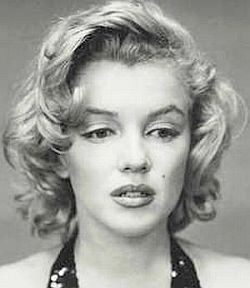
Marilyn Monroe in a troubled, far-away moment, captured by Richard Avedon, NY, May 1957. Click for related Marilyn photo books at Amazon.com.
      “Candle in the Wind” is a name of a song performed by Elton John and written by he and collaborator Bernie Taupin in 1972. 

The song was originally written as a tribute to Hollywood movie star Marilyn Monroe who died at the age of 36 in August 1962. 

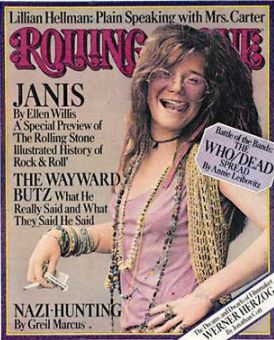
Taupin had been inspired by the phrase “candle in the wind” when he heard Clive Davis of Columbia Records use it to describe Janis Joplin, the blues-rock singer who died of a heroin overdose in 1970.

In Monroe’s case, too, the phrase was especially appropriate, given her tumultuous life and untimely death. The song’s opening line, “Goodbye Norma Jean” refers Monroe’s real first name, and the lyrics chronicle her troubled life as a film star and international celebrity. 

John and Taupin’s “Candle in the Wind” aptly captures some of the tragedy and mystique that was Marilyn Monroe, and the long-standing public fascination with her life.

But as Taupin would later remark, the song is about “the idea of fame or youth or somebody being cut short in the prime of their life. The song could have been about James Dean, it could have been about Montgomery Clift, it could have been about Jim Morrison ….how we glamorize death, how we immortalize people.”

Elton John's  'Goodbye Yellow Brick Road' w/ 'Candle in the Wind'. Click for digital.
Elton John's 'Goodbye Yellow Brick Road' w/ 'Candle in the Wind'. Click for digital.
     “Candle in the Wind” was first released on Elton John’s 1973 album Goodbye Yellow Brick Road and also appeared on later albums.  A single version of the song reached No. 11 on the U.K. charts in 1974.  It wasn’t released as a single in the U.S. until 1987, when a live version from Elton’s Live In Australia album charted.


Music Player
“Candle in The Wind”


In 1990, the song rose to prominence again when John rededicated it to AIDS victim Ryan White, performing it in his honor at the Farm Aid 4 concert and at White’s funeral.  But in 1997, following the death of Princess Diana, John did a remake of “Candle in the Wind” as a tribute to Diana, a personal friend.  This version of the song, with new lyrics, was released as a single and sold wildly throughout the world, peaking at number one in almost every country where it was sold. That part of the story continues below the lyrics and photographs that follow.


“Candle in the Wind”
Original Version
1973

Goodbye Norma Jean
Though I never knew you at all
You had the grace to hold yourself
While those around you crawled
They crawled out of the woodwork
And they whispered into your brain
They set you on the treadmill
And they made you change your name
And it seems to me you lived your life
Like a candle in the wind
Never knowing who to cling to
When the rain set in
And I would have liked to have known you
But I was just a kid
Your candle burned out long before
Your legend ever did
Loneliness was tough
The toughest role you ever played
Hollywood created a superstar
And pain was the price you paid
Even when you died
Oh the press still hounded you
All the papers had to say
Was that Marilyn was found in the nude
Goodbye Norma Jean
From the young man in the 22nd row
Who sees you as something more than sexual
More than just our Marilyn Monroe


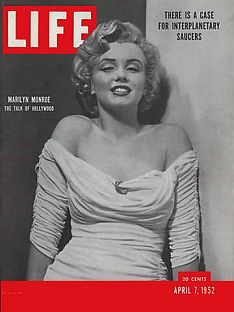
April 1952: Monroe on cover of Life. Click for copy.

Candle in the Wind, single cover, 1974. Click for digital.


Princess Diana Version

After Princess Diana was killed in a car crash in Paris, France on August 31, 1997, Elton John, who had been a very close friend of Diana’s and the Royal Family, went into a period of shock and mourning. Only a month prior to Diana’s death, John had been rocked by the passing of another friend, Italian designer Gianni Versace, a funeral which he and Diana attended in Milan on July 22nd.

Princess Diana & John at Gianni Versace's funeral, July 1997.

Elton John and Princess Diana had been friends since 1981. He had performed at Prince Andrew’s 21st birthday party at Windsor Castle and received a thank-you letter from 19-year-old Diana Spencer, then engaged to Prince Charles. Prior to his friendship with Diana, John had been a friend of the Royal Family since the late 1970s. He had accompanied Princess Margaret to arts events, participated in Prince Charles’s annual concerts for youth charities, and had been a frequent performer at private royal events. He was also a friend of Sarah Ferguson, and he and former wife Renate were seated in the front row for the wedding of Ferguson and Prince Andrew. At Diana’s death, John was asked by the family to sing at Diana’s funeral and decided to write a tribute for his former friend. After meeting with his writing partner, Bernie Taupin, they found it would not be possible to write a new song in the time available and decided instead to rewrite the former 1973 “Candle in The Wind” song with new lyrics for Diana. George Martin, the music producer who had long been affiliated with Beatles, was also contacted to help produce the song. In production, a string quartet and woodwinds were added to the recording. This version was titled “Candle in the Wind 1997,” and was later released as a single with two other songs “Something About The Way You Look Tonight” and “You Can Make History (Young Again).”


“Candle in the Wind”
Princess Diana Version, 1997

Goodbye England’s Rose
May you ever grow in our hearts.
You were the grace that placed itself
Where lives were torn apart.
You called out to our country,
And you whispered to those in pain.
Now you belong to heaven,
And the stars spell out your name.
And it seems to me you lived your life
Like a candle in the wind:
Never fading with the sunset
When the rain set in.
And your footsteps will always fall here,
Along England’s greenest hills;
Your candle’s burned out long before
Your legend ever will.
Loveliness we’ve lost;
These empty days without your smile.
This torch we’ll always carry
For our nation’s golden child.
And even though we try,
The truth brings us to tears;
All our words cannot express
The joy you brought us through the years.
Goodbye England’s Rose,
From a country lost without your soul,
Who’ll miss the wings of your compassion
More than you’ll ever know.

'Candle in the Wind,' Princess Diana version, 1997.
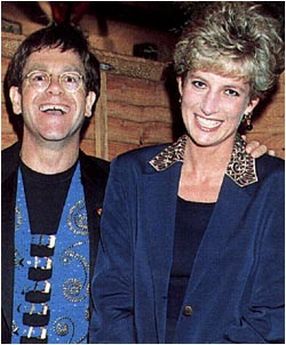

Elton John & Princess Diana in happier times.


Giant Best-Seller

“Candle in the Wind 1997” carried the label of Elton John’s Rocket Records and was distributed by Hollywood-based A&M Records, a unit of PolyGram. Before the CD shipped, there were reportedly orders for more than 12 million copies in the U. S. alone. By late September 1997, the song took the American pop charts by storm, entering the Billboard Hot 100 at No. 1, smashing the existing record for first-week sales with nearly 3.5 million copies sold over six days from its September 22nd release.At its peak worldwide, the Diana version of “Candle in the Wind” was selling at an estimated rate of nearly six copies per second. The previous first-week sales record of 632,000 had been set in late December 1992 by Whitney Houston’s “I Will Always Love You.” All in all, “Candle in the Wind 1997” sold over 11 million copies in the U.S. In the U.K. sales also soared. In its first week the song sold 658,000 in one day, and over 1.5 million copies for the first week. The single would remain at No. 1 in the U.K. for five weeks and eventually sold 4.86 million copies there, becoming the best-selling single of all time in the UK. In Canada, it spent 45 weeks at the top spot and three years in the top 20. Worldwide, it is estimated that the single sold more than 35 million copies. At the peak of its sales, worldwide, it was estimated that nearly six copies were sold every second.

John performing 'Candle' at Diana’s funeral.
"The Mirror" newspaper of Sept 13, 1997 giving a boost to  "Candle 1997."
"The Mirror" newspaper of Sept 13, 1997 giving a boost to "Candle 1997."

      As of 2006, “Candle in the Wind, 1997” was ranked as the world’s best-selling CD single in history. Bing Crosby’s “White Christmas” was still ranked as the world’s best selling vinyl single.

All artist and composer royalties and record company profits from “Candle in the Wind 1997” were donated to “The Diana, Princess of Wales Memorial Fund.” Many music store retailers, however, did profit on their share of the song’s sales.

Elton John sang “Candle In The Wind 1997” in public, for the first and only time at Diana’s funeral in Westminster Abbey on September 6th, 1997. 

John has repeatedly turned down requests to perform the song live and it has never been released on any of his albums. However, he has stated he will perform the song again if requested by Diana’s sons, which to date has not occurred. At concerts, John performs the original 1973 version.


Memorial Fund

By September 1999, income to “The Diana, Princess of Wales Memorial Fund” was estimated at $150 million, much of it from royalties generated by sales of “Candle in the Wind 1997.” 

Since then the Fund has continued to further humanitarian causes advocated by Diana with its grants, also helping improve the lives of disadvantaged people in the UK and around the world with grants and other assistance. It has also championed additional causes by lending the Fund’s name to other important efforts. More information on the Fund can be found below in “Sources, Links & Additional Information.”

For more detail on the career of Elton John, see “Elton John’s Decade: 1970s (w/Bernie)”. For more on the life & loves of Marilyn Monroe, see “Marilyn & Joe, et al,” which also covers the media fascination with her over 70 years. Additional stories on contemporary music, profiles of artists and song histories, can be found at the “Annals of Music” category page. Thanks for visiting – and if you like what you find here please make a donation to help support the research and writing at this website. Thank you. – Jack Doyle
 

Please Support
this Website

Donate Now

Thank You

 
______________________________

Date Posted: 26 April 2008
Last Update: 23 July 2023
Comments to: jackdoyle47@gmail.com
Twitter: https://twitter.com/PopHistoryDig

Article Citation:
Jack Doyle, “Candle in the Wind, 1973 & 1997,”
PopHistoryDig.com, April 26, 2008.

_____________________________

 
Books at Amazon.com

Anthony Summers book on Marilyn Monroe, “Goddess.” Click for copy.
“Diana: Her True Story in Her Own Words.” Click for copy.
Elton John’s book, “Me: Elton John.” 2020 edition. Click for copy.


Sources, Links & Additional Information
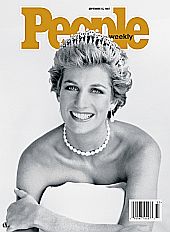
Princess Diana, "cover girl," People, Sept 15, 1997. Click for copy.
Candle in the Wind” and “Elton John,” Wikipedia.org.

Richard Harrington, “Elton John: Diana’s Song,” Washington Post, Friday, September 5, 1997; Page D-2.

Bill Carter, “Elton John’s Revised ‘Candle,’ For a Princess and Charity,” New York Times, September 9, 1997.

Reuter, “Elton John’s Diana Tribute Ignites U.S. Charts,” October 1, 1997.

Jon Pareles, “October 19-25; Roll Over, Bing Crosby,” New York Times, October 26, 1997.

Warren Hoge, “London Journal; Two Years On, Diana Is the ‘Forgotten’ Princess,” New York Times, September 1, 1999.

“Candle in the Wind 1997,” Wikipedia.org

The Diana, Princess of Wales Memorial Fund.
 
_______________________________________________


“The Bourne Profitability”
1980-2016

Promo for 2002 film featuring Matt Damon.
      Jason Bourne is the name of a fictional intelligence agent who suffers from amnesia and has CIA assassins chasing him. He’s been on the run since 1980 when novelist Robert Ludlum first created him for his popular spy thrillers, and he is still on the run today in a series of popular films, played by actor Matt Damon. The Bourne storyline, in fact, has proven to be a gigantic economic success, as Jason and his creators have provided for a continuing line of Bourne hits, including: three initial best-selling novels; a two-part television series in the late 1980s; five Hollywood movies since 2002; a new author to keep things going after Ludlum passed on in 2001; ten more novels between 2004 and 2016; a video game in 2008; and very likely, much more ahead. To date, Jason Bourne & Co. have created a global entertainment empire generating more than $1 billion in economic activity. Consider first, the Ludlum books.

     Robert Ludlum was already a successful novelist when he wrote the first Jason Bourne novel in 1980, The Bourne Identity.  The spy thriller genre was well established by then. Ian Fleming had produced his 14 James Bond novels during the 1950s and 1960s, and John le Carre had among his best-sellers, The Spy Who Came in From the Cold of 1963 and Tinker, Tailor, Soldier, Spy of 1974. But Ludlum was a prolific writer who had scored best sellers in the early 1970s.  By 1980 he had written eleven novels and had a considerable following.  In fact, by the time his first Bourne book appeared, Ludlum was the brand name, not Jason Bourne. His name often had the prominent billing on the early covers, helping sell books.  Still, with his first Bourne book Ludlum created a memorable character and a plot that begged for sequels.

1980 hardback. Click for copy.


1st Novel, 1980

The Bourne Identity

     The Bourne Identity is a complicated and intriguing loss-of- identity spy thriller, which places its principal amnesiac character in a dangerous quest in which he also becomes a target. The story opens with a man being pulled out of the Mediterranean Sea presumed dead, with bullet wounds in his back. Still alive, he later awakens on the boat to discover he has no knowledge of who he is or where he came from. There is, however, a piece of microfilm that had been surgically implanted beneath the skin of his hip. In his dreams he finds other fragments of who he might be, and he later discovers he has automatic and deadly martial arts skills as well as weapons knowledge. The microfilm leads to a bank account in Zurich with $4 million, a pile of passports, and a name, Jason Bourne. But in his travels Bourne is soon hunted by both an assassin and the CIA and he begins a life on the run trying to figure out why he is being hunted and who he really is. And with that, the Bourne saga begins.The Bourne Identity spent 95 weeks on the bestseller list.

     “The Bourne Identity“, wrote Time magazine’s Michael Demarest in April 1980, “is the most absorbing of Ludlum’s nine novels to date. His characters are complex and credible, his sleight of plot as cunning as any terrorist conspiracy. And his minutiae, from the rituals of Swiss banking to the workings of a damaged brain, are always absorbing. It is a Bourne from which no traveler returns unsatisfied.” The hardback was published in late March1980 by Robert Marek Publishers. In fact, the book had gained a spot on the national and Washington Post bestsellers lists even before it was officially published. The first edition had at least seven printings, reaching 300,000 through April 1980. In the U.S., the book became the second best-selling work of fiction for the year 1980 with sales of at least 325,000 copies. The Bourne Identity spent 95 weeks on the bestseller list.


2nd Novel, 1986

The Bourne Supremacy

March 1987 paperback. Click for copy.

     The second Jason Bourne novel, The Bourne Supremacy, was first published in hardback by Random House in 1986. In this sequel to the first novel, Bourne by now knows that his real name is David Webb, and is settled and married in Maine working as a professor. However, he is still suffering flashbacks to his Jason Bourne persona, and is forced to undertake a final, possibly fatal mission to retrieve his kidnaped wife in Hong Kong. The book had a 650,000 first printing and a $150,000 advertising & promotion budget. There, an assassin has been busy posing as Jason Bourne, who the real Bourne must find and capture. In his quest to stop the imposter, he comes up against a plot that could plunge the entire Far East and then the world into war. According to a Publisher’s Weekly review, “Every chapter ends with a cliff-hanger; the story brims with assassination, torture, hand-to-hand combat, sudden surprise and intrigue within intrigue. It’s a sure-fire bestseller.” Indeed. At least one report said that Ludlum likely received a seven figure advance. The book had a 650,000 first printing and a $150,000 advertising and promotion budget on top of Ludlum’s brand name and the success of the first novel. It was also a Book-of-the-Month-Club selection. Like its predecessor, The Bourne Supremacy became a major hit, ranking as the 4th best-selling fiction book in U.S. for 1986. The hardback from Random House sold for $19.95. Conservatively figuring it sold its first printing, that’s a gross of about $13 million for sales of the hardback.

DVD for 1988 TV miniseries. Click for copy.


TV Movie, 1988

The Bourne Identity

     In 1988, The Bourne Identity TV miniseries was made as an adaptation of Ludlum’s first two Bourne novels. The two-part TV series starred Richard Chamberlain and Jaclyn Smith. It aired on ABC in early May 1988. ABC developed The Bourne Identity for TV because Chamberlain was interested in playing the title role, according to Christy Welker in May 1988, then vice president for mini-series at ABC. “Richard has the ability to grab the audience’s attention and keep it,” she explained. “The more the audience gets to know Richard, the more they like him.” Susan Baerwald, vice president for mini-series at NBC agreed: “You have to like the people you invite into your living room,” she said, adding that Chamberlain’s acting range made him “a valuable property” who had received “a 50 share” for the 1980 TV broadcast of the Shogun miniseries. Chamberlain had risen to fame as TV’s Dr. Kildare of 1961-1966. Through the 1980s he began to play in TV movies and in 1983 became popular playing Father Ralph de Bricassart opposite Rachel Ward in TV miniseries The Thorn Birds (it earned a 59 percent share, second only to Roots at the time). Estimates for Chamberlain’s fee in the Bourne TV role were as much as $700,000.The Bourne Identity miniseries was a huge TV hit, not only in America and with advertisers, but throughout the world.Jaclyn Smith, cast opposite Chamberlain in the Bourne movie, rose to fame as one of TV’s Charlie’s Angels in 1976-1981. Smith, like Chamberlain, had done a number of TV movies, among them, an Emmy-nominated role for her Jacqueline Bouvier Kennedy (1981), and also Sydney Sheldon TV adaptations, Rage of Angels and Windmills of the Gods. Casting Smith and Chamberlain together in the two part, four-house Bourne miniseries — the “king and queen” of the TV movie circuit, as they were called — was a good bet for big viewing and eager sponsors. The Bourne Identity miniseries was a huge TV hit, not only in America and with advertisers, but throughout the world. In August 2002, the TV production was released on DVD by Warner Home Video.


3rd Novel, 1990

The Bourne Ultimatum

3rd Bourne novel, paperback edition. Click for copy.
     The basic plot of the third Bourne novel by Robert Ludlum follows Bourne as he works to find his old enemy, Carlos the Jackal. As the Jackal enters old age, he decides that he must undertake one essential task before he dies: kill Jason Bourne. As a result, Webb must assume his Jason Bourne persona once again, a part of his life he thought was over, only now to protect his wife and children as well. In the search for the Jackal, Bourne and friends uncover a secret violent organization that dates back to the creation of Bourne, earlier days in Vietnam, and Bourne’s earlier rogue missions. Bourne becomes the lure for Carlos in a deadly trap by using himself as bait. The action moves from the U.S. to Montserrat to Paris, and then Moscow. However, Bourne and his allies barely escape the Jackal’s traps and fail in their repeated attempts to ambush him. Bourne finally tracks the Jackal down, and in a final confrontation, kills the Jackal and returns to his family. The book received mixed praise. Publisher’s Weekly criticized it for “formula writing that delivers even less than its meager promise.” Others called it “vintage Ludlum” and still others “stilted” and “repetitive.” In any case, it was another Bourne best-seller in 1990. The hardback edition was published by Random House on February 25, 1990. A Grafton version was published on March 8, 1990. Bantam released a mass market paperback on February 1, 1991.


2001

Ludlum’s Death

     In March 2001, Robert Ludlum died of a heart attack at his home in Naples, Florida at the age of 73.  Before he became a prolific novelist, Ludlum was an actor and theatrical producer.  He turned to writing novels in middle-age, publishing more than 20 titles.  His books were translated into 32 languages and sold in 40 countries. At the time of his death, Ludlum was awaiting the arrival of the first Hollywood film for The Bourne Identity starring Matt Damon, which Ludlum had a hand in both producing and adapting from his novel, working on those projects in the late 1990s.  After the success of the first Bourne film in 2002 (see synopsis below), Ludlum’s estate saw an opportunity and asked another author, Eric Van Lustbader, to continue the series. The estate’s post-mortem publishing game plan is reminiscent of licensing and other deals for dead stars like Elvis Presley, Marilyn Monroe and Babe Ruth. . . Said Jeffrey Weiner, the executor of Mr. Ludlum’s estate in July 2007:  “[I]f we can publish Ludlum books for the next 50 years and satisfy readers, we will.”   According to New York Times reporter Richard Sandomir, “The estate’s post-mortem publishing game plan is reminiscent of licensing and other deals for dead stars like Elvis Presley, Marilyn Monroe and Babe Ruth and the film industry’s comfort with familiar franchises.”  Lustbader agreed to help continue the Jason Bourne novels; he and Ludlum had shared the same literary agent and they admired each other’s work. Lustbader is a New York writer and author of numerous novels, including his own best-selling thrillers The Ninja and Black Heart.   He would later author two more Bourne novels.  And as Van Lustbader would later clarify on his website, there were no notes or partially completed manuscripts left to him by Ludlum.  The Bourne novels he would write in 2004 and 2007 (see below) would be entirely his own creations, although using Ludlum’s Bourne character.


1st Film, 2002

The Bourne Identity

     Hollywood discovered Jason Bourne somewhat later than television — but not too late. Universal Pictures produced the first feature film, The Bourne Identity, in June 2002. Matt Damon was cast as Jason Bourne, the amnesiac attempting to discover who he is. In his quest, he becomes involved with passerby Marie, played by German actress Franka Potente, who comes to assist Bourne in his journey. A wide range of actors were approached for the role of Bourne, including Russell Crowe and Sylvester Stallone. Damon was selected in part because he understood and appreciated that the film, in addition to being an action thriller, would also focus on character and plot. In the film, Damon performed many of his own stunts and underwent extensive training in stunt work, weapons training, and boxing for the film. With a production budget of $60 million, the film did quite well, grossing $121 million in the U.S. and $213 million worldwide, ranking 20th in the world for 2002.

2002 film, 'The Bourne Identity'. Click for DVD.

A soundtrack of original music scored for the film — including the catchy ending tune, “Extreme Ways” by recording artist Moby — was released with the picture in June 2002. The Moby track, in fact, has become something of a Bourne theme song, appearing now, in updated versions, at the end of all five of the Bourne films. The original version of the song, as it was used in The Bourne Identity, is offered in the Music Player below:


Music Player
“Extreme Ways” – Moby


Reviewers of The Bourne Identity were largely positive on the film, though not entirely. Roger Ebert gave it three stars and praised it for its ability to absorb viewers in its “spycraft” and Matt Damon’s “ability to be focused and sincere.” Still Ebert charged the film as “unnecessary, but not unskilled.” The Village Voice trashed it as “banal” and a disappointment. Charles Taylor of Salon.com called it “entertaining, handsome and gripping.” The Bourne Identity, he added, “is something of an anomaly among big-budget summer blockbusters: a thriller with some brains and feeling behind it, more attuned to story and character than to spectacle.”

Of particular note was the film’s central car chase scene, which won formal recognition at the World Stunt Awards. The film also won an American Choreography Award for Outstanding Achievement in Fight Choreography. In January 2003 Universal released the first VHS version. The DVD followed in July 2004 in advance of the film sequel, The Bourne Supremacy (see below). The Bourne Identity was also released on Universal Media Disc, an optical disc for use on Sony’s Play Station Portable.


4th Novel, 2004

The Bourne Legacy

1st Van Lustbader novel. Click for copy.

     The Bourne Legacy is the first Bourne novel written by Eric Van Lustbader to continue the series. It was first published by St. Martin’s Press in June 2004. This novel finds Bourne in Washington D.C., working as a Georgetown University professor, now retired from his past and living a quiet life. An assassin’s attempt on him, and the murder of two of his closest associates prevail to resurrect his old persona, as Bourne realizes his legacy has followed him. Bourne is set up for the murders, and hunted by the CIA as a dangerous rogue agent. He has only one option to stay alive-and one last chance to stay one step ahead of an unseen assailant who is after Bourne for personal reasons. Pursued across the globe, Bourne’s on the run again, and on the edge of discovering the truth – that he’s become the expendable pawn in an international terrorist plot: a Hungarian terrorist and Chechen rebels are plotting a surprise for world leaders meeting in Iceland. Reviewers generally welcomed the new Van Lustbader novel. “Overall, fans of the Bourne series books will find in author Eric Van Lustbader a very worthy and more than capable writer to continue this splendid saga. . .” wrote one on-line reviewer .” Lustbader’s Bourne is just as haunted as Ludlum’s,”added Edward Nawotka of USA Today’…..”Lustbader is able to create an ingenious link to the previous books by filling in heretofore unknown details from Bourne’s long, tangled history in Vietnam and Cambodia. . .” Nawotka had generally high praise for the new Bourne author: “Lustbader remains a fine choice to fill Ludlum’s large shoes, and he has delivered a work worthy of the Bourne legacy.” By August 2007, The Bourne Legacy had sold 272,000 hardback and paperback copies.

Hollywood film poster, 2004. Click for DVD.
 

2nd Film, 2004

The Bourne Supremacy

     The Bourne Supremacy, the second Hollywood film with Matt Damon as Bourne, was released by Universal Pictures in late July 2004. It continues the story of Bourne’s amnesia, as the former CIA assassin seeks to learn more about his past and is once again hunted by the CIA.

Although this film departs from Ludlum’s Supremacy novel in its plot, and also borrows from the later novel, The Bourne Legacy written by Eric Van Lustbader, it continues the general thread of the first film; a spy thriller taking viewers on a trail of chase-and-intrigue through Asia, Europe and Russia.

This film, like the first, was generally well received by critics and moviegoers. It also did quite well, topping box office receipts at its July 2004 release, grossing more than $176 million in the U.S. that year. The Bourne Supremacy’s worldwide gross exceeded $288 million.


Hardcover edition, June 2007. Click for copy.

5th Novel, 2007

The Bourne Betrayal

     The fifth Bourne novel in the overall series, and Eric Van Lustbader’s second contribution, The Bourne Betrayal, was released in hardback by Warner Books/Orion Press in June 2007. It was released several weeks in advance of the third Hollywood film, though unrelated to that film (see below). Other editions of this book used cover imagery suggestive of an earlier Bourne movie scene. In any case, by mid-July 2007 this book had sold 86,000 copies and was #9 on the fiction best seller list. In Betrayal, Jason Bourne takes a mission to rescue his only friend in the CIA who has disappeared in Africa while tracking shipments of yellowcake uranium. Once safely back in America with his friend, Bourne is persuaded to help track the money trail of terrorists in Odessa who are buying the nuclear material. But during the hunt, Bourne is hampered by flashbacks of unfamiliar places and events and he wonders if someone is brainwashing him to throw him off the trail. He also has doubts about his rescued friend’s real identity. Still, Bourne continues gathering evidence while trying to stay one step ahead of the terrorists hellbent on destroying the U.S.

Poster, ‘The Bourne Ultimatum’. Click for DVD.
New paperback edition of older novel touting 2007 film & its imagery. Click for copy of book.


3rd Film, 2007

The Bourne Ultimatum

     The third film in the Jason Bourne saga, The Bourne Ultimatum, picks up after the harrowing car chase in Moscow from film #2, The Bourne Supremacy. It follows Bourne as he travels to Paris, London, Madrid, Tangier, and New York City to uncover his real identity, while the CIA continues to send assassins to take him out.

As The Bourne Ultimatum began hitting theaters in early August 2007, Universal Pictures released a three-disc DVD set entitled The Bourne Files that collectively packaged the first two films – The Bourne Identity (2002) and The Bourne Supremacy (2004) – along with a third disc of extras.

Random House/Bantam also issued a new paperback version of Ludlum’s earlier book, The Bourne Ultimatum, with a cover image suggesting a film scene, along with “now a major motion picture” also on the front cover.

Film reviewers were generally positive on The Bourne Ultimatum. “A thoughtful, superior action movie”, wrote Mick LaSalle of the San Francisco Chronicle.

      In the hype for the film, actor Matt Damon had made the publicity rounds and appeared on TV talk shows such as David Letterman and the Tonight Show with Jay Leno.

There was also some media and web hype offering a James Bond/Jason Bourne “who’s-the-greatest-spy”comparison.


Online Hype

Universal Pictures also launched an online game, teaming up with Google for the promotion, which used the title The Ultimate Search for Bourne with Google. 

In the game, players try to hunt down the elusive rogue agent, and at the same time are taken on a tour of Google tools — YouTube, Google Maps, and web searches. Participants must answer trivia and find random clues buried on the net to compete for the grand prize — a 2008 Volkswagen Touareg 2, the car model used in the film. The Bourne Ultimatum movie, meanwhile, had a good opening weekend box office in August 2007 at $69.3 million, a record for a single opening in that month. By the end of its fourth week, August 27th, the film’s domestic box office gross was $185.1 million, with more active weeks ahead.


"The Bourne Conspiracy" video game. Click for copy.
Video Game, 2008

The Bourne Conspiracy

     Not to be left out the Bourne entertainment juggernaut, the video game industry jumped into the fray with a new game for use on the PlayStation 3 and Xbox 360 consoles. That game, called The Bourne Conspiracy, was released in the summer of 2008. Developed by High Moon Studios, The Bourne Conspiracy was designed to expand upon Ludlum’s Bourne character, immersing the player in an espionage action adventure.

The player assumes the role of amnesiac Bourne in the game and must rid his life of all those hunting him, whether U.S. agents or foreign terrorists. In the game, the Bourne character has a full arsenal of weapons and survival know-how — sufficient “to engage and eliminate small armies.”  The video game also features famous moments from the best-selling novels and the film The Bourne Identity, as well as expected new plot segments as the game series develops in the future.

In 2012, Jeremy Renner played another agent, Aaron Cross, in the 4th Bourne film, “The Bourne Legacy”. Click for DVD.


4th Film, 2012

The Bourne Legacy

After Matt Damon had stated in 2007 that he would not appear in further Jason Bourne films, actor Jeremy Renner took on the lead role of another black ops agent named Aaron Cross in the fourth film of the Bourne series, The Bourne Legacy. Cross is a member of CIA-run Operation Outcome whose subjects are genetically enhanced. And since Jason Bourne in previous films has already publicly exposed the CIA’s handiwork in earlier and ongoing programs, Cross is now on the run for his life as well. In the film, however, various clips of Damon as Bourne are shown, and his name is mentioned several times, keeping Bourne and Damon in the mix. This film seeks to continue the story line of the film series without changing key events. Parts of this film, for example, take place at the same time frame as the previous film, The Bourne Ultimatum. Although this film has the same title as the Eric Van Lustbader-written Bourne novel, The Bourne Legacy’s actual screenplay bears little resemblance to that novel.

The reviews of the film were mixed, with some on the positive side saying that Renner played a good role and the story offered some proof there was a good pot of material for continuing the Bourne series into the future. Other reviewers, however, were less complimentary, saying the Bourne tank was running near empty, or as Michael Atkinson of The Village Voice put it: “The Bourne films have more than just overstayed their welcome and outlasted the Ludlum books—they’ve been Van Halenized, with an abrupt change of frontman and a resulting dip in personality.” In any case, The Bourne Legacy did o.k. at the box office, pulling in more than $275 million worldwide.

2016 poster for “Jason Bourne” film. Click for DVD.

5th Film, 2016

Jason Bourne

After a nine-year absence of not appearing as the Jason Bourne character in the Bourne film series, Matt Damon returned to his well-known role in the fifth and latest film in the series, titled Jason Bourne. Apparently, there was some on-again-off-again moments in Hollywood in getting this film on track, but by the Fall of 2014 commitment on the film had been reached after Damon and director Paul Greengrass re-united for the project. Jason Bourne is meant to be a direct sequel to The Bourne Ultimatum of 2007.

Bourne, the former CIA assassin – and “million-dollar killing machine” as he is sometimes described – is still unearthing bits and pieces of who he truly is, having suffered an earlier near-death experience in which he lost his memory. Now Bourne has a better understanding of himself and what has happened in his past. Still, in this film, he is on a mission to set things right after a WikiLeaks-like revelation and resulting complications set him on a task to even the score, just as higher ups — discovering that he is still alive and walking around – want him taken out for what he knows and could publicly reveal. This time, part of Bourne’s self-designed mission takes him right to the top – pursuing bad guy CIA director, played by Tommy Lee Jones. Along the way there are the usual but always enthralling fight scenes and car chases – which some reviewers, this time, found overdone. In fact, there are some very good and interesting threads offered in the film – especially those built around social media, government internet mining, and domestic surveillance. Yet the breathless, non-stop action, as some reviewers see it, does not allow for a more thoughtful treatment of story line elements. Still, for the testosterone-peaking target audience and die-hard Jason Bourne fans, the mayhem and Bourne’s super-human physical talents – whether bare-knuckle knock-outs à la extreme fighting style, or laying waste to gangs of would-be hit men – are just what they expect to see, and are no doubt happy to pay the price of admission.

“The Bourne Empire”
1980-2016

Novels (Robert Ludlum)
The Bourne Identity, 1980
The Bourne Supremacy, 1986
The Bourne Ultimatum, 1990
Novels (Eric Van Lustbader)
The Bourne Legacy, 2004.
The Bourne Betrayal, 2007
The Bourne Sanction, 2008
The Bourne Deception, 2009
The Bourne Objective, 2010
The Bourne Dominion, 2011
The Bourne Imperative, 2012
The Bourne Retribution, 2013
The Bourne Ascendancy, 2014
The Bourne Enigma, 2016
TV Mini-Series
The Bourne Identity, 1988
– ABC T.V.
Hollywood Films
The Bourne Identity, 2002
The Bourne Supremacy, 2004
The Bourne Ultimatum, 2007
The Bourne Legacy, 2012
Jason Bourne, 2016
Video Game
The Bourne Conspiracy, 2008
– High Moon Studios

Jason Bourne premiered in London on July 11, 2016, and was released in the U.S. by Universal Pictures on July 29, 2016. And despite some less-than-enthusiastic initial reviews, the film was expected to break initial weekend box office records and reap hundreds of millions worldwide.


More To Come?

     The Jason Bourne franchise appears to be alive and well, now into its fourth decade as a thriving enterprise.

Its net global worth as of 2016 — when all the related merchandising, books, film rentals, and DVD sales are tabulated — is now well over $1 billion. And it appears there will be more Bourne ahead.

Yet, as one Hollywood producer recently put it, “at some point, Bourne will have to discover his identity.” And as of this last film in 2016, he appears to have reached that point. Still, given the material being generated by Bourne author Eric Van Lustbader (see table at left for list of his recent novels), and the fertile imaginations of Hollywood scriptwriters, there will likely be no shortage of newly fascinating Bourne twists and black ops scenarios that will lead to continued best sellers, more movies, and more video games. Stay tuned; Jason Bourne has not left the building.

Readers of this story may also find “Goldfinger, 1959-1965,” of interest, as this story profiles the famous Ian Fleming/James Bond book and film of that name, as well as the hit theme song by Shirley Bassey, marking a major take-off point for the “007 genre” and continuing success for that franchise. For additional stories on “Film & Hollywood,” or “Print & Publishing,” please see those respective category pages. And if you like what you find here, please make a donation to help support the research and writing at this website. Thank you. — Jack Doyle

Please Support
this Website

Donate Now

Thank You


______________________________

Date Posted: 10 May 2008
Last Update: 11 September 2019
Comments to: jackdoyle47@gmail.com

Article Citation:
Jack Doyle, “The Bourne Profitability, 1985-2007,”
PopHistoryDig.com, May 10, 2008.

_____________________________


Sources, Links & Additional Information

Jason Bourne films -- complete five-film set. Click for set.
Publisher’s Weekly, editions of March 7, 1980, March 28, 1980 and April 11, 1980.

Michael Demarest, “Terrorists Take Over The Thrillers,” Time, Monday, April 14, 1980.

Aljean Harmetz, “Richard Chamberlain’s Mini-Series Mastery,” New York Times, May 1, 1988.

“Thriller Writer Ludlum Dies,” BBC News, Tuesday, 13 March, 2001.

Edward Nawotka ” ‘Bourne’ Chases Ludlum’s Legacy,”USA Today, July 14, 2004.

Paul Davidson, “The Bourne Ultimatum: Why Stop There? – Spy Series Could Span Five Movies,” IGN.com, February 16, 2006.

Richard Sandomir, “The Ludlum Conundrum: A Dead Novelist Provides New Thrills,” New York Times, July 30, 2007.

“Robert Ludlum,” Wikipedia.org.

Nielsen BookScan.

“20th-Century American Bestsellers,” Graduate School of Library and Information Science, University of Illinois, Urbana-Champaign, Illinois, 2006.

______________________________________________


“Madonna’s Pepsi Ad”
…and Controversy

The 1989 Pepsi deal with Madonna also included plans to promote her world tour, as shown in this poster.
     In the mid- and late-1980s, Coca-Cola and Pepsi, the corporate kings of soda, were engaged in a game of one-upmanship with their advertising dollars.

An effective way to reach millions of consumers, they found, was to have popular recording stars perform in Pepsi and Coca-Cola television ads. The strategy had worked brilliantly for Pepsi with music stars Michael Jackson and Whitney Houston.

In the process, the 60-second TV ad became more of a major film production than a simple soft-drink endorsement. Elaborate performances showcasing the artists and the product of interest were now becoming part of a new commercial persuasion.

In December 1988, Coca-Cola announced that it had signed then popular recording artist George Michael to do some of its TV ads. Shortly thereafter, on January 25th 1989, Pepsi announced they had signed pop sensation Madonna to tout their cola.

The deal Pepsi made with Madonna made front-page business and style-section news across the country. Pepsi would pay Madonna $5 million to appear in a series of TV ads and would also sponsor a Madonna world tour, planned for later that year.

     Madonna by this time was already a big star. She had made her 1984 breakthrough performance at the MTV video awards; scored assorted No.1 singles and albums; and had swept up fans around the world. By 1987 she had made the covers of national magazines such as Time, Life and Rolling Stone, and had also begun a film career. But Madonna was also controversial, having stirred the censors on occasion with her lyrics, dress, and/or sexually-suggestive performances. Pepsi was nonetheless happy to have her associate with their product.

Madonna, Life magazine, Dec. 1986. Click for copy.
Rolling Stone, September 1987. Click for copy.

     The TV ad she starred in and helped produce for Pepsi in 1989 — entitled “Make A Wish” — did not appear to be controversial, and in fact was rather wholesome and spirited, tinged with some nostalgia and even family values. It featured her in a song and dance performance centered on her then forthcoming new song “Like A Prayer.” The Pepsi ad used a flash-back storyline opening with Madonna seated in a parlor watching an old black-and-white home movie of herself as a young girl at a birthday party. Pepsi also made an “ad for the ad” — a teaser video to hype the Madonna spot — which ran on national TV at the Grammy awards.The spot cuts back and forth between the young Madonna and adult versions in sync with the lyrics — to various dance scenes, back to the young girl in school, to more dancing in a street scene, back to the girl a little older, another with Madonna dancing among joyful gospel singers, and then finally to Madonna in the opening parlor scene watching the home movie seated with a can of Pepsi. There she watches the little 8-year old Madonna in the black-and-white film at her party, with a 1950s Pepsi bottle and straw, about to blow out the candles on her cake. Across the ages, the two Madonnas toast each other with their respective Pepsis. Then Madonna says to the birthday girl, “Go ahead, make a wish.” With that, the little girl blows out the candles and the film ends. Cut to Pepsi logo and slogan, “A Generation Ahead.” The ad, in fact, comes across quite well, with nothing to offend. Madonna later called it “very, very sweet. It’s very sentimental”– not an inaccurate description.


Madonna dancing in Pepsi ad.
No Small Production

     The production of this ad was not a casual undertaking. Pepsi and Madonna put a fair amount of time and effort into its casting and choreography. The ad would also be the first time that a major recording was ever released in a TV spot rather than over the radio or other special venue. In fact, Pepsi even made a special “ad for the ad” — a teaser video to hype the ad’s release before it ran. Pepsi ran the teaser spot during the nationally-televised Grammy music awards in February 1989, urging viewers to be sure they saw the forthcoming special Madonna ad. In the teaser, a narrator’s voice runs over a short film clip showing an aboriginal man in a desert making his way to a hut with satellite dish. “No matter where you are in the world on March 2nd,” intones the narrator in theater-shaking surround sound, “get to a T.V. and watch Pepsi’s two-minute Madonna commercial featuring her latest release, ‘Like A Prayer’ [pause] — for the very first time.”Pepsi expected that 250 million people would see the ad’s premiere.

     In early March 1989, Pepsi previewed the commercial for the press. The plan was to run the spot around the world on the top-rated evening TV shows in each of some 40 countries. Pepsi expected that 250 million people would see the ad’s premiere. It would begin in Japan and then follow the time zones west around the world through Asia and Europe, finishing in California. Bill Kaatz, an executive with Pepsi’s ad agency, BBDO, said the two-minute ad would later be edited into 60-second and 30-second versions for regular advertising. Everything appeared to be on track. The ad, however, was not what generated the controversy that soon erupted.

'Like A Prayer' video. Click for video collection.
 

“Like A Prayer” Video

     In January 1989, Madonna had also made a separate video to help launch her forthcoming new album Like A Prayer, which included the single by that name used in the Pepsi TV ad. This video, however, had much different imagery than the Pepsi ad. It was much more avant-garde in its composition, some might say.

In the video, the action begins with Madonna running from the sound of police sirens, falling to the ground and then entering a church for sanctuary. In flashback sequences, it is shown that Madonna has witnessed a rape and stabbing of a woman by a white man. The rape victim is aided by a black man who is then blamed for the crime and arrested. Meanwhile, inside the church, Madonna is shown in scenes seeking what appears to be a kind of prayerful guidance about her dilemma as the witness to the crime for the wrongly-accused Good Samaritan black man. In the church, she also appears to be quite taken with a statue of the black saint, possibly Saint Martin de Porres, who resembles the Good Samaritan black man she has seen on the street.

In the “Like a Prayer” video, a statue of a black saint, resembling a wrongly-accused black man, comes alive.
The statue is then shown to be crying and comes alive, and kisses her on the forehead at one point, but then leaves the church. Madonna is then seen grasping a knife, letting it fall to the ground, but leaving wounds on her palms which some interpreted as stigmata or marks of crucifixion (later cited by some as sacrilegious).

There is also a dream sequence in the video after Madonna has laid down in a pew, along with other scenes of Madonna dancing and singing in front of burning KKK-type crosses, as well as dancing and singing with a gospel choir in the church. But finally, she is shown going to the police station as a witness, helping to free the innocent black man. At the end of the video, a curtain comes down, and Madonna and cast come out on stage to take a bow.

Madonna’s “Like A Prayer” video ran in “heavy rotation” on MTV during March 1989. Click for full video at YouTube.
[Note: As of January 30, 2024, the official five-minutes-plus “Like A Prayer” video was posted at YouTube, which at that date included more than 58,000 comments. One comment there offered the following views on the controversy the video had generated:

“This was SUCH a controversial video when it came out. Everyone everywhere was pissed. Interracial relationships, Madonna with stigmata, black Jesus, burning crosses, sexy time with Jesus…it was crazy. There was no group left un-pissed.”

This comment also generated 500 replies of its own. Others, of course, have differing views, seeing the video as offering a kind of social commentary and ahead of its time.]

     However, in its day back in 1989, the “Like a Prayer” video began running on cable TV’s MTV channel on March 3rd, 1989, the day after the Pepsi TV commercial aired. The Pepsi spot had run on March 2nd without incident on the family-oriented Cosby Show and also in other locations around the world. An estimated 250 million people saw the first airing in the U.S., the U.K., and other countries. Meanwhile, the “Like A Prayer” video on MTV ran in what is called “heavy rotation,” as was then the normal practice at the channel with popular music. And that’s when the trouble began for Pepsi.


Boycott Threatened

     The first objections came from Rev. Donald Wildmond of the American Family Association, a Christian group. Wildmond threatened to have his AFA Journal’s 380,000 subscribers boycott Pepsi until the company bowed to his demands. From his home base in Tupelo, Mississippi, Wildmond demanded that Pepsi nullify their deal with Madonna Religious groups charged Madonna with “ridiculing Christianity,” and bid Pepsi to drop their deal with her.because their commercial is “putting Madonna up as a clean, wholesome role model” on the one hand, while her MTV video on the other hand was “ridiculing Christianity.” Wildmond was no novice to these kinds of fights, as he had recently boycotted Martin Scorsese’s film The Last Temptation of Christ.  Pepsi, however, had not seen Madonna’s MTV video before their own TV ad began to run, nor did they have the right to make any judgements about Madonna’s other work

CD sleeve for 'Like A Prayer' single. Click for single.
     Initially, when Wildmond’s boycott threat arose, Pepsi spokesman Tod McKenzie tried to deflect the negative press. “Why isn’t he going after the [MTV] video?” McKenzie asked. “Why has he targeted really an innocent, wholesome commercial people have responded favorably to?” Still, Pepsi immediately put a hold on further broadcasting of the Madonna ad until they could assess what was happening. Then a Catholic bishop from Texas, Rene Gracido, added his voice to the fight, calling Madonna’s video offensive. He too called for a boycott of Pepsi and its other businesses — Taco Bell, Pizza Hut, and Kentucky Fried Chicken. The protest began to grow. Some Catholic groups in Italy started to protest. Then came a giant blow: the Pope released a statement by the Vatican that banned Madonna from appearing in Italy. The album Like a Prayer was later censured by the Vatican.


Hot Potato

     “I really couldn’t believe how out of control the whole Pepsi thing got.”
– Madonna
Pepsi dropped Madonna like a hot potato and the ad was never shown again. Said a Pepsi spokesman at the time: “When you’ve got an ad that confuses people or concerns people, it just makes sense that that ad goes away.” Still, the ad survives today on You Tube and other web sites (see links above). Pepsi also dropped its planned sponsorship of Madonna’s world tour, although some Madonna Pepsi cans had already been printed.  Madonna, however, retained her entire $5 million payment even though her contract had called for three more Pepsi commercials. Madonna, meanwhile, professed surprise at the reaction. “When I think of controversy, I never really think people are going to be half as shocked as they are at what I do,” she said. “I really couldn’t believe how out of control the whole Pepsi thing got.”

Cover of Madonna's 'Like A Prayer' album. Click for CD.


Soaring Record Sales

     The controversy, however, did not appear to hurt Madonna’s music sales or slow her rising star. The news coverage and the controversy simply bolstered her cache. The timing of the whole affair was very good indeed — coming just as some 2 million copies of her album Like A Prayer were heading for the record stores.

By late March and early April 1989, the single and the album, Like a Prayer, both shot to No.1 on the Billboard charts. The album would proceed to sell 13 million copies worldwide, 4 million alone in the U.S., also spawning four Top Ten singles and becoming the top album in over thirty countries.

“If there was anyone left in the world who didn’t know who Madonna was up until that point,” wrote Mark Bego in his 1992 book, Madonna: Blonde Ambition, “they certainly knew who she was now.” Still, at this point, Madonna had another two decades of career and controversy ahead, with many more albums, movies, concerts and multi-million-dollar contracts to come. By January 2007, Forbes magazine was reporting that Madonna was the 4th wealthiest woman in entertainment, worth an estimated $350-to-$400 million dollars.

For additional stories on celebrity advertising at this website please see the “Madison Avenue” category page. Other stories on famous women can be found on the “Noteworthy Ladies” topics page. Thanks for visiting – and if you like what you find here, please make a donation to help support the research and writing at this website. Thank you. – Jack Doyle.

Please Support
this Website

Donate Now

Thank You

_______________________________

Date Posted: 25 April 2008
Last Update: 18 September 2025
Comments to: jackdoyle47@gmail.com

Article Citation:
Jack Doyle, “Madonna’s Pepsi Ad, 1989,”
PopHistoryDig.com, April 25, 2008.

Twitter: JackDoyle/PopHistoryDig
BlueSky: jackdoyle.bsky.social

_____________________________


Books & Film at Amazon.com

Mary Gabriel’s 2023 book, “Madonna: A Rebel Life.” Click for copy.
“Truth or Dare, Madonna” (1991). Click to rent or buy 2 hr film.
Madonna album with 50 No.1 hits. Click for CD or digital.


Sources, Links & Additional Information

Michelle Morgan’s “Mammoth Book of Madonna: Celebrating 30 Years of the Queen of Pop”. Click for book.
J. Randy Taraborrelli’s “Madonna: An Intimate Biography”.

Michael J. McCarthy, “Soda War Goes Pop, as Pepsi Signs Madonna,” Wall Street Journal, January 26 , 1989, p. B-1.

Paul Farhi, “Pepsi Puts Some Fizz in Its Ads: Madonna Signs Up With No. 2 Soft Drink,” Washington Post, Jan 26, 1989, p.E-1.

Andrea Adelson, “Madonna Joins Pepsi Lineup,” New York Times, Jan 26, 1989.

Jane Applegate, “Pepsi Recruits Madonna to Help Fight Cola War,” Los Angeles Times, January 26, 1989, Section IV, p.1.

Peter Fearon, “Stars Win Stripes in the Cola Wars,” Media & Marketing, The Times (London), Wednesday, February 8, 1989.

“Going Global with Madonna — Pepsi-Cola Co.’s Commercial To Air in 40 Countries,” New York Times, March 2, 1989, p. C-16.

Joanne Lipman, “Debut of Madonna Single; ‘Like a Prayer’ Song to Make Debut on Pepsi Television Commercial,” Wall Street Journal, March 2 , 1989, p. B-6.

Michael J. McCarthy, “Christian Group Says It Will Boycott Pepsi Over Madonna Ties; Association Led By Wildmon Calls New Music Video By Rock Singer Offensive,” Wall Street Journal, March 9, 1989, p. B-7.

“Another Temptation,” U.S. News & World Report, March 20, 1989, p.13.

Bill Zehme, “Madonna – Rolling Stone Interview,” Rolling Stone, March 23, 1989, p.50.

“Pepsi Cancels Madonna Ad,” New York Times, April 5, 1989.

James R. Schiffman, “Pepsico Cans TV Ads With Madonna, Pointing up Risks of Using Superstars,” Wall Street Journal, April 5 , 1989, p. B-11.

Bruce Horovitz, “Attempt To Cap Madonna Ad Protest Fizzles For Pepsi,” Los Angeles Times, April 7, 1989, p. IV-3.

Peter Waldman, “This Madonna Isn’t What the Reverend Really Had in Mind; Minister Helped Get Pepsi to End Singer’s Racy Ad: He Pans ‘Lonesome Dove,'”Wall Street Journal, April 7, 1989, p. A-1.

“Headliners; Quick Cancellation,” New York Times, April 9, 1989.

Dody Tsiantar, “Turning Out TV Ads; Pepsi Pulls its Too-Hot-to-Handle Madonna Spot as a New Study Asks Who’s Really Paying Attention,” Newsweek, April 17, 1989, p. 42.

“Madonna’s ‘Like a Prayer’ Clip Causes a Controversy,” Rolling Stone, April 20, 1989, p. 22.

Bruce Horovitz, “Pepsi Plans No New Ads to Sub for Pulled Madonna TV Spot,” Los Angeles Times, April 20, 1989, p. IV-3.

Jeffrey Ressner, “Pepsi Goes Flat on Madonna,”Rolling Stone, May 18, 1989, p. 27.

“Madonna (entertainer),” Wikipedia.org.

Mark Bego, “The Madonna/Pepsi Controversy,” in Madonna: Blonde Ambition ,New York: Cooper Square Press, 1992.

_____________________________________


Pearl White
1910s-1920s

Silent film star Pearl White shown on the cover of Photoplay magazine, April 1920.   (artist - Rolf Armstrong). Click for poster of cover at Amazon.
Silent film star Pearl White shown on the cover of Photoplay magazine, April 1920. (artist - Rolf Armstrong). Click for poster of cover at Amazon.
      Photoplay magazine, founded in Chicago in 1911, reached its zenith in the 1920s and 1930s, becoming quite influential in the early film industry.  The magazine was renowned for its beautiful cover portraits of film stars by artists such as Rolf Armstrong, Earl Christy, and Charles Sheldon.  By 1937, however, with the advancement of color photography, the magazine began using photographs of the stars.

Shown here on the April 1920 cover is a portrait of Pearl White, a silent film actress who by then was a popular star. She was born in March 1889 and became a well-known film actress after she starred in a 1914 silent film series, The Perils of Pauline. The daughter of a poor Missouri farmer, White grew up in Springfield and during high school became interested in acting, participating in a local theater company.  At age 18, she joined the Trousedale Stock Co. as a part-time performer, and later full-time, appearing throughout the American Midwest.  In 1907 she married fellow actor Victor Sutherland, but they soon separated and divorced.  By 1910, White was offered a chance by French film maker Pathé Frères to perform in The Girl From Arizona, the company’s first American film produced at its new studio in Bound Brook, New Jersey.  She then worked for several independents, including Lubin Studios, until the Crystal Film Co. in Manhattan gave her top billing in numerous short films.  With that recognition, Pathé offered her the starring role in The Perils of Pauline, the film series based on a story by playwright Charles W. Goddard.
 

'Perils of Pauline' movie poster.

Perils of Pauline

Released in 1914, The Perils of Pauline consisted of twenty episodes that used the heroine-in-jeopardy storyline to great success.  It is considered by some to be the most famous suspense serial in cinema history. In the serials, week after week, Pauline evaded attempts on her life.  She fought pirates, Indians, gypsies, rats, sharks, and her dastardly guardian.  The unresolved, heroine-in-danger endings left audiences wondering what would happen in the next chapter, and kept them coming back for more.  In the series, White performed many of her own stunts, and became known as the “stunt queen” of the silent film era.  She was a daring, athletic, and active star, often placed in risky situations — sent aloft in a runaway balloon, trapped in a burning house, or left hanging from the side of a cliff (the cliffs of the New Jersey Palisades, in one filming location, credited with generating the new phrase “cliffhanger”).  One of her famous stunts — in which she was tied to railroad tracks and had to be rescued from a speeding, rapidly-approaching train — was filmed near New Hope, Pennsylvania at a place later named “Pauline’s Trestle.”  The Perils of Pauline was an enormous box-office success, and it made Pearl White a major celebrity; she was soon earning — in those times — the astronomical sum of $3,000 a week.


Hearst v. McCormick

At least part of Pearl White’s notoriety and the Pauline series success was due to a business battle in the newspaper industry.  At the March 1914 premier of The Perils of Pauline in Chicago, for example, the film arrived in the midst of local turf war between William Randolph Hearst of the Hearst newspaper chain and Rufus McCormick of the Chicago Tribune.Hearst simultaneously ran newspaper serializations of the Pauline series as his Pathe films rolled out the movie version.  Several months earlier, in December 1913, a competing heroine film by the Selig Co. film studios, The Adventures of Kathlyn starring Kathlyn Williams, had been condensed into print serials in the Tribune as the screen versions were running.  In fact, during that month, the Tribune‘s circulation increased by 50,000. Mr. Hearst, meanwhile, had struck a business deal with Pathe to distribute the Perils of Pauline serials, and generally promote Pathe films, in his newspapers.  Hearst newspapers in Chicago and elsewhere, ran simultaneous serializations in print as Pathe rolled out the Pauline series in the movie houses.  Such collaboration between newspapers and the cinema was something of new phenomenon at the time, but it would prove to work to the advantage of both industries, an early example of “tie-in media deals” common throughout the entertainment and advertising worlds today.

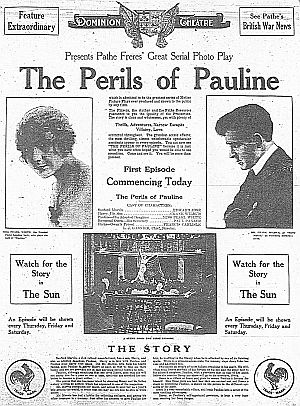
Advertisement in the Feb 25, 1915 edition of “The Sun” newspaper of Vancouver, B.C., Canada, for “The Perils of Pauline” film series.
     The full-page newspaper advertisement at right comes from The Sun of Vancouver, British Columbia, Canada, for Thursday, February 25, 1915.  It’s an ad for the Dominion Theater movie house of Vancouver then about to debut the silent film, The Perils of Pauline — a new “photo play,” as such films were then called.  In hyping the film, to be presented in series, the ad explains that The Perils of Pauline “is admitted to be the greatest series of Motion Picture Plays ever produced and shown to the public by any firm.”  The ad also includes photos of both Pearl White — “the popular Pathe leading lady” — and her co-star, actor Crane Wilbur, who plays Harry Marvin in the film.  The ad, announcing the showing of the first episode in the series, continues with its boosterism: “The Players, the Author and Pathe Resources guarantee to you the Quality of the Production.  The story is clean and wholesome, yet with plenty of Thrills, Adventure, Narrow Escapes, Villainy, Love, scattered throughout.  The grandest scenic effects; the most thrilling, almost unbelievable spectacular accidents appear in every episode.  You can now see “THE PERILS OF PAULINEbecause it is what you have often hoped you would be able to see sometime.  Come and see it.  You will be more than pleased.”  The bottom half of the ad includes a photo from one scene in the film, and explains that “an episode will be shown every Thursday, Friday and Saturday.”  Also on the page near the bottom, are two smaller boxes flanking the photograph that remind readers to “watch for the story in The Sun,” that is, the serialization of the film series then being run in all Hearst newspapers.  At the very bottom of the ad is a synopsis of the story.

'Exploits of Elaine' movie poster.


Exploits of Elaine

Pearl White, meanwhile, followed the Pauline series with an even bigger box-office winner, The Exploits of Elaine.  This series tells the story of a young Elaine who, with the help of a detective, tries to find the man who murdered her father. 

The Elaine series expanded to more films in 1915. White meanwhile, continued flying airplanes, racing cars, swimming across rivers, and undertaking other assorted feats in a number of successful action-based serials. 

Pearl White eventually sustained injuries in her work and was forced to use a stunt double in later films. All of her films were made at East Coast studios and locations, and it is said she never visited Hollywood. 

By 1919, Pearl White was a wealthy woman when she met and married World War I veteran Wallace McCutcheon, who also became an actor, director and cinematographer.  However, this marriage also ended in 1921. Two years later White made her last American film. But she wasn’t finished acting.


Paris & Beyond

Pearl White
Selected Films

The Perils of Pauline
1914

The Exploits of Elaine
1914

The New Exploits of Elaine
1915

The Romance of Elaine
1915

The Iron Claw
1916

Pearl of the Army
1916

The Fatal Ring
1917

The House of Hate
1918

The Lightning Raider
1919

Plunder
1923

Perils of Paris
1924

Influenced by her French friends at Pathé, White was drawn to the artistic community in the Montparnasse Quarter of Paris, where she lived and made her last film.  Although still a worldwide star at the time, and offered many roles in French films, White took on a stage role in a Montmartre production called You Lost the Ball, which led in 1925 to a starring role with comedian Max Wall in the “London Review” at the Lyceum Theater in London.  Back in France, meanwhile, White had invested successfully in a Parisian nightclub, a resort hotel/casino, and thoroughbred race horses.  She lived well in the exclusive Parisian suburb of Passy and also owned a villa in Rambouillet.  The poor girl from Missouri who had learned to be frugal with money, was now hobnobbing with the European elite.  In her third marriage, to Greek businessman Theodore Cossika, she found a traveling companion, and the new couple toured the Middle East and the Orient and also acquired a home near Cairo, Egypt.

Pearl White spent her final years in Paris, overtaken in those years by alcohol, possibly used to dose chronic pain from her past film-stunt injuries.  By 1933 she was hospitalized, which led to medicinal drug addiction.  Her last few years were reportedly spent “in a painful alcoholic haze.”  She died in Paris from cirrhosis of the liver was buried in the Cimetière de Passy. She was 49 years old.

Today, a full-length version of The Perils of Pauline series is not known to exist, although a reduced nine-reel version was released in Europe in 1916.  In recent years, Indiana University also transferred 9 episodes from her Pauline series to DVD format.  However, The Exploits of Elaine does still exist and has been selected for preservation in the U.S. National Film Registry.  Pearl White has also been honored with a star on the Hollywood Walk of Fame.  Her contribution to film history is seen as advancing both the serial-action genre and expanding the role of women in film.

Other stories of early film stars at this website that may be of interest include: “A Star is Born, 1910s” (studio creation of early film celebrity); “Anna Q. Nilsson, 1910s-1920s” (history of a silent film star); and, “Talkie Terror, 1920s” (the Hollywood peril of “talking pictures”). Additional stories of similar interest may be found at the “Film & Hollywood” and “Celebrity & Icons” category pages. Thanks for visiting — and if you like what you find here, please make a donation to help support the research and writing at this website.
Thank you. – Jack Doyle.

Please Support

this Website

Donate Now

Thank You

_______________________

Date Posted: 23 April 2008
Last Update: 31 March 2020
Comments to: jackdoyle47@gmail.com

Article Citation:
Jack Doyle, “Pearl White, 1910s-1920s,”
PopHistoryDig.com, April 23, 2008.

__________________________


Sources, Links & Additional Information

Pearl White on the cover of 'Pictures' magazine (U.K.), August 1922, in a scene from the film, 'Know Your Man'.
Tim Dirks, “The Perils Of Pauline (1914),” Greatest Films, Filmsite.org.

Adelle Whitely Fletcher, “Reconsidering Pearl,” Motion Picture, February, 1921.

“Pearl White,” Wikipedia.org.

Manuel Weltmann, Pearl White: The Peerless, Fearless Girl, U.K.: A. S. Barnes, 1969, 266 pp.

Kalton C. Lahue, Ladies in Distress, New York: A.S. Barnes & Co., 1971.

David W. Menefee, The First Female Stars: Women of the Silent Era, Connecticut: Praeger, 2004.

“Rival Press Magnates Are Locked in Battle Over Serial Heroines,” in Cinema Year By Year, 1894-2005, London: Dorling Kindersley, Ltd., 2005, p. 106.

Exploits of Elaine film clip at Google – This is chapter 9 of the 1914 serial “The Exploits of Elaine”, starring Pearl White.  It runs about 21 minutes.  Other clips also available there. 

“Rare and Out-of-Print Films Now Available at IU Through Digitization,” October 24, 2005, Indiana University.

____________________

Return To Home Page


“Fingertips, Pt.2”
1963

1960s record sleeve for 'Little Stevie Wonder'.

The clear, calling harmonica was the sound that first got your attention; it was coming from a new piece of music being played on the radio in late summer 1963. That was the summer of Martin Luther King’s “I Have A Dream” speech; the summer preceding John F. Kennedy’s assassination.


Music Player
“Fingertips, Pt.2”- Stevie Wonder
Recorded Live-1963

The harmonica in the air those days was from a song that had an unusual name: “Fingertips,” or more precisely, “Fingertips, Pt. 2.”

“Fingertips, Pt.2” was like nothing else at the time; part of a distinctive mix of music and vocals, a song recorded live with an unusual arrangement. And it was performed by a 12 year-old blind boy. “Little Stevie Wonder” they called him; a Detroit kid who had a sixth sense about him; a kid who could, it was said, discern a coin’s identity by the sound it made when dropped on a kitchen table.

Early 1962 Motown album. Click for Amazon.
     Stevie Wonder was born Steveland Judkins in May 1950 in Saginaw, Michigan, later known as Steveland Morris after his mother’s married name. Placed in an incubator immediately after birth, baby Steveland was given too much oxygen, leading to permanent blindness in childhood.

Growing up as a blind child, young Stevie developed an affinity for musical instruments, playing the harmonica at five, taking piano lessons at six, and playing drums at eight. After his family moved to Detroit, he began singing and playing instruments in church, including the piano, harmonica, and bongo drums. With a transistor radio to his ear, he also listened to Ray Charles and Sam Cook. In 1961, at the age of 11, the young boy and his mother were introduced to Brian Holland and Berry Gordy of Motown records through Ronnie White of the singing group The Miracles. After an audition, Motown signed the boy to a contract, giving him the stage name Little Stevie Wonder.

Stevie & harmonica.
Stevie & harmonica.
     His first recordings in 1962 attempted to link him to jazz and Ray Charles. They included two albums, one, A Tribute to Uncle Ray, featuring Stevie’s versions of tunes by his hero, Ray Charles. A second album, The Jazz Soul of Little Stevie, spotlighted his various instrumental skills. Neither of the albums amounted to much. But then came “Fingertips.” Originally written by Clarence Paul and Henry Cosby, the song was recorded for the studio album The Jazz Soul of Little Stevie Wonder. “Fingertips” was basically a long instrumental piece, showcasing Wonder’s talents on the harmonica. However, a live version of the song — recorded during a “Motown revue” at the Regal Theater in Chicago — was the version that would become the hit. Motown initially grouped it with others songs as part of another Little Stevie album — Recorded Live! The 12 Year Old Genius.

First #1 album w/ Motown, 1963. Click for CD.


DJs Liked Pt. 2

     Radio DJs for some reason began playing the 7-minute version of “Fingertips” on the album, which was quite unusual since songs of more than 3 minutes were rarely played on the radio. The DJs especially liked the second part of “Fingertips,” labeled “Fingertips Pt. 2,” which seemed to capture the frantic energy of a live concert. Seeing how the DJs were reacting to the song, Berry Gordy decided to issue it as a shortened 45 rpm single, with “Fingertips Pt 1” on one side, and “Fingertips Pt 2” on the other side. By early August 1963, “Fingertips” became Motown’s second #1 hit. The Marvelettes’ “Please Mr. Postman” had been Motown’s first #1 record, topping the charts in late 1961. “Fingertips Pt 2”, in fact, became the first live, non-studio recording to reach #1 on the Billboard pop singles chart.  The live song, with full instrumentation behind it, also had some “call-and-response” sections, complete with audience participation, as in the excerpt below:

45 rpm with two sides of 'Fingertips' - Pt.1 & Pt.2.

Stevie: Evvybody say yeah,…
Audience: Yeah…
Stevie: Everbody say yeah, yeah, yeah …
Audience: Yeah, Yeah, Yeah…
Stevie: Clap yo’ hands just a little bit louder…
Audience: [Clapping rhythmically]….

     But the harmonica solos in the live version were full of energy and the novel arrangement caught the attention and enthusiasm of DJs and listeners.  “Fingertips” held the #1 spot on the pop charts for three weeks.  The song also reached #1 on the R&B singles chart and the album made history as well.  Little Stevie Wonder became the first artist to have a #1 album and #1 single simultaneously.  He also holds the record for the youngest artist (age 13) to have an album go to #1 on the charts, eventually selling over a million copies.

Cover of 'Early Classics' CD, year 2000.


Path to Stardom

     “Fingertips Pt. 2.” put Stevie Wonder on a musical career path that would take him to stardom and a prolific 40-plus years of making and writing music.  But not right away.  After the novelty of “Fingertips” wore off, a follow-up hit did not come for Stevie.  Although he managed to chart a few more singles over the next year, none had the success of “Fingertips.”  His voice also changed, and his recording career was temporarily put on hold.  He then studied classical piano at the Michigan School for the Blind.  On his return in 1964, he dropped “Little” from his stage name and in 1965 had a successful Motown dance tune, “Uptight, Everything’s Alright,” which he co-wrote.  That song hit #1 on R&B chart and # 5 on the pop chart.  Stevie Wonder was on his way.  Through the1960s and 1970s other hits came, among them: “Nothing’s Too Good for My Baby,” Bob Dylan’s “Blowin’ in the Wind”, and Ron Miller’s “A Place in the Sun”– all in 1966. He also wrote music for others, including The Miracles’ #1 hit of 1967, “Tears of a Clown,” co-authored with his producer, Hank Crosby.  But there were other Stevie Wonder hits too, including: “I Was Made to Love Her”(1967), “For Once in My Life”(1968), “My Cherie Amour”(1969), and “Signed, Sealed, Delivered I’m Yours”(1970), a song from the first album he produced.

Up to this point, Wonder was still a minor under the law and Motown managed his career, controlling his publishing and recording sessions and keeping his money in a trust fund. By 1971, however, that changed when Stevie turned 21, taking control of $1 million then in his trust fund (some say he had earned $30 million for Motown by that time). He also began negotiating a new contract with Motown. The 21-page contract he negotiated set precedent there, and gave Wonder complete creative control over his music as well as a higher royalty rate, with Motown still distributing his product.

 
1974-1975

Ten Grammys

      In 1972, he gained a broader national audience by opening for the Rolling Stones on their major U.S. tour that year, where he unveiled the soon-to-be #1 hit “Superstition.” Albums in 1972 and 1973 followed. Then he won five Grammy awards in 1974, and five more the following year. He was now an established rock star and had become a multi-millionaire. His 1976 contract with Motown for $13 million over seven years was then the largest in recording history.His 1976 contract with Motown for $13 million over seven years was the largest in recording history at that time. By then, he had 20 hit singles to his credit and eleven best-selling albums. Yet three more decades of music-making still lay ahead, with more hits and more renown, including some unique collaborations, such as 1982’s “Ebony And Ivory” with Paul McCartney, which remained #1 for seven weeks. In 1986, The New York Times – noting his wide ranging skills in several genres, from funk to ballads, bossa nova to quasi-showtunes – called him “a one-man Tin Pan Alley.” In the 1980s and 1990s he also found time to become engaged in children’s and civil-rights causes, and led the campaign to make Martin Luther King’s birthday a national holiday. His music has also paid tribute to figures like King and jazz great Duke Ellington.

Stevie Wonder Hits
Selected Top 20 Singles

1963   “Fingertips – Pt. 2”
1965   “Uptight (Everything’s Alright)”
1966   “Nothing’s Too Good for My Baby”
1966   “Blowin’ in the Wind”
1966   “A Place in the Sun”
1967   “I Was Made to Love Her”
1968   “For Once in My Life”
1969   “My Cherie Amour”
1969   “Yester-Me, Yester-You…”
1970   “Signed, Sealed, Delivered…”
1970   “Heaven Help Us All”
1971   “We Can Work It Out”
1971   “If You Really Love Me”
1972   “Superstition”
1973   “You Are the Sunshine…”
1973   “Higher Ground”
1973   “Living for the City”
1974   “Don’t You Worry ’bout a Thing”
1974   “You Haven’t Done Nothin'”
1974   “Boogie On Reggae Woman”
1976   “I Wish”
1977   “Sir Duke”
1980   “Master Blaster (Jammin’)”
1980   “I Ain’t Gonna Stand for It”
1982   “That Girl”
1982   “Ebony and Ivory”*
1982   “Do I Do”
1984   “I Just Called to Say I Love You”
1984   “Love Light in Flight”
1985   “Part-Time Lover”
1985   “That’s What Friends Are For”*
1985   “Go Home”
1987   “Skeletons”
_________________________________
*collaborations


Collaborator & Innovator 

    Known as a musician who has influenced the work of many other artists, Stevie Wonder has also collaborated with a number of his musical colleagues, including Prince, Michael Jackson, Dionne Warwick, Elton John, Julio Iglesias, the Eurythmics, Babyface, Angie Wood and others.

Stevie Wonder provided the harmonica on Elton John’s “I Guess That’s Why They Call It The Blues.” He has also written over 100 songs for fellow artists. 

Wonder’s writing and performing over the years has been distinguished for its novel and complicated musical style and its jazz influences. In the former TV program, American Idol, contestants who attempted to cover his songs, for example, found them difficult to perform, as they used unusual chords, make abrupt, unpredictable changes, and often require that a syllable be sung over several notes. Wonder’s selection of musical key – sometimes using the black notes on the piano or keyboard, for example — is more often found in jazz than in pop, but he has used it to great success. He has been a musical innovator throughout his career, playing an important role in bringing synthesizers and electronic keyboards to pop music.

CD cover, 2002 edition, Stevie Wonder 'The Definitive Collection,' by Motown. Click for CD.


++++++++++++

Craig Werner’s 2004 book, “Higher Ground: Stevie Wonder, Aretha Franklin, Curtis Mayfield and the Rise and Fall of American Soul,” Crown Books, 352pp. Click for book.

Songwriter, Producer

Today, Stevie Wonder is among the giants in the music industry; an accomplished singer, songwriter, musician, and record producer. In the U.S., he has had at least nine #1 hits and more than 30 top ten hits. In August 2007, he under-took his first U.S. concert tour in over a decade, performing in a dozen U.S. cities and Toronto, Canada. 

During his career, Stevie Wonder’s album and single sales have exceeded the 100 million mark and he has received numerous awards and honors. He is the recipient of 25 Grammy Awards — a record for a solo artist — and has also received a Grammy lifetime achievement award. In 1984, he won an Oscar for Best Song — “I Just Called to Say I Love You” — from the film, The Woman in Red. In 1989 he was inducted into the Rock and Roll Hall of Fame and in 1999, received Kennedy Center Honors. He is also a member of the Songwriters Hall of Fame.  No less a musical authority than the former opera star Luciano Pavarotti once called him a “great, great musical genius.”

Stevie Wonder has come a long way since the early 1960s and the days of “Fingertips, Pt. 2.”  Yet the innocence of that early sound, and his “Fingertips” harmonica, still send a good and clear calling, just as it did way back then.

For additional stories at this website on the history of popular music, artist profiles, and selected song analysis, see the “Annals of Music” category page.  Thanks for visiting — and if you like what you find here, please make a donation to help support the research and writing at this website. Thank you. — Jack Doyle

Please Support
this Website

Donate Now

Thank You


__________________________

Date Posted:  21 April 2008
Last Update:  24 April 2019
Comments to: jackdoyle47@gmail.com

Twitter: https://twitter.com/PopHistoryDig
BlueSky: jackdoyle.bsky.social

Article Citation:
Jack Doyle, “Fingertips, Pt.2, 1963,”
PopHistoryDig.com, April 21, 2008.

_____________________________


Sources, Links & Additional Information

CD cover for a Billboard “Top Hits of 1963” collection, which includes “Figertips-Pt.2.” Click for CD.
Stevie Wonder’s best-selling album from 1976 (remastered), “Songs in the Key of Life.”  Click for CD.
Stevie Wonder’s best-selling album from 1976 (remastered), “Songs in the Key of Life.” Click for CD.

John S. Wilson, “Big Stevie Wonder Serves Soul at Philharmonic Hall,” New York Times, Saturday, September 27, 1969, p. 24.

“Black, Blind and on Top of Pop,” Time, Monday, April 8, 1974.

Jon Pareles, “Concert: Stevie Wonder,” New York Times, September 28, 1986.

John Rockwell, “Stevie Wonder,” in Anthony De Curtis and James Henke (eds), The Rolling Stone Illustrated History of Rock & Roll, Random House, New York, 1992, pp.293-298.

“Stevie Wonder,” in Holly George-Warren and Patricia Romanowski (eds), The Rolling Stone Encyclopedia of Rock & Roll, Rolling Stone Press, New York, 3rd Edition, 2001, pp. 1079-1081.

Steve Huey, “Stevie Wonder, Biography,”All Music Guide.

“Biography of Stevie Wonder,” About the Artist, The Kennedy Center, Washington D.C.

Ed Hogan, “Fingertips – Pt 2,” Song Review, All Music Guide.

Stevie Wonder,”Wikipedia.org.

Stevie Wonder Profile at U.K. web site, Soulwalking.

“Stevie Wonder Biography”at Biography.com.

“Stevie Wonder Biography”at Songwriters Hall of Fame.

Stevie Wonder website, StevieWonder.net.

Stevie Wonder U.K. site, StevieWonder.org.

Craig Werner, Higher Ground: Stevie Wonder, Aretha Franklin, Curtis Mayfield and the Rise and Fall of American Soul, 2004, Crown Books, 352pp.

______________________________


“LBJ’s Atomic Ad”
1964 – “Daisy Girl”

'Daisy Girl' counting her petals in 1964. Click to see ad.
      On September 7, 1964, television advertising history was made during the broadcast of NBC’s Monday Night at The Movies.  That’s when a new kind of TV ad was first aired that would forever change the art and practice of political advertising – and to a large degree, political campaigning as well. For 1964 was the year that the negative political ad was born, initiating the clever use of image and sound to paint an opponent in negative or scary terms. No less than a presidential election was at stake.

     The Democrats, with President Lyndon B. Johnson in the White House following the assassination of John F. Kennedy, were headed for an election-year battle with Republican presidential candidate Barry Goldwater, a fierce and outspoken conservative.  The Democrats had hired a New York advertising firm to help them in their campaign.  Among the ad men enlisted was Tony Schwartz who believed that negative impressions associated with a particular candidate could be more powerful in persuading voters than positive ones.

Photograph of an atomic blast, a version of which was also shown in the 'Daisy Girl' campaign ad.

     On the campaign trail, Goldwater had advocated the use of “tactical” nuclear weapons in Vietnam, and Lyndon Johnson’s team seized upon that statement, determined to paint Goldwater as dangerous.  One result was the infamous “Daisy Girl” TV ad, a one-minute spot featuring a little blond girl in an open field, appearing innocent and playful, plucking petals off a daisy. She is heard in a sweet voice counting her numbers as she removes each petal, flubbing the sequence a bit, as young children do:  “One, two, three, four, five, seven, six, six, eight, nine, nine…,” she says, counting in a slow, sing-song fashion.  Immediately following the little girl’s voice comes a man’s voice, enhanced by an echo chamber.  The girl looks up from her depetaled flower, as if hearing the distant voice, now counting backwards:  “Ten, nine, eight, seven, six, five, four, three, two, one, zero.”  The sound of a horrific explosion follows as the TV image changes sharply to the mushroom cloud of an atomic explosion, then an x-ray image of the Daisy Girl as the blast sound rolls out for an extended count of some long seconds.  Then comes the voice of President Lyndon B. Johnson.  In his perfect Texas twang, pausing purposely for effect at the proper moments, Johnson makes his plea:  “These are the stakes,” he says. “To make a world in which all of God’s children can live… Or, to go into the darkness… We must either love each other, or we must die.”  The piece closes with an announcer voice-over:  “Vote for President Johnson on November 3rd.  The stakes are too high for you to stay home.”


'Daisy Girl' TV clip shown on the lower portion of Time magazine's cover, September 25, 1964, in a featured story on 'The Nuclear Issue'.

Goldwater & Nukes

     The implied message of the ad was crystal clear for anybody remotely following the election that year: Goldwater was not to be trusted with nuclear weapons, and if elected, he would surely unleash a nuclear showdown. In fact, the Republican National Committee noted in reply: “This ad implies that Senator Goldwater is a reckless man and Lyndon Johnson is a careful man.”

The Daisy Girl ad, in any case, created such a furor that it was withdrawn after being shown only once, during the NBC Movie that September 7th.  But all the controversy led to its being replayed many times more, in its entirety, including on network newscasts at ABC and CBS, commentary programs, and displayed in news magazines.  It also appeared as part of a montage of images on the cover of Time magazine’s September 24th, 1964 issue, featuring “The Nuclear Issue” as its cover story.

     “Daisy Girl” changed the politics of advertising from that moment on.  Goldwater’s campaign followed with its own scary ad, titled, “We Will Bury You,” using a scene of young American school students reciting the Pledge of Allegiance juxtaposed with Soviet leader Nikita Khrushchev making his famous threatening United Nations speech in which he invoked that phrase and another, saying, “Your children will be communists.”

Goldwater’s response ad to the Democrats was to suggest that Nikita Khrushchev & the communists were on their way.
At the end of Khrushchev’s statements, the film bleeds back to the scene with the kids reciting the Pledge of Allegiance, then Barry Goldwater appears with the following remarks:

“I want American kids to grow up as Americans. And they will, if we have the guts to make our intentions clear. So clear they don’t need translation or interpretation, just respect for a country prepared, as no country in all history ever was.” Then a narrator’s voice adds: “In your heart, you know he is right [which had become a Goldwater slogan by then]. Vote for Barry Goldwater.”

     Presidential elections up until 1964 often used simple campaign songs, jingles, and images, as Kennedy and Eisenhower had done in the 1950s and in 1960, or used only rudimentary and fairly crude ads in the early years of television.  But it was President Kennedy in the summer of 1963, then contemplating his own re-election campaign, who had first decided to use the New York group that would prepare the “Daisy Girl” ad.  Doyle Dane Bernbach, known as DDB in the trade, was the firm Kennedy had selected.  He had been impressed by the modern approach of DDB’s Volkswagen “Think Small” ads, and the Avis “We Try Harder”campaign. 

Another LBJ campaign ad critical of Goldwater used a simple visual of the Eastern U.S. being “sawed off” the U.S. map, referring to a Goldwater statement.
Madison Avenue generally had been avoiding the Democrats since the 1950s and the days of Adlai Stevenson.  But Doyle Dane Bernbach accepted the work with Johnson and the Democrats, later explaining they feared Goldwater and favored Johnson.

Barry Goldwater was furious over the Daisy Girl ad, and he called Johnson at the White House to tell him so. But Goldwater, in fact, was his own worst enemy, as it was his own statements that were often used by Johnson’s team and DDB to make other Goldwater ads.

“We took his words and made commercials out of them,” explained Sid Myers, the DDB senior art director who had worked on the Daisy Girl ad and others. “Like when he said the United States would be better off if we sawed off the Eastern Seaboard and let it float out to sea. Well, we visually did that line [with a TV ad] and it was very, very effective.”


October 21, 1964:  Headlines from the New York Daily News describing a film from Barry Goldwater supporters featuring a Democrat-fueled morals crisis.
October 21, 1964: Headlines from the New York Daily News describing a film from Barry Goldwater supporters featuring a Democrat-fueled morals crisis.

Goldwater Film

The advertising wars between Goldwater and Johnson had started prior to the Daisy Girl ad, and the battling between the two camps continued thereafter, leading up to the November election. In fact, at one point, some of Goldwater’s team were preparing to escalate the negative campaigning with their own special project. A half-hour film entitled “Choice” had been produced. That Republican/Goldwater campaign film set out to grab the high ground on U.S. morality by suggesting that the Democrats and Lyndon Johnson were the source of a national morals decline, charging that a descent into riots, “sex parties,” and debauchery of all imaginable kind was then underway. One summary of the film describes it as follows:

Oct 1964: Mock-up ad drafted for the “Choice.”

…[T]his film shows what purports to be the two Americas: One is traditional, moral, and conservative, represented by fields of grain, skyscrapers, construction workers, and smiling children. The other is about race riots, permissiveness, strippers, gambling dens, and roadhouses. The incumbent Johnson administration is symbolized over and over by a Lincoln Continental roaring recklessly down a dirt road. The brainchild of Goldwater’s campaign manager F. Clifton White, the film’s formula of juxtaposing contrasting imagery comparing the two candidates would become the standard for political shorts and campaign ads…

However, just before the scheduled TV broadcast of the “Choice,” word of the project leaked out in the press with a round of embarrassing headlines. Goldwater, although he had approved the making of the film, then cited some racist rioting content in the film and disowned it. The film was then withdrawn before its scheduled TV broadcast.

Still, the resulting headlines and controversy that swirled around the “Choice” film and its cancellation was just as big if not bigger that the flap over Johnson’s Daisy Girl ad. “Furor on Barry Film” said one headline from the Citizen-News of the Beverly Hills on October 21, 1964. “Film on Morals Held Up By Barry,” announced big, bold headlines on the front page of the Los Angeles Times, October 22, 1964.

October 22nd, 1964: Front-page headline of the Washington Post tells of Republican Presidential candidate Barry Goldwater abandoning plans to broadcast a morals film.
The front-page of the Washington Post chimed in, too. A big headline of October 22, 1964 read, “Goldwater Scraps Morals Film.” Similar headlines appeared in other newspapers. There were, however, a few private airings of the film as prints had been sent out to Goldwater campaign offices, and it also survives today on YouTube and can also be purchased through some on-line vendors. Promotional material for the film had also been prepared (see above mock-up ad)., which included mention of actor Raymond Massey as the film’s narrator and an appearance by film star John Wayne. A prospective sponsoring group for the film was using the name “Mothers for Moral America.” See the Conelrad website citation below in “Sources” for more detail on this and other Goldwater activity.
November 1964:  U.S. map showing the results of that year’s Presidential Election -- “Lyndon’s Landslide.”
November 1964: U.S. map showing the results of that year’s Presidential Election -- “Lyndon’s Landslide.”

     In the general election, Johnson crushed Goldwater, winning 64.9 percent of the popular vote, one of the largest winning percentages ever recorded. On the electoral map, Johnson carried all but six states.

For additional stories at this website related to politics, please visit the “Politics” category page, or visit the “Madison Avenue” page for story choices related to advertising and marketing.

Thanks for visiting — and if you like what you find here, please make a donation to help support the research and writing at this website. Thank you. –Jack Doyle


Please Support
this Website

Donate Now

Thank You

________________________

Date Posted:  15 April 2008
Last Update: 7 March 2019
Comments to: jackdoyle47@gmail.com

Article Citation:
Jack Doyle, “LBJ’s Atomic Ad,” PopHistory
Dig.com
, April 15, 2008.

_____________________________


Sources, Links & Additional Information

October 20, 1964: Editorial cartoon on LBJ’s Daisy Girl TV ad by George Carey of the “Valley Times” (Los Angeles), made during the Goldwater morals film flap.

John D. Morris, “Parties Sign Fair-Play Pledge, Then Wrangle Over Johnson Ad, New York Times, Saturday, September 12, 1964, p.10.

Nan Robertson, “Johnson and Goldwater Open Television Campaigns, With Both Planning Big Outlays,” New York Times, Tuesday, September 15, 1964, p. 18.

“The Fear & The Facts,” Nuclear Issue cover story, Time, Friday, September 25, 1964.

Pete Hamill, “When the Client Is a Candidate, New York Times Sunday Magazine, October 25, 1964, p. 30.

“Daisy” (TV advertisement), Wikipedia.org.

For an exhaustive treatment of the history and politics behind the “Daisy Girl” ad, see:”Daisy: the Complete History of an Infamous and Iconic Ad,” Conelrad.com.

“Choice (1964): The Scrapbook,” Conelrad, October 13, 2010.

Robert Mann, Daisy Petals and Mushroom Clouds: LBJ, Barry Goldwater, and the Ad That Changed American Politics, Louisiana State University Press, November 2011, 179pp.

“2012 Campaign Ads Owe Debt To ‘Daisy Petals’,” NPR.org, December 14, 2011.

Robert Mann, “Goldwater and Romney Each Had a “47 Percent” Moment,” BobMannBlog.com, September 19, 2012.

“Choice” [1964 Barry Goldwater Campaign Film], YouTube.com.

Dan Nowicki, The Arizona Republic, “’Daisy Girl’ Political Ad Still Haunting 50 Years Later,” USAToday.com, September 7, 2014.


“American Bandstand”
1956-2007

Dick Clark at his DJ post in the 1950s.  "I don't make culture," he reportedly said at one point, "I sell it."
Dick Clark at his DJ post in the 1950s. "I don't make culture," he reportedly said at one point, "I sell it."
      On July 7, 1956, a young radio disc jockey named Dick Clark made his first appearance hosting an afternoon TV show called Bandstand. Broadcast from Philadelphia, the show had originally begun in 1952.  Bandstand played the new rock ‘n roll music and featured kids from local high schools dancing to the music. When it first began, the dancing was almost accidental, but local TV viewers called in saying they liked watching “those young people dancing.” As the show’s new host, Clark made the most of that novelty, and took Bandstand to the national level.

The son of a radio-station owner in Utica, N.Y., Dick Clark had been a radio disc jockey as a student at Syracuse University.  By 1951, when he landed a job at ABC’s WFIL station in Philadelphia, he worked in radio, regarded as too youthful looking to be a credible TV newscaster. Clark’s big break came when the station decided to replace former Bandstand host Bob Horn.  A youngish-looking 26 when he took over, Clark quickly made the show his own. He featured musical guests lip-synching their songs and used his teenage audience to “rate” new records.  Local audiences loved the show.

       American Bandstand, late -1950s-early-1960s.
American Bandstand, late -1950s-early-1960s.
      Bandstand at first was a regional show from Philadelphia. But it soon became the highest rated local daytime TV show in the nation, and that got the attention of network executives in New York. By August 1957, now called American Bandstand, ABC began broadcasting the show nationwide at 3 p.m. for an hour-and-a-half. Within six months of going national, American Bandstand was picked up by 101 stations. Twenty million viewers were now tuning in, half of whom were adult. The show was also receiving 20,000 to 45,000 fan letters a week. Teenagers came to Philadelphia from wide and far for a chance to dance on the show. Bandstand also became known as a place where new talent could be seen; a place where aspiring artists could get their start. On the November 22, 1957 show, for example, two young singers using the name “Tom & Jerry” appeared. The duo would later become known as Simon & Garfunkel. New dances were often introduced on the show. It was on Bandstand that Chubby Checker brought “the Twist” to the nation in the summer of 1960. Bandstand’s “regular” dance couples approached daytime soap-opera fame, and in the 1950s and 1960s they were written about regularly in teen magazines, as was Clark and the show.
Clark interviewing singer Bobby Rydell, 1958.
It didn’t hurt, of course, that Bandstand‘s WFIL-TV station was owned by the Walter Annenberg empire, which also included, among other media outlets, TV Guide and Seventeen magazine for girls. Seventeen had a regular column on Bandstand, “written” by one of the show’s regulars. And TV Guide put Clark’s telegenic face on its cover several times during the 1950s (see sample covers below).


Brokering Rock ‘n Roll

     American Bandstand also played another critical role —  especially for mainstream culture and the music business. It helped make America more receptive to rock ‘n roll, a music genre not then accepted as it is today.  “From the time it hit the national airwaves in 1957,” observes rock historian Hank Bordowitz, “Bandstand changed the perception and dissemination of popular music.”   The show helped make rock ‘n roll more acceptable to many adults by bringing the music and the dancing kids into their homes every afternoon, with Clark providing the responsible, clean-cut adult supervision.  Clark’s income was soon approaching $500,000 a year.

“We built a horizontal and vertical music situation… We published the songs…, managed the acts, pressed the records, distributed the records, promoted the records… .” – Dick Clark

     American Banstand also helped to open the doors to a new kind of music business.  And along the way, Dick Clark became a wealthy man, buying into music publishing companies, record labels, and promoting “Philly sound” recording artiststs on those labels — stars such as Frankie Avalon, Bobby Rydell, and Fabian.  Clark also became involved in managing the artists, formed a radio offshoot, and conducted live productions.  He also made personal appearances as a DJ hosting live dance events called  “sock hops”  —  as many as 14 a week.  And he also packaged concert tours, taking the music on the road.  He soon had a nice little musical empire in the making.  “We built a horizontal and vertical music situation,” explained Clark of his various businesses. “. . . We published the songs domestically and abroad, managed the acts, pressed the records, distributed the records, promoted the records. . . .”


Dick Clark Covers
Annenberg-Owned TV Guide

May 24, 1958
May 24, 1958
October 4, 1958
October 4, 1958
August 29, 1959
August 29, 1959
September 10, 1960
September 10, 1960


“Payola” & Congress

August 1958 cover of 'Teen' magazine with Clark & headline: 'Why America Loves Dick Clark's American Bandstand.'
     In 1960, however, the “payola” scandal broke, a controversy involving prominent radio disc jockeys then implicated in playing records for payment to make them popular. Clark was investigated by Congress during the scandal, along with other prominent DJs like Alan Freed. But Clark, in his appearence before a Congresional committee, was cool and thorough in his testimony, and denied taking “payola.” He emerged from the hearings without lasting harm. However, it was later revealed that Clark had been “given” royalty rights to more than 140 songs.  ABC did require him to divest his outside ventures, more than 30 by one count, including a number of record labels. Still, Clark and American Bandstand held their popularity.

     American Bandstand was broadcast every weekday through the summer of 1963. But in the fall of that year, it became a once-a-week show run on Saturday afternoons. By 1965, Dick Clark, then 35 years old, was making about $1 million a year. By February 1964, American Bandstand moved to Los Angeles, in part to facilitate Clark’s expansion into other TV ventures and film production. It was also easier in L.A. to tap into the recording industry.  By 1965, Dick Clark, then 35, was making about $1 million a year. Musically, the sound on Bandstand changed with the times, featuring the California surf sound in the 1960s, and a decade later, the ‘70s disco beat.  Through it all, dating from the 1950s when Clark took over, Bandstand was one of the few places on television where ethnically-mixed programming could be seen. In fact, Clark later claimed that he had integrated the show in the 1950s when he became host – a claim later challenged by at least two authors.


1962: Dick Clark interviewing recording artist, Mary Wells, a guest on Bandstand.


Bandstand & Race

Dick Clark did feature black recording artists as guests on American Bandstand – and he did so from his earliest days as host. When Bandstand first went national with ABC in August 1957, Lee Andrews and the Hearts appeared among the first guests performing their song, “Long Lonely Nights.” In that year as well, other black artists also appeared, including Jackie Wilson, Johnny Mathis, Chuck Berry, Mickey & Sylvia, and others. African American artists would continue to appear on the show in fairly regular order over the years.

However, integration of the studio audience at American Bandstand – the audience of dancers seen on TV screens across the country – was quite another matter.

The integration of Bandstand’s studio audience appears to have been very selective and highly controlled at best, with outright discrimination practiced by Bandstand’s gatekeepers. And Dick Clark appears to have sanctioned the practice, or at least allowed it to continue.

Research by John A. Jackson in his 1997 book, American Bandstand: Dick Clark and the Making of A Rock `n Roll Empire, and more recently by Matthew F. Delmont, in his 2012 book, The Nicest Kids in Town: American Bandstand, Rock ‘n’ Roll, and the Struggle for Civil Rights in 1950s Philadelphia, go into the specifics of why only a very few African Americans ever made it onto the American Bandstand show, especially in the 1957-1964 period. According to Jackson, writing in his book: “[B]y the time American Bandstand appeared in August 1957, featuring the largely black-derived idiom of rock `n roll, the show’s studio audience remained segregated to the extent that viewers around the country did not have an inkling that Philadelphia contained one of the largest black populations in America.”

John A. Jackson’s 1997 book. Click for copy.
Matt Delmont’s 2012 book, Click for copy.

According to Matthew Delmont, interviewed on the Democracy Now TV program, Dick Clark’s Bandstand had become segregated before Clark took over the show, and before it became nationally televised, when former host, Bob Horn started the show in 1952.

“[T]hey implemented racially discriminatory policies in 1954 and 1955, because they were concerned about fights that were happening outside of the studio,” explained Delmont.

“…Bandstand didn’t want to bring any of that sort of potential teenage violence into the studio and upset advertisers or viewers.”

“So, when Dick Clark took over the program in ’56, it was already segregated. And it remained a segregated program from ’57 until it left for Hollywood in 1964.”

Delmont believes Clark and Bandstand missed an opportunity to have played more of a leadership role advancing civil rights given the show’s national prominence and its tremendous sway over youth culture. See Delmont’s website for details on his book and its findings.

There were a variety of exclusionary methods used by Bandstand that contributed to the practice of keeping black teens off the show. Philadelphia, like other northern cities at the time, was a racially mixed city. And the neighborhood where American Bandstand’s WFIL TV studio was located was also mixed racially. However, the on-screen studio audience of American Bandstand did not reflect that composition. It’s true that for some blacks, the music on Bandstand – especially in the early and mid-1950s – wasn’t their favorite kind of music to begin with, and so there was some self exclusion. But for other blacks who wanted to be on the program, admission was nearly impossible.

1957: Teenagers wait in line for a chance to be admitted to the WFIL studios where ‘American Bandstand’ TV show was broadcast. Researchers have found that discriminatory practices were used to keep African American teens off the show.

Those who stood on line outside the studio hoping for admission, could be eliminated for “dress code” reasons. Tickets to get on the show were handed out on the basis of advance written requests made by the teenagers. However, the station screened those requests, some by area of the city, and others on the basis of the last names submitted on the requests – with Polish, Itallian, and Irish sounding last names receiving preference. Later, “Bandstand memberships” were used, and when maxed out, no new folks could get on the show. Blacks did get on the show, but in very sparse numbers. News accounts about the difficulty of blacks getting on the show were reported, but mostly without effect.

Sept 1956: Philadelphia Tribune headline about the lack of African American teens on the ‘Bandstand’ TV show.
There was also another Philadelphia area teenage dance show, sometimes called, “the Black Bandstand” – The Mitch Thomas Show (also named Delaware Bandstand ) – which was broadcast from Wilmington, Delaware. Thomas was a black DJ from Philadelphia, and all of the teens on that show were black. This show didn’t have the national exposure that Dick Clark’s American Bandstand had, yet it influenced Clark’s show with its dances, sometimes copied by Bandstand dancers after they saw them on The Mitch Thomas Show. After 1971, Dick Clark had a new black TV dance show rival, also televised nationally – Soul Train – hosted by black DJ, Don Cornelius. By that time, Clark’s American Bandstand had more black dancers on the show. In other arenas of American Bandstand-related operations, however, Clark appears to have stood up for fair African American treatment.


1959: "Caravan of Stars" booklet.

Caravan of Stars

In 1959, initially with the help of a promoter named Irvin Feld, Dick Clark began what would be called the “Caravan of Stars” show – an annual rock ‘n roll road show featuring some of the biggest names in the business, taken to various parts of the country for a series of shows. The Caravan road shows ran for several years, through the early 1960s.

Like Bandstand, the Caravan shows had black and white performers, but ran into overt segregation issues when the show went south. The Caravan performers traveled together and spent many hours in a cramped and uncomfortable bus.

However, there are reports that when Clark took these tours into towns where segregation was still practiced – he insisted on equal treatment of his performers at those venues, otherwise he would threaten to pull the show.

Bruce Morrow, known as DJ “Cousin Brucie” in the 1960s, noted in a later interview at Clark’s death in 2012, that when Clark was confronted with such practice he would say: “ ‘If we don’t go all together, we go out. We will pull the show out’,” explained Morrow. “And he meant it. He put people back on the bus….” A similar account was reported in John Jackson’s book:

…On more than one occasion Clark’s entourage slept on the grass under the stars next to the parked bus after being refused lodging at a hotel. Bookers in many Southern cities were loath to have black acts and white acts perform on the same stage, and when showtime approached , “Dick would look them in the eye and say ‘Listen, we either all go on, or we don’t go on’,” recalled [singer, Lou] Christie.

During the 1964 “Caravan of Stars,” tour member Bertha Barbee-McNeal of The Velvelettes recalled that Clark pulled the whole entourage from a restaurant in the south where they had stopped for food, as Clark was told by the restaurant’s owner they did not serve Negroes. “Then you can’t serve any of us,” Clark told the owner, according to Barbee-McNeal, signaling the group to leave the restaurant and get back on the bus. Of the Caravan shows held in some parts of the south, John Jackson would note in his book: “Although the performers on Clark’s ‘Caravans’ did not conduct sit-ins or demonstrations, simply by having whites and blacks sit together at concerts, they helped pioneer integration in the south.” Jackson also noted that in order to keep racial confrontations to a minimum with his Caravans, “Clark did not tour in parts of the Deep South.”

Dick Clark shown in American Bandstand's 'rate-a-record' segment sometime in the 1970s.

Changing Scene

     In the 1970s, with the rise of disco, Bandstand began to become something of an artifact rather than a trend-setter, although still netting its share of popular guests.  By the mid-1980s, with the rise of MTV and other music video channels, American Bandstand’s format became dated. In September 1987 Bandstand moved to syndication, and in April 1989 it ran briefly on cable’s USA Network with a new host and Clark as executive producer. The show ended for good on October 7, 1989.  Yet over its three decades, American Bandstand played a key role in the music business.  Not only did it become the place where major record labels sought to showcase their songs and artists, it also generated millions in record sales each year, plus millions in advertising revenue for ABC.  As for recording artists — with the notable exceptions of Elvis Presley, the Beatles, and the Rolling Stones — most of the major rock ‘n roll acts from the 1950s through mid-1980s appeared on the show.

     Sonny and Cher made their first TV appearance on American Bandstand, June 12, 1965.  The Jackson 5 made their TV debut on the show February 21, 1970, as did Aerosmith in December 1973.  In January, 1980, Prince made his TV debut on BandstandBy the mid-1980s, with the rise of MTV and other music channels, American Bandstand’s style and for-mat became dated.Among others appearing during the show’s 33-year run were: Buddy Holly, Chuck Berry, James Brown, the Beach Boys, the Doors, Stevie Wonder, Smokey Robinson & the Miracles, the Temptations, the Carpenters, Van Morrison, the Supremes, Marvin Gaye, Neil Diamond, Ike & Tina Turner, Pink Floyd, Creedance Clearwater Revival, George Michael, Rod Stewart, Bon Jovi, Gloria Estefan, Michael Jackson, and last but not least, Madonna, who appeared January 14, 1984 singing the tune “Holiday.”  But even after the show’s on-air demise, American Bandstand did not die. In early 1996, MTV’s sister network, VH-1 began broadcasting old Bandstand episodes, mostly from the 1975-1985 period. Within three months, these reruns — called the Best of American Bandstand, with taped introductions by Dick Clark himself  — became one of VH1’s top-rated programs.


Dick Clark’s Empire

     In addition to American Bandstand, Clark amassed a portfolio of other TV and movie productions, among them, numerous TV specials and awards shows. In the late 1960s he did various television series, talent shows, and also hosted TV game shows, culminating in the late 1970s with The $25,000 Pyramid. In the 1980s and 1990s, his Dick Clark Productions, Inc. turned out more than a dozen made-for-television movies, at least 60 TV specials, several Hollywood films, and radio shows. By 1986, Clark had made the Forbes 400 list of the wealthiest Americans. By 1986, Clark had made the Forbes 400 list of the wealthiest Americans. In recent years he continued his TV productions, landing a prime time TV series, American Dreams. That show was set in 1950s-1960s Philadelphia and used American Bandstand footage in its storyline. It ran for three seasons on NBC during 2002-2005. Clark also parlayed the American Bandstand name into other businesses, using it as a brand and capitalizing on its nostalgia cache. He opened a chain of music-themed restaurants using the name Dick Clark’s American Bandstand Grill. Several of these have opened at airports — Indianapolis, Indiana; Newark, New Jersey; Phoenix, Arizona; and Salt Lake City, Utah. Two others are located in Overland Park, Kansas and Cranbury, New Jersey.

One of Dick Clark's 'American Bandstand' Grills. Similar venues have also opened in airports.
      In June 2006, Dick Clark’s American Bandstand Theater — which uses some now-senior performers from the 1960s era in its acts — was opened in Branson, Missouri. An American Bandstand Grill opened there as well. In 2007, Dick Clark’s American Bandstand Music Complex, with restaurant, opened in Pigeon Forge, Tennessee.

     Throughout his career, Clark kept one foot in the world of radio, and would later focus some of his business interests there, also using it as a platform for rock ‘n roll nostalgia. 

In 1981, he created The Dick Clark National Music Survey for the Mutual Broadcasting System, which did weekly count downs of the Top 30 contemporary hits.

Sample recording from one of Dick Clark's radio programs, May 1985.
Beginning in 1982, Clark also hosted a weekly weekend radio program distributed by his own syndicator, United Stations Radio Networks. That program focused on oldies, called Dick Clark’s Rock, Roll, and Remember — also the name of a 1976 autobiographical book he wrote with another author. This radio program would also sell recordings of its shows, some of which involved Clark interviews with, and/or features on, current and former music stars. By 1986, he left Mutual Broadcasting to host another show, Countdown America. In the 1990s, Clark hosted U.S. Music Survey, which he continued hosting up until 2004, when he suffered a stroke. Although he recovered partially from his stroke, his public appearances thereafter were limited. On April 18th, 2012, following a medical procedure, Clark died of a heart attack at the age of 82.


Bandstand Acquired

     In June 2007, Daniel Snyder, owner of the Washington Redskins professional football team and Six Flags amusement parks, and also a partner with Tom Cruise in a film venture, announced the purchase of Dick Clark Productions for $175 million. In the deal, Snyder became the owner of American Bandstand‘s entire library of televised dance shows stretching over 30-plus years. In addition, Snyder is also acquiring other Dick Clark assets, including the New Year’s Rockin’ Eve broadcast from Times Square, the Golden Globe Awards show, the American Music Awards, the Academy of Country Music Awards, and the Family Television Awards. In 2007, Dan Snyder, owner of the Washington Redskins, acquired Dick Clark Productions for $175 million including Band- stand‘s 30-year library of TV shows. The Dick Clark properties also include the Bloopers television shows and Fox’s popular reality TV show, So You Think You Can Dance. Snyder, who will take over as chairman of Dick Clark Productions, said in a press release, “This was a rare opportunity to acquire a powerhouse portfolio and grow it in new directions.” It was not entirely clear at the time of the deal’s announcement, exactly what Snyder would do with the American Bandstand material, other than mention of possibly using it visually on television screens throughout Six Flags amusement parks while patrons were standing on line. On September 4, 2012, Daniel Snyder’s Red Zone Capital Management reached an agreement to sell Dick Clark Productions to a group partnership headed by Guggenheim Partners, Mandalay Entertainment, and Mosaic Media Investment Partners for approximately $350 million. On December 17, 2015, in response to losses across Guggenheim Partners, the company announced that it would spin out its media properties, including Dick Clark Productions, to a group led by its former president Todd Boehly. In all of these transactions, it’s not exactly clear where the American Bandstand materials are, or what they are being used for.

Cover of Dick Clark's autobiography covering early days of 'Bandstand' and the music industry (with photos, 276 pp). Click for copy.
Still, the legacy of American Bandstand is alive and well, and can be found in various venues, including the internet, YouTube, and various fan websites. There are also a number of books on Dick Clark and the show, some already mentioned, as well as Clark’s 1976 autobiography — Rock, Roll & Remember — written with Richard Robinson.

Additional Bandstand stories at this website include, “Bandstand Performers, 1957;” “Bandstand Performers, 1963;” and “At The Hop, 1957-1958.” See also “Moondog Alan Freed, 1951-1965,” for a somewhat related story about a popular disc jockey, or visit the “Annals of Music” page for additional story choices. Thanks for visiting — and if you like what you find here, please make a donation to help support the research and writing at this website. Thank you. – Jack Doyle.

________________________________

Date Posted:  25 March 2008
Last Update: 22 November 2020
Comments to:  jdoyle@pophistorydig.com

Article Citation:
Jack Doyle, “American Bandstand, 1956-2007,”
PopHistoryDig.com, March 25, 2008.

_______________________________


Sources, Links & Additional Information

Late 1950s: Dick Clark reviewing weekly “top hits” during a segment of the American Bandstand TV show.
Late 1950s: Dick Clark interviewing guest singer, Bobby Darin. Click for separate story on Bobby Darin's life & career.
April 1960: Dick Clark testifying at U.S. Congressional hearing on “payola” issue; here before House committee.
1975: Dick Clark interviewing famous blues guitarist, B.B. King, with what appears to be a birthday cake.
1981: Los Angeles Times photo of Dick Clark seated among show attendees in “Bandstand” bleachers as he introduces a guest act.
January 1993: Dick Clark with Michael Jackson paging through American Music Awards booklet.

“Challenging the Giants,” Newsweek, December 23, 1957, p. 70.

“Drive, Talent, Hits, Clark Help Make Philly the Hottest,” Billboard, March 10, 1958, p. 4.

“Dick Clark – New Rage of the Teenagers,” New York Times, March 16, 1958, Section 2, p. 13.

“Tall, That’s All,” Time, Monday, April 14, 1958.

“TV Bandstand: Teenagers’ Favorite,” Look, vol. 22. May 13, 1958, pp. 69-72.

“Newest Music for a New Generation: Rock ‘n’ Roll Rolls On ‘n’ On,” Life, December 22, 1958, pp. 37-43.

“America’s Favorite Bandstander” (Dick Clark cover story), Look, November 24, 1959.

“Facing the Music,” Time, Monday, November 30,1959.

“Teen-Agers’ Dreamboat,” New York Times, March 5, 1960.

Arnold Shaw, The Rockin’ ’50s: The Decade That Transformed the Pop Music Scene, New York: Hawthorn Books, 1974.

Dick Clark and Richard Robinson, Rock, Roll & Remember, Thomas Y. Crowell, Publisher, 1976.

Robert Stephen Spitz, Rock, Roll & Remem-ber, Book Review, New York Times, October 24, 1976.

Michael Shore with Dick Clark, The History of American Bandstand, New York: Ballantine Books, 1985.

“Clark Around the Clock,” Newsweek, August 18, 1986, pp. 26-27.

Summary of the National Register of Historic Places Nomination for American Bandstand building, WFIL and WHYY studios, 4548 Market St., Philadelphia., Pennsylvania, July 28, 1986.

“American Bandstand” and “Dick Clark,” The Museum of American Broadcast Commu-nications.

Dick Clark,” The Radio Hall of Fame.

“American Bandstand,” Wikipedia.org.

“Dick Clark,” Wikipedia.org.

“Dick Clark Productions,” Wikipedia.org.

Ginia Bellafante, “Ultrasuede Is Funny – VH-1’s Reruns of American Bandstand Prove the Hootie Network Can Outwit MTV,” Time, Monday, April 22, 1996.

John A. Jackson, American Bandstand: Dick Clark and the Making of a Rock ‘n’ Roll Empire, New York: Oxford University Press, 1997.

Fred Goodman, “Roll Over, Beethoven: How Dick Clark Taught American Parents not to be Afraid of Rock-and-Roll and Made a Fortune in the Process,” Dick Clark and the Making of a Rock ‘n’ Roll Empire, Book Review, New York Times, October 26, 1997.

Richard Corliss, “Philly Fifties: Rock ‘n Radio,” Saturday, July 14, 2001.

Hank Bordowitz, Turning Points in Rock and Roll, Citadel Press, 2004.

Thomas Heath and Howard Schneider, “Snyder Adds A TV Icon To His Empire, “Washington Post, Wednesday, June 20, 2007, P. D-1.

Ken Emerson, “The Spin on ‘Bandstand” – Music, TV and Popular Culture Learned to Swing to the Beat of a Different Drummer: Big Bucks,” Los Angeles Times, August 5, 2007.

Becky Krystal, “Dick Clark, Host of ‘American Bandstand,’ Dies at 82,” Washington Post, April 18, 2012.

Matthew F. Delmont, The Nicest Kids in Town: American Bandstand, Rock ‘n’ Roll, and the Struggle for Civil Rights in 1950s Philadelphia, Berkeley: University of California Press, February 2012.

Matthew F. Delmont, “The America of ‘Bandstand’,” Washington Post, Sunday, April 22, 2012, p. B-2.

Democracy Now, “Despite Rep for Integration, TV’s Iconic ‘American Bandstand’ Kept Black Teens Off Its Stage,” YouTube.com, Mar 2, 2012.

Alex Alvarez, “DJ ‘Cousin Brucie’ Recalls Dick Clark’s Commitment To Racial Integration: ‘If We Don’t Go All Together, We Go Out’,” Mediaite.com, April 19th, 2012.

John Liberty, “Dick Clark Remembered: the Velvelettes Say Icon Defended Them in Segregated South, Share Memories of 1964 Tour,” Mlive.com, April 20, 2012.

A documentary film entitled The Wages of Spin, focuses on the history of American Bandstand, the 1950s payola scandal, and Dick Clark.  A preview clip from that documentary is available at YouTube and additional information is found at Character Driven Films.


“Person to Person”
Ed Murrow, 1953-1961

A three-disc DVD compilation of 32 'Person to Person' shows was released by CBS in 2006. Click for DVD.
     Among the first television shows to bring celebrities into the homes of millions of Americans was Person to Person, a 1950s show produced by CBS. Prior to this show, which debuted in 1953, most Americans learned about the lives of film stars and other famous people through magazines or by way of short features in movie newsreels.

     Person to Person was created by the legendary newsman, Edward R. Murrow, a celebrity himself who first gained notoriety with his World War II radio broadcasts from London during that city’s bombing by the Germans. Following the war, Murrow moved his radio show, Hear It Now, over to television, calling it See It Now.  

From his war days on, Murrow became known as a no-nonsense newsman who would take on tough, controversial subjects, including abuses of power.  

     In the early 1950s, when much of the nation was being terrorized by the communist witch-hunt of U.S. Senator Joe McCarthy, Murrow exposed McCarthy for the demagogue he was in a classic 1954 televised showdown (see George Clooney’s highly-regarded 2005 film on that history, Good Night, and Good Luck). 

Yet Murrow also became well known for the success of Person to Person, an early version of “celebrity TV” and today’s hyped-up successors like Entertainment Tonight or Access Hollywood. With Murrow as host, Person to Person ran every Friday night from October 1953 to June 1959. 

Edward Murrow at left as home of movie star Kirk Douglas is shown on studio screen, 1957.
Edward Murrow interviewing guests.
...with Mr. & Mrs. Kirk Douglas, 1957.
 
The Douglases with one of their children.

     The show’s format basically featured Murrow, cigarette in hand, visiting with Hollywood stars, TV celebrities, sports figures, authors, and politicians in various informal settings. Guests were typically shown at their homes or in other settings, and through the magic of television, were projected on a wall-size screen in the CBS studio with Murrow seated in an easy chair asking questions.

     Using two to six cameras in production, the program usually opened in a celebrity’s home, with Murrow taking his viewers on room-by-room tours as he spoke with his on-screen guest. The range and variety of famous people Murrow interviewed was unprecedented for network television at the time. Among some of Murrow’s more illustrious guests were performers and actors such as: Frank Sinatra, Elizabeth Taylor, Sammy Davis, Jr., Lucille Ball, Marilyn Monroe, Liberace, Julie Harris, Mary Martin, Milton Berle, and Sophia Loren; authors such as Walter White and John Steinbeck; pianist Van Cliburn; boxer-in-training Rocky Marciano; former U.S. president Harry Truman; and former first lady Eleanor Roosevelt.

     Other notable shows included his October 1953 interview with the recently married U.S. Senator John F. Kennedy and his new wife, Jacqueline Kennedy, a former Washington newspaper reporter.  An April 1955 session with the 31 year-old Marlon Brando came after Brando had starred in movie On the Waterfront, for which he won an Academy Award.

     During one three-week period in 1957, Murrow interviewed political cartoonist Herbert Block, media market researcher, A.C. Nielsen, and Robert F. Kennedy, then Chief Council of the Senate’s Select Committee on Improper Activities in the Labor or Management Field.

     In a 1957 interview with movie star Kirk Douglas, then at the peak of his film career, Murrow took his viewers on a tour of the Douglas home, with Kirk and wife showing off their tennis court, swimming pool, and lovely home, and one of their children.  Then Murrow asks a typical “Person-to-Person” question: “Kirk, is all this part of the reason why you wanted to be a movie star?”  To which Douglas replies:

“Well, you know, Ed, very seriously, I never even dreamed of being a movie star.  My hope in life was always to be a Broadway actor.  I’ve done about ten Broadway shows, but they were all flops.  At least I was consistent.  Then a friend of mine, Lauren Bacall, got Hal Wallis interested in giving me a screen test.  I was a little frightened at first, I didn’t think I was the type.  But then after another flop… I thought maybe I oughta give Hollywood a try.  So I came out here, Ed, and I will say Hollywood’s been pretty nice to me.”

     Murrow also interviewed Fidel Castro at one point. And while Castro’s appearance on Person to Person had the potential to alienate viewers — and that program did attract government criticism — Murrow survived. In fact, after Person to Person’s inaugural season, Murrow won an Emmy for the Most Outstanding Personality in television.


Show Biz v. Journalism

     Still, Murrow and his show received frequent criticism in the press.  Some called Person to Person aimless chatter with empty-headed movie stars.  These critics argued — as Murrow himself would on more than a few occasions — that television programming demanded more substance and depth.  Someone of Murrow’s stature, they suggested, should be doing more important things.  Yet Murrow had initially thought the show might feature a wide variety of everyday working people and less privileged Americans, including blacks, Indians, farmers, and laborers.Person to Person was an historical step to building the cult of personality in news programs.”  But it failed to do that.  He also believed the series could help “revive the art of conversation.”  Yet the conversation that resulted on most shows was pretty thin, and even with politicians Murrow avoided the controversial.  Celebrity and image proved to be the show’s more powerful appeal.  “The program existed from the start much more in the world of show business than of journalism,” wrote David Halberstam in his book, The Powers That Be.  The Museum of Broadcast Communications has stated that Person to Person “was an historical step to building the cult of the personality in news programs.  The personalities were divided into two camps, with the entertainment and sports figures in one, and the second containing all others, including artists, writers, politicians, lawyers, scientists, and industrialists…”

Murrow in 1954 when ‘See It Now’ took on U.S. Senator Joe McCarthy.
     In 1956, CBS acquired Person to Person from Murrow who was the sole owner.  The show was a money maker for the network, providing a substantial profit; it ranked in the top ten network programs nearly every year it ran.  Person to Person also made Murrow more of a celebrity than he already was, providing him with more leverage at the network — at least for a time.  It also embroiled him in controversy and network in-fighting when some accused the show — at the height of the TV quiz-show scandal with its rigged outcomes and coached contestants — of deceit and dishonesty, claiming Person to Person‘s guests were also scripted and coached.  While the controversy had its ill effects at the network, it did not appear to have injured Murrow publicly.  

     By the Fall of 1959, Charles Collingwood, a Murrow associate since WWII,  became the show’s host.  Person to Person‘s ratings success translated to Collingwood, as the show continued to feed the public’s appetite for the celebrity interview.  In 1961, Murrow left CBS after newly elected President John F. Kennedy asked him head up the U.S. Information Agency.

     Although Edward R. Murrow is perhaps best known today for his confrontation with Senator Joe McCarthy, he would also issue some prescient warnings about the potential dangers of television. Yet, at the same time, he also had a hand through Person to Person in opening up television to its preoccupation with all things celebrity. At the time he ran the show, however, Murrow defended Person to Person. He believed that a variety of guests had value for viewers.“Television in the main is being used to distract, delude, amuse and insulate us.”
               – Edward R. Murrow, 1958
  He noted that by interviewing prominent authors his viewers might be prompted to buy books and read more, or that a guest like pianist Van Cliburn could encourage children to take up the piano. But even before Murrow had left the show and CBS, his views on the potential downsides of television were stated quite emphatically in his famous October 1958 speech before the Radio-Television News Directors Association. In that speech, Murrow alluded to the rising power of television’s “elaborate structure of networks, advertising agencies and sponsors…” But his central message had to do with the potential misuse of television: “This instrument can teach, it can illuminate; yes, and it can even inspire, but it can do so only to the extent that humans are determined to use it to those ends. Otherwise it is merely wires and lights in a box.” A month later, in December, Murrow wrote in a TV Guide article that viewers must recognize “television in the main is being used to distract, delude, amuse and insulate us.”


Edward R. Murrow on the cover of Time magazine, September 1957. Click for his page at Amazon.
Debate Continues

     Today, seventy years later, the debate on “news-vs-entertainment” is more muted, if existing at all. In Murrow’s day it was focused more on how much money the broadcast networks were spending on each and how to keep news and entertainment separate from one another.

Today, with cable TV, streaming and the web — and the “always-on” news cycle — separation of news and entertainment seems almost quaint. News, in fact, has increasingly become a form of entertainment. There is also the broader and more pervasive impact of TV-and web-aided celebrity on business, politics, and popular culture. Person to Person was a stepping stone in all of this, innocent perhaps, but part of the evolution nonetheless.

For those interested in the Person-to-Person contribution to this portion of television history, there is a good sampling of the show’s legacy on tape and DVDs. There is also a sampling of clips on line at Google, YouTube, and various websites. One 2006 DVD set on the Person to Person series also includes a good sampling of the show’s interviews.

Liz Taylor and husband Mike Todd on 'Person to Person,' April 1957, among celebrities who appeared on the show.
     Edward R. Murrow: The Best of Person to Person, is introduced by CBS newsman Bob Schieffer, and includes 32 interviews on three discs.  Disc One, “American Icons,” features interviews with: Dick Clark, Billy Graham, Andy Griffith, Oscar Hammerstein, John F. Kennedy, Robert Kennedy, Norman Rockwell, Eleanor Roosevelt, Danny Thomas, Art Linkletter, and Esther Williams.  Disc 2, “Hollywood Legends,” includes interviews with: Humphrey Bogart and Lauren Bacall, Marlon Brando, Tony Curtis and Janet Leigh, Bette Davis, Kirk Douglas, Charlton Heston, Sophia Loren, Gene Kelly, Marilyn Monroe, Paul Newman and Joanne Woodward, and Elizabeth Taylor.  And Disc 3, “Legendary Entertainers,” features interviews with: Milton Berle, Jonathan Winters, Sammy Davis Jr., Jerry Lewis, Dean Martin, Frank Sinatra, Sid Ceasar, Carol Channing, Helen Hayes, and Liberace.  An earlier VHS version by 20th Century Fox, released in August 1993 and introduced by Connie Chung, is also available and includes a shorter but somewhat different selection of interviews, as follows: John F. Kennedy, Marilyn Monroe, Frank Sinatra, Humphrey Bogart, Lauren Bacall, Marlon Brando, Elizabeth Taylor, Mike Todd, Duke Ellington, Paul Newman, Joanne Woodward, Arthur Rubenstein, Sophia Loren, Robert Kennedy and Harpo Marx.

This four-disc DVD set from CBS News is available and includes some of Murrow's news broadcasts & interviews. Click for DVD box set.


Murrow The Newsman

     Much more, of course, has been written about Ed Murrow the newsman — his years in radio, his reporting abroad, and his influence generally on news and TV journalism (see sources below). There are also DVD’s available on a number of Murrow’s news broadcasts and related shows, such as the one displayed at left. 

In 2005, Good Night and Good Luck, a Hollywood film produced by movie star George Clooney was released, focusing on Murrow’s famous 1954 confrontation with U. S. Senator Joe McCarthy. At the time of this film’s release, Clooney was interviewed about the film on The Charlie Rose Show.

Twenty years later, in June 2025, Clooney produced and stared in a Broadway production of this film, one performance of which was also aired on CNN.

As for the history of Person to Person, in mid-December 2011, CBS News announced it would launch new version of the show, with co-hosts Charlie Rose and Lara Logan. Reportedly, for years CBS had dreamed about bringing back “a modern version” of the series.

DVD cover for the 2005 George Clooney film, "Good Night, and Good Luck." Click for copy.
The new version of the CBS show, with Rose and Logan, was planned to retain many of the elements of the original show’s format, with the TV hosts taking viewers into the private homes of singers, actors, directors, political leaders, and other newsmakers and celebrities. Two episodes of the new show were aired in 2012. The first, on February 8th, featured interviews with George Clooney, Jon Bon Jovi, and Warren Buffett. That show attracted 5.9 million viewers, less than a third of those watching American Idol, for example. The second episode aired on November 23, 2012 (Black Friday), and featured Sean Penn, Alicia Keys and Drew Brees. Apparently, the first two episodes did not do well enough for the new show to become a regularly scheduled series.

For additional stories at this website dealing with the media and the news business see the “Media & Society” category page, or go to the Home Page or Archive for other choices. 

Thanks for visiting — and if you like what you find here, please make a donation to help support the research, writing, and continued publication of this website.  Thank you.  – Jack Doyle

_______________________________

Please Support
this Website

Donate Now

Thank You

Date Posted:  7 May 2008
Last Update:  6 June 2025
Comments to:  jackdoyle47@gmail.com

BlueSky: https://bsky.app/profile/jackdoyle.bsky.social
Twitter: https://twitter.com/PopHistoryDig

Article Citation:
Jack Doyle, “Person to Person, 1953-1961,”
PopHistoryDig.com, May 7, 2008.

_______________________________


Books & Film at Amazon.com


Bob Edwards, 2004 book, “Edward R. Murrow and the Birth of Broadcast Journalism,” John Wiley & Sons, 174pp. Click for Amazon.
David Halberstam’s best seller, “The Fifties,” w/fascinating profiles of 1950s politics, culture, movers & shakers, etc. Click for Amazon.
Walter Cronkite, narrator, “The Edward R. Murrow Collection: The McCarthy Years,” DVD. Click for Amazon.


Sources, Links & Additional Information

Edward R. Murrow with Louis Armstrong on 'See It Now', May 1953.
Richard Bartone, “Person to Person–U.S. Talk /Inter- view Program,” Museum of Broadcast Communica- tions.

J. Merron, “Murrow on TV: See It Now, Person to Person, and the Making of a ‘Masscult Personality,’ Journalism Monographs (Austin, Texas), 1988.

Pete Martin, “I Call on Edward R. Murrow,” Saturday Evening Post , January 18, 1958.

Edward R. Murrow,” Wikipedia.org.

Stanley Cloud and Lynne Olson. The Murrow Boys: Pioneers on the Front Lines of Broadcast Journalism, New York: Houghton Mifflin, 1997.

Alexander Kendrick, Prime Time: The Life of Edward R. Murrow, Boston: Little, Brown, 1969.

Edward R. Murrow, as caricatured at work for the cover of "TV Guide," November 3-9, 1956.
Joseph Persico, Edward R. Murrow: An American Original, New York: McGraw-Hill, 1988.

Bob Edwards, Edward R. Murrow and the Birth of Broadcast Journalism, Hoboken, NJ: Wiley, 2004.

“A Conversation with Filmmaker George Clooney,” The Charlie Rose Show, October 14, 2005.

David Halberstam, The Powers That Be, New York: Alfred A. Knopf, 1979, pp. 139-143.

“Person to Person: Kirk Douglas (1957),” …She Was a Bird, June 22, 2011.

Lisa de Moraes, “CBS Exhumes Edward R. Murrow’s ‘Person to Person’ Celeb Interview Show,” Washington Post, December 15, 2011.

Brian Stelter, “CBS Is Reviving ‘Person to Person,’ Made Famous by Murrow,” New York Times, December 15, 2011.

“Edward R. Murrow: The Best of Person to Person – Sophia Loren Clip,” formerly posted at GoogleVideos, 2008.

Person to Person with Senator John F. Kennedy, 1953″ (11:06), formerly posted at GoogleVideos, 2008.

“Senator John F. Kennedy on Edward R. Murrow’s Person to Person” (1953), YouTube (1:32).

Person to Person Interview with Marilyn Monroe and Milton Green (magazine photographer) and Amy Greene,” YouTube.com.

“Edward R. Murrow: The Best of Person to Person – Liberace Clip,” formerly posted at Google Videos, 2008.

________________________________


More Books & Film of Note at Amazon.com


A. M. Sperber’s 1986 book, “Murrow: His Life and Times,” Freundlich Books, 795 pp – “absorbing, exhaustively researched.” Click for Amazon
David Halberstam’s “The Powers That Be,” profiles of CBS, Ed Murrow, 'Person to Person', and much more. 1979, Knopf, 784pp. Click for Amazon.
DVD of Edward R. Murrow’s classic CBS documentary film on farmworker exploitation, “Harvest of Shame.” Click for Amazon.


“Rocker Supreme”
1958-2007

Album/CD cover for Tina Turner's 1991 'Simply the Best,' a compilation of her 1980s' hits. Click for CD.
      She walked away from her husband and a successful musical career with some loose pocket change, a gasoline credit card, and little else. It was early July 1976, just after the 4th. For a time, she relied on friends and food stamps to survive. But Tina Turner never lost her moxie or her musical compass. She rose from the ashes of her earlier troubles, having endured years of physical abuse and indignities in a marriage and professional music relationship with her partner and husband, the late Ike Turner (charges which he disputed).

Picking up the pieces and taking control of her career, Tina Turner worked her way back into the entertainment world she loved. By the mid-1980s, she began one of rock ‘n roll’s greatest second acts ever, gaining the respect of the music community and beyond with a stunning comeback. Her story has been chronicled in both the best-selling 1986 book, I, Tina, and the Oscar-nominated 1993 film, What’s Love Got To Do With It.

By 2005, Tina Turner had become one of the most successful female rock artists of all time, with record and CD sales in excess of 180 million copies.  Her live performances from the mid-1980s through 2001 set audience attendance records from London to Rio. In fact, she sold more concert tickets in that period worldwide than any other solo performer in history.  During those years, Tina Turner became the economic equivalent a modest-size corporation, generating revenues well north of $500 million.  She didn’t do it alone, of course, but her personal odyssey and successful comeback resonated with millions of fans, friends, and admirers. As Oprah Winfrey put it at the 2005 Kennedy Center Honors celebrating Turner’s achievements: “Tina Turner didn’t just survive, she triumphed.” Consider first, her beginnings.

CD cover captures happier days of 1960s & 1970s 'Ike & Tina Turner Revue'. Ike at right. Click for CD.
     Born Anna Mae Bullock in Nutbush, Tennessee in 1939, Tina Turner’s first act as a rock ‘n roller came at the age of 19 when she linked up with St. Louis guitarist Ike Turner in 1958. Turner gave the young girl the stage name Tina and also married her in 1960.

Through the 1960s and 1970s, the Ike & Tina Turner Revue did quite well, playing just about anywhere. They opened for acts like the Rolling Stones, appeared on national television, and hit the pop and rhythm and blues (R &B) charts with their own songs — among them, “River Deep, Mountain High,” a 1966 Phil Spector-produced hit. They also made a popular version of the Creedance Clearwater Revival tune, “Proud Mary,” which peaked at No. 4 in March 1971 and became part of their live routine for many years.  It also won a Grammy for “Best R&B Vocal Performance By A Duo or Group.”  In 1975, Tina first appeared in film as the Acid Queen in the adaptation of the rock opera Tommy, based on the 1969 album of that name by the British rock group The Who.


Hard Times & Comeback

By the mid-1970s, however, things began to fly apart for the Ike & Tina Turner Revue and the marriage of Ike and Tina.  Known to have suffered the whims and abuses of Ike throughout their marriage, Tina walked out on him and the Revue in 1976.  She divorced Ike in 1978, emerging with only her stage name and a sizeable debt from cancelled performances.  She then tried to make her way back into recording and performing, cutting two albums in the late 1970s, both of which foundered. In Las Vegas, where she was performing, she met Roger Davies who became her manager and helped her gain more visibility.“Tina Turner didn’t just survive, she triumphed.”
– Oprah Winfrey, 2005.

Davies had her perform in the New York rock club The Ritz, and also helped establish her in Great Britain. In the early 1980s she made a version of the Al Green song ”Let’s Stay Together.” Released on Capitol Records, the song rose to No.6 on the U.K. singles charts and into the Top 20 on U.S. charts. Lionel Richie invited Turner to join his tour in the spring of 1984. Capitol Records, meanwhile, noticing the success of “Let’s Stay Together,” decided to do a whole album with Tuner in 1984 named Private Dancer. The album hit No.3 on the U.S. charts and also spawned five Top 40 singles. Worldwide, Private Dancer is estimated to have sold at least 11 million copies, with some estimates nearly double that at 20 million. It became one of the best-selling albums of all time, and put Tina Tuner squarely on the comeback trail.

Tina Turner
Selected Albums
(Click titles for Amazon)

Album/Date

# Sold

Private Dancer
1984
20 million
Break Every Rule
1986
12 million
Tina Live in Europe
1988
6 million
Foreign Affair
1989
9 million
Simply the Best
1991
10 million
What’s Love Got To Do…
1993
13 million
Wildest Dreams
1996
6 million
Twenty Four Seven
1999
3 million
All The Best
2004
5.5 million

Her 1985 single “What’s Love Got to Do With It” hit #1 and also won Grammys for Record of The Year, Song of the Year, and Best Female Pop Vocal Performance. In July 1985, at the Live Aid benefit concert at JFK Stadium in Philadelphia, Turner joined the Rolling Stones’ Mick Jagger on stage singing “State of Shock” and “It’s Only Rock ‘n Roll.”

Also that summer, she co-starred with Mel Gibson in the film Mad Max Beyond Thunderdome and sung on the movie’s soundtrack, producing the hit songs “We Don’t Need Another Hero” and “One of the Living.” “Hero” peaked at No.1 and No.2 in the U.K. and U.S. respectively and won Turner another Grammy, this one for Best Rock Vocal Performance.


Book & Movie

In 1986, an autobiography, I, Tina, co-written by MTV news correspondent and music critic Kurt Loder, was published by William Morrow. The book reached the New York Times hardback best seller list in October 1986. A year later, it appeared as an Avon paperback peaking at No. 6 on the best seller list in early August 1987. Her sixth solo studio album also appeared that year, Break Every Rule, another big-seller, producing hit singles including “Typical Male,” which peaked at No.2 on the Billboard Hot 100 and No.1 on the United World Chart.

The world tour promoting the album produced record-breaking ticket sales, including one of the single largest-paying audiences ever to see a single performer — more than 184,000 at the Maracanã Stadium in Rio de Janeiro, Brazil. Sponsored by Pepsi, the concert was also broadcast live to a worldwide audience.

Tina Turner's 1986 autobiography, ‘I, Tina,’ written with Kurt Loder; re-issued, 2010. Click for book.
      In 1993, Turner’s autobiography I, Tina was made into a motion picture using her song, What’s Love Got to Do With It?, as the film’s title. Angela Bassett played Tina and gave an Oscar-nominated performance. Laurence Fishburne played Ike and was also Oscar-nominated.

In a review of the movie, Roger Ebert wrote, “It’s a story of pain and courage, uncommonly honest and unflinching, and the next time I hear Tina Turner singing I will listen to the song in a whole new way.” The film spurred renewed interest in Turner’s music and her earlier autobiography, I, Tina, which returned to the New York Times best-seller list in July 1993 as an Avon paperback. Tina Turner, meanwhile, kept performing and became more popular than ever. Through the 1990s and into the 2000s, she continued to churn out best-selling albums coupled with very successful world tours, becoming known for her energetic performances.

Observed New York Times reporter Robbie Woliver writing a review of Turner’s work and touring in June 2000: “While Ms. Turner, who turns 60 in November, is still touring, her music and once-explosive stage performance has become more polished… The suggestive shimmies and shakes have yielded to more sophisticated stances and struts, but in this era of Britney Spears and the Backstreet Boys, she still puts performers one-third her age to shame. She is part of the rare breed of truly electrifying performers, a singular artist who does not need VH-1 to designate her a diva.”

“Tina’s Tours”
1984-2000

Private Dancer Tour: 1984-85

This tour began in February 1984 and ended in late December 1985. It was her first major arena tour and the first in her rising comeback. It consisted of three legs – North America, Europe, and the Pacific. She gave 171 shows, the bulk of them in Europe and the U.S., ending with shows in Australia and Japan. The tour was a sell out, and produced a VHS titled The Private Dancer Tour Live, which included footage from a March 1985 show in Birmingham, England with guests Bryan Adams and David Bowie.

DVD cover for 1993 film about Tina Turner -- with Angela Bassett as Tina. Click for DVD.

Break Every Rule Tour: 1987-88

More than 4 million fans saw Tina Turner in action on this tour, which consisted of 173 shows between March 1987 and March 1988. The shows ran mostly in Europe and the U.S., with 2 in South America, one of which was the record-setting night at the Maracana Soccer Stadium in Rio de Janeiro, Brazil that drew 186,000 fans — a turn out of Guiness Book proportions. The Rio show was also filmed and released in both VHS and DVD as Tina Live in Rio 88.

Foreign Affair Tour: 1990

In a period of six months from April 1990 through November 1990, more than 4 million fans saw Tina Turner perform in one of 121 shows in her Foreign Affair Tour, a mostly European tour with 2 shows in Asia. Undertaken in support of her 1989 album Foreign Affair, the tour helped the album sell more than 10 million copies worldwide. A performance of this tour was filmed in Barcelona, Spain and was released as a video titled, Do You Want Some Action. The European leg of the tour surpassed a tour record previously held by The Rolling Stones for number of shows in that region.

What’s Love Tour: 1994

Mostly a North American tour with 63 of the 72 shows held there, this tour was rolled out to help promote the soundtrack album to her 1993 biographical film, What’s Love Got To Do With It? Unlike the preceding tour which included more stadium-like setting with crowds of 100,000 or more, this tour, at Turner’s request, was geared to smaller arena-type settings, with crowds less than 25,000 so she could be closer to the audience. The tour ran from June 1994 through October 1994 and also included 3 shows in Australia and 6 in Europe.

Poster for 1994 'What's Love?' tour. Click for Tina Turner page at Amazon.

Wildest Dreams Tour: 1996-97

The Wildest Dreams Tour was a record-breaking worldwide tour by Turner, running from early May 1996 to mid-August 1997, consisting of 250 total shows, according to one source. It sold out stadiums and arenas all over the world, and grossed a reported $100 million in Europe alone and around $30 million in North America. More than 3.5 million fans saw the show, which also included 18 performance in Australia, 2 in Africa, and 2 in Asia.

24-7 Millennium Tour: 2000

Consisting of 120 shows in Europe and North America, and running from March to December in the year 2000, the Twenty-Four Seven Millennium Tour was Turner’s effort to promote her album Twenty Four Seven. Released in Europe in late 1999, and February 2000 in the U.S, the album reached #9 on the U.K. charts and #21 on the U.S. Billboard 200. It reportedly sold 60,000 copies in its first week. The Twenty-Four Seven tour, meanwhile, sold out stadiums all over the world, and made more money than other touring artists that year, including Barbra Streisand, the rock group Phish, and boy band, ‘N Sync. Turner’s 95 North American shows on this tour earned more than $80 million. Tens of millions more dollars came in on this tour with her 23 sold-out international shows. When the dust cleared, more than 3 million fans saw Tina Turner perform on this tour. The Wembley Stadium U.K. concert on this tour, her last in the UK, was performed before some 85,000 fans and was filmed and released as a VHS and DVD, entitled One Last Time Live!


February 1997

Larry King Interview

Larry King interviewing Tina Tuner, Feb 1997
Tina Turner during CNN interview, Feb 1997.
Tina Turner during Feb 1997 CNN interview.
Tina Turner interview with Larry King, 1997.
During her career, Tina Turner appeared on various magazine covers, here for an October 1986 Rolling Stone feature.
July 1993: Tina Turner on Newsweek’s cover.
September 1996: Tina Turner featured in Ebony magazine cover story, ‘Living My Wildest Dream’.
Larry King with Tina Tuner, CNN, Feb 1997.
Tina Turner during Feb 1997 CNN interview.
Tina Turner interview with Larry King, 1997.
Tina Turner during Feb 1997 CNN interview.
Tina Tuner on CNN's Larry King Show.

In 1997, in the middle of her comeback popularity, Tina Turner appeared on the Larry King Live TV program on the Cable News Network (CNN). She was then in the middle of her Wildest Dreams Tour, headed for Australia. During the program, King asked her a range of questions, including those about her former husband Ike Turner, her biography, the movie about her life, and her conversion to Buddhism. Turner came across as a person at peace with herself, her career, and the decisions she had made to set her life on course since the early 1980s. Videos of that interview are available on You Tube and elsewhere. King noted at one point in the interview that she was a superstar, with Turner explaining she then had a much bigger following in Europe than the U.S.:

TURNER: . . . Private Dancer [album] was the beginning of my success in England, and basically Europe has been very supportive of my music.

KING: More than America?

TURNER: Yes, yes, hugely.

KING: Hugely more – but you’re a major star here. You’re a superstar here in America.

TURNER: Not as big as Madonna. I am as big as Madonna in Europe. I am as big as, in some places, the Rolling Stones.

KING: In Europe?

TURNER: In Europe.


Turner told King she was not as big a star as Madonna in the U.S., but was in Europe.


King also talked with Turner during the interview about her being a hero to many people; a feminist hero:

KING: …[D]o you realize you’re a feminist hero in America, a heroine?

TURNER: . . .I am beginning to. You see, it wasn’t something that I planned. I kind of see it as a gift. Because of the life I lived, it had a meaning, and I think that the meaning was all of what is hatching now. I think that if I had not had — if I had not given the story to the world, maybe my life would not be as it is. I believe.

KING: So you are aware or not aware?

TURNER: No. I am becoming more and more aware.

KING: Going public with that story, was that difficult?

TURNER: Yes. Because I had had a lot of violence, houses burnt, cars shot into, the lowest that you can think of in terms of violence, and I didn’t know what would happen at that point because it had kind of died down and the divorce was final and my life was kind of getting back on the road, and I didn’t know what would happen. I didn’t know what kind of mess it would stir, so I — I had to really take a deep breath and make a decision. I felt somehow like getting it out — I guess it was instinct. But I felt that getting it out would be not suppressing it anymore, letting the world really know, because they were constantly talking to me about why I cannot separate. I could never tell the truth; nobody really understood, and they still don’t understand, but I think slowly now they’re beginning to.

KING: Did the picture [the movie, What’s Love Got To Do With It? ] do it justice?

TURNER: Yes, I think in a way. I would have liked for them to have had more truth, but according to Disney, they said, it’s impossible, the people would not have believed the truth. And I understand that.

KING: They wouldn’t have believed all you had to take.

TURNER: That’s right.

KING: All right, if it’s difficult to sum up, even take some time, why did you stay?

TURNER: Ike was very good to me when I first started my career. I was in high school and started to sing weekends with him, and we were close friends. We had a very fun life in some kind of way. The mistake was when. . . it became personal and wasn’t my doing, and actually I think he realizes that. Had it not become personal, we would have possibly still been together today. . .

During the 1997 Larry King interview, Turner also revealed that she had turned down an opportunity to be in the Oscar-nominated 1985 Stephen Spielberg film The Color Purple. Based on the Pulitzer prize-winning novel of that name by Alice Walker, the book and the film tell the story of the trials and tribulations — including abuse, sex, and racial discrimination — of a young African American girl named Celie, who with the help of friends, finds her self worth. King asked her about the film:

KING: . . . It said here you turned down The Color Purple.

TURNER: I denied The Color Purple because it was too close to my personal life. I had just left such a life, and it was too soon to be reminded of [it] . . . Acting for me, I need something else. I don’t need to do what I’ve just stepped out of. It was exciting and flattering I was asked by Mr. Spielberg, but it was the wrong movie for me at that time.


Of The Color Purple, she said: “It was exciting and flattering I was asked by Mr. Spielberg, but it was the wrong movie for me at that time.”


KING: So no regrets over not doing it, even though it was a tremendous hit?

TURNER: No.

Elsewhere, Turner is also quoted as saying she turned down The Color Purple film role in part, because, “I lived Celie’s life with Ike. I don’t want to live it again”.

During the 1997 CNN interview with Turner, Larry King took call-in questions as he normally does, with one caller from Copenhagen, Denmark asking if Turner had any idols or favorite actors.

KING: Who flips you?

TURNER: My one idol was Mrs. Jacqueline Kennedy Onassis. Her grace, her style, her intellect was how I modeled myself in terms of how I wanted to present myself off stage, so to speak. For my work, of course, the guys, the Stones, Rod Stewart. The rock ‘n’ roll guys. That was what I wanted and that’s what I did.. . .


“My one idol was… Jacqueline Kennedy Onassis. Her grace, her style, her intellect was how… I wanted to present myself off stage….”


KING: Did you ever get to meet Jackie?

TURNER: Yes. Do you want to hear the story?

KING: Yes.

TURNER: We were checking into a hotel, and for some reason she was there, and at the time she was with Mr. Onassis, and I was standing at the reception, and I looked down and I wasn’t sure that it was her. But then she made a gesture of how she usually carried her person, and before I knew it I was running towards her. I was totally out of control. And by the time I got to the swinging doors, I said, “Oh, Mrs. Kennedy, Oh, I mean Mrs. Onassis.” And she turned very gracefully, and I said, “I’m Tina Turner. I just wanted to say hello.” And she extended her hand and had this big smile on her face, and I thought, “I’m saved.” She could have been rude. . . . She could have been, but wasn’t. She was very kind. And who was rude was the lady standing with her, she was looking down her nose at me like I was some disease. She says, “Oh, hello. My children would be pleased.” [W]e had just played Hyannisport, and I had been with Robert Kennedy’s family and we had been boating and dancing with them, and so they had told Caroline and John John, and therefore, she knew who I was. And I was very excited and she shook my hand and left, and as I turned there’s Mr. Onassis, and I said hi, I had to control myself. . . . And I went to my room [and privately celebrated over the chance encounter]. I can understand now sometimes when some of the fans come [to me at performances]. I try to be as compassionate as I can because I can relate.

KING: And as you explain to yourself, and you continue to lose it even remembering it.

TURNER: Yes.

KING: She obviously was a major idol.

TURNER: She was bigger than life. She was absolutely wonderful.

In her personal life, Turner told King she’d found a partner in Erwin Bach, a native of Germany who she met and lived with in Germany in the 1980s. Bach, a record executive at EMI, one of the world’s largest music companies, was later moved to Zurich, Switzerland with the company, and he and Turner now live there. Turner also has a home in the south of France at Nice which she had previously bought and remodeled. She told Larry King in 1997, although she lived in Europe, she paid taxes in the U.S.


Tina Turner in a quiet, restful moment on the road.
Simply The Best

Turner also told Larry King, in response to a call-in question about which of her songs she liked the most, that her favorite was “The Best,” also known as “Simply the Best.”


Music Player
“Simply The Best”-Tina Turner

The song — written by Mike Chapman and Holly Knight and first released in 1988 by Welch pop singer Bonnie Tyler — is actually a love song by its lyrics. However, it has also become a wildly popular song in various sports venues, an outcome that Turner herself foresaw when she pushed her studio to do a cover version.

“I felt it would be great for sport, and it ended up in many different countries [being used] for sport. I mean — my dream came true with that particular song,” she told King. But when Turner first got the idea for recording this tune, “no one believed in it but me,” she said. Turner’s version of the song was released as a highly successful single in 1989 from her hit album Foreign Affair. The single peaked at No. 15 on the U.S. Billboard Hot 100 and No. 5 in the U.K. It’s popularity in the U.K. was boosted by legendary British world champion boxer Chris Eubank who made it his theme song. The saxophone solo on the song is played by Edgar Winter. Turner’s “Simply The Best” was also adopted by tennis star Martina Navratilova and became the theme song for the late Brazilian Formula One racer, Ayrton Senna.

Another version of “Simply the Best” that Turner recorded in 1992 as a duet with Australian rock star Jimmy Barnes, became a Top 40 hit single in Australia, where it was also used in a promotional and advertising campaign for the New South Wales Rugby League, Australia’s professional rugby league football. That campaign brought a great deal of interest to the league and its games. Turner performed the song at the 1993 New South Wales Rugby League premiership’s Grand Final. A rugby league video version of the song was also released around that time and remained among Australia’s top ten videos for some weeks thereafter.“Simply The Best” has been used in TV ads, to honor sports stars, for celebrity tributes, political campaigns — and more. In April 2006, the National Rugby League of Australia and New Zealand announced that Turner would return in her popular promotional role for the league in 2008.

In U.S. sports, the song has been used in wide variety of settings and ceremonies honoring athletic achievement: when the San Francisco 49ers retired quarterback Joe Montana’s jersey; when the Pittsburgh Penguins retired Mario Lemieux numeral 66; and when the Philadelphia 76ers retired Allen Iverson’s numeral. In the 1994 Stanley Cup Finals, the song was played over the PA system at Madison Square Garden when the New York Rangers beat the Vancouver Canucks in Game 7. In September 2007, the song was used by the New England Sports Network when Boston Red Sox rookie pitcher, Clay Buchholz threw a no-hitter at Fenway Park against the Baltimore Orioles. In Japan, pro-wrestler Osamu Nishimura has used the song as entrance music. HBO has used the song for years in advertisements previewing shows and movies, unofficially becoming something of a second HBO theme. In 2004, actor Jim Carrey performed a few lines of the song in tribute to Meryl Streep during her AFI Life Achievement Award ceremony. In 2008, then U.S. Senator Joe Biden used Turner’s recording of “Simply The Best” as his presidential campaign theme song. Conservative radio’s Rush Limbaugh has also used Turner’s version of the song in his bumper music rotation, and the pharmaceutical company SmithKline Beecham has used the song as well.


DVD cover of concert filmed at Wembley Stadium in London, U.K., year 2000 tour. Click for DVD.
A Giant Legacy

Although there are few second acts in any lifetime, Tina Turner is among those who have defied the odds by having a very successful one, adding to her earlier accomplishments. In her musical career, she has received eight Grammy Awards and was nominated for another 12. To date in the U.S., she has had seven Billboard Top Ten singles and 16 Top Ten R&B singles. In the U.K. she has had more than twenty Top 40 hits. Among her various music and other awards are the following: the American Music Award, the Billboard Music Award, the NAACP Image Award, MTV Video Awards, and the World Music Award. In addition to being a Kennedy Center Honoree in 2005, she is also a member of Rock & Roll Hall of Fame and has a star on the Hollywood Walk of Fame. She was ranked No.2 on VH1’s 100 Greatest Women in Rock & Roll, and No.51 on Rolling Stone’s “Immortals” list.

Although she retired from global touring in 2001, she has continued working. In 2003, she teamed up with Phil Collins to record the song “Great Spirits” for the Disney film Brother Bear. Her 2004 greatest hits album, All the Best charted in both the U.S. and the U.K., spawning a new single, “Open Arms,” which reached the Top 25 in the U.K. In 2005, she gave live TV performances in the U.S. and Europe and also appeared at a private charity ball in St. Petersburg, Russia. In addition to receiving Kennedy Center Honors, already mentioned, she was also named in 2005 as one of Oprah Winfrey’s 25 legends honoring outstanding African American women. In early 2006, the All the Invisible Children soundtrack was released with Turner and Elisa singing “Teach Me Again,” a song which hit No.1 in Italy. In recent years, she has also contributed to albums by guitar legend Santana and jazz pianist Herbie Hancock (a tribute album to singer Joni Mitchell). In 2007, Turner was also working on an album of new material. In May 2007, Turner returned to the stage to headline a benefit concert for the Cauldwell Children’s Charity at London’s Natural History Museum. And in February 2008, she performed at the Grammy Awards ceremony.

President George W. Bush congratulates Tina Turner during a reception for the Kennedy Center Honors in the East Room of the White House Sunday, December 4, 2005. From left, the honorees are: singer Tony Bennett, dancer Suzanne Farrell, actress Julie Harris, actor Robert Redford, and singer Tina Turner. White House photo, Eric Draper.

In addition to being a successful recording artist and movie actor, Tina Turner has also become a world citizen in the best sense of that term; an ambassador of a human kind, helping where she can, while serving as a living example of personal triumph through determination. As Janet Jackson put it in 2005: “One of Tina’s big hits is ‘We Don’t Need Another Hero.’ Yet the truth is, we really do need heroes, and Tina has become a heroic figure for many people, especially women, because of her tremendous strength.”

Broadway poster for “Tina: The Tina Turner Musical.” Click for cast CD.
In April 2019, Tina: The Tina Turner Musical, featuring the life and music of Tina Turner, had its world premiere at the Aldwych Theatre in London. The Broadway production followed, opening in November 2019. The Tina Turner Musical is the second jukebox musical based on Tina Turner’s life and songs, following the 2012 British production, Soul Sister.

For other stories at this website on notable women and their careers see, for example: “Power in The Pen,” about Rachel Carson and her book, Silent Spring; “1930s Super Girl,” about Olympics star and pro golfer, Babe Didrikson; and “Dinah Shore & Chevrolet,” about the famous 1950s singer and TV star who also promoted Chevrolet automobiles. Additionally, the topics page, “Noteworthy Ladies,” offers more than 40 story choices on women who have made their mark in various fields.

Thanks for visiting – and if you like what you find here, please make a donation to help support the research and writing at this website.  Thank you. – Jack Doyle
 

Please Support
this Website

Donate Now

Thank You

 
____________________________________

Date Posted: 2 April 2008
Last Update: 30 April 2020
Comments to: jackdoyle47@gmail.com

Article Citation:
Jack Doyle, “Rocker Supreme, Tina Turner: 1958-2007,”
PopHistoryDig.com, April 2, 2008.

____________________________________


Sources, Links & Additional Information

November 1997: Courtney Love, Tina Turner & Madonna share Rolling Stone magazine’s “Women of Rock” cover & 30th anniversary issue. Click for copy.
Tina Turner's “All the Best” album – a greatest hits compilation released in the U.K. as a two-disc set in November 2004, followed by a February 2005 release in the U.S. and abridged single-disc version in October 2005. Click for CD.

Sara C. Medina, “People,” Time, September 8, 1986.

Mike Joyce, “Tina Turner, Typically Torrid,” Washington Post, August 25, 1987, p. D-8.

Richard Harrington, “Public Danger: Tina Turner’s Turbulent Life Comes to the Screen,” Washington Post, June 6, 1993, p. G-1.

Janet Maslin, “What’s Love Got to Do With It; Tina Turner’s Tale: Living Life With Ike and Then Without Him,” New York Times, June 9, 1993.

Desson Howe, “Love: It’s Got to Do With Grit,” Washington Post, June 11,1993, p. N-42.

Bernard Weinraub, “As Tina Turner, Wig to High Heels,” New York Times, June 23, 1993.

Geoffrey Himes, “Tina Turner,” Washington Post, August 2, 1993, p. B-4.

Richard Harrington, “Tina Turner’s One-Woman Festival,” Washington Post, June 23, 1997, p. D-7.

Richard Harrington, “Tina Turner: The Girl From Nutbush,” Washington Post, July 29, 1993, p. C-7.

Robbie Woliver, “Queen of Comeback Talks of Retirement,” New York Times, June 11, 2000.

Richard Harrington, “Proud Tina Keep On Burnin’,” Washington Post, June 16, 2000, p. C-2.

Megan Rosenfeld, “Please Tina, Keep on Burnin’,” Washington Post, October 9, 2000, p. C-5.

Janet Jackson, “#61 – Tina Turner,” Rolling Stone, 972, April 21, 2005.

Jacqueline Trescott, “Kennedy Center To Honor Five High-Wattage Cultural Lights,” Washington Post, September 7, 2005, p. C-1.

Teresa Wiltz, “Big Wheels Turning: For a Star-Studded Night, Tina Turner and Four Other National Treasures Rule on a River Called the Potomac,” Washington Post, December 5, 2005, p. C-1.

“Tina Tuner,” Wikipedia.org.

“The Best (song),” Wikipedia.org.

Tara Hayes, “Turner Is Simply The Best For NRL,” B&T (Australia media & advertising magazine), April 11, 2006.

“Tina Turner on Larry King,” YouTube.com, Uploaded, April 25, 2007, by keyhunters.

__________________________


“The Kefauver Hearings”
1950-1951

An estimated 30 million Americans watched the 'Kefauver hearings' in 1950-51, some in movie theaters like this one.  (Photo - M. Rougier/Life).
An estimated 30 million Americans watched the 'Kefauver hearings' in 1950-51, some in movie theaters like this one. (Photo - M. Rougier/Life).
      In May 1950, a little-known U.S. Senator named Estes Kefauver, a 47 year-old Democrat from Tennessee, began a series of investigative hearings on organized crime. These formal hearings of the U.S. Senate — which came to be known as the “Kefauver Hearings” — were unique in the history of politics, also heralding the early power of television, as they became the first congressional hearings to draw a large national audience.

Beginning in Washington, D.C. in May of 1950, the Kefauver hearings lasted 15 months with sessions held in 14 cities. More than 600 witnesses gave testimony. The Kefauver Hearings were not the first congressional hearings to be televised, but they did mark the first time that a large national audience became involved in a public policy matter by way of television.

Although fewer than half of all American homes had TV sets in 1950-51, many were able to watch in bars, restaurants, and businesses. Some movie theaters also ran the hearings, as shown in the photo at right.

'Crime Hunter Kefauver'-Time cover, 12 March 1951.


“Best Show in Town”

      The Kefauver hearings on organized crime proved a fascinating and engrossing revelation to many Americans — introducing for the first time to many viewers terms such as “the Mafia” and the details of how criminal organizations worked. During eight days of hearings in New York City in mid-March 1951, for example, over 50 witnesses described the highest-ranking crime syndicate in America — an organization allegedly led by Frank Costello who had taken over from Lucky Luciano. According to Life magazine, “the week of March 12, 1951, will occupy a special place in history. . . people had suddenly gone indoors into living rooms, taverns, and clubrooms, auditoriums and back-offices. There, in eerie half-light, looking at millions of small frosty screens, people sat as if charmed. Never before had the attention of the nation been riveted so completely on a single matter.”

     The Kefauver hearings also had the advantage of being the “best show” in town at the time — and for the most part, the only show in terms of available daytime content.  The witnesses, testimony, and interrogation-by-senators offered compelling programming for TV networks then trying to fill up their telecasts. “…Dishes stood in sinks, babies went unfed, busi- ness sagged, and depart- ment stores emptied while the hearings were on.”
Time magazine

Television was still new then, and daytime television was wide open. Prime-time slots were filling up, but daytime needed programming, and the Kefauver hearings fit the bill nicely. Advertisers then could have big chunks of daytime TV fairly cheaply Time magazine, for example, helped sponsor the Kefauver hearings in New York and Washington, promoting magazine subscriptions in its advertising. The TV networks were just beginning operations in some cases, so experience was thin, and broadcast range limited. The New York sessions of the Kefauver hearings, for example, went out live over a “national” network that included twenty cities in the East and the Midwest. Still, in some cities at that time, the purchase of television sets had begun to skyrocket, and the Kefauver “show” no doubt helped push sales along too. In the New York city area, the number of sets had doubled in the 1950-1951 period.

April 7, 1951 edition of "The Saturday Evening Post" headlines a story about the Kefauver Hearings.

     Once the hearings began, they became something of a national event, with TV providing the new means for connecting millions of onlookers all at once.  And throughout the country, people began tuning in.  Housewives, in particular, who were more at home in those days than they are today, called their friends to spread the word about the new show. 

“From Manhattan as far west as the coaxial cable ran,” wrote Time magazine, “the U.S. adjusted itself to Kefauver’s schedule. Dishes stood in sinks, babies went unfed, business sagged and department stores emptied while the hearings were on.”  The drama was real life: crime bosses, street thugs, and U.S. Senators; good guys vs. bad guys. 

“Estes Kefauver came off as a sort of Southern Jimmy Stewart, the lone citizen-politician who gets tired of the abuse of government and goes off on his own to do something about it,” wrote David Halberstam in his book, The Fifties.


1951 hardback edition of Kefauver's crime book published by Doubleday. Click for copy.

National Celebrity

     In the end, Kefauver’s crime hearings attracted an estimated 20-30 million television viewers. However, the hearings didn’t always play well in every city, such as Las Vegas, nor have a positive or lasting result (see sidebar below). But they did make Estes Kefauver a national political celebrity, establishing him in the public mind as a crusading crime-buster and opponent of political corruption.

Before long, he was on the lecture circuit, appearing in magazines, and also on television shows like What’s My Line? At one point, Hollywood even called him to play bit part in a Humphrey Bogart movie called The Enforcer.

In the Saturday Evening Post, a ghostwritten four-part series about his investigation titled “What I Found in the Underworld” was published under his name in the Spring of 1951.

A subsequent book by Keafauver, Crime in America, written with Sidney Shalett, was on The New York Times best-seller list for twelve weeks.


1952  Kefauver button.
1952 Kefauver button.
Presidential Bid

     As a result of all the national exposure, Kefauver’s political fortunes rose precipitously, and in 1952 he sought the Democratic Party’s presidential nomination. He made history briefly when he defeated President Harry S. Truman in the New Hampshire primary, proceeding to win twelve of the fifteen Democratic primaries. But the primaries at that time were not the main method of delegate selection. At the national convention in Chicago that summer, Kefauver led on the first two convention ballots. But in the end Adlai Stevenson received the Democratic nomination. In the general election, Stevenson and running mate Senator John Sparkman of Alabama lost to the Republican ticket of Dwight D. Eisenhower and Richard M. Nixon. Estes Kefauver, however, would be back.


“Kefauver in Las Vegas”
1950

     The producers of the PBS documentary film, Las Vegas: An Unconventional History, covered Kefauver’s hearings in their film, and posted some interesting observations on their web site. An excerpt follows here:

     . . . On November 15, 1950, Kefauver and his colleagues arrived in Las Vegas. The committee had already been conducting hearings for five months, and they were tired. Many of the high profile casino owners who had received subpoenas for the committee, like Moe Dalitz, had skipped town. Kefauver and his committee interviewed only six witnesses, and these were hardly helpful. It was the same throughout the hearings; ambiguous answers and flat-out denials were the norm.

     After just two hours of interviewing witnesses, the committee took a break to visit Boulder Dam. Upon returning, they continued the hearings for a short time before holding a press conference and calling the Las Vegas portion of the investigation to an end. All told, the hearings barely lasted a day.

PBS documentary, “Las Vegas: An Unconventional History,” November 2005. Click for DVD.

     To Las Vegans, the hearings were both a relief and almost disappointingly anti-climactic. As a story covering the hearings in the Las Vegas Review-Journal began, “The United States Senate’s crime investigating committee blew into town yesterday like a desert whirlwind, and after stirring up a lot of dust, it vanished, leaving only the rustling among prominent local citizens as evidence that it had paid its much publicized visit here.”

     What Kefauver and his colleagues were finding was that the relationship between politicians, authorities and mobsters was not as clear-cut as had been posited. . . . .Syndicate members were often major donors to political campaigns. Many prominent politicians of the day, even those who publicly praised Kefauver’s efforts, had intimate, albeit secret, ties with Syndicate members. Kefauver himself was known to be fond of gambling, and committee member Herbert O’Conor was rumored to have ties to the Mafia.

     The Kefauver Committee’s final report was more than 11,000 pages long, out of which only four pages pertained to Las Vegas. [T]he committee came up with little new information about Las Vegas . . . .

     To remedy Las Vegas’ apparent inability to keep organized crime out of city lines, Kefauver suggested that the federal government impose a 10 percent tax on all gaming. But such a proposition would have been disastrous for Las Vegas, and Senator Pat McCarran fervently and successfully argued against Kefauver’s suggestion.

     . . .Nevada officials were eventually pressured to make steps toward some kind of gaming oversight. In 1955, to weed out gangsters, the state required that any owner of a casino be licensed by the state gaming board. The act inadvertently enshrined organized crime. It ruled out corporations, which have thousands of shareholder “owners,” making personal (and mostly illegal) fortunes the only money readily available. That was Kefauver’s legacy. Later, Nevada created the Gaming Control Board, and adapted more stringent laws in an attempt to weed out gangster applicants for licenses. In 1960, the Gaming Control Board published “the Black Book,” officially entitled A List of Excluded Persons, banning known gangsters from casinos.

     . . .While the Kefauver hearings did bring the problem of organized crime to the national consciousness, forcing the FBI and the government to publicly admit that such an organization existed, the hearings did relatively little to damage the strength of the Syndicate. In fact, the hearings persuaded local hoods that they were free from the law — a Senate committee had come to town and nothing happened. The presence of organized crime grew even stronger and more concentrated in Las Vegas, as another wave of criminals, seeking refuge after being run out of their home states, surged into Nevada. The Syndicate would continue to wield control of Las Vegas for two decades after the conclusion of the Kefauver Hearings.

Source: PBS Television, The American Experience, Las Vegas: An Unconventional History.


Senator Estes Kefauver with wife, shown on the cover of Newsweek, February 4, 1952, announcing presidential bid.
Small Town Boy

     Kefauver had grown up in the small town of Madisonville, Tennessee in the foothills of the Great Smokies. His father owned a hardware store there and had served as the town’s mayor. Growing up, young “Keef” as he was nicknamed, worked one summer in a Harlan County, Kentucky coal mine living with four other miners and developing an abiding appreciation for coal mine life and labor unions.

At the University of Tennessee Kefauver was a fraternity man, who threw discus and high-jumped on the track team, played tackle on the varsity football squad, and was elected president of the student body. After graduating in 1924, he taught math and coached high school football for a year, then went to Yale Law School.

In the courtroom, he was good with juries, and according to one of his former partners, used the “country boy” approach to good effect. But as a lawyer, Kefauver also used plain language and a straight-forward approach jurors could understand, and he never tried to be eloquent or poetic.  In 1938, he made an unsuccessful bid for the state senate, then won a U.S. congressional vacancy the following year.  In nine years in the U.S. House of Representatives, Kefauver championed public power programs of the Tennessee Valley Authority (TVA) and New Deal programs.

     In 1947, when he ran for a U.S. Senate seat, he traded country quips and raccoon stories with his opponent. That resulted in one instance with Kefauver donning a coonskin cap which then became something of a campaign trademark for him.  He was later shown wearing one on the March 1952 cover of Time magazine (coincidentally, after Walt Disney ran a TV series on Davy Crockett, who also wore the coonskin cap, a “Crockett craze” ensued in 1955 with young boys all across the country wearing the caps).  Kefauver won his U.S. Senate seat in the 1948 election, and following his rise in national notice with the crime hearings described above, sought the presidency for the first time in 1952.


Time cover in Sept 1956 as the Stevenson-Kefauver ticket sought the White House.

2nd Presidential Bid

     In 1956, Kefauver again sought the Democratic Party presidential nomination, scoring a few upsets and winning some important primaries, until losing a key battle in California. At the convention, the nomination was thrown open to the delegates but Adlai Stevenson was again selected the party’s nominee.  However, Kefauver did win the Vice Presidential slot in a competition with a young U.S. Senator from Massachusetts named John F. Kennedy. The Stevenson-Kefauver ticket lost to the Eisenhower-Nixon ticket in 1956, and Kefauver returned to his Senate post. (Kefauver was considered the front runner for the 1960 Democratic nomination, but he let it be known in 1959 that he wasn’t going to try again for a third time.)


Senate Career

     In the Senate, Kefauver turned his attention to big business and monopoly practices.  His U.S. Senate Antitrust and Monopoly Subcommittee investigated economic concentration throughout the U.S. economy, industry by industry, issuing a major report in May 1963.  He found monopoly pricing in the steel, automotive, In 1956, Kefauver was one of 3 southern Democrats in the Senate who refused to sign the “Southern Manifesto.” food and pharmaceutical industries, and recommended among other things, that General Motors be broken up into competing firms.  He was also highly critical of excess profits in the U.S. drug industry.  The Kefauver-Harris Drug Control Act of 1962 required drug companies to disclose to doctors the side-effects of their products, be able to prove their products were effective and safe, and allow drugs to be sold as generics. In 1956, Kefauver and fellow Tennessee Senator Albert Gore Sr., and Lyndon Johnson were the only three southern Democrats who refused to sign the “Southern Manifesto,” a political document signed by more than 90 other politicians opposing racial integration. On August 8, 1963, Estes Kefauver suffered a massive heart attack on the floor of the Senate, and died a few days later.

For additional stories on politics at this website please see the “Politics & Culture” category page. Stories from the 1950s and 1960s are also grouped by decade in the “Period Archive,” found at the top right corner of this page. Thanks for visiting – and if you like what you find here, please make a donation to help support the research and writing at this website. Thank you. – Jack Doyle

Please Support
this Website

Donate Now

Thank You


_____________________________

Date Posted: 17 April 2008
Last Update:  20 January 2020
Comments to: jdoyle@pophistorydig.com

Article Citation:
Jack Doyle, “The Kefauver Hearings, 1950-1951,”
PopHistoryDig.com, April 17, 2008.

_____________________________


Sources, Links & Additional Information

1956: Adlai Stevenson and Estes Kefauver.
1956: Stevenson-Kefauver button for the 1956 Presidential campaign.
“Organized Crime In America” by Gus Tyler, 1962, University of Michigan Press, 421pp. Click for copy.
“The Kefauver Story" by Jack Anderson & Fred Blumenthal, 1956, Dial Press, 240pp. Click for copy.
“The Ultimate Book of Gangster Movies,” 2011, with top 100 films, 352pp. Click for copy.

“It Pays to Organize,” Time (cover story), Monday, March 12, 1951.

“The Rise of Senator Legend,” Time (cover story), Monday, March 24, 1952.

Joseph Bruce Gorman, Kefauver: A Political Biography, New York: Oxford University Press,1971.

David Halberstam, The Fifties, New York: Villard Books/Random House, 1993, Chapter 14, pp. 187-194.

See an extensive collection of photographs of the Kefauver Crime Hearings in Kansas City, Missouri, at the Western Historical Manuscript Collection Photo Database, 222 Thomas Jefferson Library, One University Blvd. University of Missouri, St. Louis, MO (314) 516-5143.

G. D. Wiebe, “Responses to the Televised Kefauver Hearings: Some Social Psychological Implica- tions,” The Public Opinion Quarterly, Vol. 16, No. 2, Summer, 1952, pp. 179-200.

Estes Kefauver & Kefauver Hearings, People & Events, “Las Vegas: An Unconventional History,” The American Experience, Public Broadcasting System (PBS) Television, 2005.

U.S. Senate, “May 3, 1950: Kefauver Crime Committee Launched,” Historical Minute Essays, 1941-1963.

Jack Anderson and Frederick G. Blumenthal. The Kefauver Story, New York: Dial Press, 1956.

Ivan Doig, “Kefauver Versus Crime: Television Boosts a Senator,”Journalism Quarterly, Autumn 1962, pp. 483-90.

U.S. Congress, Memorial Services Held in the Senate and House of Representatives of the United States, Together with Remarks Presented in Eulogy of Carey Estes Kefauver, Late a Senator from Tennessee, 88th Congress, 1st session, 1963. Washington: Government Printing Office, 1964.

Estes Kefauver, with Irene Till, In a Few Hands: Monopoly Power in America, New York: Pantheon Books, 1965.

Joseph Bruce Gorman, “The Early Career of Estes Kefauver,” East Tennessee Historical Society’s Publications, 1970, pp. 57-84.

Philip A. Grant, Jr., “Kefauver and the New Hampshire Presidential Primary,”Tennessee Historical Quarterly, Winter 1972, pp. 372-80.

Harvey Swados, Standing Up for the People: The Life and Work of Estes Kefauver, New York: E.P. Dutton, 1972.

Richard Edward McFadyen, Estes Kefauver and the Drug Industry, Ph.D. dissertation, Emory University, 1973.

William Howard Moore, The Kefauver Committee and the Politics of Crime, 1950-1952, Columbia: University of Missouri Press, 1974.

James Bailey Gardner, “Political Leadership in a Period of Transition: Frank G. Clement, Albert Gore, Estes Kefauver, and Tennessee Politics, 1948-1956,” Ph.D. dissertation, Vanderbilt University, 1978.

Richard Edward McFadyen,”Estes Kefauver and the Tradition of Southern Progressivism,” Tennessee Historical Quarterly, Winter 1978, pp. 430-43.

William Howard Moore, “The Kefauver Committee and Organized Crime,”in, Law and Order in American History, Joseph M. Hawes (ed.), Port Washington, NY: Kennikat Press, 1979, pp. 136-47.

Charles L. Fontenay, Estes Kefauver, A Biography, Knoxville: University of Tennessee Press, 1980.

William Howard Moore,”Was Estes Kefauver ‘Blackmailed’ During the Chicago Crime Hearings?: A Historian’s Perspective,” Public Historian, Winter 1982, pp. 5-28.

Philip A. Grant, Jr., “Senator Estes Kefauver and the 1956 Minnesota Presidential Primary.” Tennessee Historical Quarterly, Winter 1983, pp. 383-92.

Gregory C. Lisby, “Early Television on Public Watch: Kefauver and His Crime Investigation,” Journalism Quarterly, Summer 1985, pp. 236-42.

Jeanine Derr, ” ‘The Biggest Show on Earth’: The Kefauver Crime Committee Hearings.” Maryland Historian, Fall/Winter, 1986, pp. 19-37.

Hugh Brogan, All Honorable Men: Huey Long, Robert Moses, Estes Kefauver, Richard J. Daley, New York: Oxford University Press, 1993.

Film Clips of the Kefauver Hearings. See, for example, eFootage.com, where the following clips are available: 1.) Morris Kleinman “The Silent Witness” – Cleveland Gambler, Morris Kleinman, remains silent during his questioning at the Kefauver Crime Committee hearing in Washington and then he gets reprimanded by one of the Senators; 2.) Abner “Longy” Zwillman – Abner “Longy” Zwillman on trial during the Kefauver Crime Committee hearing in Washington. The organizer and the founding member of a nationwide crime syndicate talks about his reputation as the “Al Capone of New Jersey” and getting in too deep with the mob; 3.) Senators & Abner Zwillman – The senators involved in the Kefauver Hearings and the notorious gangster Abner “Longy” Zwillman being questioned; 4.) James J. Carroll’s “Fright Factor” – St Louis’ Betting Commissioner James J. Carroll at the Kefauver Crime Committee hearing voicing his opinion that the media presence in the courtroom is a “fright factor” and claiming that he doesn’t know whether he can answer the questions properly with all the cameras present; 5.) James J Carroll Talking – St Louis’ Betting Commissioner at a Kefauver Crime Committee in Washington, denying that he’s ever known a man named Frank Costello or Nicki Cohen; 6.) Jacob “Greasy Thumb” Guzik – Jacob Guzik, one of the heads of the Chicago underworld, at the Kefauver Crime Committee hearing; and 7.) A Crowded Kefauver Committee Hearing – The Kefauver Crime Committee hearing played to a standing room only crowd in Washington, D.C. and were filmed by several news crews.


“Newsweek Sold!”
1961

New York Times story on the acquisition of Newsweek by the Washington Post, March 10, 1961.
     It was early March 1961.  A young John F. Kennedy was just months into his new presidency, “Blue Moon” by The Marcels was the No. 1 hit on the radio, and The Great Impostor with Tony Curtis had just opened in movie houses.  In New York, Phil Graham, the 45 year-old publisher of the Washington Post, was in Manhattan on business.  He had just written a personal check for $2 million to the Astor Foundation.  The check was earnest money for an $8.9 million block of stock The Post would buy as part of its $15 million deal to acquire Newsweek, then the nation’s second largest weekly news magazine behind Time.  The transaction marked one of those mid-20th century business deals that was changing the newspaper industry and signaling, in part, how big media would take form through the remainder of the century.  For the Washington Post, the acquisition of Newsweek would become a major asset and would help make it become a much bigger and more influential player in news, information, and politics.

Phil Graham & Eugene Meyer holding 1st copy of the newly merged Washington Post-Times Herald, amid St. Pat’s celebration, 17 March 1954.
     Founded in 1877, the Washington Post had grown from something of second-tier newspaper in a town that once had several.  Over the years, the Post had been sold to a succession of new owners, not all of whom were focused on making it a good business or a good newspaper.  In 1933, Eugene Meyer, a financier, bought the paper at public auction for $825,000.  Meyer set about to turn around the failing enterprise and to run a respected paper.  In March 1935, he published — on the front page — his paper’s principles and standards for truthfulness and decency.  By 1943, The Washington Post circulation was 165,000 — more than triple its 1933 figure. Advertising also tripled.  Then, in 1940, a young lawyer named Phil Graham, married Meyer’s daughter Katharine.  A few years later, in 1946, at the age of 31, Graham dropped his law career and became associate publisher of his father-in-law’s newspaper.  Within six months he was publisher and by 1948, after a gift from his father-in-law, he and his wife Katharine held all of the Post’s voting stock. 
Phil Graham, rising newspaper man, on Time cover, 1956.
Graham then bought out one of his competitors, the Washington Times-Herald in 1954, becoming the city’s only morning paper.  Within two years of that deal, Graham had doubled the Post’s circulation and he was featured on the cover of Time magazine.  He had also acquired two television stations.  In 1959, after Eugene Meyer died, Graham became president of the Washington Post Company.


The Newsweek Story 

     Newsweek, originally launched under the name News-Week in February 1933, was founded with the help of a group of wealthy stockholders that included Ward Cheney, of the Cheney silk family; John Hay Whitney, owner of the New York Herald Tribune; and Paul Mellon, of the industrial and banking Mellons.  Other industrialists, investment bankers, and corporate lawyers were also added to the magazine’s stockholders in later years.  News-Week’s first issue in 1933 featured seven photographs from the week’s news on its cover.  By 1937, it merged with another weekly journal named Today, founded several years earlier by former New York Governor and diplomat Averell Harriman and Vincent Astor of the prominent Astor family.  Vincent Astor became News-Week’s chairman and its principal stockholder.  Malcolm Muir took charge as editor-in-chief and President, changing the news magazine’s name to Newsweek, abolishing the hyphen.

1st edition of News-Week, 17 Feb 1933, featuring its '7-photos-of-the-week' format, later abandoned as confusing to readers.
     Newsweek was profitable from the early 1940s.  During World War II, it put out a pocket-size special edition for the troops in Europe, and at war’s end in 1945, published its first international editions in Tokyo and Paris.  Through the 1950s, Newsweek enjoyed increasing circulation.  Vincent Astor, with a stake of 59 percent, died in 1959.  With Astor’s death, rumors began to circulate about the family’s interest in selling the magazine.  Malcolm Muir, Newsweek’s president and editor following Astors’ death, was among those inter- ested in acquiring the magazine.


Genesis of a Deal

     Meanwhile, a group of Newsweek’s journalists in its Washington and New York bureaus were concerned about the fate their magazine.  They worried that it might fall into the wrong hands.  Among those concerned was Ben Bradlee, Newsweek’s bureau chief in Washington.  Bradlee had hoped that one of the major newspaper families might be persuaded to buy Newsweek — publishers “who ran newspapers of conscience and quality,” as he put it; publishers such as Joe Pulitzer of the St. Louis Post- Dispatch, Marshall Field of the Chicago Sun Times, or Phil Graham at The Washington Post.  Bradlee, in fact, had once worked for Graham at the Post but knew him only slightly.  Yet as Newsweek was then heading for an uncertain fate, Bradlee would initiate a meeting with Phil Graham, urging him to buy Newsweek.  Writing in his 1995 book, A Good Life, Bradlee recalls the meeting he had with Graham:

     . . .One night, after a bad day of brooding, and a few shooters, I called [Osborn] Elliott in New York [Newsweek’s managing editor] and told him I was damn well going to pick up the phone — it was almost 11:00 p.m. — and call Phil Graham right then. Ben Bradlee, then chief of Newsweek’s Washington bureau, became a player in the Washington Post / Newsweek deal.It was the best telephone call I ever made — the luckiest, most productive, most exciting, most rewarding, totally rewarding. He answered the phone himself. I blurted out that I wanted to talk to him soonest about the Post buying Newsweek. He said simply, “Why don’t you come on over? Now.”

     I was sitting in his living room ten minutes later. I stayed there talking, and trying to answer his questions — mostly about people, who was good and who was bad and why — until just before 5:00 a.m.  I was back at 9:00 a.m., as ordered, with fifty pages of thoughts, “just stream-of-consciousness stuff. . .  No one’s going to read it but me,” Graham told me. I scarcely knew Phil Graham. . . .

Ben Bradlee writes about the Newsweek deal, among other things, in his 1995 memoir.

     Essentially my pitch to him was that Newsweek could be made into something really important by the right owner, if only the right people were freed to practice the kind of journalism Graham knew all about; that Newsweek was about to be sold to someone (whomever) who wouldn’t understand or appreciate its potential; that it wouldn’t require a lot more money. . . maybe a few thousand bucks worth of severance pay, and maybe Newsweek was just the right property for The Washington Post to make a move toward national and international stature. He got my message long before I was through delivering it, and all he wanted to talk about was the cast of characters [at Newsweek]. Who was who — in the Washington Bureau and in New York, on the news side and on the business side. God knows what I said, I was so turned on by his interest and enthusiasm. Luckily, there is no written record of this conversation, and the fifty-page memo I gave him at nine that morning has mercifully disappeared. I’m sure I was indiscreet; he encouraged indiscretion with indiscretion, and before I left he was using ‘we’ and saying ‘could.’

     Bradlee thereafter became part of Graham’s inner group of advisers on the deal, and traveled to New York with Graham as the deal unfolded.  Among others bidders for Newsweek was the magazine’s then Chairman Malcolm Muir, 75, who hoped to enlarge his family’s 13 percent holding in the magazine with the Astor shares.  But after Phil Graham heard that bidding for the foundation stock had held around $45 a share, he raised his bid to $50, which was then about 24 times the magazine’s earnings per share.  Some back home at the Post worried about the amount of money involved, and thought it could better spent to improve the Post’s operations and quality. “Though the official selling price for Newsweek was $15 million, in the end no more than $75,000 really changed hands.  It was one of the great steals of contemporary journal- ism.”      –David Halberstam And in addition to the bidding for Newsweek by Muir, others with considerable resources were also involved, including Doubleday, the book publisher, and Sam Newhouse, the newspaper mogul. But in the end, Graham’s offer of $50 a share proved the winning bid as the Post took the prize.

     It turned out that the Post had struck a very good bargain.  At $50 a share, the total price for the deal appeared to be something like $15 million.  But Newsweek had $3 million in cash in the bank, and owned half interest in a San Diego TV station, which the Post later sold for $3 million.  In the end, the real price for the acquisition was closer to $9 million, with Prudential Insurance Co., one of the backers, carrying most of that.  In addition, Newsweek’s books looked very promising for the road ahead, as the magazine had average $15 million a year in profit for the last thirty years.  “Though the official selling price for Newsweek was $15 million, in the end no more than $75,000 really changed hands,” wrote David Halberstam in his book The Powers That Be.  “It was one of the great steals of contemporary journalism.”

Newsweek in Nov 1960, prior to the Washington Post acquisition.

     Phil Graham, meanwhile, went on to expand the reach and influence of the Washington Post Co. and its assorted enterprises.  In 1962, Graham helped establish a 50/50 Washington Post-Los Angeles Times news service formed to broaden and syndicate the reach of both papers.  The service soon boasted a strong Washington bureau as well as global coverage with a range of notable writers.  Graham also went looking for additional writing talent, and in October 1962 he signed up New York Herald Tribune columnist Walter Lippmann, who would also write columns for Newsweek and the new wire service.  A month later, he added another well-known writer, Joe Alsop.  The news service by then had signed up 33 U.S. dailies with the British papers, the London Sunday Times, Manchester Guardian, and London Observer coming on later.  Back at the Washington Post, Graham had raised salaries, increased circulation, and beat rival Washington Star in advertising.  But Phil Graham was in trouble.


Loss of Phil Graham

     Graham, for some years, had been an undiagnosed and untreated manic-depressive, and in the early 1960s, his condition worsened.  In August 1963, he took his own life.  The event devastated the Post and was seen as a major loss. Sam Newhouse offered Katharine Graham $100 million for Newsweek, but she wasn’t selling. Gradually, following Phil Graham’s passing, his wife and Eugene Meyer’s daughter, Katharine, also known as Kay by colleagues, assumed the mantle at The Washington Post, including NewsweekTwo years after her husband’s death, in 1965, Sam Newhouse offered Katharine Graham $100 million for Newsweek, a substantial premium over what Phil Graham had paid of it.  But Katharine Graham wasn’t interested in selling.  She was interested in growing her company.  Along the way, she pumped more money into Newsweek, eventually making it a more robust player in the weekly competition with Time and U.S. News & World Report

Vietnam War story, 13 Feb 1969.
 
Cleveland's first black mayor featured, April 14, 1969.
 
30 July 1973 edition, after the Post had broken Watergate story.


      During the 1960s, Newsweek distinguished itself from Time by appealing to younger readers and focusing on two big stories of the era: race relations and the Vietnam War.  In July of 1963, Newsweek had already been the first major news magazine to put the face of an unknown black American on its cover.  But in November of 1967, the magazine ran a civil rights cover story and editorial.  Newsweek‘s then-editor Osborn Elliott, would later say the cover story questioned traditional notions of journalistic “objectivity,” calling it the first example advocacy journalism by any major magazine.”  In 1968, following the Tet Offensive in Vietnam, Newsweek again offered its views, this time calling for de-escalation of the war and eventual U.S. withdrawal.

      Back at the Washington Post, Kay Graham was also focusing on her newspaper.  In August 1965, she lured Ben Bradlee away from his Newsweek bureau chief post to become a deputy managing editor at the Post, with promises of bigger things to come.  By 1968, Bradlee became executive editor with Kay Graham’s backingNewsweek became a leader in advocacy journalism..  He initiated change at the paper early on, including the January 1969 creation of a culturally and politically attuned “Style” section, replacing a dated “For and About Women” section.  Bradlee and Graham would proceed to lead the paper into the thicket of some of the next decade’s most important issues, publishing the Pentagon Papers in 1971 — a secret history of the Vietnam War — and winning a Pulitzer prize for the paper with its 1972-73 coverage of the Watergate scandal that led to the resignation of President Richard Nixon.  The Post’s coverage of these and other issues would also show through to some extent in Newsweek’s coverage.

     Today, the Washington Post Co. is a major media concern with wide ranging newspaper, radio, television, magazine, educational services, and internet holdings.  Newsweek  now offers 12 editions, appearing in more than 190 countries, with an audience of  some 21 million readers.  According to Washington Post Co., Newsweek has won more National Magazine Awards and more Loeb Awards than any other newsweekly. (Note: the above graph was written in 2008).


Recent History

The Washington Post continued to publish Newsweek through the 2000s. However, by 2008 Newsweek was losing money – $16 million that year, followed by $29 million loss in 2009, and heading for another $20 million-plus loss in 2010. Advertising had been down 30 percent in 2009 and 40 percent in the first three months of 2010.

Then there was the euphemistically described “generational change in reading patterns,” meaning the digital tsunami that was ravaging traditional print newspapers and magazines.

In May 2010, after 49 years of Newsweek ownership, the Washington Post put the magazine up for sale.

December 2012: Last print issue of Newsweek.
By August 2010, Newsweek was sold to Sidney Harman – of Harman-Karman music systems fame and more. Harman, then 92, entered a partnership with Washington Post board member Barry Diller, chairman of IAC/InterActiveCorp (IAC), which, among other ventures, had launched The Daily Beast, a digital news company. In the deal with IAC, Newsweek would be merged with The Daily Beast.

Tina Brown, a well-traveled editor who had notable stints at Vanity Fair and The New Yorker, became editor of the merged Newsweek-Daily Beast entity. The venture undertook some interesting initiatives, but had rocky going as it went through changes. In October 2012, Brown announced that Newsweek would cease print publication with the December 31, 2012, issue and transition to an all-digital format, to be called Newsweek Global.

On August 3, 2013, IBT Media, a global digital news organization based in New York, announced it had acquired Newsweek from IAC on terms that were not disclosed. The acquisition included the Newsweek brand and its online publication, but not The Daily Beast.

The Washington Post, meanwhile, was having it own financial difficulties, as the Graham-family owned and run newspaper was bleeding pretty badly with successive years of losses.

August 2013: Washington Post sold to Jeff Bezos.
On August 5, 2013, Amazon.com founder and billionaire, Jeff Bezos, announced his purchase of the Washington Post for $250 million in cash. The deal stunned both the Washington, D.C. community and the larger world of media and journalism, finding this a particularly distressing sign of how poorly the print journalism business was faring in the internet age. Still,
for both Newsweek and the Washington Post, there was hope of better times ahead, at least in some form, assuming as well that the very considerable and historically-valuable archives of both organizations would continue to be preserved, protected, and made publicly available in the decades ahead.

For other stories on publishing history at this website see the “Print & Publishing” category page. A Warren Buffett story at this website also includes some history on Kay Graham and the Post’s relationship with Buffett during the 1970s and 1980s. Thanks for visiting – and if you like what you find here, please make a donation to help support this website. Thank you. – Jack Doyle

Please Support
this Website

Donate Now

Thank You

_____________________

Date Posted: 8 April 2008
Last Update: 4 September 2019
Comments to:jdoyle@pophistorydig.com

Article Citation:
Jack Doyle, “Newsweek Sold!, 1961,”
PopHistoryDig.com, April 8, 2008.

_______________________


Sources, Links & Additional Information

Dan Kennedy’s 2018 book, “The Return of the Moguls: How Jeff Bezos and John Henry Are Remaking Newspapers for the Twenty-First Century.” Click for copy.
Harrison E. Salisbury, “Washington Post Buys Newsweek; It Acquires 59% of Stock From Astor Foundation for $8,000,000,” New York Times, Friday, March 10, 1961, p. 17.

“Newsweek’s News,” Time, Friday, March 17, 1961.

“More Fanciful Than Real,” Time, Friday, October 12, 1962.

“A Discontented Man,” Time, Friday, August 9, 1963.

David Halberstam, The Powers That Be, New York: Alfred A. Knopf, 1979, p. 364.

Amy Janello and Brennon Jones. The American Magazine. New York, Harry N. Abrams, Inc: 1991.

John Tebbel, and Mary Ellen Zuckerman. The Magazine in America: 1741-1990. New York, Oxford University Press: 1991.

Ben Bradlee, A Good Life: Newspapering and Other Adventures, New York: Simon & Schuster, 1995, pp. 223-253.

David E. Sumner, “A History of Time, Newsweek, and U.S. News & World Report,” Encyclopedia of International Media and Communication, 2003, Academic Press: Ball State University,  November 5, 2005.

“Washington Post Group: Overview,” Ketupa.net,  November 5, 2005.

Mel Gussow, “Newsweek Alumni: Nostalgia and History,” New York Times, March 1, 2004.

Newsweek, History & Background, MagsDirect.com.

Business Properties-Newsweek,” Washington Post Company.


“All Sports, All The Time”
1978-2008

The familiar logo of ESPN, the sports cable TV network.
      In July 1978, Bill Rasmussen of Bristol, Connecticut, a former sportscaster and recently fired communications man for the New England Whalers ice hockey team, came up with the idea of creating a regional sports TV network.  Rasmussen had already been thinking about how to syndicate the Whalers ice hockey games and University of Connecticut basketball on the state’s cable systems.  Cable television then was still in its infancy.  CNN, MTV, HBO or anything approaching a major cable system had yet to emerge nationally.  Rasmussen and his son, Scott, a former sports announcer, met with an RCA salesman inquiring about the cost of channel space on a new communications satellite.  In 1978, an all-sports cable network was hardly a “no brainer.” The three TV networks combined then broadcast only about 20 hours of sports a week.They learned that it was cheaper to buy round-the-clock time than individual blocks of several hours.  But then, the big question became how to use all that time?  On a road trip by car to New Jersey in August 1978, Rasmussesn and his son argued about what to do.  That’s when they hit upon the idea of “all sports all the time”– offering continuous sports programming over cable around the clock.  This plan was hardly a “no brainer” at the time, especially since even the three major TV networks combined only broadcast about 20 hours of sports a week.  Still, a Wall Street Journal article that Rasmussen had read pointed up the groundswell and potential in the new cable TV business, and he suspected that he might be on to something.  Yet finding the content, the financing, and the help needed to undertake such a venture would be formidable.  The next several months were spent organizing, doing paperwork, and seeking sponsors.

     After being turned down by a half a dozen or more potential investors, Rasmussen met Stu Evey an executive vice president at Getty Oil who managed a variety of projects for the oil company.  Evey used Getty’s financial experts to analyze the market and evaluate what might result from investing in the new venture.  In February 1979, Getty initially agreed to put up $43,000 for an option to buy 85 percent of the new cable sports network.  Millions more in Getty dollars would follow.Sports Illustrated called ESPN “one of the strangest creations in the history of mass communications.”  Stu Evey would become ESPN’s first chairman and would later write a book about the experience (see below).  On September 7, 1979, a Saturday evening at 7 p.m., the “Entertainment Sports Programming Network” launched its first program as a regional sports cable channel.  It began with a show called “Sports Center.”  A few weeks later RCA awarded Rasmussen the satellite space for 24-hour programming.  ESPN was on its way, for good or ill.  The first few years entailed a hodge-podge of programming — slow-pitch softball, kick boxing, racquetball, volleyball, karate, Australian Rules football, Irish hurling, tractor pulls, and other arcane sports. Broadcasting through the weekends and a few hours each weekday, the station lost millions of dollars.  Sports Illustrated called it “one of the strangest creations in the history of mass communications.”  Still, ESPN had the industry’s attention.


NCAA Basketball

Former Getty Oil v.p. Stu Evey's 2004 book on the making of ESPN. Click for copy.
      Early on, Rasmussen had also rounded up broadcasting rights for University of Connecticut sports events, and later other National Collegiate Athletic Association (NCAA) games, including tape-delayed college football games and NCAA basketball games.  In 1979, fan interest in college basketball had been ignited by two young rival players named Magic Johnson and Larry Bird who battled each other in the 1979 NCAA finals.  In 1979, fan interest in college basketball had been ignited by two young rival players named Magic Johnson and Larry Bird.However, there was little TV coverage of the games leading up to the NCAA finals until ESPN stepped in with live and tape-delay coverage.  Those games proved a big boost to ESPN’s growing following.  Gradually, executives and sportscasters were lured from some of the other networks and a handful of anchors became regulars — among them, Chris Berman, Tom Mees, Bob Ley, and Dick Vitale.  Rasmussen, meanwhile, became less involved as the network grew more corporate, staying on the board of directors through 1981 but later cashing out.

     In August 1982, ABC television agreed to supply some programming to ESPN in exchange for an option to purchase up to 49 percent of the company. ESPN meanwhile, began more coverage of college football in 1982, and a year later began its first professional sports broadcasting with the games of the fledgling United States Football League (USFL). The USFL coverage lasted three years and also included some programming outside of the U.S. ESPN also made a major business change in 1983 by beginning to charge cable companies — rather than paying them — for carrying its programming. Even though this only resulted in pennies per subscriber per year, it nonetheless marked a turning point toward profitability. Still, ESPN was operating in the red but it was now reaching more than 23 million households.


ABC & Cap Cities

In 1984, ABC shelled out more than $225 million to acquire ESPN.
      In January 1984, as a result of its earlier programming deal requiring ABC to purchase at least 10 percent of ESPN, ABC acquired 15 percent of ESPN for $25 million, with the right to purchase more in the future. It also turned out that ESPN’s majority owner, Getty, was itself in play, and was sold to Texaco. ABC then shelled out $202 million to Texaco in April 1984 to buy the remaining shares of ESPN. ABC then sold off a 20 percent piece of ESPN to raise cash, a share later owned by the Hearst Corporation. ABC by this time was itself quite prominent in sports broadcasting, having among other things, Monday Night Football, extensive Olympic coverage, and college football coverage under the leadership of Roone Arledge. With ABC as owner, ESPN continued to grow, adding National Hockey League games in 1985. Then in 1986, another change in ownership occurred when Capital Cities Communication, a large broadcasting group, acquired ABC for $3.5 billion. Still, under Cap Cities, both ABC and ESPN continued their growth in sports broadcasting. In November 1987, ESPN began its Sunday Night Football program featuring NFL games. This marked a major development in cable’s arrival as significant player in sports programming. Two years later, ESPN signed a $400 million deal with Major League Baseball.

In 1990, The Wall Street Journal ranked ESPN # 1 on cable, ahead of CNN & MTV, with 54.8 million subscribers. By the early 1990s, the cable TV revolution was in full flower with CNN, MTV, and other major networks. And in the new industry, ESPN was found among the top players. A Wall Street Journal ranking of the major cable operators in 1990 placed ESPN at #1 with 54.8 million subscribers, ahead of #2 CNN with 53.8 million, and #6 MTV with 49.3 million. ESPN was still growing. In March 1992 ESPN’s international division acquired 50 percent of the European Sports Network. At home, ESPN Sports Radio was also launched in 1992 and a second TV channel, ESPN-2, debuted in October 1993 beginning a focus on sports such as soccer, in-line skating, and mountain biking. In early May 1994, ESPN acquired Creative Sports a TV/radio sports marketing, syndication, and production company which was later renamed ESPN Regional Television. In January 1995, ESPN distributed the Super Bowl game to television outlets in more than 100 countries. Then came Disney.


Disney Takes Over

     In August 1995, the Walt Disney Company, one of the world’s largest entertainment corporations, announced it would acquire Cap Cities/ABC for $19 billion. The deal stunned Wall Street and the entertainment industry. But one of the assets Disney was most pleased about getting in the deal was ESPN. At the time, Disnsey’s chairman Michael Eisner called ESPN “a magic name,” comparable to Coca-Cola or Kodak in brand recognition. The all-sports network by then was seen in 66.3 million American households and 95 million around the world. ESPN had already become a booming profit center for ABC. “The channel has been our biggest growth area on a percentage basis over the past five years,” said Robert A. Iger, ABC’s president in August 1995. Disney’s Michael Eisner called ESPN “a magic name,” comparable to Coca-Cola or Kodak in brand recognition. Media analysts were then projecting good days ahead. ESPN and ESPN-2 were slated to generate cash flow of $350 million in 1995 and $400 million in 1996, making it the most profitable of all cable TV services. ESPN was then worth between $4 billion and $5 billion. Everywhere that Disney CEO Michael Eisner went in New York that August touting the deal — from newspaper and radio interviews to Larry King Live — he couldn’t say enough about ESPN. He also saw the possibility of “brand build-out” just as Disney had done with its own products. “We know that when we lay Mickey Mouse or Goofy on top of products, we get pretty creative stuff,” Eisner said. “ESPN has the potential to be that kind of brand. ABC has never had our resources, and we haven’t had ESPN. Put the two together and who knows what we get.” ESPN’s sports fare was also unique in its live coverage aspects, marketable most anywhere in the world.

     ABC and Disney executives had already concluded that the most exportable forms of TV entertainment were sports and children’s programming because they have universal appeal and offend no political position. “But the leverage of those two together in what used to be third world countries, or closed countries, is enormous,” explained Eisner in August 1995. The most “exportable” forms of TV entertain- ment, it was thought, were sports and children’s programming because they had universal appeal and offended no political position. “There are 250 million people in the middle-class of India alone…” Disney also liked ESPN’s aggressive marketing of its sports news and information around the world, from Latin America and Europe to Asia and Australia, seeing additional potential for cable and satellite-delivered, locally popular sports like cricket in India or table tennis in China. “We think sports is a good inter-national language,” said Steven Bornstein, ESPN’s president. Disney technology could then transmit a single channel into every corner of the globe, and was looking for more new and distinct programming to telecast and incorporate into its stores and theme parks.


1997: ESPN Classic begins.
      Under Disney’s umbrella, ESPN continued to grow in new ways, including acquisitions. In early October 1997, ESPN acquired Classic Sports Network, a 24-hour, all-sports network that had taken form in the Midwest, since renamed ESPN Classic. This channel initially focused on older, “classic” sporting events and sports stars from the past, and developed a loyal following. Meanwhile, for the year 1997, ESPN registered solid growth and was more profitable than NBC. Disney continued helping ESPN extend its brand with ESPN stores and ESPN-themed products. Prior to the Disney acquisition, one of
'ESPN Zone' restaurant & enter-tainment center at 1472 Broadway in New York.
the first ESPN restaurants had already been planned for Disney’s Boardwalk at Walt Disney World in Lake Buena Vista, Florida. Disney would subsequently help ESPN build more “ESPN Zone” restaurants, some with expanded entertainment centers. There are now at least eight of these restaurant and entertainment centers in the U.S. — Anaheim, Atlanta, Baltimore, Chicago, Denver, Las Vegas, New York, and Washington — each complete with gaming rooms, big-screen TVs, and hundreds of smaller TV throughout, broadcasting ESPN fare and other programs.

     In 1998, ESPN The Magazine was launched, and has since become a serious competitor to Time, Inc.’s Sports Illustrated with nearly 2 million subscribers. In 2001, the Bass Anglers Sportsman Society was acquired and became the basis for more than two dozen ESPN Bass tournament and fishing shows. In 2002, ESPN and ABC acquired television broadcasting rights for National Basketball Association (NBA) games. But football continued to be a mother lode for ESPN. In 2005, when ESPN paid $1.1 billion for the rights to Monday Night Football, some business analysts thought the network paid a too rich a price. But by the end of 2006 it was clear that ESPN had captured a worthy share of households and cable viewers — averaging in the 10-to 12-million range — and producing the largest household audiences of the year for at least 16 consecutive weeks. But still more contracts were on the way.

European soccer, 2006.
      In December 2006, ESPN and ABC landed rights for the European Soccer Championships, most carried on ESPN outlets, along with Spanish language rights for ESPN’s Deportes network and pay TV in Latin America. For the year 2006, Disney reported that ESPN delivered double-digit growth for company, both in revenue and operating profit. Its ratings overall were also up. During 2006, in fact, more people watched ESPN’s four U.S. cable channels than ever before. And Disney fully expected the trend to continue, especially with the addition of ESPN-hosted NASCAR auto-racing, America’s fastest growing spectator sport.

ESPN, The Magazine, August 2006.
      Today, ESPN is a giant global sports broadcasting and marketing behemoth worth billions of dollars. In December 2006, investment bank UBS announced at a New York conference that they had determined ESPN’s value to be $28 billion, accounting for about 40 percent of Disney’s $70.7 billion market capitalization.In 2006, UBS determined ESPN to account for about 40% of Disney’s market cap. In addition to its four U.S. television networks –ESPN, ESPN-2, ESPN Classic & ESP NEWS — it also has 24 ESPN inter-national networks that broadcast in eleven languages. ESPN also operates a dedicated college sports TV channel, various internet websites, video games, CDs and DVDs, holds a number of mobile-media content deals, and more.

* * * * * * * *

     A summary of some of ESPN’s more prominent parts (as of April 2008) and its ever-growing empire follows below:

Travis Vogan's 2015 book, "ESPN: The Making of a Sports Media Empire," University of Illinois, 256pp. Click for copy.

ESPN
The flagship network, ESPN, is now seen in 94 million households with programming that inlcudes coverage of more than 65 sports including MLB, NBA, NFL’s Monday Night Football, NASCAR, FIFA World Cup, WNBA, college football, men’s and women’s college basketball, golf, Little League World Series, and the X Games. ESPN Original Entertainment creates branded program-ming outside of ESPN’s normal fare, and ESPN on Demand offers sports and other exclusive content from ESPN and outside sources.

ESPN-2
ESPN-2 is now seen in over 93 million households. Its programming features NASCAR racing, MLB, college football and basketball, golf, tennis, FIFA World Cup, MLS, and more. It also offers “Cold Pizza,” a two-hour morning show that combines sports with pop culture and “lifestyle features.”

ESPN Classic
ESPN Classic is available in over 63 million homes. Its programming focuses on sports history, and “classic” games, personalities, and stories from the world of sports, such as shows from the ESPN Big Fights Library. Its documentaries and programming have won Emmy and Peabody Awards, such as for its “SportsCentury” show. Its coverage generally relates to all the major professional sports plus college football and basketball.

ESPN News
Begun in November 1996 with 1.5 million subscribers. ESPNEWS is the only 24-hour sports news network and has established itself as a major sports news and information source in more than 60 million homes.


ESPN-U
ESPN-U is the 24-hour college sports TV network that specializes in college sports. It was launched in March 2005. ESPN-U has marketing agreements with colleges and universities in Kansas, Oregon and Florida. ESPN-U has college marketing agreements with universities and colleges in Kansas, Oregon and South Florida. In August 2006, ESPNU premiered ESPNU.com, a dedicated website that includes live streaming college sports events, podcasts, and other material from ESPN and elsewhere.


ESPN Regional TV
Also known as ERT or ESPN Plus, ESPN Regional Television is one of the largest TV/radio sports marketing, syndication and production companies, producing more than 900 events annually for ESPN networks, ABC, and other national, regional and local outlets. ERT is the nation’s largest syndicator of intercollegiate sports programming, and produces more than 900 college TV programs, including football, basketball, NCAA events, golf and other events. ERT also produces five ESPN-organized football Bowl games, and also the College Football Awards program. In addition, ERT is the production headquarters for ESPN-U.


ESPN Radio
ESPN Radio and affiliates comprise the nation’s largest sports radio network, providing content to more than 700 stations nationwide, including those in the 100 top markets. It has 350 full-time affiliates including owned stations in New York, Los Angeles, Chicago, Dallas, and Pittsburgh. Its programming is also available to U.S. troops in more than 175 countries through American Forces Networks. Programming includes: NBA and Major League Baseball games, college football playoffs and other coverage. An affiliate web site, ESPNRadio.com is one of the most visited online sports radio sites in the U.S., logging as many as 250,000 online listeners per month, also producing more than 35 original podcasts each week accounting for more than four million downloads per month to portable digital devices.


ESPN.comESPN.com is the leading sports web site, averaging 18 million users per month, more than any other sports website.
ESPN’s website, ESPN.com, launched in April 1995 is the leading sports website, averaging 18 million unique users per month, more than any other sports website, according to Neilsen Netratings. It produces 350-450 new videos each week, featuring daily highlights, news, interviews, and originally produced exclusive content. The site also features up-to-the-minute sports news, statistics, analysis and scores; multiple free and premium fantasy games; free online poker; live event webcasts; live chat with players, ESPN experts, sports personalities; a wide array of sports journalism including that of ESPN The Magazine.


ESPN Mobile
ESPN also provides up-to-the-minute scores, stats, news headlines, video and some exclusive programming to numerous mobile and wireless providers such as Verizon, QUALCOMM and others. It has features agreements with every major U.S. carrier and 35 international carriers. ESPN Mobile TV offers 24/7 streaming video of ESPN news, highlights, live games and events. ESPN’s wireless Internet site is the #1 wireless sports content site, generating nearly nine million unique visitors monthly.

October 9, 2006 issue of 'ESPN The Magazine' -- covers sports mostly, but sometimes a Tom Cruise story or two may also appear.


ESPN Books
ESPN Books, started in 2004, is a publishing company operated by ESPN that has published about 20 books so far. ESPN Books also produces ESPN’s yearly sports encyclopedia and operates its own book club.


ESPN The Magazine
Launched in March 1998, ESPN The Magazine has a circulation base of 1.95 million. It covers a variety of sports news and offers in-depth commentary, opinion, and top photography. The magazine also includes occasional stories on celebrities and entertainment. In 2003 and 2006 it won National Magazine awards for general excellence. The magazine’s covers have also been noted by the American Society of Magazine Editors.

See also at this website, two additional stories about the history of cable TV in the U.S. — “Ted Turner & CNN, 1980s-1990s,” and “Brian’s Song: 1977-2012,” about Brian Lamb and the creation of C-SPAN. For additional sports stories and sports history, see the “Annals of Sports” category page.

Thanks for visiting — and if you like what you find here, please make a donation to help support the research and writing at this website. Thank you. — Jack Doyle


____________________________________________

Please Support
this Website

Donate Now

Thank You

Date Posted:  2 April 2008
Last Update: 22 December 2022
Comments to: jdoyle@pophistorydig.com

Article Citation:
Jack Doyle, “All Sports, All The Time, 1978-2008,”
PopHistoryDig.com, April 2, 2008.

_____________________________


Sources, Links & Additional Information

Al Michaels' best-selling book, "You Can't Make This Up: Miracles, Memories, and the Perfect Marriage of Sports and Television," William Morrow, 304pp. Click for copy.

“ESPN Turns 26,” RasmussenReports.com, Septem-ber 7, 2005.

Bill Rasmussen, Sports Junkies Rejoice! The Birth of ESPN, Q V Pub., November 1983.

“Bill Rasmussen,” Think Quest, library.thinkquest.org

Tom Sowa, “With Eye to Future, Ex-ESPN Chairman Looks Back,”Spokane Review (Spokane, WA), Sunday, June 6, 2004.

Lee Alan Hill, “Building a TV Sports Empire; How ESPN Created a Model for Cable Success,” Television Week, September 6, 2004.

ESPN,” Wikipedia.org.

Stuart Evey, ESPN: Creating an Empire – The No-Holds-Barred Story of Power, Ego, Money, and Vision That Transformed a Culture, Triumph Books, September 2004. Click for copy.

Michael J. Freeman ESPN: The Uncensored History, Taylor Publishing, April 2000. Click for copy.

“ABC Unit to Buy Stake in ESPN,” New York Times, January 4, 1984.

“Top Ten Cable Networks,” Wall Street Journal, March 19, 1990.

Bill Carter and Richard Sandomir, “The Trophy In Eisner’s Big Deal,” New York Times, August 6, 1995.

Michael Eisner, Work in Progress, Random House, 1998. Click for copy.

Jeffrey Ressner, “Cable TV’s Big Fish Fight,” Time, October 2, 2005.

Howard Bloom, “The King of all Sports Media – ESPN,” Sports Business News, Wednesday, December 20, 2006.
____________________________________________


“The Sinatra Riots”
1942-1944

1940s: A  young Frank Sinatra in a CBS studio.
1940s: A young Frank Sinatra in a CBS studio.
      The screaming, adoring fans seen on the Ed Sullivan television show when Elvis Presley performed there in the 1950s, or when The Beatles appeared on the same show in 1964, weren’t the first such displays of fan hysteria for music stars.

In the early 1940s, as radio and recordings were making singers more broadly popular, it became clear they could also draw huge, adoring crowds to their live performances.  And one of the first modern “teen idols” to do just that was a young singer from Hoboken, New Jersey named Frank Sinatra.

Sinatra had begun to make his mark on the music world in 1939 with big band leader Harry James, and then in 1940-42 with Tommy Dorsey.  In July 1940, he had his first No. 1 hit with “I’ll Never Smile Again.” 

By 1942, as Sinatra’s music was broadcast on the live radio show, Your Hit Parade, sponsored by Lucky Strike cigarettes, the young singer began attracting the attention of teenage girls. The “Bobby-soxers,” as they were called for their rolled-to-the-ankle white socks, were soon swooning in the aisles for young “Frankie.”

New York fans mob Sinatra, 1943.
     In fact,  Sinatra’s vast appeal to this group revealed a whole new demographic for popular music and for marketing.  Sponsors had yet to recognize the vast economic buying power of teenagers and young adults, and had traditionally aimed their programming and sponsorship at the 30-to-50-year-olds.  But that soon changed.


At The Paramount

     On December 30,1942, when Sinatra played his first solo concert at New York city’s Paramount Theater near Times Square, the Bobby-soxers came out in droves.  After being introduced by Jack Benny, Sinatra walked on stage to loud and continuous shrieks and screams.  “The sound that greeted me,” he later recalled, “was absolutely deafening.  It was a tremendous roar.  Five thousand kids, stamping, yelling, screaming, applauding.  I was scared stiff.  I couldn’t move a muscle. [Band leader] Benny Goodman froze, too.  He was so scared he turned around, looked at the audience and said, ‘What the hell is that?’ I burst out laughing.”  The kids screamed in delight; some even fainted.  They also crowded the back stage door after the show shrieking for his autograph, and spilled over into Times Square, snarling traffic.  Sinatra by then had become a recording sensation. He was so popular at the Paramount, that his engagement there was extended to February 1943.  He played the Paramount for nearly four solid weeks, first with Goodman and then an orchestra led by Johnny Long“Not since the days of . . . Valentino has American womanhood made  such unabashed public love to an entertainer.”   –Time, 1943.   But Sinatra’s drawing power was real, and so was his talent.  Between 1940 and early 1943 he had 23 top ten singles on the new Billboard music chart.  And all through those years, back at Paramount and other venues, the kids continued screaming and swooning for Sinatra.

     “In various manifestations, this sort of thing has been going on all over America the last few months,” wrote one Time reporter who had observed Sinatra’s screaming kids at a July 1943 Paramount performance.  “Not since the days of Rudolph Valentino has American womanhood made such unabashed public love to an entertainer.”  Fans had not swooned or screamed over other singers, such as Bing Crosby.  So what was it with Sinatra?  Something else was going on, the critics surmised.  Although his singing was certainly a factor, some charged it was also Sinatra’s look; his seeming innocence, frailty, and vulnerability that evoked the passions of female fans.  Newsweek magazine then viewed the Bobby-soxer phenomenon as a kind of madness; a mass sexual delirium.  Some even called the girls immoral or juvenile delinquents.  But most simply saw them as young girls letting their emotions fly.  Still, Sinatra fan clubs were cropping up all over America, and not just among teenagers; 40 year-old women were enlisting too.

New York Times story of August 3,1943 on Sinatra appearance with the New York Philarmonic for a night of pop singing at Lewisohn Stadium at City College.
      In early August 1943, Sinatra played in New York city at City College with the New York Philharmonic, where a contingent of his fans showed up adding their boisterous approval.  In California, the announcement of Sinatra’s slated appearance for a mid- August 1943 show at the Hollywood Bowl “had thrown Los Angeles high-brow music lovers into a self-righteous williwaw,” reported one account in Time magazine.  When Sinatra arrived by train at the Pasadena station, his fans went “into a squealing ecstasy,” according to Time magazine.  But Sinatra’s symphonic debut at the Bowl was relatively calm.  “As he led into ‘Dancing in the Dark,’only a self-conscious handful of female fans whinnied ‘Oh Frankie!’,”reported Time.  “Halfheartedly, the press photographers posed a couple of shots of Hollywood babes ‘rushing’ an accommodating cop or two.”  Sinatra had drawn the biggest Hollywood Bowl crowd of that season, fattening the gate and no doubt pleasing his hosts.  Sinatra also appeared elsewhere across the country that year on a national tour, including Pittsburgh, Pennsylvania, where he appeared in December 1943 with Philadelphia band leader, Jan Savitt and his Top Hatters.

Frank Sinatra being greeted by fans at Pasadena, CA train station, August 1943.
      In October 1944, when Sinatra returned to New York city’s Paramount Theater –and by then he had also appeared in the films, Step Lively and Higher and Higher — some 30,000 to 35,000 fans, mostly female teens, caused a giant commotion outside the theater. 

Dubbed “The Columbus Day Riot,” the police were called in to diffuse the situation. Part of the problem had to do with fans who refused to leave the theater after having seen one complete show. Repeat performances were then being scheduled in tight rotation, running nearly all day and into the night. 

In theaters with a capacity for 3,000 to 3,500 fans, sometimes as few as 250 would leave at the show’s end. Some were known to sit through dozens of performances to the point of becoming faint, remaining in their seats for six or eight hours without food and refusing to leave until forcibly removed by attendants.

Frank Sinatra fans waiting on line, Pittsburgh, PA, December 11th, 1943.
      Sinatra, meanwhile, was becoming a rich young man. Between October 1942, and mid-1943, he made an estimated $100,000 from radio, film, and personal appearances — a huge amount of money in those days. His adoring teen audience would prove to be something of a guaranteed market in the years ahead; an audience that would literally grow up with him, being roughly of the same age. They would follow his music and career as he aged, thus assuring Sinatra and his sponsors a continuing future audience. 

“[H]e is smart enough to know,” wrote Time magazine about his fan base in July 1943, “that if he is lucky they will be his adult public ten years from now, [and] will buy the cereals, cigarettes, radios, cars which he hopes to sell.”

     In the fall of 1944, Sinatra’s fame brought him into his first round of “up-close-and-personal” politics, meeting with President Franklin Roosevelt in September. Sinatra publicly supported the president’s re-election bid that October.

In New York city, Sinatra’s young fans came out in some numbers to hear a late October speech he made on behalf of Roosevelt at Carnegie Hall. Sinatra also campaigned for Roosevelt in November 1944. 

Frank Sinatra by then had also entered the business world, setting up a music publishing business. But out on the concert circuit, and in the sale of his recordings, Sinatra’s singing continued to enthrall millions of teenagers and young adults.

Frank Sinatra giant marquee at New York's Paramount Theater, October 1944, where “The Columbus Day Riot” of thousands of Sinatra fans had occurred (photo - Hulton Archive/Getty Images).
      In January 1945, the New York correspondent for the London-based Guardian newspaper filed this report on Sinatra for readers back home:

“. . . The United States is now in the midst of one of those remarkable phenomena of mass hysteria which occur from time to time on this side of the Atlantic. Mr. Frank Sinatra, an amiable young singer of popular songs, is inspiring extraordinary personal devotion on the part of many thousands of young people, and particularly young girls between the ages of, say, twelve and eighteen.

The adulation bestowed upon him is similar to that lavished upon Colonel Lindbergh fifteen years ago, Rudolph Valentino a few years earlier, or Admiral Dewey, the hero of Manila Bay, at the turn of the century.Mr. Sinatra has to be guarded by police whenever he appears in public. Indeed, during the late political campaign he broke up a demonstration for Governor Dewey, the Republican candidate, merely by presenting himself on the sidelines as a spectator. . . .

Frank Sinatra, 1943 Life magazine photo.

. . .It is reasonable to suppose that his popularity with young people was at first a fiction invented by his press agent; it is not uncommon for myths of this sort to be set going by those enterprising gentlemen, and young people have even been hired to riot on a small scale in a music-hall or cinema to demonstrate the popularity of a performer. There is no doubt, however, that the matter has now become a genuine phenomenon . . .”

By 1946 Frank Sinatra’s recording company, Columbia, estimated that he was selling 10 million records per year. Yet these were still the early years for Frank Sinatra.  He had another 40-plus years of performing and music-making ahead.

Other stories at this website with Frank Sinatra content include: “Ava Gardner, 1940s-1950s” (see “Ava & Frank” sidebar on their relationship); “Mia’s Metamorphoses, 1966-2010” (Frank Sinatra / Mia Farrow marriage & divorce); “The Jack Pack, Pt. 1, 1958-1960,”(Sinatra’s Rat Pack help for JFK’s presidential run in 1960); and “The Jack Pack, Pt. 2, 1961-2008″ (Sinatra falling out with Kennedys, post election; Sinatra & Reagan, etc.); and, “Sinatra: Cycles, 1968,” profiles a classic Frank Sinatra song. Additional celebrity history can be found at the Celebrity & Icons page. Thanks for visiting – and if you like what you find here, please make a donation to help support the research and writing at this website. Thank you. – Jack Doyle

________________________


Please Support
this Website

Donate Now

Thank You

Date Posted:  18 March 2008
Last Update:   21 August 2016
Comments to: jackdoyle47@gmail.com

Article Citation:
Jack Doyle, “The Sinatra Riots, 1942-1944,”
PopHistoryDig.com, March 18, 2008.

_____________________________


Books on Frank Sinatra at Amazon.com
 

Pete Hamill, “Why Sinatra Matters,” 1st ed., 1998, Little, Brown & Co., paperback 2003. Click for Amazon.
Tony Oppedisano’s book, “Sinatra and Me: In the Wee Small Hours,”  Scribner, 321 pp. Click for Amazon.
Tony Oppedisano’s book, “Sinatra and Me: In the Wee Small Hours,” Scribner, 321 pp. Click for Amazon.
James Kaplan’s best-selling 2010 book, “Frank: The Voice,” Doubleday, 800pp. Click for Amazon.


Sources, Links & Additional Information

A 1972 six-disc, boxed set of the early Frank Sinatra-Tommy Dorsey years, RCA-UK, vinyl LPs.
CD cover of 1940s Frank Sinatra-Tommy Dorsey recordings, 2005.

“That Old Sweet Song,” Time, Monday, July 5, 1943.

“Symphonic Sinatra,” Time, Monday, August 23, 1943.

“Frank Sinatra Sings to 7,000 at Stadium; Heard With the Philharmonic – Steiner Music Played,” New York Times, Wednesday, August 4, 1943, p. 14.

Sinatra Fans Pose Two Police Problems And Not the Less Serious Involves Truancy,” New York Times, October 13, 1944.

“Youngsters Flock to Sinatra Speech; Overflow Crowd Hears Singer Urge Roosevelt Re-election at Carnegie Hall,” New York Times, Wednesday, October 25, 1944, p. 16.

“Biography of Frank Sinatra,” About the Artist, The John F. Kennedy Center for the Performing Arts, Washington, D.C.

“Frank Sinatra and The ‘Bobby-Soxers’,” Guardian Unlimited (London), New York correspondent, Wednesday, January 10, 1945.

“The Life of Frank Sinatra, Part 2,” Originally written and compiled by Gary Cadwallader for Seaside Music Theatre and MaryAnn Eifert for research materials, posted at Summer Wind Productions.com, March 2008.

Frank Sinatra” and “1943 in Music,” at Wikipedia.org.

Antony Summers and Robbyn Swan, Sinatra: The Life, New York: Doubleday, 2005.


____________________________


“Selling Janis Joplin”
1995

Cover photo of Janis Joplin on a 1972 album. Click for CD.
     In 1995, Mercedes-Benz, the German luxury car maker, used a song by ‘60s rocker and blues singer Janis Joplin in one of its TV ads.  The Joplin tune — which includes the famous refrain, “Oh Lord, won’t you buy me a Mercedes Benz” — was used by Mercedes to push a new line of sedans. At first, the use of the song — which Joplin intended as a sarcastic piece on the pursuit of material happiness — seemed a risky if not an odd marketing strategy for the conservative German automaker.  Yet there was a method to Mercedes’ madness, and it involved the “maturing” Baby Boomer market.  First, consider Ms. Joplin and the times that helped produce the music.

     Janis Lyn Joplin was born in Port Arthur, Texas on January 19, 1943. By most accounts, she loved her home and family, but Joplin was an unhappy soul in Port Arthur, especially as a high school teenager. By then she had been singing folk music and blues locally. She later made her way to California and into the 1960s’ music and Hippie scene in San Francisco. In 1966, she teamed up with a band named Big Brother & The Holding Company, and at the 1967 Monterey Pop Festival she captured national attention with a stunning blues performance of “Ball and Chain.” A first album by Joplin and her group, titled Big Brother & The Holding Company, was re-released following the Monterey Pop Festival. The next album, Cheap Thrills, topped the charts in 1968. Joplin then moved on to a solo act, producing another album in 1969 with the Kozmic Blues Band which included one of her famous tunes, “Try (Just a Little Bit Harder)”.

     Joplin’s personal life, meanwhile, was  troubled, with drug addiction, alcoholism, and unhappy personal relationships.  Still, by 1970, her musical stars seemed to be aligning with a new group of musicians backing here — the Full Tilt Boogie Band. She had also made a new attempt at beating her drug habit.

Mercedes Benz

Joplin: “I’d like to do a song of great social
and political import. It goes like this:”

Oh Lord, won’t you buy me a Mercedes Benz?
My friends all drive Porsches, I must make amends.
Worked hard all my lifetime, no help from my friends,
So Lord, won’t you buy me a Mercedes Benz ?
Oh Lord, won’t you buy me a color TV ?
Dialing For Dollars is trying to find me.
I wait for delivery each day until three,
So oh Lord, won’t you buy me a color TV ?
 
Oh Lord, won’t you buy me a night on the town ?
I’m counting on you, Lord, please don’t let me down.
Prove that you love me and buy the next round,
Oh Lord, won’t you buy me a night on the town ?
Everybody!
Oh Lord, won’t you buy me a Mercedes Benz ?
My friends all drive Porsches, I must make amends,
Worked hard all my lifetime, no help from my friends,
So oh Lord, won’t you buy me a Mercedes Benz ?
That’s it! (giggle)

In 1970, Joplin and her group produced the album, Pearl, which included the songs “Mercedes Benz,” “Get It While You Can,” and “Me and Bobby McGee.” But tragically, Joplin relapsed into drug use and died of an overdosed in October 1970. Her newly-made album had yet to go to market. But four months after her death, Pearl topped the album charts for nine weeks, and “Me and Bobby McGee” became a No.1 single in 1971 and one of her biggest hits.


Music Player
Janis Joplin – “Mercedes Benz”

     The “Mercedes Benz” song in that album was something of a playful throw-away at the time.  It was written by Joplin with Kansas-born Beatnick poet Michael McClure and recorded in a style that was pure Joplinesque, complete with giggle at the end.

Joplin can be heard on the song in the studio saying she could do it in “one take,” which she did. The point of her tune — befitting the 1960s’ values around her — was to mock the notion that happiness could be found through material things. Joplin recorded the song a capella, with lyrics that made her message pretty transparent, along with her sarcastic on-air intro.

25 Years Later

     Nearly 25 years later, with Joplin safely in a better place, Mercedes-Benz struck a deal to use the song with Janis’ step-sister.  Mercedes then had a marketing problem.  It’s line of upscale vehicles were perceived as stuffy — cars that only rich “suits” would buy.  The average age of its buyers was getting older, a problem for the future.  And the competition was tougher too.  The Japanese, with their own new lines of luxury cars, were eating into Mercedes’ turf.  So Mercedes decided to work on its image, seeking to dispel the reputation that its cars were only for rich older guys.  The New York-based ad agency Lowe & Partners/SMS, known for work on brands such as Grey Poupon mustard, was brought in to help overhaul Mercedes’ sedate image.  “The median age of Mercedes buyers is 51,” said veteran adman Marvin Sloves, then chairman of Lowe & Partners/SMS, who explained that Mercedes needed to begin talking to a whole new generation. “I don’t know the generational names,” he said.  “Whatever every-one calls people 35 to 45 who grew up in the 1960s and 1970s is the generation we are targeting.”  That’s when they made the TV ad using the Joplin tune.

Janis Joplin, Nov 18, 1976 Rolling Stone. Click for copy.

     The TV spot became known in the industry as the “Janis ad,” and was designed to soften Boomers’ perception of the Mercedes brand by making it seem less stuffy and more approachable.  Mercedes and their admen wanted to show that Mercedes cars could be accessible and fun for younger, successful professionals.

     “Mercedes is making a concerted effort to attract nontraditional buyers,” observed Ray Serafin, in February 1995 for Advertising Age.  “They’re looking to the future when they’re going to be bringing some different vehicles to the market.  They’ve got a sport utility vehicle, to be made in Alabama, coming out in a couple of years, and also a smaller urban type vehicle.  So they’re looking at freshening up their image.”  Mercedes was also trying to convince Boomers that despite its luxury image, its new line of C-Class and E-Class vehicles in the $32,000 to $40,000 range, were really good, economical buys.  So the Janis TV spot ran with those models.

     “The campaign revolves around establishing relevancy,” explained Donna Boland, director of public relations for Mercedes-Benz of North America.”The Janis ad fits within that nostalgia mode. It evokes the memories of the ’60s and brings back a good feeling…”  Time magazine ranked the Janis ad as the 8th best in 1995.  “Sure, sure, it prostitutes the spirit of the 1960s,” said Time in a year-end review of ads, “but the finest car ad of late achieves perfect-pitch simplicity.“The Janis ad fits within that nostalgia mode. It evokes the memories of the ’60s and brings back a good feeling . . .”
     – Donna Boland, Mercedes-Benz
  A new model E-class coasts toward us on the TV screen.  The only sound we hear is Joplin belting her classic Mercedes Benz.”

     “We’ve been asked why we didn’t use it before, because it seems so natural,” said Boland of the song.  “The reason is that the people who really appreciated that music are only now in the right income bracket for our product.”  Lee Garfinkel, Lowe & Partners/SMS chief creative officer, explained, “We couldn’t have used this song 25 years ago.  Our target audience knows that, and that’s one of the reasons it works so well in the strategy.”  A few years after the ad had run,  in 1998, Mercedes’ Michael Jackson, then about to become CEO, looked back on the Janis ad and the intent of the campaign in an interview with Brandweek:

. . .Certainly, ‘Janis’ spurred a great deal of conversation internally, as well as through the dealer organization and even customers.  But you have to go back to the original plan.  The purpose of the brand campaign was to, yes, launch the C-Class and a value story [ i.e., a good buy], but it was a first step in defining Mercedes-Benz in a new way.  And the single goal of ‘Janis’ was to communicate that something is changing at Mercedes.  Open your mind.  We didn’t say how we were changing, or what the meaning was.  It was simply a signal that change was taking place.  And it was absolutely the most effective TV commercial that we could have run at that time. It achieved the objective of [getting people thinking], “Hey, something changed at Mercedes while I wasn’t looking.”

          But what about the fact that Joplin intended the song as a critique of the very thing the ad was now being used for?  “These lyrics are certainly among the best known in the rock world,” said Mercedes’ Donna Boland, acknowledging when the ad first came out that there were people upset with it.   “. . . There’s always going to be people who are going to dissect something like this . . . “[W]hat’s most annoying about the use of Joplin’s song is the fact that she is dead, and the integrity of her art is all that she has left. Joplin didn’t really want to help sell a damn Mercedes.”
            – Dean Bakopoulos, 1996
[B]ut I think most of our buyers will understand that we’re harkening back to the ’60s as a whole.” Janis’ fans, however, weren’t so understanding.

     While using the Janis ad may well have proved a clever re-casting of a calcifying corporate image — and Mercedes’ sales did increase in the first few years following the Janis ad –it also provoked outrage among music fans and others who felt it a transgression on the emotional connection to the music and the artist’s intent.  Among the critics was Dean Bakopoulos writing for the Michigan Daily after he saw the ad in 1996.  “What’s most annoying about the use of Joplin’s song,” wrote Bakopoulos, “is the fact that she is dead, and the integrity of her art is all that she has left.  Joplin didn’t really want to help sell a damn Mercedes.”  But the use of ad, he explained, underscored a bigger issue.  “There’s a business culture and an artist culture at work in America,” Bakopoulos wrote, “. . . and they don’t fit together.  When their paths cross it comes off as vulgar, disrespectful,” Bakopoulos also offered this:

…What the folks who designed the ad want you to believe is the antithesis to Joplin’s song.  They want you to believe that a Mercedes Benz is a reward for all your hard work.  But what they really mean is the following:  Mercedes Benz is a sign that says, “Look at you.  Look at me.  Look at my car.  Look at your car.  Look at my car, again.  Ha, ha, sucker!  That’s what you get for getting a stupid liberal arts degree.”  Mercedes Benz is a sign that you’ve kissed enough ass, lost enough friends and stabbed enough backs to make six figures a year. Well, congratulations….

Early 1970s’ single cover.
     Another critic, Lael Ewy, writing in EastWesterly Review, offered the view that the Mercedes ad actually “makes fun of the song, saying, in essence, ‘Remember back when we were idealistic and thought materialism was bad?  How foolish we were!'”  Continues Ewy:  “In other words, this is advertising critiquing art, advertising embracing, and indeed celebrating, superficiality and dumbness.  It is, in other words, meant to make the viewer more comfortable in having sold out. . .  The ad says it’s o.k. to be a capitalist pig since the Mercedes Benz company gave you permission to do so.  It makes palatable a difficult problem in social ethics at the personal level.”

     Mercedes-Benz, meanwhile — at least in the afterglow of their corporate makeover using Janis Joplin and other strategies — did well in the sales department.  By late 1996, the launch of their new E-Class sedan targeting 40-plus Baby Boomers with Janis’s help seemed to be paying off.  In fact, during the first eight months of 1996, the entire Mercedes-Benz line — C-Class, E-Class, S-Class, SL-Class and 600 Series — saw a U.S. sales jump of 19.3% to 58,486 vehicles.  And the growth continued in following years, with the targeted baby boomers also helping to seed the launch of other new lines such as Mercedes-Benz’ new “cute ute,” as it was called, its M-Class SUV.  The Janis message, in fact, rubbed off on other car dealers.


Ruthless People rip

More Use of Janis

     In 1999, a print ad for one of Ford’s new Lincoln LS luxury sports sedans used a headline next to a photograph of one of the Lincolns that read:  “Oh Lord, won’t you buy me a . . . My, my, my, what have we here?”  The familiar verse from the Joplin song was seen as helpful attention getter.  Using the verse this way, explained Dave Allen, a senior VP at Young & Rubicam in Irvine, Calif., “allows us to competitively position the Lincoln LS in a smart, surprising way.”  Defending the song’s continuing ironic use to sell cars, Allen explained:

Mercedes logo
Mercedes logo
“‘The satire and the little bit of irony are part of a strategy to make ourselves more relevant to consumers today by ‘de-starching’ ourselves.”  Executives at Lowe, the ad agency that originally did the Janis ad, took Ford’s copy-cat behavior as a complement.  “Obviously, they’ve noticed something that was effective in the past and are attempting to recycle it,” said Gary Goldsmith, vice chairman and executive creative director at Lowe.  Mercedes, for its part, also returned to the Joplin song a decade after its first use.  In 2006-07, another version of the Mercedes-Benz TV ad, using the same Joplin tune, began appearing on the web.  In this version,  the viewer is positioned inside the car as a back-seat passenger looking out at the world through the front windshield.  As the car rides silently along through daytime and night-time scenes in rural and urban settings, Joplin is heard crooning her a capella tune with no other sound apparent.  As the music plays, the camera fixes on the scenes rolling by, centered over the hoodline and the familiar Mercedes-Benz logo hood-ornament, giving the feel of a gunsight viewfinder. 


Joplin’s Legacy    

     It is not known, of course, what Janis Joplin might have thought about all of this.  But in one sense, some of the airing of her name and her song in the “Mercedes” ads may have brought more people to her music and also to learn about her life.  And there is a fair amount of material in print and other media about her.  In 1973, she was the subject of a feature documentary film, Janis, and there have also been several TV documentaries made about her, including one in VH-1’s “Legends” series.

Greatest Hits album. Click for CD or vinyl.
  The 1979 film, The Rose, starring Bette Midler, was allegedly based on Joplin’s life.  There is also Janis, With Janis Joplin, released by MCA Home Video in June 1987.  Other films on Joplin are also being planned. In the summer of 2001, the musical play Love, Janis won acclaim and played to packed houses Off Broadway in New York, but only for a brief run.

     Joplin’s music, meanwhile, has also had a steady following.  A number of her albums have gone gold, platinum, and triple-platinum.  Her Greatest Hits album, first released in 1973, and is still popular in the Billboard catalog.  The boxed set, Janis, was received with wide acclaim when it was released in 1993.  In 2004, Rolling Stone ranked Joplin at #46 on their 50 Greatest Artists of All Time.  In 2005 she was awarded posthumously a Lifetime Achievement Grammy.

     See also at this website “Joplin’s Shooting Star, 1966-1970,” which covers more of her career with three song samples and a number of photos.  Other story choices can be found at the Annals of Music category page or the Home Page.  Thanks for visiting – and if you like what you find here, please make a donation to help support the research and writing at this website.  Thank you. – Jack Doyle

________________________________

Please Support
this Website

Donate Now

Thank You

Date Posted:  10 March 2008
Last Update:  8 March 2019
Comments to: jackdoyle47@gmail.com

BlueSky: jackdoyle.bsky.social

Article Citation:
Jack Doyle, “Selling Janis Joplin, 1995,”
PopHistoryDig.com, March 10, 2008.

____________________________


Sources, Links & Additional Information

David Dalton’s 1991 book, “Piece Of My Heart: A Portrait of Janis Joplin,” by Da Capo Press, 284 pp,  paperback edition.
David Dalton’s 1991 book, “Piece Of My Heart: A Portrait of Janis Joplin,” by Da Capo Press, 284 pp, paperback edition.
Holly George-Warren’s forthcoming book, “Janis: Her Life and Music,” 384 pp, Simon & Schuster, October 2019.

Richie Unterberger, “Janis Joplin,” All Music Guide.

Bill Sizemore, “Advertisers Put ‘ Big Chill’ on Boomers,” The Virginian-Pilot, Friday, February 24, 1995, p. D-

Associated Press, “Please, Don’t Tell Bobby McGee Advertising: a Janis Joplin Tune Is Reborn in a Mercedes Commercial,”San Jose Mercury News (CA), March 11, 1995, p. D-1.

Marli Murphy, “Is Janis Joplin Laughing From Her Grave or Rolling in It? Who knows? But It is Strange to Hear Her Shilling for Mercedes,” The Kansas City Star, May 29, 1995, p. D-2.

Stuart Elliott, “Middle Age Catches Up With the Me Generation; Getting the Message To Aging Consumers,” New York Times, January 2, 1996.

“Best of 1995,” Time, Monday, December 25, 1995.

David Kiley,  “Benz in the Road,” Brandweek, October 26, 1998.

“Mercedes Benz” (song), Wikipedia.org.

Dean Bakopoulos, The Michigan Daily, 1996.

Lael Ewy,  “Moulin Rouge, the Erasure of History, and the Disneyfication of the Avant Garde,” East Westerly Review, Issue 7, PostModernVillage .com, Fall 2001.

Lowe & Partners/SMS, “Mercedes Facts”.

Patricia Winters Lauro, “Joplin’s Song In Use Again,” The Media Business: Advertising, New York Times, August 20, 1999.

Jim Burt, “On Chrysler’s Daimler Gambit: You Can’t Please Everyone with Every Ad – and You Shouldn’t Try,” TheCarConnection.com, July 29, 2002.

“Mercedes Benz” by Janis Joplin in video/commercial with a Mercedes driving through rural and urban parts of America, produced by the DNA Production Co., Director – Keir McFarlane, Adcode: benz.drive.68.

Robert Shelton, “Janis Joplin Is Climbing Fast In the Heady Rock Firmament; Singer Makes Her New York Debut With Big Brother & the Holding Company,” New York Times, Monday, February 19, 1968, p. 51.

Mike Jahn, “Janis Joplin Gives A Rousing Display Of Blues and Rock,” New York Times, Saturday, December 20, 1969, p. 36.

Reuters, “Janis Joplin Dies; Rock Star Was 27,” New York Times, Monday, October 5, 1970, p. 1.

Don Heckman, “Janis: She Was Reaching for Musical Maturity,” New York Times, Sunday, May 21, 1972, Arts & Liesure, p. D-30.

Janis, MCA Home Video, Directed and edited by Howard Alk and Seaton Findlay, 1987, 96 minutes.

Janet Maslin, “A Prim Little Girl,” (Review of film, Janis), New York Times, June 7, 1987.

____________________________________


“Disney’s Movie Vault”
1984-1998

The 1940 film Pinocchio wasn’t released for home video sale until 1985, when it first sold 600,000 copies. Click for Amazon film choices.
      In the early 1980s, as the home video market began to emerge, the Walt Disney Company was reluctant to release its classic animated movies for home use.  The video market began primarily as a rental business, and later moved to sales.  In 1983, the home video market was small, with only about 10 percent of U.S. homes having video cassette recorders (VCRs).  Disney at the time was involved in limited rentals, and to a lesser extent, some sales of old cartoons and action films.  But in 1985, none of the Disney classics such as Snow White (1938), Pinocchio (1940), Cinderella (1950) or Sleeping Beauty (1959) had been released for home video use — rental or sales.  Disney kept these classics locked up in its vault, regarding them as a kind of Disney gold, only to be “marketed” through controlled release to movie theaters.  It was Disney policy and economic strategy that these films should not be available for home rental or purchase.  That philosophy would soon change, however,  as Disney began to see — and became a primary force in creating — the huge and ever-expanding home video market.  But first, consider the classic film Pinocchio as Disney struggled internally with the changing market in 1985.


Pinocchio’s Profits

     Pinocchio had been released to theaters in 1945, 1954, 1962, 1971, 1978, and 1984.  The strategy ingrained in the company was to release their classics to theaters every 7-to-10 years or so, and then back to the vault.  That was about the right time interval according to Disney; time enough for a new generation to see the film for the first time. As the company then calculated, this limited exposure would be repeated for each new generation while preserving the film’s economic value.  Releasing its classic films for sale on home video, went the company’s thinking at the time, would mean losing control of major assets by permanently moving them into the homes of millions of Americans.  So Disney rationed its classic animated films — only to theaters.

     This logic continued to reign at Disney until 1985 when an internal debate began over whether to release Pinocchio that summer on home video and how to price it.  The continuing internal argument against home video release was that Disney would lose the value of the movie by selling it.  A somewhat odd middle course to marketing the film was then taken: Disney would price the movie for sale at $79.95, a price so high that management figured people would rent it at a cheaper price rather than buying it. “The initial fear of diluting the value of our classics… began to pale beside the enormous profits we could earn…”+Michael Eisner, CEO Video stores, however, wouldn’t buy the film at that price. Disney then revised its plan in August 1985, pricing the Pinocchio VHS video for sale at $29.95.  It sold 600,000 copies with only a modest marketing effort, suggesting to Disney there was a lot more market here than they first thought.

     But the debate continued internally over the two strategies: home video sales vs. theater release only. There were still prominent voices within Disney for protecting the value of its classics.  In November 1985, the next film to be considered was Sleeping Beauty (1959).  The film had been released theatrically in 1970 and 1979 and was scheduled again for a theater release in 1986. But now it was also up for release as a home video.  Again came the questions: “Could releasing the animated classics on video undermine their uniqueness by making them too widely available in viewers’ homes?” and, “Might such a move cheapen Disney’s image and undermine the brand?”

In 1986, Disney released the VHS edition of 'Sleeping Beauty' (1959). Click for Amazon.


Doing The Math

     During the internal discussions, estimated revenues were offered for movie box-office returns vs. home video-sales. Releasing Sleeping Beauty four more times for theater-only showings over the next 28 years — i.e., once every seven years — would generate a total box office of $125 million. But a single home-video release of Sleeping Beauty in the near term would generate sales of at least $100 million.

That quicker return, while a lower number, proved the more persuasive strategy since inflation would ravage the longer-term, theater-only box office returns.

“The net present value of earning $125 million from Sleeping Beauty over the next twenty-eight years in theaters is less than $25 million,” concluded one of Disney’s analysts at the time. “It makes a lot more economic sense to earn $100 million from home video during the next six months.” 

And the money Disney earned from its video sales in the near term could be invested on other projects to produce further value for the company. The video sales strategy was the clear winner, and Disney began to push harder on this front with the Sleeping Beauty release.

The 1988 VHS of this 1950 Disney classic generated nearly $100 million in home video sales. Click for Amazon film choices.
     In the fall of 1986, Disney put up an unprecedented $7 million marketing campaign for the Sleeping Beauty video, priced at $29.95, using the theme “Bring Disney Home for Good” as part of its sales pitch. The campaign helped sell 1.3 million copies of the cassette, doubling the performance of Pinocchio and making Sleeping Beauty one of the largest-selling videos at the time.  “The initial fear of diluting the value of our classics in future theatrical release began to pale beside the enormous profits we could earn immediately through home-video sales,” later explained Disney CEO Michael Eisner.  “Nor did it cheapen Disney’s image in the marketplace.  The best possible impact on our brand turned out to be having our classic films in people’s homes, where they were watched over and over.”


Cinderella Story

     In 1988, the next Disney classic to come up for video release was the 1950 hit Cinderella. During the previous year in 1987, over the Christmas holidays, Cinderella had its latest scheduled movie theater release and had earned a respectable $34 million. But by this time Disney was also developing an improved strategy for marketing its home videos. It was now going beyond just the video stores. Disney began to link up with big mass-merchant retailers who had not previously sold home videos.In the late 1980s, Disney began to link up with big mass-merchant retailers like Target and Wal-Mart who had not previously sold home videos.  Their first partner was Target but they soon joined with other big stores, including Caldor and Wal-Mart.  By mid-year 1988, sales of the Cinderella video hit nearly 6 million copies, generating revenues of about $100 million, or nearly three times its previous years’ box office.

     Disney further refined its video marketing network in 1989, eliminating middlemen and taking over distribution. Overhead costs came down, joint marketing campaigns were launched with large retailers, and computer-based accounting kept track of it all. The Jungle Book — a 1967 Disney film based on the Rudyard Kipling story, and the last film that Walt Disney himself had worked on before his death — was released on home video in 1991. It sold almost 9 million copies.  Next up was 101 Dalmatians, a 1961 Disney film. Released on VHS for home vide sale in 1992, it sold more than 14 million copies.
 

'Snow White'. Click for Amazon.

Snow White’s 50 Million 

     But even in the early 1990s there was still a reservoir of the old protective Disney at work, especially when it came to the classics Snow White and Fantasia, which Walt Disney himself had produced.  Special care and restoration were taken with each of these films. The age of Fantasia left its color lacking, but with computerized technology, perfect color was restored, making the home video version better than the original.  In its first release for the home market in 1991, Fantasia sold nearly 15 million copies. Snow White, Walt Disney’s first classic animated film released originally in 1937, was considered for home video release in the early 1990s.  In this case, however, some external forces helped expedite the decision, as in Italy, the film was soon to move into the public domain, which meant it would be fair game for pirates and widespread copying. Snow White was released on VHS in 1994, and would break all records for Disney’s animated classics, selling nearly 50 million copies worldwide. The enormous market Disney discovered in selling older films, under- scored the “huge potential upside” in stepping up production of new ones.
                    – Michael Eisner
It was the last of the early Disney animated films released for home video. Disney was also able to extend the copyright for Snow White.

     The success of Disney’s animated classics in the home video market, and the apparent good prospects for feature animation in the movie market generally, helped to bolster Disney’s resolve in the late 1980s to make more animated films.Michael Eisner put it this way: “The enormous [home] video market for our animated films prompted a second epiphany, namely, the huge potential upside to be realized in stepping up production of new animated films.” In the 1970s and early 1980s, the film-making process at Disney had become slow, turning out unremarkable products. And the films produced no longer seemed to have that Walt Disney quality. But after Michael Eisner arrived as CEO in the mid-1980s, things began to change.

CD cover, 'Roger Rabbit' soundtrack, 2002.


Enter Speilberg    

     In June 1988, Disney released Who Framed Roger Rabbit, a film that mixed live action with traditional animation — that is, “toon” characters played alongside real actors, marking a turn in the making of U.S. animated films.  Disney teamed up with Stephen Speilberg’s Amblin Entertainment to make Roger Rabbit, which cost $70 million to produce, one of the most expensive films at the time.  But the film earned over $150 million during its original U.S. theatrical release and more than twice that worldwide.  Another film that year, Oliver & Co., loosely based on Oliver Twist, was also produced as a new animated feature and as a musical, reviving that format.  It was released in late November 1988 and had an initial U.S. box office of more than $50 million, reaching nearly $75 million after a later second release.  “In the aftermath of Oliver and Roger Rabbit,” says Michael Eisner, “we set a goal of producing one [animated film] every twelve to eighteen months.”


Animated Economics

Disney Dollars: 1988-1999

Film/Date  Global Gross 
Who Framed Roger Rabbit
1988
$329,803,958
Oliver & Co.
1988
  $75,000,000
The Little Mermaid
1989
$222,300,000
Rescuers Down Under
1990
  $47,431,461
Beauty & The Beast
1991
$403,476,931
Aladdin
1992
$504,050,219
The Lion King
1994
$783,841,776
Pocahontas
1995
$347,179,773
Hunchback of Notre Dame
1996
$325,500,000
Hercules
1997
$252,712,101
Mulan
1998
$304,320,254
Tarzan
1999
$448,191,819

A Very Good Decade

And Disney kept to that schedule over the next decade, producing a string of successful films, many of which were major hits: The Little Mermaid (1989), The Rescuers Down Under (1990), Beauty and the Beast (1991), Aladdin (1992), The Lion King (1994), Pocahontas (1995), The Hunchback of Notre Dame (1996), Hercules (1997), Mulan (1998), and Tarzan (1999). 

In the process, Disney touched off something of renaissance in animated film-making through the 1990s, taken to new levels with computer-based production techniques, as well as new marketing joint ventures and merchandising tie-ins.

Disney’s feature animation department during that time underwent a significant expansion, rising from about 300 artists in 1988 to 2,400 by 1999.  Also by this time, many of the Disney classics that had been released in earlier VHS format were now being released as DVDs and a new round of sales.


Recent Years & Pixar

     Today, of course, Disney’s animated film business is huge, both at the box office and in DVD sales. Many of its animated films have become the equivalent of stand-alone businesses, each with related merchandising, music sales, and in the case of the Lion King, a Broadway production. 

In 2006, Disney’s power in animated film making was made even more awesome with the $7.4 billion acquisition of Pixar, the computer-based film production company responsible for such animated blockbusters as Toy Story (1995, $354 million), Finding Nemo (2003, $864 million), and Cars (2006, $460 million).

Yet in the brief space of about 15 years, dating from the mid-1980s, the entire business of animated film making and marketing was transformed, with Disney playing an important role in that process, in part, by taking a new look at its old assets.

See also at this website “Disney Dollars,” a story about Disney’s emerging business during the Great Depression of the 1930s and the rising importance of entertainment in the U.S. economy. Additional stories related to Film & Hollywood topics can also be found at that category page.

Thanks for visiting – and if you like what you find here, please make a donation to help support the research and writing at this website. Thank you. – Jack Doyle


Please Support
this Website

Donate Now

Thank You

________________________________
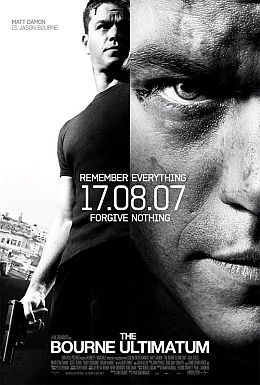
Date Posted:  29 March 2008
Last Update:  18 APril 2021
Comments to:  
jdoyle@pophistorydig.com 

Article Citation:
Jack Doyle, “Disney’s Movie Vault, 1984-1999,”
PopHistoryDig.com, March 29, 2008.

_____________________________
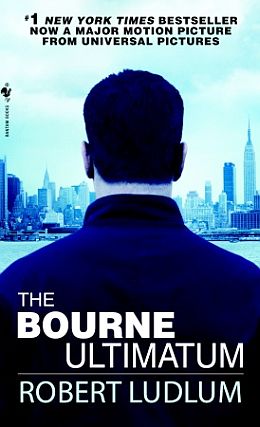


Sources, Links & Additional Information

Michael Eisner, Work in Progress, New York: Random House, 1998, pp. 186-191.

Jerry Beck, The Animated Movie Guide, Chicago: Reader Press, 2005.

“The Walt Disney Co.,”Wikipedia.orgSee also profiles on individual Disney movies.


“Steinbeck to Springsteen”
1939-2014

Cover art for 1939 hardback edition of “The Grapes of Wrath,” published by Viking Press, New York. Cover illustration by Elmer Hader. Click for 75th anniversary edition.

The Grapes of Wrath is a Pulitzer Prize-winning novel written by John Steinbeck in 1939.  Not only was this book a landmark social commentary in its day and a major publishing success, it became an award-winning and profitable Hollywood film, and also inspired at least two rounds of music — one by Woody Guthrie in 1940 and another by Bruce Springsteen in the 1990s.  First, the book.

     The Grapes of Wrath focuses on a poor family of Oklahoma sharecroppers named the Joads who are driven from their home and land during the 1930s Dust Bowl and Great Depression. The story tracks the family’s near hopeless situation as they set out for California along with thousands of other “Okies” in search of land, jobs, and dignity. Along the way they face suspicion and contempt, and once in California they are harassed and persecuted as transient labor, exploited by wealthy farm owners and their hired police. All of this has a radicalizing effect on the novel’s main character, Tom Joad, who starts thinking in broader social terms, beyond himself — part of the message Steinbeck intends.

     John Steinbeck was born in Salinas, California in 1902.  His father served as the county treasurer; his mother was a teacher.  He graduated from the local high school in 1919, working summers as a hired hand on California farms and ranches.  Attending Stanford University for six years without obtaining a degree, he decided in 1925 to pursue a writing career in New York.  There, while writing, he also worked as a bricklayer, reporter, and manual laborer, but failed to find a publisher. He returned to California in 1927 where a series of novels followed — Cup of Gold, The Pastures of Heaven, and To a God Unknown — all of which were poorly received. Better notices and critical success came with Tortilla Flat in 1935, In Dubious Battle in 1936, and Of Mice and Men in 1937.  Steinbeck then traveled to Oklahoma, where he joined a group of farmers embarking for California, living and working with one family for two years.  This experience became the basis for The Grapes of Wrath.

Dust Bowl-era storm near Stratford, Texas, April 1935. Click for DVD.
      Published in New York by Viking Press and released in mid-April 1939, the novel provoked controversy, as it was a pointed protest of the nation’s economic plight and particularly that of poor farmers.  The novel’s structure was somewhat unique in that it mixed historical background chapters with the novel’s plot and characters. Steinbeck’s voice, however, is found in Tom Joad, the novel’s main character. 

Joad is first seen returning home to Oklahoma after a jail sentence for killing a man in a brawl, only to find a devastated landscape with local farms being repossessed by the banks. Tom and an itinerant preacher accompany Tom’s family on their trek to California over highway 66.  Through Tom Joad, Steinbeck builds a slow-burn anger and sense of injustice over the migrants’ misery.The book was publicly banned in some places, burned in others, and heatedly debated on the radio. They are plagued not only by bad weather and misfortune, but by exploitive California farmers who deliberately degrade the migrants to keep them powerless.  The book proves a powerful tale of social injustice.

     At its release, The Grapes of Wrath became controversial and something of a national event.  In fact, the book was publicly banned in some places and burned in others (see Rick Wartzman book & interview in Sources).  It was heatedly debated on the radio.  Reviewers were initially split.  Some loved it, others were highly critical. One reviewer for the London Times named it “one of the most arresting [novels] of its time.” Newsweek called the book a “mess of silly propaganda, superficial observation, careless infidelity to the proper use of idiom, tasteless pornographical and scatagorical talk.”A reviewer for the New York Times, although critical of the book’s plot structure, said: “. . . Steinbeck has written a novel from the depth’s of his heart with a sincerity seldom equaled. It may be an exaggeration, but it is the exaggeration of an honest and splendid writer.” The Associated Farmers of California, displeased with the book’s depiction of California farmers, denounced the book as a “pack of lies” also calling it “communist propaganda”.

Oklahoma refugees in California, 1935.
      Although Steinbeck’s book had it critics, prominent defenders also emerged — among them, First Lady Eleanor Roosevelt who stated publicly that she never thought the book was “exaggerated” as some critics had charged.  Life magazine in June 1939 ran a two-page spread on Steinbeck’s book and the issue of migrant workers, with photos showing the grim conditions. For many who read the Grapes of Wrath, the book left a strong emotional impression. Yet Steinbeck, for his part, refused to publicly promote the book, believing it had to stand on its own merits. The first printing of the hardback edition was large for its time — estimated between 20,000 and 50,000.  By February 1940, The Grapes of Wrath was in its 11th printing, amounting to more than 430,000 copies.  In 1939, it became the best-selling book in America and was among the top ten bestsellers again in 1940.  Steinbeck received a Pulitzer Prize for the novel in May 1940. The book brought death threats to Steinbeck, charges that he was a Communist, and surveil- lance by the FBI.

     The Grapes of Wrath did help to improve migrant conditions, but it also brought threats on Steinbeck’s life, charges that he was a Communist, and surveillance by the FBI.  Steinbeck continued his career as a writer, publishing other notable works, including: The Moon Is Down (1942); Cannery Row (1945); The Pearl (1947); East of Eden (1952), The Winter of Our Discontent (1961); Travels With Charley (1962); and others. Seventeen of his works went on to become films, and he also worked as a Hollywood writer.  In 1962, Steinbeck was awarded the Nobel Prize for Literature with the Nobel committee citing the Grapes of Wrath as a “great work” and one of the committee’s main reasons for granting Steinbeck the Prize.  The copyright for The Grapes of Wrath was renewed in John Steinbeck’s name in 1967.  At the 50th anniversary of the book in 1989, it had sold close to 4.5 million copies in the U.S. alone, with worldwide sales then reaching about 14 million. Paperbacks were then selling at a rate of about 100,000 a year.


Hollywood Film

1940 poster for the Grapes of Wrath film, includes image of book and Steinbeck's name. Click for poster.
      In 1939, even while the book was still in its controversial first flush, plans were made to produce a film version of the story. The film rights were acquired by Darryl F. Zanuck of 20th Century-Fox who assigned the project to his top director, John Ford, already famous for a bevy of successful westerns.

Zanuck, however, was nervous about the novel’s hard left political views and sent private investigators to Oklahoma to check out the “Okies” predicament first hand. Finding them true to life, Zanuk became confident he could defend attacks that the film was pro-Communist. But Zanuck also watered down the novel’s tone for the film, departing from the book in places, which some believe made story more saleable to the public.

The film had an excellent cast, including Henry Fonda playing Tom Joad, Jane Darwell as Ma Joad, and John Carradine as the itinerant ex-preacher, Jim Casy. Production ran from early October 1939 through mid-November 1939. It premiered in New York City and Los Angeles in late January 1940 and to the wider public in mid- March 1940.

     “The Joads step right out of the pages of the novel that has shocked millions!,” said one of the studio’s promotional pieces. At its release the film was very well received, but like the book, still had its detractors for its leftist political tone.  Still, the movie helped to keep Steinbeck’s book on the bestseller list.

Grapes of Wrath VHS release, 1998.
Many of the film’s visual images were true to life and resembled the migrant worker photographs that had been taken by Depression-era photographers Dorothea Lange and Horace Bristow. Life magazine ran a story in January 1940 showing some of the similarities between the film sequences and actual photographs of migrants and their living conditions.

     The movie won Oscars for best director, John Ford, and best actress, Jane Darwell as Ma Joad. It was also nominated in five other categories, including best actor for Henry Fonda’s role, and best picture, losing that year toAlfred Hitchcock’s Rebecca. Through the 1950s, The Grapes of Wrath was often named the greatest American film, though in subsequent years it was outranked by other films, such as Citizen Kane. But the American Film Institute still ranks it among the top 50 films of all time, and the Library of Congress has designated it for historic film preservation. VHS versions of the film were released in 1988 by a division of CBS/Fox, and again in 1998 by 20th Century Fox for its Studio Classic series. A DVD version with extra commentary and historical information was released in April 2004 by 20th Century Fox Entertainment.

     In one 2002 film review, Roger Ebert wrote: “The novel and movie do last, I think, because they are founded in real experience and feeling. . . .The Grapes of Wrath shows half a nation with the economic rug pulled out from under it.  The story, which seems to be about the resiliency and courage of ‘the people,’ is built on a foundation of fear: Fear of losing jobs, land, self-respect. To those who had felt that fear, who had gone hungry or been homeless, it would never become dated. . .”


1940: Woody Guthrie's album, "Dust Bowl Ballads."

Woody & Bruce

     Among those who first saw the film in 1940 was Depression-era balladeer Woody Guthrie. In fact, Guthrie was so moved by what he saw at a New York screening that he wrote a long song about the film immediately after viewing it. Set to the tune of “John Hardy,” Guthrie’s “The Ballad of Tom Joad” summarizes the The Grapes of Wrath story in a 17-verse song.  Folk singer Pete Seeger, who saw Guthrie that night, has described how Guthrie set about writing the song:

…He said, “Pete, do you know where I can get a typewriter?” I said, “I’m staying with someone who has one.”

“Well, I got to write a ballad,” he said. “I don’t usually write ballads to order, but Victor [the record company] wants me to do a whole album of Dust Bowl songs, and they say they want one about Tom Joad in The Grapes of Wrath.”

. . . He went along to the place where I was staying — six flights walking up — on East Fourth Street. The friend I was staying with [Jerry Oberwager] said, “Sure, you can use my typewriter.”

Woody had a half-gallon jug of wine with him, sat down and started typing away.  He would stand up every few seconds and test out a verse on his guitar and sit down and type some more. About one o’clock my friend and I got so sleepy we couldn’t stay awake.  In the morning we found Woody curled up on the floor under the table; the half gallon of wine was almost empty and the completed ballad was sitting near the typewriter….

Henry Fonda as Tom Joad in the 1939 film version of The Grapes of Wrath.

      Guthrie, in his own plain style, also wrote about seeing the film in one of his columns for the People’s World, praising its directness: 

“. . . Shows the damn bankers men that broke us and the dust that choked us, and comes right out in plain old English and says what to do about it.”  Guthrie urged his readers to go see the film. “. . .You was the star in that picture,” he wrote, meaning his everyman readers. “Go and see your own self and hear your own words . . .” 

Guthrie’s song, meanwhile, “The Ballad of Tom Joad,” was first recorded at RCA Studios, Camden, New Jersey, April 1940 and released on an album titled Dust Bowl Ballads in July 1940.

Later albums, also including the “Tom Joad” song, were released in 1964 and another in 1977 by RCA under the title, Woody Guthrie: A Legendary Performer. A CD version was released in 1988 and is also available in a newer CD version by Buddha Records, released in 2000, with some extras.  But Woody Guthrie’s song on The Grapes of Wrath tale wouldn’t be the last such music.

1995: Bruce Springsteen album, "The Ghost of Tom Joad."

In November 1995, rock star Bruce Springsteen, who had risen to fame in the 1980s with hard-driving rock ‘n roll music that often captured working-class concerns and themes, released an album titled The Ghost of Tom Joad.  This album, a more acoustic-styled collection of tunes rather his normal rock ‘n roll fare, is supported by guitar, piano and harmonica.  Its title track directly references the Grapes of Wrath’s main character (see lyrics below).

The album also features other songs that focus on the lives of steelworkers, illegal immigrants, and migrant farmers.  Springsteen’s single from the album, “The Ghost of Tom Joad” was later covered by the alternative metal rock group Rage Against the Machine on a November 1998 CD single and a 2001 album.  In 2006, the song was covered again on a EP by Swedish indie/folk singer-songwriter and classical guitarist José González who is affiliated with the group Junip.

“The Ghost of Tom Joad”
Bruce Springsteen
1995

Men walkin’ `long the railroad tracks
Goin’ someplace there’s no goin’ back
Highway patrol choppers comin’ up
over the ridge
Hot soup on a campfire under the bridge
Shelter line stretchin’ round the corner
Welcome to the new world order
Families sleepin’ in their cars in the
southwest
No home no job no peace no rest.

The highway is alive tonight
But nobody’s kiddin’ nobody about
where it goes
I’m sittin’ down here in the campfire light
Searchin’ for the ghost of Tom Joad.

He pulls prayer book out of his sleeping bag
Preacher lights up a butt and takes a drag
Waitin’ for when the last shall be first and
the first shall be last
In a cardboard box `neath the underpass
Got a one-way ticket to the promised land
You got a hole in your belly and gun in
your hand
Sleeping on a pillow of solid rock
Bathin’ in the city aqueduct.

The highway is alive tonight
But where it’s headed everybody knows
I’m sittin’ down here in the campfire light
Waitin’ on the ghost of Tom Joad.
Now Tom said, “Mom,wherever there’s
a cop beatin’ a guy
Wherever a hungry newborn baby cries
Where there’s a fight `gainst the blood
and hatred in the air
Look for me Mom, I’ll be there
Wherever there’s somebody fightin’ for
a place to stand
Or decent job or a helpin’ hand
Wherever somebody’s strugglin’ to be free
Look in their eyes Mom you’ll see me.”

The highway is alive tonight
But nobody’s kiddin’ nobody about
where it goes
I’m sittin’ down here in the campfire light
With the ghost of old Tom Joad.


“Best Book” Kudos

Meanwhile, John Steinbeck’s The Grapes of Wrath has withstood the test of time. Today it is regarded as one of the great American novels of the 20th century and remains one of the world’s most famous books. It is frequently cited on “best book” lists that appear from time to time. In 1998, the Modern Library ranked The Grapes of Wrath at No. 10 on its list of the 100 best English-language novels of the 20th century.

In 1999, French newspaper Le Monde ranked The Grapes of Wrath No. 7 on its list of the 100 best books of the 20th century. In the U.K., the book was listed at No. 29 of the “nation’s best loved novel” on a BBC 2003 survey.

Time magazine in 2005 included the novel in its listing of the “100 Best English-Language Novels from 1923 to 2005″. The Daily Telegraph of London in 2009 included the novel as well in its list of “100 novels everyone should read”.

As for the film, which is also highly regarded, although it deviates from the book at the end, a special DVD with supplemental historian commentary was released in April 2004 by 20th Century Fox Entertainment. And in July 2013, Steven Spielberg announced plans to do a remake of The Grapes of Wrath film.

 
75th Anniversary

At the 75th anniversary of the publication of The Grapes of Wrath in April 2014, there was renewed attention bestowed on the book and its author, with commemorative events occurring throughout the year at numerous museums, schools, universities, and book festivals. Viking-Penguin, the book’s original publisher, issued a special “75th Anniversary Edition” with the original cover art for the hardback book jacket by artist Elmer Hader.

The School of Arts and Humanities at California State University at Bakersfield began its celebration of Steinbeck’s novel in October 2013 with a continued schedule of events in a number of state-wide venues through 2014.

The Center for Steinbeck Studies at California State University at San Jose and the National Steinbeck Center in Salinas, California also commemorated the 75th anniversary with special programs. The Steinbeck Center launched a “Grapes of Wrath” oral history collection project to document present-day Joad family difficulties and share those stories online and at public programs – part of the 2014 National Steinbeck Festival.

A number of authors and Steinbeck scholars also commemorated The Grapes of Wrath’s 75th anniversary, some offering special papers, essays, and lectures. In April 2014, for example, a Washington Post essay by historian Susan Shillinglaw, made a case for remembering the migrant women of The Grapes of Wrath – and the “Ma Joad” character in particular.

Scene from 1940 film, “The Grapes of Wrath,” from left: Doris Bowdon as “Rosasharn,” Jane Darwell as Ma Joad, and Henry Fonda as Tom Joad.
In Shillinglaw’s essay – titled “Ma Joad for President” — she explored the strengths of Ma Joad using passages from the book. Shillinglaw wrote that the men in The Grapes of Wrath were stunned by the hardships they encountered, but the women adapted. Ma Joad, she explained, was “the family bulwark,” the woman who kept the family moving along route 66 to California. “Ma is a feminist – feisty, strong loving, resilient,” and the kind of leader, said Shillinglaw, that the nation might well consider in tough times.

In her piece, Shillinglaw also noted the role of Steinbeck’s wife, Carol, in shaping the book and pushing her husband along, also responsible for selecting “The Grapes of Wrath” title, taken from the opening lines of “The Battle Hymn of the Republic.”

For additional stories at this website on “Print & Publishing,” please see that category page – and also the “Film & Hollywood” category page for other book-to-film stories. Thanks for visiting – and if you like what you find here please make a donation to help support the research and writing at this website. Thank you. – Jack Doyle

Please Support
this Website

Donate Now

Thank You

_____________________________
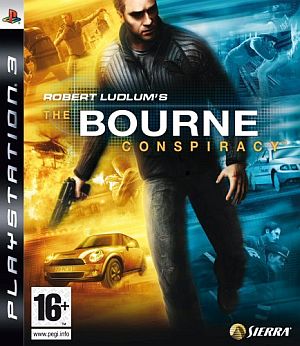
Date Posted:  29 March 2008
Last Update: 3 March 2026
Comments to: jackdoyle47@gmail.com 

Article Citation:
Jack Doyle, “Steinbeck to Springsteen, 1939-2014,”
PopHistoryDig.com, March 29, 2008.

Twitter: https://twitter.com/PopHistoryDig
BlueSky: jackdoyle.bsky.social

_____________________________
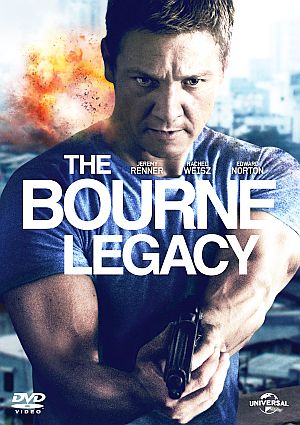

Related Books at Amazon.com
 

Timothy Egan, “The Worst Hard Time: The Untold Story of Those Who Survived the Great American Dust Bowl,” 2006. Click fo Amazon.
James N. Gregory, “American Exodus: The Dust Bowl Migration and Okie Culture in California,” 1989, Oxford Univ. Press, 360 pp.  Click for Amazon.
James N. Gregory, “American Exodus: The Dust Bowl Migration and Okie Culture in California,” 1989, Oxford Univ. Press, 360 pp. Click for Amazon.
Kevin Z. Sweeney, “Prelude to the Dust Bowl: Drought in 19th-Century Southern Plains,” 2016. Univ. of Oklahoma, 304 pp, Click for Amazon.


Sources, Links & Additional Information

Author John Steinbeck, circa 1930.
Cover of Rick Wartzman’s 2008 book, depicting p. 4 of “The Grapes of Wrath” in flames, apropos his book’s subject, i.e., the burning and banning of Steinbeck's book. Click for book.
"The dust Bowl," A PBS Film by Ken Burns.  Click for Amazon.
"The dust Bowl," A PBS Film by Ken Burns. Click for Amazon.
Sanora Babb (text) & Dorothy Babb (photos), “On the Dirty Plate Trail: Remembering the Dust Bowl Refugee Camps,” 2007.  Frsthand account, with photos, of the Dust Bowl refugees, migrant labor camps,  labor activism, etc. Univ. of Texas Press,  208 pp. Click for Amazon.
Sanora Babb (text) & Dorothy Babb (photos), “On the Dirty Plate Trail: Remembering the Dust Bowl Refugee Camps,” 2007. Frsthand account, with photos, of the Dust Bowl refugees, migrant labor camps, labor activism, etc. Univ. of Texas Press, 208 pp. Click for Amazon.
“The Grapes of Wrath: John Steinbeck Writes A Major Novel About Western Migrants,” Life, June 5, 1939 (with photos by Horace Bristow). 

“Speaking of Pictures. . . These By Life Prove Facts in ‘Grapes of Wrath’,” Life, January 19, 1940 (with photos of Horace Bristow).

Edwin Schallert, “ ‘Grapes of Wrath’ [film] Due for Much Controversy,” Los Angeles Times, January 23, 1940, p. 8.

Richard Griffith, “Gotham ‘Goes Overboard’ on Steinbeck Picture,” Los Angeles Times, February 5, 1940, p. A-14.

“Novel Flayed in [State] House; Californian Denounces ‘The Grapes of Wrath’ in Migrant Aid Debate,” Los Angeles Times, March 12, 1940, p. 2.

The Grapes of Wrath, 20th-Century American Bestsellers,” Graduate School of Library and Information Science, University of Illinois, Urbana-Champaign, Illinois, 2006.

“The American Novel,” American Masters, “1939, The Grapes of Wrath,” PBS, a production of Thirteen/WNET New York, March 2007.

C-Span “Book TV” interview with Rick Wartzman, author of Obscene in the Extreme: The Burning and Banning of John Steinbeck’s the Grapes of Wrath, PublicAffairs Press, September 2008.

Susan Shillinglaw, A Journey into Steinbeck’s California, Roaring Forties Press, 2006. Shillinglaw is scholar-in-residence at the National Steinbeck Center in Salinas, California, San Jose State University.

Martha Heasley Cox Center for Steinbeck Studies, San Jose State University.

Roger Ebert, Movie Review, “The Grapes of Wrath,” Chicago Sun Times, March 31, 2002.

Woody Guthrie, article in one of his People’s World columns (1940), reprinted in Woody Sez, New York, NY, 1975, p. 133.

Woody Guthrie, American Folksong, New York, 1961 (reprint of 1947 edition), p. 25.

Pete Seeger, The Incompleat Folksinger, New York, NY, 1972, p. 44.

W.J. Weatherby, “Mighty Words of Wrath,” The Guardian, Monday April 17, 1989.

Library of Congress, “Forgotten People” exhibit, Depression Era/migrant worker sketchbook of Dorthea Lange & Paul Taylor.

DVD Talk Review, Grapes of Wrath film review by Glenn Erickson.

The Grapes of Wrath,” Wikipedia.org.

For a more recent perspective on Steinbeck’s work re: current economic conditions, see: Rachel Dry, “A Recession Only Steinbeck Could Love,” Washington Post, Outlook, Sunday, March 22, 2009, p. B-1.

Rick Wartzman, Obscene in the Extreme: The Burning and Banning of John Steinbeck’s The Grapes of Wrath, Public Affairs, September 1, 2008.

“Interview with Rick Wartzman, Author, Obscene in the Extreme: The Burning and Banning of John Steinbeck’s the Grapes of Wrath (PublicAffairs Press, September 2008), BookTV/C-Span.org, September 28, 2008.

Nicole Cohen, “Last Chance To Read ‘Grapes Of Wrath’ Before It Turns 75,” NPR.org, February 17, 2014.

Robin Young & Jeremy Hobson,“Steinbeck’s ‘The Grapes Of Wrath’ Marks 75th Anniversary,” Here & Now / WBUR (Boston /NPR), Monday, April 14, 2014.

Susan Shillinglaw, “Ma Joad for President: 75 Years Later, ‘The Grapes of Wrath’ Reveals the Leader America Needs,” Washington Post, Sunday, April 16, 2014.

Dayton Duncan & Ken Burns, The Dust Bowl: An Illustrated History, 2012, Chronicle Books, 232 pp. Click for Amazon.

Sanora Babb, Whose Names Are Unknown, 2006. A long-hidden novel – based on the author’s experiences – that tells the story of High Plains farmers who fled drought & dust storms during the Great Depression. Univ. of Oklahoma, 240 pp. Click for Amazon.

__________________________________
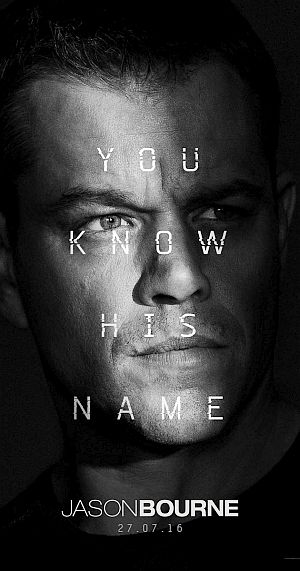


Anna Q. Nilsson
1910s-1920s

Silent film star Anna Q. Nilsson, Photoplay, November 1920. Artwork believed to be that of Rolf Armstrong.
      Photoplay magazine was founded in Chicago in 1911. It reached its zenith in the 1920s and 1930s, becoming quite influential in the early film industry. The magazine was renowned for its beautiful cover portraits of film stars by artists such as Rolf Armstrong, Earl Christy, and Charles Sheldon. By 1937, however, with the advancement of color photography, the magazine began using photographs of the stars.

     Anna Quirentia Nilsson, shown here on Photoplay’s November 1920 cover, became a star of the silent screen and was the first Swedish-born actress to receive a star on the Hollywood Walk of Fame. Nilsson’s story, however, is quite American in many ways; a story of immigrant dreams, determination, and New York city happenstance.  Nilsson’s arrival also came precisely at a time when America’s young film industry was exploding with possibility.

     Born in Sweden in March 1888, it is believed Nilsson emigrated to the U.S. about 1907. As a teenager in Sweden, she had done a bit of acting, but early on young Anna had set her sights on America as the land of opportunity.  Arriving at Ellis Island with thousands of other immigrants, Nilsson found work as nursemaid and learned English.  She then began working as a model posing for magazine illustrations and posters.  This exposure helped send the 5′-7” Swedish beauty to the emerging film industry.


One Immigrant To Another

Anna Q. Nilsson, circa 1910s.
      Anna Nilsson’s fortunes, in fact, became linked to another immigrant, a magazine illustrator named Penrhyn Stanlaws. Stanlaws was born in Scotland but came to America in 1890 at the age of 13. By 1893 he became an illustrator for the Chicago Daily News. He earned enough money from his art work to put himself through Princeton University. In 1901 he moved to Paris and enrolled at the Academie Julian, studied under Benjamin Constant and Jean-Paul Laurens and exhibited his first paintings at The Paris Salon of 1904. Three year later he returned to New York and became a cover artist for magazines such as
May 1915 Saturday Evening Post cover with model believed to be A. Nilsson.
The Saturday Evening Post, Hearst’s, Life, Metro- politan, and others. Stanlaws became one of the most successful and sought after cover artists of his day. And Anna Q. Nilsson became one of his models, in fact, somewhat famously as the “Stanlaws Girl,” rivaling the popular “Gibson Girl” of that era. It was on the basis of these illustrations and her modeling that Nilsson was encouraged to try movie acting.

     Either through Stanlaws, who became well connected in New York, or others, Nilsson landed her first movie role in 1911, in the film Molly Pitcher, a “two reeler” produced by Kalem Studios. She soon became one of the silent era’s “overnight sensations” and a bonafide film star in the first decade of the 20th century.

1915's 'Regeneration', deemed “culturally signifi-cant” by Library of Congress. Click for DVD.
The early silent films of that era were cranked out at prodigious rate, and Nilsson found her way into a good share of them. She appeared in more than 200 films, about 100 of which were made in the 1910s, including those made by Goldwyn, Paramount (Famous Players), Metro, and First National. At Kalem Studios, she would become the second-ranked actress behind top star Alice Joyce. Nilsson’s movie career flourish through the 1910s and 1920s. Among the early silent films in which she starred or played a prominent role were: Regeneration(1915), the story of a poor orphan boy who rises to a life of a gangster until he meets Marie ‘Mamie Rose’ Deering, played by Nilsson, for whom he wants to change; Seven Keys To Baldpate (1917), a classic story from Charlie Chan creator Earl Derr Biggers adapted by Broadway legend George M. Cohan who also starred in the film with Nilsson and plays a soon-to-be wed novelist who becomes caught up in a mystery; The Love Burglar (1919),opposite Wallace Reid, in which she helps foil an underworld villain played by Wallace Beery; The Toll Gate (1920), a western co-starring William S. Hart as a former military man who becomes a criminal and gang leader seeking revenge; and The Spoilers (1923), a story set in Nome, Alaska during the 1898 Gold Rush based upon Rex Beach’s 1906 novel. Other films she appeared in included: Soldiers of Fortune (1919), The Luck of the Irish (1920), and The Lotus Eater (1921). In 1923, a banner year, she made a number of films, including: The Isle of Lost Ships, Innocence, Thundering Dawn and Ponjola. In Ponjola — the South African Kaffir word for “whiskey” — the story is about a mining expert who is lost to the bottle. Nilsson plays the woman, who helps with the mining expert’s “regeneration” from alcoholism.

Anna Q. Nilsson
1920s: Films & Roles Played
_______________________


1920

The Brute Master – Madeline Grey
In the Heart of a Fool – Margaret Muller
The Fighting Chance – Sylvia Landis
One Hour Before Dawn – Ellen Aldrich
The Figurehead – Mary Forbes
The Toll Gate – Mary Brown
The Luck of the Irish – Ruth Warren
The 13th Commandment – Leila Kip
1921
10 Nights in a Bar Room – unavailable
The Lotus Eater – Madge Vance
Why Girls Leave Home – Anna Hedder
The Oath – Irene Lansing
Without Limit – Ember Edwards
What Women Will Do – Lily Gibbs
Värmlänningarna – Anna
1922
Pink Gods Lady – Margot Cork
The Man from Home – Genevieve…
Three Live Ghosts – Ivis
1923
Enemies of Children- unavailable
Innocence – Fay Leslie
Thundering Dawn – Mary Rogers
Ponjola – Lady Desmond
Adam’s Rib Mrs. Ramsay
The Spoilers- – Cherry Malotte
The Rustle of Silk – Lady Feo
The Isle of Lost Ships – Dorothy Fairfax
Hearts Aflame – Helen Foraker
Hollywood – unavailable
1924
Inez from Hollywood – Inez Laranetta
Hello, ‘Frisco – unavailable
Vanity’s Price – Vaana Du Maurier
The Breath of Scandal – unavailable
The Fire Patrol – Mary Ferguson
The Side Show of Life – Lady A. Dayne
Broadway After Dark – Helen Tremaine
Between Friends – Jessica Drene
Flowing Gold – Allegheny Briskow
Painted People – Leslie Carter
Half-a-Dollar Bill – The Stranger…
1925
The Splendid Road – Sandra De Hault
Winds of Chance – Countess Courteau
The Talker – Kate Lennox
One Way Street – Lady Sylvia Hutton
The Top of the World – Sylvia Ingleton
If I Marry Again – Alicia Wingate
1926
Midnight Lovers – Diana Fothergill
Miss Nobody – Barbara Brown
The Greater – Glory Fanny
Her Second Chance – C. Lee/C. Logan
Too Much Money – Annabel Broadley
1927
Sorrell and Son – Dora Sorrell
The Thirteenth Juror – Helen Marsden
Lonesome Ladies – Polly Fosdick
The Babe Comes Home – Vernie
Easy Pickings – Mry Ryan
The Masked Woman – Diane Delatour
1928
The Whip – Iris d’Aquila
Blockade – Bess
_________________
Source: Internet Movie Database. Not a complete
list of all Anna Q. Nilsson films; 1920s only.

_________________________

Review of Regeneration
by Hal Erickson

     One of the finest films of the pre-1920 era, The Regeneration was the first truly important directorial effort by Raoul Walsh. Spanning several years, this remarkable social document traces the life and times of Irish-American “child of the slums” Owen Conway (Rockliffe Fellowes), who grows up to become a ruthless gangster. Owen’s story is paralleled with that of Mamie Rose (Anna Q. Nilsson), who, though born into luxury, abandons her high-society environs to become a settlement worker in the city’s slum district. When Owen meets Mamie, who takes it upon himself to teach the surly gangster how to read and write, he begins to realize that he has charted the wrong course in life, thereby taking the first tentative step on the road to regeneration. Complicating the story is the fact that Owen’s bitterest enemy, the city’s crusading District Attorney (Carl Harbaugh), is also in love with Mamie. Filmed on location in New York’s Bowery district (just as seedy-looking in 1915 as it is today), The Regeneration boasts thoroughly believable performances and an astonishing variety of fascinating camera angles (including one dizzying shot of a man falling from a fourth-story window). Long available only for archival showings, the film has become a perennial attraction on the Turner Classic Movies cable-TV service. ~ All Movie Guide. 

Advertisement in Photoplay magazine for the 1923 movie 'Ponjola' with Anna Q. Nilsson. Click for related book by Cynthia Stockley.


     In 1923, Nilsson also made Hollywood, one of the first film satires of Hollywood life, followed in 1924 by a similar production, Innez of Hollywood, with co-actors Mary Astor and Lewis Stone. In The Splendid Road of 1925, Nilsson is among fortune seekers lured to the California gold fields traveling the long water route around Cape Horn to get there. Once arrived, she encounters Lionel Barrymore, a gambler, and suffers other travails. In another 1923 film, The Talker, Nilsson does some early work on behalf of women’s liberation, in which a woman’s yearning for a career is broached amid old-world family values and the male double standard. In 1925, Nilsson was seriously injured when thrown by a horse onto a stone wall. She suffered a temporary paralysis and spent a year or more in Europe seeking treatment and therapy. Through the latter 1920s, during a determined comeback, Nilsson appeared in a number of silent films, including The Babe Comes Home in 1927, filmed with the actual baseball immortal himself, Babe Ruth. The film was a romantic comedy produced by First National Pictures, which one newspaper report of January 1927 said might net $100,000. Nilsson played Ruth’s love interest in the film.

Movie poster for the silent film, Babe Comes Home, co-starring Anna Q. Nilsson and Babe Ruth. This poster sold for $ 138,000 in November 2003 according to Heritage Art Galleries, Arlington, TX. Click for copy.


____________________

The Babe Comes Home
From review by Hal Erickson

     “. . .Babe Ruth plays Babe Dugan, home run whiz of the Los Angeles Angels (a minor-league team in 1927). Babe’s habit of chewing tobacco makes him the bane of the Snow White Laundry, which has to clean his juice-stained uniforms after every game. Laundress Vernie (Anna Q. Nilsson) attends an Angels game to see for herself just how one man can be so messy. Babe hits a fly ball, which hits Vernie in the eye. From this bad start, a romance develops, culminating in an engagement.

On the eve of the wedding, Babe and Vernie have a rhubarb over his tobacco habit. She walks out, and Babe goes into a slump. But during a crucial game (bases loaded in the ninth, natch!) Vernie shows up in the stands and tosses Babe a flesh plug of tobacco. He stuffs the wad in his mouth and hits the deciding homer. Conceding that it was Vernie’s love and not the “chew” that inspired him to win, Babe swears off tobacco forever…

Based on a magazine story by Wid Gunning, The Babe Comes Home was a success with both movie and baseball fans alike …, but it’s likely that it had no bigger fan than Babe Ruth himself, who later confessed to having sat through the 6-reeler ten times.” ~ All Movie Guide.

_________________________________________________
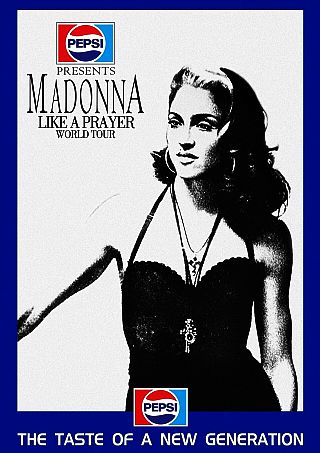
Anna Q. Nilsson, cover photo, August 1929.
      In 1928, Anna Nilsson made her last film of the silent era, Blockade. Later that year, she had a second horse-riding accident, this time breaking her hip, but recovering once again and returning to film. In the 1930s, however, as the “talkies” began to take over, Nilsson and other silent stars found it harder to find suitable roles. Still, Nilsson found roles in The World Changes(1933) with Paul Muni, and also in Prison Farm (1938) in which she played a matron. She then retired for a time, but returned to film in the 1940s and 1950s, often playing uncredited and bit roles. During World War II, she joined forces with Bette Davis and Marlene Dietrich to collect money for the American war effort. In her movie career, she had a supporting role in the The Great Man’s Lady (1942) and played Loretta Young’s Swedish immigrant grandmother in the successful The Farmers Daughter (1947). She continued to take smaller parts, some in successful films that showcased other stars, such as Cynthia (1947) featuring then-rising teen star Elizabeth Taylor; George Cukor’s Adam’s Rib (1949) with Spencer Tracy and Katherine Hepburn; An American in Paris (1951) starring Gene Kelly; and 1950’s Sunset Boulevard, in which she and other silent film stars including Gloria Swanson and Buster Keaton, appeared in the film as idolized “waxworks” figures. Nilsson’s last movie appearance was in 1954’s Seven Brides for Seven Brothers. Anna Q. Nilsson died in Hemet, California, February 11, 1974. A few of her film roles survive today on DVD, and at least one, Regeneration (1915), was selected by the Library of Congress in 2000 as “culturally significant” and designated for preservation.

Other stories of early film stars at this website that may be of interest include: “A Star is Born, 1910s”(studio creation of early film celebrity); “Pearl White, 1910s-1920s”(history of a silent film star); and, “Talkie Terror, 1920s” (the Hollywood peril of “talking pictures”). Additional stories of similar interest may be found at the “Film & Hollywood” and “Celebrity & Icons” category pages. Thanks for visiting — and if you like what you find here, please make a donation to help support the research, writing and continued publication of this website. Thank you. – Jack Doyle.

Please Support
this Website

Donate Now

Thank You

__________________________________
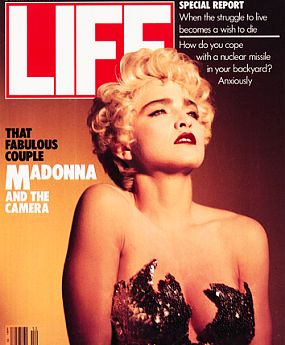
Date Posted: 29 March 2008
Last Update: 6 May 2020
Comments to: jdoyle@pophistorydig.com

Article Citation:
Jack Doyle, “Anna Q. Nilsson, 1910s-1920s,”
PopHistoryDig.com, March 29, 2008. 

_____________________________


Sources, Links & Additional Information

“Silent Lives: 100 Biographies of the Silent Film Era,” 2008, Bear Manor Media , 420 pages.  Click for copy.
“Silent Lives: 100 Biographies of the Silent Film Era,” 2008, Bear Manor Media , 420 pages. Click for copy.

“Anna Q. Nilsson, Swedish Star In Many Early Films, Dies at 85,” New York Times, Wednesday, February 13, 1974, p. 42.

Anna Q. Nilsson,” Wikipedia.org.

“Biography of Anna Q Nilsson,” Internet Movie Database, Imdb.com.

“Anna Q. Nilsson,” @ GoldenSilents.com

“Penrhyn Stanlaws (Penrhyn Stanley Adamson),” at ArtNet.com

Tammy Stone, “The Silent Collection – Anna Q. Nilsson,” Movie Profiles & Premiums Volume 3, Number 8, March 15, 2005.

Press Release, “Babe Ruth Movie Poster Sells for $138,000,” Heritage Art Galleries, Dallas, Texas – November 24, 2003.

“Ruth’s Film Venture, ‘Babe Comes Home,’ May Net $100,000,” The Washington Post, Sports Section, January 24, 1927.

“New Pictures,” Time, Monday, January 25, 1926.

“The New Pictures,” Time, Monday, May 18, 1925

“The New Pictures,” Time, Monday, November 26, 1923.

____________________


“Profiles in Courage”
JFK Book: 1954-2008

2003 edition of JFK book, published by Harper-Collins. Click for copy
     Profiles in Courage is the name of a Pulitzer Prize- winning book by former U.S. President John F. Kennedy written in 1954 and 1955 while he was a U.S. Senator. The book chronicles acts of bravery and integrity in the careers of eight U.S. Senators in American history. Profiles in Courage became a best-seller and was ground-breaking in its day, becoming one of the first books used to advance a political career aimed at the White House. Yet apart from its politics, Profiles in Courage remains popular, not only for its attachment to the Kennedy legacy, but also as an important book on political courage and U.S. Senate history. Sometimes forgotten is the fact that Kennedy’s book also spawned a Peabody Award-winning television series in 1964. Profiles in Courage also had numerous print runs including a 50th anniversary edition in 2004, inspired several new books and ongoing research on the history of political courage, and also led to the creation of the “Profiles in Courage” award, given annually since 1990.

     “Jack” Kennedy was first elected to the U.S. House of Representatives in 1946 as a Congressman from Massachusetts. He was 29 years old at the time. In 1952, he ran for and won a U.S. Senate seat. However, as a freshman Senator in 1954 and 1955, Kennedy took leave from the Senate to recover from surgery to treat a perennial back problem. It was during this period that he undertook Profiles in Courage. In the book, the senators that Kennedy profiled were mavericks of a kind who took courageous stands or stood apart from the safe and conventional norms of their day. They crossed party lines, defied their constituents, or ran counter to public opinion to do what they felt was right. Among Kennedy’s featured senators were: John Quincy Adams, Daniel Webster, Thomas Hart Benton, Sam Houston, Edmund G. Ross, Lucius Lamar, George Norris, and Robert A. Taft. Each of these, and others Kennedy mentions in his book, suffered severe criticism and losses in popularity because of the particular stance or action each took, which was the point of Kennedy’s “courage” argument.

Early paperback edition of JFK book.


Becoming A Best-Seller

     By the late fall of 1955, advance notice of the book’s publication began appearing in some national newspapers. Kennedy himself also penned a long piece in the New York Times Magazine in December 1955 that previewed the book’s themes. On Sunday, January 1st, 1956, the book was reviewed on the front page of the New York Times Book Review along with a large photo of Kennedy. Cabell Philips, the reviewer, noting that politicians themselves often criticized their own profession, wrote: “it is refreshing and enlightening to have a first rate politician write a thoughtful and persuasive book about political integrity.” Profiles in Courage generally received good reviews and was widely acclaimed. It became a best seller and remained on the best-sellers’ list for some 95 weeks. The book gave Kennedy a certain political gravitas and national recognition he did not have before, lifting him from the ranks of unknown senators. And the book’s arrival was well-timed too, as 1956 was a presidential election year; a time when national political campaigns were in full swing.

The book gave Kennedy a certain political gravitas and national recognition he did not have before, lifting him from the ranks of unknown senators.

     Although Kennedy was not a presidential candidate in 1956, he took center stage for a time at the Democratic National Convention that August in Chicago. Political conventions then were just beginning to receive more coverage by television. NBC, for example, pre-empted its day time soap operas and assigned two of its reporters, Chet Huntley and David Brinkley, to co-anchor the convention coverage. Kennedy, meanwhile, gave the nomination speech for Adlai Stevenson, who became the party’s presidential nominee. Stevenson liked Kennedy and thought about making the young senator his running mate, but decided instead to throw open the nomination for Vice President to the entire convention. Several candidates were then vying for the VP slot: Senator Hubert Humphrey, Senator Al Gore, Sr., Senator Estes Kefauver, and Kennedy. All mounted instant campaigns on the floor of the convention. Some of Kennedy’s campaign paraphernalia tagged him as “a profile in courage.”

JFK VP campaign button at the 1956 Democratic Convention tagging him a 'Profile in Courage'.
     The scramble for convention votes among the candidates proved dramatic with television capturing a series of roll-call ballots. Three separate ballots were needed. On the second ballot, Kennedy led 618 to 551½. At one point, the Chicago Daily News reported that Kennedy and Kefauver were tied, each falling short of the number to nominate. Kennedy then came to the floor and asked for Kefauver to be put on the ticket by acclamation. Stevenson, watching on TV at his hotel, was reportedly disappointed in the outcome. In the general election that followed that fall, the Stevenson-Kefauver ticket was crushed by the re-election of President Dwight Eisenhower and his running mate, Richard Nixon. For Kennedy, however, the national exposure he had received at the convention provided a springboard for 1960. Kennedy biographer James MacGregor Burns would write of the Kennedy’s vice presidential bid at the convention: “The dramatic race had glued millions to their television sets. Kennedy’s near-victory and sudden loss . . . struck at people’s hearts in living rooms across the nation. In this moment of triumphant defeat, his campaign for the [1960] presidency was born.” One of those who watched on TV was a young Bill Clinton in Arkansas, who years later recalled: “The Kennedy-Kefauver thing, oh, yeah. I remember that,” he said, “– and Kennedy’s gracious concession speech.”
Kennedy featured on Time cover, Dec 2, 1957, with cover story, 'Democrat's Man Out Front'.


Pulitzer Prize

     In 1957, following the election, Kennedy began his unofficial campaign for the White House as he continued his duties in the U.S. Senate. Among fellow Democrats in the Senate who were also presidential contenders at the time were Lyndon Johnson and Hubert Humphrey. Profiles in Courage, meanwhile, returned to the news in May 1957 as the book picked up a Pulitzer prize.

The award came as something of surprise, however, as the Pulitzer board rejected the jury nominations and gave the prize instead to Kennedy’s book. In fact, a few critics charged that Kennedy’s father had been involved behind the scenes on his son’s behalf. New York Times columnist Arthur Krock, a friend of Joe Kennedy’s, boasted that he had lobbied hard for the Kennedy book. But no evidence of impropriety was found.

Through 1957, Kennedy continued to travel the country, with numerous speaking engagements. He appeared on the cover of Time magazine’s December 2nd, 1957 issue, with the feature story, “Democrat’s Man Out Front.” About that time, however, some charges surfaced challenging Kennedy’s authorship of Profiles in Courage.

Kennedy’s Writing
1940-1950s

     John Kennedy, before he entered politics, had aspired briefly to a career in journalism and had written on history and public policy. As a student at Harvard in the 1930s, Kennedy had studied international relations and history. In his senior year, he wrote a college thesis that examined the failures of the British government to take steps to prevent World War II, entitled “Appeasement in Munich.” Kennedy’s paper did not castigate Britain’s appeasement policy, and suggested that an earlier confrontation between the U.K. and Nazi Germany might have been more disastrous in the long run. That paper was written in the spring of 1940.

     Kennedy’s father, Joseph P. Kennedy, Sr., looking out for his son’s political future, was able to get that senior thesis paper released from Harvard and had it published as a book. Joseph Kennedy, as ambassador to Britain, had supported Prime Minister Neville Chamberlain’s policy of appeasement during the late 1930s, which many believe cost the senior Kennedy his own political career. At any rate, John Kennedy graduated from Harvard with a degree in international affairs in June 1940. A month later, his thesis was published by Willard Funk, Inc., in New York in July 1940 as Why England Slept – a play on Winston Churchill’s 1938 title, While England Slept, which also examined the buildup of German power.

     Although there has been a long running dispute over how much of Profiles in Courage Jack Kennedy actually wrote, it does appear that he formulated the idea, wrote a number of memos on the project, did oversee the book’s structure and production, and did write and/or dictate much of it. Wife Jacqueline also appears to have contributed to the concept for the book, and helped engage the research and writing assistance of a history professor at Georgetown University named Jules Davids, whom she had met taking his history course. Library of Congress researchers also assisted Kennedy, as they would any Senator requesting background research from the Library. But because of his back problem – according to one of Kennedy’s secretaries at the time, Gloria Sitrin – Kennedy could not sit for long periods of time writing or typing, and instead, dictated much of the material. Still, Ted Sorensen, Kennedy’s assistant, is believed by many to have written at least some of the book, while others say he only provided research and constructive editing. In any case, in the final book, Kennedy acknowledged all of these participants and contributors.

On December 7, 1957, syndicated columnist Drew Pearson, interviewed on TV by Mike Wallace, said the book was ghostwritten for Kennedy, suggesting that Kennedy’s aide, Ted Sorensen, had written much of the book. Kennedy did not take kindly to the charge and hired lawyer Clark Clifford, who produced Kennedy’s handwritten notes and statements from people saying they had seen Kennedy working on the book. Sorenson also denied the allegation and signed an affidavit attesting to Kennedy’s authorship.

     About a week after the allegation had been aired by Pearson, ABC executive Oliver Treyz read a retraction of the charge on the air of Wallace’s December 14th TV show. The statement was reprinted in the New York Times, Sunday December 15th, as follows: “I wish to state that this company [ABC] has inquired into the charge made by Mr. Pearson and has satisfied itself that such charge is unfounded and that the book in question was written by Senator Kennedy.”

Kennedy had acknowledged Sorensen’s involvement in the book, crediting him in the preface and also acknowledging other contributions. Kennedy and Sorensen insisted that Kennedy was the book’s author and the initial controversy died down, although it would emerge again years later.

Kennedy, meanwhile, was re-elected to a second term in the U. S. Senate in 1958 by a wide margin, and continued to draw national attention through the Democratic primaries as the front runner for the White House. In January 1960, he formally declared his bid for the Presidency.

During the campaign, and after Kennedy won the election, there was continuing interest in Profiles in Courage. By the time of Kennedy’s Presidential inauguration in January 1961, the book was being prepared for sale as a Pocket Books paperback. A young reader’s edition was also produced in March 1961. By then, Profiles in Courage had sold 2 million copies since its original 1956 publication.

     In June 1963, midway into Kennedy’s presidential term, the television rights for Profiles in Courage were sold for an estimated $3.5 million (1963 dollars). The NBC television network planned to film and air a series of 26 hour-long TV programs based on the book. Several months later, however, national tragedy came with the president’s assassination in Texas in late November 1963.

After Kennedy’s assassination, Harper & Row was besieged for copies of Profiles in Courage, with orders in excess of 10,000 copies by late November. A Perennial Library Memorial Edition of Profiles in Courage was prepared by Harper for 1964, which included a moving introduction by Kennedy’s brother and then U.S. Attorney General, Robert Kennedy.


Television Series

Front-page New York Times story on the sale of JKF book for TV series, June 10, 1963.

     The following year, in mid-November, the planned NBC television series, ”Profiles in Courage,” began airing on Sunday evenings. However, with 26 episodes, additional characters beyond those in Kennedy’s book were needed for the series. All of the additional characters subsequently profiled in the TV series had been previously approved by JFK. The producer of the TV show, Robert Saudek, was known for his serious television productions, and had also produced the much-praised OmnibusTV series as well as concerts by the New York Philharmonic. Saudek had a clear grasp of Kennedy’s message for the Profiles TV series. One of the additional historic politicians, for example, was that of Oscar Underwood, an Alabama Senator who in 1924 was in the running for the Democratic presidential nomination. Underwood, however, chose to condemn the Ku Klux Klan, losing southern support, thereby ruining his chances of winning the nomination and later losing his Senate seat and his political career.

Profiles in Courage-TV
Episode List, 1964-1965

Episode
Oscar W. Underwood
Mary S. McDowell
Thomas Hart Benton
Richard T. Ely
Sam Houston
Gov. John M. Slaton
John Adams
Robert A. Taft
Anne Hutchinson
Gen. A. Doniphan
John Peter Altgeld
Frederick Douglass
Daniel Webster
Woodrow Wilson
Prudence Crandall
Andrew Johnson
Hamilton Fish
Charles Evans Hughes
Edmund G. Ross
George W. Norris
Grover Cleveland
John Quincy Adams
John Marshall
Judge Ben B. Lindsey
George Mason
Thomas Corwin
Air Date
11/8/64
11/15/64
11/29/64
12/6/64
12/13/64
12/20/64
12/27/64
1/3/65
1/10/65
1/17/65
1/24/65
1/31/65
2/7/65
2/14/65
2/21/65
2/28/65
3/7/65
3/14/65
3/21/65
3/28/65
4/4/65
4/11/65
4/18/65
4/25/65
5/2/65
5/9/65
____________________
Aired on NBC, Sundays, 6:30-7:30pm.

     Time magazine called the Profiles in Courage TV series “a bracing antidote to the plethora of two- dimensional tele- dramas in which tinsel laurels automatically crown the good guy.” The TV series ended in mid-1965, but received a Peabody Award for “distinguished and meritorious public service rendered by radio and television.” The book, meanwhile, remained in print and continued to be used in schools and beyond.


Award & New Books

     The Profiles in Courage legacy, however, continued through the remainder of the 20th century and into the 21st Century. In 1989, the John F. Kennedy Library Foundation established an award for political courage called “The Profile in Courage Award.” The annual award is made to recognize displays of political and moral courage similar to those that Kennedy originally wrote about in his book. It is given to individuals, and often elected officials, who have risked their careers or lives by pursuing a larger vision of the national, state, or local interest in opposition to popular opinion or pressure from constituents or other interests. Winners are selected by a bi-partisan committee named by the John F. Kennedy Library Foundation, which typically includes members of the Kennedy family as well as other prominent Americans. The award is generally made around the time of JFK’s birthday, May 29th. From the early 1990s, the award has been presented at the Kennedy Library in Boston by Kennedy family members, including JFK daughter Caroline Kennedy Schlossberg, the late John F. Kennedy, Jr., and Senator Ted Kennedy. In addition to honoring those with political courage, the award had also helped kindle continuing interest in the original book.

Former President Gerald Ford receiving 2001 Profile in Courage award from Caroline Kennedy & Senator Ted Kennedy.


New Profiles

     In 2002, Caroline Kennedy gave the “profiles of courage” concept a new focus, teaming up with publisher Hyperion and serving as editor for a new book, Profiles in Courage for Our Time, offering a collection of essays profiling recent winners of the Profile in Courage award. In this book, award winners are profiled by a variety of writers, historians. and journalists, some of well-known stature such as Michael Beschloss, E. J. Dionne, Anna Quindlen, and Bob Woodward. Famous award winners, as well as lesser known recipients, are profiled in the book. Among some of the well-know recipients profiled, for example are: New Jersey Governor James Florio, former U.S. Senator Lowell Weicker, and former president Gerald Ford. Among the less well-known are activists and community heroes such as Corkin Cherubini, Nickolas C. Murnion, and Hilda Solis.

Caroline Kennedy's book on Profile of Courage award winners. Click for copy.

     In April 2006, a special 50th anniversary edition of Profiles in Courage was published by Harper. This special “P.S.”edition, as the publisher called it, commemorated the 50th anniversary of the book’s publication and also included a number of extras, such as vintage photographs, an extensive JFK biography, Kennedy’s correspondence about the project, reviews of the book, a letter from Ernest Hemingway, and two speeches from recipients of the Profiles in Courage Award.

Elsewhere in the Kennedy family, the “heroes theme” was also being explored by Robert F. Kennedy Jr., who with publisher Hyperion in September 2007, launched the first of “Robert F. Kennedy Jr.’s American Heroes Series” of children’s books, Joshua Chamberlain and the American Civil War. A second book in the series, focusing on another Civil War hero, Robert Smalls, a slave who hijacked a Confederate steamer and turned it over to the Union Navy, and later became a U.S. Congressman, will be published by Hyperion in 2008.

50th anniversary edition of JFK book issued by Harper-Perennial. Click for copy.


65 Printings

     JFK’s Profiles in Courage, meanwhile, compiled quite a track record over more than 50 years. The book has had at least 65 printings, sold more than 3 million copies, and hit the bestsellers list three times: in the late 1950s when JFK was an up-and-coming Senator; after he was elected President in 1960-61; and following his assassination in 1963-64. The book also spawned a successful television series in 1964-65, inspired the annual Profiles in Courage Awards, and sparked new research and subsequent books on political integrity and the history of heroism. Whatever criticism may still linger about the JFK’s Profiles in Courage, there is no doubt that this book instigated an important concept and way of evaluating political courage, fostered a respectable progeny of good and useful history, and helped bring into the spotlight contemporary careers of exemplary public service and good works.

     Additional stories at this website related to JFK and other Kennedy family members can be found at the topics page, “Kennedy History: 12 Stories, 1954-2013.” Some of these stories are also listed below in “Sources.” For additional stories on Politics & Culture, or Celebrities & Icons, please visit those category pages, or go to the Home Page for other choices.  Thanks for visiting – and if you like what you find here, please make a donation to help support the research and writing at this website. Thank you.  —  Jack Doyle

Please Support
this Website

Donate Now

Thank You

____________________________________
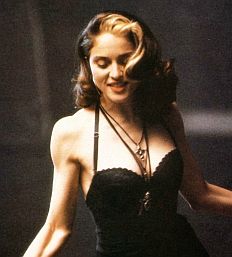
Date Posted: 11 February 2008
Last Update: 29 January 2025
Comments to: jackdoyle47@gmail.com
BlueSky: jackdoyle.bsky.social

Article Citation:
Jack Doyle, “JFK’s Profiles in Courage, 1954-2008,”
PopHistoryDig.com, February 11, 2008.

____________________________________


Caroline Kennedy Books at Amazon.com


Ellen Alderman & Caroline Kennedy, “In Our Defense: The Bill of Rights in Action,” 1992, Avon, 430 pp. Click for Amazon.
“A Patriot's Handbook: Songs, Poems, Stories, and Speeches Celebrating the Land We Love,” 2003, Grand Central Pub, 688 pp. Click for Amazon.
Caroline Kennedy & Ellen Alderman, “The Right to Privacy,” 1997, Vintage Paperback, 432 pp. Click for Amazon.


Sources, Links & Additional Information

Time magazine cover, November 24th, 1958, featuring seven “Democratic Hopefuls” then believed to be in the early running for their party’s 1960 presidential nomination: at top, Adlai Stevenson, former Illinois Governor and Democratic Presidential candidate (1952 and 1956); standing from left, Senator Hubert H. Humphrey (MN), Senator Stuart Symington (MO), Senator Lyndon B. Johnson (TX); and seated, from left, New Jersey Governor, Robert Meyner, Senator John F. Kennedy (MA), and then California Governor-elect, Edmund "Pat" Brown.
JFK’s 1940 book, “Why England Slept,” was a play on Winston Churchill's 1938 title, “While England Slept,” which examined the buildup of German power prior to WWII. Kennedy’s book, derived from his senior thesis at Harvard, then titled, “Appeasement in Munich,” examined the failures of the British government to take steps to prevent World War II. The thesis was acquired by JFK’s father, Joseph P. Kennedy, who arranged to have it published as a book for his son. Click for copy.

John F. Kennedy Presidential Library & Museum, National Archives and Records Administration, Boston, MA.

John F. Kennedy, “The Challenge Of Political Courage; A Senator Analyzes the Pressures Confronting the Conscientious Lawmaker,” The New York Times Magazine, Sunday, December 18, 1955, p. 13.

Cabell Phillips, “Men Who Dared to Stand Alone; Political Integrity and the Price Paid For It Is Discussed by Senator Kennedy,” The New York Times Book Review, Sunday, January 1, 1956, p.1.

Charles Poore, “Books of The Times; Two Who Put Whole Nation First Assaying a Cause Championed,” New York Times, January 7, 1956, Saturday, p. 15.

John F. Kennedy, “Search for the Five Greatest Senators,” The New York Times Magazine, April 14, 1957.

Harrison E. Salisbury, “O’Neill Play, Kennan Book Awarded Pulitzer Prizes,” New York Times, Tuesday, May 7, 1957, p. 1.

“Democrats: Man Out Front,” Cover Story, Time, Monday, December 2, 1957.

A.B.C. Answers Pearson; Apologizes for Charge About Kennedy on Wallace Show,” New York Times, Sunday, December 15, 1957, p. 73.

Lewis Nichols, “In and Out of Paperbacks,” Book Review, New York Times, January 15, 1961, Sunday, p. BR, A-2.

Harry Gilroy, “Publishers Rush President Books; Revised Works on Kennedy and Johnson Planned, Johnson Book Updated, Memorial Editor Set,” New York Times, November 27, 1963, Wednesday, p. 35.

“Through a Brother’s Eyes,” Time, Friday, February 21, 1964.

Jack Gould, “TV: ‘Profiles in Courage’; First Program Based on Kennedy Book Is Presented on N.B.C.,” New York Times, November 9, 1964.

“The Badge of Courage,” Time, Friday, November 20, 1964.

“A Year for Teen-Agers,” Time, Friday, May 7, 1965.

Robert McG. Thomas, Jr., “Jules Davids Dies at 75; Helped Kennedy With ‘Profiles’ Book,” New York Times, December 12, 1996.

Patricia Cohen, “An Old Letter Backs a Claim of Helping Kennedy Write ‘Profiles’,” New York Times, October 18, 1997.

Curtis Wilkie, “The Spirit of ’56: Recollections of A Convention Worth Watching,” Boston Globe, July 25, 2004.

Joe Queenan, “Ghosts in the Machine,” Books, New York Times, March 20, 2005.

Shannon Maughan, “Profiles in Courage: Robert F. Kennedy Jr.’s American Heroes,” Children’s Bookshelf, Publishers Weekly, September 27, 2007.

Caroline Kennedy, Profiles in Courage for Our Time, Hyperion Books.


Other Kennedy-Related Stories at This Website

“The Jack Pack, 1958-1960,” (Pt. 1: Frank Sinatra, Rat Pack & JFK campaign), PopHistoryDig.com, August 21, 2011.

“The Jack Pack, Pt. 2: 1961-2008,” (Rat Pack & JFK inauguration; years thereafter; etc.,), PopHistoryDig.com, August 21, 2011.

“JFK, Pitchman?, 2009″( John F. Kennedy in Omega watch ad), Pop HistoryDig.com, August 29, 2009.

“JFK’s Texas Statue, Ft. Worth: 2012” (statue in Fort Worth, Texas commemorates JFK’s 1960 visit there prior to his assassination), PopHistoryDig.com, April 17, 2013.

“RFK in Brooklyn, 1966-1972″(Robert F. Kennedy statue in Brooklyn, urban policy history, etc.,), PopHistoryDig.com, July 20, 2009.

“1968 Presidential Race – Democrats”(includes section on RFK campaign), PopHistoryDig.com, August 14, 2008.
______________________________________________________________________


JFK History at Amazon.com


Fredrik Logevall’s 2021 book, “JFK: Coming of Age in the American Century, 1917-1956.” Click for copy.
Tom Oliphant & Curtis Wilkie's book, “The Road to Camelot: Inside JFK's Five-Year Campaign.” Click for copy.
James W. Douglass’s 2010 book, “JFK and the Unspeakable: Why He Died and Why It Matters.” Click for copy.


“Elvis On The Road”
1955-56

Elvis Presley performing in 1956.
      Elvis Presley in the mid-1950s, before he became a fully-known national rock ’n roll star, was constantly on the road. During 1955 and 1956, Elvis and his band performed widely, especially in the south, making numerous personal appearances, from high schools to county fairs.

His 1955 itinerary, reprinted below, reveals an unyielding schedule of nearly daily performances.  Elvis and his band were a hard-working, ever-on-the-move group of performers. Still, at the time, Presley was essentially a regional phenomenon, known primarily in the south. Elvis would not appear on national television until January 1956 — first on The Dorsey Brothers Stage Show, and later in September 1956, on the Ed Sullivan Show.

Although he would have great success with RCA Records in 1956, it was his August 1955 release of “I Forgot To Remember To Forget”  with Sun Studios of Memphis, Tennessee that first made Elvis a nationally-known country  music star. That single, which also had “Mystery Train” on its B side, rose to No. 1 on the Country & Western charts in February 1956. 

A young Elvis Presley performing, early 1950s.
     Elvis Presley’s first  No. 1 pop hit on the Billboard charts, “Heartbreak Hotel,” came on May 3rd, 1956.  A month earlier he had performed the song on The Milton Berle Show on national TV with an estimated 25 percent of the U.S. population watching. By then he had moved to RCA Records.

     Yet in 1955, before the first crush of national fame, Elvis and his band were mostly on the road, also doing radio shows and some regional television, such as Louisiana Hayride. His 1955 schedule was truly grueling, and 1956 was similar, plus more recording sessions. The torrid pace did take a toll. On February 23rd, 1956, after a performance in Jacksonville, Florida, Presley collapsed from exhaustion and was rushed to a hospital. He was 21 years old.

     What follows below is the 1955 day-by-day performance itinerary of Elvis Presley and his band as they traveled across the U.S.A., with location and venue listed in most cases. The series of “record sleeves” shown in the right-hand column are mostly bootleg editions — i.e., composites made by fans in later years using the RCA and Sun logos with Elvis photos from the 1950s.  They are used here only as photographic illustrations to accompany the issue date of the 1955 Elvis songs indicated. However, for those interested, links to Amazon digital versions of the “A” songs are offered with some of these images.

See also at this website, “Elvis Riles Florida, 1955-56″ and “Drew Pearson on Elvis, 1956” (video). Another Elvis-related story – “They Go To Graceland: Elvis Home a Big Draw” – explores the history of, and recent V.I.P. visitors to, Presley’s Graceland estate in Tennessee. For additional stories on music and artist biography see the “Annals of Music” page. Thanks for visiting – and if you like what you find here, please make a donation to help support this website. Thank you. – Jack Doyle


Elvis Presley-1955
Appearances & Performances
 

January-1955
Jan 1: Eagles Hall, Houston, TX
Jan 4: Odessa High School, Odessa, TX
Jan 5: City Auditorium, San Angelo, TX
Jan 6: Fair Park Coliseum, Lubbock, TX
Jan 7: Midland High School, Midland, TX
Jan 8: Louisiana Hayride, Shreveport, LA
Jan 11: High School, New Boston, TX
Jan 12: Civic Auditorium, Clarksdale, MS
Jan 13: Catholic Club, Helena, AR
Jan 14: Futrell High School, Marianna, AR
Jan 17: NE Miss CC, Booneville, MS
Jan 18: Alcorn/Courthse Hall, Corinth, MS
Jan 19: Community Center, Sheffield, AL
Jan 20: Leachville H.S., Leachville, AL
Jan 21: Nat’l Guard Armory, Sikeston, MO
Jan 22: Louisiana Hayride, Shreveport, LA
Jan 24: Humble Oil Rec. Hall, Hawkins, TX
Jan 25: Mayfair Bldg/Fairgrounds, Tyler, TX
Jan 26: REA Bldg, Gilmer, TX
Jan 27: Reo Palm Isle Club, Longview, TX
Jan 28: Gaston High School, Joinerville, TX
February-1955
Feb 4: Cadillac Club, New Orleans, LA
Feb 5: Louisiana Hayride, Shreveport, LA
Feb 6: Ellis Auditorium, Memphis, TN
Feb 7: Ripley High School, Ripley, MS
Feb 10: Alpine High School, Alpine, TX
Feb 11: Carlsbad Sports Arena, Carlsbad, NM
Feb 12: American Legion Hall, Carlsbad, NM
Feb 13: Fair Park Coliseum, Lubbock, TX
Feb 13: Cotton Club, Lubbock, TX
Feb 14: No. Junior H. S., Roswell, NM
Feb 15: Fair Park Auditorium, Abilene, TX
Feb 16: Odessa Senior H.S., Odessa, TX
Feb 17: City Auditorium, San Angelo, TX
Feb 18: W. Monroe H.S., West Monroe, LA
Feb 19: Louisiana Hayride, Shreveport, LA
Feb 20: Robinson Aud., Little Rock, AR
Feb 21: City Hall, Camden, AR
Feb 22: City Hall, Hope, AR
Feb 23: Pine Bluff H.S., Pine Bluff, AR
Feb 24: So. Side Elem. School, Bastrop, LA
Feb 25: Municipal Aud., Texarkana, AR
Feb 26: Circle Theatre, Cleveland, OH
March-1955
March 2: Newport Armory, Newport, AR
Mar 2: Porky’s Rooftop Club, Newport, AR
Mar 4: DeKalb High School, DeKalb, TX
Mar 5: Louisiana Hayride, Shreveport, LA
Mar 7: City Auditorium, Paris, TN
Mar 8: Catholic Club, Helena, AR
Mar 9: P. Bluff Armory, Poplar Bluff, MO
Mar 10: Civic Auditorium, Clarksdale, MS
Mar 11: J. Thompson Arena, Alexandria, LA
Mar 12: Louisiana Hayride, Shreveport, LA
Mar 19: White Coliseum, College Sta., TX
Mar 19: Eagles Hall, Houston, TX
Mar 20: Magnolia Gardens, Houston, TX
Mar 20: Cook’s Hoedown Club, Houston, TX
Mar 21: Parkin High School, Parkin, AR
Mar 25: Dermott High School, Dermott, AR
Mar 26: Louisiana Hayride, Shreveport, LA
Mar 28: Big Creek H.S., Big Creek, MS
Mar 29: Tocopola H.S., Tocopola, MS
Mar 30: High School, El Dorado, AR
Mar 31: Reo Palm Isle Club, Longview, TX
April-1955
April 1: Ector County Aud., Odessa, TX
Apr 2: Municipal Auditorium, Houston, TX
Apr 7: Corinth Co. Courthouse, Corinth, MS
Apr 8: B&B Club, Glober, MO
Apr 9: Louisiana Hayride, Shreveport, LA
Apr 10: Magnolia Gardens, Houston, TX
Apr 10: Cook’s Hoedown Club, Houston, TX
Apr 13: Breckenridge H.S., Breckenridge, TX
Apr 14: Owl Park, Gainesville, TX
Apr 15: Stamford High School, Stamford, TX
Apr 15: Roundup Hall, Stamford, TX
Apr 16: Sportatorium, Dallas, TX
Apr 16: Roundup Club, Dallas, TX
Apr 19: Louisiana Hayride, Shreveport, LA
Apr 20: American Legion Hut, Grenada, MS
Apr 22: Municipal Stadium, Texarkana, AR
Apr 23: Heart O’ Texas Coliseum, Waco, TX
Apr 24: Magnolia Gardens, Houston, TX
Apr 24: Cook’s Hoedown Club, Houston, TX
Apr 25: M-B Corral Club, Wichita Falls, TX
Apr 25: Texas High School, Seymour, TX
Apr 26: City Auditorium, Big Spring, TX
Apr 27: American Legion Hall, Hobbs, NM
Apr 29: Cotton Club, Lubbock, TX
Apr 30: High School, Gladewater, TX
May-1955
May 1: Municipal Aud., New Orleans, LA
May 2: Baton Rouge H.S., Baton Rouge, LA
May 4: Ladd Stadium, Mobile, AL
May 5: Ladd Stadium, Mobile, AL
May 7: Peabody Aud., Daytona Beach, FL
May 8: Ft. Homer Hesterly Armory, Tampa, FL
May 9: City Auditorium, Fort Myers, FL
May 10: Southeastern Pavilion, Ocala, FL
May 11: Municipal Auditorium, Orlando, FL
May 12: GatorBowl Ball Pk., Jacksonville, FL
May 13: GatorBowl Ball Pk., Jacksonville, FL
May 14: Shrine Auditorium, New Bern, NC
May 15: City Auditorium, Norfolk, VA
May 16: Mosque Theater, Richmond, VA
May 17: City Auditorium, Asheville, NC
May 18: Am. Legion Aud., Roanoke, VA
May 19: Memorial Auditorium, Raleigh, NC
May 20: KOCA Radio, Kilgore, TX
May 21: Louisiana Hayride, Shreveport, LA
May 22: Magnolia Gardens, Houston, TX
May 22: Hoedown Club, Houston, TX
May 25: Am. Legion Hall, Meridian, MS
May 26: Meridian Jr. College, Meridian, MS
May 28: Sportatorium, Dallas, TX
May 29: North Side Colsm., Ft. Worth, TX
May 29: Sportatorium, Dallas, TX
May 31: High School, Midland, TX
June-1955
June 1: Guymon High School, Guymon, OK
June 3: J. Connelley Pontiac, Lubbock, TX
June 3: Fair Park Coliseum, Lubbock, TX
June 4: Louisiana Hayride, Shreveport, LA
June 5: Hope Fair Park, Hope, AR
June 8: Municipal Aud., Sweetwater, TX
June 10: Am. Legion Hall, Breckenridge, TX
June 11: Louisiana Hayride, Shreveport, LA
June 14: Bruce High School, Bruce, MS
June 15: Belden High School, Belden, MS
June 17: Roundup Hall, Stamford, TX
June 18: Sportatorium, Dallas, TX
June 19: Magnolia Gardens, Houston, TX
June 19: Hoedown Club, Houston, TX
June 20: City Auditorium, Beaumont, TX
June 21: City Auditorium, Beaumont, TX
June 23: McMahon Mem. Aud., Lawton, OK
June 23: Southern Club, Lawton, OK
June 24: Altus, OK
June 25: Louisiana Hayride, Shreveport, LA
June 26: Slavonian Lodge Aud., Biloxi, MS
June 27: Keesler AFB, Biloxi, MS
June 28: Keesler AFB, Biloxi, MS
June 29: Radio Ranch, Mobile, AL
June 30: Radio Ranch, Mobile, AL
July-1955
July 1: Casino Club, Plaquemines, LA
July 2: Louisiana Hayride, Shreveport, LA
July 3: Hoedown Club, Corpus Christi, TX
July 4: City Rec. Hall, Stephenville, TX
July 4: Hodges Park, DeLeon, TX
July 4: Soldiers & Sailors, Brownwood, TX
July 20: Cape Arena, Cape Girardeau, MO
July 21: Silver Moon Club, Newport, AR
July 25: City Auditorium, Fort Myers, FL
July 26: Municipal Auditorium, Orlando, FL
July 27: Municipal Auditorium, Orlando, FL
July 28: Gator Stadium Park, Jacksonville, FL
July 29: Gator Stadium Park, Jacksonville, FL
July 30: Peabody Aud., Daytona Beach, FL
July 31: Ft. Homer Hesterly, Tampa, FL
August-1955
Aug 1: Tupelo Fairgrounds, Tupelo, MS
Aug 2: Sheffield Center, Muscle Shoals, AL
Aug 3: Robinson Aud., Little Rock, AR
Aug 4: Municipal Auditorium, Camden, AR
Aug 5: Overton Park Shell, Memphis, TN
Aug 6: Louisiana Hayride, Shreveport, LA
Aug 7: Magnolia Gardens, Houston, TX
Aug 7: Cook’s Hoedown Club, Houston, TX
Aug 8: Mayfair Building, Tyler, TX
Aug 9: Rodeo Arena, Henderson, TX
Aug 10: Bear Stadium, Gladewater, TX
Aug 11: Reo Palm Isle Club, Longview, TX
Aug 12: Driller Park, Kilgore, TX
Aug 13: Louisiana Hayride, Shreveport, LA
Aug 20: Louisiana Hayride, Shreveport, LA
Aug 22: Spudder Park, Wichita Falls, TX
Aug 23: Saddle Club, Bryan, TX
Aug 24: Davy Crockett H.S., Conroe, TX
Aug 25: Sportcenter, Austin, TX
Aug 26: Gonzales B-ball Pk., Gonzales, TX
Aug 27: LA Hayride, Shreveport, LA
September-1955
Sept 1: Pontchartrain Bch, New Orleans
Sept 2: Municipal Stad., Texarkana, AR
Sept 3: Sportatorium, Dallas, TX
Sept 3: Roundup Club, Dallas, TX
Sept 5: St. Francis Fair, Forrest City, AR
Sept 6: Bono High School, Bono, AR
Sept 7: Nat’l Guard Armory, Sikeston, AR
Sept 8: Municipal Aud., Clarksdale, MS
Sept 9: McComb H.S., McComb, MS
Sept 10: LA Hayride, Shreveport, LA
Sept 11: Municipal Aud., Norfolk, VA
Sept 12: Municipal Aud., Norfolk, VA
Sept 13: Shrine Auditorium, New Bern, NC
Sept 14: Fleming Stadium, Wilson, NC
Sept 15: Am. Legion Aud., Roanoke, VA
Sept 16: City Auditorium, Asheville, NC
Sept 17: Th-ville H.S., Thomasville, NC
Sept 18: WRVA Theater, Richmond, VA
Sept 19: WRVA Theater, Richmond, VA
Sept 20: Fairgrounds, Danville, VA
Sept 21: Memorial Aud., Raleigh, NC
Sept 22: Civic Auditorium, Kingsport, TN
Sept 24: LA Hayride, Shreveport, LA
Sept 26: Gilmer Junior H.S., Gilmer, TX
Sept 28: B&B Club, Gobler, MO
October-1955
Oct 1: Louisiana Hayride, Shreveport, LA
Oct 3: White Coliseum., College Sta., TX
Oct 4: Boys Club, Paris, TX
Oct 5: City Auditorium, Greenville, TX
Oct 6: SW TX St Univ., San Marcos, TX
Oct 6: Skyline Club, Austin, TX
Oct 8: City Auditorium, Houston, TX
Oct 10: Soldiers-Sailors, Brownwood, TX
Oct 11: Fair Park Aud., Abilene, TX
Oct 12: Midland H. S., Midland, TX
Oct 13: Municipal Aud., Amarillo, TX
Oct 14: Odessa H. S., Odessa, TX
Oct 11: Fair Park Aud., Lubbock, TX
Oct 15: Cotton Club, Lubbock, TX
Oct 16: Mun. Aud., Oklahoma City, OK
Oct 17: Memorial Aud., El Dorado, AR
Oct 19: Circle Theatre, Cleveland, OH
Oct 20: Brooklyn H.S., Cleveland, OH
Oct 20: St. Michaels’ Hall, Cleveland, OH
Oct 21: Missouri Theatre, St. Louis, MO
Oct 22: Missouri Theatre, St. Louis, MO
Oct 23: Missouri Theatre, St. Louis, MO
Oct 24: Silver Moon Club, Newport, AR
Oct 25: Houston Armory, Houston, MS
Oct 26: Gulf States Fair, Prichard, AL
Oct 28: Radio Ranch, Mobile, AL
Oct 29: LA Hayride, Shreveport, LA
November-1955
Nov 5: Louisiana Hayride, Shreveport, LA
Nov 6: Community House, Biloxi, MS
Nov 7: Keesler AFB, Biloxi, MS
Nov 8: Keesler AFB, Biloxi, MS
Nov 12: Carthage Milling, Carthage, TX
Nov 12: LA Hayride, Shreveport, LA
Nov 13: Ellis Aud., Memphis, TN
Nov 14: High School, Forrest City, AR
Nov 15: Community Center, Sheffield, AL
Nov 16: City Auditorium, Camden, AR
Nov 17: Municipal Aud., Texarkana, AR
Nov 18: Palm Isle Club, Longview, TX
Nov 19: Gladewater H.S., Gladewater, TX
Nov 25: Wilson Jr. H.S., P. Arthur, TX
Nov 26: LA Hayride, Shreveport, LA
Nov 29: Mosque Theater, Richmond, VA
December-1955
Dec 2: Sports Arena, Atlanta, GA
Dec 3: State Coliseum, Montgomery, AL
Dec 4: Lyric Theater, Indianapolis, IN
Dec 5: Lyric Theater, Indianapolis, IN
Dec 6: Lyric Theater, Indianapolis, IN
Dec 7: Lyric Theater, Indianapolis, IN
Dec 8: Rialto Theater, Louisville, KY
Dec 9: Swifton H. S., Swifton, AR
Dec 9: B&I Club, Swifton, AR
Dec 10: LA Hayride, Shreveport, LA
Dec 12: Nat’l Guard Armory, Amory, MS
Dec 17: LA Hayride, Shreveport, LA
Dec 19: Ellis Aud., Memphis, TN
Dec 31: LA Hayride, Shreveport, LA

Elvis songs released by Sun Records, January 1955. Record sleeve is a bootleg edition. Click for digital single.

Promoter “Colonel” Tom Parker first takes notice of Presley’s name after Texarkana DJ “Uncle Dudley” reports on the crowd frenzy at Elvis’ January 11, 1955 show.


Elvis songs released by Sun Records, April 1955. Record sleeve is a bootleg edition. Click for digital single.

On March 23rd, 1955, Elvis and his band auditioned for Arthur Godfrey’s Talent Scouts show in New York but were rejected.


Elvis songs released by Sun Records, August 1955. Record sleeve is a bootleg edition. Click for digital single.

At the Jacksonville, Florida show on May 13, 1955, Elvis tells the girls in the 14,000-plus crowd that he’ll “see [them] backstage,” causing a riot. The incident convinces Colonel Parker about Elvis’ popularity.

July 31, 1955. Elvis during concert at Tampa, FL’s Ft. Homer Hesterly Armory. (Photo, William ‘Red’ Robertson).

Elvis songs released by RCA Records, Dec 1955. Record sleeve is a bootleg edition. Click for digital single.

By late summer 1955, Colonel Parker had taken control of Presley’s career. On Nov. 21st he negotiated a deal with RCA to acquire Elvis’ Sun Studios contract for $35,000 (roughly $365,000 in 2022).

Elvis songs released by RCA Records, Dec 1955. Record sleeve is a bootleg edition. Click for digital single.

On November 10th, 1955, in his Nashville hotel room, songwriter Mae Axton plays Elvis a demo of a song she’d co-written called “Heartbreak Hotel.”
 

Elvis songs released by RCA Records, Dec 1955. Record sleeve is a bootleg edition. Click for digital single.

Elvis songs released by RCA Records, Dec 1955. Record sleeve is a bootleg edition. Click for digital single.

Elvis songs released by RCA Records, Dec 1955. Record sleeve is a bootleg edition. Click for digital single.

Actual RCA record sleeve for “Hound Dog/ Don’t Be Cruel” single of July 1956, with Alfred Wertheimer photo of Elvis singing to a hound dog on ‘The Steve Allen Show’ of July 1st.
Elvis Presley's self-titled debut album hit No. 1 on Billboard, May 7, 1956 -- the first rock ’n roll album to do so. The album’s image is also credited by some as helping to make the guitar “the defining instrument of rock ’n roll”. Click for digital.


Elvis performing before capacity crowd at the Mississippi-Alabama Fairgrounds, Tupelo, MS, September 26, 1956. Click for framed, two-photo collage of Elvis - 1 performing, 1 portrait – plus listing of all No. 1 hits.

_______________________________

Please Support
this Website

Donate Now

Thank You

Date Posted:  31 March 2008
Last Update:   9 July 2023
Comments to: jackdoyle47@gmail.com
Twitter: https://twitter.com/PopHistoryDig

Article Citation:
Jack Doyle, “Elvis on the Road, 1955-1956,”
PopHistoryDig.com, March 31, 2008.

_____________________________


Elvis music at Amazon.com

“The Essential Elvis Presley” album. Click for copy.
Elvis Album: 30 No 1 Hits. Click for copy.
Elvis: Gospel Songs; 3 CDs, 87songs. Click for copy.


Sources, Links & Additional Information

A 45 rpm single of Elvis Presley’s August 1955 Sun Studios recording of 'I Forgot To Remember To Forget,' the song that first made Elvis a nationally-known country music star, prior to his popular rock ’n roll fame.
Album cover for the 3-disc RCA soundtrack for the April 2018 HBO documentary, “Elvis Presley: The Searcher”.

Hank Bordowitz, Turning Points in Rock and Roll, Citadel Press, 2004. Click for copy.

Peter Guralnick, “Elvis Presley,” in Anthony De Curtis and James Henke (eds), The Rolling Stone Illustrated History of Rock & Roll, Random House, New York, 1992, pp. 21-36.

Robert Fontenot, “Your Guide to Oldies Music–The History of Elvis: 1955,” About. com.

Elvis discography and record sleevesSergent. com.au.

“Teeners’ Hero,”Time, May 14, 1956.

“Sweet Music,” Time, October 8, 1956.

Louis M. Kohlmeier, Wall Street Journal, (front-page story on Elvis), December 31, 1956.

Stephen Holden, “Pop View; a Hillbilly Who Wove a Rock-and-Roll Spell,” The New York Times, July 19, 1987.

“Elvis Presley,” in Holly George-Warren and Patricia Romanowski (eds), The Rolling Stone Encyclopedia of Rock & Roll, Rolling Stone Press, New York, 3rd Edition, 2001, pp. 774-778.

“Elvis Presley,” Wikipedia.org.

Jack Doyle, “Elvis Riles Florida, 1955-56″ (Elvis & band perform at Florida Theater in Jacksonville; faces arrest if he “gyrates” too suggestively), PopHistoryDig.com, February 29, 2012.

Jack Doyle, “Drew Pearson on Elvis, 1956” (video), PopHistoryDig.com, February 1, 2013 (famous columnist “commentary” on Elvis meant to be critical but still captures his rise to fame…).

For a more detailed look at Elvis Presley performances and other activities in the 1953-55 period see, Elvis Presley Music .com.

Greg Williams, “Forever Elvis,” Tampa Tribune, originally published, August 16, 2002.

Ace Collins, Untold Gold: The Stories Behind Elvis’s #1 Hits, Chicago Review Press, 2005.


Books & film at Amazon.com

Peter Guralnick’s bestseller, “Last Train to Memphis.” Click for copy.
“Elvis” - The 2023 film. Click for DVD or prime video.
Priscilla Presley’s book, “Elvis and Me.”  Click for copy.
Priscilla Presley’s book, “Elvis and Me.” Click for copy.


“Babe Ruth Days”
1947 & 1948

Front page story, New York Times, April 28th, 1947.
     It was April 1947.  America was about to begin its post-World War II economic boom.  A few months earlier, Edwin Land had demonstrated his “instant camera”, the Polaroid Land Camera.  Radio was still the principal communications medium, with more than 40 million strong.  Television, at a scant 44,000 sets nationwide, was just starting. As a new baseball season began, a special day was set aside to honor former New York Yankee baseball star, Babe Ruth. More than 58,000 fans packed Yankee stadium on April 27th to honor Ruth, along with American and National League baseball officials, Catholic Archbishop Francis Cardinal Spellman, and other VIPs who were also in attendance. The ceremony and speeches were piped into all Major League and many Minor League baseball parks that day. Babe Ruth was then 12 years retired from active play; a new generation of players had taken the field such as Joe DiMaggio. Still, Ruth had set baseball’s most revered record 20 years earlier — hitting an unheard of 60 home runs in one season. In the intervening years a few players had hit as many as 58 home runs in one season, but no one had broken Ruth’s record. And his career total of 714 home runs appeared to be invincible.

    Yankee Stadium, Babe Ruth Day, April 27th, 1947.
Yankee Stadium, Babe Ruth Day, April 27th, 1947.
In June 1948, at a second celebration commemorating the 25th anniversary of Yankee Stadium — known as “the House that Ruth Built” — the slugger was again honored (see photo below).  His Yankee uniform playing numeral, No. 3 was formally retired that day.


“Saved” Baseball

     Babe Ruth, throughout his career, had made important contributions to the Yankees, New York city, and all of professional baseball. In the 1920s, his hitting prowess not only made millions of dollars for the New York Yankee franchise, but also “saved” baseball from national disgrace.  The 1919 Chicago Black Sox scandal — when players took bribes to throw the World Series — had badly tainted all of baseball. But Babe Ruth, with his home runs and out-sized personality, came along at just the right time. He wasn’t the only factor in the revival, certainly, but his power and celebrity helped energize the game, reclaim its respectability, and renew and expand the fan base. In so doing, he helped to elevate baseball’s place in American culture and to make it a much bigger business. 

In the go-go 1920s, before the Stock Market crash, Ruth had been something of a symbol of American optimism; the sports hero with the big smile and big appetite who seemed to make anything possible. By 1947 and 1948, of course, a lot had changed. WWII and the Great Depression were then in the past. But the fans who came out to give their final cheers for Ruth at Yankee Stadium in 1947 and 1948, were also cheering for the 1920s American optimism and derring-do that Ruth stood for, as well as his awesome accomplishments.

June 13, 1948: Babe Ruth in his last appearance at Yankee Stadium, captured in Nat Fein's Pulitzer Prize winning photo.

       George Herman Ruth, born in 1895, had come to baseball via the school of hard knocks.  A Baltimore saloonkeeper’s son, Ruth had been something of a problem child, and at the age of 7, his parents placed him in St. Mary’s Industrial School for Boys for his “incorrigible” behavior. The school was run by Catholic Xaverian brothers, and Ruth spent almost his entire youth there. The school became the place where Ruth — with the help and encouragement of Brother Matthias Boutlier — developed into a promising baseball player.  By 1914, he was signed briefly to a minor league team before being sold with others to the Boston Red Sox.


Babe Ruth, Boston Red Sox, 1917-1918. Click for Amazon.
Boston Phenom

     In Boston, the left-handed Ruth became a formidable pitcher as well as a promising hitter. His pitching, in fact, helped Boston win two World Series in 1916 and 1918. He was later converted to an outfielder in Boston so he could play more often, making use of his hitting power. He did not disappoint.

In 1919, his last year with Boston before coming to the Yankees, he hit 29 home runs, breaking the existing record. Before that, no one had ever hit more than 25 home runs in one season. News of Ruth’s batting feats in Boston spread. Wherever he played, large crowds filled the stands.

In the winter of 1919, however, Boston’s owner Harry Frazee, in need of money to finance his business interests on Broadway, sold Babe Ruth to the Yankees for about $100,000 and a $300,000 loan. With the Yankees, Ruth would soon become the dominant player in all of professional baseball.


“Small Ball” No More 

     In the decade preceding the 1920s, baseball was not a game of home runs and high drama. Rather, it was a game of singles, bunts and stolen bases; what might be called “small ball” in today’s lingo – a game of hustle with batters hitting for direction, not distance.  Few players ever hit more than a dozen or so home runs per season prior to 1919.  Pitchers dominated, then using the spitball, often aided by tobacco-juice. In those days, only one ball was used for the entire game – a time known as “the dead ball” era.  By 1920, some rule changes had come to the game.  The spitball was outlawed along with unorthodox pitching deliveries and the ball began to be replaced regularly during a game.  One player, in fact, had been killed after being hit in the head with a dirty, darkened ball.

Ruth in his early days with the NY Yankees.

     When Ruth began play with the Yankees in 1920, the team then shared the Polo Grounds stadium with the neighboring New York Giants of the National League. On May 1st that year, Ruth hit his first Yankee home run, a ball that left the Polo Grounds. By year’s end, Ruth had hit a prodigious 54 home runs, nearly doubling the existing record. No other player that year had hit more than 19 home runs. Ruth also batted for a .376 average with a slugging average of .847 – the latter a record that would stand for 80 years. The Yankees that year also shattered the league’s annual attendance mark, drawing 1.3 million fans, breaking the old mark of 900,000 set in 1908. In the following year, 1921, Ruth hit 59 home runs. Only the Philadelphia Phillies – as an entire team – hit more at 64. The “small ball” era was long gone.


A Good Investment

     In the Yankee front office, meanwhile, Ruth was proving to be a very good investment. Home receipts more than doubled in each of the years 1920-1922, and the Yankees also appeared in the 1921 and 1922 World Series, producing an additional $150,000 in revenues. The Yankee share of road receipts more than doubled in each of those years as well. In 1923, Ruth continued to excel. He set a career-high batting average of .393 that year and led the major leagues with 41 home runs. The 1923 season also saw the opening of Yankee Stadium, with Ruth hitting the stadium’s first home run in the opening game, prompting sportswriter Fred Lieb to nickname the place, “The House That Ruth Built.” In 1923, for the third straight time, the Yankees faced the Giants in the World Series.  Ruth hit .368 for the series, scored eight runs, and hit three home runs.  The Yankees won the series 4 games to 2.

1924: Babe Ruth with George Sisler of the St. Louis Browns, one of the game’s all-time greats, who in 1922 had hit safely in 41 consecutive games and complied a .420 batting average.

     In New York, and on the road, fans were turning out to see Ruth in droves.  One reporter wrote, “This new fan didn’t know where first base was, but he had heard of Babe Ruth and wanted to see him hit a home run. . .” Ruth was also generating a lot of attention with his outsized personality and off-the-field carousing.  He had larger-than-life appetites and eventually became one of the enduring personalities of the roaring ’20s.  The large New York Italian immigrant community gave him the nickname “bambino.”  To many people, Ruth was more than a baseball player, he was a national icon.  Yet some say Ruth never quite grew up as person; at times he could be down right crude.  He drank, gambled, scoffed at training rules, and would argue with umpires and abusive fans.  Still, New York City proved the perfect place for Ruth — the big star on a big stage, with big crowds and big media coverage.  He lived large and earned over $2 million, most of which he spent. Yet Ruth could be very generous and caring, and would go out of his way for some people, and especially for sick children and orphans.

     By December 1925, however, Ruth’s high living was beginning to show; he was overweight at 254 pounds, had a high pulse,  fat stomach, and was generally out of shape. With the help of fitness coach Artie McGovern, Ruth changed his diet and got back into shape. He also kept McGovern as his trainer.  In 1926, Ruth compiled an impressive .372 batting average with 47 home runs and 146 RBIs, leading the Yankees back to the World Series. Though they lost the Series to the St. Louis Cardinals in seven games, Ruth hit three home runs in game 4.

In 1927, Lou Gehrig & Babe Ruth combined for 107 home runs and 339 RBIs. Click for story on their 1927 home run race & the media that year.
Yankee Power

     By 1927, the New York Yankees had built one of the greatest teams of all time, compiling a 110-44 record, sweeping the Pittsburgh Pirates in the World Series.  That was the year Ruth hit his record-setting 60 home runs, a time when teammate Lou Gehrig was also becoming a powerhouse.  In addition to Ruth’s record 60 home runs that year, he also batted .356, drove in 164 runs, and complied a slugging avg of .772 – all phenomenally impressive baseball feats. 

In the following year Ruth had 54 home runs. In fact, from 1928 through 1934, Ruth continued to produce at that level, with very good numbers: batting averages of .300 or more every year except 1934, and hitting 40 or more home runs in each of those years except 1933 and 1934 when he hit respectively, 34 and 22 home runs.

     In 1930, during spring training in Florida, when Ruth was negotiating for a higher salary — he wanted $100,000 a year, but signed for $80,000 — a reporter pointed out that he was now making a higher salary than President Herbert Hoover.  Ruth replied, “I had a better year.” 


Celebrity Ruth 

Although not a person active in politics, Babe Ruth supported NY Governor Al Smith (D) for President in 1928, shown here with Smith in an undated photo.
During the prime of his career, Babe Ruth was one of the most sought-after celebrities of his day. Sportswriters and newsmen, of course, wanted Babe Ruth in their stories. But advertisers and politicians also wanted Ruth to back their products or endorse their political campaigns. He appeared in numerous print ads for products ranging from breakfast cereals and shaving cream to sporting goods and tobacco products.

Although he rarely if ever voted, he supported the 1928 presidential candidacy of New York Governor Al Smith (D), speaking on radio a few times on Smith’s behalf, and also attending at least one political convention where he introduced fellow Yankee ballplayers Lou Gehrig and Tony Lazzeri, who supported Smith as well. Ruth, in fact, refused to appear with then sitting U.S. President Herbert Hoover at a baseball game in Washington, DC in September, saying he was “an Al Smith man,” although he later apologized for the slight. In later years, Ruth did appear in a photograph with then former President Herbert Hoover, taken on November 11th, 1933 at a Stanford-USC football game. Ruth also had roles in a number of short films during the late 1920s and early 1930s, and would often appear in promotional photos with various movie and entertainment stars.

By 1935, as Ruth’s career was coming to an end, the New York Yankees traded him to the National League’s Boston Braves.  But Babe Ruth still had one last hurrah left.


The Last Hurrah

     On May 25,1935, against the Pittsburgh Pirates at Forbes Field,  the 41-year old Ruth had four hits in the game, a rare feat on its own.  But three of Ruth’s hits that day were home runs:  one in the first inning that went over the right-center field wall; a second in the third inning to deep right field; and a third, monster drive in the ninth inning that the Associated Press then described as “a prodigious clout that carried clear over the right field grandstand, bounded into the street, and rolled into Schenley Park.” It was the first baseball ever hit out of Forbes Field. That homer brought a standing ovation for Ruth from the sparse crowd of 10,000 that day as he rounded the bases for his 714th career home run. It would be Ruth’s final home run.

Ruth at career end with the Boston Braves in 1935, the year he hit 3 home runs in one game at Pittsburgh at age 41.
     In early June 1935, Babe Ruth voluntarily retired from baseball and was released by the Braves.  In the years that followed, Ruth did some coaching but never became a manager, which he had always wanted to do. In 1936, when the Baseball Hall of Fame was instituted, Babe Ruth was among the first five players elected, along with Ty Cobb, Walter Johnson, Christy Mathewson and Honus Wagner. 

In retirement, Ruth made special appearances, played in occasional exhibition games in the U.S. and abroad, and endorsed a variety of products.  He also gave talks on the radio, at orphanages and hospitals, and served as a spokesperson for U.S. War Bonds during World War II. 

By 1946, however, he had been diagnosed with throat cancer and although treated, doctors could do little to help him.  His treatment had ended just a few months before his appearance at Yankee Stadium for the April 1947 Babe Ruth Day celebration.  It was apparent to most who saw him that day that Ruth was a sick man.  Having lost weight, he was not the robust player most remembered.  Still, he was greeted with a great roar of the crowd after the initial convocation by Cardinal Spellman and the introductions by Major League baseball officials.

     “Just before he spoke,” explained a New York Times reporter at the ceremony, “Ruth started to cough and it appeared that he might break down because of the thunderous cheers that came his way. But once he started to talk, he was all right, still the champion. It was the many men who surrounded him on the field, players, newspaper and radio persons, who choked up.” Ruth’s Hall of Fame plaque says he was the “greatest drawing card in history of baseball.”Ruth began his speech from the microphone on the field at home plate in a very raspy, painful sounding voice. “Thank you very much, ladies and gentlemen. You know how bad my voice sounds,” he said. “Well, it feels just as bad.” He proceeded to talk briefly about the game of baseball and how important it was to keep the youth of the country involved in the game. He then thanked the fans and the earlier speakers for their words of praise, and with a wave to the fans, walked from the field down into the Yankee dugout. Beneath the stands he had a few trying minutes, coughing again, before he was able to join his wife, daughter, and other friends in a boxed seat to watch the game.

Actor William Bendix as Ruth in scene from 1948 film, 'The Babe Ruth Story.' Click for film.
     Ruth made his final Yankee Stadium appearance less than a year later on June 13, 1948, at the 25th anniversary of Yankee Stadium. Dressed in his old Yankee uniform that day (see earlier photo, above), Ruth again was honored and his Yankee No. 3 jersey retired from service. 

The next time he appeared in public, his last, was on July 26th that year for the New York premier of a Hollywood movie, The Babe Ruth Story, with actor William Bendix playing Ruth. Shortly thereafter he was back in the hospital.

On August 16th, 1948, Babe Ruth died of throat cancer. He was 53. For two days Ruth’s body lay in state at the entrance to Yankee Stadium where tens of thousands came to pay their last respects. A Requiem Mass was held for Ruth at St. Patrick’s Cathedral with Francis Cardinal Spellman presiding. About 6,000 people attended the service, with New York Governor Thomas Dewey, New York Mayor William O’Dwyer, and Boston Mayor James Michael Curley serving as pallbearers.


Impressive Legacy

     Babe Ruth left behind a professional baseball legacy that few other players would ever equal. His Hall of Fame plaque says, among other things, that he was the “greatest drawing card in history of baseball.” At the time of his death in 1948, Ruth is said to have set or tied 76 baseball records, a number of which have since been overtaken. Yet some of Ruth’s achievements stood for decades.

     Ruth had set the single-season home run mark at 60 in 1927, a time when most entire teams wouldn’t reach that mark. Ruth’s record stood for 34 years until Yankee Roger Maris broke it in September 1961 (Maris and Mickey Mantle had engaged in a home run race that summer to topple the record). Ruth was also the first player to hit respectively more that 30, 40, and 50 home runs in one season. His career home run record of 714 wasn’t broken until Hank Aaron of the Atlanta Braves surpassed it in 1974. And Ruth was surprisingly durable too, considering his living-large habits. He played more than 20 years in the big leagues.

Babe Ruth in action, 1931, at Oriole Park, Baltimore, Maryland. Photo from Robert F. Kniesche / Kniesche Collection / Maryland Historical Society.

Along with his home runs, Babe Ruth put in more seasons, had more hits, more extra-base hits, more runs scored, and more runs batted-in than many of the other Yankee greats, including Lou Gehrig, Joe DiMaggio, and Mickey Mantle.  Ruth led the Yankees to seven American League pennants and four World Series titles, hitting a total of 15 home runs in World Series play.  He is the only player ever to hit three home runs in a World Series game on two separate occasions — game 4 of the 1926 World Series and game 4 of the 1928 World Series. Unlike many home run hitters, Ruth had a very good batting average. Wrote the Sporting News in 1999, naming him to its 100 Greatest Players list: “Lost in the fog of Ruth’s 12 American League home run titles, four 50-homer seasons, and six RBI titles was a career .342 average that ties for eighth all-time in baseball’s modern era.”Ruth’s “Louisville slugger” baseball bat — used to hit the first home run at Yankee Stadium in 1923 — was sold at Sotheby’s in 2004 for $1.26 million. Ruth’s career .690 slugging percentage (calculated by dividing total bases by at-bats) is the highest total in the history of Major League Baseball. As a pitcher in his early years with the Red Sox, Ruth won 89 games in six years and set a World Series record for consecutive scoreless innings pitched. From 1915-17, Ruth won 65 games, the most by any left-handed pitcher in the majors during that time.

Ruth’s name and legend have been enshrined in baseball history and active baseball play.  In 1953, an organized baseball league for boys aged 13-to-15 was named Babe Ruth League Baseball. In 1969, Ruth was named baseball’s Greatest Player Ever in a ballot commemorating the 100th anniversary of the game. And in 1999, voting by baseball fans put Ruth on the Major League Baseball All-Century Team.  Ruth’s popularity, and indeed his continuing commercial value, is seen in the recent prices paid at auction for Ruth memorabilia. Ruth’s 1923 solid ash, Louisville Slugger baseball bat used to hit the first home run at Yankee Stadium in April 1923 was sold at a Sotheby’s in December 2004 for $1.26 million. The 1919 contract that sent Ruth from the Boston Red Sox to the New York Yankees was sold by Sotheby’s on June 10, 2005 for $996,000. Ruth’s name and image — used variously in advertising and other commercial uses — continues to be under management by a public relations firm. His life has also been the subject of numerous books and web sites, including the 2006 book, The Big Bam, the cover of which is shown below in “Sources”.

Ruth plugged Wheaties cereal in radio spots & print ads in the 1930s. Sixty years later, in 1992, he appeared on a 'sports heritage' Wheaties box.


Others Cash In

     Sports marketing firms have also cashed in on Ruth’s legacy, one of which is the Indianapolis firm, Curtis Management Group, now called CMG Worldwide. CMG represents the families and estates of Ruth and more than 50 other late great sports stars. Sports celebrities account for about 40 percent of CMG’s business, which also includes late movie stars and other celebrities — from Norman Rockwell to Humphrey Bogart.

In 1995, CMG made a special push with Ruth memorabilia on the anniversary of the slugger’s 100th birthday. The firm offered for sale nearly 100 “official” Ruth products – plates, beer steins, trading cards, t-shirts, telephone debit cards, computer mouse pads, and more. CMG estimated at the time that the Ruth products would bring in more than $25 million in retail sales.

Ruth’s image has also appeared in a variety of corporate advertising and marketing campaigns — Chevrolet, Coca-Cola, McDonald’s, Hallmark, Zenith, Sears, and others. In the mid-1990s, royalties and licensing fees from Ruth advertising and other ventures were expected to run “well into seven figures,” according to CMG’s Mark Roesler.

Jerry Amernic's 2018 book, "Babe Ruth, A Superstar's Legacy", Wordcraft Com., 240pp. Click for copy.
In the 1980s, Roesler and CMG had located Ruth’s surviving relatives and struck a deal with them, with CMG keeping 60 percent of sales and the Ruth family and Babe Ruth League Baseball getting the remainder.  By 1985, modest checks began arriving for the family in the $5,000 range, and by the early 1990s the family was receiving amounts of up to six figures annually. CMG at that time was still taking its 60 percent cut. Since the mid-2000s, however, the Luminary Group of Shelbyville, Indiana, appears to have acquired the Babe Ruth account.

See also at this website: “Baseball Stories,” a topics page with additional baseball stories, including four on Ruth – “Gehrig vs. Ruth, 1927” (about a home run race between the two that year and related media coverage); “Ruth at Oriole Park” (about a statue of Ruth at Baltimore’s Camden Yards and his early years in Baltimore); “Babe Ruth & Tobacco” (Ruth’s endorsements of various cigar, cigarette, and chewing tobacco products); and, “The Babe Ruth Story,” (about a famous book written by Ruth and sportswriter Bob Considine and the Hollywood film based on the book, both of which came out shortly before Ruth’s death in 1948). Additional sports stories can be found at the “Annals of Sport” category page. Thanks for visiting – and if you like what you find here, please make a donation to help support this website Thank you. – Jack Doyle

Please Support
this Website

Donate Now

Thank You

____________________________

Date Posted:  17 April 2008
Last Update:  19 January 2022
Comments to: jackdoyle47@gmail.com

Twitter: https://twitter.com/PopHistoryDig

Article Citation:
Jack Doyle, “Babe Ruth Days, 1947 & 1948,”
PopHistoryDig.com, April 17, 2008.

_____________________________
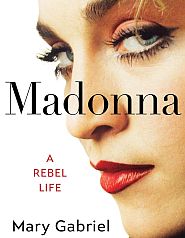

Baseball Books & Film at Amazon.com


“Baseball: A Film By Ken Burns,” – the definitive history; fully restored  in high definition, 2021, blue-ray or DVD. Click for Amazon.
“Baseball: A Film By Ken Burns,” – the definitive history; fully restored in high definition, 2021, blue-ray or DVD. Click for Amazon.
Ben Lindbergh & Travis Sawchik’s best-selling 2020 book, “The MVP Machine,” building baseball talent. Basic Books, 416 pp. Click for book.
Joe Posnanski’s 2020 best seller, “The Baseball 100,” the 100 greatest players, with foreword by George Will. Simon & Schuster. Click for copy.


Sources, Links & Additional Information


Leigh Montville's Ruth biography by Doubleday. Click for copy.

Louis Effrat,“58,339 Acclaim Babe Ruth in Rare Tribute at Stadium,” New York Times, April 28, 1947, p. 1.

“Hello, Kid,” Time, Monday, August 23, 1948.

“The Babe Ruth Story,” Time, Monday, August 30, 1948.

Larry Schwartz, “Lovable Ruth Was Everyone’s Babe,” Special to ESPN.com.

“Babe Ruth,” Wikipedia.org.

Jeff Marx, “It’s a Babe-O-Nanza!,”Sports Illustrated, February 6, 1995.

The Official Web Site of The Sultan of Swat” (Family of Babe Ruth and Babe Ruth League, Inc. by CMG Worldwide).

Cliff Aliperti, “The Final Days of Babe Ruth as Covered in The Sporting News,” Inherited-Values.com, February 11, 2010.

Leigh Montville, The Big Bam: The Life and Times of Babe Ruth, New York: Doubleday, 2006, 390pp.


“The Most Beautiful Girl”
1993-2012

Supermodel Gisele Bündchen, on cover of the September 14, 2000 issue of Rolling Stone, then naming her, “the most beautiful girl in the world.” Click for copy.
      In 1993, before she graced the cover of Rolling Stone magazine at right, Gisele Bündchen was a skinny 14 year-old kid in southern Brazil who aspired to play professional volleyball. Her friends called her “Olive Oyl” for her likeness to the Popeye cartoon character.  That was also about the same time, as legend has it, that young Gisele was “discovered” by a modeling agent who saw her eating a Big Mac at a local Brazilian MacDonald’s.  Today, the skinny kid doesn’t have to eat Big Macs anymore; she is worth an estimated $150 million and is a text book case of supermodel success and celebrity commerce.  As of 2010, Gisele Bündchen was associated with more than 20 brand-name products around the world in Brazil, Italy, France, Mexico, Spain, Turkey, South Korea, Germany, Switzerland, Russia, and the U.S.  According to Forbes, she made $45 million in 2010.  She has appeared on billboards, magazine covers, TV and print ads, and in Hollywood films.

     Born in July 1980 and raised in a region of Southern Brazil settled by German immigrants, Gisele is one of six children, including a twin sister.  Her mother and father, both of German descent, worked respectively as a bank clerk and university teacher / writer.  As a teenager with her sisters, Bündchen studied modeling.  The 5′-11″ sandy-haired, blue-eyed beauty was soon noticed at national and international beauty contests, modeling shows, and by the Elite Modeling Agency.  She made her way to New York in 1996 to begin modeling at Fashion Week, and by July 1999 made her debut on the cover of Vogue magazine.  No less a fashion demigod than Anna Wintour of Vogue anointed Bündchen  “model of the millennium” in 1999, the same year Vogue marked for “the return of the sexy model.”  Three more Vogue covers followed for Bündchen in late 1999 and early 2000, along with a host of modeling and advertising jobs.  By the year 2000, her modeling rate was reportedly up to $7,000 an hour.  In September 2000, when she did the Rolling Stone cover above, she became only the fourth model to do so. 

Gisele in February 2006 advertisement for upscale Swiss watchmaker Ebel. photo Mikael Jansson.
      Since 1999, Gisele Bündchen’s advertising accounts have included a range of the world’s leading fashion, fragrance, and fashion accessory lines, among them: Christian Dior, Balenciaga, Roberto Cavalli, Dolce & Gabbana, Missoni, Versace, Céline, Givenchy, Bvlgari, Lanvin, Guerlain, Valentino, Ralph Lauren, Earl Jean, Zara, Chloé, Michael Kors, Louis Vuitton, and Victoria’s Secret.  She is also involved with several Brazilian brands like Vivo, Brazil’s leading mobile company, Multiplan, Colcci and Credicard.  Her television commercials for clothier C&A Brazil helped their sales increase by 30 percent. In May 2006, Bündchen signed a multi-million dollar deal with Apple Computer to join their “Get a Mac” advertising campaign to promote Macintosh computers.  Another important client had been Victoria’s Secret, where she had modeled for seven years.  But in May 2007 she ended her contract with Victoria’s Secret reportedly because the lingerie firm would not raise her $5 million-a-year salary. 
Gisele in scene from 2004 movie, Taxi.
In addition to her modeling and advertising, she also has her own line of Gisele Bündchen Ipanema sandals with the Grendene shoe company.  Custom Ipanemas sell for as much as $230 a pair.  She is also the owner of the Palladium Executive hotel in the south of Brazil.  Forbes, which had previously done a 2004 cover on Bündchen for one of its Brazilian editions, named her to its 2007 list of the most powerful celebrities due in part to her business interests.  Bündchen has also appeared in movies, beginning with the 2004 comedy Taxi, starring Queen Latifah and Jimmy Fallon.  She also appeared in the 2006 hit film, The Devil Wears Prada.

     As of July 2007, Forbes magazine described Gisele Bündchen as “the highest-paid model in the world” noting that the 26-year-old runway and fashion star then commanded “more money and more contracts than any other model on the planet.”  That year she was also included in Time magazine’s listing of the world’s 100 most influential people.

During her dating years, before she met her husband, Tom Brady, Bündchen’s various escorts and male friends were of keen interest to the media and entertainment world.  Her reported male companions in those years included male model Scott Barnhill, billionaire Joao-Paulo Diniz, actor Chris Evans, hotel tycoon Vikram Chatwal, actor Josh Hartnett, surfer Kelly Slater, and actor Leonardo DiCaprio.  A 2000-2005 relationship with DiCaprio was the more serious of these, but that pairing was ended by Bündchen reportedly because of DiCaprio’s wandering eye.  She began dating Brady in December 2006.  More on their courtship and marriage a bit later.


Gisele Bündchen, Vanity Fair, September 2007. Click for copy.


Cover Girl

Gisele Bündchen has appeared on many magazine covers throughout her glamorous career.  In fact, she is second only to the late Princess Diana when it comes to the sheer number of cover shots – now numbering more than 600 and counting.  Among these have been top fashion magazines such as W, Harper’s Bazaar, ELLE, Allure, and the international and American editions of Vogue.  Other cover appearances have been made on a range of style magazines and mainstream magazines such as i-D, The Face, Arena, Citizen K, Flair, GQ, Esquire, Vanity Fair and Marie Claire.  In recent years, when Bündchen appears on a cover it often results in additional sales.  In September 2007, a Bündchen cover for Vanity Fair’s style issue, photographed by Mario Testino, made it one of the year’s bestsellers.

A few of her cover shots in recent years have cast her with other celebrities.  One Vogue issue of April 2008 — “the shape issue” — featured her with basketball star Lebron James, promising to reveal “the secrets of great bodies” of the world’s top models and star athletes.  An earlier Vogue edition from June 2000 featured her with Hollywood’s George Clooney.  In April 2010, she appeared on the cover of American Vogue for the 11th time in her career.

In 2011, she appeared in a striking close-up on the cover of i-D magazine’s pre-fall fashion issue, photographed by Emma Summerton, prompting one observer to remark that Bündchen “still manages to look almost flawless” (see cover, below left).  In addition to her fashion magazine covers, Bündchen has also appeared in photographs or stories in various mainstream publications such as Time, Newsweek, People and others.

Gisele Bündchen, Vanity Fair cover, May 2009. Click for copy.
     When Vanity Fair’s contributing editor Leslie Bennetts interviewed Bündchen in May 2009 for a cover story, she found the supermodel to be a very “sunny, upbeat person,” quite effusive in conversation, and “exuberantly high-spirited.”  Bennetts also described Bündchen as “warm, friendly, humorous, and gaily self-deprecating.”  Others who have worked with the supermodel confirm her sunny disposition.  Mario Testino, who photographed her several times for Vogue, has said that Bündchen’s personality won him over – “she’s filled with life.”  Designer Michael Kors has also described her as “warm-hearted” and “good-humored,” as well as a person with “a lot of self-esteem.”  And Marc Jacobs, creative director at the French design house Louis Vuitton has said of her: “If there is a model that incorporates a strong, secure woman who is unafraid of her sensuality, she is Gisele.”  Bündchen has also been described as a hard worker capable of long work days with little complaint.  She is also an avid reader and speaks several languages fluently, including English (with a unique accent, it is said), Italian, Portuguese, and Spanish, as well as some German and French.

In her 2009 Vanity Fair interview with Leslie Bennetts,  Bündchen comes across as quite the family person, holding great stock in her roots back home in Brazil and how these have shaped her own family wishes for the future:

“I would like a big family.  I love children.  When you come from a big family, you see that growing up you’re learning how to share.  Your sisters have got your back; you’re not alone in this—‘We all support you!’  Your family provides that; it gives you a sense of safety, and it’s a very grounding feeling.  That’s why I feel I can fly away, because I have those roots and they’re so deep.  This is what I want to have in my life.  This is why you get married—you want to create those roots together; you want to give that to your kids.  I would also love to adopt a child from Brazil.  When you come from Sao Paulo, you see five-year-olds sniffing glue on the corner.  You think, ‘If you make a difference in the life of one of them,’ that makes your time on this earth worthwhile…”

     Back in the modeling world, Gisele Bündchen shows no signs of slowing down.  However, it is her business lines that may well make her very wealthy.  Three years after she launched her own line of flip-flop sandals in 2001, sales topped $30 million.  By 2010, more than 250 million pair were sold.  Forbes magazine has speculated that she may well become the world’s first billionaire fashion model as she moves to brand herself, building businesses beyond sandals, expanding into jewelry, “green” cosmetics, lingerie, and other products.


Gisele Bündchen on cover of i-D, Fall 2010.


Bündchen v. The Dow

On May 2011, for the fifth consecutive time, Forbes ranked Gisele Bündchen as the world’s top-earning model with an estimated $45 million from modeling, product endorsements, and independent business ventures.  In August 2011, Forbes also ranked Bündchen at No. 60 on its list of “The World’s 100 Most Powerful Women.”  In 2010, Bündchen introduced her own skin care product line, named Sejaa Pure Skincare.  She has also been a real estate investor for years with acquired properties in New York, Los Angeles, Sao Paulo, and Costa Rica.

Gisele’s career and business ventures have been successful enough that she has employed four of her five sisters – one as business manager, another as her lawyer, a third in accounting, and the fourth in charge of Bundchen’s website.  Husband Tom Brady told Vanity Fair in 2009 that he admires his wife for “being a ferocious businesswoman who is ultra-competitive and intent on being the best at what she does.”  But beyond her business ventures and supermodel earning power, Gisel Bündchen has also become a valuable asset to numerous other businesses and products.

Gisele Bündchen, Facebook photo.
     “She’s an international icon who can also move product—from shampoo to couture,” says Edward Razek, chief marketing officer of Limited Brands who worked with Bündchen during her Victoria’s Secret years.  After clothier C&A Brazil hired Bündchen in the early 2003 as a spokesmodel and she began doing television commercials, sales increased by 30 percent. (see previous use in article).  In early 2011, Procter & Gamble’s Pantene shampoo sales exploded 40 percent in Latin America after Bündchen started representing the product.  The Lingerie Brand “HOPE” also increased its product turnover by 40 percent after contracting Bündchen to be its representative.

In America, meanwhile, at least one economist, Fred Fuld, is bullish on Bündchen.  In 2007, Fuld developed a stock market index to measure the profit performance of companies represented by Bündchen compared with the Dow Jones Industrial Average.  According to Fuld, the “Gisele Bündchen Stock Index” was up 15 percent between May and July 2007, substantially surpassing the Dow Jones Industrial Average which was up just 8.2 percent in the same period.  By November 2011 Fuld reported that the Bündchen Index continued to outperform the Dow.


Brady-Bündchen

In December 2006, Gisele Bündchen began dating Tom Brady, quarterback for the New England Patriots professional football team.  As she would later tell Vanity Fair, she wasn’t looking for a long-term relationship at the time, but it happened anyway.  “I knew right way—the first time I saw him.  We met through a friend.  The moment I saw him, he smiled and I was like, ‘That is the most beautiful, charismatic smile I’ve ever seen!’  We sat and talked for three hours.  I had to go home for Christmas, but I didn’t want to leave.  You know that feeling of, like, you can’t get enough?  From the first day we met, we’ve never spent one day without speaking to each other.”

Gisele Bündchen and Tom Brady.
     Early on, however, their new relationship was put to the test when Brady’s former girlfriend of three years, actress and model Bridget Moynahan, announced that she was pregnant with Brady’s child and would have the baby on her own, which she did in 2007.  Bündchen and Brady were able to work things out over the unexpected complication and have since included Tom’s son in their lives during the boy’s regular visits.

Bündchen and Brady, both Catholics, were married in February 2009 in a small Catholic ceremony at St. Monica Catholic Church in Santa Monica, California.  Bündchen told Vanity Fair that in Brady she had found her soulmate.  “He’s very close to his family…  His parents have been married 40 years.  He’s got a pure heart.  That’s all that matters—he’s got the purest heart.  I feel grateful because I have a lot of love in my life.  I found the person I’m sharing my life with.  I have a good man.”  

As for Brady, he told Vanity Fair that his wife is “the most positive and energetic person I have ever met.  She always looks at challenges as her greatest opportunities.”  In December 2009, Bündchen gave birth to a baby boy in Boston, named Benjamin Rein Brady.

Gisele Bündchen and Tom Brady at Metropolitan Museum of Art gala, New York, May 5, 2008.
     In addition to making a beautiful couple, the combined Brady-Bündchen union is quite the economic powerhouse as well. According to Forbes, the supermodel and the quarterback are now the “World’s Highest-Paid Celebrity Couple,” earning a combined $76 million for the period May 2010-May 2011. That standing places them at the top of the “power couple” list, ahead of other notable pairings such as Brad Pitt and Angelina Jolie and Beyonce and Jay-Z.

And like other celebrities in that league, they have had a few run-ins with the paparazzi.  But sometimes, as Gisele recently discovered, an innocent and well-meaning sentiment sent out over the internet can create instant and unwelcomed publicity.

February 2, 2012: New York Post front page on Gisele Bündchen’s Super Bowl e-mail note.
In the run up to the February 2012 Super Bowl — which starred her husband, Tom Brady, as one of the two competing quarterbacks in the big game against rival New York Giants — Bündchen had sent an e-mail message to friends and family on the Thursday before the big game. The note read as follows:

“My sweet friends and family. I feel Tommy really needs our prayers, our support and love at this time.  This Sunday will be a really important day in my husband’s life.  He and his team worked so hard to get to this point and now they need us more than ever to send them positive energy so they can fulfill their dream of winning this super bowl . . . So I kindly ask all of you to join me on this positive chain and pray for him, so he can feel confident, healthy and strong.  Envision him happy and fulfilled experiencing with his team a victory this Sunday.  Thank you for your love and support.  Love, G.”

     The New York Post — a Rupert Murdoch-owned tabloid newspaper known for indulging in sensational-styled front-page stories — got hold of Bündchen’s note. The paper did contact Bündchen about her email and she was quite surprised the paper had it, saying it was a private note sent, she thought, to close friends and family.  The Post, however, cheering heartily for their home-town team, the New York Giants, replied to the Bündchen note with a New York Post cover story that featured an excerpt from the note along with the huge headline, “Not A Prayer!”  In the game, the Giants won, 21-17, but Tom Brady set a Super Bowl record completing 16 passes in a row.


Gisele Bündchen, circa 2009-2010.

Good Works

Gisele Bündchen, in any case, is a person who aspires to do good deeds with her wealth and celebrity. In recent years, she has become involved in several charity efforts and also chooses a charity each year to receive proceeds from the sales of her sandal line. 

Bündchen has helped to raise money for cancer research and treatments, and also for aiding the victims of Hurricane Katrina and the 2011 Japanese earthquake and tsunami. She has also visited teenage cancer patients at Dana Farber Cancer Institute in Boston and created the Luz Foundation, a project to empower girls and help them deal with self-esteem issues.

In 2006 she became the face of American Express Red, part of the “Product Red” initiative to send money Africa’s HIV/AIDS victims. She has also appeared on more than two dozen Elle magazine covers wearing Product Red-related clothing and has posed with products of companies supporting that cause. 

In 2011, The Giving Back Fund recognized Bündchen as one of the leading celebrity givers according to public records, adding her to the list of celebrities making large charitable donations.

In 2018 her book, “Lessons: My Path to a Meaningful Life,” was published by Avery (240 pp), and became a NY Times bestseller. Click for copy.
Environmental issues are also among Bündchen’s top social concerns, as she has supported clean water initiatives, environmental sustainability, and the preservation of South American rainforests. 

In December 2010, in a partnership with AOL and A Squared Entertainment, Bündchen began appearing as a cartoon character in the animated web series, “Gisele and The Green Team,” an educational series aimed at children.

Designated a Goodwill Ambassador for the United Nations Environment Program (UNEP) in 2009, Bündchen traveled to Nairobi in January 2012 on her first official UNEP visit.

See also at this website, “One Good Shot…,” a story about Gisele’s November 2011 cover for the inaugural issue of Harper’s Bazaar Brazil and how that same photo soon made its way onto the covers of other fashion magazine around the world.

Other story choices on female careers at this website can be found at the “Noteworthy Ladies” topics page.

Thanks for visiting – and if you like what you find here, please make a donation to help support the research and writing at this website. Thank you. – Jack Doyle


Please Support
this Website

Donate Now

Thank You

__________________________________
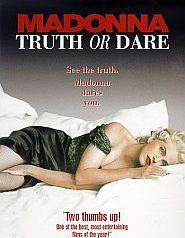
Date Posted: 5 February 2008
Last Update: 5 October 2022
Comments to: jdoyle@pophistorydig.com

Article Citation:
Jack Doyle, “The Most Beautiful Girl, 1993-2007,”
PopHistoryDig.com, February 5, 2008.

___________________________________
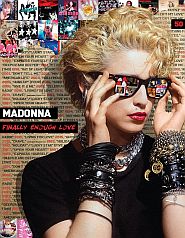


Sources, Links & Additional Information

Gisele Bündchen with baby Benjamin Brady.
April 2010: Gisele Bündchen, post baby, on Vogue cover featuring “Brady Bunch” story. Click for copy.
Gisele Bündchen, earlier modeling gig, undated.

“The Most Beautiful Girl in the World,” Rolling Stone, September 14, 2000.

Gisele Bündchen, Website.

“Gisele Bündchen,” Wikipedia.org.

John Morgan, “Gisele Bündchen Gives Her Heart to St. Jude’s Children,” USA Today, December 16, 2003.

Valli Herman, “A Little Hotter, Ma’am?; Gisele Bündchen Stars in the Updated Ads for St. John…,” Los Angeles Times, August 9, 2005, p. E.1.

“Gisele Bündchen – The Glamorous New Ebel Muse,” The Watch Quote, April 12, 2006.

Derek Blasberg, “Gisele,” The Sunday Times  (London), September 24, 2006.

Charlotte Triggs, “Gisele Bündchen, Victoria’s Secret Part Ways,” People, Tuesday, May 1, 2007.

“Supermodel Gisele Bündchen Becomes  Environmental Ambassador,” UNEP.org,  May 22, 2007.

Kiri Blakeley, “The World’s Top-Earning Models,” Forbes, July 16, 2007.

Eric Wilson, “Front Row; Blame It On Rio And Gisele,” New York Times, September 20, 2007

Nate Penn, “Gisele Bündchen: Gossip Girl,” GQ, June 2008.

Leslie Bennetts “… And God Created Gisele,” Vanity Fair, May 2009.

“Portfolio: Gisele Sells!” (Photo Gallery), Vanity Fair, 2009.

“Buffett to Tutor Kids in Finance in Web Series; Investor Will Star in a Cartoon to Launch on AOL; Martha Stewart, Gisele Bundchen Have Online Efforts Too,” Los Angeles Times, July 27, 2009, p. D-8.

Sarah Leon, “Chic in Review; Gisele’s Flat-Belly Superpower,”New York Times, July 31, 2009.

“A Boy for Brady and Gisele,” New York Times, December 9, 2009.

Ruthie Friedlander, “Gisele’s Vogue Cover And The Return Of The Supermodel,” Styleite.com, March 15th, 2010.

Julie Neigher, “Gisele Bündchen Talks about Modeling, Her Family and ‘Gisele & the Green Team’; Supermodel Stars in New AOLKids.com Animated Web Series…,” Los Angeles Times, December 12, 2010.

Steven Bertoni and Keren Blankfeld, “The World’s Top-Earning Models,” Forbes, May 5, 2011.

Stephen M. Silverman, “Gisele Bündchen: First Billionaire Supermodel?,” People, Friday June 3, 2011.

Gisele Bündchen, “World’s Most Powerful Women,” Forbes, August 2011.

A. Lewis, “Giselle Bündchen and Tom Brady Move Into $20 Million Brentwood Mega-Mansion,”HollywoodReporter.com, Jan. 20, 2012.

Associated Press, “Bündchen Causes Stir at Super Bowl From Afar,” New York Times, February 2, 2012.

Gisele Bündchen Photo Gallery, People.com.

“Models: Gisele Bündchen,” Voguepedia, Vogue.com.

“Gisele Bündchen, Biography,”People.com.

“Gisele Bündchen: The Cover Shoot,” VanityFair.com (Video of session with Mario Testino for the 2007 Style Issue).

___________________________________


<-- Added by Birgit Pauli-Haack August 12, 2022 - only works when Auto-Ads are turned on. -->